Interviews are opportunities to demonstrate your expertise, and this guide is here to help you shine. Explore the essential Biological Effects of Radiation interview questions that employers frequently ask, paired with strategies for crafting responses that set you apart from the competition.
Questions Asked in Biological Effects of Radiation Interview
Q 1. Explain the linear-quadratic model of radiation damage.
The linear-quadratic (LQ) model is a mathematical description of the relationship between radiation dose and biological effect, specifically cell killing. It suggests that the biological damage isn’t simply proportional to the dose; rather, it involves two components: a linear component and a quadratic component.
The linear component represents damage caused by single radiation ‘hits’ that cause irreparable damage, like a single bullet causing a fatal wound. This component is directly proportional to the dose – double the dose, double the damage. The equation for this component is simply αD, where α (alpha) is the linear coefficient and D is the dose.
The quadratic component represents damage caused by two or more ‘hits’, such as two bullets causing multiple injuries, leading to severe damage. This component is proportional to the square of the dose – doubling the dose quadruples the damage. The equation for this is βD², where β (beta) is the quadratic coefficient and D² is the dose squared.
The complete LQ model combines these two components: Effect = αD + βD². The relative contributions of α and β depend on the type of radiation, the cell type, and the endpoint being measured (e.g., cell death, mutation). This model is crucial in radiotherapy planning, allowing for the prediction of tumor response and normal tissue damage based on the delivered dose.
Q 2. Describe the different types of DNA damage caused by ionizing radiation.
Ionizing radiation can inflict various types of damage on DNA, the molecule carrying genetic information. These damages can broadly be classified as:
- Single-strand breaks (SSBs): These are breaks in only one strand of the DNA double helix. They are relatively common and often easily repaired by cellular mechanisms.
- Double-strand breaks (DSBs): These are breaks in both strands of the DNA helix. DSBs are far more dangerous than SSBs because they can lead to chromosomal instability, rearrangements, and cell death if not properly repaired. They are often a primary cause of radiation-induced cell death.
- Base damage: Ionizing radiation can modify or damage the individual bases (adenine, guanine, cytosine, and thymine) that make up the DNA sequence. This can lead to mispairing during replication, resulting in mutations.
- Crosslinking: Radiation can cause crosslinking between DNA strands or between DNA and proteins, hindering normal DNA function and replication.
- Clustered damage sites (CDS): These are regions of DNA containing multiple types of damage, clustered together. CDS are difficult to repair and are thought to be particularly important contributors to radiation effects.
The specific type and extent of DNA damage depend on various factors including the radiation type, dose, and dose rate, as well as the cell type and its repair capacity. The severity of these damages dictates the ultimate biological response.
Q 3. What are the acute and long-term effects of radiation exposure on the human body?
The effects of radiation exposure on the human body can be broadly categorized into acute and long-term effects. The severity depends on the dose received, the dose rate, the type of radiation, and the exposed parts of the body.
Acute effects appear relatively soon after high-dose exposure (typically exceeding 1 Gray (Gy) whole-body radiation). These effects can range from mild (nausea, vomiting, fatigue) to severe (hematopoietic syndrome, gastrointestinal syndrome, cardiovascular/central nervous system syndrome), potentially leading to death. The severity increases with dose.
Long-term effects may not become apparent for years or decades after exposure, even to relatively low doses. These effects include:
- Cancer: Increased risk of various cancers (e.g., leukemia, thyroid cancer, lung cancer) is one of the most significant long-term consequences of radiation exposure.
- Genetic effects: Radiation can cause mutations in germ cells (sperm and eggs), potentially leading to heritable genetic defects in future generations. This is a concern particularly for reproductive-age individuals.
- Cataracts: Radiation exposure can increase the risk of cataracts, clouding of the eye lens, impairing vision.
- Cardiovascular disease: Some studies have shown an association between radiation exposure and an increased risk of cardiovascular diseases.
It is important to note that the risk of long-term effects generally increases with the total dose received but even low doses carry some, albeit small, risk.
Q 4. Explain the concept of radiation weighting factors.
Radiation weighting factors (also known as radiation weighting coefficients) are dimensionless factors used to account for the differing biological effectiveness of different types of ionizing radiation. Different types of radiation deposit energy in different ways, impacting their capacity to cause biological damage.
For example, alpha particles, which are relatively heavy and highly ionizing, are more biologically effective than gamma rays, which are less ionizing and lighter. The radiation weighting factor for alpha particles is 20, while that for gamma rays is 1. This means that 1 Gy of alpha radiation is biologically equivalent to 20 Gy of gamma radiation.
These factors are used to calculate the equivalent dose (EqD), which is a measure of the biological effect of radiation, taking into account both the absorbed dose and the radiation type. The formula for equivalent dose is: EqD = WR × D, where WR is the radiation weighting factor and D is the absorbed dose (measured in Gray). Using EqD allows for a standardized comparison of the risks associated with different radiation exposures, regardless of the radiation type.
Q 5. Describe the mechanisms of cellular repair after radiation exposure.
Cells possess a variety of mechanisms to repair the damage inflicted by ionizing radiation. These mechanisms are crucial for cell survival and maintaining genomic stability. The effectiveness of repair varies greatly depending on the type of DNA damage and the cell type.
- Base excision repair (BER): This pathway repairs minor base damage, such as single base modifications.
- Nucleotide excision repair (NER): This pathway is responsible for removing larger DNA lesions, including those induced by UV radiation and certain types of bulky DNA adducts caused by radiation.
- Mismatch repair (MMR): This pathway corrects errors that occur during DNA replication.
- Homologous recombination (HR): HR is a high-fidelity mechanism that repairs double-strand breaks (DSBs) by using a homologous DNA template, such as a sister chromatid. It is highly accurate but requires the availability of an undamaged template.
- Non-homologous end joining (NHEJ): This is a less precise pathway that repairs DSBs by directly joining the broken DNA ends. It is error-prone and can introduce mutations, but it can function even in the absence of a homologous template.
The efficiency of these repair pathways can be affected by factors such as the age of the cell, the cell cycle stage, and the presence of various repair proteins. Deficiencies in these repair pathways can increase the sensitivity of cells to radiation.
Q 6. What are the differences between stochastic and deterministic effects of radiation?
Stochastic and deterministic effects are two fundamentally different categories of radiation effects. The distinction lies primarily in their dose-response relationship and the underlying mechanism of damage.
Deterministic effects, also known as non-stochastic effects, have a threshold dose. Below this threshold dose, no effect is observed. Above the threshold, the severity of the effect increases with increasing dose. These effects are caused by extensive cell death in a specific tissue or organ, resulting in observable damage. Examples include skin erythema (reddening), cataracts, and radiation-induced sterility. They are predictable and generally severe.
Stochastic effects, on the other hand, show no threshold dose. The probability of occurrence increases linearly with dose, but the severity of the effect is independent of the dose. These effects are thought to be caused by mutations in individual cells, initiating a cancerous transformation or a genetic defect. Cancer induction is a prime example of a stochastic effect. Even a low dose has some probability of causing cancer although the exact risk is difficult to quantify, this is generally a subtle and latent effect.
In summary: deterministic effects are ‘all or nothing’ above a threshold; stochastic effects are probabilistic, with probability increasing with dose but severity not linked to the dose.
Q 7. Explain the role of bystander effects in radiation biology.
Bystander effects refer to the phenomenon where non-irradiated cells exhibit biological effects (e.g., mutations, chromosomal aberrations, cell death) as a consequence of their proximity to irradiated cells. This means that the damage isn’t confined to the cells that directly absorbed radiation; neighboring cells also suffer consequences.
The mechanisms underlying bystander effects are complex and not fully understood, but they likely involve the release of signaling molecules from irradiated cells. These signaling molecules, which can include cytokines, reactive oxygen species (ROS), and other factors, can travel to and affect neighboring cells, initiating the cascade of damage even in those non-irradiated cells. These effects can extend over considerable distances, indicating a non-local interaction.
The bystander effect has significant implications for radiation biology and radiation protection, highlighting that the effects of radiation extend beyond the cells directly exposed. Understanding these mechanisms is critical for accurate risk assessment and in developing more effective radiation protection strategies and treatment planning in radiotherapy.
Q 8. How does radiation affect different cell types?
Radiation’s effect on cells hinges on its ability to ionize atoms, disrupting molecular structures and cellular processes. Different cell types exhibit varying sensitivity due to factors like their rate of division, DNA repair mechanisms, and overall metabolic activity.
Rapidly dividing cells, like those in bone marrow, the gastrointestinal tract, and hair follicles, are significantly more susceptible to radiation damage because radiation interferes with their replication process. This explains why hair loss and gastrointestinal distress are common side effects of high radiation exposure.
Slowly dividing cells, such as nerve cells and muscle cells, are relatively radioresistant. They are less affected because their slower replication rates limit the chance of radiation interfering with DNA replication and cell division.
Stem cells are particularly sensitive because they are actively dividing and responsible for replenishing differentiated cell populations. Damage to stem cells can have long-term consequences.
Specialized cells like neurons may exhibit unique sensitivities depending on their specific function and location. For example, certain areas of the brain may be more vulnerable to radiation damage than others.
The type of radiation also matters. High-Linear Energy Transfer (LET) radiation, like alpha particles, causes more densely localized damage than low-LET radiation, such as X-rays or gamma rays. This impacts how effectively a cell can repair the damage.
Q 9. Describe the principles of radiation protection.
Radiation protection rests on three fundamental principles: time, distance, and shielding.
Time: Minimizing the duration of exposure reduces the overall radiation dose received. Think of it like sunbathing – the shorter you stay out, the less sunburn you get. In a professional setting, this means using quick and efficient techniques when handling radioactive materials.
Distance: The intensity of radiation decreases rapidly with increasing distance from the source. This follows an inverse square law – doubling the distance reduces the radiation intensity by a factor of four. Working from a safe distance is paramount when dealing with radiation sources.
Shielding: Interposing a material between the radiation source and the person reduces the amount of radiation reaching the individual. The type of shielding material depends on the type of radiation. Lead, concrete, and water are commonly used for shielding against gamma and X-rays, while thicker materials are needed for alpha and beta particles.
These principles are applied in various ways depending on the context, from designing protective clothing and equipment for radiation workers to establishing safety zones around radiation sources.
Q 10. What are the different methods used to measure radiation dose?
Various methods measure radiation dose, each suited to different applications and radiation types. These methods often involve using radiation detectors to measure the amount of ionization caused by radiation.
Film badges: These use photographic film that darkens proportionally to the radiation dose received. Simple and relatively inexpensive, they provide a cumulative dose over a period of time.
Thermoluminescent dosimeters (TLDs): These crystals store energy from radiation exposure, releasing it as light when heated. This light emission is proportional to the radiation dose. TLDs offer higher accuracy than film badges.
Geiger-Müller counters: These detect ionizing radiation by measuring the ionization current produced in a gas-filled tube. They are useful for quickly detecting the presence and approximate level of radiation but don’t precisely measure dose.
Ionization chambers: These measure the ionization produced by radiation in a gas-filled chamber, providing accurate dose measurements, especially for higher doses.
The choice of method depends on factors such as the type and energy of the radiation, the required accuracy, and the cost considerations.
Q 11. Explain the concept of effective dose.
Effective dose is a measure that accounts for both the type and quantity of radiation absorbed by the body and the relative sensitivity of different organs and tissues to radiation damage. It’s expressed in sieverts (Sv) and aims to provide a single number representing the overall health risk from a radiation exposure.
Different organs have different weighting factors. For instance, the bone marrow, which is highly sensitive to radiation, has a higher weighting factor than the skin, which is relatively less sensitive. The effective dose considers the weighted sum of the radiation dose to each organ to represent the overall risk to the individual.
Example: A radiation exposure that delivers 10 mGy to the bone marrow and 5 mGy to the skin would result in a higher effective dose than an exposure delivering 10 mGy to the skin and 5 mGy to the bone marrow. This is because the weighting factor for bone marrow is higher.
Q 12. What are the different types of radiation detectors?
Radiation detectors come in many forms, each with its strengths and weaknesses depending on the application.
Gas-filled detectors (e.g., Geiger-Müller counters, ionization chambers): Detect radiation through ionization of gas molecules.
Scintillation detectors: Detect radiation through the light flashes (scintillations) produced when radiation interacts with a scintillating material.
Semiconductor detectors: Detect radiation through the creation of electron-hole pairs in a semiconductor material. These offer excellent energy resolution.
Film badges and thermoluminescent dosimeters (TLDs): Passive detectors that measure the cumulative dose over time.
The choice of detector depends on factors such as the type and energy of radiation being measured, the required sensitivity, and the need for energy resolution or dose rate measurement.
Q 13. Describe the principles of radiation shielding.
Radiation shielding aims to attenuate or reduce the intensity of radiation before it reaches a person or sensitive equipment. The effectiveness of shielding depends on the type and energy of the radiation, the shielding material, and its thickness.
Alpha particles: Easily shielded by a few centimeters of air or a thin sheet of paper.
Beta particles: Require thicker shielding, such as aluminum or plastic.
Gamma rays and X-rays: Require dense materials like lead, concrete, or depleted uranium for effective shielding. The required thickness depends on the energy of the radiation.
The principle of shielding relies on the interaction of radiation with matter. Radiation loses energy through various interactions (e.g., photoelectric effect, Compton scattering, pair production) as it passes through the shielding material, thereby reducing its intensity.
Practical examples include lead aprons for medical personnel during X-ray procedures, concrete walls around nuclear reactors, and lead containers for storing radioactive materials.
Q 14. What are the regulatory requirements for handling radioactive materials?
Regulatory requirements for handling radioactive materials are stringent and vary depending on the type and quantity of material, the application, and the location. These regulations aim to protect workers, the public, and the environment from the potential hazards of radiation.
Key aspects of these regulations typically include:
Licensing and registration: Organizations and individuals must obtain licenses or registrations to possess and use radioactive materials.
Safety training and education: Personnel working with radioactive materials must receive appropriate training and education on radiation safety principles and practices.
Radiation monitoring and surveillance: Regular monitoring of radiation levels in the workplace and environment is required to ensure compliance with safety standards.
Waste management: Proper procedures for handling, storage, and disposal of radioactive waste are essential to prevent environmental contamination.
Emergency preparedness: Organizations must have plans in place to respond effectively to radiation accidents or emergencies.
Specific regulations are often set by national or international bodies like the Nuclear Regulatory Commission (NRC) in the United States or the International Atomic Energy Agency (IAEA).
Failure to comply with these regulations can lead to significant penalties and legal consequences.
Q 15. Explain the concept of ALARA.
ALARA, which stands for “As Low As Reasonably Achievable,” is a fundamental principle in radiation protection. It emphasizes the importance of minimizing radiation exposure to individuals and the environment to the lowest levels possible, while still considering practical and economic factors. It’s not about eliminating all radiation exposure, as some background radiation is unavoidable, but about keeping it as low as realistically possible through effective safety measures.
For example, in a hospital setting, ALARA principles would be implemented by optimizing shielding around X-ray machines, using appropriate protective apparel for staff, and employing efficient techniques to minimize radiation dose during procedures. The decision-making process balances the benefits of a procedure (e.g., a necessary diagnostic X-ray) against the risks of radiation exposure, always aiming for the lowest possible dose.
Career Expert Tips:
- Ace those interviews! Prepare effectively by reviewing the Top 50 Most Common Interview Questions on ResumeGemini.
- Navigate your job search with confidence! Explore a wide range of Career Tips on ResumeGemini. Learn about common challenges and recommendations to overcome them.
- Craft the perfect resume! Master the Art of Resume Writing with ResumeGemini’s guide. Showcase your unique qualifications and achievements effectively.
- Don’t miss out on holiday savings! Build your dream resume with ResumeGemini’s ATS optimized templates.
Q 16. What are the different types of radiation therapy?
Radiation therapy uses high-energy radiation to target and destroy cancer cells. There are several types:
- External Beam Radiation Therapy (EBRT): A machine outside the body directs radiation beams to the tumor. This is the most common type of radiation therapy.
- Brachytherapy: Radioactive material is placed directly into or near the tumor. (This is discussed in more detail in question 6).
- Proton Therapy: Uses protons instead of photons (X-rays or gamma rays), offering greater precision and reducing damage to surrounding healthy tissue.
- Stereotactic Radiosurgery (SRS) and Stereotactic Body Radiation Therapy (SBRT): Highly focused radiation beams delivered with extreme accuracy to precisely target tumors, often used for smaller tumors.
The choice of therapy depends on the type and location of the cancer, the patient’s overall health, and other factors.
Q 17. Describe the biological basis of radiation therapy.
The biological basis of radiation therapy lies in its ability to damage the DNA of cancer cells. Ionizing radiation, such as X-rays and gamma rays, disrupts the DNA’s structure, preventing its proper replication and ultimately leading to cell death. Cancer cells are generally more sensitive to radiation than normal cells because they divide more rapidly and have less efficient DNA repair mechanisms. However, normal cells are also affected, leading to side effects.
Imagine DNA as a meticulously constructed blueprint for the cell. Radiation acts like a vandal, randomly damaging sections of this blueprint. Cancer cells, with their faster replication, have less time to repair these damages, making them more susceptible to collapse compared to normal cells, which can sometimes successfully repair the damage.
Q 18. How are radiation doses calculated in radiotherapy?
Radiation doses in radiotherapy are calculated using a complex process involving several factors:
- Tumor size and location: Larger tumors require higher doses, but care must be taken to minimize damage to surrounding healthy tissues.
- Type of cancer: Different cancers respond differently to radiation.
- Patient’s overall health: A patient’s health status influences their tolerance to radiation.
- Treatment plan: Sophisticated computer software is used to create a precise treatment plan, outlining the radiation dose, beam angles, and fractionation schedule.
The dose is typically measured in Gray (Gy), representing the amount of energy absorbed per unit mass of tissue. The total dose is often divided into smaller fractions administered over several weeks to allow healthy tissues to repair themselves between treatments. Accurate dose calculations are crucial to maximizing the therapeutic effect while minimizing side effects.
Q 19. What are the potential side effects of radiation therapy?
Radiation therapy can cause several side effects, varying depending on the treatment area, dose, and individual patient factors. These side effects can be acute (occurring during or shortly after treatment) or late (appearing months or years later).
- Acute side effects: Fatigue, skin reactions (redness, dryness, peeling), nausea, vomiting, diarrhea, hair loss (in the irradiated area).
- Late side effects: These can include fibrosis (scarring), organ damage (e.g., heart, lungs, kidneys), secondary cancers, and infertility. The risk of late effects is related to the total dose and the location of the radiation field.
It’s important to note that not everyone experiences all these side effects, and many are manageable with appropriate supportive care.
Q 20. Explain the role of brachytherapy in cancer treatment.
Brachytherapy involves placing radioactive sources directly into or near the tumor. This allows for a high dose of radiation to be delivered to the cancer while minimizing exposure to surrounding healthy tissues. It’s often used for cancers of the cervix, prostate, breast, and eye.
Imagine it as a targeted attack: instead of bombing a whole city (external beam radiation), you’re placing strategically placed explosives right next to the enemy’s headquarters (the tumor). The proximity ensures maximum damage to the target while minimizing collateral damage to other areas.
Several types of brachytherapy exist, depending on the placement method and the type of radioactive source used. The radioactive sources may be temporarily implanted (low dose-rate brachytherapy) or permanently implanted (high dose-rate brachytherapy or permanent implants), depending on the treatment plan.
Q 21. Describe the use of radioisotopes in medical imaging.
Radioisotopes, which are radioactive forms of elements, play a critical role in medical imaging. They emit radiation that can be detected by specialized cameras, providing images of internal organs and tissues. This is essential for diagnosis and monitoring treatment.
- Single-photon emission computed tomography (SPECT): Uses gamma-emitting radioisotopes injected into the bloodstream to image organ function and blood flow.
- Positron emission tomography (PET): Uses radioisotopes that emit positrons (antimatter particles) which, when they interact with electrons, produce gamma rays that are detected. PET scans are particularly useful in detecting cancer and assessing its spread.
The choice of radioisotope depends on the specific imaging task. For example, Technetium-99m is commonly used in SPECT for bone scans, while Fluorine-18-fluorodeoxyglucose (FDG) is commonly used in PET scans for cancer detection because cancer cells tend to have a high metabolic rate and absorb more FDG.
Q 22. How are radiation safety protocols implemented in a clinical setting?
Radiation safety protocols in clinical settings are paramount to protect both patients and healthcare workers. They revolve around the ALARA principle – As Low As Reasonably Achievable. This means minimizing radiation exposure to the lowest possible levels while still achieving the necessary diagnostic or therapeutic goals.
- Time: Procedures involving radiation are kept as short as possible. This minimizes the time patients and staff are exposed.
- Distance: Maintaining a safe distance from radiation sources is critical. Shielding is used to increase distance effectively.
- Shielding: Lead aprons, gloves, and barriers are employed to absorb radiation. The thickness and type of shielding depend on the energy of the radiation.
- Proper Equipment Calibration and Maintenance: Ensuring that all equipment is correctly calibrated and regularly maintained is crucial to ensure accurate doses and prevent unnecessary radiation.
- Personnel Monitoring: Staff regularly wear dosimeters to track their cumulative radiation exposure. This ensures that exposure limits are not exceeded and allows for intervention if necessary.
- Quality Assurance and Quality Control: Regular quality checks are performed on imaging equipment to ensure optimal image quality is achieved with the minimum radiation dose.
For example, in a radiology department, lead shielding is used on walls and in aprons, patients are positioned accurately to minimize scatter radiation, and staff use lead-lined viewing windows during procedures. These measures all contribute to a safer environment.
Q 23. Explain the principles of radiation safety in nuclear power plants.
Radiation safety in nuclear power plants is extremely rigorous due to the high levels of radiation involved. The overarching principle, once again, is ALARA. The implementation includes:
- Physical Barriers: Thick concrete and steel shielding surrounds reactors and other high-radiation areas, preventing radiation leakage into the environment and protecting workers.
- Strict Operational Procedures: Highly detailed procedures govern every aspect of plant operation, from refueling to maintenance, ensuring that radiation exposures are carefully controlled.
- Remote Handling: Robots and remote-controlled equipment are used to perform tasks in high-radiation areas, minimizing human exposure.
- Containment Systems: Multiple layers of containment are in place to prevent the release of radioactive materials in case of an accident. This involves physical barriers, as well as engineering controls that manage pressure and airflow.
- Personnel Monitoring: Extensive monitoring programs track the radiation exposure of all workers, and protective clothing and equipment (respirators, protective suits) are used accordingly.
- Emergency Preparedness: Thorough emergency plans are developed and regularly tested to handle any potential radiation releases or accidents.
Imagine a multi-layered defense system where each layer adds another level of protection. This is similar to the comprehensive approach used in nuclear power plants to minimize radiation risks.
Q 24. Describe the environmental impact of radiation releases.
The environmental impact of radiation releases depends greatly on the type and amount of radiation released, the environmental conditions (wind patterns, rainfall), and the characteristics of the affected ecosystem. Consequences can include:
- Damage to Ecosystems: Radiation can damage plant and animal life, leading to reduced biodiversity and disruption of ecological balance. The effects depend on radiation dose and the sensitivity of the species.
- Soil and Water Contamination: Radioactive materials can contaminate soil and water, making them unsafe for use in agriculture and potentially entering the food chain.
- Air Pollution: Radioactive gases and particles released into the atmosphere can contaminate air, potentially leading to respiratory problems and other health issues in humans and animals.
- Genetic Effects: Radiation exposure can induce mutations in genes, potentially affecting future generations of organisms.
- Long-term Contamination: Some radioactive materials have long half-lives, meaning that they persist in the environment for many years, posing a long-term threat.
The Chernobyl disaster serves as a stark example of the devastating environmental consequences of a major radiation release. The area remains largely uninhabitable due to long-term contamination.
Q 25. What are the methods used to remediate radioactive contamination?
Remediating radioactive contamination involves a range of techniques, depending on the type of contaminant, the extent of contamination, and the environmental setting. Methods include:
- Containment: Physically isolating the contaminated area, such as by covering it with a barrier to prevent further spread.
- Excavation and Removal: Digging up and removing contaminated soil or other materials for off-site disposal in specialized facilities.
- Decontamination: Using chemical or physical methods to remove radioactive materials from surfaces, such as washing or scrubbing.
- Vitrification: Melting contaminated materials into a glass-like solid, reducing their mobility and preventing further spread.
- In-situ Remediation: Treating contaminated soil or groundwater in place, rather than removing it. This might involve injecting chemicals to immobilize contaminants or using microorganisms to break them down.
- Phytoremediation: Using plants to absorb or extract radioactive materials from the soil. Certain plants are better at accumulating radioactive isotopes than others.
The choice of remediation method is carefully determined through risk assessment and feasibility studies. Cost-effectiveness and long-term environmental impact are important considerations.
Q 26. Explain the concept of radiation hormesis.
Radiation hormesis is a controversial hypothesis suggesting that low doses of radiation might have beneficial effects on living organisms, stimulating protective mechanisms and improving overall health. This contrasts with the widely accepted linear no-threshold (LNT) model, which assumes that any amount of radiation increases the risk of harm proportionally.
The mechanism proposed for hormesis involves low doses triggering cellular repair processes, strengthening the immune system, or inducing other adaptive responses. However, it’s crucial to note that the evidence supporting radiation hormesis is limited and often disputed. Many studies show no support for the hypothesis and the majority of the scientific community favors the LNT model for radiation protection guidelines.
There is no consensus in the scientific community regarding radiation hormesis, and the prevailing model for radiation protection is still the LNT model, which prioritizes minimizing radiation exposure to reduce the risk of harm. More research is needed before any conclusion can be made.
Q 27. How are risk assessments performed for radiation exposure?
Risk assessment for radiation exposure involves quantifying the probability of adverse health effects resulting from a given exposure level. It’s a multi-step process:
- Exposure Assessment: Determining the amount and type of radiation received by individuals or populations. This may involve using dosimeters, environmental monitoring, or modeling.
- Dose Estimation: Converting measured radiation levels into absorbed doses, expressed in units like Sieverts (Sv) or Gray (Gy). This accounts for the type and energy of radiation.
- Risk Estimation: Using epidemiological data and risk models to estimate the probability of developing health effects, such as cancer, at different dose levels. The widely accepted LNT model provides a framework for this.
- Risk Characterization: Synthesizing the exposure, dose, and risk estimations to provide a clear summary of potential health risks. This is expressed in terms of probabilities and uncertainties.
This is a complex process often performed by specialized experts and regulatory bodies. The results are used to develop radiation protection standards and guidelines, ensuring that risks are kept within acceptable limits.
Q 28. Describe the role of epidemiological studies in understanding the effects of radiation.
Epidemiological studies play a crucial role in understanding the long-term effects of radiation exposure on human health. These studies investigate the incidence of diseases, like cancer, in populations exposed to radiation, compared to unexposed populations. They provide valuable insights that are crucial for establishing radiation protection guidelines and risk assessment models.
Examples include studies of atomic bomb survivors in Hiroshima and Nagasaki, Chernobyl accident victims, and populations exposed to medical radiation or occupational radiation. These studies help determine dose-response relationships—how the incidence of disease increases with increasing radiation dose. They also help identify vulnerable populations and inform strategies for radiation risk management.
Epidemiological studies are crucial because they provide real-world data on human health effects, complementing other research methods like laboratory studies in animals. The data, while sometimes limited due to challenges in accurately assessing past exposures and accounting for confounding factors, are essential for informing policy and promoting public health.
Key Topics to Learn for Biological Effects of Radiation Interview
- Ionizing vs. Non-ionizing Radiation: Understand the fundamental differences and their respective biological impacts. Explore the mechanisms of energy transfer and cellular damage.
- DNA Damage and Repair Mechanisms: Delve into the various ways radiation interacts with DNA, leading to mutations, strand breaks, and other damage. Discuss the cellular pathways involved in repairing this damage and the consequences of inefficient repair.
- Cellular Responses to Radiation: Examine the immediate and long-term effects of radiation exposure on cells, including apoptosis, senescence, and bystander effects. Consider the role of reactive oxygen species (ROS).
- Stochastic vs. Deterministic Effects: Differentiate between these two major categories of radiation effects, emphasizing the probability vs. severity aspects and the implications for risk assessment.
- Radiation Dosimetry and Risk Assessment: Understand the principles of measuring radiation exposure and evaluating the associated risks. Explore different dosimetry techniques and their applications.
- Practical Applications: Discuss the use of radiation in medical treatments (radiotherapy, diagnostic imaging), industrial applications, and research. Consider the safety protocols and regulatory frameworks involved.
- Radiation Protection and Mitigation Strategies: Explore various methods for minimizing radiation exposure, including shielding, distance, and time optimization. Understand the principles of ALARA (As Low As Reasonably Achievable).
- Advanced Topics (for Senior Roles): Explore areas such as radiobiology modeling, genomic instability, radiation carcinogenesis, and the effects of radiation on specific organ systems.
Next Steps
Mastering the Biological Effects of Radiation is crucial for career advancement in fields like medical physics, health physics, radiation oncology, and research. A strong understanding of these principles will significantly enhance your interview performance and open doors to exciting opportunities. To maximize your job prospects, create an ATS-friendly resume that highlights your skills and experience effectively. ResumeGemini is a trusted resource to help you build a professional and impactful resume. We offer examples of resumes tailored to Biological Effects of Radiation to help you get started. Invest in your future – build a resume that gets noticed.

Radiation Protection Engineer Resume Sample

Health Physicist Resume Sample
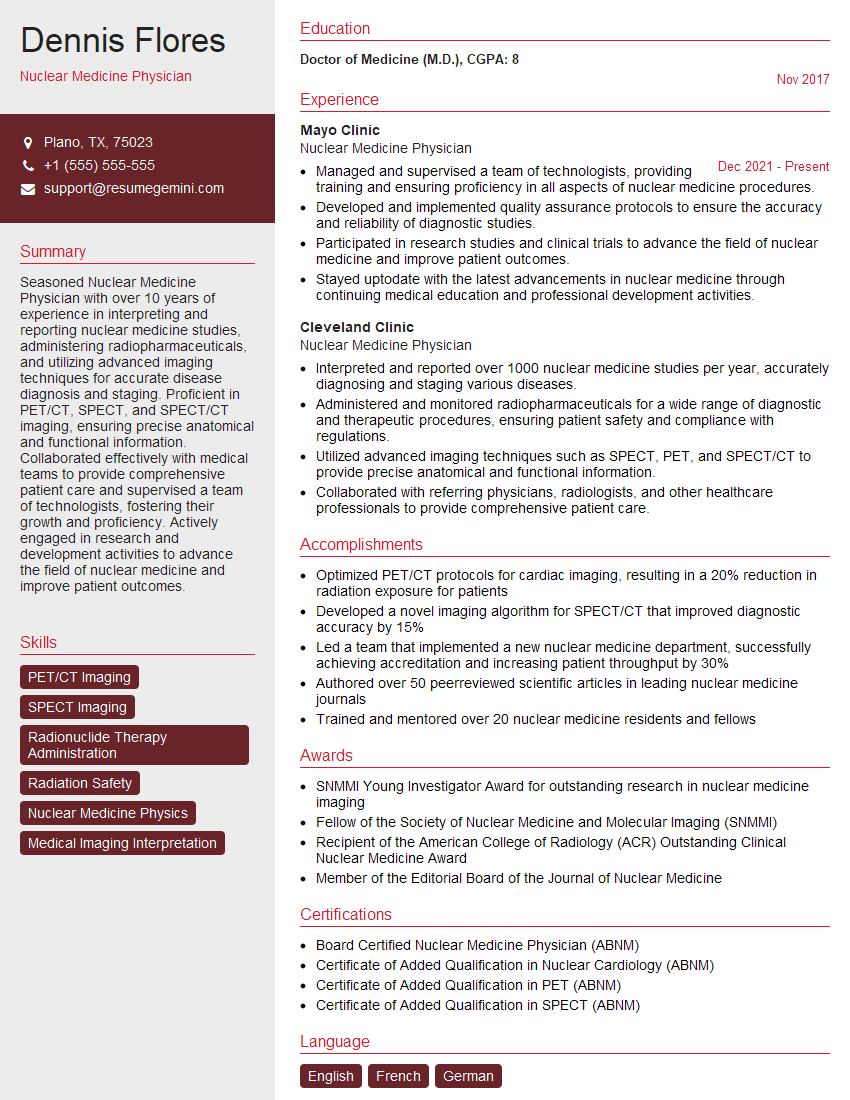
Nuclear Medicine Physician Resume Sample

Medical Dosimetrist Resume Sample

Radiation Therapist Resume Sample
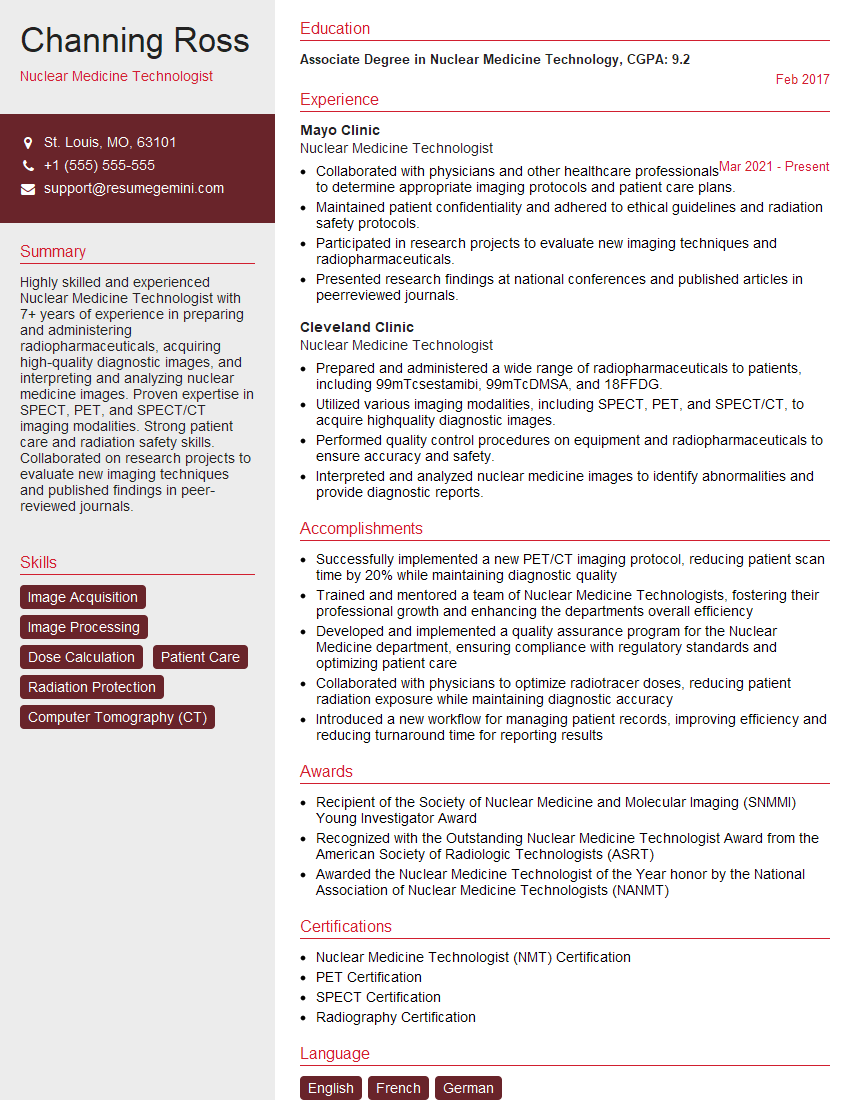
Nuclear Medicine Technologist Resume Sample

Radiation Safety Officer Resume Sample

Radiological Technologist Resume Sample
Explore more articles
Users Rating of Our Blogs
Share Your Experience
We value your feedback! Please rate our content and share your thoughts (optional).
What Readers Say About Our Blog
To the interviewgemini.com Webmaster.
Very helpful and content specific questions to help prepare me for my interview!
Thank you
To the interviewgemini.com Webmaster.
This was kind of a unique content I found around the specialized skills. Very helpful questions and good detailed answers.
Very Helpful blog, thank you Interviewgemini team.