Cracking a skill-specific interview, like one for Bioprocess Troubleshooting, requires understanding the nuances of the role. In this blog, we present the questions you’re most likely to encounter, along with insights into how to answer them effectively. Let’s ensure you’re ready to make a strong impression.
Questions Asked in Bioprocess Troubleshooting Interview
Q 1. Describe your experience troubleshooting bioreactor contamination events.
Bioreactor contamination is a nightmare for any bioprocess engineer. My experience involves a systematic approach, starting with immediate containment to prevent spread. This means isolating the contaminated bioreactor, notifying the team, and initiating a thorough investigation.
We first identify the type of contaminant – bacterial, fungal, or mycoplasma – through microscopic examination and microbial identification tests. This dictates our next steps. For example, bacterial contamination often necessitates a thorough cleaning and sterilization (CIP/SIP) of the bioreactor and associated equipment using appropriate agents. Fungal contamination might require more aggressive cleaning methods.
Investigation into the source is crucial. We trace the contamination back to its source by examining media preparation protocols, raw material quality, the aseptic techniques used during inoculation, and the integrity of the bioreactor system itself. We check filters, seals, and even the air supply for leaks or deficiencies in sterilization. In one instance, we discovered a faulty autoclave cycle was the culprit behind repeated contamination events. After correcting the autoclave’s cycle, contamination ceased.
Finally, we implement preventative measures. This could involve stricter adherence to aseptic techniques, improving cleaning and sterilization procedures, or even upgrading equipment to enhance its sterility assurance. Documentation throughout the entire process is critical, allowing for thorough analysis and future prevention.
Q 2. How do you approach investigating a decrease in cell viability during a bioprocess?
A drop in cell viability is a serious issue. My approach is systematic and begins with a thorough review of the process parameters. We analyze data points like temperature, pH, dissolved oxygen (DO), nutrient levels (glucose, glutamine, etc.), and any potential toxins that might have accumulated.
We compare the current run’s data to historical data from successful runs to pinpoint deviations. For instance, a sudden drop in pH outside the optimal range can significantly impact cell viability. Similarly, nutrient depletion or the accumulation of metabolic byproducts can severely stress cells, leading to a decline in viability.
Laboratory analysis is critical. We conduct tests to assess cell morphology under a microscope, looking for signs of apoptosis or necrosis. We also analyze the cell culture media for the presence of any inhibitory compounds or the depletion of essential nutrients. If we suspect an infection, microbial testing is undertaken immediately.
In a specific case, we discovered a batch of serum supplement was the root cause of significantly lower cell viability. Careful testing of new serum batches with control experiments was implemented to resolve the issue.
Finally, we implement corrective actions based on the root cause analysis. This might involve adjusting media formulation, optimizing process parameters, or improving cell line handling practices.
Q 3. Explain your troubleshooting methodology for low product titer issues.
Low product titer is a common challenge. My methodology involves a multi-pronged approach, focusing on upstream and downstream processing. We start by analyzing the upstream processes, focusing on cell growth and productivity.
We examine factors such as cell line performance, media formulation, and bioreactor operating conditions like temperature, pH, and DO. A lower cell density would directly correlate to lower titers. Similarly, a suboptimal media formulation might lead to inefficient nutrient utilization and reduced product synthesis.
Next, we assess downstream processing. This includes reviewing the effectiveness of different purification steps, ensuring there’s no significant product loss during each stage. For example, low recovery yields during chromatography might point to problems with column performance, buffer conditions, or the selection of the chromatography resin.
Detailed data analysis is performed using statistical software like JMP or other similar statistical process control (SPC) tools. This allows for identifying critical process parameters influencing product titer. We then use this data to create Design of Experiments (DoE) to systematically test the impact of various parameters on titer.
In one instance, optimizing the feeding strategy in the bioreactor dramatically improved cell productivity, resulting in a significant increase in product titer.
Finally, we implement the best practices and adjustments identified through our analysis to optimize the whole process and enhance future production runs.
Q 4. What are the common causes of aggregation during protein purification?
Protein aggregation during purification is a frequent problem. It leads to reduced product yield and compromised quality. The causes are multifaceted and often interlinked.
- Protein inherent properties: The protein’s amino acid sequence and its inherent propensity to form aggregates play a significant role. Proteins with hydrophobic patches or regions prone to misfolding are more aggregation-prone.
- Process conditions: High protein concentration, shear stress (during pumping or mixing), extreme pH values, and temperature fluctuations can all induce aggregation. For example, exceeding the protein’s solubility limit often triggers aggregation.
- Buffer composition: The presence of impurities, unsuitable salts, or insufficient buffer capacity can disrupt the protein’s stability and lead to aggregation.
- Contaminants: The presence of proteases, endotoxins, or other contaminants can destabilize the protein and induce aggregation.
Understanding these factors allows for implementing strategies like optimizing buffer conditions, lowering protein concentrations, using gentler purification techniques, and including additives like surfactants or stabilizers to mitigate aggregation.
Q 5. How would you troubleshoot a chromatography column exhibiting unexpected performance?
Troubleshooting a chromatography column’s unexpected performance requires a systematic approach. We first review the historical performance data to identify any significant deviations from expected results. This might involve comparing pressure drops, flow rates, and binding capacity across several runs.
Next, we assess the physical condition of the column. We inspect it for any signs of damage, leaks, or clogs. We also check the column’s packing quality, as uneven packing can lead to channeling and reduced efficiency.
The chromatography conditions are reviewed next. This includes verifying the buffer composition, pH, salt concentration, flow rate, and temperature, ensuring that they align with the established optimal conditions. Incorrect buffer conditions can significantly impact binding, leading to unexpected results.
If the problem persists, we might consider column regeneration or even replacement. We use appropriate cleaning agents and protocols to remove any accumulated contaminants or irreversibly bound material. For example, cleaning-in-place (CIP) protocols are routinely used. In cases of severe damage, column replacement is necessary to avoid further process disruptions.
In one particular instance, a slight deviation in the buffer’s pH caused reduced binding capacity and resolution of a chromatography column, highlighting the importance of precise control of process parameters.
Q 6. Describe your experience with implementing Process Analytical Technology (PAT) for troubleshooting.
Process Analytical Technology (PAT) is invaluable for troubleshooting. It allows for real-time monitoring and analysis of critical process parameters during bioprocessing. My experience with PAT involves using in-line sensors and spectroscopic techniques.
For example, using in-line pH and DO probes allows for immediate detection of deviations from optimal ranges. Similarly, spectroscopic techniques like near-infrared (NIR) spectroscopy provide real-time information on the concentration of critical metabolites and the product itself.
This real-time data facilitates proactive interventions. We can identify and correct problems before they significantly impact the process, preventing costly delays and product loss. PAT tools are especially helpful in identifying subtle changes that might not be apparent using traditional offline analytical methods.
Moreover, PAT data provide valuable insights for process optimization. We can analyze trends and correlations in the data to identify potential process improvements. By using advanced multivariate analysis and statistical modeling, we can refine our process to improve product quality, increase yield, and reduce variability.
In a recent project, we used PAT to identify a critical control point in the bioprocess that, when optimized, reduced product aggregation and increased overall yields considerably.
Q 7. How do you identify and resolve issues related to filter clogging during downstream processing?
Filter clogging during downstream processing is a common issue. My approach involves a systematic investigation, starting with an assessment of the filtration parameters. We check the filter type and pore size to confirm their suitability for the particular application. Incorrect selection can lead to rapid clogging.
Next, we examine the feed stream. The concentration of solids, proteins, and other particulates in the feed can significantly impact filter performance. High concentrations or the presence of large particles are likely culprits.
We also assess the prefiltration steps. Inadequate prefiltration can overload the final filter, leading to early clogging. Using multiple filters, each with a different pore size, is a common strategy for efficient solid removal.
Additionally, filter integrity testing is done to check for any leaks or defects that can lead to process contamination and accelerated clogging. Visual inspection of the filter is also helpful.
In cases of severe clogging, we might consider alternative filtration techniques, such as using different filters or employing tangential flow filtration (TFF). In some scenarios, optimizing parameters like the flow rate and transmembrane pressure can improve filter performance and extend the filtration duration.
Through careful analysis and appropriate corrective actions, we can overcome filter clogging issues and avoid process interruptions.
Q 8. Explain how you would investigate and resolve an unexpected peak in HPLC analysis.
An unexpected peak in HPLC (High-Performance Liquid Chromatography) analysis indicates the presence of an unknown or unexpected compound in your sample. Investigating this requires a systematic approach. First, I’d verify the method’s accuracy and precision by running a known standard. If the standard shows no issues, I’d analyze the sample’s history: What changed in the process before this sample? Did a new reagent get introduced? Was there a change in temperature or pH?
Next, I’d examine the peak’s characteristics: retention time, UV absorbance spectrum (if available), and mass spectrometry data (if available). This helps identify the unknown compound. The retention time might suggest a similar compound to those already known in the process. The UV spectrum provides clues about the compound’s chromophores. Mass spectrometry gives the molecular weight and can assist in structural elucidation.
If it’s a new impurity, we’d need to determine its source and impact on product quality. This might involve investigating upstream processes, media components, or even cleaning validation if it’s a carryover from previous batches. If the peak represents a degradation product, it suggests a problem with stability, and this requires investigation into storage conditions and formulation.
For example, if the peak appeared after a change in filtration media, we’d suspect leaching of the media components, requiring an assessment of the new filter’s compatibility and a potential switch back to the previous media. Ultimately, a thorough investigation will be documented and will involve identifying the root cause, implementing corrective actions, and verifying the effectiveness of those actions.
Q 9. What are the critical parameters to monitor during cell culture to prevent issues?
Monitoring critical parameters during cell culture is crucial for successful bioprocessing. Neglecting these can lead to decreased yields, compromised product quality, or even total process failure. Think of cell culture like tending a garden; you need the right conditions for optimal growth. The parameters can be grouped into several categories:
- Cell Growth and Viability: Cell density (viable and total), cell viability (percentage of live cells), and growth rate are fundamental. These parameters tell us how well the cells are proliferating and surviving.
- Nutrient and Metabolic Parameters: Glucose, lactate, glutamine, ammonium, and pH. These indicate the metabolic activity of the cells and potential nutrient limitations or toxic accumulation of byproducts. Monitoring the consumption of nutrients and the production of metabolites helps assess the nutritional status and metabolic health of the cells.
- Environmental Conditions: Temperature, dissolved oxygen (DO), and carbon dioxide (CO2) levels directly influence cell growth. Deviations from the optimal range can significantly impact the culture.
- Product Formation: Monitoring the concentration of your desired product over time is essential to optimize the process and assess productivity.
Regular monitoring using online sensors (e.g., for DO and pH) and offline analysis (e.g., metabolite assays) are crucial for timely intervention. For instance, a sharp drop in pH might indicate a need to add base, while a depletion in glucose would prompt supplementation. This proactive approach minimizes the risks of process deviations and ensures consistency.
Q 10. Describe your approach to root cause analysis in a bioprocess setting.
My approach to root cause analysis (RCA) in a bioprocess setting is systematic and data-driven. It’s similar to detective work, systematically eliminating possibilities until the true culprit is identified. I usually utilize a structured methodology such as the 5 Whys, Fishbone Diagram, or Fault Tree Analysis.
The 5 Whys method is a simple yet powerful tool. We ask “Why?” five times (or more) to peel back layers of contributing factors, progressively narrowing down to the root cause. For example:
- Problem: Low product titer.
- Why 1: Low cell density.
- Why 2: Insufficient nutrient supply.
- Why 3: Faulty media preparation.
- Why 4: Incorrect weighing of raw materials.
- Why 5: Lack of proper training for media preparation technicians.
The Fishbone Diagram (Ishikawa Diagram) visualizes potential causes categorized by categories (e.g., materials, methods, environment, manpower). Each branch represents a potential cause, and further sub-branches can detail contributing factors. This provides a comprehensive overview of possible causes.
Fault Tree Analysis is more complex and suitable for situations with multiple interlinked factors. It maps out different failure scenarios that can lead to the observed problem, considering probabilities and dependencies. The RCA process must meticulously document all steps and conclusions.
Q 11. How do you document troubleshooting activities and findings?
Thorough documentation is paramount in bioprocessing. It ensures reproducibility, facilitates future troubleshooting, and is crucial for regulatory compliance. I use a combination of methods for documenting troubleshooting activities and findings:
- Electronic Laboratory Notebooks (ELNs): ELNs provide a centralized, auditable record of experiments, data, and observations. They allow for easy searching, data analysis, and collaboration.
- Deviation Reports: Any deviation from the standard operating procedures (SOPs) is documented in a deviation report, detailing the issue, the investigation, corrective actions, and preventative measures.
- Change Control Forms: Changes to the process, including materials, equipment, or procedures, are documented through change control forms to track and manage risks.
- Root Cause Analysis Reports: The results of the RCA process are summarized in a comprehensive report that outlines the root cause, corrective actions implemented, and the effectiveness of these actions.
Clear, concise writing, and the inclusion of relevant data (e.g., chromatograms, images, sensor readings) are crucial for effective communication and traceability. All records must adhere to good documentation practices (GDP) and regulatory guidelines (e.g., GMP).
Q 12. What are your strategies for preventing recurring bioprocess issues?
Preventing recurring bioprocess issues necessitates a proactive, multi-faceted approach. It’s about learning from past mistakes and implementing systems to avoid repeating them:
- Process Standardization: Adhering strictly to validated SOPs minimizes variability and errors. Consistent process execution is essential for reliability.
- Preventive Maintenance: Regular scheduled maintenance of equipment and systems prevents unexpected failures and reduces downtime. This includes calibrating instruments, cleaning equipment, and replacing parts as needed.
- Supplier Qualification and Management: Selecting reliable suppliers and verifying the quality of raw materials helps avoid issues related to raw material variability or contamination.
- Continuous Improvement Initiatives: Regularly reviewing the process, identifying areas for improvement, and implementing changes through a change control system can improve efficiency, quality, and reduce the risk of issues.
- Training and Competency Assurance: Ensuring that all personnel are properly trained and competent in their roles minimizes human error, which is a significant contributor to bioprocess issues.
Data analysis and statistical process control (SPC) methods help in detecting early warning signs of potential problems. Utilizing these methods allows for identification of trends and implementation of corrective actions before major issues arise. It’s about building a culture of continuous improvement where process robustness and risk mitigation are paramount.
Q 13. Explain the difference between in-process controls and process analytical technology (PAT).
Both in-process controls (IPC) and Process Analytical Technology (PAT) aim to improve process understanding and control, but they differ in scope and implementation. IPC focuses on specific quality attributes at defined points in the process, often relying on discrete sampling and offline analysis.
Think of IPC as taking snapshots of your process at specific intervals. You might take samples at the beginning, middle, and end of a fermentation to check pH, cell density, and product concentration. These measurements provide critical information but only at those specific time points. Corrective actions are usually implemented after the data is reviewed.
PAT, on the other hand, is a broader, more holistic approach utilizing advanced analytical methods for real-time or near real-time monitoring and control. PAT aims to provide a continuous stream of data, enabling proactive process adjustments and improvements. Examples include online sensors for DO, pH, and optical density.
In essence, IPC provides snapshots while PAT offers a continuous movie of the process. While IPC is about verifying compliance at predetermined points, PAT aims to understand and control the process dynamically, improving its efficiency and product quality.
Q 14. How do you interpret and use data from various analytical techniques to guide troubleshooting efforts?
Interpreting data from various analytical techniques is crucial for effective troubleshooting. I approach this systematically, combining data from different sources to build a holistic picture of the process and identify potential problems. For example, if faced with unexpectedly low cell growth, I’d integrate data from several sources:
- Cell Density Measurements: Optical density (OD), automated cell counting, or flow cytometry will help determine if the cell numbers are indeed low.
- Nutrient Analysis: HPLC or enzymatic assays would reveal whether critical nutrients (e.g., glucose, glutamine) are depleted. This might explain poor growth.
- Metabolic Byproduct Analysis: Measurements of lactate or ammonium will indicate if toxic byproducts have accumulated, inhibiting cell growth.
- Environmental Monitoring: Data from sensors monitoring temperature, pH, and DO will reveal if environmental conditions deviated from optimal ranges.
- Microscopy: Visual inspection of cells might reveal morphological changes or contamination.
By integrating these different data sets, we can build a comprehensive understanding of what factors might have contributed to the low cell growth. For instance, if we observe low glucose levels in conjunction with high lactate levels and lower cell viability, this suggests that the cells are experiencing metabolic stress and the corrective action could include supplementing fresh media or adjusting culture conditions. Data visualization tools, such as graphs and trend plots, are also essential for identifying patterns and drawing conclusions.
Q 15. Describe your experience working with different types of bioreactors.
My experience encompasses a wide range of bioreactor systems, from small-scale shake flasks and stirred-tank reactors (STRs) to more complex perfusion and single-use bioreactors. I’ve worked extensively with various designs, including those optimized for mammalian cell culture, microbial fermentation, and plant cell cultivation. For example, I’ve successfully scaled up a CHO cell line producing a therapeutic antibody from a 250 mL shake flask to a 2000L STR, requiring careful optimization of parameters like dissolved oxygen (DO), pH, and temperature throughout the scale-up process. In another project, I troubleshooted a perfusion bioreactor experiencing low cell viability, ultimately identifying and resolving an issue with the cell retention system. This involved a deep understanding of the specific bioreactor’s design and its impact on cell physiology. My experience also includes working with single-use systems, which offer advantages in terms of sterility and reduced cleaning validation, but demand meticulous attention to detail to avoid contamination or leaks.
Career Expert Tips:
- Ace those interviews! Prepare effectively by reviewing the Top 50 Most Common Interview Questions on ResumeGemini.
- Navigate your job search with confidence! Explore a wide range of Career Tips on ResumeGemini. Learn about common challenges and recommendations to overcome them.
- Craft the perfect resume! Master the Art of Resume Writing with ResumeGemini’s guide. Showcase your unique qualifications and achievements effectively.
- Don’t miss out on holiday savings! Build your dream resume with ResumeGemini’s ATS optimized templates.
Q 16. What are your strategies for managing deviations during a bioprocess?
My approach to managing deviations during a bioprocess is systematic and proactive. It begins with a rapid assessment to determine the severity and potential impact of the deviation. Is it a minor fluctuation or a significant process upset? This dictates the urgency of response. I use a structured troubleshooting methodology: First, I gather all available data – from process analytical technology (PAT) sensors, lab analyses, and visual observations. Then, I identify potential root causes, often using a fault tree analysis. This involves systematically considering all possible causes of the deviation and eliminating those unlikely to be the root cause. Next, I develop and implement corrective actions, carefully documenting each step taken. This could involve adjusting process parameters, initiating investigations to identify potential equipment malfunctions, or even halting the process if necessary to prevent further damage. Finally, a thorough post-deviation analysis is critical to identify the true root cause, implement preventive measures, and refine process controls to mitigate the risk of recurrence. I find the ‘5 Whys’ technique particularly effective in this phase, prompting deeper analysis to prevent repetitive issues.
Q 17. How do you utilize statistical process control (SPC) in bioprocess troubleshooting?
Statistical Process Control (SPC) is essential for proactive bioprocess troubleshooting. It allows us to monitor process parameters over time, identify trends and patterns, and detect deviations before they significantly impact product quality or yield. We use control charts (e.g., Shewhart, CUSUM) to track key variables such as cell density, pH, DO, and product titer. For instance, an out-of-control point on a control chart for DO might signal a problem with the aeration system or a change in cell metabolism, prompting further investigation. By establishing control limits and analyzing patterns in data, we can proactively identify areas needing improvement or adjustment, reducing the likelihood of costly deviations. SPC also provides a robust framework for evaluating the effectiveness of corrective actions and improvements over time. The ability to statistically demonstrate process stability and control is also crucial for regulatory compliance.
Q 18. Describe your experience with design of experiments (DOE) for process optimization and troubleshooting.
Design of Experiments (DOE) is a powerful tool I use extensively for process optimization and troubleshooting. I’ve applied various DOE methodologies, including full factorial, fractional factorial, and response surface methodologies (RSM), to identify the optimal combination of process parameters that maximize product yield and quality while minimizing variability. For example, in optimizing a cell culture process, I might use a DOE approach to investigate the impact of temperature, glucose concentration, and DO on cell growth and product titer. This allows for efficient exploration of the parameter space and identification of significant interactions between variables, providing a more complete understanding of the process than would be possible through ‘one-factor-at-a-time’ experiments. DOE results are also crucial in troubleshooting situations where multiple factors might contribute to a problem. For instance, if we were observing decreased cell viability, a DOE could help determine which combination of media components or environmental conditions was responsible.
Q 19. How do you balance speed and thoroughness in bioprocess troubleshooting?
Balancing speed and thoroughness in bioprocess troubleshooting is a constant challenge. A rapid response is crucial to minimize the impact of a deviation, but a premature conclusion can lead to ineffective solutions and repeated problems. My strategy involves a phased approach. Initially, I focus on quick wins – addressing immediately obvious problems that can easily be fixed to prevent further damage. Simultaneously, I initiate a more thorough investigation to pinpoint the root cause. This might involve collecting additional samples, performing more detailed analyses, or consulting with experts. I prioritize the most critical issues, focusing on those with the greatest impact on the process. Effective communication and collaboration with the team are essential. By clearly outlining the investigation plan and setting expectations, I ensure that everyone is working towards a common goal efficiently. Using risk assessment tools helps to prioritize issues and direct resources efficiently.
Q 20. What are some common causes of foaming in bioreactors and how are they addressed?
Foaming in bioreactors is a common problem, often caused by the presence of proteins, surfactants, or gas bubbles. Protein-rich media can cause significant foaming, especially during high cell density cultures. Other causes include inadequate anti-foaming agent addition, insufficient aeration, and impeller design. Strategies to address foaming involve both preventative and corrective measures. Preventative measures include using media with reduced foaming potential, optimizing aeration to minimize bubble formation, and employing impellers designed to minimize foaming. Corrective measures involve the addition of anti-foaming agents – selecting the right type and concentration is critical to avoid impacting cell growth or product quality. Automatic foam control systems can constantly monitor foam level and automatically dispense anti-foam when needed. Regular cleaning and sanitization of the bioreactor also helps to prevent the build-up of residues that can contribute to excessive foaming. The key is to identify the root cause of the foaming to implement a sustainable solution.
Q 21. How do you ensure compliance with relevant regulatory guidelines during troubleshooting activities?
Ensuring regulatory compliance during troubleshooting is paramount. All actions must be documented meticulously, adhering to Good Manufacturing Practices (GMP) and relevant guidelines (e.g., FDA regulations for biopharmaceuticals). This includes detailed records of deviations, investigations, corrective actions, and preventative measures. Any changes made to the process, even temporary ones, need to be documented and justified. Deviations need to be reported promptly through the appropriate channels, following established procedures. The investigation must follow a structured approach, with clearly defined objectives, methods, and conclusions. All data collected must be validated, and conclusions must be supported by sound scientific evidence. Regular audits and inspections are crucial to maintain compliance. We utilize a Quality Management System (QMS) to ensure consistency and traceability of actions, and all personnel involved in troubleshooting are trained on GMP principles and relevant regulatory requirements. Failing to properly document troubleshooting steps can lead to non-compliance and serious regulatory repercussions.
Q 22. Describe your experience with cleaning validation in a bioprocessing environment.
Cleaning validation in bioprocessing ensures equipment is thoroughly cleaned and free from residues that could contaminate subsequent batches. This is crucial for product quality, safety, and regulatory compliance. My experience encompasses developing and executing cleaning validation protocols, sampling and analyzing residues using various techniques like HPLC and TOC analysis, and interpreting results to demonstrate cleaning effectiveness.
We typically follow a phased approach: First, we develop a cleaning procedure based on the specific equipment and product. Then, we establish appropriate cleaning agents and cleaning-in-place (CIP) or cleaning-out-of-place (COP) parameters. Next comes the validation itself, involving multiple cleaning cycles followed by residue analysis. The data generated is then statistically evaluated to confirm that the cleaning procedure consistently meets pre-defined acceptance criteria. For example, we might set limits on residual protein or DNA levels, ensuring they’re below thresholds that could affect the next batch. Finally, we document all aspects of the validation process for auditing purposes. I’ve worked extensively with both traditional cleaning methods and newer technologies, optimizing approaches to reduce cleaning times and water consumption while maintaining validated efficacy.
Q 23. Explain your experience troubleshooting issues related to single-use systems.
Troubleshooting single-use systems (SUS) requires a different approach than traditional stainless steel systems due to their disposable nature and the inherent challenges of leak detection, material compatibility, and sterility assurance. My experience includes identifying and resolving various issues, ranging from simple leaks to complex contamination events.
A common issue is leaks within the system. This often requires careful visual inspection of all connections, particularly welds and seals. We may employ pressure testing to pinpoint the location of the leak. Contamination is another major concern, and it often demands a thorough investigation to identify the source – whether it’s from the bag itself, the connection points, or even external factors. I’ve been involved in instances where seemingly minor issues with bag integrity or improper connection techniques resulted in significant product loss or batch failure. To mitigate these issues, we implement rigorous training programs for personnel handling SUS, use visual inspection checklists, and frequently audit our assembly and operational procedures. Material compatibility is equally critical, and we carefully select SUS components based on compatibility with the process fluids to prevent degradation or leaching of harmful substances.
Q 24. How do you utilize risk assessment methodologies in bioprocess troubleshooting?
Risk assessment is foundational in bioprocess troubleshooting; it helps prioritize investigations and allocate resources efficiently. I employ methodologies like Failure Mode and Effects Analysis (FMEA) and Hazard Analysis and Critical Control Points (HACCP) to systematically identify potential issues. FMEA involves listing potential failure modes in each bioprocess step, assessing their severity, occurrence, and detectability, and ultimately calculating a risk priority number (RPN). High-RPN failures get prioritized for mitigation.
For instance, in a cell culture process, we might use FMEA to assess the risk of contamination during media preparation or cell seeding. If the RPN is high for a specific failure mode (say, contamination from a poorly sterilized media component), we would focus our efforts on improving the sterilization procedure, implementing stricter quality control checks, or investing in better filtration systems. HACCP emphasizes the identification of critical control points (CCPs) – steps where control is essential to prevent or eliminate food safety hazards. Adapting this principle, we identify CCPs in a bioprocess to ensure product quality and safety. This risk-based approach allows for a data-driven approach to problem-solving and resource allocation, making investigations more efficient and effective.
Q 25. What are some key performance indicators (KPIs) you monitor to assess bioprocess health?
Monitoring key performance indicators (KPIs) is vital for assessing bioprocess health and detecting deviations early. The specific KPIs vary based on the process but typically include:
- Cell density (viable cell count): Indicates the growth performance of the cell culture.
- Viability: Percentage of live cells, reflecting cell health and productivity.
- Specific productivity (e.g., titer): Amount of product produced per cell, a critical indicator of process efficiency.
- Metabolic parameters (e.g., glucose, lactate): Reveal the metabolic state of the cells and identify potential nutrient limitations or metabolic stress.
- pH and dissolved oxygen (DO): Critical parameters that directly influence cell growth and product formation.
- Temperature and agitation: Key process parameters that directly influence cell growth and process performance.
We use real-time monitoring systems to continuously track these KPIs. Deviations from established setpoints trigger alerts and prompt immediate investigation, enabling proactive interventions to prevent major issues.
Q 26. How do you communicate troubleshooting findings and recommendations to colleagues and management?
Effective communication is essential for resolving bioprocess issues. I use a multi-faceted approach to share troubleshooting findings and recommendations:
- Structured reports: Detailed reports summarizing the problem, investigative steps, findings, conclusions, and recommended actions. These reports include data visualizations (graphs, charts) to improve clarity.
- Presentations: Presenting findings to teams and management using clear and concise slides, focusing on key data and implications. This facilitates collaborative discussion and shared understanding.
- Regular updates: Providing timely updates during ongoing troubleshooting, keeping all stakeholders informed of progress and any changes in strategy.
- Interactive discussions: Fostering open communication through team meetings and brainstorming sessions to encourage the sharing of ideas and knowledge.
I ensure my communication style is tailored to the audience, using technical details with colleagues while focusing on the high-level implications for management. Clear and concise communication prevents misunderstandings and ensures everyone is aligned on the actions needed.
Q 27. Describe a time you successfully resolved a complex bioprocess issue. What was your approach?
During a monoclonal antibody production campaign, we experienced unexpectedly low antibody titer. Initially, we suspected a problem with the cell line itself. Using a systematic approach, we first ruled out issues with media formulation, inoculum quality, and the bioreactor parameters (temperature, pH, DO). This was achieved by comparing process parameters and results against historical data and established process controls.
We then moved to more detailed analysis. We found no significant changes in the cell line itself, indicating the problem was within the culture process. Further investigation revealed an unexpectedly high level of ammonia accumulation in the bioreactor. This was pinpointed as the root cause for the low titer. We traced the high ammonia to a faulty sensor that was not accurately reporting ammonia levels. Because the problem was not correctly identified initially, we almost continued to the purification stage, which would have led to significant wasted resources. The solution was straightforward: we replaced the faulty sensor and implemented additional quality control checks to prevent similar incidents.
This experience highlighted the importance of meticulous data analysis, thorough investigation, and a systematic elimination of possible causes when troubleshooting complex bioprocess issues. It also underscored the necessity of robust quality control systems to detect potential problems at early stages, preventing unnecessary cost and delays.
Key Topics to Learn for Bioprocess Troubleshooting Interview
- Upstream Processing Troubleshooting: Understanding and diagnosing issues in cell culture, media preparation, and feed strategies. This includes analyzing deviations from expected growth parameters and identifying root causes.
- Downstream Processing Troubleshooting: Identifying and resolving problems in purification steps such as chromatography, filtration, and formulation. This involves understanding process parameters and their impact on product quality and yield.
- Process Monitoring and Control: Mastering the use of various analytical techniques (e.g., HPLC, SDS-PAGE, flow cytometry) for real-time process monitoring and implementing corrective actions based on data analysis.
- Aseptic Techniques and Contamination Control: Deep understanding of contamination sources (bacterial, fungal, viral), prevention strategies, and effective remediation protocols. This includes knowledge of sterilization methods and environmental monitoring.
- Data Analysis and Interpretation: Developing strong skills in interpreting process data, identifying trends, and using statistical methods to troubleshoot process deviations. This includes applying root cause analysis techniques.
- Regulatory Compliance: Familiarity with Good Manufacturing Practices (GMP) guidelines and their impact on troubleshooting strategies within a bioprocessing environment. Understanding documentation requirements is crucial.
- Process Optimization and Design of Experiments (DoE): Applying experimental design principles to systematically investigate process parameters and improve overall efficiency and product quality. This includes understanding statistical software and data interpretation.
- Equipment Troubleshooting: Understanding common equipment malfunctions in bioreactors, chromatography systems, and other bioprocessing equipment, and developing troubleshooting strategies for effective maintenance and repair.
Next Steps
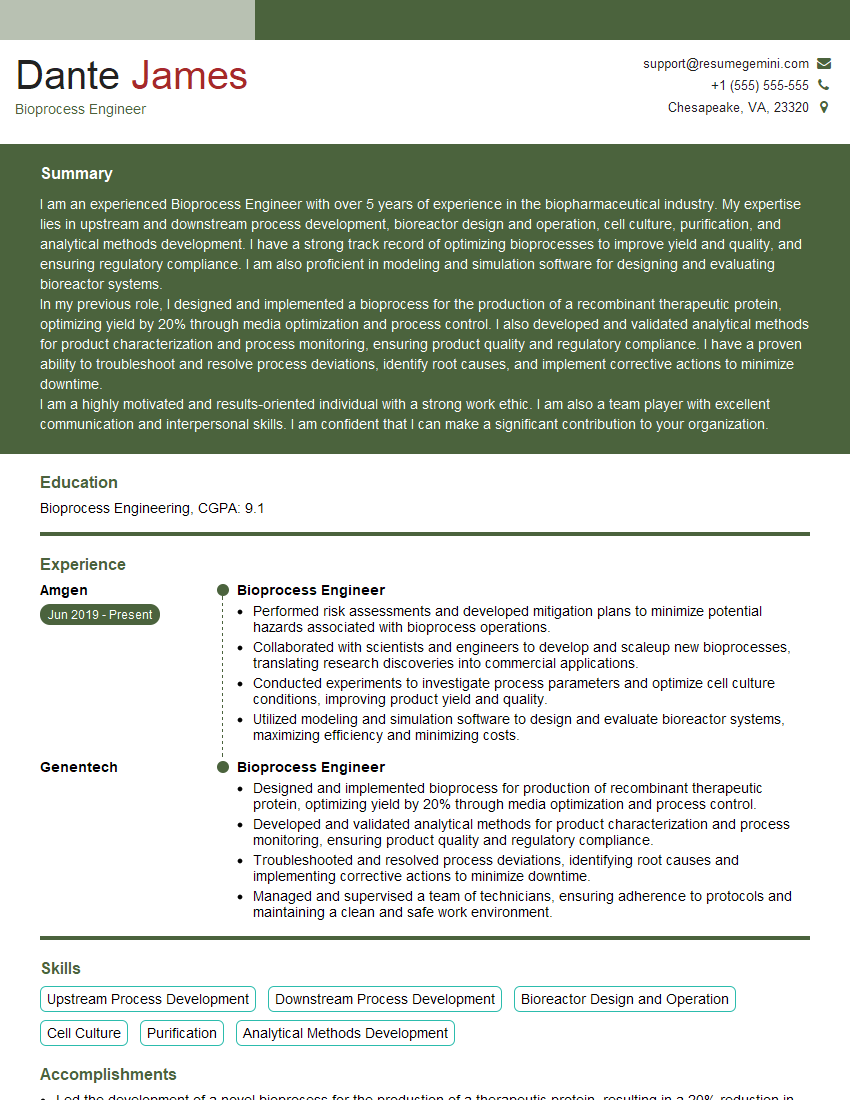
Mastering bioprocess troubleshooting is crucial for career advancement in the biopharmaceutical industry. It showcases your problem-solving skills, technical expertise, and ability to contribute effectively to a dynamic manufacturing environment. To significantly enhance your job prospects, crafting an ATS-friendly resume is essential. This ensures your qualifications are effectively communicated to potential employers and helps your application stand out from the competition. ResumeGemini is a trusted resource for building professional, impactful resumes, and we provide examples tailored specifically to Bioprocess Troubleshooting to help you present your skills and experience in the best possible light.
Explore more articles
Users Rating of Our Blogs
Share Your Experience
We value your feedback! Please rate our content and share your thoughts (optional).
What Readers Say About Our Blog
To the interviewgemini.com Webmaster.
Very helpful and content specific questions to help prepare me for my interview!
Thank you
To the interviewgemini.com Webmaster.
This was kind of a unique content I found around the specialized skills. Very helpful questions and good detailed answers.
Very Helpful blog, thank you Interviewgemini team.