Interviews are opportunities to demonstrate your expertise, and this guide is here to help you shine. Explore the essential Boating or Canoeing interview questions that employers frequently ask, paired with strategies for crafting responses that set you apart from the competition.
Questions Asked in Boating or Canoeing Interview
Q 1. Describe your experience with different types of boat hulls and their suitability for various water conditions.
Boat hull design significantly impacts performance and suitability for different water conditions. Understanding hull types is crucial for choosing the right vessel for your needs.
- Displacement Hulls: These hulls, common in sailboats and larger motorboats, are designed to push water aside. They are stable and efficient at lower speeds but less so at higher speeds. Think of a heavy barge moving slowly through the water; that’s a displacement hull in action.
- Planing Hulls: These hulls, typical in powerboats, are designed to lift the hull out of the water at higher speeds, reducing drag. They are faster but less stable at low speeds and can be rougher in choppy water. Imagine a speedboat skimming across the surface; that’s planing.
- Semi-Displacement Hulls: These hulls combine features of both displacement and planing hulls, offering a balance of stability and speed. They’re often seen in larger motor yachts that need to be both efficient and relatively fast.
- Catamaran and Trimaran Hulls: These multi-hull designs provide exceptional stability and are less prone to capsizing, making them suitable for rougher waters. However, they require more space for storage and manoeuvering can be challenging.
- Canoe Hulls: Canoe hulls are typically very shallow and wide for stability in calm water. Different materials (wood, fiberglass, plastic) impact their weight and durability.
Choosing the right hull depends on factors like the intended use (fishing, racing, cruising), the typical water conditions (calm lakes, rough seas), and personal preferences. For example, a displacement hull is ideal for a leisurely cruise on a calm lake, while a planing hull is better suited for high-speed runs on open water. A catamaran provides stability in rough seas.
Q 2. Explain the principles of navigation using GPS and traditional methods.
Navigation involves determining and maintaining a vessel’s position and course. Modern methods rely heavily on GPS, while traditional techniques use celestial navigation, landmarks, and charts.
- GPS Navigation: GPS receivers use signals from satellites to pinpoint a location on Earth. This is very accurate and easy to use. Most modern boats have integrated GPS plotters that show your position, course, speed, and nearby hazards.
- Traditional Navigation: This involves using paper charts, compasses, and piloting skills to determine position and course. Landmarks, such as buoys, lighthouses, and prominent features on the shore, are used to triangulate position. Celestial navigation involves using the positions of stars and the sun to determine latitude and longitude – a more complex skill requiring considerable practice.
Combining both methods offers the best approach. GPS provides reliable and precise positioning, but understanding traditional methods is crucial as a backup in case of electronic failure. Knowing how to read a nautical chart and interpret compass bearings helps you understand your surroundings and navigate safely even without electronic assistance. For example, if your GPS fails, you can use a paper chart and compass to find your way back to shore, understanding landmark positioning.
Q 3. How do you perform a pre-departure safety check on a boat/canoe?
A pre-departure safety check is paramount for ensuring a safe boating/canoeing experience. This checklist should always be followed before launching.
- Visual Inspection: Check the hull for any damage, cracks, or leaks. Inspect the paddles/oars for damage.
- Fuel and Fluids: Ensure there is sufficient fuel (for motorboats) and check the engine oil levels. For canoes, ensure no leaks are present.
- Safety Equipment: Verify that you have life jackets (PFDs) for everyone on board, a first-aid kit, a whistle, flares (where applicable and legally required), a bilge pump (for boats), and a spare paddle/oar.
- Navigation Equipment: Check that GPS devices, compasses, charts, and any other navigation tools are functioning correctly and readily accessible.
- Communication: Ensure that radios (if applicable) have sufficient charge and are functioning correctly. Have a charged mobile phone (as a backup).
- Weather Check: Always check the weather forecast before embarking and be prepared for changing conditions.
- Emergency Plan: Establish a communication and meeting plan with someone ashore who knows your itinerary and expected return time.
A thorough pre-departure check prevents accidents and ensures a safer journey. I, for instance, always spend at least 15 minutes doing a complete inspection before setting off, and this has prevented potential problems on many occasions.
Q 4. What are the signs of engine trouble and how would you respond?
Engine trouble can manifest in various ways, requiring different responses.
- Loss of Power: If the engine loses power or dies completely, first try to restart it. If unsuccessful, check the fuel supply, switch to a reserve tank if available. If the problem persists, radio for assistance if equipped.
- Unusual Noises: Grinding, knocking, or other unusual noises can indicate mechanical issues. Reduce speed immediately, check for obvious problems, and consider radioing for assistance.
- Overheating: If the engine overheats, immediately reduce speed and shut down the engine to prevent damage. Allow the engine to cool down before attempting to restart it. Check coolant levels.
- Smoke or Fumes: Smoke or excessive fumes indicate serious issues. Shut down the engine immediately, ventilate the area and call for assistance.
The key is to remain calm and assess the situation systematically. Prioritize safety, radio for help when necessary, and be prepared to use your backup plan (e.g. sails if available, paddling if appropriate). Never attempt risky maneuvers to fix engine issues on the water.
Q 5. Describe your experience with knot-tying and its importance in boating/canoeing.
Knot-tying is a fundamental skill in boating and canoeing, essential for securing equipment and performing various tasks. Proficiency is crucial for safety and efficiency.
- Bowline: A reliable loop that won’t slip. I use this for securing lines to mooring points or attaching a tow line.
- Clove Hitch: Easy to tie and adjust, great for securing equipment to a boat or a canoe’s thwart.
- Figure Eight: A simple stopper knot, often used to prevent a rope from running through a block or pulley.
- Sheet Bend: Useful for joining two ropes of different diameters, such as attaching a dock line to a boat’s cleat.
Knots are critical for many aspects of boating/canoeing, from securing gear and attaching lines to creating makeshift repairs. In one instance, I used a bowline to secure a damaged section of a canoe’s gunwale (upper edge), allowing us to paddle back safely. Proper knot-tying prevents equipment loss, ensures safe mooring, and contributes significantly to safe navigation.
Q 6. Explain your understanding of nautical charts and symbols.
Nautical charts are specialized maps providing detailed information about waterways. Understanding their symbols is essential for safe navigation.
- Depths: Shown using soundings (depth numbers) and depth contours. The depth is typically given in feet or meters.
- Buoys: Different colours and shapes indicate navigational hazards or safe water. A red buoy will usually indicate that there is a hazard to the port side as you approach.
- Lighthouses: Marked with symbols showing their light characteristics (colour, frequency, etc.).
- Channels and Fairways: Designated routes through waterways are marked clearly.
- Shorelines, land features and hazards: These are accurately mapped and labeled.
Charts also show details about tides, currents, and other crucial information relevant to navigation. For example, knowing the depth contours helps you avoid running aground, and understanding buoyage systems keeps you away from hazards. Interpreting these symbols is a fundamental skill for safe boating.
Q 7. How would you handle a sudden storm while on the water?
Encountering a sudden storm on the water requires quick and decisive action to ensure safety.
- Assess the Situation: Determine the severity of the storm and its likely path.
- Seek Shelter: If possible, find a safe place to shelter, such as a bay, cove, or a protected harbor. Avoid low-lying areas that might be subject to flooding.
- Reduce Sail/Speed: Reduce sail area (if applicable) or slow down the boat. Reduce windage to the minimum possible.
- Use Safety Gear: Put on life jackets and secure any loose equipment. Ensure all crew is safely accounted for.
- Radio for Help: If equipped, radio for assistance, providing your location and situation.
- Stay Calm: Maintain a calm demeanor to make rational decisions and keep your crew calm.
In a particularly dangerous situation, one must make calculated decisions; perhaps deploying a sea anchor to minimize drifting, or even deploying an emergency distress beacon. The goal is to survive the storm and prevent damage to the vessel and injuries to the crew. Prior experience in similar situations is invaluable, and regular training helps prepare for such eventualities.
Q 8. Describe your experience with rescue techniques in boating/canoeing.
My experience with rescue techniques encompasses both preventative measures and reactive responses. Prevention starts with thorough trip planning, including checking weather forecasts, informing someone of your itinerary, and ensuring everyone has appropriate personal flotation devices (PFDs). In terms of reactive techniques, I’m proficient in various self-rescue and assisted-rescue methods. For instance, in a canoe capsize, I can perform a T-rescue or a assisted rescue using a throw bag to help a capsized paddler. For boats, I’m trained in using boat hooks to assist someone back aboard. I’ve also participated in formal water rescue training, covering topics like swiftwater rescue techniques and the use of specialized equipment like throw ropes and rescue lines. My experience has taught me the importance of calm, decisive action and a thorough understanding of both the environment and the capabilities of the people involved.
One memorable incident involved a kayaker who capsized in a rapid. My quick reaction, using a throw bag and a well-coordinated rescue effort with another paddler, ensured their safe return and avoided a potentially dangerous situation. This emphasizes the importance of both individual skills and teamwork in water rescue scenarios.
Q 9. What are the legal requirements for operating a boat/canoe in your area?
Legal requirements for operating a boat or canoe vary by location, but generally include registration and licensing for motorized vessels, and potentially permits for certain waterways. In many areas, it’s mandatory to wear a PFD (personal flotation device) in certain situations, especially on open water or when children are present. Navigation rules, such as adhering to right-of-way protocols around other vessels, must be followed. Furthermore, there are often restrictions on the use of alcoholic beverages while operating a watercraft. Always check with your local authorities or boating regulations website for the most up-to-date and specific requirements for your area. Ignoring these regulations can lead to hefty fines and potentially endanger lives.
For example, in my region, motorboat operation requires licensing and registration, while canoes and kayaks typically don’t require registration but still need to follow navigation rules and PFD requirements.
Q 10. Explain the principles of buoyancy and how it relates to boat/canoe safety.
Buoyancy is the ability of an object to float in a liquid or gas. In boating and canoeing, it’s crucial for safety because it determines a craft’s ability to stay afloat even when partially submerged. Archimedes’ principle states that an object immersed in a fluid experiences an upward buoyant force equal to the weight of the fluid displaced by the object. A boat floats because the buoyant force acting on it is greater than or equal to its weight and the weight of everything inside it. The shape of the hull is designed to displace a large volume of water, maximizing buoyancy.
A boat or canoe’s stability is directly related to its buoyancy and center of gravity. A low center of gravity improves stability and reduces the risk of capsizing. Conversely, overloading a boat or canoe lowers its freeboard (the distance between the waterline and the gunwale), decreasing stability and increasing the risk of swamping or capsizing.
Understanding buoyancy allows us to make informed decisions about weight distribution, passenger capacity, and the overall safety of our craft. For instance, I always make sure the canoe’s load is evenly distributed, preventing it from tipping.
Q 11. How do you maintain a boat/canoe to ensure its longevity and safety?
Maintaining a boat or canoe is vital for its longevity and, more importantly, for safety. Regular cleaning is essential to remove dirt, salt, and other corrosive elements. This should include both the interior and exterior of the vessel. Inspecting the hull for cracks, abrasions, and other damage is critical. For canoes, inspecting seams and rivets is vital. For boats with fiberglass hulls, I regularly check for blisters or stress cracks. The paddles should also be checked for cracks and damage. Regular waxing or applying UV protectant helps protect the material from sun damage. Lubricate any moving parts, as needed. Proper storage, away from direct sunlight and extreme temperatures, is critical to prevent premature aging and damage.
For example, I always rinse my canoe with fresh water after each use to prevent salt buildup, and I store it upside down in a well-ventilated area to prevent water damage and mildew.
Q 12. Describe your experience with different types of paddles and their appropriate use.
Different paddles are designed for various purposes and boat types. The most common types include:
- Canadian style paddles: These have a long, single blade and are ideal for efficient long strokes in canoes and kayaks. They offer good power and are excellent for maneuvering.
- Kayaking paddles: Usually have two blades of unequal length, which allows for a more comfortable and efficient paddling technique in kayaks.
- Whitewater paddles: These are shorter and lighter with high-angle blades designed for quick strokes and precise maneuvering in fast-moving water.
The choice of paddle depends on the type of watercraft, the type of paddling, and personal preference. For instance, I use a Canadian style paddle for recreational canoeing on calm waters, and would switch to a shorter whitewater paddle if I am navigating rapids.
Q 13. How do you plan a safe and enjoyable boating/canoeing trip?
Planning a safe and enjoyable boating or canoeing trip involves several key steps:
- Choosing the destination and route: Consider your skill level, the weather forecast, and any potential hazards on the route.
- Checking the weather forecast: Wind, rain, and sudden storms can drastically change conditions on the water.
- Informing someone of your plans: Let someone know where you’re going, when you expect to return, and who to contact in case of an emergency.
- Equipping yourself properly: Pack essential items such as PFDs, extra clothing, first-aid kit, maps, compass, GPS, and possibly a communication device.
- Knowing your limits: Don’t attempt to paddle beyond your abilities or in challenging conditions if you lack the necessary skills or experience. If in doubt, turn around!
For example, I always check the weather forecast before each trip and carry a waterproof map and compass, even if I’m using a GPS. Safety is paramount, and thorough planning mitigates risk.
Q 14. Explain your understanding of tides and currents and how they affect navigation.
Tides and currents are significant factors affecting navigation, especially in coastal areas and rivers. Tides are the regular rise and fall of sea levels caused by the gravitational pull of the moon and sun. Currents are the continuous flow of water in a particular direction, driven by factors such as wind, river flow, and differences in water density. Both tides and currents can significantly impact a vessel’s speed, direction, and overall safety.
Understanding the tidal patterns—high tide, low tide, slack water (when the current changes direction)—is critical for safe navigation. Timing your trips to coincide with favorable tides can make paddling easier, while ignoring them can lead to getting caught in strong currents or becoming grounded. Similarly, understanding the strength and direction of currents helps you plan your route efficiently and avoid hazardous areas. For example, I always consult tidal charts before going sea kayaking, to avoid getting caught in a strong outgoing current.
Navigation apps and charts are invaluable tools that provide real-time information about tides and currents. Using this information properly is key to safe and efficient water travel.
Q 15. How do you handle difficult passengers or clients?
Handling difficult passengers or clients in a boating or canoeing context requires a blend of diplomacy, assertiveness, and safety awareness. My approach prioritizes clear communication and de-escalation.
Firstly, I establish clear expectations at the outset – outlining safety procedures, trip plans, and what constitutes acceptable behavior. This proactive approach often prevents problems. If a passenger displays disruptive behavior, I address it directly but calmly, explaining why their actions are inappropriate and what needs to change. For instance, if someone refuses to wear a life jacket, I explain the potential consequences and the regulations requiring it.
If the issue persists despite my attempts at de-escalation, I’m not afraid to implement consequences, such as requesting the passenger to leave the trip or contacting the relevant authorities if safety is compromised. I’ve had to ask a passenger to disembark once because their alcohol consumption was creating a safety hazard for everyone. The safety of all passengers is always my top priority.
Ultimately, my goal is to create a positive and safe experience for everyone, which involves addressing problematic behavior fairly and firmly but always with respect.
Career Expert Tips:
- Ace those interviews! Prepare effectively by reviewing the Top 50 Most Common Interview Questions on ResumeGemini.
- Navigate your job search with confidence! Explore a wide range of Career Tips on ResumeGemini. Learn about common challenges and recommendations to overcome them.
- Craft the perfect resume! Master the Art of Resume Writing with ResumeGemini’s guide. Showcase your unique qualifications and achievements effectively.
- Don’t miss out on holiday savings! Build your dream resume with ResumeGemini’s ATS optimized templates.
Q 16. Describe your experience with basic boat/canoe repair.
My experience with basic boat and canoe repair is extensive. I’m comfortable handling minor repairs on the water and performing more substantial maintenance work in a workshop setting.
- Minor Repairs: I can patch small holes in inflatable boats using repair kits, fix loose rivets on canoes, and deal with minor leaks using sealant. I carry a comprehensive repair kit on all trips, including waterproof tape, epoxy resin, and various tools. I’ve successfully patched a tear in an inflatable raft mid-trip before, allowing us to continue the journey.
- Maintenance: I regularly inspect equipment for wear and tear, checking for things like frayed ropes, damaged paddles, and loose fittings. I’m also adept at tasks such as greasing oarlocks, tightening screws, and replacing worn-out parts. I can also perform basic engine maintenance on small outboard motors. This includes changing oil and spark plugs.
While I don’t consider myself a professional boat builder, my practical experience ensures I can handle most routine maintenance and minor repairs, minimizing downtime and enhancing safety.
Q 17. What is your experience with different types of anchors and their deployment?
I’m familiar with several types of anchors, each suited to different conditions and boat types. My experience includes deploying:
- Fluke anchors: These are versatile, reliable anchors suitable for various substrates. I’ve used them extensively in sandy, muddy, and rocky bottoms. Deployment involves throwing the anchor overhand from the bow, paying out rope gradually to ensure a proper set.
- Danforth anchors: Lightweight and relatively easy to stow, they work well in sand and mud but are less effective in rock or weed. They are especially useful in canoes and small boats. The deployment is similar to the fluke, paying out a length of rope before making a firm setting.
- Mushroom anchors: Excellent for holding in sand and mud but poor in rocky areas. They’re often used for smaller craft in sheltered areas. Deployment is straightforward—simply dropping them over the side.
Choosing the right anchor depends on the bottom type, water depth, weather conditions, and size of the craft. I always ensure sufficient rode (anchor rope or chain) to ensure proper holding in various conditions. I know that the rule of thumb is at least 5:1 ratio of rode to depth.
Q 18. How do you assess weather conditions before and during a trip?
Assessing weather conditions is paramount to boating and canoeing safety. My process involves checking forecasts and actively monitoring conditions throughout a trip.
Before the trip: I consult reputable meteorological sources such as NOAA or Environment Canada, considering wind speed and direction, wave height, precipitation, and visibility. I also check the marine weather forecast specifically tailored to my planned route. I take into account the predicted changes over the duration of the trip and adjust plans accordingly. This includes looking at historical weather data as well.
During the trip: I remain vigilant, constantly observing the sky, water, and wind. Changes in cloud cover, wind speed, wave patterns, or atmospheric pressure indicate potential shifts in weather conditions. I carry a handheld barometer as a backup tool to gauge atmospheric pressure changes. I am equipped with emergency gear based on the forecasted conditions.
If conditions deteriorate significantly, I have contingency plans in place, including altering the route, seeking shelter, or returning to base early. Safety is always the top priority. Knowing the limitations of my craft and my experience is crucial for effective decision-making.
Q 19. Describe your experience with using marine radios and emergency communication.
I am proficient in using VHF marine radios for communication and emergency situations. I understand proper radio etiquette, including using clear and concise language, identifying my vessel, and listening before transmitting.
I’ve utilized marine radios for contacting harbor masters for entry permissions, communicating with other vessels, and requesting assistance in emergencies. For example, I’ve used a VHF radio to call for a tow after encountering engine trouble several miles offshore. In such cases, I would provide my location (GPS coordinates), the nature of the emergency, and the number of people on board.
Beyond VHF radios, I’m familiar with other emergency communication methods, including EPIRBs (Emergency Position Indicating Radio Beacons) and personal locator beacons (PLBs). Knowing when and how to deploy these devices is crucial for personal safety and rescue operations.
Q 20. What are the common safety hazards associated with boating/canoeing?
Boating and canoeing present several common safety hazards:
- Capsizing: Sudden changes in weather, overloading, or improper handling can lead to capsizing. Life jackets are essential to mitigate this risk.
- Collisions: Lack of proper lookout and navigation can result in collisions with other vessels, obstacles, or shorelines. Maintaining a safe speed and distance from other craft is vital.
- Hypothermia: Exposure to cold water can lead to hypothermia, especially in colder climates. Proper clothing and the use of a dry suit or wetsuit are crucial.
- Sunstroke/Dehydration: Prolonged sun exposure can lead to sunstroke and dehydration. Sunscreen, hats, and regular water intake are important.
- Wildlife encounters: Depending on the location, encounters with wildlife can pose a risk. Knowing how to interact safely with animals is crucial.
- Navigation errors: Incorrect navigation or lack of awareness of changing currents and tides can result in becoming lost or stranded.
Thorough trip planning, weather monitoring, and proper equipment greatly reduce these hazards.
Q 21. Explain your understanding of proper loading and weight distribution in a boat/canoe.
Proper loading and weight distribution are crucial for stability and safety in boats and canoes. Incorrect distribution can make a craft unstable, prone to capsizing, and difficult to maneuver.
Weight distribution: In a canoe, weight should be distributed evenly, with heavier items positioned low and centrally. Passengers should also sit or kneel centrally, avoiding shifting weight rapidly. Think of it like balancing a scale—even distribution ensures stability.
Loading a boat: Similar principles apply to motorboats. Heavy objects should be placed low in the hull, near the center of gravity. Weight should be distributed evenly across the beam (width) of the boat to avoid tilting. Avoid concentrating weight in one area. This principle is even more critical for smaller vessels.
Overloading: Never exceed the boat’s or canoe’s maximum weight capacity, which is usually stated on a plate on the vessel. Overloading dramatically decreases stability and increases the risk of capsizing. The weight limits should always be strictly adhered to.
Careful planning and attention to weight distribution significantly improve safety and handling of any watercraft.
Q 22. How do you manage risk and ensure safety on the water?
Risk management in boating and canoeing is paramount. It’s a layered approach, starting with pre-trip planning and continuing throughout the journey. Think of it like building a sturdy house: a weak foundation leads to collapse.
- Pre-Trip Planning: This includes checking weather forecasts meticulously (wind speed, direction, precipitation), assessing the water conditions (currents, obstacles), and ensuring the vessel is in top condition. I always double-check all safety equipment – life jackets, flares, first-aid kit, bilge pump (for boats), spare paddles etc., and ensure everyone knows where they are and how to use them. I also file a float plan with a trusted contact, detailing my route and expected return time.
- On-the-Water Vigilance: Constant situational awareness is key. I regularly scan the surroundings for potential hazards like other vessels, changing weather conditions, submerged objects, and wildlife. Maintaining a safe distance from other boats and avoiding risky maneuvers is crucial. This includes being aware of my own physical and mental state and the fatigue levels of my paddling companions, if any.
- Emergency Preparedness: Knowing what to do in various emergency scenarios is crucial. This includes practicing rescue techniques, like assisting someone back into a canoe or using a throw bag. We also run drills to ensure everyone is comfortable handling emergencies.
- Communication: Effective communication with fellow paddlers is crucial, especially in challenging conditions. We establish clear hand signals and verbal cues to coordinate our actions, preventing accidents caused by miscommunication.
For example, during a recent canoe trip, we encountered unexpectedly strong headwinds. By anticipating this possibility during planning (checking the forecast), we were prepared and adjusted our route to mitigate the risks.
Q 23. What is your experience with first aid and CPR in a boating/canoeing context?
I’m certified in Wilderness First Aid and CPR, specifically trained for aquatic environments. This means I’m equipped to handle various medical emergencies, from minor injuries to life-threatening situations like drowning. My training includes hypothermia recognition and treatment, spinal immobilization techniques, and proper procedures for administering CPR in challenging circumstances, such as on a moving boat or unstable terrain.
The wilderness aspect of the training is crucial because it involves improvising with limited resources. For instance, we practice using readily available materials to create splints or dressings in case of injuries far from medical assistance. Regular refresher courses ensure my skills remain sharp and up-to-date. This includes practicing patient assessment and management in scenarios relevant to the water, like dealing with a person suffering from cold water shock.
Q 24. How do you handle equipment malfunctions during a trip?
Equipment malfunctions can range from a simple paddle breakage to a more serious engine failure (in motorboats). My approach is systematic and prioritizes safety.
- Assessment: First, I assess the severity of the malfunction and the potential danger it poses. A broken paddle is less serious than a flooded hull.
- Immediate Actions: I take immediate steps to mitigate the risk. If a paddle breaks, I’ll either use a spare or adapt by using another paddle differently. If there’s a potential for capsizing or sinking, I ensure that all life jackets are immediately donned. We also immediately radio for help if possible.
- Problem Solving: Next, I troubleshoot the problem. Can the equipment be repaired? Is there a workaround? I use my knowledge of repairs to attempt fixes where feasible – for instance, duct taping a minor crack in a canoe.
- Emergency Procedures: If the problem cannot be solved, I initiate the appropriate emergency procedures, including signaling for help, activating emergency beacons, or using backup methods to reach shore.
For example, I once experienced a canoe hull leak during a trip. By systematically assessing the leak, I was able to use a waterproof tarp and duct tape to temporarily seal the hole, allowing us to safely reach shore and perform a more permanent repair.
Q 25. Describe your experience with navigation using compass and sextant (if applicable).
While GPS is now prevalent, I have extensive experience with traditional navigation using a compass and sextant. I find that using a combination of traditional and modern methods ensures redundancy and better situational awareness.
Using a compass involves understanding magnetic variation, declination, and accurately taking bearings. I can plot courses, determine locations relative to landmarks, and account for current and wind effects on the vessel’s heading.
Sextant usage, while less common now, requires precise measurements of celestial bodies to determine latitude and longitude. This skill is invaluable in areas with limited or no electronic navigational aids. Accuracy requires a deep understanding of celestial navigation principles and meticulous record-keeping. I regularly practice these skills to maintain proficiency, incorporating both theoretical knowledge and hands-on application during trips.
Q 26. Explain your understanding of different types of boating/canoeing accidents and their prevention.
Boating and canoeing accidents are often categorized into collisions, capsizings, equipment failures, and medical emergencies.
- Collisions: These often involve other vessels or fixed objects. Prevention includes maintaining a safe distance from other crafts, following navigational rules, and having a keen awareness of one’s surroundings.
- Capsizings: Caused by overloading, swift currents, unexpected waves, or improper handling. Prevention involves proper loading techniques, choosing appropriate routes based on skill and weather, and ensuring everyone wears life jackets.
- Equipment Failures: Can be minimized through regular maintenance, pre-trip inspections, and carrying spare parts or backup equipment.
- Medical Emergencies: Sudden illness or injury on the water. Prevention includes having a well-stocked first-aid kit, knowing basic first aid and CPR, ensuring appropriate fitness levels, and being aware of individual health concerns among crew members.
Each accident type has specific prevention strategies. Understanding the causes helps to mitigate risks and ensure safer trips. For example, many capsizings are preventable by following safe loading practices and understanding the limitations of the vessel and the paddlers’ experience.
Q 27. Describe your experience with water safety regulations and protocols.
My understanding of water safety regulations and protocols is comprehensive, encompassing both local and national laws. This includes knowledge of navigation rules (rules of the road), boating licenses requirements, permitted areas, speed restrictions, and safe boating practices.
I’m aware of the specific regulations for the type of boat or canoe used and the location of the trip. This might involve checking for specific permits or registration requirements, adhering to safety zones, and understanding any particular local bylaws. I am familiar with the use of distress signals and reporting procedures in case of accidents or emergencies.
Staying updated on regulations is critical. I regularly consult relevant authorities and publications to maintain my knowledge and ensure that all my trips comply with the law and prioritize safety.
Q 28. How would you respond to a person overboard situation?
Responding to a person overboard (MOB) situation requires swift and coordinated action. The immediate priorities are safety, rescue, and medical attention.
- Immediate Actions: Immediately yell “Man overboard!” to alert others. The person who spots the person overboard needs to keep their eyes fixed on the casualty, to assist in maintaining their position. If safe to do so, throw a buoyant rescue device (life ring, throw bag) toward the casualty.
- Rescue Procedures: The rescue technique depends on several factors, including the conditions, distance to the casualty, equipment availability, and number of people present. If possible, use a boat or a rescue craft to retrieve the person. If it’s a canoe, one paddler will stay with the casualty while the other paddles the canoe safely to shore, or calls for assistance. Techniques may involve approaching the casualty from downwind, so you’re less likely to pass over them.
- Post-Rescue Care: Once rescued, assess the casualty’s condition, providing necessary first aid and ensuring they are kept warm and dry. If hypothermia is suspected, initiate appropriate measures. Contact emergency services if needed.
Effective communication and teamwork are crucial during a MOB situation. Each person has a pre-assigned role within a clearly defined rescue plan. This ensures a timely and well-coordinated rescue effort.
Key Topics to Learn for Boating or Canoeing Interview
- Navigation & Chart Reading: Understanding nautical charts, GPS systems, compass use, and safe navigation techniques in various weather conditions. Practical application: Explain how you would plan a route, account for currents and tides, and handle unexpected situations.
- Boat/Canoe Handling & Maintenance: Proper techniques for launching, docking, maneuvering, and recovering vessels. Understanding basic engine maintenance (if applicable) and routine checks for safety. Practical application: Describe your experience with different boat types and your approach to preventative maintenance.
- Safety Procedures & Regulations: Knowledge of boating/canoeing safety regulations, emergency procedures (e.g., man overboard, fire), and the use of safety equipment (life jackets, flares, etc.). Practical application: Detail your experience with emergency situations and how you ensured the safety of yourself and others.
- Weather Awareness & Interpretation: Understanding weather patterns, interpreting weather forecasts, and recognizing signs of impending danger. Practical application: Explain how you would assess weather conditions before and during a trip and adjust your plans accordingly.
- Environmental Awareness & Responsibility: Understanding environmental regulations, responsible boating/canoeing practices (e.g., Leave No Trace principles), and minimizing environmental impact. Practical application: Describe your commitment to sustainable boating/canoeing and how you contribute to environmental protection.
- Teamwork & Communication: Effective communication and collaboration skills essential for safe and efficient teamwork on the water. Practical application: Provide examples of how you have worked effectively with others in a boating/canoeing context.
Next Steps
Mastering boating or canoeing skills opens doors to exciting careers in tourism, recreation, environmental management, and more. To stand out, a well-crafted resume is crucial. An ATS-friendly resume increases your chances of getting noticed by recruiters and landing your dream job. ResumeGemini is a trusted resource to help you build a professional and impactful resume that highlights your skills and experience. Examples of resumes tailored to the boating and canoeing industry are available to guide you through the process. Invest in your future, build a strong resume, and launch your career to success!
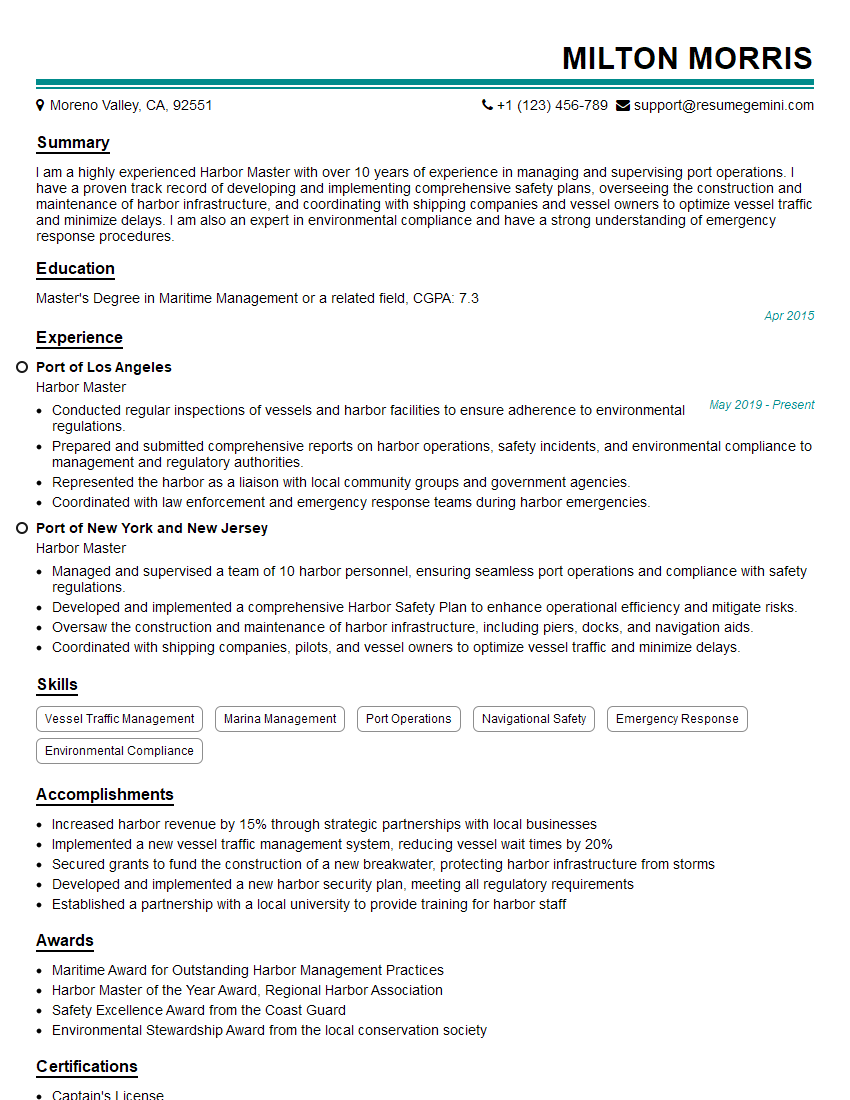
Harbor Master Resume Sample
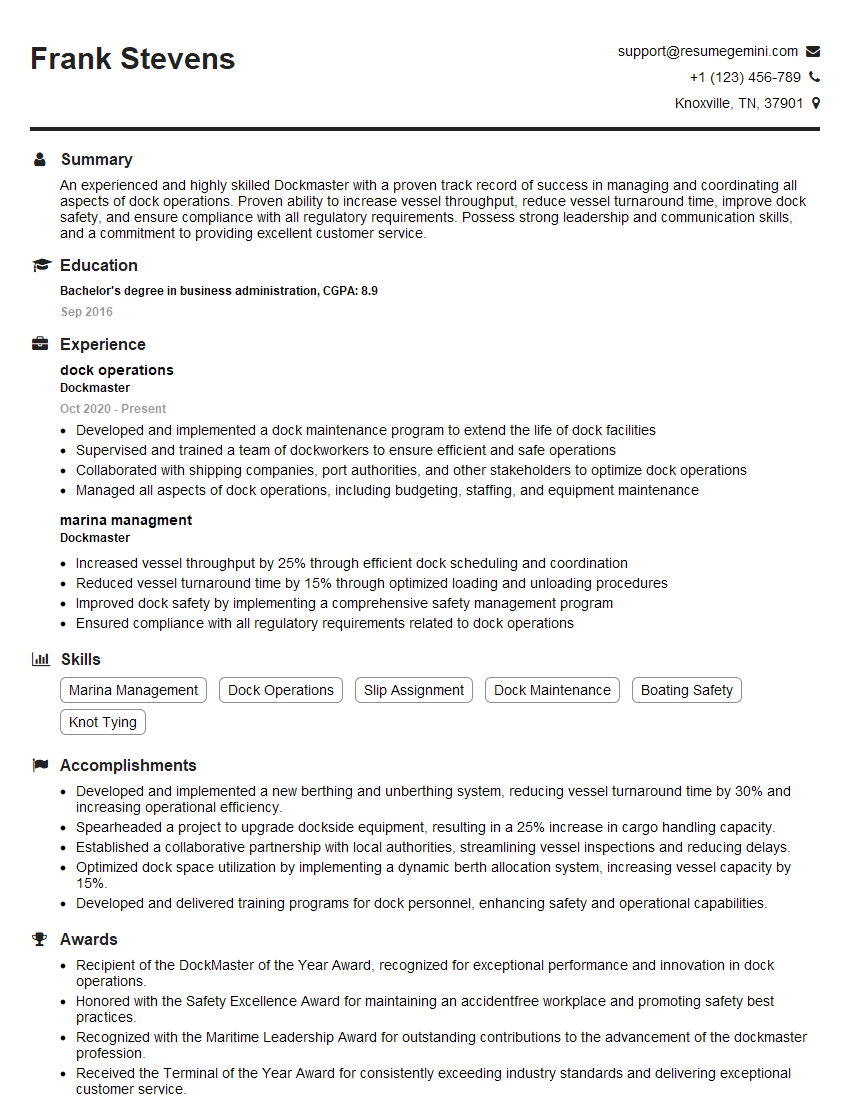
Dockmaster Resume Sample
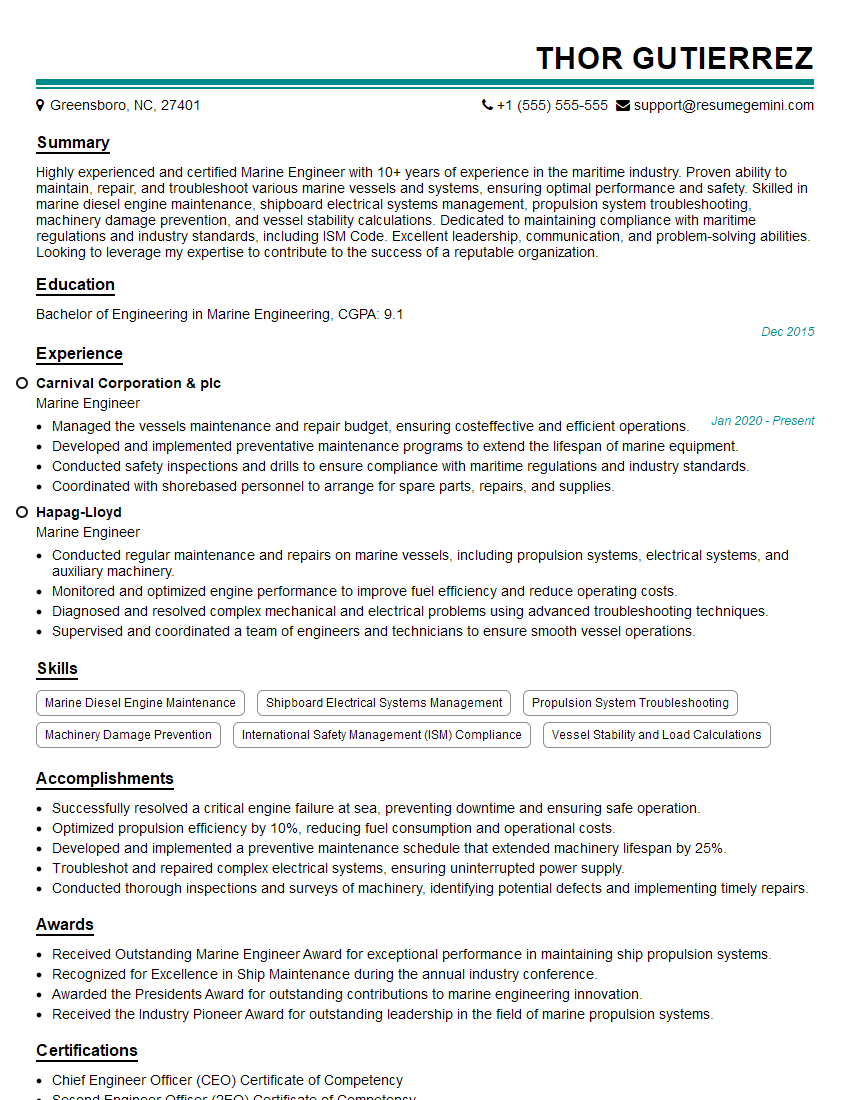
Marine Engineer Resume Sample
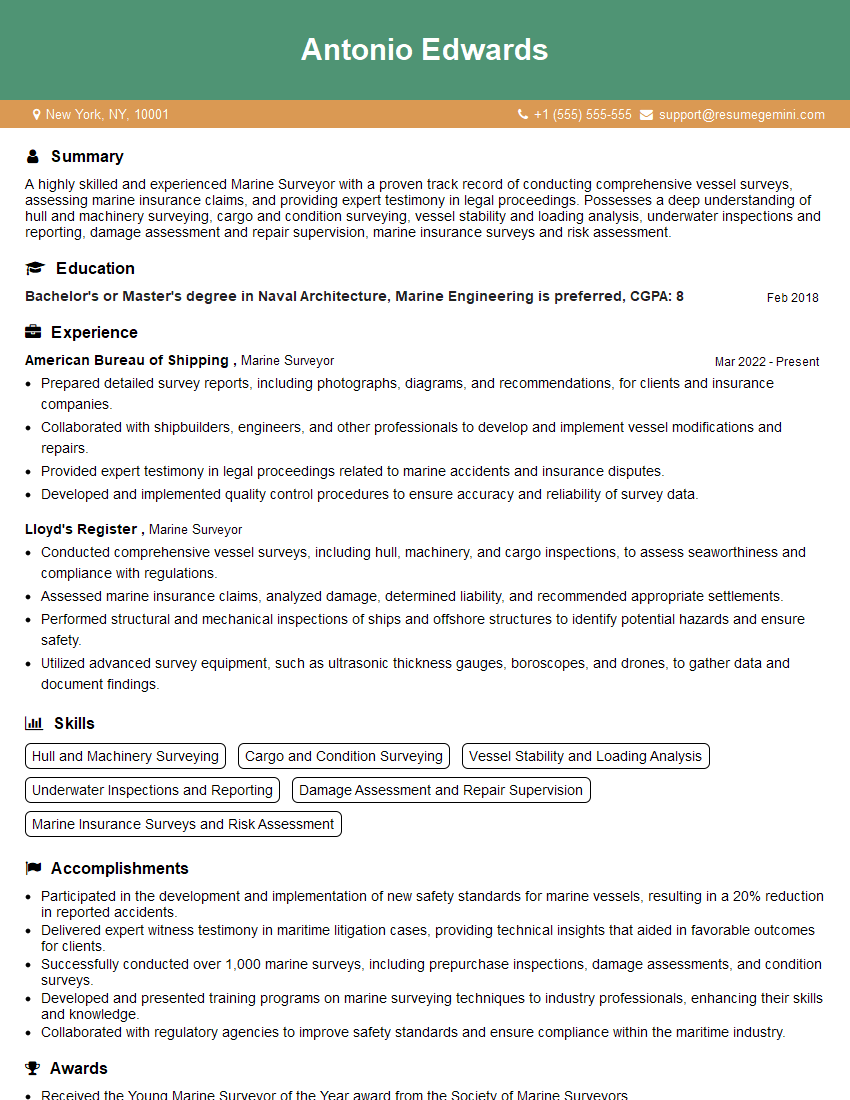
Marine Surveyor Resume Sample
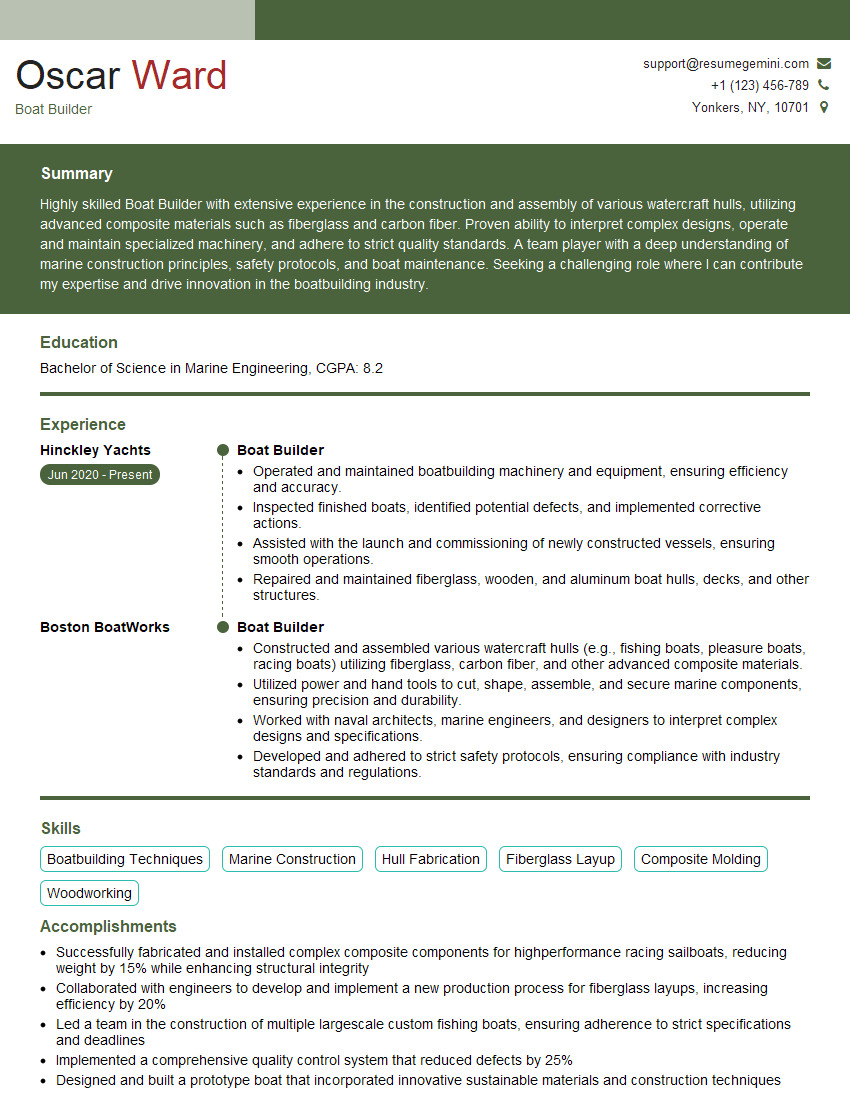
Boat Builder Resume Sample
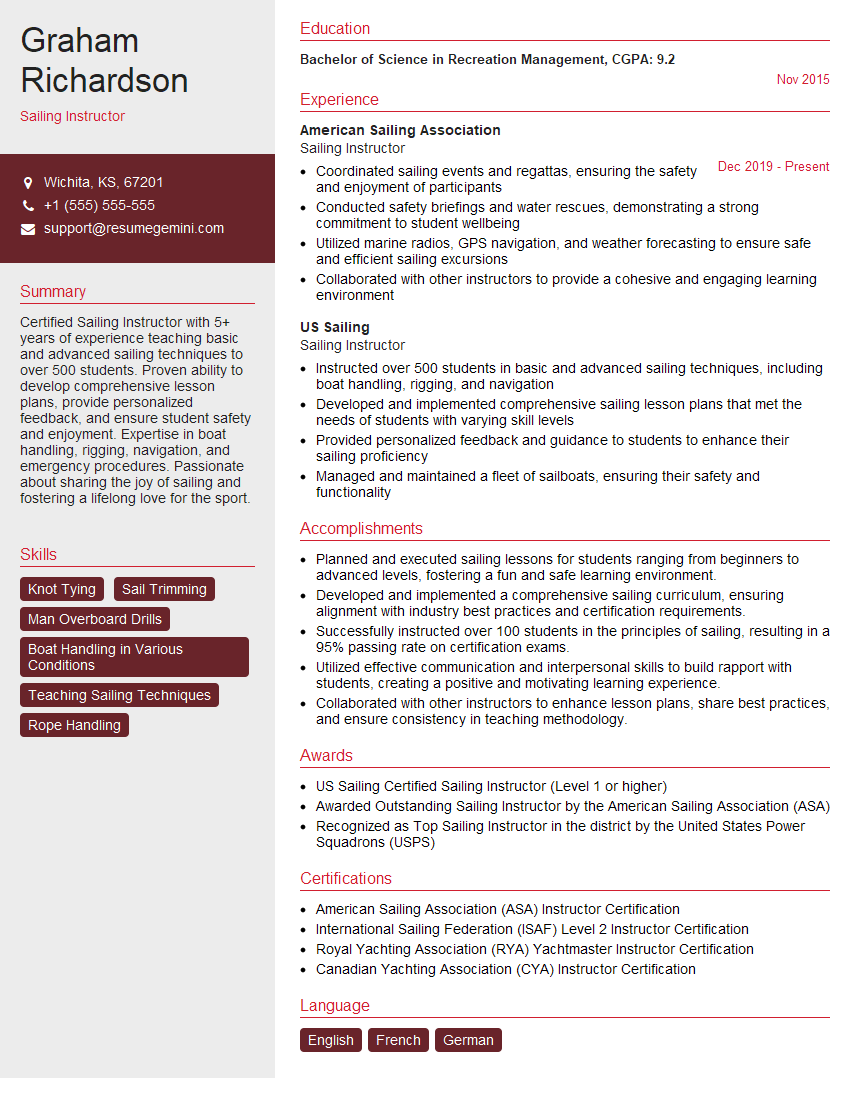
Sailing Instructor Resume Sample
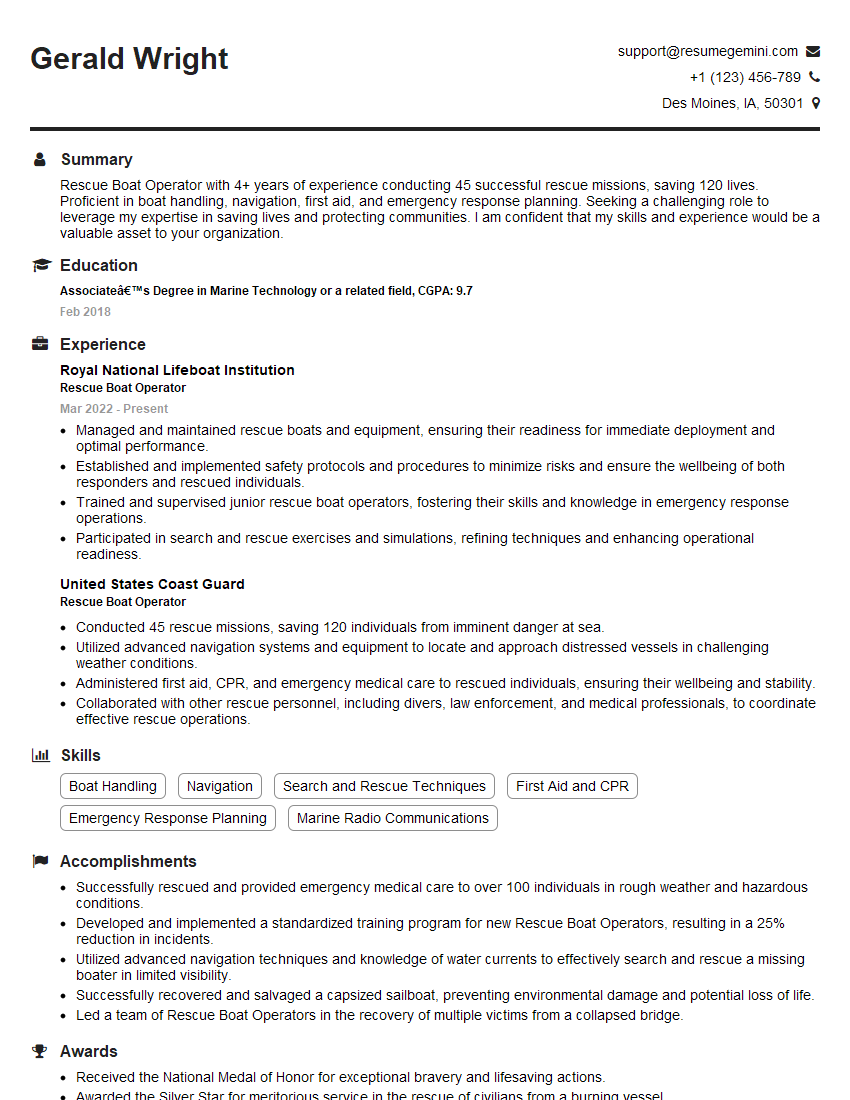
Rescue Boat Operator Resume Sample
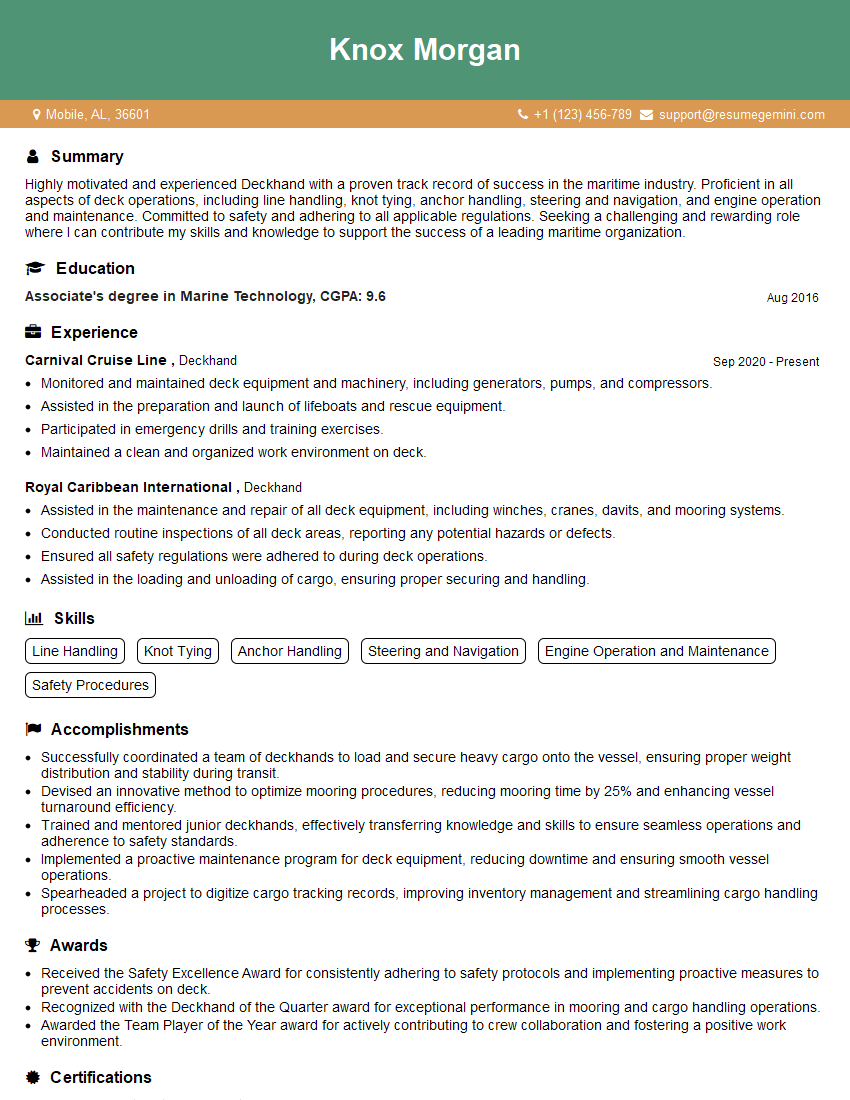
Deckhand Resume Sample
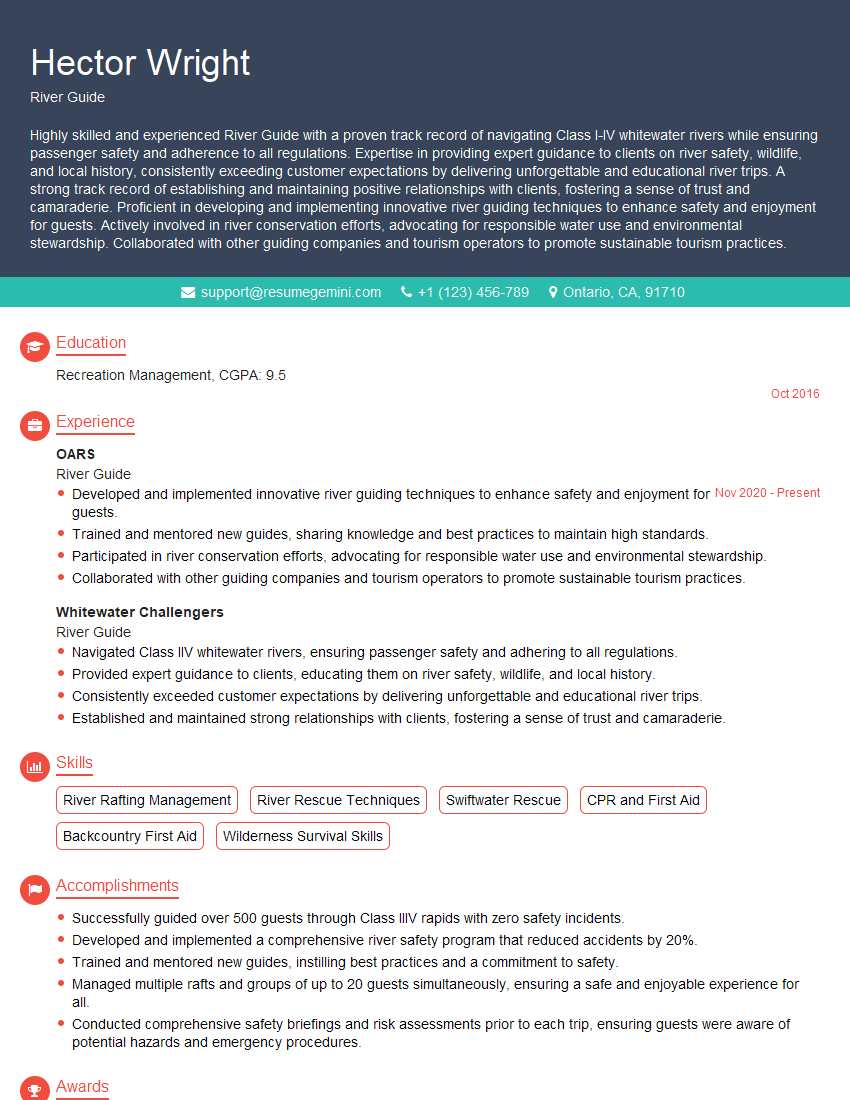
River Guide Resume Sample
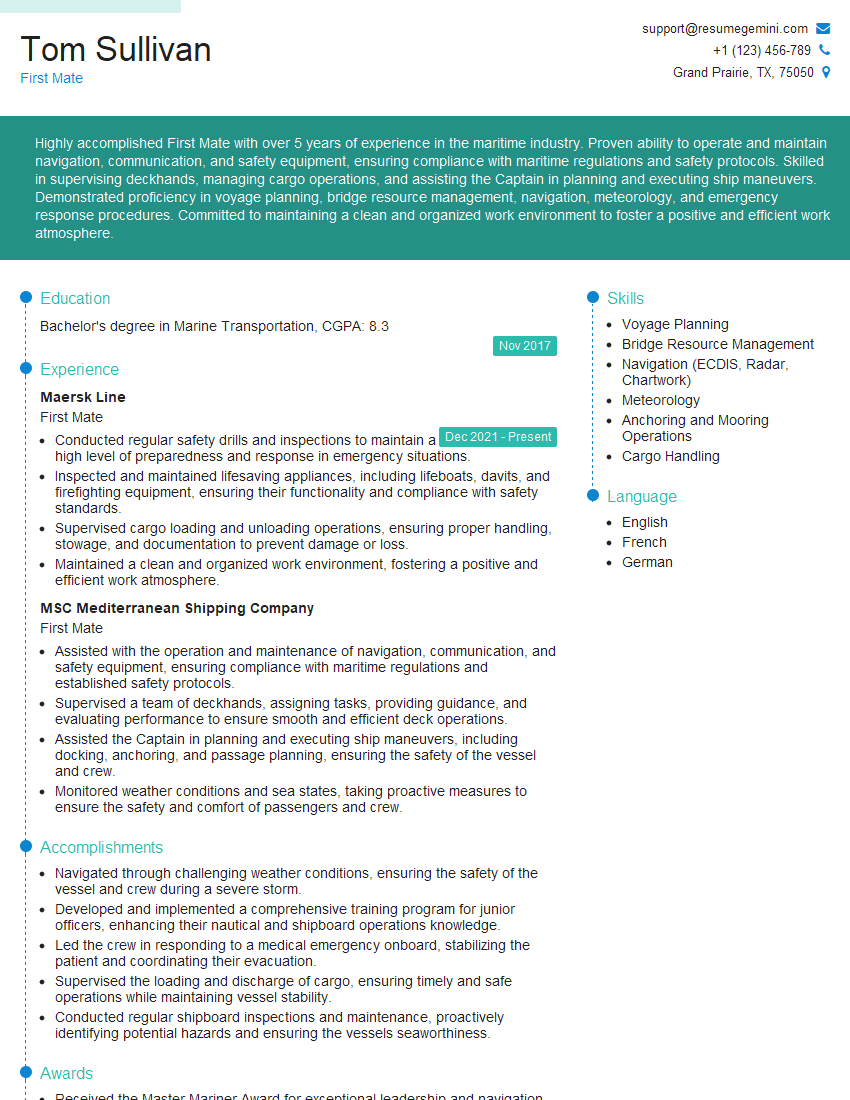
First Mate Resume Sample
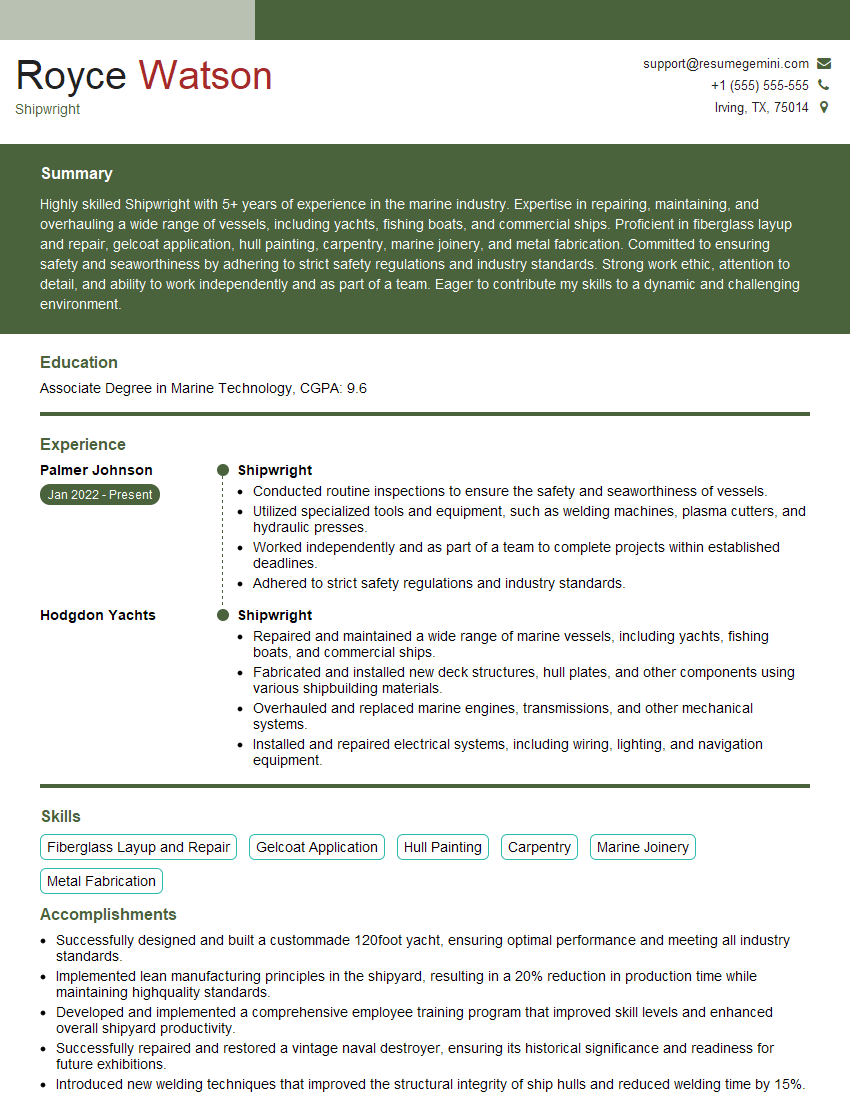
Shipwright Resume Sample
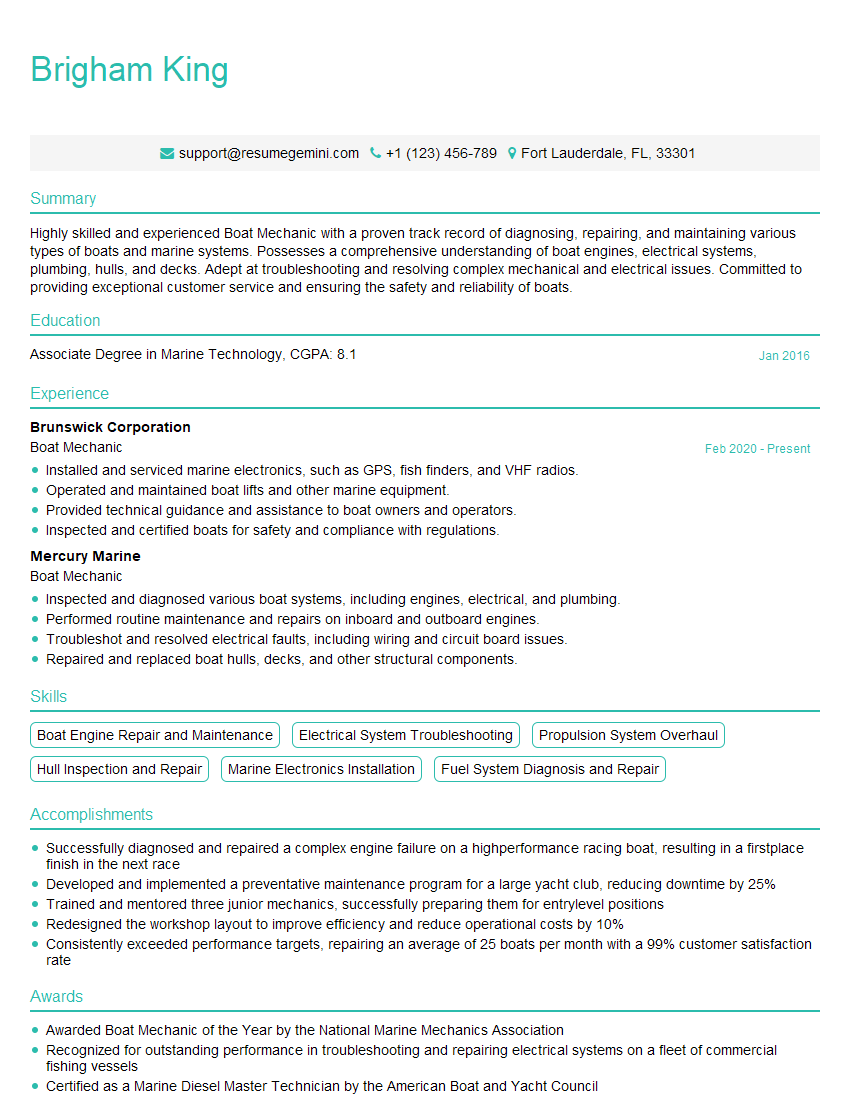
Boat Mechanic Resume Sample
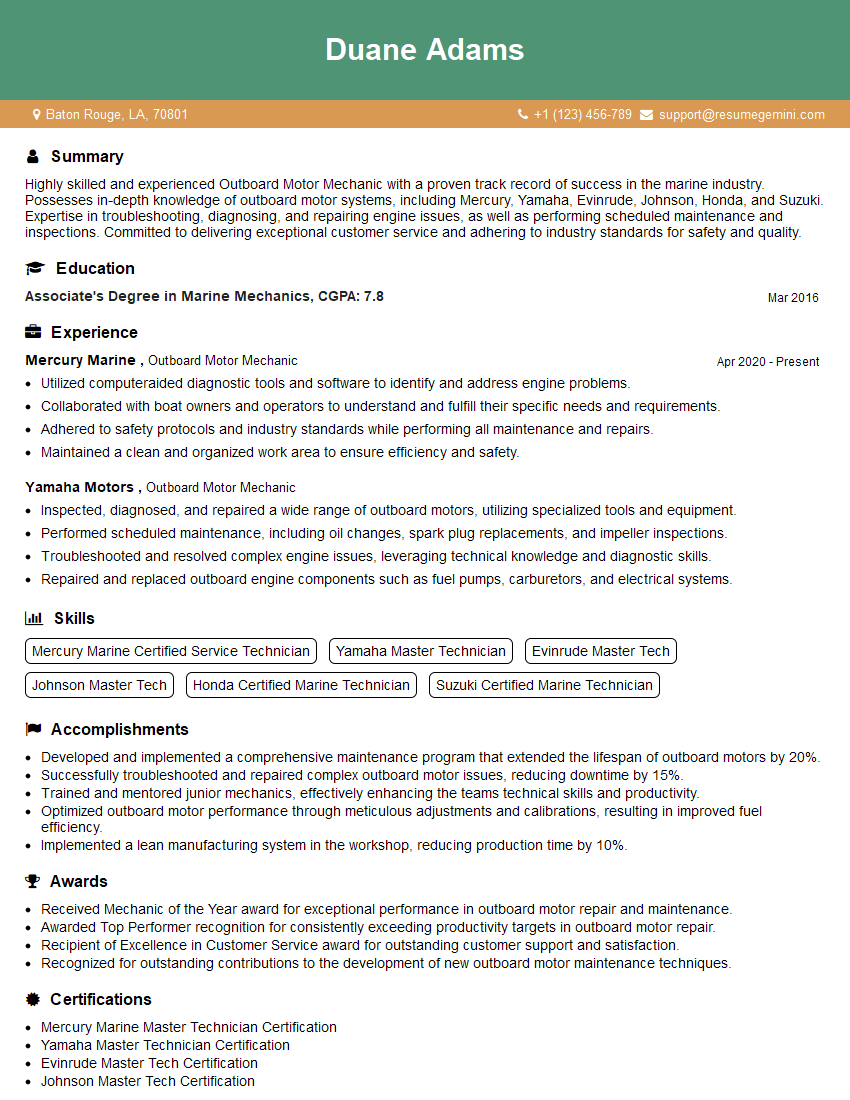
Outboard Motor Mechanic Resume Sample
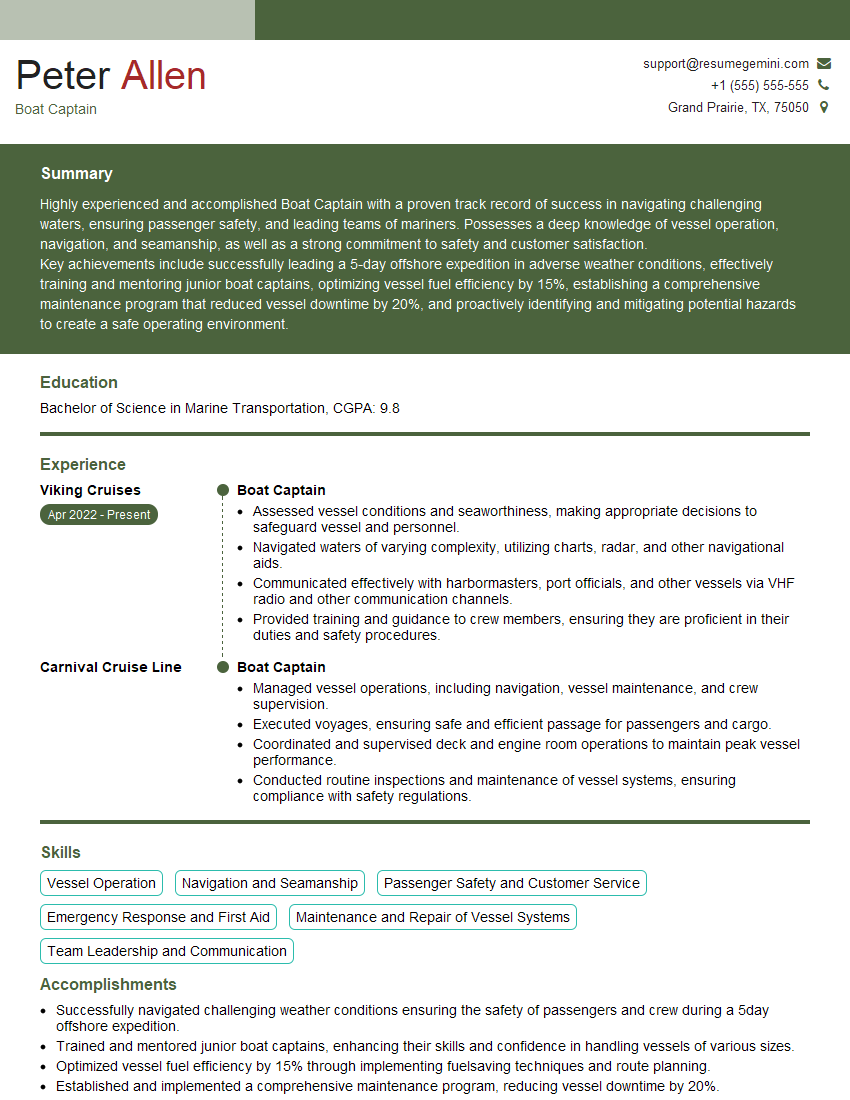
Boat Captain Resume Sample
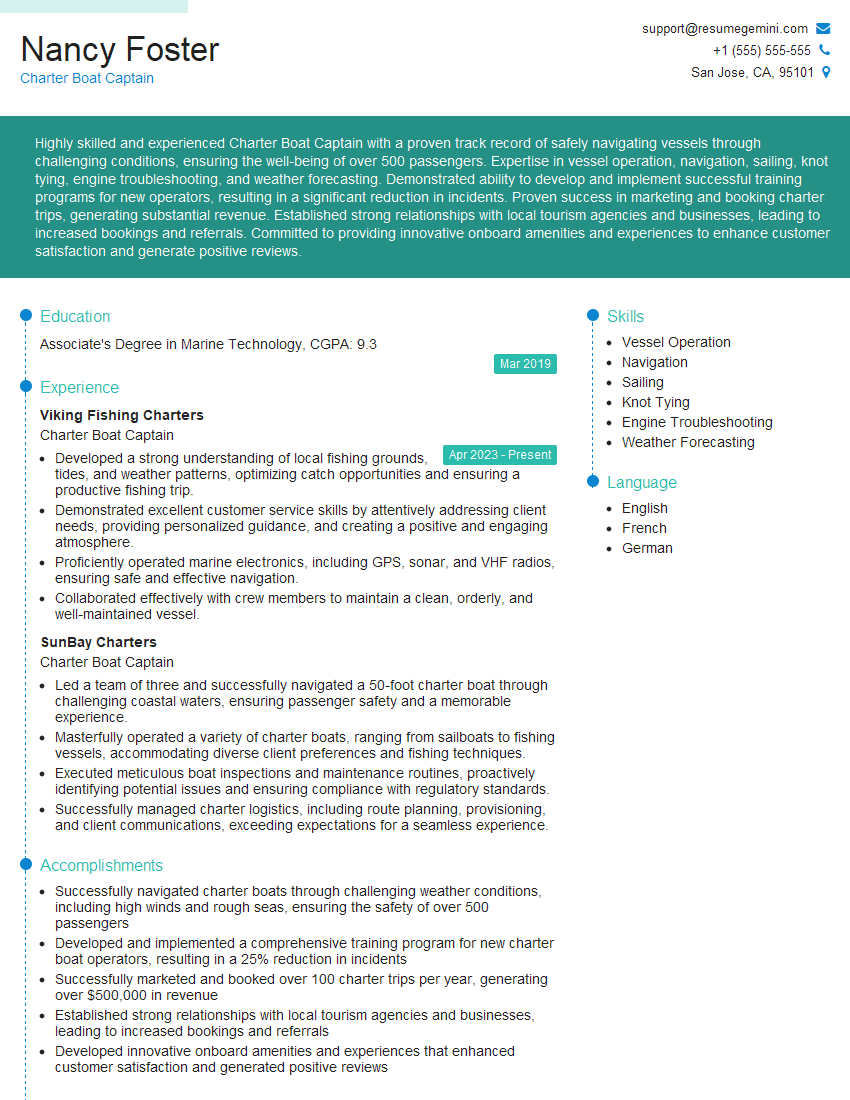
Charter Boat Captain Resume Sample
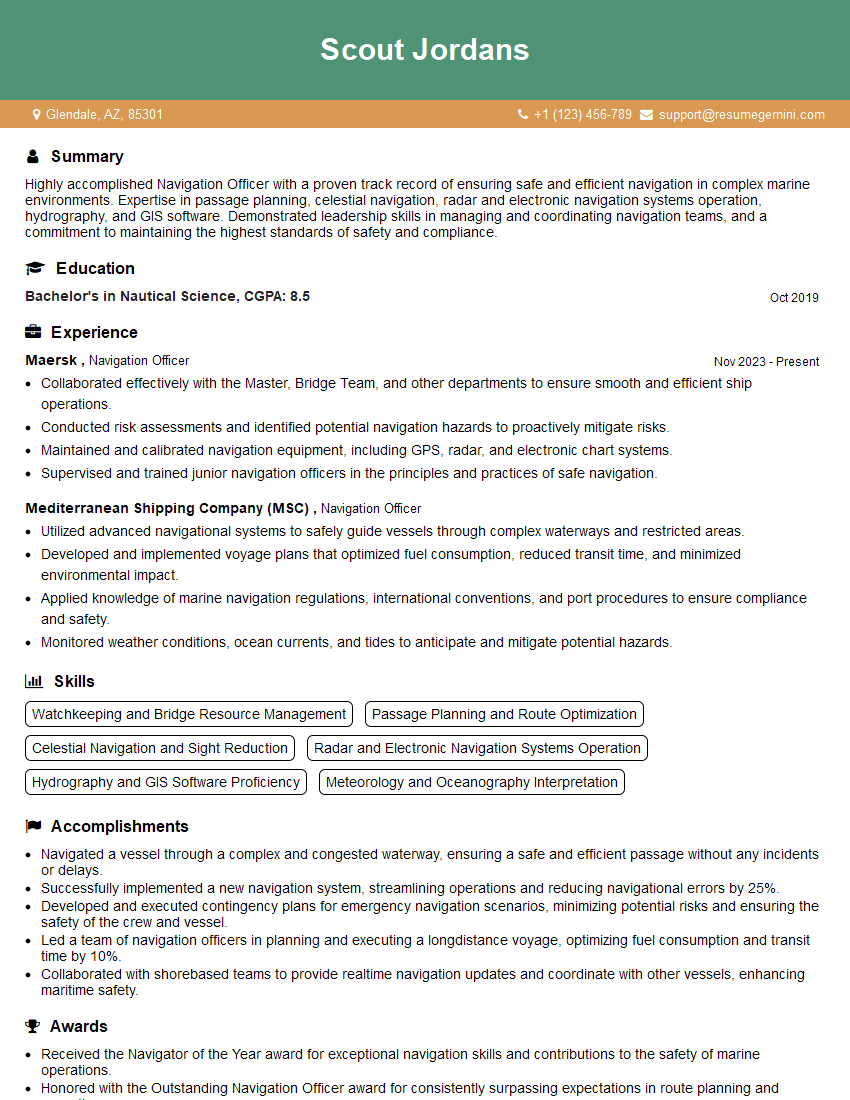
Navigation Officer Resume Sample
Explore more articles
Users Rating of Our Blogs
Share Your Experience
We value your feedback! Please rate our content and share your thoughts (optional).
What Readers Say About Our Blog
To the interviewgemini.com Webmaster.
Very helpful and content specific questions to help prepare me for my interview!
Thank you
To the interviewgemini.com Webmaster.
This was kind of a unique content I found around the specialized skills. Very helpful questions and good detailed answers.
Very Helpful blog, thank you Interviewgemini team.