Interviews are more than just a Q&A session—they’re a chance to prove your worth. This blog dives into essential Bricklaying Fundamentals interview questions and expert tips to help you align your answers with what hiring managers are looking for. Start preparing to shine!
Questions Asked in Bricklaying Fundamentals Interview
Q 1. Explain the different types of bricks and their applications.
Bricks come in a variety of types, each suited for different applications. The choice depends on factors like aesthetic appeal, structural requirements, and budget.
- Common Bricks: These are the most widely used, made from clay and fired in a kiln. They’re strong, durable, and relatively inexpensive, ideal for general construction like walls and foundations.
- Engineering Bricks: These are denser and stronger than common bricks, offering superior load-bearing capacity. They’re frequently used in structures requiring high strength, like retaining walls or industrial buildings.
- Facing Bricks: These are designed for aesthetic purposes, offering a variety of colors, textures, and finishes. They’re often used as an outer layer (veneer) to improve the visual appeal of a building.
- Reclaimed Bricks: These are salvaged from demolished buildings, offering a unique character and environmentally friendly option. Their strength needs careful assessment before use.
- Concrete Bricks: Made from a mixture of cement, aggregates, and water, these are often cheaper than clay bricks but may not offer the same aesthetic appeal. Their suitability depends on the project’s structural needs.
For example, a high-rise building might use engineering bricks for the foundation and facing bricks for the exterior walls, while a garden wall could use reclaimed bricks for a rustic look.
Q 2. Describe the process of laying a standard brick bond.
Laying a standard brick bond, like the English bond, involves a systematic arrangement of bricks to ensure structural integrity and a visually pleasing pattern. Let’s break down the process:
- Prepare the foundation: Ensure a level and solid base. This might involve laying concrete or compacted hardcore.
- Lay the first course: Start with a full-length header brick (laid with its short end visible) at each corner. Use a spirit level to ensure they’re perfectly level. Stretch a string line between the corner bricks to guide the rest of the course.
- Continue the bond: Alternate between header and stretcher bricks (laid with their long side visible) following the chosen bond pattern. The English bond alternates courses of headers and stretchers.
- Apply mortar: Use a bricklayer’s trowel to apply mortar to the bed (bottom) and frog (indentation) of each brick. The amount of mortar should be consistent to ensure even bonding and prevent voids.
- Tap the bricks into place: Gently tap each brick with the trowel handle to settle it firmly into the mortar bed. Maintain consistent joint thickness (usually around 10mm).
- Check for level and plumb: Regularly check the level and plumb (vertical alignment) of the brickwork using a spirit level and plumb bob. Correct any deviations immediately.
- Tool the joints: Once the mortar has begun to set (but is still workable), use a jointing tool to create neat and consistent mortar joints. This improves the appearance and water resistance.
Think of building a brick wall like creating a strong, interlocking puzzle. Each brick must be precisely positioned to create a stable and aesthetically pleasing structure.
Q 3. How do you ensure the accuracy and plumb of brickwork?
Accuracy and plumb are crucial for strong and visually appealing brickwork. Here’s how to ensure them:
- Use a spirit level: Frequently check the levelness of each course of bricks using a spirit level. Make adjustments as necessary by adding or removing mortar.
- Employ a plumb bob: A plumb bob ensures the vertical alignment of walls, especially important for taller structures. Check the plumb regularly and correct any deviations.
- String lines: Stretching string lines between corner bricks provides a visual guide for laying bricks at the correct height and alignment.
- Accurate measurements: Carefully measure and mark out the foundation and courses to avoid errors. Double-checking measurements is essential.
- Regular checks: Continuously monitor the accuracy of the work throughout the process. Early detection of errors makes correction much easier.
- Experienced bricklayer: A skilled bricklayer possesses the necessary experience and eye for detail to ensure accuracy and plumb instinctively.
Imagine building a house of cards. If even one card is slightly off, the whole structure is jeopardized. The same principle applies to brickwork; precision is key.
Q 4. What are the safety precautions when working at heights with bricks?
Working at heights with bricks presents significant safety risks. Prevention is paramount.
- Scaffolding: Use properly erected and inspected scaffolding that meets all safety regulations. Ensure it is stable and adequately supported.
- Harness and lanyard: A full-body harness and lanyard system are essential for preventing falls. The lanyard should be attached to a secure anchor point on the scaffolding.
- Safety nets: Safety nets can help mitigate the consequences of a fall, although they should not be relied on as the primary safety measure.
- Toe boards: Toe boards on the scaffolding prevent materials from falling.
- Safe brick handling: Use proper lifting techniques to avoid strains and injuries. Don’t overload yourself with bricks.
- Head protection: Always wear a hard hat to protect against falling objects.
- Proper training: All workers should receive adequate training on working at heights and using safety equipment.
- Risk assessment: A thorough risk assessment should be conducted before commencing work at heights.
Safety should never be compromised. A moment’s lapse in concentration can lead to serious injury or even fatality. Follow safety guidelines rigorously.
Q 5. What tools and equipment are commonly used in bricklaying?
Bricklaying requires a range of specialized tools and equipment:
- Trowel: Used for applying and shaping mortar.
- Bricklayer’s Hammer: Used for breaking bricks and shaping mortar joints.
- Spirit Level: Used to check the levelness of brickwork.
- Plumb Bob: Used to check the vertical alignment of brickwork.
- Line and Pins: Used to guide the laying of bricks.
- Jointing Tool: Used to create neat and consistent mortar joints.
- Measuring Tape: Used for accurate measurements.
- Scaffolding: Used for working at heights.
- Wheelbarrow: Used for transporting bricks and mortar.
- Mixing Hoe/Shovel: For mixing mortar.
The selection of tools might vary slightly depending on the project’s scale and complexity, but these are the essentials for most bricklaying tasks. Think of these tools as an extension of the bricklayer’s hands, allowing for precision and efficiency.
Q 6. How do you calculate the number of bricks needed for a project?
Calculating the number of bricks needed involves several steps:
- Determine the area: Calculate the total area of the wall to be built (length x height). Subtract any openings (doors and windows).
- Calculate the brick coverage: Find the coverage area of a single brick, considering the standard size (often around 215mm x 102.5mm x 65mm) and the mortar joint thickness (typically around 10mm).
- Account for waste: Add a percentage for wastage (usually 5-10%, depending on the complexity of the project and brick type). This accounts for broken bricks and cutting.
- Divide total area by brick coverage: Divide the total wall area by the coverage of a single brick to get the estimated number of bricks needed.
- Round up: Always round up to the nearest whole number to ensure you have enough bricks.
Example: A wall is 5m long and 2m high. Ignoring openings, the area is 10 square meters. Assuming a brick covers 0.1 square meters (approximately), you'd need 100 bricks. Adding 10% for waste, you'd need around 110 bricks.
Accurate calculations save time and money by preventing material shortages and unnecessary overspending.
Q 7. Explain the importance of proper mortar mixing and application.
Proper mortar mixing and application are critical for the strength, durability, and water resistance of brickwork.
- Mortar mix ratio: The ratio of cement, sand, and water needs to be carefully controlled to achieve the desired workability and strength. The specific ratio depends on the application and local conditions.
- Mixing method: Mortar should be thoroughly mixed using a hoe or mixer to ensure a uniform consistency. Lumps of cement or unmixed sand weaken the mortar.
- Water content: Too much water weakens the mortar, while too little makes it difficult to work with. The mortar should be workable but not runny.
- Application techniques: Apply mortar evenly to the bed and frog of each brick to ensure a full bed joint and a strong bond. Avoid excessive mortar, which can lead to bulging or cracking.
- Curing: Allow sufficient time for the mortar to cure properly. This involves keeping the brickwork moist during the initial setting period to prevent premature drying and cracking.
Imagine mortar as the glue that holds the bricks together. Poorly mixed or applied mortar creates weak points in the structure, jeopardizing its overall integrity. Careful attention to detail is crucial.
Q 8. Describe your experience with different types of mortar.
Mortar is the glue that holds bricks together, and its type significantly impacts the final structure’s strength, durability, and aesthetics. My experience encompasses various mortar types, categorized primarily by their strength and application.
- Type N Mortar: This is a general-purpose mortar, suitable for most residential applications. It offers a good balance of strength and workability. I’ve used it extensively on projects like chimney repairs and retaining walls, appreciating its ease of use and reliable performance.
- Type S Mortar: Stronger than Type N, Type S mortar is ideal for load-bearing walls and structures where higher compressive strength is crucial. I remember using Type S on a multi-story building project; its strength was essential to support the weight above.
- Type M Mortar: This is the highest-strength mortar, often used in high-stress applications or areas with extreme environmental conditions. For instance, I’ve utilized Type M in projects involving foundation work where resistance to extreme weather is paramount.
- Specialty Mortars: Beyond the standard types, I’ve worked with specialty mortars like those formulated for specific brick types (e.g., for highly porous bricks) or for applications requiring specific properties like increased water resistance or freeze-thaw resistance. This adaptability is crucial for ensuring optimal performance in varying conditions.
Choosing the right mortar type is critical for project success. It involves understanding the structural requirements, environmental factors, and the specific properties of the bricks themselves. This ensures the structure’s longevity and stability.
Q 9. How do you handle challenging bricklaying situations, such as uneven surfaces?
Uneven surfaces present a common challenge in bricklaying. My approach involves a combination of careful planning and skillful execution. For minor irregularities, I adjust the mortar bed thickness to compensate, ensuring a level brick course. For significant unevenness, I might use a combination of techniques:
- Building up with mortar: For concave surfaces, I strategically build up the mortar bed to create a level surface for the bricks. This requires precision and patience to ensure even distribution and avoid weaknesses.
- Using shims: Small pieces of wood or metal (shims) can be inserted under the bricks to level them on uneven surfaces. It’s essential to remove the shims once the mortar has set to ensure structural integrity.
- Cutting bricks: In extreme cases, I might need to cut bricks to fit irregular surfaces accurately. I use a brick saw to achieve clean and precise cuts. This step requires skill and precision, as improperly cut bricks compromise the structural integrity of the wall.
Regardless of the technique, I always ensure that the bricks are properly bedded and bonded to maintain structural stability and prevent cracking or settlement. Proper planning and attention to detail are key to successfully overcoming these challenges.
Q 10. What are the common problems encountered during bricklaying and how do you solve them?
Bricklaying, despite its seemingly simple nature, presents several common problems. Proactive measures and experience greatly mitigate these issues.
- Efflorescence: This whitish, powdery deposit occurs due to soluble salts within the bricks or mortar drawing moisture to the surface. I address this by ensuring proper curing of the mortar and proper drainage to prevent moisture buildup.
- Cracking: Cracking can arise from inadequate mortar support, poor brick selection, or foundation settlement. Careful planning, proper mortar selection, and a thorough foundation inspection are crucial. Repairing cracks involves careful removal of damaged sections and replacement with fresh mortar, matched to the original.
- Uneven joints: Inconsistent joint thickness affects the aesthetics and structural integrity. Maintaining consistent pressure while applying mortar and using a consistent jointer technique prevents this.
- Incorrect bonding: Improper brick bond patterns weaken the structure. A thorough understanding and application of the chosen bond pattern (English bond, Flemish bond, etc.) is critical.
Addressing these issues promptly and effectively is paramount. Prevention through careful planning and execution is the most effective approach. When problems do occur, quick identification and implementation of corrective actions minimize further damage.
Q 11. Explain the process of constructing a brick pier or column.
Constructing a brick pier or column requires precision and an understanding of load-bearing principles. The process typically follows these steps:
- Foundation Preparation: A solid and level foundation is crucial. This usually involves excavating, compacting the soil, and pouring a concrete footing that extends below the frost line.
- First Course: The first course of bricks is laid on the footing, ensuring a level and plumb base. I use a spirit level and plumb bob to ensure accuracy.
- Headers and Stretchers: Bricks are laid in alternating patterns of headers (ends showing) and stretchers (sides showing) to create stability and evenly distribute weight. The chosen bonding pattern affects the stability and aesthetics of the pier.
- Mortar Application: Mortar is applied evenly to ensure strong adhesion. Consistent joint thickness is maintained for both structural and aesthetic reasons.
- Leveling and Plumbness: Regular checks using a level and plumb bob are crucial throughout the construction to ensure the pier remains straight and vertical. Adjustments are made as needed.
- Curing: After construction, the pier is allowed to cure to ensure the mortar achieves its full strength. This period allows for proper hydration and reduces the risk of cracking.
Proper reinforcement with steel bars can be incorporated for taller or heavier load-bearing piers. The specific method depends on the load requirements and building codes. This process emphasizes attention to detail throughout to guarantee structural integrity and long-term stability.
Q 12. Describe your experience with different types of brick bonds (e.g., English bond, Flemish bond).
Different brick bonds offer varying aesthetic appeal and structural performance. My experience includes a range of common bonds:
- English Bond: This bond uses alternating courses of headers and stretchers, offering high strength and stability. It’s a classic and widely used bond for its visual appeal and strength. I often use it for load-bearing walls.
- Flemish Bond: This bond features alternating headers and stretchers in each course, creating a visually pleasing pattern. While strong, it generally provides slightly less structural support than English bond. I use this for applications where aesthetics are highly important.
- Running Bond: This is the simplest bond, using only stretchers in each course. While less structurally robust than English or Flemish bonds, it’s efficient and suitable for non-load-bearing walls and partitions.
- Stack Bond: This is a straightforward bond with bricks laid vertically in straight courses. It’s primarily used for aesthetic purposes in non-load-bearing applications.
The choice of bond depends heavily on the structural requirements and the desired aesthetic outcome of the project. A thorough understanding of each bond’s strengths and limitations is essential for effective project planning.
Q 13. How do you ensure the structural integrity of brickwork?
Ensuring the structural integrity of brickwork demands meticulous attention to detail at every stage. My approach focuses on several key aspects:
- Proper Foundation: A solid, level, and properly designed foundation is paramount. It distributes the weight of the structure effectively, preventing settlement and cracking.
- Correct Bonding: Using appropriate brick bonds and ensuring correct mortar application and joint thickness are critical. This provides strength and prevents weaknesses in the structure.
- Quality Materials: High-quality bricks and mortar are essential. I always specify and source materials that meet the project’s requirements and comply with local building codes.
- Proper Curing: Allowing sufficient time for the mortar to cure is crucial for achieving its full strength. Protecting the structure from harsh weather conditions during this period is also important.
- Regular Inspections: Throughout the construction process, regular inspections are carried out to identify and address any issues promptly. This proactive approach prevents small problems from escalating.
A combination of these approaches ensures the brickwork’s long-term stability and structural soundness. This diligence is not just about meeting building codes; it’s about creating a safe and reliable structure.
Q 14. What are the building codes and regulations related to bricklaying in your area?
Building codes and regulations pertaining to bricklaying vary by location. In my area, adherence to local and national standards is mandatory. Key aspects include:
- Foundation requirements: Specific requirements exist regarding footing depth, size, and reinforcement based on soil conditions and the load-bearing capacity of the structure. These are crucial for preventing foundation settlement.
- Mortar specifications: Codes stipulate the minimum compressive strength requirements for mortar used in various applications, ensuring the structural integrity of the brickwork.
- Brick specifications: Standards define the required brick strength, size tolerances, and water absorption rates. These ensure the bricks meet the structural and durability requirements.
- Bonding patterns: Building codes may specify acceptable bonding patterns for load-bearing walls, ensuring sufficient strength and stability.
- Inspection and permits: Obtaining necessary permits and undergoing regular inspections by building authorities is crucial throughout the project. This verifies compliance with all regulations.
Staying current on local building codes is essential. I regularly review updated codes and regulations to ensure my work always meets the highest safety and quality standards. Ignoring these regulations can have severe consequences, including structural failure and legal liabilities.
Q 15. Explain the importance of quality control in bricklaying.
Quality control in bricklaying is paramount for ensuring structural integrity, aesthetic appeal, and longevity of the project. It’s not just about making things look pretty; it’s about safety and building something that will last.
My approach involves a multi-layered strategy. Firstly, material selection is crucial. I meticulously inspect bricks for imperfections, checking for cracks, inconsistencies in size and color, and ensuring they’re appropriately cured. Secondly, I meticulously follow the specified mortar mix ratio, ensuring proper consistency for optimal bonding. A poorly mixed mortar can lead to weakened bonds and potential structural failure. Thirdly, I continuously monitor the plumb and level of the wall throughout the construction process, using a level and plumb bob. Even minor deviations can accumulate, causing significant problems later on. Finally, I conduct regular inspections, checking for gaps, alignment issues, and ensuring the mortar is properly applied and has cured correctly. A thorough final inspection before grouting and pointing completes the quality assurance process. Ignoring any of these steps can result in costly repairs, potential structural instability, and an overall unsatisfactory outcome.
Career Expert Tips:
- Ace those interviews! Prepare effectively by reviewing the Top 50 Most Common Interview Questions on ResumeGemini.
- Navigate your job search with confidence! Explore a wide range of Career Tips on ResumeGemini. Learn about common challenges and recommendations to overcome them.
- Craft the perfect resume! Master the Art of Resume Writing with ResumeGemini’s guide. Showcase your unique qualifications and achievements effectively.
- Don’t miss out on holiday savings! Build your dream resume with ResumeGemini’s ATS optimized templates.
Q 16. Describe your experience with bricklaying in different weather conditions.
Weather significantly impacts bricklaying. I’ve worked in scorching heat, freezing cold, and everything in between. Extreme heat can cause the mortar to dry too quickly, leading to weak joints. My strategy in such conditions is to work during the coolest parts of the day, using shading techniques and keeping the bricks and mortar moist to prevent rapid drying. In freezing temperatures, the water in the mortar can freeze, causing expansion and cracking. To counteract this, I use frost-resistant mortar and carefully plan my work to avoid exposing wet brickwork to freezing temperatures. For instance, I might cover newly laid brickwork with tarps or use insulated blankets. Rain also presents a challenge, slowing down progress and potentially damaging the brickwork. When rain is imminent, I would ensure all work is covered or halted, protecting both the structure and tools.
Adaptability is key – I adjust my techniques and pace based on the weather, and prioritize safety above all else.
Q 17. How do you manage your time and resources effectively on a bricklaying project?
Effective time and resource management is critical in bricklaying. Before starting any project, I carefully review the blueprints, creating a detailed schedule with realistic timelines for each stage. This includes factoring in potential delays caused by weather or material shortages. I also carefully estimate the required materials, accounting for waste and potential unforeseen circumstances. This ensures there are no costly stops due to material runs. On site, I prioritize tasks based on their dependency, ensuring a smooth workflow. For example, I’ll complete foundation work before starting the walls. I also efficiently manage my team by assigning tasks based on their skills and experience. Regular communication with the team and client is vital to address any issues promptly and prevent delays.
Using a well-organized system for material storage and management helps prevent waste and ensures efficiency. Tracking progress against the schedule helps identify and address potential bottlenecks. Effective communication with the team ensures everyone is on the same page and working towards a common goal.
Q 18. How do you work effectively as part of a team?
Effective teamwork is essential in bricklaying. I believe in open communication, mutual respect, and clear task delegation. I’ve worked in teams of varying sizes, from small crews to larger projects. My approach focuses on clear role definition to avoid confusion. I’m comfortable leading a team when necessary, guiding them through the process, offering support, and ensuring everyone is working safely and efficiently. Equally important, I’m a reliable team member, contributing my share and actively collaborating with others. This collaborative spirit extends to problem-solving; I value others’ input and work together to find solutions. A positive team environment enhances efficiency and contributes to a high-quality finished product. For example, on one project, a team member noticed a slight misalignment early on, and by addressing it promptly, we avoided a much larger problem later.
Q 19. Describe your experience with reading and interpreting blueprints.
Reading and interpreting blueprints is a fundamental skill for a bricklayer. I’m proficient in understanding various blueprint symbols, elevations, sections, and details. I can accurately measure dimensions, identify materials, and understand the structural requirements of a project. I always verify dimensions on site before starting work, as there may be discrepancies between the plans and the actual site conditions. I’ve worked with blueprints ranging in complexity, from simple single-story structures to complex multi-story buildings with intricate details. My approach is methodical – I start by reviewing the overall plan, understanding the project scope, and then focus on the details relevant to my specific tasks. I have a keen eye for detail, which is important in identifying potential discrepancies between the blueprints and the physical layout of the building site and to ensure accuracy in laying bricks to meet the design specifications.
Q 20. What are your skills in using bricklaying machinery and equipment?
I’m experienced in using various bricklaying machinery and equipment, including but not limited to: mortar mixers, brick saws, scaffolding, and power trowels. I’m familiar with the safe operation and maintenance of these tools. For example, I understand the importance of regular maintenance on a mortar mixer to prevent malfunctions, which could lead to delays and wasted materials. I can operate a brick saw safely and precisely to cut bricks to the required sizes and shapes. I am always mindful of safety regulations and procedures when using power tools.
My proficiency extends to selecting appropriate machinery and equipment for different tasks and project scales. For instance, I would use a small, portable mortar mixer for a smaller residential job, but employ a larger, more powerful mixer for a larger commercial project.
Q 21. How do you maintain your tools and equipment?
Maintaining tools and equipment is essential for both safety and efficiency. I regularly clean and inspect my tools after each use, storing them appropriately to prevent damage and rust. This includes lubrication of moving parts and checking for wear and tear. I keep a detailed inventory of my tools, ensuring prompt repair or replacement when needed. This prevents project delays caused by tool failure. I use specialized cleaning agents for different materials to ensure their longevity and proper function. For power tools, I ensure regular maintenance and repairs as per the manufacturer’s instructions. Regular maintenance also extends to safety gear such as gloves and safety boots, ensuring they remain in good working order. This commitment to maintenance significantly reduces downtime, increases the lifespan of equipment, and maintains a high level of safety on the job site.
Q 22. Explain your understanding of bricklaying health and safety regulations.
Bricklaying health and safety regulations are paramount for ensuring a safe working environment and preventing injuries. These regulations cover various aspects, from personal protective equipment (PPE) to working at heights and handling materials.
- PPE: This is crucial and includes safety helmets, high-visibility clothing, safety boots with steel toe caps, gloves to protect against cuts and abrasions, and eye protection from flying debris. Ignoring PPE is simply unacceptable.
- Working at Heights: Scaffolding must be erected correctly and regularly inspected. Harness systems and fall arrest equipment are mandatory when working above a certain height. Proper training and adherence to safety protocols are essential to prevent falls, a leading cause of injuries in construction.
- Material Handling: Lifting heavy bricks and materials requires proper technique to avoid back injuries. Mechanical lifting aids, like hoists and forklifts, should be used whenever possible. Teams should work together to lift heavy objects safely.
- Tool Safety: Tools must be maintained properly and used as intended. Damaged or faulty tools should be reported and replaced immediately. Regular checks on power tools’ cables and functionality are vital.
- Site Safety: Maintaining a clean and organized worksite is crucial. Obstacles should be clearly marked, and adequate lighting provided, especially in confined spaces. Regular site inspections are vital to identify and address potential hazards.
Understanding and adhering to these regulations is not just about following rules; it’s about protecting myself and my colleagues from potential harm. It’s a fundamental part of my professional responsibility.
Q 23. Describe a time you had to troubleshoot a problem on a bricklaying project.
On a recent project, we encountered a problem with inconsistent mortar adhesion on a section of a retaining wall. The bricks were falling out, and we needed to rectify this quickly and efficiently to avoid delays and potential structural damage.
Initially, I suspected the mortar mix ratio was incorrect or the bricks themselves were not properly wetted before application. We systematically investigated each possibility. We checked the mortar mix against the specifications, testing its consistency and setting time. We also inspected the brick delivery notes for any potential quality issues.
The problem turned out to be a combination of factors: a slightly leaner-than-specified mortar mix (meaning less cement, leading to weaker bonding) and insufficient wetting of the bricks, causing rapid water absorption from the mortar before it could properly set.
Our solution involved:
- Rectifying the mortar mix to meet the precise specifications
- Thoroughly wetting the bricks before application
- Carefully removing and replacing the affected bricks with a proper bond
- Implementing stricter quality control measures for future work
Q 24. How do you ensure the durability and longevity of your brickwork?
Ensuring the durability and longevity of brickwork relies on several key factors, starting with the initial planning stage and continuing throughout the construction process.
- Material Selection: Using high-quality, weather-resistant bricks is fundamental. The bricks need to be appropriately graded for the project’s demands (e.g., frost resistance for exposed locations). Choosing a suitable mortar mix that is appropriate for the brick type and environmental conditions is also crucial.
- Proper Construction Techniques: This encompasses several elements: accurate laying techniques ensuring proper bonding, using a consistent mortar bed, proper brick cleaning to remove excess mortar, and implementing appropriate expansion joints for thermal movement.
- Protection from the Elements: Protecting the finished brickwork during construction and afterward is important. This includes covering it from rain during construction and potentially applying a suitable protective sealant depending on the environment and brick type. Avoiding prolonged exposure to frost or excessive moisture is critical.
- Drainage: Ensuring proper drainage around the structure is vital to prevent water accumulation near the foundation and potential damage from frost.
- Regular Maintenance: Periodic inspection for damage and prompt repair of any cracks or deterioration will extend the structure’s lifespan significantly. Regular cleaning can help to prevent the build-up of grime and pollutants.
By considering all these factors, I can contribute to creating brickwork that will stand the test of time, looking good and providing solid, reliable service for decades.
Q 25. What are the different types of pointing and how are they applied?
Pointing, the process of filling the joints between bricks, greatly influences the appearance and durability of the brickwork. Different types of pointing offer various aesthetic and functional benefits.
- Concave Pointing: Creates a recessed joint, providing a classic and traditional look. It’s relatively easy to apply and requires less mortar, but it can be prone to water penetration if not done correctly.
- Flush Pointing: The mortar is filled flush with the brick face, producing a clean and modern look. It is more resistant to water penetration than concave pointing.
- V-Joint Pointing: A sharply angled joint, often associated with more traditional styles and can be quite intricate to apply correctly.
- Weathered Pointing: Imitates the appearance of age and weathering, providing a rustic charm. It involves creating a textured joint with varied depths and shades. This type of pointing often requires skilled craftsmanship to achieve a convincing appearance.
- Tuck Pointing: This involves raking out the existing mortar and then carefully replacing it with contrasting mortar, usually a lighter color, to create a more defined and visually appealing joint. It can greatly enhance the aesthetics of older buildings.
The application of pointing requires precision and careful attention to detail. The correct tools, appropriate mortar mix, and consistent pressure are necessary to achieve a neat and durable finish. The choice of pointing style depends largely on the aesthetic goals and the desired level of weather resistance.
Q 26. Explain your understanding of different bricklaying patterns and designs.
Bricklaying patterns and designs offer a wide range of possibilities for creating visually appealing and structurally sound walls. The choice of pattern often influences the overall aesthetic and can add character to a building.
- Common Bond: The simplest and most economical pattern, using headers and stretchers in alternating layers. It’s easy to lay and provides a visually appealing structure.
- English Bond: Alternating courses of headers and stretchers. This creates a strong and aesthetically pleasing bond, providing both structural strength and visual appeal.
- Flemish Bond: Alternating headers and stretchers in each course, creating a more complex and visually striking pattern. This is a stronger pattern than the common bond but also more time consuming and requires slightly more skill.
- Stack Bond: All bricks are laid with their long sides facing out in straight courses. While simple, it offers limited structural strength compared to other bonds and is best suited for certain aesthetic purposes.
- Running Bond: All bricks are laid with their long sides facing out in parallel courses. A more modern look, this bond is frequently used in contemporary construction.
Beyond these basic patterns, more intricate designs can be incorporated using different colored bricks, decorative brick shapes, and various jointing techniques. My experience includes working with various patterns to meet different design requirements, from traditional to modern aesthetics.
Q 27. Describe your experience with restoration or repair work on brick structures.
I have extensive experience in restoration and repair work on brick structures. This type of work demands a deep understanding of historical construction techniques, materials, and the challenges associated with repairing aging structures.
For instance, I worked on a project restoring a Victorian-era townhouse. The brickwork had suffered from significant weathering and damage from years of exposure to the elements. The project required careful assessment of the existing structure to determine the extent of damage, identifying areas needing repair or replacement. The original bricks were sourced from a similar reclamation yard and carefully matched in colour and size, where possible, to maintain the historical integrity of the structure.
The restoration involved:
- Careful removal of damaged or deteriorated bricks
- Matching and replacing bricks using historically accurate techniques
- Careful cleaning and repair of existing mortar joints where applicable
- Repointing using historically appropriate techniques
- Installation of appropriate drainage systems to prevent future water ingress
Q 28. How do you stay updated with the latest techniques and advancements in bricklaying?
Staying current with the latest techniques and advancements in bricklaying is crucial for maintaining a high level of professionalism. I actively pursue several strategies to achieve this:
- Professional Organizations: Membership in relevant professional organizations provides access to industry publications, networking opportunities, and continuing education courses. These organizations often hold workshops and conferences that present the latest materials, tools, and techniques.
- Industry Publications and Journals: I regularly read trade magazines and journals to keep abreast of new developments in bricklaying, materials science, and construction technology. These publications often feature case studies and articles about innovative techniques and best practices.
- Online Resources and Webinars: The internet offers a wealth of information about the latest trends and developments in bricklaying. Online courses, webinars, and videos provide valuable learning opportunities and expand knowledge.
- Manufacturer Training: I often attend training sessions provided by brick and mortar manufacturers. These sessions frequently introduce new products and techniques, along with best practices for installation and maintenance.
- Networking with Other Professionals: Exchanging knowledge and experiences with other bricklayers and construction professionals helps to learn from each other’s experiences and keep up-to-date with industry trends.
Continuous learning is essential to remain competitive and deliver high-quality bricklaying services in today’s ever-evolving industry.
Key Topics to Learn for Bricklaying Fundamentals Interview
- Mortar Preparation and Application: Understanding different mortar types, mixing ratios, and proper application techniques for achieving strong and durable bonds.
- Brick Laying Techniques: Mastering various bonding patterns (e.g., running bond, common bond, English bond), achieving consistent brick alignment and level courses.
- Building Codes and Regulations: Familiarity with relevant building codes and safety regulations related to bricklaying practices.
- Reading and Interpreting Blueprints: Understanding architectural drawings, interpreting dimensions, and identifying critical details for accurate construction.
- Tools and Equipment: Knowledge of common bricklaying tools (e.g., trowels, levels, plumb bobs) and their proper usage for efficient and precise work.
- Quality Control and Inspection: Understanding methods for ensuring the quality of brickwork, identifying defects, and implementing corrective measures.
- Health and Safety Procedures: Demonstrating awareness of safety protocols, including personal protective equipment (PPE) usage and hazard mitigation.
- Material Estimation and Costing: Ability to estimate material quantities based on blueprints and calculate project costs.
- Problem-Solving and Troubleshooting: Experience in identifying and resolving common issues encountered during bricklaying, such as uneven surfaces or damaged bricks.
- Sustainability and Environmental Considerations: Understanding environmentally friendly bricklaying practices and the use of sustainable materials.
Next Steps
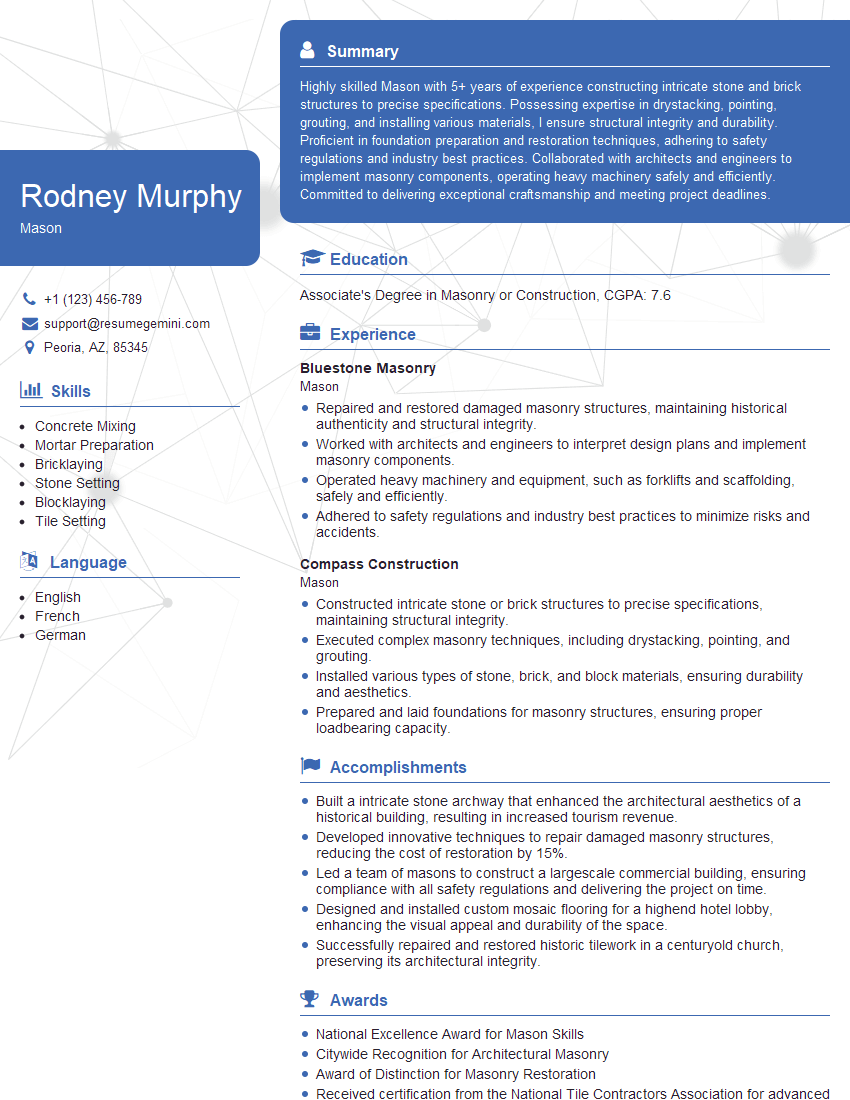
Mastering Bricklaying Fundamentals is crucial for a successful and rewarding career in the construction industry. A strong foundation in these core principles will open doors to a wide range of opportunities and allow you to progress to more specialized roles. To maximize your job prospects, it’s essential to present your skills effectively. Creating an ATS-friendly resume is key to getting your application noticed by recruiters and hiring managers. ResumeGemini can help you build a professional and impactful resume that highlights your expertise. Examples of resumes tailored to Bricklaying Fundamentals are available to guide you through the process.




Explore more articles
Users Rating of Our Blogs
Share Your Experience
We value your feedback! Please rate our content and share your thoughts (optional).
What Readers Say About Our Blog
To the interviewgemini.com Webmaster.
Very helpful and content specific questions to help prepare me for my interview!
Thank you
To the interviewgemini.com Webmaster.
This was kind of a unique content I found around the specialized skills. Very helpful questions and good detailed answers.
Very Helpful blog, thank you Interviewgemini team.