Feeling uncertain about what to expect in your upcoming interview? We’ve got you covered! This blog highlights the most important Buffer Control System Operation interview questions and provides actionable advice to help you stand out as the ideal candidate. Let’s pave the way for your success.
Questions Asked in Buffer Control System Operation Interview
Q 1. Explain the principle of operation of a buffer control system.
A buffer control system’s primary function is to manage the temporary storage of materials or data, smoothing out variations in production rate or data flow between different parts of a system. Imagine a highway merging point: without a buffer (like a short on-ramp), a sudden surge of cars from one highway could cause a major traffic jam. A buffer control system acts like that on-ramp, temporarily holding materials until the downstream process can handle them, preventing bottlenecks and ensuring a smooth, continuous operation.
The system achieves this by using sensors to monitor the fill level of the buffer, comparing it to setpoints (desired levels), and utilizing actuators (like conveyor belts, valves, or pumps) to adjust the inflow and outflow rates. Control algorithms analyze the sensor data and make decisions to optimize buffer utilization and prevent overflows or underflows.
Q 2. What are the common types of buffers used in industrial processes?
Industrial processes employ various buffer types, each with specific applications:
- FIFO (First-In, First-Out) buffers: These are the most common, ensuring items are processed in the order they arrive. Think of a queue at a grocery store checkout – the first person in line is served first.
- LIFO (Last-In, First-Out) buffers: These are used when the most recently received items need processing first, like a stack of plates – the last plate placed on the stack is the first one removed.
- Circular buffers: These overwrite older data when the buffer is full, useful when recent data is most important. This is common in real-time data acquisition systems.
- Priority buffers: These assign priorities to items, ensuring higher-priority items are processed before lower-priority ones, essential in situations needing prioritized handling of critical materials.
- Physical buffers: These can include storage tanks, conveyor belts, silos, or bins used to store raw materials or finished goods.
- Data buffers: These store data temporarily in computer memory, managing the flow of information between different software components or hardware devices.
Q 3. Describe the role of sensors and actuators in a buffer control system.
Sensors and actuators are integral to a buffer control system’s functionality. Sensors provide real-time information about the buffer’s state, while actuators adjust the flow to maintain optimal operation.
- Sensors: These can include level sensors (ultrasonic, radar, capacitive), flow meters, pressure sensors, or even cameras for visual inspection. They provide critical feedback to the control system.
- Actuators: These respond to the control system’s commands, adjusting the flow of materials into or out of the buffer. Examples are valves (controlling fluid flow), conveyor belts (transporting materials), pumps (adjusting fluid flow rate), and motor-driven gates (controlling material flow in solid handling systems).
For instance, an ultrasonic level sensor in a liquid storage tank will monitor the fill level, and a control valve will adjust the inflow or outflow to keep the level within a predefined range.
Q 4. How do you troubleshoot common issues in a buffer control system?
Troubleshooting buffer control systems involves a systematic approach:
- Identify the problem: Is the buffer overflowing, underflowing, or experiencing irregular operation? Note symptoms and times of occurrence.
- Check sensors and actuators: Verify sensor readings are accurate and that actuators are responding correctly. This often involves calibration, cleaning, or replacement.
- Examine the control logic: Review the control algorithm for errors, incorrect setpoints, or logic flaws. Simulation can be helpful here.
- Analyze historical data: Check process logs and historical data for patterns or anomalies that might indicate the root cause. This could reveal recurring issues or gradual system degradation.
- Inspect the physical system: Check for mechanical issues like blockages, leaks, or equipment malfunctions.
- Test individual components: Isolate components to check if they are working as expected. A faulty sensor or actuator can trigger cascading failures.
Effective troubleshooting often involves a combination of these steps, guided by a deep understanding of the system’s design and operational principles.
Q 5. Explain the importance of safety protocols in buffer control system operation.
Safety protocols are paramount in buffer control systems, particularly in industrial settings handling hazardous materials. Failures can lead to spills, blockages, equipment damage, or even injuries.
- Emergency shutdown systems: These should be in place to automatically stop the process in case of sensor failures, high-level alarms, or other critical events.
- Interlocks and safety sensors: These prevent unsafe operations, like starting a process before a safety interlock is engaged or allowing operation outside of a safe operational envelope.
- Redundancy and fail-safes: Implementing redundant components (e.g., backup sensors or actuators) can minimize downtime and improve safety in case of failure. Fail-safe mechanisms ensure the system defaults to a safe state in the event of a failure.
- Regular maintenance and inspection: Routine inspections, calibration, and preventive maintenance are crucial to prevent equipment failures and ensure continued safe operation.
- Operator training: Properly trained personnel are essential to safely operate and maintain these systems and handle potential emergencies.
Q 6. What are the different control strategies used for buffer management?
Various control strategies are employed for buffer management, depending on the application and process dynamics:
- PID (Proportional-Integral-Derivative) control: This is a widely used algorithm that adjusts the inflow/outflow rates based on the error (difference between the actual and desired buffer level). It handles both steady-state and transient conditions well.
- Level control: This focuses on maintaining a specific buffer level within a defined range. High and low level alarms trigger corrective actions.
- Flow control: This regulates the inflow and outflow rates independently to balance buffer levels and avoid bottlenecks.
- Model predictive control (MPC): This sophisticated technique uses a mathematical model of the system to predict future behavior and optimize control actions over a longer time horizon. It’s especially useful for complex systems with significant interactions and delays.
- Fuzzy logic control: This approach uses linguistic variables and rules to manage the system. It is particularly useful when precise mathematical models are unavailable or difficult to obtain.
Q 7. Describe your experience with PLC programming in the context of buffer control.
My experience with PLC programming in buffer control systems spans several projects. I’ve extensively used PLCs (Programmable Logic Controllers) from various manufacturers, including Siemens and Allen-Bradley, to implement buffer control logic. This involved designing and implementing ladder logic programs to read sensor inputs (e.g., level sensors, flow meters), process the data using appropriate control algorithms (typically PID control), and generate output signals to actuators (e.g., valves, conveyor belts). I have developed programs that:
- Monitor buffer levels and initiate filling/emptying operations.
- Implement alarm systems for high/low levels and process anomalies.
- Handle emergency shutdowns and safety interlocks.
- Log process data for analysis and troubleshooting.
- Integrate with supervisory control and data acquisition (SCADA) systems to provide real-time monitoring and control.
For instance, in a recent project involving a silo-based buffer for raw materials, I programmed a PLC to control the filling and emptying of the silo using rotary valves, managing the inflow from a conveyor belt and the outflow to a processing machine based on the silo’s level sensor readings and production demands. // Example Ladder Logic snippet (illustrative): IF (Level Sensor HIGH) THEN (Stop Conveyor). This ensured the buffer never overflowed while maintaining adequate material for the processing machine.
Q 8. How do you handle buffer overflow or underflow situations?
Buffer overflow and underflow are critical situations in any buffer control system. A buffer overflow occurs when more data is written to a buffer than it can hold, leading to data loss or system crashes. Conversely, an underflow happens when a process tries to read from an empty buffer, potentially causing errors or unexpected behavior. Handling these requires a multi-pronged approach.
Prevention: The most effective strategy is preventative. This involves careful sizing of buffers based on expected maximum input rates and processing speeds. Robust error handling should be implemented to check for potential overflows before writing data.
Detection: Implementing checks before writing to a buffer (e.g., checking for available space) and before reading (checking if data exists) is crucial. Using techniques like circular buffers can also help minimize overflow risks by overwriting older data when the buffer is full. Real-time monitoring systems can alert operators to approaching buffer limits.
Mitigation: If an overflow or underflow is detected, the system should respond gracefully. This might involve logging the error, triggering an alarm, rejecting new data temporarily, or implementing flow control mechanisms to regulate the data input/output rates. In a critical system, this might involve shutting down non-critical processes to free up resources.
Example: Imagine a manufacturing plant where a buffer stores sensor data. If the sensor data rate increases unexpectedly, an overflow could occur. A properly designed system would detect this, slow down data acquisition, and log a warning message. In a more severe case, it might halt the process until the problem is resolved.
Q 9. Explain your experience with SCADA systems and their role in buffer control.
SCADA (Supervisory Control and Data Acquisition) systems play a vital role in buffer control, especially in large-scale industrial applications. They provide a centralized platform to monitor and control various aspects of a process, including buffer levels. In my experience, I’ve worked with SCADA systems to manage buffer levels in various contexts such as:
Water treatment plants: Monitoring and controlling water flow in storage tanks.
Manufacturing processes: Regulating the flow of raw materials or finished goods into and out of holding buffers.
Oil and gas pipelines: Controlling the flow of oil/gas in storage tanks and along pipelines.
The SCADA system interacts with the buffer control system by:
Collecting data: Receiving data from sensors measuring buffer levels (e.g., level transmitters, ultrasonic sensors).
Monitoring: Displaying buffer levels and other relevant parameters on operator interfaces.
Controlling: Sending commands to actuators (e.g., valves, pumps) to regulate the flow of materials into and out of the buffer.
Alarm management: Generating alarms when buffer levels reach critical thresholds (high or low).
In essence, the SCADA system acts as the brain, providing oversight and control over the entire buffer management process.
Q 10. What are the key performance indicators (KPIs) for a buffer control system?
Key Performance Indicators (KPIs) for a buffer control system are crucial for assessing its efficiency and effectiveness. Some critical KPIs include:
Buffer Utilization: The percentage of the buffer’s capacity that is being used. High utilization indicates efficient space management, while consistently low utilization suggests over-provisioning.
Throughput: The rate at which materials or data pass through the buffer. High throughput signifies efficient processing and flow.
Response Time: The time it takes for the control system to respond to changes in buffer levels. Low response time is essential for preventing overflows and underflows.
Downtime: The amount of time the system is unavailable due to malfunctions or maintenance. Minimizing downtime is critical for continuous operation.
Number of Overflows/Underflows: Tracking these occurrences provides a direct measure of the system’s reliability and robustness. A high number indicates a need for system improvements.
Maintenance Cost: Tracking this metric allows for analysis of cost-effectiveness and helps inform maintenance strategies.
Monitoring these KPIs allows operators and engineers to identify areas for optimization and improve the overall efficiency of the buffer control system.
Q 11. How do you optimize the performance of a buffer control system?
Optimizing a buffer control system’s performance requires a holistic approach. Key strategies include:
Adaptive Control: Implementing algorithms that adjust control parameters (e.g., setpoints, gains) based on real-time conditions and buffer levels. This helps maintain optimal performance under varying demands.
Predictive Modeling: Using historical data and machine learning to predict future buffer levels and proactively adjust control parameters. This can help prevent overflows and underflows.
Buffer Sizing Optimization: Carefully sizing buffers based on statistical analysis of input/output rates and expected variations. Over-sizing is wasteful, while under-sizing can lead to frequent overflows.
Efficient Algorithms: Using optimized algorithms for data processing and control calculations to minimize response times and processing overhead. For example, using efficient sorting algorithms to process incoming data.
Hardware Upgrades: Consider upgrading hardware components (e.g., faster processors, larger memory) to handle higher data rates and more complex control algorithms.
Network Optimization: Ensuring efficient communication between sensors, actuators, and the control system to minimize latency and data loss.
Example: Implementing a PID (Proportional-Integral-Derivative) controller with auto-tuning capabilities to automatically adjust controller gains for optimal performance.
Q 12. Describe your experience with different communication protocols used in buffer control.
My experience encompasses various communication protocols used in buffer control systems. The choice of protocol depends on factors like data rate, distance, reliability, and cost. Some commonly used protocols include:
Modbus: A widely used master-slave protocol, suitable for industrial applications. It’s relatively simple to implement and widely supported by various hardware devices.
Profibus: A fieldbus protocol providing high-speed communication and robust error handling. It’s often used in demanding industrial environments where reliability is crucial.
Ethernet/IP: An industrial Ethernet protocol offering high bandwidth and flexibility. It’s commonly used in modern industrial automation systems.
Profinet: Another industrial Ethernet protocol offering high-speed communication and determinism, often used in applications requiring precise timing synchronization.
OPC UA (Unified Architecture): A platform-independent standard for industrial communication, providing interoperability between various systems from different vendors.
In practice, I’ve worked with projects using a mix of these protocols, depending on the specific needs of the system. For example, a large-scale system might use Ethernet/IP for high-bandwidth communication between controllers and OPC UA for seamless integration with enterprise-level systems.
Q 13. How do you maintain and calibrate the sensors and actuators in a buffer control system?
Maintaining and calibrating sensors and actuators is critical for the accuracy and reliability of a buffer control system. This involves a combination of regular checks, calibration procedures, and preventative maintenance.
Sensors: Regular checks ensure sensors are functioning correctly and are not drifting. This might involve comparing sensor readings against known values, or against readings from redundant sensors. Calibration involves adjusting the sensor’s output to match a known standard, often using calibrated reference devices. For example, a level transmitter would be calibrated using a precise measurement of the liquid level in the buffer.
Actuators: Actuators, such as valves and pumps, require regular inspection to ensure they operate within their specified parameters. This involves checking for leaks, wear, and tear, and ensuring proper operation under various conditions. Calibration might involve checking the actuator’s response time and positional accuracy.
Documentation: Maintaining detailed records of sensor and actuator calibration, including dates, methods, and results, is essential for tracking performance over time and complying with industry standards.
In a real-world scenario, I once worked on a project where inconsistent sensor readings caused inaccurate buffer level measurements. By implementing a rigorous calibration schedule and using redundant sensors, we improved the system’s accuracy and reliability significantly.
Q 14. What is your experience with preventative maintenance of buffer control systems?
Preventative maintenance is crucial for ensuring the long-term reliability and performance of buffer control systems. A well-structured preventative maintenance program includes:
Regular Inspections: Scheduled inspections of all system components (sensors, actuators, control panels, wiring) to detect potential problems before they cause failures. This includes visual inspections, functional tests, and performance monitoring.
Cleaning: Regular cleaning of sensors and other components to remove dust, debris, and other contaminants that can affect their performance. For example, cleaning ultrasonic level sensors to ensure accurate readings.
Lubrication: Lubricating moving parts (e.g., valves, pumps) to reduce wear and tear and ensure smooth operation.
Software Updates: Implementing regular software updates to address bugs, improve performance, and add new features.
Backup and Recovery: Implementing a robust backup and recovery system to protect against data loss and ensure system restoration in case of failures.
A proactive approach to preventative maintenance significantly reduces the risk of unexpected downtime and improves the overall efficiency and lifespan of the buffer control system. A well-defined maintenance schedule based on manufacturer recommendations and historical data is key to success.
Q 15. Explain your experience with data logging and analysis in buffer control systems.
Data logging and analysis are crucial for optimizing buffer control systems. In my experience, this involves collecting real-time data on buffer levels, throughput, and other relevant parameters. This data is then analyzed to identify trends, bottlenecks, and areas for improvement. I’ve worked extensively with SCADA systems (Supervisory Control and Data Acquisition) and historians, using software like OSIsoft PI and similar platforms. For example, in one project involving a large-scale manufacturing facility, we used data logging to identify a recurring pattern of buffer overflow during peak production hours. Analysis revealed that the upstream process was slightly faster than the downstream process during these times, leading to a backlog. By adjusting the control parameters and implementing a predictive control strategy based on the historical data, we successfully mitigated these overflows, leading to improved efficiency and reduced waste.
My analysis often involves statistical methods like moving averages and standard deviations to understand the variability in the system, and I’m proficient in using statistical process control (SPC) charts to detect anomalies and prevent issues proactively. Visualization tools are also essential; I use dashboards and reports to communicate findings clearly to stakeholders, enabling data-driven decision making.
Career Expert Tips:
- Ace those interviews! Prepare effectively by reviewing the Top 50 Most Common Interview Questions on ResumeGemini.
- Navigate your job search with confidence! Explore a wide range of Career Tips on ResumeGemini. Learn about common challenges and recommendations to overcome them.
- Craft the perfect resume! Master the Art of Resume Writing with ResumeGemini’s guide. Showcase your unique qualifications and achievements effectively.
- Don’t miss out on holiday savings! Build your dream resume with ResumeGemini’s ATS optimized templates.
Q 16. How do you ensure data integrity in a buffer control system?
Data integrity is paramount in buffer control systems. To ensure this, I employ a multi-layered approach. This begins with using reliable sensors and actuators with built-in self-diagnostic capabilities. Regular calibration and preventative maintenance are key. Data redundancy is another critical element; I implement systems that capture data from multiple sources and use algorithms to cross-check and validate data consistency. For example, using two independent level sensors and comparing their readings can help detect faulty sensors. Timestamping of all data is crucial for tracking changes and identifying potential errors.
Furthermore, I implement robust cybersecurity measures to protect the data from unauthorized access, modification, or deletion. This involves using secure network protocols, access control systems, and data encryption techniques. Regular data backups are also critical for disaster recovery purposes. Finally, thorough documentation and audit trails are maintained, allowing for the tracking of all data changes and providing a clear record for compliance purposes.
Q 17. Describe your experience with different types of industrial networks used in buffer control systems.
My experience encompasses a wide range of industrial networks used in buffer control systems. I’m familiar with both fieldbuses like PROFIBUS, Profinet, and Modbus and Ethernet-based solutions, including industrial Ethernet and EtherCAT. The choice of network depends heavily on factors such as speed requirements, distance limitations, and the complexity of the system. For example, in high-speed applications requiring precise synchronization, EtherCAT is often the preferred choice. Conversely, Modbus is suitable for simpler systems with lower data throughput requirements.
I’m also experienced in integrating different network protocols within a single system. This might involve using gateways or protocol converters to facilitate communication between disparate devices. This is particularly relevant in brownfield projects where legacy systems need to be integrated with new equipment. Understanding the limitations of each network and the potential communication challenges is key to designing a reliable and efficient buffer control system.
Q 18. What are the advantages and disadvantages of different buffer control strategies?
Various buffer control strategies exist, each with its own set of advantages and disadvantages. Let’s consider two common examples: FIFO (First-In, First-Out) and LIFO (Last-In, First-Out).
- FIFO: This strategy processes items in the order they arrive. Advantages include simplicity and fairness; all items get processed eventually. Disadvantages include potential for longer wait times and less responsiveness to urgent requests.
- LIFO: This strategy prioritizes the most recently arrived items. Advantages include immediate processing of urgent requests. Disadvantages include the potential for starvation, where items waiting longer may never get processed, and the possibility of increased complexity.
Other strategies include priority queuing, where items are assigned priorities and processed accordingly, and weighted fair queuing, which balances fairness with throughput. The best strategy depends heavily on the specific application and its performance requirements. Factors such as the nature of the materials being buffered, throughput needs, and the tolerance for delays all influence the selection process. A detailed analysis of these factors is needed before settling on a particular strategy.
Q 19. How do you handle emergency situations in a buffer control system?
Handling emergency situations requires a well-defined protocol and proactive measures. This involves implementing safety features such as emergency stops, alarms, and interlocks. For example, a buffer overflow alarm could trigger an automated shutdown of the upstream process. My approach emphasizes redundancy and fail-safe mechanisms to minimize downtime. If a critical component fails, backup systems must be in place to ensure continuous operation or at least a controlled shutdown.
Clear communication procedures are also essential during emergencies. Operators need to be promptly alerted to the situation and provided with clear instructions on how to respond. Root cause analysis is crucial after an emergency to identify the cause of the failure and implement corrective actions to prevent future occurrences. Thorough documentation of all emergency procedures and responses enables continuous improvement and learning.
Q 20. Describe your experience with regulatory compliance related to buffer control systems.
Regulatory compliance is a critical aspect of buffer control systems, particularly in industries like pharmaceuticals, food processing, and chemicals. My experience includes working with various regulations, including those related to safety (e.g., IEC 61508 for functional safety), environmental protection (e.g., discharge permits), and data integrity (e.g., FDA 21 CFR Part 11 for electronic records).
Compliance involves implementing validation procedures to ensure that the system operates as intended and meets regulatory requirements. This might involve designing validation protocols, conducting testing, and documenting the entire validation process. It also includes implementing appropriate access control mechanisms to track and audit all system changes and maintaining comprehensive documentation of the system’s design, operation, and maintenance. Staying updated on the latest regulatory requirements and best practices is essential to maintain compliance. I actively participate in industry events and training to remain knowledgeable in this ever-evolving area.
Q 21. Explain your knowledge of different control algorithms used in buffer control systems.
Various control algorithms are used in buffer control systems, depending on the specific needs of the application. PID (Proportional-Integral-Derivative) control is a widely used algorithm for regulating buffer levels. PID controllers use three terms – proportional, integral, and derivative – to adjust the control output to maintain the desired buffer level. The proportional term addresses the current error, the integral term accounts for past errors, and the derivative term anticipates future errors.
More advanced algorithms, such as model predictive control (MPC) and fuzzy logic control, can be used for more complex buffer control systems. MPC uses a model of the system to predict future behavior and optimize the control actions accordingly. Fuzzy logic control uses fuzzy sets and rules to handle uncertainty and non-linearity in the system. The choice of control algorithm depends on factors such as the complexity of the system, the desired performance characteristics, and the available computational resources. Selecting the appropriate algorithm often involves extensive simulations and testing to ensure optimal performance and stability.
Q 22. How do you perform root cause analysis for failures in a buffer control system?
Root cause analysis (RCA) for buffer control system failures is a systematic process aimed at identifying the underlying cause of a malfunction, preventing recurrence, and improving system reliability. It’s not just about fixing the immediate symptom but understanding the ‘why’ behind it.
My approach typically involves these steps:
- Data Collection: Gathering all relevant data – alarm logs, process data, operator logs, maintenance records, etc. This phase is critical for building a complete picture.
- Event Timeline Reconstruction: Creating a chronological sequence of events leading up to the failure. This helps establish cause-and-effect relationships.
- Failure Mode and Effects Analysis (FMEA): Identifying potential failure modes within the buffer control system and assessing their severity, probability, and detectability. This proactive approach can help prevent future issues.
- 5 Whys Analysis: Repeatedly asking ‘Why?’ to drill down to the root cause. For example: ‘Why did the buffer overflow?’ ‘Because the sensor failed.’ ‘Why did the sensor fail?’ ‘Because of a power surge.’ This continues until the underlying systemic issue is identified.
- Fishbone Diagram (Ishikawa Diagram): A visual tool to brainstorm potential causes categorized by factors like people, machines, methods, materials, environment, and measurements. This helps identify interconnected factors contributing to the failure.
- Corrective Action Implementation: Developing and implementing solutions to address the root cause. This might involve hardware replacements, software updates, procedural changes, or operator training.
- Verification and Validation: Confirming that the implemented corrective actions effectively resolve the problem and prevent recurrence. This might involve testing and monitoring the system’s performance.
For instance, in one project, repeated buffer overflows were traced back not to a sensor failure, as initially suspected, but to a misconfiguration in the control algorithm that didn’t account for peak demand fluctuations. Implementing a more robust algorithm solved the problem permanently.
Q 23. What is your experience with simulation and modeling of buffer control systems?
Simulation and modeling are invaluable tools for designing, testing, and optimizing buffer control systems. They allow us to experiment with different configurations and parameters without risking costly downtime or production losses in the real system.
My experience encompasses using various simulation software packages, including MATLAB/Simulink, and specialized process simulation tools. I’ve built models ranging from simple single-buffer systems to complex multi-stage buffer networks with varying flow characteristics and control strategies. These models incorporate elements like:
- Buffer dynamics: Modeling the inflow and outflow rates, buffer levels, and potential overflow or underflow conditions.
- Control algorithms: Simulating the performance of different control strategies, such as PID controllers, Model Predictive Control (MPC), or other advanced control techniques.
- Sensor and actuator models: Incorporating realistic representations of sensor noise, actuator delays, and limitations.
- Stochastic elements: Introducing randomness into the model to account for uncertainties in inflow rates, process disturbances, and sensor readings.
Through simulation, we can analyze system performance under various operating conditions, identify potential bottlenecks, and optimize control parameters for improved efficiency and stability. For example, simulations helped us predict and mitigate the impact of a planned production line upgrade on the buffer control system in a previous project.
Q 24. How do you ensure the security of a buffer control system against cyber threats?
Security in buffer control systems is paramount, as compromises can lead to production disruptions, data breaches, and even safety hazards. A multi-layered security approach is crucial.
My experience includes implementing the following security measures:
- Network Segmentation: Isolating the buffer control system network from other plant networks to limit the impact of a potential breach.
- Firewall Protection: Implementing firewalls to control network access and block unauthorized connections.
- Intrusion Detection and Prevention Systems (IDPS): Deploying IDPS to monitor network traffic for suspicious activity and automatically respond to threats.
- Access Control: Implementing robust access control mechanisms to restrict access to the buffer control system to authorized personnel only, using strong passwords and multi-factor authentication.
- Regular Security Audits and Penetration Testing: Conducting periodic security audits and penetration testing to identify vulnerabilities and ensure that security measures remain effective.
- Software Updates and Patch Management: Keeping the buffer control system software up-to-date with the latest security patches to address known vulnerabilities.
- Data Encryption: Encrypting sensitive data both in transit and at rest to protect it from unauthorized access.
A practical example involved implementing a secure remote access solution for troubleshooting and maintenance, allowing authorized personnel to access the system securely without compromising network security.
Q 25. Describe your experience with integrating buffer control systems with other plant systems.
Integrating buffer control systems with other plant systems is essential for achieving efficient and coordinated operations. This often involves connecting to supervisory control and data acquisition (SCADA) systems, manufacturing execution systems (MES), and enterprise resource planning (ERP) systems.
My experience includes using various communication protocols such as Modbus, Profibus, Ethernet/IP, and OPC UA to integrate buffer control systems with other plant systems. This integration allows for:
- Real-time data exchange: Sharing real-time data on buffer levels, flow rates, and other relevant parameters with other systems for monitoring, reporting, and decision-making.
- Automated control: Triggering actions in other plant systems based on buffer level thresholds, such as starting or stopping upstream or downstream processes.
- Centralized monitoring: Providing a centralized view of the entire plant’s operations, including the buffer control system, through SCADA or MES interfaces.
- Improved efficiency: Optimizing the overall plant’s performance by coordinating the operation of different systems.
In one project, I integrated a buffer control system with an MES system to automatically adjust the production rate of an upstream process based on the buffer level, preventing overflows and maximizing production efficiency.
Q 26. What are the challenges you have encountered while working with buffer control systems?
Working with buffer control systems presents several challenges. Some of the most common include:
- Dealing with Non-Linearity and Uncertainty: Inflow and outflow rates are often non-linear and subject to unpredictable variations. Accurately modeling and controlling these variations can be complex.
- Sensor Noise and Measurement Errors: Sensors can be susceptible to noise and inaccuracies, leading to unreliable measurements and control errors. Effective signal filtering and error compensation techniques are essential.
- Maintaining System Stability: Buffer control systems need to be designed to maintain stability even under changing conditions and disturbances. This requires careful tuning of control parameters and robust control algorithms.
- Integration Complexity: Integrating buffer control systems with other plant systems can be a complex task, requiring careful planning, testing, and coordination.
- Troubleshooting Complex Issues: Diagnosing and resolving complex problems in buffer control systems can be challenging and time-consuming, especially in large and complex systems.
One challenging situation involved a system where seemingly random buffer level fluctuations were occurring. It took extensive data analysis and collaboration with instrumentation specialists to trace the problem to faulty wiring causing intermittent sensor signal interference.
Q 27. How do you stay updated on the latest technologies and trends in buffer control systems?
Staying current in the dynamic field of buffer control systems requires a multifaceted approach.
- Industry Publications and Journals: I regularly read leading industry publications and journals specializing in process control, automation, and industrial engineering. This keeps me informed about advancements and best practices.
- Conferences and Workshops: Attending industry conferences and workshops offers valuable opportunities to network with peers, learn about new technologies, and hear about case studies from real-world applications.
- Online Courses and Webinars: Numerous online courses and webinars provide valuable training and insights into new techniques and technologies in automation and control engineering.
- Professional Organizations: Membership in professional organizations such as ISA (International Society of Automation) provides access to resources, publications, and networking opportunities that help me stay informed.
- Vendor Training and Documentation: Familiarizing myself with the latest products and software releases from key vendors is crucial for adapting to new developments in control technologies.
This continuous learning ensures I’m always equipped with the latest knowledge and techniques to optimize buffer control system performance and address emerging challenges.
Q 28. Describe a situation where you had to troubleshoot a complex problem in a buffer control system.
In one particularly challenging situation, a large-scale chemical plant experienced intermittent shutdowns due to repeated buffer overflows in a critical process stage. Initial troubleshooting pointed towards sensor failures, but replacing sensors yielded no lasting improvement. The system exhibited seemingly erratic behavior, with overflows occurring at different times and under seemingly varied conditions.
Our investigation included:
- Thorough data logging: We increased the frequency of data logging to capture more detailed information about system behavior leading up to each overflow event.
- Statistical analysis: We performed statistical analysis of the collected data to identify patterns and correlations between different variables.
- Process simulation: We used process simulation to model the system’s behavior under various operating conditions and explore the impact of potential disturbances.
- Collaboration with other teams: We worked closely with process engineers, instrumentation specialists, and IT personnel to gain a holistic understanding of the problem.
Ultimately, we discovered that subtle variations in raw material properties were causing unexpected changes in the process flow rate, overwhelming the buffer’s capacity. This wasn’t immediately apparent from sensor data alone. We implemented a feedforward control strategy based on real-time analysis of the raw material properties to adjust the process flow rate proactively, effectively solving the problem.
Key Topics to Learn for Buffer Control System Operation Interview
- Fundamentals of Buffer Control: Understanding the core principles behind buffer management, including FIFO, LIFO, and priority-based queuing systems.
- Buffer Sizing and Overflow/Underflow Handling: Analyzing buffer size requirements based on data rates and application needs, and strategies for managing overflow and underflow conditions (e.g., flow control mechanisms).
- Real-time Buffer Management: Exploring techniques for efficient buffer management in real-time systems, focusing on latency and jitter minimization.
- Buffer Control Algorithms: Investigating various algorithms used for buffer control, such as leaky bucket, token bucket, and weighted fair queuing, and their respective advantages and disadvantages.
- Performance Analysis and Optimization: Learning how to measure and improve buffer control system performance, including techniques for identifying and resolving bottlenecks.
- Practical Applications: Understanding the implementation of buffer control in various systems, such as network routers, data streaming applications, and industrial automation processes. Consider examples and case studies.
- Troubleshooting and Debugging: Developing problem-solving skills to diagnose and resolve issues related to buffer overflow, underflow, and performance degradation.
- Hardware/Software Interaction: Understanding the interplay between hardware and software components in a buffer control system, including DMA and interrupt handling.
Next Steps
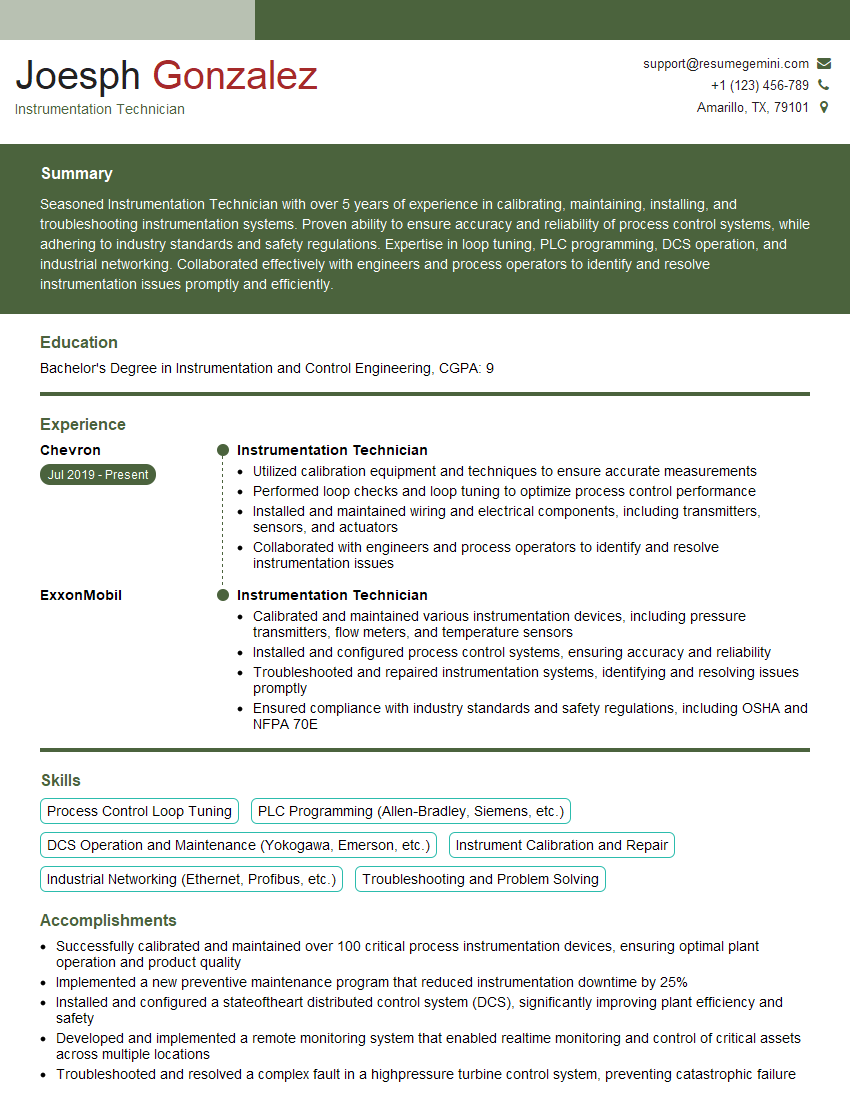
Mastering Buffer Control System Operation opens doors to exciting career opportunities in high-demand fields requiring strong technical skills and problem-solving abilities. To maximize your chances of landing your dream role, creating a compelling and ATS-friendly resume is crucial. ResumeGemini can help you craft a professional resume that highlights your expertise in Buffer Control System Operation and effectively showcases your qualifications to potential employers. Examples of resumes tailored to this specific field are available through ResumeGemini, enabling you to create a document that truly stands out.
Explore more articles
Users Rating of Our Blogs
Share Your Experience
We value your feedback! Please rate our content and share your thoughts (optional).
What Readers Say About Our Blog
To the interviewgemini.com Webmaster.
Very helpful and content specific questions to help prepare me for my interview!
Thank you
To the interviewgemini.com Webmaster.
This was kind of a unique content I found around the specialized skills. Very helpful questions and good detailed answers.
Very Helpful blog, thank you Interviewgemini team.