Unlock your full potential by mastering the most common Bus Driver interview questions. This blog offers a deep dive into the critical topics, ensuring you’re not only prepared to answer but to excel. With these insights, you’ll approach your interview with clarity and confidence.
Questions Asked in Bus Driver Interview
Q 1. Describe your experience operating various types of buses.
Throughout my career, I’ve operated a variety of buses, from smaller shuttle buses ideal for airport transfers and corporate events to larger transit buses used for city routes and school transportation. My experience extends to coach buses, often utilized for long-distance travel and tourism. Each type presents unique operational challenges. For instance, maneuvering a large transit bus in congested city traffic requires a different skill set than smoothly driving a coach bus on a highway. I am adept at adapting my driving style to the specific vehicle and its intended use. I’ve also worked with buses equipped with various technologies, including GPS tracking systems and passenger information displays, which I’ve efficiently integrated into my daily operations.
- Shuttle Buses: Requires precision maneuvering in tight spaces and a focus on passenger comfort and timely arrival.
- Transit Buses: Demands a strong understanding of city routes, traffic patterns, and passenger management, prioritizing safety in high-traffic areas.
- Coach Buses: Involves long-distance driving, adherence to strict schedules, and ensuring passenger safety during extended trips.
Q 2. What is your experience with pre-trip vehicle inspections?
Pre-trip vehicle inspections are paramount for safety and legal compliance. My inspection routine is thorough and meticulous, adhering to strict checklists. I begin with a visual inspection, checking for any visible damage, fluid leaks, or tire wear. Then, I check all fluid levels (engine oil, coolant, brake fluid, windshield washer fluid), ensuring they’re within acceptable ranges. I test all lights, signals, wipers, and horns. I carefully inspect the tires, paying close attention to their tread depth and pressure. I examine the undercarriage for any potential issues. Finally, I test the brakes and steering to ensure responsiveness and safety. Documentation is crucial, and I meticulously record any irregularities found, no matter how minor, and report them immediately. This proactive approach prevents potential breakdowns and ensures the safety of my passengers.
Think of it like a pre-flight check for an airplane; every component needs to be functioning correctly to ensure a safe journey. Any oversight could have serious repercussions.
Q 3. How do you handle difficult passengers or situations?
Dealing with difficult passengers or situations requires patience, diplomacy, and a calm demeanor. My approach is always to listen actively to understand their concerns and address them with empathy and respect. For example, if a passenger is upset about a delay, I would clearly explain the reason for the delay and offer any solutions I can, such as providing information about alternative routes or contacting customer service. If a passenger is behaving aggressively or disruptively, I will prioritize the safety of all passengers and myself. I may calmly ask the passenger to modify their behavior or, if necessary, contact the appropriate authorities for assistance. De-escalation is key; remaining calm and professional, even in stressful situations, helps prevent conflicts from escalating. I strive to resolve issues fairly and efficiently, always aiming to provide a safe and comfortable journey for everyone.
Q 4. Explain your knowledge of defensive driving techniques.
Defensive driving is more than just following traffic laws; it’s anticipating potential hazards and taking proactive steps to avoid accidents. This involves maintaining a safe following distance, scanning the road ahead and to the sides, and being aware of blind spots. I always adjust my driving to account for weather conditions, road surface, and traffic density. For example, I increase my following distance in rainy or icy conditions and reduce my speed accordingly. I am vigilant about checking mirrors frequently and signaling my intentions clearly. Regular training in defensive driving techniques keeps my skills sharp and ensures I’m prepared for unexpected events. It’s about being constantly aware of my surroundings and making informed driving decisions to maximize safety.
Q 5. How familiar are you with traffic laws and regulations?
I have a thorough understanding of all relevant traffic laws and regulations, including those pertaining to bus operation. This includes knowledge of speed limits, right-of-way rules, regulations for transporting passengers, and reporting requirements. I am well-versed in the rules governing the transportation of hazardous materials, if applicable, and ensure I am fully compliant with all regulations. Staying updated on any changes in laws or regulations is a continuous process. I attend regular safety training sessions and review relevant documentation to maintain my compliance and proficiency. Understanding these laws is not just a matter of avoiding penalties but a fundamental part of ensuring the safety of my passengers and other road users.
Q 6. Describe your experience with maintaining accurate trip logs and records.
Maintaining accurate trip logs and records is critical for accountability and operational efficiency. My logs include details such as the date, time, route, number of passengers, mileage, any delays or incidents encountered, and the vehicle’s condition. I ensure all information is recorded accurately and legibly, adhering to company guidelines. This meticulous record-keeping is important for various purposes, including payroll calculations, scheduling optimization, and identifying areas for improvement in routes or operations. Accurate documentation allows for better analysis of operational efficiency and helps identify potential issues requiring attention. It also plays a vital role in complying with regulatory requirements and in case of any incidents or accidents. I consistently review and verify the accuracy of my records.
Q 7. How do you manage time constraints and adhere to schedules?
Managing time constraints and adhering to schedules requires careful planning and efficient execution. Before each trip, I review the route, anticipated traffic conditions, and potential delays. I allow for buffer time to accommodate unexpected circumstances, such as traffic jams or passenger boarding delays. While driving, I maintain a consistent speed while adhering to traffic regulations. I communicate potential delays to dispatch and passengers promptly and transparently. I prioritize efficient passenger loading and unloading procedures, minimizing dwell time at stops. Proactive route planning and effective time management ensure that I arrive at my destination on time while maintaining a safe and comfortable journey for my passengers. It’s about efficient driving without sacrificing safety or passenger experience.
Q 8. What is your experience with passenger loading and unloading procedures?
Passenger loading and unloading is a critical aspect of safe and efficient bus operation. My procedure begins with ensuring the bus is safely stopped at the designated stop, with the engine off and the parking brake engaged. I then activate the flashing hazard lights to alert other drivers and pedestrians. I clearly announce the stop and destination, ensuring passengers can easily hear and understand.
During loading, I assist elderly passengers, those with disabilities, and passengers with luggage, ensuring their safety and comfort. I monitor passenger flow to avoid overcrowding and ensure everyone has a seat or safe standing area. I actively check for any unattended bags or packages that might pose a security risk. Unloading follows a similar procedure, with clear announcements and assistance offered to those who need it. For example, during rush hour, I might need to manage a larger volume of passengers more quickly, while remaining aware of everyone’s safety. I always ensure the doors are completely closed and secured before the bus resumes its journey.
Q 9. How do you handle mechanical issues while on the road?
Handling mechanical issues on the road requires a calm and methodical approach. My first step is to assess the situation – is it safe to pull over? If so, I activate the hazard lights and pull over to a safe location, away from traffic if possible. Then, I conduct a basic safety check: ensuring the passengers are safe and remain seated, and securing the area around the bus.
Depending on the issue (e.g., flat tire, engine trouble, brake failure), I’ll follow specific procedures. Minor issues like a flat tire might be manageable with on-board equipment; more serious problems require contacting dispatch immediately. I clearly and concisely communicate the issue’s location, nature, and the bus’s status to dispatch, following the company’s established communication protocols. I remain with the passengers, providing updates and reassurance until assistance arrives. For example, if it’s a hot day, I’d prioritize getting passengers to a cool, shaded spot while waiting for roadside assistance. I always prioritize passenger safety and comfort above all else.
Q 10. Describe your experience with GPS navigation systems.
I’m proficient in using GPS navigation systems. I use them daily to plan efficient routes, avoiding traffic congestion and road closures. The system provides real-time updates, which allows me to adapt to unexpected delays or changes in road conditions. For example, if a major accident closes a highway, the GPS will reroute me to an alternate route, ensuring on-time arrivals whenever possible. I’m also familiar with using different navigation software or apps depending on the specific needs of the route or any unexpected situations. It’s crucial that I understand the limitations of the GPS, too; I never rely on it exclusively and always use my own knowledge of the area to ensure the optimal route. My familiarity with the system allows me to concentrate on other important tasks, like monitoring passenger safety.
Q 11. How do you ensure the safety and security of your passengers?
Passenger safety and security is my top priority. This starts with pre-trip inspections, checking for any potential hazards on the bus. During the journey, I maintain a watchful eye on the passengers and surroundings. I address any suspicious behavior promptly, reporting it to dispatch if necessary. I’m trained in emergency procedures and know how to react to situations such as medical emergencies or security threats. I also ensure that passengers adhere to the rules and regulations of the bus company, such as wearing seatbelts where applicable and not obstructing exits. One example is remaining vigilant for any signs of distress among passengers, and offering assistance proactively. Creating a calm and reassuring environment is also important to promote passenger safety.
Q 12. What is your experience with emergency procedures and protocols?
I’m fully trained in various emergency procedures, including accidents, medical emergencies (e.g., heart attack, seizures), and security threats. This training includes first aid and CPR. I’m familiar with the proper steps to follow in each situation, from securing the scene and contacting emergency services to administering basic first aid while waiting for help to arrive. My training emphasizes clear communication with emergency responders, providing them with accurate and timely information about the situation and the bus’s location. Regular refresher courses keep my skills and knowledge current and ready for any potential eventuality. One instance involved a passenger suffering from a sudden allergic reaction, where I quickly accessed my first aid kit and administered an epinephrine auto-injector while simultaneously contacting emergency services.
Q 13. How do you communicate effectively with dispatch and passengers?
Effective communication is essential in this job. I communicate with dispatch through company-provided radios, providing regular updates on my location, passenger count, and any potential issues that may arise. My communication style is clear, concise, and professional, ensuring that dispatch has the necessary information to support me effectively. With passengers, I use a friendly and respectful tone, answering questions clearly and patiently. I provide necessary information about stops, delays, or changes to the route. If there’s a language barrier, I use any available translation resources or body language to ensure effective communication. Active listening is also crucial – hearing and understanding passenger concerns is just as important as clearly communicating updates to them.
Q 14. How do you maintain a clean and organized bus?
Maintaining a clean and organized bus is important for passenger comfort and safety. At the start and end of each shift, I perform a thorough cleaning, including sweeping or vacuuming the floor, wiping down surfaces, and emptying trash receptacles. I regularly check for and address any spills or messes promptly. I also ensure that the bus is organized, making sure that emergency equipment is readily accessible and that any obstructions are removed to ensure easy passenger flow and emergency exits remain clear. This is a constant process throughout the day, checking the bus frequently to make sure it is clean and comfortable for my passengers. For example, on a longer route, I might make smaller cleaning sweeps throughout the route to address any minor issues that might appear.
Q 15. What is your experience with passenger assistance needs (e.g., wheelchairs, elderly passengers)?
Throughout my career, assisting passengers with diverse needs has been a cornerstone of my role. I’m proficient in safely and respectfully assisting wheelchair users, including securing wheelchairs using appropriate restraints and ensuring their comfortable and safe boarding and disembarking. I also have extensive experience assisting elderly passengers, offering a helping hand as needed, ensuring they have a safe and comfortable journey, and addressing their individual needs, such as extra time to board or specific seating requests. I understand the importance of patience, clear communication, and sensitivity in these interactions.
For example, I once assisted a visually impaired passenger who required detailed guidance throughout the journey, including describing the route and alerting them to approaching stops. Another instance involved helping an elderly passenger with a walker, carefully guiding them onto the bus and securing their belongings. I always prioritize passenger safety and comfort, ensuring that all assistance is provided with dignity and respect.
Career Expert Tips:
- Ace those interviews! Prepare effectively by reviewing the Top 50 Most Common Interview Questions on ResumeGemini.
- Navigate your job search with confidence! Explore a wide range of Career Tips on ResumeGemini. Learn about common challenges and recommendations to overcome them.
- Craft the perfect resume! Master the Art of Resume Writing with ResumeGemini’s guide. Showcase your unique qualifications and achievements effectively.
- Don’t miss out on holiday savings! Build your dream resume with ResumeGemini’s ATS optimized templates.
Q 16. Describe your experience handling passenger complaints.
Handling passenger complaints requires a calm, professional, and empathetic approach. My first step is always active listening to fully understand the passenger’s concern. I avoid interrupting and make eye contact to show that I value their feedback. I then attempt to address the issue directly, if possible, offering sincere apologies where appropriate. If a solution is not immediately within my power, I clearly explain the process for addressing their complaint further, perhaps providing contact information for the relevant department or supervisor.
For instance, if a passenger complained about a missed stop, I would first apologize for the inconvenience, then explain the circumstances (traffic, unexpected detour, etc.) and offer suggestions for how they could reach their destination. The key is to show empathy, take ownership, and follow up to ensure the issue is properly resolved.
Q 17. How do you handle stressful situations, such as traffic congestion or delays?
Stressful situations are inevitable in this profession. My approach is rooted in proactive planning and calm, decisive action. I anticipate potential issues such as rush hour traffic or unexpected delays by allowing extra travel time and maintaining a constant awareness of my surroundings. If an unexpected incident occurs, I stay calm, assess the situation quickly, and prioritize passenger safety. If traffic is congested, I use my knowledge of alternative routes or adjust my driving style to maintain safety while managing passenger expectations through clear announcements.
For example, during a heavy snowstorm, I carefully navigated the slick roads, reducing speed and maintaining a safe distance from other vehicles. I communicated the delay to passengers regularly, keeping them informed and minimizing anxiety.
Q 18. What is your knowledge of different types of bus routes and schedules?
My knowledge of bus routes and schedules is comprehensive. I’m familiar with various types of routes, including local, express, and commuter routes, understanding their specific patterns, stops, and timing. I regularly consult schedules and route maps, and I’m adept at using route planning software and GPS navigation systems to stay on schedule and effectively navigate different routes. I also understand how routes may change due to traffic, construction, or special events, and I can adapt my driving accordingly.
I’m proficient in interpreting route maps, understanding both the physical layout and the timing requirements of each route. This includes recognizing landmarks and identifying potential points of congestion or delay. I can quickly assess changes and adapt my driving strategy accordingly.
Q 19. How do you adapt your driving to different weather conditions?
Adapting to different weather conditions is crucial for safe driving. In rain or snow, I reduce my speed, increase following distance, and use my wipers and headlights appropriately. In fog, I drive even slower and use my fog lights. I’m aware of the effects of weather on road conditions, such as black ice or reduced visibility, and I adjust my driving accordingly to ensure the safety of my passengers and other road users.
For example, during a heavy rainstorm, I slowed my speed significantly, allowing for increased braking distance and carefully navigating slippery roads. I also communicated the weather conditions and potential delays to the passengers.
Q 20. Describe your experience with using two-way radios or communication devices.
I’m highly proficient in using two-way radios and other communication devices to maintain clear and effective communication with dispatch, other drivers, and potentially emergency services. I understand proper radio etiquette, including clear and concise communication, using the correct channels, and avoiding unnecessary chatter. I’m able to report incidents, request assistance, and relay information to other drivers effectively and promptly.
For example, I once used the two-way radio to report a mechanical issue with my bus, providing the dispatcher with details of the location and the nature of the problem. I also regularly use the radio to coordinate with other drivers, especially during busy periods or unexpected delays.
Q 21. What is your understanding of hours of service regulations?
I have a thorough understanding of hours-of-service regulations, including the rules regarding maximum driving time, rest periods, and mandatory breaks. I meticulously track my driving time and ensure that I comply with all applicable regulations. I’m familiar with the electronic logging devices (ELDs) and use them correctly to accurately record my hours of service. Safety is paramount, and complying with these regulations is crucial for preventing driver fatigue and ensuring the safety of passengers.
I understand the potential consequences of violating these regulations, including fines and loss of driving privileges. I prioritize safety and make sure I have enough rest before operating a bus to comply with all regulations.
Q 22. How do you prioritize passenger safety over schedule adherence?
Passenger safety is always the top priority. While schedules are important, they are secondary to ensuring the well-being of everyone on board. This means making decisions that might cause a slight delay, but ultimately prevent accidents or injuries.
For example, if I encounter heavy traffic or adverse weather conditions that compromise safety, I will prioritize slowing down or even stopping at a safe location rather than rushing to meet the schedule. I’ll also take extra care when boarding and disembarking passengers, ensuring everyone is safe and secure before moving on. This proactive approach, while potentially impacting the schedule slightly, minimizes the risk of incidents significantly.
- Regular safety checks: Before departure, I meticulously check the bus for any potential hazards – broken seats, obstructions in the aisle, etc.
- Defensive driving: I always anticipate potential dangers and adjust my driving accordingly, leaving ample space between my vehicle and others.
- Communication: I clearly communicate potential delays or changes in the route to the passengers, keeping them informed and reassured.
Q 23. Describe your familiarity with different types of bus maintenance.
My familiarity with bus maintenance encompasses both preventative and reactive measures. Preventative maintenance includes regular checks of tires, brakes, lights, wipers, and fluids (oil, coolant, brake fluid). I also know the importance of regularly scheduled servicing, including engine checks and transmission inspections. Reactive maintenance involves addressing issues as they arise. This can range from simple tasks like changing a blown bulb to more complex issues that require the assistance of a mechanic, like engine trouble or a faulty brake system.
I’m trained to identify and report any potential mechanical problems immediately. For instance, unusual noises from the engine, brake squealing, or steering difficulties are all red flags I’d immediately report to the maintenance team. Understanding the basics allows me to contribute to the longevity of the bus and prevent potential breakdowns.
Q 24. How would you handle a medical emergency on board?
Handling a medical emergency requires a calm and swift response. My first step would be to assess the situation, determining the nature of the emergency and the severity of the patient’s condition. Then, I would call emergency services (911 or the local equivalent) immediately and provide them with my location, the nature of the emergency, and the number of passengers on board.
Simultaneously, I would offer assistance to the extent of my training – administering first aid if I’m qualified, providing comfort and reassurance to the patient, and managing the other passengers to ensure their safety and minimize panic. If the situation allows, I would move the bus to a safe location and coordinate with emergency responders to ensure smooth access for them.
Following the emergency, I would document the incident thoroughly for reporting purposes and follow any instructions from the company or emergency services.
Q 25. How do you stay alert and avoid fatigue while driving long hours?
Staying alert and avoiding fatigue during long hours is crucial for safety. I prioritize getting adequate sleep the night before my shift and avoiding alcohol or heavy meals before and during driving. Regular breaks are essential; I adhere to all mandated rest periods and take additional short breaks when needed to stretch, walk around, and refresh myself.
I also utilize techniques like listening to upbeat music or podcasts to maintain focus. Staying hydrated by drinking plenty of water is important, and I avoid sugary drinks which can lead to energy crashes. If I feel overly tired at any point, I will immediately pull over in a safe location and rest before continuing my route. Safety is paramount, and fatigue management is a key aspect of responsible driving.
Q 26. What is your experience with using onboard ticketing systems?
I have extensive experience using onboard ticketing systems. I am proficient in operating various systems, including those that use electronic fare cards, mobile ticketing apps, and traditional paper tickets. My responsibilities include scanning tickets, processing fares, assisting passengers with ticket purchases and troubleshooting any issues with the system.
I’m comfortable handling cash transactions, reconciling the day’s receipts, and reporting any discrepancies or malfunctions to the appropriate personnel. I understand the importance of accurate record-keeping and following established procedures to maintain the efficiency and integrity of the ticketing process. This ensures compliance with company policy and minimizes the potential for errors or disputes.
Q 27. How do you maintain a professional demeanor with passengers?
Maintaining a professional demeanor with passengers involves treating everyone with courtesy, respect, and patience, regardless of their behavior. I always address passengers politely, offer assistance when needed, and maintain a calm and composed attitude even in challenging situations, such as dealing with difficult or demanding passengers.
I strive to be helpful and accommodating while setting clear boundaries to maintain order and safety. I address complaints calmly and professionally, trying to find solutions that satisfy both the passenger and company policy. My uniform is always neat and clean, and I present myself in a way that instills confidence and trust.
Q 28. Describe a time you had to make a quick, critical decision while driving.
One day, I was driving on a busy highway when a car suddenly swerved in front of me, forcing me to react quickly. I immediately slammed on my brakes and swerved slightly to avoid a collision. The situation required a quick assessment of the danger and an immediate response to prevent a potentially serious accident.
My years of experience and training allowed me to respond appropriately, maintaining control of the bus and bringing it to a safe stop. The passengers were understandably shaken, but thankfully, nobody was injured. This event reinforced the importance of constant vigilance and the need to react decisively to prevent accidents.
Key Topics to Learn for Bus Driver Interview
- Safety Regulations and Procedures: Understanding and applying all relevant traffic laws, safety protocols, and company-specific rules for safe operation.
- Defensive Driving Techniques: Demonstrating knowledge and practical application of techniques to prevent accidents, such as maintaining safe following distances, anticipating potential hazards, and reacting appropriately to challenging situations.
- Vehicle Maintenance and Inspection: Knowing how to perform pre-trip and post-trip vehicle inspections, identifying potential mechanical issues, and reporting necessary maintenance.
- Passenger Handling and Communication: Describing effective strategies for managing passenger behavior, providing excellent customer service, and handling challenging passenger interactions with professionalism and patience.
- Route Planning and Navigation: Explaining your understanding of route optimization, map reading, and using GPS or other navigation systems efficiently and safely.
- Emergency Procedures: Detailing your knowledge of how to handle various emergencies, such as accidents, medical situations, or mechanical failures, including emergency communication procedures.
- Customer Service and Communication Skills: Highlighting your ability to interact professionally and courteously with passengers, addressing their needs and concerns effectively.
- Time Management and Punctuality: Demonstrating an understanding of the importance of adhering to schedules, managing time efficiently, and ensuring on-time departures and arrivals.
Next Steps
Mastering the skills and knowledge required for a Bus Driver position opens doors to a stable and rewarding career with opportunities for advancement. A strong, ATS-friendly resume is crucial for getting your application noticed by potential employers. To help you create a resume that truly showcases your qualifications, we recommend using ResumeGemini. ResumeGemini provides a user-friendly platform and offers examples of resumes tailored to the Bus Driver role, ensuring your application stands out from the competition. Invest time in crafting a compelling resume – it’s your first impression!
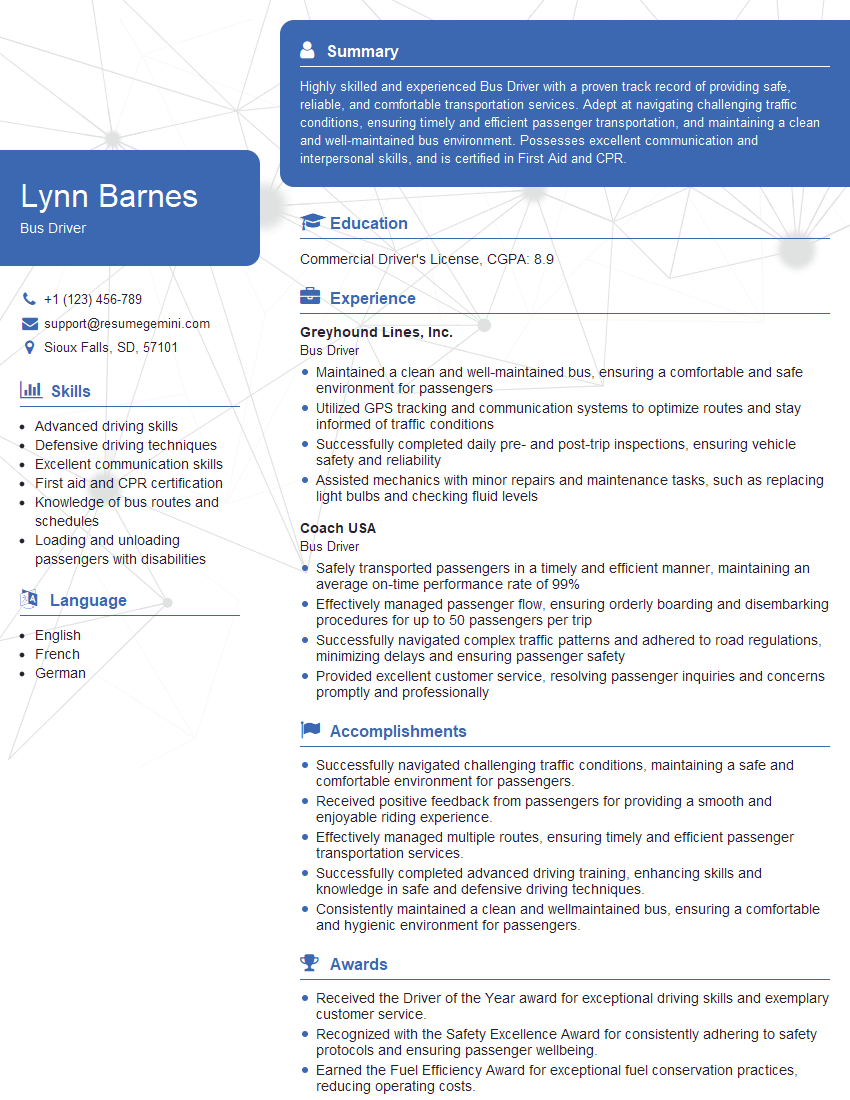
Bus Driver Resume Sample
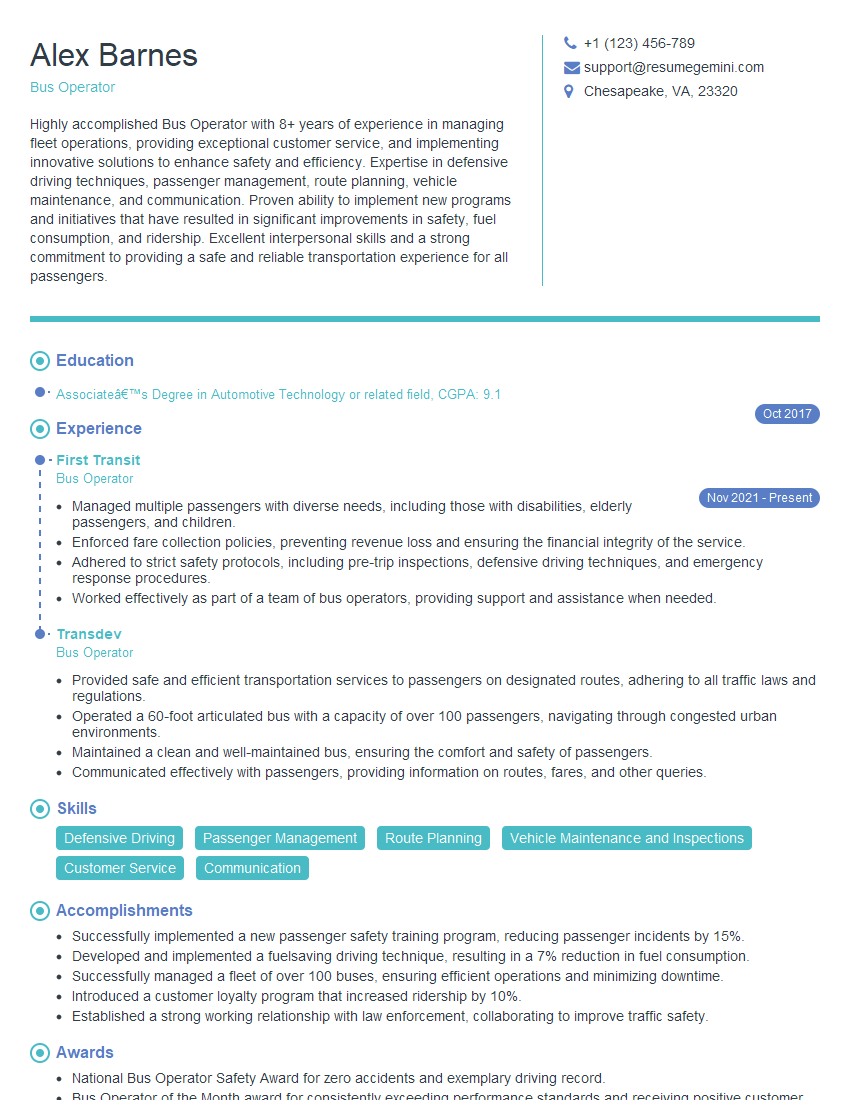
Bus Operator Resume Sample
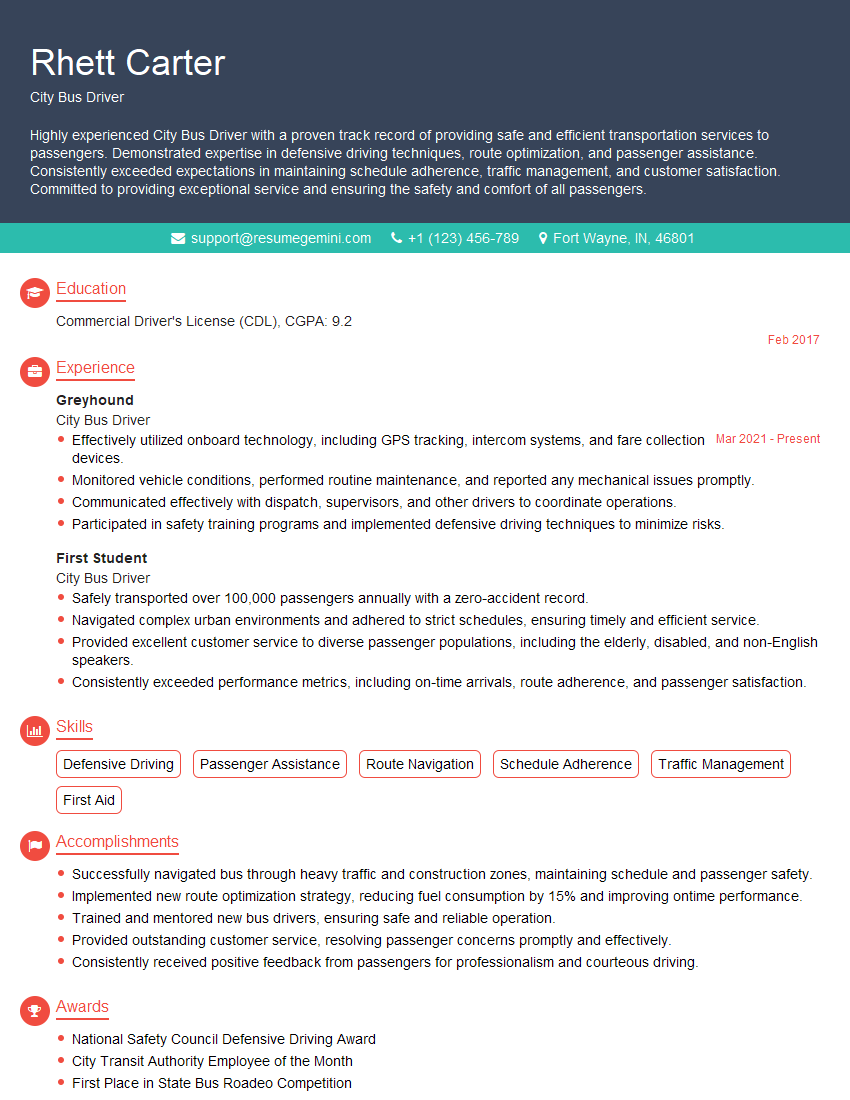
City Bus Driver Resume Sample
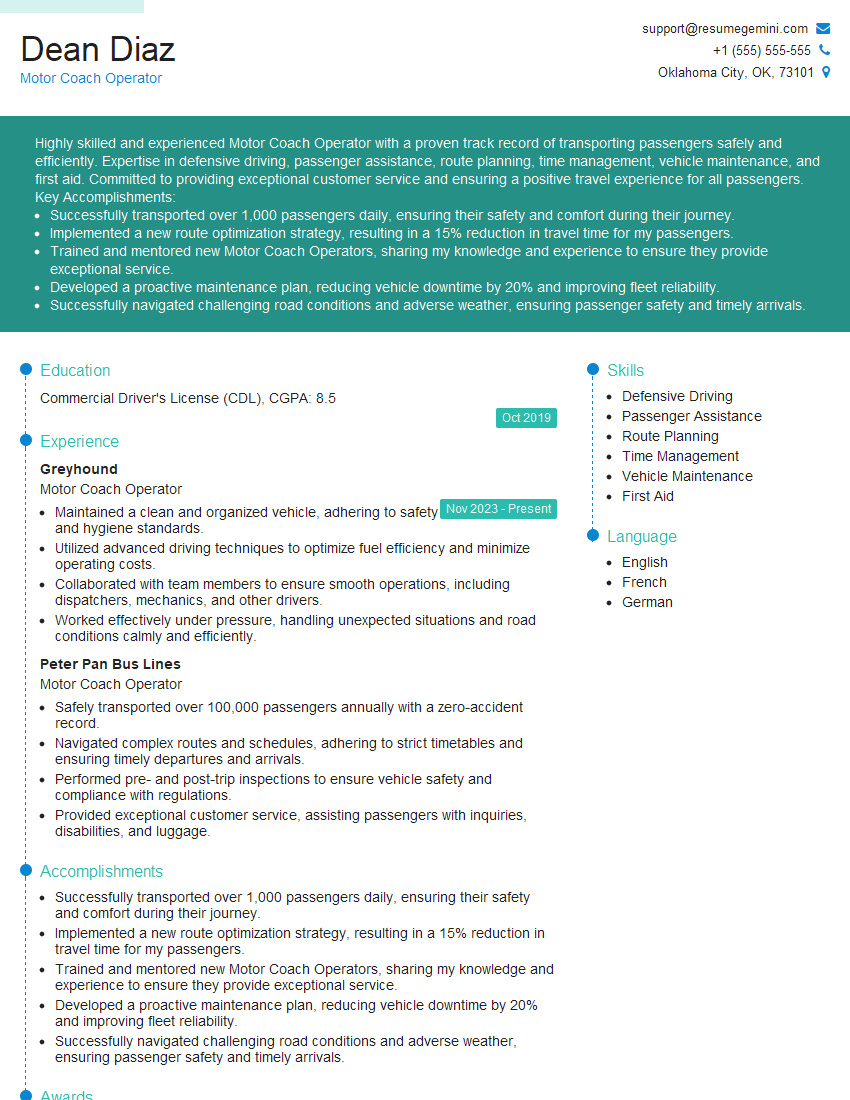
Motor Coach Operator Resume Sample
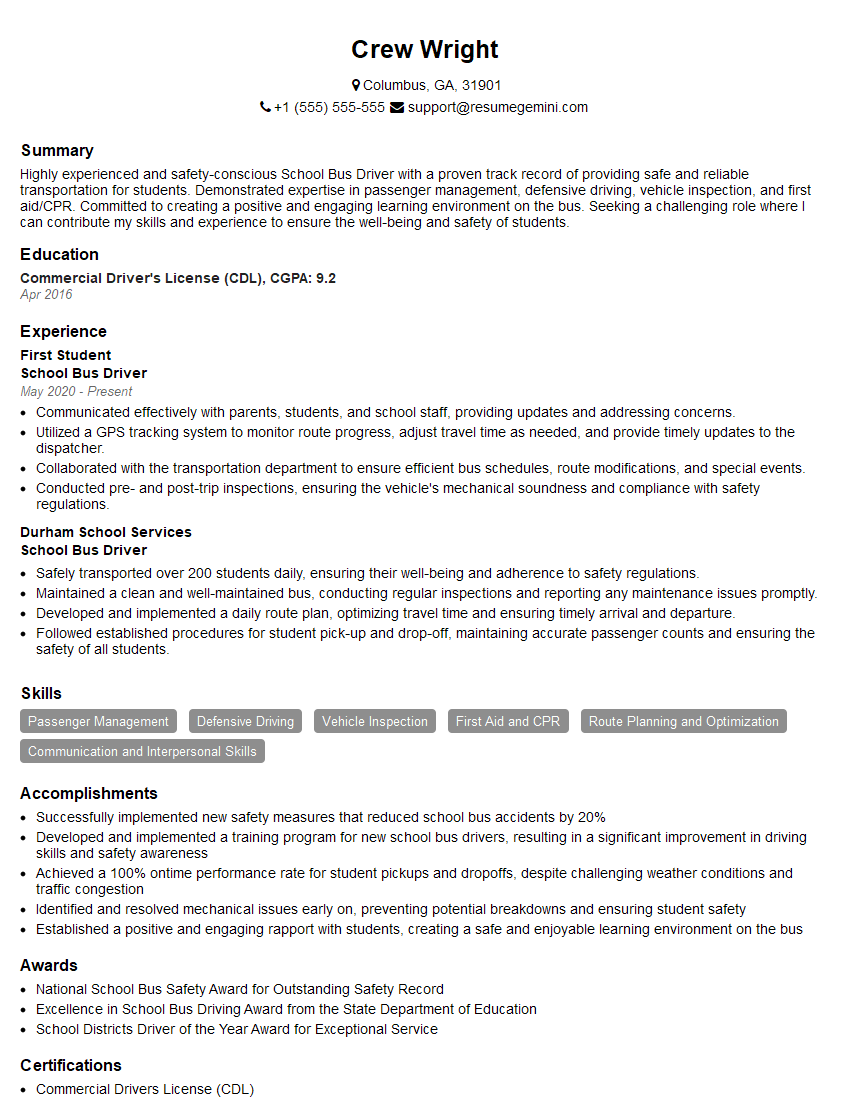
School Bus Driver Resume Sample
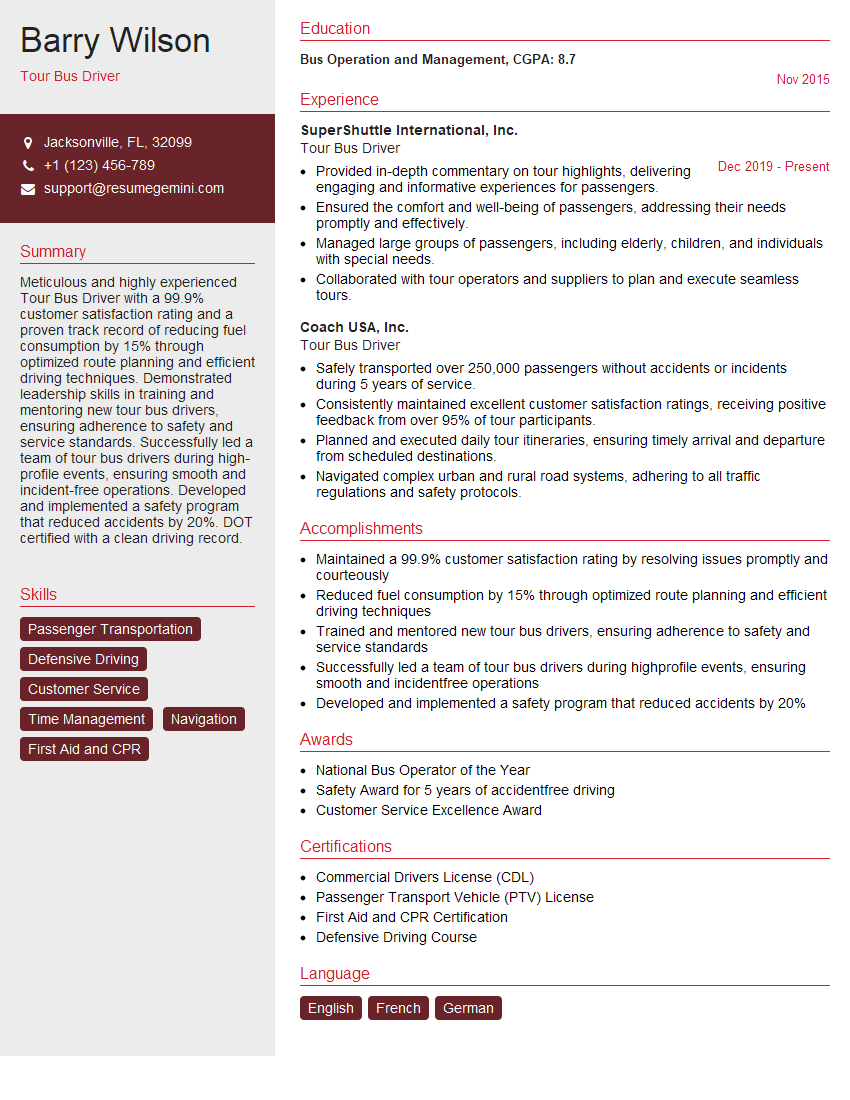
Tour Bus Driver Resume Sample
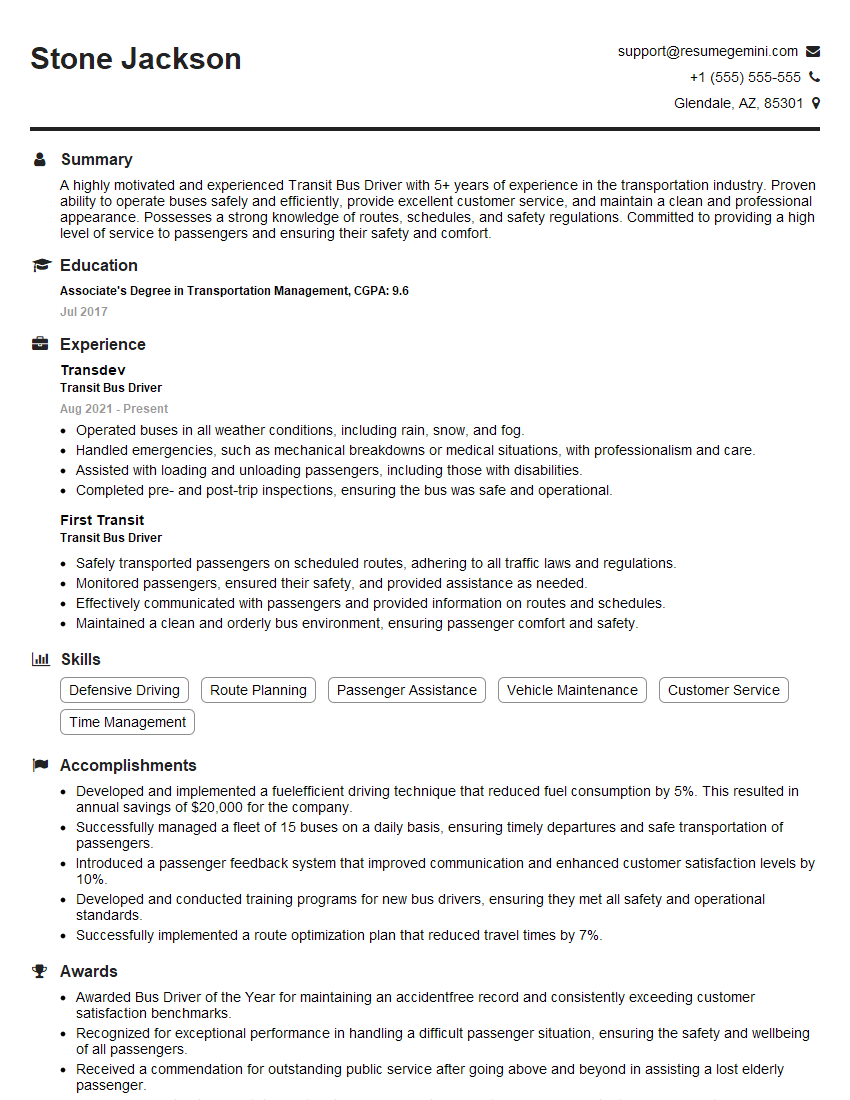
Transit Bus Driver Resume Sample
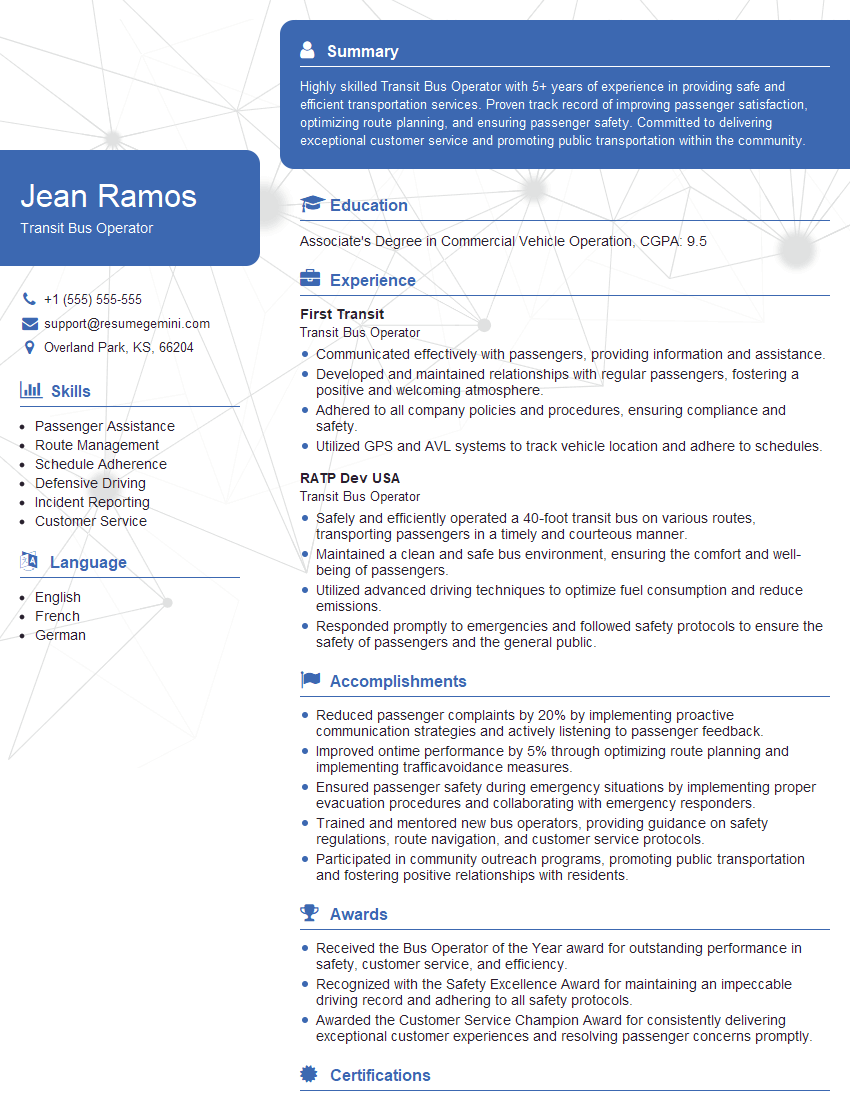
Transit Bus Operator Resume Sample
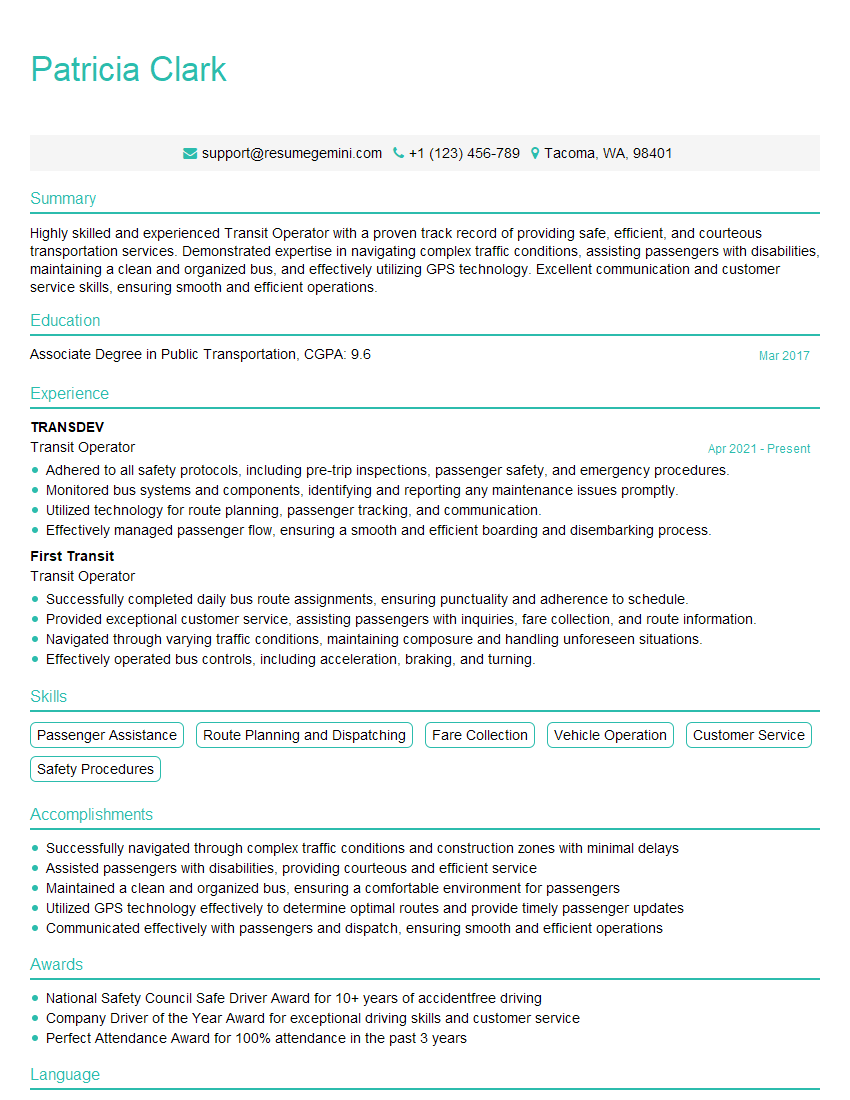
Transit Operator Resume Sample
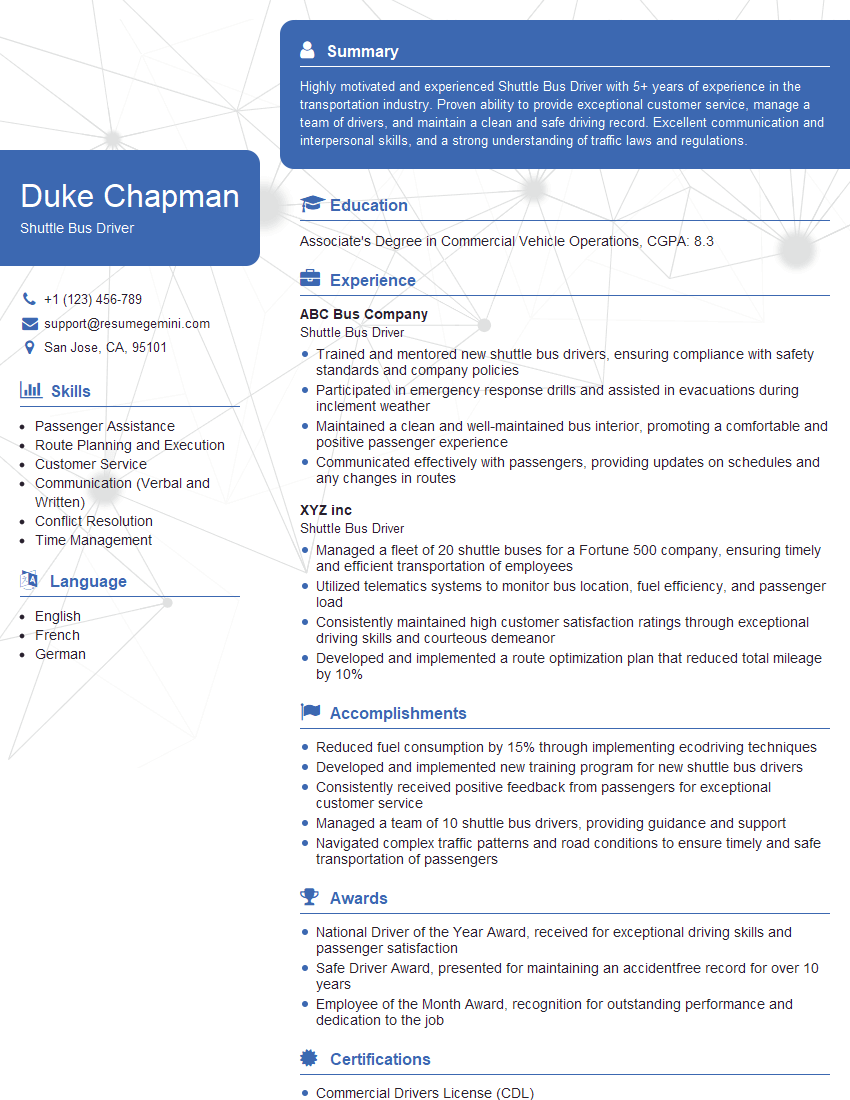
Shuttle Bus Driver Resume Sample
Explore more articles
Users Rating of Our Blogs
Share Your Experience
We value your feedback! Please rate our content and share your thoughts (optional).
What Readers Say About Our Blog
To the interviewgemini.com Webmaster.
Very helpful and content specific questions to help prepare me for my interview!
Thank you
To the interviewgemini.com Webmaster.
This was kind of a unique content I found around the specialized skills. Very helpful questions and good detailed answers.
Very Helpful blog, thank you Interviewgemini team.