Unlock your full potential by mastering the most common Business Analysis and Requirements Gathering interview questions. This blog offers a deep dive into the critical topics, ensuring you’re not only prepared to answer but to excel. With these insights, you’ll approach your interview with clarity and confidence.
Questions Asked in Business Analysis and Requirements Gathering Interview
Q 1. Explain the difference between functional and non-functional requirements.
Functional requirements define what a system should do. They describe the specific functionalities or features the system must possess to meet user needs. Non-functional requirements, on the other hand, define how the system should perform. They specify qualities like performance, security, usability, and scalability. Think of it this way: functional requirements answer ‘What will the system do?’, while non-functional requirements answer ‘How well will the system do it?’.
- Example (Functional): The system shall allow users to create, edit, and delete customer accounts.
- Example (Non-functional): The system shall respond to user requests within two seconds. The system shall be secure against unauthorized access.
Q 2. Describe your experience with elicitation techniques (e.g., interviews, workshops, surveys).
My experience with elicitation techniques is extensive. I’ve successfully employed a variety of methods, adapting my approach based on project context and stakeholder characteristics. For example, I’ve conducted one-on-one interviews with key stakeholders to understand their individual perspectives and needs. These interviews provide in-depth information and allow for clarification of complex issues. I’ve also facilitated workshops with larger groups, leveraging brainstorming and collaborative modeling techniques like user story mapping to gather a broader range of perspectives and build consensus on requirements. Surveys are useful for gathering quantitative data from a large number of users, particularly for understanding user preferences and satisfaction. In one project, a combination of interviews with subject matter experts and a user survey helped us uncover a critical usability issue that would have otherwise gone unnoticed.
Q 3. How do you prioritize requirements in a project with competing demands?
Prioritizing requirements with competing demands requires a structured approach. I typically use a combination of techniques, including MoSCoW analysis (Must have, Should have, Could have, Won’t have), prioritisation matrices (e.g., value vs. effort), and stakeholder input. MoSCoW helps categorize requirements by their importance, while a prioritisation matrix helps visualize the trade-offs between value and effort. Stakeholder input ensures that the priorities align with business goals and user needs. For instance, in a recent project with budget constraints, we used a prioritisation matrix to rank requirements based on their business value and the effort required to implement them. This allowed us to focus on high-value, low-effort items first, ensuring we delivered the most important features within the budget.
Q 4. What tools and techniques do you use for requirements management?
For requirements management, I utilize a combination of tools and techniques. Tools like Jira and Confluence are invaluable for tracking requirements, managing changes, and facilitating collaboration among stakeholders. These tools allow for centralising requirements documentation, enabling easy access and version control. Beyond software, I also leverage techniques such as requirement traceability matrices (RTMs) to ensure that every requirement is linked to its corresponding design, test case, and implementation. This traceability is crucial for demonstrating completeness and ensuring that changes are managed effectively. Visual modeling tools, such as UML diagrams, are used to create visual representations of the system, making it easier for stakeholders to understand and review requirements.
Q 5. How do you handle conflicting requirements from stakeholders?
Handling conflicting requirements is a common challenge. My approach involves facilitated discussions with stakeholders to understand the root cause of the conflict. This often involves active listening, identifying underlying assumptions and priorities. Once the root cause is understood, we explore options for resolving the conflict, such as negotiation, compromise, or prioritization. Sometimes, it’s necessary to involve senior stakeholders to make a decision, especially when conflicting priorities are significant. Documenting all decisions and trade-offs is critical for transparency and accountability. In one instance, we had conflicting requirements regarding security and usability. Through a facilitated discussion, we determined that a slightly less user-friendly, but significantly more secure approach was necessary to mitigate critical risks.
Q 6. Describe your process for creating user stories.
My process for creating user stories follows the INVEST principle (Independent, Negotiable, Valuable, Estimable, Small, Testable). I start by identifying the user, their goal, and the value they receive. I then craft a concise, clear story in the format ‘As a [user type], I want [goal] so that [benefit]’. For example, ‘As a customer, I want to be able to search for products by keyword so that I can easily find what I’m looking for’. Following the INVEST principle helps ensure that user stories are well-defined, manageable, and testable. After creating the initial stories, I collaborate with developers and stakeholders to refine and elaborate on them. This iterative approach allows for continuous refinement and clarification.
Q 7. How do you ensure requirements are testable and verifiable?
Ensuring requirements are testable and verifiable is crucial for successful project delivery. I achieve this by writing requirements that are specific, measurable, achievable, relevant, and time-bound (SMART). Each requirement should have clear acceptance criteria that define what constitutes successful implementation. These criteria should be testable and should specify how the system’s behaviour will be validated. For example, instead of ‘The system should be user-friendly’, a better requirement would be ‘The system shall allow users to complete the checkout process in under 3 minutes, with less than 2 errors, as measured by usability testing with 10 representative users.’ By focusing on testable acceptance criteria, we can objectively verify that requirements have been met, reducing ambiguity and improving project quality.
Q 8. Explain your understanding of the Software Development Life Cycle (SDLC).
The Software Development Life Cycle (SDLC) is a structured process used to plan, design, develop, test, and deploy software applications. Think of it as a roadmap for building a successful software product. Different SDLC models exist, each with its own strengths and weaknesses. For example, the Waterfall model follows a sequential approach, completing each phase before moving to the next. This is great for projects with stable requirements. Conversely, Agile methodologies, like Scrum, emphasize iterative development and flexibility, making them ideal for projects with evolving needs.
A typical SDLC involves phases such as:
- Requirements Gathering and Analysis: Defining what the software should do.
- Design: Creating a blueprint of the software’s architecture and user interface.
- Implementation (Coding): Writing the actual software code.
- Testing: Identifying and fixing bugs and ensuring the software meets requirements.
- Deployment: Releasing the software to end-users.
- Maintenance: Providing ongoing support and updates.
Choosing the right SDLC model depends heavily on the project’s size, complexity, and the client’s needs. In my experience, hybrid approaches that combine elements of different models often prove most effective.
Q 9. How familiar are you with Agile methodologies (e.g., Scrum, Kanban)?
I’m highly familiar with Agile methodologies, particularly Scrum and Kanban. I’ve successfully utilized both in various projects, adapting them based on the specific project context. Scrum, with its sprints, daily stand-ups, and sprint reviews, is excellent for managing iterative development and delivering incremental value. I’ve found it particularly useful for projects requiring frequent stakeholder feedback. Kanban, with its focus on visualizing workflow and limiting work in progress, is ideal for optimizing continuous delivery and managing fluctuating priorities. I’ve used Kanban successfully in projects where maintaining a steady flow of work was crucial. My expertise goes beyond just knowing the methodologies; I understand the nuances of implementing them effectively, including the crucial roles of the Scrum Master and Product Owner.
For example, in one project, we initially used Scrum but transitioned to a Kanban system mid-project to better manage a surge in feature requests. This flexibility demonstrates my practical understanding and ability to apply Agile in dynamic situations.
Q 10. How do you manage requirements changes during a project?
Managing requirements changes is a fundamental aspect of successful software development. It’s unrealistic to expect requirements to remain completely static throughout a project. My approach involves establishing a formal change management process that includes:
- Impact Assessment: Evaluating the impact of the proposed changes on the schedule, budget, and scope.
- Prioritization: Ranking change requests based on their business value and urgency.
- Communication: Keeping all stakeholders informed of the changes and their potential effects.
- Documentation: Updating the requirements documentation to reflect the approved changes.
- Testing: Retesting affected areas of the software to ensure the changes haven’t introduced new bugs.
A crucial element is to build flexibility into the project from the start. Agile methodologies are particularly helpful here, as they embrace change and allow for iterative adjustments. I also utilize tools like change request forms and a central repository for requirements documentation to ensure transparency and control. The key is to balance responsiveness to change with maintaining project stability and preventing scope creep.
Q 11. Describe your experience with requirements documentation (e.g., use cases, user stories, specifications).
My experience with requirements documentation is extensive. I’m proficient in creating various documentation types, including:
- User Stories:
As a [user type], I want [goal] so that [benefit].This format helps to focus on the user’s perspective and the value delivered. - Use Cases: Detailed descriptions of how a user interacts with the system to achieve a specific goal. They outline various scenarios, including alternative flows and error handling.
- Functional Specifications: Precise descriptions of the system’s functionality, often including detailed input and output specifications.
- Non-Functional Specifications: Describing quality attributes like performance, security, and scalability.
I ensure that my documentation is clear, concise, unambiguous, and easily accessible to all stakeholders. I regularly review and update the documentation throughout the project lifecycle to reflect changes and ensure accuracy. In my experience, well-written requirements documentation significantly reduces misunderstandings and improves communication among the development team and stakeholders.
Q 12. How do you identify and mitigate risks related to requirements?
Identifying and mitigating requirements risks is crucial for project success. My approach includes:
- Requirements Risk Analysis: Proactively identifying potential problems related to requirements ambiguity, incompleteness, or conflicting requirements.
- Stakeholder Analysis: Understanding the needs and expectations of all stakeholders to identify potential conflicts or misunderstandings.
- Prototyping: Building early prototypes to validate requirements and identify potential issues early in the development process.
- Requirement Reviews and Walkthroughs: Conducting regular reviews with stakeholders to identify and address issues before they escalate.
- Contingency Planning: Developing plans to address potential problems, including allocating sufficient time and resources to handle unexpected changes.
For example, in a recent project, we identified a potential risk of ambiguity in a critical requirement. We addressed this by creating a detailed use case and prototyping the functionality, which helped clarify the requirement and avoid costly rework later.
Q 13. Explain your experience with different types of diagrams (e.g., UML diagrams, flowcharts).
I’m experienced in using various diagrams to visualize and communicate requirements. My proficiency includes:
- UML Diagrams: Use case diagrams, class diagrams, sequence diagrams, activity diagrams, etc., are essential for modeling system behavior and structure. I use them to depict the interactions between different components and to clarify complex processes.
- Flowcharts: Simple, effective tools for visualizing the flow of data or processes. They help to ensure that everyone understands the sequence of steps and decision points.
- Data Flow Diagrams (DFDs): Show the flow of data through a system, including data stores and external entities. They’re helpful for understanding data transformations and system inputs/outputs.
The choice of diagram depends on the specific information being communicated. For example, I might use a use case diagram to illustrate user interactions with the system, and a flowchart to depict the processing logic within a specific module. My goal is always to select the most effective visual representation to convey complex information clearly and concisely.
Q 14. How do you ensure stakeholder buy-in on requirements?
Ensuring stakeholder buy-in on requirements is paramount. My approach focuses on:
- Early and Frequent Communication: Engaging stakeholders throughout the requirements gathering process through workshops, meetings, and presentations.
- Collaborative Requirements Definition: Involving stakeholders actively in defining and refining requirements, fostering a sense of ownership.
- Clear and Concise Communication: Using plain language and visual aids to effectively communicate complex information.
- Prototyping and Demonstrations: Showing tangible examples of the software to illustrate the requirements and gather feedback.
- Formal Sign-off: Obtaining formal approval from stakeholders on the finalized requirements documentation.
I believe in building strong relationships with stakeholders, understanding their perspectives, and addressing their concerns proactively. This approach fosters trust and ensures everyone is aligned on the project goals and requirements.
Q 15. How do you validate requirements?
Validating requirements ensures we’re building the right product. It’s not just about checking if requirements are complete and consistent; it’s about confirming they truly meet the needs of the stakeholders and are feasible to implement. My approach involves a multi-faceted strategy.
- Prototyping: Creating low-fidelity prototypes allows stakeholders to interact with a representation of the system, providing immediate feedback on functionality and usability. For example, when working on an e-commerce website, a simple paper prototype showing the checkout flow can reveal significant usability issues before development begins.
- User Story Mapping: This helps visualize the user journey and identify gaps or inconsistencies in requirements. Imagine developing a mobile banking app – a user story map will show us the flow from logging in to transferring funds, ensuring each step is considered.
- Walkthroughs and Reviews: Formal and informal reviews with stakeholders ensure collective understanding and agreement on the requirements. This includes technical reviews to assess feasibility and business reviews to check alignment with business goals. A recent project involved a daily stand-up where we reviewed the day’s progress and confirmed alignment with the prioritized requirements.
- Proof of Concept (POC): For complex technical aspects, a POC demonstrates feasibility. If we are integrating a new payment gateway, a POC confirms integration and performance before committing substantial resources.
Ultimately, validation is an iterative process, incorporating feedback and adjusting requirements until consensus and confidence are achieved.
Career Expert Tips:
- Ace those interviews! Prepare effectively by reviewing the Top 50 Most Common Interview Questions on ResumeGemini.
- Navigate your job search with confidence! Explore a wide range of Career Tips on ResumeGemini. Learn about common challenges and recommendations to overcome them.
- Craft the perfect resume! Master the Art of Resume Writing with ResumeGemini’s guide. Showcase your unique qualifications and achievements effectively.
- Don’t miss out on holiday savings! Build your dream resume with ResumeGemini’s ATS optimized templates.
Q 16. What is your approach to requirements traceability?
Requirements traceability is crucial for managing change and ensuring the final product meets the initial vision. It’s the ability to link requirements to design, code, and test cases, allowing for easy tracking throughout the project lifecycle. My approach emphasizes using a combination of tools and techniques.
- Requirements Management Tools: Tools like Jira, DOORS, or even spreadsheets are used to create a structured traceability matrix. This matrix links requirements to design documents, test cases, and ultimately, the implemented code. For example, a requirement ‘User can search for products by name’ would be linked to the database design, the search functionality code, and relevant unit and integration tests.
- ID System: Using a unique identifier for each requirement facilitates tracking. Requirements are assigned IDs (e.g., REQ-001, REQ-002) that are consistently tracked throughout the process.
- Version Control: Using version control systems like Git for both requirements documents and code ensures a clear audit trail, showing how requirements have evolved over time.
- Regular Traceability Checks: These checks ensure that the matrix remains accurate and updated as the project progresses. We conduct traceability checks at key milestones, such as the completion of design and implementation phases.
This systematic approach minimizes the risk of missing requirements or losing track of changes, ensuring a seamless delivery.
Q 17. Describe your experience with requirements decomposition.
Requirements decomposition breaks down complex requirements into smaller, manageable units. This improves clarity, simplifies development, and facilitates testing. My approach uses a top-down hierarchical method, starting with high-level requirements and progressively refining them.
For example, let’s consider the requirement: ‘The system shall allow users to manage their personal profiles’. This high-level requirement can be decomposed into:
- Update personal information: (Name, address, phone number)
- Change password: (Security measures in place)
- Manage notification preferences: (Email, SMS)
- Upload profile picture: (Image format and size limitations)
Each of these sub-requirements can be further decomposed until they reach a level of detail suitable for development. I employ techniques like functional decomposition, data-flow diagrams, and use case modeling to visualize this breakdown and ensure complete coverage. This hierarchical approach ensures that every aspect of the high-level requirement is addressed, leading to a more comprehensive and robust system.
Q 18. How do you handle ambiguous or incomplete requirements?
Ambiguous or incomplete requirements are a common challenge in requirements gathering. My strategy focuses on collaborative clarification and iterative refinement.
- Engage Stakeholders: Schedule meetings and workshops to clarify ambiguities directly with stakeholders. Ask probing questions to understand the underlying needs and context. For instance, if a requirement states ‘the system should be fast’, I’d ask questions like ‘What is the acceptable response time?’ and ‘What performance metrics are critical?’
- Use Case Modeling: Visualizing user interactions through use case diagrams helps uncover hidden requirements and assumptions. A use case diagram can expose gaps in functionality not explicitly stated.
- Prototyping: Low-fidelity prototypes can help to illustrate the requirements and encourage feedback. This is especially useful for visualizing complex interactions or user interfaces.
- Document Assumptions: Explicitly document any assumptions made about incomplete requirements. This ensures transparency and allows for revisiting those assumptions later.
This iterative process continues until the requirements are sufficiently clear and complete to proceed with design and development. Documenting assumptions allows for a flexible approach, adapting to new information as the project progresses.
Q 19. What is your understanding of INVEST principles for user stories?
INVEST is an acronym for the key characteristics of a good user story: Independent, Negotiable, Valuable, Estimable, Small, and Testable. It’s a guideline for ensuring user stories are well-written and fit for agile development.
- Independent: User stories should be independent of each other. This allows for flexible development and prioritization.
- Negotiable: The details of a user story can be discussed and refined collaboratively. It shouldn’t be a rigid specification.
- Valuable: Each story should deliver value to the user or business.
- Estimable: The effort required to complete the story should be readily estimable.
- Small: Stories should be small enough to be completed within a single sprint or iteration.
- Testable: Each story should have clear acceptance criteria that enable testing and verification.
Applying INVEST principles ensures that user stories are actionable, manageable, and contribute to a well-defined and efficient development process. A poorly written story lacking these qualities can lead to delays and misunderstandings.
Q 20. How do you use data analysis to inform requirements?
Data analysis plays a crucial role in informing requirements by providing objective insights into user behavior, system performance, and business trends. This data-driven approach helps in validating assumptions, identifying opportunities, and prioritizing requirements.
- User Analytics: Analyzing website traffic, app usage, and user interactions helps understand user behavior patterns. This can inform the design of new features or improvements to existing ones. For example, analyzing clickstream data on an e-commerce website can pinpoint areas of friction in the checkout process, highlighting areas for improvement.
- Business Intelligence: Analyzing sales figures, marketing data, and customer feedback provides insight into business needs and priorities. This helps prioritize requirements based on their potential impact on the business.
- System Performance Data: Analyzing system logs, database activity, and performance metrics helps identify bottlenecks and areas needing optimization. This allows for more realistic requirements around system scalability and performance.
By leveraging data analysis, we can move beyond subjective assumptions and make informed decisions, leading to more effective and impactful systems.
Q 21. Describe your experience with requirement prioritization frameworks (e.g., MoSCoW).
Requirement prioritization frameworks, such as MoSCoW, are essential for managing projects effectively, particularly in situations with limited time and resources. MoSCoW (Must have, Should have, Could have, Won’t have) is a simple yet powerful framework for categorizing requirements based on their importance and urgency.
- Must have: These are essential requirements without which the system will not be viable.
- Should have: These are important requirements that enhance functionality and user experience but aren’t strictly necessary for basic functionality.
- Could have: These are desirable requirements that would improve the system but are of lower priority.
- Won’t have: These are requirements that are deferred or eliminated due to time, budget, or other constraints.
In practice, I facilitate workshops with stakeholders to classify requirements using the MoSCoW method. This collaborative approach ensures everyone agrees on the prioritization, leading to a clear roadmap for development. We often use this in conjunction with other prioritization techniques like value vs. effort matrices to make data-driven decisions. The MoSCoW framework provides a shared understanding and a focused approach to development, maximizing the value delivered within constraints.
Q 22. How do you measure the success of requirements gathering?
Measuring the success of requirements gathering isn’t about a single metric, but a holistic assessment across several key areas. Think of it like baking a cake – you need the right ingredients (requirements) and the right process to ensure a delicious result (successful project).
- Completeness and Accuracy: Are all necessary requirements captured? Are they clearly defined, unambiguous, and free from errors? This is often measured through reviews, walkthroughs, and stakeholder sign-off. A successful outcome means minimal rework later on due to missing or inaccurate information.
- Stakeholder Satisfaction: Are stakeholders (clients, developers, testers) satisfied with the clarity and comprehensiveness of the requirements? Regular feedback sessions, surveys, and progress reports help gauge this. Happy stakeholders translate to smoother collaboration and reduced conflicts.
- Traceability: Can you easily trace each requirement back to a business objective and forward to its implementation in the system? This ensures every requirement serves a purpose and nothing is overlooked. Traceability matrices are valuable tools here.
- Feasibility: Are the gathered requirements realistic and achievable within the project’s constraints (time, budget, technology)? This involves analyzing requirements for technical feasibility and aligning them with resource availability. If not feasible, the requirements process must adapt.
- Testability: Can the requirements be effectively tested? Well-defined acceptance criteria are crucial here. If requirements aren’t testable, they’re difficult to validate, potentially leading to costly rework or a flawed final product.
For example, in a recent project for a healthcare client, we measured success by tracking the number of requirement change requests after the initial sign-off. A low number indicated high initial accuracy and completeness.
Q 23. What is your experience with different types of requirement elicitation techniques?
My experience encompasses a wide range of requirement elicitation techniques, tailored to the specific context of each project. I select the most appropriate methods to gain a thorough understanding of stakeholder needs and expectations.
- Interviews: I excel at conducting structured and unstructured interviews, probing for both explicit and implicit needs. I’ve found that combining both approaches provides a balanced view.
- Workshops and Focus Groups: These collaborative sessions are great for brainstorming, idea generation, and building consensus among stakeholders. I use facilitation techniques to encourage participation and manage discussions effectively.
- Surveys and Questionnaires: These are efficient for gathering data from a large number of stakeholders, especially when time is limited. The key is designing clear and concise questions.
- Prototyping: Creating low-fidelity prototypes (wireframes, mockups) allows for early feedback on the user interface and user experience. This is invaluable for clarifying requirements visually.
- Document Analysis: Reviewing existing documentation (process flows, policies, reports) provides valuable insights into current processes and potential areas for improvement. This provides a baseline understanding.
- Observation: Directly observing users interacting with the current system or similar systems helps uncover undocumented workflows and pain points.
For instance, in a recent project involving a complex e-commerce platform, we used a combination of interviews with key stakeholders, workshops with the development team, and user observation to gather requirements. This multi-faceted approach ensured comprehensive coverage and minimized biases.
Q 24. Explain your process for documenting user stories and acceptance criteria.
My process for documenting user stories and acceptance criteria focuses on clarity, testability, and stakeholder agreement. I use a consistent template to ensure uniformity and ease of understanding across the project team.
User Story Template: I typically use the INVEST principles (Independent, Negotiable, Valuable, Estimable, Small, Testable) to structure user stories. A typical format is:
As a [user role], I want [goal] so that [benefit].Example: As a registered user, I want to be able to reset my password so that I can regain access to my account.
Acceptance Criteria: Acceptance criteria define the conditions that must be met for a user story to be considered complete. I ensure these are:
- Specific: Clearly defined and leave no room for ambiguity.
- Measurable: Easily verifiable and quantifiable.
- Achievable: Realistic and attainable within the project’s constraints.
- Relevant: Directly related to the user story.
- Testable: Easily tested to validate their fulfillment.
Example Acceptance Criteria:
- The system shall prompt the user to enter their registered email address.
- The system shall send a password reset link to the user’s email address within 5 minutes.
- The reset link shall expire after 24 hours.
- The user shall be able to create a new password after clicking the reset link.
I often collaborate with developers and testers during this phase to ensure that the acceptance criteria are feasible and testable, minimizing later conflicts.
Q 25. How familiar are you with different modeling techniques?
I’m proficient in various modeling techniques, selecting the most appropriate ones depending on the project’s complexity and stakeholders’ preferences. The choice often depends on the need to communicate the system’s structure, behavior, or data flow.
- Use Case Diagrams: These diagrams illustrate how users interact with the system by depicting actors, use cases, and their relationships. They’re beneficial for illustrating system functionality.
- Data Flow Diagrams (DFDs): These visually represent the flow of data within a system, showing data sources, processes, data stores, and data sinks. They are great for understanding data transformations.
- Entity-Relationship Diagrams (ERDs): These model the entities and relationships within a database system, crucial for designing databases.
- State Machine Diagrams: These capture the different states of a system and the transitions between those states. They’re particularly useful for modeling systems with complex state transitions.
- Activity Diagrams: These illustrate the workflow and control flow of a process or system, highlighting parallel activities and decision points.
For example, in a recent project involving a banking application, we used ERDs to model the database structure, Use Case diagrams to illustrate user interactions, and Activity Diagrams to model the workflow for processing transactions.
Q 26. How would you handle a situation where a stakeholder requests a feature outside the project scope?
Handling a stakeholder request outside the project scope requires a diplomatic yet firm approach. It’s about managing expectations while keeping the project on track.
- Document the Request: Clearly document the requested feature, including its potential benefits and implications.
- Assess the Impact: Evaluate how incorporating this feature would affect the project’s scope, timeline, budget, and resources.
- Present Alternatives: Propose alternative solutions that address the stakeholder’s needs without jeopardizing the project’s goals. This could involve prioritizing features, deferring the request to a future phase, or suggesting a simplified approach.
- Communicate Transparently: Clearly explain the implications of adding the feature outside the scope – including potential cost overruns or project delays. Ensure the stakeholder understands the trade-offs involved.
- Negotiate and Prioritize: If the stakeholder insists on including the feature, negotiate a compromise. This might involve reducing the scope of other features or adjusting the project timeline and budget accordingly. Formal change management processes must be followed.
- Document the Decision: Clearly document the final decision, including any changes to the project plan and approvals from relevant stakeholders.
Remember, maintaining open communication and proactive engagement prevents surprises and helps manage expectations. Treating stakeholders with respect and understanding is crucial.
Q 27. Describe your experience working with different stakeholders (e.g., developers, testers, clients).
Successful requirements gathering depends heavily on effective communication and collaboration with diverse stakeholders. My experience involves working closely with developers, testers, and clients, each with their unique perspectives and needs.
- Developers: I collaborate with developers to ensure requirements are technically feasible and implementable. I translate business requirements into technical specifications and address their questions regarding feasibility and design.
- Testers: I work with testers to define acceptance criteria and ensure requirements are testable. Their feedback is invaluable in identifying potential gaps and ambiguities.
- Clients: I establish strong relationships with clients, understanding their business goals and translating their needs into clear and concise requirements. Regular feedback sessions and progress updates are critical to ensure client satisfaction.
I utilize a variety of communication techniques – from formal presentations to informal brainstorming sessions – adapting my approach to the specific stakeholder and situation. Active listening, empathy, and the ability to translate technical details into business language are key to success.
In one project, I had to bridge the communication gap between a client with limited technical expertise and a development team accustomed to technical jargon. I created visual representations of requirements and facilitated workshops to ensure everyone understood and agreed on the project goals.
Q 28. How do you ensure that requirements are aligned with business goals?
Aligning requirements with business goals is fundamental to a successful project. It’s about ensuring every requirement directly contributes to achieving the desired business outcomes.
- Understand Business Goals: Begin by thoroughly understanding the overarching business goals and objectives of the project. This often involves analyzing strategic plans, market research, and conducting interviews with senior management.
- Traceability Matrix: Create a traceability matrix to link each requirement to a specific business goal. This provides a clear and transparent view of how requirements contribute to overall business objectives.
- Prioritization: Prioritize requirements based on their contribution to business goals. This ensures the most valuable requirements are addressed first, maximizing the project’s return on investment.
- Regular Review: Conduct regular reviews of requirements against business goals throughout the project lifecycle. This allows for course correction if the project deviates from its intended objectives.
- Key Performance Indicators (KPIs): Define KPIs that measure the success of the project in achieving business goals. This allows for quantifiable assessment of the project’s overall impact.
For example, if the business goal is to increase customer retention, requirements would focus on features that improve customer satisfaction and engagement, such as a user-friendly interface, personalized recommendations, and effective customer support.
Key Topics to Learn for Business Analysis and Requirements Gathering Interview
- Requirements Elicitation Techniques: Understand various methods like interviews, workshops, surveys, and document analysis. Consider the strengths and weaknesses of each approach and how to choose the best fit for a given project.
- Use Case Modeling and User Stories: Learn to create clear and concise user stories following the INVEST principle (Independent, Negotiable, Valuable, Estimable, Small, Testable). Practice constructing effective use cases to capture system functionality.
- Process Modeling (BPMN, UML): Familiarize yourself with standard notations for visualizing business processes. Practice creating diagrams to illustrate workflows and identify potential bottlenecks.
- Data Analysis and Modeling: Understand the importance of data in requirements gathering. Learn how to analyze data to identify trends, patterns, and potential requirements.
- Stakeholder Management: Develop strategies for effectively communicating with and managing expectations of diverse stakeholders, including technical teams, business users, and management.
- Requirements Documentation and Prioritization: Master techniques for creating clear, concise, and unambiguous requirements documents. Learn various prioritization methods to manage competing demands.
- Risk Management in Requirements Gathering: Identify and mitigate potential risks associated with incomplete or ambiguous requirements. Develop strategies for handling changing requirements.
- Agile and Waterfall Methodologies: Understand how requirements gathering differs in agile versus waterfall project management approaches. Be prepared to discuss the advantages and disadvantages of each.
- Testing and Validation: Know how to define acceptance criteria and participate in the validation of requirements. Understand the link between requirements and testing activities.
Next Steps
Mastering Business Analysis and Requirements Gathering is crucial for career advancement in today’s dynamic business environment. These skills are highly sought after, opening doors to exciting opportunities and increased earning potential. To significantly boost your job prospects, crafting an ATS-friendly resume is paramount. ResumeGemini offers a trusted platform to build a professional resume that effectively highlights your skills and experience, maximizing your chances of landing that dream interview. Examples of resumes tailored specifically to Business Analysis and Requirements Gathering are available within ResumeGemini to guide you.
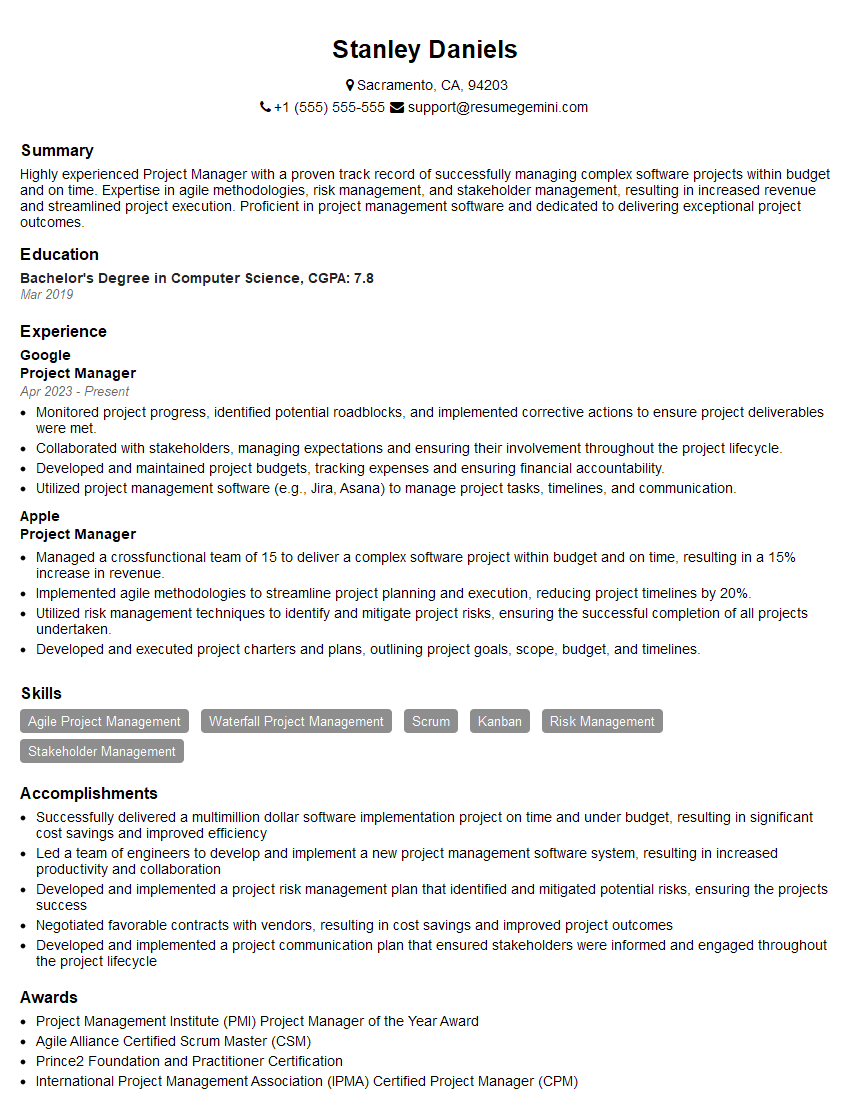
Project Manager Resume Sample
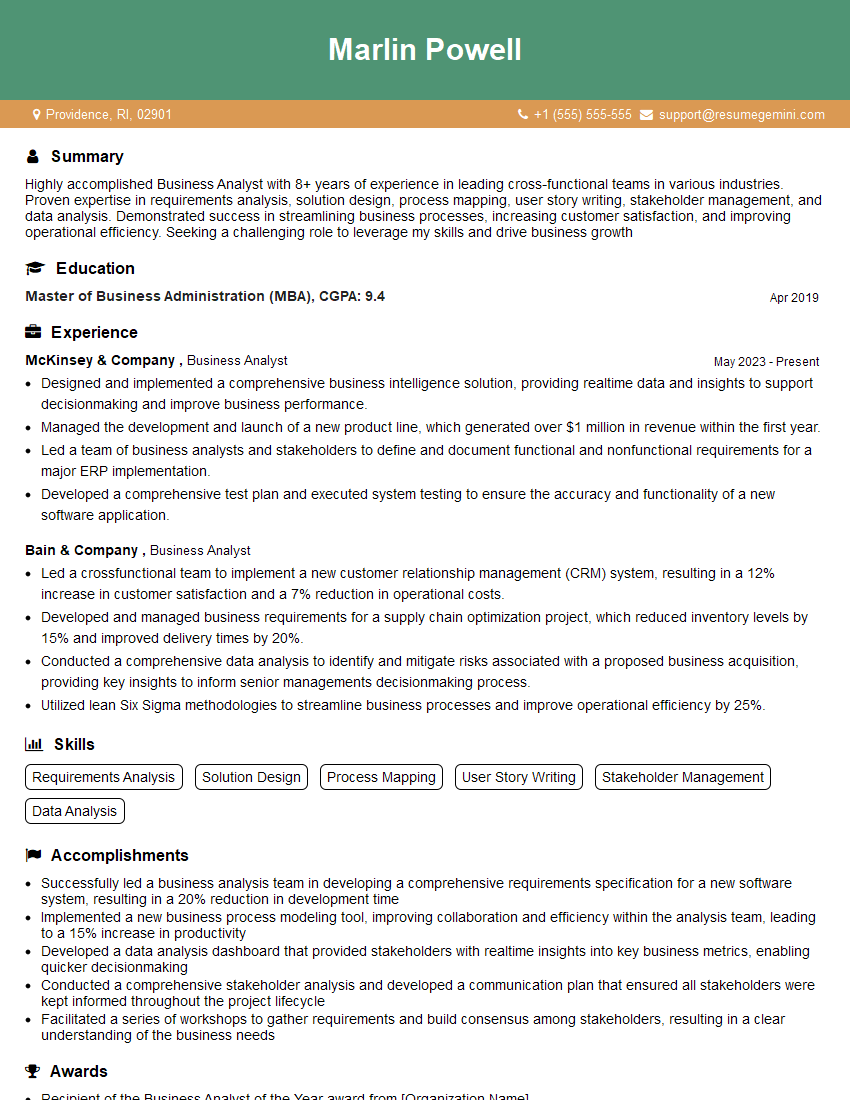
Business Analyst Resume Sample
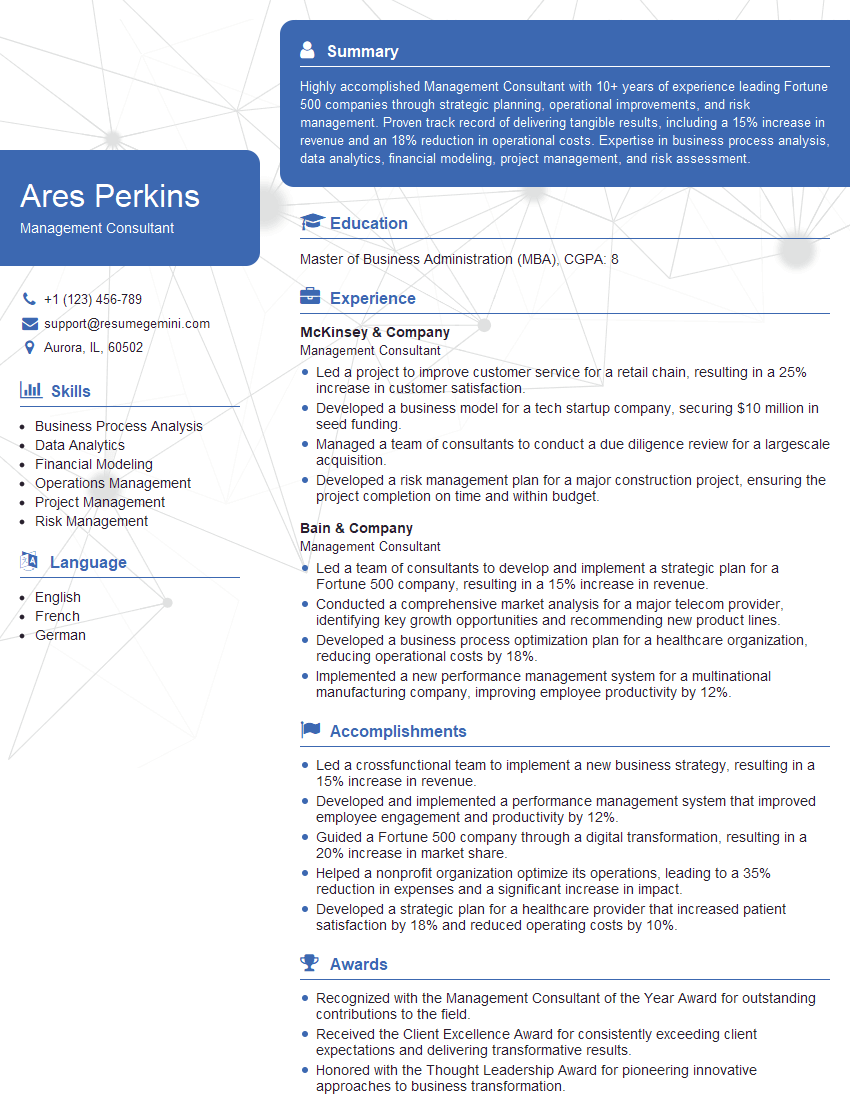
Management Consultant Resume Sample
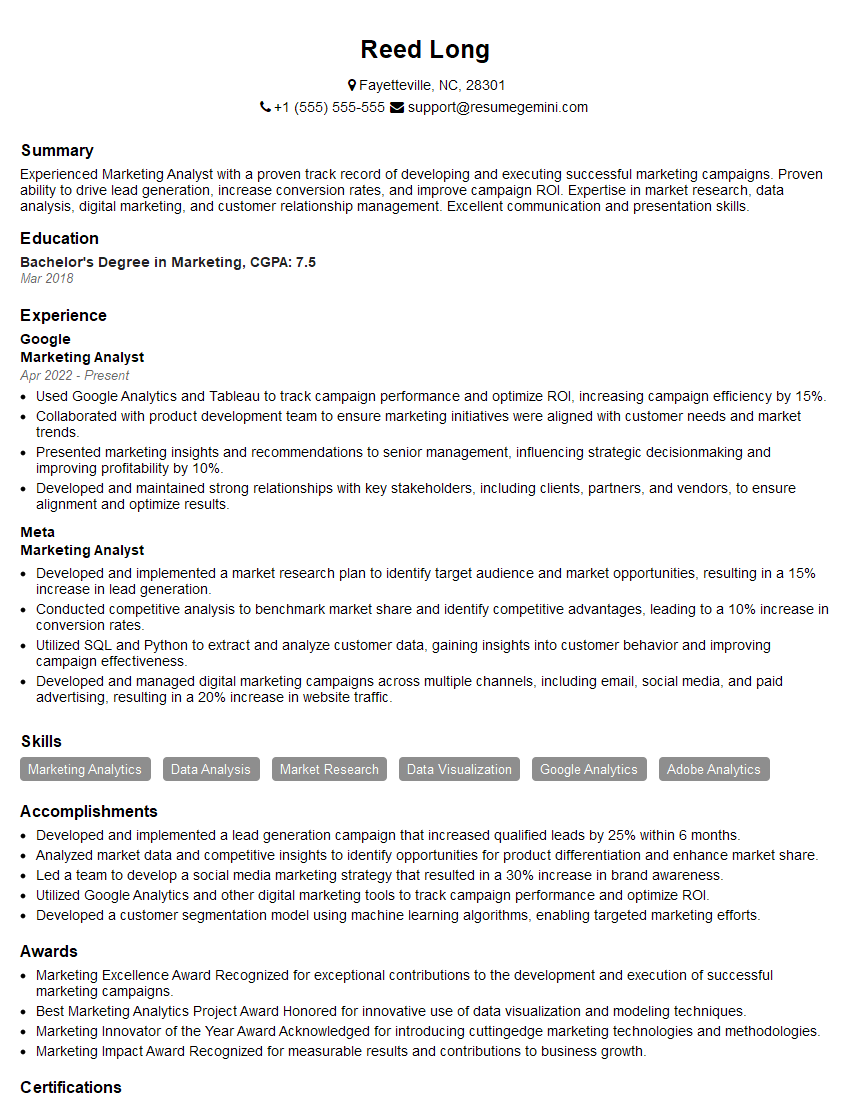
Marketing Analyst Resume Sample
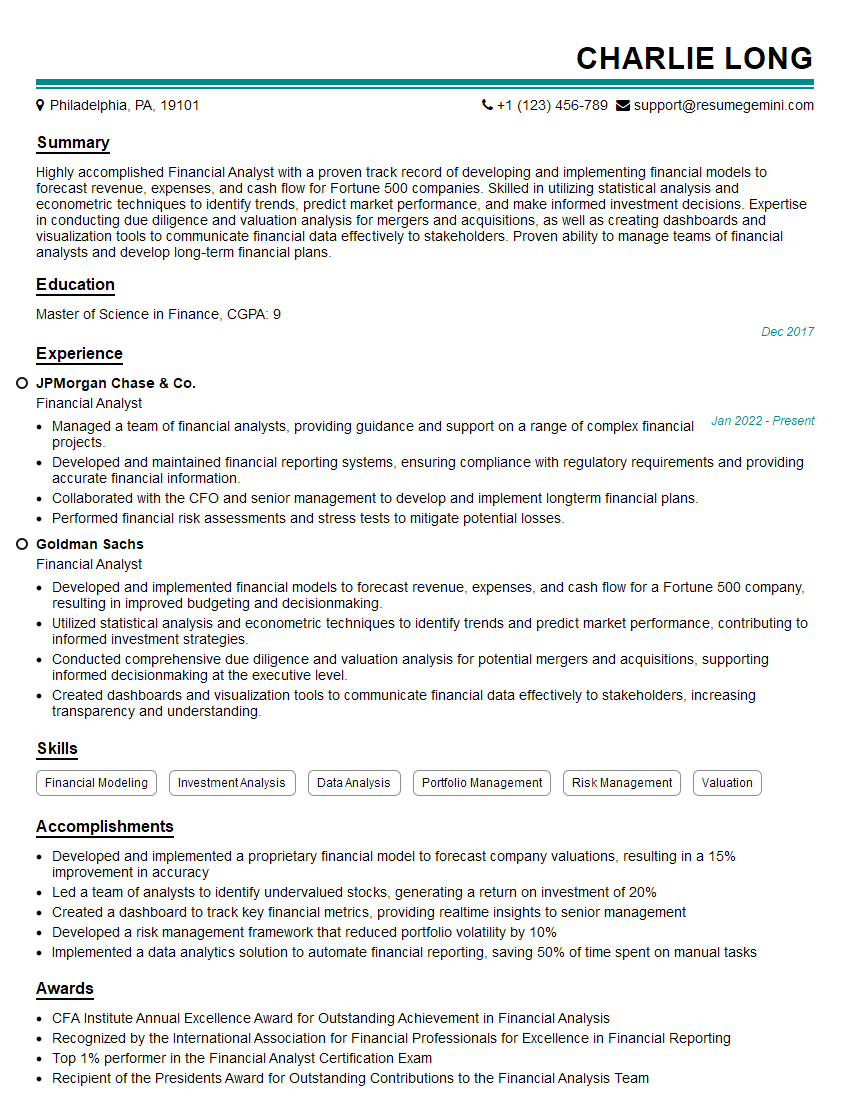
Financial Analyst Resume Sample
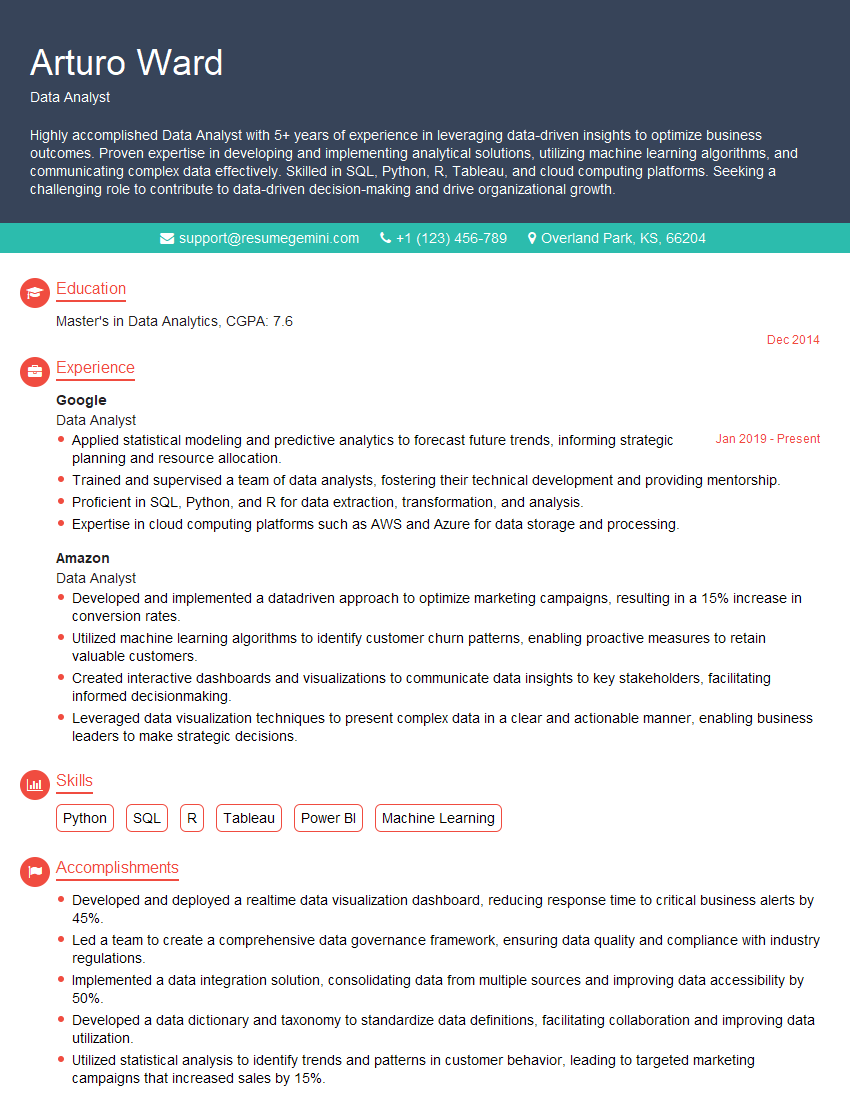
Data Analyst Resume Sample
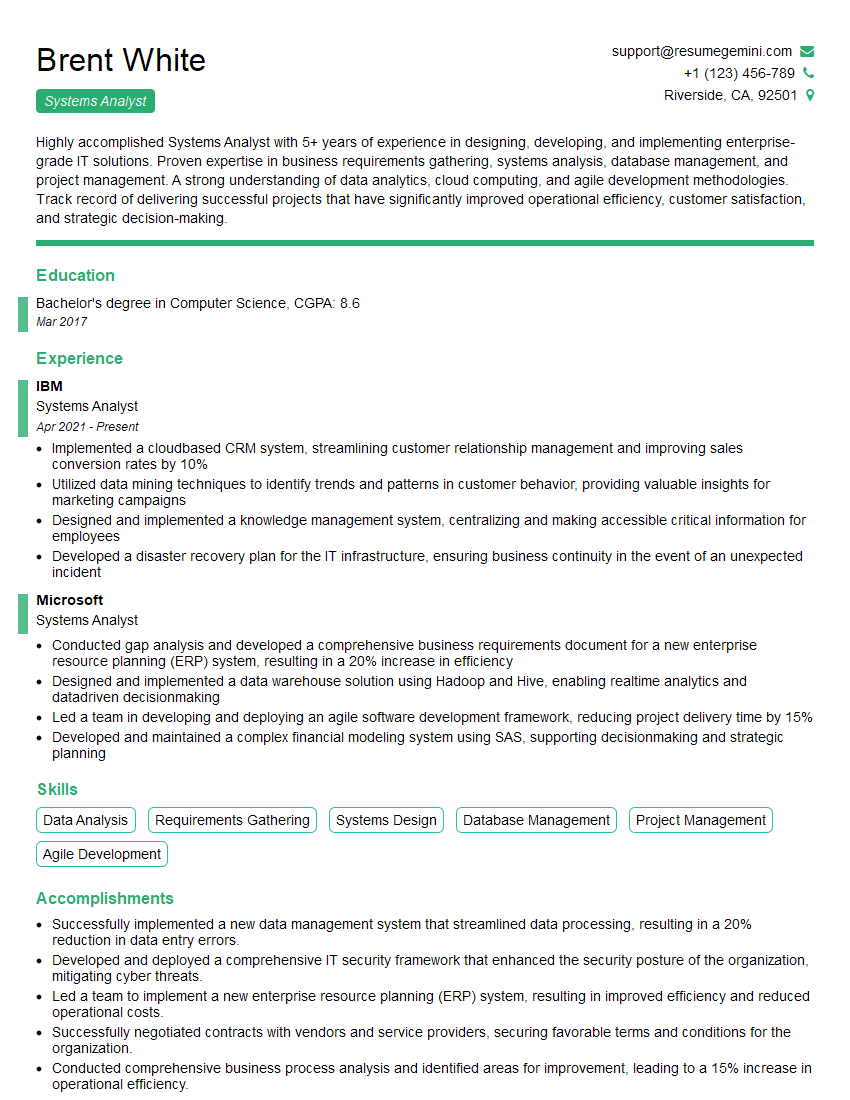
Systems Analyst Resume Sample
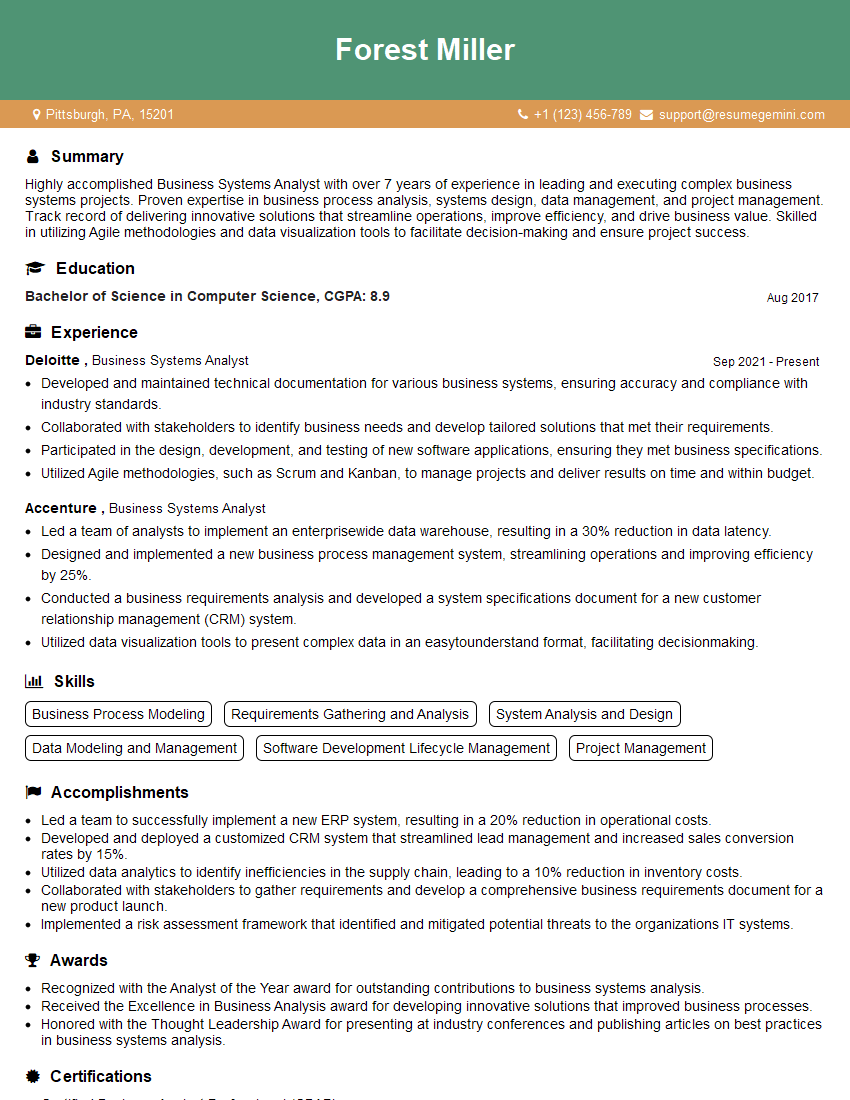
Business Systems Analyst Resume Sample
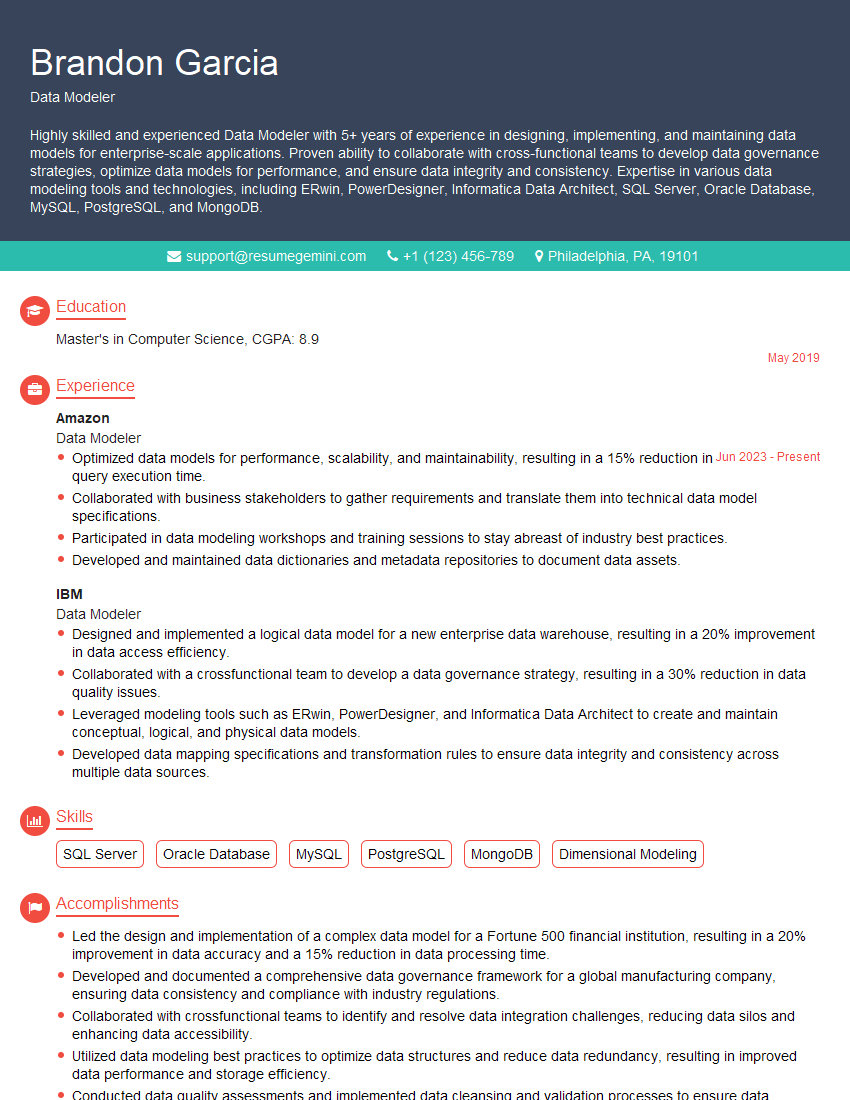
Data Modeler Resume Sample
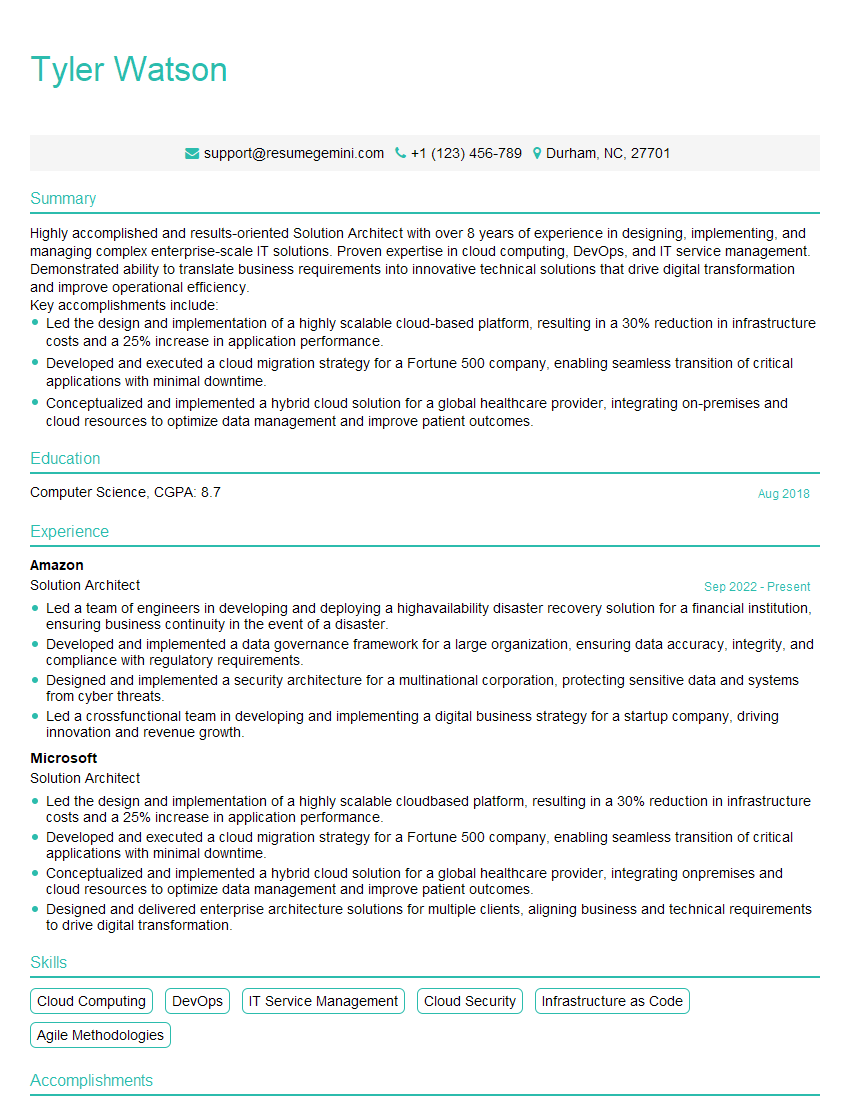
Solution Architect Resume Sample
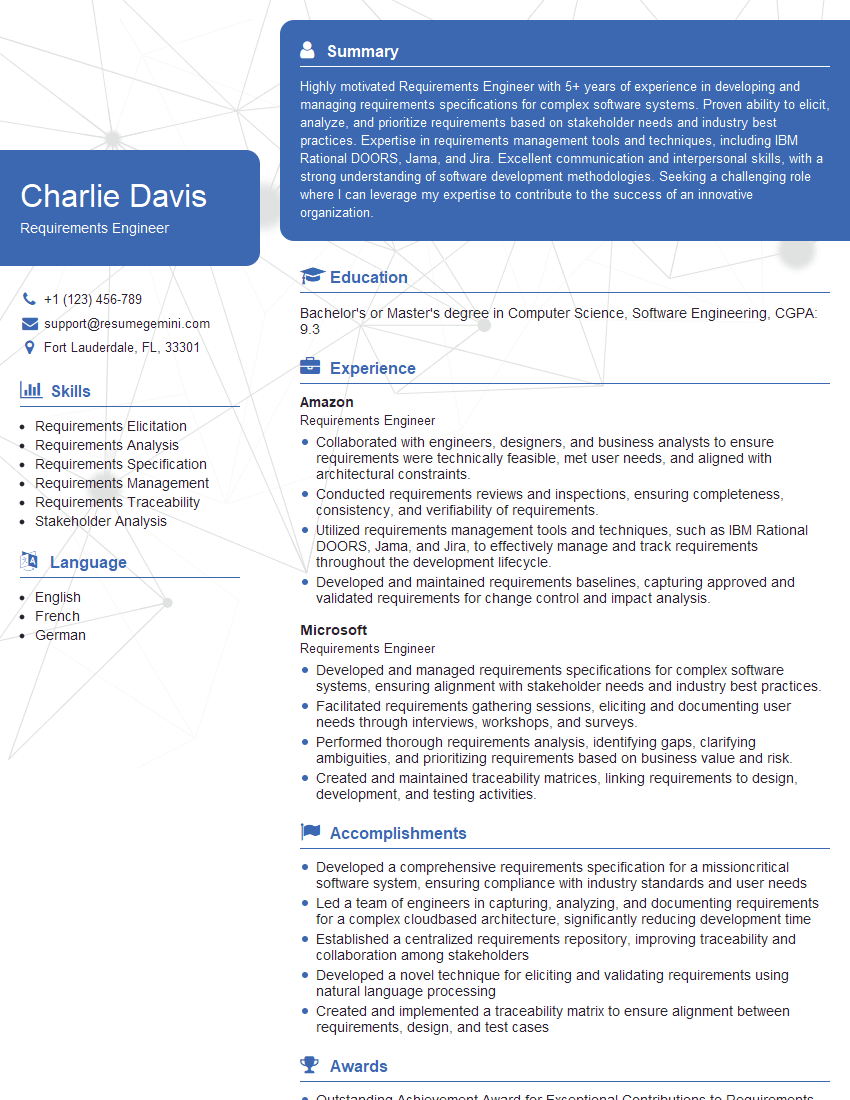
Requirements Engineer Resume Sample
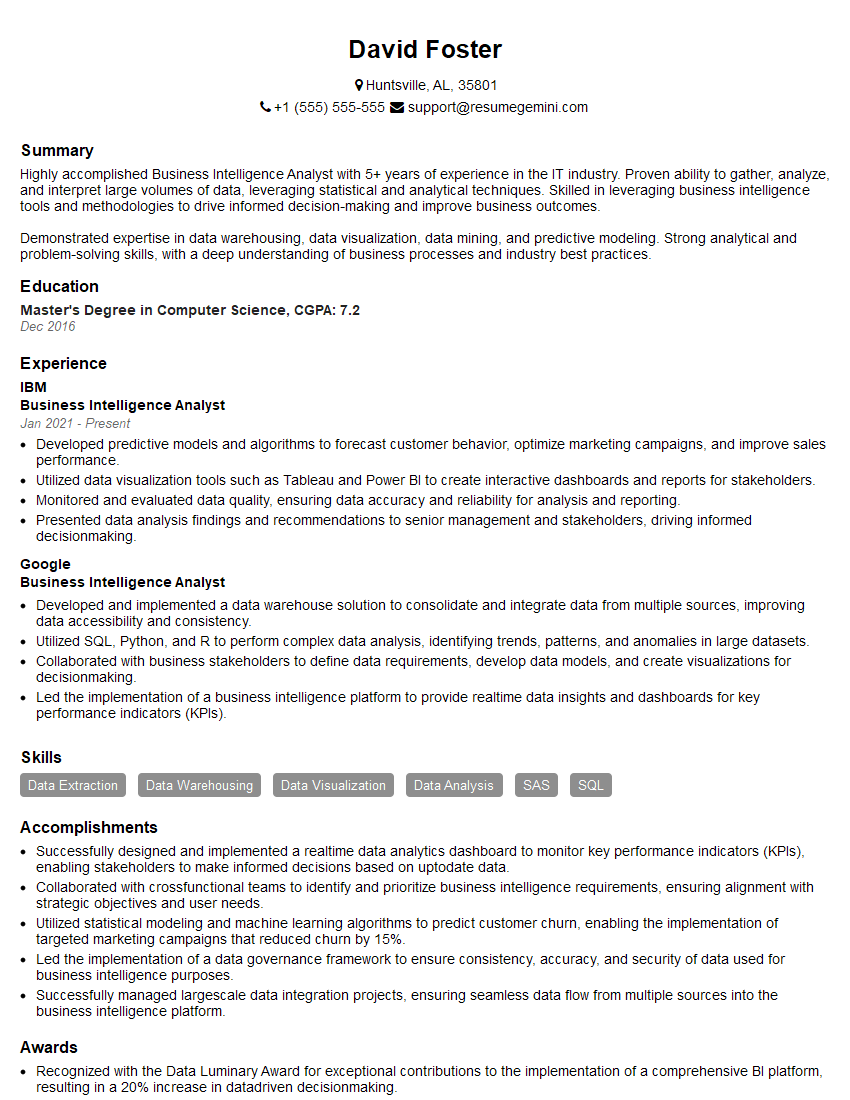
Business Intelligence Analyst Resume Sample
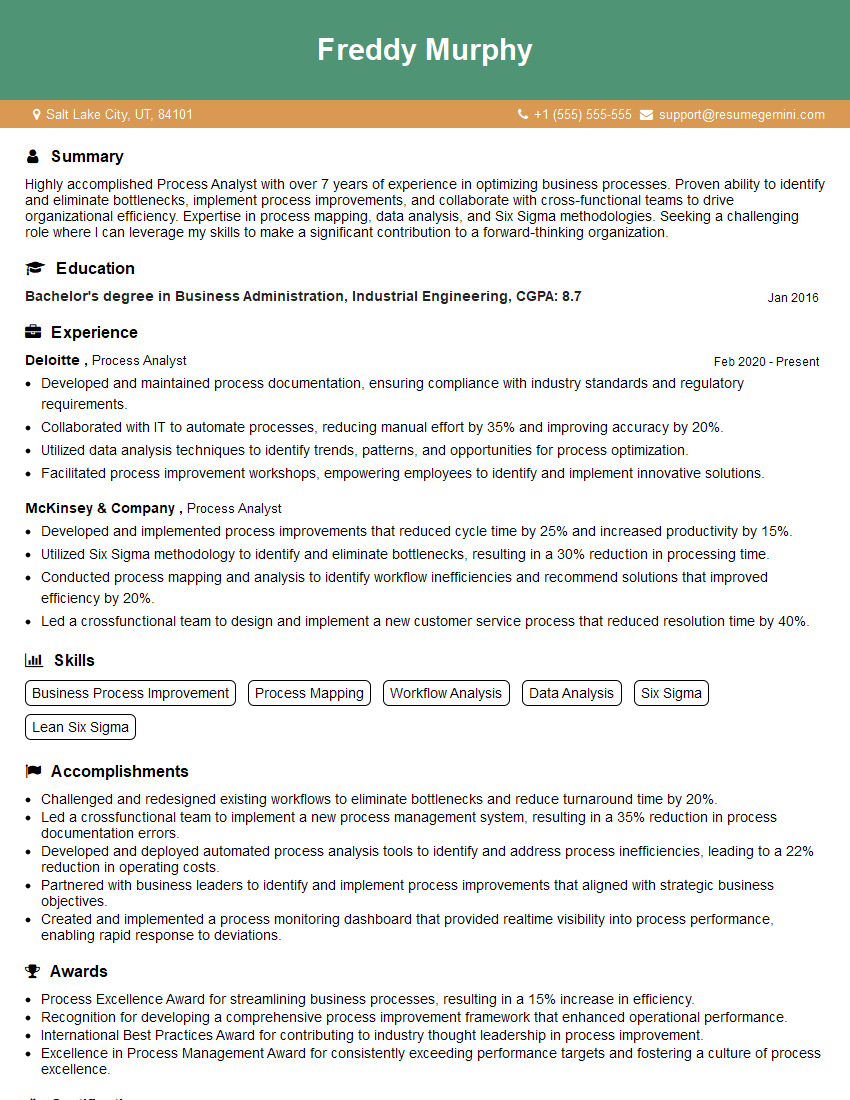
Process Analyst Resume Sample
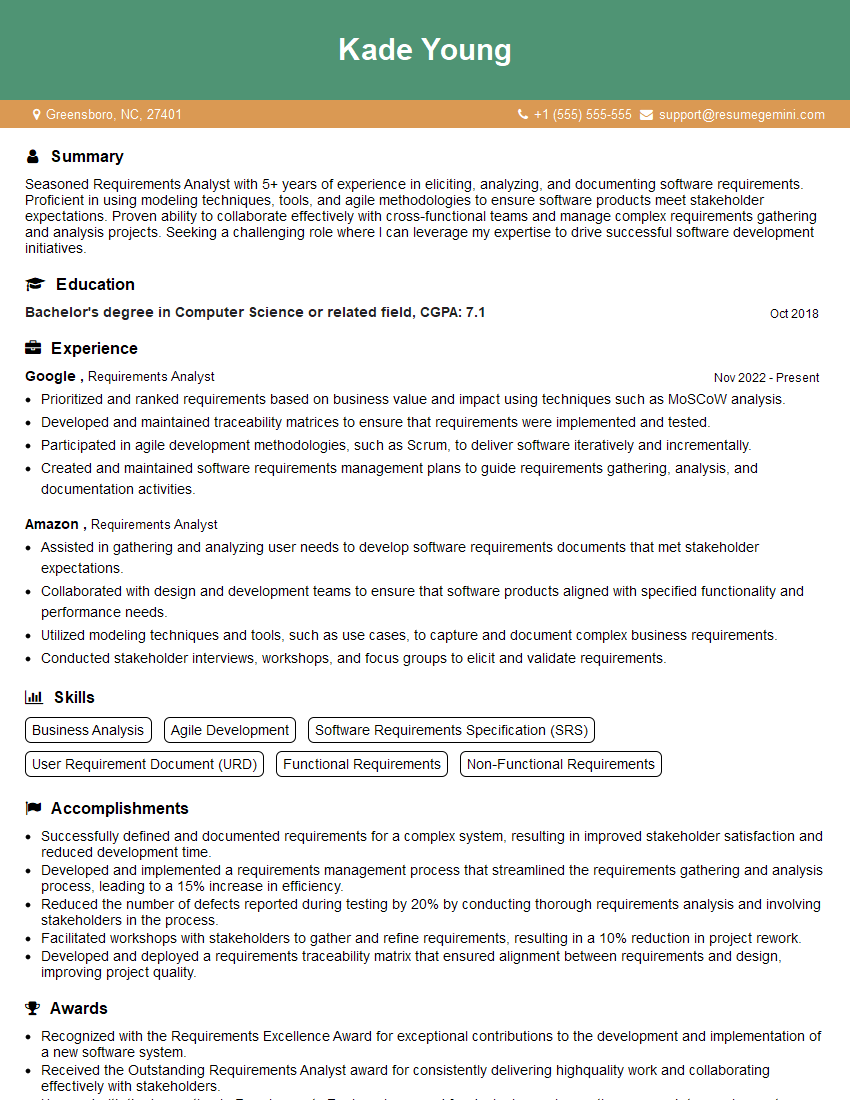
Requirements Analyst Resume Sample
Explore more articles
Users Rating of Our Blogs
Share Your Experience
We value your feedback! Please rate our content and share your thoughts (optional).
What Readers Say About Our Blog
To the interviewgemini.com Webmaster.
Very helpful and content specific questions to help prepare me for my interview!
Thank you
To the interviewgemini.com Webmaster.
This was kind of a unique content I found around the specialized skills. Very helpful questions and good detailed answers.
Very Helpful blog, thank you Interviewgemini team.