Interviews are opportunities to demonstrate your expertise, and this guide is here to help you shine. Explore the essential Cardiac Rehabilitation Program Development interview questions that employers frequently ask, paired with strategies for crafting responses that set you apart from the competition.
Questions Asked in Cardiac Rehabilitation Program Development Interview
Q 1. Describe your experience in developing and implementing cardiac rehabilitation programs.
My experience in developing and implementing cardiac rehabilitation programs spans over 15 years, encompassing various settings from large hospital systems to smaller community clinics. I’ve been involved in every stage, from needs assessment and program design to staff training, implementation, and ongoing evaluation. For example, at one hospital, I led the development of a phase II cardiac rehabilitation program that significantly reduced readmission rates within six months. This involved creating a structured exercise program, tailored patient education materials, and a comprehensive risk management protocol. In another instance, I worked with a community clinic to establish a phase III program focused on long-term lifestyle changes, incorporating group support and community resources. This required a strong emphasis on patient education and community engagement, leading to improved patient adherence and long-term health outcomes.
Q 2. What are the key components of a successful cardiac rehabilitation program?
A successful cardiac rehabilitation program hinges on several key components. First, a comprehensive needs assessment is crucial to identify the specific needs of the patient population. Then, a structured exercise program tailored to individual patient capabilities and progression is essential. This involves graded exercise testing, individualised exercise prescriptions, and ongoing monitoring. Secondly, patient education is paramount, covering topics like risk factor modification (diet, smoking cessation, stress management), medication adherence, and disease management. Thirdly, a strong focus on psychosocial support is critical, as cardiac events can significantly impact mental health and emotional well-being. This can involve individual counseling, group support sessions, or referral to appropriate mental health services. Lastly, robust monitoring and evaluation systems must be in place to track patient progress, identify potential complications, and make necessary adjustments to the program. Think of it like building a house – a strong foundation (needs assessment), sturdy walls (exercise program & education), a comfortable interior (psychosocial support), and regular maintenance (monitoring and evaluation) are all vital for a successful outcome.
Q 3. How do you assess the effectiveness of a cardiac rehabilitation program?
Assessing the effectiveness of a cardiac rehabilitation program involves a multi-faceted approach. We use a combination of quantitative and qualitative methods. Quantitative data include tracking key metrics such as readmission rates, mortality rates, improvements in exercise capacity (measured by peak oxygen consumption or METs), and changes in risk factors like blood pressure, cholesterol, and weight. Qualitative data is equally important; we collect patient feedback through surveys and interviews to assess their satisfaction with the program and identify areas for improvement. For instance, we might analyze the changes in patients’ quality of life, their confidence in self-managing their condition, and their overall adherence to the program’s recommendations. Comparing pre- and post-program data allows for a comprehensive evaluation of the program’s impact.
Q 4. What metrics do you use to measure the success of a cardiac rehabilitation program?
We employ several key metrics to measure the success of a cardiac rehabilitation program. These include:
- Readmission rates: A lower readmission rate indicates improved patient outcomes and successful management of their condition.
- Mortality rates: Reduced mortality rates are a significant indicator of the program’s effectiveness in improving long-term survival.
- Changes in exercise capacity: Improvements in peak oxygen consumption (VO2 max) or metabolic equivalents (METs) demonstrate the effectiveness of the exercise program.
- Risk factor modification: Reductions in blood pressure, cholesterol levels, and weight signify successful lifestyle changes.
- Patient satisfaction: High patient satisfaction scores indicate a positive program experience and encourage future participation.
- Adherence rates: Tracking patient attendance and completion of the program demonstrates the engagement level and the program’s accessibility.
By analyzing these metrics, we can gain a holistic understanding of the program’s impact and identify areas for improvement.
Q 5. Explain your experience with patient education in cardiac rehabilitation.
Patient education is an integral part of any successful cardiac rehabilitation program. I use a multi-modal approach, incorporating various teaching methods tailored to different learning styles. This includes interactive workshops, individual counseling sessions, educational handouts, and online resources. For example, we use visual aids like diagrams and videos to explain complex medical concepts simply, making them more easily understandable for patients. We also incorporate role-playing scenarios to practice coping mechanisms and problem-solving skills in real-life situations. We actively encourage patients to ask questions and participate in discussions. For instance, we might have a dedicated session focused on medication management, explaining the purpose, side effects, and proper administration of each medication. We also encourage patients to keep a journal to track their progress and identify potential problems.
Q 6. How do you manage patient risk and safety during cardiac rehabilitation sessions?
Managing patient risk and safety is a top priority. We conduct thorough pre-participation screenings, including a review of medical history and current medications, and a graded exercise test to assess their functional capacity. During rehabilitation sessions, we continuously monitor vital signs such as heart rate, blood pressure, and oxygen saturation. We have emergency protocols and readily available defibrillators. Staff are trained in CPR and emergency response procedures. We also educate patients on recognizing warning signs and symptoms and what to do if they experience discomfort or any adverse effects. The exercise program is carefully individualized to accommodate any limitations or underlying health conditions. Communication with the patient’s physician is crucial to ensure optimal safety and effective management.
Q 7. Describe your experience with developing and implementing protocols for cardiac rehabilitation.
My experience in developing and implementing protocols for cardiac rehabilitation involves a systematic approach. It begins with a comprehensive literature review to stay up-to-date on current best practices and guidelines. Then, I collaborate with a multidisciplinary team, including cardiologists, nurses, exercise physiologists, and dieticians, to create evidence-based protocols. These protocols outline the assessment procedures, exercise prescriptions, patient education materials, and safety guidelines. The protocols are then reviewed and approved by the relevant hospital committees. Ongoing monitoring and quality assurance measures ensure that the protocols are implemented consistently and effectively across all programs. We regularly update these protocols based on new research findings, technological advancements, and feedback from patients and staff to ensure they remain relevant and effective.
Q 8. How do you adapt cardiac rehabilitation programs to meet the needs of diverse patient populations?
Adapting cardiac rehabilitation programs requires a deep understanding of the diverse needs of our patients. We can’t treat everyone the same; a ‘one-size-fits-all’ approach simply won’t work. We need to consider factors like age, cultural background, literacy levels, physical limitations, and socioeconomic status. For example, a program designed for a young, active patient will differ significantly from one designed for an elderly patient with multiple comorbidities.
- Language Barriers: We utilize interpreters and bilingual staff to ensure effective communication with patients from diverse linguistic backgrounds. Materials are translated into appropriate languages.
- Cultural Sensitivity: We adapt exercises and dietary recommendations to align with patient’s cultural preferences and beliefs. For example, we may work with a patient’s family to ensure meals provided align with their cultural dietary restrictions.
- Accessibility: We ensure our facilities and equipment are accessible to patients with disabilities, providing modifications as needed. This includes wheelchair accessibility, appropriate exercise equipment, and adjustable seating.
- Socioeconomic Factors: We offer flexible scheduling options and work with patients to overcome financial barriers to attending sessions, perhaps by exploring financial aid programs or community resources.
By proactively considering these factors and implementing individualized strategies, we create a more inclusive and effective cardiac rehabilitation experience for all.
Q 9. What is your experience with interdisciplinary collaboration in cardiac rehabilitation?
Interdisciplinary collaboration is the cornerstone of successful cardiac rehabilitation. It’s not just about exercise; it’s a holistic approach. My experience working with cardiologists, nurses, dietitians, physical therapists, occupational therapists, psychologists, and social workers is extensive.
For example, I’ve worked on several cases where the psychologist identified a patient’s anxiety as a significant barrier to exercise. We collaboratively developed a stress management plan, including relaxation techniques incorporated into the rehabilitation program. Similarly, our dietitians frequently collaborate to adjust nutrition plans to accommodate patient’s individual needs and preferences. This integrated approach significantly improves patient outcomes and enhances the overall quality of care.
Regular team meetings are crucial to ensure effective communication and coordination. We share patient progress, discuss challenges, and collaboratively adjust treatment plans as needed, always keeping the patient’s goals central to our decision making.
Q 10. How do you address patient non-compliance in cardiac rehabilitation?
Patient non-compliance is a common challenge in cardiac rehabilitation. Addressing it requires a multi-pronged approach focused on understanding the underlying reasons for non-compliance.
- Identifying Barriers: We start by actively listening to the patient. Are there transportation issues? Financial concerns? A lack of understanding of the program’s benefits? We need to identify the roadblocks to participation.
- Individualized Plans: We tailor programs to individual needs and preferences, making it realistic and achievable. This may involve shorter sessions, alternative exercises, or more frequent check-ins.
- Motivational Interviewing: This evidence-based technique helps patients explore their ambivalence toward rehabilitation, building intrinsic motivation. It focuses on identifying their own reasons for change.
- Building Support: We encourage patients to involve family members or friends in their rehabilitation journey. This provides emotional support and accountability.
- Regular Follow-up: Frequent communication and check-ins demonstrate our commitment and help to maintain patient engagement.
Sometimes, despite these efforts, some patients still struggle with adherence. In such cases, we may need to reassess the program or consult with other healthcare professionals to identify alternative strategies or address underlying health issues that may be hindering progress.
Q 11. How do you handle unexpected medical emergencies during cardiac rehabilitation sessions?
Preparedness is paramount. Our cardiac rehabilitation team undergoes regular training in CPR, AED usage, and emergency response protocols. We have clearly defined emergency procedures, ensuring swift and effective response to any medical event. We maintain readily available emergency equipment, including defibrillators and oxygen, and ensure immediate access to medical personnel.
For example, if a patient experiences chest pain, we immediately stop the session, initiate emergency protocols, contact emergency medical services (EMS), and provide appropriate first aid. Following the emergency, a thorough post-incident review occurs to identify areas for improvement in our safety measures and response strategies. This rigorous approach to safety minimizes risk and ensures patient well-being.
Q 12. What is your experience with using technology in cardiac rehabilitation?
Technology plays an increasingly important role in cardiac rehabilitation. We utilize various technologies to improve patient engagement, monitoring, and data management.
- Telehealth: We offer remote monitoring and virtual sessions, expanding accessibility to patients in remote areas or with mobility limitations. This includes virtual exercise instruction and remote patient monitoring of vital signs.
- Wearable Technology: Patients may use wearable fitness trackers to monitor their activity levels and heart rate, providing valuable data for personalized program adjustments. We can then provide feedback and support based on this data.
- Electronic Health Records (EHR): Secure EHR systems help streamline communication and data sharing among the interdisciplinary team, improving care coordination and data analysis.
- Patient Portals: Secure online portals allow patients access to their progress reports, educational materials, and communication channels with the rehabilitation team, improving communication and patient engagement.
The use of technology improves patient engagement and adherence. It allows for more personalized and convenient care, which translates into better outcomes.
Q 13. Describe your familiarity with various cardiac rehabilitation modalities (e.g., exercise training, education, counseling).
My expertise encompasses all key modalities of cardiac rehabilitation.
- Exercise Training: This is the cornerstone, involving carefully designed and supervised exercise programs tailored to individual needs and capabilities. We use a phased approach, gradually increasing intensity and duration. We monitor vital signs closely to ensure patient safety and effectiveness.
- Patient Education: This is critical for long-term success. We provide comprehensive education on heart health, medication management, healthy lifestyle choices (diet, exercise, stress management), and disease management. Educational materials are tailored to different literacy levels and learning styles.
- Counseling: Cardiac rehabilitation extends beyond physical recovery. Addressing emotional and psychological factors is essential. We provide psychosocial support and counseling to help patients cope with the emotional impact of heart disease, improving adherence to long-term lifestyle changes.
The integration of these modalities is crucial for achieving optimal patient outcomes. The program is not just about physical recovery; it aims to empower patients to live healthier, more fulfilling lives.
Q 14. What are your strategies for improving patient adherence to cardiac rehabilitation programs?
Improving patient adherence requires a proactive and individualized approach. My strategies focus on fostering a supportive and engaging environment.
- Building a strong therapeutic alliance: Developing a strong rapport with patients is fundamental. This creates a trusting relationship, fostering open communication and a willingness to participate.
- Goal setting and self-efficacy: Involving patients in setting achievable goals empowers them and promotes a sense of accomplishment. We work on building their self-belief in their ability to succeed.
- Providing regular feedback and encouragement: Positive reinforcement and acknowledgment of progress are essential to maintaining motivation.
- Making the program enjoyable and engaging: We incorporate a variety of exercise activities and educational formats to prevent boredom and improve adherence. We may incorporate group activities to foster social support.
- Addressing barriers to participation: Proactive identification and resolution of barriers such as transportation, childcare, or financial constraints are crucial to ensure program accessibility.
By adopting a patient-centered approach, emphasizing collaboration, and actively addressing individual needs, we can significantly enhance patient adherence to cardiac rehabilitation programs.
Q 15. How do you ensure the program remains compliant with all relevant regulations and accreditation standards?
Maintaining compliance in a cardiac rehabilitation program is paramount. It involves a multi-faceted approach encompassing adherence to federal and state regulations, accreditation standards (such as those from The Joint Commission or CARF), and adherence to best practices established by professional organizations like the American Heart Association (AHA) and the American College of Cardiology (ACC).
- Regular Audits and Reviews: We conduct internal audits and external reviews regularly to identify any areas needing improvement and ensure our practices align with the latest guidelines. This includes reviewing patient charts, staff competency records, and equipment maintenance logs.
- Policy and Procedure Updates: Our policies and procedures are updated annually, or more frequently as needed, to reflect changes in regulations and best practices. These updates are thoroughly reviewed and approved by relevant stakeholders.
- Staff Training and Education: Continuous staff training on regulatory requirements, accreditation standards, and evidence-based practices is crucial. We provide regular in-services and encourage staff participation in professional development opportunities.
- Documentation and Record Keeping: Meticulous documentation is vital. We utilize electronic health records (EHRs) to ensure accurate and comprehensive record-keeping for each patient, including assessments, interventions, and outcomes. This aids in demonstrating compliance during audits.
- Risk Management: A robust risk management program proactively identifies and addresses potential compliance issues. This involves regular safety checks of equipment, incident reporting mechanisms, and a system for promptly addressing any compliance concerns.
For example, we recently updated our medication reconciliation process to ensure complete alignment with the latest Joint Commission standards. This involved staff training, revised documentation protocols, and regular monitoring to ensure successful implementation.
Career Expert Tips:
- Ace those interviews! Prepare effectively by reviewing the Top 50 Most Common Interview Questions on ResumeGemini.
- Navigate your job search with confidence! Explore a wide range of Career Tips on ResumeGemini. Learn about common challenges and recommendations to overcome them.
- Craft the perfect resume! Master the Art of Resume Writing with ResumeGemini’s guide. Showcase your unique qualifications and achievements effectively.
- Don’t miss out on holiday savings! Build your dream resume with ResumeGemini’s ATS optimized templates.
Q 16. Describe your experience in budget management and resource allocation for a cardiac rehabilitation program.
Budget management and resource allocation in cardiac rehabilitation requires a strategic approach. It starts with a thorough needs assessment to identify program requirements, followed by developing a detailed budget that balances cost-effectiveness with quality care.
- Needs Assessment: This involves assessing patient volume, staffing needs, equipment requirements, and operational costs. We use historical data, projected patient numbers, and industry benchmarks to create accurate estimates.
- Budget Development: The budget is developed collaboratively with finance and administrative personnel, taking into consideration revenue projections, payer mix (Medicare, Medicaid, private insurance), and potential grants. We prioritize essential resources such as qualified staff, state-of-the-art equipment, and appropriate space.
- Resource Allocation: We prioritize allocation towards initiatives demonstrably improving patient outcomes, such as purchasing advanced exercise equipment, providing specialized staff training, and investing in technology for improved data analysis. We regularly review and adjust the resource allocation based on performance metrics and feedback.
- Cost Containment Strategies: We implement cost-effective strategies without compromising quality, such as negotiating favorable contracts with suppliers, optimizing staffing schedules, and reducing waste. We regularly analyze expense reports to identify potential savings and efficiencies.
For instance, in one program I managed, we successfully secured a grant that enabled us to purchase new exercise equipment and enhance our technology infrastructure. This improved patient experience and facilitated more efficient data analysis for better program evaluation.
Q 17. How do you develop and maintain positive relationships with referring physicians and other healthcare professionals?
Maintaining strong relationships with referring physicians and other healthcare professionals is crucial for a successful cardiac rehabilitation program. It’s a continuous process requiring open communication and mutual respect.
- Regular Communication: We maintain consistent communication through regular meetings, newsletters, and individual outreach. This keeps referring physicians informed about program updates, patient outcomes, and any changes in services.
- Shared Goals and Objectives: We emphasize the shared goal of providing the highest quality patient care. Understanding their needs and how our program can effectively support their patients is crucial.
- Data-Driven Feedback: Providing regular reports on patient outcomes, including patient satisfaction surveys, is effective in showing the value of the program. Data-driven feedback facilitates a collaborative approach to improving patient care.
- Relationship Building: Attending hospital meetings, participating in community events, and offering continuing medical education (CME) credits to physicians helps strengthen connections. Building personal rapport fosters trust and strengthens relationships.
- Feedback Mechanisms: We establish formal and informal feedback mechanisms to ensure that we are meeting the needs of referring physicians. Regularly soliciting their feedback and addressing concerns strengthens the relationship.
For example, we organized a luncheon for referring physicians to showcase our program’s improvements and highlight successful patient stories. This improved our rapport and increased referrals.
Q 18. Explain your approach to staff training and development in a cardiac rehabilitation setting.
Staff training and development in a cardiac rehabilitation setting is essential for maintaining high quality of care and ensuring patient safety. This involves a multi-pronged approach to both technical and interpersonal skills.
- Orientation and Onboarding: New staff receive comprehensive orientation and onboarding to familiarize them with our program’s policies, procedures, and technology. This ensures a smooth transition and establishes best practices from the start.
- Continuing Education: Regular continuing education opportunities, including workshops, conferences, and online courses, are provided to ensure staff stay abreast of the latest advancements in cardiac rehabilitation and best practices.
- Skills Training: We offer specialized training in areas like EKG interpretation, exercise testing, patient education, and risk stratification. Regular competency assessments ensure skills remain proficient.
- Mentorship Programs: Mentorship programs pair experienced staff with newer team members to facilitate knowledge transfer and provide ongoing support and guidance. This cultivates a supportive work environment.
- Performance Evaluations: Regular performance evaluations provide constructive feedback and identify areas for improvement. This promotes professional growth and ensures staff development goals align with the program’s overall objectives.
For instance, we recently implemented a new training program on advanced cardiac life support (ACLS) for all staff, ensuring all team members were competent to handle emergencies. This enhanced both patient safety and staff confidence.
Q 19. How do you utilize data and analytics to improve the quality of care in a cardiac rehabilitation program?
Data and analytics play a crucial role in improving the quality of care in a cardiac rehabilitation program. We use data to track patient outcomes, identify areas for improvement, and demonstrate the program’s effectiveness.
- Data Collection: We collect data on various aspects of patient care, including demographics, medical history, exercise capacity, adherence to the program, and outcomes such as risk factor reduction, functional capacity improvements, and quality of life.
- Performance Monitoring: We use key performance indicators (KPIs) to monitor program performance, such as patient satisfaction scores, readmission rates, and mortality rates. Regular monitoring allows us to identify trends and areas that need improvement.
- Data Analysis: We utilize statistical analysis to identify correlations between patient characteristics and outcomes. This helps us tailor interventions and refine our treatment strategies.
- Benchmarking: We benchmark our program’s performance against national averages and other high-performing programs to identify opportunities for improvement. This provides a perspective on our effectiveness compared to others.
- Continuous Quality Improvement (CQI): We use data to drive continuous quality improvement initiatives. Regular review and analysis allow us to implement evidence-based changes to our program, optimizing outcomes.
For example, by analyzing patient data, we identified a correlation between patient adherence and improved outcomes. This led us to implement a new patient support program aimed at improving adherence and ultimately, patient outcomes.
Q 20. What is your experience with marketing and promoting a cardiac rehabilitation program?
Marketing and promoting a cardiac rehabilitation program requires a multi-pronged approach targeting both referring physicians and potential patients.
- Physician Outreach: We actively engage with referring physicians through presentations, educational materials, and regular communication. Highlighting patient success stories and providing data on positive outcomes is vital.
- Patient Education: We provide educational materials to potential patients about the benefits of cardiac rehabilitation, including brochures, website information, and community outreach events. Making information easily accessible is key.
- Community Engagement: We participate in health fairs, community events, and collaborate with local organizations to increase awareness of our services. Building community trust is crucial.
- Digital Marketing: We utilize digital marketing strategies, such as social media, search engine optimization (SEO), and online advertising to reach a broader audience. Reaching patients where they are is increasingly important.
- Testimonials and Success Stories: Sharing patient success stories and testimonials is a powerful way to showcase the program’s effectiveness. First-hand accounts build trust and credibility.
For example, we developed a visually appealing website and social media presence to showcase our program. This increased visibility and drew in more potential patients.
Q 21. How do you handle conflicts or disagreements among staff members?
Handling conflicts or disagreements among staff members requires a proactive and sensitive approach. The goal is to resolve conflicts constructively, promoting teamwork and a positive work environment.
- Open Communication: Creating a culture of open communication where staff feel comfortable expressing concerns is vital. Regular team meetings and feedback mechanisms facilitate this.
- Mediation and Facilitation: When conflicts arise, I intervene as a neutral mediator, facilitating open dialogue between the involved parties. Active listening is key to understanding perspectives.
- Conflict Resolution Strategies: We utilize conflict resolution strategies, such as collaborative problem-solving and compromise, to find mutually acceptable solutions. The focus is on finding win-win solutions.
- Clear Expectations and Policies: Having clear expectations, roles, and responsibilities outlined in policies and procedures minimizes potential misunderstandings and conflicts. Clear guidelines are crucial.
- Professional Development: Providing training on conflict resolution and communication skills empowers staff to handle disagreements effectively. This promotes a skilled workforce.
For instance, in a past situation, a disagreement arose between two staff members regarding patient care protocols. Through mediation, we identified the root cause of the conflict – a lack of clear communication – and implemented a new system to ensure all staff were on the same page. This resolved the issue and strengthened teamwork.
Q 22. Describe your experience with developing and implementing quality improvement initiatives within a cardiac rehabilitation program.
Improving the quality of a cardiac rehabilitation program requires a multifaceted approach. My experience centers around using data-driven strategies to identify areas for enhancement and implementing targeted interventions. For example, in a previous role, we noticed a high dropout rate among patients after the initial phase of rehabilitation. Through careful analysis of patient data, including demographics, medical history, and session attendance, we discovered that a lack of transportation was a significant barrier.
To address this, we implemented a quality improvement initiative focusing on transportation solutions. This included partnering with local transportation services to offer subsidized rides and exploring the feasibility of a shuttle service. We also enhanced communication with patients, providing proactive reminders and addressing transportation concerns early in the program. The result? A significant decrease in the dropout rate, showcasing the effectiveness of data-driven quality improvement. We further tracked patient satisfaction through surveys to ensure the changes were well-received and continued to refine our strategies based on feedback. Another initiative involved streamlining the referral process to reduce delays in patient access to care, leading to improved timeliness and patient outcomes.
Q 23. What is your understanding of the reimbursement landscape for cardiac rehabilitation services?
The reimbursement landscape for cardiac rehabilitation is complex and varies depending on the payer (Medicare, Medicaid, private insurance) and the specific services provided. Medicare, for example, typically reimburses for a set number of supervised exercise sessions, patient education, and risk factor modification. Private insurers have their own criteria and coverage policies, which can fluctuate. Understanding these nuances is crucial for program financial viability.
To ensure successful reimbursement, it’s essential to maintain accurate documentation, meet all payer requirements for medical necessity, and efficiently manage billing processes. This involves staying updated on regulatory changes and collaborating closely with billing and coding specialists. Effective coding and billing are particularly important, as even small inaccuracies can lead to denied claims, impacting the financial health of the program. Furthermore, exploring value-based care models, which focus on outcomes rather than simply the volume of services, offers potential for long-term financial stability and program sustainability.
Q 24. How do you stay current with best practices and advances in cardiac rehabilitation?
Staying current in cardiac rehabilitation requires continuous professional development. I actively participate in professional organizations such as the American Association of Cardiovascular and Pulmonary Rehabilitation (AACVPR), attending conferences, and engaging in continuing education courses. This keeps me abreast of the latest clinical guidelines, technological advancements, and evidence-based practices.
I also regularly review peer-reviewed journals and publications focusing on cardiac rehabilitation research. Furthermore, networking with other professionals in the field through online forums and professional communities facilitates the sharing of best practices and innovative approaches. This multi-faceted approach allows me to integrate new knowledge into the program design and implementation, ensuring we deliver the highest quality and most up-to-date care.
Q 25. Describe a time you had to troubleshoot a problem within a cardiac rehabilitation program. What was the outcome?
One challenge we faced involved a sudden increase in patient cancellations due to scheduling conflicts. This resulted in decreased program utilization and threatened our financial stability. To troubleshoot, we first analyzed cancellation patterns, identifying common causes such as work schedules and childcare arrangements. We then implemented several solutions.
First, we offered more flexible scheduling options, including weekend and evening sessions. Second, we developed a more user-friendly online scheduling system. Third, we explored partnerships with local childcare centers to ease concerns for parents. The outcome was positive: cancellation rates significantly decreased, program utilization increased, and we averted potential financial losses. This experience highlighted the importance of proactive problem-solving, data analysis, and adaptability in managing a successful cardiac rehabilitation program.
Q 26. What is your experience with developing and managing program budgets?
Developing and managing program budgets is a core competency for me. My approach begins with a comprehensive needs assessment, identifying all program costs, including personnel, supplies, equipment, and facility expenses. I then forecast revenue based on anticipated patient volume and reimbursement rates, considering payer mix and potential adjustments.
Budget preparation involves detailed line-item budgeting and variance analysis. I regularly monitor expenditures against the budget, identifying any discrepancies and proactively addressing potential overruns. This might involve renegotiating contracts with vendors, seeking additional funding sources, or adjusting staffing levels. Throughout the process, I use data-driven decision-making to ensure efficient allocation of resources and optimize program financial performance. Regular reporting to stakeholders keeps them informed about financial performance and ensures accountability.
Q 27. How would you address a situation where a patient is experiencing significant anxiety during a rehabilitation session?
Addressing patient anxiety during a rehabilitation session requires a compassionate and multifaceted approach. I would start by actively listening to the patient, validating their feelings, and creating a safe and supportive environment.
Depending on the level of anxiety, I might implement relaxation techniques such as deep breathing exercises, progressive muscle relaxation, or guided imagery. In some cases, referring the patient to a mental health professional for additional support might be beneficial. Furthermore, adjusting the intensity or duration of the exercise program to a more manageable level, and providing positive reinforcement and encouragement can help reduce anxiety. Open communication and collaboration with the patient, their family, and other healthcare professionals ensure a holistic approach to managing anxiety and fostering a successful rehabilitation experience. It’s critical to remember that anxiety is common after cardiac events and treating it with empathy and understanding is crucial.
Key Topics to Learn for Cardiac Rehabilitation Program Development Interview
- Program Design & Implementation: Understanding the phases of cardiac rehabilitation, including assessment, exercise prescription, patient education, and discharge planning. Consider the diverse needs of patients with varying cardiac conditions.
- Evidence-Based Practices: Familiarity with the latest research and guidelines for cardiac rehabilitation, including exercise protocols, risk stratification, and secondary prevention strategies. Be prepared to discuss how you would incorporate evidence into program development.
- Patient Management & Communication: Developing strategies for motivating patients, addressing their concerns, and managing potential complications. Discuss effective communication techniques with patients, families, and healthcare professionals.
- Team Collaboration & Leadership: Understanding the roles of various healthcare professionals involved in cardiac rehabilitation and how to effectively collaborate within a multidisciplinary team. Demonstrate your leadership skills in program development and implementation.
- Quality Improvement & Program Evaluation: Developing methods for monitoring program effectiveness, identifying areas for improvement, and using data to inform program modifications. Discuss key performance indicators (KPIs) and how you would track them.
- Budgeting & Resource Allocation: Understanding the financial aspects of cardiac rehabilitation program development, including budgeting, cost-effectiveness analysis, and securing funding. Discuss strategies for optimizing resource utilization.
- Regulatory Compliance & Accreditation: Familiarity with relevant regulations and accreditation standards for cardiac rehabilitation programs. Demonstrate understanding of maintaining compliance and achieving accreditation.
- Technology Integration: Exploring the use of telehealth, wearable technology, and electronic health records in cardiac rehabilitation programs. Discuss the advantages and challenges of implementing new technologies.
Next Steps
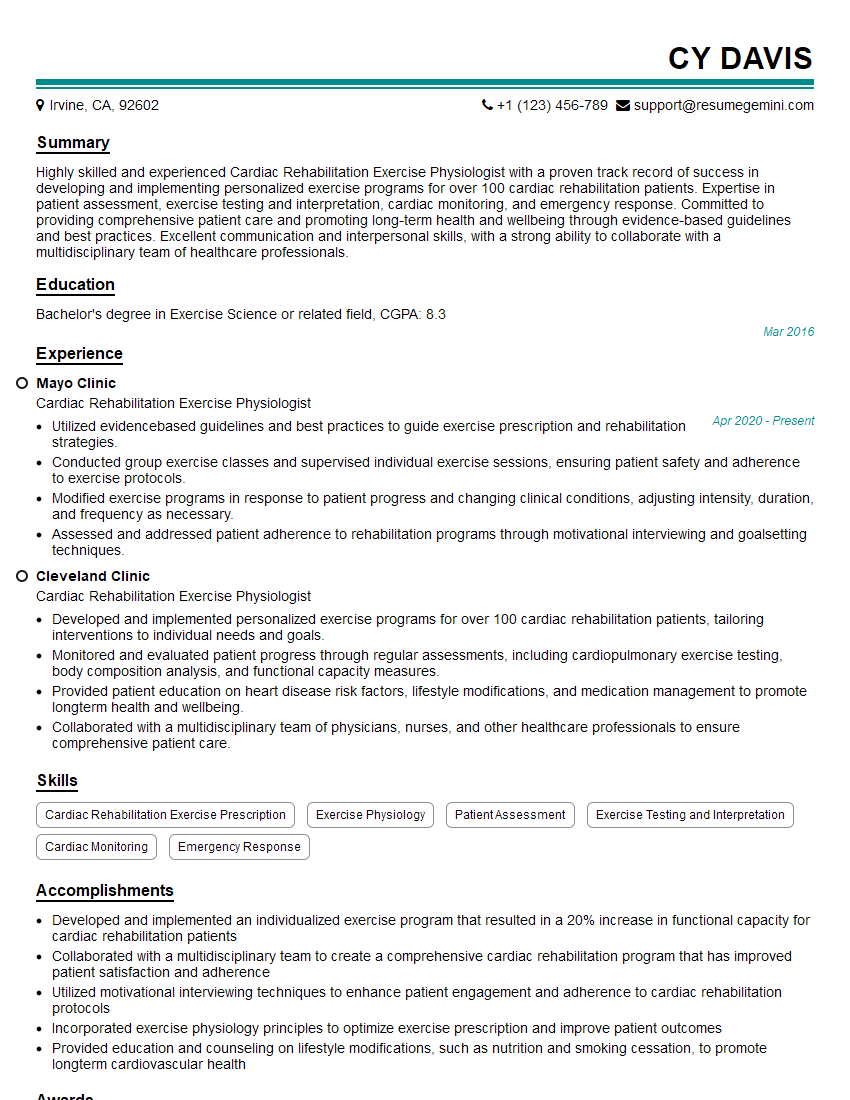
Mastering Cardiac Rehabilitation Program Development opens doors to exciting leadership roles and significantly enhances your contribution to patient care. To maximize your job prospects, crafting an ATS-friendly resume is crucial. ResumeGemini is a trusted resource that can help you build a professional resume that highlights your skills and experience effectively. Examples of resumes tailored to Cardiac Rehabilitation Program Development are available to guide you through this process. Invest the time in building a strong resume – it’s your first impression on potential employers.
Explore more articles
Users Rating of Our Blogs
Share Your Experience
We value your feedback! Please rate our content and share your thoughts (optional).
What Readers Say About Our Blog
To the interviewgemini.com Webmaster.
Very helpful and content specific questions to help prepare me for my interview!
Thank you
To the interviewgemini.com Webmaster.
This was kind of a unique content I found around the specialized skills. Very helpful questions and good detailed answers.
Very Helpful blog, thank you Interviewgemini team.