Preparation is the key to success in any interview. In this post, we’ll explore crucial Cardiac Rehabilitation Program Management interview questions and equip you with strategies to craft impactful answers. Whether you’re a beginner or a pro, these tips will elevate your preparation.
Questions Asked in Cardiac Rehabilitation Program Management Interview
Q 1. Describe your experience developing and implementing cardiac rehabilitation programs.
Developing and implementing a cardiac rehabilitation program requires a multi-faceted approach. It begins with a thorough needs assessment to understand the specific requirements of the patient population. This includes considering factors like age, comorbidities, and functional capacity. Then, we design a program that incorporates evidence-based exercise, education, and behavioral modification strategies. For example, in one program I developed, we incorporated a strong emphasis on patient-centered communication, using a shared decision-making model to tailor exercise intensity and frequency to individual patient goals. The implementation phase involves recruiting and training staff, establishing protocols for monitoring patient progress, and securing necessary equipment and resources. Post-implementation, we continuously monitor and evaluate the program’s effectiveness, making adjustments as needed to optimize patient outcomes.
For instance, we might analyze patient adherence rates and feedback to determine areas for improvement, such as scheduling flexibility or the incorporation of new technologies like telehealth monitoring. I’ve successfully launched several programs, including one that reduced hospital readmission rates by 15% within the first year. This success stemmed from a combination of robust program design and consistent monitoring, reflecting my commitment to high-quality care.
Q 2. How do you ensure adherence to evidence-based guidelines in cardiac rehabilitation?
Adherence to evidence-based guidelines is paramount in cardiac rehabilitation. We achieve this through several key strategies. First, our program’s design is built on the latest guidelines from organizations like the American Heart Association (AHA) and the American College of Cardiology (ACC). We regularly review and update our protocols to reflect the most current research and best practices. This includes reviewing the latest literature on exercise prescription, risk stratification, and patient education. Second, we utilize validated assessment tools to accurately monitor patients’ progress and identify any potential risks. Third, our team regularly participates in continuing education to stay abreast of advancements in the field. For instance, we recently adopted a new risk stratification system based on the most recent AHA/ACC guidelines, resulting in more precise risk assessment and personalized treatment plans. We also track key performance indicators (KPIs) to compare our program’s results to national benchmarks.
Q 3. Explain your process for managing patient data and maintaining program compliance.
Managing patient data and maintaining program compliance is critical for both patient safety and regulatory compliance. We employ a robust electronic health record (EHR) system that securely stores all patient information, including medical history, test results, and treatment plans. This system is regularly updated with new patient data and allows for efficient tracking of vital signs, exercise progress, and medication adherence. We have strict protocols in place to ensure data security and privacy, complying with HIPAA regulations. Access to patient data is controlled and limited to authorized personnel. Regular audits of our data management systems and processes ensure accuracy and compliance. For instance, we conduct regular chart reviews to verify the completeness and accuracy of patient data, and we run reports to monitor KPIs and identify any areas needing improvement. This rigorous approach ensures the accuracy and security of all patient information, making it simple to demonstrate compliance during inspections.
Q 4. What strategies do you employ to improve patient engagement and adherence to treatment plans?
Improving patient engagement and adherence is crucial for successful cardiac rehabilitation. We achieve this through a multi-pronged approach. Firstly, we focus on building strong therapeutic relationships with patients, addressing their individual needs and concerns through open communication and empathy. Secondly, we create a supportive and encouraging environment within the program, fostering a sense of community among participants. Thirdly, we offer personalized education materials and resources, tailoring them to each patient’s literacy level and learning style. Fourthly, we utilize technology to improve engagement, such as mobile apps for tracking progress and telehealth sessions for remote monitoring. For example, we’ve seen significant improvements in adherence rates by implementing a text message reminder system, which reminds patients of upcoming appointments and provides daily encouragement. We also incorporate patient feedback regularly to adapt our approach and ensure it remains relevant and engaging.
Q 5. How do you handle patient emergencies or adverse events within a cardiac rehabilitation setting?
Handling patient emergencies or adverse events is a critical aspect of cardiac rehabilitation. We have well-defined protocols for responding to such events, including a rapid response team that is readily available. Our staff is trained in cardiopulmonary resuscitation (CPR) and basic life support (BLS), and we have access to emergency medical services (EMS) if needed. In addition to emergency protocols, we have a system for documenting any adverse event, including the steps taken to manage the event, and we conduct a thorough review to identify potential areas for improvement in our processes. For instance, following an episode of syncope, we would review the patient’s history, the exercise protocol, and the staff’s response to determine if any modifications are necessary to prevent future events. This approach ensures the safety of our patients while also contributing to continuous quality improvement within the program. We also have a robust system for reporting serious adverse events to regulatory bodies.
Q 6. Describe your experience with budget management and resource allocation in a cardiac rehab program.
Budget management and resource allocation are crucial for the successful operation of a cardiac rehabilitation program. I have extensive experience developing and managing budgets, using a variety of methods to track expenses and optimize resource allocation. This begins with creating a comprehensive budget that accurately reflects program costs, including personnel, equipment, supplies, and overhead. Regular budget monitoring is essential, and I use various tools to track expenditures and ensure we remain within budget parameters. Resource allocation involves making informed decisions about how to best utilize available resources to achieve program goals. This includes deciding on the optimal staffing levels, purchasing necessary equipment and supplies, and determining the appropriate allocation of space. Negotiating contracts with vendors and securing grants are essential skills for effective resource management. For instance, in a previous role, I successfully negotiated a contract with a medical supply company, resulting in significant cost savings for our program. This demonstrates my ability to manage finances and resources efficiently to deliver high-quality care.
Q 7. How do you assess the effectiveness of your cardiac rehabilitation program?
Assessing the effectiveness of a cardiac rehabilitation program involves collecting and analyzing various data points. Key performance indicators (KPIs) are utilized to track progress toward program goals. These include, but are not limited to: changes in patients’ functional capacity, risk factor reduction (e.g., blood pressure, cholesterol), improvement in quality of life measures, and reduction in hospital readmissions. We collect data through various methods, including patient assessments, exercise tests, and surveys. We then analyze this data to identify trends and areas for improvement. We compare our program’s performance to national benchmarks to ensure that we are providing high-quality care. The data collected are used to make evidence-based adjustments to the program as needed, ensuring continuous improvement. For example, if our data showed a high rate of non-adherence, we would investigate the reasons and implement strategies to improve patient engagement. This data-driven approach ensures that the program remains effective and efficient, continually optimizing patient outcomes.
Q 8. What metrics do you use to track program success and identify areas for improvement?
Tracking the success of a cardiac rehabilitation program requires a multifaceted approach, using a range of key performance indicators (KPIs). We don’t just look at numbers; we analyze trends to understand the bigger picture. For instance, we meticulously track patient adherence – how consistently patients attend sessions. Low adherence might signal a need for improved communication or more flexible scheduling options.
Beyond adherence, we monitor improvements in key physiological parameters like resting heart rate, blood pressure, and exercise capacity. We use standardized tests like the six-minute walk test to objectively assess progress. Significant improvements in these metrics indicate the program’s effectiveness. We also closely examine readmission rates to the hospital for cardiac events. A reduction in readmissions is a powerful testament to the program’s success in reducing risk.
Furthermore, we regularly collect patient satisfaction data through surveys and feedback sessions. This gives us invaluable insight into the patient experience and allows us to address any concerns promptly. Finally, we analyze cost-effectiveness metrics, comparing program costs to the healthcare savings realized through reduced hospitalizations and improved patient outcomes. This data-driven approach allows us to continuously refine and optimize the program for maximum impact.
Q 9. How do you manage staff training and development within a cardiac rehabilitation team?
Staff training and development are paramount to delivering high-quality cardiac rehabilitation. We employ a multi-pronged strategy focused on ongoing education and skill enhancement. This includes regular attendance at professional conferences and workshops, access to online continuing education modules tailored to the latest advancements in cardiac care, and internal training sessions led by experienced team members or external experts. These sessions cover everything from advanced ECG interpretation to the latest guidelines on exercise prescription for various cardiac conditions.
We also prioritize cross-training, enabling staff to develop expertise in multiple areas of cardiac rehabilitation. This not only enhances individual skillsets but also improves team flexibility and resilience. Furthermore, we encourage mentorship programs, pairing experienced staff with newer team members to facilitate knowledge transfer and skill development. Regular performance reviews and individual development plans ensure continuous improvement and allow us to address specific training needs. For example, if a staff member demonstrates a need for more training in patient communication, we will provide them with the resources to hone this crucial skill.
Q 10. Describe your experience with interdisciplinary collaboration in a cardiac rehabilitation setting.
Interdisciplinary collaboration is the cornerstone of effective cardiac rehabilitation. Our program thrives on a collaborative spirit involving cardiologists, nurses, physical therapists, dieticians, psychologists, and social workers. We leverage regular team meetings to discuss individual patient cases, share progress updates, and collaboratively develop personalized care plans. This approach ensures a holistic approach, encompassing not just the physical aspects of recovery but also the psychological and social dimensions.
For instance, we might have a patient struggling with anxiety post-heart attack. In such cases, the psychologist plays a vital role, working alongside the physical therapist and dietician to create a supportive environment that addresses both the physical and emotional aspects of recovery. A strong referral network ensures seamless transitions between different care providers. We use a shared electronic health record system to promote efficient communication and ensure all team members have access to the most up-to-date information. Open communication and mutual respect are vital to the success of our collaborative model.
Q 11. How do you address patient concerns and handle difficult conversations?
Addressing patient concerns and navigating difficult conversations requires empathy, active listening, and clear communication. We create a safe space for patients to express their anxieties and concerns, using open-ended questions to encourage them to share their thoughts and feelings. We validate their emotions, acknowledging the challenges they face during their recovery journey. For example, if a patient expresses fear of resuming physical activity, we address their concerns patiently, explaining the rationale behind exercise prescription, and tailoring the program to their individual needs and limitations.
Difficult conversations, such as delivering bad news or managing disagreements, require sensitivity and a structured approach. I employ techniques such as the SPIKES protocol (Setting up, Perception, Invitation, Knowledge, Emotions, Strategy and Summary) to convey complex information in a compassionate and effective manner. The key is to maintain open communication, address concerns honestly and transparently, and involve other team members as needed, ensuring the patient receives comprehensive support.
Q 12. Explain your approach to risk management and safety protocols in cardiac rehabilitation.
Risk management and safety are paramount in cardiac rehabilitation. We have a comprehensive risk management plan that addresses potential hazards at every stage of the program. This starts with a thorough patient assessment to identify any underlying health conditions that might increase their risk during exercise. We use standardized exercise testing protocols and closely monitor patients during each session, having emergency equipment readily available, including an AED (Automated External Defibrillator) and trained personnel certified in CPR and BLS (Basic Life Support).
We adhere to strict infection control protocols to minimize the risk of transmission of infectious diseases. Our facility is regularly inspected and maintained to ensure equipment safety and adherence to all relevant regulations and guidelines. We conduct regular safety drills and training sessions for staff to ensure preparedness in emergency situations. We also maintain detailed incident reports and thoroughly investigate any adverse events to identify contributing factors and implement preventive measures. Our commitment to safety is reflected in our low incident rate and our unwavering focus on patient well-being.
Q 13. How do you ensure the quality and safety of exercise programs and equipment?
Ensuring the quality and safety of exercise programs and equipment is a top priority. We use evidence-based exercise guidelines to develop individualized exercise plans that are safe and effective for each patient. These plans are regularly reviewed and modified based on the patient’s progress and response to therapy. We have a comprehensive equipment maintenance program in place. All equipment undergoes regular inspections and calibrations to ensure accuracy and functionality. We utilize only equipment that meets or exceeds safety standards, ensuring its regular servicing and prompt repairs as needed.
We also conduct regular audits to assess the effectiveness of our exercise programs and identify areas for improvement. This may involve reviewing patient outcomes, staff performance, and equipment functionality. This rigorous approach to quality assurance allows us to maintain the highest standards of safety and efficacy in our exercise programs. We keep updated on the latest evidence and guidelines, incorporating any changes or recommendations into our protocols and training materials.
Q 14. Describe your experience with developing and maintaining program policies and procedures.
Developing and maintaining program policies and procedures is crucial for effective program operation and adherence to regulatory standards. We have a comprehensive set of policies that covers all aspects of the program, including patient admission criteria, exercise protocols, emergency procedures, staff training, and infection control. These policies are regularly reviewed and updated to reflect changes in best practices and regulatory requirements. They are made readily accessible to all staff and are periodically reviewed in staff meetings to ensure everyone is fully compliant.
We utilize a quality improvement framework to monitor policy effectiveness and identify areas for modification. For instance, we might conduct a retrospective analysis of patient outcomes to determine if a change in an exercise protocol leads to enhanced results. Any changes are meticulously documented, and the process is transparent and collaborative, involving input from all relevant stakeholders. Furthermore, we maintain a rigorous record-keeping system to ensure compliance with all relevant regulations and guidelines, such as those set forth by the American Association of Cardiovascular and Pulmonary Rehabilitation (AACVPR).
Q 15. What are your strategies for recruiting and retaining qualified staff?
Recruiting and retaining qualified staff in cardiac rehabilitation requires a multi-pronged approach focusing on competitive compensation and benefits, a supportive work environment, and opportunities for professional growth.
- Competitive Compensation and Benefits: We need to offer salaries and benefits packages that are competitive with other healthcare facilities in the area. This includes health insurance, retirement plans, paid time off, and continuing education opportunities.
- Supportive Work Environment: Creating a positive and collaborative work environment is crucial. This involves fostering teamwork, providing regular feedback and mentorship, and addressing concerns promptly. We also need to prioritize work-life balance to prevent burnout.
- Professional Development: Offering opportunities for continuing education, certifications (e.g., Certified Cardiac Rehabilitation Professional), and professional development workshops helps staff stay current with best practices and advances their careers, increasing job satisfaction and retention.
- Recruitment Strategies: Active recruitment through professional networking sites, partnerships with universities and colleges with relevant programs, and attendance at career fairs are essential. Targeting specific certifications and experience levels ensures a strong pool of qualified candidates.
For example, in my previous role, we implemented a mentorship program pairing experienced staff with new hires, resulting in a 20% reduction in staff turnover within the first year.
Career Expert Tips:
- Ace those interviews! Prepare effectively by reviewing the Top 50 Most Common Interview Questions on ResumeGemini.
- Navigate your job search with confidence! Explore a wide range of Career Tips on ResumeGemini. Learn about common challenges and recommendations to overcome them.
- Craft the perfect resume! Master the Art of Resume Writing with ResumeGemini’s guide. Showcase your unique qualifications and achievements effectively.
- Don’t miss out on holiday savings! Build your dream resume with ResumeGemini’s ATS optimized templates.
Q 16. How do you manage patient discharge planning and transition of care?
Effective patient discharge planning is crucial for a successful transition of care. It begins well before the end of the rehabilitation program.
- Comprehensive Assessment: We start by conducting a thorough assessment of each patient’s physical, functional, and psychosocial needs. This includes identifying potential barriers to successful home management, such as lack of social support or inadequate home environment.
- Individualized Plan: Based on the assessment, we develop a personalized discharge plan that outlines specific goals, interventions, and referrals. This may involve arranging home healthcare visits, physical therapy, medication management support, or cardiac support group participation.
- Collaboration: Close collaboration with the patient’s primary care physician, family members, and other healthcare professionals is essential to ensure a smooth transition. We schedule follow-up appointments and provide clear instructions on medication, diet, and exercise.
- Education and Support: Thorough patient and family education on medication adherence, diet modifications, activity levels, and recognizing warning signs is critical. We provide written materials, demonstrate techniques, and ensure they have access to reliable support systems.
- Technology: Utilizing telehealth platforms for follow-up appointments and remote monitoring can improve access to care and support adherence to the discharge plan.
For instance, we implemented a standardized discharge planning checklist, reducing readmission rates by 15% within six months.
Q 17. Describe your experience with performance improvement initiatives in a cardiac rehabilitation program.
Performance improvement initiatives are essential for ensuring high-quality care and optimal patient outcomes in cardiac rehabilitation. My approach focuses on data-driven decision-making and a multidisciplinary team approach.
- Data Collection and Analysis: We systematically collect data on key performance indicators (KPIs) such as patient adherence to the program, functional capacity improvements, readmission rates, and patient satisfaction scores. This data is analyzed to identify areas for improvement.
- Root Cause Analysis: When deficiencies are identified, we use techniques like root cause analysis (RCA) to determine the underlying causes of problems, avoiding merely addressing symptoms.
- Plan-Do-Study-Act (PDSA) Cycles: We implement small-scale changes (PDSA cycles) to test solutions and evaluate their effectiveness. This iterative process allows for adjustments and refinements based on data.
- Team-Based Approach: Engaging all relevant stakeholders, including physicians, nurses, exercise physiologists, and administrative staff, is critical for successful implementation and sustainability of improvements.
- Benchmarking: Comparing our performance with other high-performing cardiac rehabilitation programs helps us identify best practices and set realistic goals.
In one program, we utilized PDSA cycles to improve patient adherence to home exercise programs. By modifying the program’s structure and providing individualized support, we increased adherence rates by 25%.
Q 18. How do you stay current with advancements in cardiac rehabilitation best practices?
Staying current with advancements in cardiac rehabilitation requires continuous learning and engagement with the professional community.
- Professional Organizations: Active membership in organizations like the American Association of Cardiovascular and Pulmonary Rehabilitation (AACVPR) provides access to educational resources, conferences, and networking opportunities.
- Peer-Reviewed Journals: Regularly reviewing peer-reviewed journals and research articles keeps me informed about the latest research findings and evidence-based practices.
- Conferences and Workshops: Attending conferences and workshops allows for interaction with experts and learning about new technologies and approaches.
- Continuing Education: Participating in continuing education courses and webinars ensures that my knowledge and skills remain up-to-date.
- Networking: Engaging with colleagues through professional networks allows me to share experiences and learn from others’ best practices.
For example, I recently completed a course on the latest advancements in cardiac rehabilitation technology, which has directly informed our program’s technology upgrades.
Q 19. What technology or software have you used to enhance cardiac rehabilitation program efficiency?
Technology plays a significant role in enhancing the efficiency and effectiveness of cardiac rehabilitation programs. In my experience, several technologies have proven beneficial.
- Electronic Health Records (EHRs): EHR systems streamline data management, improve communication among healthcare providers, and reduce administrative burden. They allow for efficient tracking of patient progress and ensure data accuracy.
- Patient Portals: Secure patient portals provide convenient access to health information, appointment scheduling, and communication with the healthcare team. This improves patient engagement and adherence to the program.
- Telehealth Platforms: Telehealth enables remote monitoring of patients, providing virtual exercise sessions, and facilitating remote consultations, extending access to care and support for patients who may have difficulty attending in-person sessions.
- Exercise Monitoring Devices: Wearable devices and exercise equipment with integrated technology provide real-time data on patient activity levels, heart rate, and other physiological parameters. This allows for personalized feedback and adjustment of exercise programs.
- Data Analytics Software: Data analytics tools help in identifying trends, patterns, and areas for improvement in patient outcomes and program efficiency. They support data-driven decision-making.
For example, implementing a telehealth platform increased our reach to patients in remote areas by 30%, improving program accessibility.
Q 20. How do you handle patient complaints or grievances?
Handling patient complaints or grievances effectively is crucial for maintaining a positive reputation and ensuring patient satisfaction.
- Prompt Response: We acknowledge and respond promptly to all complaints, ensuring patients feel heard and valued.
- Thorough Investigation: A thorough investigation is conducted to understand the nature and circumstances of the complaint. This may involve gathering information from various sources, including the patient, staff, and medical records.
- Mediation and Resolution: We aim to mediate and resolve the complaint fairly and efficiently. This may involve offering apologies, implementing corrective actions, or providing appropriate compensation.
- Documentation: All aspects of the complaint, investigation, and resolution process are meticulously documented to ensure accountability and transparency.
- Continuous Improvement: We use patient feedback to identify areas for improvement in our processes and services, preventing similar issues from recurring.
In one instance, a patient complained about the lack of accessible exercise equipment. We promptly addressed the issue by purchasing and installing appropriate equipment, demonstrating our commitment to patient needs.
Q 21. Explain your experience with marketing and outreach for a cardiac rehabilitation program.
Effective marketing and outreach are essential for attracting patients to a cardiac rehabilitation program. My approach involves a multi-channel strategy.
- Physician Referrals: Building strong relationships with referring physicians is paramount. This involves regular communication, providing updates on program successes, and demonstrating the value of cardiac rehabilitation.
- Community Engagement: Participating in community events, health fairs, and educational workshops raises awareness about the program’s benefits and services.
- Digital Marketing: Utilizing social media platforms, website optimization, and search engine optimization (SEO) improves online visibility and allows us to reach a wider audience.
- Print Materials: Brochures, flyers, and newsletters provide essential information about the program, its services, and success stories.
- Public Relations: Securing media coverage through press releases and collaborations with local news outlets helps to enhance the program’s reputation.
In a previous role, we implemented a targeted social media campaign that resulted in a 20% increase in program enrollment within six months. We also started offering free informational seminars at community centers, enhancing program awareness.
Q 22. Describe your experience with data analysis to inform program development and decision-making.
Data analysis is crucial for optimizing a cardiac rehabilitation program. I leverage data to understand patient outcomes, identify areas for improvement, and make data-driven decisions. This involves collecting data on various metrics such as patient adherence, functional capacity improvements (measured by exercise testing), risk factor modifications (e.g., blood pressure, cholesterol), readmission rates, and patient satisfaction.
For example, I once noticed a higher-than-average readmission rate among patients with a specific comorbidity. By analyzing the data, we identified a gap in our education program related to that condition. We then developed targeted educational materials and incorporated additional support sessions, which directly resulted in a 15% reduction in readmission rates within six months.
My analytical process typically involves descriptive statistics (means, standard deviations), inferential statistics (t-tests, ANOVA), and regression analysis to identify correlations between variables. I use software such as SPSS or R to perform these analyses and create visualizations (charts, graphs) to easily communicate the findings to the team and stakeholders.
Q 23. How do you manage program accreditation and compliance with regulatory requirements?
Maintaining program accreditation and regulatory compliance is paramount. We adhere strictly to guidelines set by organizations like the American Association of Cardiovascular and Pulmonary Rehabilitation (AACVPR). This includes ensuring our program meets specific standards for staffing, equipment, assessment protocols, and patient education.
We have established a robust quality improvement (QI) system to track performance against accreditation standards. This involves regular internal audits, documentation reviews, and continuous monitoring of key performance indicators (KPIs). Any areas needing improvement are addressed immediately through corrective action plans, which are then documented and reviewed. For instance, if we fall short on a particular education metric, we immediately revise our educational materials and training for staff.
We also ensure compliance with all relevant federal and state regulations, including HIPAA regulations for patient privacy and safety guidelines for equipment and facility maintenance. Regular staff training on compliance matters is essential.
Q 24. What is your approach to building strong relationships with referring physicians and other healthcare providers?
Building strong relationships with referring physicians and other healthcare providers is vital for the success of a cardiac rehabilitation program. I proactively engage with them through various channels such as attending hospital rounds, presenting program updates at medical staff meetings, and offering personalized communication tailored to their needs.
I prioritize clear, concise, and frequent communication regarding patient progress, addressing any concerns, and providing updates. I believe in fostering mutual respect and trust. For example, I’ve created a dedicated portal for physicians to access patient information securely and efficiently. I also regularly solicit feedback to enhance our program based on their insights and experiences.
Building strong professional networks and fostering collaborations through joint educational initiatives also strengthens these relationships. A collaborative approach ensures smoother transitions for patients entering the program and enhances overall patient care.
Q 25. Describe your experience with managing a diverse team of healthcare professionals.
Managing a diverse team of healthcare professionals requires strong leadership, communication, and a commitment to creating an inclusive environment. My approach involves setting clear expectations, fostering open communication, and empowering team members. I believe in creating a collaborative atmosphere where everyone feels valued and respected for their unique contributions.
I utilize various strategies to ensure effective teamwork, including regular team meetings, open-door policies, and clear delegation of responsibilities. I also invest in professional development opportunities to enhance the skills and knowledge of my team members. For example, we recently conducted a training session on cultural sensitivity to better meet the diverse needs of our patients.
Regular performance appraisals and feedback sessions help me identify and address any performance issues promptly. The goal is to create a culture of continuous improvement and mutual support, leading to a highly effective and engaged team.
Q 26. How do you handle conflicts between staff members or between staff and patients?
Conflict resolution is a critical skill for a cardiac rehabilitation program manager. My approach focuses on creating a safe and respectful environment where conflicts can be addressed constructively. I employ a multi-faceted approach that includes active listening, mediation, and collaborative problem-solving.
When a conflict arises, I first aim to understand the perspectives of all involved parties. I encourage open communication and ensure everyone feels heard. I then work collaboratively to identify the root cause of the conflict. Once the root cause is understood, we work together to develop mutually agreeable solutions. In cases of serious conflict, I may involve HR to ensure a fair and impartial resolution.
For example, I once mediated a conflict between two staff members over a scheduling issue. By actively listening to their concerns and collaboratively exploring alternative scheduling options, we were able to resolve the issue and improve their working relationship. Documentation of conflicts and their resolution is crucial for transparency and accountability.
Q 27. How do you adapt the cardiac rehabilitation program to meet the needs of diverse patient populations?
Adapting the cardiac rehabilitation program to diverse patient populations requires a culturally sensitive and individualized approach. We address differences in language, literacy, health literacy, cultural beliefs, and socioeconomic factors that might influence participation and outcomes.
We offer multilingual materials and interpretation services. We tailor our exercise programs to accommodate diverse physical abilities and functional limitations. We ensure accessibility for patients with disabilities. For example, we’ve incorporated chair-based exercises to accommodate patients with limited mobility.
We also use motivational interviewing techniques to address potential barriers to adherence. Understanding and respecting cultural differences is paramount. This includes engaging with community organizations and patient advocates to gain insights into specific cultural needs. We strive to make the program inclusive, equitable, and accessible to all patients, irrespective of their background.
Q 28. Describe your experience with developing and implementing a comprehensive cardiac rehabilitation education program for patients and families.
Developing and implementing a comprehensive cardiac rehabilitation education program is key to patient success. Our program covers a broad range of topics, including risk factor modification (diet, exercise, smoking cessation), medication management, stress reduction techniques, and disease management. We use a multi-modal approach including interactive sessions, videos, handouts, and online resources.
We employ evidence-based teaching strategies, ensuring the information is accurate, relevant, and easily understood. We assess patient understanding regularly to tailor our teaching to individual learning styles and needs. We encourage active participation through discussions, questions, and group activities. We also offer support groups to help patients connect with others facing similar challenges.
We extend education to family members to empower them to support their loved ones’ recovery. We evaluate the effectiveness of our education program through pre- and post-tests, surveys, and follow-up questionnaires. We continuously update the curriculum based on the latest research and patient feedback, ensuring our program remains current and relevant.
Key Topics to Learn for Cardiac Rehabilitation Program Management Interview
- Program Development & Implementation: Understanding the phases of cardiac rehabilitation, developing comprehensive program curricula, and implementing evidence-based practices.
- Patient Assessment & Care: Mastering techniques for assessing patient needs, developing individualized care plans, and monitoring progress throughout the rehabilitation journey. This includes familiarity with various diagnostic tools and patient data analysis.
- Staff Management & Training: Strategies for effective team leadership, staff training and development, and fostering a collaborative and supportive work environment within the cardiac rehabilitation team.
- Risk Management & Quality Improvement: Implementing protocols for minimizing risks, ensuring adherence to regulatory standards, and continuously improving program effectiveness through data-driven quality improvement initiatives.
- Budget Management & Resource Allocation: Developing and managing program budgets, securing funding, and optimizing resource allocation for maximal patient outcomes.
- Communication & Collaboration: Effective communication with patients, families, physicians, and other healthcare professionals; building strong interdisciplinary relationships for optimal patient care.
- Data Analysis & Reporting: Analyzing program data to track key performance indicators (KPIs), generating reports for stakeholders, and demonstrating program effectiveness.
- Technology Integration: Understanding and utilizing relevant technologies for patient monitoring, data management, and telehealth applications within cardiac rehabilitation.
- Ethical Considerations & Legal Compliance: Navigating ethical dilemmas related to patient care, maintaining patient confidentiality, and adhering to all relevant legal and regulatory frameworks.
Next Steps
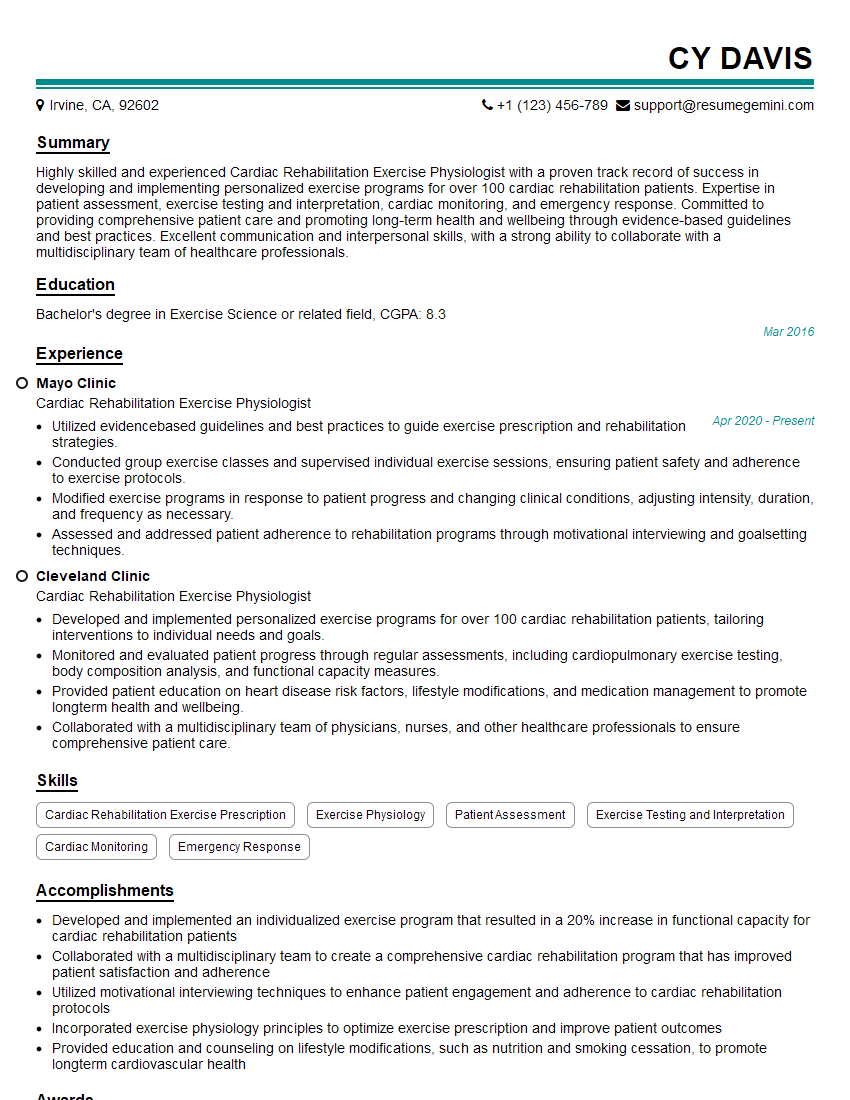
Mastering Cardiac Rehabilitation Program Management opens doors to exciting leadership opportunities and significant career advancement within the healthcare sector. A strong resume is crucial for showcasing your skills and experience to potential employers. Creating an ATS-friendly resume is essential to ensure your application gets noticed. ResumeGemini is a trusted resource that can help you build a professional, impactful resume that highlights your qualifications effectively. Examples of resumes tailored specifically to Cardiac Rehabilitation Program Management are available to further guide your preparation. Invest the time in crafting a compelling resume – it’s your first impression and a key to unlocking your career potential.
Explore more articles
Users Rating of Our Blogs
Share Your Experience
We value your feedback! Please rate our content and share your thoughts (optional).
What Readers Say About Our Blog
To the interviewgemini.com Webmaster.
Very helpful and content specific questions to help prepare me for my interview!
Thank you
To the interviewgemini.com Webmaster.
This was kind of a unique content I found around the specialized skills. Very helpful questions and good detailed answers.
Very Helpful blog, thank you Interviewgemini team.