Unlock your full potential by mastering the most common Cardiopulmonary Exercise Testing interview questions. This blog offers a deep dive into the critical topics, ensuring you’re not only prepared to answer but to excel. With these insights, you’ll approach your interview with clarity and confidence.
Questions Asked in Cardiopulmonary Exercise Testing Interview
Q 1. Explain the physiological principles underlying Cardiopulmonary Exercise Testing (CPET).
Cardiopulmonary Exercise Testing (CPET) measures the interplay between your cardiovascular and respiratory systems during incremental exercise. It’s based on the principle that as exercise intensity increases, your body demands more oxygen and energy. CPET assesses how well your heart and lungs meet this increased demand. This is achieved by monitoring several physiological variables including oxygen uptake (VO2), carbon dioxide production (VCO2), ventilation (VE), heart rate, and blood pressure as you exercise on a cycle ergometer or treadmill. The test helps determine your peak aerobic capacity, identify limitations in cardiovascular or respiratory function, and assess your response to exercise.
Imagine a car engine: As you accelerate, it needs more fuel and air. CPET is like putting the engine (your body) on a dynamometer and measuring its performance at different speeds (exercise intensities). It reveals not only how fast it can go (peak VO2) but also how efficiently it uses fuel and air at various speeds. This allows clinicians to pinpoint potential bottlenecks – is the engine (heart) struggling to pump enough fuel, or are the air filters (lungs) clogged?
Q 2. Describe the different types of exercise protocols used in CPET.
Several exercise protocols are used in CPET, all aiming to progressively increase workload. The choice depends on the patient’s condition and the test’s objectives. Common protocols include:
- Ramp protocol: A continuous increase in workload at a constant rate. This is widely used due to its simplicity and efficiency.
- Incremental (step) protocol: Workload increases in stages with rest periods in between. This allows for better monitoring of physiological responses to specific work levels.
- Bruce protocol: A specific incremental protocol often used for treadmill testing, with predetermined increases in speed and incline.
- Balke protocol: Another incremental protocol often used for treadmill testing, involving adjustments to speed and incline.
Each protocol has advantages and disadvantages. Ramp protocols provide a smooth transition and may be better for patients with limited exercise tolerance, whereas step protocols offer a more detailed evaluation of response at various intensities. The choice ultimately depends on the clinical setting and the individual patient’s capabilities.
Q 3. What are the indications and contraindications for CPET?
CPET is indicated for various conditions where assessing cardiopulmonary function is crucial. Examples include:
- Dyspnea (shortness of breath): To determine its origin – cardiac, pulmonary, or both.
- Chest pain: To differentiate cardiac from non-cardiac causes.
- Pre-operative evaluation: To assess surgical risk in patients with cardiovascular or pulmonary disease.
- Exercise intolerance: To identify the limiting factor in a patient’s exercise capacity.
- Follow-up of known heart or lung disease: To monitor disease progression or response to therapy.
Contraindications include:
- Unstable angina: Exercise could worsen chest pain and precipitate a heart attack.
- Uncontrolled hypertension: The stress of exercise could lead to dangerously high blood pressure.
- Severe valvular heart disease: The increased workload may be detrimental to the already compromised heart valves.
- Recent myocardial infarction: Risk of cardiac complications is elevated in the recovery period.
- Severe pulmonary disease with significant hypoxemia: Exercise may exacerbate oxygen desaturation.
Clinicians carefully weigh the risks and benefits of CPET for each individual patient.
Q 4. How do you interpret gas exchange data (VO2, VCO2, VE) obtained during CPET?
Gas exchange data (VO2, VCO2, VE) provides critical information about how efficiently the body utilizes oxygen and produces carbon dioxide during exercise.
- VO2 (Oxygen Uptake): Represents the amount of oxygen consumed by the body per minute. A higher VO2 max indicates better cardiovascular fitness. A plateau or early decline in VO2 during exercise may suggest a limitation in oxygen delivery or utilization.
- VCO2 (Carbon Dioxide Production): Reflects the amount of carbon dioxide produced by the body per minute. It reflects metabolic activity and correlates with VO2.
- VE (Ventilation): Represents the total volume of air breathed per minute. An increase in VE is expected with exercise, but excessive increases relative to VO2 and VCO2 may signify impaired respiratory mechanics or gas exchange.
Interpreting these parameters together is key. For example, a low VO2 max might be associated with a low VCO2, suggesting overall low metabolic capacity. On the other hand, a low VO2 max with high VE might point to inefficient gas exchange.
Q 5. Explain the calculation and significance of ventilatory equivalents (VE/VCO2, VE/VO2).
Ventilatory equivalents (VE/VCO2 and VE/VO2) are ratios that reflect the efficiency of ventilation relative to oxygen consumption and carbon dioxide production.
- VE/VCO2: This ratio indicates the amount of ventilation required to eliminate a given amount of CO2. An increasing VE/VCO2 suggests that ventilation is becoming less efficient at removing CO2.
- VE/VO2: This ratio indicates the amount of ventilation required to uptake a given amount of O2. An increasing VE/VO2 ratio indicates that ventilation is becoming less efficient at oxygen uptake.
Both ratios are useful in identifying the ventilatory threshold (VT), a point at which ventilation increases disproportionately to oxygen consumption and carbon dioxide production. These ratios are particularly helpful in distinguishing respiratory limitations from cardiac limitations during exercise.
Q 6. How do you identify and interpret a ventilatory threshold during CPET?
The ventilatory threshold (VT) is a crucial indicator identified during CPET. It marks the point where ventilation increases disproportionately to oxygen consumption and carbon dioxide production. In simpler terms, it’s the point where your breathing becomes much harder to match the increased oxygen demand from your muscles. It’s typically identified by a non-linear increase in VE/VCO2 and VE/VO2.
Identifying the VT involves visually inspecting the CPET data and looking for a sharp upward deflection in the VE/VCO2 and VE/VO2 curves. More sophisticated methods, like the V-slope method, use mathematical algorithms to precisely identify the inflection point. The VT is significant because it represents a shift towards anaerobic metabolism, indicating the upper limit of sustainable aerobic exercise. It’s an important marker for training intensity prescription and disease detection.
Q 7. Describe the physiological response to exercise in healthy individuals versus those with cardiovascular or pulmonary disease.
Healthy individuals exhibit a predictable physiological response to exercise. VO2, VCO2, and heart rate increase linearly with increasing workload. Ventilation also increases, but proportionally to oxygen demand. Gas exchange remains efficient. The body is able to meet metabolic demands with minimal respiratory compensation.
In contrast, patients with cardiovascular or pulmonary diseases show aberrant responses. For instance:
- Cardiovascular Disease: Patients with heart failure may exhibit a low VO2 max, early-onset fatigue, and an abnormal heart rate response. They might reach their peak VO2 at a lower workload than healthy individuals.
- Pulmonary Disease: Patients with COPD might demonstrate an elevated VE/VCO2 and VE/VO2 even at low workloads and hyperventilation, even with low VO2 max. Their breathing becomes labored earlier than healthy individuals.
CPET helps to distinguish the physiological limitations: Is it the heart’s ability to pump blood (cardiac limitation), the lungs’ ability to exchange gases (pulmonary limitation), or a combination of both (cardiopulmonary limitation)? The interpretation depends on a comprehensive clinical picture, including patient history, physical exam, and other investigations.
Q 8. What are the limitations and potential risks associated with CPET?
Cardiopulmonary Exercise Testing (CPET) is a powerful diagnostic tool, but like any medical procedure, it carries limitations and potential risks. The most significant limitation is that it’s a stressful test, potentially exacerbating underlying conditions. It requires patient cooperation and the ability to exert effort, which excludes some individuals. For example, patients with severe uncontrolled hypertension or unstable angina might not be suitable candidates.
Potential risks, although relatively rare with proper screening and monitoring, include:
- Cardiac events (e.g., arrhythmias, myocardial infarction): This risk is minimized through careful patient selection and continuous monitoring.
- Respiratory complications (e.g., bronchospasm, hyperventilation): Patients with known respiratory issues require careful assessment and management.
- Orthostatic hypotension: This is a sudden drop in blood pressure upon standing, and we carefully monitor and manage this risk.
- Muscle injury or fatigue: Though a common and usually benign side effect, we provide appropriate hydration and recovery instructions.
- Anxiety or panic attacks: Proper patient education and support significantly mitigate this risk.
We manage these risks by carefully reviewing patient history, performing a thorough physical examination, and continuously monitoring vital signs throughout the test. Careful interpretation of results is also crucial in avoiding misdiagnosis and inappropriate management decisions.
Q 9. How do you ensure patient safety during a CPET?
Ensuring patient safety during CPET is paramount. It’s a multi-faceted approach starting before the test even begins. It involves a comprehensive pre-test assessment, including a thorough medical history review and physical examination. This allows us to identify any contraindications or potential risks. We specifically assess for conditions like severe heart disease, uncontrolled hypertension, and significant respiratory issues.
During the test, continuous monitoring of vital signs is crucial. This includes:
- ECG monitoring for any arrhythmias or ischemia
- Blood pressure monitoring for changes in blood pressure indicating adverse effects
- SpO2 (oxygen saturation) monitoring to assess oxygen levels in the blood
- Respiratory rate and ventilation monitoring to observe the patient’s breathing pattern
- Visual observation for signs of distress such as dizziness, fatigue or chest pain.
We have an emergency plan in place, readily accessible defibrillator and emergency medications and trained personnel to handle any complications promptly. Post-test monitoring involves ensuring the patient has a safe recovery period, providing them with instructions for post-exercise recovery, and arranging for follow-up if needed.
Q 10. How do you explain CPET results to patients and healthcare providers?
Explaining CPET results requires clear and concise communication, tailored to the audience. For patients, I use simple, non-technical language, focusing on the key findings’ relevance to their overall health and functional capacity. For example, rather than stating ‘VO2 max was 15 mL/kg/min’, I might say, ‘Your test showed your body’s ability to use oxygen during exercise is slightly below average for someone your age and health status’. This might indicate the need for lifestyle changes like increased physical activity.
For healthcare providers, the explanation is more detailed, including specific numerical values and physiological parameters. I’d discuss the peak oxygen uptake (VO2 max), ventilatory threshold, anaerobic threshold, and any other relevant findings, alongside their clinical implications. For instance, a low VO2 max might indicate reduced cardiac output or pulmonary dysfunction. I also carefully address any abnormal findings and potential explanations for them, and how they might influence the treatment plan.
In both cases, I always encourage questions and ensure the patient or provider fully understands the implications of the results and how they can use the information to make informed decisions about their health and well-being.
Q 11. Describe your experience with different CPET equipment and software.
My experience encompasses a range of CPET equipment and software. I’ve worked with various metabolic carts, such as those manufactured by Corning and MedGraphics, each with its unique features and functionalities. I’m proficient in using their respective software packages for data acquisition, analysis, and report generation. For example, I’m comfortable interpreting data from both breath-by-breath and integrated systems. I understand the importance of proper calibration and maintenance of these sophisticated instruments to maintain data accuracy.
Furthermore, I’m familiar with different types of exercise protocols, including ramp protocols, incremental protocols, and constant work-rate protocols. The choice of protocol often depends on the patient’s clinical condition and the goals of the test. I’m well-versed in using different data interpretation software, which allow for visualizations, advanced statistical analyses, and the generation of detailed reports. Proficiency across these platforms allows me to effectively analyze data and provide comprehensive interpretations.
Q 12. How do you troubleshoot common technical issues during CPET?
Troubleshooting technical issues during CPET requires a systematic approach. For example, if the metabolic cart isn’t calibrating correctly, I’d first check for leaks in the system, ensure proper gas flow, and verify the calibration gases are within their expiration dates. Similar systematic steps are followed for other errors in calibration. I might also examine sensor connections, ensuring proper seating, and reviewing the system logs for any error messages. My expertise extends to troubleshooting software errors through familiarity with the various systems and error codes, including using remote support as necessary.
If the ECG tracing is abnormal, I verify the electrode placement, check for loose connections, and inspect for artifacts. My knowledge of ECG interpretation allows me to distinguish between technical artifacts and real cardiac events. Similarly, issues with other sensors are addressed by systematically checking connections, calibrations, and sensor functionality. The ability to approach systematic troubleshooting efficiently ensures minimal disruption to the workflow and patient care.
Q 13. How do you manage patient anxiety or discomfort during the test?
Managing patient anxiety or discomfort is crucial for a successful and safe CPET. Before the test, I provide clear and detailed explanations of the procedure, ensuring the patient understands what to expect. I answer all their questions patiently, addressing any concerns they may have. I might use calming techniques, such as deep breathing exercises or progressive muscle relaxation techniques to reduce anxiety levels before the test begins.
During the test, I maintain open communication with the patient, offering encouragement and reassurance. I continuously monitor their emotional state, adjusting the exercise intensity or providing breaks as needed. If the patient experiences significant discomfort or anxiety, I’ll stop the test immediately and discuss whether it’s appropriate to reschedule the test. In some cases, I may consult with a psychologist or psychiatrist to manage significant anxiety issues. A collaborative approach helps ensure that the patient feels safe and supported throughout the process.
Q 14. What are the key parameters you monitor during CPET?
During CPET, I meticulously monitor several key parameters to comprehensively assess cardiovascular and respiratory function. This includes:
- Heart rate (HR): Reflects the cardiac response to exercise.
- Blood pressure (BP): Monitors for any abnormal changes, such as hypertension or hypotension.
- Oxygen uptake (VO2): Measures the body’s ability to utilize oxygen.
- Carbon dioxide production (VCO2): Reflects metabolic activity.
- Respiratory exchange ratio (RER): Indicates the balance between carbohydrate and fat metabolism.
- Ventilatory parameters (VE, f, VT): Assess respiratory function, including ventilation, respiratory rate, and tidal volume.
- Electrocardiogram (ECG): Continuously monitors heart rhythm and detects any arrhythmias or ischemia.
- Oxygen saturation (SpO2): Tracks blood oxygen levels.
- Rate of perceived exertion (RPE): Assesses the patient’s subjective effort level.
The integrated analysis of these parameters provides a comprehensive understanding of the patient’s cardiopulmonary response to exercise and helps in identifying functional limitations and potential pathologies. The data informs the diagnosis and management of various conditions, guiding therapeutic decisions and creating effective rehabilitation programs.
Q 15. How do you determine the appropriate exercise intensity for a patient?
Determining appropriate exercise intensity during a Cardiopulmonary Exercise Test (CPET) is crucial for patient safety and test efficacy. We aim to find the patient’s functional capacity without overexerting them. We consider several factors:
- Patient’s Baseline Health: Patients with significant underlying conditions like heart failure or severe lung disease will have lower starting intensities than healthy individuals. We might begin with a very low workload, perhaps 1 to 2 metabolic equivalents of task (METs), and increase gradually.
- Symptoms: We closely monitor the patient for signs of exertion, such as shortness of breath (dyspnea), chest pain (angina), leg fatigue, or dizziness. Any significant increase in these symptoms prompts a reduction in intensity or test termination.
- Physiological Responses: We monitor heart rate, blood pressure, oxygen saturation (SpO2), and breathing rate. Excessively high heart rate, significant blood pressure changes, or oxygen desaturation signals the need to adjust the intensity downward. For example, if the patient’s heart rate reaches 85% of their age-predicted maximum, we may reduce the workload.
- Patient Feedback: Throughout the test, we constantly communicate with the patient and encourage them to verbally report their perceived exertion using a scale like the Borg scale (6-20). This subjective feedback complements the objective physiological data.
- Goals of the Test: The intensity may vary depending on the test’s purpose. If we’re aiming to reach peak exercise capacity, we push the patient progressively until they reach volitional fatigue. In other cases, like evaluating post-surgical patients, we may stop the test at a predetermined lower workload to minimize stress.
For example, a patient with moderate heart failure might start at 2 METs, whereas a healthy athlete might begin at a much higher intensity. The process is iterative; we adjust the workload in real-time based on the patient’s response ensuring patient safety remains paramount.
Career Expert Tips:
- Ace those interviews! Prepare effectively by reviewing the Top 50 Most Common Interview Questions on ResumeGemini.
- Navigate your job search with confidence! Explore a wide range of Career Tips on ResumeGemini. Learn about common challenges and recommendations to overcome them.
- Craft the perfect resume! Master the Art of Resume Writing with ResumeGemini’s guide. Showcase your unique qualifications and achievements effectively.
- Don’t miss out on holiday savings! Build your dream resume with ResumeGemini’s ATS optimized templates.
Q 16. Explain the use of CPET in the diagnosis of different cardiopulmonary conditions.
CPET is a powerful diagnostic tool for various cardiopulmonary conditions because it provides a comprehensive assessment of both the cardiovascular and respiratory systems during exercise. Here are some examples:
- Ischemic Heart Disease: CPET can detect limitations in cardiac output during exercise, indicating reduced blood flow to the heart muscle, even if resting ECG is normal. A decrease in SpO2 despite increasing workload could also point towards myocardial ischemia.
- Heart Failure: In heart failure, CPET helps determine the patient’s functional capacity, identifies the limitations (cardiovascular or pulmonary), and guides treatment decisions. A low peak oxygen uptake (VO2) is characteristic, along with abnormal heart rate response.
- Chronic Obstructive Pulmonary Disease (COPD): CPET helps assess the severity of airflow limitation and the impact on exercise tolerance. Individuals with COPD often demonstrate a reduced peak VO2 and abnormal ventilatory responses.
- Interstitial Lung Disease: CPET can show a restrictive pattern, characterized by low peak VO2 and decreased ventilatory capacity relative to the effort. It aids in differentiating this from obstructive diseases.
- Pulmonary Hypertension: CPET can reveal exaggerated pulmonary artery pressure responses to exercise, which are critical in diagnosis and monitoring treatment.
- Valvular Heart Disease: CPET helps reveal limitations caused by valvular dysfunction, often manifested through abnormal heart rate and blood pressure responses to exercise.
The test’s ability to assess both cardiac and pulmonary function makes it superior to other tests that only evaluate one system in isolation.
Q 17. How do you differentiate between cardiogenic and pulmonary limitations during CPET?
Differentiating between cardiogenic and pulmonary limitations during CPET relies on careful analysis of several key parameters:
- Peak VO2: A low peak VO2 suggests a limitation in either the cardiovascular or respiratory system or both. However, other parameters help pinpoint the primary limitation.
- Ventilatory Threshold (VT): This is the point at which ventilation increases disproportionately to oxygen consumption. An early VT indicates pulmonary limitation, while a late or absent VT may suggest a predominantly cardiac limitation.
- Gas Exchange Parameters: Parameters like the oxygen pulse (SpO2), arterial oxygen saturation (SaO2), and the ratio of dead space ventilation to tidal volume (VD/VT) provide crucial information. A fall in SpO2 during exercise suggests either hypoventilation or a mismatch in ventilation-perfusion, indicative of a pulmonary limitation.
- Heart Rate Response: An abnormal or blunted heart rate response to exercise may indicate cardiac dysfunction. A heart rate that fails to increase appropriately with increasing workload suggests cardiac limitation.
- Blood Pressure Response: Hypotension during exercise may point toward a cardiac limitation.
For instance, a patient with a low peak VO2, an early ventilatory threshold, and a decrease in SpO2 during exercise may have a predominantly pulmonary limitation. Conversely, a patient with a low peak VO2, a late or absent ventilatory threshold, and a normal or near-normal SpO2 but an abnormal heart rate response, might have a primarily cardiac limitation. However, mixed limitations are common, requiring a nuanced interpretation.
Q 18. What are the applications of CPET in guiding treatment decisions?
CPET plays a significant role in guiding treatment decisions by providing objective data to tailor interventions based on individual patient needs. This involves:
- Exercise Prescription: CPET helps determine the appropriate intensity, duration, and type of exercise for rehabilitation programs. The peak VO2 and anaerobic threshold define safe and effective exercise intensity targets.
- Treatment Optimization: CPET helps assess the effectiveness of medical therapies, such as medications for heart failure or pulmonary hypertension. Repeated tests can monitor the impact of these interventions on exercise capacity.
- Surgical Risk Stratification: In patients undergoing surgeries, CPET assists in evaluating their perioperative risk. Low peak VO2 might indicate a higher risk of complications after surgery.
- Disability Assessment: CPET data helps determine the extent of functional impairment and the need for respiratory or cardiac support services.
- Prognosis: Peak VO2 has prognostic value in several cardiopulmonary conditions. Lower peak VO2 values are often associated with poorer outcomes.
For example, a patient with heart failure might undergo CPET to determine their exercise capacity, identify the limiting factor, and guide the design of a tailored cardiac rehabilitation program. The test results might also inform the need for cardiac resynchronization therapy or other interventions.
Q 19. Describe your experience with CPET data analysis and reporting.
My experience with CPET data analysis and reporting encompasses all aspects of the process, from raw data acquisition to generating comprehensive reports. I am proficient in using various CPET software packages to review and interpret physiological data, including:
- Data Validation: I meticulously check for artifacts and inconsistencies in the data to ensure accuracy. This includes reviewing waveforms, identifying data points needing correction and making appropriate adjustments.
- Calculation of Key Parameters: I calculate and interpret crucial parameters such as peak VO2, anaerobic threshold, ventilatory parameters, heart rate, blood pressure, and gas exchange indices. I’m capable of identifying normal ranges, deviations, and implications for the patient.
- Report Generation: I generate detailed and well-structured reports that clearly summarize the test results, interpretation, and recommendations for treatment and exercise prescription. The reports include graphical displays such as oxygen uptake vs. workload, ventilation vs. workload, and other relevant charts that assist in interpretation and visual representations of the patient’s response.
- Integration with other clinical information: I integrate CPET findings with other clinical data, such as patient history, physical examination findings, and other diagnostic test results, to form a holistic understanding of the patient’s cardiopulmonary status.
I am experienced in both manual and automated data analysis techniques, ensuring the highest level of accuracy and providing clear and concise reports to aid clinical decision-making.
Q 20. How do you use CPET data to develop individualized exercise programs?
CPET data is invaluable in developing individualized exercise programs because it provides objective measures of a patient’s functional capacity and limitations. My approach involves:
- Defining Exercise Intensity: Based on the CPET results, I determine the target exercise intensity. This is often expressed as a percentage of the patient’s peak VO2 or anaerobic threshold to ensure that the exercise program is both challenging and safe. For example, we might prescribe exercise at 70% of the patient’s peak VO2.
- Determining Exercise Duration and Frequency: The results also guide the determination of appropriate duration and frequency of exercise sessions. Patients with low exercise capacity might start with shorter sessions and gradually increase the duration over time.
- Choosing the Mode of Exercise: CPET helps inform the best type of exercise suitable for each individual. If pulmonary limitation is identified, emphasis might be placed on aerobic exercises, while those with significant cardiovascular limitations may benefit from resistance training only under stringent criteria and close supervision.
- Monitoring Progress: We use follow-up CPETs, or other measures such as symptom reporting and self-monitoring devices, to track the patient’s progress and make adjustments to the exercise program as necessary.
In summary, the CPET acts as a roadmap, guiding the development of a personalized and effective exercise program based on objective physiological data, maximizing benefits while mitigating risks.
Q 21. Explain the difference between a graded exercise test (GXT) and a CPET.
While both Graded Exercise Tests (GXTs) and Cardiopulmonary Exercise Tests (CPETs) assess exercise capacity, they differ significantly in their scope and information provided:
- Scope: A GXT primarily measures cardiovascular response to exercise by monitoring heart rate, blood pressure, and ECG. CPET, on the other hand, provides a much more comprehensive assessment, incorporating respiratory gas exchange analysis (measuring oxygen consumption (VO2), carbon dioxide production (VCO2), ventilation, and other respiratory parameters), making it much more informative for cardiopulmonary conditions.
- Information Provided: A GXT provides information about the patient’s cardiovascular response to exercise and may detect ischemia, but it does not assess respiratory function quantitatively. CPET provides detailed insights into both cardiovascular and respiratory function during exercise, which is crucial for diagnosing various cardiopulmonary conditions and guiding treatment strategies.
- Diagnostic Capabilities: CPET has a broader range of diagnostic capabilities, including assessing the presence and severity of ventilatory limitations, gas exchange abnormalities, and cardiopulmonary limitations during exercise. A GXT mainly assesses cardiovascular limitations.
- Complexity: CPET is a more complex test requiring specialized equipment and trained personnel to conduct and interpret the results. A GXT is relatively simpler to perform.
In essence, a GXT offers a basic assessment of cardiovascular fitness, whereas CPET provides a sophisticated and detailed assessment of both cardiovascular and respiratory systems, allowing for more precise diagnosis and personalized treatment plans. A GXT could be considered a subset of a CPET, lacking the advanced respiratory gas exchange analysis.
Q 22. How does CPET contribute to the assessment of exercise capacity?
Cardiopulmonary Exercise Testing (CPET) is a crucial tool for assessing exercise capacity by measuring how your body responds to increasing workloads. It’s like a stress test for your heart and lungs, but instead of just resting measurements, we challenge the system to see how it performs under pressure. We monitor your oxygen consumption (VO2), carbon dioxide production (VCO2), breathing rate, heart rate, and blood pressure while you exercise on a treadmill or cycle ergometer. The peak VO2 (VO2 peak) achieved is a key indicator of your overall fitness and functional capacity. A lower VO2 peak suggests reduced exercise tolerance, hinting at potential underlying cardiovascular or pulmonary issues. For example, a patient with severe heart failure might have a significantly lower VO2 peak compared to a healthy individual of the same age and sex. We analyze the entire response, not just the peak values, looking for patterns such as an abnormal increase in blood pressure or a disproportionate increase in heart rate that might signal problems.
Q 23. Discuss the role of CPET in pre-operative cardiac risk stratification.
CPET plays a significant role in pre-operative cardiac risk stratification, helping surgeons determine a patient’s risk of developing cardiovascular complications during or after surgery. It’s particularly valuable for patients undergoing major non-cardiac surgeries, where the added stress of the procedure can exacerbate underlying heart or lung conditions. For instance, a patient with seemingly well-controlled heart failure may exhibit a significantly reduced exercise capacity and abnormal responses during CPET, indicating a higher risk of post-operative cardiac events. This information allows the surgical team to tailor their approach – potentially optimizing pre-operative medical management, choosing a less invasive procedure, or recommending cardiac rehabilitation before surgery. The results help guide decisions about the need for additional investigations or strategies to mitigate perioperative risk, ultimately improving patient safety and outcomes.
Q 24. How do you address abnormal findings during CPET?
Abnormal findings during CPET require a careful and systematic approach. First, we must confirm the abnormality. Is it truly abnormal for the patient’s age, gender, and clinical presentation, or within the normal range for similar patients? Second, we need to identify the specific abnormality. This might involve decreased exercise capacity (low VO2 peak), abnormal heart rate response (e.g., excessive increase or failure to increase adequately), or respiratory limitations (e.g., early onset of dyspnea or abnormal gas exchange). Once the abnormality is identified, we consider the patient’s medical history and other test results to formulate a differential diagnosis. This might involve further investigations such as echocardiography, coronary angiography, or pulmonary function tests. We then develop a management plan tailored to the specific findings, which may include medication adjustments, lifestyle changes, or referral to specialized care. For instance, abnormal gas exchange during exercise may warrant pulmonary rehabilitation, while a depressed VO2 peak in a patient with heart failure may prompt a review of their medication regimen.
Q 25. What is your experience with interpreting CPET data in patients with specific conditions (e.g., heart failure, COPD)?
My experience with interpreting CPET data in patients with specific conditions is extensive. In patients with heart failure, we typically observe reduced VO2 peak and early signs of fatigue, often associated with abnormal hemodynamic responses. In patients with COPD, the key findings often include reduced exercise capacity, abnormal gas exchange, and early onset of dyspnea (shortness of breath) due to impaired ventilation and diffusion. The specific patterns of abnormalities, such as the shape of the oxygen uptake curve, can help differentiate different types of heart failure or stages of COPD severity. This helps in tailoring treatment strategies; for instance, a low ventilatory threshold might indicate a need to focus on respiratory muscle training in a COPD patient. In both heart failure and COPD, CPET provides valuable insights into the severity of the condition and helps monitor the effectiveness of treatment strategies, even before clinical improvements are evident.
Q 26. How do you ensure the accuracy and reliability of CPET results?
Ensuring the accuracy and reliability of CPET results is paramount. This involves meticulous attention to detail throughout the entire process. It starts with proper patient preparation, including ensuring the patient is adequately rested and understands the procedure. During the test, accurate calibration of equipment and standardized exercise protocols are crucial. Careful monitoring of the patient’s vital signs and subjective responses are equally important. The data analysis needs to be performed according to established guidelines and quality control procedures are essential to ensure the accuracy and consistency of the test results. Regular maintenance and calibration of the equipment, along with ongoing professional development, ensure that I remain competent in performing and interpreting CPETs. Finally, careful documentation of the entire process is crucial for ensuring the integrity and reliability of the obtained data.
Q 27. Describe your experience working in a multidisciplinary healthcare team.
I have extensive experience working in multidisciplinary healthcare teams, including cardiologists, pulmonologists, respiratory therapists, physiotherapists, and surgeons. CPET is frequently a collaborative effort, where I provide data that informs the treatment plans developed by other specialists. For instance, I may work with a cardiologist to assess the impact of a new medication on a patient’s exercise capacity or with a surgeon to help determine the risk of surgery. Effective communication and collaboration are crucial, and I utilize clear and concise reporting to effectively communicate CPET findings to the team. My role is not just to provide data; it’s to contribute to a shared understanding of the patient’s overall health and to support the development of a comprehensive care plan. The multidisciplinary approach leads to improved patient outcomes and better utilization of healthcare resources.
Q 28. How do you stay updated with the latest advancements in CPET technology and techniques?
Staying updated on the latest advancements in CPET technology and techniques is a continuous process. I actively participate in professional organizations such as the American College of Cardiology and the American Thoracic Society. I regularly attend conferences and workshops focused on CPET and related areas, read peer-reviewed journals, and participate in continuing medical education activities. This allows me to remain abreast of new protocols, interpretative strategies, and technological advancements, such as the use of advanced software for data analysis and integration with other diagnostic tools. Continuous learning ensures I maintain a high level of proficiency and can provide the most accurate and up-to-date CPET services.
Key Topics to Learn for Cardiopulmonary Exercise Testing Interview
- Exercise Physiology Principles: Understanding the physiological responses to exercise, including cardiovascular and respiratory adaptations.
- CPET Equipment and Procedures: Familiarization with various CPET systems, protocols (e.g., Bruce, Balke), and data acquisition techniques. This includes understanding the importance of proper patient preparation and test administration.
- Data Interpretation and Analysis: Mastering the interpretation of key CPET parameters (e.g., VO2 max, anaerobic threshold, ventilatory equivalents), identifying patterns, and drawing clinical conclusions.
- Clinical Applications of CPET: Understanding the diagnostic and prognostic value of CPET in various clinical settings, including cardiology, pulmonology, and sports medicine. Be prepared to discuss specific examples.
- Exercise Prescription and Rehabilitation: Knowledge of how CPET data informs the development of individualized exercise programs for patients with different conditions.
- Limitations and Artifacts: Understanding the limitations of CPET, potential sources of error, and how to address artifacts in data interpretation.
- Safety and Patient Monitoring: Thorough understanding of safety protocols during CPET, including recognizing and responding to adverse events.
- Advanced Concepts: Explore areas such as metabolic cart calibration, gas analysis principles, and interpretation of advanced CPET parameters (e.g., VCO2/VO2 slope).
Next Steps
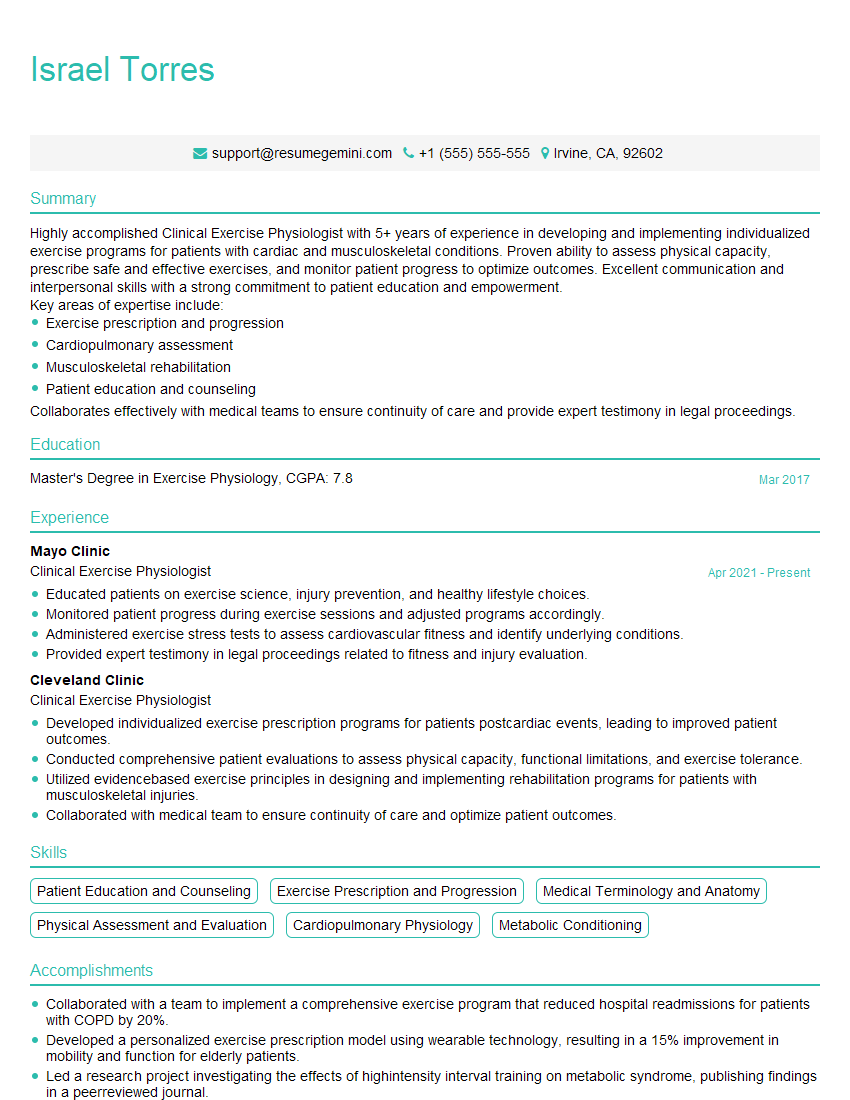
Mastering Cardiopulmonary Exercise Testing opens doors to exciting career opportunities in a dynamic and growing field. A strong understanding of CPET principles and applications is highly valued by employers. To maximize your job prospects, invest time in crafting a compelling and ATS-friendly resume that effectively showcases your skills and experience. ResumeGemini is a trusted resource to help you build a professional and impactful resume. They provide examples of resumes tailored specifically to the Cardiopulmonary Exercise Testing field, ensuring your application stands out.

Explore more articles
Users Rating of Our Blogs
Share Your Experience
We value your feedback! Please rate our content and share your thoughts (optional).
What Readers Say About Our Blog
To the interviewgemini.com Webmaster.
Very helpful and content specific questions to help prepare me for my interview!
Thank you
To the interviewgemini.com Webmaster.
This was kind of a unique content I found around the specialized skills. Very helpful questions and good detailed answers.
Very Helpful blog, thank you Interviewgemini team.