Are you ready to stand out in your next interview? Understanding and preparing for Cell Performance Analysis interview questions is a game-changer. In this blog, we’ve compiled key questions and expert advice to help you showcase your skills with confidence and precision. Let’s get started on your journey to acing the interview.
Questions Asked in Cell Performance Analysis Interview
Q 1. Explain the key performance indicators (KPIs) used to assess cell performance.
Key Performance Indicators (KPIs) are crucial metrics used to assess the health and efficiency of a cellular network. Think of them as a cellular network’s vital signs. They help us understand how well the network is meeting its goals in terms of speed, reliability, and coverage. Some of the most important KPIs include:
- Throughput: This measures the amount of data that can be successfully transmitted over a given period. A higher throughput means faster data speeds for users. We often express this in Mbps (megabits per second).
- Latency: This is the delay experienced between sending a request and receiving a response. Lower latency means faster response times, crucial for applications like online gaming and video conferencing. We typically measure latency in milliseconds (ms).
- Dropped Call Rate: This represents the percentage of calls that are unexpectedly terminated before completion. A low dropped call rate signifies a reliable network.
- Blocked Call Rate: This KPI indicates the percentage of calls that fail to connect due to network congestion. High blocked call rates point to a capacity problem.
- Call Setup Success Rate (CSSR): This shows the percentage of calls that successfully connect. A high CSSR reflects a well-functioning network.
- Signal Strength: Measured in dBm (decibels-milliwatts), it shows the power level of the received signal. Weaker signals lead to poor call quality and slower data speeds.
- Handoff Success Rate: This measures the success rate of a mobile device seamlessly switching between cell towers as it moves. Frequent handoff failures can cause dropped calls or data interruptions.
By monitoring these KPIs, network operators can identify areas for improvement and ensure optimal network performance. For example, a consistently low throughput in a specific area could point to insufficient network capacity, while high latency might indicate issues with network congestion or backhaul.
Q 2. Describe the difference between throughput and latency in a cellular network.
Throughput and latency are two fundamental metrics that, while both related to network performance, measure different aspects. Imagine you’re downloading a large file:
Throughput is like the speed of the download – how much data is transferred per unit of time (e.g., Mbps). High throughput means a fast download.
Latency, on the other hand, is the delay you experience before the download starts, or between requesting a data packet and receiving it. Low latency means minimal delay, a quick start to your download.
You can have high throughput but high latency (e.g., a fast download that takes a long time to begin). Conversely, you might have low latency but low throughput (a download that starts quickly but is very slow). A truly excellent network will boast both high throughput and low latency.
Q 3. How do you identify and troubleshoot dropped calls in a cellular network?
Troubleshooting dropped calls involves a systematic approach that combines data analysis and on-site investigation. Here’s a typical workflow:
- Gather Data: Start by collecting data from various sources, including network monitoring tools, call detail records (CDRs), and customer reports. CDRs provide valuable information such as call duration, location, and reason for termination.
- Analyze CDRs: Examine CDRs for patterns in dropped calls. Look for commonalities such as specific cell towers, times of day, or types of calls (voice vs. data). This will help you pinpoint the problem area.
- Identify Potential Causes: Based on the data analysis, identify potential causes, such as insufficient radio frequency (RF) coverage, network congestion, interference from other sources, or faulty equipment (base station, handsets).
- Perform Drive Testing: Drive testing involves using specialized equipment to measure signal strength, interference, and other parameters across the network. This provides a real-world assessment of network performance.
- Investigate Cell Site: If the problem is localized to a specific cell site, a site visit is necessary to check for hardware issues, antenna alignment, or environmental factors.
- Implement Solutions: Based on the root cause analysis, implement appropriate solutions, such as increasing cell site capacity, optimizing antenna configuration, resolving interference issues, or replacing faulty hardware.
- Monitor and Validate: After implementing the solution, monitor the network KPIs to verify the effectiveness of the changes and ensure the dropped call rate has improved.
For instance, if CDRs show a high dropped call rate in a particular area during peak hours, it suggests network congestion. Drive testing might confirm weak signal strength in the area, leading to the deployment of additional cell sites or improved antenna configuration.
Q 4. What are the common causes of cell site congestion?
Cell site congestion occurs when the number of users attempting to access a cell tower exceeds its capacity. Imagine a single-lane bridge during rush hour; too many cars trying to cross at once leads to a traffic jam. Similarly, too many users vying for limited radio resources causes congestion. Common causes include:
- High User Density: Densely populated areas, large events, or popular locations often experience higher user demand exceeding the cell site’s capacity.
- Insufficient Cell Site Capacity: The cell site might be undersized for the current demand, leading to resource limitations.
- Uneven Traffic Distribution: Traffic might be concentrated in specific sectors of a cell tower, overloading certain channels while others remain relatively underutilized.
- Interference: Adjacent cell towers or other sources of interference can reduce available bandwidth and exacerbate congestion.
- Network Faults: Problems with the backhaul network (connecting cell sites to the core network) can cause bottlenecks and hinder efficient resource allocation.
- Handoff Failures: Repeated handoff failures can lead to congestion, especially near cell boundaries.
Addressing congestion requires strategies like adding more cell sites, upgrading existing equipment to support higher capacity, optimizing cell sectorization, or implementing load balancing techniques.
Q 5. Explain your experience with drive testing and its role in cell performance analysis.
Drive testing is an indispensable part of cell performance analysis. It’s essentially a real-world performance assessment of the network. Imagine driving a car while measuring various aspects of the road – the drive test is like that for cell networks. We use specialized vehicles equipped with sophisticated equipment to measure key network parameters while driving through the coverage area. This equipment collects data on signal strength, data throughput, latency, interference levels, and handoff performance.
My experience with drive testing involves planning test routes, configuring the test equipment, collecting and analyzing the drive test data, and correlating the findings with other performance data (like KPIs from network monitoring tools and CDRs). The results of drive testing help us to:
- Identify coverage holes: Areas with weak or no signal coverage.
- Pinpoint interference sources: Identify sources interfering with network performance.
- Optimize cell site configuration: Fine-tune cell site parameters like antenna tilt, power levels, and sectorization.
- Validate network upgrades: Assess the effectiveness of network upgrades and modifications.
- Plan network expansions: Identify areas where new cell sites are needed.
I’ve used drive test data to identify and resolve numerous network issues ranging from dropped calls and slow data speeds to poor handoff performance in challenging environments like tunnels or buildings. The process is invaluable for ensuring network quality and optimizing its performance.
Q 6. How do you analyze call detail records (CDRs) to identify performance issues?
Call Detail Records (CDRs) are a treasure trove of information about individual calls. Analyzing them is like detective work; you can glean valuable insights into network performance issues. CDRs typically contain information such as call start and end time, duration, cell tower used, handover information, and the reason for call termination (e.g., dropped call, blocked call, etc.).
To identify performance issues, I would typically:
- Filter and Aggregate Data: Start by filtering CDRs to focus on specific parameters, like dropped calls or calls exceeding a certain duration. Aggregate data to identify trends, such as high dropped call rates during peak hours or in certain geographic areas.
- Identify Patterns: Look for patterns in the data, such as specific cell towers consistently experiencing high dropped call rates or long call setup times. This could pinpoint faulty equipment, congestion issues, or coverage problems.
- Correlate with Other Data: Compare CDR data with other network performance metrics and drive test results. For example, high dropped call rates in a particular area could correlate with weak signal strength observed during drive testing.
- Visualize Data: Using visualization tools, create graphs and charts to identify trends and patterns more effectively. Visualizations can help identify geographical hotspots, temporal patterns, or relationships between different variables.
- Generate Reports: Compile reports summarizing the findings and make recommendations for improvement. This could involve optimizing network parameters, upgrading equipment, or expanding network coverage.
For example, a consistently high number of dropped calls from a specific cell tower during certain time periods could suggest capacity issues at that cell site. By analyzing the CDRs along with other performance data, we can make data-driven decisions to enhance network quality and user experience.
Q 7. What are the different types of interference that can affect cell performance?
Interference is a major factor affecting cell performance. It’s like unwanted noise interfering with a conversation – it disrupts the signal and degrades network quality. There are several types:
- Co-channel Interference: This occurs when two or more cells operating on the same frequency are geographically close, causing overlapping signals and signal degradation. It’s like two people trying to talk simultaneously at the same volume in the same space.
- Adjacent Channel Interference (ACI): This arises when signals from adjacent channels bleed into each other. Think of radio stations close together on the dial – you might hear some bleed over.
- Intermodulation Interference: This happens when signals from multiple sources combine to create new signals at different frequencies that interfere with the desired signals. It is an effect more complicated than simple addition, it’s a nonlinear distortion.
- Inter-system Interference: This occurs when signals from different wireless systems (e.g., Wi-Fi, Bluetooth, other cellular technologies) interfere with each other. It’s like multiple conversations all happening at once in a crowded room.
- Self-Interference: Signals reflected from buildings or other objects can create interference that degrades the quality of the desired signals.
Mitigation techniques include careful frequency planning, antenna optimization, and the use of interference cancellation techniques. For example, using different frequencies in adjacent cell sites reduces co-channel interference. Proper antenna placement and design can also help minimize interference from buildings or other obstacles.
Q 8. Describe your experience with network optimization tools and software.
My experience with network optimization tools spans several leading vendors and technologies. I’m proficient in using drive test analysis software like TEMS Investigation and Actix, which allow me to collect and analyze drive test data to identify areas of poor coverage or capacity. I’m also experienced with network planning and optimization tools such as Atoll and Planet, which use simulations to predict network performance based on different configurations. Furthermore, I’ve worked extensively with vendor-specific network management systems (NMS) allowing me to monitor key performance indicators (KPIs) in real-time and make immediate adjustments to optimize the network. For example, I once used TEMS Investigation to pinpoint a specific cell site experiencing high dropped call rates, leading to a successful optimization by adjusting the tilt angle of the antenna. This improved coverage in a previously underserved area, resulting in a significant increase in customer satisfaction.
Q 9. How do you interpret signal strength measurements and other radio parameters?
Interpreting signal strength measurements and radio parameters is crucial for effective cell performance analysis. Signal strength, usually measured in dBm (decibels relative to one milliwatt), indicates the power level of the received signal. Lower dBm values represent weaker signals. Other crucial parameters include Received Signal Strength Indicator (RSSI), Signal-to-Interference Ratio (SINR), and Bit Error Rate (BER). A high SINR, indicating a strong signal relative to interference, is crucial for reliable communication. A high BER suggests a high number of errors during data transmission, implying poor quality of service. For example, consistently low RSSI and SINR values in a specific location would point towards inadequate coverage requiring interventions like adding new cell sites or optimizing existing ones. Analyzing these parameters together gives a holistic picture of the radio environment, enabling us to pinpoint the root cause of performance issues. I regularly employ statistical analysis techniques on this data to identify trends and patterns, going beyond simple averages to understand the distribution of signal quality.
Q 10. Explain your understanding of handover procedures and their impact on performance.
Handover procedures, the process of switching a mobile device from one cell site to another, are critical for maintaining continuous connectivity as users move. Successful handovers ensure seamless call continuity and data transmission. Poor handovers can lead to dropped calls, data interruptions, and significant performance degradation. There are two main types: hard handovers, where the connection to the old cell is dropped before connecting to the new one, and soft handovers, where the connection is maintained with multiple cells simultaneously for a smoother transition. The impact on performance depends on factors like the handover speed, success rate, and the signaling overhead involved. A slow or failed handover can cause noticeable delays and interruptions. Optimizing handovers often involves adjusting handover parameters like hysteresis (the difference in signal strength needed to initiate a handover) and timing advance (adjusting the timing of signal transmission to account for propagation delays). For instance, in a high-speed railway environment, careful tuning of these parameters is necessary to prevent frequent handovers and connection drops.
Q 11. What are the challenges in optimizing cell performance in dense urban environments?
Optimizing cell performance in dense urban environments presents unique challenges. The high density of buildings and other structures creates significant signal attenuation and multipath propagation (signals bouncing off multiple objects), leading to weak signals, interference, and high levels of signal fading. The high concentration of users also places immense strain on network capacity. Challenges include:
- High interference levels: Close proximity of cell sites leads to increased co-channel and adjacent channel interference.
- Signal blockage: Buildings and other obstacles block line-of-sight signals, significantly reducing coverage.
- High capacity demand: The large number of users in a small area requires significantly more capacity than less dense areas.
- Complex propagation: Predicting signal propagation becomes more complex due to the unpredictable nature of reflections and scattering.
Addressing these challenges requires sophisticated techniques like using advanced antenna systems (e.g., MIMO), deploying small cells to improve localized coverage, and implementing sophisticated interference mitigation strategies.
Q 12. How do you handle conflicting requirements when optimizing cell performance?
Conflicting requirements are common in cell performance optimization. For instance, maximizing coverage might conflict with maximizing capacity or minimizing power consumption. To handle these, I utilize a multi-objective optimization approach. This involves defining key performance indicators (KPIs) reflecting each requirement (e.g., coverage area, dropped call rate, data throughput, energy efficiency) and using weighted scoring systems or optimization algorithms to find the best compromise. This approach involves understanding the trade-offs involved and prioritizing KPIs based on business objectives and service level agreements (SLAs). For example, in a cost-sensitive scenario, we might prioritize power efficiency even if it slightly impacts coverage. Data-driven decision-making through careful analysis of the impact of different optimization strategies is essential to make informed choices and balance these competing objectives.
Q 13. Describe your experience with capacity planning for cellular networks.
Capacity planning for cellular networks involves forecasting future network traffic demands and designing a network infrastructure that can meet these demands. This process begins with analyzing historical data on usage patterns, including call traffic, data consumption, and user density. Using this data, I extrapolate future trends and predict future network traffic loads based on growth patterns and projected user increases. I then determine the necessary network resources, such as cell sites, radio frequencies, and bandwidth, to support the projected capacity requirements. This may involve deploying additional cell sites, upgrading existing infrastructure, or implementing technologies like carrier aggregation or small cells. Software tools are instrumental here for predicting network performance under different scenarios. Detailed modelling is crucial, taking into account factors such as cell site location, antenna characteristics, and user distribution. For example, in preparation for a large public event, I’d conduct a capacity planning exercise to ensure the network could handle the expected surge in users, potentially involving temporary cell site deployments or spectrum re-allocation.
Q 14. How do you use data analytics to improve cell performance?
Data analytics plays a crucial role in improving cell performance. I leverage large datasets from network management systems (NMS) and drive tests to identify performance bottlenecks and areas for improvement. I employ various techniques like:
- Descriptive analytics: Summarizing key performance indicators (KPIs) to understand current network performance.
- Diagnostic analytics: Identifying the root causes of performance issues using statistical analysis and correlation techniques.
- Predictive analytics: Forecasting future performance based on historical data and trends to proactively address potential issues.
- Prescriptive analytics: Recommending optimal network configurations and adjustments based on predictive models.
For example, by analyzing call detail records (CDRs) and location data, I might identify a particular cell site consistently experiencing high call drop rates during peak hours. This allows for targeted interventions such as adding more capacity or adjusting radio parameters to optimize performance. Machine learning techniques can automate parts of this process, identifying anomalies and suggesting optimizations that might be missed through manual analysis.
Q 15. Explain your understanding of different cell site technologies (e.g., macrocells, small cells).
Cell site technologies are crucial for delivering wireless communication. They differ primarily in their coverage area, power, and intended use. Macrocells, for example, are high-power base stations designed for wide-area coverage, think of the large cell towers you see in the countryside or on rooftops. They provide broad coverage but can be less efficient in densely populated areas. Small cells, on the other hand, are low-power nodes with limited coverage, ideal for indoor deployments or densely populated urban areas. Think of small cells deployed in shopping malls or inside buildings. Other technologies include microcells (smaller than macrocells, but larger than small cells), femtocells (user-deployed small cells for home use), and picocells (in-between micro and femtocells). The choice of technology depends on factors such as population density, terrain, and required data rates.
- Macrocells: Large coverage area, high power, suitable for wide-area coverage.
- Small cells: Small coverage area, low power, suitable for dense urban areas or indoor deployments. They often improve capacity and coverage in areas where macrocells struggle.
- Heterogeneous Networks (HetNets): Modern networks frequently employ a mix of macrocells and small cells, creating a HetNet to optimize performance and capacity.
Career Expert Tips:
- Ace those interviews! Prepare effectively by reviewing the Top 50 Most Common Interview Questions on ResumeGemini.
- Navigate your job search with confidence! Explore a wide range of Career Tips on ResumeGemini. Learn about common challenges and recommendations to overcome them.
- Craft the perfect resume! Master the Art of Resume Writing with ResumeGemini’s guide. Showcase your unique qualifications and achievements effectively.
- Don’t miss out on holiday savings! Build your dream resume with ResumeGemini’s ATS optimized templates.
Q 16. What are the key considerations for optimizing 5G network performance?
Optimizing 5G network performance involves several key considerations. Firstly, efficient spectrum management is crucial. 5G relies on wider bandwidths and higher frequencies, so careful planning is needed to avoid interference and maximize capacity. This includes coordinating frequency bands and cell site locations. Secondly, deploying a well-planned and diverse network infrastructure, such as HetNets, is essential for optimal coverage and capacity. This means incorporating small cells, distributed antenna systems (DAS), and other technologies to address capacity limitations in dense urban areas. Thirdly, advanced antenna technologies, such as Massive MIMO (Multiple-Input and Multiple-Output), improve spectral efficiency and data rates by creating more focused beams. Fourthly, intelligent resource management and advanced algorithms are essential for efficient allocation of resources, such as radio resources and bandwidth, based on user demand and network conditions. Finally, continuous monitoring and proactive optimization are vital to identify and address potential bottlenecks, using KPIs like latency, throughput, and handover success rate.
Q 17. How do you validate the effectiveness of network optimization efforts?
Validating the effectiveness of network optimization efforts requires a multifaceted approach. Key Performance Indicators (KPIs) are essential. We track metrics like throughput (data speed), latency (delay), dropped calls, handover success rate, and signal strength before and after optimizations. We also use drive tests, where engineers drive around the network area while collecting data on signal strength, data throughput, and other parameters. This provides a real-world picture of the network’s performance. Furthermore, analyzing customer experience data, such as customer complaints, call quality reports, and network speed tests, provides valuable insight into the effectiveness of optimization efforts from a user perspective. Comparing these KPIs and data before and after implementing changes allows us to quantify the improvement achieved.
Q 18. Describe your experience with network simulation tools.
I have extensive experience with various network simulation tools, including NS-3, OPNET, and MATLAB. These tools allow us to model and simulate various network scenarios, from simple cell deployments to complex HetNets, to predict performance under different conditions, such as varying traffic loads or interference scenarios. For example, I used NS-3 to model the impact of adding small cells to an existing macrocell network in a dense urban area. The simulation helped determine the optimal placement of small cells to maximize coverage and capacity while minimizing interference. This helped save time and resources compared to trial-and-error field deployments.
Q 19. How do you troubleshoot issues related to handovers between different cell sites?
Troubleshooting handover issues between cell sites involves a systematic approach. First, we analyze handover failure rates and identify the frequency of failures between specific cell sites. This helps pinpoint problem areas. Next, we check signal strength measurements at the handover points. A weak signal from the target cell site might cause a handover failure. We then examine handover parameters, such as the handover margin and hysteresis. Improperly configured parameters can lead to frequent handovers or failures. We also check for interference from neighboring cells. RF interference can disrupt the handover process. Network congestion can also be a culprit; a congested target cell might fail to accept the handover. We utilize tools like drive testing and network monitoring systems to collect data and diagnose handover problems. Once the root cause is identified, adjustments to cell site parameters, antenna configurations, or network optimization techniques can resolve the issue.
Q 20. Explain your understanding of Quality of Service (QoS) parameters.
Quality of Service (QoS) parameters define the performance characteristics of a network connection. These parameters are crucial for ensuring that different types of traffic receive the appropriate level of service. Key QoS parameters include:
- Bandwidth: The amount of data that can be transmitted per unit of time.
- Latency: The delay experienced by data packets.
- Jitter: Variations in latency, which can impact real-time applications such as voice calls.
- Packet Loss: The percentage of data packets lost during transmission.
- Availability: The percentage of time the network is available for use.
For example, a video streaming application requires high bandwidth and low latency for a smooth viewing experience, while a voice call prioritizes low latency and jitter to ensure clear communication. QoS parameters are managed using techniques like traffic prioritization and resource allocation to meet the service requirements of different applications.
Q 21. How do you identify and resolve issues related to radio frequency (RF) interference?
Identifying and resolving RF interference requires careful investigation. We begin by using spectrum analyzers to pinpoint the source of the interference. This involves measuring RF signal levels across different frequencies. Once the source of interference is identified, several strategies can be employed. If the interference is from a co-channel or adjacent channel, adjustments to the cell site’s frequency, power levels, or antenna patterns can help mitigate the problem. If the interference originates from an external source, such as a nearby industrial equipment or a rogue transmitter, coordinating with the source to reduce or eliminate the interference might be necessary. Careful site planning and the use of directional antennas can also help minimize interference. Sometimes, deploying filters or other RF countermeasures on the affected cell site is needed. The solution will depend on the type, strength, and location of the interfering signal.
Q 22. What is your experience with performance monitoring and alerting systems?
My experience with performance monitoring and alerting systems spans over a decade, encompassing various technologies and network architectures. I’ve worked extensively with systems like Nagios, Zabbix, and commercially available solutions like those from Ericsson and Huawei. My expertise lies not just in configuring and deploying these systems but also in interpreting the data they provide to pinpoint performance bottlenecks. For instance, I once used Zabbix to create custom monitoring scripts that identified a recurring pattern of high latency during peak hours on a specific cell tower. This led to the discovery of a faulty baseband unit, which was promptly replaced, resolving the issue. Beyond simply alerting on problems, I focus on creating proactive monitoring dashboards that visualize key performance indicators (KPIs) such as signal strength, dropped calls, throughput, and latency. This allows for predictive maintenance and prevents performance degradation before it significantly impacts users.
I’m also proficient in utilizing vendor-specific tools for deeper diagnostics, allowing me to analyze call detail records (CDRs), drive tests, and network statistics to identify root causes of performance issues. For example, I’ve used Nokia’s NetAct and Ericsson’s RNC diagnostic tools to troubleshoot problems related to handover failures and radio resource management (RRM) optimization.
Q 23. Describe your approach to optimizing cell performance in rural areas.
Optimizing cell performance in rural areas presents unique challenges due to factors like lower population density, geographical constraints, and potentially limited infrastructure. My approach is multifaceted and starts with a thorough site survey to assess the terrain and identify potential coverage gaps. This includes considering factors like building materials, vegetation density, and elevation. Then, I leverage predictive modeling tools to simulate network performance under different scenarios. This allows us to explore the optimal placement of new cell sites or the upgrade of existing ones. For example, we might find that deploying a small cell network with strategically placed low-power nodes is more cost-effective than constructing a large, high-power tower.
Furthermore, optimizing antenna configurations is critical. We would likely use directional antennas to focus signal strength in specific directions, improving coverage where it’s needed most while minimizing interference. We also consider the use of advanced technologies like MIMO (Multiple-Input and Multiple-Output) and beamforming to enhance capacity and signal quality in challenging environments. Finally, effective spectrum management is paramount, ensuring efficient use of the available frequency bands to maximize network capacity and minimize interference.
Q 24. Explain your familiarity with different types of antenna configurations and their impact on performance.
I’m very familiar with a wide range of antenna configurations, each impacting performance differently. For instance, omni-directional antennas provide 360-degree coverage, ideal for areas with uniformly distributed users, but they often result in weaker signal strength compared to directional antennas. Directional antennas, such as sector antennas, focus the signal in a specific direction, providing better signal strength and improved capacity within their coverage area, making them suitable for dense urban areas or areas with concentrated user bases. However, they require careful planning for optimal sectorization to avoid coverage holes.
Furthermore, I’m experienced with various antenna technologies such as MIMO (Multiple Input Multiple Output) antennas, which use multiple antennas at both the base station and the user equipment to increase data throughput and improve reliability. Beamforming technology further refines signal transmission by focusing the signal towards specific users, enhancing both throughput and coverage. The selection of the appropriate antenna configuration critically depends on several factors, including the geographic terrain, user distribution, and the required level of capacity and coverage.
Q 25. How do you balance coverage and capacity requirements when optimizing a cellular network?
Balancing coverage and capacity is a constant juggling act in network optimization. Think of it like this: coverage ensures everyone can connect, while capacity ensures everyone has a good connection speed. Often, these two requirements are at odds. For example, increasing capacity in a congested urban area might require using higher-frequency bands, which offer greater bandwidth but have shorter ranges, reducing coverage. Conversely, optimizing for wide coverage might necessitate using lower-frequency bands, which offer better propagation but have lower capacity.
My approach involves using advanced tools and techniques to achieve an optimal balance. This includes detailed radio propagation modeling, careful cell site planning, and intelligent resource allocation. We might use techniques like cell sectoring to balance coverage and capacity within a cell site. We may also implement cell breathing, dynamically adjusting cell sizes based on traffic demands. Furthermore, advanced radio access technologies (RATs) like 5G and LTE-Advanced can significantly improve both coverage and capacity by utilizing advanced features like carrier aggregation and massive MIMO.
Q 26. What is your experience with performance testing methodologies?
My experience with performance testing methodologies is extensive. I’m proficient in conducting both drive tests and network simulations using specialized tools. Drive tests involve physically driving through the network area while collecting data on signal strength, data throughput, latency, and other KPIs. This provides real-world performance data. I utilize tools that automatically log this data and create comprehensive reports. For example, I’ve used TEMS Pocket to perform drive tests and analyze the results to pinpoint areas of weak signal or high interference.
In addition to drive testing, I extensively utilize network simulators to model and predict network performance under various scenarios. These simulations help in predicting the impact of network upgrades, new cell site deployments, or changes in radio parameters before they are implemented in the live network. This approach minimizes the risk of unexpected performance issues and ensures efficient resource allocation. I’m experienced with simulators like NS-3 and OPNET.
Q 27. Describe a situation where you had to solve a challenging cell performance issue.
One challenging situation involved a significant drop in call completion rates in a densely populated urban area. Initial investigations pointed towards potential interference from a neighboring network, but after several weeks of investigation using drive tests and network analysis tools, we found the root cause wasn’t external interference. Instead, it was an internal issue related to the radio resource management (RRM) algorithms in the base station controllers.
The problem was that, under heavy load, the RRM wasn’t efficiently allocating radio resources, leading to dropped calls and high latency. We systematically tested and refined the RRM parameters, working closely with the vendor’s support team. The solution involved adjusting the parameters to better accommodate the high traffic load and using sophisticated load balancing techniques. It required a deep understanding of the underlying algorithms and close collaboration with the vendor. After implementing these changes, the call completion rate significantly improved and stabilized, resolving the performance issue.
Key Topics to Learn for Cell Performance Analysis Interview
- Cell Cycle Kinetics: Understanding cell cycle phases, checkpoints, and regulation. Practical application: Analyzing flow cytometry data to assess cell cycle distribution and identify potential drug targets.
- Cell Metabolism: Investigating energy production pathways (glycolysis, oxidative phosphorylation) and their impact on cell growth and survival. Practical application: Interpreting metabolic profiling data to understand the metabolic adaptations of cancer cells.
- Cellular Signaling Pathways: Exploring key signaling pathways (e.g., MAPK, PI3K/Akt/mTOR) and their role in cell proliferation, differentiation, and apoptosis. Practical application: Designing experiments to investigate the effects of specific inhibitors on signaling pathways.
- Apoptosis and Necrosis: Differentiating between programmed cell death (apoptosis) and accidental cell death (necrosis) and their implications for disease. Practical application: Analyzing caspase activity to assess apoptosis in response to therapeutic interventions.
- Microscopy Techniques: Familiarizing yourself with various microscopy techniques (e.g., confocal, fluorescence, electron microscopy) used to visualize and analyze cellular structures and processes. Practical application: Interpreting microscopic images to assess cell morphology and subcellular localization of proteins.
- Data Analysis and Interpretation: Mastering statistical methods and bioinformatics tools for analyzing large datasets generated from cell performance experiments. Practical application: Utilizing software like FlowJo or R to analyze flow cytometry or other high-throughput data.
- Experimental Design and Troubleshooting: Developing strong experimental design skills and troubleshooting common issues encountered in cell-based assays. Practical application: Identifying and addressing confounding factors that might influence experimental results.
Next Steps
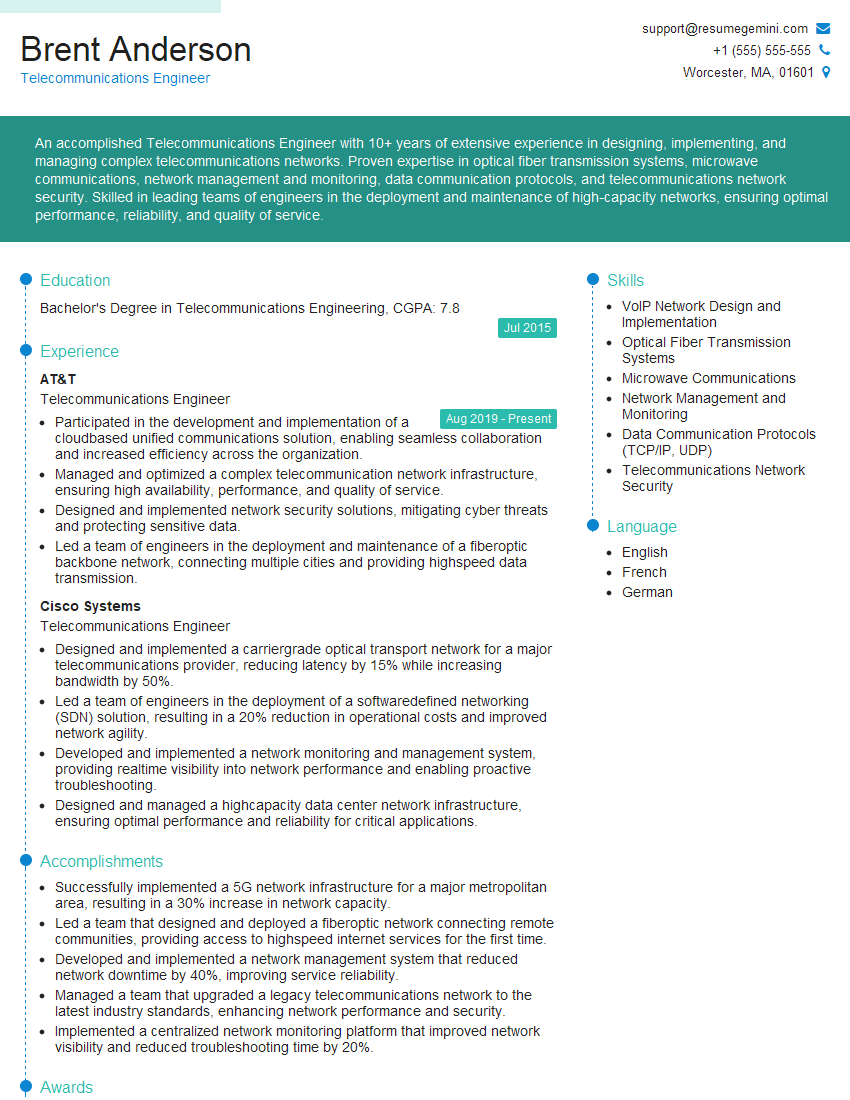
Mastering Cell Performance Analysis is crucial for a successful career in fields like drug discovery, biotechnology, and fundamental biological research. A strong understanding of these concepts will significantly enhance your interview performance and open doors to exciting opportunities. To further improve your job prospects, creating an ATS-friendly resume is essential. ResumeGemini is a trusted resource that can help you build a professional and impactful resume, tailored to showcase your skills and experience effectively. Examples of resumes tailored to Cell Performance Analysis are available to help you get started.
Explore more articles
Users Rating of Our Blogs
Share Your Experience
We value your feedback! Please rate our content and share your thoughts (optional).
What Readers Say About Our Blog
To the interviewgemini.com Webmaster.
Very helpful and content specific questions to help prepare me for my interview!
Thank you
To the interviewgemini.com Webmaster.
This was kind of a unique content I found around the specialized skills. Very helpful questions and good detailed answers.
Very Helpful blog, thank you Interviewgemini team.