Every successful interview starts with knowing what to expect. In this blog, we’ll take you through the top Cellulose Insulation Installation interview questions, breaking them down with expert tips to help you deliver impactful answers. Step into your next interview fully prepared and ready to succeed.
Questions Asked in Cellulose Insulation Installation Interview
Q 1. What are the different types of cellulose insulation?
Cellulose insulation primarily comes in two forms: loose-fill and blown-in. While both utilize recycled paper as their base material, the application methods differ slightly. Loose-fill cellulose is often installed manually, although specialized machines exist. Blown-in cellulose, the more common type, is pneumatically injected into wall cavities, attics, and floors using specialized machinery. The key difference is in the application process – loose-fill is more labor-intensive for larger projects while blown-in is faster and more efficient for larger spaces.
The type of cellulose you choose will depend on factors like the size of the project, the accessibility of the area, and your budget. Both offer excellent insulation properties.
Q 2. Explain the process of installing cellulose insulation in an attic.
Installing cellulose insulation in an attic involves several crucial steps. First, a thorough inspection is necessary to identify any air leaks or structural issues. Next, we ensure proper ventilation is maintained to prevent moisture buildup – this is critical for the long-term effectiveness of the insulation and to avoid mold growth. Then, using a specialized blower machine, we carefully distribute the cellulose evenly across the attic floor, reaching the desired depth to achieve the target R-value. The machine will inject the cellulose, ensuring consistent coverage and minimizing settling over time. Finally, we inspect the installation to ensure uniform distribution and address any areas requiring additional material. Proper preparation and attention to detail are key to an effective attic insulation project.
Q 3. How do you ensure proper air sealing during cellulose insulation installation?
Air sealing is paramount for maximizing the energy efficiency of cellulose insulation. Before installing the cellulose, we meticulously seal any gaps, cracks, or openings in the attic structure using appropriate sealant materials. This includes sealing around penetrations like pipes, wires, and chimneys. We also inspect the attic access hatch for any gaps and seal it accordingly. By addressing these air leaks, we prevent energy loss and improve the overall performance of the insulation. Think of it like plugging holes in a bucket – if there are gaps, the water (warm or cool air) will escape, negating the benefit of the insulation (the bucket itself).
Q 4. What safety precautions are essential when working with cellulose insulation?
Safety is paramount when working with cellulose insulation. We always wear appropriate personal protective equipment (PPE), including a respirator (N95 or better) to prevent inhaling cellulose particles, safety glasses to protect our eyes from debris, and gloves to protect our hands. Working in attics can be hazardous, so using a harness and proper fall protection equipment is crucial. We also need to be aware of potential hazards associated with the blower machine and power cords, and maintain good communication among the team. Finally, we’re always mindful of potential asbestos or lead-based paint exposure, testing if needed, and following the appropriate safety measures.
Q 5. Describe the proper equipment and tools for cellulose insulation installation.
The proper equipment for cellulose insulation installation includes a powerful blower machine capable of handling large volumes of cellulose, a hose for delivering the material to the application area, and various tools for preparing the worksite such as shovels for debris removal. We also need protective equipment: respirators, safety glasses, gloves, and potentially a harness and fall protection equipment for attic work. For smaller jobs, hand-packing may be an option, but for most residential jobs, a specialized blower is significantly more efficient. The choice of equipment will vary based on the scope and location of the project.
Q 6. How do you calculate the R-value of cellulose insulation?
The R-value of cellulose insulation depends on its density and moisture content. A higher density generally results in a higher R-value. Manufacturers provide R-value data based on the installed density. For example, cellulose insulation installed at a density of 3.5 pounds per cubic foot (pcf) typically offers an R-value of around R-3.7 per inch. To calculate the overall R-value of your insulation, simply multiply the R-value per inch by the total thickness of the insulation in inches. For instance, 6 inches of R-3.7 cellulose would provide an R-value of approximately R-22. It’s always crucial to refer to the manufacturer’s specifications for the most accurate R-value based on the specific product and its density.
Q 7. What are the benefits of using cellulose insulation compared to other types?
Cellulose insulation offers several advantages over other insulation types. It’s highly effective at reducing energy loss, leading to lower utility bills and a smaller carbon footprint. Its fire-retardant properties contribute to enhanced fire safety. Moreover, it’s a sustainable product made from recycled materials, making it an environmentally friendly choice. Compared to fiberglass, cellulose often provides better sound dampening and is less prone to settling over time. While the initial cost might sometimes be slightly higher, the long-term energy savings and environmental benefits make it a compelling option for many homeowners.
Q 8. How do you handle different densities and settling of cellulose insulation?
Cellulose insulation, while offering excellent thermal performance, does settle over time. This settling, along with variations in density during installation, needs careful management to ensure consistent R-value (resistance to heat flow) across the insulated area. Different densities result from variations in the blowing machine settings or inconsistent material distribution.
We address settling by initially over-insulating by approximately 10-15%, accounting for the expected compression. This ensures that even after settling, the desired R-value is maintained. Monitoring the density during the installation process is crucial; we use density meters to check the insulation’s packed density at various points. If density is inconsistent, we adjust the blower settings, ensuring even distribution. In some cases, we may need to re-blow sections with low density.
Imagine baking a cake – if you don’t add enough ingredients, it won’t rise properly. Similarly, insufficient cellulose leads to uneven insulation and poor thermal performance. Regular checks during installation prevent this from happening. We also inform clients about expected settling and the importance of avoiding attic access after installation to allow the insulation to settle uniformly.
Q 9. Explain the importance of moisture control in cellulose insulation applications.
Moisture control is paramount in cellulose insulation applications because moisture can significantly degrade the insulation’s performance and create a breeding ground for mold and mildew. Wet cellulose loses its insulating properties and can become heavy, potentially leading to structural damage. This is especially important in attics and wall cavities.
We implement several strategies for moisture control. First, we ensure that the area is properly ventilated to prevent moisture buildup. This may involve installing or improving existing ventilation systems. We use vapor barriers in appropriate locations, such as beneath the insulation in exterior walls, to prevent moisture from migrating into the insulation. We also thoroughly inspect the area for any leaks before installation, addressing them to prevent moisture ingress. Finally, we educate the homeowner on proper maintenance to ensure long-term effectiveness.
Think of it like protecting a delicate piece of electronics. You wouldn’t leave it exposed to rain; similarly, cellulose needs protection from moisture to ensure optimal performance and longevity. Proper ventilation and vapor barriers act as this protection.
Q 10. What are the potential health hazards associated with cellulose insulation?
While cellulose insulation is generally considered safe, potential health hazards exist, mainly related to the inhalation of dust and fibers during installation and potential exposure to treated cellulose. Untreated cellulose, made from recycled paper, poses minimal risk. However, treated cellulose contains borates (e.g., borax or boric acid) as fire retardants. While these borates are generally considered safe at the concentrations used, inhalation of excessive dust can cause irritation to the respiratory system in sensitive individuals.
To minimize risks, we always wear appropriate personal protective equipment (PPE), including respirators with HEPA filters, safety glasses, and gloves during installation. We also ensure adequate ventilation during and after installation to minimize dust buildup. We inform clients about potential dust and recommend they avoid the area until it has fully settled. We use equipment that minimizes dust generation, and the cellulose is treated to reduce flammability and dust production. We also provide safety data sheets (SDS) for treated cellulose upon request.
Just like any construction material, precaution is necessary. Proper PPE and ventilation are key to mitigating any potential health concerns during installation.
Q 11. Describe your experience with different types of insulation installation equipment.
My experience encompasses various cellulose insulation installation equipment, from pneumatic blowers to denser, more efficient machines capable of installing loose-fill and blown-in cellulose. I’m proficient with both smaller, portable blowers suitable for smaller jobs and larger, high-capacity machines used for larger commercial projects. I understand the nuances of each machine, including adjusting airflow, density control, and hose management for optimal performance.
I’ve worked with machines from various manufacturers, each with its unique features and capabilities. This experience allows me to adapt to different project requirements, selecting the most appropriate equipment for the job. For instance, for attic installations, we often use a larger blower with long hoses to reach all areas efficiently. For wall cavities, specialized equipment with smaller hoses might be necessary. Proper equipment selection is vital for efficient and quality installation.
My familiarity extends to the maintenance and troubleshooting of these machines. I know how to identify problems, such as clogs or low air pressure, and address them quickly and efficiently to minimize downtime and ensure project completion. Regular maintenance is key for prolonging the lifespan of equipment and ensuring effective performance.
Q 12. How do you address uneven surfaces during cellulose insulation installation?
Uneven surfaces present a challenge in cellulose insulation installation because it can lead to inconsistent density and reduced thermal performance in certain areas. We address this by carefully assessing the surface before installation and taking necessary steps to ensure even distribution. This might involve using temporary baffles or other methods to fill gaps and create a more even surface.
For example, if we encounter gaps around pipes or wiring, we strategically use smaller amounts of cellulose to fill those areas first, ensuring that these don’t become areas of lower density. We may also use specialized tools or techniques to better direct the airflow into areas that are difficult to reach. In extreme cases where the surface irregularities are significant, we may consider adding a layer of leveling material before the cellulose installation. Regular density checks throughout the process are crucial to ensure the even distribution of the insulation.
Think of it like plastering a wall; you need a smooth base to ensure a uniform finish. Addressing uneven surfaces before installing the cellulose guarantees consistent insulation density and efficiency.
Q 13. Explain your troubleshooting experience with cellulose insulation installations.
Troubleshooting is a crucial aspect of cellulose insulation installation. I have experience resolving various issues, including equipment malfunctions (e.g., blower problems, hose blockages), inconsistent density, and unexpected moisture. For instance, if the density is uneven, we check the blower settings, hose configurations, and the insulation’s moisture content. If the blower malfunctions, we identify the issue, make necessary repairs or replacements, and complete the installation without compromising quality.
If we encounter excessive moisture, we investigate the source, often finding leaks in the roof or walls that need to be repaired before continuing with the insulation. In cases where the insulation settles unevenly after a period of time, I would assess the situation, determining if additional insulation is needed to reach the appropriate R-value. This could involve partially removing the existing insulation, and carefully re-installing the cellulose, ensuring uniform density. Documentation of the troubleshooting process, including any issues and their solutions, is kept for reference and project transparency.
Problem-solving in this field relies on understanding the physics of insulation, equipment operation, and moisture dynamics. Careful observation, logical deduction, and attention to detail are vital for effectively addressing any issues that arise.
Q 14. How do you determine the appropriate amount of cellulose insulation needed for a project?
Determining the appropriate amount of cellulose insulation involves several factors: the R-value required, the dimensions of the space being insulated, and the desired density of the insulation. We start by obtaining detailed measurements of the area to be insulated. Then, we consult building codes and energy efficiency guidelines to determine the required R-value for the specific climate and building type.
We use specialized calculation tools and software to determine the volume of the space and calculate the amount of cellulose needed to achieve the desired R-value and density. These calculations consider factors like the type of cellulose being used, its settling rate, and any existing insulation. This ensures we order the precise amount of material needed, avoiding waste and ensuring that the insulation meets the project requirements.
For example, if we are insulating an attic with a required R-value of 49, we would calculate the volume of the attic space, factoring in any obstructions. We then use the appropriate density for the chosen cellulose type to determine the cubic feet of cellulose needed to achieve the target R-value. This is a very precise process, and careful calculations are necessary to obtain optimal performance and avoid extra costs.
Q 15. What are the common challenges you’ve encountered during cellulose insulation projects?
Common challenges in cellulose insulation projects often revolve around access, existing conditions, and material handling. Access issues can include navigating tight spaces in attics or crawl spaces, requiring careful planning and specialized equipment. Existing conditions, such as wiring, plumbing, or pest infestations, demand extra caution and may necessitate adjustments to the installation plan. Material handling involves efficiently managing the delivery, storage, and blowing of the cellulose, minimizing waste and ensuring even distribution. For example, I once encountered a project where extensive wiring in an older home made it crucial to meticulously map the location of every wire before blowing insulation to avoid damage. We used a combination of visual inspection and the client’s blueprints to achieve a safe and successful installation.
- Difficult Access: Narrow openings, low ceilings, and obstacles can impede efficient insulation placement.
- Existing Building Conditions: Pre-existing issues like pest infestations, deteriorated structures, or improperly installed wiring require careful consideration.
- Material Handling: Managing the bulk delivery, storage, and controlled application of cellulose requires efficient logistics and specialized equipment.
Career Expert Tips:
- Ace those interviews! Prepare effectively by reviewing the Top 50 Most Common Interview Questions on ResumeGemini.
- Navigate your job search with confidence! Explore a wide range of Career Tips on ResumeGemini. Learn about common challenges and recommendations to overcome them.
- Craft the perfect resume! Master the Art of Resume Writing with ResumeGemini’s guide. Showcase your unique qualifications and achievements effectively.
- Don’t miss out on holiday savings! Build your dream resume with ResumeGemini’s ATS optimized templates.
Q 16. How do you maintain the quality and efficiency of your work?
Maintaining quality and efficiency involves a multi-pronged approach focusing on meticulous planning, skilled execution, and diligent quality control. Before any project, we conduct a thorough site assessment to accurately calculate material needs, identify potential challenges, and develop a detailed installation plan. This includes careful consideration of the building’s specific characteristics, including its age, construction materials, and existing insulation. On-site, we utilize advanced insulation blowing equipment ensuring uniform density and preventing settling. Our team receives continuous training on best practices, including safety protocols, proper equipment operation, and the latest techniques for optimal insulation performance. Post-installation inspections verify our work meets the highest standards, ensuring a successful and energy-efficient outcome. For example, using moisture meters to check for the presence of excess moisture is a crucial step in our quality control procedures.
Q 17. Explain your knowledge of building codes and regulations related to insulation.
My understanding of building codes and regulations related to insulation is thorough and up-to-date. I’m familiar with the International Energy Conservation Code (IECC) and local variations, which specify minimum insulation R-values for different climates and building types. I know the requirements for fire-resistance ratings and air-sealing practices in relation to insulation installation, plus the crucial importance of complying with OSHA safety regulations concerning working at heights or in confined spaces. For instance, I always ensure sufficient ventilation is in place when working in attics or crawlspaces to maintain breathable air quality and avoid exposure to harmful dust and materials. We maintain comprehensive documentation and always ensure our work meets, and often exceeds, all applicable building codes. In situations where codes are unclear or complex, we consult with local building inspectors to guarantee compliance.
Q 18. Describe your experience working with different types of building materials.
My experience working with various building materials is extensive. I’ve worked extensively with wood framing, metal studs, concrete, and various types of drywall. Understanding the interaction between cellulose insulation and these materials is crucial for successful and safe installation. For example, the way I approach installing cellulose in a wood-framed attic differs significantly from how I’d work in a structure with metal framing. Knowledge of moisture barriers, vapor retarders, and air sealing techniques is essential, as these elements work in concert with insulation to create a high-performance building envelope. I have experience working with both new construction and renovations, adapting my techniques to the specific requirements of each project.
Q 19. How do you prioritize safety on a cellulose insulation installation project?
Safety is paramount in our operations. We strictly adhere to OSHA regulations and maintain a proactive safety culture. This includes mandatory safety training for all team members, the use of appropriate personal protective equipment (PPE), such as respirators, safety glasses, and hearing protection. Before each project, we conduct a thorough job-site safety analysis, identifying and mitigating potential hazards. Proper lifting techniques and the use of safety harnesses in attics or high-access areas are also critical parts of our safety protocol. For example, we always utilize fall protection equipment when working at heights and regularly inspect our equipment for potential malfunctions. Regular safety meetings and incident reporting are key to maintaining a safe and productive work environment.
Q 20. Describe your experience with working in confined spaces or at heights during insulation.
Working in confined spaces or at heights demands specialized training and safety precautions. When working in attics or crawl spaces, we use appropriate lighting, ventilation, and communication systems to ensure a safe working environment. We always have backup personnel present, and we have emergency escape plans in place. For high-access work, we utilize proper fall protection equipment, including harnesses and safety lines, and we ensure our scaffolding is securely set up and inspected. In both confined spaces and at heights, we emphasize slow and careful work to avoid injury. Team members are thoroughly trained in the proper use of all safety equipment, and regular checks ensure everything is functioning correctly. For example, we never enter a confined space without first testing the air quality and having a spotter outside.
Q 21. How do you manage time and resources effectively during cellulose insulation projects?
Effective time and resource management is critical for successful cellulose insulation projects. We meticulously plan each project, accounting for material quantities, labor hours, and potential delays. This includes coordinating deliveries, scheduling crews, and securing necessary permits. We employ project management software to track progress, manage resources, and maintain communication amongst the team. We utilize advanced blowing equipment to maximize installation speed while maintaining quality. By effectively managing resources and minimizing downtime, we ensure projects are completed on schedule and within budget. For example, accurate pre-job site surveys help us to accurately calculate material needs and avoid unnecessary delays due to material shortages.
Q 22. What are the environmental benefits of using cellulose insulation?
Cellulose insulation, made primarily from recycled paper, offers significant environmental advantages over other insulation materials. Its production process uses far less energy than the manufacturing of fiberglass or foam insulation, resulting in a smaller carbon footprint. Furthermore, the use of recycled paper diverts waste from landfills, contributing to a circular economy. The material itself is also biodegradable and non-toxic, making it a much more environmentally friendly option for homeowners and builders concerned about sustainability. For example, using cellulose insulation in a new home construction project directly reduces the amount of new materials needed, thereby lowering the embodied carbon associated with the project.
Q 23. Describe your experience with different types of cellulose insulation installation techniques.
My experience encompasses various cellulose insulation installation techniques, including loose-fill and blown-in methods. Loose-fill involves manually placing the insulation into wall cavities or attics, suitable for smaller projects or hard-to-reach areas. However, for larger-scale projects, blown-in installation, using specialized machinery, is significantly more efficient. This equipment precisely distributes the cellulose, ensuring even coverage and optimal thermal performance. I’ve also worked with wet-spray cellulose, a technique that involves mixing the cellulose with a borate solution to enhance fire resistance and pest control before being blown into the cavity. Each method requires careful attention to detail; proper preparation of the area, ensuring consistent density, and appropriate air sealing to maximize insulation performance. For instance, when using the blown-in method, careful consideration must be given to the air pressure and blower nozzle size to avoid over-packing or uneven distribution.
Q 24. What is your experience with inspecting and maintaining cellulose insulation installations?
Inspecting and maintaining cellulose insulation involves a multi-faceted approach. Visual inspections often reveal issues such as settling or areas of insufficient insulation. I utilize thermal imaging cameras to identify cold spots, indicating potential gaps or inadequacies in the insulation layer. Moisture content is also crucial; high moisture levels can lead to mold growth and reduced insulating effectiveness. I use moisture meters to assess the condition of the insulation. In some cases, a small sample may need to be taken for further laboratory analysis. Addressing problems quickly prevents larger, more expensive problems down the line. For example, discovering a small area of settling during an annual inspection allows for targeted re-insulation, preventing heat loss and maintaining energy efficiency.
Q 25. How do you ensure the proper disposal of cellulose insulation waste?
Proper disposal of cellulose insulation waste is paramount. I strictly adhere to local regulations and prioritize recycling whenever possible. Contaminated cellulose insulation, which may contain asbestos or other hazardous materials, requires specialized handling and disposal according to EPA guidelines. For non-contaminated cellulose, many recycling centers accept it for processing and reuse in other applications. Clean-up procedures must meticulously remove any debris and ensure no material is left behind that could be a hazard. I always document disposal methods and retain proof of responsible waste management in compliance with all environmental regulations.
Q 26. Describe your experience collaborating with other tradespeople on construction projects.
Collaboration with other tradespeople is fundamental in construction. Effective communication and coordination with framers, electricians, plumbers, and drywallers are crucial to ensure a seamless and successful project. I routinely participate in pre-construction meetings to coordinate insulation installation with other tasks, avoiding conflicts and scheduling delays. On one recent project, close collaboration with the framers ensured that the cavities were properly prepared for the blown-in cellulose insulation, resulting in a faster and more efficient installation process. Open communication and mutual respect guarantee a smooth workflow and a successful outcome for all parties involved.
Q 27. Explain your understanding of the impact of cellulose insulation on energy efficiency.
Cellulose insulation significantly impacts energy efficiency by reducing heat transfer through walls, roofs, and floors. Its high R-value (a measure of thermal resistance) effectively minimizes heat loss during winter and heat gain during summer, directly translating to lower energy bills. A properly installed cellulose insulation layer acts as a thermal barrier, preventing energy waste and creating a more comfortable indoor environment. In a recent project, the addition of cellulose insulation resulted in a 30% reduction in energy consumption, a significant improvement for the homeowner. This demonstrates the powerful impact of effective insulation on reducing energy usage and environmental impact.
Q 28. How do you stay updated on the latest advancements and best practices in cellulose insulation installation?
Staying updated on advancements and best practices is crucial in this field. I actively participate in industry conferences, workshops, and training programs offered by organizations such as the Insulation Contractors Association of America (ICAA). I regularly review industry publications, journals, and online resources to stay abreast of new technologies, materials, and installation techniques. Manufacturer training and certification programs are also valuable resources. This continuous learning ensures that I am using the most current best practices and applying the latest advancements in cellulose insulation to provide clients with optimal results, including the safest and most efficient methods.
Key Topics to Learn for Cellulose Insulation Installation Interview
- Understanding Cellulose Insulation: Types of cellulose insulation (recycled paper, etc.), R-value and its significance, benefits and limitations compared to other insulation materials.
- Installation Techniques: Proper equipment usage (blowing machines, safety gear), techniques for achieving even distribution and avoiding voids, working with different building structures (attics, walls, floors).
- Safety Procedures: Understanding and adhering to OSHA safety regulations, handling and disposal of materials, personal protective equipment (PPE) usage, awareness of potential hazards (dust, confined spaces).
- Material Handling and Calculations: Accurately estimating material needs based on project specifications, efficient loading and unloading procedures, minimizing waste.
- Moisture Control and Air Sealing: The importance of air sealing prior to insulation, understanding moisture barriers and their role in preventing mold and mildew, identifying potential moisture issues.
- Troubleshooting and Problem Solving: Identifying and resolving common installation issues (uneven distribution, settling, air leaks), understanding the impact of incorrect installation techniques on building performance.
- Building Codes and Regulations: Familiarity with local building codes and regulations pertaining to insulation installation, understanding energy efficiency standards and their relevance.
- Environmental Impact: Understanding the environmental benefits of cellulose insulation (recycled content, reduced energy consumption), sustainable practices in installation and disposal.
Next Steps
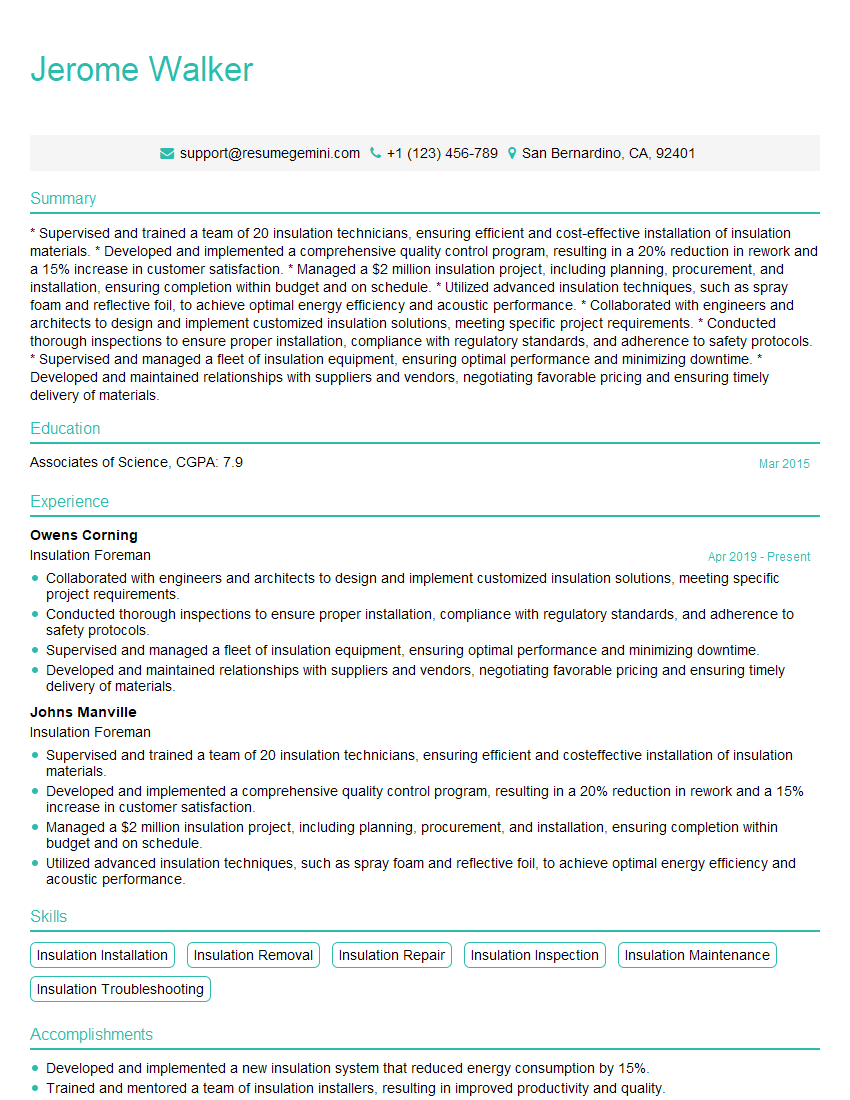
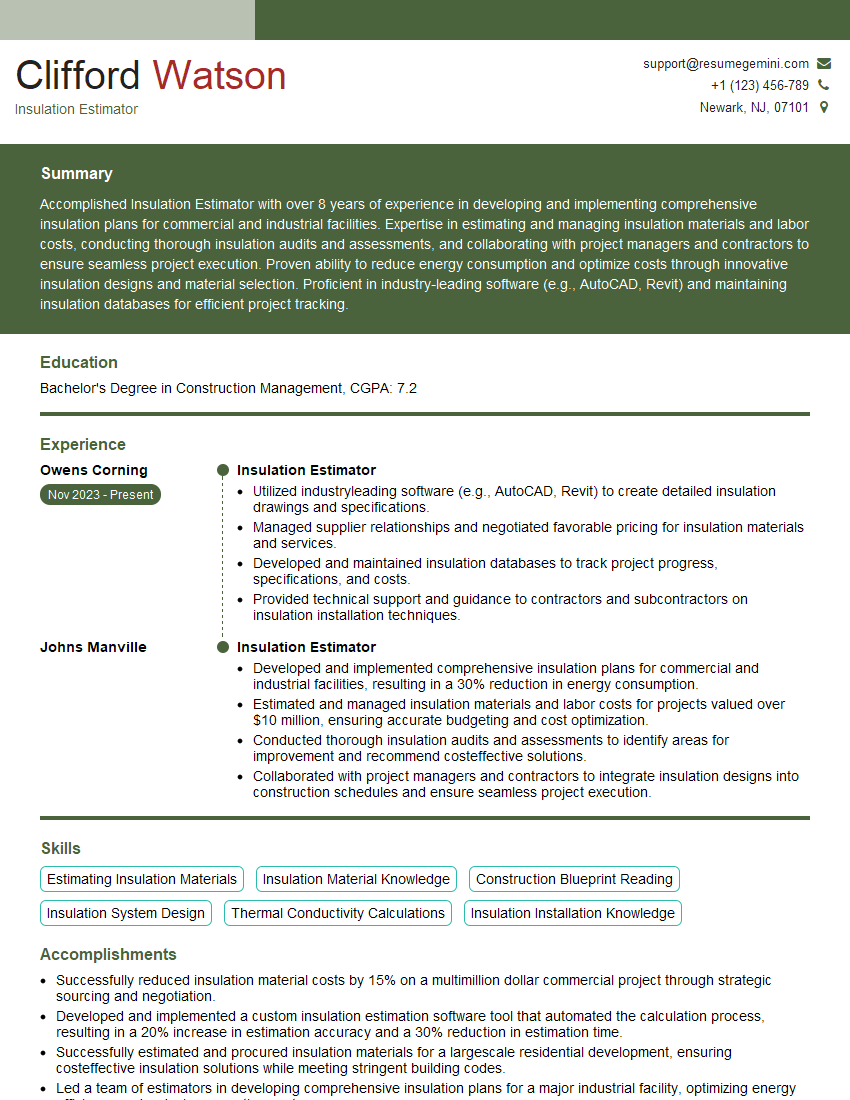
Mastering cellulose insulation installation opens doors to a rewarding career with strong earning potential and consistent demand. The construction industry is constantly evolving, and professionals skilled in energy-efficient techniques are highly sought after. To maximize your job prospects, create a compelling resume that highlights your skills and experience effectively. An ATS-friendly resume is crucial for getting past applicant tracking systems and landing interviews. We strongly recommend using ResumeGemini to build a professional and impactful resume. ResumeGemini offers helpful tools and resources, including examples of resumes tailored to Cellulose Insulation Installation, to help you present yourself in the best possible light.
Explore more articles
Users Rating of Our Blogs
Share Your Experience
We value your feedback! Please rate our content and share your thoughts (optional).
What Readers Say About Our Blog
To the interviewgemini.com Webmaster.
Very helpful and content specific questions to help prepare me for my interview!
Thank you
To the interviewgemini.com Webmaster.
This was kind of a unique content I found around the specialized skills. Very helpful questions and good detailed answers.
Very Helpful blog, thank you Interviewgemini team.