Preparation is the key to success in any interview. In this post, we’ll explore crucial Chest X-ray Acquisition interview questions and equip you with strategies to craft impactful answers. Whether you’re a beginner or a pro, these tips will elevate your preparation.
Questions Asked in Chest X-ray Acquisition Interview
Q 1. Explain the ALARA principle and its application in chest X-ray acquisition.
The ALARA principle, which stands for As Low As Reasonably Achievable, is a fundamental guideline in radiation protection. It emphasizes minimizing radiation exposure to patients and personnel during any radiological procedure, including chest X-rays, while still achieving the diagnostic goal. This isn’t about eliminating radiation entirely – that’s impossible – but about reducing it to the lowest level possible, balancing the benefits of the exam with the risks of radiation exposure.
In chest X-ray acquisition, ALARA is implemented through several strategies: optimizing technical factors (kVp and mAs – see question 3), proper collimation (see question 5), using appropriate shielding (lead aprons for personnel), and ensuring correct patient positioning (see question 4). For example, if a higher kVp setting allows us to use a lower mAs, resulting in a similar image quality, we choose the higher kVp/lower mAs setting because it reduces the patient’s radiation dose. Every effort to minimize radiation exposure, without compromising the diagnostic image, adheres to the ALARA principle.
Q 2. Describe the different types of chest X-ray projections (PA, AP, lateral).
Chest X-rays are typically acquired using three main projections: Posterior-Anterior (PA), Anterior-Posterior (AP), and Lateral.
- PA (Posterior-Anterior): The X-ray beam enters the patient’s back (posterior) and exits the front (anterior). This is the preferred projection for chest X-rays because the heart is magnified less than in an AP view, and the lung fields are more evenly displayed. The patient stands facing the detector.
- AP (Anterior-Posterior): The X-ray beam enters the patient’s front (anterior) and exits the back (posterior). This projection is used when a patient is unable to stand, such as in bedridden situations. The heart appears larger, and the lung fields can be more obscured than in a PA view.
- Lateral: The X-ray beam enters one side of the patient’s chest (usually the left side) and exits the opposite side. This view is essential for identifying lesions or abnormalities that may be hidden or superimposed in PA or AP projections. It provides better visualization of posterior structures of the chest.
Often, a PA and a lateral view are obtained together to provide a comprehensive evaluation.
Q 3. What are the optimal technical factors (kVp, mAs) for a standard PA chest X-ray?
Optimal technical factors for a standard PA chest X-ray are not fixed values and depend on several factors, including the patient’s body habitus (size and build), the type of X-ray equipment, and the specific image receptor used. However, typical ranges are:
- kVp (Kilovoltage Peak): 110-125 kVp. This setting controls the penetrating power of the X-ray beam; a higher kVp results in greater penetration.
- mAs (Milliampere-seconds): This controls the quantity of X-rays produced. The precise mAs will be adjusted based on the patient’s size and the desired image density. A larger patient will generally require a higher mAs than a smaller patient to achieve adequate penetration and image brightness. A typical range might be 2-4 mAs for an average adult.
The goal is to find the combination of kVp and mAs that provides a diagnostic image with optimal contrast and density while minimizing radiation exposure. This often involves using a higher kVp with a lower mAs to reduce patient dose, as mentioned in relation to the ALARA principle.
Q 4. How do you ensure proper patient positioning for a chest X-ray?
Proper patient positioning is crucial for obtaining a diagnostic chest X-ray. Incorrect positioning leads to image distortion and misdiagnosis. For a PA chest X-ray:
- Stand upright: The patient should stand erect, with their shoulders relaxed and arms down at their sides. This ensures the lung fields are fully expanded and minimizes image distortion.
- Chest against the image receptor: The patient’s chest should be in full contact with the imaging plate or cassette, ensuring even exposure and minimizing magnification.
- Chin up: The chin should be slightly elevated to prevent the apices of the lungs from being obscured by the clavicles.
- Deep inspiration: The patient should take a deep breath and hold it during the exposure to expand the lungs completely. This is crucial for visualizing small lesions and reducing the potential for misdiagnosis.
For AP and lateral projections, adjustments are made based on the patient’s limitations or the needs of the examination. Precise instructions and verification before image acquisition are critical steps to ensure a successful examination.
Q 5. Explain the importance of collimation in chest X-ray acquisition.
Collimation refers to restricting the size of the X-ray beam to the area of interest. In chest X-rays, it means confining the beam to the size of the patient’s chest. This is essential for:
- Reducing scatter radiation: A smaller beam reduces the amount of scattered radiation, which can degrade image quality and increase radiation exposure to the patient.
- Improving image contrast: Reducing scatter improves image contrast, making it easier to identify subtle abnormalities.
- Minimizing radiation dose: Restricting the beam to the area of interest reduces the amount of radiation exposure to areas outside the region of interest, reducing the patient’s overall dose and adhering to the ALARA principle.
Proper collimation should be performed before every chest X-ray. The collimator should be adjusted to encompass only the lungs and surrounding structures. The edges of the collimated field should be visible on the final image.
Q 6. What are the common artifacts seen in chest X-rays and how can they be minimized?
Several artifacts can appear on chest X-rays. These are undesirable features that can obscure or mimic pathology. Some common artifacts and how to minimize them:
- Motion blur: Caused by patient movement during exposure. Minimized by clear instructions, proper immobilization techniques and using short exposure times.
- Scatter radiation: Degrades image contrast and increases patient dose. Minimized by proper collimation and using grids or other anti-scatter devices.
- Grid lines: Appear as parallel lines on the image if a grid is used and not properly aligned or focused. Minimized by proper grid alignment and focusing.
- Metal artifacts: Caused by metallic objects in the field of view (jewelry, clothing clips). Minimized by patient preparation, removal of metallic items before the examination.
- Shadows from positioning aids: Positioning aids should be removed from the field of view.
Careful attention to detail during the entire process – from patient preparation to image acquisition and processing – is vital in minimizing artifacts.
Q 7. How do you identify and respond to a potential equipment malfunction during a chest X-ray procedure?
Equipment malfunctions during a chest X-ray procedure can range from minor inconveniences to serious safety concerns. Prompt identification and response are crucial.
Identifying a malfunction: Symptoms may include:
- Failure to produce an image: Check power supply, exposure settings, and image receptor function.
- Erratic exposure: Check machine settings and potentially for electrical faults.
- Unusual noises or smells: Indicates possible overheating or mechanical problems – immediately discontinue use.
- Image quality issues: Check for artifacts, such as consistent underexposure or overexposure, suggesting a problem with machine settings, tube function or image receptor.
Responding to a malfunction:
- Immediately stop the procedure: Ensure patient safety is prioritized.
- Assess the situation: Determine the nature and severity of the problem.
- Inform relevant personnel: Notify the supervising radiologist and biomedical engineering department.
- Do not attempt repairs: Unless you are qualified to do so, avoid any attempts at repairing the equipment; this may worsen the problem.
- Document the incident: Record all details of the malfunction and steps taken.
A well-maintained system, regular quality control checks and appropriate safety protocols are crucial in preventing equipment malfunctions.
Q 8. Describe the steps involved in performing a portable chest X-ray.
Performing a portable chest X-ray involves adapting the standard procedure to a patient’s location, often their bedside. It requires meticulous attention to detail, as the environment may not be ideal.
- Patient Preparation: Explain the procedure clearly and ensure the patient is comfortable and positioned correctly. Remove any metallic objects from the area being X-rayed.
- Equipment Setup: The portable X-ray machine is wheeled to the patient’s location. The image receptor (cassette or digital detector) needs to be properly positioned, ensuring it’s parallel to the patient’s chest and centered. This might involve adjusting the bed or patient’s position.
- Image Acquisition: The radiographer sets the appropriate technical factors (kVp and mAs) based on the patient’s size and condition. This step necessitates careful consideration since portable units often have less precise control than fixed units. The exposure is made, ensuring minimal movement from the patient.
- Image Review: A quick check of the image is conducted on the portable unit’s screen to assess for adequate penetration, positioning and artifacts. If necessary, repeat exposures are taken.
- Post-procedure: The equipment is carefully stored and cleaned after use. The image is then sent to the PACS (Picture Archiving and Communication System) for viewing by the radiologist.
For instance, in a busy ICU, I’ve had to perform portable chest X-rays on patients attached to multiple monitors and intravenous lines. This requires careful planning and collaboration with the nursing staff to ensure safe positioning and minimal disruption to patient care.
Q 9. What safety precautions should be taken when performing a chest X-ray?
Safety is paramount in any radiological procedure. Portable chest X-rays demand heightened awareness due to the less-controlled environment.
- Radiation Safety: The ALARA principle (As Low As Reasonably Achievable) is strictly followed. This involves optimizing technical factors to minimize radiation dose to both the patient and the radiographer. Lead aprons and thyroid shields are worn by the radiographer and anyone else in the vicinity. The radiographer should maintain a safe distance during exposure and employ the inverse square law (reducing intensity with distance).
- Patient Safety: Ensure the patient is comfortable and understands the procedure. Proper positioning and immobilization are crucial to minimize patient movement and reduce the risk of repeat exposures. Care must be taken to avoid placing heavy equipment on patients or causing them discomfort.
- Equipment Safety: Regular equipment checks, including the safety interlocks and emergency stop mechanism, are critical. The power cord should be inspected for damage, and the wheels secured to prevent accidental movement during exposure.
- Infection Control: Standard precautions are implemented, such as hand hygiene and the use of appropriate personal protective equipment (PPE) to prevent the spread of infection.
An example would be ensuring the lead apron is properly positioned, covering the reproductive organs and thyroid gland, before every exposure, regardless of patient gender or age. This constant vigilance minimizes unnecessary radiation exposure.
Q 10. Explain the difference between digital and film-based chest X-ray imaging.
The main difference between digital and film-based chest X-ray imaging lies in the way the image is captured and stored. Film-based systems use X-ray film to capture the image which is then processed chemically, while digital systems use a digital detector to capture the image as electronic data. This fundamental difference leads to numerous advantages for digital systems.
- Image Acquisition: Film requires chemical processing, resulting in delays and potential for errors. Digital systems provide instantaneous image display and reduce the need for chemicals and darkroom processing.
- Image Quality: Digital systems offer better image quality, higher contrast resolution, and wider dynamic range, allowing for better visualization of subtle details. Post-processing allows for adjustments in brightness and contrast.
- Image Management: Digital images are stored electronically in a PACS, easily accessible from multiple locations. Film images require physical storage, which is space-consuming and prone to damage. Digital systems enable easier image sharing and remote consultation.
- Cost-effectiveness: While the initial investment in digital equipment is higher, long-term costs are often lower due to reduced chemical usage, film storage requirements and increased efficiency.
Think of it like comparing a photograph taken with a traditional film camera versus a digital camera. The digital camera provides immediate results, easy sharing and editing, and greater flexibility.
Q 11. How do you manage a patient who is claustrophobic or anxious during a chest X-ray?
Managing a claustrophobic or anxious patient during a chest X-ray requires a calm, empathetic, and patient-centered approach. Building trust is key.
- Communication: Explain the procedure clearly and simply, emphasizing that the X-ray itself is quick and painless. Address the patient’s concerns openly and honestly.
- Environmental Modifications: If possible, perform the X-ray in a less confined space, allowing for better ventilation and reduced feelings of enclosure. Dim lighting can also be helpful.
- Positioning: Ensure the patient is positioned in a way that maximizes their comfort. Encourage them to take deep breaths and relax.
- Distraction Techniques: Offer distractions such as conversation, music, or a calming image. A family member or friend present could also offer comfort.
- Medication: In some cases, light sedation may be necessary, but this should only be done after careful consideration and with the approval of a physician.
For example, I’ve had a patient who was terrified of enclosed spaces. By letting them choose their preferred music and explaining each step of the procedure, reassuring them throughout the process, we were able to complete the X-ray without incident. The key was clear communication and building a sense of trust.
Q 12. Describe the process of image evaluation and quality control for chest X-rays.
Image evaluation and quality control for chest X-rays is a critical step ensuring accurate diagnosis. This involves several stages.
- Technical Assessment: The image is first reviewed for technical quality. This includes evaluating factors like penetration (proper grayscale), positioning (correct centering and rotation), and the presence of artifacts (e.g., motion blur, scatter radiation). Poor technical quality can lead to misinterpretations.
- Anatomical Evaluation: The image is then carefully examined for anatomical landmarks. This involves systematically assessing the various structures of the chest (lungs, heart, blood vessels, bones). This systematic approach helps to ensure that no critical details are missed.
- Pathological Interpretation: The radiologist finally interprets the image for any pathological findings, such as pneumonia, pneumothorax, or fractures. This is where the clinical context plays an important role and is generally more challenging.
- Quality Control Measures: Regular quality control tests are performed on the X-ray equipment, including radiation output checks, image receptor performance testing, and repeat rate monitoring. These measures help to ensure consistency and reliability of image acquisition.
Imagine a chest X-ray showing a subtle pneumothorax (collapsed lung). An expertly performed and evaluated chest X-ray would allow quick identification of this life-threatening condition. Poor quality control or careless review could cause a delayed or missed diagnosis.
Q 13. What are the legal and ethical considerations involved in chest X-ray acquisition?
Chest X-ray acquisition involves numerous legal and ethical considerations, primarily revolving around patient safety, confidentiality, and professional conduct.
- Informed Consent: Obtaining informed consent from the patient before the procedure is mandatory. The patient should understand the purpose, procedure, risks, and benefits of the X-ray.
- Confidentiality: Patient information, including X-ray images and reports, must be kept strictly confidential and only shared with authorized personnel. Adherence to HIPAA (in the USA) or equivalent regulations is crucial.
- Radiation Safety: The ALARA principle and appropriate radiation safety protocols must be followed rigorously to minimize radiation exposure. Failure to do so may lead to legal repercussions.
- Professional Conduct: Radiographers must adhere to the highest professional standards, including accurate record-keeping, proper image acquisition techniques, and ethical conduct in their interactions with patients.
- Image Integrity: Images must not be altered or manipulated in any way that might affect diagnosis. Any post-processing must be clearly documented.
A scenario involving a breach of patient confidentiality, like inadvertently sharing X-ray images with an unauthorized individual, carries significant legal and ethical consequences, potentially resulting in penalties or disciplinary action.
Q 14. Explain the role of PACS in chest X-ray management.
PACS (Picture Archiving and Communication System) plays a vital role in the efficient management of chest X-rays. It’s a centralized system for storing, retrieving, and distributing medical images.
- Image Storage: PACS provides a secure, centralized repository for storing digital chest X-rays, eliminating the need for bulky film storage. Images are easily accessible from various locations.
- Image Retrieval: Radiologists and other healthcare professionals can quickly access and view chest X-rays from any computer connected to the PACS, improving efficiency in diagnosis.
- Image Distribution: PACS facilitates the sharing of images with other healthcare providers, including referring physicians and specialists, facilitating collaboration and improved patient care.
- Workflow Optimization: PACS streamlines the workflow associated with chest X-rays, automating tasks such as image routing and reporting. This can reduce turnaround time for diagnosis and improve overall departmental efficiency.
- Image Management: PACS supports advanced image management features like image annotation, measurements, and comparison studies. This enables better analysis and documentation.
Imagine a situation where a patient requires urgent care at a remote facility. With PACS, their chest X-ray images are instantly available to specialists for immediate diagnosis and treatment, which can greatly affect the patient outcome.
Q 15. How do you interpret the basic anatomical structures visualized on a chest X-ray?
Interpreting a chest X-ray involves systematically analyzing the various anatomical structures. Think of it like reading a map of the chest. We look for the expected position, size, and shape of key structures. We start with the basics:
- Lungs: We assess lung fields for air-filled lucency (blackness). The lung markings (blood vessels and bronchi) should be relatively symmetric and evenly distributed. Any opacities (whiteness) indicate consolidation or fluid.
- Heart: The heart shadow should be appropriately sized for the patient. We assess its shape and position, noting any enlargement or displacement.
- Diaphragm: We check for the smooth, curved appearance of the diaphragmatic domes, which separate the lungs from the abdomen. Their position can indicate lung expansion or abdominal issues.
- Mediastinum: This central area contains the heart, great vessels, trachea, and esophagus. We examine this region for any masses or widening.
- Bones: The ribs, clavicles, and spine are evaluated for fractures, deformities, or any erosion.
- Soft Tissues: We assess the soft tissues surrounding the chest wall for any masses or abnormalities.
Experienced radiologists use this systematic approach to build a comprehensive image of the patient’s chest anatomy.
Career Expert Tips:
- Ace those interviews! Prepare effectively by reviewing the Top 50 Most Common Interview Questions on ResumeGemini.
- Navigate your job search with confidence! Explore a wide range of Career Tips on ResumeGemini. Learn about common challenges and recommendations to overcome them.
- Craft the perfect resume! Master the Art of Resume Writing with ResumeGemini’s guide. Showcase your unique qualifications and achievements effectively.
- Don’t miss out on holiday savings! Build your dream resume with ResumeGemini’s ATS optimized templates.
Q 16. What are the common pathologies seen on chest X-rays?
Chest X-rays reveal a wide spectrum of pathologies. Some of the most common include:
- Pneumonia: Lung infection causing alveolar consolidation (opacification) and often pleural effusion.
- Pulmonary Edema: Fluid buildup in the lungs, often appearing as increased interstitial markings (blurring) and air bronchograms (airways visible against a hazy background).
- Pneumothorax: Collapsed lung, visualized as a visceral pleural line separating the lung from the chest wall.
- Pleural Effusion: Fluid in the pleural space, seen as opacification that blunts the costophrenic angle.
- Atelectasis: Collapsed lung tissue, manifesting as opacification or volume loss.
- Lung Cancer: May present as a mass or nodule, often with associated atelectasis or pleural effusion.
- Fractures: Rib fractures are common, appearing as a break in the continuity of a rib.
- Tuberculosis: May appear as cavitary lesions (holes) in the lungs, or as miliary patterns (tiny spots).
It is crucial to remember that a chest X-ray provides only a snapshot. Further investigations are often necessary for confirmation of diagnosis.
Q 17. Describe the appearance of pneumothorax on a chest X-ray.
A pneumothorax, or collapsed lung, presents on a chest X-ray as a visceral pleural line that separates the lung from the chest wall. Imagine a balloon partially deflated inside a larger container; the edge of the deflated balloon is analogous to the visceral pleural line.
Key findings include:
- A line representing the visceral pleura separating a radiolucent (dark) area of air from the lung parenchyma (lung tissue).
- Possible absence of lung markings in the affected area.
- Hyperlucency (increased blackness) in the pleural space.
- Mediastinal shift (displacement of the heart and great vessels) away from the affected side (in cases of a large pneumothorax).
The size and location of the pneumothorax significantly impact its clinical presentation and management.
Q 18. How do you differentiate between pneumonia and pulmonary edema on a chest X-ray?
Differentiating pneumonia from pulmonary edema on a chest X-ray can be challenging, requiring careful assessment of multiple features. Think of it as distinguishing between a clogged pipe (pneumonia) and a flooded pipe (pulmonary edema).
- Pneumonia: Typically shows lobar or segmental consolidation (dense opacification) with air bronchograms (airways visible through the consolidated area). The opacification is often ill-defined with a patchy distribution.
- Pulmonary Edema: Usually exhibits increased interstitial markings (blurring of lung markings) and alveolar opacification that is typically more diffuse and bilateral. Fluid tends to accumulate in the dependent portions of the lungs (lower lobes). Air bronchograms are less common.
Clinical context (patient’s history, symptoms) is crucial. While X-ray provides important clues, it often requires correlation with other investigations such as blood tests and CT scans for a definitive diagnosis.
Q 19. What are the key findings of a pleural effusion on a chest X-ray?
A pleural effusion, or fluid buildup in the pleural space, presents with several characteristic features:
- Blunting of the costophrenic angle (the sharp angle where the diaphragm meets the chest wall becomes rounded or obscured). This is one of the most consistent and reliable findings.
- Opacification (whiteness) in the lower lung fields (the fluid settles in the dependent areas).
- Possible meniscus sign (a concave upper border of the effusion).
- Possible displacement of the mediastinum (heart and great vessels) away from the affected side (in cases of large effusions).
The size and location of the effusion guide the clinical management. Ultrasound can help further characterize the effusion and guide thoracentesis (procedure to remove the fluid).
Q 20. Describe the appearance of atelectasis on a chest X-ray.
Atelectasis, or collapsed lung tissue, can manifest in various ways on a chest X-ray, depending on the size and location of the collapse. It’s like imagining a section of a balloon being squeezed flat.
- Opacification: Increased density (whiteness) in the affected lung area.
- Volume loss: The affected lung area appears smaller than normal, with crowding of adjacent structures.
- Shift of mediastinum: The heart and great vessels may shift towards the side of the atelectasis, particularly in large collapses.
- Elevation of the hemidiaphragm: The diaphragm may be elevated on the affected side.
The appearance varies greatly depending on the extent and location of the atelectasis, ranging from small, localized opacities to massive collapse of a whole lung.
Q 21. How do you identify a fractured rib on a chest X-ray?
Identifying a fractured rib on a chest X-ray is relatively straightforward. Look for a disruption in the smooth, continuous line of the rib cortex.
Key findings include:
- A break in the continuity of the rib bone. The fracture line may be clearly visible or subtle depending on the angle of the X-ray beam.
- Possible angulation or overriding of the rib fragments.
- Callus formation (new bone growth) may be seen in healing fractures (if the image is taken later in the healing process).
It’s important to compare the affected rib with the contralateral (opposite) rib to assess for subtle fractures.
Q 22. Explain the importance of radiation protection for both patients and healthcare workers.
Radiation protection in chest X-ray acquisition is paramount for minimizing the risks associated with ionizing radiation. Both patients and healthcare workers are susceptible to potential harm from exposure, even at low levels. For patients, the goal is to minimize the dose necessary to obtain a diagnostically useful image, balancing image quality with radiation safety. For healthcare workers, the aim is to eliminate or reduce exposure to scattered radiation through careful practices and shielding.
Minimizing patient dose involves optimizing exposure factors (kVp and mAs) specific to the patient’s size and body composition. Techniques like using grids, collimation to limit the field of view, and image processing techniques are also vital. For healthcare workers, this involves following ALARA principles (As Low As Reasonably Achievable), using protective apparel (lead aprons, gloves, thyroid shields), and maintaining a safe distance from the X-ray beam during exposure.
Ignoring these measures can lead to various health problems in the long term, ranging from increased cancer risk to cataracts and skin damage. Therefore, robust radiation protection protocols are not merely a guideline, but a cornerstone of responsible practice.
Q 23. What are the different types of radiation shielding used in chest X-ray acquisition?
Various shielding methods protect against radiation during chest X-ray acquisition. These include:
- Lead aprons: These are the most common type of shielding, providing excellent protection for the reproductive organs and other sensitive areas. They’re designed to absorb the ionizing radiation emitted during the X-ray procedure.
- Lead gloves: Used by technicians during fluoroscopy or procedures requiring manual positioning, these protect the hands and wrists from exposure.
- Thyroid shields: These are collars that protect the thyroid gland, a particularly radiation-sensitive area.
- Lead barriers: These are fixed shields positioned around the X-ray room to block radiation, reducing exposure to both patients and personnel in adjacent areas.
- Protective glasses: Eye protection containing lead components to prevent damage.
The effectiveness of these shields is measured by their lead equivalent, typically expressed in millimeters of lead (mmPb). The thicker and denser the lead equivalent, the more radiation it attenuates.
Q 24. Describe the process of maintaining and calibrating chest X-ray equipment.
Maintaining and calibrating chest X-ray equipment is critical for ensuring image quality and patient safety. Regular preventative maintenance is performed to ensure proper functioning of all components. This includes checking the high-voltage generator, X-ray tube, collimator, and the image receptor. Calibration is essential to maintain accuracy in radiation output and image reproducibility.
The process involves:
- Visual inspection: Checking for any physical damage or wear and tear.
- Performance testing: Verifying that all technical specifications are met; this might involve measuring the radiation output, beam alignment, and image quality.
- Calibration using phantoms: These are standardized objects used to assess the accuracy of the X-ray system. They help verify proper exposure settings and image consistency.
- Software updates and quality control: Ensuring the image processing software is up-to-date and performs optimally.
- Documentation: Maintaining thorough records of all maintenance and calibration activities.
Failure to calibrate and maintain the equipment can result in suboptimal image quality (leading to misdiagnosis), inconsistent exposure levels, and potential safety hazards. Regular scheduled servicing and adherence to manufacturer guidelines are key to maintaining optimal performance and regulatory compliance.
Q 25. How do you troubleshoot common issues with chest X-ray equipment?
Troubleshooting chest X-ray equipment requires a systematic approach. It begins with a careful assessment of the problem. Is the issue related to image quality, radiation output, or mechanical function? A systematic approach follows:
- Identify the problem: Describe the malfunction clearly (e.g., blurry images, inconsistent exposure, machine won’t turn on).
- Check the obvious: Ensure power is connected, the machine is switched on, and there are no visible obstructions.
- Review recent maintenance: Determine if any recent maintenance or modifications might be contributing to the issue.
- Consult the troubleshooting guide: Most machines include a detailed troubleshooting guide with common problems and solutions.
- Check error codes: The machine may display error codes that indicate the source of the problem.
- Contact service engineer: If the issue cannot be resolved internally, contact qualified service engineers. This is crucial to avoid further damage to equipment or compromised patient safety.
Example: If images appear consistently underexposed, we would check the mAs setting, the kVp setting, the condition of the X-ray tube, and the image receptor. We’d follow the troubleshooting steps outlined above and look for error codes before calling for service.
Q 26. What are the current regulations and guidelines for chest X-ray acquisition?
Regulations and guidelines for chest X-ray acquisition vary by country and region but generally follow international standards and recommendations. Key aspects usually include:
- Radiation safety protocols: Stringent rules about radiation protection for both patients and staff, including ALARA principles, appropriate shielding, and dose monitoring.
- Quality control procedures: Regular quality control checks and calibrations to maintain the accuracy and reliability of the equipment.
- Image quality standards: Guidelines for optimal image quality to ensure accurate diagnoses.
- Personnel qualifications: Requirements for the training and certification of personnel operating and maintaining the equipment.
- Record-keeping: Maintaining detailed records of all X-ray examinations, including patient details, exposure parameters, and image quality assurance results.
Regulatory bodies like the FDA (in the USA) and similar organizations in other countries publish detailed guidelines that must be adhered to. Non-compliance can result in significant penalties, including fines and suspension of operating licenses. Staying updated with these regulations is a continuous and essential aspect of maintaining a safe and compliant radiology department.
Q 27. Describe your experience with different types of chest X-ray equipment.
Throughout my career, I’ve gained extensive experience with a range of chest X-ray equipment, from conventional film-screen systems to modern digital radiography (DR) and fluoroscopy units. I’m proficient in operating and maintaining various manufacturers’ equipment. This includes systems from companies such as Siemens, GE, and Philips, each having its own unique interface and operational features.
My experience extends to both mobile and fixed systems. Mobile X-ray units offer flexibility for bedside examinations, requiring a different skillset compared to fixed units. I have a solid understanding of the technical specifications of each system and the image quality optimization techniques required to make the best possible diagnoses.
Specifically, I’ve worked with various detectors including CR (computed radiography) systems and various DR detectors (a-Se and CsI based) which are crucial to achieving superior image quality with low radiation exposure.
Q 28. How do you stay up-to-date with the latest advancements in chest X-ray technology?
Staying current with advancements in chest X-ray technology requires a multifaceted approach:
- Professional memberships: Active membership in organizations like the American Association of Physicists in Medicine (AAPM) or the International Electrotechnical Commission (IEC) provides access to the latest research and publications.
- Conferences and workshops: Attending conferences and workshops allows direct interaction with industry experts and the opportunity to see the latest technologies in action.
- Peer-reviewed journals: Regularly reviewing peer-reviewed journals like Radiology and Medical Physics keeps me abreast of new research and technological developments.
- Manufacturer websites and training: Staying updated on new equipment releases and attending training courses offered by manufacturers keeps skills sharpened on the latest systems.
- Continuing education: Participating in continuing education courses ensures ongoing competency in both the technical and regulatory aspects of the field.
The field is constantly evolving, with improvements in image quality, radiation dose reduction, and automation. Continuous learning is vital to maintaining a high standard of care and expertise.
Key Topics to Learn for Chest X-ray Acquisition Interview
- Patient Positioning: Understanding proper anterior-posterior (PA), posterior-anterior (AP), and lateral projections; knowing how incorrect positioning affects image quality and diagnosis.
- Technical Factors: Mastering kVp, mAs, and their impact on image contrast and density; troubleshooting exposure errors and their causes.
- Image Quality Assessment: Identifying artifacts (e.g., motion blur, grid lines); understanding the criteria for optimal image sharpness, density, and contrast; recognizing and addressing common technical issues.
- Radiation Safety Protocols: Familiarity with ALARA principles (As Low As Reasonably Achievable); understanding radiation protection measures for both patients and technologists; adhering to safety regulations and guidelines.
- Equipment Operation and Maintenance: Demonstrating knowledge of X-ray generator operation, image receptors (CR/DR), and basic troubleshooting procedures.
- Image Receptor Technology: Understanding the differences between film-screen, Computed Radiography (CR), and Digital Radiography (DR) systems; their respective advantages and limitations.
- Quality Control and Assurance: Explaining the importance of regular equipment testing and quality control procedures; understanding how to maintain image quality standards.
- Workflow and Efficiency: Demonstrating knowledge of efficient patient flow, optimizing imaging protocols, and managing time effectively within a busy clinical setting.
- Communication and Teamwork: Highlighting the importance of clear communication with radiologists, physicians, and patients; demonstrating teamwork skills and collaborative approach to patient care.
Next Steps
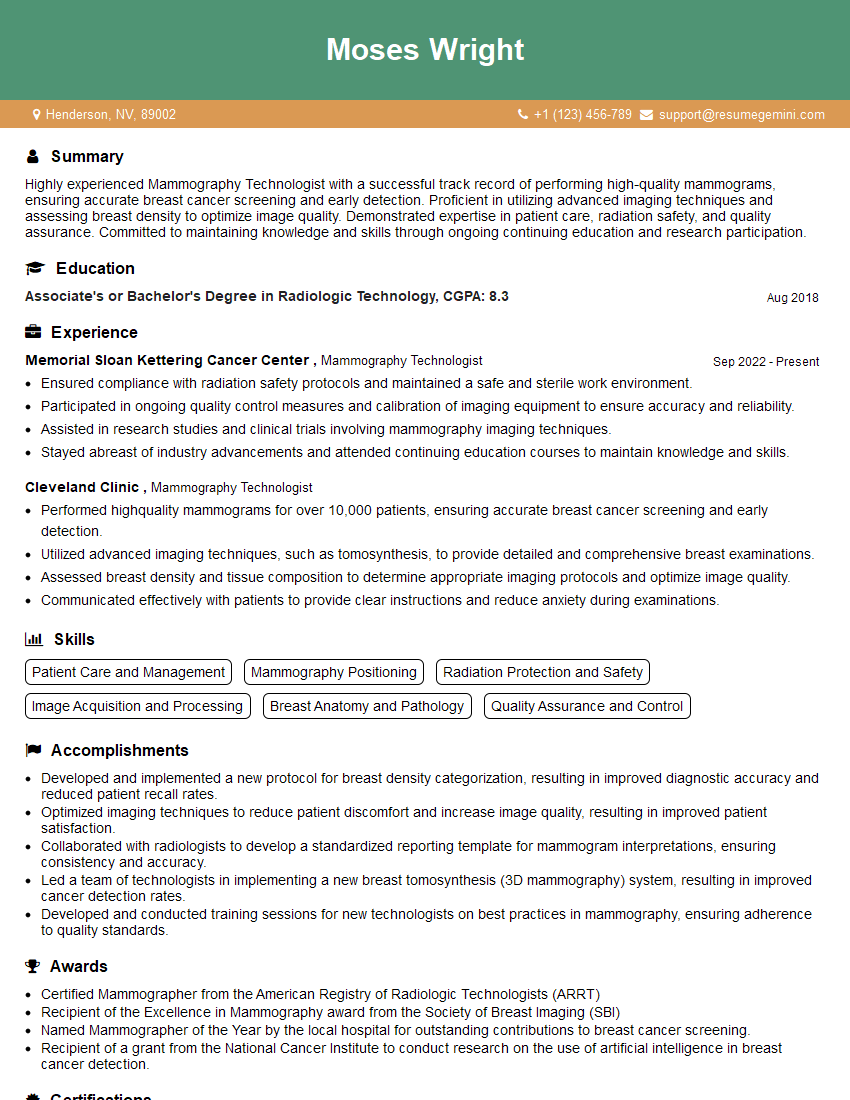
Mastering Chest X-ray Acquisition is crucial for career advancement in medical imaging. A strong understanding of these concepts demonstrates technical proficiency and commitment to patient safety, opening doors to specialized roles and increased responsibility. To maximize your job prospects, it’s essential to present your skills effectively. Creating an ATS-friendly resume is key. We strongly recommend leveraging ResumeGemini to build a professional and impactful resume that highlights your expertise in Chest X-ray Acquisition. ResumeGemini provides examples of resumes tailored specifically to this field, giving you a head start in crafting a winning application.



Explore more articles
Users Rating of Our Blogs
Share Your Experience
We value your feedback! Please rate our content and share your thoughts (optional).
What Readers Say About Our Blog
To the interviewgemini.com Webmaster.
Very helpful and content specific questions to help prepare me for my interview!
Thank you
To the interviewgemini.com Webmaster.
This was kind of a unique content I found around the specialized skills. Very helpful questions and good detailed answers.
Very Helpful blog, thank you Interviewgemini team.