Every successful interview starts with knowing what to expect. In this blog, we’ll take you through the top Chiropractic interview questions, breaking them down with expert tips to help you deliver impactful answers. Step into your next interview fully prepared and ready to succeed.
Questions Asked in Chiropractic Interview
Q 1. Explain the difference between a subluxation and a dislocation.
The terms subluxation and dislocation both refer to misalignments of joints, but their severity differs significantly. A subluxation is a partial or incomplete dislocation. Think of it as a joint that’s slightly out of place, with some loss of normal joint function but without complete separation of the joint surfaces. Symptoms might include pain, stiffness, and limited range of motion. A dislocation, on the other hand, is a complete separation of the joint surfaces. This is a much more serious injury, often requiring immediate medical attention, usually involving significant pain, swelling, and deformity. The joint is entirely out of its normal position.
For example, imagine a shoulder joint. A subluxation might involve a slight slippage of the humeral head, causing mild discomfort and limited movement. A dislocation, however, would mean the humeral head is completely out of the glenoid fossa, resulting in significant pain and inability to use the arm.
Q 2. Describe the biomechanics of the sacroiliac joint.
The sacroiliac (SI) joint is a complex structure crucial for weight-bearing and transferring forces between the spine and the pelvis. Its biomechanics involve a fascinating interplay of ligamentous support and subtle movements. The joint surfaces are irregular, allowing for only limited movement – mostly nutation and counternutation. Nutation is a forward movement of the sacrum relative to the ilium, while counternutation is the opposite. These movements are essential for gait, posture, and shock absorption. The strong ligaments surrounding the SI joint, such as the sacroiliac ligaments, interosseous ligaments, and iliolumbar ligaments, provide stability, preventing excessive motion. Muscle activity, particularly from the gluteal and abdominal muscles, also plays a significant role in controlling SI joint movement and stability.
Dysfunction in the SI joint, often caused by muscle imbalances, ligamentous laxity, or trauma, can lead to low back pain and pelvic instability. Chiropractic care often focuses on restoring proper biomechanics through adjustments and targeted exercises aiming to improve muscle strength and stability.
Q 3. What are the contraindications for spinal manipulation?
Spinal manipulation, while generally safe and effective, has certain contraindications. These are situations where the procedure should be avoided or approached with extreme caution. Absolute contraindications include:
- Vertebral artery dissection or stenosis: Manipulation could cause further damage to the blood vessels supplying the brain.
- Rheumatoid arthritis with instability: The weakened joint structures are at high risk of further damage.
- Infections in the spine or nearby areas: Manipulation could spread the infection.
- Cancer affecting the spine: Manipulation could worsen the condition or cause metastasis.
- Spinal fractures or osteoporosis: Increased risk of further injury.
Relative contraindications (meaning caution is required, and a thorough evaluation is necessary) include pregnancy, recent surgery, or certain medical conditions. A comprehensive patient history and physical examination are essential to identify these contraindications and ensure patient safety.
Q 4. How do you differentiate between radiculopathy and myofascial pain?
Differentiating between radiculopathy and myofascial pain is crucial for effective treatment. Radiculopathy involves nerve root compression, often stemming from disc herniation or spinal stenosis. It presents with characteristic dermatomal pain, numbness, tingling, and weakness along the affected nerve’s distribution. Think of a sciatic nerve impingement causing pain down the leg. Myofascial pain, on the other hand, originates from muscles and fascia. It manifests as localized pain, muscle stiffness, and trigger points. The pain may refer to other areas but doesn’t follow a clear dermatomal pattern. A detailed history, neurological examination, and imaging studies (such as MRI) often help distinguish between the two.
For example, a patient experiencing sharp pain radiating down their leg with associated numbness and weakness points towards radiculopathy. Conversely, pain localized to the lower back with muscle tenderness and trigger points may be indicative of myofascial pain.
Q 5. Explain the different types of chiropractic adjusting techniques.
Various chiropractic adjusting techniques exist, each with its own approach and application. Some common techniques include:
- Diversified technique: This involves a variety of manual thrusts delivered with a high velocity, low amplitude to specific spinal segments.
- Gonstead technique: This technique emphasizes precision and palpation to identify subluxations and uses specific adjusting tools.
- Activator technique: This uses a handheld instrument to deliver a low-force, rapid adjustment.
- Thompson technique: A drop-table technique employing a specially designed table to assist with the adjustment.
- SOT (Sacro-Occipital Technique): Focuses on the relationship between the sacrum, occiput, and other body structures.
The choice of technique depends on several factors, including the patient’s age, condition, and the specific spinal area requiring treatment. A skilled chiropractor selects the most appropriate technique to achieve optimal outcomes.
Q 6. Describe your approach to patient history taking in a chiropractic setting.
Patient history taking is paramount in chiropractic. My approach is comprehensive and structured, beginning with a detailed chief complaint – understanding the patient’s primary concern. I then delve into the onset, duration, character, location, and aggravating/relieving factors of their pain or symptoms. A thorough review of systems follows, investigating any other related medical conditions, medications, allergies, and past injuries. I also assess the patient’s lifestyle, occupation, and recreational activities as these can contribute to musculoskeletal problems. Finally, I conduct a thorough family history, checking for genetic predispositions to musculoskeletal conditions. This information, combined with the physical examination, forms the foundation for an accurate diagnosis and treatment plan.
For example, a patient presenting with neck pain may describe the pain as sharp and radiating into their arm, worsening with prolonged computer use and relieved by rest. This information, coupled with the physical findings, helps determine the underlying cause and guide the treatment.
Q 7. How do you determine the appropriate treatment plan for a patient with low back pain?
Determining the appropriate treatment plan for low back pain requires a multifaceted approach. I begin with a thorough history and physical examination, assessing posture, range of motion, and neurological function. Orthopedic tests are used to assess the musculoskeletal system, and neurological tests may reveal nerve involvement. Imaging studies (X-rays, MRI, CT scans) may be ordered to rule out serious pathology such as fractures or disc herniations. Based on this assessment, I develop a personalized treatment plan. This might involve spinal manipulation, soft tissue therapy (massage, trigger point therapy), rehabilitative exercises, patient education, lifestyle modification (ergonomics, posture correction), or a combination of these approaches.
For instance, a patient with acute low back pain stemming from muscle strain might benefit from spinal manipulation, soft tissue work, and targeted exercises to improve core strength and spinal stability. A patient with chronic low back pain related to degenerative disc disease might require a more comprehensive plan, including adjustments, targeted exercises, and ongoing lifestyle modifications.
Q 8. What imaging modalities are helpful in diagnosing chiropractic conditions?
Several imaging modalities can assist in diagnosing chiropractic conditions, but it’s crucial to remember that chiropractic care primarily relies on a thorough physical examination. Imaging is used to rule out serious pathologies and guide treatment, not as the primary diagnostic tool.
- X-rays: These are invaluable for visualizing bone structures, identifying fractures, dislocations, spondylolisthesis (slipping of one vertebra over another), and degenerative changes like osteoarthritis. For example, X-rays can clearly show the presence of a fracture in a patient presenting with neck pain after a fall.
- MRI (Magnetic Resonance Imaging): MRI provides detailed images of soft tissues, including intervertebral discs, ligaments, muscles, and the spinal cord. This is particularly helpful in diagnosing conditions like herniated discs, spinal stenosis (narrowing of the spinal canal), and ligamentous injuries. For instance, an MRI can pinpoint the exact location and size of a disc herniation causing radiculopathy (nerve root compression).
- CT (Computed Tomography): CT scans offer detailed cross-sectional images of bones and soft tissues. They’re beneficial for visualizing complex fractures, assessing spinal alignment, and identifying bone spurs. A CT scan might reveal a subtle fracture missed on initial X-rays, providing a clearer picture for treatment planning.
- Ultrasound: Ultrasound is used less frequently in chiropractic but can be helpful in assessing soft tissue injuries, muscle strains, and assessing nerve mobility. For example, ultrasound can assist in identifying muscle tears or trigger points.
The choice of imaging modality depends on the specific clinical presentation and suspected diagnosis. It’s vital to use imaging judiciously and only when clinically indicated, minimizing radiation exposure where possible.
Q 9. How do you manage patients with whiplash injuries?
Managing whiplash injuries requires a comprehensive approach focusing on pain reduction, restoring range of motion, and preventing long-term complications. The treatment plan is individualized based on the patient’s specific symptoms and the severity of the injury.
- Initial Management: The immediate focus is on pain and inflammation control. This might involve ice packs, gentle range of motion exercises, and modalities like ultrasound or electrical stimulation to reduce muscle spasm. Medications, such as nonsteroidal anti-inflammatory drugs (NSAIDs), may be recommended to manage pain and inflammation.
- Chiropractic Adjustments: Once the initial inflammation subsides, chiropractic adjustments help restore proper spinal alignment and reduce joint restrictions. These adjustments are carefully performed, avoiding any forceful manipulation that could aggravate the injury. The focus is on gentle mobilization and restoring normal movement patterns.
- Therapeutic Exercises: A personalized exercise program is crucial for strengthening neck muscles, improving flexibility, and restoring proper posture. This may include range-of-motion exercises, strengthening exercises, and postural correction techniques. It is also important to educate patients on proper posture, ergonomics in the workplace and home environment.
- Patient Education: Educating the patient about the healing process, proper posture, and self-care techniques is essential for successful management. This includes providing guidance on activities to avoid initially and a gradual return to normal activities.
Regular follow-up appointments are necessary to monitor progress, adjust treatment as needed, and ensure proper healing. In cases of severe whiplash or persistent symptoms, referral to other specialists such as neurologists or physiatrists may be warranted.
Q 10. Explain your understanding of the gate control theory of pain.
The gate control theory of pain explains how pain signals are processed and modulated by the nervous system. Imagine a gate that controls the flow of information between the periphery (where the pain originates) and the brain. This gate isn’t a physical structure, but rather a functional interaction of nerve fibers.
The theory proposes that small-diameter nerve fibers (A-delta and C fibers) transmit pain signals. Meanwhile, large-diameter nerve fibers (A-beta fibers) transmit touch, pressure, and vibration sensations. When pain signals travel along small-diameter fibers, the ‘gate’ opens, allowing pain to be perceived. However, when large-diameter fiber activity increases (e.g., through massage, exercise, or TENS), it closes the ‘gate,’ inhibiting the transmission of pain signals to the brain, thus reducing the experience of pain.
In practice, this theory guides chiropractic treatment. Techniques like massage, mobilization, and exercises stimulate large-diameter fibers, potentially closing the ‘gate’ and reducing pain perception. Transcutaneous electrical nerve stimulation (TENS) also works on this principle, stimulating larger nerve fibers to inhibit pain signals. The application of cold therapy initially can reduce inflammation and dampen pain signals from A-delta and C fibres.
Q 11. Discuss the role of chiropractic care in managing headaches.
Chiropractic care plays a significant role in managing headaches, particularly those stemming from musculoskeletal issues in the neck and upper back. Many headaches, including cervicogenic headaches (originating in the neck), tension-type headaches, and even some migraine headaches, can be positively influenced by chiropractic interventions.
- Identifying the Cause: A thorough examination helps identify the underlying cause of the headache. This includes assessing neck mobility, muscle tension, and spinal alignment. This helps differentiate between headaches originating from the neck and those with other origins.
- Chiropractic Adjustments: Adjustments focus on restoring proper joint mechanics in the neck and upper back, relieving muscle tension and improving spinal alignment. This can alleviate pressure on nerves and reduce pain signals originating from the neck.
- Soft Tissue Techniques: Techniques like massage, trigger point therapy, and muscle stretching are used to release muscle tension in the neck, shoulders, and upper back. These are very important in tension type headaches and managing muscle spasms.
- Postural Correction: Improving posture can significantly reduce strain on the neck and alleviate headache symptoms. Chiropractors provide education and guidance on maintaining proper posture throughout the day.
- Patient Education and Lifestyle Modifications: Patient education focuses on identifying triggers, stress management techniques, and ergonomic improvements at work and home to reduce the frequency and intensity of headaches.
While chiropractic care is highly effective for many headache types, it’s crucial to remember that it’s not a cure-all. For headaches with serious underlying causes, referral to other specialists may be necessary.
Q 12. Describe your experience with treating pregnant patients.
Treating pregnant patients requires a specialized approach due to the physiological changes during pregnancy. Safety and comfort are paramount.
- Modified Techniques: Adjustments are modified to accommodate the changes in posture, ligament laxity, and the growing fetus. Gentle, low-force techniques are employed, avoiding any pressure on the abdomen.
- Addressing Pregnancy-Related Pain: Chiropractic care helps manage pregnancy-related pain such as back pain, pelvic pain, sciatica, and rib pain. The adjustments focus on maintaining spinal alignment and relieving muscle tension.
- Postural Adjustments: Postural changes during pregnancy can strain the spine and other joints. Chiropractors can provide guidance on maintaining proper posture and using supportive devices to reduce strain.
- Collaboration with Other Healthcare Providers: Collaboration with obstetricians and other healthcare providers is essential to ensure the safety and well-being of both mother and child. A combined approach may result in a better patient outcome.
- Patient Comfort: Creating a comfortable and supportive environment is crucial. Adjustments are adapted to accommodate the patient’s comfort level. Different body positions and supports can be used as needed.
I have extensive experience in providing safe and effective chiropractic care to pregnant women. I have worked closely with many obstetricians and midwives to provide optimal care for my patients.
Q 13. How do you incorporate evidence-based practice into your chiropractic care?
Evidence-based practice is the cornerstone of my chiropractic care. It means integrating the best available research evidence with clinical expertise and patient values to make informed decisions about patient care. I constantly update my knowledge with the latest research.
- Systematic Reviews and Meta-analyses: I rely heavily on systematic reviews and meta-analyses to understand the overall effectiveness of different chiropractic interventions for various conditions. These provide a comprehensive summary of existing research.
- Randomized Controlled Trials (RCTs): RCTs are considered the gold standard in research. I prioritize interventions supported by high-quality RCTs when developing treatment plans.
- Clinical Practice Guidelines: I follow established clinical practice guidelines from reputable organizations like the American Chiropractic Association and others to ensure that my approach is consistent with the best available evidence.
- Continuing Education: I actively participate in continuing education courses and professional development activities to stay up-to-date with new research and advancements in chiropractic care.
- Critical Appraisal of Evidence: I critically appraise research articles to assess their quality and relevance to my practice. This includes evaluating study design, methodology, and the validity of findings.
By integrating evidence-based practice into my care, I ensure that my patients receive the most effective and safe treatments available.
Q 14. What is your approach to patient education and compliance?
Patient education and compliance are critical for successful outcomes. I believe in empowering my patients to take an active role in their own healing process. My approach focuses on clear communication and active patient participation.
- Clear and Concise Explanations: I explain conditions and treatment plans in simple, easy-to-understand terms, avoiding complex medical jargon. I use visuals, models, and analogies when appropriate to illustrate complex concepts.
- Shared Decision-Making: I involve patients in the decision-making process, ensuring they understand the treatment options, potential benefits, and risks. This fosters trust and improves compliance.
- Home Exercise Programs: I provide personalized home exercise programs tailored to each patient’s needs and capabilities. Detailed instructions and demonstrations ensure correct execution of exercises.
- Follow-up and Monitoring: Regular follow-up appointments allow me to monitor progress, address concerns, and modify treatment as needed. This continuous feedback loop is essential for maintaining patient engagement and motivation.
- Written Materials and Resources: I provide patients with written materials, such as exercise instructions and information about their condition, to reinforce what we discussed during the visit.
By fostering a collaborative relationship with my patients and providing clear, comprehensive education, I strive to achieve high levels of patient compliance and satisfaction.
Q 15. How do you manage patients with chronic pain conditions?
Managing chronic pain requires a holistic approach that goes beyond simply addressing symptoms. It involves a thorough examination to identify the underlying cause of the pain, which could be biomechanical, neurological, or even psychological. For example, a patient with chronic lower back pain might have a combination of spinal subluxations, muscle imbalances, and poor posture.
My approach typically includes:
- Detailed history taking: Understanding the patient’s pain timeline, intensity, location, aggravating and relieving factors is crucial. This helps pinpoint potential causes.
- Orthopedic and neurological examination: This involves assessing range of motion, muscle strength, reflexes, and sensory function to identify any musculoskeletal or neurological impairments.
- Imaging review (if necessary): X-rays, MRIs, or CT scans can help rule out serious pathologies and provide further insight into the patient’s condition.
- Specific chiropractic adjustments: These are tailored to the individual’s needs, aiming to restore proper joint mechanics and reduce nerve interference.
- Therapeutic modalities: Ultrasound, electrical stimulation, or other modalities might be used to manage inflammation, pain, and muscle spasms.
- Exercise prescription: A tailored exercise program helps strengthen muscles, improve flexibility, and enhance posture.
- Patient education and lifestyle modifications: This includes ergonomic advice, stress management techniques, and recommendations for proper nutrition and sleep hygiene.
- Regular follow-up care: Ongoing monitoring and adjustments are essential to track progress and make necessary modifications to the treatment plan.
For instance, a patient with chronic neck pain might benefit from adjustments to the cervical spine, ultrasound therapy to reduce inflammation, and exercises to strengthen neck muscles and improve posture. The treatment plan would be regularly assessed and modified based on the patient’s progress.
Career Expert Tips:
- Ace those interviews! Prepare effectively by reviewing the Top 50 Most Common Interview Questions on ResumeGemini.
- Navigate your job search with confidence! Explore a wide range of Career Tips on ResumeGemini. Learn about common challenges and recommendations to overcome them.
- Craft the perfect resume! Master the Art of Resume Writing with ResumeGemini’s guide. Showcase your unique qualifications and achievements effectively.
- Don’t miss out on holiday savings! Build your dream resume with ResumeGemini’s ATS optimized templates.
Q 16. Explain the importance of ethical considerations in chiropractic practice.
Ethical considerations are paramount in chiropractic practice. They form the foundation of trust and ensure the well-being of patients. These principles guide every aspect of patient care, from initial consultation to ongoing treatment.
- Informed consent: Patients must fully understand their condition, the proposed treatment plan, and potential risks and benefits before agreeing to treatment. This requires clear, concise communication in language they can understand.
- Confidentiality: Protecting patient privacy is crucial. All information shared during consultations and treatment must be kept confidential, adhering to legal and ethical guidelines.
- Professional boundaries: Maintaining professional relationships with patients is vital. This includes avoiding dual relationships and inappropriate personal interactions.
- Competence: Chiropractors should only provide services within their scope of practice and expertise. Referring patients to other specialists when necessary is an ethical responsibility.
- Truthful representation: Providing accurate information about the effectiveness of chiropractic care and avoiding misleading claims is critical. This includes accurate representation of credentials and qualifications.
- Continuing education: Staying abreast of the latest research and advancements in chiropractic care is vital to provide the best possible care. Continuous learning ensures ethical and effective practice.
For example, if a patient presents with symptoms outside my scope of practice, like a possible fracture, I have an ethical obligation to refer them to a medical doctor for appropriate imaging and management.
Q 17. Describe your experience with different types of therapeutic modalities (e.g., ultrasound, electrical stimulation).
I have extensive experience utilizing various therapeutic modalities to complement chiropractic adjustments and enhance patient outcomes. The choice of modality depends on the specific condition and patient response.
- Ultrasound: I use ultrasound therapy to manage soft tissue inflammation, reduce pain, and promote tissue healing. The therapeutic ultrasound waves penetrate the tissues, generating heat that improves blood circulation and reduces inflammation. This is particularly effective for muscle strains and sprains.
- Electrical stimulation: Electrical stimulation is used to manage pain, reduce muscle spasms, and stimulate muscle contractions. Different waveforms can be applied depending on the desired effect – for instance, TENS (Transcutaneous Electrical Nerve Stimulation) for pain relief or NMES (Neuromuscular Electrical Stimulation) for muscle strengthening. I often use this in conjunction with rehabilitation exercises.
- Other modalities: Depending on the patient’s needs, I might also incorporate other techniques such as heat or ice therapy, massage, or traction.
For instance, a patient with a recent ankle sprain might benefit from ultrasound to reduce swelling and inflammation, followed by electrical stimulation to reduce muscle spasms and promote healing. The selection and application of modalities are always individualized and based on the latest evidence-based practices.
Q 18. How do you assess and manage a patient’s postural deviations?
Assessing and managing postural deviations is a crucial aspect of chiropractic care. Poor posture can lead to muscle imbalances, joint dysfunction, and chronic pain.
My assessment process includes:
- Visual observation: I carefully observe the patient’s posture from different angles, noting any asymmetries or deviations from ideal alignment. This includes checking for things like forward head posture, rounded shoulders, and pelvic tilts.
- Palpation: I palpate the muscles and joints to assess muscle tension, joint mobility, and identify any areas of tenderness or restriction.
- Range of motion testing: I assess the patient’s range of motion in different joints to identify any limitations.
- Postural photography: Digital photographs can provide a visual record of the patient’s posture for comparison and tracking progress over time.
- Plumb line assessment: Using a plumb line as a visual reference, I can identify deviations from ideal posture.
Once postural deviations are identified, the management plan may include:
- Chiropractic adjustments: To restore proper joint alignment.
- Soft tissue therapies: To address muscle imbalances and reduce muscle tension.
- Postural exercises: To strengthen weak muscles, stretch tight muscles, and improve postural awareness.
- Ergonomic advice: To improve workplace and home environments to minimize postural stress.
For example, a patient with forward head posture might receive chiropractic adjustments to the cervical spine, stretching exercises for the neck and chest muscles, and strengthening exercises for the back and shoulder muscles. Ergonomic advice on workstation setup would also be provided.
Q 19. Explain your understanding of the nervous system’s role in health and disease.
The nervous system is the body’s control center, responsible for communication between the brain, spinal cord, and the rest of the body. Its role in health and disease is fundamental. The nervous system governs all bodily functions, from breathing and digestion to movement and thought.
In health, a well-functioning nervous system ensures efficient communication and coordination of bodily functions. It enables proper muscle function, organ regulation, and immune response.
In disease, disruptions to the nervous system can manifest in various ways. Subluxations, which are misalignments of the vertebrae, can interfere with nerve transmission, potentially leading to pain, muscle weakness, and dysfunction in various organs or systems. Other neurological conditions can also impact health significantly.
Chiropractic care aims to optimize nervous system function by addressing vertebral subluxations and restoring proper spinal alignment. This can lead to improved communication between the brain and the body, facilitating healing and overall well-being.
Q 20. What are the potential risks and complications of chiropractic adjustments?
While chiropractic adjustments are generally safe and effective, like any medical procedure, there are potential risks and complications. These are relatively rare, but it’s crucial to be aware of them.
- Headache: A temporary headache can occur following a neck adjustment, although this is infrequent and usually resolves quickly.
- Muscle soreness: Some muscle soreness is common after adjustments, but this usually subsides within a day or two.
- Dizziness or lightheadedness: These sensations can occur briefly after adjustments, especially in the cervical spine.
- Rare but serious complications: While extremely uncommon, there’s a potential risk of stroke, although the link is highly debated and the incidence is exceedingly low. This underscores the importance of a thorough examination and appropriate patient selection.
It’s important to note that these risks are significantly minimized by proper patient selection, thorough examination, and adherence to established safety protocols. A skilled chiropractor will carefully assess the patient’s condition and contraindications before performing any adjustment and will manage potential risks diligently. Open communication with the patient about potential risks and benefits is vital for obtaining informed consent.
Q 21. How do you document your findings and treatment plans accurately?
Accurate documentation is essential for ethical and legal reasons and ensures continuity of care. My documentation process follows established standards and includes:
- Patient history: A comprehensive record of the patient’s medical history, including current symptoms, past illnesses, surgeries, medications, and relevant family history.
- Physical examination findings: Detailed notes on the patient’s physical examination, including observations of posture, range of motion, palpation findings, neurological assessments, and orthopedic tests.
- Imaging reports (if applicable): Any imaging reports (X-rays, MRIs, etc.) are integrated into the patient’s record.
- Treatment plan: A detailed description of the proposed treatment plan, including specific chiropractic adjustments, therapeutic modalities, and exercise recommendations. This includes expected timelines and treatment goals.
- Progress notes: Regular progress notes document the patient’s response to treatment, any modifications to the treatment plan, and any relevant observations.
- Discharge summary: A summary of the patient’s treatment, outcomes, and any recommendations for ongoing care upon completion of the treatment plan.
I use electronic health records (EHR) software for secure storage and easy access to patient information. This system enables efficient record keeping, facilitates communication with other healthcare professionals, and helps ensure patient confidentiality. The goal is to maintain a complete, accurate, and up-to-date record for each patient.
Q 22. Describe your experience with working collaboratively with other healthcare professionals.
Collaboration is fundamental to providing holistic patient care. Throughout my career, I’ve worked extensively with medical doctors, physical therapists, orthopedic specialists, and other healthcare professionals. For example, I frequently collaborate with MDs to manage patients with complex conditions involving both musculoskeletal issues and systemic diseases. This might involve co-managing a patient with low back pain and diabetes, where I address the musculoskeletal component while coordinating care with the patient’s endocrinologist for diabetes management. Another example is referring patients to physical therapists for post-chiropractic rehabilitation exercises to enhance their recovery and long-term well-being. This interprofessional approach ensures comprehensive patient care and avoids potential conflicts or duplication of services.
- Improved Patient Outcomes: Coordinated care leads to better patient outcomes.
- Reduced Healthcare Costs: Avoids unnecessary testing and treatments.
- Enhanced Patient Satisfaction: Patients appreciate a team-based approach.
Q 23. How do you handle difficult or challenging patients?
Handling challenging patients requires a combination of empathy, clear communication, and professional boundaries. I start by actively listening to their concerns and validating their feelings, even if I don’t agree with their perspective. For instance, if a patient is frustrated with their progress, I would ask open-ended questions like, “What are your biggest concerns right now?” or “What would make you feel like you’re making more progress?” This helps me understand their perspective and address their underlying concerns. If communication becomes difficult, I might involve a family member or caregiver in the conversation, or suggest alternative communication methods if the patient is open to them. If their behaviour poses a risk to me or my staff, I have clear protocols in place to maintain a safe environment.
Ultimately, the goal is to establish a therapeutic relationship built on trust and mutual respect, even with challenging patients. It’s crucial to remember that their behavior often stems from pain, fear, or frustration, and responding with empathy and understanding often helps de-escalate difficult situations.
Q 24. What is your philosophy of chiropractic care?
My philosophy of chiropractic care centers on the body’s inherent ability to heal itself. I believe in a holistic approach that considers the interconnectedness of the musculoskeletal system with the nervous system and overall health. My focus is on identifying and correcting vertebral subluxations – misalignments of the spine – that can interfere with nerve function, leading to pain and dysfunction. I utilize a variety of techniques tailored to each individual patient, ranging from gentle adjustments to more active methods. Beyond spinal adjustments, I emphasize patient education, lifestyle modifications (like diet and exercise), and preventive care to empower patients to take control of their health and well-being. I believe in treating the cause of the problem, not just the symptoms.
Q 25. Describe your approach to patient safety and infection control.
Patient safety and infection control are paramount in my practice. I strictly adhere to all CDC and OSHA guidelines for infection prevention. This includes hand hygiene, proper sterilization of equipment, and the use of disposable materials wherever possible. Our clinic uses autoclaves for sterilization of instruments and follows rigorous protocols for surface disinfection. We screen patients for any signs of illness before treatment and provide masks when necessary. All staff members receive regular training on infection control procedures. We maintain a clean and well-maintained environment to minimize the risk of cross-contamination.
Patient safety extends beyond infection control. Detailed case histories, informed consent procedures, and thorough examination techniques are integral parts of ensuring patient safety.
Q 26. How do you stay current with the latest advancements in chiropractic care?
Staying current in chiropractic care requires continuous learning. I actively participate in continuing education courses, workshops, and seminars offered by reputable organizations like the International Chiropractor Association. I regularly read peer-reviewed journals, subscribe to professional publications, and attend conferences to stay abreast of the latest research and treatment methodologies. I also actively engage in professional networking with other chiropractors, sharing knowledge and experiences to broaden my understanding of best practices.
Furthermore, I actively seek out opportunities for mentorship and collaboration with other healthcare professionals to enhance my understanding of interconnected healthcare approaches.
Q 27. What are your career goals within the field of Chiropractic?
My career goals involve expanding my expertise and contributing to the advancement of the chiropractic profession. I aim to become a recognized leader in my community, offering high-quality care to my patients. I’m particularly interested in specializing further in a niche area, such as sports chiropractic or pediatric chiropractic, to deepen my expertise and serve a specific population. In addition to patient care, I also aspire to participate in research, contribute to the education of future chiropractors, and advocate for the chiropractic profession within the broader healthcare landscape.
Q 28. Explain your experience with diagnostic testing relevant to chiropractic practice.
Diagnostic testing is crucial for making accurate diagnoses and developing effective treatment plans. My experience includes utilizing a range of diagnostic tools relevant to chiropractic practice. This includes performing thorough orthopedic and neurological examinations, analyzing patient history, and interpreting diagnostic imaging studies like X-rays, MRI, and CT scans (when medically necessary and ordered by a physician). I’m proficient in interpreting these images to identify vertebral subluxations, disc herniations, spinal stenosis, and other musculoskeletal conditions. While I don’t perform these imaging procedures myself, I am skilled in evaluating their findings to inform my treatment strategies. I also utilize other diagnostic tools such as palpation and range of motion assessments. It’s important to note that I always collaborate with other healthcare professionals when indicated to ensure comprehensive and appropriate patient care.
Key Topics to Learn for Your Chiropractic Interview
- Biomechanics of the Spine: Understanding spinal curves, motion segments, and the biomechanical principles governing spinal function. Consider practical applications like analyzing postural deviations and their impact on patient health.
- Neurology and the Nervous System: Focus on the relationship between the nervous system and musculoskeletal system, including the role of the nervous system in pain perception and function. Explore case studies demonstrating neurological examination techniques and their clinical significance.
- Diagnosis and Differential Diagnosis: Master the art of taking a thorough patient history, conducting a comprehensive physical examination, and utilizing diagnostic imaging (X-ray, MRI) to arrive at an accurate diagnosis. Practice distinguishing between various musculoskeletal conditions.
- Treatment Techniques and Modalities: Gain a strong understanding of various chiropractic adjustment techniques (e.g., Diversified, Gonstead, Activator), soft tissue therapies (massage, stretching), and other modalities (e.g., therapeutic exercise, patient education). Be prepared to discuss the rationale behind your treatment choices.
- Patient Communication and Care: Excellent communication skills are crucial. Practice explaining complex medical information clearly and concisely to patients. Prepare examples demonstrating your approach to patient education and building therapeutic alliances.
- Practice Management and Ethics: Understand the basics of running a chiropractic practice, including insurance billing, patient scheduling, and ethical considerations. Be prepared to discuss your understanding of professional responsibility and patient confidentiality.
- Research and Evidence-Based Practice: Demonstrate an understanding of the importance of evidence-based practice in chiropractic care. Be familiar with common research methodologies and how to interpret research findings relevant to chiropractic practice.
Next Steps: Launch Your Chiropractic Career
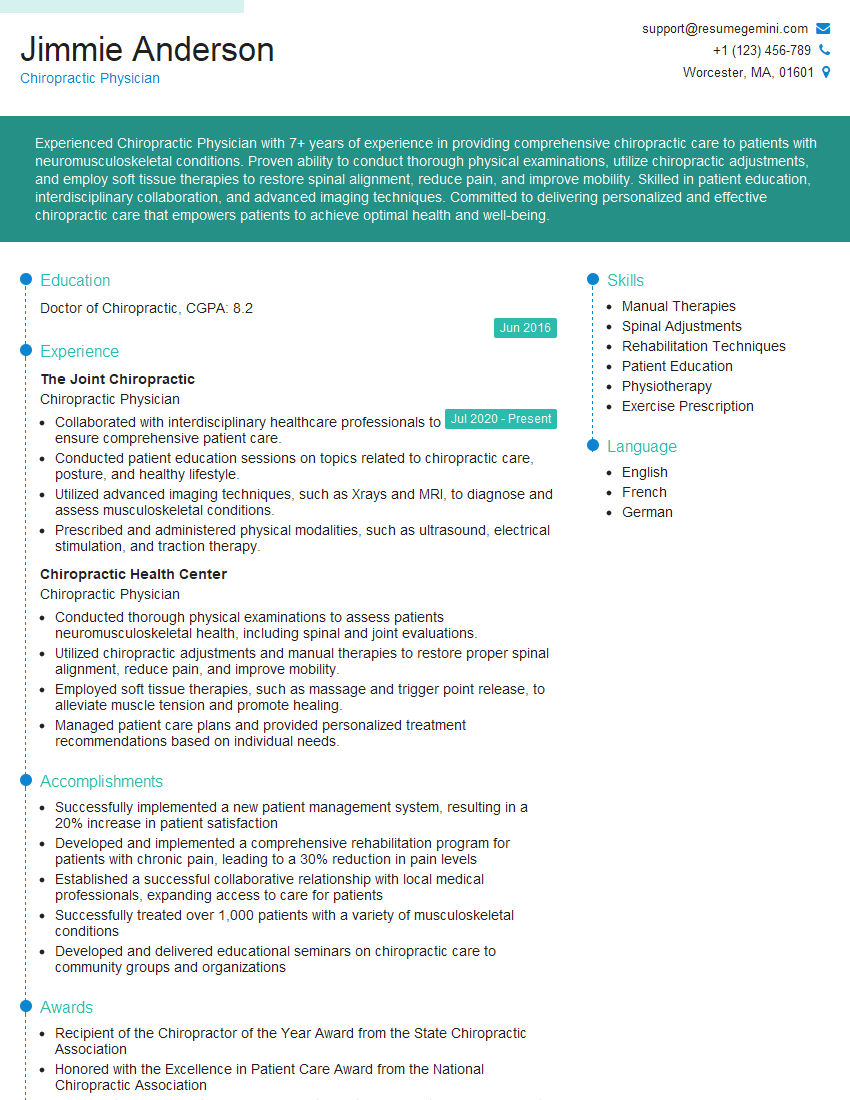
Mastering these key areas will significantly enhance your interview performance and demonstrate your readiness for a successful chiropractic career. A strong, ATS-friendly resume is your first step towards landing your dream job. Make sure your resume effectively showcases your skills and experience. ResumeGemini is a trusted resource for creating professional and impactful resumes. We offer examples of resumes tailored specifically to the chiropractic field to help you craft a compelling application that gets noticed. Invest the time to build a resume that reflects your expertise and opens doors to exciting opportunities.
Explore more articles
Users Rating of Our Blogs
Share Your Experience
We value your feedback! Please rate our content and share your thoughts (optional).
What Readers Say About Our Blog
To the interviewgemini.com Webmaster.
Very helpful and content specific questions to help prepare me for my interview!
Thank you
To the interviewgemini.com Webmaster.
This was kind of a unique content I found around the specialized skills. Very helpful questions and good detailed answers.
Very Helpful blog, thank you Interviewgemini team.