The thought of an interview can be nerve-wracking, but the right preparation can make all the difference. Explore this comprehensive guide to Experience in working with neon and LED lighting interview questions and gain the confidence you need to showcase your abilities and secure the role.
Questions Asked in Experience in working with neon and LED lighting Interview
Q 1. Explain the differences between neon and LED lighting technologies.
Neon and LED lighting, while both producing light, differ significantly in their technology and characteristics. Neon lighting uses a glass tube filled with neon gas or other gases, energized by a high-voltage electric current. This current excites the gas atoms, causing them to emit light. The color depends on the gas used. LEDs, or Light Emitting Diodes, are semiconductor devices that produce light when an electric current passes through them. They are much more energy-efficient and offer a wider range of colors and design flexibility.
- Neon: High voltage, limited color options (primarily determined by gas fill), inefficient energy consumption, fragile glass tubes, and a more limited lifespan. Think of the classic, bright, single-color signs found on vintage shops.
- LED: Low voltage, diverse color options (achieved by varying semiconductor materials and phosphor coatings), highly energy-efficient, durable, and relatively long lifespan. Consider the various colored lights in modern homes and offices, from accent lighting to sophisticated RGB displays.
In essence, neon is a gas discharge technology, while LED is a solid-state technology. This fundamental difference leads to the contrasting attributes mentioned above.
Q 2. Describe the safety precautions involved in working with high-voltage neon lighting.
Working with high-voltage neon lighting demands strict adherence to safety protocols. The high voltage poses a significant electrocution risk. Never work on energized neon signs without proper training and safety equipment.
- Always de-energize the system: Before any work, ensure the power supply is completely disconnected and locked out to prevent accidental re-energization.
- Use insulated tools: Employ tools with insulated handles to prevent electrical shock.
- Wear appropriate personal protective equipment (PPE): This includes safety glasses to protect against potential glass fragments, insulated gloves, and protective clothing.
- Proper grounding: Ensure proper grounding of the system to prevent electrical surges and minimize shock hazards.
- Work in a well-ventilated area: Some neon gases can be harmful if inhaled.
- Follow all relevant safety standards and regulations: Adherence to local and national electrical safety regulations is paramount.
Remember, even with the power off, capacitors in the system might retain a charge, so be extra cautious and follow proper discharge procedures.
Q 3. What are the common causes of neon light failure?
Neon light failure can stem from various issues. The most common are:
- Gas leakage: Tiny punctures or cracks in the glass tubing can cause the gas to leak, leading to dimming or complete failure.
- Electrode failure: The electrodes, which carry the current, can degrade over time, hindering the ionization process essential for light production.
- Contamination: Internal contamination of the tube can affect gas ionization and light emission.
- Power supply issues: Problems with the transformer or ballast can prevent proper voltage from reaching the tube.
- Mechanical damage: Physical damage to the glass tubing can lead to failure.
Regular inspections, proper handling, and a stable power supply are crucial for extending the lifespan of neon lights.
Q 4. How do you troubleshoot a malfunctioning LED lighting fixture?
Troubleshooting a malfunctioning LED lighting fixture involves a systematic approach.
- Check the power source: Ensure the power supply is functioning correctly. Try another fixture in the same outlet to rule out power issues.
- Inspect the connections: Look for loose or damaged wiring both at the fixture and the power source.
- Examine the LED driver: The LED driver regulates power to the LEDs; a faulty driver can cause the entire fixture to fail. A humming sound or excessive heat from the driver suggests a problem.
- Test the LEDs individually: If you have experience and the fixture allows, check each LED for functionality. A failed LED can be replaced, provided it’s a replaceable component.
- Consider the environment: Extreme temperatures or moisture can damage LED fixtures. Check for any signs of water damage or overheating.
If the problem persists after these checks, it’s best to consult a qualified electrician or contact the manufacturer for support.
Q 5. What are the different types of LED light sources available?
LED light sources come in many varieties, each with unique characteristics:
- Standard LEDs: These are the most common type, available in various colors and wattages.
- RGB LEDs: These combine red, green, and blue LEDs to produce a wide spectrum of colors, enabling dynamic lighting effects.
- COB (Chip on Board) LEDs: These integrate multiple LEDs onto a single substrate, offering high light output and compact design.
- SMD (Surface Mount Device) LEDs: These are small, surface-mounted LEDs commonly used in various applications.
- High-power LEDs: These are designed for high lumen output, often used in outdoor or commercial lighting.
- UV and Infrared LEDs: These emit ultraviolet or infrared light, used in specialized applications like curing, security systems, or medical equipment.
The type of LED chosen depends largely on the specific application and its requirements.
Q 6. Explain the concept of color temperature in LED lighting.
Color temperature in LED lighting refers to the appearance of the light, measured in Kelvin (K). It describes the warmth or coolness of the light, similar to the way we describe the temperature of a flame. Lower Kelvin values indicate warmer light (e.g., 2700K, similar to incandescent light), while higher values indicate cooler light (e.g., 5000K, similar to daylight).
- Warm White (2700-3000K): Creates a cozy, relaxing atmosphere, suitable for living rooms and bedrooms.
- Neutral White (3500-4100K): A balanced light suitable for general-purpose lighting, kitchens, and offices.
- Cool White (4100-6500K): Provides a bright, energizing light often used in garages, workshops, or bathrooms.
The choice of color temperature depends on the mood and functionality of the space.
Q 7. How do you calculate the lumens needed for a specific space?
Calculating the lumens needed for a specific space isn’t a simple formula, but rather an estimation based on several factors.
A good starting point is the lumens per square foot (lm/ft²) rule of thumb. This varies greatly based on the task, but typical values range from 10-50 lm/ft². For general ambient lighting, 30 lm/ft² is a common recommendation. You will need more lighting if you have dark colors or limited natural light.
To calculate the total lumens needed:
- Measure the area (in square feet): Length x Width = Square Footage.
- Determine the lumens per square foot: This value depends on the space’s function and desired brightness level. Higher values for tasks requiring better visibility.
- Multiply the area by the lumens per square foot: Square Footage x Lumens per Square Foot = Total Lumens Required.
Example: A 10ft x 12ft living room (120 sq ft) needing general ambient lighting (30 lm/ft²) would require 3600 lumens (120 sq ft * 30 lm/ft²). However, this is just an estimate. It’s crucial to consider the lighting’s efficiency, the room’s color, and the ceiling height to ensure sufficient brightness.
Professional lighting designers use more sophisticated methods to calculate lighting needs, taking these other factors into consideration.
Q 8. Describe the various dimming techniques used with LED lighting.
LED dimming techniques control the light output by adjusting the power supplied to the LEDs. Several methods exist, each with its own advantages and drawbacks.
Pulse Width Modulation (PWM): This is the most common method. It rapidly switches the LED on and off at a high frequency (typically above the flicker fusion threshold, meaning it’s invisible to the human eye). The duty cycle (the percentage of time the LED is on) determines the brightness. Think of it like a faucet – quickly turning it on and off many times per second gives the illusion of a controlled flow.
Analog Dimming: This method varies the voltage or current supplied to the LEDs. It’s simpler than PWM but can lead to lower efficiency and potential color shift at lower brightness levels. Imagine adjusting the water pressure in the faucet instead of the on/off cycles.
Constant Current Dimming: This approach maintains a consistent current while modulating the voltage. It’s often preferred for maintaining color consistency across dimming ranges. This is like carefully controlling both pressure and flow of the faucet for a smoother transition.
Digital Dimming: This uses a digital signal to control the LED driver, offering precise control and compatibility with smart home systems. It’s similar to a programmable faucet, where you specify exactly how much water you need at any given time.
The choice of dimming method depends on factors such as cost, desired performance, and compatibility with the LED driver and controller.
Q 9. What are the advantages and disadvantages of using LED lighting compared to neon lighting?
LEDs and neon lighting offer distinct advantages and disadvantages:
| Feature | LED Lighting | Neon Lighting |
|---|---|---|
| Energy Efficiency | Significantly more efficient; consumes much less power for the same light output. | Relatively inefficient; consumes considerably more power. |
| Lifespan | Much longer lifespan (50,000+ hours compared to a few thousand hours for neon). | Shorter lifespan; requires more frequent replacements. |
| Maintenance | Lower maintenance costs due to longer lifespan and robust design. | Higher maintenance costs due to frequent bulb replacements and fragility of glass tubes. |
| Color Options | Wide range of colors, including customizable color-changing options. | Limited color choices, primarily vibrant primary colors. |
| Size and Flexibility | More compact and flexible designs, available in diverse shapes and sizes. | Typically larger and less flexible, requiring custom fabrication for complex shapes. |
| Heat Output | Produces less heat, improving safety and reducing cooling needs. | Generates significant heat, requiring adequate ventilation. |
| Cost | Initial cost can be higher but overall life-cycle cost is often lower. | Lower initial cost but higher long-term costs. |
In summary, LEDs offer superior energy efficiency, longevity, and design flexibility, but may have a higher initial investment. Neon lighting, while possessing a distinctive aesthetic, incurs higher operating and maintenance costs over time.
Q 10. Explain the process of installing a neon sign.
Installing a neon sign is a specialized process requiring expertise and safety precautions. Here’s a simplified overview:
Design and Fabrication: The sign is designed, and the glass tubing is bent into the desired shape. The glass is then filled with neon gas or other gases for different colors.
Electrode Installation: Electrodes are carefully sealed into the ends of the glass tubes. These electrodes will be connected to the power source.
Transformers and Wiring: A high-voltage transformer is needed to power the neon tubes (typically around 15,000 volts). Wiring must be carefully done to ensure proper connections and safety.
Mounting: The sign is mounted securely to its intended location. This may involve using brackets or other specialized hardware.
Testing and Inspection: Before final installation, the sign is thoroughly tested to ensure proper operation and safety. This includes checking for electrical shorts or gas leaks.
Finishing and Installation: Any necessary finishing touches are added, and the sign is installed in its final location, ensuring proper grounding and electrical connections. All work must conform to local electrical codes.
Due to the high voltages involved, installing a neon sign is best left to qualified professionals.
Q 11. How do you determine the appropriate wattage for an LED light fixture?
Determining the appropriate wattage for an LED light fixture involves considering several factors:
Illumination Requirements: How much light is needed for the space? This is usually measured in lumens (lm), which represents the total amount of visible light emitted.
Room Size and Ceiling Height: Larger rooms or high ceilings often require more wattage to achieve adequate illumination.
Type of Fixture: Different fixtures have different light distribution patterns, affecting how much light reaches the intended area. Recessed fixtures, for example, are more directional.
Color Temperature (CCT): This is measured in Kelvin (K) and affects the perceived warmth or coolness of the light. Higher Kelvin values mean cooler light (bluish), and lower values mean warmer light (yellowish).
Energy Efficiency (Lumens per Watt): LEDs are rated in lumens per watt (lm/W), indicating how much light is produced per watt of power consumed. A higher lm/W rating signifies better energy efficiency.
You can use online calculators or consult lighting professionals to determine the appropriate wattage based on these factors. Always check the manufacturer’s specifications for the fixture to ensure compatibility with the chosen wattage.
Q 12. What are the energy efficiency considerations for LED and neon lighting?
Energy efficiency is a key consideration for both LED and neon lighting.
LED Lighting: LEDs are far more energy-efficient than neon. They convert a much higher percentage of electrical energy into light, resulting in significant energy savings. The energy efficiency is expressed in lumens per watt (lm/W). A higher lm/W rating indicates better energy efficiency. For example, a 10W LED bulb might produce the same amount of light as a 60W incandescent bulb.
Neon Lighting: Neon lights are significantly less energy efficient than LEDs. They waste a large portion of electrical energy as heat, leading to higher energy consumption and costs. This inefficiency is primarily due to the nature of the gas discharge process used to generate light.
From an environmental perspective, the higher energy efficiency of LEDs leads to reduced carbon emissions and lower reliance on fossil fuels. Choosing LED lighting contributes significantly to reducing energy consumption and environmental impact.
Q 13. Describe your experience with different types of LED drivers.
My experience encompasses a wide range of LED drivers, each designed for specific applications and performance characteristics. Some key categories include:
Constant Current Drivers: These maintain a constant current to the LEDs, ensuring consistent brightness and color. They are crucial for applications where maintaining uniform light output is critical, like commercial lighting or signage. These are usually preferred for dimming applications due to more consistent brightness and color maintenance.
Constant Voltage Drivers: These maintain a constant voltage, suitable for specific LED configurations. However, they’re less common for general lighting and more often used in niche applications.
Dimmable Drivers: These allow for adjusting the light output, typically using PWM or analog dimming techniques. The choice of dimming method impacts both cost and performance. PWM is generally preferred for efficiency, while analog dimming might be used where compatibility is a concern.
Non-isolated vs. Isolated Drivers: Isolated drivers provide better electrical safety by separating the input and output circuits, but are generally more expensive and larger. Non-isolated drivers are more compact and cheaper, but offer less electrical safety.
Smart Drivers: These incorporate advanced features such as control via smartphone apps, integration with smart home systems, and often incorporate networking capabilities.
Selecting the appropriate driver depends on factors such as the type and number of LEDs, the desired dimming capabilities, and the overall system requirements. I have experience troubleshooting driver issues, selecting appropriate drivers for projects, and ensuring compatibility with the LED array.
Q 14. How do you ensure the proper heat dissipation in LED lighting systems?
Proper heat dissipation is vital for extending the lifespan and maintaining the performance of LED lighting systems. Excessive heat can degrade LEDs, leading to premature failure and reduced light output.
Heatsinks: These are critical components that draw heat away from the LEDs. The size and material of the heatsink depend on the power and thermal characteristics of the LEDs. Aluminum is a common choice for its excellent thermal conductivity.
Thermal Paste: A thin layer of thermal paste is applied between the LED and the heatsink to improve thermal contact and enhance heat transfer. Proper application is essential for effective heat dissipation.
Airflow: Adequate airflow around the LEDs and heatsink helps to dissipate heat. This might involve using fans, vents, or designing the fixture to facilitate natural convection.
Thermal Design Considerations: From the initial design stage, thermal management needs to be factored in. This includes proper spacing of LEDs, selection of materials with good thermal conductivity, and ensuring sufficient space for heat dissipation.
Monitoring and Maintenance: Regularly monitoring the temperature of the LEDs and heatsink helps identify potential issues before they lead to damage. This might involve using thermal cameras or sensors.
Failure to address heat dissipation properly can lead to reduced light output, shortened lifespan, and potentially even fire hazards. Therefore, a well-designed thermal management strategy is critical for the long-term reliability and safety of any LED lighting system.
Q 15. What are the different types of connectors used in neon and LED lighting?
Neon and LED lighting utilize different connector types depending on the application and power requirements. Neon lighting, being a higher-voltage system, often employs specialized connectors designed to handle the potential risks. These are typically heavy-duty, often with a keyed design to prevent mis-wiring and ensuring a secure connection.
- For neon transformers: These transformers often use heavy-duty, often keyed connectors to match the specific transformer output to the neon tubing. These are usually proprietary connectors and need to be carefully matched to prevent damage.
- For connecting neon tubing sections: Neon tubing sections are typically joined using specialized fittings and epoxy, not readily removable connectors. The joints are then carefully sealed to maintain the vacuum inside the tube.
LED lighting, conversely, uses a wider variety of connectors, reflecting the diverse applications and voltage ranges. Common types include:
- Screw terminals: Found on many LED drivers and fixtures, these provide a simple and secure connection.
- Push-in connectors: Quick and easy to use, ideal for low-voltage LED strips.
- Waterproof connectors: Essential for outdoor applications, these connectors protect against moisture and provide a reliable seal.
- PowerCon connectors: Common for high-power LED stage lighting, these offer robust and reliable connections with quick locking mechanisms.
- Specialized connectors for LED strip lights: These can vary significantly depending on the strip manufacturer and may require specific mating connections.
Selecting the right connector is crucial for ensuring safety, reliability, and efficient performance of the lighting system.
Career Expert Tips:
- Ace those interviews! Prepare effectively by reviewing the Top 50 Most Common Interview Questions on ResumeGemini.
- Navigate your job search with confidence! Explore a wide range of Career Tips on ResumeGemini. Learn about common challenges and recommendations to overcome them.
- Craft the perfect resume! Master the Art of Resume Writing with ResumeGemini’s guide. Showcase your unique qualifications and achievements effectively.
- Don’t miss out on holiday savings! Build your dream resume with ResumeGemini’s ATS optimized templates.
Q 16. Explain the importance of grounding in neon and LED lighting installations.
Grounding is paramount in both neon and LED lighting installations for safety. It provides a low-impedance path for fault currents to flow to the earth, preventing electrical shocks and protecting against fire hazards.
In neon lighting: The high voltage used in neon systems makes grounding absolutely essential. A fault in the system, such as a short circuit, can create a dangerous voltage on the exterior of the tubing. Proper grounding helps to dissipate this voltage to earth, minimizing the risk of electric shock. The transformer casing itself must be grounded reliably.
In LED lighting: While generally lower voltage, LED lighting still requires grounding for safety and to prevent potential hazards. This is especially crucial in wet locations or situations where the possibility of contact with energized components exists. Proper grounding minimizes the risk of electrical shock and ensures the integrity of the system.
A properly grounded system is the first line of defense against electrical hazards. Never compromise on grounding during installation; failure to do so can have devastating consequences.
Q 17. How do you test the functionality of a neon or LED lighting system?
Testing the functionality of neon and LED lighting systems involves a series of checks and procedures to ensure safety and performance.
For neon lighting: The testing process usually starts with visually inspecting the tubing for any cracks or damage. Then, apply power to the system, observing for any unusual sounds, flickering, or excessively bright or dim sections. A multimeter can be used to test the voltage across the transformer and to verify continuity of the neon tubing (although this is more complex and requires careful handling of high voltages). Remember, neon is high voltage and only qualified professionals should attempt these tests.
For LED lighting: Testing LED systems involves a more straightforward process. Start with a visual inspection, checking for any loose connections, damaged LEDs, or improper wiring. Then, apply power and observe the light output. A multimeter can verify voltage and current at various points within the system. Additionally, specific tests might be required depending on the complexity of the system, like checking for correct DMX control signals if it’s a dynamic LED setup.
It’s vital to remember safety procedures during all testing, including appropriate personal protective equipment (PPE) such as insulated gloves for neon testing and general electrical safety precautions.
Q 18. What are the common maintenance procedures for neon and LED lights?
Maintenance procedures for neon and LED lighting differ significantly due to their contrasting technologies.
Neon lighting: Maintenance is relatively minimal but crucial for extending lifespan. This primarily focuses on visual inspections for cracks or leaks in the glass tubing and addressing any damaged or loose connections. Repairing neon lighting typically requires specialized skills and equipment due to the vacuum inside the tubing.
LED lighting: LED lighting maintenance is typically easier. Regular cleaning of the fixtures, especially in dusty or dirty environments, is essential to prevent light output degradation. Replacing failed LEDs is relatively straightforward for most LED systems. Regular inspection of the LED drivers and power supplies can prevent failures. Proper thermal management is crucial in higher power LED applications; overheating leads to premature failure. Therefore, adequate ventilation and heat-sinking are very important.
Implementing a proactive maintenance schedule for both neon and LED systems will prevent costly repairs and ensures optimal performance and safety.
Q 19. Describe your experience with different lighting control systems.
My experience encompasses various lighting control systems, ranging from simple on/off switches to sophisticated DMX (Digital Multiplex) and networked systems. I’ve worked with:
- Standard switch controls: Simple and cost-effective, suitable for basic lighting applications.
- Dimmers: Allow for adjustable light levels, offering flexibility in ambiance creation. I’ve used both traditional incandescent dimmers and modern LED-compatible dimmers, understanding the need for compatibility to prevent flickering.
- Timers: Useful for automating lighting schedules, often employed in commercial or residential settings.
- DMX controllers: These are indispensable for managing dynamic lighting displays, like those used in stage lighting or architectural lighting effects. I’m proficient in programming and troubleshooting DMX systems, working with different manufacturers’ equipment and protocols.
- Networked lighting control systems: These systems allow for centralized control and monitoring of multiple lighting fixtures over a network, offering significant advantages for large-scale installations. I have hands-on experience in commissioning and configuring such systems.
Choosing the right control system depends heavily on the project’s complexity, budget, and required functionality. For example, a simple retail store might only require dimmers, while a large-scale theatrical production necessitates a full-fledged DMX system.
Q 20. How do you design a lighting scheme for a specific application?
Designing a lighting scheme starts with a thorough understanding of the application’s requirements, considering factors such as:
- Functionality: What is the purpose of the lighting? Is it for illumination, ambiance, or accentuation?
- Aesthetics: What mood or atmosphere should the lighting create? How will it interact with the space’s architecture and décor?
- Energy efficiency: What are the energy consumption goals? LED lighting is generally preferred for its efficiency.
- Budget: What is the allocated budget for the project? This will dictate the type and quality of the chosen fixtures and controls.
- Maintenance: How easy will it be to maintain the lighting system over its lifespan?
Once these factors are understood, I develop a detailed lighting plan, including fixture selection, placement, and control strategy. This often involves using specialized software for lighting simulations and calculations to optimize the design and ensure the desired results are achieved. I also consider factors like light levels (lux), color temperature (Kelvin), color rendering index (CRI), and potential glare. The process is iterative, involving adjustments and refinements based on simulations and feedback.
For instance, designing lighting for a restaurant would prioritize ambiance and energy efficiency, while a manufacturing plant would prioritize illumination and durability. The design approach is tailored to the specific context to meet its specific needs.
Q 21. What are the different types of lenses used in LED lighting?
LED lighting uses a wide variety of lenses to shape and direct the light output. The choice of lens depends on the application and desired light distribution.
- Narrow beam lenses: Produce a concentrated beam of light, suitable for spotlights or long-range illumination.
- Medium beam lenses: Provide a balance between beam concentration and spread, commonly used for general lighting.
- Wide beam lenses: Create a broad and diffused light distribution, ideal for floodlighting or ambient illumination.
- Diffusing lenses: Soften the light output, reducing glare and creating a more uniform distribution.
- Fresnel lenses: These specialized lenses are often used in stage lighting and other professional applications, providing a highly controllable beam that can be adjusted.
- Aspherical lenses: Designed to minimize optical aberrations, resulting in a sharper and more efficient light beam.
Lens selection significantly impacts the lighting design’s effectiveness and the overall visual impact. A narrow beam lens would be suitable for highlighting a specific artwork, while a wide beam lens might be preferred for illuminating a large area evenly. The correct lens selection is crucial to achieve the desired lighting effect.
Q 22. Explain your experience with different types of LED packaging technologies.
LED packaging technology significantly impacts the performance and application of LEDs. My experience encompasses a wide range, including:
- Surface Mount Devices (SMDs): These are the most common, featuring small LEDs mounted directly onto a printed circuit board (PCB). I’ve extensively used SMDs in various projects, from small indicator lights to large-scale architectural lighting installations. Their versatility and cost-effectiveness are key advantages. For instance, in a recent museum project, we used high-density SMDs to create a dynamic, pixelated light display.
- Through-Hole LEDs: These have leads that pass through the PCB, offering more robust connections suitable for high-power applications or environments with significant vibration. I’ve employed them in industrial settings where durability and reliability are paramount, such as in factory lighting.
- Power LEDs: Designed for high-luminous flux, these LEDs are often packaged in larger configurations, sometimes with integrated heat sinks. They are ideal for high-intensity lighting needs, such as stadium lighting or high-bay industrial applications. In one project, we used high-power LEDs to illuminate a large outdoor advertising billboard, ensuring exceptional brightness and visibility.
- COB (Chip on Board): These packages integrate multiple LED chips on a single substrate, leading to increased efficiency and better light distribution. They’re particularly useful in applications requiring uniform illumination, like downlights or retail lighting. I’ve leveraged COB technology in several commercial projects to achieve even lighting without visible individual LED points.
My experience extends to understanding the thermal management considerations associated with each packaging type, ensuring optimal performance and lifespan.
Q 23. How do you ensure compliance with relevant safety standards for lighting installations?
Safety is paramount in any lighting installation. To ensure compliance, I consistently adhere to standards like the National Electrical Code (NEC), IEC standards (depending on the region), and relevant local regulations. This involves:
- Proper Wiring and Grounding: This is fundamental to prevent electrical shocks and fires. I meticulously check all wiring connections and ensure proper grounding throughout the installation process. I always utilize appropriate wire gauges for the specific current load.
- Fixture Selection and Mounting: Fixtures must be correctly selected for the environment and appropriately mounted, considering factors like weight, ambient temperature, and potential impact risks. For example, outdoor fixtures need to be weatherproof and robust enough to withstand the elements.
- Emergency Lighting Systems: I design and incorporate emergency lighting systems where required, adhering to specific codes and regulations. This ensures illumination during power outages.
- Photobiological Safety: For high-intensity lighting, I always assess and mitigate photobiological hazards to protect users from potential harm. This is especially critical in installations utilizing UV or blue-rich LED sources.
- Regular Inspections and Maintenance: Post-installation inspections and regular maintenance are essential to identify and resolve any potential safety hazards before they become critical.
Documentation of all aspects of the installation, including materials used and safety checks, is diligently maintained for future reference and audit trails.
Q 24. Describe your experience with different types of power supplies for LED lighting.
Power supplies are critical for efficient and safe LED operation. My experience covers various types:
- Constant Current Drivers: These maintain a constant current to the LEDs, regardless of voltage fluctuations. This is crucial for consistent brightness and LED lifespan. I frequently use these drivers, especially in applications sensitive to light output consistency.
- Constant Voltage Drivers: These provide a constant voltage, and the current drawn depends on the LED characteristics. These are simpler but require careful matching to the LED’s voltage and power requirements.
- Dimmable Drivers: These allow for adjusting the light output, enhancing flexibility and energy efficiency. I have extensive experience with various dimming protocols, including 0-10V, PWM, and DALI. I select the appropriate protocol based on the specific needs of the project and the control system.
- High-Power Drivers: These are designed for high-wattage LED arrays, requiring efficient thermal management to avoid overheating. In high-power applications, I often opt for drivers with built-in thermal protection and safety features.
- Isolated Drivers: For safety reasons, especially in high-voltage applications, using isolated drivers is crucial to prevent electric shocks. They offer better protection and isolation of the LED circuit from the mains voltage.
Selecting the right power supply involves considering the LED’s specifications, power requirements, dimming capabilities, and environmental factors. I thoroughly assess all these aspects to optimize the system’s performance, efficiency, and safety.
Q 25. How do you select appropriate LED fixtures for different environments?
Selecting appropriate LED fixtures for different environments requires a careful analysis of several factors:
- Illuminance Levels: Determining the required lux levels for the specific application, such as task lighting vs. ambient lighting. This impacts the fixture’s lumen output and distribution.
- Color Temperature (CCT): Choosing the appropriate CCT (measured in Kelvin) to create the desired ambiance. Warm white (2700K-3000K) for cozy settings, cool white (5000K-6500K) for brighter, more functional spaces.
- Color Rendering Index (CRI): CRI indicates how accurately colors appear under the light source. A higher CRI (closer to 100) is preferred where accurate color rendition is essential, such as in museums or retail spaces.
- Light Distribution: Selecting the appropriate beam angle (narrow, medium, or wide) based on the space and desired illumination pattern. For example, spotlights for accent lighting, while diffused light is better for general illumination.
- Environmental Considerations: Considering factors such as moisture, dust, temperature, and potential impact. Outdoor fixtures must be weatherproof and robust, while industrial settings might require impact-resistant fixtures.
- Energy Efficiency: Selecting fixtures with high lumen efficacy (lumens per watt) for energy savings.
I utilize lighting design software (mentioned in the next answer) to simulate lighting scenarios and optimize fixture selection for the best performance and visual appeal.
Q 26. What software do you use for lighting design and calculations?
For lighting design and calculations, I utilize a combination of software to ensure accuracy and efficiency. My go-to software includes:
- Dialux evo: This is a powerful and widely used lighting design software that allows me to model lighting scenarios, calculate illuminance levels, and visualize the results. It helps in optimizing fixture placement and minimizing energy consumption.
- Relux: Another widely-adopted software offering similar capabilities to Dialux evo, providing detailed simulations and reports. I find it useful for complex projects requiring precise calculations.
- Autodesk Revit (with lighting plugins): For large-scale architectural projects, I incorporate Revit to integrate lighting design seamlessly into the overall building design process. Plugins like AGi32 enhance the lighting simulation capabilities within the Revit environment.
These software packages allow for detailed analysis and optimization of lighting schemes, ensuring that the final design meets the client’s requirements in terms of aesthetics, functionality, and energy efficiency.
Q 27. Describe your experience with troubleshooting complex lighting issues.
Troubleshooting complex lighting issues requires a systematic approach. My strategy usually involves:
- Gathering Information: Thoroughly understanding the nature of the problem, including the symptoms, when it started, and any related factors.
- Visual Inspection: Carefully inspecting the entire lighting system, including fixtures, wiring, and power supplies, to identify any obvious issues.
- Testing and Measurements: Using multimeters and other testing equipment to measure voltage, current, and other relevant parameters. This helps to pinpoint faulty components or circuits.
- Systematic Elimination: Gradually eliminating potential causes through testing and observations until the root cause is identified. For instance, isolating sections of the circuit to check for faults.
- Component Replacement: Once the faulty component is identified (e.g., a failed driver, damaged LED, loose connection), it’s replaced with a suitable replacement.
- Documentation: Keeping a detailed record of the troubleshooting process, including observations, measurements, and corrective actions. This is valuable for future reference and maintenance.
For example, I once encountered a flickering problem in a large LED display. Through systematic testing, I identified a faulty driver within the power supply array. Replacing that driver resolved the issue, demonstrating the effectiveness of a methodical approach.
Q 28. What are your strategies for managing projects related to neon and LED lighting installations?
Managing neon and LED lighting projects requires meticulous planning and execution:
- Project Scoping and Planning: This involves a clear understanding of the client’s needs, budget, timeline, and technical requirements. This stage also includes developing detailed plans, including material procurement and scheduling.
- Team Coordination: Effective communication and coordination within the project team (electricians, designers, etc.) are essential for smooth project execution. Regular meetings and updates help keep everyone informed.
- Risk Management: Identifying and mitigating potential risks, such as material delays, technical challenges, and budget overruns. Having contingency plans in place is crucial.
- Quality Control: Implementing rigorous quality control procedures throughout the project lifecycle, from material selection to installation and testing. This ensures the final product meets the required standards.
- Budget Tracking: Regular monitoring of the project’s financial aspects, ensuring adherence to the allocated budget. This includes tracking material costs, labor costs, and other expenses.
- Client Communication: Maintaining open and transparent communication with the client, providing regular updates on the project’s progress and addressing any concerns promptly.
Employing project management methodologies like Agile or Waterfall (depending on the project’s complexity) helps in structuring the workflow and ensuring successful project delivery.
Key Topics to Learn for Neon and LED Lighting Interviews
- Neon Lighting: Understanding the principles of gas discharge, including voltage requirements, gas types, and tube fabrication techniques. Practical application: Troubleshooting common neon lighting failures (e.g., gas leaks, electrode issues).
- LED Lighting: Familiarization with different LED types (e.g., SMD, COB), color temperature (CCT), color rendering index (CRI), and lumen output. Practical application: Designing LED lighting systems for specific applications (e.g., architectural, commercial, signage).
- Power Supplies and Drivers: Knowledge of various power supply topologies and their suitability for different lighting applications. Practical application: Selecting appropriate drivers for specific LED configurations and managing power consumption.
- Safety Regulations and Standards: Understanding relevant safety codes and regulations concerning electrical installations and handling high-voltage systems. Practical application: Implementing safe working practices during installation, maintenance, and troubleshooting.
- Installation and Maintenance: Hands-on experience with installing and maintaining neon and LED lighting systems, including wiring, connectors, and fixture mounting. Practical application: Diagnosing and resolving lighting system malfunctions.
- Energy Efficiency and Sustainability: Understanding the energy efficiency characteristics of different lighting technologies and their environmental impact. Practical application: Selecting energy-efficient lighting solutions and implementing strategies for reducing energy consumption.
- Troubleshooting and Diagnostics: Developing problem-solving skills to identify and resolve issues in neon and LED lighting systems. Practical application: Utilizing diagnostic tools and techniques to pinpoint the source of malfunctions.
- Design and Aesthetics: Understanding the role of lighting in creating ambiance and enhancing the visual appeal of spaces. Practical application: Designing lighting schemes for different environments and applications.
Next Steps
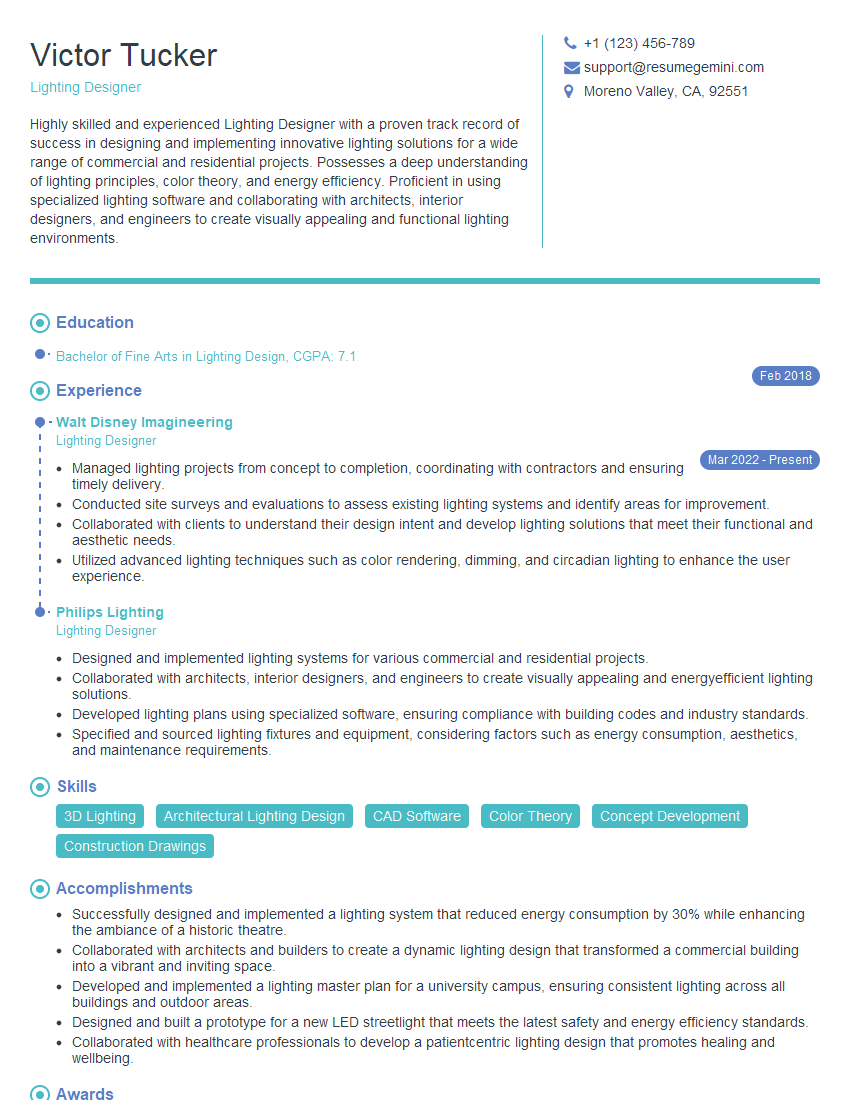
Mastering neon and LED lighting expertise significantly enhances your career prospects in various industries, opening doors to exciting roles with growth potential. A well-crafted, ATS-friendly resume is crucial for showcasing your skills and experience effectively to prospective employers. To elevate your job search and present yourself powerfully, leverage the resume-building capabilities of ResumeGemini. ResumeGemini offers a user-friendly platform to create impactful resumes, and examples tailored to highlight experience in neon and LED lighting are available to guide you. Make your skills shine – build your winning resume today.



Explore more articles
Users Rating of Our Blogs
Share Your Experience
We value your feedback! Please rate our content and share your thoughts (optional).
What Readers Say About Our Blog
To the interviewgemini.com Webmaster.
Very helpful and content specific questions to help prepare me for my interview!
Thank you
To the interviewgemini.com Webmaster.
This was kind of a unique content I found around the specialized skills. Very helpful questions and good detailed answers.
Very Helpful blog, thank you Interviewgemini team.