The right preparation can turn an interview into an opportunity to showcase your expertise. This guide to Client and Family Education interview questions is your ultimate resource, providing key insights and tips to help you ace your responses and stand out as a top candidate.
Questions Asked in Client and Family Education Interview
Q 1. Describe your experience developing and delivering client education materials.
Developing and delivering client education materials is a multifaceted process requiring careful consideration of the target audience, learning objectives, and available resources. My approach begins with a thorough needs assessment to identify knowledge gaps and learning preferences. This informs the design of materials, which I tailor to be clear, concise, and engaging. I utilize a variety of formats, including handouts, presentations, videos, and interactive exercises, choosing the most effective method for each specific topic. For instance, when educating clients about medication management, a combination of a visually appealing handout summarizing key information and a short, informative video demonstrating proper pill-taking techniques proves far more effective than a lengthy lecture. I always ensure that materials are culturally sensitive and use plain language, avoiding jargon whenever possible. After delivery, I gather feedback to refine and improve the educational materials for future use.
For example, I once developed a series of short, animated videos explaining complex medical procedures to pediatric patients and their families. This proved immensely successful in reducing anxiety and improving comprehension compared to traditional pamphlets.
Q 2. How do you assess client learning styles and adapt your teaching methods accordingly?
Assessing client learning styles is crucial for effective education. I use a variety of methods, including observation, questionnaires (like the VARK questionnaire which identifies Visual, Auditory, Reading/Writing, and Kinesthetic preferences), and informal conversations to understand individual preferences. Some clients learn best visually, through diagrams and charts; others prefer auditory learning, responding well to lectures and discussions. Some are kinesthetic learners who benefit from hands-on activities. Understanding these styles allows me to adapt my teaching methods accordingly. For visual learners, I use infographics and videos. For auditory learners, I incorporate discussions and audio recordings. For kinesthetic learners, I incorporate role-playing and simulations.
For example, when teaching diabetic patients about blood glucose monitoring, I provide visual aids for those who learn best visually, use a verbal explanation with a demonstration for auditory learners, and let kinesthetic learners practice using the glucometer themselves.
Q 3. Explain your approach to creating engaging and effective educational programs for families.
Creating engaging and effective family education programs requires a holistic approach. I begin by identifying the family’s specific needs and goals, involving them actively in the planning process. Programs are designed to be interactive, using games, role-playing, and group discussions. For example, I’ve successfully created a program centered around a family game night teaching healthy eating habits. By weaving the education into a fun activity, families find the learning experience more engaging and enjoyable. This also ensures family participation, and facilitates conversations that might not otherwise happen during a traditional lecture. I also focus on making the information relevant and practical, showing families how they can apply what they learn to their daily lives. The use of case studies and real-life examples makes the material relatable and helps families connect with the information on a personal level.
Furthermore, incorporating diverse learning styles and utilizing multiple formats (e.g., handouts, videos, group activities) within the programs creates a rich and inclusive learning environment catering to every family member.
Q 4. How do you measure the effectiveness of your client and family education initiatives?
Measuring the effectiveness of client and family education initiatives is critical for continuous improvement. I use a variety of methods to assess both the immediate impact and long-term outcomes. These include pre- and post-tests to gauge knowledge gain, questionnaires to assess satisfaction and perceived value, and follow-up surveys to track long-term behavioral changes. For example, when teaching about medication adherence, a post-test assesses immediate understanding of the instruction, while a three-month follow-up survey evaluates if the learned knowledge translated into actual behavior change. Qualitative feedback from participants, like open-ended survey questions or focus groups, provides valuable insight into the program’s strengths and weaknesses. I analyze this data to identify areas for improvement and adjust my teaching strategies and materials accordingly.
Q 5. Describe a time you had to adapt your teaching style to meet the needs of a diverse group of clients.
In one instance, I was tasked with educating a diverse group of parents about childhood vaccinations. The group included parents with varying levels of education, cultural backgrounds, and concerns regarding vaccine safety. I adapted my teaching style by using simple language, visuals like infographics, and avoiding medical jargon. I addressed common concerns and misconceptions respectfully and with evidence-based information. I also structured the session to allow for open discussion and questions, ensuring all parents felt comfortable sharing their perspectives. Providing translated materials and offering sessions in different languages addressed the linguistic diversity within the group. This approach fostered a safe and inclusive environment for learning and resulted in higher participation and greater understanding.
Q 6. How do you handle challenging or resistant clients or family members during an education session?
Handling challenging or resistant clients or family members requires empathy, patience, and active listening. I start by validating their concerns and perspectives, acknowledging their feelings without necessarily agreeing with them. I then use open-ended questions to understand their resistance, identifying any underlying barriers to learning. Sometimes, the resistance stems from fear, lack of trust, or past negative experiences. Addressing these underlying issues is crucial before moving forward with the educational content. I strive to create a safe space for open dialogue, building rapport and trust. If necessary, I involve other healthcare professionals or support services to provide additional support and address the client’s concerns comprehensively. The goal is not to force the information upon them but to work collaboratively to address their needs and concerns.
Q 7. What strategies do you use to ensure client understanding and retention of information?
Ensuring client understanding and retention requires utilizing diverse teaching methods and incorporating strategies that enhance memory and recall. I use repetition, summarizing key points, and providing real-world examples to make the information relevant. I encourage active participation through questions, discussions, and hands-on activities. I provide written materials to reinforce the information presented verbally and visually. Chunking large amounts of information into smaller, manageable segments improves comprehension. Finally, scheduling follow-up sessions or providing additional resources such as links to reputable websites strengthens retention and allows for ongoing support and clarification.
Q 8. How do you incorporate technology into your client and family education programs?
Technology is an invaluable tool in modern client and family education. I integrate it in several ways, prioritizing accessibility and user-friendliness. For example, I utilize interactive online modules for self-paced learning, allowing clients to review materials at their convenience. These modules often include videos, animations, and quizzes to enhance engagement and knowledge retention. I also use telehealth platforms for virtual education sessions, which are especially beneficial for geographically dispersed families or those with mobility challenges. This allows for personalized instruction and real-time Q&A. Finally, I leverage secure patient portals to share educational resources, updates, and appointment reminders, promoting consistent communication and proactive engagement.
For instance, I recently developed an interactive module on diabetes management that uses gamified elements to teach clients about blood glucose monitoring and medication adherence. Feedback has been extremely positive, with participants reporting improved understanding and increased confidence in managing their condition.
Q 9. Explain your experience working with culturally diverse populations.
Working with culturally diverse populations requires sensitivity, cultural humility, and a deep understanding of the nuances of communication and health beliefs. I approach each interaction with respect and a genuine desire to learn about the client’s cultural background. This includes being mindful of language barriers and using interpreters when necessary. I tailor my educational materials and teaching methods to resonate with the specific cultural values and health literacy levels of each family. This might involve incorporating culturally relevant examples, utilizing visual aids instead of solely relying on written information, and understanding family dynamics and decision-making processes.
For example, I once worked with a family from a Southeast Asian country whose understanding of western medical practices was limited. Instead of simply presenting information in a lecture format, I used storytelling and visual aids to explain the importance of medication adherence. This approach fostered trust and enabled better comprehension of the information.
Q 10. How do you maintain confidentiality and protect client privacy?
Maintaining confidentiality and protecting client privacy is paramount. I adhere strictly to HIPAA regulations and the privacy policies of my organization. This includes securing all electronic health information, using encrypted communication channels, and limiting access to client data to only authorized personnel. During education sessions, I am careful not to discuss clients in public spaces or leave any sensitive documents unattended. I always obtain informed consent before sharing client information with other healthcare professionals and clearly explain how the information will be used.
For instance, when discussing a client’s case in a team meeting, I always use pseudonyms to protect their identity. Furthermore, all electronic files are password-protected and stored on secure servers. I also ensure that any printed materials are securely disposed of after use.
Q 11. How do you collaborate with other healthcare professionals to provide comprehensive client education?
Collaboration is crucial for comprehensive client education. I regularly communicate with other healthcare professionals such as physicians, nurses, social workers, and dieticians to ensure a cohesive and coordinated approach. This often involves attending care team meetings, participating in interdisciplinary rounds, and using shared electronic health records to access client information and share updates. By working together, we ensure that clients receive consistent, accurate, and comprehensive information. Regular communication helps avoid conflicting information and ensures everyone is on the same page regarding the client’s needs and treatment plan.
For example, when educating a client about managing their heart failure, I collaborate closely with the cardiologist and registered dietitian to ensure the client receives consistent and accurate information on medication, diet, and lifestyle modifications.
Q 12. Describe your experience working with families experiencing difficult circumstances.
My experience working with families experiencing difficult circumstances emphasizes empathy, patience, and a trauma-informed approach. This includes families dealing with chronic illness, financial hardship, or domestic violence. I start by building rapport and creating a safe and supportive environment. I listen actively to their concerns, validate their emotions, and avoid judgment. I focus on empowerment and collaborative problem-solving, helping families identify their strengths and resources. I also connect families with community resources such as support groups, financial assistance programs, and mental health services. The key is to avoid overwhelming them with information and to provide support tailored to their specific needs and pace.
I recall working with a family struggling with the diagnosis of a child’s cancer. The family was overwhelmed, both emotionally and financially. I collaborated with a social worker to help them navigate the healthcare system and access financial assistance. I also helped them find a support group where they could connect with other families facing similar challenges.
Q 13. How do you address the emotional needs of clients and families during education sessions?
Addressing the emotional needs of clients and families is integral to effective education. I create a comfortable and non-judgmental space where clients feel safe to express their emotions. This includes actively listening, validating their feelings, and acknowledging the emotional impact of their health condition or situation. I use empathetic communication, offering support and understanding without minimizing their experiences. I also provide opportunities for them to ask questions and express concerns. When appropriate, I refer clients to mental health professionals or support groups to receive additional emotional support. Recognizing and responding to emotional needs fosters trust and improves the overall effectiveness of the educational process.
For example, during a session on managing a chronic illness, a client started to cry while discussing the impact of the illness on their daily life. I validated their feelings, allowed them to express themselves, and then gently shifted the focus back to the educational material, ensuring that they felt heard and understood.
Q 14. How do you evaluate the needs of clients and families to tailor education to their specific circumstances?
Needs assessment is fundamental to tailoring education. I begin by conducting a thorough assessment of the client’s and family’s health literacy, learning styles, cultural background, and current understanding of their health condition or situation. This may involve interviews, questionnaires, and observations. The assessment helps identify their learning needs, preferences, and potential barriers to learning. I then utilize various teaching methods to cater to different learning styles, such as visual aids, interactive activities, role-playing, and storytelling. I create individualized learning plans based on their unique needs and goals. Regular reassessment is essential to determine if the education is effective and if modifications are needed.
For example, if I’m educating a family about managing asthma, I would first assess their current understanding of asthma triggers, medication use, and emergency action plans. Based on this assessment, I would tailor my teaching to address their specific knowledge gaps and provide personalized strategies for symptom management.
Q 15. Describe your experience developing educational resources for clients with low health literacy.
Developing educational resources for clients with low health literacy requires a deep understanding of adult learning principles and plain language communication. It’s not just about simplifying words; it’s about simplifying the entire process of understanding and acting upon health information.
In my previous role at Community Health Clinic, I spearheaded the development of a series of brochures and short videos on diabetes management. We used the following strategies:
- Plain Language: We used short sentences, common words, and avoided medical jargon. For example, instead of ‘hyperglycemia,’ we used ‘high blood sugar.’
- Visual Aids: We incorporated clear, simple diagrams and illustrations to visually represent complex information, such as the process of insulin injection or a healthy meal plate.
- Chunking Information: We broke down complex topics into smaller, manageable chunks of information to prevent cognitive overload. Each brochure focused on one key aspect of diabetes management, such as blood glucose monitoring or medication adherence.
- Interactive Elements: For videos, we incorporated questions and scenarios for viewers to test their understanding. This active learning approach improves engagement and comprehension.
- Readability Testing: We utilized readability formulas like the Flesch-Kincaid grade level to ensure our materials were accessible to individuals with limited reading skills.
- Cultural Sensitivity: We ensured the materials were culturally appropriate and sensitive to the diverse population served by the clinic.
The result was a significant increase in patient understanding and improved adherence to treatment plans, as measured by post-intervention surveys and follow-up appointments.
Career Expert Tips:
- Ace those interviews! Prepare effectively by reviewing the Top 50 Most Common Interview Questions on ResumeGemini.
- Navigate your job search with confidence! Explore a wide range of Career Tips on ResumeGemini. Learn about common challenges and recommendations to overcome them.
- Craft the perfect resume! Master the Art of Resume Writing with ResumeGemini’s guide. Showcase your unique qualifications and achievements effectively.
- Don’t miss out on holiday savings! Build your dream resume with ResumeGemini’s ATS optimized templates.
Q 16. How do you use feedback to improve your client and family education programs?
Feedback is crucial for refining client and family education programs. We employ a multifaceted approach to gather and utilize feedback effectively.
- Post-Program Surveys: We use anonymous surveys to gather immediate feedback on program content, presentation style, and overall satisfaction. These surveys employ Likert scales and open-ended questions to capture both quantitative and qualitative data.
- Focus Groups: Focus groups allow for in-depth discussions with clients and families, enabling us to gain a richer understanding of their needs, preferences, and any areas needing improvement.
- One-on-One Interviews: Individual interviews provide opportunities to explore specific issues or concerns in greater detail and gain personal perspectives.
- Observations: Observing program delivery allows for real-time assessment of effectiveness and identification of areas needing improvement. This includes noting client engagement and understanding.
- Tracking Key Metrics: We monitor key metrics, such as attendance rates, knowledge scores before and after the program, and the program’s impact on healthcare outcomes. This helps us to quantitatively evaluate effectiveness.
Once gathered, feedback is analyzed, and changes are implemented. For instance, if feedback revealed that a particular section of a program was confusing, we would revise that section to enhance clarity. If a certain teaching method was found to be ineffective, we would explore alternate strategies. This iterative process ensures our programs remain relevant, engaging, and effective.
Q 17. What professional development activities have you undertaken to enhance your skills in client and family education?
Staying current in client and family education requires continuous learning. I actively participate in various professional development activities, such as:
- Conferences and Workshops: Attending national and regional conferences on health literacy and client education provides access to the latest research and best practices. For example, I recently attended the Association for Health Literacy conference.
- Continuing Education Courses: I regularly complete online and in-person courses on topics such as adult learning principles, health communication strategies, and cultural competency. These courses often provide certifications to maintain professional standards.
- Mentorship and Peer Learning: Learning from experienced colleagues and mentors offers valuable insights and support. I actively participate in peer learning groups to share experiences and best practices.
- Professional Organizations: Membership in organizations such as the National Association for Healthcare Quality helps to stay updated on policy changes and advancements in healthcare education.
- Journal Articles and Publications: I regularly review relevant journal articles and publications in the field of health literacy and client education to stay abreast of the latest research and evidence-based interventions.
These activities contribute to my continuous improvement and ensure I can provide the highest quality client and family education services.
Q 18. Describe your experience in creating and managing a budget for client and family education programs.
Budget management is an integral aspect of program development. My experience involves a systematic approach to budgeting, encompassing all stages from planning to evaluation.
- Needs Assessment: We begin by conducting a thorough needs assessment to identify the specific resources required to meet the educational needs of clients and families. This often involves reviewing existing resources, identifying gaps, and assessing the cost of potential solutions.
- Resource Allocation: After the needs assessment, we develop a detailed budget outlining all anticipated costs, including materials, personnel, technology, and any necessary travel or facility rentals. We prioritize resources based on their impact and align spending with our overall program goals.
- Cost-Effectiveness Analysis: We always aim for cost-effectiveness, exploring cost-saving options while ensuring program quality. This may involve using free or low-cost resources, negotiating discounts, or seeking grants.
- Monitoring and Evaluation: We regularly monitor expenditures against the budget and track the program’s return on investment (ROI). This allows for course correction if necessary and informs future budget planning.
- Reporting: We provide regular reports on budget performance to stakeholders, ensuring transparency and accountability.
For instance, when developing a new diabetes education program, we carefully considered the cost of materials (brochures, glucose meters, etc.), instructor fees, and venue rental. We then compared the costs to potential savings in healthcare utilization due to improved patient management.
Q 19. Explain how you maintain current knowledge of best practices in client and family education.
Maintaining current knowledge in client and family education is an ongoing process. I employ a variety of strategies to stay up-to-date on best practices and advancements.
- Professional Journals and Publications: I regularly read journals such as the Journal of Health Communication and the Patient Education and Counseling journal to stay abreast of research and evidence-based interventions.
- Online Resources: I utilize online resources, such as the websites of professional organizations (e.g., the National Cancer Institute) to access current guidelines, best practices, and training materials.
- Networking with Colleagues: Engaging with other professionals through conferences, workshops, and online forums enables the sharing of information and experiences.
- Continuing Education Units (CEUs): I actively pursue CEUs relevant to health literacy, communication, and adult learning theory. These credits keep my skills sharp and demonstrate a commitment to continuous improvement.
- Observing Best Practices: I seek out opportunities to observe successful client and family education programs in action to identify innovative approaches and strategies.
This multifaceted approach ensures that my knowledge and skills remain current and relevant, allowing me to provide high-quality, evidence-based education to clients and families.
Q 20. How do you communicate effectively with clients and families who have different learning preferences?
Effective communication with clients and families having diverse learning preferences requires flexibility and adaptability. My approach is centered on understanding and tailoring my communication style to meet individual needs.
- Assessing Learning Preferences: I start by assessing the client’s and family’s learning styles. This can involve a brief conversation, observing their responses to different forms of information, or utilizing questionnaires.
- Diverse Methods: I utilize a variety of teaching methods to cater to visual, auditory, and kinesthetic learners. This includes using visuals (charts, diagrams), verbal explanations, and hands-on activities.
- Plain Language and Visual Aids: Regardless of learning style, I always prioritize clear, concise language, avoiding jargon and complex terminology. Visual aids simplify complex information and enhance understanding.
- Cultural Sensitivity: I am aware of cultural differences that may influence communication styles and preferences. I adjust my approach accordingly to ensure respect and cultural appropriateness.
- Technology Integration: I utilize technology to cater to various learning styles. For instance, videos, interactive websites, and mobile apps offer flexibility and engage learners differently.
- Feedback Mechanisms: I regularly check for understanding and invite questions and feedback throughout the educational process. This ensures the information is well-received and allows for adjustments as needed.
For example, if I’m working with a visually-impaired client, I might emphasize audio descriptions and tactile materials. If working with a family who prefers hands-on learning, I might incorporate role-playing or simulation exercises.
Q 21. Describe a time you successfully resolved a conflict between a client and a family member related to healthcare decisions.
Conflict resolution is a vital skill in client and family education. I recall a situation involving a patient, Mrs. Smith, and her adult son, Mark, who disagreed on her end-of-life care plan. Mark wanted aggressive treatment, while Mrs. Smith, who had expressed her wishes to avoid prolonged suffering in a previously signed advance directive, preferred palliative care.
My approach involved several steps:
- Active Listening: I created a safe space for both Mark and Mrs. Smith to express their perspectives without interruption. I focused on understanding their emotions and concerns, validating their feelings.
- Neutral Facilitation: I refrained from taking sides and instead guided them towards a mutually acceptable solution. I explained the implications of both options, using plain language and ensuring both understood Mrs. Smith’s previously stated wishes.
- Clarifying Misunderstandings: I helped clarify any misunderstandings about Mrs. Smith’s condition, the goals of palliative care, and the implications of aggressive treatment. I also emphasized that respecting Mrs. Smith’s wishes did not diminish Mark’s role in supporting her.
- Compromise and Collaboration: We collaboratively developed a care plan incorporating elements of both Mark’s and Mrs. Smith’s desires. This included regular family meetings to discuss Mrs. Smith’s progress, pain management strategies, and spiritual support to ensure Mark felt involved and heard.
- Emotional Support: I provided emotional support to both Mark and Mrs. Smith throughout the process, acknowledging their grief and anxieties.
The result was a resolution that respected both their perspectives. Mark felt his concerns were addressed, and Mrs. Smith received the care she preferred. The experience reinforced the importance of empathy, clear communication, and collaboration in navigating difficult healthcare decisions.
Q 22. How do you incorporate evidence-based practices into your client education programs?
Incorporating evidence-based practices into client education is crucial for ensuring the effectiveness and safety of our interventions. This means basing our educational materials and approaches on the latest research and best practices within healthcare. I achieve this in several key ways:
- Systematic Literature Reviews: I regularly review peer-reviewed journals and reputable health organizations’ guidelines (e.g., CDC, NIH) to stay abreast of the most current evidence on effective health education strategies and the specific conditions I address. For example, if I’m educating clients on diabetes management, I’d consult the American Diabetes Association’s guidelines and relevant research on effective self-management techniques.
- Utilizing Validated Tools and Interventions: I incorporate validated patient education materials and tools – questionnaires, handouts, and interactive modules – that have demonstrated effectiveness in improving patient knowledge, attitudes, and behaviors. These tools are often rigorously tested and shown to have positive outcomes.
- Data-Driven Program Evaluation: I regularly evaluate the effectiveness of my education programs through pre- and post-tests, surveys, and feedback mechanisms. This data helps me to identify what’s working well and what needs improvement, allowing me to refine my approach based on empirical evidence. For instance, tracking patient compliance with treatment plans following education sessions can reveal areas needing further clarification or different teaching methods.
Q 23. Describe your experience with using different teaching methods (lectures, group discussions, role-playing, etc.).
I utilize a variety of teaching methods, tailoring my approach to the specific learning needs and preferences of my clients and families. I find that a blended approach is often the most effective.
- Lectures: I use lectures to present foundational information efficiently, especially for large groups or when introducing complex concepts. I always break down complex information into smaller, manageable chunks, using visual aids like slides or diagrams to enhance understanding.
- Group Discussions: Group discussions foster collaboration and shared learning. They create a safe space for participants to share experiences, ask questions, and learn from each other. I actively facilitate these discussions to ensure everyone participates and the conversation stays focused.
- Role-Playing: Role-playing is invaluable for practicing new skills and building confidence, especially when dealing with sensitive topics. For example, I might role-play a scenario where a patient needs to communicate their needs to their doctor, helping them practice assertive communication techniques.
- Hands-on Activities and Demonstrations: Demonstrations and hands-on activities are particularly effective for teaching practical skills, such as medication administration or wound care. Seeing and doing increases understanding and retention.
- Interactive Technology: I often incorporate interactive technology like videos, simulations, and online modules to engage learners and cater to different learning styles. These tools are particularly helpful for reinforcing information and providing accessible learning opportunities.
Q 24. How do you ensure that your client education materials are accessible to people with disabilities?
Ensuring accessibility for clients with disabilities is paramount. I adhere to accessibility guidelines to make my materials and sessions inclusive.
- Multiple Formats: I offer educational materials in various formats – print, audio, video, and electronic versions – to accommodate different learning styles and sensory preferences. Large print, Braille, and audio descriptions are readily available options.
- Alternative Text for Images: All images in my digital materials have descriptive alternative text (alt text) so screen readers can convey the information to visually impaired individuals.
- Captioning and Transcripts: All videos have captions for the hearing impaired, and I provide transcripts as well for those who benefit from reading the information.
- Simplified Language: I use plain language and avoid medical jargon as much as possible, ensuring that the information is easily understandable regardless of a client’s educational background or cognitive ability.
- Assistive Technology: I’m comfortable working with various assistive technologies such as screen readers, magnifiers, and other adaptive equipment. I also design my sessions to be adaptable to different assistive technologies, ensuring that all participants can actively engage.
Q 25. How do you create educational materials that are culturally sensitive and appropriate?
Cultural sensitivity is crucial for effective client education. I ensure my materials and approach respect the diverse backgrounds of my clientele.
- Cultural Competency Training: I regularly engage in professional development opportunities focused on cultural competency to enhance my understanding of diverse cultural norms, beliefs, and communication styles.
- Tailored Language and Materials: I adapt my language and the delivery of information to suit each client’s cultural background and preferences. This might include using interpreters or translators, choosing culturally relevant examples, or employing culturally appropriate communication styles.
- Collaboration with Interpreters and Translators: When needed, I collaborate with qualified interpreters and translators to ensure effective communication with clients who don’t speak English or have limited language proficiency.
- Health Literacy Considerations: I account for health literacy levels which can be significantly affected by cultural background. I use clear, simple language and visuals to ensure that the information is easily understood regardless of a client’s literacy skills.
- Community Resources and Referral Networks: I collaborate with community organizations that serve diverse populations to access culturally relevant resources, and I am familiar with local referral networks to support clients in accessing culturally appropriate healthcare services.
Q 26. How do you maintain accurate and up-to-date records of client and family education interactions?
Maintaining accurate and up-to-date records of client and family education interactions is essential for continuity of care, accountability, and compliance. I utilize an electronic health record (EHR) system, following all HIPAA guidelines for patient privacy and security.
- EHR Documentation: I meticulously document all education provided, including the date, time, method of instruction (lecture, group, individual), topics covered, client’s understanding and questions, materials used, and any agreed-upon action plans. I use standardized terminology and clear, concise language.
- Progress Notes: I regularly update progress notes, outlining the client’s understanding and progress toward their health goals. I might note areas where the client requires additional support or clarification.
- Client Feedback: I solicit and document client feedback on the effectiveness of the education sessions to improve future sessions. I ensure feedback is captured in a respectful manner.
- Regular Review and Updates: I review and update records to ensure accuracy and completeness. I also regularly back up all records to comply with HIPAA requirements.
- Secure Storage: All electronic client information is stored securely, in accordance with HIPAA regulations, to protect client privacy and prevent unauthorized access.
Q 27. Describe a situation where you had to adapt your communication style to effectively convey complex medical information to a client or family.
I once had a patient diagnosed with a rare and complex neurological condition. The patient’s family was understandably overwhelmed and anxious. They were struggling to comprehend the medical jargon and prognosis.
My initial approach, using more technical terminology, clearly wasn’t effective. I realized I needed to adapt my communication style. I simplified the medical information, using analogies and relatable examples. For instance, I compared the brain’s affected area to a specific part of a car engine to help them visualize the malfunction. I also actively listened to their concerns, validating their emotions and addressing their anxieties. I broke down the information into manageable chunks, revisiting concepts until they were fully understood. I provided written materials summarizing the key points in simple language, reinforcing the verbal explanations. Finally, I connected them with a support group of other families facing similar challenges, providing an additional avenue of support and understanding.
By adapting my communication style to meet their emotional and intellectual needs, I was able to effectively convey complex medical information, building trust and fostering a collaborative relationship.
Q 28. How familiar are you with HIPAA regulations and their relevance to client education?
I am very familiar with HIPAA regulations (Health Insurance Portability and Accountability Act) and their crucial role in maintaining client confidentiality and privacy during education sessions. My understanding encompasses several key areas:
- Protected Health Information (PHI): I’m acutely aware of what constitutes PHI and how to protect it. This includes names, addresses, medical records, dates of service, and any other identifying information. All client information is treated as strictly confidential.
- Security Measures: I adhere to strict security measures to protect electronic and paper-based client records, including password protection, secure data storage, and limiting access to authorized personnel only.
- Disclosure of PHI: I understand the circumstances under which disclosure of PHI is permissible (e.g., with the client’s consent, for treatment, payment, or healthcare operations). I strictly follow protocols for obtaining informed consent before sharing any information.
- Breach Notification: I know the procedures to follow in the event of a data breach and am trained to handle such situations in a timely and compliant manner.
- Continuing Education: I stay up-to-date on the latest HIPAA regulations and best practices through ongoing professional development and training. HIPAA compliance is an ongoing priority for me.
Key Topics to Learn for Client and Family Education Interview
- Needs Assessment and Goal Setting: Understanding how to effectively assess client and family needs, collaboratively defining realistic and achievable goals, and documenting the process.
- Educational Strategies and Techniques: Mastering various teaching methods (e.g., interactive sessions, role-playing, visual aids) tailored to diverse learning styles and developmental stages. This includes adapting strategies based on client/family feedback and learning styles.
- Communication and Collaboration: Developing strong communication skills to effectively convey complex information in a clear, concise, and empathetic manner. This also includes effective collaboration with interdisciplinary teams.
- Cultural Sensitivity and Inclusivity: Understanding and respecting diverse cultural backgrounds, beliefs, and practices to provide culturally competent education and support.
- Program Evaluation and Outcomes Measurement: Applying evaluation methods to assess the effectiveness of educational programs and demonstrating the impact on client/family outcomes. This includes data collection, analysis, and reporting.
- Resource Identification and Referral: Knowing how to identify and utilize relevant community resources and make appropriate referrals to support clients and their families beyond the immediate scope of your role.
- Health Literacy and Patient Education: Understanding the principles of health literacy and how to adapt educational materials and strategies to improve comprehension and engagement.
- Problem-Solving and Crisis Intervention: Developing skills to effectively address challenges, resolve conflicts, and manage crises that may arise during client/family education.
- Documentation and Record Keeping: Maintaining accurate, comprehensive, and confidential records of client and family interactions and educational interventions.
Next Steps
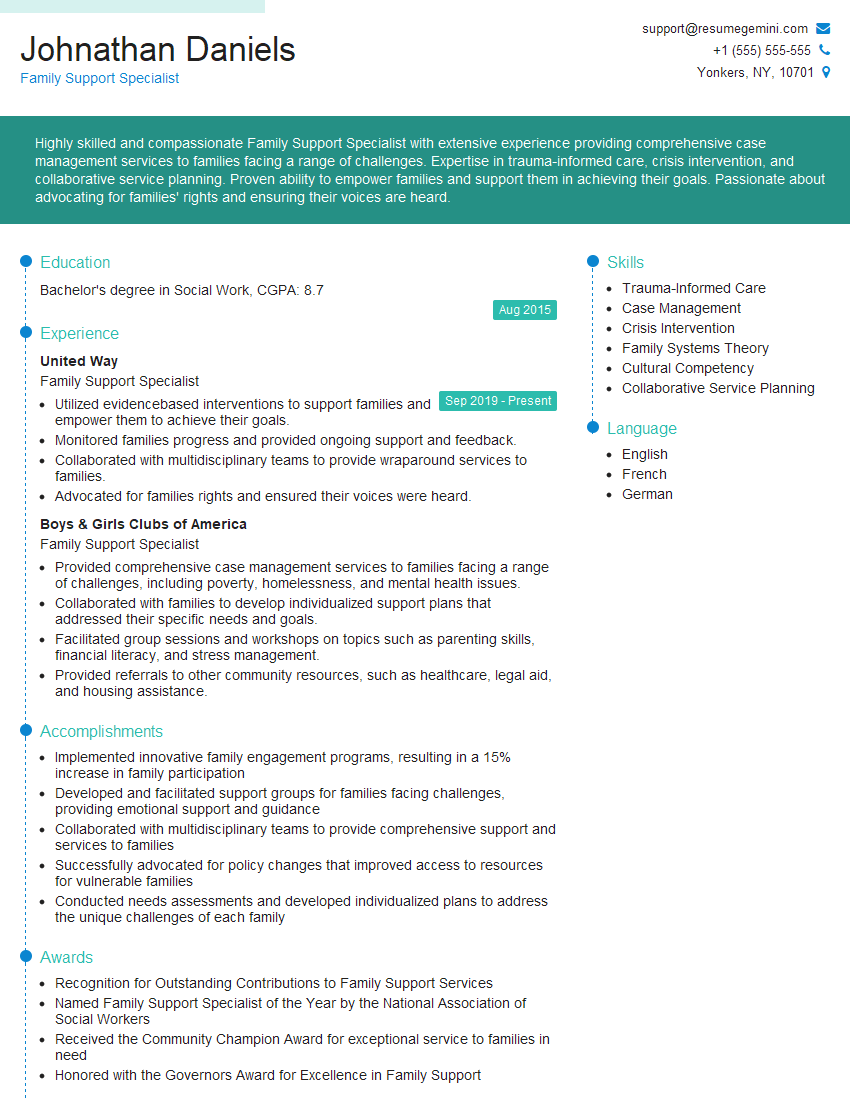
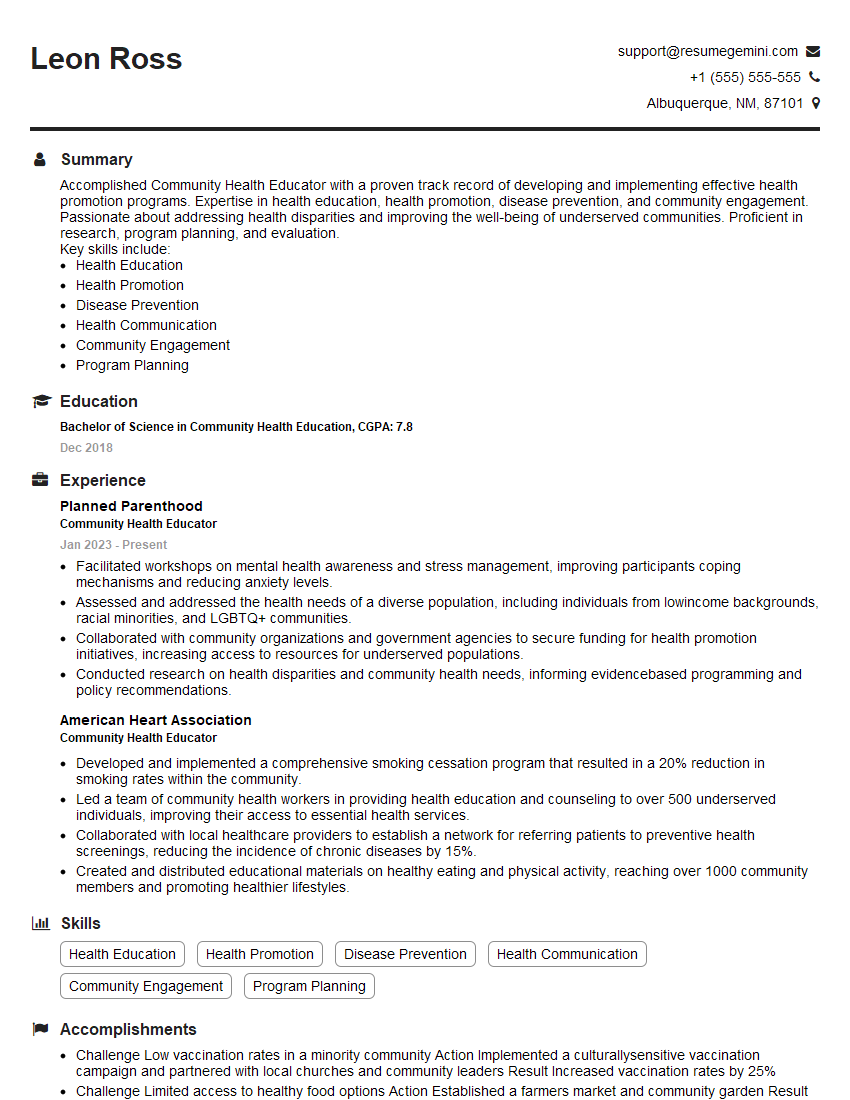
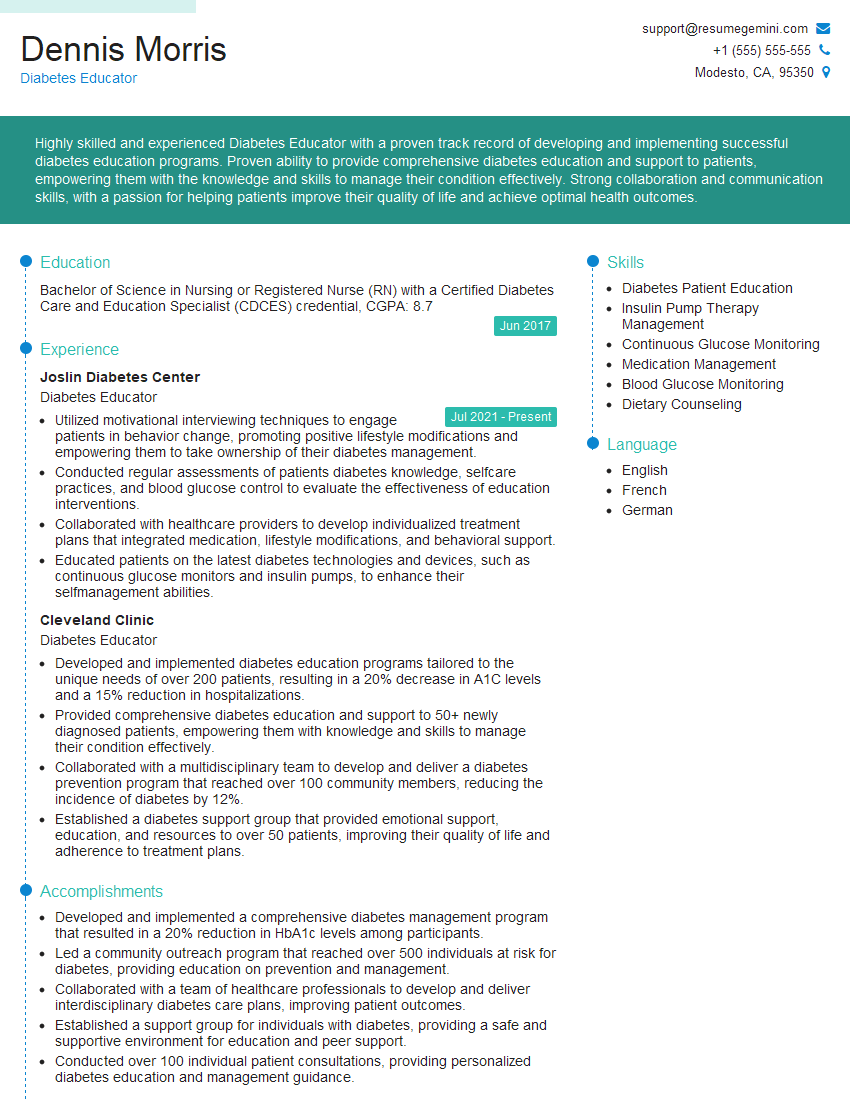
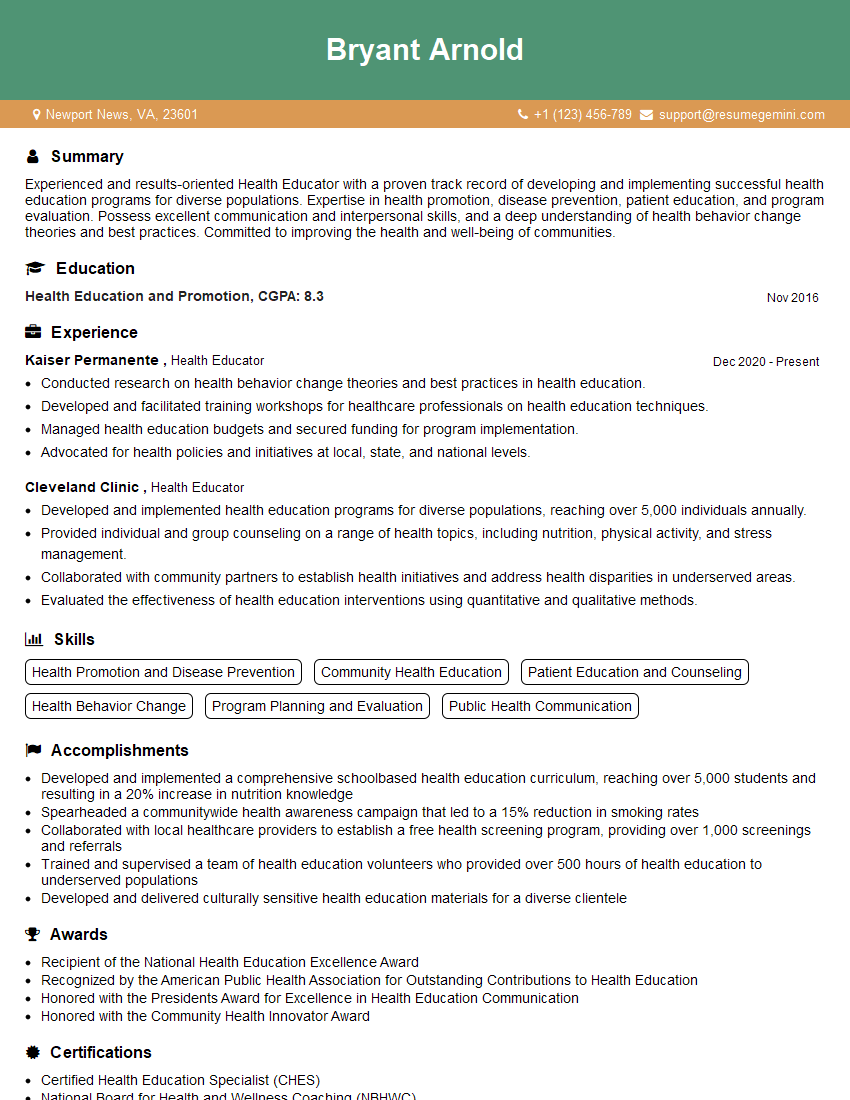
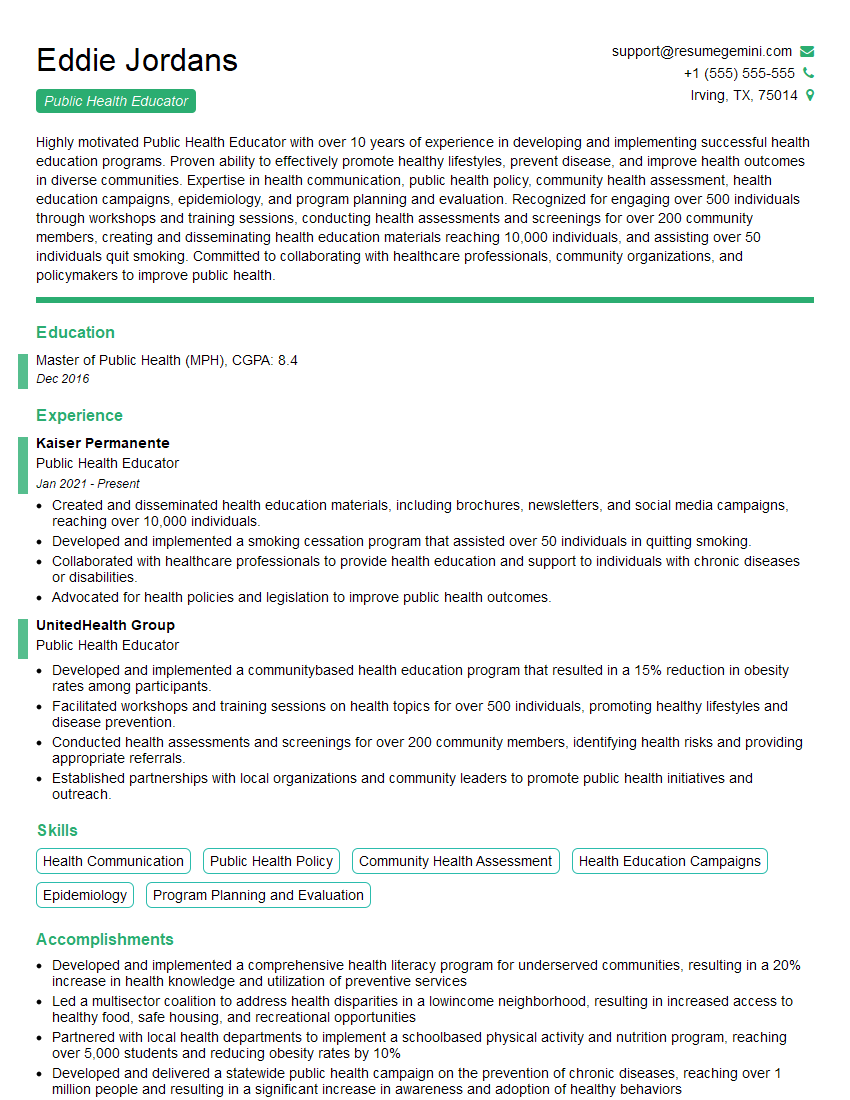
Mastering Client and Family Education is crucial for career advancement in healthcare and related fields. Demonstrating proficiency in these skills significantly enhances your value to any organization. To increase your job prospects, create a strong, ATS-friendly resume that highlights your relevant skills and experiences. We strongly recommend using ResumeGemini to build a professional and effective resume. ResumeGemini provides examples of resumes tailored to Client and Family Education to guide you through the process, ensuring your application stands out.

Explore more articles
Users Rating of Our Blogs
Share Your Experience
We value your feedback! Please rate our content and share your thoughts (optional).
What Readers Say About Our Blog
To the interviewgemini.com Webmaster.
Very helpful and content specific questions to help prepare me for my interview!
Thank you
To the interviewgemini.com Webmaster.
This was kind of a unique content I found around the specialized skills. Very helpful questions and good detailed answers.
Very Helpful blog, thank you Interviewgemini team.