Cracking a skill-specific interview, like one for Clinical Teaching and Mentoring, requires understanding the nuances of the role. In this blog, we present the questions you’re most likely to encounter, along with insights into how to answer them effectively. Let’s ensure you’re ready to make a strong impression.
Questions Asked in Clinical Teaching and Mentoring Interview
Q 1. Describe your experience developing and delivering clinical teaching curricula.
Developing and delivering clinical teaching curricula requires a systematic approach that blends theoretical knowledge with practical application. My experience involves a multi-stage process: first, a thorough needs assessment to identify learning gaps and desired competencies. Then, I design a curriculum aligning with established learning objectives and incorporating diverse teaching methodologies. This includes selecting appropriate cases, simulations, and practical exercises to ensure a well-rounded learning experience. Finally, I pilot test the curriculum, seeking feedback from learners and faculty to refine and improve it. For example, while developing a curriculum on advanced wound care, I included both didactic lectures on the latest evidence-based practices and hands-on workshops where learners practiced wound assessment and dressing techniques on simulated patients. This blended approach proved significantly effective compared to purely lecture-based learning.
Q 2. How do you assess learner needs and tailor your teaching methods accordingly?
Assessing learner needs is paramount to effective teaching. I utilize a multifaceted approach, starting with pre-course assessments, such as questionnaires and knowledge tests, to gauge prior knowledge and identify learning gaps. During the course, I actively observe learners, paying attention to their participation, questions, and performance in practical tasks. I also conduct regular formative assessments, including quizzes and short assignments, which provide ongoing feedback and reveal areas needing further attention. For example, if I notice that several learners are struggling with a specific clinical skill, such as intravenous cannulation, I would tailor my teaching by providing additional one-on-one instruction, supplemental resources, and more practice opportunities using simulation technology. It’s a continuous feedback loop that informs my teaching strategy throughout the learning process.
Q 3. Explain your approach to providing constructive feedback to learners.
Constructive feedback is crucial for learner growth. My approach focuses on providing specific, actionable, and balanced feedback. I avoid generalizations and instead pinpoint both strengths and areas for improvement. For instance, instead of saying ‘You need to improve your communication skills,’ I would say ‘During the patient interaction, your body language seemed somewhat distant. Try maintaining eye contact and using a more empathetic tone.’ I often use the ‘sandwich method,’ starting with positive feedback, followed by constructive criticism, and ending with another positive comment to boost learner confidence. I also encourage learners to reflect on their own performance and to set personal learning goals, fostering self-directed learning. I believe in creating a safe space for honest dialogue where learners feel comfortable asking questions and receiving feedback without feeling judged.
Q 4. How do you handle challenging learners or those struggling with clinical skills?
Handling challenging learners or those struggling with clinical skills requires patience, empathy, and a personalized approach. I first try to understand the underlying reason for the difficulty. Is it a lack of foundational knowledge, anxiety, learning disabilities, or a lack of motivation? Once the root cause is identified, I can tailor my intervention. This might involve providing additional support through tutoring, referring them to relevant resources, or adjusting the teaching methods to better suit their learning style. For instance, a visual learner might benefit from diagrams and videos, while a kinesthetic learner might prefer hands-on practice. It’s important to maintain open communication, set realistic expectations, and celebrate small successes. Collaboration with other educators and mentors can also be beneficial in addressing complex cases. I view challenges as opportunities for growth, both for the learner and myself as an educator.
Q 5. Describe your experience using different teaching methodologies (e.g., case-based learning, simulation).
I utilize a variety of teaching methodologies to cater to diverse learning styles. Case-based learning is a cornerstone of my teaching, as it encourages critical thinking and problem-solving skills in realistic scenarios. Simulations, including high-fidelity patient simulators and standardized patients, provide a safe environment for learners to practice clinical skills and receive immediate feedback without risk to real patients. For example, a simulation of a cardiac arrest allows learners to practice teamwork, critical decision-making, and technical skills in a controlled setting. I also incorporate problem-based learning, where learners work collaboratively to solve complex clinical problems. The choice of methodology depends on the learning objectives and the specific skills being taught. The effective integration of these methods provides a holistic and engaging learning experience.
Q 6. How do you incorporate evidence-based practices into your clinical teaching?
Evidence-based practice (EBP) is central to my clinical teaching. I ensure that all teaching materials and clinical guidelines are based on the latest research and best practices. I regularly review current literature and incorporate new findings into my teaching, ensuring learners are equipped with up-to-date knowledge. For example, when teaching about managing hypertension, I use evidence from meta-analyses and randomized controlled trials to demonstrate the efficacy of different treatment regimens and to guide decision-making. I also train learners to critically appraise research articles and to identify high-quality evidence to inform their practice. This focus on EBP helps learners develop a lifelong learning approach and promotes the delivery of safe and effective patient care.
Q 7. How do you foster a positive and supportive learning environment?
Fostering a positive and supportive learning environment is crucial for learner engagement and success. I create a culture of mutual respect, trust, and open communication. I actively encourage questions and participation, and I strive to make learning enjoyable and relevant. I utilize various strategies to build rapport with learners, including learning their names, showing genuine interest in their progress, and recognizing their efforts. I promote peer learning through group activities and discussions, which encourage collaboration and knowledge sharing. A safe and supportive learning environment allows learners to take risks, make mistakes, and learn from them without fear of judgment. This builds confidence and fosters a growth mindset, essential for successful clinical practice.
Q 8. Explain your experience with mentoring junior colleagues or students.
Throughout my career, I’ve mentored numerous junior colleagues and students, both formally and informally. My approach centers around building a strong mentor-mentee relationship based on trust and mutual respect. I believe in fostering a supportive environment where learners feel comfortable asking questions, sharing concerns, and taking risks.
For example, I recently mentored a newly qualified nurse who was struggling with time management on a busy ward. We worked together to develop a personalized time management plan, utilizing techniques like prioritization matrices and time-blocking. I provided regular feedback and support, celebrating her successes and offering constructive criticism when needed. This collaborative approach led to significant improvement in her efficiency and confidence.
Another example involves supervising medical students during their clinical rotations. I guide them through patient encounters, facilitate their learning through observation and feedback, and encourage them to develop their clinical reasoning skills. I often use reflective practice techniques, prompting them to consider their actions and decision-making processes. This reflective approach helps them learn from both successes and mistakes, fostering a growth mindset.
Q 9. Describe a time you had to address a conflict between learners or with a learner.
Addressing conflict is an inevitable part of clinical teaching. I recall a situation where two medical students had a disagreement about the best approach to a patient’s care. Rather than immediately intervening, I facilitated a structured discussion between them, encouraging them to articulate their perspectives and listen to each other’s viewpoints. This collaborative problem-solving approach enabled them to identify common ground and develop a mutually agreeable plan.
In another instance, a student expressed frustration with their progress and felt overwhelmed by the workload. I listened empathetically, validating their feelings before addressing the practical aspects of their concerns. Together, we identified specific areas where they needed support, adjusted their learning goals, and developed a more manageable study plan. Open communication, empathy, and a focus on finding collaborative solutions are crucial in resolving conflicts constructively.
Q 10. How do you measure the effectiveness of your teaching and mentoring?
Measuring the effectiveness of teaching and mentoring requires a multi-faceted approach. I utilize a combination of quantitative and qualitative methods. Quantitative measures include student performance on examinations, clinical assessments, and feedback surveys. These provide objective data on knowledge acquisition and skill development.
However, equally important are qualitative measures, such as direct observation of learners during clinical practice, feedback from preceptors and colleagues, and reflective journals from the learners themselves. These provide insights into their critical thinking, problem-solving skills, and overall professional development. I also regularly seek feedback from learners regarding my teaching methods and adjust my approach based on their input.
For example, analyzing student performance on OSCE (Objective Structured Clinical Examination) scores, combined with feedback from peer and supervisor evaluations, allows for a comprehensive evaluation of the impact of my teaching on learners’ practical skills and professionalism.
Q 11. How do you stay current with best practices in clinical teaching and mentorship?
Staying current with best practices is essential in this rapidly evolving field. I actively participate in professional development activities such as attending conferences, workshops, and seminars focused on clinical teaching and mentorship. I also regularly review relevant literature, including peer-reviewed journals and educational resources.
Furthermore, I engage in reflective practice by regularly analyzing my own teaching methods, seeking feedback from colleagues and learners, and adapting my approach to incorporate new strategies and techniques. Membership in professional organizations such as the Association of American Medical Colleges (AAMC) or similar organizations provides access to the latest research and best practices in medical education.
Q 12. Describe your experience with using technology to enhance clinical teaching.
Technology significantly enhances clinical teaching. I utilize various tools, including online learning platforms (e.g., Moodle, Canvas) for delivering course materials, facilitating discussions, and providing feedback. Simulation software allows learners to practice clinical skills in a safe and controlled environment, improving their confidence and competency before encountering real patients.
Telemedicine platforms can be used to extend learning opportunities beyond the physical classroom. For instance, I have utilized video conferencing to conduct virtual ward rounds and bedside teaching sessions, allowing learners to observe and participate in patient care remotely. The use of virtual reality and augmented reality technologies shows immense potential for future applications in clinical teaching, offering immersive learning experiences.
Q 13. How do you integrate interprofessional education into your teaching?
Interprofessional education (IPE) is crucial for preparing healthcare professionals to work collaboratively. I integrate IPE into my teaching by creating opportunities for learners from different disciplines (e.g., medicine, nursing, pharmacy) to work together on simulated or real-life patient cases. This collaborative approach encourages learners to understand each other’s roles, perspectives, and communication styles.
For example, I often facilitate interprofessional case studies where students from different disciplines collaboratively develop and implement care plans for simulated patients. This allows them to learn about each other’s perspectives and develop effective communication and teamwork skills. IPE enhances teamwork, communication, and patient-centered care, preparing students for real-world healthcare settings.
Q 14. How do you promote learner autonomy and self-directed learning?
Promoting learner autonomy and self-directed learning is a key aspect of my teaching philosophy. I encourage learners to take ownership of their learning by setting their own goals, identifying their learning needs, and selecting appropriate learning resources. I act as a facilitator, guiding and supporting them throughout this process.
Techniques such as problem-based learning (PBL) and self-assessment tools empower learners to actively engage in their learning. Providing learners with access to a variety of learning resources, such as online databases, textbooks, and journal articles, allows them to pursue their individual interests and explore topics in greater depth. Regular feedback and reflective discussions help learners track their progress and identify areas for improvement. This approach fosters a lifelong learning attitude that is essential for success in the dynamic field of healthcare.
Q 15. How do you ensure learner safety during clinical training?
Learner safety is paramount in clinical training. My approach is multi-faceted and begins with a robust orientation process that covers safety protocols, emergency procedures, and the reporting of incidents. This includes clear communication of expectations regarding infection control, patient confidentiality (HIPAA compliance), and the proper handling of equipment and medications.
Throughout the training period, I maintain consistent supervision, adapting the level of oversight based on the learner’s skill level and the complexity of the task. For instance, a novice learner might require direct supervision during a procedure, while a more experienced learner could work with indirect supervision, checking in regularly and being readily available for consultation. I also emphasize the importance of self-advocacy; learners are encouraged to ask questions, express concerns, and stop if they feel unsafe or unsure about a procedure. Finally, regular debriefing sessions allow for reflection on potential safety concerns and opportunities for improvement.
For example, in a recent training session involving wound care, I ensured all learners were equipped with appropriate PPE and provided detailed instructions on sterile technique. Regular checks throughout the procedure, coupled with immediate feedback and correction, helped minimize potential risks.
Career Expert Tips:
- Ace those interviews! Prepare effectively by reviewing the Top 50 Most Common Interview Questions on ResumeGemini.
- Navigate your job search with confidence! Explore a wide range of Career Tips on ResumeGemini. Learn about common challenges and recommendations to overcome them.
- Craft the perfect resume! Master the Art of Resume Writing with ResumeGemini’s guide. Showcase your unique qualifications and achievements effectively.
- Don’t miss out on holiday savings! Build your dream resume with ResumeGemini’s ATS optimized templates.
Q 16. What is your approach to evaluating learner performance?
My approach to evaluating learner performance is holistic and incorporates multiple methods for a comprehensive assessment. I utilize a combination of direct observation, patient chart review, feedback from clinical preceptors and patients (when appropriate and with consent), and self-reflection exercises.
Direct observation allows me to assess technical skills, clinical reasoning, communication skills, and professionalism in real-time. Patient chart reviews provide insight into the learner’s documentation skills, attention to detail, and ability to synthesize information. Feedback from preceptors and patients provides valuable perspectives on the learner’s overall performance and interpersonal interactions. Finally, self-reflection encourages learners to critically evaluate their own strengths and weaknesses, fostering self-awareness and continuous improvement.
A structured rubric with clear criteria is used for each assessment method, ensuring objectivity and consistency. Feedback is delivered constructively, focusing on both strengths and areas for development, with specific examples to support the assessment. This ensures that the evaluation process is not only informative but also supportive of the learner’s growth.
Q 17. Describe your experience in curriculum development and assessment.
I have extensive experience in curriculum development and assessment, having participated in the design, implementation, and evaluation of several clinical training programs. My approach involves a needs assessment to identify learning gaps and align the curriculum with relevant clinical standards and best practices.
In developing curricula, I utilize a variety of teaching methodologies, including case studies, simulations, problem-based learning, and interactive workshops. I also integrate technology effectively, utilizing online learning platforms and digital resources to enhance the learning experience. Assessment methods are diverse and align with the learning objectives; they include written exams, practical skills assessments, osce (objective structured clinical examinations), and portfolio reviews. The assessment process emphasizes formative feedback to support learner progress and summative evaluations to measure overall achievement of learning objectives.
For example, I recently helped develop a new curriculum for pediatric nursing which included the design of several realistic simulation scenarios to practice complex clinical skills in a safe environment.
Q 18. How do you manage your time effectively when juggling teaching, mentoring, and other responsibilities?
Effective time management is crucial when juggling teaching, mentoring, and other responsibilities. My strategy involves careful planning and prioritization. I start by creating a detailed schedule that allocates specific time blocks for teaching, mentoring, administrative tasks, and personal time. I utilize tools like calendars and to-do lists to track deadlines and appointments.
Prioritization involves focusing on high-impact tasks that align with my overarching goals. I regularly review my schedule and adjust it as needed based on changing priorities. Delegation is another important component; I identify tasks that can be delegated to others to free up my time for higher-priority activities. Finally, I prioritize self-care to maintain my energy levels and prevent burnout. This might include scheduling regular breaks, exercising, and engaging in hobbies outside of work.
Using time-blocking, I allocate specific times for reviewing student work, preparing lectures, and conducting mentoring sessions, ensuring dedicated time for each task. This prevents one aspect from overshadowing the others.
Q 19. How do you adapt your teaching style to different learning styles and needs?
Adapting my teaching style to different learning styles and needs is essential for effective instruction. I employ a variety of teaching methods to cater to visual, auditory, and kinesthetic learners. I also consider individual learning preferences and learning pace.
For visual learners, I utilize diagrams, charts, and multimedia presentations. For auditory learners, I incorporate discussions, lectures, and audio-visual aids. Kinesthetic learners benefit from hands-on activities, simulations, and role-playing. I also use differentiated instruction, adjusting the level of complexity and support to meet the specific needs of each learner. This might involve providing additional resources, individualized assignments, or extending deadlines as needed. Regular communication and feedback from learners is vital in this adaptation process.
For example, when teaching a complex procedure, I might use a step-by-step video for visual learners, provide verbal explanations for auditory learners, and allow hands-on practice for kinesthetic learners.
Q 20. What resources do you utilize to support your teaching and mentoring?
I utilize a wide range of resources to support my teaching and mentoring. These include access to up-to-date clinical guidelines and evidence-based practices from professional organizations, such as the American Medical Association or similar relevant organizations depending on the specific clinical area.
I also leverage educational databases and online resources for research and access to relevant case studies and simulations. Mentorship programs, peer-to-peer networking, and professional development workshops keep me abreast of the latest advancements in the field. Collaboration with clinical colleagues and preceptors allows for shared knowledge and diverse perspectives. Finally, I frequently utilize feedback from learners and other stakeholders to continually refine my teaching approaches and identify areas for improvement.
For example, I regularly consult resources from the Agency for Healthcare Research and Quality (AHRQ) to ensure my teaching aligns with the most current evidence-based practices in patient safety and quality improvement.
Q 21. Describe your experience with program evaluation and improvement.
Program evaluation and improvement are essential for ensuring the effectiveness of clinical training programs. My experience involves using both quantitative and qualitative methods to gather data on learner outcomes, program effectiveness, and areas for improvement.
Quantitative methods include analyzing learner performance data (e.g., exam scores, competency ratings), tracking student satisfaction surveys, and measuring program completion rates. Qualitative methods involve collecting feedback from learners, preceptors, and other stakeholders through focus groups, interviews, and open-ended surveys.
Data analysis helps identify strengths and weaknesses of the program. Based on the analysis, recommendations are developed for improvements in curriculum, teaching methods, assessment strategies, and resources. These improvements are implemented in an iterative process of continuous quality improvement, ensuring the program consistently meets its objectives and learners achieve the desired competencies. This might involve changes to the curriculum based on feedback from learners, or altering assessment methods for better clarity and accuracy. Regular monitoring and evaluation ensure ongoing effectiveness of the improvements.
Q 22. How do you handle ethical dilemmas that may arise during clinical teaching?
Ethical dilemmas in clinical teaching are unfortunately inevitable. They often involve balancing patient confidentiality, learner competency, and the need for safe and effective patient care. My approach is rooted in a systematic framework. First, I clearly identify the ethical conflict. For instance, a student might witness a colleague acting unethically, or a patient might express discomfort with a learner’s presence. Second, I facilitate open and honest discussion with all involved parties – the student, the patient (with their consent), and the supervising physician, adhering strictly to professional guidelines and institutional policies. Third, we explore the ethical principles at stake – autonomy, beneficence, non-maleficence, and justice – applying relevant ethical frameworks like utilitarianism or deontology to weigh the potential consequences of various actions. Finally, we collaboratively develop a solution that respects everyone’s rights and minimizes harm. A crucial element is documentation – detailed records of the dilemma, discussions held, and the agreed-upon action plan ensure transparency and accountability.
For example, if a student observes a colleague falsifying data, I would engage in a confidential conversation with the student, emphasizing the seriousness of the situation and the need for reporting. We would then collaboratively decide on the best course of action, which might involve reporting the incident through the appropriate channels while protecting the identity of the whistleblower as much as possible.
Q 23. How do you promote reflection and self-assessment in your learners?
Promoting reflection and self-assessment is fundamental to effective learning in clinical settings. I employ several strategies. Firstly, I encourage regular journaling, where students record their experiences, challenges, and insights. Secondly, I facilitate structured reflection sessions using frameworks like Gibbs’ reflective cycle (description, feelings, evaluation, analysis, conclusion, action plan) to guide a deeper analysis of their clinical encounters. Thirdly, I use deliberate practice techniques, where students repeatedly engage in specific skills and critically analyze their performance using video recordings or peer feedback. Finally, I utilize formative assessments, such as mini-CEX (mini-Clinical Evaluation Exercise) or 360-degree feedback, which provide timely feedback and identify areas for improvement. These techniques, when implemented consistently, help students develop self-awareness, refine their skills, and become more autonomous learners.
For instance, after a challenging patient interaction, I might ask a student to reflect on their communication style using Gibbs’ cycle, prompting them to describe the situation, their feelings during the interaction, their evaluation of their performance, an analysis of the factors influencing the interaction, their conclusions regarding their strengths and weaknesses, and a plan for improvement in similar future scenarios.
Q 24. How do you incorporate feedback from learners and supervisors to improve your teaching?
Incorporating feedback is essential for continuous improvement. I actively seek feedback from learners through various methods including formal evaluations, informal discussions, and anonymous surveys. These provide valuable insights into the clarity of my teaching, the effectiveness of learning activities, and the overall learning environment. Similarly, I solicit feedback from supervisors through regular meetings and performance reviews, focusing on my teaching methods, curriculum development, and mentorship strategies. This two-pronged approach ensures a comprehensive understanding of my teaching’s impact. I use this feedback constructively, adapting my teaching style, refining assessments, and revising learning materials to better suit learners’ needs and meet supervisors’ expectations. For instance, consistent feedback suggesting a need for more real-world case studies would lead me to incorporate more relevant clinical scenarios into my teaching materials and discussions.
Q 25. Describe your experience with different assessment methods (e.g., OSCE, clinical exams).
My experience encompasses a range of assessment methods. I’m proficient in designing and conducting Objective Structured Clinical Examinations (OSCEs), which allow for the standardized assessment of clinical skills in a controlled environment. I also have extensive experience with traditional clinical examinations, including direct observation of procedures, patient history-taking, and physical examination skills. In addition, I have utilized other assessment tools such as mini-CEX (mini-Clinical Evaluation Exercise), which provides frequent, focused feedback on specific clinical skills in real-time clinical settings. Each method has its strengths and weaknesses, and I tailor my approach to the specific learning objectives and the context of the assessment. For example, OSCEs are ideal for assessing procedural skills, while mini-CEX better reflects the dynamic nature of clinical practice. I believe a multi-method approach provides a more holistic and reliable evaluation of learner competency.
Q 26. How do you ensure equity and inclusion in your teaching and mentoring practices?
Equity and inclusion are paramount in my teaching and mentoring practices. I strive to create a learning environment that is welcoming and respectful of all learners, regardless of their background, gender, race, ethnicity, or learning styles. This starts with understanding and addressing potential biases in my own teaching materials and assessments. I use inclusive language, adapt teaching methods to cater for different learning preferences, and proactively seek out and address any barriers to learning that students might face. I also encourage collaboration and peer learning, fostering a sense of community and mutual support. Furthermore, I regularly review my teaching materials and practices to identify and rectify any instances of implicit bias. For instance, using diverse case studies and examples in my lectures ensures that learners from various backgrounds can relate to the material.
Q 27. Describe your approach to fostering a culture of continuous learning.
Fostering a culture of continuous learning involves creating an environment where learners feel empowered and motivated to pursue lifelong learning. This includes providing learners with access to relevant resources, such as journals, online databases, and continuing education opportunities. I encourage them to actively participate in professional development activities, attend conferences, and engage in scholarly activities. I also model continuous learning myself by regularly updating my knowledge and skills, sharing new insights with learners, and engaging in reflective practice. Furthermore, I facilitate opportunities for mentorship and peer learning, encouraging collaborative knowledge sharing and development. A key aspect is feedback – learners need to understand how their performance aligns with professional standards, prompting self-reflection and continuous improvement.
Q 28. What are your career goals in clinical teaching and mentoring?
My career goals in clinical teaching and mentoring center on developing and implementing innovative teaching strategies that enhance learner engagement and improve the quality of healthcare professionals. I aim to contribute to the development of high-quality curriculum, incorporating cutting-edge technologies and pedagogical approaches. I aspire to lead and mentor colleagues, promoting excellence in clinical teaching and scholarship. Ultimately, I envision myself playing a leadership role in shaping the future of clinical education, ensuring that future healthcare professionals are equipped with the knowledge, skills, and attitudes needed to provide excellent patient care in an ever-evolving healthcare landscape. This includes contributing to research on effective clinical teaching methods and disseminating this knowledge through publications and presentations.
Key Topics to Learn for Clinical Teaching and Mentoring Interview
- Educational Theories and Approaches: Understanding various teaching methodologies (e.g., problem-based learning, experiential learning) and adapting them to the clinical setting. Consider how different learning styles impact your approach.
- Curriculum Development and Assessment: Designing effective learning objectives, selecting appropriate teaching materials, and developing strategies for evaluating trainee progress. This includes formative and summative assessment techniques.
- Mentorship Strategies and Techniques: Developing strong mentor-mentee relationships, providing constructive feedback, and fostering a supportive learning environment. Explore different mentorship models and their application.
- Clinical Supervision and Feedback: Providing regular feedback, addressing performance concerns, and facilitating the development of clinical skills. Focus on techniques for delivering constructive criticism effectively.
- Communication and Interpersonal Skills: Effective communication is crucial. Practice clear and concise communication, active listening, and conflict resolution techniques within the clinical teaching context.
- Professional Development and Self-Reflection: Demonstrate awareness of your own teaching style and identify areas for improvement. Discuss your commitment to ongoing professional development in clinical teaching and mentoring.
- Legal and Ethical Considerations: Understanding the legal and ethical implications of clinical teaching and mentoring, including confidentiality, professional boundaries, and duty of care.
- Diversity, Equity, and Inclusion: Discuss strategies for creating an inclusive learning environment that respects and values the diverse backgrounds and experiences of trainees.
Next Steps
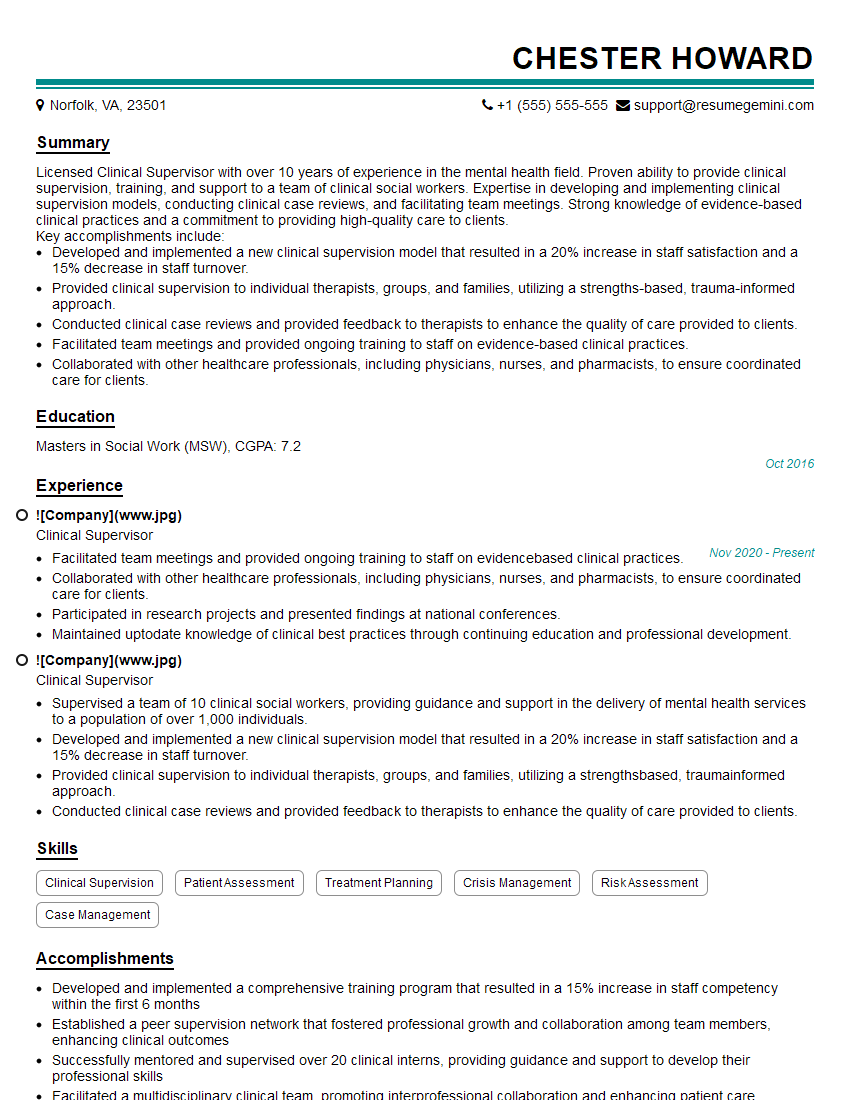
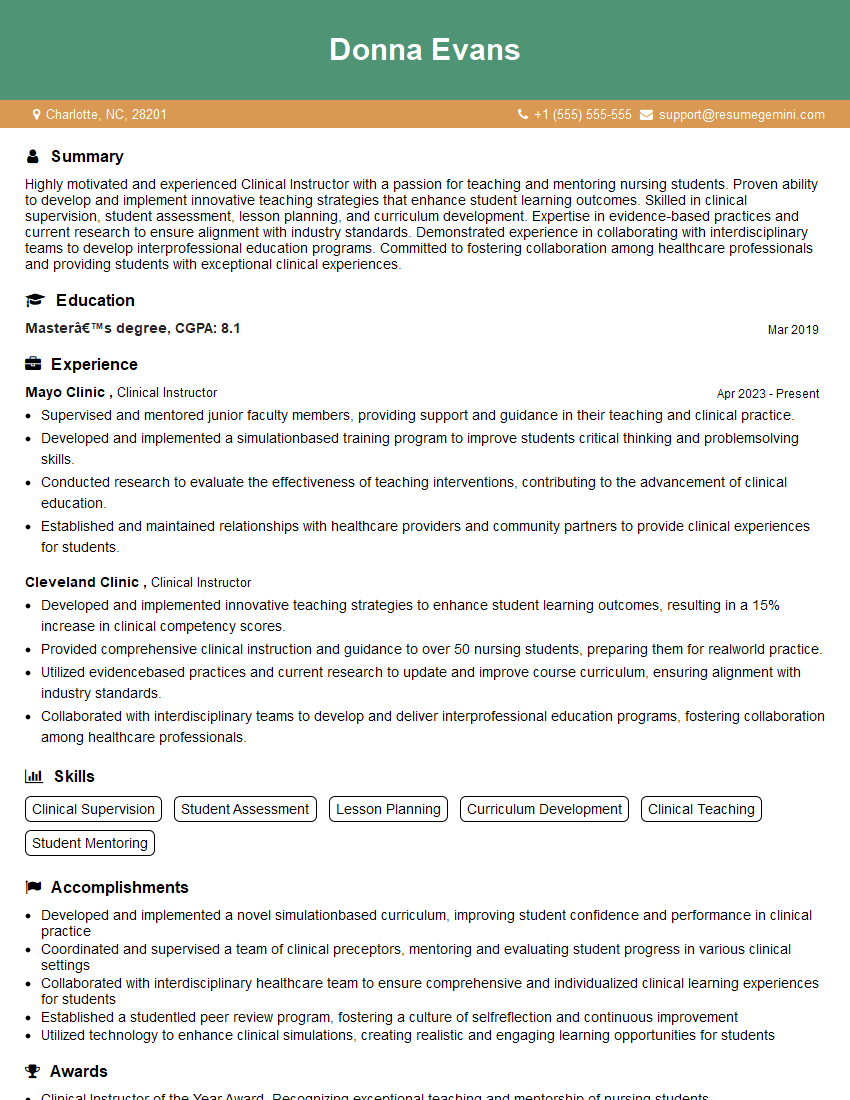
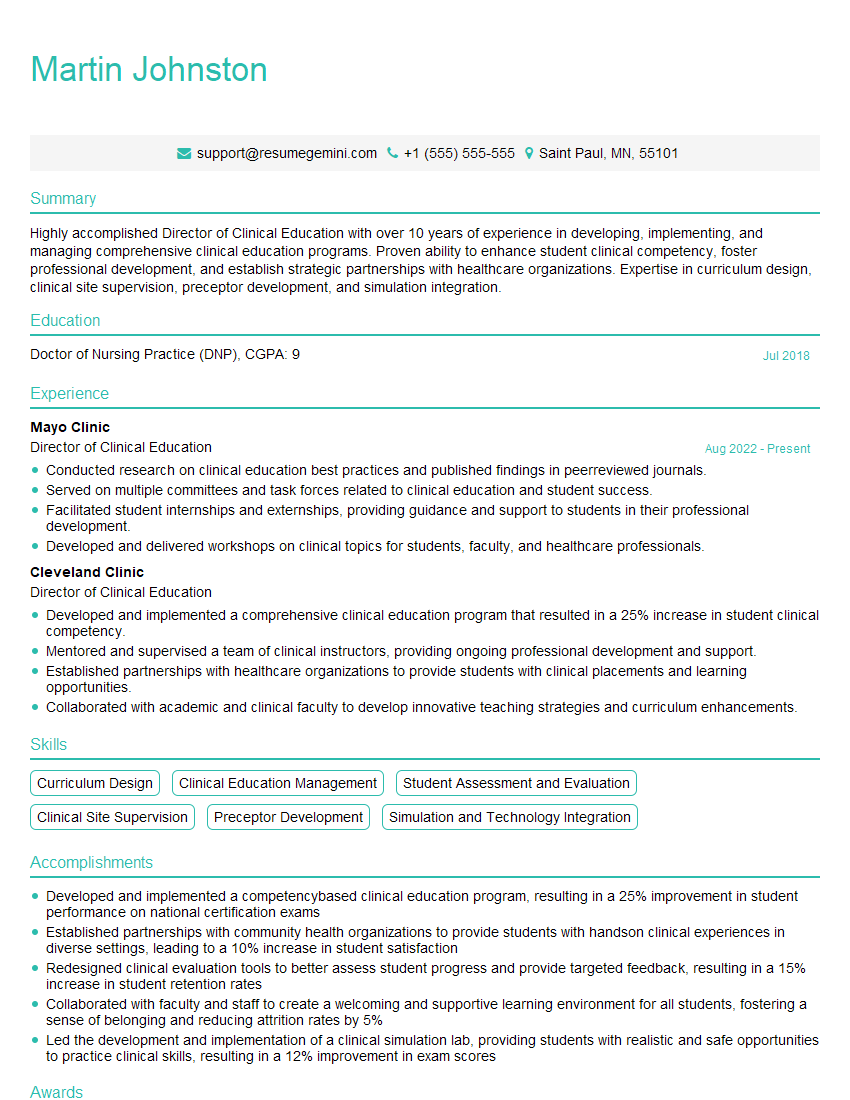
Mastering clinical teaching and mentoring is pivotal for career advancement, opening doors to leadership roles and increased responsibility within your field. A strong resume is your key to unlocking these opportunities. Crafting an ATS-friendly resume significantly increases your chances of getting noticed by recruiters. To ensure your resume stands out, we strongly recommend utilizing ResumeGemini, a trusted resource for building professional and impactful resumes. ResumeGemini provides examples of resumes tailored to Clinical Teaching and Mentoring, giving you a head start in creating a compelling document that showcases your skills and experience.
Explore more articles
Users Rating of Our Blogs
Share Your Experience
We value your feedback! Please rate our content and share your thoughts (optional).
What Readers Say About Our Blog
To the interviewgemini.com Webmaster.
Very helpful and content specific questions to help prepare me for my interview!
Thank you
To the interviewgemini.com Webmaster.
This was kind of a unique content I found around the specialized skills. Very helpful questions and good detailed answers.
Very Helpful blog, thank you Interviewgemini team.