Unlock your full potential by mastering the most common Code Compliance (NEC and Local) interview questions. This blog offers a deep dive into the critical topics, ensuring you’re not only prepared to answer but to excel. With these insights, you’ll approach your interview with clarity and confidence.
Questions Asked in Code Compliance (NEC and Local) Interview
Q 1. Explain the difference between the NEC and local building codes.
The National Electrical Code (NEC) is a nationally recognized standard for electrical safety, developed by the National Fire Protection Association (NFPA). Local building codes, on the other hand, are regulations adopted at the city, county, or state level. Think of the NEC as a foundation, a set of minimum safety requirements. Local codes then build upon this foundation, often adding stricter requirements or specific regulations based on local conditions, climate, or unique regional circumstances. For example, the NEC might specify minimum wire gauge for a particular application, while a local code might mandate a higher gauge in areas prone to extreme temperature fluctuations.
Essentially, the NEC provides the baseline, and local codes customize it for specific localities. Always check both the NEC and your local jurisdiction’s building codes for complete compliance.
Q 2. Describe your experience with plan review and code compliance.
Throughout my career, I’ve extensively participated in plan review and code compliance processes. I’ve reviewed hundreds of electrical plans, ensuring they adhere to both NEC and local code requirements. This includes verifying proper grounding, sizing of conductors, protection from overcurrent, and the correct installation of equipment. I’ve worked on various projects, ranging from small residential renovations to large commercial developments. For instance, on one project, I identified a potential hazard in the proposed placement of a main electrical panel in a high-humidity area, which wouldn’t have been immediately apparent without a thorough plan review. My involvement ensured that the design was corrected to meet code and prevent a future safety risk.
My experience also encompasses on-site inspections to confirm that construction aligns with approved plans and codes. I’ve addressed discrepancies, ensuring compliance and safety standards are maintained.
Q 3. How do you handle disagreements with contractors regarding code compliance?
Disagreements with contractors are handled professionally and collaboratively. My approach prioritizes clear communication and a focus on safety. I begin by reviewing the specific code sections in question. I present the relevant code requirements and explain how the contractor’s work deviates from them. I often use photos and diagrams to highlight the discrepancies. If the contractor has a legitimate question or alternative solution, I’m open to reviewing their proposal, ensuring it still aligns with the code’s intent. If a resolution can’t be reached through discussion, a formal written notice outlining the violations and necessary corrections is issued. In extreme cases, I may escalate the issue to the permitting authority.
The key is to maintain a professional tone and document everything meticulously.
Q 4. What is your familiarity with the latest NEC updates?
I maintain a thorough understanding of the latest NEC updates by actively engaging with NFPA resources, including attending relevant seminars and workshops. I subscribe to industry publications and regularly check for code changes and errata. Recent updates I’m familiar with include those concerning arc-fault circuit interrupters (AFCIs), ground-fault circuit interrupters (GFCIs), and the increased focus on renewable energy systems integration. I understand the nuances of these updates and their practical implications on building projects. For example, the changes related to EV charging stations require detailed knowledge of the increased load calculations and the requirements for specific wiring methods.
Q 5. Describe your experience enforcing building codes in the field.
My field experience in enforcing building codes involves conducting thorough inspections during various stages of construction. I’ve inspected residential, commercial, and industrial sites, examining everything from wiring installations to grounding systems. I use various testing instruments to verify compliance, such as multimeters, clamp meters, and insulation resistance testers. I’ve had to issue stop-work orders in situations where critical code violations posed immediate safety hazards. For instance, I stopped work on a project where improper grounding was discovered—this could’ve resulted in electric shock or fire.
I always prioritize a proactive approach, working with contractors to address issues early in the process rather than waiting for major problems to develop.
Q 6. How do you identify and address code violations?
Identifying code violations involves a systematic approach. I begin with a thorough visual inspection, looking for any obvious discrepancies. This is followed by using testing equipment to verify proper electrical connections, grounding, and insulation. I meticulously review the plans and compare them to the actual installation. I use checklists to guide my inspections and ensure that nothing is missed. I document all findings with photographs and detailed reports. Common violations I encounter include improper grounding, incorrect wire sizing, missing GFCIs in appropriate locations, and lack of proper labeling. Addressing violations involves issuing notices to correct the identified issues, providing contractors with a clear explanation of the required changes.
Q 7. Explain the process of issuing permits and inspections.
The process begins with an application for a permit, submitted by the contractor or homeowner. This application includes plans, specifications, and other relevant documentation. My role involves reviewing the application for compliance with NEC and local codes. If the application meets requirements, a permit is issued, authorizing the work to commence. Inspections are scheduled at various stages of the project—rough-in inspection, final inspection, etc. During inspections, I verify that the work complies with the approved plans and codes. If violations are found, I issue notices of correction, requiring the contractor to rectify them before issuing a certificate of occupancy or final approval. The entire process is meticulously documented, with all inspections and findings recorded in the project files. Transparency and clear communication with all stakeholders are crucial throughout this process.
Q 8. How do you prioritize inspections based on risk factors?
Prioritizing inspections based on risk factors is crucial for efficient and effective code enforcement. We employ a risk-based approach, categorizing potential violations based on their severity and likelihood of causing harm. This involves a multi-faceted assessment.
- Imminent Danger: Inspections addressing immediate hazards like exposed wiring, structural instability, or unsafe gas leaks take top priority. These situations pose an immediate threat to life and safety and require immediate attention.
- High Risk: Violations that have a high probability of leading to significant injury or property damage are next. This could include improper fire protection systems, inadequate electrical grounding, or serious plumbing defects.
- Medium Risk: Issues with moderate potential for harm, such as minor electrical code violations, or improperly installed smoke detectors, fall into this category. These are generally addressed through regular inspections and follow-up.
- Low Risk: Minor cosmetic issues or violations that have a low probability of causing harm are typically given the lowest priority. This allows us to focus resources on higher-risk situations.
For example, a building with reports of significant structural cracks would receive a higher priority inspection than a building with minor landscaping code violations. We use a scoring system, often incorporating a combination of objective and subjective factors, to help quantify and prioritize these risks.
Q 9. What are some common code violations you’ve encountered?
Over the years, I’ve encountered a wide range of code violations. Some of the most common include:
- Electrical: Improper grounding, overloaded circuits, insufficient GFCI protection in wet areas, and the use of unapproved wiring or devices. I once found a residence where the entire electrical system was severely overloaded, posing a significant fire hazard.
- Plumbing: Leaking pipes, inadequate venting, improper drainage, and the lack of pressure relief valves. A recurring issue is improperly installed gas lines, leading to potential gas leaks.
- Fire Safety: Lack of smoke detectors, improperly installed fire extinguishers, blocked fire exits, and insufficient fire separation between units. I’ve seen numerous cases where easily remedied issues like missing smoke detectors put occupants at risk.
- Structural: Inadequate foundation support, improperly framed walls, and missing or damaged load-bearing components. One particularly concerning case involved a building with compromised foundation elements, necessitating immediate remediation.
- Accessibility (ADA): Insufficient ramp slopes, inadequate doorway widths, and a lack of accessible restroom facilities. This is a critical area, ensuring equal access for everyone.
These violations highlight the need for rigorous inspections and adherence to building codes to ensure the safety and well-being of building occupants.
Q 10. How do you stay current with changes in building codes?
Staying current with building code changes is paramount. I utilize several strategies to ensure my knowledge remains up-to-date:
- Subscription to Code Updates: I subscribe to relevant publications and online resources that provide regular updates on code changes. This ensures I receive timely notifications about modifications and additions.
- Professional Development Courses: Attending continuing education seminars and workshops keeps me informed about the latest code interpretations and enforcement techniques. These courses often cover specific aspects of the NEC and local codes.
- Networking with Colleagues: Engaging with other code enforcement officers and professionals in the field allows for the exchange of knowledge and experiences, including insights into recent code updates and enforcement challenges.
- Review of Case Law: Staying abreast of relevant case law helps in understanding code interpretations and rulings, especially in ambiguous situations.
- Regular Code Book Review: Periodically reviewing the latest editions of the National Electrical Code (NEC) and relevant local codes is crucial to staying informed about any revisions.
By combining these methods, I maintain a strong understanding of current building codes and regulations.
Q 11. Explain the process of appealing a code violation.
The process of appealing a code violation typically involves several steps:
- Formal Appeal Submission: The property owner submits a formal written appeal to the appropriate authority, usually within a specified timeframe. The appeal must clearly state the reasons for contesting the violation.
- Review of Appeal: The appeal is reviewed by a designated official or appeals board, who may examine evidence, documentation, and potentially conduct further inspections.
- Hearing (if necessary): A hearing may be scheduled to allow both parties to present their arguments and evidence. This provides an opportunity for clarification and discussion.
- Decision: The appeals board renders a decision, which can either uphold the violation, modify it, or overturn it entirely. The decision is typically documented in writing.
- Further Action (if needed): If the appeal is unsuccessful, the property owner may have the option to pursue further legal action, such as an appeal to a higher court.
It’s important for both the property owner and the enforcement officer to maintain thorough documentation throughout the process.
Q 12. How do you use code books and reference materials?
Code books and reference materials are indispensable tools for code enforcement. I use them extensively in several ways:
- Code Interpretation: I constantly refer to code books to understand the specific requirements for different aspects of construction and building systems. The NEC, for instance, provides detailed guidelines on electrical installation.
- Violation Identification: During inspections, I use code books to identify potential violations and ensure they are correctly classified and documented.
- Enforcement Decisions: Code books serve as the basis for making enforcement decisions and determining appropriate corrective actions.
- Reference for Appeals: In case of appeals, I use code books as supporting documentation to demonstrate the validity of my findings.
- Staying Updated: Regular review ensures I stay updated on any code changes or interpretations.
I also rely on supplementary materials, such as manufacturer’s specifications and industry standards, to provide further context and support my conclusions.
Q 13. Describe your experience with documenting and reporting code violations.
Documenting and reporting code violations is a critical aspect of my work. My process involves:
- Detailed Inspection Report: I prepare a comprehensive report that details the location, nature, and severity of each violation. This includes photographs, sketches, and any relevant measurements.
- Clear and Concise Language: I use clear and unambiguous language in the report to avoid misunderstandings. Technical jargon is kept to a minimum, and explanations are straightforward.
- Proper Referencing: Each violation is referenced to the specific section of the applicable code, providing clear justification for the citation.
- Corrective Action Recommendations: The report includes specific recommendations for correcting each violation, ensuring clarity for the property owner.
- Follow-up Inspection: Once corrective actions are taken, I conduct a follow-up inspection to verify compliance and ensure the violations have been addressed satisfactorily.
Maintaining accurate and detailed records is crucial not only for enforcement but also for potential legal proceedings. Digital tools and software can streamline this process significantly.
Q 14. How familiar are you with ADA accessibility requirements?
I am very familiar with the Americans with Disabilities Act (ADA) accessibility requirements. My understanding encompasses a wide range of accessibility standards, including:
- Accessible Routes: Proper ramp slopes, curb cuts, and clear pathways free from obstructions.
- Entrance and Exits: Accessible entrances and exits with sufficient width and clear signage.
- Restrooms: Accessible restroom facilities with grab bars, adequate space, and appropriately sized fixtures.
- Parking: Designated accessible parking spaces with appropriate dimensions and signage.
- Communication: Provisions for accessible communication, including visual and auditory alerts.
I regularly utilize the ADA Standards for Accessible Design and other relevant guidelines during inspections to ensure compliance. Ensuring accessibility is critical for creating inclusive and welcoming environments for everyone.
Q 15. Explain your understanding of life safety codes.
Life safety codes are regulations designed to minimize risks to human life and health within buildings and structures. They address crucial aspects like fire protection, egress planning, and structural stability, ensuring a safe environment for occupants. These codes aren’t just about preventing fires; they encompass a broad range of safety measures, including:
- Fire Protection Systems: This includes requirements for fire sprinklers, smoke detectors, fire alarms, and fire suppression systems, all designed to detect and control fires quickly.
- Means of Egress: Codes dictate the minimum number, size, and accessibility of exits, ensuring people can safely evacuate the building in case of emergency. This includes considerations for stairwells, corridors, and exit signs.
- Structural Integrity: Regulations ensure buildings can withstand expected loads and environmental factors, preventing collapse and injury. This often involves specific requirements for materials, construction methods, and load calculations.
- Accessibility: Life safety codes include requirements for accessibility for people with disabilities, guaranteeing safe and easy navigation for everyone.
For example, the NEC (National Electrical Code) plays a vital role in life safety by mandating safe electrical installations, preventing electrical fires, and ensuring the proper grounding of electrical systems. Ignoring these codes can have severe consequences, leading to fatalities and significant property damage.
Career Expert Tips:
- Ace those interviews! Prepare effectively by reviewing the Top 50 Most Common Interview Questions on ResumeGemini.
- Navigate your job search with confidence! Explore a wide range of Career Tips on ResumeGemini. Learn about common challenges and recommendations to overcome them.
- Craft the perfect resume! Master the Art of Resume Writing with ResumeGemini’s guide. Showcase your unique qualifications and achievements effectively.
- Don’t miss out on holiday savings! Build your dream resume with ResumeGemini’s ATS optimized templates.
Q 16. What software or technology do you utilize for code compliance?
My work involves several software tools and technologies to maintain code compliance. I regularly use:
- Plan Review Software: Software like Bluebeam Revu allows for efficient plan review, annotation, and collaboration with architects and contractors. I use it to identify potential code violations during the design phase.
- Building Code Software: Access to digital versions of the NEC and local codes through online databases is critical for quick reference and updates. This ensures I always consult the most current regulations.
- Field Inspection Apps: Mobile apps streamline field inspections, allowing for digital record-keeping, photo documentation, and efficient report generation. These apps can also help manage and track inspection progress.
- Data Management Systems: I rely on databases to track permits, inspections, and violation records. This ensures efficient data management and easy access to relevant information.
In addition, proficiency in CAD software (AutoCAD, Revit) is beneficial for understanding complex building designs and identifying code-related issues in the design phase. The combination of these tools helps me effectively and efficiently manage code compliance projects.
Q 17. How do you ensure accurate and consistent enforcement of building codes?
Accurate and consistent code enforcement requires a multi-pronged approach focusing on:
- Thorough Plan Review: A detailed review of construction plans before work begins is essential to catch potential violations early. This prevents costly rework and ensures the project aligns with the codes from the outset.
- Regular On-site Inspections: Regular inspections at various stages of construction are crucial to verify that work is progressing according to the approved plans and code requirements. This includes both planned inspections and follow-up visits to address any issues that arise.
- Detailed Documentation: Maintaining meticulous records of all inspections, including photos, notes, and any identified violations, is paramount for accountability and transparency. This provides a clear audit trail for all activities.
- Clear Communication: Open communication with contractors and architects is key. Promptly addressing any questions or concerns prevents misunderstandings and ensures everyone is working towards the same goal.
- Consistent Application of Codes: Fair and consistent application of the codes, regardless of the project size or the individuals involved, is crucial for maintaining trust and integrity within the process. Any deviation must be justified and documented.
For example, if a contractor consistently fails to meet code requirements, I would issue a stop-work order and follow up with a detailed explanation of the violations, outlining the necessary corrective measures. This ensures consistent application and promotes compliance.
Q 18. Describe your experience working with different stakeholders (contractors, architects, homeowners).
My experience includes working with a wide range of stakeholders. Building strong relationships with contractors, architects, and homeowners is essential for effective code compliance.
- Contractors: I collaborate closely with contractors to ensure they understand and meet code requirements. This involves providing clear explanations, answering their questions, and offering guidance to resolve any ambiguities.
- Architects: I work with architects during the design phase, reviewing plans and offering suggestions to address potential code violations proactively. This collaborative approach prevents costly changes later in the process.
- Homeowners: For smaller projects or homeowner renovations, I communicate directly with homeowners, explaining the codes and addressing their concerns. This approach promotes understanding and ensures compliance with building regulations.
For example, I once worked with a contractor who was unsure about a specific interpretation of the NEC. I provided a detailed explanation of the relevant code sections and offered alternative solutions, helping them comply without compromising the project’s timeline or budget.
Q 19. How do you maintain impartiality and objectivity when enforcing codes?
Maintaining impartiality and objectivity is critical to my role. I achieve this through:
- Adherence to Codes: My primary focus is on the strict application of the relevant building codes and regulations. This ensures consistent treatment across all projects and stakeholders.
- Evidence-Based Decisions: All decisions regarding code compliance are based on documented evidence, including plans, inspections, and test results. This prevents bias and ensures fairness.
- Documentation and Transparency: Detailed documentation of all inspections, decisions, and communications is crucial. This ensures transparency and accountability, leaving a clear trail for review.
- Conflict Resolution Procedures: I’m trained in conflict resolution techniques to mediate disagreements and address challenges fairly. This can be particularly helpful in resolving disputes between contractors and homeowners.
If a situation arises where a personal bias could potentially affect my decision, I would remove myself from the process and ensure a neutral party handles the matter.
Q 20. What is your approach to educating contractors and homeowners about code requirements?
Educating contractors and homeowners about code requirements is a proactive approach to ensuring compliance. My methods include:
- Workshops and Seminars: Conducting workshops and seminars provides a platform to educate a broader audience on code changes and best practices.
- One-on-One Consultations: Offering one-on-one consultations allows me to tailor my explanation to specific situations and answer individual questions more efficiently.
- Informational Materials: Providing written materials, such as checklists and summaries of common code requirements, can serve as valuable resources.
- Online Resources: Utilizing online platforms for sharing information, providing frequently asked questions, and disseminating updates ensures accessible and ongoing education.
For instance, I’ve developed a simple checklist for homeowners undertaking small renovations, highlighting common code requirements related to electrical, plumbing, and structural aspects. This ensures they understand the essentials and can avoid costly mistakes.
Q 21. How do you handle complaints related to code violations?
Handling complaints related to code violations involves a systematic approach:
- Investigation: Upon receiving a complaint, I conduct a thorough investigation, gathering evidence from all parties involved. This might involve site visits, reviewing documents, and interviewing witnesses.
- Documentation: I maintain meticulous records of the complaint, the investigation process, and the findings. This documentation protects both the complainant and the respondent.
- Mediation: I try to mediate solutions wherever possible, encouraging parties to find mutually agreeable outcomes that resolve the violation and prevent future occurrences.
- Enforcement: If mediation fails, I enforce the relevant codes through warnings, stop-work orders, or further legal action if necessary. This ensures the safety of occupants and maintains the integrity of the code compliance process.
A recent example involved a neighbor complaint regarding inadequate fire separation in a new construction. My investigation revealed a violation, leading to a stop-work order until the contractor addressed the issue. Through open communication and mediation, we were able to find a solution that met code requirements while minimizing disruption to the project.
Q 22. Describe a situation where you had to make a difficult decision concerning code compliance.
One challenging situation involved a historical building renovation project. The project required a significant structural upgrade, but some proposed solutions clashed with the local historic preservation code. The challenge was to meet modern safety standards (NEC) without compromising the building’s architectural integrity. My difficult decision involved proposing a compromise solution—employing modern, but aesthetically compatible, materials and techniques that satisfied both the structural engineer’s demands and the historical preservation requirements. This involved extensive research into alternative materials, detailed submittals to the building department, and multiple meetings with stakeholders including the architects, engineers, contractors and historic preservation officers. Ultimately, the accepted solution required extra time and expense but ensured the project’s long-term viability and compliance, while maintaining the building’s historic charm.
Q 23. How do you balance code compliance with project timelines and budgets?
Balancing code compliance with project timelines and budgets requires proactive planning and communication. We start by thoroughly reviewing the applicable codes (NEC and local ordinances) at the project’s inception. This early review identifies potential conflicts or challenges early on, before they become major problems. This allows us to incorporate compliance measures into the project schedule and budget from the start. For instance, if a specialized permit is required, we factor in the processing time into our schedule. If specialized materials are needed for code compliance, those costs are built into the budget proposal. Regular communication with the project team (architects, engineers, contractors, and clients) is crucial to manage expectations and make informed decisions when faced with trade-offs. Sometimes, minor cost overruns or minor schedule adjustments are needed to achieve full compliance—this is explained and justified to the client. Ultimately, ensuring code compliance prevents far more costly and time-consuming problems down the road, such as stop-work orders or legal challenges.
Q 24. What strategies do you use to improve efficiency in code enforcement?
Efficiency in code enforcement is improved through a multi-pronged approach. Firstly, effective use of technology is key. This includes employing computerized plan review systems that automate checks against code requirements, streamlining the permit application process. Secondly, we foster collaborative relationships with contractors and architects. This involves proactive engagement, offering guidance during the design phase, helping to prevent code violations from arising. Thirdly, training plays a crucial role. Ongoing training for building inspectors ensures familiarity with the latest code updates and best practices. Lastly, focusing on preventative measures, like conducting pre-construction meetings and providing thorough code review of construction documents, helps significantly reduce the need for costly rework later in the project. This proactive approach is far more efficient than reacting to issues that arise during construction.
Q 25. Describe your understanding of building code interpretation.
Building code interpretation requires a deep understanding of the code’s structure, terminology, and intent. It’s not just about reading the words on the page; it’s about understanding the underlying principles and how different sections relate to one another. For example, understanding the hierarchy of codes (international, national, state, local) and how they interact is essential. Furthermore, interpreting codes often involves referencing related standards and applying engineering judgment to unique situations. I use a systematic approach, starting with the general requirements and then moving to more specific sections. When ambiguity exists, I consult reference materials, relevant case law, and engage in discussions with other code experts to arrive at the most accurate and safe interpretation. The goal is to find the most reasonable interpretation that safeguards public health and safety, but always remaining fair and consistent.
Q 26. How do you ensure that all relevant codes are applied to a project?
Ensuring all relevant codes are applied involves a multi-step process. First, I perform a thorough jurisdictional review to identify all applicable codes, including the NEC and any local ordinances specific to the project’s location. Next, I create a comprehensive checklist detailing all requirements for each stage of the project. This checklist acts as a guide for the project team to ensure nothing is overlooked. Regular monitoring and inspections are critical. This involves reviewing submitted documents, conducting on-site inspections, and tracking any necessary amendments or clarifications. Finally, working collaboratively with the project team ensures that everyone understands their responsibility to ensure compliance. This often includes regular meetings and detailed communication, both written and verbal. It’s a comprehensive, proactive process requiring ongoing vigilance.
Q 27. What is your experience with investigating and resolving code disputes?
I have extensive experience resolving code disputes. My approach is to first clearly understand each party’s position. This often involves reviewing plans, specifications, inspection reports, and other relevant documentation. Then, I facilitate open communication to find common ground and identify the underlying issues. Often, disputes stem from misinterpretations of the code or differing opinions on the best way to achieve compliance. I act as a neutral third party to help clarify the applicable code requirements, propose solutions that satisfy all parties, and document the resolution process. Sometimes, the solutions need to involve concessions from all sides and that’s where fair negotiation skills become invaluable. In situations that can’t be resolved amicably, I have experience in navigating the formal dispute resolution process, including appeals and potentially legal proceedings.
Q 28. How familiar are you with the process of code amendments and updates?
I am very familiar with the process of code amendments and updates. I actively participate in professional organizations that track code changes and actively monitor code updates released by authorities having jurisdiction (AHJs). Understanding how amendments affect existing projects is crucial. This involves assessing the impact of new code requirements on ongoing projects and ensuring compliance with the most up-to-date regulations. This could involve amending existing permits or plans to incorporate the changes. Staying current requires continuous learning through workshops, conferences, and regularly reviewing official code publications. I use this knowledge to advise clients and the project teams on adapting to new regulations seamlessly and effectively. This proactive approach minimizes potential problems and ensures projects comply with current and future requirements.
Key Topics to Learn for Code Compliance (NEC and Local) Interview
- NEC Code Fundamentals: Understanding the National Electrical Code’s structure, organization, and key articles relevant to inspections and enforcement.
- Local Code Variations: Identifying and interpreting differences between the NEC and local amendments or ordinances; understanding the jurisdictional impact.
- Plan Review & Inspections: Thorough knowledge of the plan review process, including identifying code violations from blueprints, and conducting effective field inspections.
- Code Interpretation & Application: Demonstrating the ability to interpret complex code provisions and apply them to real-world scenarios; resolving ambiguities.
- Safety Regulations & Procedures: Understanding and adhering to relevant safety regulations during inspections and enforcement actions; prioritizing safety in all aspects of the job.
- Permitting Processes: Familiarity with the permit application process, review procedures, and issuance of permits based on code compliance.
- Code Enforcement Strategies: Developing effective strategies for addressing code violations, from minor infractions to serious safety hazards; understanding different enforcement methods.
- Communication & Documentation: Mastering clear and concise communication with contractors, property owners, and other stakeholders; maintaining accurate and detailed inspection reports.
- Problem-Solving & Critical Thinking: Analyzing complex situations, identifying root causes of code violations, and proposing effective solutions while considering budgetary and practical limitations.
- Relevant Software & Technology: Familiarity with any relevant software or technology used for plan review, inspections, or report generation.
Next Steps
Mastering Code Compliance (NEC and Local) is crucial for a successful and rewarding career in construction, engineering, and public safety. A strong understanding of these codes demonstrates your commitment to safety and your ability to ensure projects meet regulatory standards. To enhance your job prospects, it’s essential to create an ATS-friendly resume that highlights your skills and experience effectively. ResumeGemini is a trusted resource to help you build a professional resume that catches the eye of recruiters and hiring managers. Examples of resumes tailored to Code Compliance (NEC and Local) roles are available to guide you. Investing time in crafting a compelling resume will significantly improve your chances of securing your dream job.
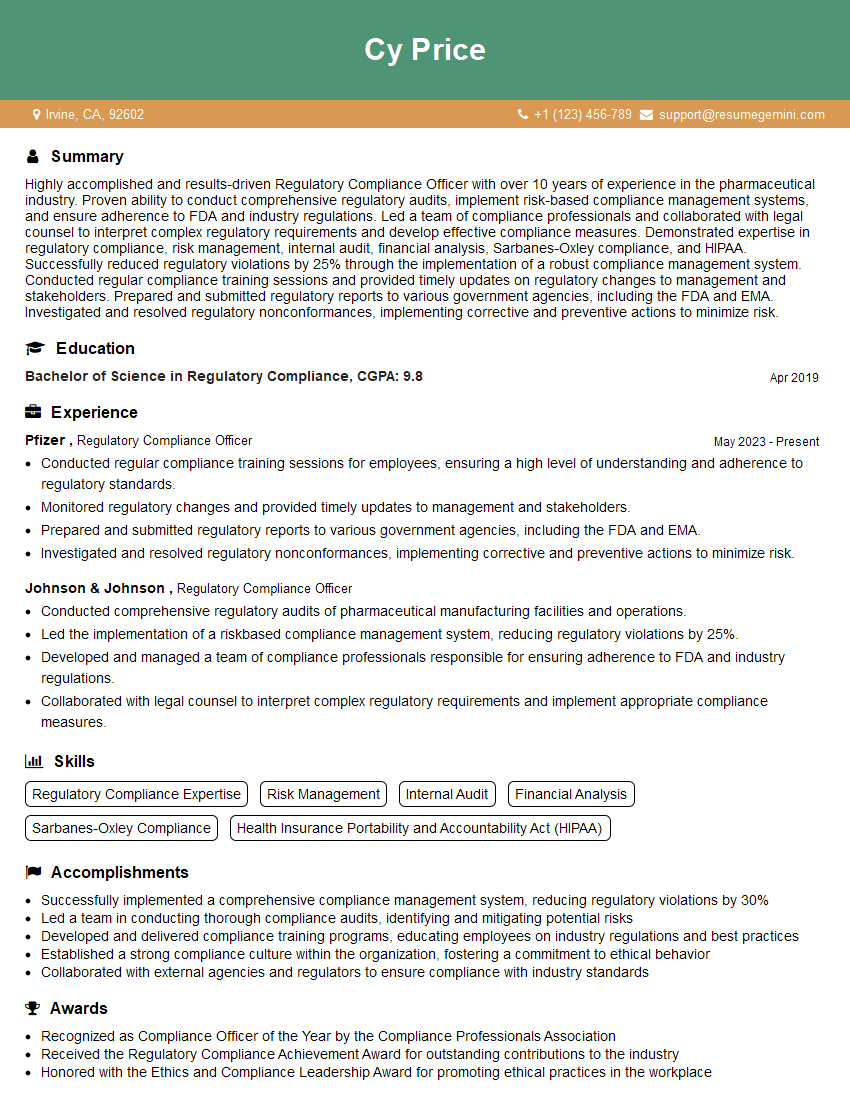
Regulatory Compliance Officer Resume Sample
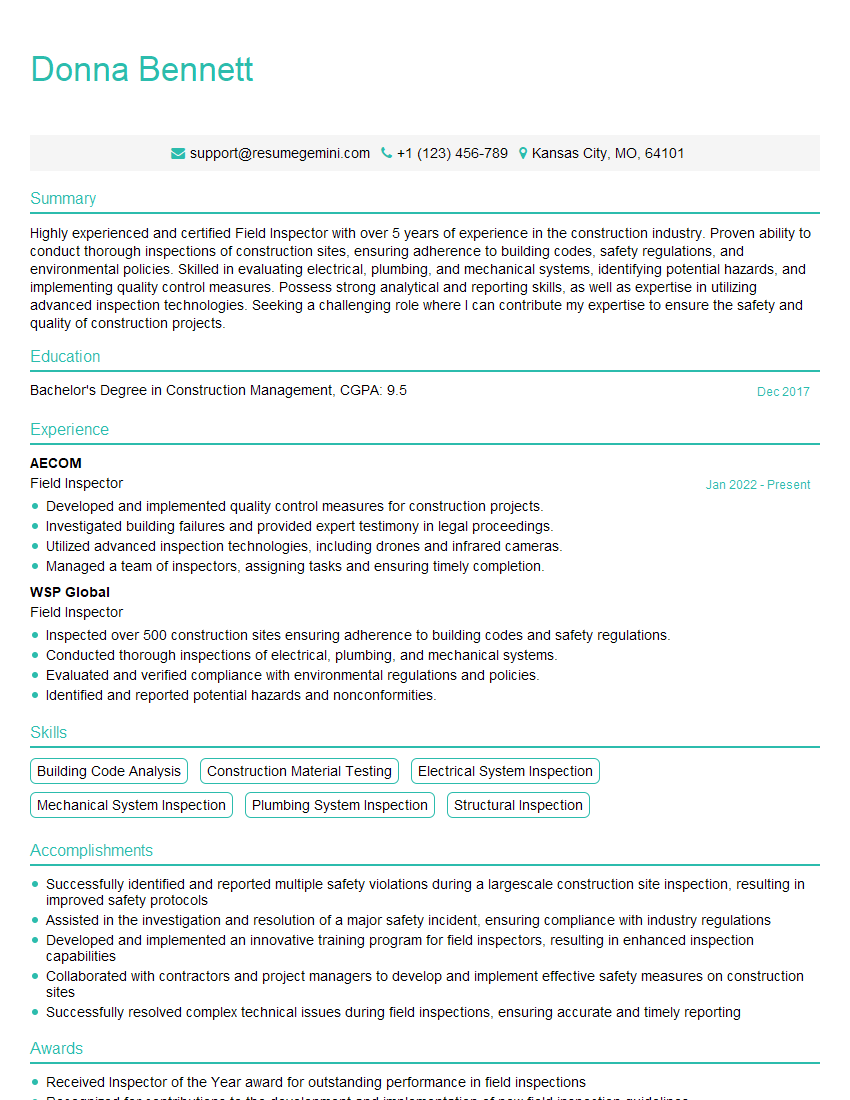
Field Inspector Resume Sample
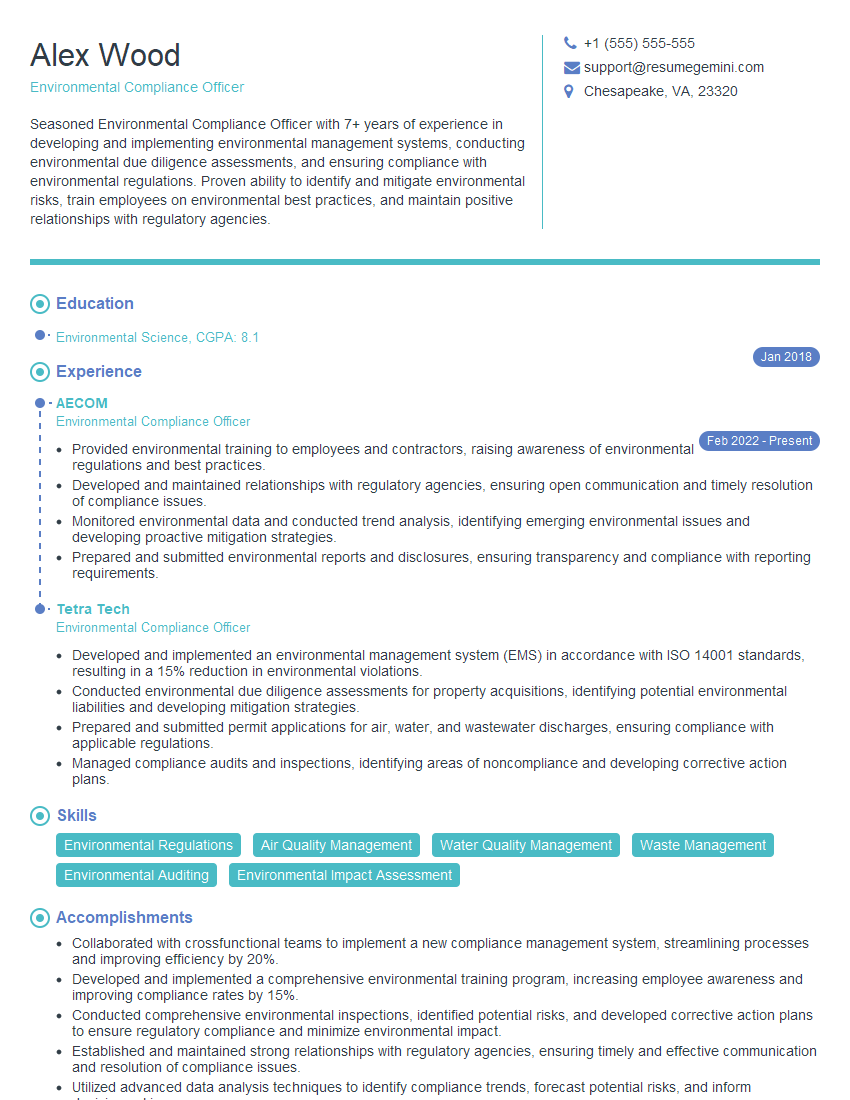
Environmental Compliance Officer Resume Sample
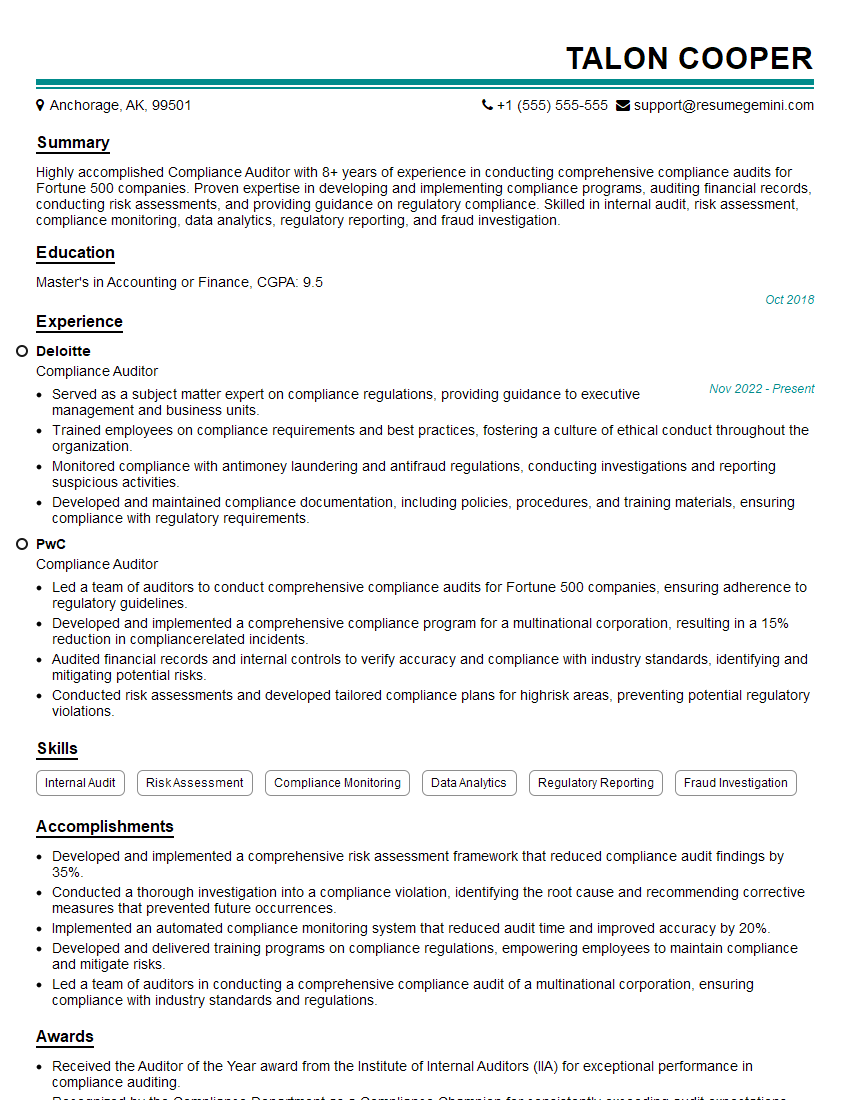
Compliance Auditor Resume Sample
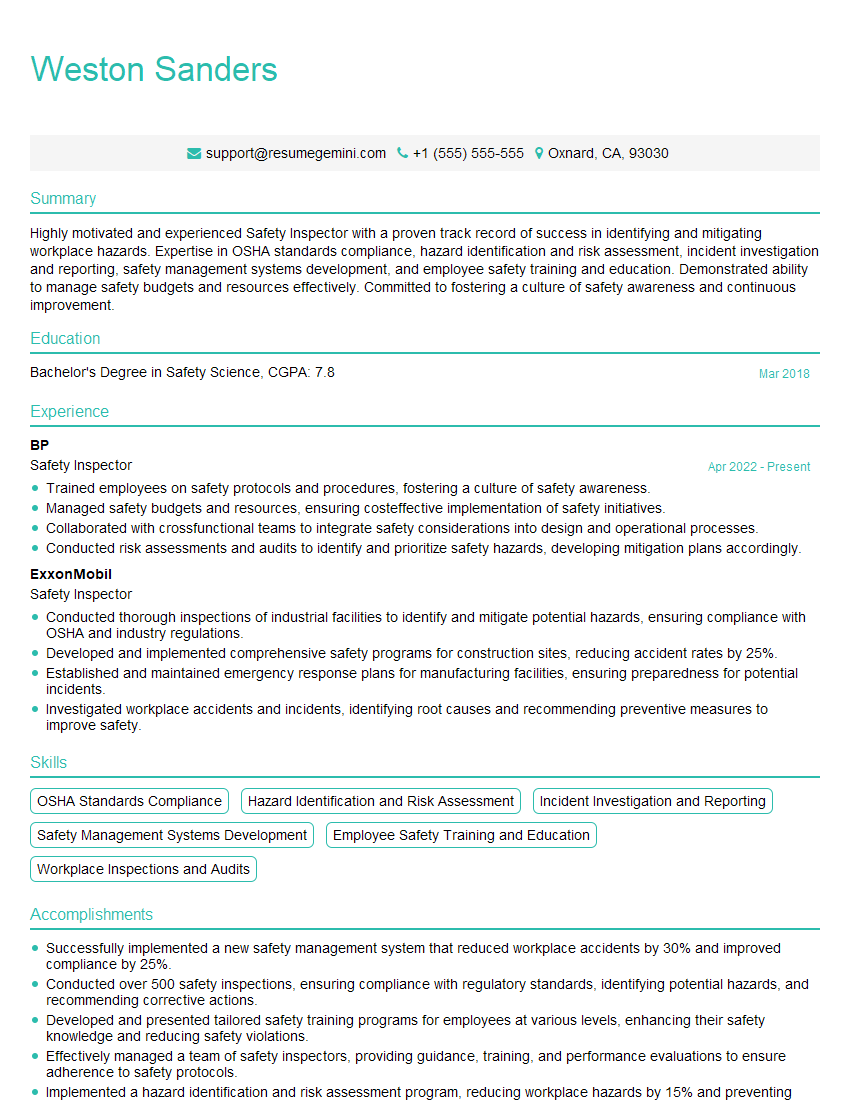
Safety Inspector Resume Sample
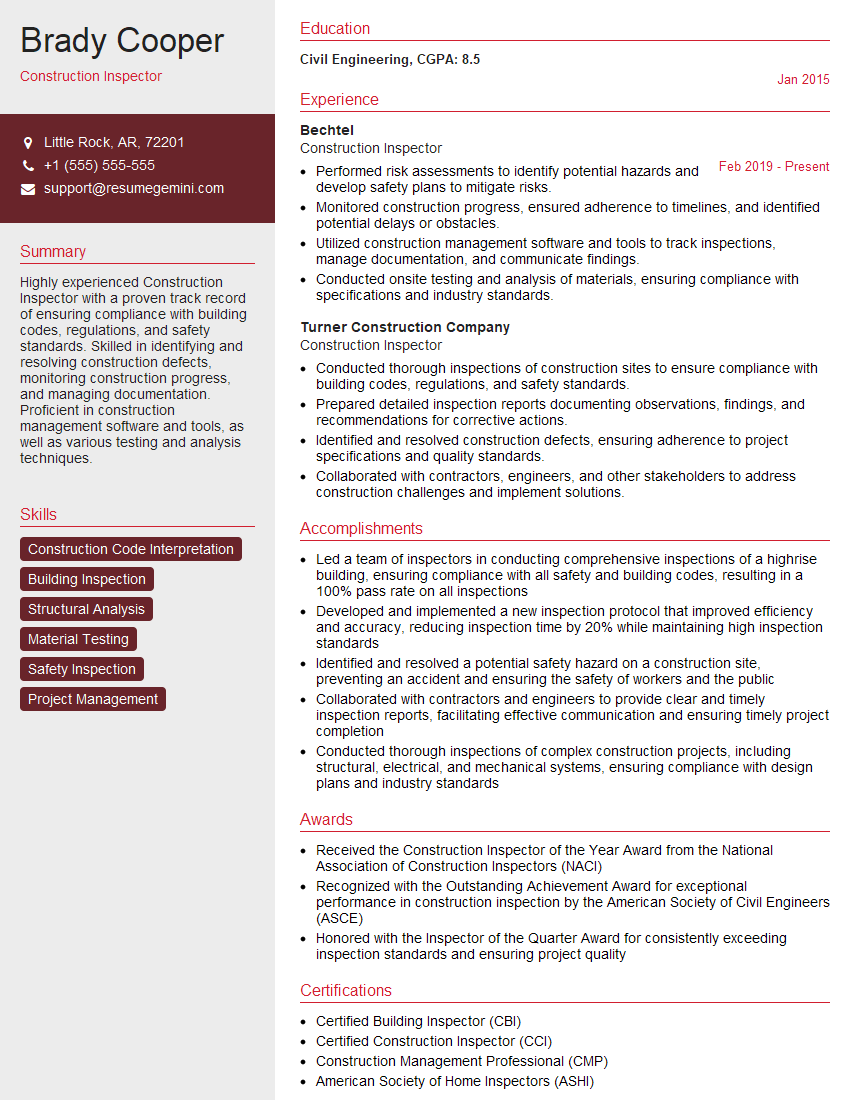
Construction Inspector Resume Sample
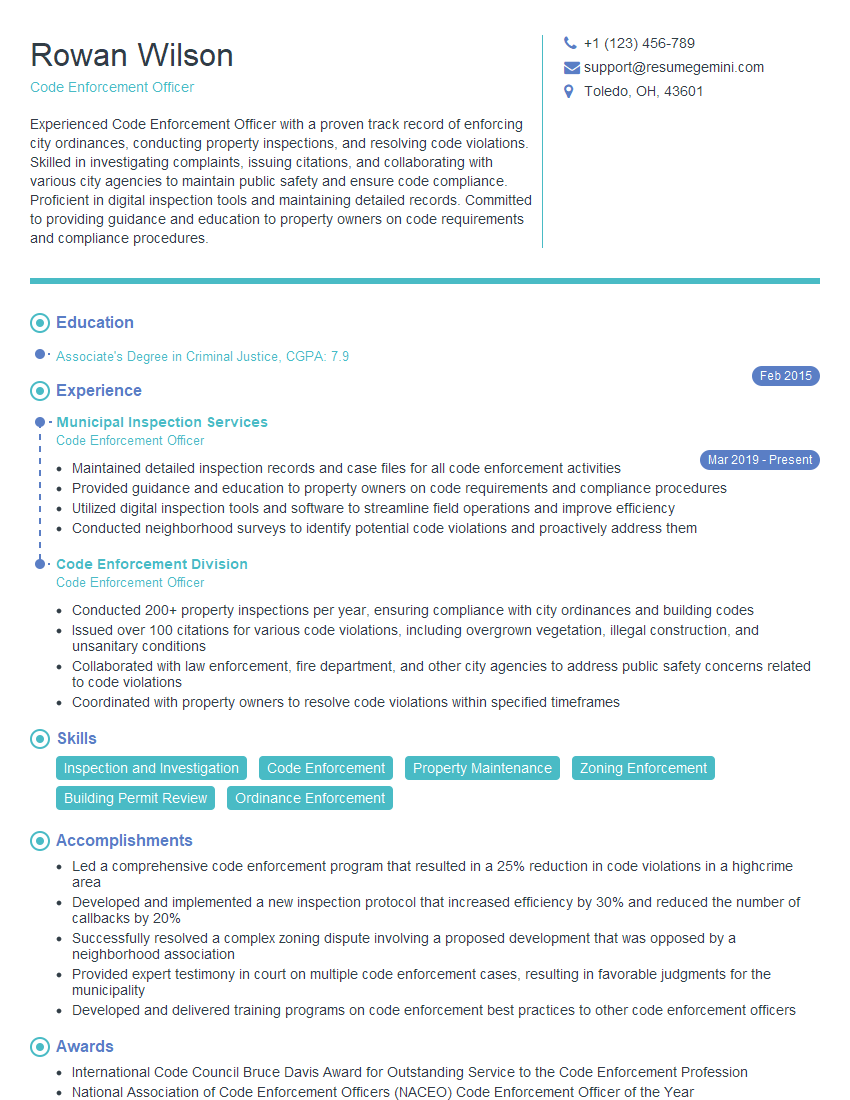
Code Enforcement Officer Resume Sample

Fire Code Inspector Resume Sample
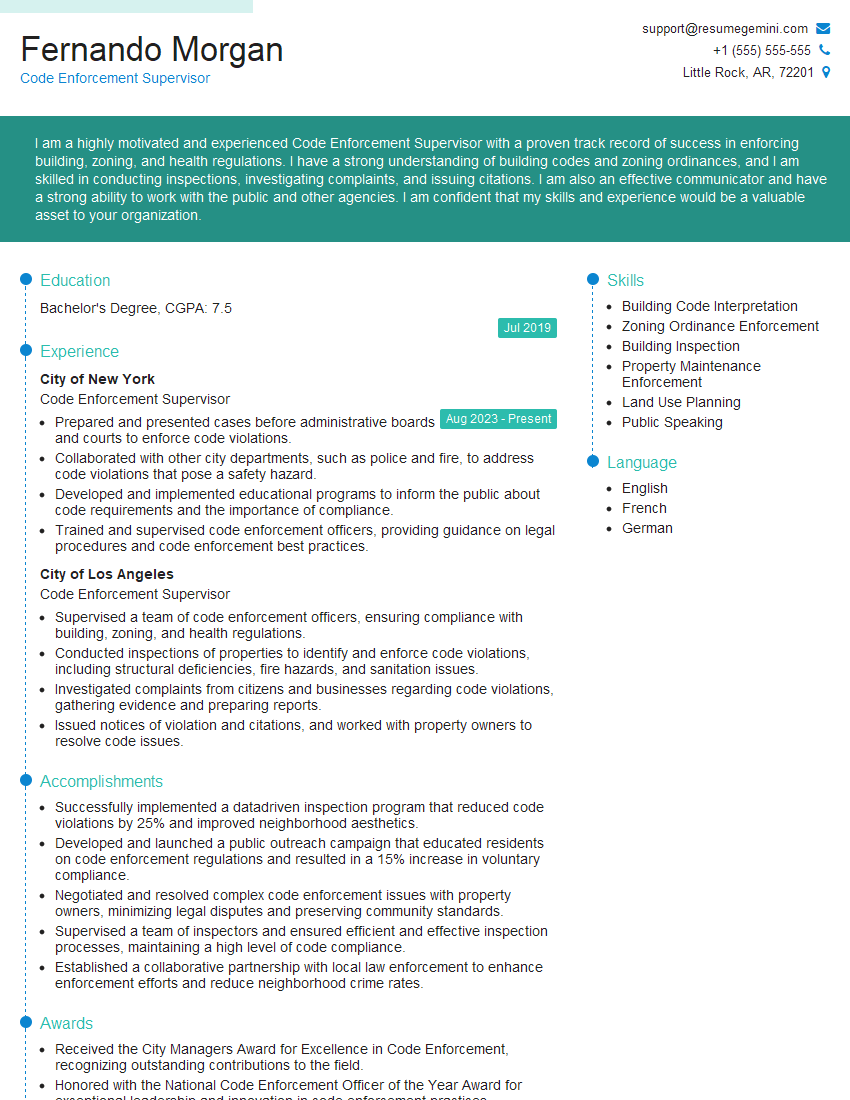
Code Enforcement Supervisor Resume Sample
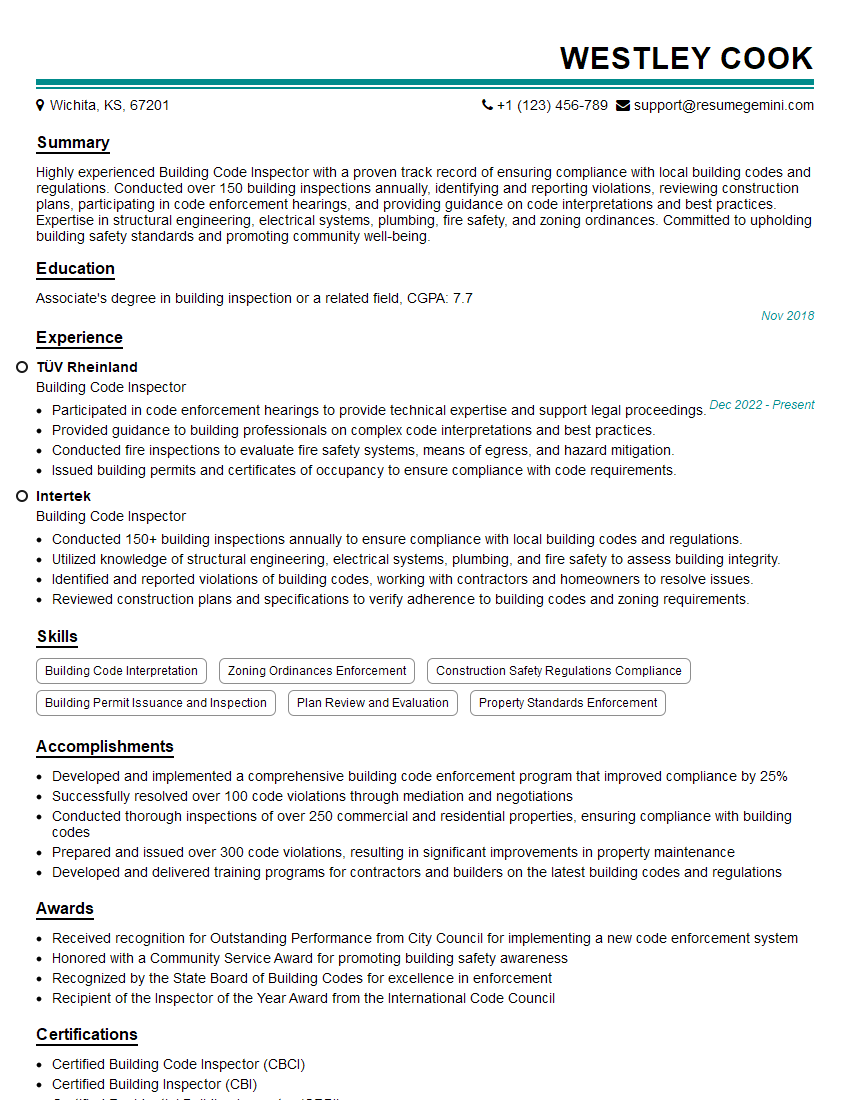
Building Code Inspector Resume Sample

Quality Control Inspector Resume Sample
Explore more articles
Users Rating of Our Blogs
Share Your Experience
We value your feedback! Please rate our content and share your thoughts (optional).
What Readers Say About Our Blog
To the interviewgemini.com Webmaster.
Very helpful and content specific questions to help prepare me for my interview!
Thank you
To the interviewgemini.com Webmaster.
This was kind of a unique content I found around the specialized skills. Very helpful questions and good detailed answers.
Very Helpful blog, thank you Interviewgemini team.