Preparation is the key to success in any interview. In this post, we’ll explore crucial Commercial and Industrial Electrical Systems interview questions and equip you with strategies to craft impactful answers. Whether you’re a beginner or a pro, these tips will elevate your preparation.
Questions Asked in Commercial and Industrial Electrical Systems Interview
Q 1. Explain the difference between NEC and IEC electrical codes.
The NEC (National Electrical Code) and IEC (International Electrotechnical Commission) standards are both crucial for ensuring safety and functionality in electrical installations, but they differ significantly in their scope and application. The NEC is a regionally specific code predominantly used in the United States, focusing on the practical aspects of electrical installations within buildings and related structures. It’s regularly updated to reflect technological advancements and safety concerns. The IEC, on the other hand, is an international organization that develops global standards for a wide range of electrical and electronic technologies, including wiring regulations. IEC standards often provide a more general framework, which individual countries then adapt and adopt into their national codes, such as the NEC in the US or the BS 7671 in the UK. Think of the NEC as a detailed rulebook for electrical work in the US, while the IEC provides the more general guidelines followed internationally.
A key difference lies in their approach to grounding and bonding. While both emphasize the importance of these safety measures, the specific requirements and methodologies can vary. For instance, the NEC might have stricter rules regarding grounding electrode conductor sizing in certain situations, compared to a general recommendation within an IEC standard. Another example is in the requirements for arc fault circuit interrupters (AFCIs), which are mandated in specific circuits under the NEC but may have different or less stringent requirements under other international codes. This highlights the need for electricians to always adhere to the relevant regional or national electrical code applicable to their location.
Q 2. Describe your experience with different types of transformers.
My experience encompasses a wide range of transformer types, from small distribution transformers used in residential areas to large power transformers found in substations and industrial facilities. I’ve worked extensively with:
- Power Transformers: These are high-voltage transformers used to step up or step down voltage in power transmission and distribution systems. I’ve been involved in the installation, maintenance, and troubleshooting of various power transformers, including those using different cooling methods such as oil-filled, air-cooled, and forced-air cooled systems. I have specific experience with transformer tap changers, understanding their critical role in maintaining voltage regulation.
- Distribution Transformers: These are smaller transformers that reduce high-voltage power to lower voltages suitable for homes and businesses. My experience includes specifying the appropriate transformer size for specific loads, ensuring safety compliance, and dealing with issues such as overheating and insulation breakdown.
- Instrument Transformers: These are used for measurement purposes, including current transformers (CTs) and potential transformers (PTs). I have extensive knowledge of their applications in metering, protection relays, and control systems. I have experience in selecting appropriate ratios and ensuring accurate measurements.
- Isolation Transformers: These transformers provide electrical isolation between the primary and secondary circuits, providing a safety barrier and preventing ground faults from impacting the secondary side. I have experience using these in sensitive medical equipment and control circuitry to enhance safety.
Beyond the different types, I am proficient in understanding transformer specifications, testing procedures (such as open-circuit and short-circuit tests), and performing maintenance tasks like oil sampling and dielectric testing.
Q 3. How do you troubleshoot a faulty three-phase motor?
Troubleshooting a faulty three-phase motor involves a systematic approach. First, ensure your safety by using appropriate lockout/tagout procedures before attempting any repairs. Then, the process would typically involve these steps:
- Visual Inspection: Begin with a thorough visual inspection of the motor, checking for any obvious damage such as loose connections, burned insulation, or mechanical damage to the motor itself. Look for signs of overheating, such as discoloration or warping.
- Check Power Supply: Verify that the three-phase power supply is correctly connected to the motor terminals and that the voltage levels are within the motor’s specifications. Use a multimeter to check the voltage across each phase and the voltage between each phase and ground.
- Measure Motor Current: Use a clamp meter to measure the current flowing in each phase. Significant imbalances in phase currents indicate a problem. A high current draw, even with a light load, suggests a problem within the motor or possibly in the windings.
- Check for Winding Faults: Using a motor winding tester, check for shorts, opens, or grounds within the motor windings. This involves carefully measuring the resistance between different winding connections.
- Inspect Bearings and Mechanical Components: Examine the bearings for signs of wear or damage, which can cause excessive vibration or noise. Check the coupling and other mechanical components for any issues.
- Check Motor Control Circuitry: If the problem isn’t within the motor itself, inspect the motor starter, fuses, circuit breakers, and other components in the control circuitry. Any issue here may cause the motor to malfunction.
Remember, working with three-phase motors requires specialized knowledge and training. If you’re unsure about any step, consult a qualified electrician.
Q 4. What are the safety precautions for working with high-voltage systems?
Working with high-voltage systems demands strict adherence to safety protocols to prevent serious injury or death. The cornerstone of high-voltage safety is recognizing the inherent dangers and taking every precaution. Here are some key precautions:
- Lockout/Tagout Procedures: Before working on any high-voltage equipment, always follow a rigorous lockout/tagout procedure to de-energize the system completely. Ensure that the system is isolated and grounded. Never rely solely on a circuit breaker to provide protection; it can fail.
- Personal Protective Equipment (PPE): Always use appropriate PPE, including insulated gloves, safety glasses, arc flash protective clothing, and safety shoes. The level of protection needed will vary depending on the voltage level.
- Trained Personnel: Only trained and qualified personnel should work with high-voltage systems. Proper training includes understanding safe work practices, equipment operation, and emergency procedures.
- Grounding and Bonding: Maintain proper grounding and bonding of the equipment and any tools used to prevent static electricity buildup or accidental contact with energized conductors.
- Safe Working Distance: Maintain a safe working distance from energized conductors to minimize the risk of electric shock or arc flash. This distance should be calculated based on the voltage level.
- Emergency Response Plan: Have a clearly defined emergency response plan in place and ensure all personnel are aware of the procedures to follow in case of an accident.
Regular safety training and updates are crucial to staying abreast of best practices and mitigating potential risks.
Q 5. Explain the function of a circuit breaker and its different types.
A circuit breaker is an automatically operated electrical switch designed to protect an electrical circuit from damage caused by overload or short circuit. Think of it as a safety valve for your electrical system. When an excessive current flows through the circuit, the circuit breaker trips, interrupting the flow of electricity and preventing damage to the wiring or equipment.
Different types of circuit breakers exist, each designed for specific applications and current levels:
- Molded Case Circuit Breakers (MCCBs): These are commonly used in residential, commercial, and industrial settings, providing thermal and magnetic protection against overloads and short circuits. They are relatively inexpensive and easy to install.
- Air Circuit Breakers (ACBs): ACBs are used for larger currents and are often found in industrial applications and switchgear. They use air as a dielectric medium to interrupt the circuit.
- Vacuum Circuit Breakers (VCBs): VCBs use a vacuum as a dielectric medium, providing superior interruption capabilities compared to air circuit breakers, and are often used in high-voltage applications.
- Sulfur Hexafluoride (SF6) Circuit Breakers: SF6 circuit breakers utilize sulfur hexafluoride gas as a dielectric medium. They are highly effective for interrupting high currents and are used in high-voltage switchgear, particularly in substations.
The choice of circuit breaker depends on factors such as the current rating, voltage level, interrupting capacity, and the specific application requirements.
Q 6. What is grounding and why is it crucial in electrical systems?
Grounding, or earthing, is the connection of an electrical system to the earth. It provides a low-impedance path for fault currents to flow to the ground, protecting people and equipment from electric shock and damage. Think of it as a safety net for your electrical system.
Grounding is crucial for several reasons:
- Personnel Safety: If a fault occurs and a live wire touches a metal enclosure, grounding ensures that the fault current flows to the ground, rather than through a person touching the enclosure.
- Equipment Protection: Grounding protects equipment from voltage surges and other transient events by providing a path for excess energy to dissipate to the earth. It minimizes damage from lightning strikes.
- System Stability: Grounding helps to maintain the stability of the electrical system by preventing voltage imbalances and providing a return path for current flow.
The effectiveness of grounding depends on the proper design and installation of the grounding system, which includes grounding electrodes, grounding conductors, and bonding.
Q 7. Describe your experience with different types of motor control centers (MCCs).
My experience with Motor Control Centers (MCCs) spans various sizes and configurations, from small MCCs for simple applications to large, complex systems for industrial processes. I’ve worked with MCCs utilizing different types of motor starters, including:
- Magnetic Starters: These are commonly used for smaller motors and offer simple, reliable control.
- Solid-State Starters: Solid-state starters provide precise control over motor starting and running conditions, offering features like soft start and energy savings. I’ve worked with various types, including those with adjustable voltage and current limits.
- Variable Frequency Drives (VFDs): VFDs are used to control motor speed and torque, providing significant efficiency benefits. My experience includes designing MCCs incorporating VFDs, including proper grounding, harmonic filtering, and the selection of appropriate VFDs for diverse motor loads.
I am also familiar with different MCC architectures and bussing systems, including various levels of redundancy and protection schemes to ensure continued operation during fault conditions. My work includes overseeing the proper installation, testing, and commissioning of MCCs to meet stringent safety and performance requirements.
Furthermore, my experience encompasses troubleshooting and maintenance of MCCs, diagnosing issues such as faulty starters, short circuits, and problems with the bussing system. I am well versed in the application of relevant safety standards and regulations in MCC design, installation, and maintenance.
Q 8. How do you calculate voltage drop in a circuit?
Voltage drop is the reduction in voltage between the source and the load in an electrical circuit. It’s caused by the resistance of the conductors carrying the current. Calculating it is crucial to ensure sufficient voltage reaches the load to operate correctly. We use the following formula:
Voltage Drop = 2 × I × L × R / 1000
Where:
I= Current (in Amps)L= Length of the conductor (in meters – remember to use the total length, there and back)R= Resistance of the conductor per 1000 meters (in Ohms/1000m – this value is readily available from conductor tables based on the material and size)
For example, let’s say we have a circuit with a 20-amp load, a cable run of 50 meters (100m total run), and the conductor has a resistance of 2 ohms per 1000 meters. The voltage drop would be:
Voltage Drop = 2 × 20A × 100m × 2Ω / 1000 = 8 Volts
This 8-volt drop needs to be considered. Excessive voltage drop can lead to inefficient operation, overheating, and equipment malfunction. We always need to ensure that the voltage drop remains within acceptable limits, typically less than 3% to 5% of the supply voltage, depending on the application and relevant standards.
Q 9. Explain the principle of operation of a PLC.
A Programmable Logic Controller (PLC) is essentially a computer that’s specifically designed to control industrial machinery and processes. Think of it as the brain of an automated system. It receives inputs from sensors (like limit switches, temperature sensors, etc.) and uses a programmed logic to make decisions, triggering outputs to actuators (like motors, valves, etc.).
The principle of operation revolves around a cyclical process:
- Input Scanning: The PLC reads the status of all input devices.
- Program Execution: The PLC’s program (written in ladder logic or other languages) is executed based on the input status.
- Output Update: The PLC updates the output devices according to the program’s logic.
- Communication: Many PLCs facilitate communication with other devices and systems (like HMIs or SCADA systems) allowing for monitoring and control.
For example, in a conveyor belt system, sensors detect the presence of an item. The PLC’s program, upon detecting an item, might trigger a motor to start the conveyor belt. Once the item reaches its destination (detected by another sensor), the PLC stops the motor. This simple example demonstrates the decision-making and control capabilities of a PLC.
Q 10. Describe your experience with SCADA systems.
I have extensive experience with SCADA (Supervisory Control and Data Acquisition) systems, having worked on several projects involving large-scale industrial processes. My experience encompasses system design, implementation, troubleshooting, and maintenance. I’ve worked with various SCADA platforms including [mention specific platforms used, e.g., Wonderware, Ignition, Rockwell FactoryTalk].
Specifically, I’ve been involved in:
- Developing HMI (Human-Machine Interface) screens for operators to monitor and control processes.
- Configuring communication protocols (like Modbus, Profibus, Ethernet/IP) for data exchange between PLCs, sensors, and the SCADA system.
- Designing and implementing alarm systems to alert operators of critical events.
- Troubleshooting system issues, identifying bottlenecks, and improving overall system efficiency.
- Data logging and historical trending analysis to identify patterns and trends in process variables.
One notable project involved a water treatment plant where I implemented a SCADA system to monitor water quality parameters and control various pumps and valves. This improved efficiency and reduced water waste significantly. My experience includes both designing new systems from the ground up and upgrading or maintaining existing ones, highlighting my adaptability and problem-solving skills.
Q 11. What is the difference between a power factor and power factor correction?
Power factor is a measure of how efficiently electrical power is used. It’s the ratio of real power (kW) to apparent power (kVA). A power factor of 1 indicates perfect efficiency, while a lower power factor (e.g., 0.8) means some of the apparent power is wasted as reactive power.
Reactive power is needed by inductive loads like motors and transformers to build up magnetic fields. This reactive power doesn’t contribute to actual work but still flows in the circuit, causing higher current demand.
Power factor correction aims to improve the power factor, reducing the reactive power component. This is typically achieved by installing power factor correction capacitors in parallel with inductive loads. These capacitors supply the reactive power, reducing the current drawn from the supply and improving overall efficiency.
For example, a factory with many induction motors might have a low power factor. By installing power factor correction capacitors, the factory can reduce its electricity bill, improve system efficiency, and minimize voltage drop.
Q 12. How do you size conductors for a given load?
Conductor sizing is crucial for ensuring safe and efficient operation of electrical systems. It involves selecting conductors with a sufficient cross-sectional area to carry the expected current without overheating or excessive voltage drop. The process involves several steps:
- Determine the load current: This is the total current drawn by all the connected loads.
- Account for demand factors: Not all loads operate simultaneously; demand factors account for this, resulting in a lower design current.
- Apply appropriate derating factors: Derating factors account for environmental conditions (ambient temperature, conduit fill) which affect conductor capacity.
- Consult electrical codes and standards: Codes like NEC (National Electrical Code) provide tables and guidelines for selecting appropriate conductor sizes based on the calculated current and derating factors.
- Check voltage drop: Ensure the selected conductor size doesn’t lead to unacceptable voltage drop at the load.
For instance, let’s say a calculation indicates a load of 50A. After applying demand factors and derating, the design current might be 40A. Using the NEC tables, we can select a conductor with a sufficient ampacity (current-carrying capacity) to handle 40A safely, while also verifying that the voltage drop is within acceptable limits.
Q 13. Explain your understanding of electrical power distribution systems.
Electrical power distribution systems deliver electricity from the source (power generation plant or substation) to consumers. They are hierarchical, starting with high-voltage transmission lines that transport electricity over long distances, then stepping down the voltage through substations to lower voltage distribution lines that supply electricity to smaller areas like factories, buildings, or residential zones.
The key components include:
- Substations: Transform high-voltage electricity to lower voltages for distribution.
- Transformers: Step up or step down voltages throughout the system.
- Switchgear: Circuit breakers, switches, and other equipment for protecting and controlling the flow of electricity.
- Overhead lines and underground cables: Conductors that transport electricity to consumers.
- Protection relays: Detect faults and isolate them quickly to prevent damage.
Understanding these elements is key to designing, operating, and maintaining reliable power systems. For example, proper system design accounts for load growth, fault current calculations, and protection coordination to ensure power reliability and safety.
Q 14. Describe your experience with different types of lighting systems.
My experience encompasses various lighting systems, including:
- Incandescent lighting: Simple and inexpensive, but inefficient and short-lived.
- Fluorescent lighting: More energy-efficient than incandescent, but contain mercury and have limitations in dimming capabilities.
- High-intensity discharge (HID) lighting: High efficacy but require time to reach full brightness and have longer lifespans.
- Light-emitting diode (LED) lighting: Highly energy-efficient, long lifespan, and available in a wide range of colors and configurations. This is currently the dominant technology due to its advantages.
- Emergency lighting: Essential for safety, providing illumination during power outages.
In my work, I’ve been involved in designing lighting systems for different applications, optimizing energy efficiency, improving illumination levels, and ensuring compliance with lighting codes. For example, I designed a lighting system for a warehouse that incorporated LED high-bay fixtures with motion sensors to maximize energy savings while ensuring adequate illumination for safety and productivity. Considerations included calculating light levels, selecting appropriate fixtures, and designing the electrical distribution system to support the lighting load.
Q 15. What are the different types of electrical protection devices?
Electrical protection devices are crucial for ensuring the safety of personnel and equipment in commercial and industrial settings. They safeguard against overcurrents, short circuits, ground faults, and other electrical hazards. These devices can be broadly categorized into several types:
- Circuit Breakers: These are automatic switching devices that interrupt the flow of current when an overload or short circuit occurs. They come in various types, including molded-case circuit breakers (MCCBs), air circuit breakers (ACBs), and vacuum circuit breakers (VCBs), each suited for different applications and current ratings. For example, MCCBs are commonly used in smaller commercial buildings, while ACBs are more prevalent in larger industrial facilities.
- Fuses: These are simpler protection devices containing a wire or metal strip that melts and breaks the circuit when excessive current flows. They are generally less expensive than circuit breakers but are one-time use devices, requiring replacement after they’ve blown. They are often used in low-voltage applications or as backup protection.
- Ground Fault Circuit Interrupters (GFCIs): These devices detect imbalances in current flow between the hot and neutral conductors, indicating a potential ground fault. They rapidly shut off power to prevent electric shock. GFCIs are mandatory in many locations near water sources, such as bathrooms and kitchens.
- Arc Fault Circuit Interrupters (AFCIs): AFCIs are designed to detect and interrupt arcing faults, which are a common cause of electrical fires. They are especially important in areas with high-risk applications, such as bedrooms.
- Surge Protection Devices (SPDs): These devices protect electrical equipment from voltage surges caused by lightning strikes or other power disturbances. They divert excess voltage to ground, preventing damage to sensitive electronics.
The selection of appropriate protection devices depends on various factors, including the type of load, voltage level, current rating, and specific safety requirements. A proper coordination study ensures that the devices operate correctly in the event of a fault.
Career Expert Tips:
- Ace those interviews! Prepare effectively by reviewing the Top 50 Most Common Interview Questions on ResumeGemini.
- Navigate your job search with confidence! Explore a wide range of Career Tips on ResumeGemini. Learn about common challenges and recommendations to overcome them.
- Craft the perfect resume! Master the Art of Resume Writing with ResumeGemini’s guide. Showcase your unique qualifications and achievements effectively.
- Don’t miss out on holiday savings! Build your dream resume with ResumeGemini’s ATS optimized templates.
Q 16. Explain your experience with electrical drawings and schematics.
I possess extensive experience interpreting and working with electrical drawings and schematics. My experience spans from single-line diagrams illustrating the overall power system to detailed panel schedules specifying individual circuit components. I’m proficient in reading and understanding various symbols, notations, and conventions used in these drawings, including those conforming to IEEE and NEC standards. I regularly use AutoCAD and other CAD software to create, modify, and review electrical drawings.
For instance, in a recent project involving the upgrade of an industrial facility’s electrical distribution system, I utilized one-line diagrams to analyze power flow and identify potential bottlenecks. I then used detailed panel schematics to specify the exact components required for each panel, including circuit breakers, contactors, and protective relays. This ensured a seamless integration of the new system with the existing infrastructure.
Beyond reading, I have actively participated in the creation of these documents. My involvement goes beyond merely interpreting the drawings. I’ve collaborated with engineers and technicians to develop accurate and comprehensive schematics that clearly communicate the electrical design. This involves ensuring the proper labeling and identification of all components, and maintaining consistency in the notation and presentation across the entire set of drawings.
Q 17. How do you perform a lockout/tagout procedure?
Lockout/Tagout (LOTO) procedures are critical for preventing accidental energization of equipment during maintenance or repair work. It’s a life-saving procedure that involves several steps:
- Preparation: Identify all energy sources that need to be isolated. This includes electrical power, pneumatic lines, hydraulic systems, etc. Consult relevant schematics and documentation.
- Notification: Inform all personnel who might be affected by the lockout, including those working in the area.
- Shutdown: Turn off the equipment and ensure it is de-energized. Verify the equipment is off using appropriate testing devices.
- Isolation: Isolate the energy source using lockout devices – padlocks, lock-out hasps, etc. Each authorized worker should place their own lock, ensuring multiple layers of protection.
- Tagging: Affix tags clearly indicating that the equipment is locked out and should not be energized. Tags should specify the date, time, and the name of the authorized worker.
- Verification: After the lockout procedure is complete, the team must verify that the equipment is truly de-energized before commencing any work.
- Removal: Once the work is complete, the locks are removed by authorized personnel. This process should be documented and verified.
During my time in the field, I’ve personally conducted countless LOTO procedures. It’s always crucial to strictly adhere to the steps, double-check safety procedures, and maintain meticulous documentation for audit trails. A failure to follow this procedure can lead to serious injury or fatality.
Q 18. What are the common causes of electrical fires?
Electrical fires are a serious hazard in commercial and industrial settings. Several factors contribute to their occurrence:
- Overloaded Circuits: When too many appliances or devices are connected to a circuit, it draws more current than the wiring can safely handle, causing overheating and potentially starting a fire.
- Short Circuits: A short circuit occurs when an unintended path for current is created, often due to damaged insulation or loose wiring. This results in a sudden surge of current that can generate extreme heat.
- Faulty Wiring: Damaged, deteriorated, or improperly installed wiring is a major contributor. Old or substandard wiring is especially vulnerable to overheating.
- Loose Connections: Loose connections create resistance and generate heat, which can lead to fires over time.
- Arcing Faults: Arcing, an electrical discharge across an air gap, creates intense heat and can ignite nearby flammable materials.
- Overheating Equipment: Motors, transformers, and other electrical equipment can overheat due to malfunctions, lack of maintenance, or inadequate ventilation.
Preventing electrical fires requires regular inspections, proper maintenance, adherence to electrical codes, and the use of appropriate safety devices such as AFCIs and GFCIs. It’s imperative to be vigilant about electrical safety and promptly address any signs of potential problems.
Q 19. Describe your experience with troubleshooting electrical faults using diagnostic tools.
Troubleshooting electrical faults requires a systematic approach and the use of appropriate diagnostic tools. My experience involves utilizing a variety of instruments and techniques:
- Multimeters: Used to measure voltage, current, and resistance. I use them to check for continuity, identify open circuits, and verify the integrity of components.
- Clamp Meters: Employ these to measure current without interrupting the circuit, making it ideal for safely checking current draw in energized equipment.
- Meggers (Insulation Resistance Testers): Measure insulation resistance to detect insulation breakdown in cables and equipment, which is a key indicator of potential faults.
- Thermal Imagers: These detect heat signatures, which can pinpoint overheating components or faulty connections before they cause a failure or fire. I used thermal imaging extensively during the preventative maintenance of a large industrial motor room. One instance helped us catch an overheating splice before it caused a shutdown.
- Power Quality Analyzers: Used to identify harmonic distortion, voltage sags, surges, and other power quality issues that may contribute to equipment malfunction.
My troubleshooting strategy typically involves: (1) Isolating the affected area; (2) Carefully checking safety precautions; (3) Systematic testing using the instruments mentioned above; (4) Recording all measurements and observations; and (5) Implementing corrective measures. It involves a balance between theoretical understanding and practical application of diagnostic skills.
Q 20. Explain your understanding of harmonic distortion in power systems.
Harmonic distortion in power systems refers to the presence of non-sinusoidal waveforms, specifically harmonic frequencies that are multiples of the fundamental frequency (typically 50Hz or 60Hz). These harmonics are generated by non-linear loads, such as rectifier-based equipment (variable frequency drives, power supplies, etc.).
The presence of harmonics can lead to several problems:
- Overheating of equipment: Harmonics increase the RMS current, leading to excessive heating in transformers, cables, and other components, potentially resulting in premature failure.
- Equipment malfunction: Some sensitive electronic equipment may malfunction or be damaged due to the distorted waveform.
- Increased energy losses: Harmonics increase the overall power loss in the system.
- Neutral conductor overload: Third-order harmonics add up on the neutral conductor, potentially overloading it.
- Resonance: Harmonics can interact with the system’s capacitance and inductance, causing resonance which can significantly amplify harmonic currents and voltages.
Mitigation strategies include using harmonic filters, selecting equipment with low harmonic generation, and proper load balancing. In a project involving a large industrial plant, we identified significant harmonic distortion caused by a cluster of variable frequency drives. Implementing harmonic filters significantly reduced the harmonics, improving system efficiency and equipment lifespan.
Q 21. How do you ensure compliance with relevant electrical safety regulations?
Ensuring compliance with electrical safety regulations is paramount in all commercial and industrial projects. My approach involves a multi-faceted strategy:
- Understanding Relevant Codes and Standards: I possess in-depth knowledge of the National Electrical Code (NEC), IEEE standards, and other applicable local and international regulations. I stay updated on the latest code changes and amendments.
- Design Compliance: During the design phase, all electrical systems are designed to meet or exceed the requirements of the relevant codes and standards. This involves careful selection of equipment, proper sizing of conductors, and appropriate protection devices.
- Inspection and Testing: Thorough inspection and testing are crucial to verify compliance. This includes various tests, such as insulation resistance tests, ground resistance tests, and operational tests to verify the proper functioning of all protection devices.
- Documentation: Maintaining complete and accurate documentation is essential. This includes as-built drawings, test reports, and inspection reports, that provide a comprehensive record of compliance.
- Regular Maintenance: Regular maintenance and preventative maintenance programs are crucial to address any potential safety issues promptly. This includes regular inspections of electrical equipment, testing of protection devices, and timely repairs of faulty components.
Throughout my career, I have worked on numerous projects that have successfully passed inspections and audits from various regulatory authorities. Maintaining compliance is an ongoing process and not a one-time event. It requires diligence, thoroughness, and a commitment to safety.
Q 22. Describe your experience with different types of wiring methods.
Throughout my career, I’ve worked extensively with various wiring methods, each suited for specific applications and environments. My experience encompasses:
- Conduit Wiring: This is a robust method using metal or plastic pipes to protect wires. I’ve used this extensively in industrial settings where durability and protection from physical damage are paramount. For example, I specified rigid conduit for a chemical plant to protect wiring from corrosive fumes.
- Cable Tray Systems: Ideal for large-scale installations, cable trays provide organized pathways for multiple cables. In a recent data center project, I designed a cable tray system to manage the vast network of power and data cables, ensuring easy access and maintenance.
- Open Wiring: Suitable for low-voltage applications in dry, clean environments. I’ve utilized this method in smaller commercial projects with minimal risk of physical damage or environmental exposure.
- Raceway Systems: These provide a flexible and aesthetically pleasing alternative, often used in commercial spaces. I incorporated raceways in an office renovation to conceal wiring while maintaining a clean and modern look.
- Busway Systems: These are used in high-power applications, commonly found in industrial settings. I was involved in the design of a busway system for a large manufacturing facility, facilitating efficient power distribution to numerous heavy-duty machines.
My understanding extends beyond just installation; I’m proficient in selecting the appropriate wiring method based on factors such as voltage levels, environmental conditions, code compliance (NEC, IEC, etc.), and budget constraints.
Q 23. What is the difference between single-phase and three-phase power?
The core difference lies in the number of phases. Single-phase power uses two wires (hot and neutral) to deliver electricity, while three-phase power uses three hot wires plus a neutral (in some configurations).
- Single-Phase Power: Typically found in residential and small commercial settings. It’s simpler and less expensive but offers lower power capacity compared to three-phase.
- Three-Phase Power: Common in industrial facilities, large commercial buildings, and heavy-duty applications. It provides higher power capacity and is more efficient for running high-power motors and equipment. A three-phase system can distribute the same power with smaller conductors, which is more cost-effective for large-scale projects.
Imagine a water pump: A single-phase system is like using a single hose to fill a tank. A three-phase system is like using three hoses simultaneously, filling the tank much faster and more efficiently. The higher power capacity is crucial for applications demanding large amounts of energy, such as industrial machinery, heavy manufacturing, and HVAC systems in large buildings.
Q 24. Explain your experience with electrical system design software.
I am proficient in several electrical system design software packages, including AutoCAD Electrical, Revit, and SKM PowerTools. My experience involves using these tools throughout the entire design lifecycle, from conceptual planning and schematic development to detailed design and documentation.
For instance, in a recent project using AutoCAD Electrical, I designed the electrical system for a new manufacturing facility, creating detailed schematics, panel layouts, and wire schedules. The software’s automation features significantly reduced design time and minimized errors, ensuring a more accurate and efficient design process. Revit, on the other hand, is crucial for integrating electrical systems within a broader BIM (Building Information Modeling) workflow, facilitating coordination with other disciplines like HVAC and structural engineering.
SKM PowerTools helps conduct load flow, short circuit, and arc flash studies ensuring the electrical system’s safety and reliability, helping meet regulatory requirements.
Q 25. Describe your experience with the commissioning of electrical systems.
Commissioning electrical systems is a crucial step to ensure they operate as designed and meet all safety and performance requirements. My experience encompasses all stages of the commissioning process, from reviewing design documents and developing a commissioning plan to conducting field testing and preparing documentation.
I typically follow a phased approach: pre-commissioning (verifying equipment and installation), commissioning (testing and verifying functionality), and post-commissioning (monitoring and troubleshooting). For example, in a recent hospital project, we rigorously tested the emergency power system, ensuring it could seamlessly switch over in case of a power outage, and documented all tests and results meticulously. This included generating reports outlining any discrepancies and suggesting corrective actions, which were then incorporated in the final handover documentation.
Q 26. How do you manage electrical projects within budget and schedule?
Managing electrical projects effectively within budget and schedule requires a proactive and organized approach. My strategies include:
- Detailed Planning and Budgeting: This involves careful estimation of materials, labor, and other project costs. I use project management software to track expenses and manage resources effectively.
- Risk Management: Identifying potential delays or cost overruns early in the project lifecycle is key. I develop contingency plans to mitigate these risks.
- Effective Communication: Maintaining clear and consistent communication with clients, contractors, and other stakeholders is essential to avoid misunderstandings and delays.
- Regular Monitoring and Reporting: Tracking progress against the schedule and budget is vital. I prepare regular progress reports to inform stakeholders and identify potential issues early on.
- Value Engineering: Exploring alternative solutions that meet project requirements while reducing costs without sacrificing quality.
For example, in a recent project, we identified a potential delay due to supplier issues. Through proactive communication and exploring alternative suppliers, we managed to mitigate the impact on the project schedule, avoiding any cost overruns.
Q 27. What are the advantages and disadvantages of different types of electrical motors?
Different types of electrical motors each have their strengths and weaknesses:
- Induction Motors (AC): These are the most common type, known for their robustness, simplicity, and relatively low cost. However, they can be less efficient than other types, especially at lower speeds. Their starting torque might not be high enough for some applications.
- Synchronous Motors (AC): These offer high efficiency and excellent power factor correction. They are ideal for constant speed applications but are generally more complex and expensive than induction motors.
- DC Motors: They are easily controlled, allowing for precise speed adjustment. They provide high starting torque. However, they require more maintenance and are typically more expensive than AC motors.
- Stepper Motors: These motors offer precise rotational control, ideal for applications requiring precise positioning. However, their power capacity is typically limited.
- Servomotors: These are used in applications requiring high accuracy and quick response times, like robotics and automation. They are very precise but also expensive.
The choice of motor depends on factors such as load requirements, speed control needs, budget constraints, and maintenance considerations. In a recent industrial project, we selected high-efficiency synchronous motors to reduce energy consumption and operating costs. In a robotics project, the precision of a servo motor was essential for accurate arm movements.
Q 28. Describe your approach to solving complex electrical problems.
My approach to solving complex electrical problems involves a systematic and methodical process:
- Problem Definition: Clearly understanding the problem is paramount. This involves gathering data, reviewing schematics, and talking to stakeholders to fully grasp the issue.
- Data Analysis: Analyzing relevant data, such as voltage readings, current measurements, and fault logs helps in isolating the source of the problem. I often use diagnostic tools and software.
- Hypothesis Formulation: Based on the collected data, I formulate several hypotheses about the cause of the problem. This process relies on a strong foundational knowledge and experience.
- Testing and Verification: I systematically test each hypothesis using appropriate methods, eliminating possibilities until the root cause is identified. This often involves using specialized testing equipment.
- Solution Implementation: Once the root cause is identified, I develop and implement a solution. The chosen approach is based on safety, efficiency, cost-effectiveness, and compliance with regulations.
- Verification and Documentation: Finally, the implemented solution is verified, and comprehensive documentation, including diagrams and reports is prepared. This helps prevent similar problems in the future and supports future troubleshooting.
For example, when dealing with intermittent power outages in a large building, I systematically checked each breaker, cable, and component to identify a faulty connection in the main power distribution panel, which was ultimately the root cause.
Key Topics to Learn for Commercial and Industrial Electrical Systems Interview
- Power Distribution Systems: Understanding transformers, switchgear, circuit breakers, and protective relaying. Practical application: Analyzing a power distribution schematic and identifying potential fault points.
- Motor Control Centers (MCCs): Familiarity with MCC layouts, components (starters, contactors, overload relays), and troubleshooting techniques. Practical application: Diagnosing a malfunctioning motor based on MCC readings and observations.
- Electrical Codes and Standards (NEC, IEC): Knowledge of relevant safety regulations and compliance requirements. Practical application: Ensuring a design meets all applicable codes and standards.
- Lighting Systems: Design, installation, and maintenance of commercial and industrial lighting systems, including energy-efficient options (LEDs). Practical application: Calculating lighting load requirements for a warehouse.
- Power Factor Correction: Understanding the importance of power factor and methods for correction (capacitors). Practical application: Calculating the necessary capacitor bank size to improve power factor.
- Instrumentation and Control Systems: Experience with PLCs, SCADA systems, and industrial sensors. Practical application: Programming a PLC to automate a specific industrial process.
- Troubleshooting and Diagnostics: Developing systematic approaches to identify and resolve electrical issues. Practical application: Using multimeters, clamp meters, and other diagnostic tools to isolate faults.
- Safety Procedures and Practices: Understanding and adhering to lockout/tagout procedures, arc flash mitigation, and other safety protocols. Practical application: Describing a safe work practice for working on energized equipment.
- Energy Efficiency and Sustainability: Knowledge of energy-saving strategies and technologies in commercial and industrial settings. Practical application: Proposing solutions to reduce energy consumption in a building.
Next Steps
Mastering Commercial and Industrial Electrical Systems opens doors to exciting and rewarding career opportunities, offering growth potential in diverse sectors. A strong understanding of these systems is highly valued by employers. To maximize your job prospects, creating an ATS-friendly resume is crucial. ResumeGemini is a trusted resource that can help you build a professional and impactful resume that gets noticed. ResumeGemini provides examples of resumes tailored to Commercial and Industrial Electrical Systems to guide you in crafting a winning application. Invest the time to build a resume that showcases your skills and experience effectively – it’s a key step towards securing your dream job.
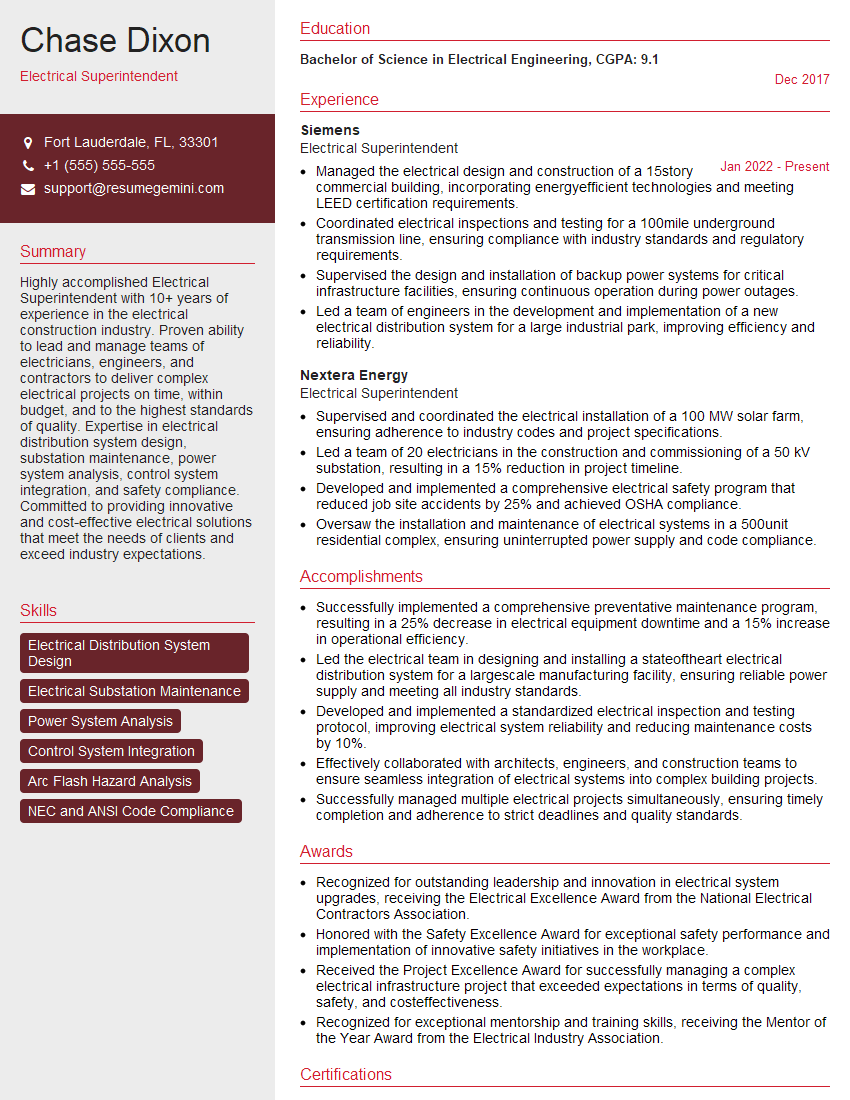
Electrical Superintendent Resume Sample
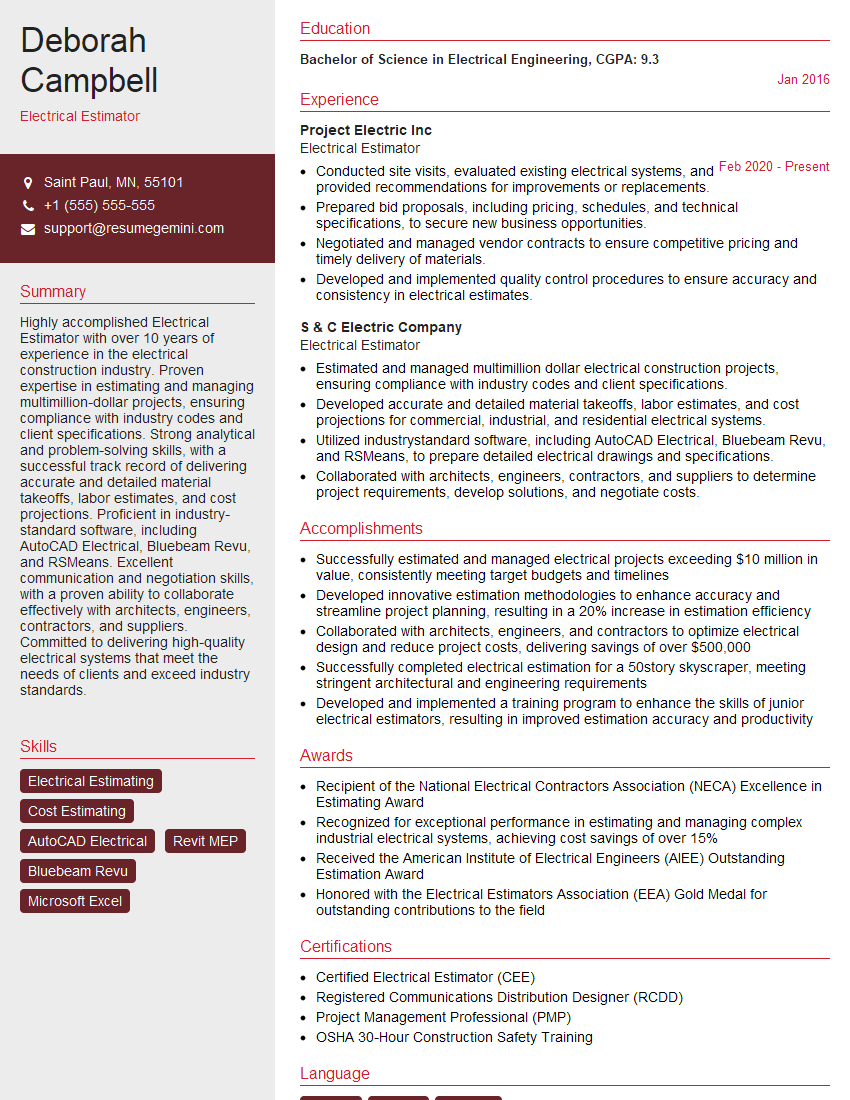
Electrical Estimator Resume Sample

Automation Engineer Resume Sample
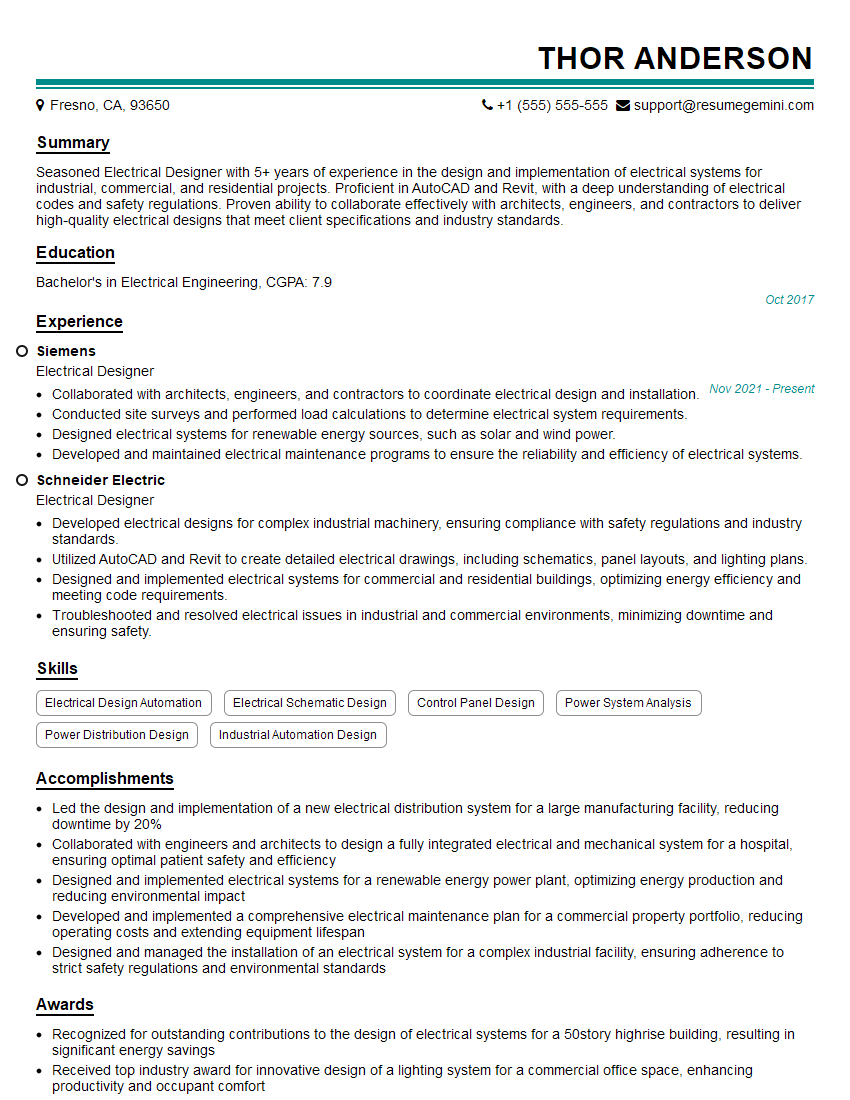
Electrical Designer Resume Sample
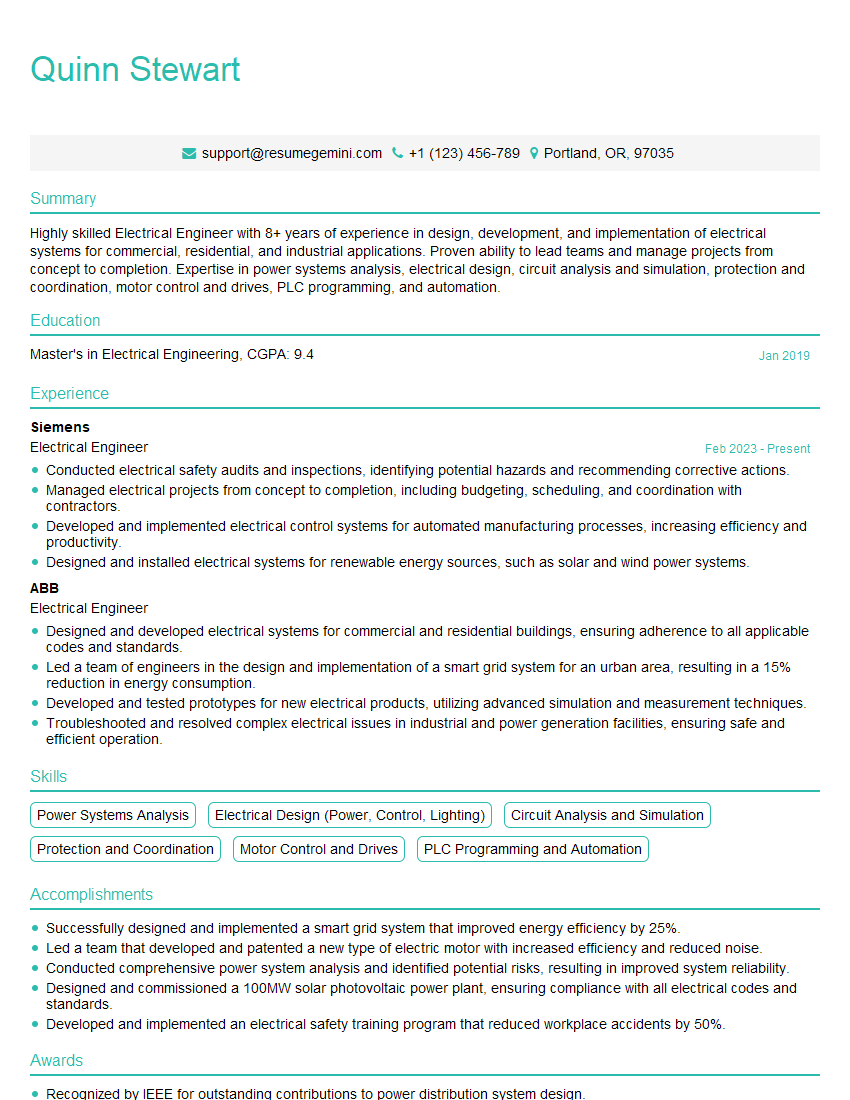
Electrical Engineer Resume Sample
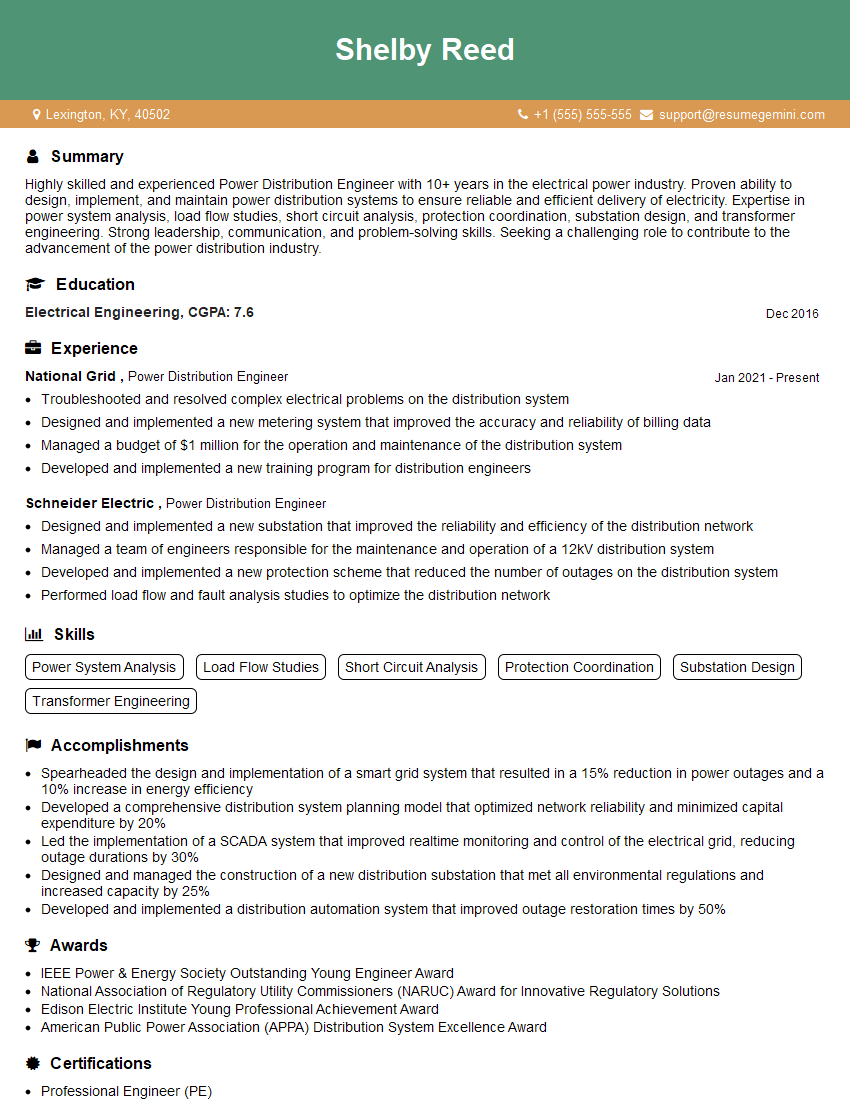
Power Distribution Engineer Resume Sample
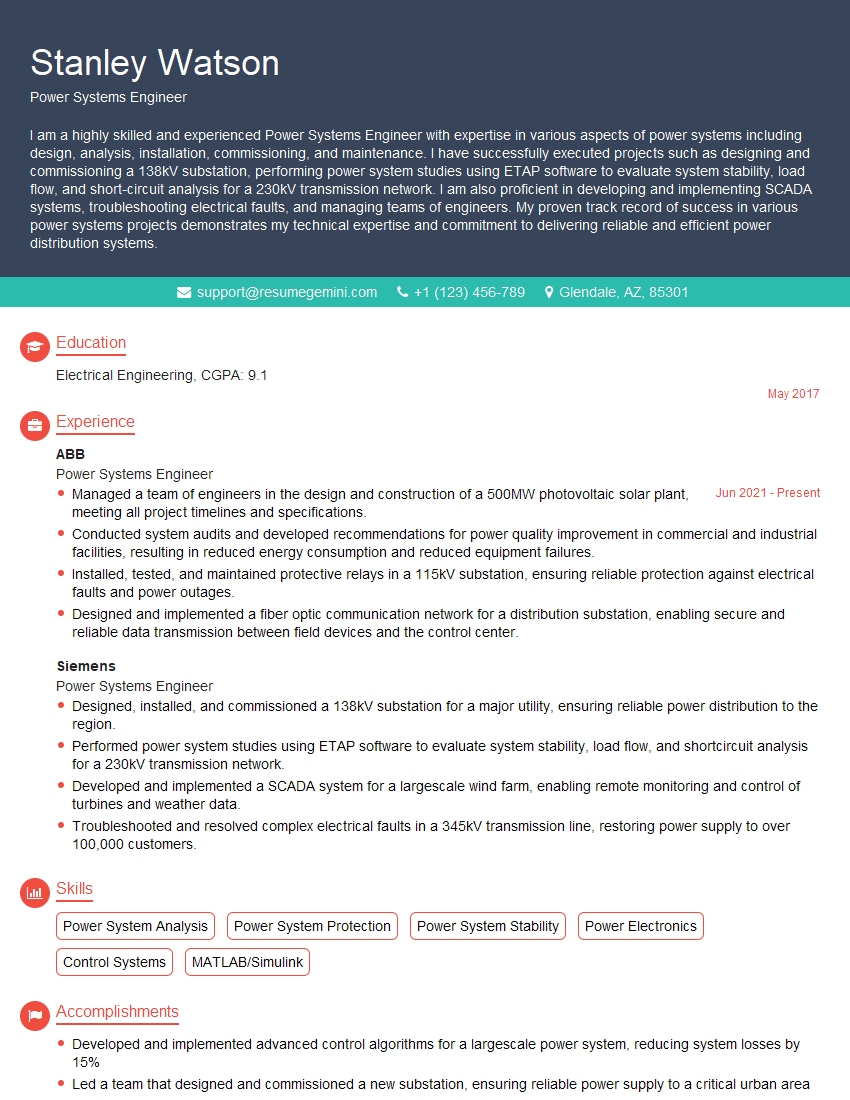
Power Systems Engineer Resume Sample
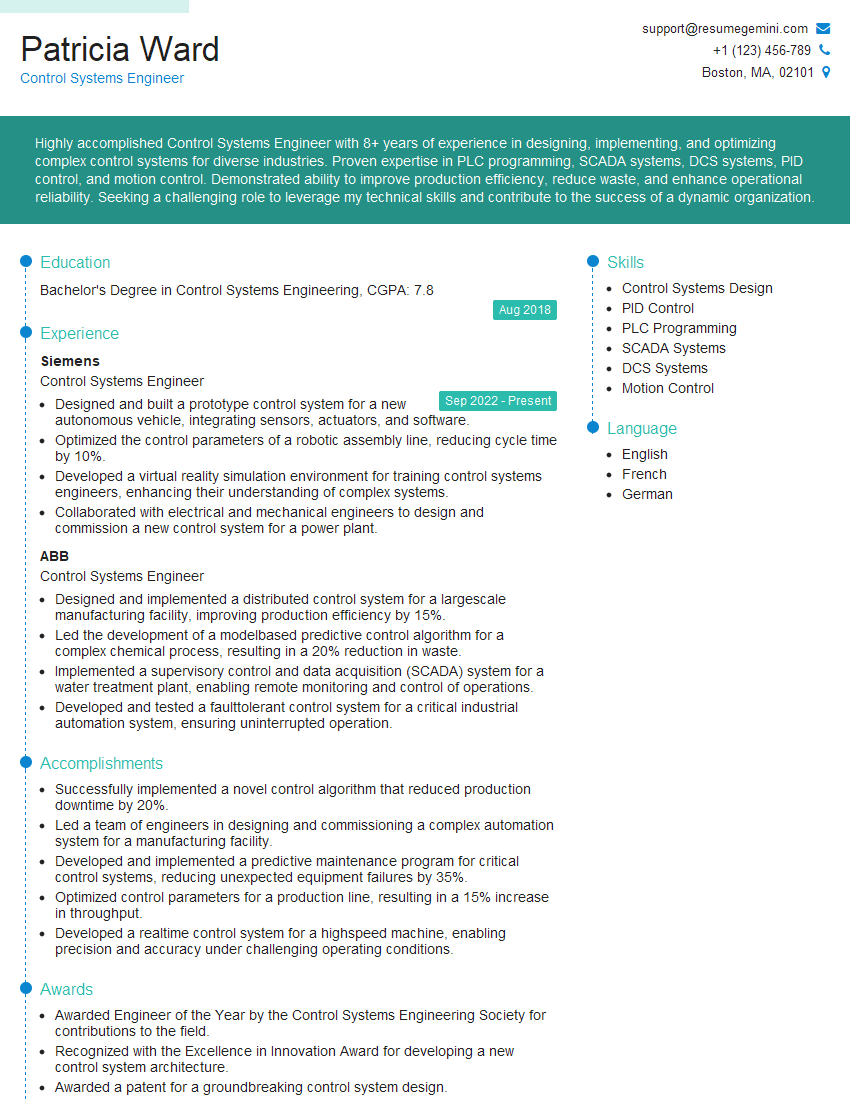
Control Systems Engineer Resume Sample
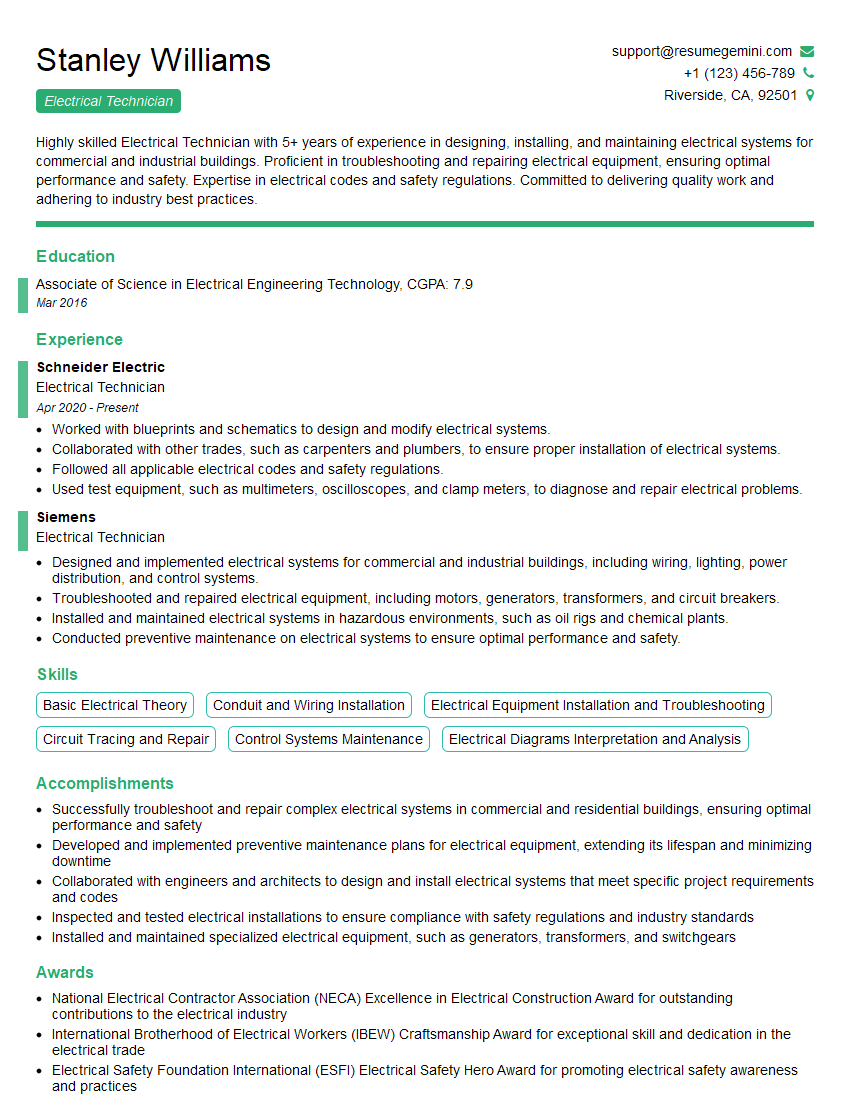
Electrical Technician Resume Sample
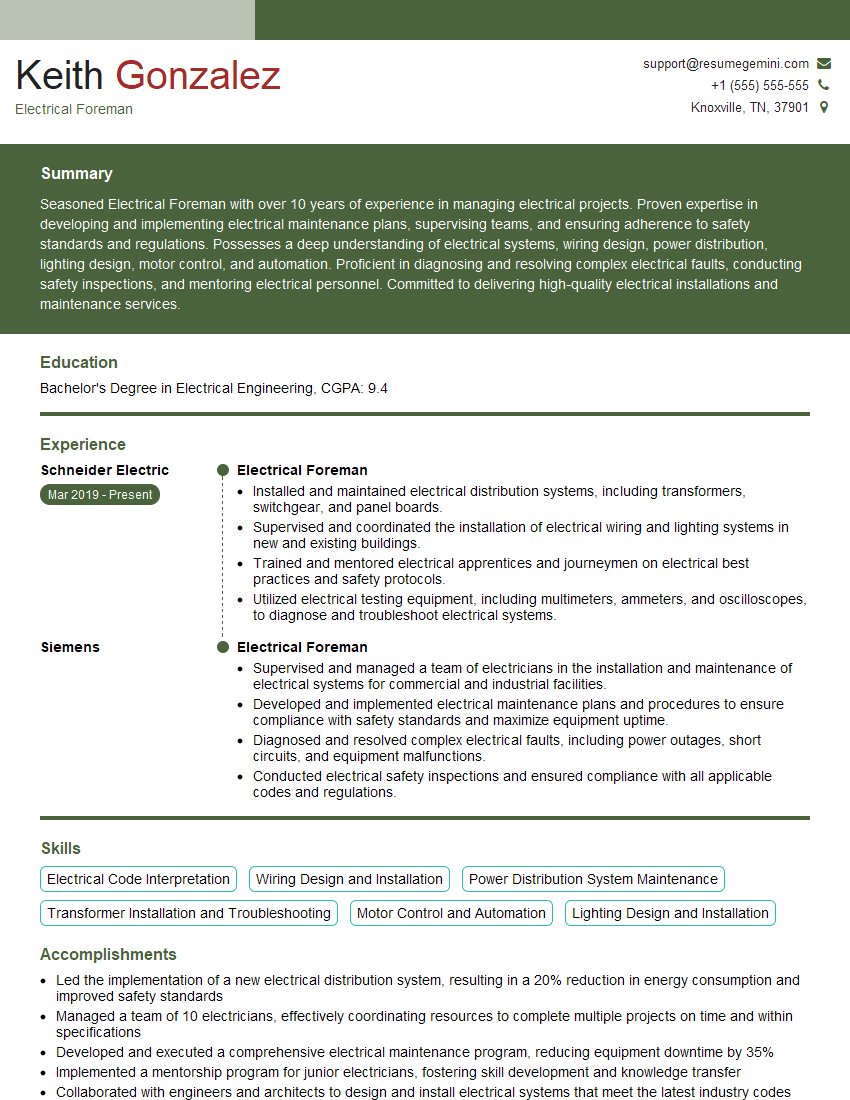
Electrical Foreman Resume Sample
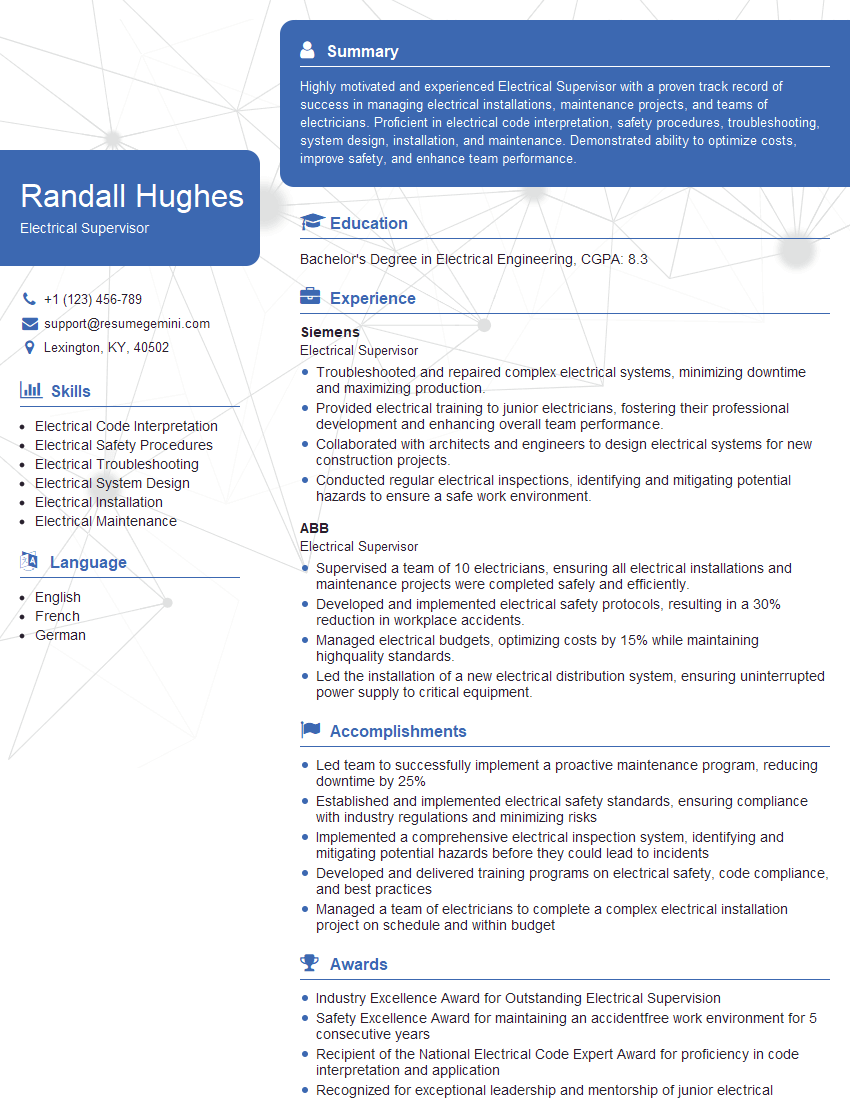
Electrical Supervisor Resume Sample
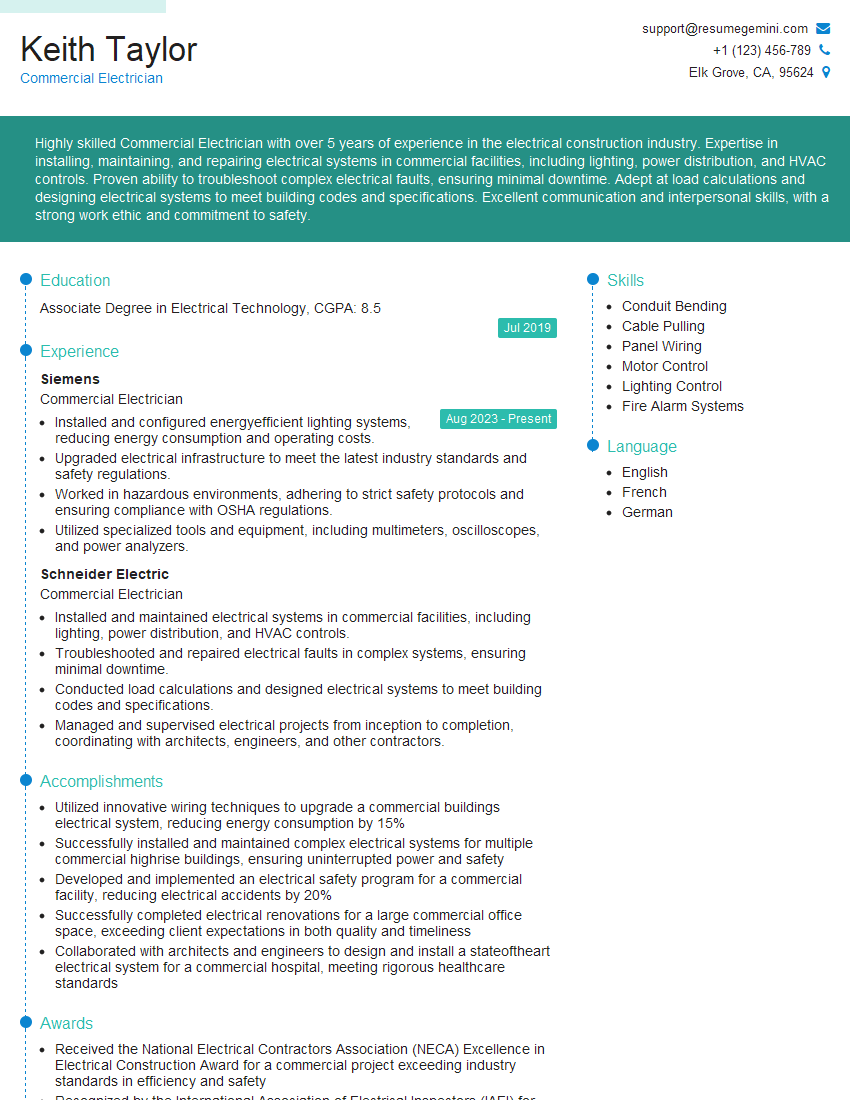
Commercial Electrician Resume Sample
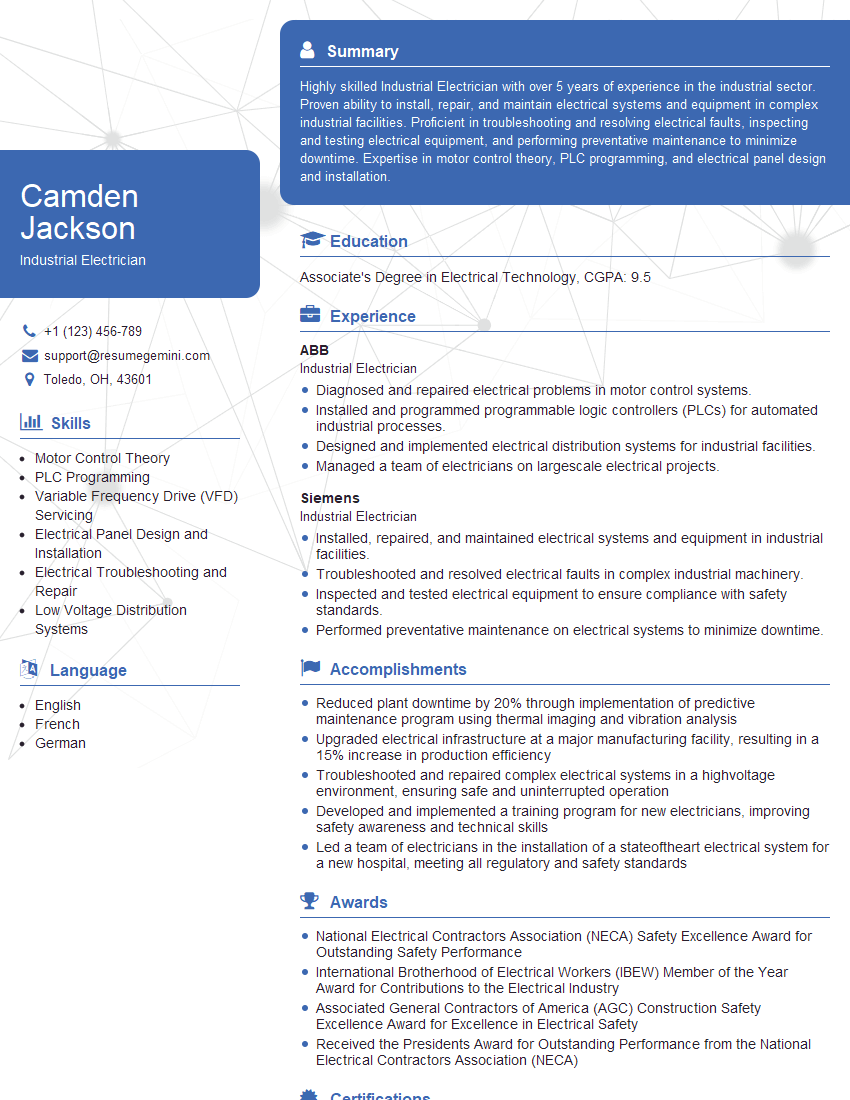
Industrial Electrician Resume Sample

Maintenance Electrician Resume Sample
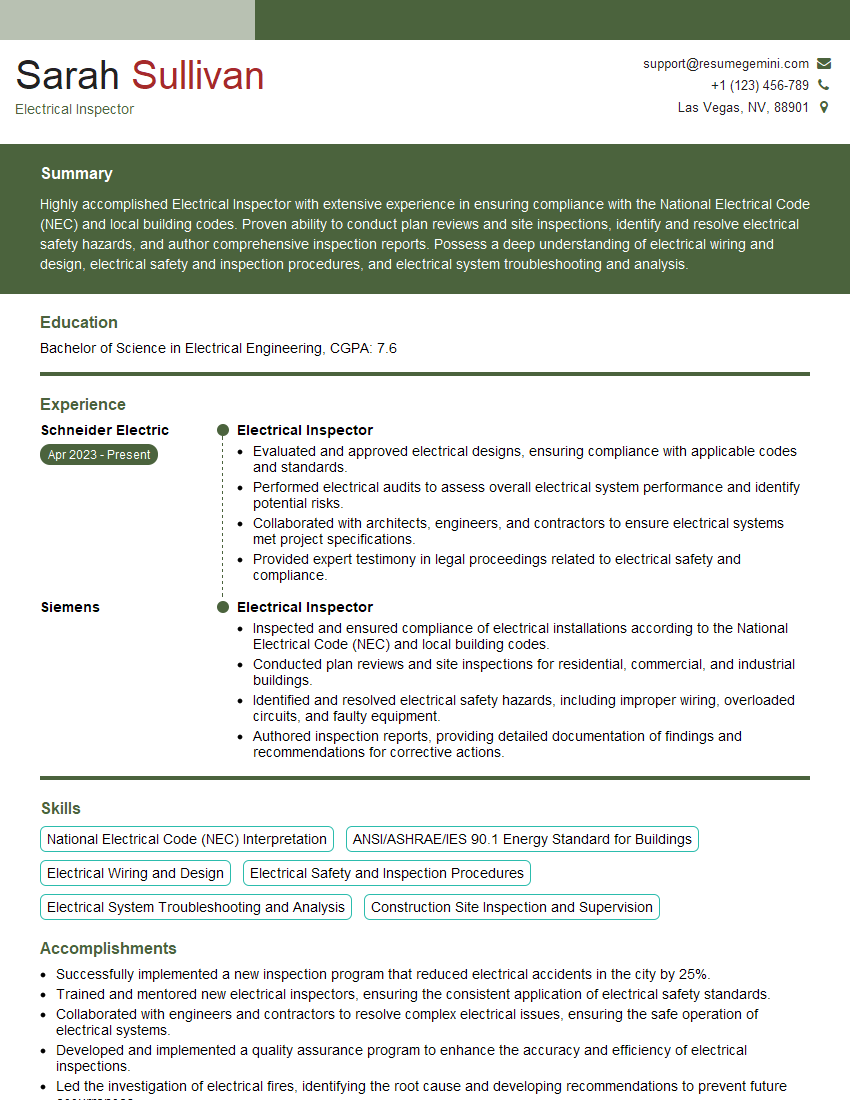
Electrical Inspector Resume Sample
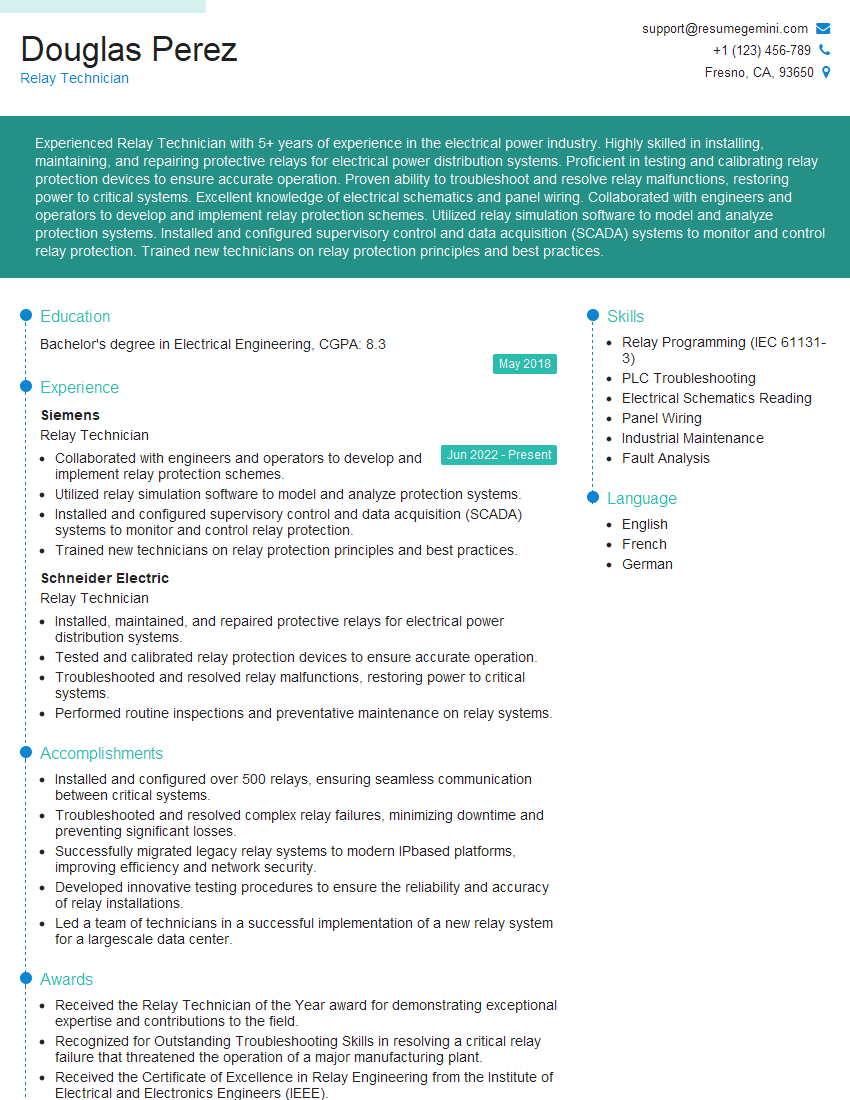
Relay Technician Resume Sample
- Electrical Superintendent
- Electrical Estimator
- Automation Engineer
- Electrical Designer
- Electrical Engineer
- Power Distribution Engineer
- Power Systems Engineer
- Control Systems Engineer
- Electrical Technician
- Electrical Foreman
- Electrical Supervisor
- Commercial Electrician
- Industrial Electrician
- Maintenance Electrician
- Electrical Inspector
- Relay Technician
Explore more articles
Users Rating of Our Blogs
Share Your Experience
We value your feedback! Please rate our content and share your thoughts (optional).
What Readers Say About Our Blog
To the interviewgemini.com Webmaster.
Very helpful and content specific questions to help prepare me for my interview!
Thank you
To the interviewgemini.com Webmaster.
This was kind of a unique content I found around the specialized skills. Very helpful questions and good detailed answers.
Very Helpful blog, thank you Interviewgemini team.