Preparation is the key to success in any interview. In this post, we’ll explore crucial Community Resources Knowledge interview questions and equip you with strategies to craft impactful answers. Whether you’re a beginner or a pro, these tips will elevate your preparation.
Questions Asked in Community Resources Knowledge Interview
Q 1. Describe your experience identifying and accessing community resources.
Identifying and accessing community resources requires a multi-faceted approach. It begins with understanding the specific needs of the community. This involves thorough research, utilizing various data sources such as census data, local government reports, and community needs assessments. I then leverage this information to locate relevant resources, which might include government agencies, non-profit organizations, faith-based institutions, and private businesses. My experience includes using online databases, attending community events, networking with local professionals, and actively engaging with community members themselves to gain a comprehensive understanding of available resources.
For example, in my previous role, we identified a significant need for after-school programs for children in low-income families. Through thorough research, I located funding opportunities from local foundations, partnered with a nearby YMCA to provide space, and recruited volunteer staff from a local university. This collaborative approach ensured that the resource was both accessible and sustainable.
Q 2. How do you prioritize community needs and allocate resources effectively?
Prioritizing community needs and allocating resources effectively necessitates a structured approach. I typically start by conducting a thorough needs assessment using various qualitative and quantitative methods such as surveys, focus groups, and statistical analysis of available data. This helps to identify the most pressing issues and their relative importance. Following that, a prioritization matrix is developed, weighing factors such as urgency, impact, feasibility, and cost-effectiveness. This matrix helps to rank community needs, ensuring that resources are allocated to those with the greatest impact.
For instance, if we have limited funding and identify both a significant need for affordable housing and improved healthcare access, the prioritization matrix would help us objectively determine which project to fund first based on factors such as the immediate risk to the community and the potential for long-term positive outcomes.
Q 3. Explain your process for evaluating the effectiveness of community programs.
Evaluating the effectiveness of community programs is crucial to ensuring their continued impact and improving future initiatives. My process involves using a mix of quantitative and qualitative data collection methods. Quantitative data might include program participation rates, changes in key indicators like literacy rates or employment rates, and cost-benefit analyses. Qualitative data is gathered through feedback surveys, focus groups, interviews with program participants and staff, and observations of program activities.
For example, when assessing an adult literacy program, I would track the number of participants completing the program, their improvement in reading and writing skills (using pre- and post-tests), and gather feedback on their experiences. By combining quantitative and qualitative data, I can get a holistic view of the program’s effectiveness and make informed decisions about its continuation or improvement.
Q 4. What strategies do you employ to build and maintain relationships with community partners?
Building and maintaining relationships with community partners is essential for successful community resource management. I prioritize open communication, trust-building, and mutual respect. This involves regular meetings, collaborative project planning, joint events, and transparent sharing of information. I actively seek to understand their perspectives, concerns, and goals, fostering a strong collaborative spirit.
For example, I actively participate in local networking events, attend meetings with partner organizations, and build personal relationships with key individuals. This collaborative approach allows for better resource sharing, problem-solving, and a stronger collective impact on the community.
Q 5. How do you handle conflicting priorities or resource limitations?
Handling conflicting priorities and resource limitations requires strategic decision-making and effective communication. I use a prioritization framework, similar to the one described earlier, to objectively weigh competing needs. This process often involves negotiation and compromise with stakeholders to find the most equitable solution, ensuring that no critical need is completely overlooked. Transparency is key; explaining the rationale behind decisions to all stakeholders builds trust and prevents misunderstandings.
In situations where funding is limited, I may explore alternative funding sources, seek in-kind donations, or prioritize programs based on their potential for maximum impact and sustainability. Sometimes, creatively combining existing resources can help address multiple needs simultaneously.
Q 6. Describe your experience developing and implementing community outreach initiatives.
Developing and implementing community outreach initiatives involves a comprehensive strategy that incorporates a deep understanding of the target audience. It starts with identifying the specific community needs and the most effective methods of communication and engagement. This might include social media campaigns, community events, presentations at local organizations, and direct mail.
For example, to raise awareness about a new health clinic, I might launch a targeted social media campaign, distribute flyers in high-traffic areas, and organize a health fair with free screenings and information sessions. Careful monitoring and evaluation are crucial throughout the process to track the initiative’s effectiveness and make adjustments as needed.
Q 7. How do you ensure equitable access to community resources for all populations?
Ensuring equitable access to community resources for all populations requires careful consideration of potential barriers and proactive measures to address them. This involves identifying and addressing disparities based on factors such as race, ethnicity, socioeconomic status, age, disability, and language. Strategies include providing culturally competent services, offering translation services, using accessible formats for information, and actively reaching out to underserved communities.
For instance, when promoting a job training program, I would ensure that information is available in multiple languages, offer transportation assistance to those without reliable transportation, and actively engage with community leaders from diverse backgrounds to raise awareness and encourage participation. Regularly evaluating the program’s reach and impact across different demographics is essential to ensure equity.
Q 8. Explain your understanding of community needs assessments.
Community needs assessments are systematic processes used to identify the health and social service needs of a specific population. They’re crucial for effective resource allocation and program planning. Think of it like taking a community’s vital signs – understanding its strengths and weaknesses before prescribing solutions.
A robust assessment involves several steps: defining the community’s boundaries, identifying key stakeholders, gathering data (through surveys, interviews, focus groups, existing data analysis), analyzing the data to pinpoint needs and resources, and finally, reporting findings and creating action plans. For example, in a rural community, a needs assessment might reveal a lack of access to mental health services, leading to the development of a mobile mental health clinic program.
- Data collection methods: Surveys, interviews, focus groups, secondary data analysis (existing health records, census data).
- Data analysis: Identifying patterns, trends, and gaps in services.
- Action planning: Developing strategies and interventions to address identified needs.
Q 9. What data analysis techniques do you use to inform resource allocation decisions?
Data analysis is the backbone of informed resource allocation. I utilize various techniques depending on the data available and the research question. For example, if we’re looking at the prevalence of food insecurity, descriptive statistics (like percentages and means) will help illustrate the scope of the problem. But to understand the *reasons* behind food insecurity, I might use more advanced methods.
- Descriptive statistics: Summarizing data (means, medians, percentages, frequencies).
- Inferential statistics: Drawing conclusions about a population based on a sample (t-tests, ANOVA, regression analysis).
- Geographic Information Systems (GIS): Mapping data to visualize spatial patterns of need (e.g., identifying areas with high rates of unemployment).
- Qualitative data analysis: Analyzing interview transcripts and focus group notes to gain richer insights into community perspectives.
For instance, in a study on youth unemployment, regression analysis can help us determine the impact of factors like education level, access to transportation, and availability of job training programs on the likelihood of youth employment. This informs resource allocation toward programs addressing these influential factors.
Q 10. How do you measure the impact of community programs and interventions?
Measuring the impact of community programs is crucial for demonstrating effectiveness and securing future funding. It requires a well-defined evaluation plan implemented from the outset of a program. This isn’t simply about counting participants; it’s about demonstrating meaningful change.
We use a variety of methods:
- Quantitative methods: Measuring changes in numerical data, such as reductions in crime rates (for a crime prevention program), improved test scores (for an educational program), or increased employment rates (for a job training program). This often involves pre- and post-intervention measurements and statistical tests to determine significance.
- Qualitative methods: Gathering feedback through interviews, focus groups, or case studies to capture the lived experiences of participants and understand the program’s impact on their well-being. For example, interviews with participants in a substance abuse program could reveal valuable insights into their recovery journey.
- Process evaluation: Monitoring program implementation to ensure that activities are carried out as planned and that resources are used effectively.
A strong evaluation considers both quantitative and qualitative data, providing a comprehensive understanding of the program’s success and areas for improvement. For example, a successful after-school program might show increased academic performance (quantitative) *and* increased student engagement and self-esteem (qualitative).
Q 11. Describe your experience working with diverse communities and populations.
My experience working with diverse communities is extensive. I recognize that ‘one size fits all’ approaches are ineffective. Success lies in understanding and respecting the unique cultural values, beliefs, and communication styles of each population.
I’ve worked with communities facing various challenges – from poverty and homelessness to language barriers and health disparities. My approach involves building trust through active listening, engaging community leaders, employing culturally sensitive methods of communication, and ensuring equitable access to services. For instance, in a community with a significant immigrant population, providing services in multiple languages and culturally adapting program materials is paramount. In another instance, working with an indigenous community required adapting research methods to align with their cultural protocols and perspectives.
Understanding cultural nuances is not just about translation; it is about understanding the power dynamics and histories that shape a community’s needs and how they interact with systems. This requires continuous learning and humility.
Q 12. How do you address ethical dilemmas related to community resource allocation?
Ethical dilemmas in resource allocation are unavoidable. Limited resources necessitate difficult choices. My approach centers on transparency, fairness, and accountability. This involves:
- Establishing clear criteria for resource allocation: These criteria should be based on objective needs and evidence, not personal biases. Publicly defining these criteria ensures transparency and reduces the potential for unfairness.
- Prioritizing needs based on urgency and severity: Those in greatest need should receive priority, while ensuring fairness and equity across different groups within the community.
- Engaging community stakeholders in the decision-making process: This collaborative approach helps to ensure that allocations reflect the values and priorities of the community being served. It also promotes trust and ownership.
- Documenting decision-making processes: A transparent record of how decisions were made promotes accountability and enables learning from past experiences.
For instance, if funding is limited for a new community center, a transparent process involving community input might lead to prioritizing essential services like childcare or elder care over less critical amenities.
Q 13. What are your strengths and weaknesses in managing community resources?
My strengths lie in my analytical abilities, my capacity for building strong relationships within diverse communities, and my commitment to data-driven decision-making. I excel at translating complex data into actionable insights that inform effective resource allocation strategies. I am also adept at fostering collaborative partnerships between various stakeholders, including community members, government agencies, and non-profit organizations.
One area for improvement is my delegation skills. While I’m capable of managing multiple projects simultaneously, I sometimes struggle to effectively delegate tasks, potentially hindering efficiency. I am actively working on this by consciously assigning tasks based on team members’ strengths and providing clear guidance and support.
Q 14. Explain your experience collaborating with government agencies or other organizations.
I have a strong track record of collaborating with government agencies and other organizations. These collaborations are essential for leveraging resources and maximizing the impact of community programs. Examples include working with local health departments to coordinate health screenings, partnering with social services agencies to develop integrated service delivery models, and collaborating with non-profit organizations to address specific community needs (like housing or job training).
Successful collaboration requires clear communication, shared goals, and a willingness to compromise. I actively work to build trust and mutual respect with partners, which fosters effective communication and problem-solving. For example, in a project addressing youth homelessness, I collaborated with multiple agencies to create a coordinated response that included outreach services, shelter provisions, and long-term support programs. This integrated approach was more effective than the individual efforts of any single agency.
Q 15. How do you stay informed about changes in community needs and available resources?
Staying informed about evolving community needs and resources is crucial for effective community resource management. My approach is multifaceted and involves several key strategies:
- Regularly attending community meetings and forums: This allows me to directly hear from residents, community leaders, and other stakeholders about their concerns and priorities. For example, I recently attended a town hall meeting where residents highlighted the need for improved mental health services.
- Networking with other organizations and professionals: I actively build relationships with other non-profits, government agencies, and healthcare providers to share information and learn about new resources and initiatives. This collaborative approach ensures we’re all aware of what services are available and where gaps might exist.
- Monitoring data and reports: I regularly analyze demographic data, community health assessments, and needs assessments to identify trends and emerging issues. This allows for proactive planning and resource allocation. For example, a recent report highlighting an increase in youth unemployment led us to develop a job training program.
- Utilizing online resources and databases: Websites, databases, and social media platforms provide valuable updates on funding opportunities, new programs, and policy changes. I make sure to regularly review these platforms.
- Collecting feedback from service users: Direct feedback from those who utilize community resources is invaluable. Surveys, focus groups, and informal conversations can reveal areas for improvement and identify unmet needs.
Career Expert Tips:
- Ace those interviews! Prepare effectively by reviewing the Top 50 Most Common Interview Questions on ResumeGemini.
- Navigate your job search with confidence! Explore a wide range of Career Tips on ResumeGemini. Learn about common challenges and recommendations to overcome them.
- Craft the perfect resume! Master the Art of Resume Writing with ResumeGemini’s guide. Showcase your unique qualifications and achievements effectively.
- Don’t miss out on holiday savings! Build your dream resume with ResumeGemini’s ATS optimized templates.
Q 16. Describe a time you successfully resolved a conflict related to community resources.
A conflict arose when two community organizations, both offering after-school programs for children, were vying for the same limited space in our community center. Both programs were valuable, and their competition threatened access for the children.
To resolve this, I facilitated a series of meetings between the leaders of both organizations. We used a collaborative, problem-solving approach. First, we clearly defined the needs of each program and the capacity limitations of the community center. Then, we brainstormed alternative solutions, such as adjusting program schedules, exploring alternative venues, and even partnering to create a joint program. The solution involved a staggered scheduling arrangement which allowed both organizations to operate effectively, maximizing the usage of the limited space without compromising the quality of the services offered to the children.
This experience highlighted the importance of neutral facilitation, active listening, and creative problem-solving in addressing resource allocation conflicts within a community.
Q 17. How do you manage and track community resource budgets?
Budget management for community resources is critical to ensuring efficient and effective allocation. My approach combines both robust financial tracking and strategic planning:
- Detailed budgeting software: I utilize specialized software to track income and expenses, categorize budget items, and generate reports. This provides real-time insights into financial health.
- Regular budget reviews: I conduct regular reviews of the budget to ensure that spending aligns with the planned activities and that any variances are promptly addressed.
- Grant reporting: For grant-funded projects, I ensure meticulous record-keeping and timely submission of reports to funders. This demonstrates accountability and strengthens our chances of securing future funding.
- Transparent financial reporting: Community stakeholders are kept informed about the budget through regular reports and presentations, ensuring transparency and building trust.
- Contingency planning: A contingency fund is maintained to address unforeseen expenses or changes in resource availability. This helps to mitigate financial risks.
Q 18. Explain your experience using technology to support community resource management.
Technology is essential for efficient community resource management. My experience includes:
- Database management: I’ve used databases (e.g., Access, FileMaker Pro) to track resources, client information, and program outcomes. This allows for efficient data analysis and reporting.
- Online platforms: I’ve utilized platforms to connect community members with resources, such as online registration systems for programs, volunteer management tools, and online donation platforms.
- GIS mapping: I’ve used Geographic Information Systems (GIS) to map community resources and analyze geographic patterns of need. This helps in identifying underserved areas and planning resource distribution effectively. For example, we used GIS to identify areas with limited access to healthy food, leading to the development of a mobile food pantry.
- Data visualization tools: I’ve utilized tools like Excel and Tableau to create visual representations of data, which enhances communication and decision-making. For example, we used charts and graphs to illustrate the impact of our programs to potential funders.
Q 19. What is your experience with grant writing or proposal development?
I have extensive experience in grant writing and proposal development. This includes:
- Identifying funding opportunities: I regularly research potential funding sources, including government grants, private foundations, and corporate sponsorships.
- Crafting compelling proposals: I have a proven track record of writing successful proposals that clearly articulate the need, program design, budget, and evaluation plan. This includes creating narratives that resonate with funders’ priorities.
- Meeting funder requirements: I carefully follow the specific guidelines and requirements of each funding agency to ensure proposals are competitive.
- Budget development: I’m skilled in developing detailed and justifiable budgets that clearly show how funds will be used.
- Post-award management: I manage grant funds according to the terms and conditions specified in the grant agreement and produce regular progress reports for the funding agencies.
For instance, I recently secured a $50,000 grant to expand our after-school program by writing a persuasive proposal detailing the program’s impact and the community’s need for more resources.
Q 20. How do you engage volunteers or community members in resource development or distribution?
Engaging volunteers and community members is crucial for the success of community resource initiatives. My strategies include:
- Clear communication: I provide clear information about volunteer opportunities, outlining roles, responsibilities, and time commitment. I utilize various communication channels such as email, social media, and community bulletin boards.
- Recognition and appreciation: I actively recognize and appreciate the contributions of volunteers, creating a positive and supportive environment. We organize regular volunteer appreciation events and provide opportunities for leadership development.
- Skill-based volunteering: I identify volunteer opportunities that align with individuals’ skills and interests, maximizing their contribution and job satisfaction.
- Community events: We organize community events where volunteers can participate in resource development or distribution. This creates a sense of community ownership and engagement.
- Training and support: I provide volunteers with adequate training and ongoing support, ensuring they have the knowledge and resources they need to perform their roles effectively.
Q 21. Describe your understanding of relevant legislation or regulations affecting community resources.
My understanding of relevant legislation and regulations is comprehensive and informs all aspects of my work. This includes:
- HIPAA (Health Insurance Portability and Accountability Act): I am knowledgeable about the regulations surrounding the protection of sensitive health information, ensuring compliance when handling client data. This is particularly important when working with programs that involve health services.
- FERPA (Family Educational Rights and Privacy Act): When working with programs involving children or educational initiatives, I understand and uphold the privacy rights of students.
- ADA (Americans with Disabilities Act): I ensure all community resources are accessible to individuals with disabilities, complying with accessibility guidelines in program design and facility utilization.
- State and local regulations: I stay informed about state and local laws and ordinances that affect community resources, including zoning regulations, licensing requirements, and public health guidelines.
- Grant compliance regulations: I understand and adhere to the rules and regulations set by various funding agencies regarding the management of grant funds.
Understanding these regulations allows for ethical and legal operations while ensuring the safety and wellbeing of those we serve.
Q 22. Explain your experience with needs assessments, program planning and evaluation.
Needs assessments, program planning, and evaluation are interconnected phases crucial for effective community resource management. A needs assessment identifies the gaps and unmet needs within a community. Program planning designs interventions to address those needs, while evaluation measures the program’s impact and effectiveness.
For example, in a community facing high rates of youth unemployment, a needs assessment might reveal a lack of job training programs and mentorship opportunities. The program planning phase would then involve designing a program offering vocational training, job placement assistance, and mentorship. Finally, the evaluation phase would track employment rates among program participants, measure participant satisfaction, and assess the program’s overall cost-effectiveness.
- Needs Assessment: I’ve conducted numerous needs assessments using methods like surveys, focus groups, key informant interviews, and data analysis from existing resources (census data, health statistics).
- Program Planning: My experience includes developing logic models, creating detailed program budgets, securing funding, and outlining program implementation strategies.
- Program Evaluation: I utilize both quantitative and qualitative methods. Quantitative methods include statistical analysis of pre- and post-intervention data. Qualitative methods involve gathering feedback through surveys, interviews, and focus groups.
In one project, a needs assessment identified a critical need for affordable childcare in a low-income neighborhood. This led to the development of a subsidized childcare center, which was subsequently evaluated based on increased parental employment rates, child development outcomes, and community feedback.
Q 23. How would you develop a communication strategy to reach diverse community members?
Reaching diverse community members requires a multifaceted communication strategy that considers language, culture, literacy levels, and access to technology. It’s not a ‘one-size-fits-all’ approach.
- Multilingual Materials: All key information must be available in the languages prevalent in the community.
- Culturally Sensitive Messaging: The tone, imagery, and content should resonate with the specific cultural values and beliefs of the target audience.
- Diverse Communication Channels: Utilize various channels – print materials, radio, television, social media, community events, and word-of-mouth through trusted community leaders.
- Accessibility Considerations: Ensure materials are accessible to people with disabilities, including providing large print, Braille, audio versions, and sign language interpretation.
- Community Partnerships: Collaborate with community organizations and leaders who have strong relationships with diverse groups.
For instance, when promoting a health program in a community with a large immigrant population, I’d translate materials into the most prevalent languages and work with community leaders to disseminate information through local community centers, religious institutions, and ethnic media outlets.
Q 24. Describe your knowledge of relevant community health, welfare, or social service programs.
My knowledge encompasses a wide range of community programs, including those focused on:
- Health: Public health initiatives (e.g., vaccination programs, disease prevention), mental health services, substance abuse treatment, and healthcare access programs.
- Welfare: Food banks, homeless shelters, housing assistance programs, financial aid programs, and unemployment support.
- Social Services: Childcare services, adult day care, senior centers, domestic violence shelters, legal aid, and youth development programs.
I understand the eligibility criteria, referral processes, and service delivery models for many of these programs. I also understand how these programs intersect and often collaborate to support individuals and families. For example, I’m familiar with how a housing assistance program can work in conjunction with a job training program and mental health services to holistically address an individual’s needs.
Q 25. How do you build trust and rapport with clients or community members?
Building trust and rapport is fundamental in community resource management. It’s about demonstrating genuine care and respect for individuals and their experiences.
- Active Listening: Pay close attention to what clients are saying, both verbally and nonverbally.
- Empathy and Understanding: Show that you understand their challenges and perspectives.
- Respectful Communication: Use clear, concise, and non-judgmental language.
- Transparency and Honesty: Be open and honest about the services available and the limitations of the program.
- Consistency and Reliability: Follow through on commitments and be a reliable resource.
- Building Relationships: Spend time getting to know individuals and their circumstances.
For example, during home visits, I always start by introducing myself, explaining my role, and asking for permission to enter. I make sure to listen attentively to their concerns and try to understand their circumstances before offering assistance. This approach helps to create a safe and comfortable environment for open communication.
Q 26. What are the key indicators of success in community resource management?
Success in community resource management is measured by a combination of quantitative and qualitative indicators.
- Improved Access to Services: Increased utilization of available programs and services.
- Positive Outcomes: Improved health outcomes, increased employment rates, reduced poverty levels, improved housing stability, etc. Specific measurable goals should be established upfront.
- Client Satisfaction: Positive feedback from clients and community members indicating satisfaction with services received.
- Program Sustainability: Ability of the program to continue operating effectively in the long term.
- Community Engagement: Active participation of community members in the planning, implementation, and evaluation of programs.
- Cost-Effectiveness: The program achieves its goals within a reasonable budget.
For instance, a successful youth mentoring program would be measured by increased high school graduation rates, college enrollment rates, and reduced rates of delinquency among participants. Qualitative data, such as participant testimonials and feedback from mentors, would also be vital.
Q 27. Describe your experience with data visualization and reporting on community outcomes.
Data visualization and reporting are crucial for effectively communicating community outcomes to stakeholders. I use various tools and techniques to present data in a clear, concise, and engaging manner.
- Data Collection & Analysis: I collect both quantitative and qualitative data, perform statistical analysis, and identify trends and patterns.
- Data Visualization Tools: I’m proficient in using software like Excel, Tableau, and SPSS to create charts, graphs, maps, and dashboards to visually represent the data.
- Report Writing: I prepare comprehensive reports that clearly articulate the findings, highlight key achievements, and identify areas for improvement.
- Presentation Skills: I can effectively present the data and findings to diverse audiences, tailoring the presentation to their level of understanding.
For example, to showcase the impact of a community health initiative, I might create a map showing the geographic distribution of health outcomes before and after the intervention, coupled with charts depicting improvements in key health indicators.
Q 28. How do you adapt your approach to community resource management based on different community contexts?
Adaptability is key to effective community resource management. Community contexts vary greatly in terms of demographics, culture, needs, and resources.
- Needs Assessment: A thorough needs assessment is crucial to understand the specific context and tailor the approach accordingly.
- Community Participation: Actively involve community members in the planning and implementation of programs to ensure they are culturally appropriate and relevant.
- Resource Mobilization: Adapt strategies for securing resources based on the community’s unique circumstances and available funding sources.
- Collaboration: Build strong partnerships with local organizations and community leaders to leverage existing networks and resources.
- Flexibility and Iteration: Be willing to adjust the approach as needed based on feedback and changing circumstances. Program evaluations help guide these changes.
For instance, a program designed for a rural community will differ significantly from one implemented in an urban setting. In a rural area, transportation might be a major barrier, requiring the use of mobile units or transportation assistance. In an urban area, addressing issues of density and accessibility would be paramount.
Key Topics to Learn for Community Resources Knowledge Interview
- Understanding Community Needs: Analyzing the specific needs and challenges faced by diverse community groups, including vulnerable populations.
- Resource Mapping & Navigation: Developing proficiency in identifying, accessing, and effectively utilizing available community resources (e.g., social services, healthcare, educational programs).
- Program Design & Implementation: Understanding the principles of designing and implementing effective community-based programs, considering factors like sustainability and scalability.
- Collaboration & Partnerships: Building and maintaining strong working relationships with various stakeholders (e.g., government agencies, non-profit organizations, community leaders) to achieve shared goals.
- Data Analysis & Evaluation: Utilizing data to assess program effectiveness, measure impact, and inform future strategies. This includes understanding key performance indicators (KPIs).
- Ethical Considerations & Best Practices: Demonstrating a strong understanding of ethical considerations related to community engagement and resource allocation, including issues of equity and access.
- Community Engagement Strategies: Applying various techniques for effective community engagement, including outreach, communication, and participation strategies. Understanding different communication styles and preferences.
- Legal and Regulatory Frameworks: Familiarity with relevant laws and regulations governing community services and resource provision.
Next Steps
Mastering Community Resources Knowledge is crucial for career advancement in the social services sector, opening doors to rewarding roles with significant positive impact. To enhance your job prospects, create an ATS-friendly resume that effectively highlights your skills and experience. ResumeGemini is a trusted resource that can help you build a professional resume tailored to your specific career goals. Examples of resumes tailored to Community Resources Knowledge are available to guide you.
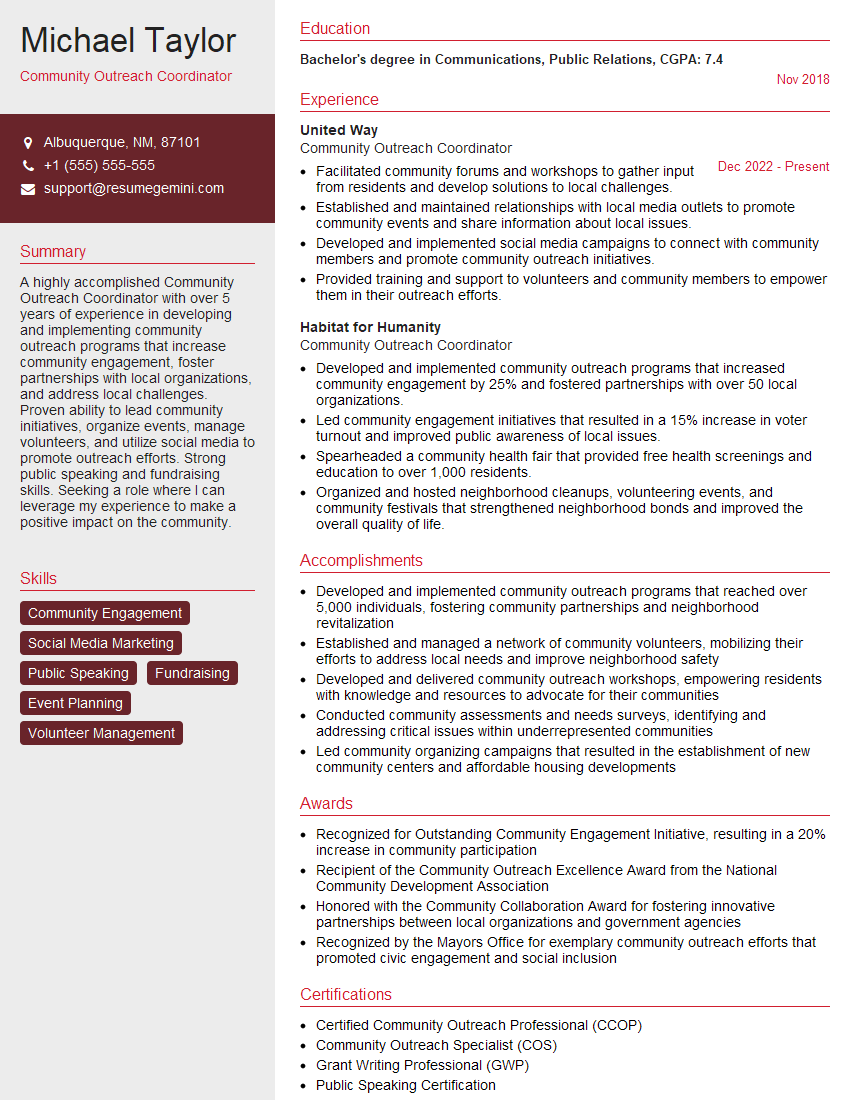
Community Outreach Coordinator Resume Sample
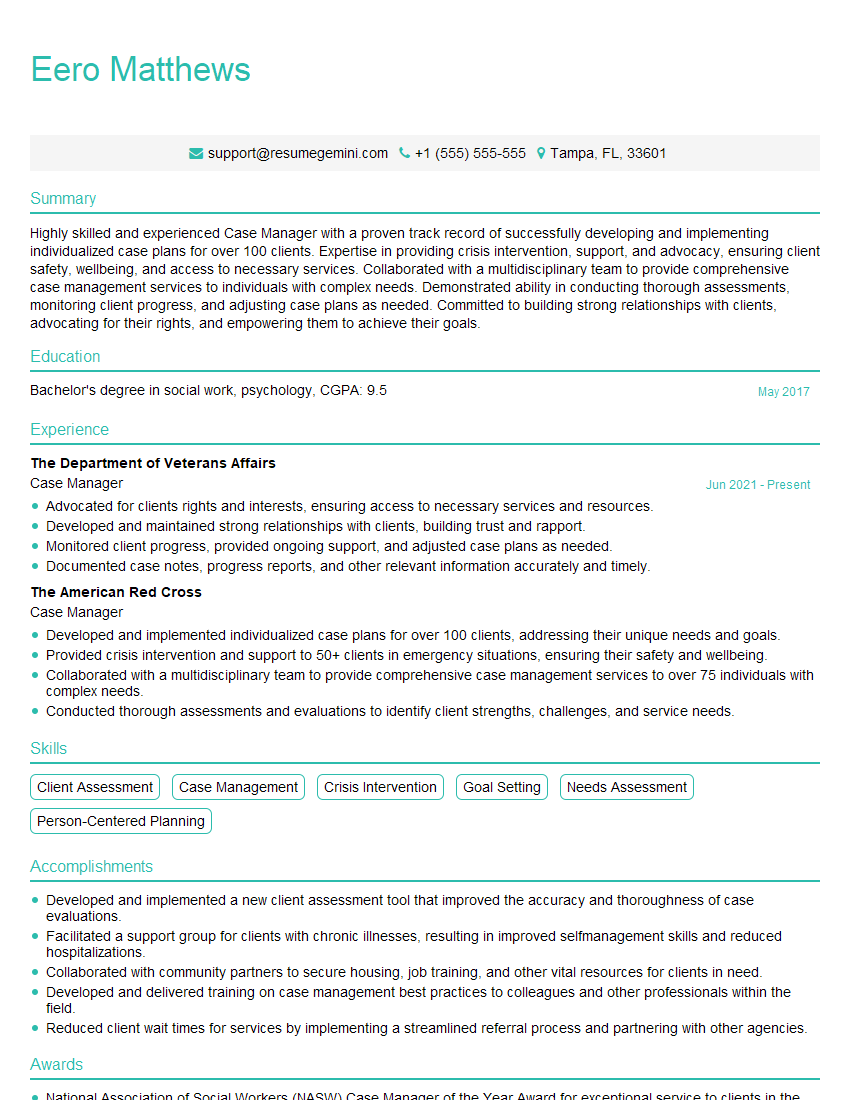
Case Manager Resume Sample
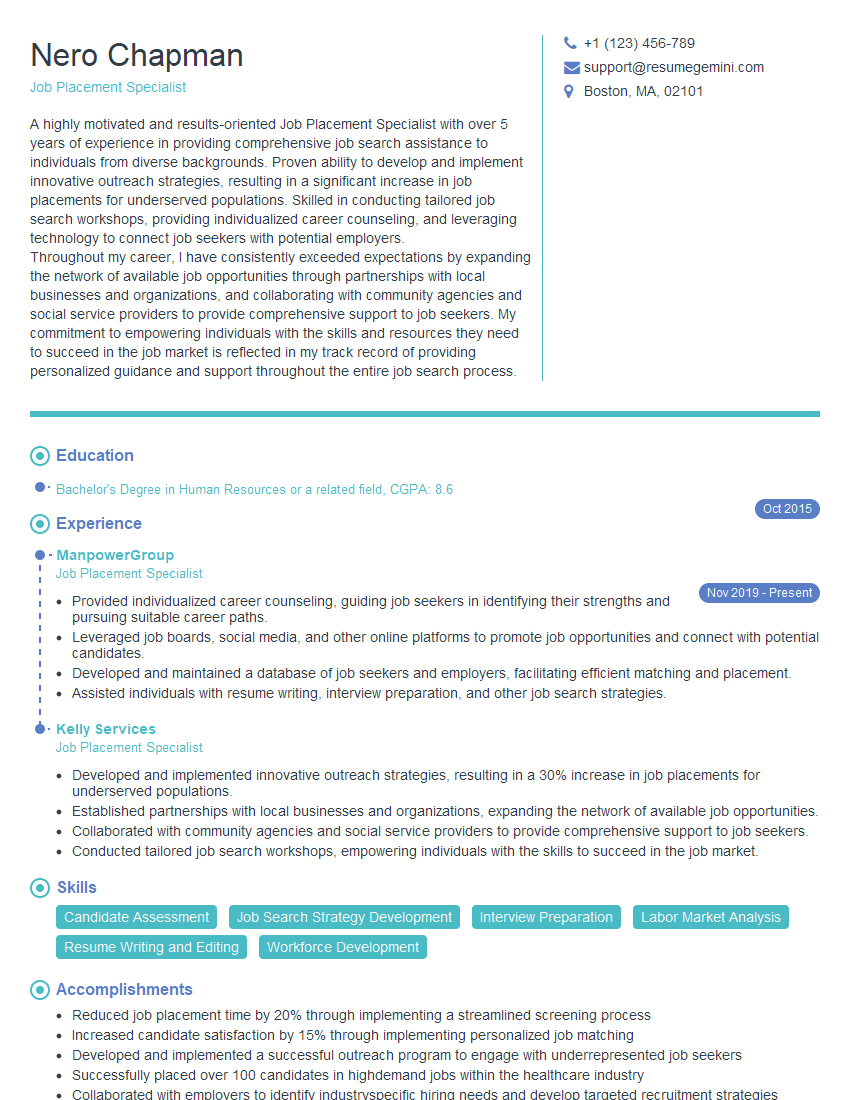
Job Placement Specialist Resume Sample
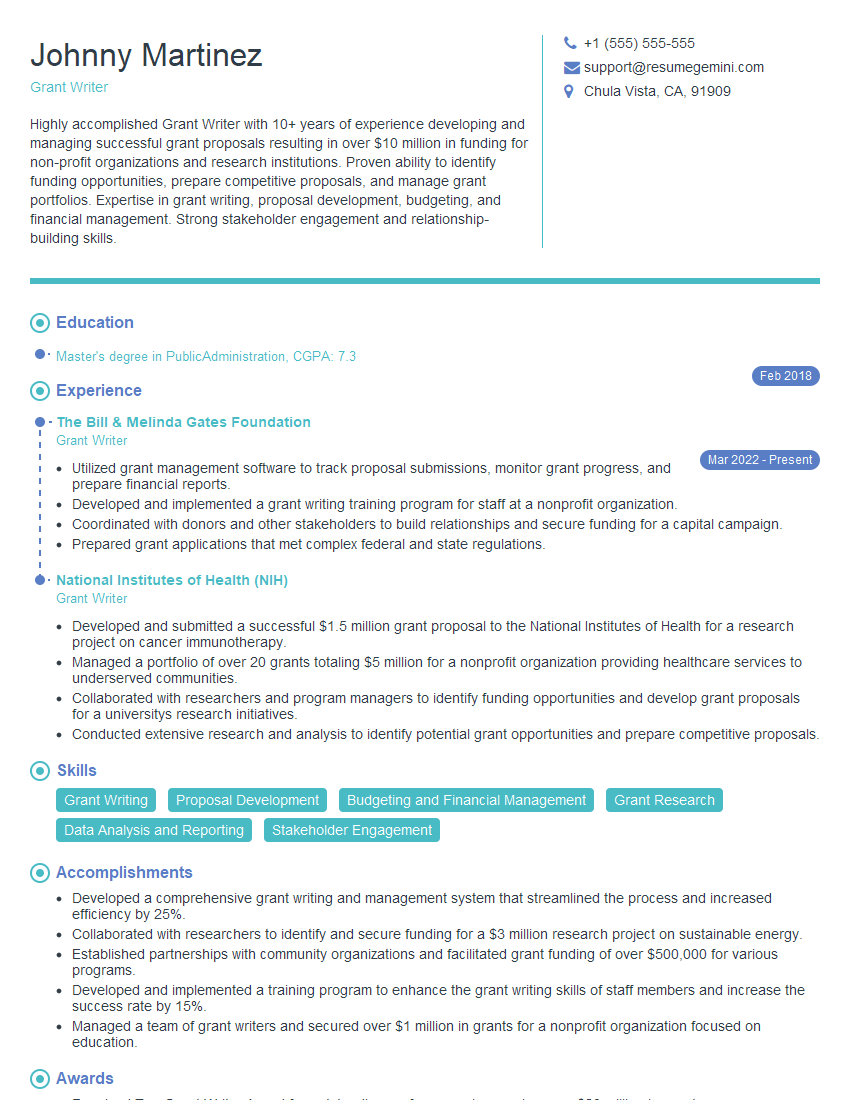
Grant Writer Resume Sample
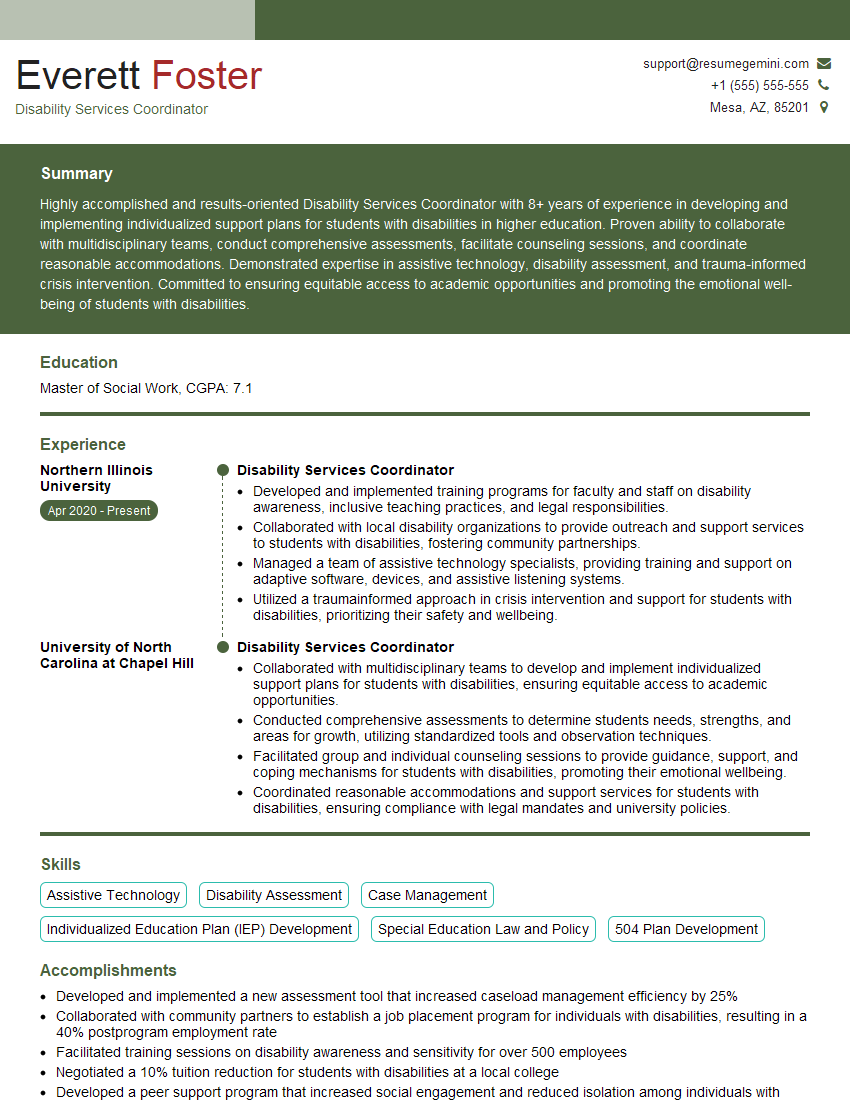
Disability Services Coordinator Resume Sample

Community Organizer Resume Sample
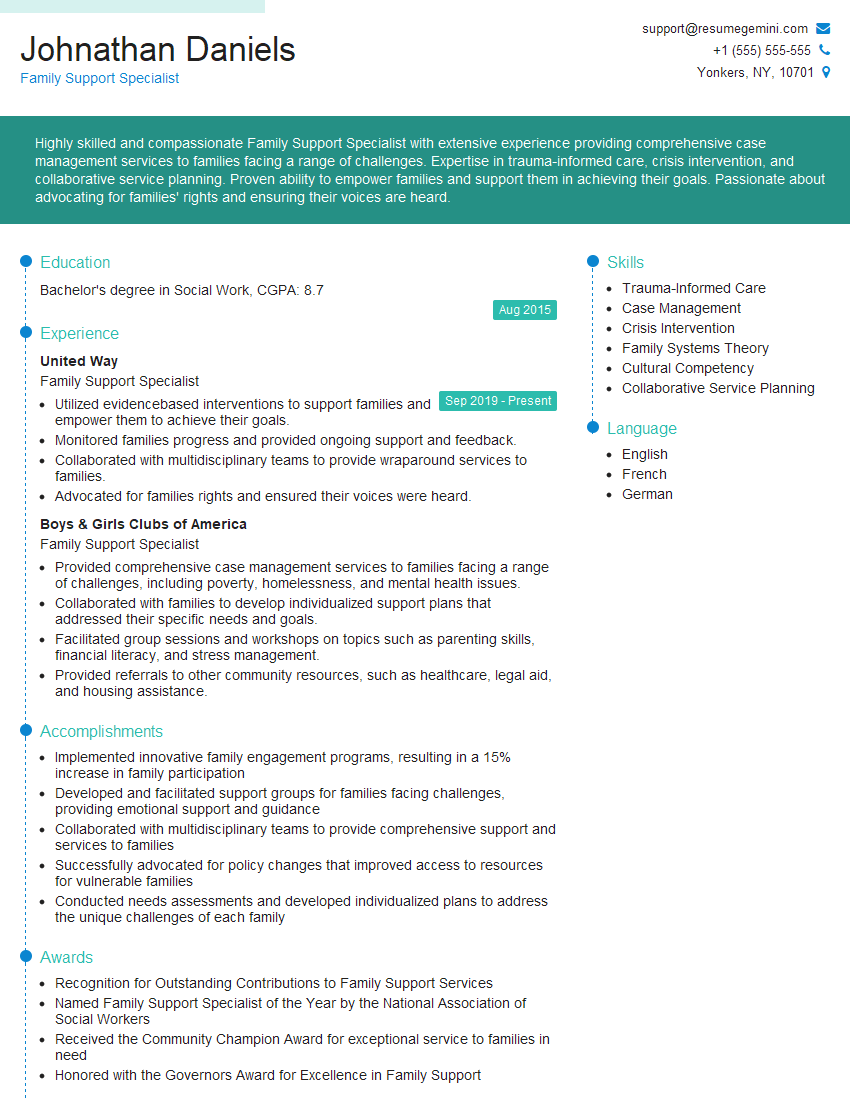
Family Support Specialist Resume Sample
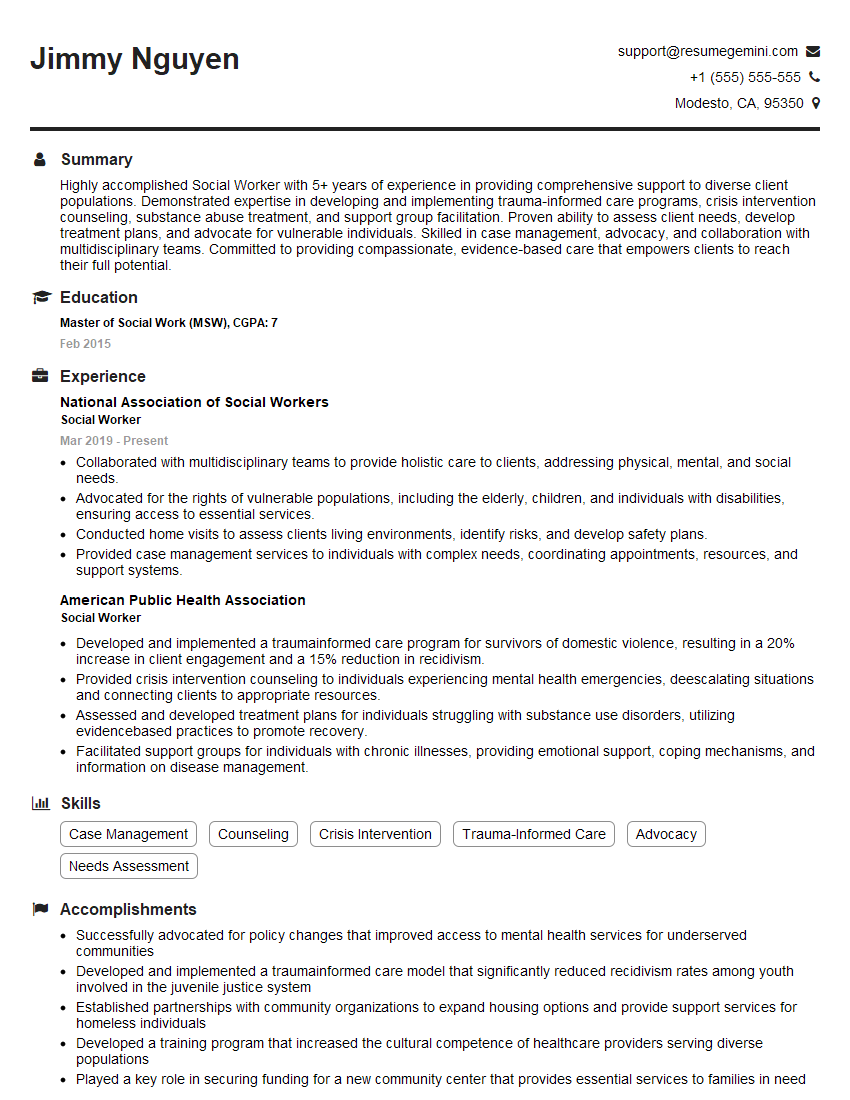
Social Worker Resume Sample
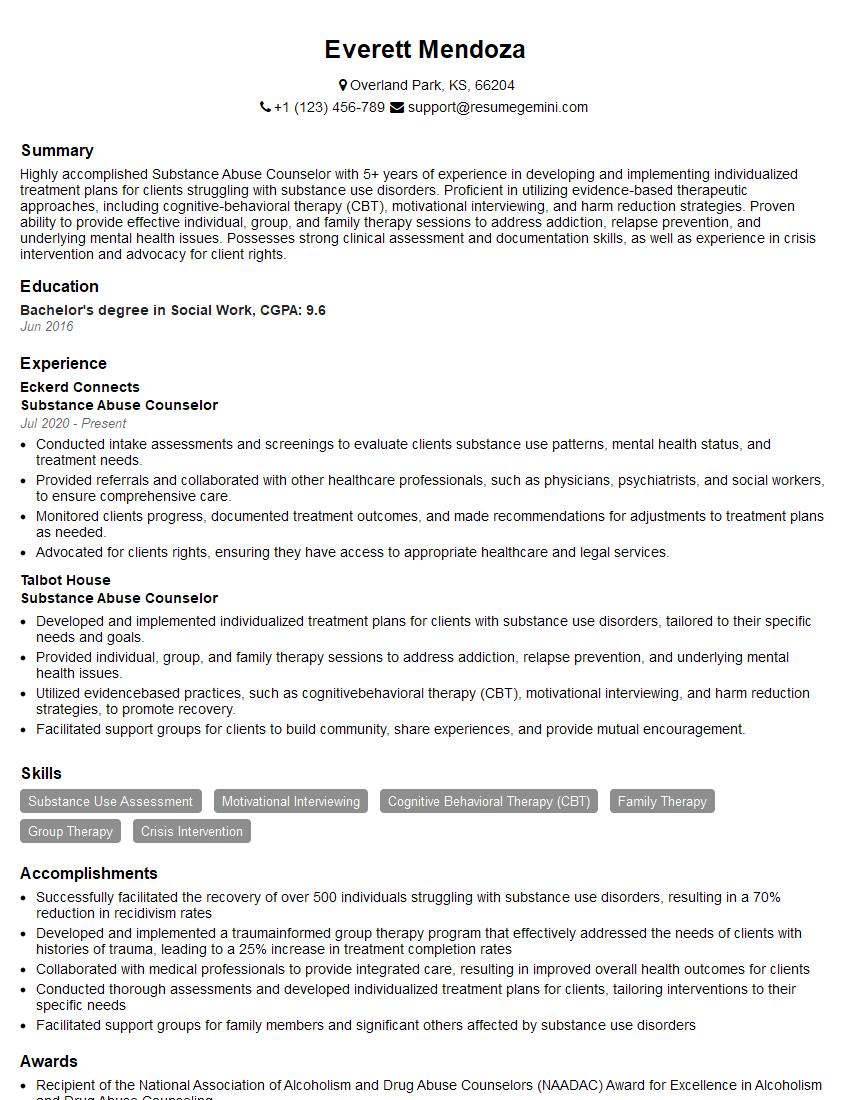
Substance Abuse Counselor Resume Sample
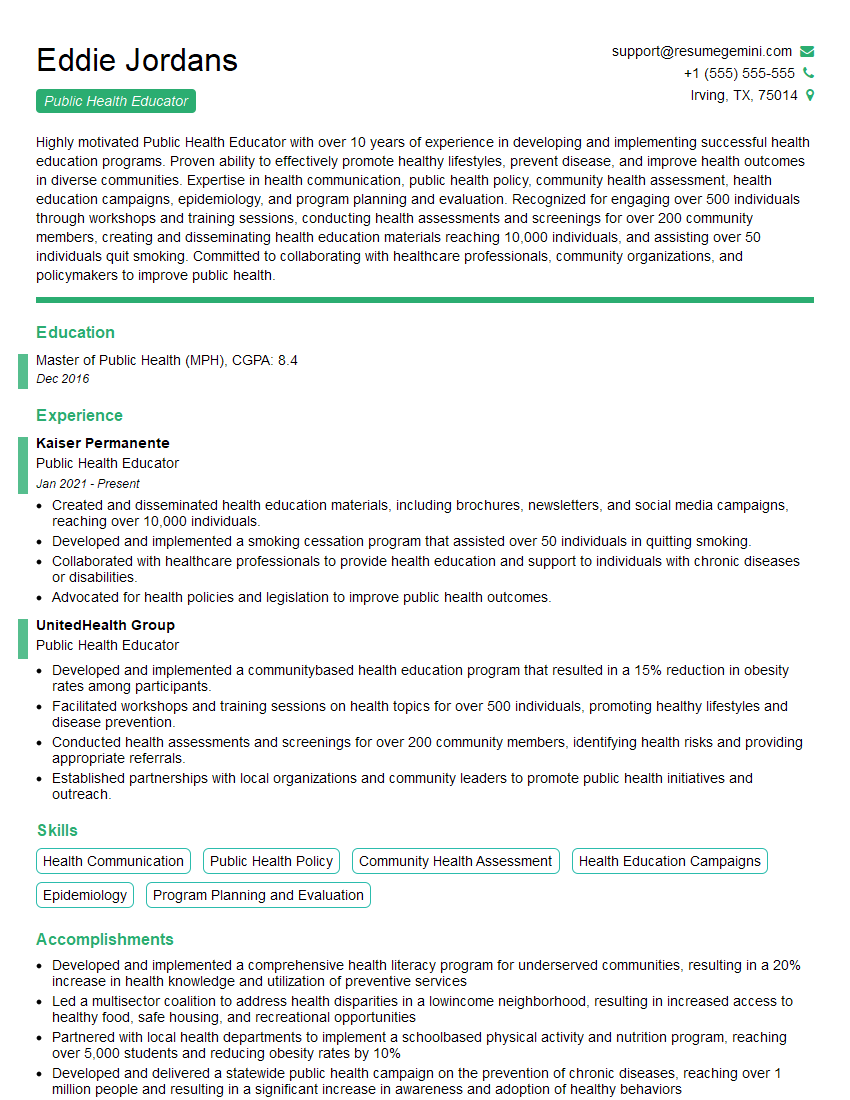
Public Health Educator Resume Sample
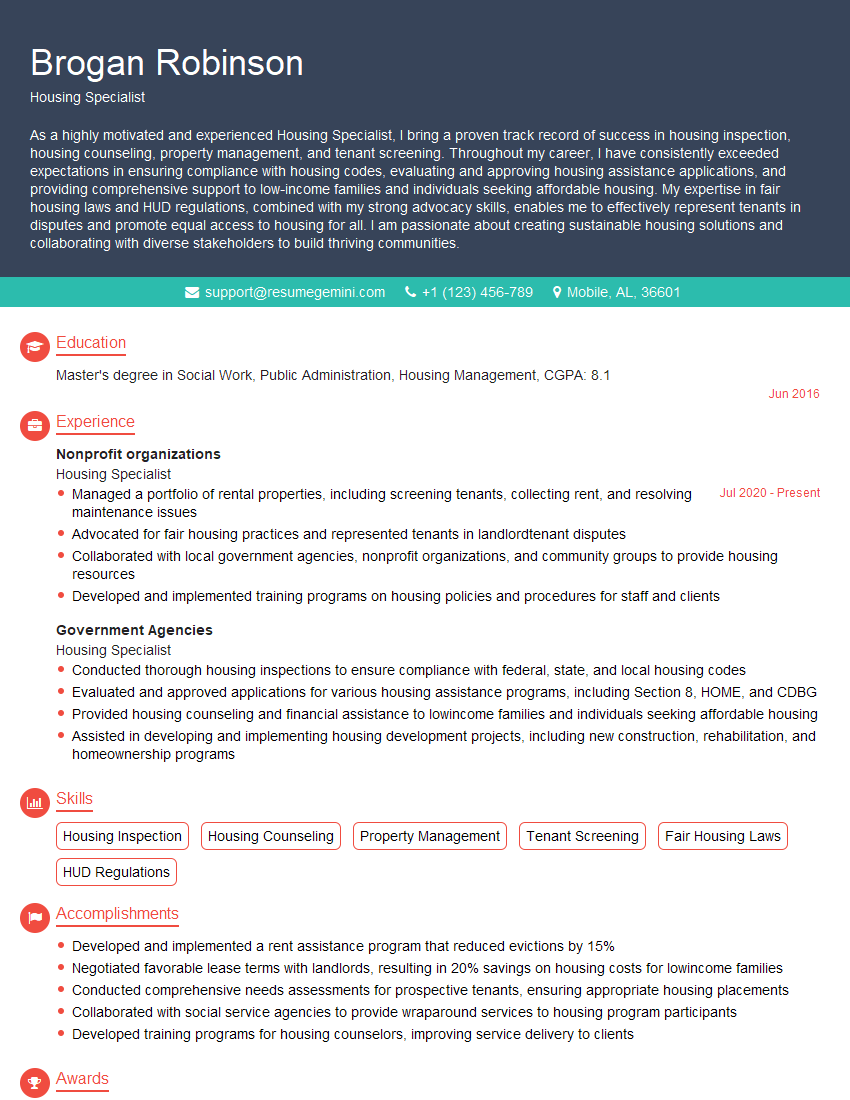
Housing Specialist Resume Sample
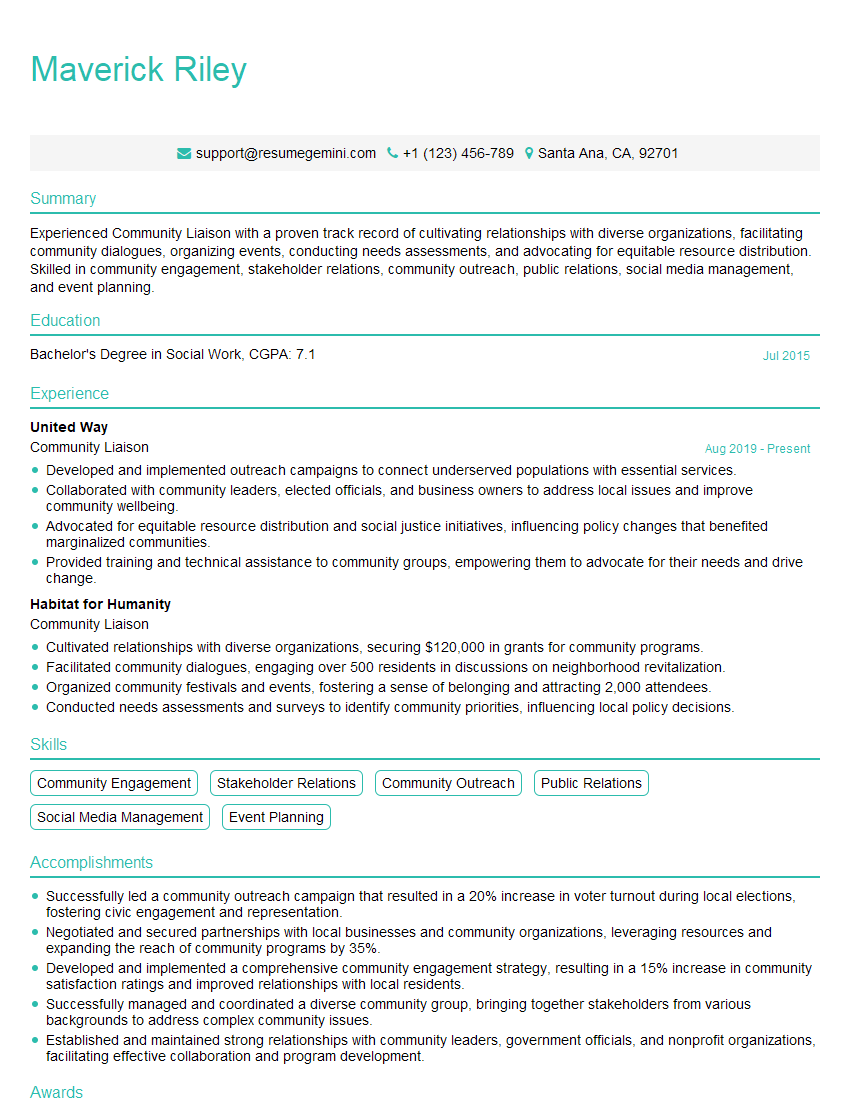
Community Liaison Resume Sample
Explore more articles
Users Rating of Our Blogs
Share Your Experience
We value your feedback! Please rate our content and share your thoughts (optional).
What Readers Say About Our Blog
To the interviewgemini.com Webmaster.
Very helpful and content specific questions to help prepare me for my interview!
Thank you
To the interviewgemini.com Webmaster.
This was kind of a unique content I found around the specialized skills. Very helpful questions and good detailed answers.
Very Helpful blog, thank you Interviewgemini team.