Feeling uncertain about what to expect in your upcoming interview? We’ve got you covered! This blog highlights the most important Confidentiality and Ethics in Interpreting interview questions and provides actionable advice to help you stand out as the ideal candidate. Let’s pave the way for your success.
Questions Asked in Confidentiality and Ethics in Interpreting Interview
Q 1. Define interpreter confidentiality and its legal implications.
Interpreter confidentiality is the ethical and, in many jurisdictions, legal obligation to protect the private information disclosed during an interpreting session. It’s akin to doctor-patient or lawyer-client confidentiality. This means interpreters cannot reveal anything they hear or see during their work without the informed consent of the involved parties.
The legal implications vary by jurisdiction and the type of setting. In some cases, breaching confidentiality could lead to disciplinary action by professional organizations, civil lawsuits for breach of contract or negligence, or even criminal charges if the disclosed information leads to harm. Laws often specifically protect the confidentiality of communications in healthcare, legal, and mental health settings, where interpreters frequently work. For instance, revealing a patient’s medical diagnosis shared during an interpreter session could have significant legal repercussions.
Q 2. Explain the difference between privileged and non-privileged information.
The distinction between privileged and non-privileged information hinges on legal protection. Privileged information enjoys legal protection against compelled disclosure. This usually applies to communications made within specific relationships like attorney-client, doctor-patient, or priest-penitent. Interpreters often facilitate communication within these privileged relationships, thereby inheriting the confidentiality obligations.
Non-privileged information has no such legal protection. While ethical considerations still apply, there’s no legal bar preventing its disclosure. For example, if someone casually mentions their weekend plans while being interpreted, that information is non-privileged. However, even non-privileged information should be treated with utmost discretion as part of maintaining professional integrity and building trust with clients.
Q 3. Describe a situation where you had to uphold confidentiality despite pressure.
During a medical interpretation involving a young woman disclosing a history of domestic violence, the attending physician strongly pressured me to reveal the information to her family, suggesting it was for the patient’s own good. The physician argued that the family could provide better support. However, I firmly explained that I couldn’t disclose any details without the patient’s explicit consent, reminding them of my ethical obligations and the legal ramifications of breaching confidentiality. I suggested alternative approaches such as involving a social worker to mediate a careful conversation with the family, while ensuring the patient’s autonomy and safety. Ultimately, the physician understood and respected my position. The patient later expressed her gratitude for protecting her privacy.
Q 4. How would you handle a situation where you overheard sensitive information outside of an interpreting session?
If I overheard sensitive information outside an interpreting session, such as a private conversation in a doctor’s waiting room, my response would depend on the context and nature of the information. If the information was clearly overheard by accident and didn’t involve imminent harm, I’d simply ignore it. However, if I overheard something that indicated immediate danger (e.g., a plan to harm someone), I would have a duty to act, potentially informing the relevant authorities. This would be a difficult ethical dilemma, requiring a careful weighing of respecting privacy versus preventing harm. I’d aim to do it discreetly and only if absolutely necessary.
Q 5. What are your ethical obligations if you witness illegal activity during an interpretation?
Witnessing illegal activity during an interpretation presents a significant ethical challenge. The key principle is to balance the ethical obligation of confidentiality with the legal obligation to report serious crimes. I would first consider the severity and immediacy of the threat. If the crime was minor and didn’t involve imminent danger, I would prioritize confidentiality, while carefully documenting the event. However, if the crime was serious or involved an immediate risk of harm (e.g., drug trafficking, violence), I would be obligated to report it to the appropriate authorities after carefully considering the legal ramifications of my actions in the relevant jurisdiction.
Q 6. Explain the importance of impartiality in interpreting.
Impartiality in interpreting means remaining completely neutral and objective. It’s about conveying the meaning of the message accurately without adding any personal bias, interpretation, or opinion. Think of it like a mirror reflecting the words and emotions of the speaker accurately. This ensures that the communication is clear and undistorted. An interpreter should never take sides, favor one speaker over another, or influence the outcome of the communication. Bias can significantly impact the understanding and outcome of any interaction. The goal is to facilitate communication fairly and to avoid influencing the process.
Q 7. How do you ensure accuracy and neutrality while interpreting?
Accuracy and neutrality are achieved through rigorous preparation, professional conduct, and continuous self-reflection. Preparation includes researching the topic of the meeting to better understand the terminology involved. Professional conduct involves maintaining composure, and using a consistent tone of voice, while avoiding adding any personal input or interpretation. Neutrality is fostered by diligently focusing on conveying the message’s intent rather than the speaker’s tone or body language. Regular self-assessment, seeking feedback from others, and professional development helps to continuously refine skills and maintain high standards of accuracy and impartiality.
Q 8. Describe a situation where you had to navigate a conflict of interest.
A conflict of interest arises when my personal interests, relationships, or obligations could potentially compromise my objectivity or impartiality in interpreting. For example, I once interpreted for a legal case involving a close family friend. While I didn’t have a direct financial stake in the outcome, my personal relationship posed a potential conflict.
My solution was to carefully assess the situation. I considered whether my personal feelings might influence my interpretation and decided that the potential conflict was too significant. I declined the assignment, explaining my reasons to the involved parties, and ensuring they found a qualified, unbiased interpreter. Transparency and prioritizing ethical conduct were crucial.
Q 9. How would you handle a request to interpret outside your area of expertise?
It’s crucial to prioritize accuracy and ethical practice. If a request falls outside my area of expertise – say, a highly technical medical specialty I haven’t studied – I would politely decline.
Referring the client to a qualified specialist is the responsible approach. Imagine if I attempted to interpret a complex medical procedure without sufficient knowledge; the risk of misinterpretation and potential harm would be unacceptable. Instead, I would explain my limitations clearly and provide the client with resources for finding someone with the necessary expertise.
Q 10. Explain the process of obtaining informed consent from clients.
Obtaining informed consent is paramount. It ensures clients understand the interpreting process and their rights. Before starting an interpretation, I explain my role: I will faithfully convey the message, maintain confidentiality, and refuse to interpret outside my expertise. I also clarify how the information will be used and who will have access to it.
For instance, in a medical setting, I would explain that their conversations will be confidential, unless legally required to be disclosed. I always seek confirmation that they understand their rights before proceeding. This process builds trust and ensures a transparent working relationship. If a client doesn’t speak English, I’d use a simpler language and appropriate visuals to aid understanding.
Q 11. How do you maintain professional boundaries with clients and other parties involved?
Maintaining professional boundaries is essential. This means avoiding any form of dual relationship that could create a conflict of interest or compromise impartiality. I adhere to professional distance, avoiding casual friendships or social engagements outside the interpreting context.
For example, I would never accept gifts or favors from clients, as this could compromise my objectivity. I’m always mindful of maintaining a respectful and professional demeanor, ensuring that communication remains strictly within the scope of the interpretation.
Q 12. What are the consequences of breaching confidentiality?
Breaching confidentiality carries significant consequences. In some cases, it can lead to legal repercussions, including lawsuits for damages. Beyond legal ramifications, it erodes trust between the interpreter, client, and other involved parties.
Imagine disclosing a client’s medical information without authorization. This breach could cause significant emotional harm and damage their relationships. Reputationally, a confidentiality breach severely tarnishes an interpreter’s career, potentially leading to job loss and difficulty finding future work. It is a serious violation with far-reaching implications.
Q 13. What is your understanding of HIPAA regulations regarding medical interpretation?
HIPAA (Health Insurance Portability and Accountability Act) regulations are crucial for medical interpreters. They mandate the protection of Protected Health Information (PHI). As a medical interpreter, I’m bound by HIPAA to maintain the confidentiality of patient information.
This means I can’t discuss patient details with unauthorized individuals, even family members, unless the patient explicitly grants permission. I understand the importance of proper handling of patient records and documentation, adhering strictly to HIPAA’s guidelines for data security and privacy. Non-compliance can result in significant penalties.
Q 14. Explain your understanding of professional codes of ethics for interpreters.
Professional codes of ethics for interpreters, like those established by the National Association of Judiciary Interpreters and Translators (NAJIT) or the American Translators Association (ATA), guide our conduct. Key principles include:
- Confidentiality: Protecting client information is paramount.
- Accuracy: Faithfully conveying the message without adding or omitting anything.
- Impartiality: Remaining neutral and objective.
- Professionalism: Maintaining a high standard of conduct.
- Competence: Working only within my area of expertise.
These codes provide a framework to guide ethical decision-making in challenging situations, ensuring the interpreter upholds integrity and responsibility towards clients and stakeholders.
Q 15. How do you deal with difficult or challenging clients?
Dealing with challenging clients requires a combination of professionalism, empathy, and adherence to ethical guidelines. It’s crucial to remember that a client’s difficult behavior often stems from stress, anxiety, or a lack of understanding. My approach begins with active listening and attempting to understand their perspective. I maintain a calm and neutral demeanor, focusing on clarifying misunderstandings and managing expectations. If the behavior becomes disruptive or abusive, I firmly yet politely set boundaries, reminding them of the professional nature of the interaction. If the situation escalates beyond my ability to manage, I would consult with a supervisor or relevant authority to ensure the safety and well-being of everyone involved. For instance, if a client is consistently interrupting or refusing to cooperate, I might gently explain the importance of allowing me to complete the interpretation to ensure accurate communication. In more serious cases, like harassment or threats, I would immediately terminate the session and report the incident.
Career Expert Tips:
- Ace those interviews! Prepare effectively by reviewing the Top 50 Most Common Interview Questions on ResumeGemini.
- Navigate your job search with confidence! Explore a wide range of Career Tips on ResumeGemini. Learn about common challenges and recommendations to overcome them.
- Craft the perfect resume! Master the Art of Resume Writing with ResumeGemini’s guide. Showcase your unique qualifications and achievements effectively.
- Don’t miss out on holiday savings! Build your dream resume with ResumeGemini’s ATS optimized templates.
Q 16. How do you handle interruptions during an interpretation session?
Interruptions during interpretation are a common occurrence, and handling them professionally is key. My strategy depends on the nature and context of the interruption. For brief, minor disturbances (e.g., a phone ringing briefly), I might pause the interpretation and politely signal for the interruption to cease. For more significant interruptions, I would politely explain the importance of minimizing interruptions for accurate communication. If interruptions are frequent or purposeful, I would communicate the need for a more conducive environment or even reschedule the session. For example, if someone starts speaking in another language during a session, I would politely but firmly request they wait until the interpretation is completed to avoid confusion. The paramount concern is to ensure the accuracy and integrity of the interpretation, and my actions are guided by the need to uphold this principle. In certain situations involving sensitive information, I may need to consult with supervisors about the best course of action.
Q 17. Describe your process for verifying the identity of clients.
Verifying client identity is a crucial aspect of maintaining confidentiality and security. My process begins with requesting appropriate identification documents, such as a driver’s license, passport, or employee ID, depending on the context. I would meticulously compare the provided identification with the information I have on file, paying close attention to details like name, date of birth, and photograph. In some cases, additional verification steps may be needed, such as a phone call to confirm their identity with a relevant organization. This process ensures that I am communicating with the intended person and prevents unauthorized access to confidential information. The specific verification methods are adapted to the security protocols established by the organization or institution I am working with and the legal requirements of the given context. For example, in a legal setting, the verification process might be more stringent compared to a medical setting.
Q 18. How do you ensure the accuracy of your interpretations in high-pressure situations?
Ensuring accuracy in high-pressure situations requires a combination of skills and preparation. First, I ensure I am well-rested and focused before undertaking the interpretation. I employ techniques like active listening and note-taking, particularly in complex or fast-paced situations. I also rely on my experience and understanding of both languages to accurately convey nuances and subtleties. If I encounter a word or phrase I am unsure of, I would ask for clarification in a way that doesn’t disrupt the flow of conversation. Maintaining composure is vital, and I utilize deep breathing techniques to manage my stress and stay focused. If the pressure is overwhelming, I would not hesitate to seek assistance from a colleague or supervisor. My priority is to provide accurate and ethical interpretation even in challenging circumstances, and that often requires self-awareness and the ability to seek support.
Q 19. Explain how you would handle a situation where the client asks you for personal advice.
If a client asks for personal advice, I would politely but firmly decline, emphasizing the importance of maintaining professional boundaries. I would explain that my role is to provide accurate interpretation, not personal counsel. I might offer to refer them to appropriate resources if needed, such as a counselor, social worker, or other professional who can provide the support they seek. It’s crucial to avoid any situation that could create a conflict of interest or compromise the confidentiality of the client-interpreter relationship. For instance, if a client starts sharing personal problems unrelated to the task at hand, I would gently steer the conversation back to the topic at hand while being empathetic and reassuring.
Q 20. How would you respond to a request to interpret material you find morally objectionable?
If asked to interpret material I find morally objectionable, I would carefully consider my ethical obligations and legal responsibilities. Depending on the specific content and the legal context, I might have a duty to interpret it. However, I would first assess whether interpreting the material would lead to a conflict of interest or cause me to violate my professional code of ethics. If this is the case, I would politely decline, explaining my ethical concerns and suggesting alternative options, such as referring them to another interpreter. If the content involves illegal or harmful activities, I would also be obligated to report this to the appropriate authorities. This scenario highlights the need for strong ethical guidelines and a clear understanding of the potential consequences of interpreting potentially harmful or illegal communications.
Q 21. What steps would you take if you suspect a client is being coerced or mistreated?
Suspecting a client is being coerced or mistreated requires immediate and careful action. My first step would be to discreetly observe the situation, paying attention to any nonverbal cues or verbal statements that suggest coercion. If my suspicions are confirmed, I would carefully document the details of the situation, including date, time, location, and specific observations. Then, depending on the severity and nature of the suspected mistreatment, I might take various actions. This could range from privately advising the client of their options and available resources to reporting my concerns to the appropriate authorities. This decision must be weighed carefully, considering the specific context and potential legal implications. My priority in this case is the client’s safety and well-being. I would follow my agency’s procedures for reporting suspected abuse or neglect and fully comply with all relevant legal and ethical guidelines.
Q 22. How do you manage your personal biases to ensure objective interpretation?
Managing personal biases is crucial for objective interpretation. It’s like being a mirror, reflecting the speaker’s message accurately without adding my own reflections. I achieve this through constant self-awareness and rigorous training. I actively identify my own potential biases – be it cultural, political, or personal – and consciously work to mitigate their influence. This includes actively listening for nuances in tone and word choice that might hint at underlying assumptions or perspectives, and consciously challenging my own immediate interpretations. For example, if I hear a statement that initially triggers a negative emotional response in me, I pause, analyze why, and strive to interpret the statement objectively, focusing on the literal meaning and context. I regularly seek feedback from colleagues and supervisors to identify any unconscious biases that may be creeping into my interpretations. This continuous process of self-reflection and external feedback is essential for maintaining objectivity.
Q 23. Describe your understanding of the role of cultural sensitivity in interpretation.
Cultural sensitivity is paramount in interpretation. It’s not just about knowing the words; it’s about understanding the unspoken nuances – the cultural context, idioms, gestures, and even silence – that profoundly impact meaning. For instance, direct eye contact, considered polite in some cultures, can be disrespectful in others. A simple gesture, like a nod, can signify agreement in one culture and disagreement in another. I approach every interpretation with a deep awareness of these cultural differences, researching beforehand to understand the cultural background of both the speaker and the listener. I employ strategies to bridge communication gaps, explaining cultural differences where necessary to ensure mutual understanding. For example, if a speaker uses an idiom that wouldn’t be understood by the listener, I’ll provide a clear and concise explanation in the target language, without losing the original meaning or intent. I also adapt my interpreting style to suit the specific cultural context, ensuring my interpretations are culturally appropriate and respectful.
Q 24. How do you ensure your interpretations are easily understandable to the client?
Ensuring clear understanding requires more than simply translating words. It’s about conveying the meaning effectively. I achieve this through several strategies: First, I use clear and concise language, avoiding jargon or overly complex sentence structures. Second, I tailor my language to the linguistic capabilities of the listener. If interpreting for someone with limited vocabulary, I use simpler terms. Third, I pay close attention to non-verbal cues and body language. Sometimes, a subtle shift in tone or expression can convey a meaning that words alone cannot. I also proactively check for understanding. I might pause periodically to ensure the listener is following along, clarifying points as needed, and asking for confirmation to prevent misunderstandings. Think of it as having a continuous feedback loop to make sure the message is received as intended. Imagine interpreting a medical diagnosis; clarity is essential and a simple check-in can be life-saving.
Q 25. Explain the importance of continuing education in maintaining ethical and professional standards.
Continuing education is not optional; it’s a cornerstone of ethical and professional standards. The fields of language, culture, and technology are constantly evolving. Staying current requires continuous learning to remain competent and ethical. This includes keeping abreast of new terminology in specialized fields (medical, legal, etc.), learning about evolving cultural norms, and updating my skills in interpreting technologies. Professional development opportunities – workshops, conferences, and online courses – provide access to the latest knowledge and best practices. By engaging in ongoing professional development, I demonstrate commitment to my profession and ensure I’m providing high-quality services that meet the evolving needs of my clients. It’s like a doctor keeping up with medical advances; it is vital to the integrity of the profession and the safety of clients.
Q 26. How do you handle situations where you encounter technical difficulties during remote interpretation?
Technical difficulties during remote interpretation are a reality. My protocol involves several steps: First, I immediately inform all parties involved about the issue. Second, I try to troubleshoot the problem. Is it my internet connection, software issue, or a problem on the client’s end? I attempt to resolve the problem myself, checking my equipment and network. Third, if I can’t resolve it quickly, I offer alternative solutions, such as switching to a different platform or rescheduling. If possible, I’ll use a backup communication method (telephone) if feasible. Finally, I document the incident, including the nature of the problem, steps taken to resolve it, and any impact on the interpretation. Transparency and proactive problem-solving are key to managing these situations professionally.
Q 27. What steps would you take if you make a mistake during an interpretation?
Making a mistake is human. The ethical response is immediate correction and transparency. If I realize a mistake during the interpretation, I’ll politely correct myself, explaining the error and providing the correct interpretation. If I realize the mistake afterwards, I will inform the relevant parties as soon as possible. The most crucial factor is to take ownership of the error, acknowledge it honestly, and ensure its impact is minimized. This kind of accountability maintains trust and professionalism. For example, misinterpreting a medical dosage could have dire consequences, and quick correction is paramount.
Q 28. How do you document your work for compliance and ethical record-keeping?
Thorough documentation is critical for compliance, ethical record-keeping, and professional accountability. My documentation typically includes: the date and time of the interpretation, the languages involved, the setting (in-person or remote), the parties involved, the topic discussed, and any technical issues encountered. For remote interpretations, I also note the platform used and any related technical details. Depending on the context, I might also include a summary of the interpreted conversation. This information is kept securely and confidentially, following all applicable regulations. This detailed record-keeping serves multiple purposes: it facilitates accurate billing, supports any potential future inquiries, and ensures adherence to ethical guidelines and legal requirements. Accurate and timely documentation is like a safety net – it protects both me and my clients.
Key Topics to Learn for Confidentiality and Ethics in Interpreting Interviews
- Professional Codes of Conduct: Understanding and applying relevant ethical codes (e.g., NAJIT, AIIC) in diverse interpreting settings.
- Confidentiality: Practical application of maintaining confidentiality in various scenarios, including recognizing and managing potential breaches.
- Impartiality and Objectivity: Maintaining neutrality and avoiding bias in interpreting, ensuring accurate and unbiased communication.
- Informed Consent: Understanding the importance of obtaining informed consent and addressing potential conflicts of interest.
- Cultural Sensitivity and Awareness: Recognizing and navigating cultural nuances that may impact ethical decision-making in interpreting.
- Data Protection and Privacy: Applying principles of data protection and privacy in the context of interpreting sensitive information (e.g., medical, legal).
- Ethical Dilemmas and Decision-Making Frameworks: Developing strategies for analyzing and resolving ethical dilemmas encountered in interpreting assignments.
- Professional Boundaries: Defining and maintaining professional boundaries with clients, colleagues, and other stakeholders.
- Reporting Procedures: Understanding and following appropriate reporting procedures for ethical breaches or professional misconduct.
- Case Studies and Role-Playing: Practicing scenarios to solidify understanding and refine decision-making skills in challenging ethical situations.
Next Steps
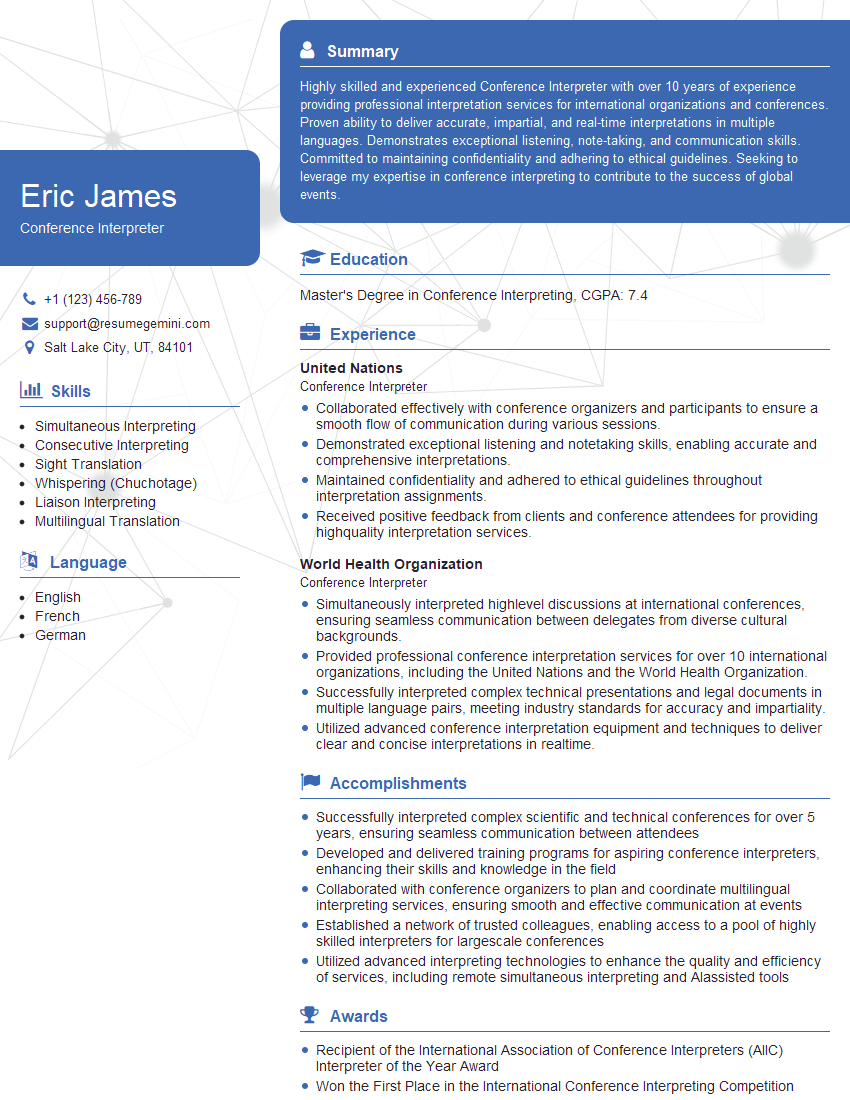
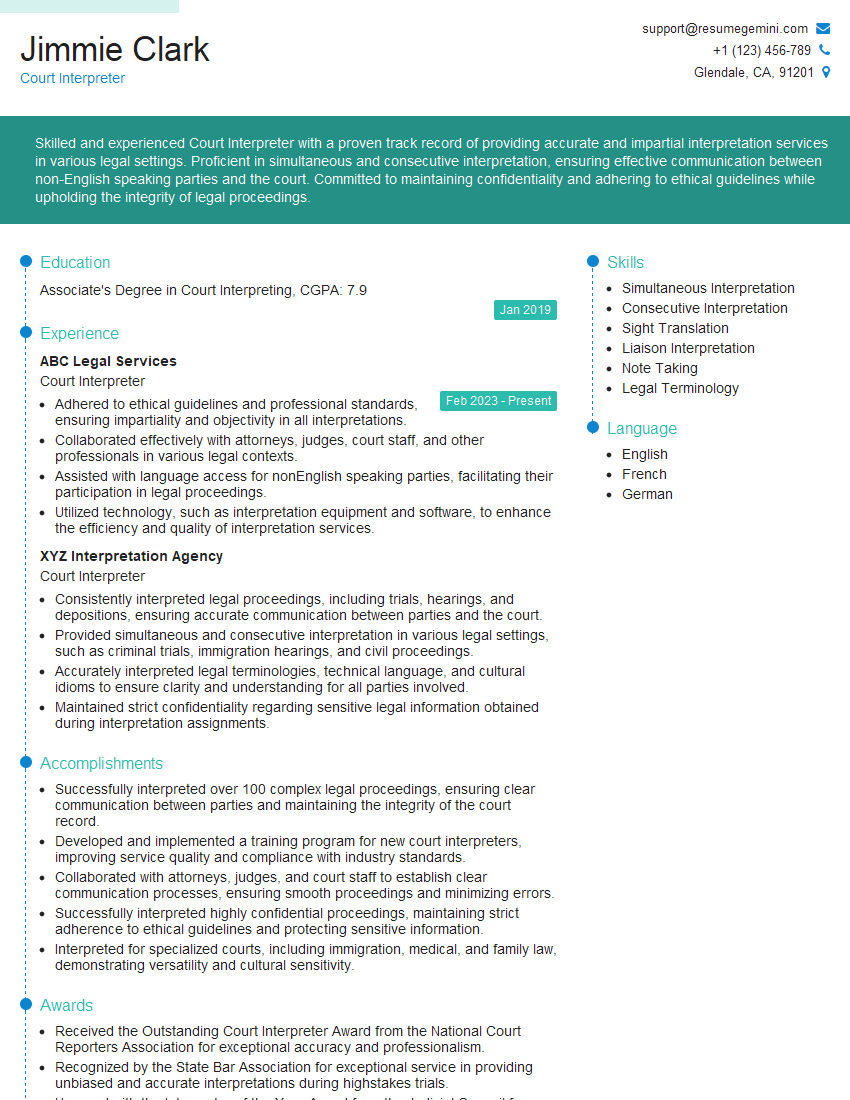
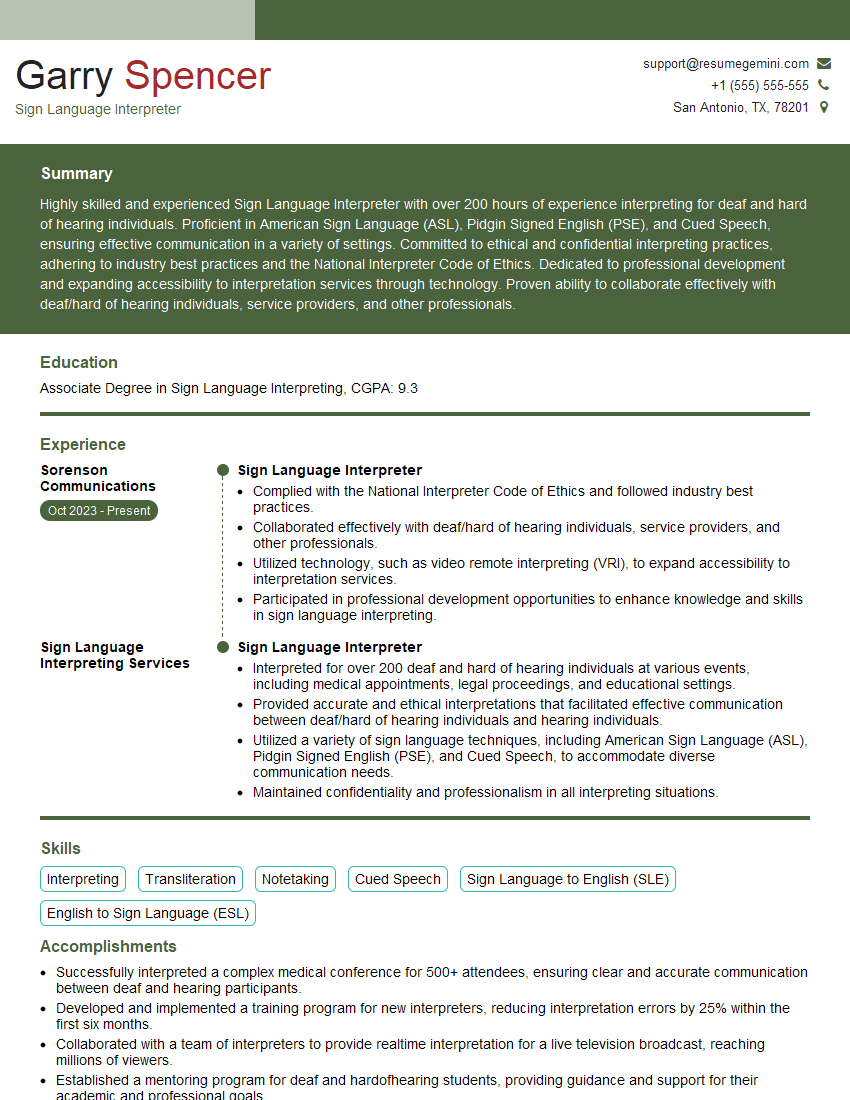
Mastering Confidentiality and Ethics in Interpreting is paramount for building a successful and reputable career. It demonstrates your commitment to professional standards and builds trust with clients and colleagues. To significantly enhance your job prospects, it’s crucial to present your skills effectively. Creating an ATS-friendly resume is key to getting your application noticed by recruiters. ResumeGemini is a trusted resource to help you build a compelling and effective resume that showcases your expertise. Examples of resumes tailored to Confidentiality and Ethics in Interpreting are available to guide you through this process.
Explore more articles
Users Rating of Our Blogs
Share Your Experience
We value your feedback! Please rate our content and share your thoughts (optional).
What Readers Say About Our Blog
To the interviewgemini.com Webmaster.
Very helpful and content specific questions to help prepare me for my interview!
Thank you
To the interviewgemini.com Webmaster.
This was kind of a unique content I found around the specialized skills. Very helpful questions and good detailed answers.
Very Helpful blog, thank you Interviewgemini team.