Preparation is the key to success in any interview. In this post, we’ll explore crucial Congenital Heart Disease Surgery interview questions and equip you with strategies to craft impactful answers. Whether you’re a beginner or a pro, these tips will elevate your preparation.
Questions Asked in Congenital Heart Disease Surgery Interview
Q 1. Describe the surgical approach for repair of Tetralogy of Fallot.
The surgical repair of Tetralogy of Fallot (TOF) aims to correct four primary defects: ventricular septal defect (VSD), pulmonary stenosis, overriding aorta, and right ventricular hypertrophy. The approach is typically a median sternotomy, allowing access to the heart. The procedure involves:
Pulmonary valvotomy/valvuloplasty: This addresses the pulmonary stenosis, either by widening a narrowed pulmonary valve (valvuloplasty) using a balloon catheter or by surgically resecting stenotic valve tissue.
VSD closure: The VSD is closed using a patch of Dacron or pericardium, restoring the separation between the ventricles.
Right ventricular outflow tract reconstruction (RVOT): In cases of severe pulmonary stenosis and significant RVOT obstruction, surgical reconstruction might be necessary to improve blood flow to the lungs. This can involve resection of muscle or infundibular tissue.
Aortopulmonary window creation (rare): In extremely challenging cases, a surgeon may create an aortopulmonary window to temporarily augment pulmonary blood flow until a more definitive repair can be performed.
Post-operatively, careful monitoring of cardiac function, blood pressure, and oxygen saturation is crucial. The specific surgical technique is tailored to the individual patient’s anatomy and the severity of each defect. For example, some patients may require a prosthetic pulmonary valve placement if the native valve is irreparably damaged.
Q 2. Explain the differences between acyanotic and cyanotic congenital heart defects.
The difference between acyanotic and cyanotic congenital heart defects lies in the presence or absence of desaturated (low oxygen) blood entering the systemic circulation.
Acyanotic defects: In these conditions, there’s a shunt of blood from the left side of the heart to the right side, or vice-versa, without significant mixing of oxygenated and deoxygenated blood. Examples include Atrial Septal Defect (ASD), Ventricular Septal Defect (VSD), and Patent Ductus Arteriosus (PDA). The child typically appears pink and healthy, though they may exhibit symptoms like shortness of breath or fatigue.
Cyanotic defects: These are characterized by a right-to-left shunt where deoxygenated blood from the right side of the heart bypasses the lungs and enters the systemic circulation, resulting in cyanosis (bluish discoloration of the skin). Examples include Tetralogy of Fallot, Transposition of the Great Arteries (TGA), and Truncus Arteriosus. Children with these defects often exhibit cyanosis, especially when crying or feeding, and may have symptoms of poor growth and exercise intolerance.
The clinical presentation drastically differs between the two types, guiding the diagnostic approach and management strategy. Acyanotic defects may present more subtly, while cyanotic defects often demand immediate attention due to the risk of hypoxemia (low blood oxygen).
Q 3. What are the common complications associated with the Norwood procedure?
The Norwood procedure is a complex, staged operation performed in neonates with hypoplastic left heart syndrome (HLHS). Several serious complications are associated with this procedure:
Low cardiac output: This is a significant concern, often requiring the use of inotropic support (medications to increase heart contractility) to maintain adequate blood flow.
Renal failure: The surgery and associated circulatory compromise can negatively affect kidney function.
Neurological complications: Stroke and other neurological deficits can occur due to the risk of embolization (blockage of blood vessels) or low cerebral perfusion (inadequate blood flow to the brain).
Bleeding: Postoperative bleeding is a common challenge, requiring careful monitoring and management.
Infection: As with any major surgical procedure, there’s a risk of infection.
Arrhythmias: Irregular heart rhythms are a potential complication, requiring close cardiac monitoring and potentially the need for a pacemaker.
The Norwood procedure is a high-risk undertaking, and families are usually prepared for these potential outcomes. Careful pre-operative optimization of the patient and excellent postoperative management are crucial to minimizing these risks.
Q 4. How do you manage post-operative bleeding in congenital heart surgery?
Management of postoperative bleeding in congenital heart surgery is a critical aspect of patient care. The approach involves a multi-pronged strategy:
Careful surgical hemostasis: Meticulous attention to bleeding control during the operation is the first line of defense. This includes meticulous ligation of vessels and using various sealing techniques.
Monitoring: Close monitoring of vital signs (heart rate, blood pressure, oxygen saturation), chest tube output, and hemoglobin levels is crucial to detect early signs of bleeding.
Fluid management: Appropriate fluid resuscitation and blood product replacement are necessary to maintain hemodynamic stability.
Pharmacological intervention: Medications like antifibrinolytics (e.g., aminocaproic acid) may be used to reduce bleeding tendency.
Surgical intervention: If bleeding persists despite conservative measures, surgical exploration might be necessary to identify and control the source of bleeding.
Cardiac catheterization: In certain cases, angiography may be used to locate and embolize bleeding vessels.
The success of managing postoperative bleeding hinges on teamwork, close monitoring, prompt identification of the source, and the appropriate use of available resources. Immediate intervention is essential to prevent life-threatening complications like hypovolemic shock.
Q 5. Discuss the management of a patient with a ruptured sinus of Valsalva.
A ruptured sinus of Valsalva (RSV) is a serious condition involving a tear in one of the sinuses of Valsalva, causing a communication between the aorta and a cardiac chamber (usually the right ventricle or right atrium). Management requires a multidisciplinary approach:
Diagnosis: Echocardiography is the primary diagnostic tool, clearly demonstrating the rupture and its location.
Stabilization: Initial management focuses on stabilizing the patient’s hemodynamic status, including providing oxygen, fluids, and inotropic support as needed.
Surgical repair: Surgical repair is the definitive treatment and typically involves closing the defect with a patch, often made of Dacron. The approach is either through a median sternotomy or through a minimally invasive procedure depending on the location and size of the rupture.
Postoperative care: Postoperative management includes careful monitoring of cardiac function, infection prevention, and pain management. Antibiotics are commonly administered to prevent endocarditis (infection of the heart valves).
Delay in diagnosis and treatment can lead to significant complications, including heart failure, infective endocarditis, and even death. Early recognition and prompt surgical intervention are crucial to improve the patient’s outcome.
Q 6. What are the indications for a Fontan procedure?
The Fontan procedure is a palliative surgical approach used to improve hemodynamics in patients with single-ventricle physiology (conditions where only one ventricle functions effectively). The indications include:
Single ventricle conditions: Such as hypoplastic left heart syndrome, tricuspid atresia, or double-outlet right ventricle. In these conditions, the heart has only one functional ventricle and cannot efficiently pump oxygenated blood to the body.
Failure of previous palliative procedures: If previous attempts to improve circulation have been unsuccessful.
Adequate systemic venous return: The procedure requires sufficient blood flow to the lungs and systemic circulation.
Patient’s overall health: The patient must be medically stable enough to tolerate the surgery and subsequent recovery.
The Fontan procedure creates a pathway for oxygen-poor blood from the body to go directly to the lungs without passing through the right ventricle. It’s a complex procedure with potential complications, but it significantly improves quality of life for many patients. It’s typically performed in stages to allow the heart to adapt.
Q 7. Explain the physiology of a patent ductus arteriosus.
A patent ductus arteriosus (PDA) is an abnormal connection between the pulmonary artery and the aorta that remains open after birth. In fetal circulation, the PDA allows blood to bypass the lungs. After birth, it normally closes within a few days. If it remains open, it causes abnormal blood flow:
Left-to-right shunt: Blood flows from the high-pressure aorta into the lower-pressure pulmonary artery, increasing blood flow to the lungs. This can cause pulmonary hypertension (high blood pressure in the lungs) over time.
Increased pulmonary blood flow: The increased blood volume in the lungs can lead to shortness of breath, fatigue, and poor growth.
Congestive heart failure: In severe cases, increased blood flow can overwhelm the heart, leading to heart failure.
The physiology essentially creates a shunt that steals oxygenated blood meant for the systemic circulation and redirects it to the lungs. This leads to overperfusion of the lungs and increased workload on the heart. The size of the PDA dictates the severity of these effects. Small PDAs might be asymptomatic, while large ones can cause significant hemodynamic compromise.
Q 8. Describe the different types of atrial septal defects.
Atrial septal defects (ASDs) are openings in the wall (septum) separating the two upper chambers of the heart, the left and right atria. There are several types, classified primarily by their location and size:
- Ostium secundum ASD: This is the most common type, located in the central portion of the atrial septum. It’s often a relatively small defect and might not require surgery, depending on the size and the patient’s symptoms.
- Ostium primum ASD: This defect is located lower in the atrial septum, closer to the atrioventricular valves. It’s often associated with other heart defects, such as an atrioventricular septal defect (AVSD).
- Sinus venosus ASD: This less common type is located near the superior vena cava’s entry into the right atrium. It can be associated with anomalous pulmonary venous return.
- Coronary sinus ASD: A rare type located near the coronary sinus, a vein that drains blood from the heart muscle.
The classification is crucial because it influences the surgical approach and the expected outcome. For instance, an ostium secundum ASD might be closed using a minimally invasive catheter-based procedure, while more complex defects might necessitate open-heart surgery.
Q 9. What are the diagnostic tools used in evaluating congenital heart disease?
Diagnosing congenital heart disease requires a multi-faceted approach utilizing several diagnostic tools:
- Echocardiography: This ultrasound-based test provides real-time images of the heart’s structure and function. It’s the cornerstone of CHD diagnosis, allowing visualization of septal defects, valve abnormalities, and other structural issues.
- Electrocardiogram (ECG): This test records the heart’s electrical activity, helping identify rhythm disturbances often associated with CHD.
- Cardiac Catheterization: A more invasive procedure involving inserting a catheter into a blood vessel to access the heart chambers. It allows for precise measurements of pressures and oxygen saturation within the heart, and can be used to perform interventional procedures like balloon atrial septostomy.
- Chest X-ray: A chest x-ray can reveal the size and shape of the heart, suggesting the presence of CHD. It’s often used as a preliminary screening tool.
- Cardiac MRI and CT Scans: Advanced imaging techniques that provide detailed anatomical information, particularly useful for complex CHD cases.
The choice of diagnostic tests depends on the suspected condition, the patient’s age, and the clinical presentation. For example, a child presenting with cyanosis (bluish discoloration of the skin) might require a cardiac catheterization to assess the degree of shunting and oxygen saturation.
Q 10. How do you assess the risk of perioperative complications?
Assessing perioperative risk in congenital heart surgery is a complex process involving a careful evaluation of several factors:
- Severity of the heart defect: The more complex and severe the defect, the higher the risk of complications. A simple ASD carries significantly less risk than complex tetralogy of Fallot.
- Patient’s age and overall health: Infants and very young children are at higher risk than older children and adults due to their immature immune system and smaller physiological reserve. Pre-existing conditions such as lung disease or kidney problems also increase the risk.
- Preoperative hemodynamic status: Patients with severe heart failure or significant cyanosis carry a greater risk of perioperative complications.
- Surgical technique: The chosen surgical approach (open-heart surgery vs. minimally invasive) can affect the risk profile. Minimally invasive techniques often have lower risks of infection and bleeding, but may not be suitable for all cases.
- Anesthesia risk factors: Factors such as patient size and airway considerations influence the anesthesia risk.
Risk stratification involves a multidisciplinary team including surgeons, anesthesiologists, cardiologists, and intensivists who contribute their expertise to create a comprehensive risk assessment and treatment plan. We often use risk scores and algorithms to help quantify risk. For instance, we may use a specific risk score for predicting the risk of mortality in patients undergoing specific congenital heart surgeries.
Q 11. Describe your experience with extracorporeal membrane oxygenation (ECMO).
Extracorporeal membrane oxygenation (ECMO) is a life support system that temporarily replaces the function of the heart and lungs. I have extensive experience with ECMO, both as a primary therapy and as a bridge to surgery or transplant.
In my practice, we use ECMO primarily for:
- Postoperative support: Following complex congenital heart surgery, some patients may require ECMO to support their heart and lungs while they recover.
- Bridge to surgery: In critically ill infants awaiting definitive surgery, ECMO can stabilize their condition and improve their chances of survival.
- Bridge to transplant: ECMO can keep patients alive while they wait for a heart transplant.
- Respiratory support in severe lung disease: Sometimes, in infants and children with severe respiratory failure, unrelated to heart disease, we use ECMO to support the respiratory function.
Managing ECMO patients requires a highly skilled multidisciplinary team, including surgeons, cardiologists, respiratory therapists, perfusionists, and nurses. Careful monitoring and management of anticoagulation are crucial to prevent complications such as bleeding and thrombosis. We constantly monitor oxygenation, blood pressure, and other vital parameters during ECMO therapy.
I’ve been involved in numerous cases where ECMO has been instrumental in saving the lives of children with critical congenital heart disease, transforming what would have been a dire situation into a successful outcome.
Q 12. What are the potential long-term consequences of congenital heart disease?
The long-term consequences of congenital heart disease vary widely depending on the specific defect, the severity, and the effectiveness of treatment. However, some potential long-term consequences include:
- Heart failure: Over time, the heart may struggle to pump enough blood to meet the body’s needs.
- Arrhythmias: Irregular heartbeats can occur, potentially requiring medication or devices like pacemakers or implantable cardioverter-defibrillators (ICDs).
- Pulmonary hypertension: High blood pressure in the lungs can develop, leading to shortness of breath and other symptoms.
- Valve disease: Congenital heart defects often affect the heart valves, potentially leading to valve stenosis or regurgitation requiring valve repair or replacement later in life.
- Cognitive impairment: In some cases, particularly with severe or late-diagnosed CHD, cognitive development might be impacted.
- Renal complications: In some instances, patients with CHD may develop renal issues.
Regular follow-up care with a cardiologist and other specialists is essential for monitoring and managing these potential long-term consequences. Early detection and treatment of complications can significantly improve the long-term prognosis. Lifestyle modifications, such as regular exercise and healthy diet, can help improve overall cardiac health.
Q 13. How do you counsel parents on the risks and benefits of surgery?
Counseling parents about the risks and benefits of congenital heart surgery is a crucial aspect of my practice. It’s a delicate balance of providing accurate information in a compassionate and understandable way.
My approach involves:
- Explaining the diagnosis clearly: I use simple language, avoiding medical jargon, to explain the child’s condition and the implications. I use diagrams and models to help visualize the heart defect.
- Discussing the surgical options: I explain the potential benefits of surgery, such as improved heart function and reduced symptoms, along with potential risks, such as bleeding, infection, and the need for ECMO. I also discuss alternative treatment options, if available.
- Answering questions honestly and patiently: Parents often have many questions and concerns. I take the time to address them fully and empathetically. I create a safe environment where parents feel comfortable expressing their fears.
- Providing realistic expectations: I acknowledge that surgery is not without risks, but I emphasize the potential benefits and the long-term prognosis. I offer hope while remaining realistic about the challenges ahead.
- Involving the family: I encourage parents to ask questions, express their concerns, and actively participate in decision-making. Collaboration is crucial.
Throughout the process, my goal is to empower parents with the knowledge and understanding needed to make informed decisions about their child’s care. We often provide written information and contact information for support groups.
Q 14. What are the latest advancements in congenital heart surgery?
Congenital heart surgery has witnessed remarkable advancements in recent years:
- Minimally invasive techniques: Smaller incisions, less trauma, and faster recovery times are now possible with techniques like robotic-assisted surgery and catheter-based interventions. This is particularly significant for reducing the overall risk of complications.
- Improved surgical techniques: Surgeons are constantly refining their techniques, improving the precision and efficiency of repairs, and reducing the risk of complications.
- Hybrid approaches: Combining minimally invasive procedures with open-heart surgery, depending on the complexity of the defect. This approach allows for a tailored solution for each patient’s needs.
- 3D printing and imaging: 3D-printed models of the heart are increasingly used for surgical planning, allowing surgeons to practice the procedure beforehand and improve precision and efficiency.
- Advances in ECMO and other life support systems: Improvements in ECMO technology have expanded the possibilities for supporting critically ill patients before and after surgery.
- Genetic testing and counseling: Advanced genetic testing helps identify underlying genetic causes of CHD, allowing for better risk assessment and genetic counseling for families.
These advancements translate into improved outcomes for patients with congenital heart disease, leading to better survival rates, reduced morbidity, and improved quality of life. Research continues at a rapid pace, promising even greater advances in the future.
Q 15. Explain the role of minimally invasive techniques in congenital heart surgery.
Minimally invasive techniques in congenital heart surgery aim to reduce the trauma associated with traditional open-heart surgery. Instead of a large sternotomy (splitting the breastbone), these techniques utilize smaller incisions, often aided by advanced imaging and specialized instruments. This translates to less pain, reduced blood loss, shorter hospital stays, and faster recovery times for patients.
Examples include minimally invasive direct coronary artery bypass grafting (MIDCAB) for coronary artery anomalies, and robotic-assisted procedures for atrial septal defect (ASD) closure or patent ductus arteriosus (PDA) ligation. The choice of minimally invasive approach depends on the specific defect, the patient’s overall health, and the surgeon’s expertise.
For instance, a small child with a small ASD might be an ideal candidate for a minimally invasive transcatheter closure, avoiding the need for a large incision and cardiopulmonary bypass (CPB). Conversely, a complex tetralogy of Fallot might still require a sternotomy, despite advancements in minimally invasive approaches.
Career Expert Tips:
- Ace those interviews! Prepare effectively by reviewing the Top 50 Most Common Interview Questions on ResumeGemini.
- Navigate your job search with confidence! Explore a wide range of Career Tips on ResumeGemini. Learn about common challenges and recommendations to overcome them.
- Craft the perfect resume! Master the Art of Resume Writing with ResumeGemini’s guide. Showcase your unique qualifications and achievements effectively.
- Don’t miss out on holiday savings! Build your dream resume with ResumeGemini’s ATS optimized templates.
Q 16. Describe your experience with different types of cardiac shunts.
My experience encompasses a wide range of cardiac shunts, both palliative (temporary) and corrective. Palliative shunts are used to improve blood flow in infants with critical congenital heart defects until they are strong enough for definitive surgery. Examples include:
- Blalock-Taussig shunt: Connects the subclavian artery to the pulmonary artery, increasing blood flow to the lungs.
- Waterston shunt: Connects the ascending aorta to the pulmonary artery.
- Glenn shunt: Connects the superior vena cava directly to the pulmonary artery.
Corrective shunts are incorporated into the surgical repair of congenital heart defects, often involving the creation of new pathways for blood flow. For example, in the repair of tetralogy of Fallot, a right ventricular outflow tract reconstruction may incorporate a patch to enhance blood flow from the right ventricle to the pulmonary artery.
I’ve personally performed hundreds of shunt procedures, constantly adapting my approach based on advances in surgical techniques and patient-specific needs. Each shunt presents unique challenges, from precise placement to minimizing complications, and requires meticulous attention to detail.
Q 17. How do you manage a patient with postoperative arrhythmias?
Postoperative arrhythmias are a significant concern after congenital heart surgery. Management depends on the type and severity of the arrhythmia. Early detection is crucial, often achieved through continuous ECG monitoring. Treatment options range from medication (e.g., beta-blockers, antiarrhythmics) to cardioversion (electrical shock to restore normal rhythm) or pacemaker implantation. I carefully assess each patient’s overall clinical picture, considering factors like hemodynamic stability and underlying cardiac condition.
For example, a patient with supraventricular tachycardia (rapid heart rate) might be initially treated with medication. If unsuccessful, cardioversion might be necessary. In cases of complete heart block, requiring permanent pacing, a pacemaker is implanted to maintain a regular heart rhythm. Postoperative arrhythmias are often managed collaboratively with a cardiologist specializing in electrophysiology.
Q 18. How do you manage hypothermia and acidosis in a cardiac patient?
Hypothermia (low body temperature) and acidosis (increased blood acidity) are serious complications that can occur during and after cardiac surgery. They can negatively impact cardiac function and overall patient outcome. Prevention is key, focusing on maintaining normothermia and preventing metabolic disturbances during the procedure. This involves careful monitoring of temperature and blood gases, and proactive measures such as using a warming blanket, maintaining adequate blood flow, and optimizing ventilation.
If hypothermia or acidosis develops, prompt intervention is necessary. Rewarming techniques include warming blankets, warmed intravenous fluids, and occasionally extracorporeal membrane oxygenation (ECMO). Acidosis is addressed by correcting the underlying cause (e.g., improving ventilation, treating shock) and may involve administering bicarbonate to neutralize the excess acid. The goal is to achieve physiological homeostasis as rapidly and safely as possible.
Q 19. Explain the importance of pre-operative optimization.
Preoperative optimization is critical for improving patient outcomes in congenital heart surgery. It involves a thorough evaluation to identify and address any existing medical issues that could complicate surgery. This may include optimizing heart function, managing comorbidities such as respiratory or renal problems, and ensuring adequate nutritional status. A well-optimized patient tolerates the procedure better, experiences fewer postoperative complications, and has a better chance of successful recovery.
For example, a patient with uncontrolled hypertension needs to have their blood pressure stabilized before surgery. A patient with anemia requires appropriate transfusions to improve oxygen-carrying capacity. These pre-operative interventions are often a collaborative effort between the cardiac surgeon, anesthesiologist, cardiologist, and other specialists.
Q 20. Discuss your experience with transcatheter interventions for congenital heart defects.
Transcatheter interventions have revolutionized the treatment of congenital heart defects, offering less invasive alternatives to open-heart surgery for certain conditions. My experience includes performing and assisting in a variety of transcatheter procedures such as atrial septal defect closure using Amplatzer septal occluders, patent ductus arteriosus (PDA) coil embolization, and pulmonary valve implantation.
The advantage of these techniques is that they typically avoid the need for open-heart surgery, reducing the risks associated with sternotomy, cardiopulmonary bypass, and prolonged hospital stays. However, not all congenital heart defects are suitable for transcatheter interventions. Careful patient selection is crucial, based on factors such as defect size, anatomy, and patient’s overall health.
Q 21. How do you manage a postoperative patient with low cardiac output?
Postoperative low cardiac output is a serious complication that requires immediate attention. It’s often a multifactorial problem, and management involves addressing the underlying cause. This may involve optimizing fluid balance, inotropes (drugs to increase heart contractility), addressing any underlying arrhythmias, managing pain effectively and ensuring adequate oxygenation. If the low cardiac output is severe and unresponsive to medical management, mechanical circulatory support such as intra-aortic balloon pump (IABP) or extracorporeal membrane oxygenation (ECMO) might be necessary.
The approach is always tailored to the individual patient and requires close monitoring of vital signs, hemodynamic parameters, and organ function. Collaborative efforts with the anesthesiologist, intensivist, and other specialists are crucial in managing this life-threatening condition.
Q 22. What is your approach to managing a patient with a pulmonary stenosis?
Managing pulmonary stenosis, a narrowing of the pulmonary valve, depends on the severity of the stenosis and the patient’s age and overall health. Mild stenosis may require only regular monitoring with echocardiograms to track its progression. However, moderate to severe stenosis often necessitates intervention.
Surgical options typically involve balloon valvuloplasty, a minimally invasive procedure where a balloon catheter is used to dilate the narrowed valve. This is often the preferred approach for infants and young children. In some cases, particularly with severe stenosis or recurrent stenosis after balloon valvuloplasty, open-heart surgery may be required to perform a pulmonary valvotomy (surgical incision of the valve) or even valve replacement.
Medical management plays a supportive role. Medications are usually not used to treat the stenosis itself but can address associated complications, such as heart failure. Careful monitoring of the patient’s growth, exercise tolerance, and oxygen saturation is critical in guiding treatment decisions.
For example, a young infant presenting with cyanosis (bluish discoloration of the skin) and signs of right heart failure due to severe pulmonary stenosis would likely be a candidate for immediate balloon valvuloplasty. An older child with mild stenosis might simply require regular echocardiograms to observe for any changes.
Q 23. Describe the different types of ventricular septal defects.
Ventricular septal defects (VSDs) are holes in the wall (septum) separating the left and right ventricles of the heart. They vary significantly in size, location, and associated complications.
- Perimembranous VSDs: These are the most common type, located near the valve separating the ventricles (tricuspid and mitral valves).
- Muscular VSDs: These occur within the muscular portion of the septum and are often smaller and may close spontaneously.
- Inlet VSDs: Located near the atrioventricular valves, these are less common.
- Outlet VSDs: Found near the pulmonary valve, these are associated with other complex heart defects.
- Multiple VSDs: Patients can have more than one VSD.
The classification is important because it influences surgical approach and prognosis. Small muscular VSDs might close on their own, while larger perimembranous VSDs typically require surgical or transcatheter closure to prevent complications like heart failure and pulmonary hypertension (high blood pressure in the pulmonary arteries).
Q 24. How do you diagnose and manage cardiac tamponade?
Cardiac tamponade is a life-threatening condition where fluid accumulates in the pericardial sac (the sac surrounding the heart), compressing the heart and impairing its ability to pump effectively.
Diagnosis is usually suspected based on clinical findings such as hypotension (low blood pressure), jugular venous distention (swelling of neck veins), muffled heart sounds, and pulsus paradoxus (a drop in blood pressure during inhalation). Echocardiography is the primary diagnostic tool, visualizing the pericardial effusion (fluid accumulation) and its impact on cardiac function.
Management is urgent and requires immediate intervention. The initial steps involve fluid resuscitation to improve blood pressure and oxygenation. Pericardiocentesis, a procedure to drain the fluid from the pericardial sac using a needle, is often life-saving. In some cases, surgical pericardiectomy (removal of a portion of the pericardium) may be necessary to prevent recurrent tamponade.
Imagine the heart as a pump in a tight box. If the box fills with fluid, the pump can’t function properly, leading to a critical situation requiring immediate intervention to relieve the pressure.
Q 25. Discuss the role of imaging (echocardiography, CT, MRI) in congenital heart surgery.
Imaging plays a crucial role in the diagnosis, planning, and follow-up of congenital heart disease.
- Echocardiography: This non-invasive ultrasound technique provides real-time images of the heart’s structure and function, allowing for assessment of blood flow, valve function, and chamber sizes. It is essential for initial diagnosis, monitoring disease progression, and evaluating the effectiveness of interventions.
- Cardiac Computed Tomography (CT): CT scans offer detailed anatomical images of the heart and great vessels. They are particularly helpful in planning complex surgical procedures by providing precise measurements and three-dimensional visualizations.
- Cardiac Magnetic Resonance Imaging (MRI): MRI provides excellent soft tissue contrast and allows for accurate assessment of myocardial function and blood flow dynamics. It is particularly useful in evaluating complex congenital anomalies and assessing for myocardial dysfunction.
For example, echocardiography would be the first-line imaging modality for the initial evaluation of a suspected VSD. If a patient is undergoing a complex repair of a tetralogy of Fallot, CT imaging might be used for pre-operative planning to accurately assess the anatomy. Post-operative assessment of ventricular function might involve cardiac MRI.
Q 26. What are the ethical considerations in managing patients with complex congenital heart disease?
Ethical considerations in managing patients with complex congenital heart disease are multifaceted and demand careful attention.
- Balancing benefits and risks: Many procedures carry inherent risks, and decisions must be made based on the potential benefits for the child versus the potential complications. This involves honest communication with the parents and providing them with a complete understanding of the options and their implications.
- Resource allocation: Complex cases often require extensive resources, raising concerns about equitable access to care. Difficult decisions may be needed regarding the allocation of scarce resources and the prioritization of patients.
- Informed consent: Obtaining truly informed consent from parents can be challenging due to the complexity of the medical information and the emotional weight of the decision. It is crucial to provide clear, understandable information in a sensitive and supportive manner.
- End-of-life care: Some patients with severe congenital heart disease may face significant challenges despite optimal medical management. Ethical dilemmas can arise regarding decisions about aggressive versus palliative care.
For instance, deciding whether to proceed with a high-risk surgical procedure on a neonate with multiple cardiac anomalies requires careful consideration of the potential benefits versus the risks and the family’s wishes. The surgeon has to weigh these factors alongside the emotional burden on the family.
Q 27. Explain your experience with the management of patients with single ventricle physiology.
Managing patients with single ventricle physiology involves a staged surgical approach to create a pathway that allows for effective circulation. The Norwood procedure is typically the first stage, performed in the neonatal period. This creates a pathway for blood to flow from the single ventricle to the lungs and the body. The Glenn procedure, usually performed at 3-6 months of age, redirects blood from the superior vena cava to the pulmonary arteries, bypassing the right ventricle. Finally, the Fontan procedure, performed usually around 2-3 years of age, redirects all systemic venous return directly to the pulmonary arteries, completing the circulation.
Post-operative care is crucial, requiring careful monitoring for complications such as heart failure, arrhythmias, and systemic venous hypertension. Regular echocardiography and cardiac catheterization are essential to track growth and detect any potential problems. The long-term management necessitates close collaboration between cardiologists, surgeons, nurses, and other specialists. Each stage brings unique challenges, and meticulous preoperative planning and post-operative monitoring are critical to ensuring the best possible outcome for these vulnerable children. I have extensive experience in this area, and we have a dedicated multidisciplinary team focused on achieving the best possible quality of life for our patients with single ventricle physiology.
Q 28. Describe your approach to troubleshooting intraoperative complications during congenital heart surgery.
Troubleshooting intraoperative complications during congenital heart surgery demands a systematic approach combining rapid assessment, decisive action, and teamwork. The first step involves recognizing the problem quickly, often based on subtle changes in hemodynamics (blood flow), oxygen saturation, or electrocardiogram (ECG) readings.
The response strategy varies based on the nature of the complication. For instance, bleeding can be managed with careful surgical techniques, blood transfusions, or the use of specific clotting agents. Air embolism (air in the bloodstream) demands immediate evacuation of air from the heart and circulatory system. Arrhythmias (irregular heartbeats) may require medication or electrical cardioversion. Each complication requires a specific, often immediate intervention. A multidisciplinary team, including perfusionists, anesthesiologists, nurses, and other surgical specialists, works collaboratively to resolve the problem promptly. The surgeon must make rapid decisions based on the available information, and often a ‘plan B’ or contingency plan must be in place before the procedure even begins. Regular simulation training helps the team prepare for these potential challenges and reduces response time and improves outcomes significantly.
Key Topics to Learn for Congenital Heart Disease Surgery Interview
- Embryology and Fetal Circulation: Understanding normal fetal circulatory pathways is crucial for comprehending the pathophysiology of congenital heart defects.
- Types of Congenital Heart Defects: Mastering the classification, anatomy, and physiological consequences of common CHD (e.g., VSD, ASD, Tetralogy of Fallot, TGA) is essential.
- Surgical Techniques: Familiarize yourself with various surgical approaches, including palliative and corrective procedures for different CHD types. Consider the advantages and disadvantages of each.
- Pre-operative Assessment and Planning: Understand the importance of thorough patient evaluation, including echocardiography interpretation, cardiac catheterization data analysis, and risk stratification.
- Intraoperative Management: Know the principles of cardiopulmonary bypass, myocardial protection techniques, and the management of intraoperative complications.
- Post-operative Care: Be prepared to discuss post-operative monitoring, complications (e.g., arrhythmias, bleeding, infection), and long-term management strategies.
- Anesthesia Considerations: Understand the unique anesthetic challenges posed by CHD and the strategies used to mitigate risks.
- Ethical and Legal Considerations: Be aware of ethical dilemmas that may arise in the care of CHD patients and relevant legal aspects.
- Advanced Imaging Techniques: Demonstrate familiarity with echocardiography, cardiac MRI, and CT angiography in the diagnosis and assessment of CHD.
- Problem-Solving in Complex Cases: Be ready to discuss your approach to diagnosing and managing challenging CHD cases, showcasing your critical thinking and decision-making skills.
Next Steps
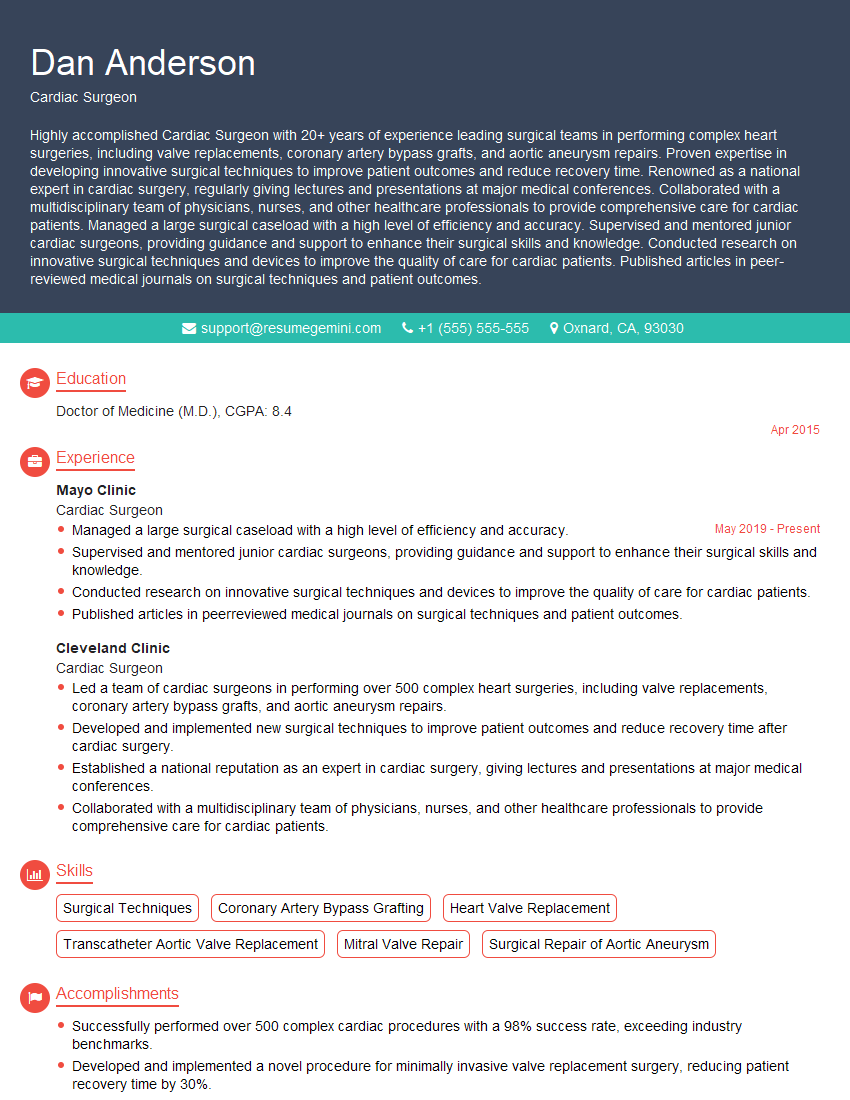
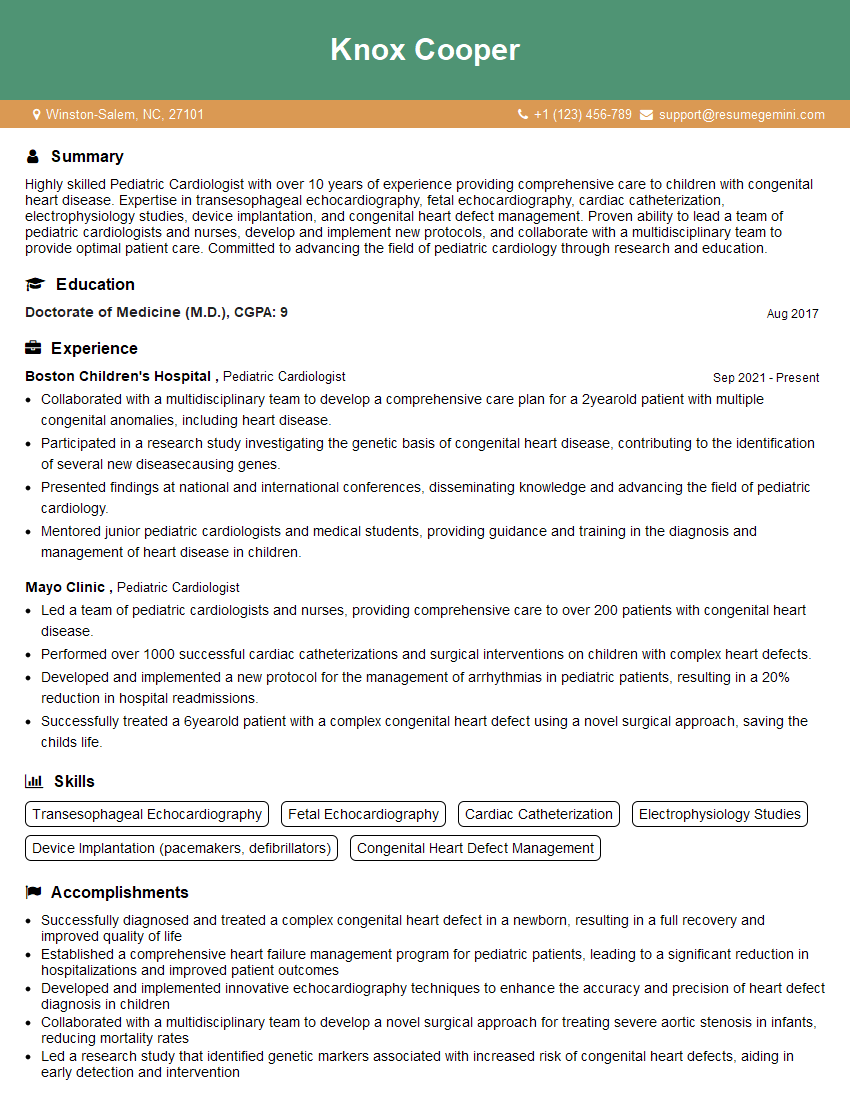
Mastering Congenital Heart Disease Surgery opens doors to a rewarding career with significant impact on the lives of children and their families. A strong foundation in this specialized field is highly valued in the competitive job market. To maximize your job prospects, creating a compelling and ATS-friendly resume is crucial. ResumeGemini is a trusted resource that can help you build a professional resume that highlights your skills and experience effectively. ResumeGemini provides examples of resumes tailored to Congenital Heart Disease Surgery, enabling you to craft a document that showcases your expertise and secures your next interview.
Explore more articles
Users Rating of Our Blogs
Share Your Experience
We value your feedback! Please rate our content and share your thoughts (optional).
What Readers Say About Our Blog
To the interviewgemini.com Webmaster.
Very helpful and content specific questions to help prepare me for my interview!
Thank you
To the interviewgemini.com Webmaster.
This was kind of a unique content I found around the specialized skills. Very helpful questions and good detailed answers.
Very Helpful blog, thank you Interviewgemini team.