Preparation is the key to success in any interview. In this post, we’ll explore crucial Control Valves and Instrumentation interview questions and equip you with strategies to craft impactful answers. Whether you’re a beginner or a pro, these tips will elevate your preparation.
Questions Asked in Control Valves and Instrumentation Interview
Q 1. Explain the different types of control valves and their applications.
Control valves are the workhorses of process automation, regulating fluid flow to maintain desired process parameters. They come in various types, each suited to specific applications. The most common types include:
- Globe Valves: These are versatile valves with a disc that moves vertically to regulate flow. They are excellent for throttling (precise flow control) and are widely used in various industries. Think of them as the ‘Swiss Army knife’ of control valves, adaptable to a range of services and pressures.
- Ball Valves: Featuring a rotating ball with a hole, these valves offer either fully open or fully closed positions. They are ideal for on/off service, quick shutdowns, and situations needing minimal maintenance, but they aren’t typically used for precise flow control. Imagine them as a quick-acting switch.
- Butterfly Valves: A disc rotates within the valve body to control flow. They offer a compact design and are efficient for large flow applications but might not offer the same precision as globe valves in throttling applications. Think of these as being particularly well-suited for large-diameter pipelines.
- Diaphragm Valves: These valves use a flexible diaphragm to isolate the process fluid from the valve’s actuator. They’re often used for corrosive or slurry services where sealing is crucial. Imagine them as protective barriers in harsh environments.
- Pinch Valves: A flexible sleeve is compressed to restrict flow. Simple, effective, and well-suited for abrasive or viscous materials, but they generally lack precision.
The choice depends on the specific application requirements, including the fluid properties (viscosity, corrosiveness), flow rate, pressure, and the level of control precision needed.
Q 2. Describe the characteristics of a well-designed control valve installation.
A well-designed control valve installation ensures optimal performance, reliability, and safety. Key characteristics include:
- Proper Piping: Straight pipe sections upstream and downstream of the valve minimize flow disturbances and ensure accurate measurement. Insufficient straight pipe length can lead to inaccurate flow readings and valve damage.
- Accessible Location: The valve should be easily accessible for maintenance, inspection, and repair. A valve tucked away in a hard-to-reach location will be difficult and expensive to fix.
- Appropriate Supports: The valve and piping must be properly supported to prevent vibration and stress. Unstable piping can lead to leaks and valve failure.
- Instrumentation: Installing pressure gauges, flow meters, and temperature sensors close to the valve allows for monitoring and control. This helps ensure the valve is performing correctly.
- Proper Sizing: The valve must be correctly sized to handle the required flow rate and pressure. An undersized valve can lead to excessive wear and tear, while an oversized valve might not provide the needed control.
- Drainage: Proper drainage provisions prevent the accumulation of fluids which could damage the valve or cause environmental hazards. This is crucial for preventing freeze damage in colder climates.
A poorly designed installation can lead to inaccurate control, premature valve failure, safety hazards, and increased maintenance costs. Remember, prevention is always cheaper than cure.
Q 3. How do you select the appropriate control valve for a specific process?
Selecting the right control valve involves a systematic approach. The process generally involves:
- Defining Process Requirements: Determine the fluid properties (viscosity, temperature, corrosiveness), flow rate, pressure drop, required control accuracy, and cycle duty.
- Valve Type Selection: Based on the process requirements, select the appropriate valve type (globe, ball, butterfly, etc.). For example, a highly viscous fluid might require a globe valve for better throttling, while an on/off application would suit a ball valve.
- Valve Size Calculation: Use valve sizing software or calculation methods (e.g., ISA sizing equations) to determine the appropriate valve size based on the flow rate, pressure drop, and fluid properties. Accurate sizing is critical for reliable operation.
- Actuator Selection: Choose an actuator (pneumatic, electric, hydraulic) appropriate for the valve size, process conditions, and control system. The actuator provides the power to move the valve.
- Material Selection: Select materials compatible with the process fluid to prevent corrosion or degradation. Consider factors like temperature and pressure ratings of the materials.
- Verification: Validate the selected valve with vendor documentation and ensure it meets the design specifications.
Using specialized sizing software is crucial for avoiding common errors and ensures a well-matched valve for the application. Consulting with a control valve specialist can also be beneficial, particularly in complex applications.
Q 4. What are the common causes of control valve failure?
Control valve failures can stem from various sources:
- Erosion/Corrosion: Aggressive fluids can erode or corrode internal valve components, leading to leaks or malfunctions. Proper material selection is paramount to prevent this.
- Cavitation: Formation of vapor bubbles within the fluid can cause damage to valve components. Careful selection of valve design and operating parameters is crucial here.
- Plugging/Fouling: Solid particles or viscous fluids can plug the valve, hindering flow. Regular maintenance and cleaning can prevent this issue.
- Actuator Failure: Actuators can fail due to mechanical wear, electrical faults, or pneumatic leaks. Regular lubrication and maintenance checks are essential.
- Improper Sizing: A poorly sized valve operates outside its designed capacity, leading to excessive wear, vibration, and failure. This is frequently seen as a result of insufficient initial process analysis.
- External Damage: Physical damage from accidental impacts or vibrations can affect valve operation. Proper installation and protection are key.
- Sealing Issues: Leakage around the valve stem or seat can lead to performance issues and potentially safety risks. Regular inspection and timely replacement of seals are crucial.
Preventive maintenance, regular inspections, and proper operation are vital in extending the lifespan of control valves and reducing the likelihood of failure.
Q 5. Explain the concept of valve sizing and its importance.
Valve sizing determines the appropriate valve size to effectively control flow within the desired range of operation. It’s crucial because an incorrectly sized valve can lead to poor control, increased wear, and even failure. Valve sizing involves calculating the required valve flow coefficient (Cv) based on the process flow rate, pressure drop, and fluid properties.
The importance lies in:
- Optimal Control: A properly sized valve can accurately modulate the flow and maintain the desired process conditions. An oversized valve may be too sluggish to respond correctly.
- Reduced Wear and Tear: An appropriately sized valve operates within its designed limits, reducing wear and extending its lifespan. Oversized valves can cause significant wear and premature failure from being forced to operate at very low flow rates. Conversely, undersized valves frequently generate excessive wear and tear.
- Energy Efficiency: Proper sizing minimizes pressure drop across the valve, reducing energy consumption.
- Safety: Improper sizing can lead to hazardous situations such as uncontrolled flow or pressure surges.
Several methods and software tools exist for performing accurate valve sizing. Ignoring this step often leads to costly problems further down the line.
Q 6. How do you troubleshoot a malfunctioning control valve?
Troubleshooting a malfunctioning control valve is a systematic process:
- Gather Information: Identify the symptoms of the malfunction (e.g., no flow, erratic flow, valve stuck open/closed). Gather process data (flow rate, pressure, temperature) before, during, and after the problem.
- Inspect the Valve: Visually inspect the valve for any obvious signs of damage (e.g., leaks, corrosion, physical damage).
- Check Actuator Operation: Verify that the actuator is receiving the correct signal and operating correctly. This might involve checking air pressure, electrical wiring, or hydraulic pressure, depending on the actuator type.
- Verify Valve Positioning: Check the positioner (if present) to confirm the valve is moving to the correct position in response to the control signal. This also involves inspecting the feedback mechanism, ensuring its correct operation.
- Check Piping and Instrumentation: Inspect the piping for blockages, leaks, or improper installation. Confirm that all sensors and instruments associated with the valve are functioning correctly.
- Test the Valve Manually: If possible, manually operate the valve to determine whether the problem lies within the valve itself or the actuation system.
- Consult Documentation: Refer to valve and actuator manuals to diagnose potential problems and obtain maintenance recommendations.
Following this systematic approach will isolate the root cause efficiently and avoid unnecessary repairs. Remember, safety is paramount, and lockout/tagout procedures should be adhered to before any hands-on maintenance work.
Q 7. What are the different types of valve actuators and their operating principles?
Valve actuators are the ‘muscles’ that provide the force to move the valve. Several types exist:
- Pneumatic Actuators: These use compressed air to drive a diaphragm or piston, providing the force to open or close the valve. They are simple, reliable, and well-suited for hazardous environments due to their inherent safety features. Think of them as using air pressure to push or pull the valve.
- Electric Actuators: These use electric motors to generate the required force. They offer precise positioning and control and are easily integrated into automated control systems. Imagine them being very precise and versatile.
- Hydraulic Actuators: These use hydraulic fluid under pressure to provide the force. They offer high power density and are used in applications requiring high force. Their heavy duty nature is excellent for large valves.
Each actuator type has its strengths and weaknesses. The selection depends on factors such as the valve size, required force, process conditions, and control system requirements. The operating principles are based on transforming energy (air pressure, electricity, or hydraulic pressure) into mechanical force.
Q 8. Describe the role of positioners in control valve systems.
Positioners are essential auxiliary devices in control valve systems. They enhance the accuracy and responsiveness of the valve by providing a precise signal to the valve actuator, overcoming inherent limitations such as friction and hysteresis within the valve stem. Think of it like this: the control system sends a signal saying ‘open to 50%,’ but the valve itself might only open to 45% due to friction. A positioner ‘intelligently’ adjusts the actuator to ensure the valve actually reaches that 50% target, and maintains it. This results in better control of the process variable.
Positioners achieve this by incorporating feedback. They constantly monitor the actual valve position using a sensor (often a potentiometer) and compare it to the desired position signal from the controller. Any discrepancy is corrected through adjustments to the actuator, creating a closed-loop control system within the valve itself.
For example, in a chemical process, maintaining a precise flow rate of a reactant is crucial. A positioner ensures the control valve accurately reflects the controller’s setpoint, preventing variations that could lead to inconsistencies in the final product or even safety hazards.
Q 9. Explain the concept of control valve characteristics (linear, equal percentage, etc.).
Control valve characteristics describe the relationship between the valve’s stem position and its flow rate. This is crucial because different processes require different flow responses.
- Linear: A linear characteristic means that a proportional change in stem position results in a proportional change in flow rate. For instance, a 10% stem movement yields a 10% flow change. This is simpler to understand but might not always be the most efficient for all applications.
- Equal Percentage: An equal percentage characteristic provides equal percentage flow changes for equal increments of stem travel. This means a 10% increase in stem position will always cause the same percentage increase in flow regardless of the current flow rate. This characteristic is better suited for processes requiring precise control over a wide range of flow rates.
- Quick Opening: These valves rapidly change flow rate with small stem movements at the start and then gradually increase flow as the stem reaches its upper end, useful for quick shut off or on applications
The choice of characteristic depends on the specific process. Equal percentage characteristics are often preferred in applications where precise flow control is needed across a wide operating range, such as in pressure-reducing applications, while linear characteristics are suitable for applications with relatively smaller flow rate changes.
Q 10. How do you perform a control valve calibration?
Control valve calibration is a crucial maintenance task ensuring accurate operation. It involves verifying that the valve’s output (flow rate) accurately corresponds to its input (control signal). The steps usually involve:
- Disconnect the valve from the process: This ensures safe operation and prevents unintended changes in the process during calibration.
- Isolate the valve: Isolate the valve from the process using appropriate isolation valves.
- Set up a test rig: This often involves a flow meter and pressure gauges to measure the valve’s flow output accurately.
- Apply a series of known input signals: This is typically done using a calibrated signal generator or the control system itself. The signals should represent the full range of valve operation (e.g., 0-100%).
- Measure the actual flow rate at each input signal: Record the flow rate at each input level for comparison.
- Compare measured flow against expected flow: Plot the measured data against the expected flow rate for the selected characteristic (linear, equal percentage, etc.). Any deviation is indicative of a calibration issue.
- Adjust the valve’s linkage or internal settings: If deviations exceed acceptable limits, adjustments are made to bring the measured flow closer to the expected flow (often through adjustments on the valve’s actuator or positioner).
- Repeat steps 4-7 until satisfactory accuracy is achieved: Calibration is iterative until the valve achieves the required accuracy.
- Document the calibration: Record the calibration results, dates, and any necessary adjustments.
Calibration should be performed routinely as per the manufacturer’s recommendation or as per the maintenance schedule, typically on a regular basis, even if the valve is not showing any noticeable problems, to prevent unexpected issues.
Q 11. What are the different types of valve trim and their impact on performance?
Valve trim refers to the internal components of the valve that directly control the flow. Different trim types significantly impact performance, including flow characteristics, pressure drop, noise, and cavitation:
- Globe Valves: These are commonly used and offer a wide range of trim options, including single-seated, double-seated, and cage-type. Single-seated trims are simple but can exhibit stickiness; double-seated trims provide better flow control at lower pressure drops; cage trims are known for their tight shut-off and high flow capacity.
- Ball Valves: Ball valves offer a full-bore flow path which minimizes pressure drop, however, they usually can’t modulate flow as precisely as globe valves.
- Butterfly Valves: These are used for applications requiring fast on-off control or throttling over a limited range, characterized by high capacity and low cost, but may suffer from excessive wear in high-cycle applications.
- Diaphragm Valves: Suitable for abrasive, corrosive and viscous fluids. Usually have a linear flow characteristic.
The selection of valve trim depends heavily on the specific application. Factors to consider include the fluid’s properties (viscosity, corrosiveness, abrasiveness), the required flow control precision, the allowable pressure drop, and the overall cost.
For instance, a process with corrosive fluids would require trim material resistant to corrosion, perhaps utilizing exotic materials such as Hastelloy or titanium. A process demanding precise flow control might necessitate equal percentage or linear trim, while one needing quick on/off switching might favor a ball valve or butterfly valve design.
Q 12. Explain the importance of proper valve maintenance and inspection.
Proper valve maintenance and inspection are essential for ensuring safe and reliable operation, preventing unexpected shutdowns and optimizing the lifespan of expensive equipment.
Regular inspections should check for:
- Leaks: Any leaks around the valve body, packing, or stem can lead to losses and safety hazards.
- Valve stem condition: Look for signs of wear, corrosion, or damage.
- Actuator performance: Check for smooth and responsive operation, noting any unusual noises or vibrations.
- Valve positioner (if present): Verify that the positioner is functioning correctly and responding accurately.
- Valve trim condition: Examine the trim for signs of erosion, wear, or buildup.
- Proper operation: Manually operate the valve to verify the full range of motion.
Maintenance activities may include:
- Lubrication: Lubricate moving parts according to manufacturer’s recommendations.
- Packing gland adjustments: Adjust the packing gland to maintain the appropriate stem seal and prevent leaks.
- Cleaning: Clean the valve body, stem, and other components to remove any buildup or debris.
- Replacement of worn parts: Replace any worn or damaged components as needed, such as gaskets, packing, or trim.
Ignoring maintenance can lead to costly repairs or replacements, as well as process upsets and safety incidents. A proactive maintenance program extends the service life of valves, ensuring efficient and reliable process control.
Q 13. How do you diagnose and resolve issues related to valve noise and cavitation?
Valve noise and cavitation are common issues requiring diagnostic and corrective actions.
Valve Noise: Noise often arises from turbulent flow through the valve. The higher the pressure drop across the valve, the more likely noise will be a problem. Diagnostics involve:
- Identifying the noise source: Pinpoint the location and type of noise (hissing, whistling, etc.).
- Measuring pressure drop: Determine the pressure difference across the valve.
- Inspecting valve trim: Check the trim for any damage or irregularities that could contribute to turbulence.
Solutions may include:
- Reducing pressure drop: This can be achieved by changing the valve size, adding a pressure-reducing stage upstream, or altering the process operating conditions.
- Installing noise silencers: Silencers are designed to dampen the sound produced by turbulent flow.
- Using low-noise trim: Special trim designs minimize turbulence and noise.
Cavitation: Cavitation occurs when the liquid pressure falls below its vapor pressure, forming vapor bubbles that collapse violently, causing damage and noise. Diagnostics include:
- Observing valve performance: Look for unusual noise (often described as a hammering or rattling sound) and vibrations.
- Inspecting the valve trim: Look for pitting or erosion on the valve trim, which are signs of cavitation damage.
- Analyzing the process conditions: Check for high velocities and pressure drops that may favor cavitation.
Solutions include:
- Reducing the pressure drop: Employ larger valves, modify the process, or add pressure-reducing devices.
- Using cavitation-resistant trim: Special trim designs minimize cavitation.
- Avoiding low-pressure regions: Design the system to maintain adequate pressure.
Addressing noise and cavitation is crucial for extending valve lifespan, preventing damage, and ensuring reliable process control. Often, solutions involve a combination of process design modifications and valve selection/maintenance changes.
Q 14. Describe the different types of control loops used in process control.
Control loops are fundamental to process control, using feedback to maintain a process variable at a desired setpoint. Several types exist:
- Proportional (P): The controller output is proportional to the error (difference between setpoint and measured value). Simple, but can result in offset (steady-state error).
- Proportional-Integral (PI): Combines proportional control with integral action, which eliminates offset by accumulating errors over time. Widely used due to its effectiveness and relative simplicity.
- Proportional-Integral-Derivative (PID): Adds derivative action to PI, anticipating future errors based on the rate of change. Offers superior performance in dealing with disturbances and complex dynamics.
- Feedforward: Uses measurements of a disturbance variable (a variable that affects the process) to predict and compensate for its effect on the process, before it actually happens. Improves response speed but requires accurate models.
- Cascade Control: Employs a master controller and one or more subordinate controllers. The master controller sets the setpoint for the subordinate controllers, which manage lower-level variables influencing the main process variable.
The choice of control loop depends on factors such as the process dynamics, the desired performance characteristics, and the complexity of the system. PID controllers are extremely common in industrial processes due to their ability to handle many different process characteristics effectively, providing a balance between performance and implementation complexity. A cascade control strategy is common in temperature control, where a subordinate loop might control the flow to a heater to maintain a temperature setpoint specified by the master loop. Feedforward control might be implemented to compensate for variations in feedstock composition in a chemical reactor.
Q 15. Explain the concept of PID control and its tuning methods.
PID control, or Proportional-Integral-Derivative control, is a feedback control loop mechanism widely used in industrial automation to maintain a desired process variable at a setpoint. Think of it like a thermostat: it constantly measures the temperature (process variable) and adjusts the heating/cooling (control action) to keep the room at the desired temperature (setpoint).
It uses three terms:
- Proportional (P): The proportional term responds directly to the error (difference between setpoint and process variable). A larger error leads to a larger corrective action. However, it can result in steady-state error (the process variable never quite reaches the setpoint).
- Integral (I): The integral term addresses the steady-state error by accumulating the error over time. This ensures the process variable eventually reaches the setpoint, even if there’s a persistent offset.
- Derivative (D): The derivative term anticipates future error based on the rate of change of the error. It helps to dampen oscillations and prevent overshoot, making the response smoother and faster.
Tuning Methods: Finding the optimal values for the P, I, and D gains (coefficients) is crucial. Common methods include:
- Zeigler-Nichols Method: A simple yet effective method involving finding the ultimate gain (Ku) and ultimate period (Pu) through a step response test. The P, I, and D gains are then calculated using specific formulas based on Ku and Pu.
- Cohen-Coon Method: Another empirical method that uses the process response to determine the PID gains. It offers more precise tuning compared to Zeigler-Nichols in some cases.
- Auto-tuning: Many modern controllers have auto-tuning capabilities. They automatically test the process and determine the optimal PID gains, significantly reducing manual effort.
- Trial and Error: A more hands-on approach that involves gradually adjusting the gains based on the process response, observing the effect on stability and response time. This method requires experience and careful observation.
For example, in a level control application, a poorly tuned PID controller might lead to oscillations in the tank level, while a well-tuned controller will maintain a stable level despite disturbances.
Career Expert Tips:
- Ace those interviews! Prepare effectively by reviewing the Top 50 Most Common Interview Questions on ResumeGemini.
- Navigate your job search with confidence! Explore a wide range of Career Tips on ResumeGemini. Learn about common challenges and recommendations to overcome them.
- Craft the perfect resume! Master the Art of Resume Writing with ResumeGemini’s guide. Showcase your unique qualifications and achievements effectively.
- Don’t miss out on holiday savings! Build your dream resume with ResumeGemini’s ATS optimized templates.
Q 16. How do you handle control valve issues related to process upsets?
Process upsets, such as sudden changes in feed flow, temperature, or pressure, can significantly affect control valve performance. Handling them effectively requires a multi-faceted approach:
- Understanding the Upset: First, diagnose the cause of the upset. Is it a temporary disturbance or a persistent change in operating conditions? Is it related to upstream or downstream equipment?
- Adjusting Control Parameters: Often, minor adjustments to the PID controller’s gains can help mitigate the impact of the upset. For instance, temporarily increasing the proportional gain can provide a quicker response to a sudden change, while decreasing the derivative gain can prevent excessive overshoot.
- Valve Positioning and Health: Ensure the control valve is operating within its designed capacity and is free from mechanical issues such as stiction or hysteresis (lag between input and output). Routine maintenance and calibration are crucial.
- Cascade Control: Implementing a cascade control system can improve the response to upsets. A secondary loop controls a key intermediate variable (e.g., pressure before the control valve), further stabilizing the primary control loop.
- Feedforward Control: Incorporating feedforward control anticipates the effect of the disturbance and takes preemptive corrective actions. For example, if you know a change in feed flow is coming, you can adjust the valve position proactively to minimize the impact on the controlled variable.
For instance, if a sudden increase in feed flow to a reactor causes a temperature increase, quickly adjusting the cooling water valve using a combination of PID adjustments and feedforward control will help bring the reactor temperature back to setpoint rapidly and smoothly.
Q 17. What are the safety considerations involved in working with control valves?
Safety is paramount when working with control valves, as they are critical components in many hazardous processes. Key safety considerations include:
- Lockout/Tagout Procedures: Always follow established lockout/tagout procedures before performing any maintenance or repair work on a control valve. This ensures that the valve is isolated from the process and prevents accidental operation.
- Pressure Relief Devices: Ensure that adequate pressure relief devices are in place to prevent over-pressurization in case of valve malfunction.
- Emergency Shutdown Systems (ESD): Control valves often play a vital role in ESD systems. Regular testing and maintenance of ESD valves are crucial to ensure their reliability in emergency situations.
- Proper Valve Selection: Select valves with appropriate pressure ratings, materials of construction, and safety features to match the process conditions and potential hazards.
- Regular Inspections and Maintenance: Conduct routine inspections to check for leaks, corrosion, wear, and damage. Implement a preventative maintenance schedule to extend the valve’s lifespan and prevent unexpected failures. This includes things like checking valve positioners, actuators, and packing gland integrity.
- Personal Protective Equipment (PPE): Always wear appropriate PPE, including safety glasses, gloves, and protective clothing, when working with control valves.
A failure to adhere to these safety measures could lead to serious consequences, including equipment damage, environmental releases, and personal injuries.
Q 18. Describe your experience with various control valve manufacturers and their products.
Throughout my career, I’ve worked extensively with various control valve manufacturers, including Emerson (Fisher, Rosemount), Siemens, Yokogawa, and Honeywell. Each has its own strengths and specialties:
- Emerson (Fisher, Rosemount): Known for their wide range of valve types and accessories, robust designs, and comprehensive documentation. I’ve particularly appreciated their advanced valve positioners and digital communication protocols.
- Siemens: Their valves are often found in larger, complex systems, known for reliable performance and integration with their process automation systems.
- Yokogawa: Renowned for their high-precision valves and advanced control capabilities often used in demanding applications.
- Honeywell: They offer a comprehensive portfolio, suitable for diverse applications and known for their user-friendly interfaces and ease of maintenance.
My experience encompasses selecting valves based on application requirements, such as flow characteristics (linear, equal percentage, quick-opening), material compatibility, and pressure drop considerations. I am familiar with different valve types including globe, ball, butterfly, and control valves with various actuators (pneumatic, electric, hydraulic).
Q 19. How do you interpret control valve data from a DCS or PLC?
Interpreting control valve data from a Distributed Control System (DCS) or Programmable Logic Controller (PLC) is fundamental to effective process control. This involves understanding various parameters, including:
- Valve Position (PV): Represents the current position of the valve stem, usually expressed as a percentage of full travel (0-100%).
- Setpoint (SP): The desired valve position as commanded by the controller. Any deviation from the setpoint indicates a control action taking place.
- Error (SP – PV): The difference between the setpoint and the actual valve position.
- Output Signal: The signal sent from the controller to the valve actuator (e.g., 4-20 mA signal). Analyzing this helps to diagnose issues within the control loop itself.
- Diagnostics: Modern DCS and PLCs provide valuable diagnostic information, such as valve health indicators, actuator status, and communication errors. These insights help identify potential problems early on.
- Historical Data: Reviewing historical trends allows me to identify patterns and potential issues. This helps in preventive maintenance and process optimization.
Through this data, I can identify problems such as valve stiction (sticking), air leaks in pneumatic actuators, communication issues between the controller and the valve, and even problems within the control logic itself. For example, a constant error between setpoint and valve position might indicate a problem with the valve itself, whereas erratic valve movement could point towards a control loop tuning problem or electrical fault.
Q 20. Explain your experience with control valve selection software.
I have extensive experience using control valve selection software, such as those offered by Emerson, Siemens, and other major manufacturers. These software packages typically offer features to:
- Specify Process Parameters: Inputting process conditions such as fluid properties (density, viscosity), pressure, temperature, and flow rate.
- Select Valve Type and Size: The software aids in selecting the appropriate valve type (globe, ball, butterfly, etc.) and size based on calculated flow and pressure drop requirements, ensuring optimal performance and minimizing cavitation.
- Actuator Selection: Determining the necessary actuator size and type (pneumatic, electric, hydraulic) based on valve size and operating conditions.
- Simulate Valve Performance: Running simulations to assess the valve’s performance under various operating conditions, helping to identify potential issues early in the design phase. This is particularly valuable when evaluating the impact of different control strategies.
- Generate Valve Specifications: Creating comprehensive valve specifications for procurement, ensuring that the selected valve meets the project’s needs.
Using this software dramatically reduces the time required for valve selection and ensures that the chosen valve is optimal for the application. It helps to minimize risks and costs by preventing mistakes in the design process.
Q 21. Describe your experience with different types of instrumentation (pressure, temperature, flow, level).
My experience with various instrumentation spans a wide range, including pressure, temperature, flow, and level measurement devices:
- Pressure: I’m proficient in using various pressure transmitters, including differential pressure (DP), absolute pressure, and gauge pressure transmitters. I understand the principles of operation for these devices, including diaphragm-based, strain gauge, and piezoelectric sensors.
- Temperature: I’ve worked with thermocouples (type K, J, T, etc.), resistance temperature detectors (RTDs), and thermistors. My understanding extends to their calibration techniques, accuracy limitations, and proper installation procedures.
- Flow: I’m familiar with various flow measurement technologies, including differential pressure flow meters (orifice plates, venturi tubes, flow nozzles), magnetic flow meters, ultrasonic flow meters, and turbine flow meters. I can select appropriate flow meters based on fluid properties, flow range, and accuracy requirements.
- Level: I have experience with various level measurement technologies, including hydrostatic pressure level sensors, ultrasonic level sensors, radar level sensors, and guided wave radar sensors. The selection depends on factors such as the tank material, liquid properties, and required accuracy.
My expertise extends beyond basic operation; I understand the principles of instrumentation signal conditioning, calibration techniques, and troubleshooting issues related to accuracy, stability, and reliability. This broad range of experience allows for efficient process control and early detection of problems.
Q 22. How do you ensure the accuracy and reliability of instrumentation readings?
Ensuring the accuracy and reliability of instrumentation readings is paramount for effective process control. It’s a multi-faceted approach involving careful selection, proper installation, regular calibration, and preventative maintenance.
- Calibration: Regular calibration against traceable standards is crucial. We use certified calibration equipment and follow strict procedures, documenting every step. For example, a pressure transmitter might be calibrated against a deadweight tester to ensure its accuracy within specified tolerances. Out-of-tolerance readings trigger investigation and potential replacement or repair.
- Loop Checks: Regular loop checks verify the entire measurement loop, from sensor to display. This includes checking for signal integrity, cable continuity, and proper functioning of all components. This ensures that the reading isn’t just accurate at the sensor, but accurately transmitted and displayed.
- Sensor Selection: The choice of instrument is vital. We consider factors like the process conditions (temperature, pressure, corrosiveness), required accuracy, and long-term stability. A poorly chosen sensor will inherently yield inaccurate readings, regardless of calibration efforts. For instance, using a standard RTD in a high-vibration environment would lead to unreliable measurements.
- Environmental Factors: Environmental factors such as temperature and humidity can significantly affect instrument performance. Properly shielded and environmentally protected instrumentation reduces the impact of external influences. We use temperature compensation techniques and consider the effects of vibration and electromagnetic interference.
- Data Logging and Analysis: Trend data analysis from the instrumentation helps identify gradual drift or potential problems before they lead to significant inaccuracies. For example, a slow drift in a level transmitter’s reading can indicate a gradual buildup of scale on the sensing element, allowing for timely maintenance.
Q 23. Explain your experience with loop testing and commissioning procedures.
Loop testing and commissioning are critical phases of ensuring a control loop functions as designed. My experience spans various industrial settings, encompassing both simple and complex control loops.
- Pre-commissioning checks: This stage includes verifying correct wiring, installation, and instrument functionality. We perform continuity checks, insulation resistance tests, and functional tests on each instrument individually before connecting them to the control system.
- Loop testing: This involves systematically testing the entire control loop, including the sensor, transmitter, controller, and final control element (e.g., valve). This might involve injecting test signals, observing the controller’s response, and verifying the valve’s actuation. We use tools like loop calibrators to simulate various process signals and observe the system’s response, meticulously documenting every step.
- Commissioning documentation: All testing results, including calibration certificates and loop testing data, are meticulously documented. This documentation is essential for future troubleshooting, maintenance, and regulatory compliance. This also includes functional performance tests of the entire control loop to validate it meets the required performance specifications.
- Example: In a recent project involving a level control loop for a chemical reactor, we meticulously tested the loop by inducing step changes in the setpoint and verifying the controller’s response to ensure it met the specified settling time and overshoot criteria. The valve’s performance was also verified under various conditions to identify potential issues with stiction or hysteresis.
Q 24. Describe your experience with various fieldbus communication protocols.
I have extensive experience with various fieldbus communication protocols, including PROFIBUS, Modbus, Foundation Fieldbus, and Ethernet/IP. Each protocol has its strengths and weaknesses, and the choice depends on the specific application.
- PROFIBUS: Widely used in process automation, offering robust performance and high data rates. I’ve used it in several projects involving large-scale distributed control systems (DCS).
- Modbus: A simpler, widely adopted protocol, often used in smaller systems or for interfacing with legacy equipment. Its simplicity makes it easy to integrate with different vendors’ devices. I’ve integrated it to read data from older PLCs and smart sensors.
- Foundation Fieldbus: A digital communication protocol that supports complex functionalities like device diagnostics and intelligent sensors. It’s particularly useful in demanding applications where reliability and advanced diagnostics are crucial. I’ve worked on projects involving its use in hazardous areas.
- Ethernet/IP: An industrial Ethernet protocol gaining popularity for its high bandwidth and flexibility. Its ability to integrate with IT networks is a significant advantage. I have experience configuring and troubleshooting networks employing this protocol.
- Protocol Considerations: When selecting a fieldbus, we consider factors like the network size, required data rates, security requirements, and the need for advanced diagnostics. The choice depends on balancing cost and required functionalities.
Q 25. Explain your understanding of safety instrumented systems (SIS).
Safety Instrumented Systems (SIS) are crucial for preventing hazardous events in process industries. My understanding encompasses their design, implementation, and verification. A SIS is independent of the basic process control system and designed to prevent or mitigate hazardous situations.
- Safety Integrity Levels (SIL): SIS design begins with a hazard analysis to identify potential hazards and determine the required Safety Integrity Level (SIL). SILs quantify the risk reduction required, and the SIS design must meet or exceed these levels.
- Redundancy and Architecture: SIS architectures typically employ redundancy and independent layers to ensure high reliability. This includes using redundant sensors, logic solvers, and final control elements to mitigate single-point failures.
- Verification and Validation: Rigorous testing and validation are crucial to verify that the SIS meets the required SIL. This includes functional safety assessments, simulations, and testing, often employing specialized safety-related testing tools.
- Example: In a project involving a high-pressure gas pipeline, we designed a SIS to shut down the pipeline in case of pressure surges or leaks. The system employed two independent pressure sensors, two independent logic solvers, and two independent shutdown valves, meeting the stringent SIL requirements for the application.
- Maintenance and testing: Regular maintenance and testing, including proof tests and functional checks, are essential to ensure the SIS remains reliable and functional. Detailed documentation is crucial for traceability and compliance.
Q 26. How do you approach a problem involving a complex control valve system?
Approaching a complex control valve system problem requires a systematic and methodical approach. I employ a structured troubleshooting methodology similar to the scientific method.
- Gather Information: First, I gather all available information, including process descriptions, P&IDs, instrument specifications, historical data, and maintenance logs. This step involves thoroughly understanding the system’s intended function and operational history.
- Identify the Problem: Next, I clearly define the problem. What is not working as expected? What are the symptoms? Precise problem definition guides subsequent steps.
- Develop Hypotheses: Based on the information gathered, I formulate potential causes for the problem. This step utilizes my experience and understanding of control valve behavior. Examples might include valve stiction, faulty positioner, pneumatic leaks, or incorrect controller tuning.
- Test Hypotheses: Using appropriate diagnostic tools (e.g., loop calibrators, vibration analyzers), I systematically test the hypotheses. This might involve checking valve position, actuator stroke, signal strength, and controller outputs.
- Implement Solution: Once the root cause is identified, an appropriate solution is implemented. This could involve repairing or replacing faulty components, adjusting controller tuning parameters, or performing necessary maintenance.
- Verify Solution: After implementation, the system is thoroughly tested to ensure the solution has effectively resolved the problem and does not introduce new issues. The system’s performance is monitored to confirm long-term stability.
Q 27. Describe your experience with predictive maintenance techniques for control valves.
Predictive maintenance for control valves focuses on anticipating potential failures before they occur, minimizing downtime and improving safety.
- Vibration Analysis: Monitoring valve vibration patterns can indicate developing problems like cavitation, erosion, or imbalance. Changes in vibration frequency or amplitude can signal impending failure, allowing for preventative maintenance.
- Acoustic Emission Monitoring: This technique detects high-frequency acoustic signals generated by internal valve damage (e.g., cracking or leaks). Early detection allows for repairs before catastrophic failure.
- Stroke Time Analysis: Monitoring the valve’s opening and closing times can highlight increasing friction or stiction, often indicative of wear or scale buildup. An increasing stroke time suggests a need for maintenance.
- Leak Detection: Regular leak checks identify minor leaks early, preventing them from escalating into major problems or safety hazards. Leak detection can utilize various techniques, including ultrasonic leak detectors or simple visual inspections.
- Data Analysis and Modeling: Combining data from various sources (vibration, stroke time, process conditions) and utilizing advanced analytics and predictive modeling allows for more accurate failure prediction. These models can provide insights into the remaining useful life of the valve and optimize maintenance scheduling.
- Condition-based maintenance: This approach to maintenance means that the maintenance is performed only when the condition of the equipment has deteriorated to a level requiring intervention. This saves costs by avoiding unnecessary repairs and extends the lifespan of the asset.
Key Topics to Learn for Control Valves and Instrumentation Interview
- Control Valve Characteristics: Understand Cv, flow coefficients, and different valve types (ball, globe, butterfly, etc.) and their applications. Explore the impact of valve sizing and selection on process performance.
- Instrumentation Principles: Grasp the fundamentals of measurement (pressure, temperature, flow, level) and the different types of sensors and transmitters used in process control systems. Be prepared to discuss signal transmission (analog vs. digital).
- Control Loop Fundamentals: Master the concepts of PID control, including tuning methods and troubleshooting common control loop problems like oscillations and offset. Understand the role of feedback and feedforward control strategies.
- Valve Actuators: Familiarize yourself with pneumatic, electric, and hydraulic actuators, their operation, and maintenance considerations. Be prepared to discuss actuator selection criteria based on process requirements.
- Process Control Systems: Gain a solid understanding of Distributed Control Systems (DCS) and Programmable Logic Controllers (PLCs) and their roles in industrial automation. Understand basic programming concepts relevant to process control.
- Safety Instrumented Systems (SIS): Learn about the importance of safety in process control and how SIS are designed and implemented to mitigate hazardous events. Understand functional safety standards (e.g., IEC 61511).
- Troubleshooting and Diagnostics: Practice identifying and resolving common problems in control valve and instrumentation systems. Develop your ability to analyze process data and diagnose malfunctions effectively.
- Calibration and Maintenance: Understand the importance of regular calibration and maintenance procedures for ensuring accurate and reliable process control. Be prepared to discuss best practices and relevant standards.
Next Steps
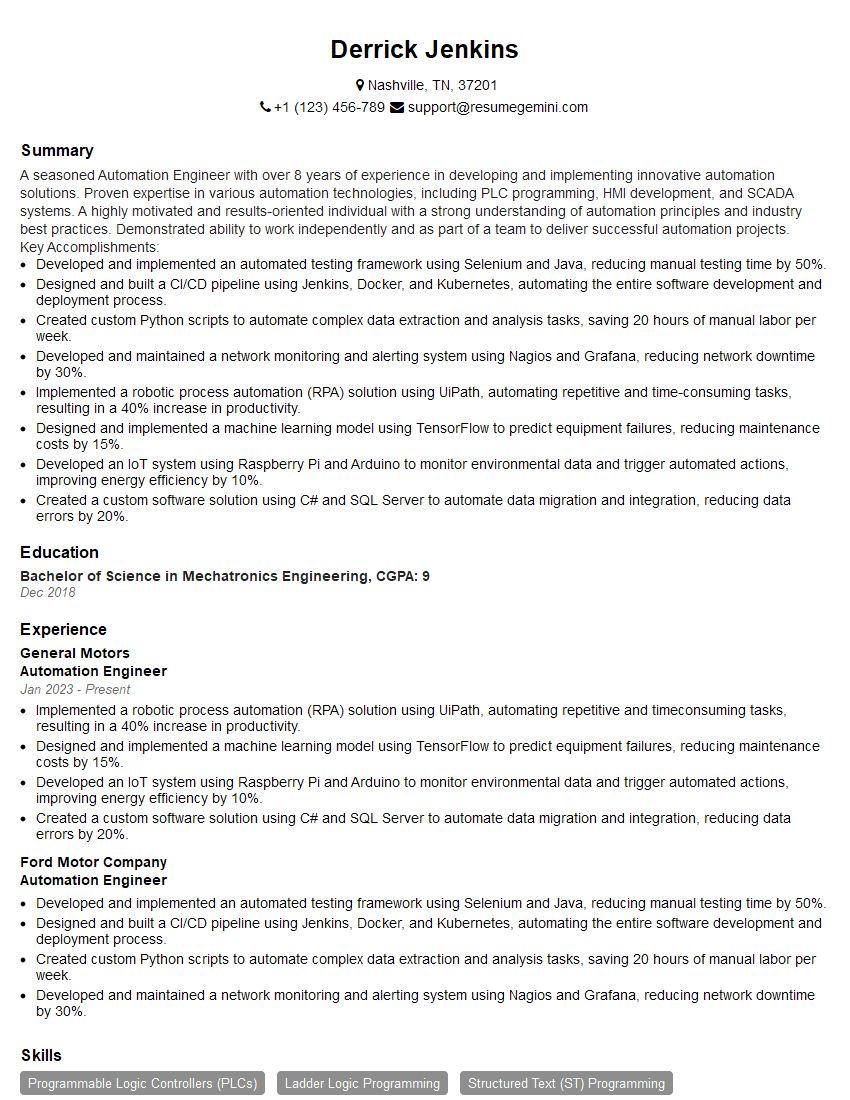
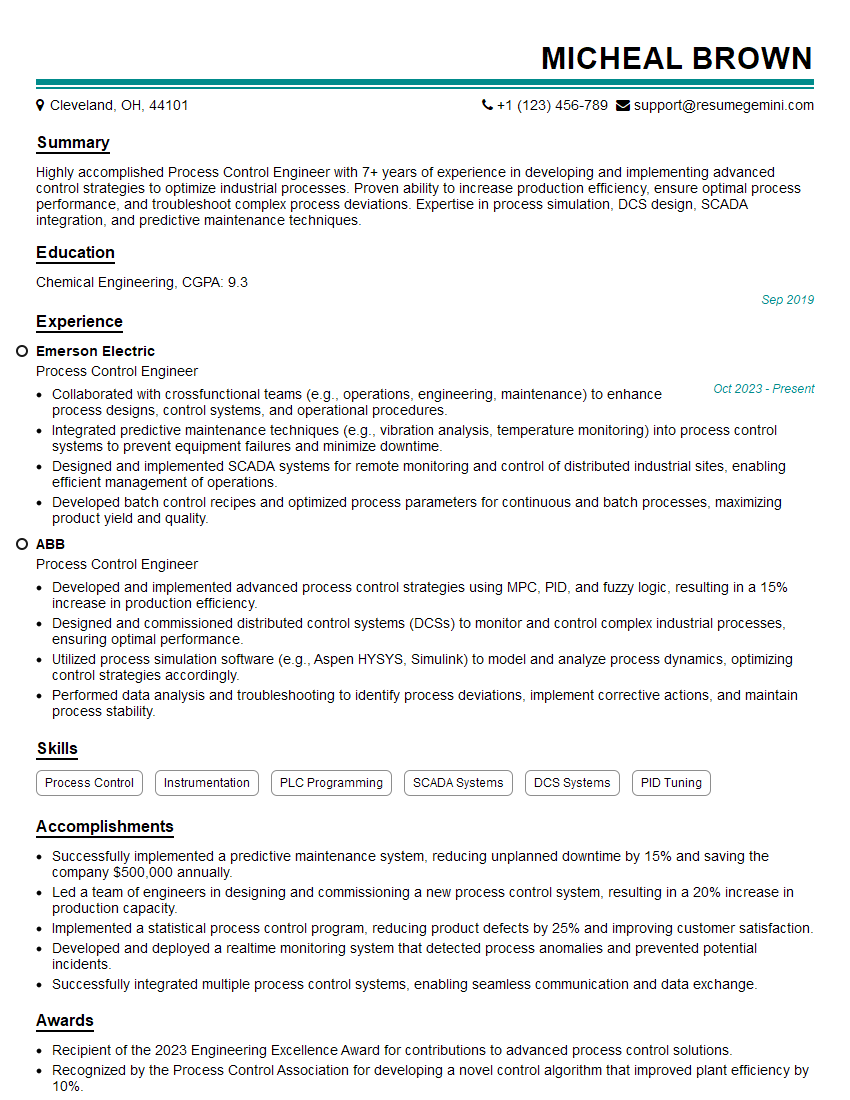
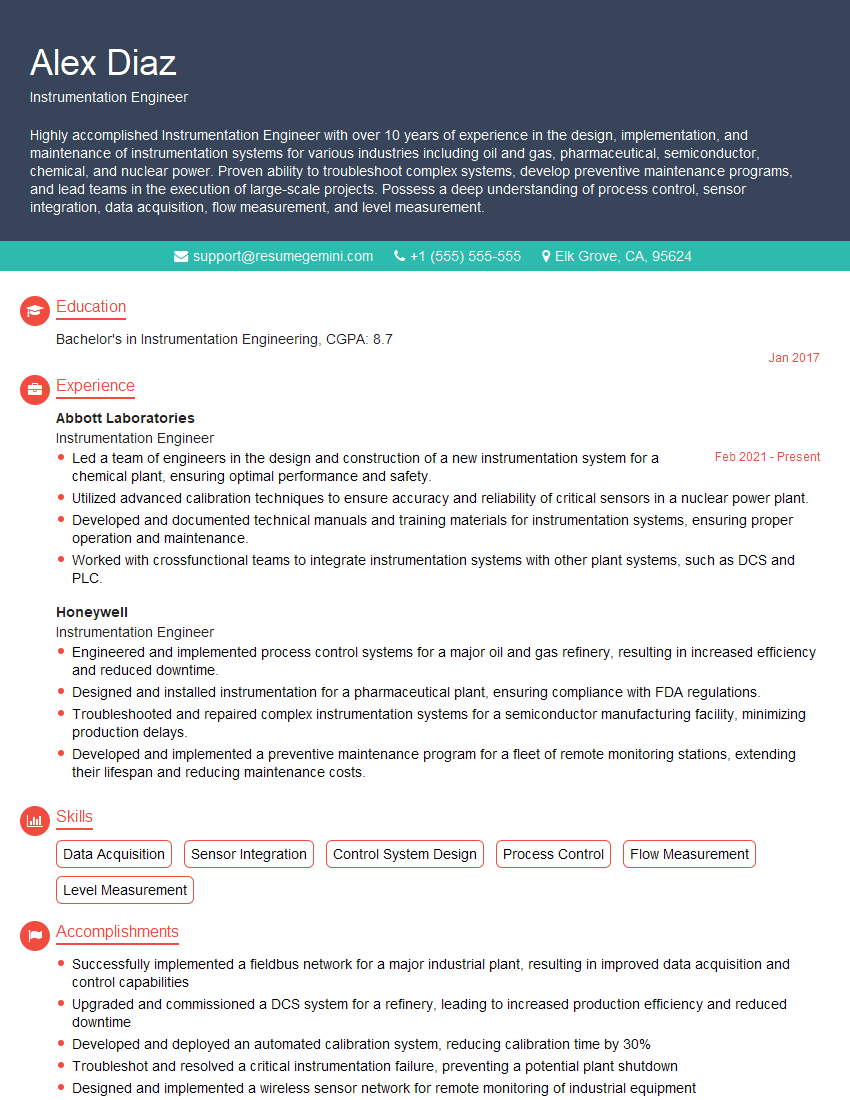
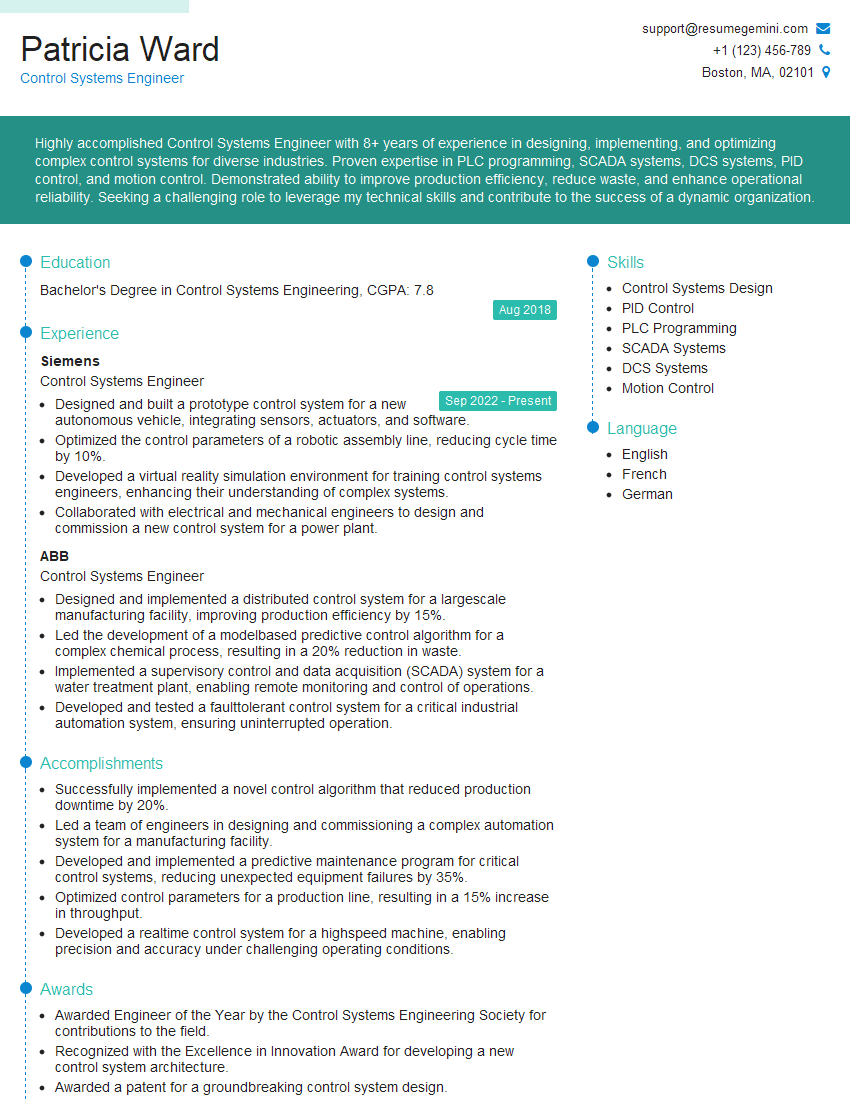
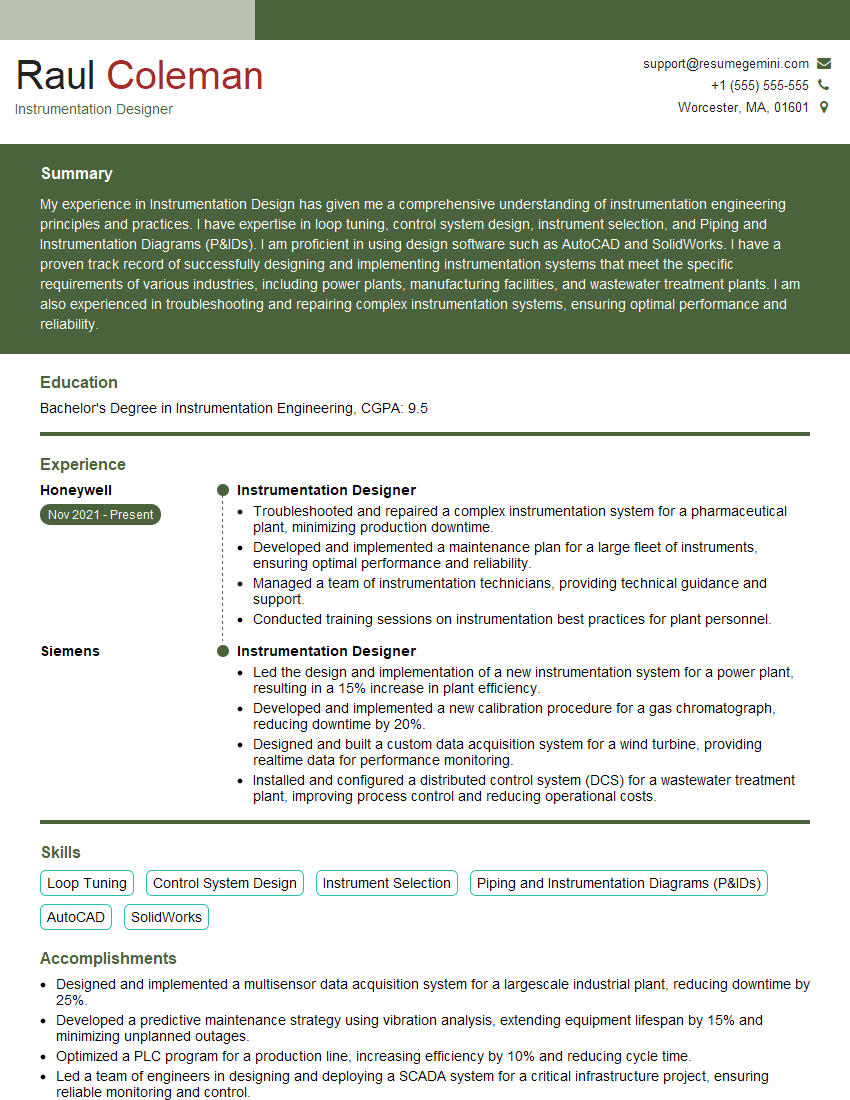
Mastering Control Valves and Instrumentation opens doors to exciting career opportunities in various industries, offering excellent growth potential and specialized expertise. A strong resume is critical to showcasing your skills and experience effectively to potential employers. Building an ATS-friendly resume is essential for ensuring your application is seen by recruiters and hiring managers. ResumeGemini is a trusted resource to help you craft a compelling and effective resume tailored to the specific requirements of Control Valves and Instrumentation roles. We provide examples of resumes specifically designed for this field, helping you present your qualifications in the best possible light. Invest the time to create a powerful resume; it’s a crucial step in advancing your career.
Explore more articles
Users Rating of Our Blogs
Share Your Experience
We value your feedback! Please rate our content and share your thoughts (optional).
What Readers Say About Our Blog
To the interviewgemini.com Webmaster.
Very helpful and content specific questions to help prepare me for my interview!
Thank you
To the interviewgemini.com Webmaster.
This was kind of a unique content I found around the specialized skills. Very helpful questions and good detailed answers.
Very Helpful blog, thank you Interviewgemini team.