Feeling uncertain about what to expect in your upcoming interview? We’ve got you covered! This blog highlights the most important Controls interview questions and provides actionable advice to help you stand out as the ideal candidate. Let’s pave the way for your success.
Questions Asked in Controls Interview
Q 1. Explain the difference between open-loop and closed-loop control systems.
The core difference between open-loop and closed-loop control systems lies in their feedback mechanisms. An open-loop system, also known as a feedforward system, simply executes a predetermined control action without considering the actual output or system’s response. Think of a simple toaster: you set the time, and it runs for that duration regardless of whether the bread is actually toasted. The control action is independent of the outcome.
In contrast, a closed-loop system, or feedback control system, continuously monitors the output and adjusts its control action to achieve a desired setpoint. Imagine a thermostat: it measures the room temperature, compares it to the desired temperature, and adjusts the heating or cooling accordingly. The control action is directly influenced by the system’s response.
Advantages of Closed-Loop: Higher accuracy, better disturbance rejection (ability to maintain setpoint even with external changes), and improved stability. Disadvantages: Increased complexity and cost due to the need for sensors and feedback mechanisms; potential for instability if not properly designed.
Example: A simple motor speed control. Open-loop: Applying a fixed voltage to the motor. Closed-loop: Using a sensor (tachometer) to measure the actual speed, comparing it to the desired speed, and adjusting the voltage accordingly to maintain the desired speed.
Q 2. Describe your experience with PID controllers. What are the tuning methods you’re familiar with?
I have extensive experience designing and implementing PID (Proportional-Integral-Derivative) controllers across various industrial applications. PID controllers are ubiquitous because of their versatility and effectiveness in controlling a wide range of processes.
The core components of a PID controller are:
- Proportional (P): Responds to the current error (difference between setpoint and actual value). A larger proportional gain leads to faster response, but can also cause overshoot and oscillations.
- Integral (I): Addresses persistent errors by accumulating the error over time. This helps to eliminate steady-state error, meaning the system eventually reaches the setpoint.
- Derivative (D): Anticipates future error based on the rate of change of the error. This helps to dampen oscillations and improve stability.
I’m proficient in several tuning methods, including:
- Ziegler-Nichols Method: A simple, empirical method based on observing the system’s response to a step change. It’s quick but may not be optimal for all systems.
- Cohen-Coon Method: Another empirical method, but often provides better performance than Ziegler-Nichols, especially in reducing overshoot.
- Relay Feedback Method: This method uses a relay to induce oscillations, which are then used to determine the ultimate gain and period, enabling more precise tuning.
- Auto-tuning Algorithms: Many modern PLCs and control systems offer automated tuning routines that analyze the system’s response and adjust PID gains automatically.
I always tailor the tuning method to the specific application and system characteristics. For systems with significant lags or nonlinearities, more advanced tuning techniques might be necessary.
Q 3. What are the advantages and disadvantages of using different types of sensors in control systems?
Sensor selection is critical for the performance and reliability of a control system. Different sensors offer varying advantages and disadvantages depending on the application:
- Accuracy: High-accuracy sensors are essential when precise control is needed, but they often come at a higher cost.
- Range: The sensor’s operating range should adequately cover the expected input values. Selecting a sensor with too narrow a range can lead to saturation and incorrect readings.
- Response Time: A sensor with a fast response time is crucial for dynamic systems that require quick adjustments.
- Noise Immunity: Sensors should be relatively insensitive to noise and interference to ensure reliable measurements.
- Cost: This is a crucial factor in system design. While high-accuracy sensors provide superior performance, they are often more expensive.
- Durability and Reliability: The sensor’s ability to withstand harsh environments and maintain accuracy over time impacts the overall system reliability.
Examples: A temperature control system might use thermocouples for high-temperature applications, while a pressure control system could utilize strain gauges or pressure transducers. The choice depends on factors like accuracy requirements, temperature range, and cost.
Q 4. How do you troubleshoot a malfunctioning control system?
Troubleshooting a malfunctioning control system is a systematic process. My approach involves:
- Identify the problem: Clearly define the malfunction. Is it a deviation from the setpoint? Complete system failure? Intermittent issues? Collecting data on the system’s behavior is crucial.
- Check the sensors: Verify sensor readings are accurate and within their expected range. Calibrate sensors if needed.
- Inspect actuators: Ensure actuators are functioning correctly and are not mechanically restricted.
- Examine the controller: Check the controller’s programming and parameters. Are the PID gains appropriately tuned? Are there any errors or warnings displayed?
- Review the process: Are there any changes in the process that could be affecting the control system?
- Analyze data logs: Review historical data to identify trends and patterns that might indicate the cause of the malfunction.
- Isolate the problem: Use a step-by-step approach to narrow down the potential causes. This may involve temporarily disconnecting components or simulating different scenarios.
- Implement corrective actions: Once the root cause is identified, implement the necessary repairs or adjustments. Retest the system thoroughly to ensure the problem is resolved.
I often use diagnostic tools and software to assist in troubleshooting, which provide visual representations of the system’s performance and data logging capabilities. A structured approach ensures efficient and effective troubleshooting.
Q 5. Explain your understanding of control system stability and how to analyze it.
Control system stability refers to the system’s ability to maintain a stable equilibrium around a setpoint without unbounded oscillations or divergence. An unstable system will exhibit uncontrolled growth in its output, potentially leading to equipment damage or safety hazards.
Stability analysis involves determining if the system’s response to disturbances will eventually settle to a steady state or continue to grow without bounds. Several methods are used for this:
- Root Locus Method: A graphical method that plots the locations of the closed-loop poles as a parameter (e.g., gain) is varied. The system is stable if all poles lie in the left half of the complex plane.
- Bode Plot Analysis: Uses frequency response techniques to analyze the system’s stability margins (gain and phase margins). These margins indicate how much the system’s gain or phase can change before becoming unstable.
- Routh-Hurwitz Criterion: An algebraic method that determines stability by examining the coefficients of the system’s characteristic equation.
- Nyquist Stability Criterion: Another frequency-domain method that analyzes the system’s open-loop frequency response to determine stability.
For linear systems, these methods provide straightforward assessments of stability. However, nonlinear systems require more advanced techniques, such as Lyapunov stability theory.
Q 6. Describe your experience with Programmable Logic Controllers (PLCs). Which brands are you familiar with?
I have extensive experience programming and troubleshooting Programmable Logic Controllers (PLCs) in various industrial settings. PLCs are the workhorses of automation, controlling everything from simple machines to complex manufacturing processes. My experience encompasses the entire PLC lifecycle, from initial design and programming to commissioning and maintenance.
I’m proficient in several PLC programming languages, primarily Ladder Logic (LD), but also familiar with Function Block Diagram (FBD), Structured Text (ST), and Instruction List (IL). I’ve worked with numerous PLC brands, including:
- Allen-Bradley (Rockwell Automation): Widely used in industrial automation, known for its extensive libraries and robust features.
- Siemens: Another industry leader, known for its comprehensive range of PLCs and SCADA systems.
- Schneider Electric (Modicon): A strong contender in the market, offering various PLC platforms for different applications.
- Mitsubishi Electric: A popular choice, particularly in certain regions and industries.
My experience extends to integrating PLCs with various field devices, including sensors, actuators, and human-machine interfaces (HMIs).
Q 7. What is your experience with Supervisory Control and Data Acquisition (SCADA) systems?
Supervisory Control and Data Acquisition (SCADA) systems provide a centralized platform for monitoring and controlling geographically dispersed industrial processes. My experience with SCADA systems includes design, implementation, and maintenance. I’ve worked with various SCADA platforms, integrating them with PLCs, sensors, and other industrial devices.
Key aspects of my SCADA experience include:
- Data Acquisition: Collecting data from various sources and presenting it in a user-friendly format.
- Process Monitoring: Real-time monitoring of critical process parameters to ensure efficient and safe operation.
- Remote Control: Controlling and managing industrial processes remotely from a central location.
- Alarm Management: Implementing and managing alarm systems to alert operators of critical events.
- Reporting and Analysis: Generating reports and performing data analysis to optimize process performance.
My work with SCADA systems has involved projects in various industries, including water treatment, manufacturing, and energy.
I’m familiar with several SCADA software packages, including those offered by Rockwell Automation, Siemens, and Schneider Electric. Understanding the intricacies of SCADA system architecture, networking, and security is paramount for reliable and secure operations.
Q 8. Explain the concept of feedback control and its importance.
Feedback control is the cornerstone of modern control systems. It involves using the output of a system to influence its input, creating a closed-loop system. Think of it like a thermostat: it measures the room temperature (output), compares it to the desired temperature (setpoint), and adjusts the heating/cooling (input) accordingly. This continuous monitoring and adjustment ensures the system maintains the desired state despite disturbances.
Its importance stems from its ability to improve accuracy, stability, and robustness. Without feedback, even small disturbances can lead to large errors, making the system unpredictable and unreliable. Feedback control makes systems more resistant to external factors and keeps them operating closer to their desired performance.
For example, in a robotic arm used for precise assembly, feedback from sensors measuring the arm’s position and orientation allows for accurate placement of components, even in the presence of vibrations or slight variations in the environment.
Q 9. How do you handle process disturbances in a control system?
Handling process disturbances is crucial in control systems. Disturbances are unexpected changes in the system’s environment or operation that affect its output. These can include variations in raw material quality, changes in ambient temperature, or mechanical wear. Effective strategies involve a combination of robust control algorithms and system design.
- Feedforward Control: This anticipates disturbances based on a model of the system and attempts to counteract them *before* they affect the output. For instance, if we know the wind speed will increase, we might adjust the control inputs of an autonomous drone proactively to compensate.
- Feedback Control (again!): A well-tuned feedback controller will automatically correct for disturbances once they occur. The controller measures the deviation from the setpoint and adjusts the inputs accordingly. A PID (Proportional-Integral-Derivative) controller is a classic example, offering a versatile approach to handling deviations.
- Robust Control Design: This focuses on designing a system that is inherently insensitive to disturbances. Techniques include using robust control algorithms like H-infinity control and designing systems with high gain margins and phase margins to ensure stability.
Often, a combination of these approaches is used. For example, a sophisticated temperature control system in a chemical reactor might use a feedforward controller to adjust for expected changes in ambient temperature, combined with a PID controller to handle unexpected fluctuations and maintain precise temperature.
Q 10. What are your experiences with different control algorithms (e.g., Fuzzy Logic, Model Predictive Control)?
I have extensive experience with various control algorithms, including classical PID control, advanced techniques like Model Predictive Control (MPC), and intelligent control methods such as Fuzzy Logic.
- PID Control: The workhorse of control systems, I’ve used it extensively in numerous applications, from regulating the flow of liquids in a chemical process to controlling the speed of motors in robotics. Fine-tuning PID gains is crucial for optimal performance, and I’m proficient in using techniques like Ziegler-Nichols tuning and auto-tuning algorithms.
- Model Predictive Control (MPC): MPC is a powerful technique for optimizing control over a prediction horizon. I’ve used it in applications requiring constrained optimization, such as controlling the energy consumption of a building by anticipating future energy demands and proactively adjusting HVAC systems. MPC necessitates a good dynamic model of the system, and I’m comfortable developing and validating such models.
- Fuzzy Logic Control: I have experience applying fuzzy logic to systems with inherently uncertain or non-linear behavior, where classical control techniques may struggle. For example, I’ve used fuzzy logic in controlling autonomous vehicles navigating complex environments. Its ability to handle imprecise input information makes it well-suited to scenarios with ambiguous sensor data.
The choice of algorithm depends heavily on the application requirements – factors such as the system’s complexity, the need for optimization, the availability of an accurate model, and the tolerance for uncertainty play a key role in this selection.
Q 11. Describe your experience with control system design and implementation.
My experience in control system design and implementation encompasses the entire lifecycle, from initial requirements gathering to commissioning and maintenance. This includes:
- System Modeling: I’m proficient in using various modeling techniques, from simple transfer functions to more complex state-space representations and bond graph models, to accurately capture the system’s dynamics.
- Controller Design and Tuning: I leverage my knowledge of classical and advanced control techniques to design controllers that meet performance specifications, while also ensuring robustness and stability.
- Simulation and Verification: I use simulation software (e.g., MATLAB/Simulink) extensively to verify the design’s performance under various operating conditions before physical implementation. This helps to identify and correct potential issues early on.
- Implementation and Testing: I’ve been involved in the implementation of control systems using various hardware platforms (PLCs, microcontrollers, embedded systems), and I’m adept at programming in languages like C, C++, and Python. Thorough testing and commissioning are crucial for ensuring reliable system operation.
For example, in a recent project involving the automation of a manufacturing process, I was responsible for designing and implementing a multi-loop control system to regulate temperature, pressure, and flow rates, resulting in a significant increase in production efficiency and product quality.
Q 12. Explain your understanding of different types of actuators and their applications.
Actuators are the muscles of a control system; they convert control signals into physical actions. Different types are suited for various applications.
- Electric Motors (DC, AC Servo, Stepper): Widely used for precise motion control in robotics, industrial automation, and HVAC systems. DC motors are simple and cost-effective, while AC servo motors offer high precision and responsiveness. Stepper motors excel in applications needing precise step-by-step movement.
- Hydraulic Actuators: Provide high force and power density, ideal for heavy-duty applications such as construction equipment, aircraft control surfaces, and large industrial presses. However, they can be less precise and more complex to control than electric motors.
- Pneumatic Actuators: Use compressed air to generate motion, suitable for applications requiring fast response times and simple control, such as automated valves in process control systems. They are often preferred in hazardous environments due to their inherent safety features.
- Solenoids: Simple electromechanical actuators used for on/off switching applications, like activating valves or relays. They offer a fast response and are relatively inexpensive.
The selection of an actuator depends on factors such as required force/torque, speed, accuracy, power source availability, environmental considerations (temperature, humidity), and cost.
Q 13. How do you ensure the safety and reliability of a control system?
Ensuring safety and reliability is paramount in control systems, especially in critical applications. My approach involves a multi-layered strategy:
- Redundancy: Implementing redundant components (sensors, actuators, controllers) provides backup in case of failure, preventing catastrophic consequences. This can include hardware redundancy (e.g., dual processors) or software redundancy (e.g., watchdog timers).
- Fault Detection and Diagnosis: Employing sophisticated fault detection and diagnosis techniques allows for early identification of potential issues, enabling timely intervention and preventing system failures. This can involve monitoring system parameters for abnormal behavior or implementing model-based fault diagnosis.
- Safety Instrumented Systems (SIS): For critical applications, implementing SIS ensures that safety functions are performed reliably, even in the event of multiple failures. This typically involves dedicated hardware and software with stringent safety certifications.
- Testing and Verification: Rigorous testing at all stages of development is crucial to validate the system’s safety and reliability. This includes unit testing, integration testing, and comprehensive system testing.
- Compliance with Safety Standards: Adhering to relevant safety standards (e.g., IEC 61508, ISO 13849) ensures the system meets regulatory requirements and minimizes risks.
A well-designed safety system is proactive, not reactive. It anticipates potential hazards and incorporates mechanisms to prevent or mitigate them.
Q 14. What are your experiences with different communication protocols used in control systems (e.g., Profibus, Ethernet/IP)?
My experience with communication protocols in control systems includes various fieldbuses and industrial Ethernet protocols:
- Profibus: A widely used fieldbus for industrial automation, offering robust communication in harsh environments. I’ve used it in various projects involving process control and manufacturing automation.
- Ethernet/IP: A common industrial Ethernet protocol, known for its flexibility and high bandwidth. I’ve utilized it in applications requiring high-speed data transfer and integration with various devices on a network.
- Profinet: Another popular industrial Ethernet protocol, offering high performance and scalability for complex automation systems.
- Modbus: A simple and widely adopted serial communication protocol, primarily used for data acquisition and control in less complex systems.
The choice of protocol depends on factors such as the network’s size and complexity, the required data transfer rate, the environmental conditions, and the cost of implementation. Understanding the strengths and limitations of each protocol is crucial for selecting the optimal solution for a given application.
Q 15. Describe your experience with control system simulation and modeling tools.
My experience with control system simulation and modeling tools spans a wide range of software, from industry-standard packages like MATLAB/Simulink and LabVIEW to more specialized tools like dSPACE and Opal-RT. I’ve used these tools extensively throughout my career to design, analyze, and test various control systems. For instance, in a recent project involving the control of a robotic arm, I utilized Simulink to create a detailed model of the arm’s dynamics, including inertia, friction, and actuator characteristics. This model allowed me to design and tune a PID controller in a virtual environment before deploying it to the physical system, significantly reducing development time and risk. I’m also proficient in using these tools to perform linearization, frequency response analysis, and time-domain simulations to assess system stability and performance. Furthermore, I have experience generating code from Simulink models, streamlining the deployment process to embedded hardware.
In another project focused on designing a temperature control system for a chemical reactor, I used LabVIEW to create a graphical user interface (GUI) that allowed for real-time monitoring and control of the process. This involved integrating the GUI with data acquisition hardware and implementing a robust control algorithm to maintain the desired temperature within tight tolerances, despite variations in heat input and ambient conditions. My proficiency extends to utilizing these tools for various applications, from simple PID controllers to more complex model predictive control (MPC) strategies.
Career Expert Tips:
- Ace those interviews! Prepare effectively by reviewing the Top 50 Most Common Interview Questions on ResumeGemini.
- Navigate your job search with confidence! Explore a wide range of Career Tips on ResumeGemini. Learn about common challenges and recommendations to overcome them.
- Craft the perfect resume! Master the Art of Resume Writing with ResumeGemini’s guide. Showcase your unique qualifications and achievements effectively.
- Don’t miss out on holiday savings! Build your dream resume with ResumeGemini’s ATS optimized templates.
Q 16. How do you approach designing a control system for a specific application?
Designing a control system involves a systematic approach that begins with a thorough understanding of the application’s requirements. This includes defining the system’s goals, constraints, and performance specifications. The process typically involves these steps:
- System Identification: This involves developing a mathematical model of the plant (the system being controlled). Techniques include first-principles modeling based on physical laws, empirical modeling from experimental data, and system identification using techniques like frequency response analysis.
- Controller Design: Based on the system model and performance requirements, a suitable control strategy is selected. Common choices include Proportional-Integral-Derivative (PID) controllers, state-space controllers, and model predictive controllers. The controller parameters are then tuned to optimize performance.
- Simulation and Analysis: The designed controller is simulated using tools like MATLAB/Simulink to evaluate its performance under various operating conditions. This stage allows for iterative refinement of the controller design.
- Implementation: The controller is implemented using appropriate hardware and software. This might involve programming microcontrollers, using programmable logic controllers (PLCs), or deploying the controller to a real-time operating system (RTOS).
- Testing and Validation: The implemented control system is thoroughly tested to ensure it meets the specified performance requirements. This involves both closed-loop and open-loop testing, fault injection, and validation against system specifications.
For example, consider designing a cruise control system for a vehicle. The system identification phase would involve modeling the vehicle’s dynamics (mass, friction, aerodynamic drag). The controller design phase would involve selecting a suitable controller (likely a PID controller) and tuning its parameters to maintain a desired speed while responding to changes in road grade and wind. Simulation would assess the system’s response to various scenarios, including sudden acceleration and deceleration. Implementation would involve integrating the controller with the vehicle’s electronic control unit (ECU) and sensors.
Q 17. What are your experiences with control system testing and validation?
Control system testing and validation is crucial for ensuring system safety and reliability. My approach to testing involves a multi-faceted strategy encompassing various techniques. This starts with unit testing of individual components (sensors, actuators, controller algorithms) before integrating them into a complete system. I employ both hardware-in-the-loop (HIL) simulation and software-in-the-loop (SIL) simulation to rigorously test the system’s response to different inputs and disturbances under controlled conditions. HIL simulation replicates the real-world environment to test the controller’s performance interacting with physical hardware. SIL testing allows for comprehensive testing and debugging of controller software without the need for physical hardware.
Furthermore, I conduct extensive closed-loop testing to evaluate the overall system performance. This involves monitoring key performance indicators (KPIs) such as settling time, overshoot, and steady-state error. I also perform robustness analysis to assess the system’s sensitivity to parameter variations and external disturbances. To ensure a high level of confidence, I use various techniques to verify compliance with standards and regulations. This involves creating test cases based on standards like ISO 26262 (for automotive systems) and performing rigorous analysis of the test results. I’ve also used automated testing frameworks, reducing manual effort and promoting consistency in my testing process. Finally, documentation of all testing procedures and results is essential for auditability and future maintenance.
Q 18. Explain your understanding of different control system architectures.
Control system architectures vary significantly depending on the application’s complexity and requirements. Some common architectures include:
- Centralized Control: A single controller manages all aspects of the system. This approach is simple but can be vulnerable to single points of failure.
- Decentralized Control: Multiple controllers manage different parts of the system independently. This improves robustness but increases complexity in coordination between controllers.
- Distributed Control: Controllers are geographically distributed and communicate via a network. This architecture is suitable for large-scale systems and enhances scalability.
- Hierarchical Control: Multiple layers of controllers with varying levels of authority. Higher-level controllers manage overall goals, while lower-level controllers handle specific tasks. This is common in complex industrial processes.
- Networked Control Systems (NCS): Controllers and sensors communicate over a network, offering flexibility and scalability but introduces challenges related to network latency and reliability.
The choice of architecture depends on factors like the system’s size, complexity, safety requirements, and communication bandwidth. For instance, a simple temperature control system might use a centralized architecture, while a large-scale industrial process control system might require a hierarchical or distributed architecture.
Q 19. How do you ensure the maintainability of a control system?
Maintaining a control system involves several key strategies focusing on ease of understanding, modification, and troubleshooting. This begins with well-structured and documented code. Clear comments, modular design, and consistent coding practices are crucial. I typically use version control systems like Git to track changes and allow for easy rollback to previous versions if needed. Employing a model-based design approach, like using Simulink, can significantly improve maintainability by providing a visual representation of the control system. This allows for easier understanding and modification compared to only having access to the code. Standardized naming conventions and data structures also enhance readability and collaboration amongst team members. Thorough documentation, including design specifications, test results, and troubleshooting guides, is essential. This ensures that the system can be easily understood and maintained by others, even after years of operation. Finally, regular system reviews and code audits help identify potential maintenance issues and improve the system’s longevity.
Q 20. Describe your experience with real-time operating systems (RTOS) in the context of control systems.
Real-time operating systems (RTOS) are crucial for control systems that require deterministic behavior and timely responses. Unlike general-purpose operating systems, RTOSes prioritize tasks based on their deadlines and guarantee predictable timing. This is vital for applications like robotics, automotive control, and industrial automation, where timing errors can have significant consequences. My experience with RTOS includes working with various systems like VxWorks, FreeRTOS, and QNX. I’ve used these systems to schedule tasks responsible for data acquisition, controller execution, and communication with other system components. I understand the importance of choosing the appropriate RTOS scheduler (e.g., round-robin, priority-based) based on the application’s requirements. Efficient task management is crucial to avoiding scheduling conflicts and guaranteeing the timely execution of critical control loops. I also have experience optimizing RTOS configurations to minimize latency and jitter, ensuring the system’s real-time performance. Furthermore, I’m proficient in utilizing RTOS features such as interrupt handling, memory management, and inter-process communication (IPC) to build robust and reliable control systems.
Q 21. Explain your understanding of digital signal processing (DSP) techniques in control systems.
Digital signal processing (DSP) techniques are fundamental to modern control systems, especially in applications involving sensor data acquisition and signal conditioning. My understanding of DSP encompasses several key areas, including signal filtering, signal transformation, and spectral analysis. I frequently use filtering techniques, such as Finite Impulse Response (FIR) and Infinite Impulse Response (IIR) filters, to remove noise and unwanted signals from sensor data before it’s used in control algorithms. These techniques help improve the accuracy and reliability of control system performance. I’m also proficient in using the Fast Fourier Transform (FFT) to analyze the frequency content of signals, helping identify potential issues like resonance or high-frequency noise that can negatively impact system stability. In addition to signal processing, DSP is also essential in implementing advanced control algorithms, such as those employing state-space techniques or model predictive control, which often require significant computational power and real-time processing capabilities that DSP provides. For example, in a project involving vibration control of a mechanical structure, I used DSP techniques to process sensor data from accelerometers and implement a controller that actively suppressed unwanted vibrations, enhancing the system’s stability and performance.
Q 22. How would you design a control system for a specific industrial process?
Designing a control system for an industrial process is a systematic approach involving several key steps. It begins with a thorough understanding of the process itself. We need to define the controlled variables (what we want to regulate, like temperature, pressure, or flow rate), manipulated variables (what we can adjust to control the process, like valve positions or heater power), and disturbances (unwanted influences like ambient temperature changes or raw material variations).
Next, we develop a mathematical model of the process. This could be a simple transfer function or a more complex model based on first-principles or data-driven techniques. This model helps us predict the process’s behavior and design a suitable controller. We then select a control strategy. Common choices include Proportional-Integral-Derivative (PID) control, model predictive control (MPC), or more advanced techniques depending on the process complexity and requirements. For instance, a simple temperature control might use a PID controller, while a complex chemical process might require MPC for optimal performance.
The controller design involves tuning the control parameters to achieve desired performance characteristics – such as minimizing overshoot, settling time, and steady-state error. Simulation plays a critical role here, allowing us to test and refine the controller design before implementation. Finally, we implement the controller using appropriate hardware and software, often involving programmable logic controllers (PLCs), distributed control systems (DCS), and various sensors and actuators. Thorough testing and commissioning are essential to ensure the system’s stability and performance in the real-world industrial environment. For example, I once worked on designing a control system for a large-scale water treatment plant. We used a distributed control system architecture with multiple PLCs communicating via a fieldbus network to control various aspects of the water treatment process, from filtration and chlorination to pH adjustment. The entire system was rigorously tested and simulated before deployment to minimize the risk of failures.
Q 23. What are some common challenges you have faced while working with control systems, and how did you overcome them?
One common challenge is dealing with non-linear process behavior. Many industrial processes exhibit non-linear dynamics that can make control design complex. For instance, a chemical reactor’s response to changes in input might not be linearly proportional. To overcome this, we often employ techniques like linearization around an operating point or use advanced control algorithms like model predictive control that can handle non-linear systems more effectively. Another significant hurdle is dealing with process disturbances and uncertainties. Unexpected variations in raw materials, ambient conditions, or equipment failures can affect process performance. To address this, we use robust control strategies that are less sensitive to these disturbances or incorporate feedback mechanisms that continuously monitor and compensate for them. For example, I faced this issue while working on a control system for a paper manufacturing plant. The moisture content of the paper varied significantly due to fluctuating humidity levels. We tackled this by implementing an adaptive control algorithm that continually adjusted the drying process parameters based on real-time moisture measurements, ensuring consistent paper quality.
Q 24. Explain your understanding of the different types of control system architectures (e.g., centralized, decentralized, distributed).
Control system architectures determine how control functions are distributed and organized within a system. A centralized architecture involves a single central controller responsible for managing all aspects of the process. This is simple to implement but can become a bottleneck and a single point of failure if the central controller malfunctions. A decentralized architecture divides the control tasks among multiple local controllers, each responsible for a specific part of the process. This increases redundancy and robustness but can lead to coordination challenges between controllers. A distributed control system (DCS) architecture combines aspects of both centralized and decentralized approaches. It uses multiple controllers interconnected via a communication network, allowing for coordinated control while maintaining local autonomy. This offers a good balance between efficiency, robustness and scalability. The choice of architecture depends on the specific application and its complexity. A small, simple system might use a centralized architecture, while a large, complex system like an oil refinery would likely employ a DCS architecture for optimal performance and reliability.
Q 25. What are your experiences with different programming languages used in control systems (e.g., ladder logic, structured text)?
I’ve extensive experience with various programming languages used in control systems. Ladder logic is prevalent in programmable logic controllers (PLCs), particularly in industrial settings. Its graphical representation makes it intuitive for technicians familiar with relay logic. I have used it extensively for implementing basic control algorithms and managing discrete I/O. Structured text, a high-level language similar to Pascal, offers greater flexibility and allows for more complex control algorithms and data manipulation. I prefer structured text for more sophisticated applications and when dealing with large and complex control systems. Other languages like C and C++ are also used, especially in real-time applications where performance is critical. For example, I used structured text to program an advanced control algorithm for a robotic arm in a manufacturing plant, while ladder logic was used for the basic safety interlocks of the system.
Q 26. Explain your understanding of control system performance metrics (e.g., rise time, settling time, overshoot).
Control system performance metrics quantify the effectiveness of a control system in achieving desired performance. Rise time measures the time taken for the controlled variable to reach a certain percentage (typically 90%) of its final value after a step change in the setpoint. Settling time is the time it takes for the controlled variable to settle within a specified tolerance band around its final value. Overshoot represents the amount by which the controlled variable exceeds its final value before settling. Other crucial metrics include steady-state error (the difference between the final value and the setpoint), and bandwidth (a measure of the system’s ability to respond to rapidly changing setpoints). These metrics are essential for tuning the controller parameters to achieve optimal performance. For instance, in a temperature control system, we might aim for a short rise time and settling time with minimal overshoot to ensure rapid and accurate temperature regulation.
Q 27. Describe your experience with different types of industrial communication networks (e.g., fieldbuses, Ethernet).
My experience encompasses various industrial communication networks. Fieldbuses, such as Profibus, Profinet, and Modbus, are widely used for connecting PLCs and other field devices in industrial automation systems. They provide reliable and real-time communication for industrial control applications. Ethernet networks, especially Industrial Ethernet (like EtherCAT and PROFINET), are increasingly popular due to their high bandwidth and flexibility. They are suitable for applications requiring high data rates, such as those involving vision systems or complex data logging. The choice of network depends on factors like required bandwidth, real-time capabilities, distance limitations, and cost. For example, in a high-speed packaging line, Industrial Ethernet might be preferred due to its high bandwidth, while a simple process monitoring system might utilize a less expensive Modbus fieldbus.
Q 28. How do you ensure the security of a control system?
Control system security is paramount, especially in critical infrastructure and industrial environments. Several measures are essential. First, network segmentation isolates different parts of the control system, limiting the impact of a potential breach. Firewall protection restricts unauthorized access to the system. Regular security audits and penetration testing help identify vulnerabilities. Secure authentication mechanisms are implemented to verify user identities. Furthermore, implementing regular software updates and patching known vulnerabilities are crucial. Finally, employing intrusion detection and prevention systems enhances monitoring and response capabilities to security threats. For example, in a water treatment plant, implementing strict access control, using strong passwords, and regularly updating firmware on all PLC’s is essential to prevent malicious access and ensure system integrity.
Key Topics to Learn for Controls Interview
- Classical Control Theory: Understand fundamental concepts like transfer functions, block diagrams, stability analysis (Routh-Hurwitz, Bode plots), and root locus methods. Practice applying these to simple system models.
- State-Space Representation: Master the representation of systems using state variables, and be comfortable with concepts like controllability and observability. Apply these methods to analyze and design controllers.
- Modern Control Techniques: Explore advanced topics such as optimal control, robust control, adaptive control, and predictive control. Focus on understanding their strengths and limitations in different applications.
- Digital Control Systems: Understand the differences between continuous and discrete-time systems, and be familiar with Z-transforms and digital controller design techniques. Be prepared to discuss sampling effects and quantization noise.
- PID Controllers: Gain a thorough understanding of Proportional-Integral-Derivative controllers—their tuning methods (e.g., Ziegler-Nichols), and their applications in various industrial processes. Practice tuning PID controllers for different performance requirements.
- Practical Applications: Be prepared to discuss real-world applications of control systems in areas such as robotics, process control, aerospace, and automotive industries. Consider examples from your own experience or research.
- Problem-Solving Approach: Practice breaking down complex control problems into smaller, manageable parts. Develop your ability to clearly explain your problem-solving approach and justify your design choices.
Next Steps
Mastering Controls opens doors to exciting and rewarding careers in diverse fields. A strong understanding of these principles is highly valued by employers and significantly enhances your career prospects. To maximize your chances of landing your dream job, it’s crucial to present your skills and experience effectively. Building an ATS-friendly resume is key to getting your application noticed. We highly recommend using ResumeGemini to craft a professional and impactful resume that highlights your qualifications. ResumeGemini offers a streamlined experience and provides examples of resumes tailored to Controls, ensuring your application stands out.
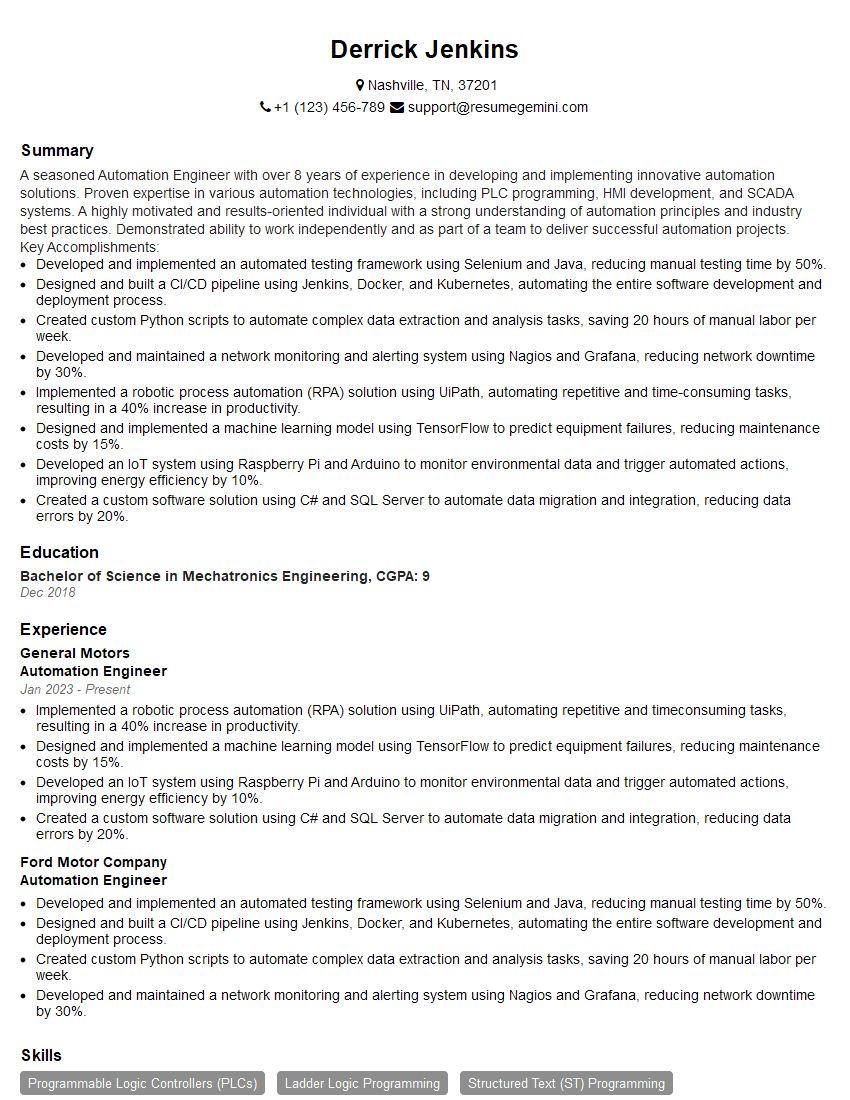
Automation Engineer Resume Sample
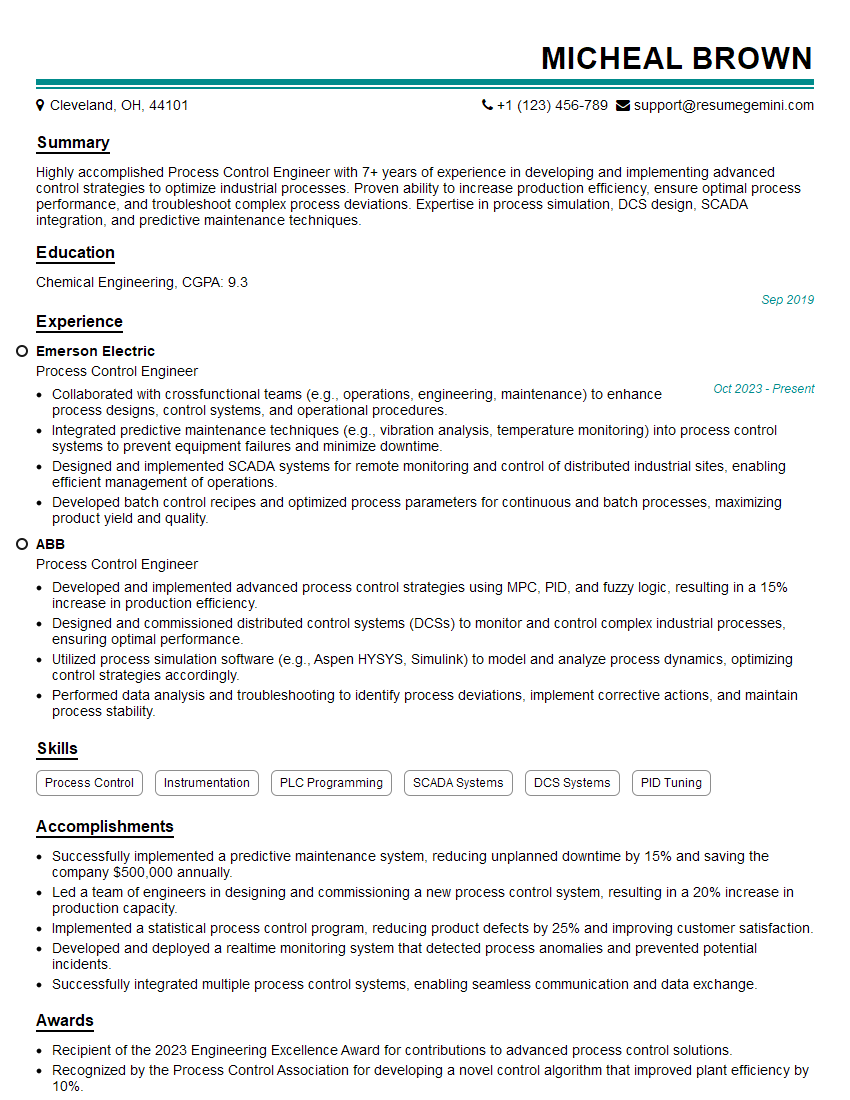
Process Control Engineer Resume Sample
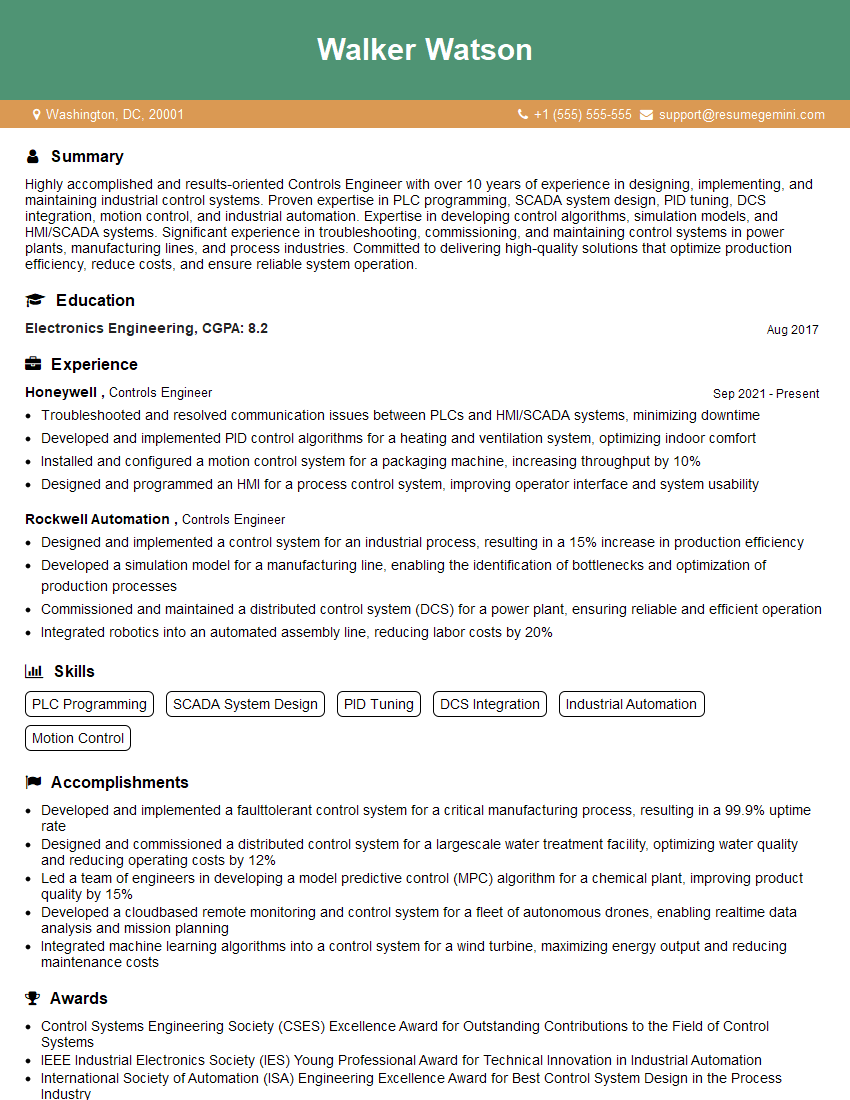
Controls Engineer Resume Sample
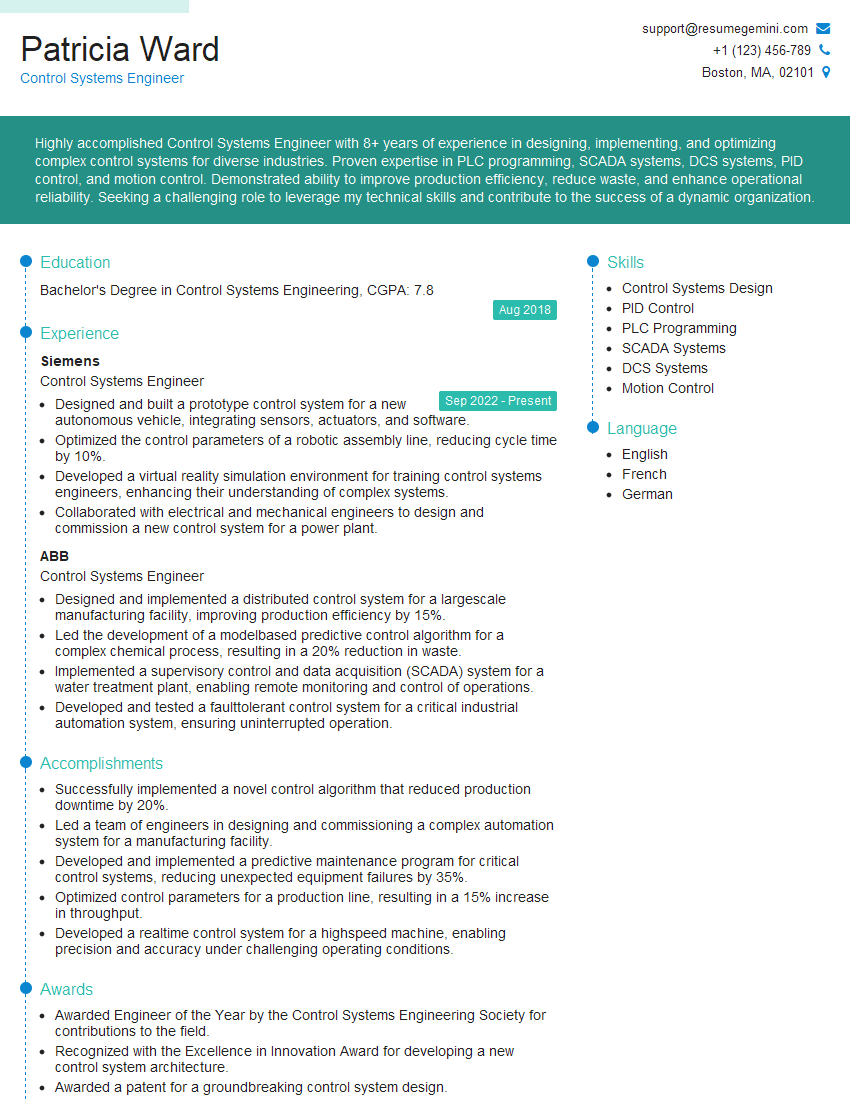
Control Systems Engineer Resume Sample
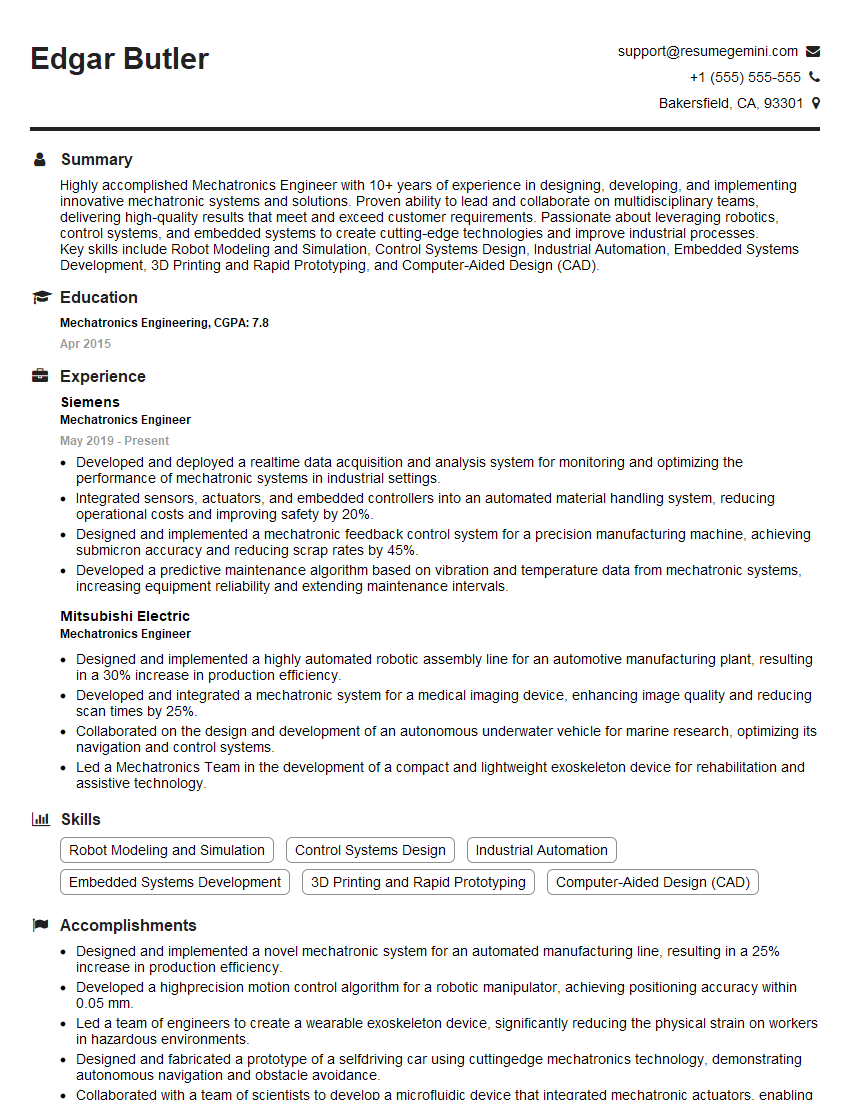
Mechatronics Engineer Resume Sample
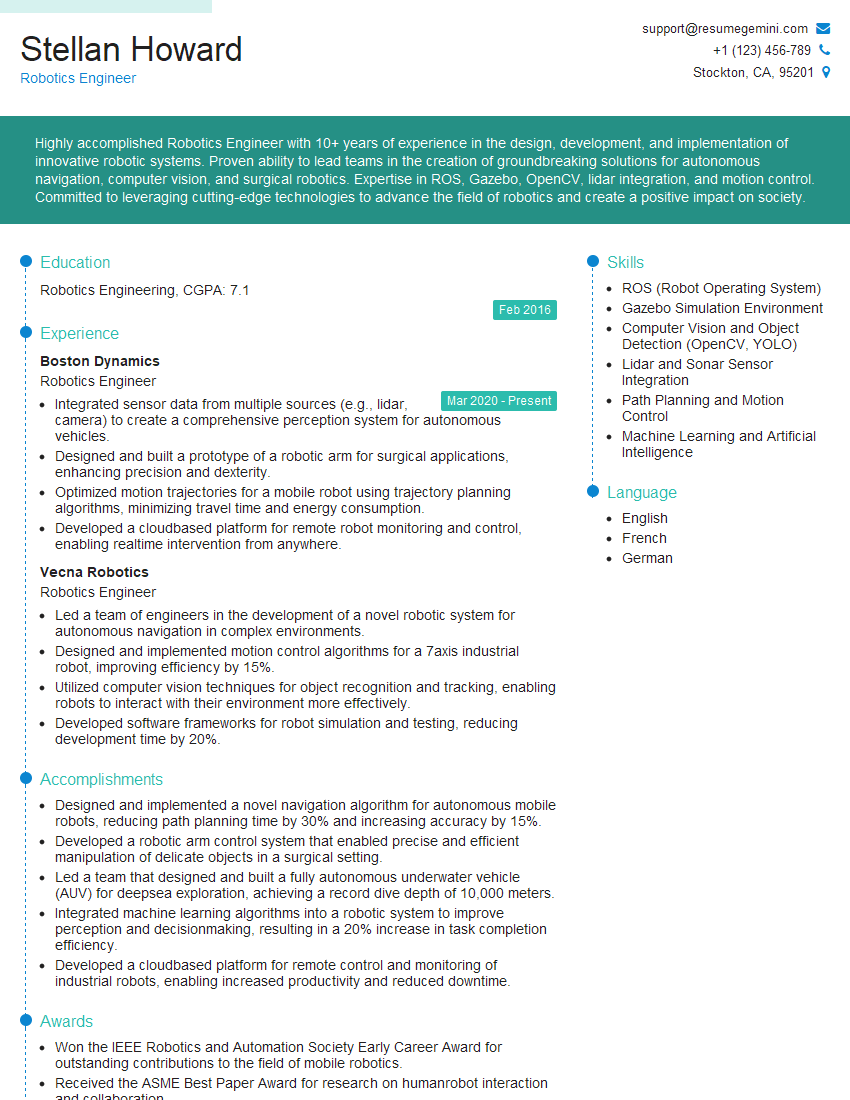
Robotics Engineer Resume Sample
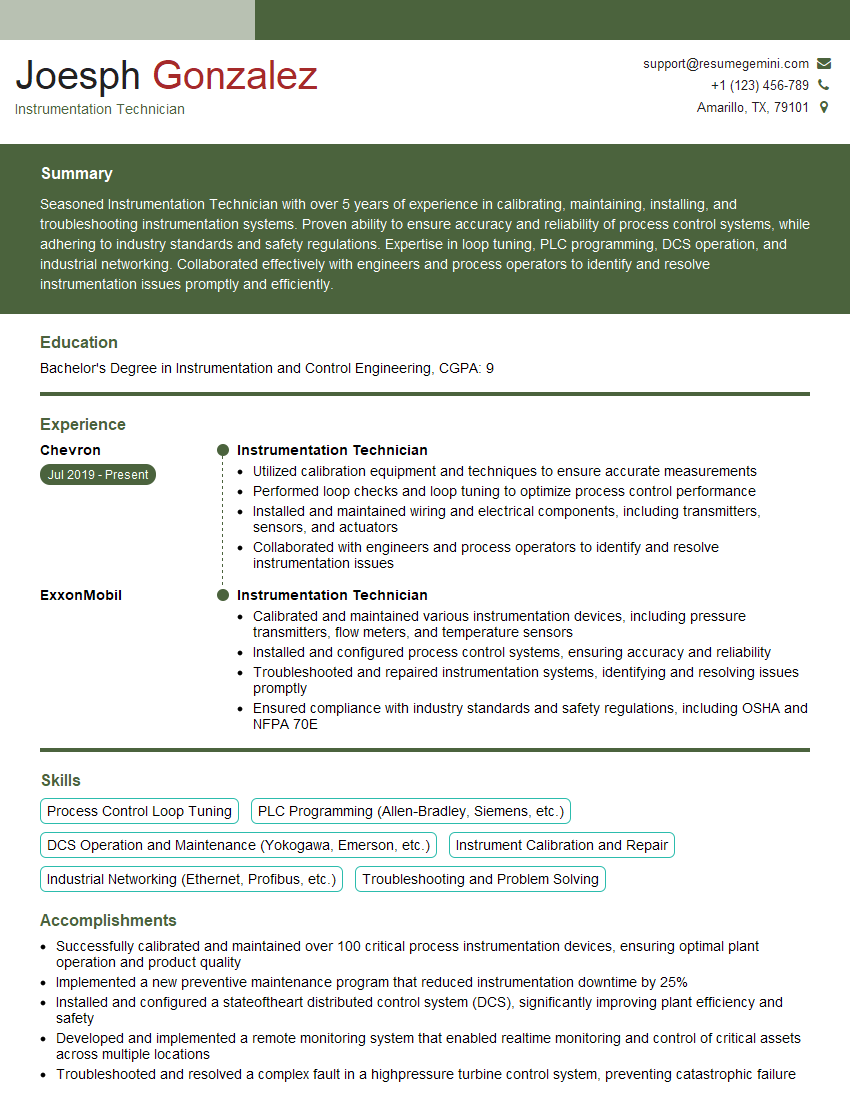
Instrumentation Technician Resume Sample
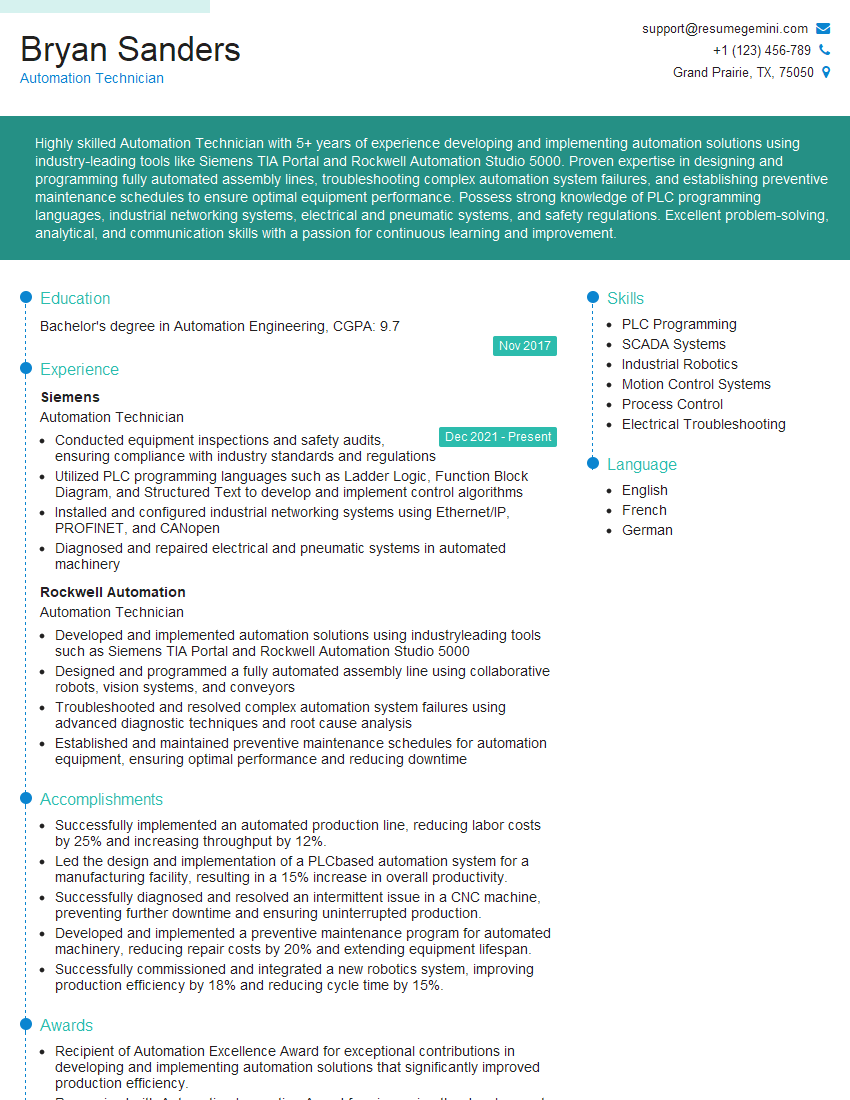
Automation Technician Resume Sample
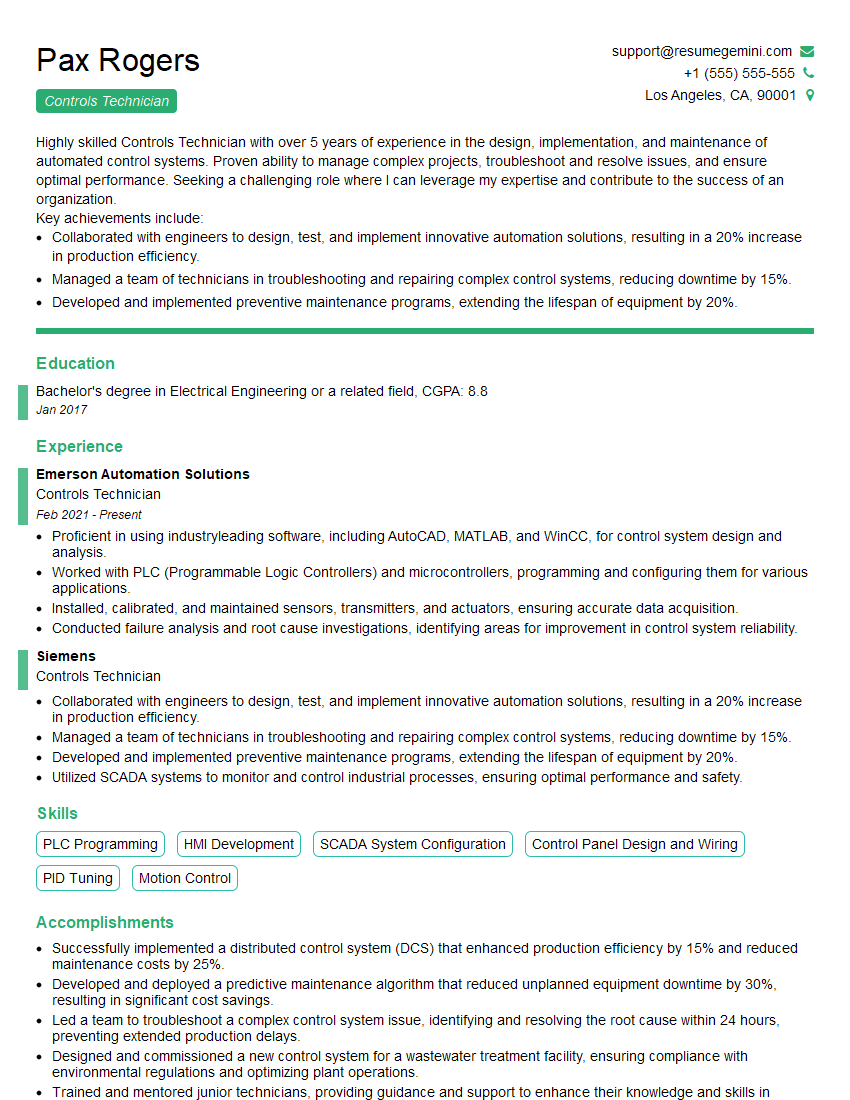
Controls Technician Resume Sample
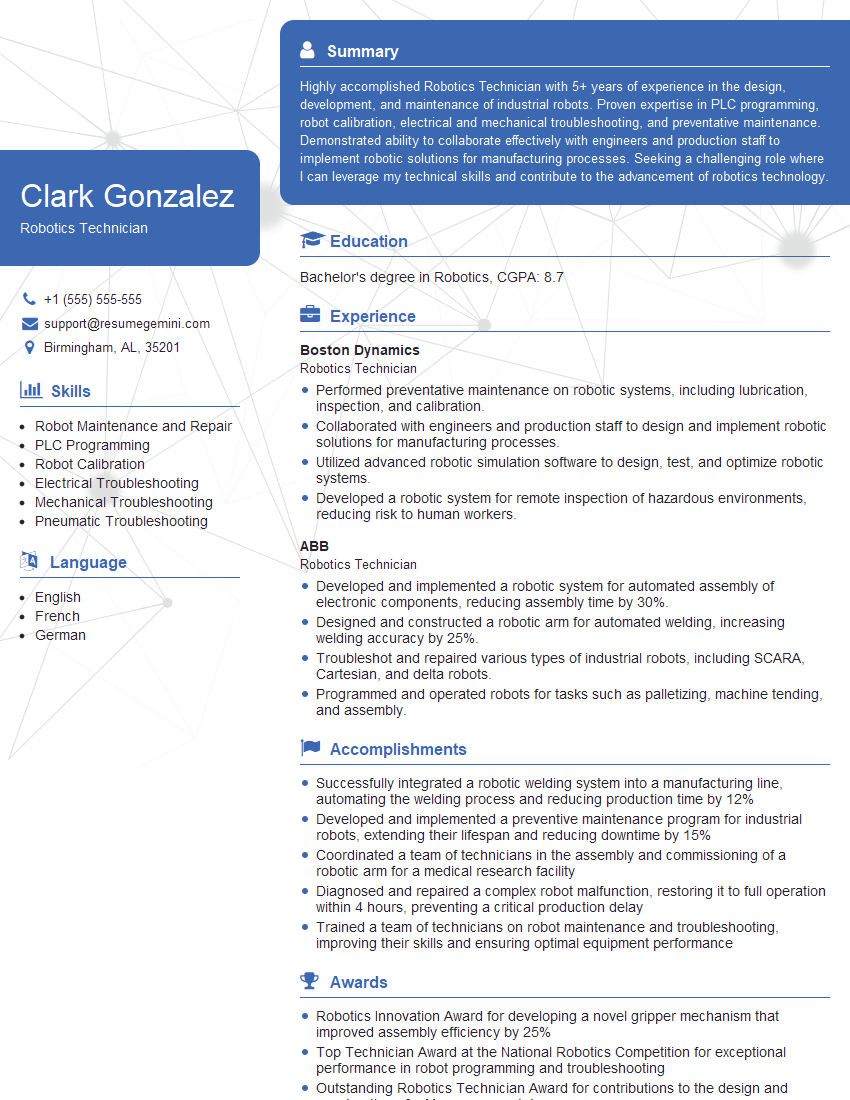
Robotics Technician Resume Sample
Explore more articles
Users Rating of Our Blogs
Share Your Experience
We value your feedback! Please rate our content and share your thoughts (optional).
What Readers Say About Our Blog
To the interviewgemini.com Webmaster.
Very helpful and content specific questions to help prepare me for my interview!
Thank you
To the interviewgemini.com Webmaster.
This was kind of a unique content I found around the specialized skills. Very helpful questions and good detailed answers.
Very Helpful blog, thank you Interviewgemini team.