Every successful interview starts with knowing what to expect. In this blog, we’ll take you through the top Curatorial Skills interview questions, breaking them down with expert tips to help you deliver impactful answers. Step into your next interview fully prepared and ready to succeed.
Questions Asked in Curatorial Skills Interview
Q 1. Describe your experience in artifact selection and acquisition.
Artifact selection and acquisition is a crucial aspect of curatorial work, demanding a keen eye for significance and a thorough understanding of the institution’s collection development policy. It’s not just about acquiring beautiful or rare objects; it’s about acquiring objects that tell a story, fill a gap in the collection, or enhance existing narratives. My approach involves a multi-stage process.
- Needs Assessment: I begin by identifying gaps in the collection, considering the institution’s mission and strategic goals. For example, if the museum focuses on 20th-century American art, I’d prioritize acquisitions that strengthen that area, perhaps seeking works by underrepresented artists or movements.
- Research and Identification: This involves scouring auction catalogs, private collections, and working with dealers and collectors to identify potential acquisitions. I carefully examine provenance (history of ownership) and authenticity, verifying information through scholarly research and consultation with experts.
- Due Diligence and Acquisition: Once a promising artifact is identified, I conduct thorough research to ensure its authenticity, ethical acquisition (no illicit trafficking), and proper condition assessment. This may involve commissioning condition reports from conservators. The acquisition process itself includes negotiations with sellers, securing funding, and ensuring legal compliance.
- Integration: Following acquisition, the artifact is carefully cataloged, documented, and integrated into the collection, potentially leading to further research and exhibition opportunities. For example, the acquisition of a previously unknown diary might spark a whole new research project and subsequent exhibition.
Q 2. Explain your approach to cataloging and documenting collections.
Cataloging and documenting collections is the backbone of museum work. It’s not just about listing items; it’s about creating a comprehensive, accessible record for researchers, conservators, and the public. My approach emphasizes accuracy, consistency, and the use of standardized protocols (such as those developed by the Museum Documentation Association). I typically use a combination of methods:
- Database Management: I utilize museum collection management software (e.g., TMS, PastPerfect) to input detailed information about each artifact, including its accession number, description, dimensions, materials, provenance, condition, and associated documentation (photos, research notes). The software allows for complex searches and reporting.
- Digital Imaging and Documentation: High-resolution images, detailed condition reports, and 3D scans are created and stored digitally. This enables comprehensive documentation and allows for virtual access to collections.
- Metadata Standards: I adhere to established metadata standards (like Dublin Core) to ensure data interoperability and searchability across different systems. This is crucial for sharing information with other institutions and researchers.
- Regular Updates: The catalog is a living document; I ensure regular updates to reflect new research, changes in condition, or other relevant information. For instance, a new discovery about an artifact’s creator would require an update to the catalog record.
Q 3. How do you manage diverse collections within limited resources?
Managing diverse collections with limited resources requires strategic prioritization and creative problem-solving. Think of it like managing a household budget – you need to be resourceful and allocate your funds effectively. Here’s my approach:
- Prioritization: I focus on preserving the most vulnerable items first, prioritizing those at risk of deterioration or loss. This involves a careful assessment of the collection’s condition and environmental risks.
- Collaboration: I actively seek partnerships with other institutions, conservators, and volunteers to share resources and expertise. Collaborative projects can leverage specialized knowledge and reduce costs.
- Digitization: Digitizing parts of the collection provides access to materials without requiring constant physical handling, extending the life of fragile objects and offering wider access.
- Deferred Maintenance: For items not immediately at risk, I develop a long-term preservation plan with clearly defined timelines and phased approaches, allowing for resource allocation over time. This prevents crisis management and allows for more efficient spending.
- Outreach and Fundraising: I actively pursue grant opportunities and engage with donors to secure additional funding for critical preservation efforts.
Q 4. Detail your experience in exhibition planning and design.
Exhibition planning and design is a collaborative process involving curatorial vision, design expertise, and educational goals. I approach it in a structured way:
- Theme Development: The first step is to define a compelling theme based on the collection and relevant contemporary issues. For example, an exhibition about the history of immigration might explore the themes of identity, resilience, and community.
- Object Selection and Narrative Development: Artifacts are selected to support the narrative, creating a cohesive and engaging visitor experience. The narrative is structured logically, with clear introductions, body, and conclusions.
- Design Collaboration: I work closely with exhibition designers to create a visually stunning and informative presentation, ensuring accessibility for diverse audiences (including those with disabilities).
- Interactive Elements: Incorporation of interactive elements, such as touchscreens, audio guides, or hands-on activities, can enhance engagement and learning.
- Educational Materials: I develop supplementary educational materials, like brochures, lesson plans, or website content, to provide a deeper understanding of the exhibition’s themes.
- Evaluation: Post-exhibition evaluation assesses its success based on visitor feedback and attendance data, informing future projects.
Q 5. What methods do you employ for researching and interpreting artifacts?
Research and interpretation are intertwined aspects of curatorial work. It’s about uncovering the stories hidden within artifacts and making them relevant to contemporary audiences. My approach is multi-faceted:
- Archival Research: I consult archives, libraries, and online databases to gather information about the artifacts’ creation, use, and context. This might involve examining historical documents, photographs, and maps.
- Object Analysis: I carefully examine the artifacts themselves, looking for clues about their materials, construction techniques, and use-wear. This can reveal insights into the lives and practices of the people who created and used them.
- Scientific Analysis: When necessary, I commission scientific analyses, such as radiocarbon dating or material analysis, to gain a more precise understanding of the artifact’s age or composition.
- Oral Histories: If relevant, I collect oral histories from individuals who have connections to the artifacts or the communities they represent. These personal narratives add depth and authenticity to the interpretation.
- Interpretative Writing: Finally, I craft interpretive texts, labels, and other materials to share my research findings with the public in an engaging and accessible way. The goal is not just to describe the artifacts, but to tell their stories and connect them to broader historical and cultural narratives.
Q 6. Describe your experience with grant writing and fundraising for exhibitions.
Grant writing and fundraising are essential skills for curators, as they enable us to secure funding for exhibitions and other projects. My approach involves a strategic and multi-step process:
- Identifying Funding Opportunities: I actively research potential funding sources, such as government grants, private foundations, and corporate sponsorships. This involves carefully reviewing grant guidelines and deadlines.
- Developing a Compelling Proposal: I craft a well-written grant proposal that clearly articulates the project’s goals, methodology, budget, and expected impact. The proposal should be persuasive and tailored to the specific interests of each funding agency.
- Building Relationships: I cultivate relationships with potential funders, attending networking events and maintaining regular communication. Building trust and rapport is crucial.
- Budget Development: I create a detailed and justified budget, demonstrating how funds will be used effectively and efficiently. This requires a thorough understanding of project costs and resource allocation.
- Reporting and Stewardship: Following the award, I diligently submit progress reports and final reports to the funders, demonstrating transparency and accountability.
Q 7. Explain your experience in managing budgets and timelines for projects.
Managing budgets and timelines for projects requires meticulous planning and ongoing monitoring. My approach involves:
- Detailed Budgeting: I develop a comprehensive budget that accounts for all anticipated costs, including personnel, materials, travel, and marketing. This involves working with the finance department and other stakeholders.
- Project Scheduling: I create a detailed project schedule with clearly defined milestones and deadlines. This might involve using project management software or Gantt charts.
- Regular Monitoring: I track progress regularly, comparing actual expenditures and timelines to the planned budget and schedule. This allows for early identification of potential problems and adjustments as needed.
- Risk Management: I identify potential risks and develop contingency plans to address them. For example, a backup plan might be needed in case of unforeseen delays or cost overruns.
- Communication: I maintain clear and consistent communication with all stakeholders, including staff, volunteers, and funders, keeping them informed of progress and any changes to the plan.
Q 8. How do you engage with diverse audiences through exhibitions and programs?
Engaging diverse audiences requires a multifaceted approach that moves beyond simply presenting artifacts. It’s about creating an inclusive and welcoming environment where everyone feels represented and can connect with the exhibition on their own terms.
- Accessibility: This includes providing translations, audio guides in multiple languages, tactile objects for visually impaired visitors, and wheelchair-accessible spaces. For example, in a recent exhibition on indigenous art, we incorporated audio descriptions narrated by members of the respective communities to foster authenticity and accessibility.
- Community Partnerships: Collaborating with community groups, schools, and local organizations allows us to tailor programs to specific audience needs and interests. We partnered with a local youth center to develop a series of workshops related to the exhibition’s themes, making the material relatable and engaging for a younger demographic.
- Interactive Experiences: Interactive elements such as touchscreens, hands-on activities, and participatory installations encourage active engagement and cater to diverse learning styles. For instance, a digital timeline allowed visitors to explore historical events relevant to the exhibited artifacts at their own pace.
- Diverse Storytelling: Presenting multiple perspectives and narratives avoids a singular, potentially exclusionary, viewpoint. We intentionally included stories from marginalized communities, ensuring their voices and perspectives were integral to the exhibition’s narrative.
By actively considering and addressing the needs of all audiences, we can transform a visit to a museum into a shared and enriching experience.
Q 9. Describe your approach to handling sensitive or controversial artifacts.
Handling sensitive or controversial artifacts requires careful consideration, ethical responsibility, and a commitment to transparency. The core principle is to approach such materials with respect and a deep understanding of their historical and cultural context.
- Contextualization: Presenting the artifacts within their historical context is crucial, acknowledging the complexities and potential harm associated with them. For example, when displaying objects related to colonialism, it’s vital to present multiple viewpoints – the colonizer’s narrative alongside the experiences and perspectives of the colonized.
- Trigger Warnings and Content Advisories: Where appropriate, trigger warnings or content advisories can prepare visitors for potentially upsetting or graphic content, allowing them to make informed choices about their engagement.
- Community Consultation: Engaging with relevant communities, especially those whose history or culture the artifacts represent, is paramount. Their input is vital in determining the most appropriate and respectful way to present these objects and avoid causing further harm or offense.
- Scholarly Research: Robust research is needed to understand the artifact’s provenance, history, and significance. This research informs the curatorial approach and ensures accuracy and context.
The goal is not to shy away from difficult histories but to engage with them responsibly, fostering critical dialogue and promoting understanding.
Q 10. Explain your familiarity with conservation ethics and procedures.
Conservation ethics and procedures are fundamental to my curatorial practice. They guide my decisions to ensure the long-term preservation of artifacts for future generations. This involves understanding the principles of minimal intervention, reversibility, and the importance of documentation.
- Minimal Intervention: This principle emphasizes only undertaking necessary conservation actions. Any intervention must be justified and documented meticulously. We only proceed if the potential benefits outweigh the risks.
- Reversibility: Conservation treatments should be reversible, allowing future conservators to adjust or undo past interventions if needed. This means using materials and techniques that do not permanently alter the artifact.
- Documentation: Every conservation action, no matter how small, needs thorough documentation – including photographs, detailed treatment reports, and material analysis. This record is crucial for tracking the artifact’s history and informing future care.
- Environmental Control: Maintaining stable environmental conditions (temperature, humidity, light) is critical for preventing deterioration. Proper storage and display environments are essential to minimizing damage.
Ethical conservation prioritizes the long-term well-being of the artifact, aligning with the broader responsibility of museums to safeguard cultural heritage.
Q 11. How do you manage conflicting priorities within a curatorial team?
Managing conflicting priorities within a curatorial team often involves effective communication, negotiation, and a collaborative problem-solving approach.
- Clear Communication: Regular team meetings and open dialogue are essential for identifying and addressing potential conflicts early on. Everyone needs a clear understanding of project goals, deadlines, and individual responsibilities.
- Prioritization Framework: Establishing a framework for prioritizing tasks based on factors such as urgency, importance, and resource availability is vital. This could involve a weighted scoring system or a collaborative prioritization matrix.
- Negotiation and Compromise: Finding common ground often requires negotiation and compromise. This might involve adjusting timelines, re-allocating resources, or making difficult decisions about which aspects of a project to prioritize.
- Conflict Resolution Strategies: Training in conflict resolution techniques can equip the team to address disagreements constructively and find mutually agreeable solutions.
Ultimately, effective leadership and team cohesion are crucial for navigating conflicting priorities and achieving shared goals.
Q 12. Describe a successful exhibition you curated, highlighting challenges and solutions.
One successful exhibition I curated was “Threads of Time: Textiles from the Silk Road.” It explored the cultural exchange and artistic innovation along the ancient trade route.
- Challenge 1: Fragile Artifacts: Many of the textiles were incredibly delicate and required specialized handling and display techniques. We worked closely with conservators to develop custom mounts and environmental controls to minimize risk.
- Solution 1: Collaboration with Conservators: Close collaboration with the conservation team ensured the safe handling and display of the textiles, using specialized materials and environmental controls.
- Challenge 2: Diverse Cultural Contexts: The exhibition included textiles from numerous cultures and time periods, requiring careful contextualization to avoid misrepresentation or oversimplification.
- Solution 2: Multi-layered Narrative: We used multiple interpretive strategies – labels, wall texts, interactive displays, and an accompanying catalog – to present the diverse cultural contexts and avoid imposing a single narrative.
- Challenge 3: Limited Funding: Securing sufficient funding was a challenge, particularly for the development of interactive displays and educational programs.
- Solution 3: Grant Writing and Fundraising: We secured funding through various grant applications and partnerships with private donors, ensuring the exhibition could achieve its full potential.
The exhibition received positive reviews and high visitor attendance, demonstrating the success of our collaborative approach to overcoming challenges.
Q 13. How do you assess the authenticity and provenance of artifacts?
Assessing the authenticity and provenance of artifacts is a critical aspect of curatorial work, requiring a multi-pronged approach combining scientific analysis, historical research, and stylistic expertise.
- Scientific Analysis: Techniques such as radiocarbon dating, X-ray fluorescence, and microscopic examination help determine the age and materials used in creating the artifact. For instance, carbon dating can verify the age of organic materials within an object.
- Historical Research: Examining historical records, such as inventories, sale catalogs, and archival documents, can trace the artifact’s ownership and movement through time. This can help establish a chain of custody.
- Stylistic Analysis: Comparing the artifact to other known objects of similar style, age, and origin can help determine its authenticity. Expert knowledge in the specific artistic tradition is essential here.
- Provenance Research: This involves tracing the ownership and history of the object from its creation to its present location. It requires meticulous research and often involves examining historical documents and interviewing previous owners.
Through a combination of these methods, we can build a strong case for or against an artifact’s authenticity and establish its provenance with reasonable certainty. This process demands rigor, objectivity, and a nuanced understanding of the historical context.
Q 14. Explain your experience with digital archiving and collection management systems.
I have extensive experience with digital archiving and collection management systems, utilizing them to improve access, preservation, and research capabilities.
- Database Management: I am proficient in using various collection management systems (CMS), such as PastPerfect or The Museum System, to catalog, document, and manage large collections of artifacts. This includes inputting detailed records, managing digital images, and generating reports.
- Digital Archiving: I am familiar with best practices for digitizing artifacts and creating high-resolution images, along with metadata schemas (like Dublin Core) to ensure their discoverability and accessibility. We use standardized file formats to ensure long-term preservation.
- Data Security and Backup: I understand the importance of data security and backup procedures to protect digital assets from loss or damage. This includes regular backups, data encryption, and access control measures.
- Online Catalogs and Databases: I have experience creating and managing online catalogs and databases, making collections accessible to researchers and the public through websites and online platforms.
My experience with digital tools has greatly enhanced my ability to manage and preserve collections effectively, while also increasing public access to invaluable cultural heritage. I see these technologies as crucial for the future of museums and cultural institutions.
Q 15. How do you incorporate accessibility considerations into exhibition design?
Incorporating accessibility into exhibition design is crucial for ensuring that all visitors, regardless of their abilities, can fully engage with the exhibition. It’s about creating a welcoming and inclusive environment.
Sensory Considerations: We need to think about varied learning styles and sensory sensitivities. This means providing alternative text for images (for visually impaired visitors), audio descriptions for exhibits, and tactile elements for the visually impaired and those with cognitive differences. For example, a replica of a significant artifact with raised textures could allow a blind visitor to experience its form.
Physical Accessibility: This includes ensuring wheelchair accessibility with ramps, wide doorways, and appropriate signage. Clear and uncluttered pathways are essential, as are appropriately sized and placed seating areas for rest.
Cognitive Accessibility: This aspect focuses on clarity and simplicity. We use clear, concise labeling and avoid overwhelming visitors with too much information at once. Chunking information, using simple language, and incorporating visual aids can greatly improve understanding for visitors with cognitive disabilities.
Technological Accessibility: Interactive exhibits should be designed with screen readers and keyboard navigation in mind. Captions and transcripts for videos are essential, and alternative formats (like large-print guides) should be available.
For instance, in a recent exhibition on ancient pottery, we provided tactile replicas for blind visitors, audio guides with detailed descriptions, and large-print information sheets. The positive feedback we received highlighted the importance of these considerations.
Career Expert Tips:
- Ace those interviews! Prepare effectively by reviewing the Top 50 Most Common Interview Questions on ResumeGemini.
- Navigate your job search with confidence! Explore a wide range of Career Tips on ResumeGemini. Learn about common challenges and recommendations to overcome them.
- Craft the perfect resume! Master the Art of Resume Writing with ResumeGemini’s guide. Showcase your unique qualifications and achievements effectively.
- Don’t miss out on holiday savings! Build your dream resume with ResumeGemini’s ATS optimized templates.
Q 16. Describe your experience with public speaking and presentations related to exhibitions.
Public speaking is a vital part of my role. I’ve presented at conferences, museum events, and donor gatherings. My presentations are always tailored to the audience. I focus on storytelling, bringing the exhibits and collections to life.
For example, at a recent conference on 19th-century American art, I presented a paper on the innovative conservation techniques used to restore a particular painting. I used high-quality images, engaging anecdotes about the artist, and interactive elements like polls to maintain audience interest. The positive reception to this presentation demonstrated the effectiveness of this approach.
I ensure that all my presentations are well-researched, visually appealing, and accessible, just like the exhibitions themselves. I frequently incorporate multimedia elements and aim for a conversational tone to promote engagement and discussion. I also incorporate Q&A sessions to foster interaction and address audience questions and concerns directly.
Q 17. What strategies do you use to build relationships with donors and collectors?
Building strong relationships with donors and collectors is crucial for securing funding and expanding collections. I believe in a multi-faceted approach.
Personalized Communication: I prioritize personalized communication, understanding their interests and philanthropic goals. Regular updates about the museum’s activities and the impact of their contributions are vital.
Transparency and Trust: Open and honest communication about how donations are used fosters trust and strengthens relationships. I regularly share progress reports and highlight successes directly with donors.
Exclusive Events and Access: Organizing exclusive preview events, behind-the-scenes tours, and opportunities to meet artists or researchers provides donors with a unique experience and builds a deeper connection to the museum.
Cultivating a Community: Fostering a sense of community among donors through networking events and newsletters strengthens their ties to the institution and each other.
For example, one of our major donors, an avid art collector, was particularly interested in our upcoming exhibition on Impressionist paintings. By organizing a private viewing for her and her friends, we not only strengthened our relationship but also secured additional funding for the exhibition. This bespoke approach is fundamental to building lasting relationships.
Q 18. How do you measure the success of an exhibition or collection display?
Measuring the success of an exhibition involves both quantitative and qualitative methods.
Quantitative Data: This includes visitor numbers (attendance figures), sales of exhibition catalogues or merchandise, website traffic related to the exhibition, and social media engagement (likes, shares, comments).
Qualitative Data: This is collected through visitor surveys, feedback forms, focus groups, and reviews. This provides insights into visitor satisfaction, learning outcomes, and overall impact.
Beyond numbers, we look at the exhibition’s overall impact. Did it achieve its educational goals? Did it inspire further research or community engagement? Did it contribute to the institution’s mission? These broader questions are just as important as attendance figures. For a recent exhibition on local history, we conducted exit interviews, analyzed social media posts, and measured attendance to understand its impact on the community’s knowledge and understanding of the region’s past. The data collected showed high visitor satisfaction, positive feedback on the educational value, and a significant increase in local history-related inquiries. This provided a comprehensive picture of success.
Q 19. Explain your experience with legal issues related to artifact ownership and repatriation.
I have extensive experience navigating the legal complexities of artifact ownership and repatriation. This involves a thorough understanding of international and national laws, ethical guidelines, and cultural sensitivities.
Due Diligence: Before acquiring any artifact, we conduct comprehensive due diligence, verifying provenance (history of ownership) and ensuring the acquisition is legal and ethical. This often involves collaborating with legal experts specializing in cultural heritage law.
Repatriation Processes: I have been involved in several repatriation cases, working closely with source communities, governments, and legal counsel to facilitate the return of artifacts to their rightful owners. This requires careful negotiation, diplomacy, and respect for cultural heritage.
Documentation and Record-Keeping: Meticulous documentation of acquisition and provenance is essential for transparency and legal compliance. This includes maintaining detailed records, photographs, and any related correspondence.
For example, we recently assisted in the repatriation of a collection of indigenous artifacts. The process involved working with the relevant government agencies, community representatives, and legal experts to ensure the artifacts’ safe and respectful return to their country of origin. The success of this complex undertaking required careful planning, detailed documentation, and transparent communication with all stakeholders.
Q 20. How do you maintain the preservation and security of artifacts in your care?
Preservation and security are paramount. We employ a multi-layered approach combining environmental controls, security systems, and best practices for handling artifacts.
Environmental Controls: Maintaining stable temperature, humidity, and light levels is crucial to prevent deterioration. We use climate-controlled storage facilities and display cases.
Security Systems: We utilize advanced security systems, including alarms, surveillance cameras, and restricted access to storage areas and exhibition spaces. This protects artifacts from theft and damage.
Best Practices: Our staff receives comprehensive training on safe handling, storage, and display of artifacts. This includes proper techniques for moving, cleaning, and inspecting objects to minimize risk of damage.
Regular Inspections and Maintenance: Regular inspections and preventive maintenance of equipment and storage areas are essential to identify and address potential issues promptly. This involves monitoring environmental conditions, security systems, and the condition of artifacts themselves.
For instance, our museum recently upgraded its climate-control system and implemented a new inventory management system with enhanced security features. These improvements further protect our valuable collection from environmental damage and theft. All these measures are integral to the long-term preservation and security of our artifacts.
Q 21. Describe your experience working with researchers and scholars.
Collaboration with researchers and scholars is a core aspect of my work. It enriches exhibitions and contributes to broader scholarly understanding.
Facilitating Access: I work to facilitate access to the collection for researchers, providing appropriate resources and support to ensure their research is successful. This often involves organizing access to storage areas, providing relevant documentation and archival materials, and facilitating communication with other experts.
Joint Projects and Exhibitions: I collaborate on joint projects, exhibitions, and publications, incorporating scholarly findings into our programs and making research accessible to wider audiences. This ensures that our exhibitions are informed by the latest scholarly insights.
Communication and Feedback: I maintain open communication with researchers, providing feedback on their proposals and findings and incorporating their expertise into exhibition design and interpretation. This collaborative approach enriches both research and exhibition development.
For example, during the development of an exhibition on medieval manuscripts, I collaborated closely with a team of historians and paleographers. Their expertise helped to shape the exhibition’s narrative and ensure that the materials were presented accurately and contextually. This collaboration ensured a far richer and more informed exhibition.
Q 22. How do you balance the needs of preservation with the needs of public access?
Balancing preservation and public access is a core challenge in curatorial work. It’s like finding the sweet spot between protecting a delicate antique and allowing people to appreciate its beauty. We achieve this through careful planning and implementation of several strategies.
- Controlled Access: Limiting the number of visitors at a time, implementing timed entry systems, or using protective barriers around particularly fragile artifacts minimizes handling and wear. For example, in a museum showcasing ancient textiles, we might rotate displays, allowing some pieces to rest while others are exhibited.
- Environmental Control: Maintaining stable temperature, humidity, and light levels within exhibition spaces is crucial. This prevents deterioration due to environmental factors. Think of it like creating a climate-controlled environment for a rare orchid – the right conditions are vital for its survival.
- High-Quality Reproductions: Offering high-quality reproductions, virtual tours, or digital catalogs allows broader public access without compromising the originals. This approach lets more people experience the collection while minimizing the risk to the original objects.
- Educational Programs: Developing engaging educational programs helps the public connect with the collection without necessarily needing direct physical interaction with every item. Workshops, guided tours, and online resources can provide in-depth information.
The key is careful risk assessment and a proactive approach. We need to anticipate potential damage and create strategies to mitigate it.
Q 23. Explain your approach to ethical curatorial practices.
Ethical curatorial practices are paramount. They guide us in making decisions that respect the objects, their creators, and the communities they represent. My approach centers on:
- Provenance Research: Thoroughly investigating the history and ownership of objects is vital. Understanding their origin helps ensure their authenticity and ethical acquisition. I always consult databases and expert opinions to verify the history of each piece.
- Repatriation: I believe in the importance of returning culturally significant artifacts to their communities of origin whenever appropriate and possible. This involves a sensitive dialogue with indigenous groups and governments to understand their needs and desires.
- Cultural Sensitivity: Representing cultures accurately and respectfully is crucial. I avoid perpetuating stereotypes and collaborate with community members to ensure that objects are displayed within a meaningful and nuanced context. This often means creating multilingual labels or partnering with cultural organizations.
- Transparency: Openly disclosing the acquisition history and any potential ethical challenges associated with an object builds trust and accountability.
- Accessibility: Ensuring the collection is accessible to diverse audiences and individuals with disabilities is also a core tenet of my approach. We strive to offer diverse materials and programing.
Ethical considerations guide every decision, from acquisition to display and interpretation.
Q 24. Describe your experience with marketing and publicity for exhibitions.
My experience in marketing and publicity for exhibitions involves a multi-pronged approach that combines traditional and digital strategies to reach a wide audience.
- Press Releases and Media Outreach: Crafting compelling press releases and building relationships with relevant journalists and media outlets ensures media coverage. I’ve successfully secured features in major newspapers, magazines, and online publications.
- Social Media Marketing: Utilizing social media platforms (Instagram, Facebook, Twitter, etc.) to create engaging content, run targeted advertising campaigns, and interact with potential visitors. I’ve utilized relevant hashtags and visuals to build excitement.
- Website and Online Promotion: Developing an engaging website with high-quality images, video content, and event information. I also incorporate SEO strategies to improve online visibility.
- Public Relations: Collaborating with community organizations and influencers to expand reach and build excitement. This includes hosting previews and talks.
- Print and Digital Marketing: Designing eye-catching posters, brochures, and other promotional materials, as well as collaborating on email marketing campaigns.
Success in this area depends on understanding the target audience and crafting a message that resonates with them.
Q 25. How do you adapt your curatorial approach for different types of audiences?
Adapting my curatorial approach for different audiences is vital. It’s like tailoring a story to resonate with different age groups – you need to use different language and approaches.
- Child-Friendly Exhibits: Interactive elements, hands-on activities, and age-appropriate language are crucial for engaging younger visitors. This might include creating a scavenger hunt or utilizing touch screens.
- Adult-Focused Exhibits: More in-depth scholarly content, sophisticated design, and opportunities for critical engagement are important for adults. This includes well-researched labels and the possibility of lectures or debates.
- Accessibility for Diverse Needs: Considering the needs of visitors with disabilities through accessible designs, audio guides, tactile objects, and large print materials. Providing translations in multiple languages expands access further.
- Community Engagement: Collaborating with community organizations to create exhibitions that reflect the perspectives and experiences of diverse groups. This could involve providing space for local artists or community leaders.
Understanding the background, interests, and needs of each audience is key to creating engaging and impactful exhibitions.
Q 26. Describe your experience with developing educational programs related to collections.
Developing educational programs related to collections requires creativity and a deep understanding of the material. It’s about making the collection come alive for learners of all ages.
- Workshops and Classes: Designing hands-on workshops, lectures, and classes tailored to specific age groups and learning styles. These might range from art-making sessions inspired by historical techniques to in-depth discussions about the cultural significance of certain objects.
- Guided Tours: Creating engaging and informative guided tours that cater to different interests and levels of knowledge. I often tailor these to educational groups based on learning objectives.
- Public Lectures and Presentations: Organizing public lectures and presentations by experts in the field, offering in-depth analyses of objects, collections, and their cultural relevance.
- Digital Resources: Developing online resources, including virtual tours, interactive timelines, and educational videos, to broaden reach and enhance accessibility. This extends the reach of our educational materials and offers flexibility to users.
- Teacher Resources: Providing teachers with comprehensive educational resources, including lesson plans, activity guides, and background information, to integrate the collection into their curriculum. This approach leverages existing educational structures.
The goal is to inspire learning and foster a deeper appreciation of the collection’s significance.
Q 27. What are your strategies for managing risks associated with handling artifacts?
Managing risks associated with handling artifacts requires a meticulous and proactive approach. It’s about anticipating potential hazards and minimizing their impact.
- Risk Assessment: Conducting a thorough risk assessment for each artifact, considering factors like fragility, material composition, and environmental vulnerabilities. This involves documenting each artifact’s specific needs.
- Environmental Controls: Maintaining appropriate environmental conditions (temperature, humidity, light levels) to prevent deterioration and damage. This ensures that the environment doesn’t compromise the integrity of the collection.
- Proper Handling Procedures: Establishing and enforcing strict handling procedures, including the use of appropriate gloves, tools, and support structures. Staff training is a crucial element here.
- Security Measures: Implementing robust security measures, including alarm systems, surveillance cameras, and controlled access to prevent theft, vandalism, or accidental damage. This is crucial to protect valuable and fragile items.
- Disaster Preparedness: Developing and regularly practicing disaster preparedness plans to mitigate the risks associated with natural disasters, fire, or other emergencies. This involves detailed plans for evacuating and protecting the collection.
- Regular Inspections and Maintenance: Conducting regular inspections and maintenance of artifacts and storage facilities to identify and address potential problems early on. Proactive monitoring is key to preventing minor issues from becoming major problems.
Prevention is always better than cure. A proactive approach to risk management ensures the long-term preservation of the collection.
Q 28. Explain your understanding of contemporary curatorial theory and practice.
Contemporary curatorial theory and practice have evolved significantly, moving beyond the traditional model of simply presenting objects in a chronological or thematic order. It’s now about creating engaging and thought-provoking narratives that invite critical dialogue.
- Postcolonial and Decolonizing Approaches: Challenging traditional power structures and colonial narratives by centering marginalized voices and perspectives in the exhibition design and interpretation. This involves a conscious effort to undo the colonial gaze.
- Participatory and Collaborative Curating: Involving communities and stakeholders in the creation and interpretation of exhibitions, fostering a sense of ownership and shared responsibility. This can enhance the meaning and authenticity of the exhibition.
- Social and Relational Aesthetics: Focusing on the social interactions and relationships that are generated by the exhibition, viewing art as a social practice rather than a static object. This emphasizes community engagement and experience.
- Digital and New Media Curating: Embracing digital technologies to expand access, enhance engagement, and create new forms of curatorial practice. This might include creating virtual exhibitions or utilizing interactive technologies.
- Critical Theory and Discourse: Utilizing critical theory to frame and interpret exhibitions, fostering critical discussion and challenging assumptions. This encourages viewers to engage with complex social or political ideas.
Contemporary curatorial practice is dynamic and responsive to the evolving social, political, and technological landscape. It’s about creating meaningful experiences that resonate with diverse audiences.
Key Topics to Learn for Curatorial Skills Interview
- Collection Management: Understanding principles of acquisition, cataloging, preservation, and deaccessioning. Practical application: Discuss experience with database management systems and conservation ethics.
- Exhibition Development: Conceptualizing, planning, and executing exhibitions from initial idea to installation. Practical application: Describe your approach to thematic development, object selection, and visitor engagement.
- Research & Interpretation: Conducting thorough research on objects, artists, and historical contexts; crafting compelling narratives for exhibition labels and educational materials. Practical application: Showcase examples of your research skills and ability to translate complex information for diverse audiences.
- Grant Writing & Fundraising: Securing funding for exhibitions, acquisitions, and preservation projects. Practical application: Describe your experience with proposal writing, budget management, and donor cultivation.
- Collaboration & Communication: Working effectively with artists, conservators, educators, and other stakeholders. Practical application: Highlight your teamwork skills and ability to communicate complex ideas clearly and persuasively.
- Public Engagement & Outreach: Developing and implementing strategies to engage diverse audiences with collections and exhibitions. Practical application: Share examples of successful public programs or outreach initiatives you’ve been involved in.
- Digital Curatorial Practices: Utilizing digital technologies for collection management, exhibition presentation, and audience engagement. Practical application: Discuss your experience with digital asset management systems, online exhibitions, or social media strategies.
Next Steps
Mastering curatorial skills is essential for career advancement in the museum and art world, opening doors to exciting opportunities and leadership roles. A strong, ATS-friendly resume is crucial for showcasing your expertise and securing interviews. To maximize your job prospects, we strongly encourage you to utilize ResumeGemini to build a professional and impactful resume that highlights your unique skills and experience. ResumeGemini offers examples of resumes tailored to curatorial skills, providing a valuable template for creating your own compelling application materials.
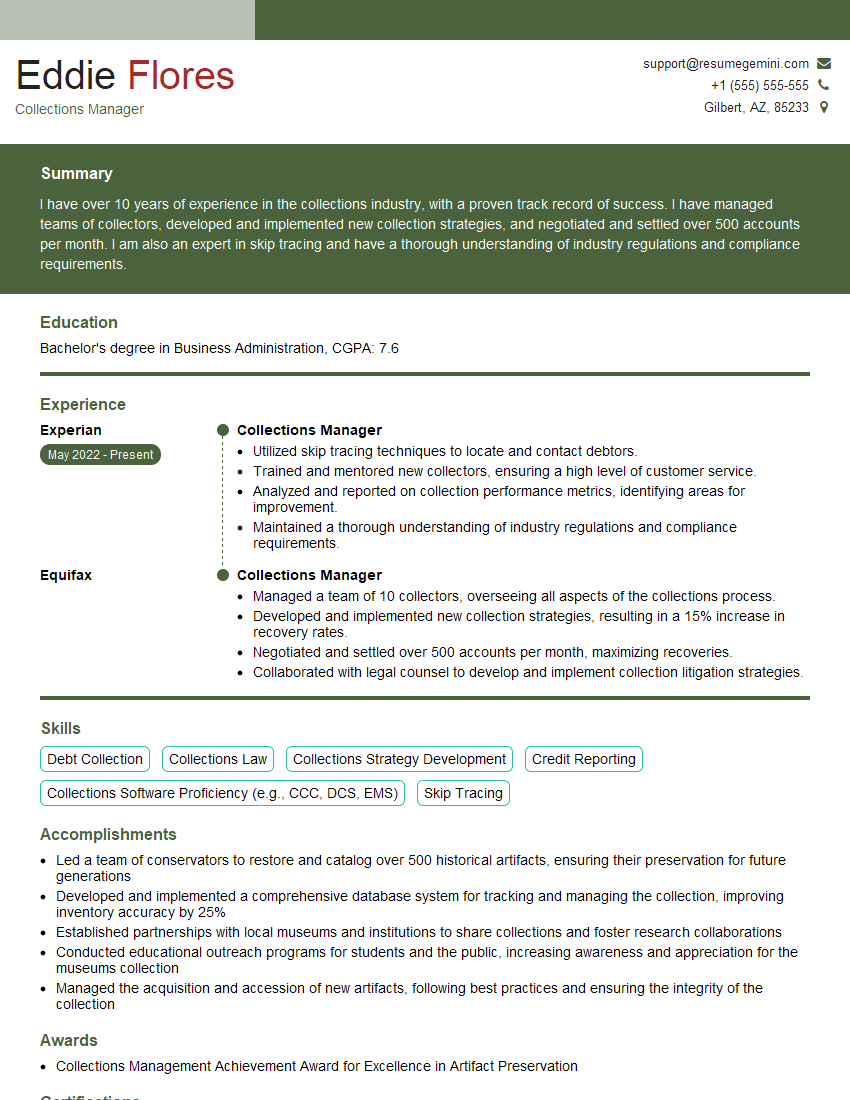
Collections Manager Resume Sample
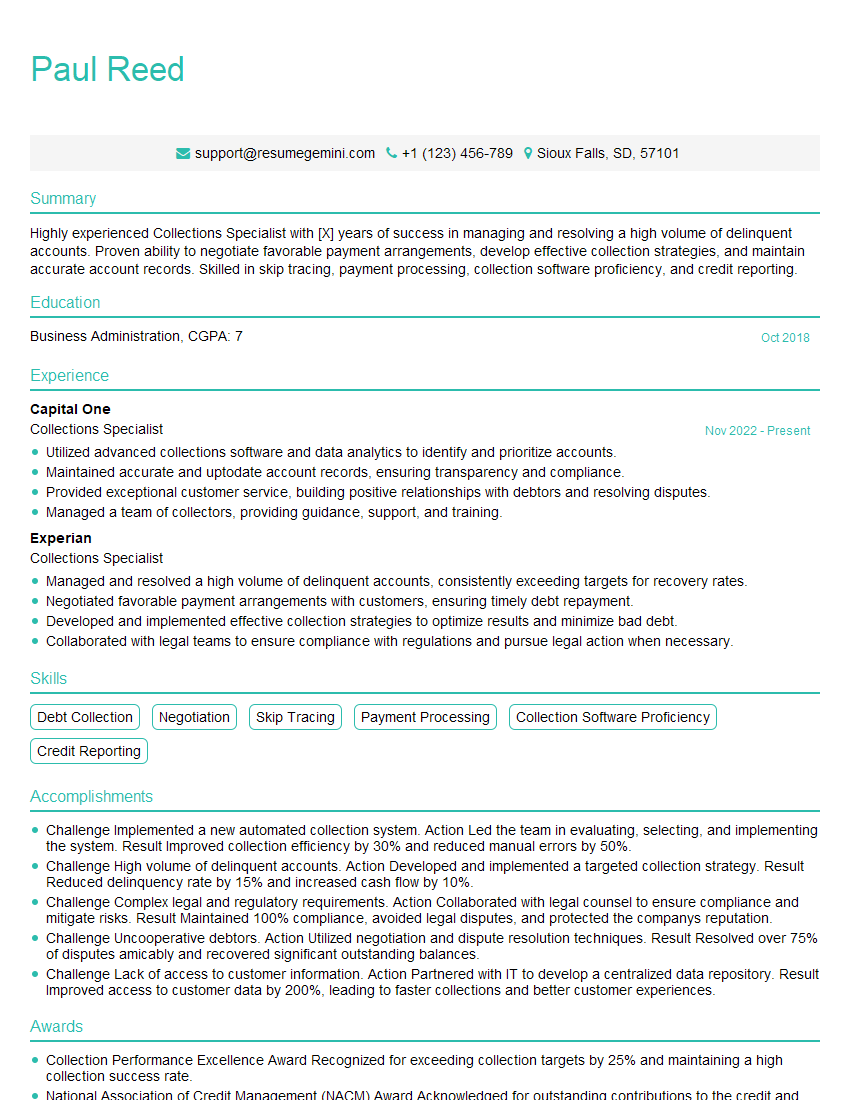
Collections Specialist Resume Sample
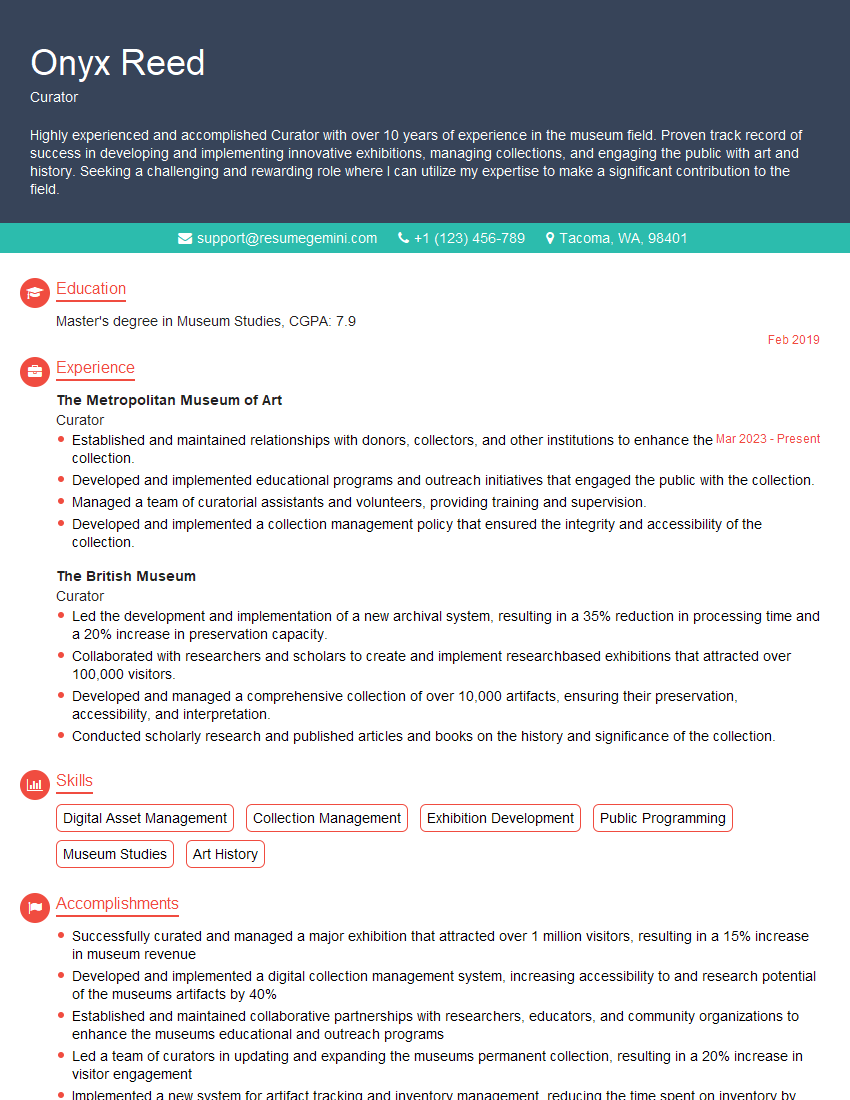
Curator Resume Sample
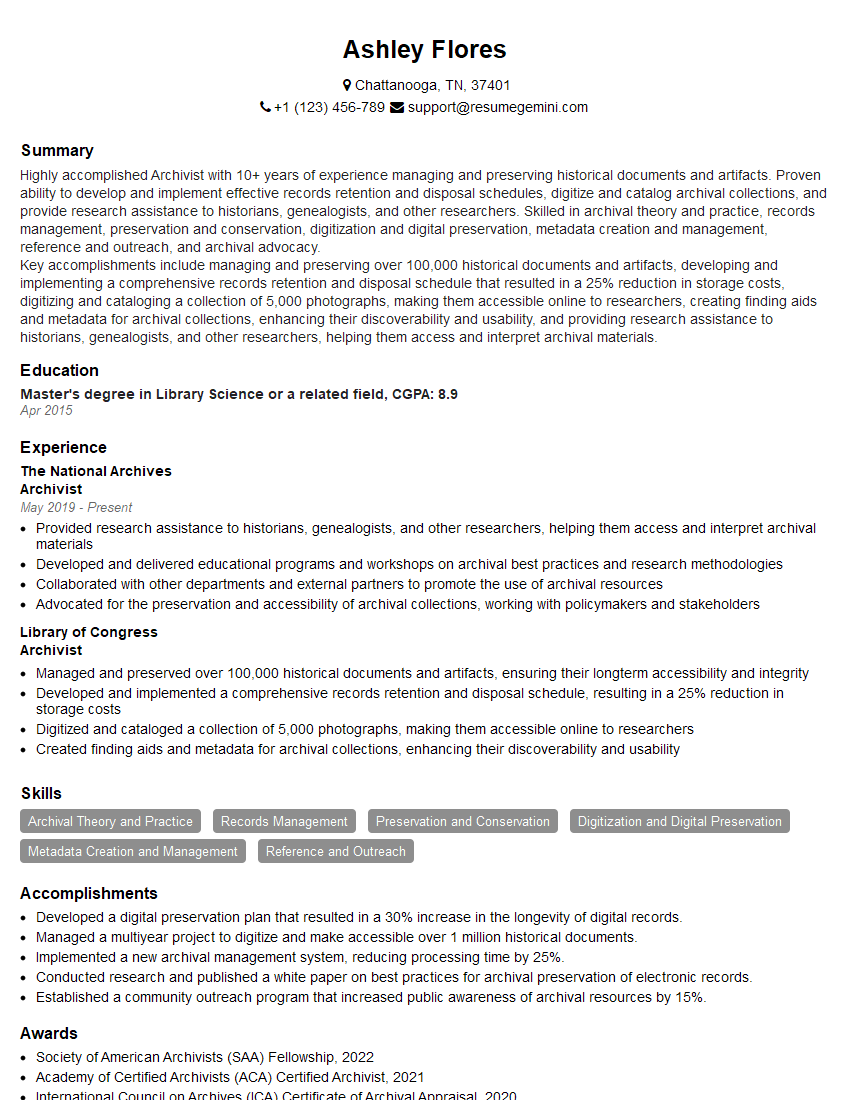
Archivist Resume Sample
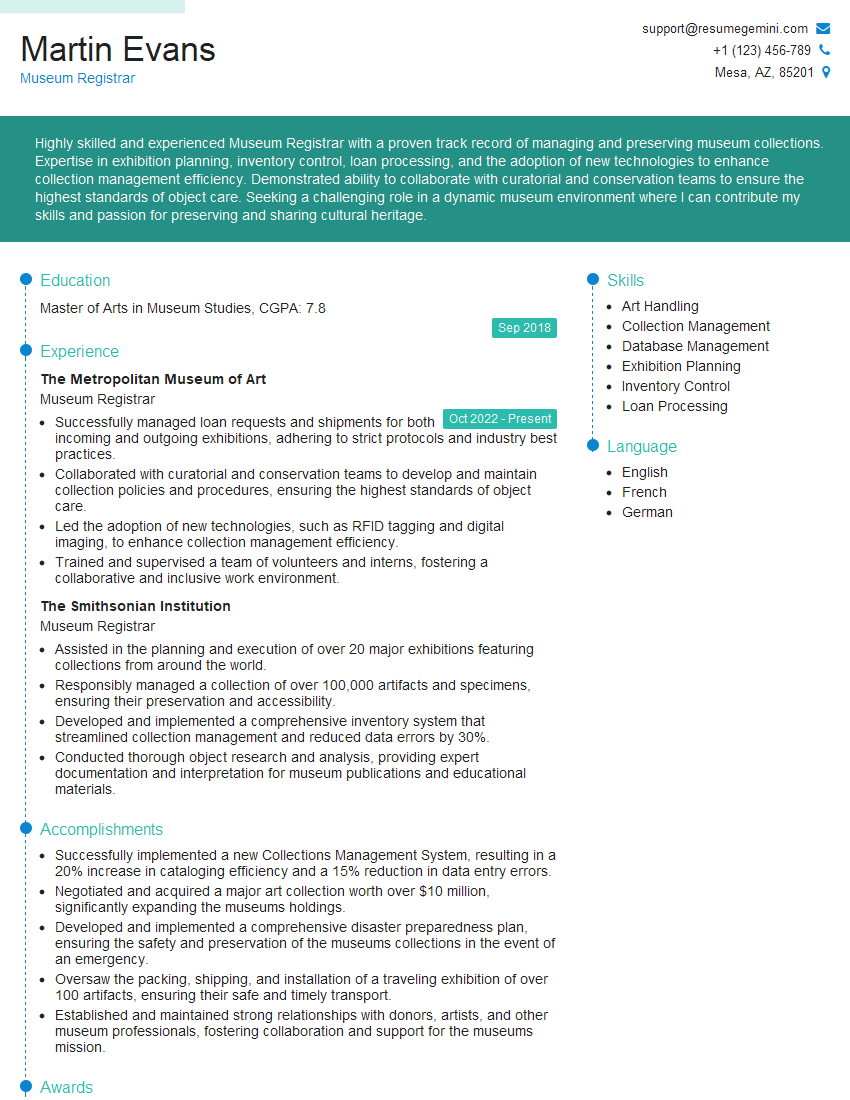
Museum Registrar Resume Sample
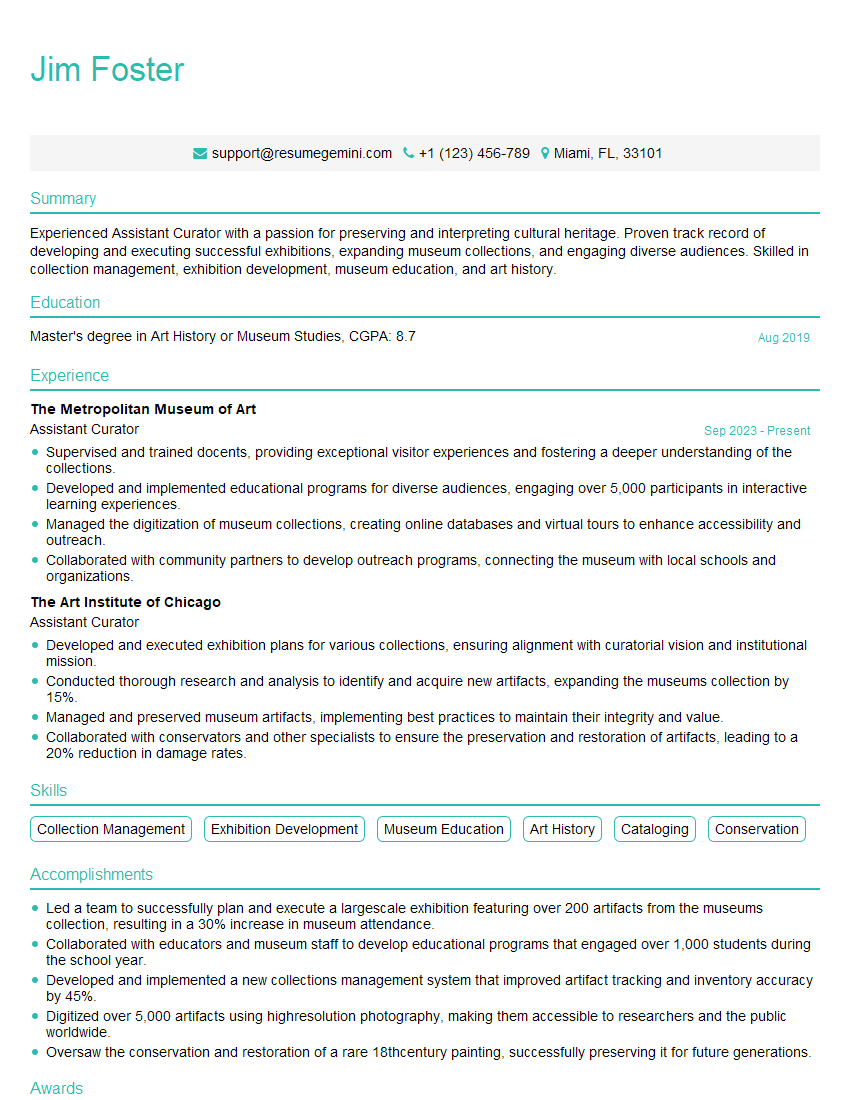
Assistant Curator Resume Sample
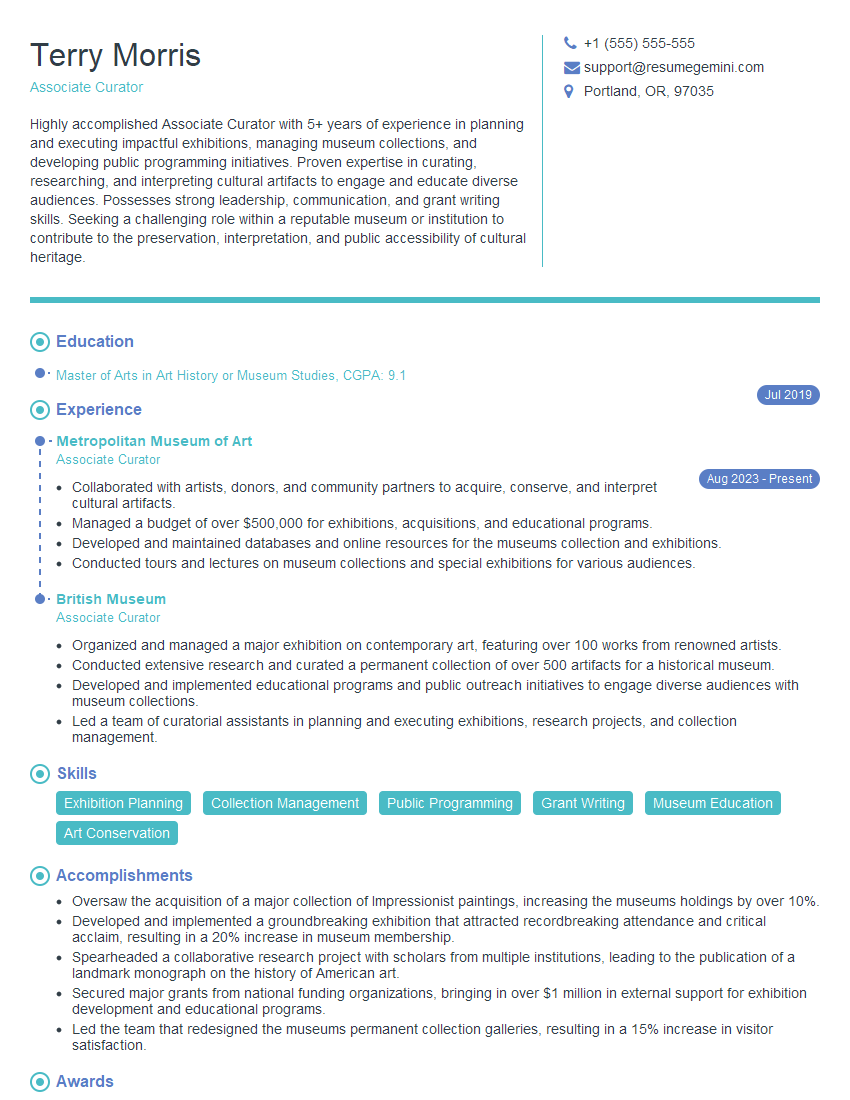
Associate Curator Resume Sample
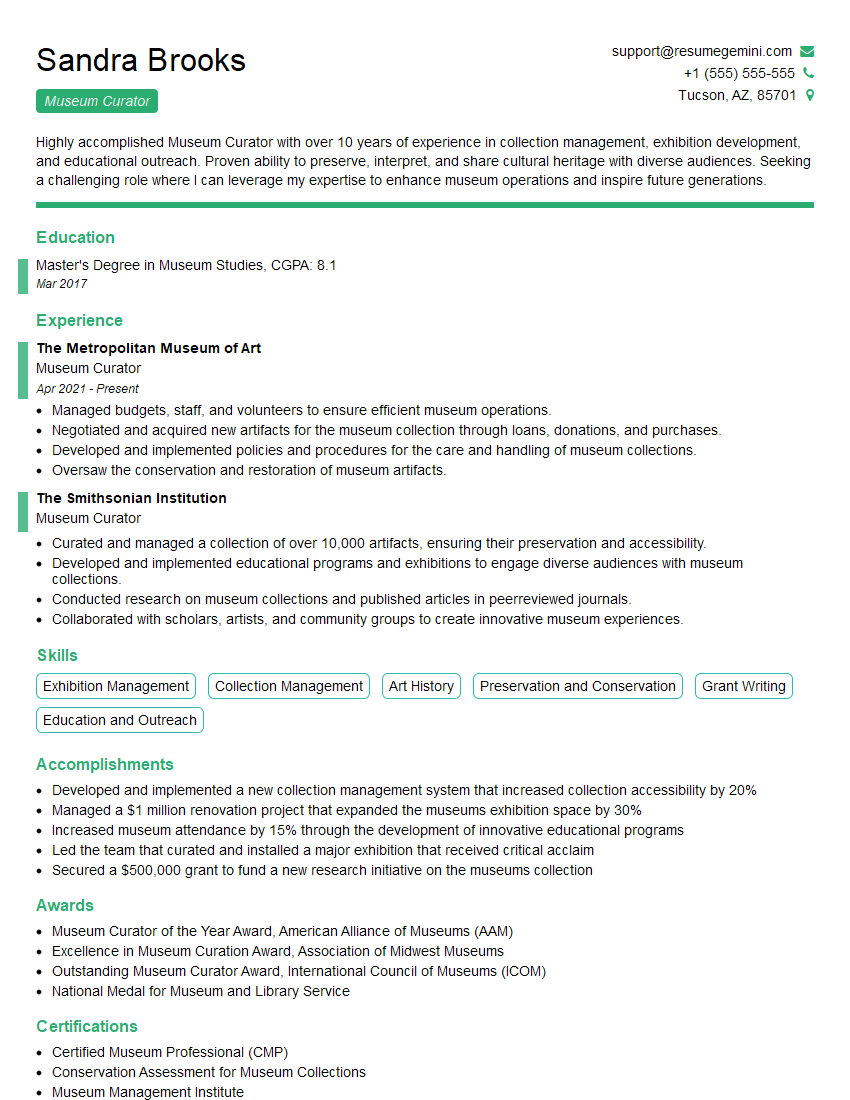
Museum Curator Resume Sample
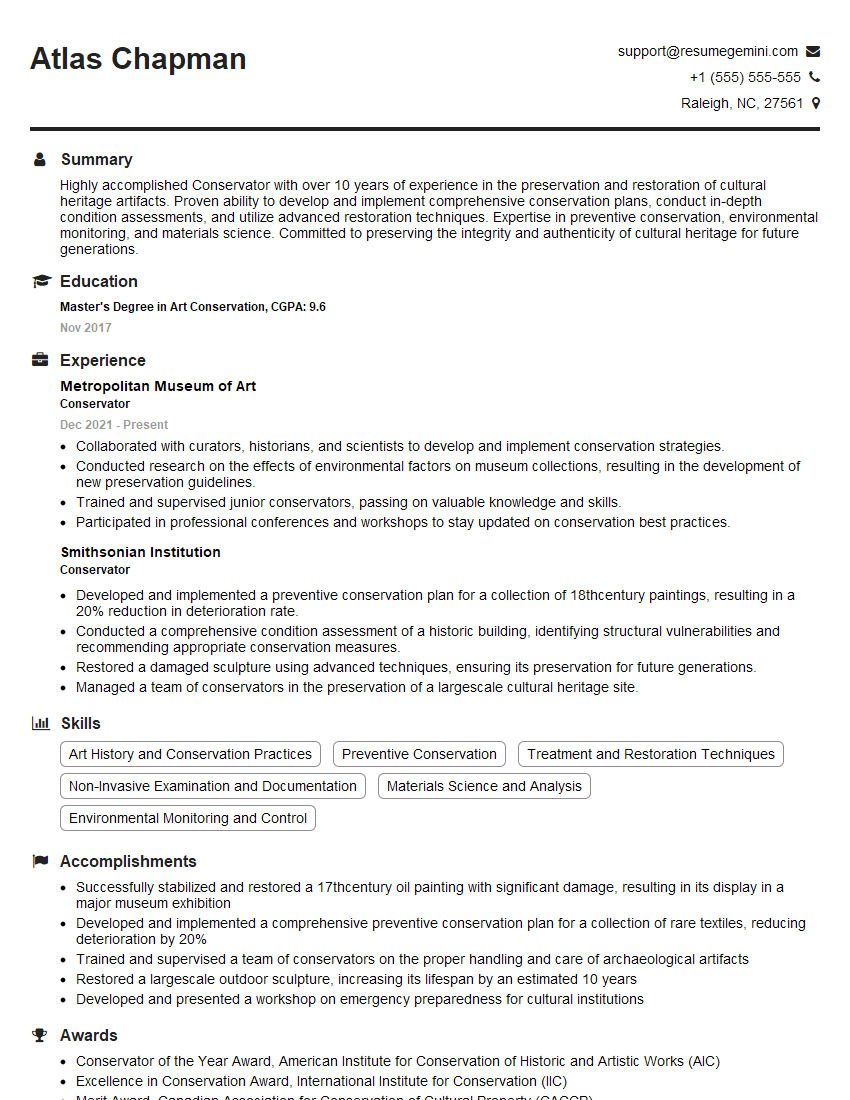
Conservator Resume Sample
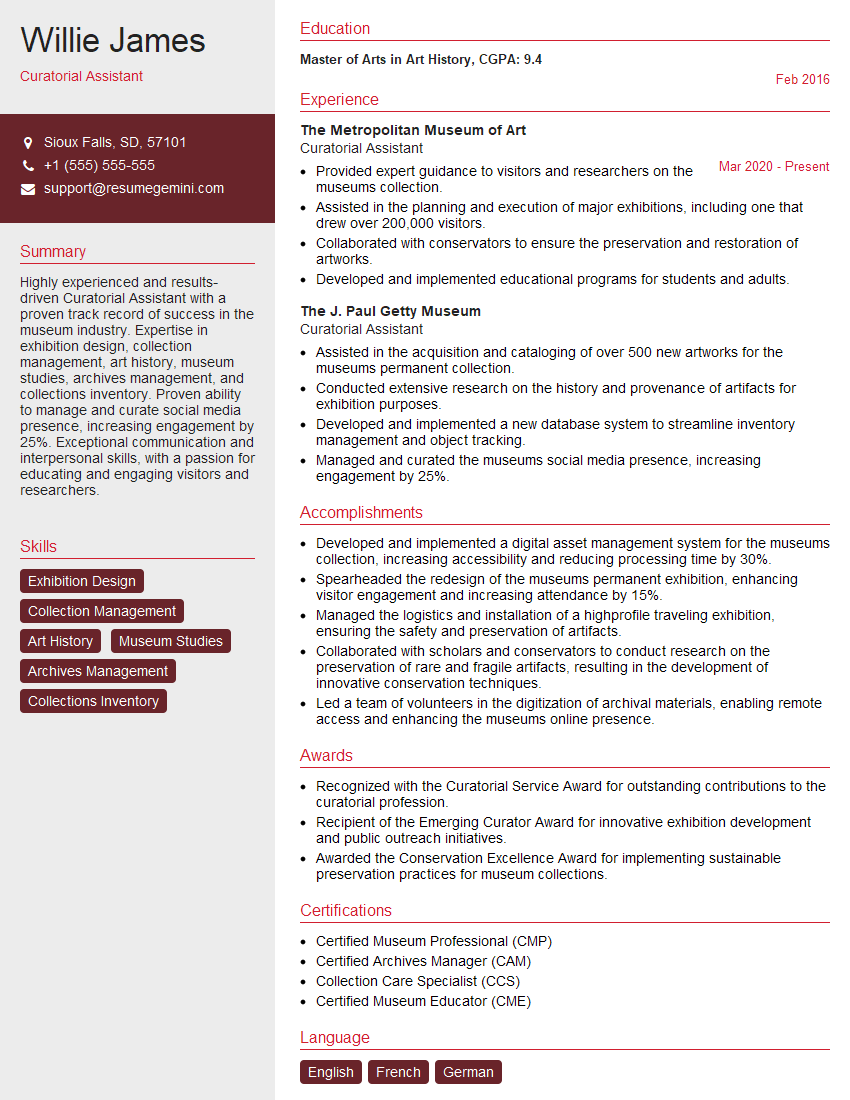
Curatorial Assistant Resume Sample
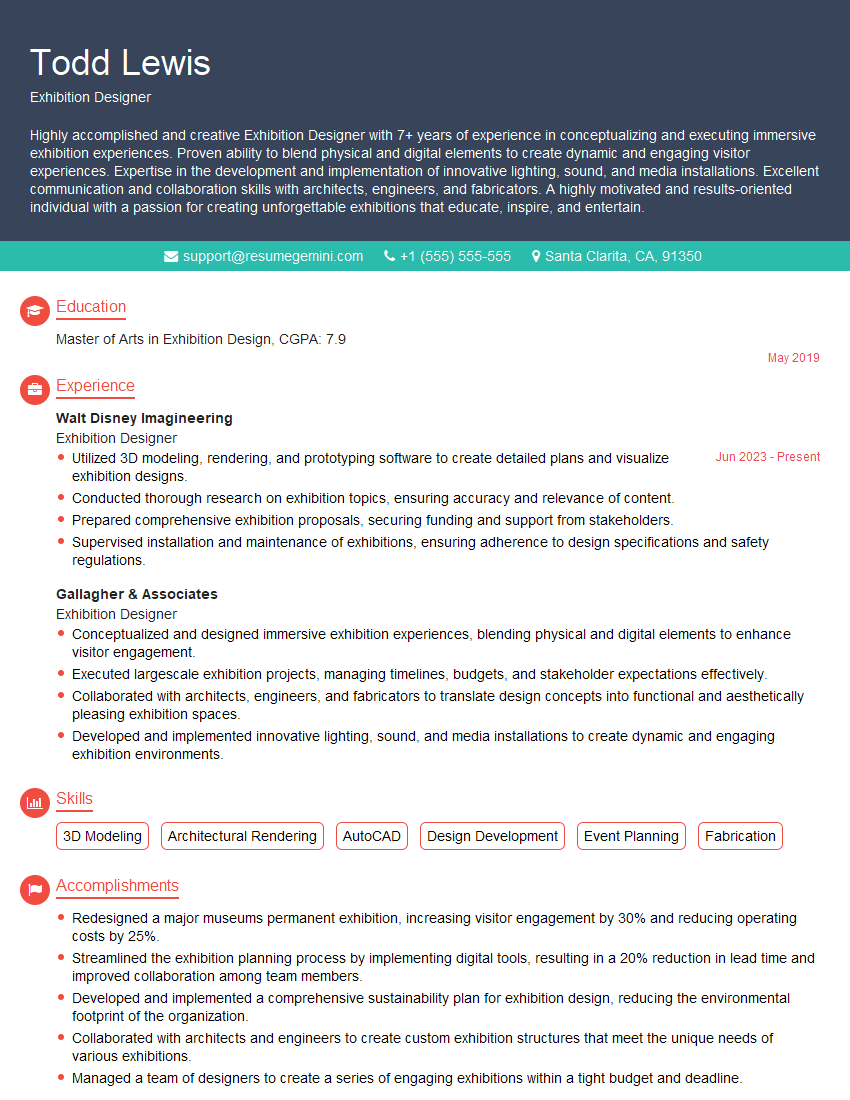
Exhibition Designer Resume Sample
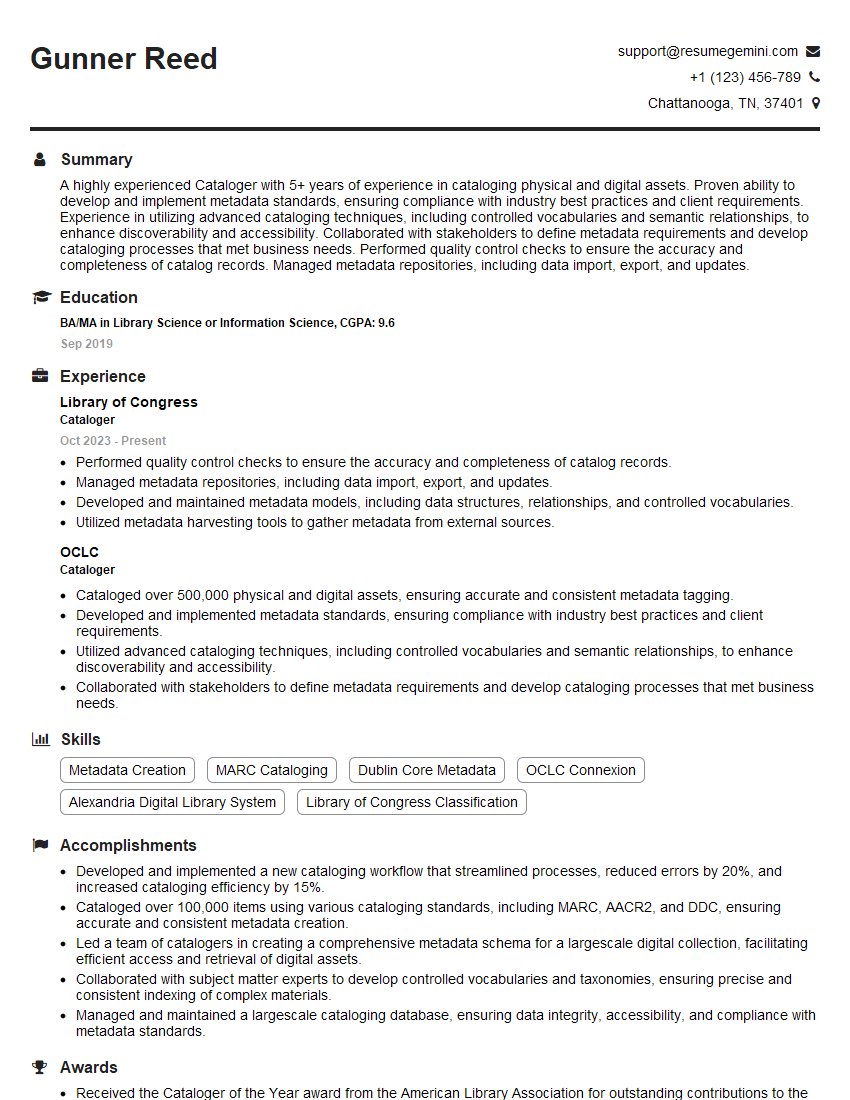
Cataloger Resume Sample
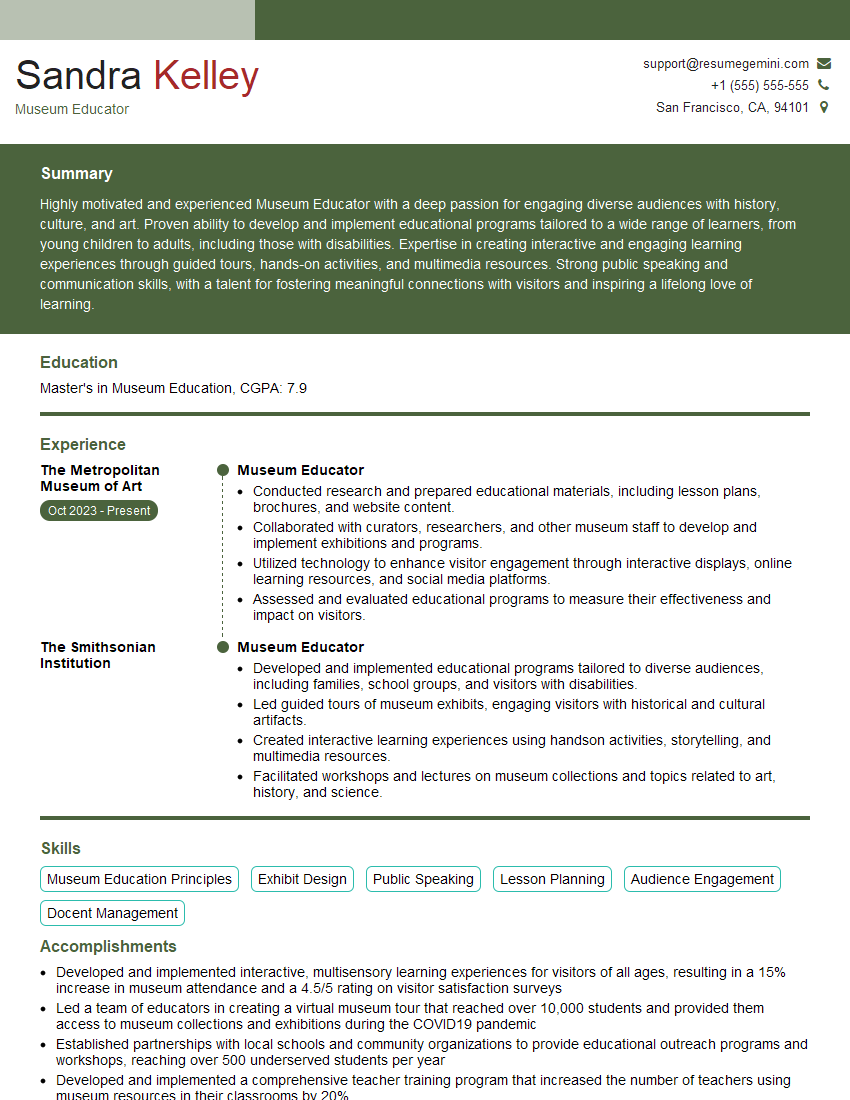
Museum Educator Resume Sample
Explore more articles
Users Rating of Our Blogs
Share Your Experience
We value your feedback! Please rate our content and share your thoughts (optional).
What Readers Say About Our Blog
To the interviewgemini.com Webmaster.
Very helpful and content specific questions to help prepare me for my interview!
Thank you
To the interviewgemini.com Webmaster.
This was kind of a unique content I found around the specialized skills. Very helpful questions and good detailed answers.
Very Helpful blog, thank you Interviewgemini team.