The right preparation can turn an interview into an opportunity to showcase your expertise. This guide to Decommissioning and Waste Management Strategies interview questions is your ultimate resource, providing key insights and tips to help you ace your responses and stand out as a top candidate.
Questions Asked in Decommissioning and Waste Management Strategies Interview
Q 1. Explain the different phases involved in a typical decommissioning project.
Decommissioning a facility is a complex process typically broken down into several distinct phases. Think of it like carefully dismantling a large machine, ensuring safety and minimizing environmental impact at every step. These phases are often iterative and may overlap, depending on the facility’s specific circumstances and the regulatory environment.
- Planning and Pre-decommissioning: This initial phase involves a thorough assessment of the facility, including its history, existing infrastructure, materials, and potential hazards. We’ll identify all waste streams, develop preliminary waste management strategies, and secure all necessary permits and approvals. This is crucial for cost-effective and legally compliant decommissioning.
- Decontamination and Decommissioning: This is the core phase where we systematically remove hazardous materials, such as asbestos, radioactive materials, or chemical residues. Specialized techniques might be employed, like robotic demolition or chemical cleaning, depending on the contamination levels. Safety protocols are paramount here, with detailed procedures and extensive worker training.
- Dismantlement: This involves the physical removal of structures and equipment. Careful planning is required to minimize waste generation and maximize recycling opportunities. We might use selective demolition, where parts are salvaged and reused, rather than complete demolition.
- Waste Management and Disposal: All generated waste is handled according to its classification (hazardous or non-hazardous). This includes sorting, treatment, packaging, transportation, and ultimate disposal in licensed facilities. Accurate record-keeping is crucial throughout this stage, ensuring traceability.
- Site Restoration and Closure: The final phase focuses on returning the site to a safe and usable condition, often involving soil remediation and landscape restoration. This ensures the site meets environmental standards and can be repurposed or returned to its original state.
Q 2. Describe your experience with various waste treatment methods (e.g., incineration, landfilling, recycling).
My experience encompasses a broad range of waste treatment methods, each with its own advantages and drawbacks. The choice depends on factors like waste composition, volume, regulatory requirements, and cost-effectiveness.
- Incineration: I’ve worked on projects where incineration was used for the safe disposal of hazardous waste, particularly medical waste and some industrial byproducts. It’s effective in reducing volume, but careful monitoring of emissions is critical to prevent air pollution.
- Landfilling: This remains a common method for non-hazardous waste, though its environmental impact is a concern. In my experience, we’ve prioritized minimizing landfill use by maximizing recycling and waste reduction strategies. Proper lining and leachate management are essential for mitigating groundwater contamination risks.
- Recycling: I strongly advocate for maximizing recycling opportunities. In recent projects, we’ve achieved high recycling rates by implementing rigorous sorting processes, and collaborating with specialized recycling facilities. This significantly reduces environmental impact and saves costs.
For instance, during the decommissioning of an old chemical plant, we prioritized recycling of metals, and used incineration for specific hazardous organic waste after proper pre-treatment. The remaining non-hazardous waste was landfilled after rigorous characterization.
Q 3. How do you ensure regulatory compliance in decommissioning and waste management?
Regulatory compliance is paramount in decommissioning and waste management. It’s not just about avoiding penalties; it’s about protecting public health and the environment. My approach involves a proactive, multi-layered strategy:
- Early Engagement with Regulatory Agencies: We engage early with relevant agencies to understand specific requirements and obtain necessary permits. This prevents costly delays and ensures the project aligns with all regulations.
- Comprehensive Documentation: Meticulous record-keeping is crucial, including waste characterization reports, treatment methods, disposal records, and environmental monitoring data. This documentation is essential for audits and demonstrates compliance.
- Regular Audits and Compliance Checks: We conduct internal audits and engage third-party auditors to independently verify compliance. This proactive approach helps identify potential issues early on and prevents major problems.
- Staying Updated on Regulatory Changes: Regulations constantly evolve, so we stay abreast of any changes that might affect our projects. This ensures our practices remain compliant.
For example, during a recent nuclear power plant decommissioning, we worked closely with the Nuclear Regulatory Commission to ensure every step of the process, from fuel removal to waste disposal, strictly followed their regulations.
Q 4. What are the key environmental considerations in decommissioning a facility?
Environmental considerations are central to any decommissioning project. Ignoring them can lead to long-term environmental damage and significant legal liabilities. Key considerations include:
- Soil and Groundwater Contamination: Identifying and remediating any contamination from spills, leaks, or buried waste is crucial. This often involves soil sampling, excavation, and treatment.
- Air Emissions: Controlling air emissions during demolition, waste treatment, and other activities is vital to prevent air pollution. This might involve using emission control technologies.
- Water Pollution: Preventing water pollution from runoff or leachate is essential. This typically requires implementing measures like storm water management systems and containment measures.
- Biodiversity and Habitat Protection: Minimizing the impact on local flora and fauna is important. This involves careful site planning, habitat restoration, and consideration for protected species.
- Waste Minimization: Prioritizing waste reduction, reuse, and recycling significantly reduces environmental impact.
In a recent project involving an old manufacturing facility, we implemented stringent measures to prevent soil contamination during the removal of hazardous chemicals and rehabilitated the surrounding wetlands to mitigate the environmental impact.
Q 5. Explain your understanding of life cycle assessment (LCA) in waste management.
Life Cycle Assessment (LCA) is a powerful tool for evaluating the environmental impacts of a product or process throughout its entire life, from raw material extraction to disposal. In waste management, LCA helps us make informed decisions by comparing the environmental performance of different waste treatment options.
For example, an LCA might compare the environmental impacts of landfilling versus incineration for a specific type of waste. It would consider factors like greenhouse gas emissions, energy consumption, water use, and resource depletion. The results help us choose the option with the lowest overall environmental footprint. We use this data to optimize our waste management plans and to justify our choices to stakeholders.
LCAs aren’t simple calculations. They require a thorough understanding of the various inputs and outputs of each stage, complex data collection, and sophisticated modeling. The results provide a holistic view, promoting a more sustainable and environmentally responsible approach to waste management.
Q 6. How do you manage risks associated with hazardous waste handling and disposal?
Managing risks associated with hazardous waste handling and disposal requires a structured approach incorporating multiple layers of safety measures.
- Risk Assessment: A detailed risk assessment identifies potential hazards associated with the specific waste streams, including chemical, physical, and biological risks. This assessment considers worker safety and environmental protection.
- Engineering Controls: Implementing engineering controls minimizes exposure to hazardous materials. Examples include enclosed systems, proper ventilation, and specialized equipment.
- Administrative Controls: Strong administrative controls such as standard operating procedures, worker training, permits, and emergency response plans are essential. Regular inspections and audits ensure consistent compliance.
- Personal Protective Equipment (PPE): Providing appropriate PPE, including respirators, gloves, and protective clothing, is crucial for worker safety. Regular training on the proper use and maintenance of PPE is also vital.
- Transportation and Disposal: Hazardous waste transportation and disposal must comply with all relevant regulations. This includes using licensed transporters, tracking shipments, and employing appropriate containment and handling techniques.
For example, during the handling of asbestos-containing materials, we implemented strict protocols for containment, worker protection (using respirators and protective suits), and proper disposal in licensed facilities, meticulously documenting every step of the process.
Q 7. Describe your experience with developing and implementing decommissioning plans.
Developing and implementing decommissioning plans requires a systematic approach, starting with a thorough understanding of the facility and its unique challenges. My experience encompasses diverse projects, from small industrial facilities to large-scale nuclear power plants.
- Initial Site Assessment and Characterization: This involves identifying all materials, structures, and potential hazards present. Detailed surveys, sampling, and analysis are conducted to quantify the waste streams.
- Regulatory Compliance Review: A detailed review of applicable regulations guides the development of the plan, ensuring compliance with all permits and approvals.
- Waste Management Strategy Development: A comprehensive waste management strategy is developed to address each waste stream, outlining appropriate treatment, disposal, and transportation methods.
- Project Scheduling and Budgeting: A realistic project schedule and budget are developed, accounting for all activities, resources, and potential contingencies.
- Implementation and Monitoring: The plan is implemented, monitored closely, and adjusted as needed to ensure progress and compliance. Regular reporting and communication with stakeholders are key.
In one project, the decommissioning of a chemical processing plant, we developed a detailed plan encompassing decontamination, dismantling, waste treatment, and site restoration. The plan incorporated a robust safety protocol, a detailed waste management strategy, and close collaboration with regulatory agencies. The project was successfully completed on time and within budget, meeting all regulatory requirements.
Q 8. What are the key performance indicators (KPIs) you use to measure the success of a decommissioning project?
Measuring the success of a decommissioning project requires a multifaceted approach using key performance indicators (KPIs). These KPIs should track progress against safety, cost, schedule, and environmental targets.
- Safety: We track the Lost Time Incident Rate (LTIR) and the number of near misses to ensure a safe working environment. A low LTIR and minimal near misses are key indicators of success.
- Cost: We monitor the actual costs against the budget, measuring variance and identifying areas for potential cost savings. We track the project’s spend against the initial estimate and the final cost to complete.
- Schedule: We track milestones achieved against the planned schedule using critical path method (CPM) analysis to identify potential delays. Timely completion within budget is vital.
- Environmental Compliance: We track waste volume reduction, recycling rates, and adherence to environmental permits and regulations. Minimizing environmental impact is paramount. For example, exceeding initial targets for waste recycling demonstrates success.
- Regulatory Compliance: We meticulously document adherence to all relevant regulatory requirements throughout the project lifecycle. Compliance records provide proof of success and limit potential legal issues.
By regularly monitoring these KPIs, we can proactively identify and address potential problems, ensuring the project remains on track to meet its objectives and maintain the highest safety and environmental standards.
Q 9. How do you manage stakeholder expectations during a decommissioning project?
Managing stakeholder expectations in decommissioning is crucial for a successful project. It involves clear, consistent communication and proactive engagement from the outset.
- Regular Communication: We establish a communication plan that outlines the frequency and method of updates to all stakeholders (government agencies, local communities, employees, etc.). This includes regular meetings, progress reports, and newsletters.
- Transparency: We openly share information about the project’s progress, challenges, and potential risks. Transparency builds trust and manages expectations realistically.
- Active Listening: We create channels for stakeholders to voice their concerns and feedback. This could include public forums, surveys, or one-on-one meetings. We take this feedback seriously and incorporate it into our project planning wherever possible.
- Realistic Expectations: We work collaboratively with stakeholders to set realistic expectations from the beginning. This involves jointly agreeing on achievable milestones and timelines, acknowledging potential uncertainties and providing regular updates on progress.
- Conflict Resolution: We have a clearly defined process for addressing any disagreements or conflicts that may arise. This might involve mediation or arbitration, focusing on finding mutually agreeable solutions.
For instance, in a recent project involving a decommissioned chemical plant, we held regular public forums to address community concerns about potential soil contamination. By proactively addressing these concerns, we maintained a positive relationship with the community and ensured the project proceeded smoothly.
Q 10. Explain your experience with different types of waste characterization and analysis.
Waste characterization and analysis is a fundamental aspect of decommissioning, determining the best disposal or recycling method for each waste stream.
- Radioactive Waste: In nuclear decommissioning, we use sophisticated techniques like gamma spectroscopy and radiochemical analysis to identify and quantify the presence of various radionuclides. This informs the selection of appropriate disposal facilities and ensures compliance with stringent regulatory requirements.
- Hazardous Waste: For chemical plants or other industrial sites, we utilize a range of analytical methods, including chromatography and mass spectrometry to identify hazardous substances. The results determine whether waste requires specialized treatment before disposal.
- Non-Hazardous Waste: Even seemingly innocuous materials undergo analysis to assess recyclability and potential reuse opportunities. This might involve material composition tests to determine the feasibility of recycling metals, concrete, or wood.
- Data Management: Rigorous documentation and database management are vital for tracing the waste from generation to disposal. This includes maintaining detailed records of waste characterization results, disposal methods, and relevant permits.
In one project involving the decommissioning of an old power plant, we discovered unexpectedly high levels of asbestos in the insulation. This finding necessitated a complete revision of our waste management plan, requiring specialized handling and disposal procedures to ensure worker and public safety.
Q 11. How do you address unforeseen challenges or complications during a decommissioning project?
Unforeseen challenges are inevitable in decommissioning. A proactive approach involving robust risk assessment, contingency planning, and a flexible project management structure is key to addressing them effectively.
- Risk Assessment: A thorough initial risk assessment identifies potential hazards and develops mitigation strategies. This includes considering factors such as site conditions, material properties, and regulatory requirements.
- Contingency Planning: We develop contingency plans for various scenarios, including equipment failure, unexpected material discoveries, and regulatory changes. This prepares the team for handling setbacks quickly and efficiently.
- Flexible Project Management: The project management structure must allow for adaptability. This often involves using agile methodologies, which enable quick responses to changing circumstances.
- Expert Consultation: We leverage expertise from various fields as needed. This could include specialists in demolition, hazardous materials handling, or regulatory compliance.
- Communication: Open communication with stakeholders is crucial during unforeseen challenges. Keeping stakeholders informed prevents misinterpretations and maintains trust.
For example, during the dismantling of a large industrial structure, we encountered unexpected structural instability. Our contingency plan, which included specialized engineering support and a revised demolition approach, allowed us to safely resolve the issue without significant project delays.
Q 12. Describe your experience with cost estimation and budgeting for decommissioning projects.
Accurate cost estimation and budgeting are critical for successful decommissioning. It requires a thorough understanding of the site conditions, the scope of work, and the applicable regulations.
- Detailed Site Assessment: We begin with a comprehensive site assessment to identify all materials, structures, and potential hazards. This provides a robust foundation for cost estimations.
- Work Breakdown Structure (WBS): We develop a WBS to break down the project into smaller, manageable tasks. This facilitates more accurate cost estimation for each task.
- Historical Data: We utilize historical data from similar decommissioning projects to benchmark our cost estimates, ensuring realism.
- Contingency Budgeting: We include a contingency budget to accommodate unforeseen challenges or changes in scope. This minimizes the risk of cost overruns.
- Regular Monitoring: We regularly monitor actual costs against the budget, identifying and addressing potential cost overruns proactively. Regular reporting keeps the project within budget.
In a recent project, we used detailed 3D modeling of the facility to accurately assess the volume of materials requiring removal. This improved the accuracy of our cost estimations compared to traditional methods, resulting in a more realistic budget.
Q 13. What are some common challenges in decommissioning nuclear facilities?
Decommissioning nuclear facilities presents unique challenges due to the presence of radioactive materials and stringent regulatory requirements.
- Radiological Safety: Maintaining radiological safety is paramount throughout the decommissioning process. This requires meticulous planning, specialized equipment, and highly trained personnel.
- Waste Management: Managing radioactive waste is a complex and costly process. This includes the safe transportation, storage, and disposal of various types of radioactive materials, adhering to strict regulations.
- Regulatory Compliance: Nuclear decommissioning is subject to stringent regulatory oversight. Navigating complex regulations and obtaining necessary permits can be time-consuming and challenging.
- Long-Term Liabilities: Decommissioning projects often involve long-term liabilities, including the long-term monitoring of the site for radiological contamination.
- Public Perception: Public perception and concerns about the safety of nuclear decommissioning can influence project timelines and approvals.
One of the significant challenges is the long-term storage and eventual disposal of high-level radioactive waste. Finding suitable geological repositories for this waste is a major global undertaking.
Q 14. How do you ensure the safety of personnel during decommissioning operations?
Ensuring personnel safety is the highest priority in any decommissioning operation. A layered approach to safety ensures a safe working environment.
- Risk Assessments and Job Safety Analyses (JSAs): We conduct thorough risk assessments and JSAs for all tasks, identifying potential hazards and implementing control measures to mitigate those risks. This includes personal protective equipment (PPE) requirements and safe work procedures.
- Training and Competency: All personnel receive comprehensive training tailored to their roles and responsibilities. This includes training on radiological safety, hazardous materials handling, and the use of specialized equipment.
- Personal Protective Equipment (PPE): Appropriate PPE is provided and used consistently, including radiation protection clothing, respirators, and safety harnesses.
- Emergency Response Plan: A comprehensive emergency response plan outlines procedures for handling various incidents, including radiological emergencies and equipment malfunctions.
- Monitoring and Supervision: Workers are closely monitored and supervised during all operations to ensure adherence to safety protocols and the immediate identification and correction of any unsafe conditions.
In one instance, a detailed JSA identified the risk of asbestos exposure during the removal of old insulation. This resulted in the implementation of specialized procedures and the use of respirators, ensuring the safety of workers and preventing any health issues.
Q 15. What are your preferred methods for minimizing waste generation during decommissioning?
Minimizing waste generation during decommissioning is paramount for environmental protection and cost savings. It’s not just about disposal; it’s about proactive planning and execution. My preferred methods focus on a multi-pronged approach:
- Material Reuse and Recycling: Before demolition, we meticulously sort materials. Metals, concrete, wood, and other recyclable materials are separated and sent to appropriate facilities. For example, steel components from a decommissioned power plant can be melted down and reused in new construction projects. This significantly reduces the volume sent to landfills.
- Deconstruction over Demolition: Deconstruction, a more careful and selective demolition process, allows for greater material salvage. This method is more time-consuming but yields a higher percentage of reusable materials compared to traditional demolition, which often results in a homogenous mix of debris.
- Waste Audits and Prevention Planning: We conduct thorough waste audits during the planning phase. This involves analyzing potential waste streams, identifying opportunities for reuse or recycling, and implementing preventative measures to reduce waste generation in the first place. This can include optimizing equipment design and procedures to minimize material consumption.
- Improved Inventory Management: Detailed inventory tracking throughout the decommissioning process enables better identification of reusable components and materials, reducing unnecessary disposal.
- Technological advancements: Using technologies such as robotic demolition and 3D scanning improve accuracy and reduce waste through efficient material separation and precise dismantling.
Ultimately, minimizing waste is a collaborative effort. It requires a strong commitment from all stakeholders and an integrated approach throughout the entire project lifecycle.
Career Expert Tips:
- Ace those interviews! Prepare effectively by reviewing the Top 50 Most Common Interview Questions on ResumeGemini.
- Navigate your job search with confidence! Explore a wide range of Career Tips on ResumeGemini. Learn about common challenges and recommendations to overcome them.
- Craft the perfect resume! Master the Art of Resume Writing with ResumeGemini’s guide. Showcase your unique qualifications and achievements effectively.
- Don’t miss out on holiday savings! Build your dream resume with ResumeGemini’s ATS optimized templates.
Q 16. Explain your understanding of different waste disposal regulations (e.g., RCRA, CERCLA).
My understanding of waste disposal regulations is critical to my work. Regulations like RCRA and CERCLA govern how we manage hazardous and non-hazardous waste. Let’s break them down:
- Resource Conservation and Recovery Act (RCRA): This act regulates the generation, transportation, treatment, storage, and disposal of hazardous waste. It establishes a ‘cradle-to-grave’ system of tracking hazardous waste, ensuring its proper management throughout its entire lifecycle. Compliance involves obtaining permits, implementing waste minimization plans, and adhering to strict handling and disposal procedures. Non-compliance can lead to significant fines and legal ramifications.
- Comprehensive Environmental Response, Compensation, and Liability Act (CERCLA), also known as Superfund: This law addresses the cleanup of uncontrolled or abandoned hazardous waste sites. It designates liability for the cleanup and provides a mechanism for funding the remediation process. CERCLA focuses on sites posing a significant threat to human health and the environment, requiring thorough site assessments, remediation plans, and long-term monitoring to ensure the effectiveness of the cleanup efforts.
Navigating these regulations necessitates a deep understanding of the specific waste characteristics, applicable regulations (which can vary by state and locality), and the development of compliant disposal plans. For instance, a decommissioned chemical plant would necessitate strict adherence to RCRA guidelines for the handling of hazardous waste, while a contaminated brownfield site may require a CERCLA-compliant remediation strategy.
Q 17. How do you select appropriate disposal technologies for various waste streams?
Selecting appropriate disposal technologies is crucial for ensuring both environmental protection and cost-effectiveness. This decision-making process is driven by a number of factors:
- Waste Characterization: The first step is detailed chemical and physical characterization of the waste stream. This helps determine its toxicity, reactivity, ignitability, and corrosiveness (hazardous waste characteristics). Knowing the exact composition of the waste is paramount in selecting a suitable disposal method.
- Regulatory Compliance: Applicable regulations dictate permissible disposal options. For example, certain wastes may require incineration, while others might be suitable for landfilling under strict conditions. This step ensures that the selected technology is legally compliant and environmentally sound.
- Cost-Benefit Analysis: Different technologies carry varying costs. A cost-benefit analysis considers both capital and operating expenses, environmental impacts, and regulatory compliance costs to determine the most economically feasible and environmentally responsible solution.
- Technological Feasibility: The selected technology should be technically viable and able to handle the specific properties of the waste stream. For example, biological treatment might be effective for certain organic wastes, while physical separation techniques might be more suitable for others.
For example, radioactive waste from a nuclear power plant requires highly specialized disposal methods, such as geological repositories, due to its unique characteristics and regulatory requirements. In contrast, non-hazardous construction debris can often be landfilled or recycled.
Q 18. Describe your experience with remediation of contaminated sites.
I have extensive experience in the remediation of contaminated sites. This involves a systematic approach beginning with a thorough site investigation to assess the extent and nature of contamination.
- Site Assessment: This includes soil and groundwater sampling, analysis of historical records, and review of aerial photography to identify potential sources of contamination.
- Remediation Strategy Development: Based on the site assessment, we develop a comprehensive remediation strategy. This may involve various techniques, such as excavation and disposal, soil washing, bioremediation (using microorganisms to break down contaminants), phytoremediation (using plants to extract contaminants), or pump-and-treat systems for groundwater remediation.
- Remediation Implementation: We oversee the implementation of the chosen remediation strategy, ensuring strict adherence to environmental regulations and safety protocols.
- Monitoring and Validation: Post-remediation, we conduct thorough monitoring to verify the effectiveness of the cleanup and ensure that the site meets regulatory standards for long-term safety.
One project involved remediating a former industrial site contaminated with heavy metals. We utilized a combination of soil excavation and phytoremediation, planting specific plant species known for their ability to uptake heavy metals from the soil. This approach proved both effective and environmentally sound, leaving behind a remediated site ready for redevelopment.
Q 19. What is your experience with site characterization and assessment?
Site characterization and assessment is foundational to any decommissioning project. It’s like conducting a thorough medical examination before surgery – you must understand the ‘patient’ before you begin.
- Historical Records Review: We begin by reviewing historical records, including site plans, permits, and operational records, to understand past activities and potential sources of contamination.
- Site Reconnaissance: A visual inspection is performed to identify potential contamination sources and hazards, noting surface features and any observable signs of environmental impacts.
- Sampling and Analysis: Environmental samples (soil, groundwater, air, etc.) are collected and analyzed to determine the presence, concentration, and extent of any contaminants.
- Data Interpretation and Risk Assessment: The collected data are analyzed to determine the level and extent of contamination, potential risks to human health and the environment, and potential impacts on surrounding ecosystems.
- Report Preparation: A comprehensive report summarizing the findings, including a risk assessment and recommendations for remedial actions, is prepared. This document guides the rest of the decommissioning process.
For instance, characterizing a decommissioned gas station might involve investigating for petroleum hydrocarbon contamination in soil and groundwater, while a former manufacturing plant might require assessment for various heavy metals and volatile organic compounds.
Q 20. How do you ensure the long-term monitoring of decommissioned sites?
Ensuring the long-term monitoring of decommissioned sites is crucial. It’s not enough to just clean up the site; we must ensure that the cleanup remains effective over time.
- Post-Remediation Monitoring Plan: A detailed plan is established before remediation is complete outlining the frequency, type, and location of monitoring activities. This plan considers potential pathways for recontamination and incorporates worst-case scenarios.
- Groundwater Monitoring Wells: Groundwater monitoring wells are often installed to track contaminant levels over time. Regular sampling and analysis allow us to detect any potential re-emergence of contaminants.
- Soil Monitoring: Soil samples are regularly collected to assess the long-term effectiveness of the remediation efforts and check for any signs of contaminant migration.
- Vegetation Monitoring: In some cases, vegetation monitoring is conducted to assess the health of plant life and potential uptake of contaminants.
- Reporting and Regulatory Compliance: Regular monitoring reports are prepared and submitted to regulatory agencies to ensure compliance with environmental regulations and demonstrate the long-term success of the remediation project.
Long-term monitoring often requires a commitment to ongoing maintenance and periodic reassessment to adapt monitoring strategies as conditions change. This is an ongoing responsibility to ensure the continued protection of human health and the environment.
Q 21. Explain your understanding of environmental impact assessments.
Environmental impact assessments (EIAs) are critical for evaluating the potential environmental consequences of a project before it starts, including decommissioning projects. They’re like a pre-flight checklist for a major undertaking.
- Baseline Data Collection: EIAs begin with establishing a baseline understanding of the existing environment. This involves collecting data on air and water quality, biodiversity, noise levels, and other relevant environmental factors.
- Impact Prediction: Based on the planned decommissioning activities, we predict the potential impacts on the environment. This involves considering both direct and indirect effects, including potential contamination, habitat loss, noise pollution, and air emissions.
- Mitigation Measures: We propose and evaluate strategies to mitigate any significant negative impacts. These could range from implementing dust control measures to employing specialized waste treatment technologies.
- Regulatory Compliance: EIAs need to comply with relevant environmental regulations, ensuring that the project meets all legal requirements and obtains necessary permits.
- Reporting and Review: A comprehensive report summarizing the EIA findings, including predictions, mitigations, and conclusions, is prepared and reviewed by regulatory authorities and stakeholders.
A well-conducted EIA not only helps minimize environmental harm but also informs decision-making, ensures transparency, and strengthens public trust in the decommissioning project. Without a thorough EIA, projects can face delays, legal challenges, and potential damage to their reputation.
Q 22. How do you integrate sustainability principles into decommissioning and waste management strategies?
Integrating sustainability into decommissioning and waste management isn’t just an add-on; it’s fundamental to responsible project execution. It means minimizing environmental impact throughout the entire lifecycle, from planning to final site restoration. This involves a holistic approach encompassing several key areas:
- Waste Minimization: Prioritizing reuse, recycling, and recovery of materials to reduce landfill disposal. For example, instead of landfilling decommissioned pipelines, we might explore repurposing the metal for other construction projects or recycling it into new products.
- Energy Efficiency: Optimizing energy consumption during the decommissioning process itself, such as using electric or hybrid equipment to reduce greenhouse gas emissions. Think of selecting low-emission vehicles for transportation of waste materials.
- Environmental Monitoring: Implementing robust monitoring programs to track environmental impacts and ensure compliance with regulations. This includes regular soil and water testing to detect any contamination.
- Stakeholder Engagement: Engaging with local communities and other stakeholders to ensure transparency and address their concerns about environmental impact. Regular community forums are essential.
- Circular Economy Principles: Embracing the circular economy by designing for durability, repairability, and recyclability to extend the lifespan of components and reduce waste generation. This includes exploring innovative techniques like material passports that track the composition of equipment for later recovery.
Ultimately, sustainable decommissioning and waste management are about leaving a minimal environmental footprint while adhering to the highest ethical and regulatory standards.
Q 23. Describe your experience with using specialized software or tools for waste management.
I’ve extensively used several specialized software and tools for waste management, each serving different purposes. For example, I’ve worked with WasteTrack for tracking waste generation, transportation, and disposal. This software allows for detailed reporting, compliance monitoring, and cost analysis. It provides an automated system for generating waste manifests and tracking disposal certificates, significantly reducing administrative workload and ensuring full traceability of waste streams.
Furthermore, I have experience with GIS (Geographic Information Systems) software for mapping contaminated sites, optimizing waste transportation routes, and visualizing waste management infrastructure. This is particularly crucial during the site characterization phase of decommissioning projects. It helps us understand the spatial distribution of contaminants and plan efficient remediation strategies. We can even use it to model different remediation scenarios and optimize waste removal plans.
Finally, I’m also proficient in using specialized databases for managing hazardous waste, ensuring full compliance with all relevant regulations and reporting requirements. This enables efficient data analysis and decision-making throughout the entire decommissioning process.
Q 24. What are your experience with different types of permits and licenses required for decommissioning and waste management?
My experience encompasses a wide range of permits and licenses necessary for decommissioning and waste management, varying considerably depending on the type of facility, waste generated, and location. These permits typically include:
- Environmental Permits: These cover aspects like air emissions, water discharge, and soil contamination. Examples include National Pollutant Discharge Elimination System (NPDES) permits for wastewater discharge and air quality permits.
- Waste Disposal Permits: These regulate the handling, transportation, and disposal of hazardous and non-hazardous waste. They cover aspects like landfilling, incineration, and recycling.
- Radiation Permits (if applicable): In cases involving nuclear facilities or radioactive materials, specific licenses and permits for handling, transporting and disposing of radioactive waste are mandatory.
- Construction Permits: Often needed for construction activities involved in site remediation and restoration.
- Import/Export Permits: If the project involves transporting waste across international borders.
The complexity increases significantly when dealing with multiple jurisdictions or different types of waste. Navigating these permit requirements is a crucial aspect of my expertise; it requires thorough understanding of the relevant legislation and consistent engagement with regulatory authorities.
Q 25. How do you manage and mitigate potential liabilities associated with decommissioning projects?
Managing liabilities in decommissioning projects is paramount. It involves a proactive, multi-faceted approach focusing on risk assessment, mitigation, and insurance:
- Comprehensive Site Assessment: A detailed assessment of the site to identify potential liabilities such as environmental contamination, structural damage, or the presence of hazardous materials.
- Risk Management Plan: Developing a comprehensive plan to address identified risks, including contingency plans for unexpected events. This plan should specify mitigation strategies and assign responsibilities.
- Environmental Insurance: Obtaining appropriate insurance coverage to protect against financial losses resulting from environmental damage or liability claims.
- Regulatory Compliance: Strictly adhering to all relevant environmental regulations and obtaining all necessary permits to minimize the risk of non-compliance penalties.
- Detailed Documentation: Maintaining meticulous records of all decommissioning activities, including waste handling, site remediation, and monitoring data. This is crucial for demonstrating due diligence and minimizing liability in the long term.
- Long-Term Monitoring: Implementing long-term monitoring programs to detect any unforeseen environmental impacts and address them promptly.
Proactive risk management is key to minimizing potential liabilities and ensuring the long-term success of decommissioning projects.
Q 26. Explain your approach to ensuring transparency and communication throughout a decommissioning project.
Transparency and communication are cornerstones of successful decommissioning projects. My approach involves:
- Stakeholder Mapping: Identifying all key stakeholders, including regulatory bodies, local communities, and project partners, early in the process.
- Communication Plan: Establishing a clear communication plan that outlines methods and timelines for information sharing. This might involve regular meetings, newsletters, public forums, and dedicated websites.
- Open and Honest Dialogue: Maintaining open and honest communication with all stakeholders, addressing concerns promptly and providing regular updates on project progress.
- Documentation and Reporting: Providing clear, concise, and accurate documentation of all project activities and results, accessible to all stakeholders.
- Conflict Resolution Mechanisms: Establishing mechanisms for addressing conflicts or disagreements that may arise during the project.
By fostering trust and transparency, we can build strong relationships with stakeholders, gain their support, and ensure the project proceeds smoothly and responsibly.
Q 27. How do you evaluate the effectiveness of different decommissioning and waste management technologies?
Evaluating decommissioning and waste management technologies requires a multi-criteria approach. I consider several factors:
- Effectiveness: How well does the technology achieve its intended purpose (e.g., waste reduction, remediation of contamination)? We use data analysis to evaluate this, tracking key performance indicators (KPIs).
- Cost-Effectiveness: What is the overall cost of implementation, considering capital expenditures, operational costs, and long-term maintenance?
- Environmental Impact: What are the environmental consequences of using the technology, considering factors like greenhouse gas emissions, energy consumption, and waste generation?
- Safety: How safe is the technology to operate and maintain, considering worker safety and potential risks to the environment?
- Regulatory Compliance: Does the technology comply with all relevant environmental regulations and permits?
- Technological Maturity: How proven is the technology? Is it a mature, well-understood technology or an emerging technology with potential risks?
Often a lifecycle cost analysis (LCCA) is performed to compare different technologies across their entire lifespan, helping us make informed decisions based on a holistic assessment of their performance and impact.
Q 28. Describe your experience with working in multidisciplinary teams on decommissioning projects.
My experience working in multidisciplinary teams on decommissioning projects has been extensive. Successful projects rely heavily on collaboration between engineers, environmental scientists, regulatory specialists, legal counsel, and community liaison officers. I’ve found that:
- Clear Roles and Responsibilities: Defining roles and responsibilities clearly from the outset is crucial for effective teamwork. We use project management tools to ensure everyone understands their tasks and deadlines.
- Open Communication: Facilitating open communication through regular meetings, email updates, and shared project management platforms is essential to keep everyone informed and coordinated.
- Conflict Resolution: Establishing mechanisms for resolving conflicts and disagreements constructively is key to maintaining team cohesion and productivity. We utilize collaborative problem-solving techniques.
- Shared Goals: A shared understanding of project goals and objectives is critical to maintain team motivation and focus. This is particularly important when dealing with complex and challenging projects.
- Expertise Sharing: Creating opportunities for team members to share their expertise and knowledge ensures that all perspectives are considered and the best possible solutions are developed.
Multidisciplinary teamwork is essential for navigating the complexities inherent in decommissioning projects, ensuring success and minimizing potential risks.
Key Topics to Learn for Decommissioning and Waste Management Strategies Interview
- Regulatory Compliance and Licensing: Understanding relevant national and international regulations, permitting processes, and compliance requirements for decommissioning projects and waste management.
- Decommissioning Planning and Execution: Developing comprehensive decommissioning plans, including site characterization, risk assessment, waste characterization, and selection of appropriate decommissioning techniques. Practical application includes case studies of successful and challenging decommissioning projects.
- Waste Treatment and Disposal: Knowledge of various waste treatment methods (e.g., incineration, solidification, vitrification), disposal options (e.g., landfills, deep geological repositories), and associated environmental impact assessments.
- Site Remediation and Restoration: Understanding the principles and techniques for remediating contaminated sites following decommissioning, including soil and groundwater remediation, and restoring the site to its pre-operational condition or a beneficial use.
- Cost Estimation and Project Management: Developing accurate cost estimates for decommissioning projects, managing project timelines and budgets effectively, and utilizing appropriate project management methodologies.
- Health and Safety: Implementing robust health and safety protocols throughout the decommissioning process, including radiation protection, hazard identification, risk mitigation, and emergency response planning.
- Stakeholder Engagement and Communication: Effective communication and collaboration with regulatory bodies, stakeholders, and the public throughout the decommissioning process.
- Sustainable Decommissioning Strategies: Exploring and implementing environmentally friendly decommissioning and waste management practices, including reuse, recycling, and waste minimization.
- Emerging Technologies and Innovations: Staying current with the latest advancements in decommissioning technologies and waste management solutions, such as advanced robotics, AI-driven monitoring, and innovative treatment techniques.
Next Steps
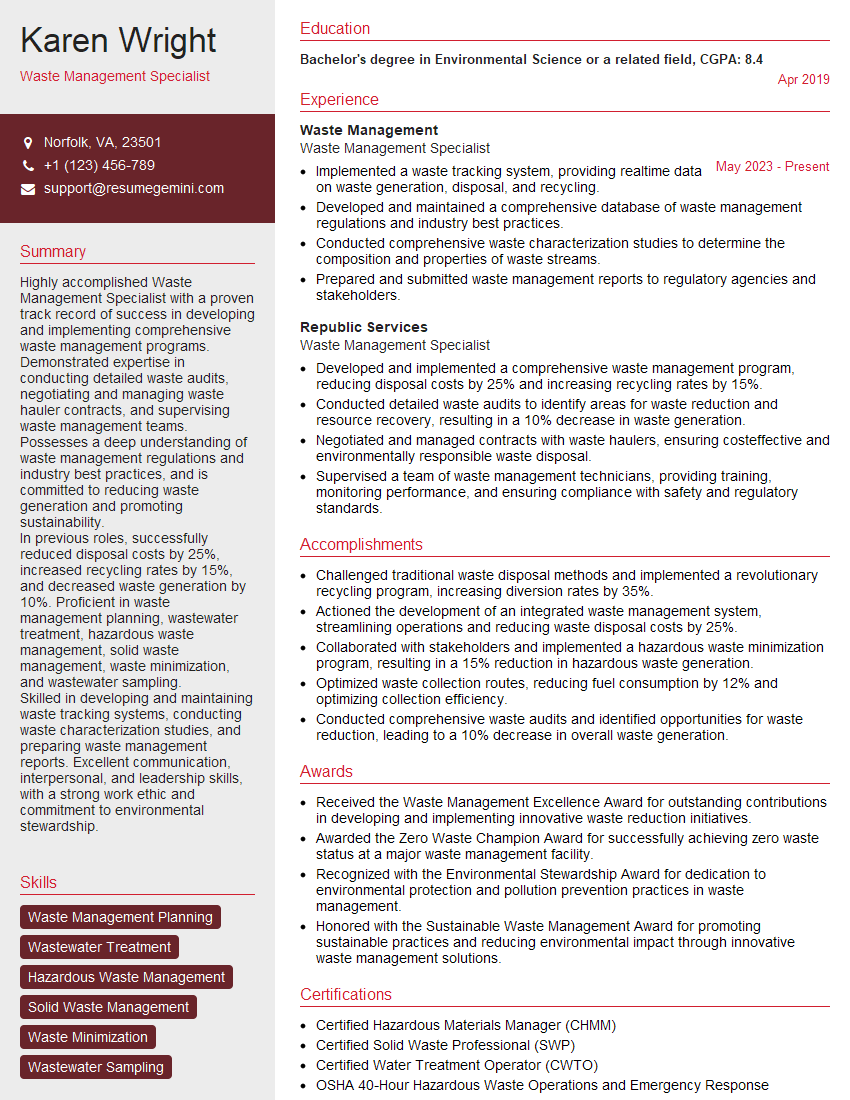
Mastering Decommissioning and Waste Management Strategies is crucial for career advancement in this growing field. A strong understanding of these concepts demonstrates expertise and commitment to environmental responsibility, opening doors to exciting opportunities. To significantly increase your chances of landing your dream job, create an ATS-friendly resume that effectively showcases your skills and experience. ResumeGemini is a trusted resource to help you build a professional and impactful resume. We provide examples of resumes tailored to Decommissioning and Waste Management Strategies to help guide your creation. Invest time in crafting a compelling resume; it’s your first impression to potential employers.
Explore more articles
Users Rating of Our Blogs
Share Your Experience
We value your feedback! Please rate our content and share your thoughts (optional).
What Readers Say About Our Blog
To the interviewgemini.com Webmaster.
Very helpful and content specific questions to help prepare me for my interview!
Thank you
To the interviewgemini.com Webmaster.
This was kind of a unique content I found around the specialized skills. Very helpful questions and good detailed answers.
Very Helpful blog, thank you Interviewgemini team.