Interviews are opportunities to demonstrate your expertise, and this guide is here to help you shine. Explore the essential Design and Implementation of Nature-Based Solutions interview questions that employers frequently ask, paired with strategies for crafting responses that set you apart from the competition.
Questions Asked in Design and Implementation of Nature-Based Solutions Interview
Q 1. Explain the core principles of Nature-Based Solutions.
Nature-Based Solutions (NBS) are actions that work with nature to address societal challenges. The core principles revolve around leveraging the power of natural processes and ecosystems to provide multiple benefits. This means we’re not just mitigating problems, but actively using natural systems to create resilient and sustainable solutions.
- Working with nature, not against it: NBS mimic natural processes, rather than trying to impose artificial solutions. For example, restoring wetlands to manage flood risk utilizes the natural water-holding capacity of the ecosystem.
- Ecosystem services: NBS are designed to harness ecosystem services – the benefits that humans derive from ecosystems, such as clean water, carbon sequestration, and recreation. A green roof provides insulation, reduces stormwater runoff, and enhances biodiversity – all ecosystem services.
- Multiple benefits: A well-designed NBS achieves multiple goals simultaneously. A coastal dune restoration project can protect against erosion, provide habitat for wildlife, and enhance tourism opportunities.
- Adaptive management: NBS are not static; they require ongoing monitoring and adjustment based on changing conditions. This allows the solution to adapt to unexpected challenges and improve over time.
- Sustainability and resilience: NBS aim for long-term sustainability and enhance the resilience of both natural and human systems. They are designed to withstand shocks and stresses, such as extreme weather events.
Q 2. Describe the difference between grey and green infrastructure.
Grey infrastructure refers to the traditional, engineered approaches to managing environmental challenges. Think concrete structures like dams, seawalls, and drainage pipes. These are typically hard, inflexible, and often require significant energy and resources to build and maintain. They often address a single issue in isolation.
Green infrastructure, on the other hand, uses natural systems and processes to achieve similar goals. Examples include green roofs, rain gardens, constructed wetlands, and urban forests. Green infrastructure is typically more sustainable, cost-effective in the long run, and provides multiple benefits beyond its primary function.
The key difference lies in their approach: grey infrastructure is a technological solution, while green infrastructure utilizes nature’s inherent capabilities.
Q 3. What are the key steps in designing a Nature-Based Solution project?
Designing an effective NBS project requires a systematic approach. Here are the key steps:
- Problem identification and assessment: Clearly define the challenge you’re trying to address (e.g., flood risk, air pollution, biodiversity loss). Conduct a thorough site assessment to understand the existing ecological conditions, hydrological processes, and socio-economic context.
- Solution conceptualization: Brainstorm potential NBS options that are appropriate for the specific context. Consider factors like site suitability, feasibility, and potential co-benefits.
- Design and planning: Develop detailed designs, incorporating ecological principles and engineering considerations. This includes selecting appropriate plant species, designing drainage systems, and ensuring structural integrity.
- Stakeholder engagement: Engage with all relevant stakeholders (local communities, government agencies, landowners) throughout the design and implementation process. This ensures that the solution is socially acceptable and aligns with community needs.
- Implementation: Carry out the construction or restoration work, adhering to best practices for ecological restoration and construction.
- Monitoring and evaluation: Establish a monitoring program to track the effectiveness of the NBS over time. Use this data to make adaptive management decisions and improve the solution’s performance.
Q 4. How do you assess the feasibility of a Nature-Based Solution?
Assessing the feasibility of an NBS involves a multi-faceted approach, considering ecological, economic, social, and technical aspects. A thorough feasibility study should address:
- Ecological feasibility: Will the proposed NBS function effectively within the existing ecological context? Will it support the target species or processes? Is the site suitable?
- Economic feasibility: What are the upfront and long-term costs? What are the potential economic benefits (e.g., reduced flood damage, increased property values)? Is there sufficient funding available?
- Social feasibility: Is the NBS acceptable to the local community? Are there potential social impacts (positive or negative)? Has community engagement been effective?
- Technical feasibility: Is the technology available to implement the NBS? Are there engineering challenges that need to be addressed? Is the solution durable and resilient?
- Legal and regulatory feasibility: Are there any permits or approvals required? Are there any legal or regulatory restrictions?
Often, a cost-benefit analysis and a stakeholder analysis are crucial tools to assess feasibility.
Q 5. What are the common challenges in implementing Nature-Based Solutions?
Implementing NBS often faces challenges:
- Funding limitations: Securing adequate funding for the design, implementation, and long-term maintenance of NBS can be difficult.
- Lack of awareness and understanding: Many stakeholders may lack awareness or understanding of NBS and their benefits.
- Land tenure and access: Securing land rights or access can be a significant hurdle, particularly in urban areas.
- Complexity of ecological systems: Predicting the behavior of complex ecosystems can be challenging, requiring adaptive management strategies.
- Conflicting land uses: Balancing the needs of NBS with other land uses (e.g., agriculture, urban development) can be difficult.
- Long-term maintenance: NBS require ongoing maintenance to ensure their effectiveness, which can be costly and require long-term commitment.
- Data limitations: Sufficient data on the effectiveness of different NBS approaches may be limited.
Q 6. How do you monitor and evaluate the effectiveness of a Nature-Based Solution?
Monitoring and evaluating the effectiveness of an NBS is crucial to ensure it achieves its intended goals and to adapt management strategies as needed. This involves establishing clear indicators and metrics that reflect the project’s impact. Examples include:
- Ecological indicators: Changes in biodiversity, water quality, soil health, carbon sequestration.
- Socio-economic indicators: Changes in property values, flood damage reduction, recreational opportunities, community perceptions.
- Physical indicators: Changes in erosion rates, water levels, vegetation cover.
Monitoring methods include field surveys, remote sensing (e.g., satellite imagery), and data logging. Regular reporting and analysis are essential to track progress, identify any issues, and inform adaptive management decisions. Statistical analysis and comparison with control sites are necessary for robust evaluation.
Q 7. Explain the role of stakeholder engagement in NBS projects.
Stakeholder engagement is paramount in NBS projects. It ensures that the solution is socially acceptable, addresses community needs, and has a higher chance of long-term success. It should be an iterative process, starting from the initial planning stages and continuing through implementation and monitoring.
Effective engagement involves:
- Identifying all stakeholders: This includes local communities, government agencies, landowners, businesses, NGOs, and scientific experts.
- Communication and consultation: Regular communication and consultation with stakeholders, using accessible language and diverse methods (meetings, workshops, surveys, online platforms).
- Collaboration and partnership: Building strong collaborative relationships between stakeholders, fostering a sense of shared ownership and responsibility.
- Conflict resolution: Developing strategies for resolving conflicts that may arise between different stakeholders.
- Capacity building: Providing training and resources to empower stakeholders to participate effectively and understand the NBS.
- Adaptive management: Engaging stakeholders in the ongoing monitoring and adaptation of the NBS.
Without effective stakeholder engagement, even the best-designed NBS may fail due to lack of support or unforeseen social consequences.
Q 8. Describe your experience with life cycle assessment (LCA) in relation to NBS.
Life Cycle Assessment (LCA) is a crucial tool for evaluating the environmental impacts of a product or process throughout its entire life, from raw material extraction to disposal. In the context of Nature-Based Solutions (NBS), LCA helps us understand the trade-offs and overall sustainability of different NBS approaches.
For example, in a project restoring a coastal wetland for flood mitigation, an LCA would consider the energy used in planting, the carbon sequestration potential of the restored ecosystem, the potential impacts on local biodiversity, and the longevity of the solution. We might compare the environmental performance of different restoration techniques – say, using native plants versus imported species, or employing manual versus mechanical planting methods. The LCA results help guide decisions towards the most environmentally sound and effective NBS design.
My experience involves using software like SimaPro or Gabi to conduct LCAs, carefully defining system boundaries, and identifying relevant impact categories like climate change, eutrophication, and land use. We often work closely with ecologists and engineers to ensure the data used in the LCA accurately reflects the on-the-ground realities of the NBS implementation.
Q 9. How do you incorporate climate change considerations into NBS design?
Incorporating climate change considerations into NBS design is paramount. We need to anticipate how climate change impacts – like increased frequency of extreme weather events (floods, droughts, heat waves), sea-level rise, and shifting precipitation patterns – will affect the functionality and longevity of our NBS interventions.
For instance, when designing a green infrastructure project to manage stormwater runoff in an urban area, we must consider future increases in rainfall intensity. This might mean using larger detention basins, employing more drought-tolerant plant species, or incorporating infrastructure that can withstand higher water levels.
We use climate projections from reputable sources like the IPCC to inform our design choices. This involves selecting plant species with climate resilience, incorporating design flexibility to adapt to future conditions, and promoting ecosystem services that buffer against climate-related impacts. For example, choosing plant species with deeper root systems for greater drought resistance or designing permeable pavements to manage increased runoff volumes.
Q 10. How do you choose appropriate plant species for a restoration project?
Choosing appropriate plant species is fundamental to a successful restoration project. The selection process requires careful consideration of various factors.
First, we assess the site conditions: soil type, moisture levels, sunlight exposure, and existing vegetation. Then, we identify native species that thrive under those conditions. Native plants are preferred because they are adapted to the local climate and soil, requiring less maintenance and water, and supporting local biodiversity.
We also consider the project’s goals. For example, if we are restoring a wetland for carbon sequestration, we would prioritize species with high carbon uptake rates. If the goal is to improve water quality, we might select species that effectively filter pollutants. Finally, we consult local databases and experts to identify suitable species and ensure the selected plants are not invasive.
A recent project involved restoring a degraded meadow. After thorough site assessment, we chose a mix of grasses, wildflowers, and forbs native to the region, ensuring a diverse plant community that would support pollinators and other wildlife. This careful selection resulted in a thriving, resilient meadow ecosystem.
Q 11. Discuss the importance of soil health in successful NBS implementation.
Soil health is the cornerstone of successful NBS implementation. Healthy soil acts as a critical foundation, supporting plant growth, regulating water cycles, and storing carbon. Degraded soil, on the other hand, can undermine the effectiveness and longevity of NBS projects.
Several aspects contribute to soil health in NBS context: soil organic matter content (providing nutrients and improving water retention), soil structure (affecting aeration and drainage), and microbial diversity (essential for nutrient cycling).
To improve soil health, we often incorporate practices like adding compost or other organic matter to increase fertility and water retention, reducing soil compaction through minimal tillage, and avoiding the use of chemical fertilizers and pesticides that can harm soil organisms.
In a recent urban greening project, we focused on improving soil quality before planting. This involved adding compost and using biochar to enhance soil structure and nutrient availability. The result was vigorous plant growth and a more robust ecosystem that required less maintenance.
Q 12. Describe your experience with hydrological modeling in NBS projects.
Hydrological modeling is crucial for designing and evaluating NBS projects that manage water resources. It allows us to predict how changes in the landscape, such as the creation of wetlands or the implementation of green roofs, will affect water flow, infiltration, and groundwater levels.
We use various hydrological models, ranging from simple spreadsheet-based tools to sophisticated software packages like MIKE SHE or SWMM. The choice of model depends on the project’s complexity and the specific information required. The models incorporate data on rainfall, evapotranspiration, soil properties, and land cover to simulate the hydrological processes within the project area.
For example, in a project aimed at reducing flood risk in a river basin, we used a hydrological model to assess the impact of restoring riparian vegetation on peak flows. The model simulations showed a significant reduction in flood risk, validating the effectiveness of the proposed NBS intervention.
Q 13. What are the key economic and social benefits of Nature-Based Solutions?
Nature-Based Solutions offer significant economic and social benefits alongside their environmental advantages.
- Economic Benefits: NBS often provide cost-effective solutions compared to traditional gray infrastructure. For example, restoring coastal wetlands for erosion control is usually cheaper than building seawalls. They also generate jobs in restoration, maintenance, and related sectors. Increased property values in areas with improved green spaces is another economic benefit.
- Social Benefits: NBS enhance community well-being by providing recreational opportunities (parks, green spaces), improving air and water quality, and increasing access to nature. They also contribute to social cohesion by creating opportunities for community involvement in restoration projects. Improved mental and physical health linked to access to green spaces also represents a significant social benefit.
Quantifying these benefits requires a multidisciplinary approach, often involving cost-benefit analyses, health impact assessments, and social surveys. For example, a park created as a NBS might be assessed through surveys measuring visitor satisfaction and comparing health statistics of residents before and after park implementation.
Q 14. How do you address potential conflicts between different stakeholders in NBS projects?
Stakeholder engagement is critical for successful NBS implementation. Conflicts can arise between different stakeholders with competing interests, such as developers, landowners, environmental groups, and local communities.
Addressing these conflicts requires a participatory and transparent approach. This includes:
- Early and ongoing stakeholder consultation: Involving stakeholders from the project’s inception to ensure their concerns are addressed throughout the process.
- Facilitated workshops and dialogues: Creating a platform for open communication and negotiation amongst different stakeholder groups.
- Collaborative decision-making: Reaching consensus on project design and implementation through joint decision-making processes.
- Conflict resolution mechanisms: Establishing clear procedures for addressing disagreements and resolving disputes.
In one project involving a river restoration, we facilitated a series of workshops to bring together landowners, local residents, and environmental agencies. Through open dialogue, we were able to address concerns about land use changes, aesthetic impacts, and potential risks, ultimately reaching a mutually agreeable project design.
Q 15. What are the limitations of Nature-Based Solutions?
Nature-Based Solutions (NBS), while offering numerous benefits, aren’t a silver bullet. Their limitations stem from several factors.
- Site Suitability: Not every location is suitable for every NBS. For example, a green roof might be impractical on a building with insufficient structural capacity. Similarly, restoring a wetland requires appropriate hydrology and soil conditions.
- Implementation Challenges: Establishing and maintaining NBS can be complex and costly. This includes initial construction, ongoing maintenance (e.g., irrigation, pruning), and potential unforeseen challenges like pest infestations or invasive species.
- Time Lags: NBS often take time to deliver their full benefits. A newly planted urban forest, for instance, won’t provide significant carbon sequestration or shade for several years.
- Maintenance and Monitoring: Ongoing maintenance is crucial for the long-term effectiveness of NBS. Neglect can lead to a decline in their performance and even to negative impacts. Consistent monitoring is needed to detect and address problems early on.
- Community Acceptance and Social Factors: Success depends on community buy-in. Resistance from residents or stakeholders due to concerns about aesthetics, maintenance, or potential nuisances can hinder implementation.
- Scale and Effectiveness: While NBS are powerful tools, they may not always be sufficient to address large-scale environmental challenges on their own. They often work best in combination with other strategies.
For example, a project aiming to reduce urban flooding using a constructed wetland might fail if the wetland is not properly sized to handle the expected runoff volume or if inadequate maintenance allows it to become clogged.
Career Expert Tips:
- Ace those interviews! Prepare effectively by reviewing the Top 50 Most Common Interview Questions on ResumeGemini.
- Navigate your job search with confidence! Explore a wide range of Career Tips on ResumeGemini. Learn about common challenges and recommendations to overcome them.
- Craft the perfect resume! Master the Art of Resume Writing with ResumeGemini’s guide. Showcase your unique qualifications and achievements effectively.
- Don’t miss out on holiday savings! Build your dream resume with ResumeGemini’s ATS optimized templates.
Q 16. How do you ensure the long-term sustainability of a NBS project?
Ensuring the long-term sustainability of an NBS project requires a multi-faceted approach that goes beyond the initial implementation phase.
- Adaptive Management: This iterative approach involves regular monitoring, evaluation, and adjustments based on data and feedback. It allows for flexible responses to changing conditions and unforeseen challenges.
- Stakeholder Engagement: Sustained community involvement is key. This involves ongoing communication, education, and opportunities for participation in maintenance and decision-making.
- Robust Design and Construction: The project needs a robust design that considers long-term resilience to environmental stresses (e.g., extreme weather, invasive species). High-quality construction materials and techniques also contribute to longevity.
- Financial Planning: A long-term financial plan covering ongoing maintenance, repairs, and potential upgrades is essential. This may include exploring diverse funding streams, such as grants, community contributions, and integrated budget lines within municipal plans.
- Legal and Policy Frameworks: Strong legal and policy support can protect the NBS from encroachment or damage and ensures continued investment. This might include land protection measures and regulations promoting green infrastructure.
- Capacity Building: Training local communities and personnel to maintain the NBS ensures its long-term viability even after the initial project team departs. This includes education programs and the development of local expertise.
For instance, a green roof project’s long-term sustainability relies on incorporating a detailed maintenance schedule into the building’s operational plan and training building staff on proper care.
Q 17. Describe your experience with GIS software in planning NBS projects.
GIS (Geographic Information System) software is indispensable in planning NBS projects. I have extensive experience using ArcGIS and QGIS to conduct spatial analysis, visualize data, and support decision-making throughout the project lifecycle.
- Site Selection and Assessment: GIS helps identify suitable locations for NBS based on criteria like soil type, hydrology, proximity to infrastructure, and existing ecological features. I utilize tools like overlay analysis to compare different layers of spatial data (e.g., topography, land cover, land use) to find optimal locations.
- Design and Modeling: GIS supports the design and modeling of NBS by allowing for the visualization of proposed designs in relation to the existing landscape. For example, I’ve used hydrological models within GIS to assess the potential impact of a wetland restoration project on flood mitigation.
- Community Engagement: Interactive GIS maps can be used to engage stakeholders and share project information effectively. I’ve used this to illustrate the benefits and locations of planned green infrastructure projects, encouraging community feedback.
- Monitoring and Evaluation: GIS is crucial for tracking the progress of NBS projects over time. By integrating remote sensing data (e.g., satellite imagery), I can monitor vegetation health, changes in water quality, or other relevant indicators.
For example, in a recent project, I used ArcGIS to model the potential impact of urban forests on air quality and identify areas with the highest potential for air pollution reduction.
Q 18. How do you integrate Nature-Based Solutions into urban planning?
Integrating NBS into urban planning requires a holistic and proactive approach that considers both ecological and social aspects.
- Policy and Regulation: Incorporating NBS into zoning regulations, building codes, and environmental planning policies incentivizes their adoption. This might include density bonuses for green building features or requirements for green spaces in new developments.
- Green Infrastructure Planning: Designing and implementing interconnected green spaces, such as parks, greenways, and urban forests, creates a resilient ecological network that provides multiple benefits.
- Water Management: Integrating NBS into stormwater management systems, like green roofs and bioswales, reduces runoff, improves water quality, and mitigates urban flooding.
- Urban Heat Island Effect Mitigation: Using NBS, such as urban forests and green roofs, helps reduce the urban heat island effect, improving air quality and human comfort.
- Community Participation: Involving residents in the planning and design process ensures that NBS are aligned with community needs and preferences. Public participation in the form of workshops, surveys, and public forums can greatly enhance the acceptance and success of these projects.
For instance, in a recent urban regeneration project, I worked with the city council to integrate green roofs and urban farming initiatives into the design of new residential buildings, simultaneously reducing stormwater runoff and creating community spaces.
Q 19. What are the best practices for community engagement in NBS projects?
Effective community engagement is paramount for successful NBS projects. It’s not just about informing the public; it’s about fostering genuine partnership and ownership.
- Early and Continuous Engagement: Involving the community from the project’s inception through to implementation and beyond is vital. This fosters a sense of ownership and helps to address concerns early on.
- Participatory Planning Methods: Employing methods such as workshops, public forums, and interactive mapping sessions allows for direct community input into design and management decisions.
- Transparency and Communication: Open and honest communication about project goals, timelines, potential impacts, and management plans is essential. This can be achieved through community meetings, newsletters, and online platforms.
- Addressing Concerns and Feedback: Actively listening to and addressing community concerns is crucial. This might involve incorporating feedback into the project design, addressing potential negative impacts, or developing mitigation strategies.
- Capacity Building and Education: Empowering the community with knowledge and skills to participate in maintenance and monitoring activities ensures long-term success.
For example, in one project, we created a community garden as part of a wetland restoration project, enabling local residents to actively participate in maintaining the wetland and learn about its ecological importance.
Q 20. How do you measure the success of a Nature-Based Solution project?
Measuring the success of an NBS project requires a multi-faceted approach that combines quantitative and qualitative data.
- Ecological Indicators: This might include measuring changes in biodiversity, water quality, carbon sequestration, or air quality. Quantitative data is collected through surveys, monitoring equipment, and remote sensing.
- Socioeconomic Indicators: Assessing community satisfaction, property values, and economic benefits (e.g., job creation) provides a comprehensive picture of the project’s impact.
- Resilience Indicators: Evaluating the project’s ability to withstand environmental stresses (e.g., drought, flooding) is crucial for demonstrating long-term sustainability.
- Cost-Benefit Analysis: Comparing the project’s costs with its environmental, social, and economic benefits helps determine its overall value.
- Monitoring and Evaluation Framework: A well-defined monitoring and evaluation framework, with clear indicators and targets, is crucial for tracking progress and making informed adjustments.
For example, in evaluating a green roof project, we might measure improvements in stormwater runoff reduction, changes in building energy consumption, and community perceptions of the green roof’s aesthetic value.
Q 21. Discuss your experience with different types of Nature-Based Solutions (e.g., green roofs, urban forests, wetlands).
My experience encompasses a wide range of NBS, including green roofs, urban forests, and wetlands. Each presents unique challenges and opportunities.
- Green Roofs: I’ve worked on numerous green roof projects, focusing on design optimization for stormwater management and thermal regulation. Challenges include addressing structural load limitations, selecting appropriate plant species, and ensuring adequate irrigation.
- Urban Forests: My experience includes designing and implementing urban forest projects, focusing on enhancing biodiversity, improving air quality, and mitigating urban heat island effects. Key challenges involve site selection, species selection tailored to local conditions, and long-term maintenance plans.
- Wetlands: I have participated in wetland restoration and creation projects aimed at improving water quality, flood control, and biodiversity. Challenges involve understanding the complex hydrology, ensuring adequate water supply, and managing invasive species.
Each project required a tailored approach based on the specific site conditions, community needs, and project goals. For instance, a green roof project in a dense urban area might prioritize stormwater management and heat mitigation, while an urban forest project in a suburban setting might focus on biodiversity and recreational opportunities.
Q 22. How do you adapt NBS design to specific environmental conditions?
Adapting Nature-Based Solutions (NBS) design to specific environmental conditions is crucial for their success. It involves a thorough understanding of the local climate, hydrology, soil types, and existing biodiversity. This understanding informs the selection of appropriate species, the design of infrastructure, and the implementation strategies.
For example, in arid regions, we might focus on drought-resistant vegetation and water-harvesting techniques. In flood-prone areas, we might prioritize wetland restoration and permeable paving to manage water flow. A coastal environment might call for salt-tolerant plants and strategies to protect against erosion.
This adaptive process often uses Geographic Information Systems (GIS) to map relevant environmental data and model potential NBS impacts. We then use this data to refine the design, optimizing it for the specific site conditions and aiming for maximum ecological and societal benefits. This iterative process involves continuous monitoring and adjustment based on real-world performance.
Q 23. What are the ethical considerations in implementing Nature-Based Solutions?
Ethical considerations in NBS implementation are paramount. We must ensure fairness, equity, and respect for all stakeholders. This includes:
- Community Engagement: Meaningful participation of local communities is essential. This involves transparent communication, addressing concerns, and ensuring equitable distribution of benefits and costs.
- Environmental Justice: NBS shouldn’t disproportionately benefit some communities while burdening others. We need to consider potential negative impacts on vulnerable populations and mitigate them.
- Biodiversity Conservation: NBS should enhance biodiversity, not harm it. Careful species selection and habitat restoration are crucial. Invasive species management must be included in our planning.
- Cultural Heritage: Respect for existing cultural heritage sites and practices is vital. We should work collaboratively with relevant stakeholders to ensure preservation.
- Transparency and Accountability: Clear and transparent project planning, implementation, and monitoring are crucial to ensure accountability and build trust.
For instance, a project aiming to restore a wetland might require consultation with indigenous communities who have traditional knowledge about the area and its ecological significance. Ignoring this could lead to conflict and ultimately, project failure.
Q 24. Explain your understanding of ecosystem services and their role in NBS.
Ecosystem services are the many and varied benefits that humans freely gain from the natural environment and properly functioning ecosystems. These services are fundamental to NBS. They form the basis for assessing the effectiveness of NBS and justifying their implementation.
Examples include:
- Provisioning services: Food, fresh water, timber, fiber.
- Regulating services: Climate regulation, water purification, pollination.
- Supporting services: Nutrient cycling, soil formation, primary production.
- Cultural services: Recreation, aesthetic value, spiritual enrichment.
In NBS, we aim to enhance or restore these ecosystem services. For example, restoring a degraded forest can improve carbon sequestration (climate regulation), increase biodiversity (supporting services), and provide recreational opportunities (cultural services). We often quantify these services to demonstrate the economic and social value of NBS and compare them to the costs of alternative, grey infrastructure solutions.
Q 25. How do you deal with unexpected challenges during the implementation phase of a NBS project?
Unexpected challenges are inherent in NBS projects. These might include invasive species infestations, unexpected weather events, or unforeseen community resistance. Our approach involves proactive risk assessment, robust monitoring, and adaptive management.
A structured approach:
- Contingency Planning: We anticipate potential problems and develop mitigation strategies beforehand.
- Monitoring and Evaluation: Regular monitoring allows us to identify problems early and adjust the project accordingly.
- Adaptive Management: We treat the project as an experiment, using the data we collect to iteratively improve its design and implementation.
- Stakeholder Communication: Open communication with all stakeholders is crucial to address concerns and ensure project buy-in. We should present the adaptation strategies to the stakeholders to ensure transparency and create trust.
- Collaboration and Expertise: Consulting with experts in relevant fields (e.g., ecologists, hydrologists, social scientists) can help us develop effective solutions.
For example, if an invasive species threatens a restored wetland, we might need to implement a control program, adjusting the project budget and timeline as needed. This requires flexibility, resources, and a willingness to adapt.
Q 26. Describe your experience working with interdisciplinary teams on NBS projects.
Working with interdisciplinary teams is fundamental to successful NBS implementation. My experience has involved collaborating with ecologists, hydrologists, engineers, social scientists, economists, and community representatives. I value this collaborative approach, understanding that different perspectives are vital to achieving holistic solutions.
Effective teamwork hinges on:
- Clear Communication: Establishing clear communication channels and protocols is critical. Regular meetings, shared online platforms, and transparent documentation are vital.
- Shared Goals and Vision: Aligning on common goals and a shared vision for the project ensures everyone is working towards the same outcome.
- Respectful Collaboration: Valuing the expertise and contributions of each team member creates a supportive and productive environment.
- Conflict Resolution: Having mechanisms for addressing conflicts and disagreements constructively is crucial.
One project involved collaborating with engineers to design a green roof that integrated native plants to address urban heat island effect. Ecologists helped select the appropriate species, while the social scientists engaged the community in the planning process. Through this collaboration, we were able to create a functioning NBS design that was both ecologically sound and socially acceptable.
Q 27. How do you communicate complex technical information about NBS to non-technical audiences?
Communicating complex technical information about NBS to non-technical audiences requires clear and concise language, relatable analogies, and visual aids. I avoid jargon and technical terms whenever possible. Instead, I use simple language and everyday examples to make the information accessible.
My approach often involves:
- Storytelling: Using stories and case studies to illustrate the benefits of NBS can make the information more engaging and memorable.
- Visual Aids: Maps, diagrams, charts, and photographs can help convey information more effectively. Simple infographics are particularly useful.
- Interactive Demonstrations: Hands-on demonstrations or interactive activities can help people experience and understand NBS directly.
- Analogies and Metaphors: Relating NBS concepts to familiar everyday experiences can improve understanding. For example, explaining how a restored wetland functions like a natural sponge in managing floodwater.
For public presentations, I use plain language summaries, avoiding complex equations or technical diagrams. I focus on the benefits for the community (e.g., improved air quality, reduced flood risk) to connect with my audience.
Q 28. What are your future aspirations in the field of Nature-Based Solutions?
My future aspirations in the field of Nature-Based Solutions focus on scaling up successful NBS implementations and integrating them into broader policy frameworks. I aim to contribute to research on the long-term effectiveness and resilience of NBS under climate change and promote their wider adoption in urban and rural planning.
Specifically, I want to:
- Develop innovative NBS designs: Explore new and creative ways to integrate NBS into various contexts, addressing emerging challenges like climate change and biodiversity loss.
- Improve NBS monitoring and evaluation: Develop more robust methods for assessing the effectiveness of NBS and demonstrating their long-term value.
- Promote policy integration: Advocate for policies that incentivize and support the implementation of NBS, ensuring their widespread adoption.
- Foster international collaboration: Share best practices and knowledge on NBS with colleagues and practitioners worldwide, leveraging international expertise to find solutions to global challenges.
Ultimately, I strive to contribute to a more sustainable and resilient future where NBS are central to addressing environmental and societal challenges.
Key Topics to Learn for Design and Implementation of Nature-Based Solutions Interview
- Conceptual Understanding: Defining Nature-Based Solutions (NbS) and their core principles; understanding the distinctions between NbS and traditional engineering approaches; exploring the various types of NbS (e.g., green infrastructure, ecological restoration, sustainable agriculture).
- Design Principles: Applying ecological design principles to NbS projects; understanding site assessment and feasibility studies; incorporating social, economic, and environmental considerations into the design process; utilizing appropriate modeling and simulation techniques for project planning and prediction.
- Implementation Strategies: Project management and stakeholder engagement; understanding different implementation phases and timelines; managing risks and uncertainties; monitoring and evaluation of NbS projects; adaptive management approaches; considering community involvement and knowledge.
- Case Studies & Applications: Analyzing successful and unsuccessful NbS case studies; understanding the application of NbS to specific environmental challenges (e.g., flood mitigation, water purification, climate change adaptation); critically evaluating the effectiveness of different NbS approaches.
- Technical Skills: Demonstrating knowledge of relevant software and tools used in NbS design and implementation; proficiency in data analysis and interpretation; understanding of relevant regulations and policies.
- Problem-Solving: Applying critical thinking to address complex environmental problems using NbS; developing innovative and sustainable solutions; demonstrating the ability to adapt solutions to different contexts and challenges.
Next Steps
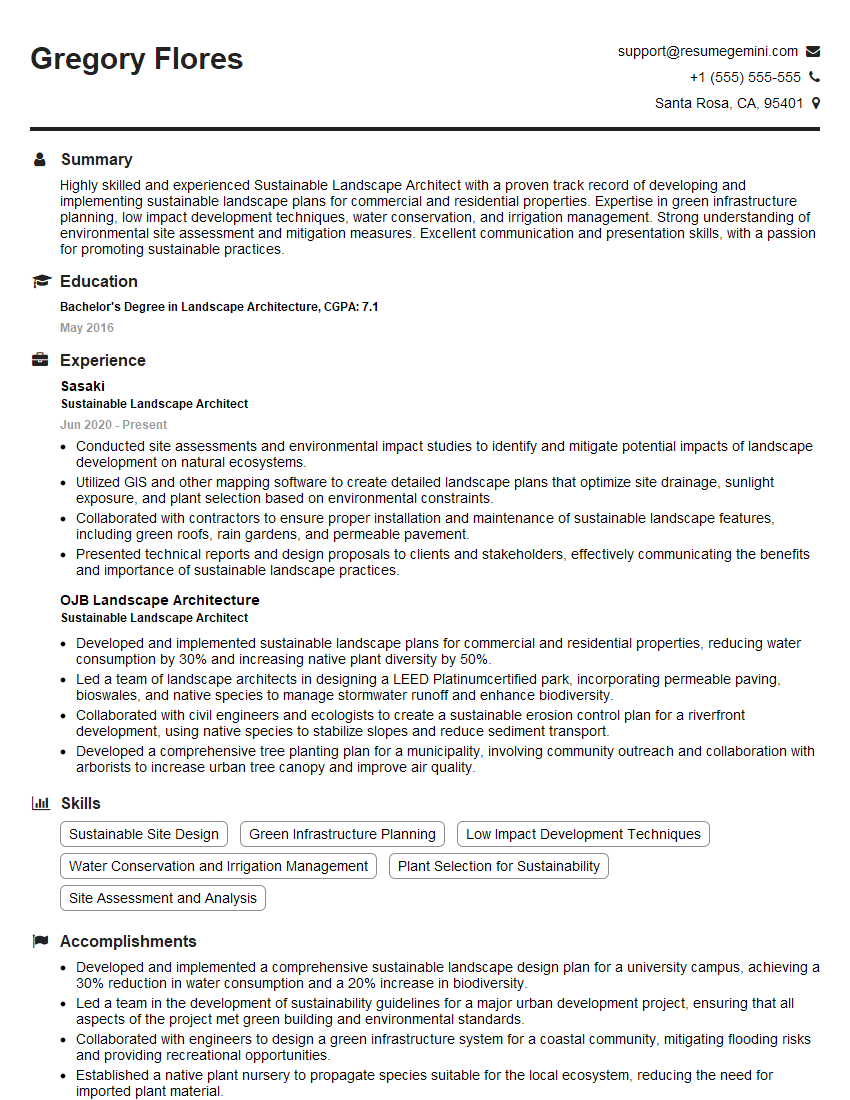
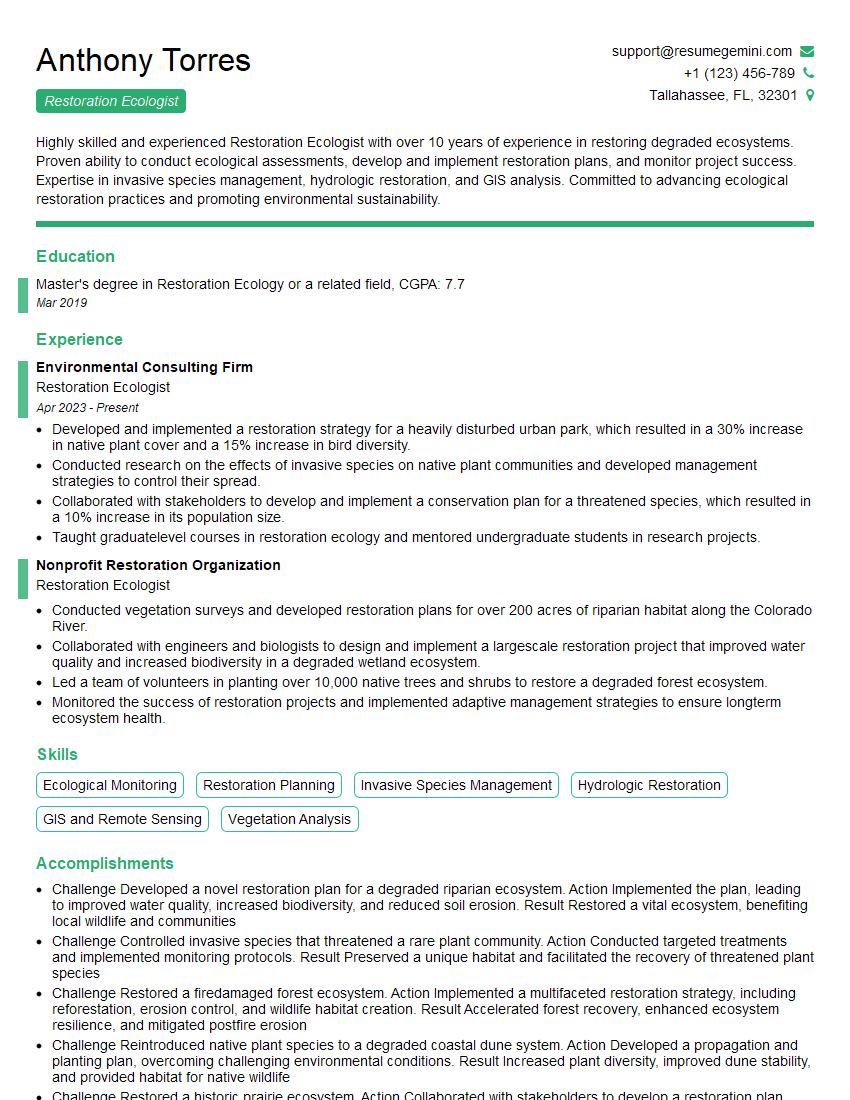
Mastering the Design and Implementation of Nature-Based Solutions opens doors to exciting and impactful careers in environmental management, conservation, and sustainable development. To stand out in a competitive job market, a strong resume is crucial. Creating an ATS-friendly resume that highlights your skills and experience in this rapidly growing field is essential for getting noticed by recruiters. We encourage you to leverage ResumeGemini, a trusted resource for building professional and effective resumes. ResumeGemini provides examples of resumes tailored to Design and Implementation of Nature-Based Solutions, helping you showcase your qualifications effectively and land your dream job.
Explore more articles
Users Rating of Our Blogs
Share Your Experience
We value your feedback! Please rate our content and share your thoughts (optional).
What Readers Say About Our Blog
To the interviewgemini.com Webmaster.
Very helpful and content specific questions to help prepare me for my interview!
Thank you
To the interviewgemini.com Webmaster.
This was kind of a unique content I found around the specialized skills. Very helpful questions and good detailed answers.
Very Helpful blog, thank you Interviewgemini team.