Cracking a skill-specific interview, like one for Distribution Mapping and Record Keeping, requires understanding the nuances of the role. In this blog, we present the questions you’re most likely to encounter, along with insights into how to answer them effectively. Let’s ensure you’re ready to make a strong impression.
Questions Asked in Distribution Mapping and Record Keeping Interview
Q 1. Explain the importance of accurate distribution mapping in logistics.
Accurate distribution mapping is the backbone of efficient logistics. It provides a clear, visual representation of your entire supply chain, from origin points to final destinations. This visibility allows for better decision-making, reduced operational costs, and improved customer satisfaction. Imagine trying to navigate a city without a map – chaotic, right? Similarly, without a distribution map, logistics become a guessing game, leading to delays, increased fuel consumption, and frustrated customers.
For example, a company distributing perishable goods needs accurate mapping to identify the fastest routes to minimize spoilage. A retail chain uses distribution maps to optimize warehouse placement to minimize delivery times to its stores.
Q 2. Describe different types of distribution maps and their applications.
Several types of distribution maps cater to different logistical needs:
- Route Maps: These show the specific paths taken by vehicles during delivery, highlighting distances, travel times, and potential obstacles. They’re essential for optimizing delivery routes and tracking shipments in real-time.
- Territory Maps: These visually represent sales territories or regions, helping businesses allocate resources effectively and understand market penetration. They might color-code regions by sales volume or customer density.
- Heat Maps: These show the concentration of certain activities or data points, such as delivery frequencies or customer locations. High-density areas appear darker, allowing you to quickly identify areas needing more or fewer resources.
- Network Maps: These provide a comprehensive overview of the entire distribution network, showing all locations, transportation routes, and relationships between them. They help analyze the overall efficiency and identify bottlenecks.
The choice of map depends on the specific logistical challenge. A company focused on optimizing individual deliveries might prioritize route maps, while a large retail chain might rely more on territory and network maps for strategic planning.
Q 3. How do you ensure data accuracy in distribution record keeping?
Data accuracy is paramount in distribution record keeping. Inaccurate data leads to poor decisions and financial losses. Here’s how I ensure accuracy:
- Data Validation: Implementing checks and balances at each stage of data entry to catch errors early. This involves using data validation rules in software and regular audits.
- Data Source Verification: Ensuring that data comes from reliable and verifiable sources. This might involve using GPS tracking devices, barcode scanners, and automated data entry systems.
- Regular Reconciliation: Regularly comparing data from different sources to identify discrepancies. This could involve cross-checking inventory levels against shipment records and sales data.
- Automated Data Entry: Minimizing manual data entry to reduce human error. This involves using technology like barcode scanners, RFID tags, and automated data import tools.
- Employee Training: Providing comprehensive training to staff on accurate data entry and record-keeping procedures.
For instance, I once discovered a discrepancy in inventory data by comparing the physical inventory count with the system record, resulting in the identification of a faulty scanner that had misreported item quantities.
Q 4. What software or tools are you familiar with for distribution mapping?
My experience encompasses a range of software and tools:
- GIS Software (ArcGIS, QGIS): For creating and analyzing spatial data, optimizing routes, and generating various map types.
- Route Optimization Software (Route4Me, OptimoRoute): For planning efficient delivery routes, considering factors like traffic, distance, and time constraints.
- Transportation Management Systems (TMS): These integrate with mapping software to provide a comprehensive view of shipments, tracking, and delivery statuses.
- Spreadsheet Software (Excel, Google Sheets): While not dedicated mapping software, they are frequently used to organize and analyze distribution data before visualization on a map.
The specific tools used depend heavily on the organization’s size and operational complexity. A small business might use simple spreadsheet and route optimization software, while a large enterprise will typically integrate TMS with advanced GIS systems.
Q 5. Explain your experience with GIS software in a logistics context.
GIS software is indispensable in logistics. In previous roles, I used ArcGIS extensively to:
- Route Optimization: I utilized ArcGIS Network Analyst to analyze various routes, considering factors like traffic patterns, road closures, and delivery time windows. This resulted in significant fuel savings and improved delivery times.
- Warehouse Location Analysis: I employed GIS to analyze potential warehouse locations based on proximity to customers, transportation infrastructure, and cost factors. This improved efficiency and reduced distribution costs.
- Territory Management: I used GIS to create territory maps, optimizing the assignment of sales representatives and ensuring even coverage of our market.
- Risk Assessment: GIS helped identify areas with high risk factors (e.g., natural disasters, political instability), allowing for proactive risk mitigation strategies.
For example, using ArcGIS Network Analyst, I optimized delivery routes for a food distribution company, reducing their total delivery time by 15% and minimizing fuel consumption.
Q 6. How do you optimize delivery routes using mapping technology?
Optimizing delivery routes using mapping technology involves a multi-step process:
- Data Input: Gathering all relevant data, including pickup locations, delivery addresses, time windows, vehicle capacities, and traffic patterns.
- Route Planning Software: Using route optimization software to generate potential routes, considering various constraints.
- Algorithm Selection: Selecting the appropriate algorithm for route optimization. Factors to consider include the number of vehicles, delivery time windows, and distance constraints.
- Route Analysis: Evaluating the generated routes considering total distance, travel time, fuel consumption, and other relevant factors.
- Route Refinement: Making adjustments to the routes based on the analysis to further optimize efficiency.
- Implementation and Monitoring: Implementing the optimized routes and monitoring their effectiveness using real-time tracking data.
For instance, using a route optimization algorithm, I identified a 20% reduction in delivery time for a courier service by adjusting their delivery sequence and factoring in real-time traffic updates.
Q 7. Describe your experience with inventory management systems.
My experience with inventory management systems involves working with various software solutions to manage stock levels, track movement, and optimize inventory control. This has included:
- Data Entry and Tracking: Using inventory management software to accurately record stock levels, track inbound and outbound shipments, and monitor product movement throughout the supply chain.
- Demand Forecasting: Employing forecasting techniques to predict future demand and optimize inventory levels, minimizing stockouts and excess inventory.
- Inventory Control Techniques: Implementing various inventory control techniques, such as FIFO (First-In, First-Out) and ABC analysis (classifying items by value and demand), to improve efficiency and reduce waste.
- Integration with other systems: Integrating inventory management systems with other systems, such as ERP and TMS, to provide a holistic view of the supply chain.
For a client, I implemented a new inventory management system that reduced their stock holding costs by 10% and improved order fulfillment times by 15%, demonstrating the benefits of optimized inventory management.
Q 8. How do you handle discrepancies in inventory records?
Inventory discrepancies are a common challenge in distribution. My approach involves a systematic investigation using a combination of physical inventory counts, database checks, and reconciliation reports. First, I identify the discrepancy – is it a shortage, surplus, or a difference in location? Then, I trace the item’s journey through the system, examining receiving records, picking lists, shipping manifests, and any related documentation. Common causes include data entry errors, theft, damage, or misplacement. For example, if a physical count reveals fewer items than the system records, I might investigate potential theft by reviewing security footage or checking for unauthorized access. If the discrepancy involves a specific location, I would check the accuracy of the distribution map and the associated inventory data for that location. I then document all findings, implement corrective actions (adjusting inventory records, investigating loss or damage claims), and implement preventative measures to minimize future discrepancies. This might involve better training for staff on data entry procedures, improved physical security, or enhancements to our inventory management software. Finally, I create a report summarizing the investigation, findings, and corrective actions taken.
Q 9. Explain your process for reconciling inventory data with distribution maps.
Reconciling inventory data with distribution maps is crucial for accurate stock management and efficient order fulfillment. My process starts with a regular data synchronization between the inventory management system and the geographic information system (GIS) used for distribution mapping. This ensures both systems reflect the same real-time inventory levels at each location. I then perform regular audits, comparing the physical inventory counts at various distribution centers against the inventory data on the map. Any discrepancies trigger a deeper investigation, as detailed in the previous answer. For instance, if the map shows a higher inventory than the physical count at a specific warehouse, I would investigate potential reasons, such as damage, obsolete stock, or inaccurate reporting. A visual comparison of the map against the warehouse layout itself can help identify potential mislabeling or placement errors. Regular reconciliation not only corrects errors but also allows us to refine our mapping accuracy and optimize inventory placement strategies. It helps in identifying slow-moving stock, allowing for better forecasting and proactive measures like discounts or relocation of slow-moving inventory.
Q 10. How do you track and manage shipments using distribution mapping?
Distribution mapping plays a vital role in shipment tracking and management. We use the map to visualize the entire journey of a shipment, from origin to destination, showing real-time location updates using GPS tracking. We can monitor the progress of each shipment, identify potential delays, and even predict arrival times based on traffic conditions and other factors. The map provides a centralized view of all shipments, allowing us to efficiently manage multiple deliveries simultaneously. For example, if a shipment is delayed due to unforeseen circumstances, I can use the map to identify alternative routes or notify customers promptly. The data on the map, integrated with inventory management systems, also lets us optimize delivery routes, consolidate shipments, and improve overall efficiency. Different colors on the map may represent different stages of the shipment (e.g., in transit, at distribution center, delivered). This enables better coordination and effective response to changing circumstances.
Q 11. Describe your experience with real-time tracking systems.
My experience with real-time tracking systems is extensive. I’ve worked with various technologies, including GPS tracking, RFID (Radio-Frequency Identification), and IoT (Internet of Things) sensors. These systems provide invaluable data for monitoring shipments, improving delivery times, and enhancing customer service. For example, using GPS tracking, we can pinpoint the exact location of a truck and immediately alert the driver or the customer if a delay is anticipated. RFID tags on individual items allow us to track the inventory as it moves through the distribution chain, reducing loss and ensuring timely delivery. Integrating data from these systems into our distribution maps provides a dynamic, real-time view of the entire distribution network. We use this data to optimize delivery routes, predict potential bottlenecks, and alert stakeholders to any unusual activity or potential problems. Real-time tracking offers significantly improved transparency and accountability in our distribution process.
Q 12. How do you handle unexpected delays or disruptions to distribution?
Handling unexpected delays or disruptions requires a proactive and adaptable approach. When a delay occurs, the first step is identifying the cause – traffic congestion, weather events, equipment malfunction, or unforeseen circumstances. Our real-time tracking systems help in pinpointing the issue quickly. Once identified, I formulate a contingency plan which might include rerouting shipments, alerting customers about potential delays, and coordinating with logistics providers to find solutions. For example, if a major highway is blocked due to an accident, we would use alternative routes shown on the map and notify customers via SMS or email. We also maintain close communication with all stakeholders—suppliers, carriers, and customers—to ensure transparency and manage expectations. The distribution map assists in visualizing the impact of the disruption on the entire network and helps determine the most efficient course of action. Post-incident analysis is critical to identify the root cause and implement preventative measures to minimize the likelihood of similar disruptions in the future. This might involve diversifying our transportation options or creating a more robust risk management plan.
Q 13. Explain your approach to problem-solving in distribution mapping.
My approach to problem-solving in distribution mapping involves a structured, data-driven methodology. I start by clearly defining the problem, gathering relevant data from multiple sources (inventory records, distribution maps, logistics data), and analyzing the information to identify patterns and potential causes. For instance, if delivery times are consistently exceeding targets in a specific region, I’d analyze delivery routes on the map, examine traffic patterns, and investigate whether there are issues with local infrastructure or logistics partners. I then generate potential solutions and evaluate their feasibility and impact. This might involve optimizing delivery routes, adjusting delivery schedules, or exploring alternative transportation methods. I implement the chosen solution, monitor its effectiveness, and make adjustments as needed. This iterative process is essential for continuous improvement. I also document the entire process, including problem definition, analysis, solution implementation, and results, for future reference and learning.
Q 14. How do you ensure data security and privacy in distribution record keeping?
Data security and privacy are paramount in distribution record keeping. We implement robust security measures including access controls, data encryption, and regular security audits. Access to sensitive data is restricted to authorized personnel only, with different levels of access granted based on job roles and responsibilities. We use encryption both in transit and at rest to protect data from unauthorized access. Regular security audits and penetration testing help identify and address vulnerabilities. Our systems comply with relevant data privacy regulations, such as GDPR and CCPA. We anonymize or pseudonymize data wherever possible to protect the identities of individuals. Employee training on data security best practices is crucial. Furthermore, we maintain detailed audit trails of all data access and modifications, allowing us to track and investigate any suspicious activity. Data backups and disaster recovery plans are in place to ensure business continuity in the event of data loss or system failure.
Q 15. What are some key performance indicators (KPIs) you use to evaluate distribution efficiency?
Evaluating distribution efficiency requires a multifaceted approach using key performance indicators (KPIs). These metrics provide quantifiable insights into various aspects of the distribution process, allowing for targeted improvements. Some crucial KPIs I utilize include:
- On-Time Delivery Rate: This measures the percentage of orders delivered within the promised timeframe. A low rate suggests potential issues with logistics, transportation, or forecasting.
- Order Fulfillment Cycle Time: This tracks the time taken from order placement to delivery. Reducing this cycle time enhances customer satisfaction and operational efficiency.
- Inventory Turnover Rate: This KPI reflects how efficiently inventory is managed. A high turnover rate indicates effective inventory control, minimizing storage costs and reducing the risk of obsolescence.
- Distribution Costs per Unit: Tracking this helps identify areas where cost optimization is possible, such as transportation, warehousing, or handling.
- Perfect Order Rate: This holistic KPI considers on-time delivery, order accuracy, and damage-free condition. A high perfect order rate reflects excellent overall distribution performance.
- Customer Satisfaction Score (CSAT) related to delivery: Directly measuring customer happiness with the delivery process provides valuable feedback on areas needing attention.
By monitoring these KPIs, I can identify bottlenecks and areas requiring improvement, ultimately optimizing the entire distribution network.
Career Expert Tips:
- Ace those interviews! Prepare effectively by reviewing the Top 50 Most Common Interview Questions on ResumeGemini.
- Navigate your job search with confidence! Explore a wide range of Career Tips on ResumeGemini. Learn about common challenges and recommendations to overcome them.
- Craft the perfect resume! Master the Art of Resume Writing with ResumeGemini’s guide. Showcase your unique qualifications and achievements effectively.
- Don’t miss out on holiday savings! Build your dream resume with ResumeGemini’s ATS optimized templates.
Q 16. How do you analyze distribution data to identify areas for improvement?
Analyzing distribution data involves a systematic approach using various techniques. I typically start by identifying key trends and patterns within the data using descriptive statistics. This could involve calculating averages, standard deviations, and percentages for the KPIs mentioned earlier. For example, a consistently low on-time delivery rate for a specific region might highlight a problem with that regional distribution center or shipping partner.
Further analysis might involve more advanced techniques like regression analysis to identify correlations between different variables, such as order volume and delivery time. Data visualization plays a critical role here. Tools like Tableau or Power BI allow me to create interactive dashboards that show these trends and patterns visually, making it easier to spot areas for improvement.
For example, a geographical heatmap showing delivery times across different regions might reveal delivery delays concentrated in specific areas, prompting investigation into local transportation infrastructure or delivery partner performance. Root cause analysis is then implemented to understand the underlying reasons for any identified problems, whether they are related to warehousing, transportation, inventory management, or other factors. These findings inform strategies for improvements.
Q 17. Describe your experience with reporting and data visualization techniques.
My experience in reporting and data visualization is extensive. I’m proficient in using tools such as Tableau, Power BI, and even Excel for creating insightful visualizations. I understand the importance of tailoring reports to the audience and the specific question being asked. For instance, a high-level executive summary might utilize concise charts showing key performance indicators, while a more detailed report for operational managers would include granular data and supporting analysis.
I’ve developed various dashboards to monitor distribution KPIs, highlighting key performance indicators such as order fulfillment time, inventory turnover, and on-time delivery rates. These dashboards include interactive elements that allow users to drill down into specific details, offering a more comprehensive understanding of the distribution process. I also leverage data storytelling techniques to communicate complex findings clearly and effectively. For example, I might present a trend analysis of delivery times over several quarters, illustrating improvements made as a result of process optimizations.
Q 18. How do you manage large datasets related to distribution?
Managing large datasets related to distribution requires utilizing efficient data management techniques and tools. I leverage relational databases (like SQL Server or MySQL) to structure and organize large amounts of data effectively. These databases allow for efficient querying and retrieval of specific information. I also employ data warehousing techniques to aggregate data from multiple sources into a central repository for analysis.
Additionally, I utilize cloud-based solutions like AWS S3 or Azure Blob Storage for storing large datasets, ensuring scalability and accessibility. Data processing tools like Apache Spark or Hadoop are employed for handling massive datasets that would be challenging to process using traditional methods. Regular data cleaning and validation are crucial to ensure data accuracy and consistency, impacting the reliability of subsequent analyses.
Q 19. Explain your familiarity with different data formats (e.g., CSV, XML, JSON).
I’m familiar with various data formats, including CSV, XML, and JSON. CSV (Comma Separated Values) is a simple, widely used format ideal for tabular data. XML (Extensible Markup Language) is a more structured format suitable for representing complex data hierarchies. JSON (JavaScript Object Notation) is a lightweight format frequently used for data exchange in web applications. I have experience parsing, transforming, and loading (ETL) data from these formats into databases or data warehouses using programming languages such as Python or SQL.
For example, I might use Python libraries like Pandas to read and process a CSV file containing sales data, then use SQL to load this data into a database for further analysis. Understanding these formats is crucial for integrating data from diverse sources, which is often necessary in distribution management.
Q 20. How do you collaborate with other departments (e.g., sales, production) to ensure efficient distribution?
Collaboration is key to efficient distribution. I work closely with sales, production, and other departments through regular meetings, shared data platforms, and collaborative project management tools. With the sales team, I ensure accurate demand forecasting, aligning distribution capacity with anticipated sales volumes. This prevents stockouts or overstocking.
With the production team, I coordinate production schedules with distribution plans to ensure timely delivery of finished goods. This involves close monitoring of inventory levels and production output. Clear communication and data sharing are paramount. For example, daily production updates are shared to ensure timely transportation arrangements. Regular performance review meetings with all stakeholders allow for adjustments to the strategy based on observed performance against targets.
Q 21. Describe your experience with warehouse management systems (WMS).
My experience with Warehouse Management Systems (WMS) is significant. I’ve worked with various WMS platforms, implementing and optimizing them to improve warehouse operations. A WMS streamlines warehouse activities like receiving, putaway, picking, packing, and shipping. I understand the importance of choosing a WMS that aligns with specific business needs and integrates seamlessly with other systems, such as ERP (Enterprise Resource Planning) and TMS (Transportation Management System).
In past roles, I’ve implemented WMS solutions resulting in improvements in inventory accuracy, reduced picking times, optimized warehouse layouts, and better labor productivity. A key aspect of WMS implementation is configuration and customization to match the unique requirements of the warehouse. This might involve setting up specific picking strategies, defining warehouse zones, and integrating with barcode scanning systems for accurate tracking. Regular monitoring of WMS performance is critical to identify areas needing further optimization and to ensure the system remains effective in supporting the distribution operation.
Q 22. How do you maintain accurate records of inventory movements?
Maintaining accurate inventory records in distribution is crucial for efficient operations and profitability. It involves a multi-faceted approach leveraging technology and robust processes. Think of it like meticulously tracking every ingredient in a complex recipe – you need to know exactly what you have, where it is, and when it was received or shipped.
- Real-time Tracking Systems: Implementing Warehouse Management Systems (WMS) or Enterprise Resource Planning (ERP) systems is key. These systems automatically update inventory levels upon each transaction – receiving, picking, packing, and shipping. For instance, when a shipment arrives, the system updates the inventory count based on the scanned barcodes or RFID tags of each item.
- Regular Cycle Counting: Physical inventory checks are vital to reconcile system data with actual stock. Instead of a massive annual count, we implement a cycle counting strategy, checking small sections of the warehouse regularly. This allows us to identify discrepancies early and prevent large-scale errors. For example, we might check all items from a particular supplier every week.
- Auditing and Reconciliation: Regular audits of inventory records ensure data integrity and pinpoint areas for improvement. We compare system data against physical counts, investigate variances, and adjust processes accordingly. A detailed audit trail records all changes and allows us to track down errors quickly.
- Data Backup and Security: Implementing robust data backup and security measures is vital to prevent data loss and maintain operational continuity. We use regular offsite backups and access control systems to limit unauthorized modifications.
By combining these methods, we ensure our inventory records are as accurate and up-to-date as possible, enabling efficient order fulfillment and minimizing stockouts or overstocking.
Q 23. How do you ensure compliance with relevant regulations in distribution?
Compliance in distribution is paramount. It covers many areas, including safety regulations, environmental protection, and data privacy. Think of it as a complex legal framework you must navigate expertly to prevent penalties and maintain a positive reputation.
- Understanding Regulations: We start by identifying all relevant local, national, and international regulations that apply to our operations, including those related to hazardous materials handling (Hazmat), food safety (if applicable), and data protection (like GDPR or CCPA).
- Developing Standard Operating Procedures (SOPs): We translate regulations into clear, concise SOPs that all employees follow. These procedures detail every step of the distribution process, ensuring compliance at every stage. For example, we have detailed SOPs for handling Hazmat materials, including labeling, storage, and transportation.
- Regular Training and Audits: We provide regular training to employees on relevant regulations and SOPs. We also conduct regular internal audits and external compliance checks to ensure ongoing adherence. This helps identify gaps and areas for improvement before issues arise.
- Record Keeping: Meticulous record keeping is crucial. This includes documenting all compliance-related activities, such as training records, safety inspections, and shipment documentation. This allows for easy demonstration of compliance during external audits.
- Continuous Improvement: Regulations are constantly evolving. We actively monitor changes and adapt our processes accordingly, ensuring our operations always remain compliant.
By prioritizing compliance, we not only avoid legal issues but also build trust with customers and stakeholders, demonstrating our commitment to ethical and responsible practices.
Q 24. Describe your experience with barcode and RFID technologies.
Barcode and RFID technologies are fundamental in modern distribution, offering significant improvements in speed and accuracy. Think of barcodes as simple labels that carry unique identification, while RFID acts like a sophisticated tracking system.
- Barcode Technology: I have extensive experience using barcode scanners for various applications, including receiving shipments, picking orders, and tracking inventory movements. Barcodes provide a simple and cost-effective way to identify and track individual items. We integrate barcode scanning into our WMS to automate data entry, reducing manual errors and speeding up the process.
- RFID Technology: RFID offers more advanced capabilities than barcodes. RFID tags can be read from a distance, enabling real-time tracking of pallets or even individual items without needing line-of-sight. This is particularly useful for tracking items throughout the distribution process, even when they are packed in boxes or on pallets. We’ve used RFID to track high-value goods and pharmaceuticals, ensuring complete visibility and minimizing loss or theft.
- Integration with WMS/ERP: The effectiveness of both barcode and RFID depends heavily on integration with our WMS/ERP systems. This allows for automatic data capture and updating of inventory levels, improving accuracy and efficiency. For example, when a pallet with RFID tags is received, the system automatically updates the inventory levels based on the tags’ information.
The choice between barcode and RFID often depends on budget and the specific needs of the operation. Many systems leverage both for optimal efficiency. Barcode technology excels for individual item tracking, while RFID is particularly advantageous when tracking large quantities or monitoring location in real-time.
Q 25. How do you prioritize tasks and manage time effectively in a fast-paced distribution environment?
Prioritization and time management are critical skills in a fast-paced distribution environment. It’s about focusing on the most important tasks first and making efficient use of your time. Imagine juggling multiple balls – some are fragile and require immediate attention, others can wait.
- Prioritization Matrix: I employ a prioritization matrix (e.g., Eisenhower Matrix) to categorize tasks based on urgency and importance. Urgent and important tasks are tackled immediately, while important but not urgent tasks are scheduled for later. Less important tasks are delegated or eliminated entirely. For example, resolving a customer order issue is always urgent and important, while updating a training document might be important but can be scheduled.
- Time Blocking: I allocate specific time blocks for different tasks. This helps me maintain focus and prevents multitasking, which is often less efficient. For instance, I might dedicate the first two hours of the morning to reviewing urgent emails and responding to critical requests.
- Workflow Optimization: I constantly look for ways to streamline workflows and eliminate bottlenecks. This might involve improving processes, utilizing technology more effectively, or delegating tasks appropriately. For example, automating repetitive tasks using scripts or macros frees up time for higher-value activities.
- Communication and Teamwork: Open communication and effective teamwork are vital. This includes keeping stakeholders informed of progress, proactively addressing potential delays, and collaborating with colleagues to share workloads and ensure smooth operations.
Continuous self-reflection and adjustment are necessary. Regularly evaluating my time management strategies and adjusting them based on experience helps me become more efficient over time.
Q 26. Explain your understanding of supply chain management principles.
Supply chain management (SCM) is the overarching system that manages the flow of goods and services from origin to consumption. Think of it as the intricate network connecting suppliers, manufacturers, distributors, and customers. Efficient SCM ensures products are available at the right place, at the right time, and at the right cost.
- Planning and Forecasting: Accurate demand forecasting is crucial for optimal inventory levels. This involves analyzing historical sales data, market trends, and seasonal fluctuations to anticipate future demand. This helps prevent stockouts and minimizes storage costs.
- Sourcing and Procurement: Selecting reliable suppliers and negotiating favorable terms are essential. This includes assessing supplier capabilities, evaluating quality, and managing relationships to ensure a consistent supply of goods. Effective procurement also includes risk management – considering factors such as geopolitical stability and potential supply disruptions.
- Inventory Management: Maintaining optimal inventory levels involves balancing the costs of holding inventory with the risk of stockouts. Techniques like Just-in-Time (JIT) inventory management aim to minimize inventory costs by receiving goods only when needed.
- Logistics and Transportation: Efficient transportation is critical for delivering goods on time and within budget. This includes selecting the appropriate transportation mode (e.g., truck, rail, air), optimizing routes, and managing logistics providers. Technology like route optimization software plays a vital role in reducing transportation costs.
- Customer Relationship Management (CRM): Strong customer relationships are essential for understanding customer needs and providing exceptional service. This includes proactive communication, efficient order fulfillment, and addressing customer issues promptly.
Effective SCM requires collaboration and coordination across all stages of the supply chain. Technology plays a crucial role in connecting different parts of the system and improving visibility and efficiency.
Q 27. How do you adapt to changes in distribution strategies and technology?
Adaptability is essential in distribution, given the continuous evolution of strategies and technologies. It’s about embracing change and proactively seeking ways to improve. Think of it like a river adapting its course – it bends and flows around obstacles, always finding its way to the ocean.
- Continuous Learning: I stay updated on industry trends and technological advancements through professional development, attending conferences, and reading industry publications. This ensures I’m always aware of the latest developments and can adapt my approach accordingly.
- Embracing New Technologies: I’m always eager to explore and implement new technologies that improve efficiency and accuracy. This includes WMS, TMS (Transportation Management Systems), and automation solutions. We recently implemented a new route optimization software that significantly reduced delivery times and fuel consumption.
- Agile Approach: I adopt an agile approach to change management, focusing on iterative improvements and adapting to feedback. Instead of large-scale overhauls, we implement smaller changes incrementally, allowing for flexibility and continuous refinement.
- Collaboration and Communication: Adapting to change requires effective communication and collaboration with stakeholders. This includes sharing information transparently, soliciting feedback, and coordinating efforts to ensure a smooth transition.
Adaptability is not just about reacting to change, but also about proactively seeking opportunities for improvement and innovation. By embracing a growth mindset, we can transform challenges into opportunities for enhancing efficiency and effectiveness.
Q 28. Describe your experience with implementing new distribution systems or processes.
Implementing new distribution systems or processes involves careful planning, execution, and monitoring. It’s akin to building a new house – careful design, strong foundations, and meticulous construction are crucial for a successful outcome.
- Needs Assessment: We start by identifying the specific needs and challenges that the new system or process aims to address. This often involves analyzing existing systems, identifying bottlenecks, and assessing the overall efficiency of the current operations. For example, we might analyze delivery times and customer satisfaction to identify areas for improvement.
- System Selection and Design: We carefully select the appropriate system or design the new process, considering factors such as scalability, cost-effectiveness, and integration with existing systems. This might involve evaluating different software solutions, conducting proof-of-concept tests, and obtaining stakeholder buy-in.
- Implementation and Training: We implement the new system or process in stages, minimizing disruption to existing operations. This involves comprehensive training for employees to ensure they understand how to use the new system effectively. We also develop detailed documentation and support materials.
- Testing and Monitoring: Thorough testing is essential to identify any bugs or issues before full deployment. Once the system is live, we closely monitor performance metrics, identify areas for improvement, and make necessary adjustments. For instance, we might track key performance indicators (KPIs) such as order fulfillment rates, delivery times, and customer satisfaction scores.
- Continuous Improvement: Implementing a new system is not a one-time event. We continuously monitor and improve the system over time, making adjustments as needed to ensure it remains efficient and effective.
Successful implementation requires careful planning, collaboration, and a commitment to continuous improvement. By taking a structured approach, we ensure the new system or process delivers the anticipated benefits.
Key Topics to Learn for Distribution Mapping and Record Keeping Interview
- Distribution Network Design: Understanding different distribution network structures (e.g., direct, indirect, multi-channel), their strengths and weaknesses, and how to select the optimal structure for specific products and markets. Consider factors like cost, speed, and customer reach.
- Mapping Software & Tools: Familiarity with Geographic Information Systems (GIS) software and other mapping tools used for visualizing distribution networks, identifying optimal routes, and analyzing geographic market data. Practical application involves showcasing experience with specific software or your ability to quickly learn new tools.
- Inventory Management Techniques: Understanding inventory control principles, including forecasting demand, managing stock levels, and minimizing storage costs. This includes knowledge of different inventory management systems (e.g., FIFO, LIFO) and their implications.
- Data Analysis & Reporting: Proficiency in analyzing distribution data to identify trends, optimize routes, and improve efficiency. This involves using data to make informed decisions about inventory levels, warehouse locations, and transportation strategies. Be prepared to discuss data visualization techniques.
- Record-Keeping Best Practices: Knowledge of industry-standard record-keeping procedures to ensure data accuracy, compliance with regulations, and efficient information retrieval. This may involve experience with specific software or manual systems.
- Problem-Solving & Optimization: Ability to identify and solve logistical challenges related to distribution, such as delays, inefficiencies, and inaccuracies in data. Be ready to discuss examples of how you approached and resolved such issues.
- Supply Chain Integration: Understanding how distribution mapping and record keeping integrate with the broader supply chain, including procurement, manufacturing, and logistics. This shows a holistic understanding of the process.
Next Steps
Mastering Distribution Mapping and Record Keeping is crucial for career advancement in logistics, supply chain management, and related fields. These skills are highly sought after, demonstrating your ability to optimize operations, reduce costs, and improve customer satisfaction. To significantly boost your job prospects, creating an ATS-friendly resume is essential. This ensures your qualifications are effectively communicated to hiring managers. We strongly recommend using ResumeGemini to build a professional and impactful resume. ResumeGemini offers a streamlined process and provides examples of resumes tailored to Distribution Mapping and Record Keeping, giving you a head start in crafting a winning application.

Operations Manager Resume Sample
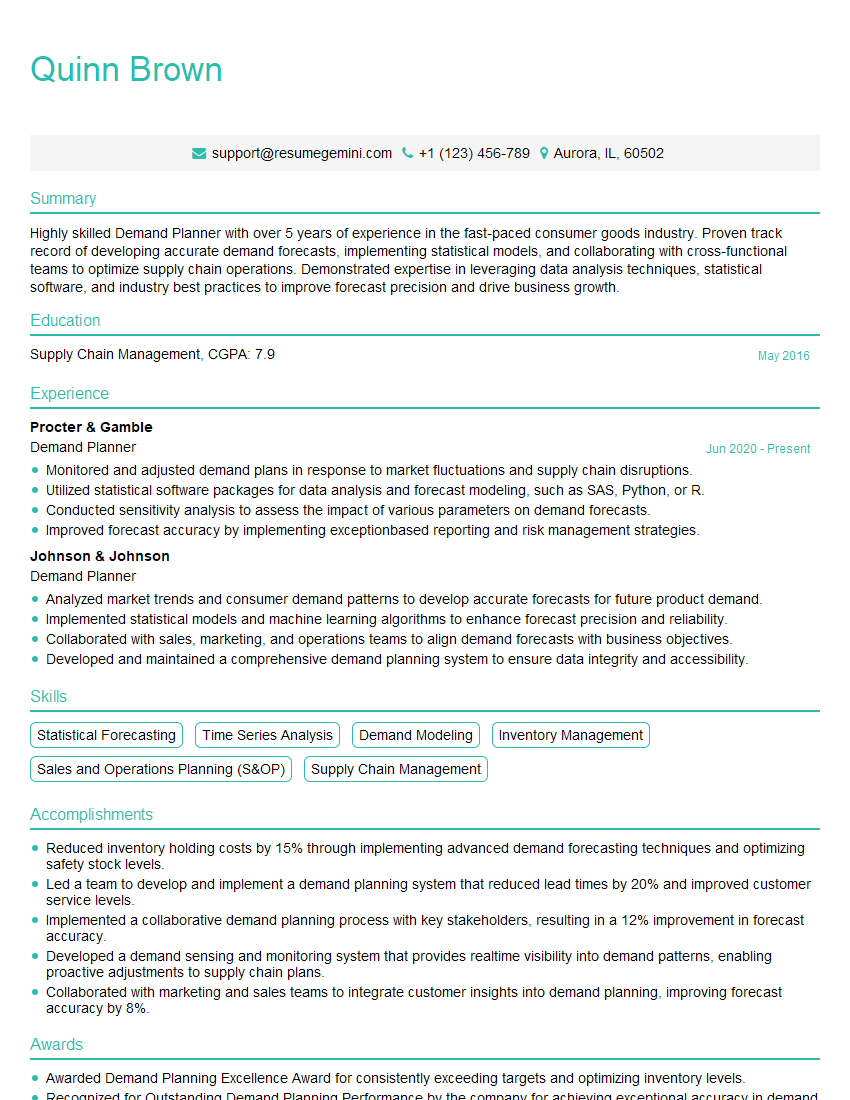
Demand Planner Resume Sample

Supply Chain Manager Resume Sample
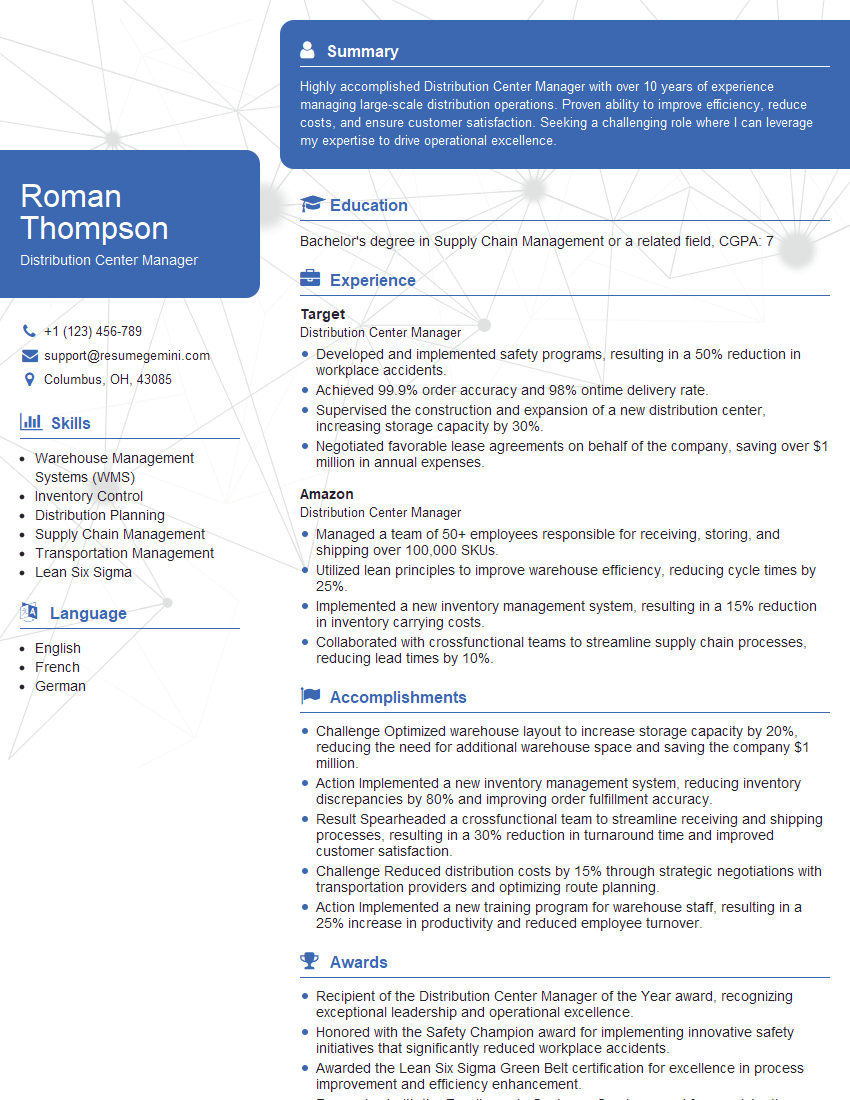
Distribution Center Manager Resume Sample
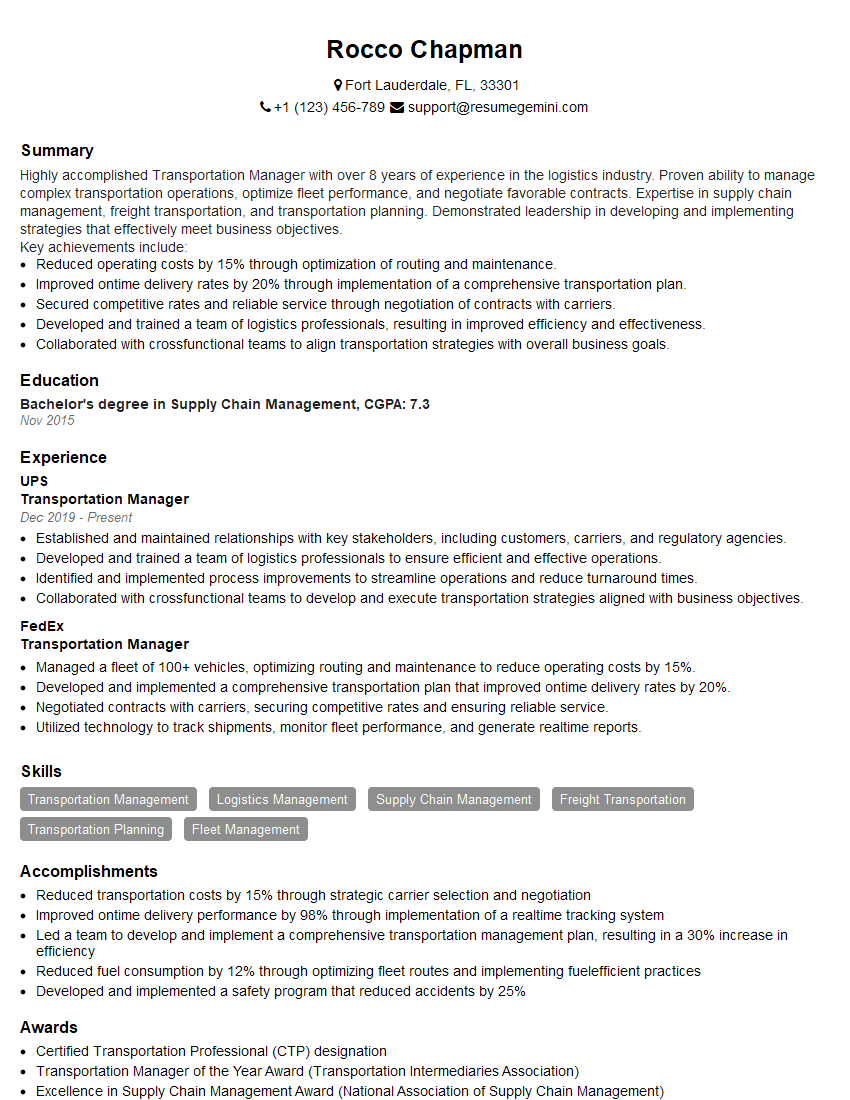
Transportation Manager Resume Sample
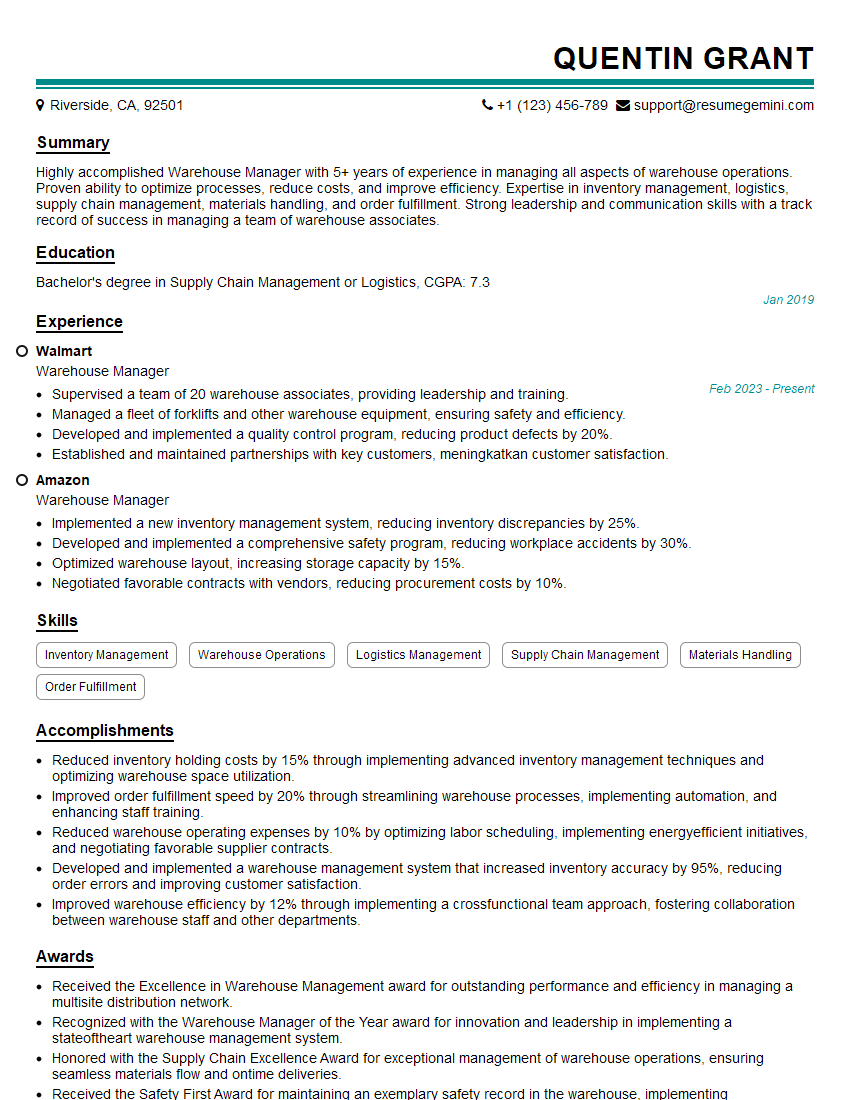
Warehouse Manager Resume Sample
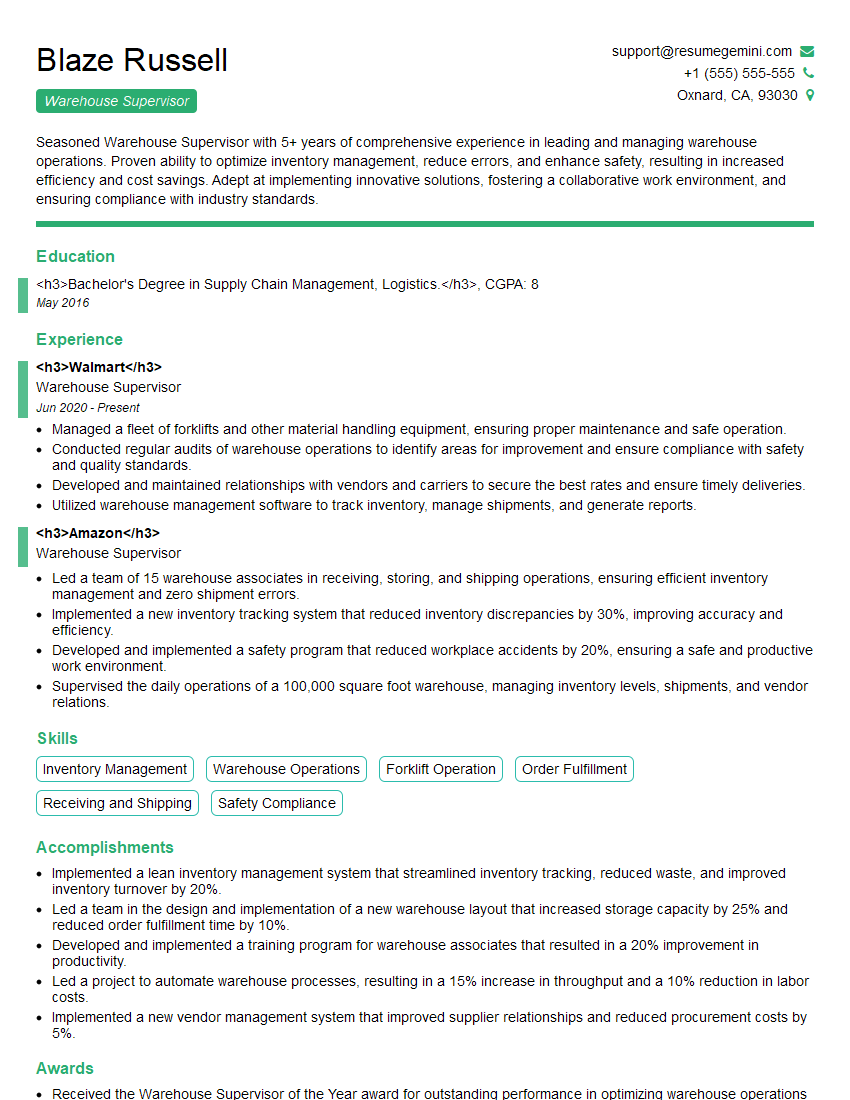
Warehouse Supervisor Resume Sample
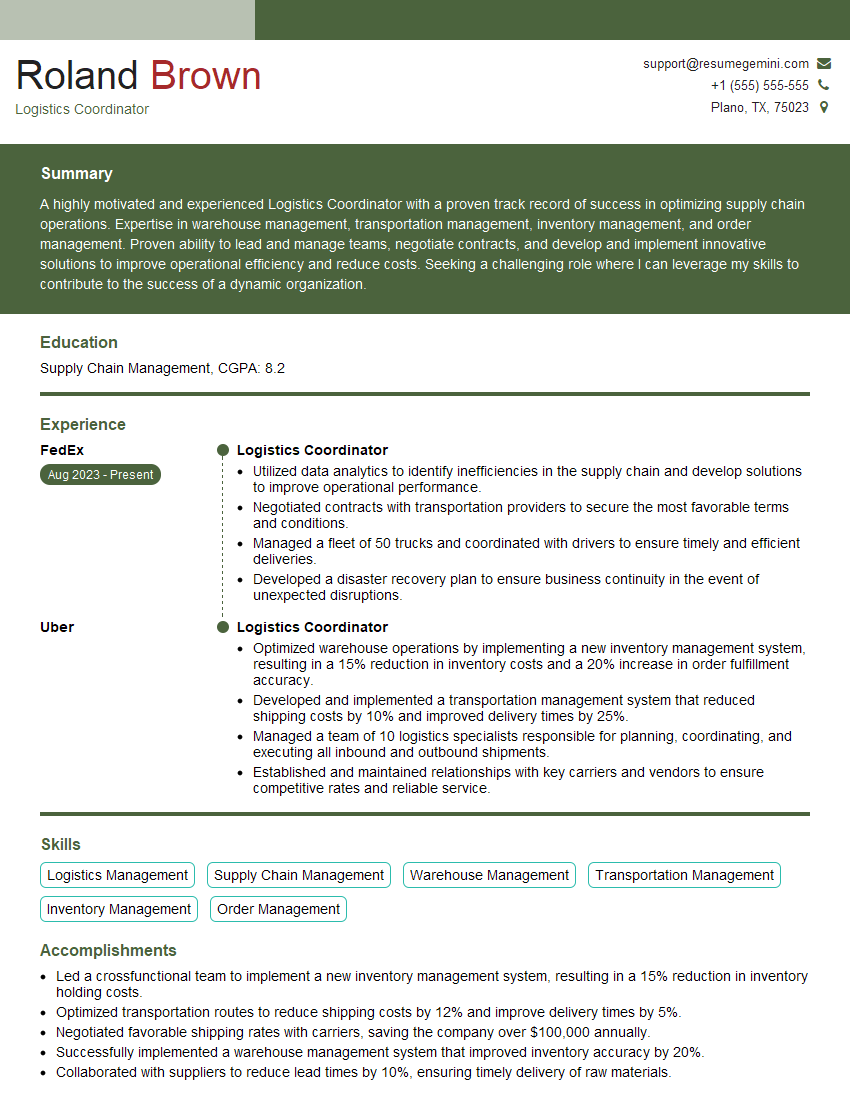
Logistics Coordinator Resume Sample
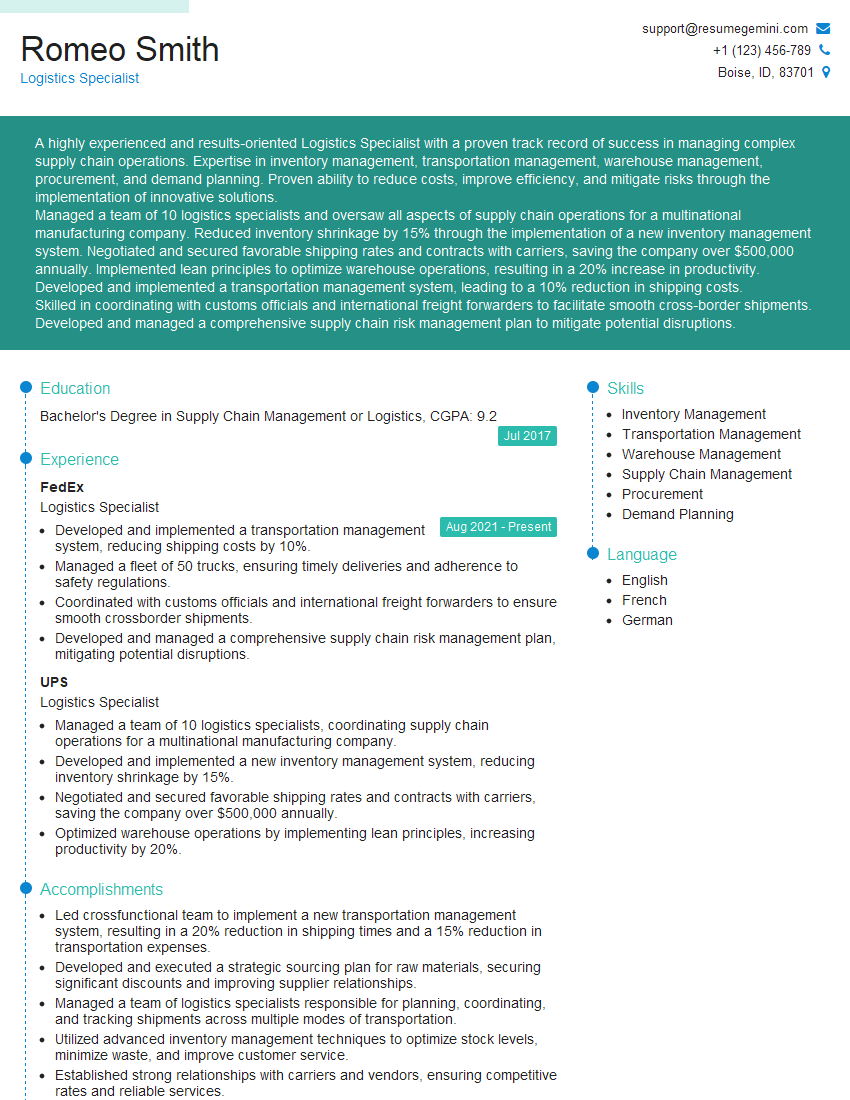
Logistics Specialist Resume Sample
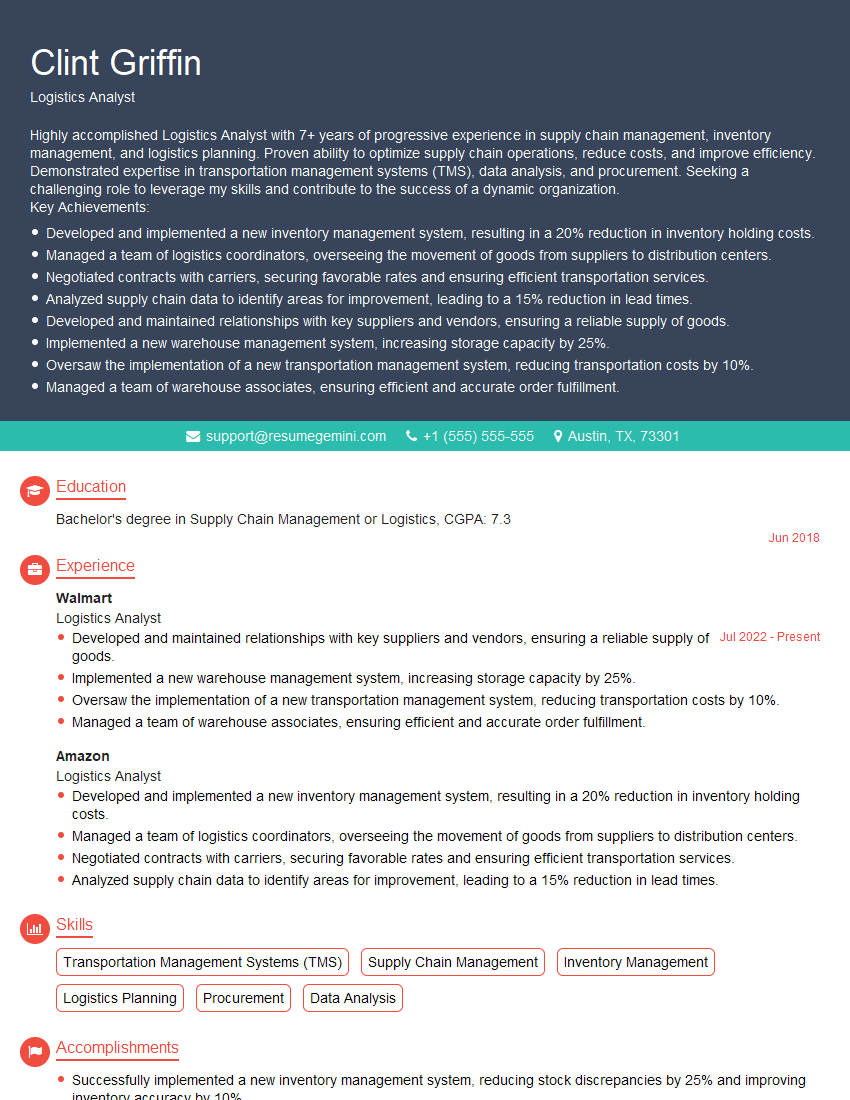
Logistics Analyst Resume Sample
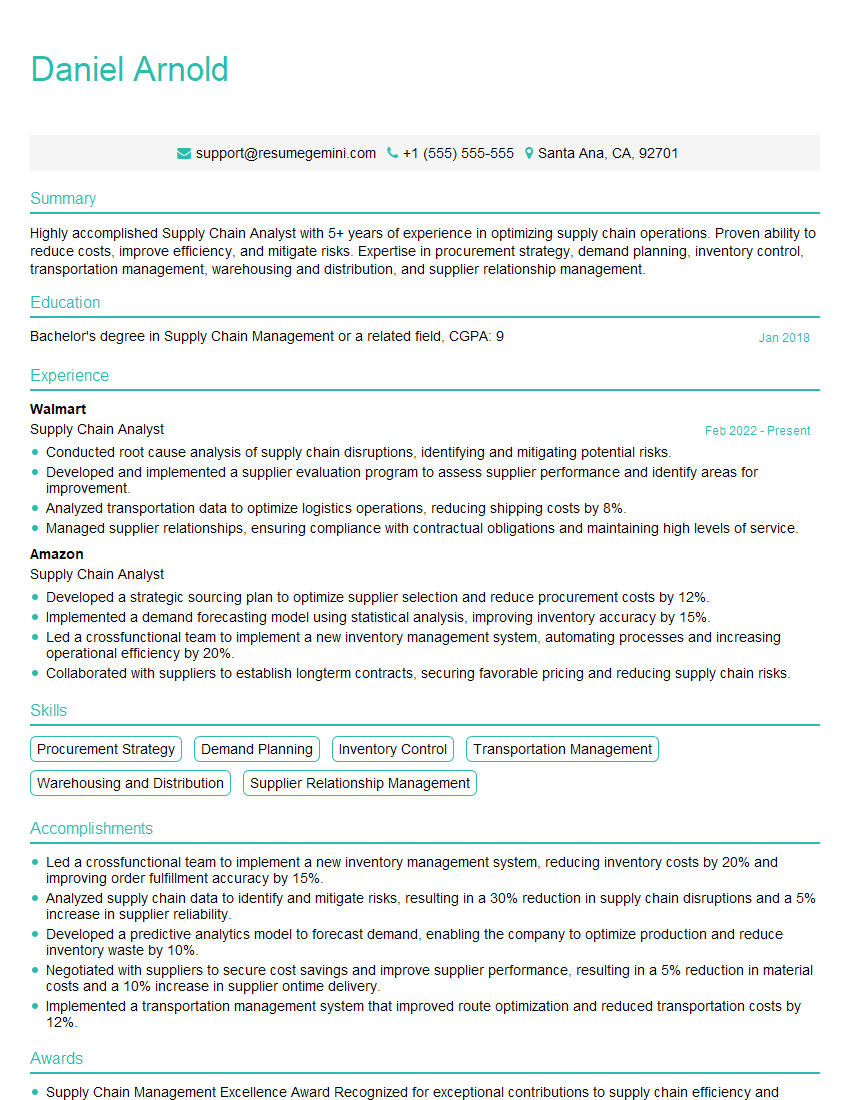
Supply Chain Analyst Resume Sample
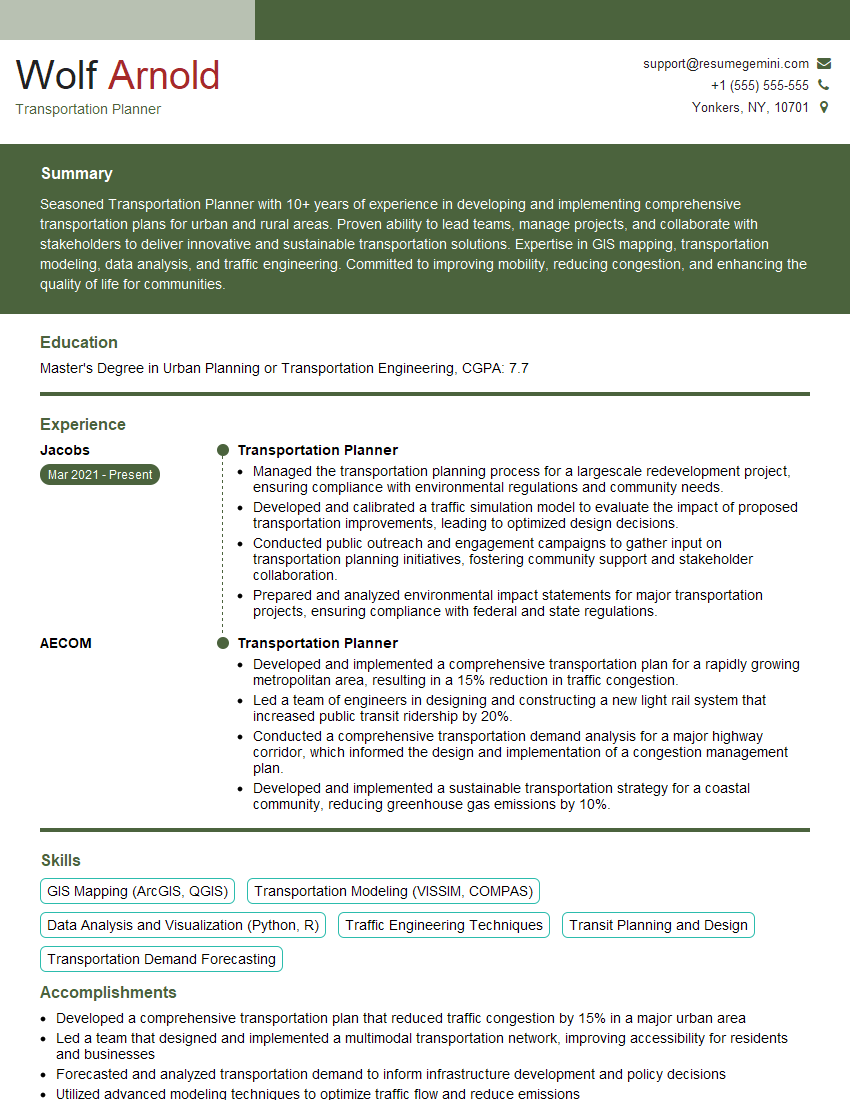
Transportation Planner Resume Sample
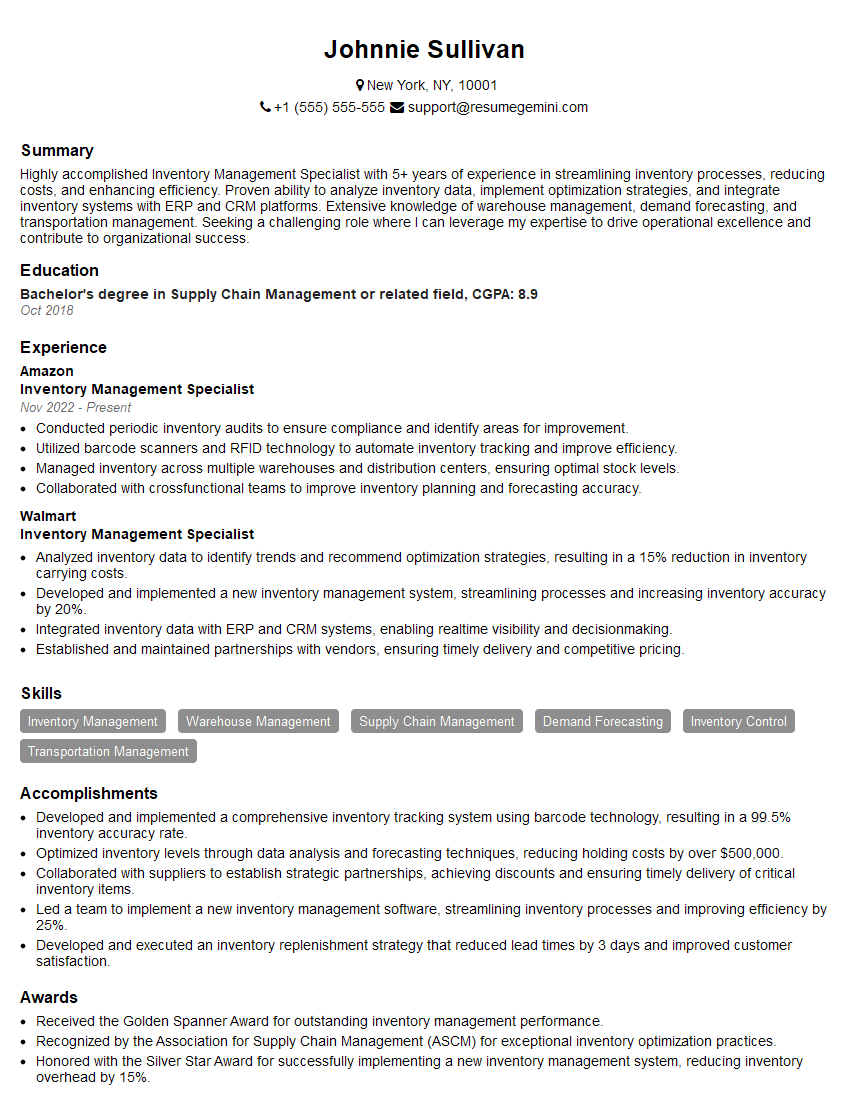
Inventory Management Specialist Resume Sample
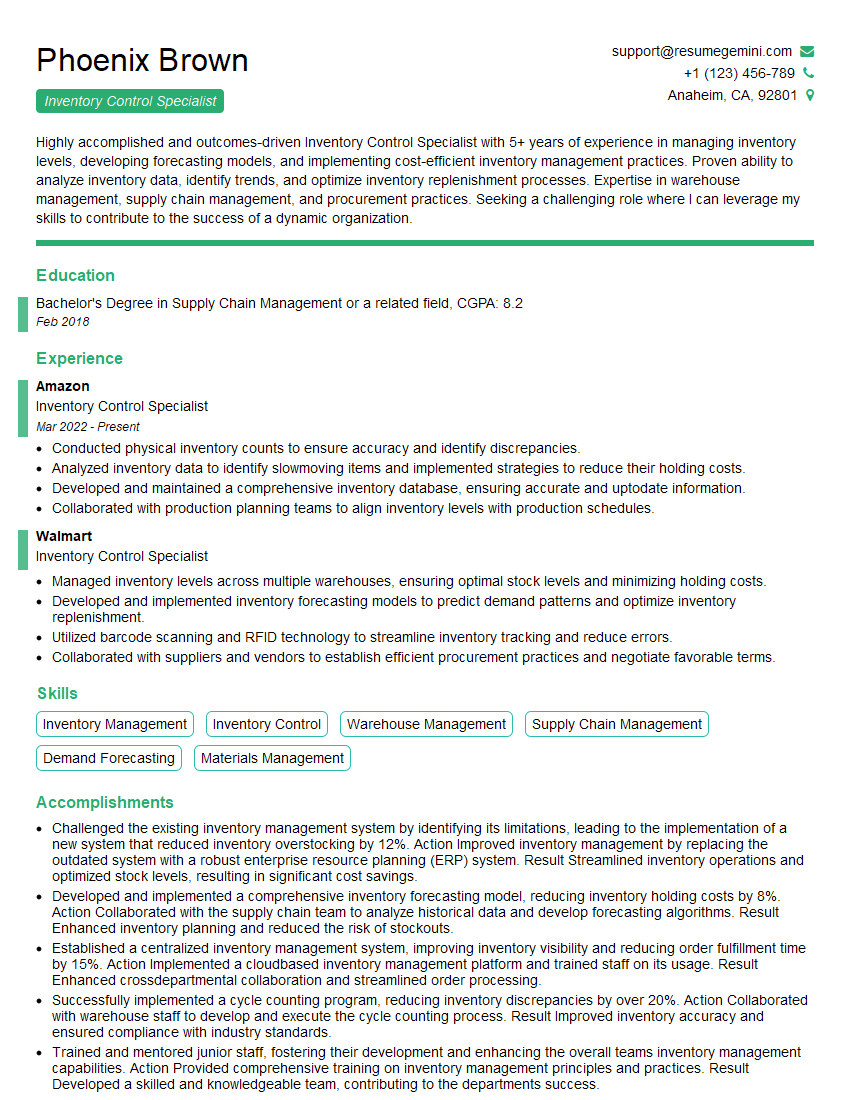
Inventory Control Specialist Resume Sample
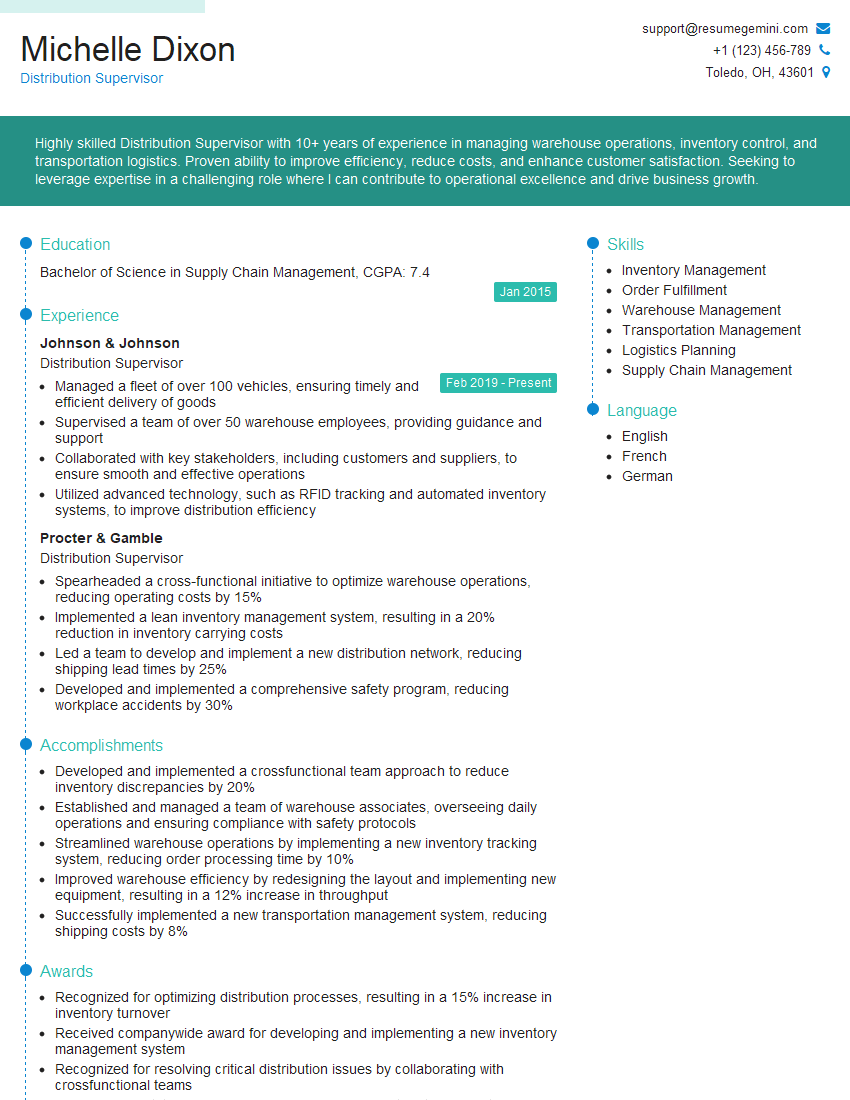
Distribution Supervisor Resume Sample
- Operations Manager
- Demand Planner
- Supply Chain Manager
- Distribution Center Manager
- Transportation Manager
- Warehouse Manager
- Warehouse Supervisor
- Logistics Coordinator
- Logistics Specialist
- Logistics Analyst
- Supply Chain Analyst
- Transportation Planner
- Inventory Management Specialist
- Inventory Control Specialist
- Distribution Supervisor
Explore more articles
Users Rating of Our Blogs
Share Your Experience
We value your feedback! Please rate our content and share your thoughts (optional).
What Readers Say About Our Blog
To the interviewgemini.com Webmaster.
Very helpful and content specific questions to help prepare me for my interview!
Thank you
To the interviewgemini.com Webmaster.
This was kind of a unique content I found around the specialized skills. Very helpful questions and good detailed answers.
Very Helpful blog, thank you Interviewgemini team.