Cracking a skill-specific interview, like one for Economic and Business Development, requires understanding the nuances of the role. In this blog, we present the questions you’re most likely to encounter, along with insights into how to answer them effectively. Let’s ensure you’re ready to make a strong impression.
Questions Asked in Economic and Business Development Interview
Q 1. Explain the concept of comparative advantage and its implications for regional economic development.
Comparative advantage, a cornerstone of international trade theory, explains how regions or countries can benefit from specializing in producing and exporting goods or services they can produce relatively more efficiently than others. It doesn’t mean being absolutely better at producing something, but rather having a lower opportunity cost. This means, for example, if a region is exceptionally good at producing wine and reasonably good at producing cheese, it should focus on wine even if another region might produce slightly better cheese. The reason is that the opportunity cost of producing cheese (i.e., the wine production forgone) is higher in the region specializing in wine.
For regional economic development, understanding comparative advantage is crucial. Regions should identify their unique strengths – be it abundant natural resources, a skilled workforce in a specific industry, or a supportive regulatory environment – and focus on developing industries that leverage these advantages. For example, a region with a strong agricultural base might specialize in high-value agricultural products, while a region with a high concentration of tech talent might focus on software development or advanced manufacturing. Ignoring comparative advantage leads to inefficient resource allocation and missed economic opportunities.
This concept isn’t static; it can shift over time with technological advancements, changes in consumer demand, or improvements in infrastructure. Regions need to continuously assess their comparative advantages and adapt their economic development strategies accordingly.
Q 2. Describe different economic development strategies, and provide examples of their successful implementation.
Economic development strategies vary widely, but some common approaches include:
- Investment in Human Capital: This involves improving education, skills training, and healthcare to enhance the productivity of the workforce. Example: Germany’s renowned apprenticeship system fosters a highly skilled workforce driving its industrial strength.
- Infrastructure Development: Building and upgrading transportation networks, energy infrastructure, and communication systems improves connectivity and attracts businesses. Example: China’s massive investment in high-speed rail has significantly boosted its economic integration and growth.
- Industry Clusters: Concentrating related businesses and institutions geographically fosters innovation, collaboration, and specialization. Example: Silicon Valley’s concentration of tech companies creates a powerful ecosystem driving innovation.
- Entrepreneurship and Innovation Support: Providing resources, funding, and mentorship to startups and small businesses promotes job creation and economic diversification. Example: Israel’s robust startup ecosystem attracts significant venture capital and produces global tech giants.
- Attracting Foreign Direct Investment (FDI): Incentivizing multinational corporations to invest in the region can bring capital, technology, and jobs. Example: Ireland’s success in attracting FDI from multinational technology companies has significantly boosted its economy.
Successful implementation requires a strategic approach that considers the region’s unique context, resources, and goals. A coordinated effort involving government, private sector, and community stakeholders is essential for effective implementation.
Q 3. How would you assess the economic health of a region or community?
Assessing a region’s economic health involves a multifaceted approach, examining a range of economic indicators. A balanced assessment considers both leading indicators (predictive) and lagging indicators (reflective of past performance).
- Leading Indicators: These predict future economic trends. Examples include consumer confidence, building permits, manufacturing orders, and unemployment claims.
- Lagging Indicators: These reflect past economic activity. Examples include GDP growth rate, inflation rate, unemployment rate, and income levels.
Beyond these, other crucial aspects include:
- Income Distribution: An assessment of income inequality provides a picture of societal well-being.
- Industry Diversity: Over-reliance on a few industries makes the economy vulnerable to shocks. A diversified economy is more resilient.
- Infrastructure Quality: Robust infrastructure is essential for attracting businesses and facilitating economic activity.
- Business Environment: Factors such as regulations, tax policies, and access to capital play a significant role.
- Educational Attainment: A skilled workforce is essential for a thriving economy.
Data sources include government statistics, industry reports, academic research, and surveys. Analyzing these indicators provides a holistic view of the region’s economic health and informs policy decisions.
Q 4. What are the key indicators of a successful business development project?
The key indicators of a successful business development project are multifaceted and should be defined upfront with clear, measurable goals. Broadly, they can be categorized as:
- Financial Performance: This includes metrics such as revenue growth, profitability, return on investment (ROI), and job creation. Did the project generate the expected financial returns and create the projected number of jobs?
- Operational Efficiency: Assessing operational efficiency involves measuring productivity, cost-effectiveness, and supply chain management. Did the project streamline processes and improve the overall efficiency of the business?
- Market Impact: Assessing market share, customer satisfaction, and brand awareness provides insights into the project’s impact on the market. Did the project achieve its market penetration targets and gain customer loyalty?
- Social Impact: This involves considering the project’s contribution to the local community, including job creation, environmental sustainability, and community engagement. Did the project positively impact the community in terms of employment and environmental protection?
- Sustainability: A successful project should be sustainable in the long term, demonstrating financial stability, resilience, and adaptability to market changes. Will the project continue to operate profitably and contribute to the economy in the long term?
Tracking these indicators throughout the project lifecycle allows for timely adjustments and ensures the project stays on track to achieve its objectives.
Q 5. What are some common challenges in attracting foreign direct investment (FDI)?
Attracting foreign direct investment (FDI) presents several challenges:
- Political and Economic Instability: Uncertainty in political landscapes and economic volatility deter investors seeking stable and predictable environments.
- Bureaucracy and Regulations: Complex and inefficient regulatory processes, excessive paperwork, and corruption can significantly hinder investment.
- Infrastructure Deficiencies: Inadequate infrastructure, including transportation, energy, and communication networks, can make a region less attractive.
- Skills Gaps: A lack of skilled labor can limit the attractiveness of a region to businesses requiring specialized expertise.
- Competition from Other Regions: Regions compete aggressively to attract FDI, making it crucial to offer attractive incentives and a compelling investment proposition.
- Perceptions of Risk: Negative perceptions regarding safety, security, and the business environment can deter investors.
Addressing these challenges requires proactive policies aimed at improving the investment climate, streamlining regulations, developing infrastructure, and promoting the region’s unique advantages.
Q 6. How do you measure the return on investment (ROI) for an economic development initiative?
Measuring the ROI of an economic development initiative is complex and requires a comprehensive approach. It’s not simply about calculating financial returns but also considering broader economic and social impacts.
Financial ROI: This focuses on direct financial benefits, such as increased tax revenue, job creation leading to increased income tax collection, and increased property values. This can be challenging to isolate from other economic factors.
Economic Impact Analysis: This broader approach uses economic modeling to estimate the total economic impact of the initiative, including indirect and induced effects (e.g., increased spending by new employees, ripple effects throughout the supply chain). This often utilizes input-output models.
Social Impact Assessment: This assesses the broader societal benefits, including improved quality of life, reduced poverty, and increased social equity. Measuring these qualitative benefits is more challenging, often relying on surveys and qualitative data.
Cost-Benefit Analysis: This compares the total costs of the initiative with its total benefits (both financial and non-financial). A positive cost-benefit ratio indicates the initiative generated more benefits than costs.
The most effective approach involves a combination of these methods, using both quantitative and qualitative data to paint a complete picture of the initiative’s ROI. It’s crucial to set clear, measurable goals at the outset to facilitate effective ROI assessment.
Q 7. What is your understanding of cluster development and its benefits?
Cluster development focuses on geographically concentrating interconnected businesses, suppliers, research institutions, and other relevant organizations within a specific industry. Think of it as creating a synergistic ecosystem where businesses benefit from proximity and collaboration.
Benefits of Cluster Development:
- Increased Innovation: Close proximity fosters knowledge sharing, collaboration, and innovation.
- Enhanced Competitiveness: Clusters create a pool of specialized talent and resources, improving the competitiveness of individual firms.
- Improved Productivity: Efficient supply chains, specialized service providers, and a skilled workforce contribute to increased productivity.
- Attraction of FDI: Clusters attract foreign investment due to their specialized expertise and strong industry presence.
- Economic Diversification (in some cases): While often focused on a specific sector, well-planned clusters can indirectly contribute to economic diversification by stimulating related industries.
Successful cluster development requires a proactive approach involving government support, industry collaboration, and investment in infrastructure and skills development. Examples include Silicon Valley (technology), Hollywood (entertainment), and the automotive cluster in Detroit (though facing challenges).
Q 8. Explain the role of public-private partnerships (PPPs) in economic development.
Public-private partnerships (PPPs) are collaborative arrangements between government entities and private sector companies to deliver public infrastructure, services, or projects. They leverage the strengths of both sectors – the government’s regulatory power and public funding, and the private sector’s efficiency and innovation – to achieve economic development goals more effectively than either could alone.
For example, a PPP might involve a private company building and operating a new highway in exchange for toll revenue, sharing the risk and reward. This can accelerate infrastructure development, which is often hampered by bureaucratic delays and budget constraints in the public sector. Another example could be a private company partnering with a city to develop affordable housing, where the private company provides expertise and capital while the city offers land and regulatory support.
The benefits of PPPs include:
- Faster project delivery: Private sector efficiency often leads to quicker project completion.
- Reduced public financial burden: Private investment reduces the upfront costs for governments.
- Improved project quality: Private sector expertise can result in better-designed and constructed projects.
- Innovation and technology transfer: Private companies bring innovative approaches and technologies.
However, PPPs are not without challenges. Careful structuring of contracts is essential to mitigate risks and ensure transparency and accountability. Potential challenges include potential for cost overruns, disputes over contracts, and the need for effective oversight mechanisms.
Q 9. How would you address the issue of unemployment in a specific community?
Addressing unemployment in a specific community requires a multi-pronged approach focusing on understanding the root causes and implementing targeted solutions. A thorough needs assessment is the first step, identifying the specific skills gap, availability of jobs, and barriers to employment (e.g., lack of transportation, childcare, or digital literacy).
My strategy would involve:
- Skills Development and Training Programs: Partnering with local vocational schools, community colleges, and businesses to offer training in high-demand skills, tailored to the specific needs of the community. This could include programs in manufacturing, healthcare, technology, or other growth sectors.
- Job Creation Initiatives: Attracting new businesses to the community through incentives, streamlining regulations, and highlighting the advantages of the location. This could involve marketing the community to potential investors and supporting entrepreneurship through incubators and accelerators.
- Infrastructure Improvements: Investing in transportation, broadband internet, and other infrastructure to make the community more attractive to businesses and residents, improving access to job opportunities.
- Addressing Barriers to Employment: Implementing programs to address barriers like childcare, transportation, and digital literacy. This could include subsidies for childcare, transportation assistance, and digital literacy training.
- Collaboration and Partnerships: Working closely with local businesses, community organizations, educational institutions, and government agencies to create a coordinated effort. Regular stakeholder meetings and community engagement are crucial for success.
For instance, if a community is struggling with unemployment due to a decline in manufacturing, a strategic response might involve retraining programs focused on advanced manufacturing techniques or attracting companies in related industries.
Q 10. Discuss the importance of infrastructure development for economic growth.
Infrastructure development plays a pivotal role in fostering economic growth. Think of infrastructure as the foundation upon which a strong economy is built. It encompasses the physical and organizational structures needed for society to function, including transportation networks, communication systems, energy grids, water and sanitation systems, and digital infrastructure.
Effective infrastructure contributes to economic growth in several ways:
- Reduced Transportation Costs: Efficient transportation networks lower the cost of moving goods and people, boosting trade and productivity.
- Increased Productivity: Reliable infrastructure, such as electricity and internet access, increases worker productivity and business efficiency.
- Attracting Investment: Well-developed infrastructure makes a region more attractive to businesses looking to invest and expand.
- Facilitating Innovation: Modern infrastructure supports innovation by providing access to information and technology.
- Improved Public Health and Education: Adequate infrastructure, including access to clean water and healthcare facilities, improves the overall well-being of the population, contributing to a more productive workforce.
For example, the construction of a new port can significantly stimulate economic activity by facilitating international trade. Similarly, investment in broadband internet access can attract technology companies and foster innovation in a region.
Q 11. Describe your experience with grant writing and securing funding for economic development projects.
I have extensive experience in grant writing and securing funding for economic development projects. My approach is methodical and data-driven, focusing on identifying the most suitable funding opportunities and crafting compelling proposals that resonate with the funding agency’s priorities.
My process typically involves:
- Identifying Funding Opportunities: Thorough research of available grants from federal, state, and local government agencies, as well as private foundations. I use online databases and networks to stay informed of new opportunities.
- Needs Assessment and Project Design: Conducting a comprehensive needs assessment to identify the most pressing economic development challenges in the target community and developing a project proposal that addresses those needs effectively.
- Grant Writing and Proposal Development: Crafting well-written proposals that clearly articulate the project’s goals, methodology, budget, and expected outcomes. This includes strong narrative, data-driven justification, and attention to detail in compliance with the funder’s guidelines.
- Building Relationships with Funders: Networking with funding agency representatives to establish rapport and understand their priorities. This helps tailor the proposal to increase the chances of success.
- Monitoring and Evaluation: Tracking project progress, collecting data, and reporting to the funder on outcomes to demonstrate accountability and impact.
I have successfully secured funding for projects ranging from workforce development initiatives to infrastructure improvements, demonstrating a track record of securing multi-million dollar grants.
Q 12. How would you analyze market trends to identify opportunities for business growth?
Analyzing market trends to identify business growth opportunities requires a systematic approach combining qualitative and quantitative data. It’s about understanding the evolving needs and preferences of consumers, identifying emerging industries, and anticipating future market shifts.
My approach involves:
- Market Research: Gathering data from various sources including market research reports, industry publications, government statistics, and competitor analysis. I also leverage online tools and databases to track market trends and consumer behavior.
- Competitive Analysis: Identifying key competitors, analyzing their strengths and weaknesses, and assessing their market share. Understanding the competitive landscape is crucial for identifying niche opportunities.
- Consumer Behavior Analysis: Studying consumer demographics, preferences, and purchasing patterns. This involves analyzing consumer surveys, focus groups, and social media data.
- Technological Trends: Monitoring technological advancements and their potential impact on the market. This might involve researching emerging technologies and their applications in different industries.
- Economic Forecasting: Considering macroeconomic factors such as GDP growth, inflation, and interest rates, as these factors significantly influence business opportunities.
For example, recognizing the growing demand for sustainable products and services could lead to identifying business opportunities in the eco-friendly industry. Or, observing an increase in online shopping could suggest expanding e-commerce capabilities.
Q 13. Explain your understanding of different economic models (e.g., Keynesian, neoclassical).
Keynesian and neoclassical economics represent two fundamentally different approaches to understanding how economies function. They offer contrasting perspectives on the role of government, market mechanisms, and the causes of economic fluctuations.
Keynesian economics, associated with John Maynard Keynes, emphasizes the role of aggregate demand in driving economic activity. It posits that during economic downturns, government intervention through fiscal policy (e.g., increased government spending or tax cuts) is necessary to stimulate demand and pull the economy out of recession. Keynesians believe that markets don’t always self-correct quickly and that government intervention can stabilize the business cycle.
Neoclassical economics, on the other hand, emphasizes the role of supply and individual incentives in shaping economic outcomes. It assumes that markets are generally efficient and self-regulating and that government intervention should be limited to providing a stable legal and regulatory framework. Neoclassical economists tend to favor policies that promote competition and free markets, believing that these will lead to optimal resource allocation and economic growth in the long run.
In practice, many modern economic policies draw on aspects of both schools of thought. For example, while a neoclassical approach might focus on tax cuts to incentivize investment, a Keynesian approach might advocate for government spending on infrastructure projects to stimulate demand during a recession. Understanding both perspectives is essential for developing comprehensive and effective economic policies.
Q 14. How do you assess the feasibility of a new business venture?
Assessing the feasibility of a new business venture involves a thorough evaluation of various factors to determine the likelihood of success. This process requires a systematic approach incorporating market analysis, financial projections, and a comprehensive risk assessment.
My assessment process typically includes:
- Market Analysis: Determining the size and potential of the target market, identifying competitors, and assessing the demand for the product or service. This involves market research, competitive analysis, and customer segmentation.
- Financial Projections: Developing detailed financial projections, including startup costs, revenue forecasts, profit margins, and cash flow statements. This requires a thorough understanding of the business model and cost structure.
- Management Team Assessment: Evaluating the experience and capabilities of the management team. A strong and experienced management team is crucial for success.
- Operational Plan: Developing a detailed operational plan that outlines the business processes, supply chain management, production methods, and marketing strategies.
- Risk Assessment: Identifying potential risks and developing mitigation strategies. This involves evaluating factors such as market competition, regulatory changes, technological disruptions, and economic downturns.
- Funding Strategy: Developing a plan for securing the necessary funding, including evaluating different funding options such as bootstrapping, angel investors, venture capital, or bank loans.
By systematically evaluating these factors, I can generate a comprehensive feasibility report that assesses the potential for success and identifies key risks and challenges. This report serves as a valuable tool for decision-making and securing funding.
Q 15. What is your experience with data analysis in the context of economic development?
Data analysis is crucial for effective economic development. My experience involves leveraging various quantitative and qualitative methods to understand regional economies, identify growth opportunities, and assess the impact of development initiatives. This includes working with datasets encompassing demographic information, employment statistics, business registrations, investment trends, and infrastructure data. For instance, I’ve used regression analysis to model the relationship between infrastructure investment and job creation in a specific region, and geographic information systems (GIS) to map economic activity and identify areas needing targeted intervention. Furthermore, I’ve conducted surveys and focus groups to gather qualitative insights complementing quantitative data, providing a holistic picture.
Specifically, I’ve used tools such as R, Python (with libraries like Pandas and NumPy), and statistical software packages like STATA to analyze large datasets, create visualizations, and generate reports to inform decision-making. The focus is always on translating complex data into actionable insights for policymakers and stakeholders.
Career Expert Tips:
- Ace those interviews! Prepare effectively by reviewing the Top 50 Most Common Interview Questions on ResumeGemini.
- Navigate your job search with confidence! Explore a wide range of Career Tips on ResumeGemini. Learn about common challenges and recommendations to overcome them.
- Craft the perfect resume! Master the Art of Resume Writing with ResumeGemini’s guide. Showcase your unique qualifications and achievements effectively.
- Don’t miss out on holiday savings! Build your dream resume with ResumeGemini’s ATS optimized templates.
Q 16. How would you create a strategic economic development plan for a specific region?
Creating a strategic economic development plan requires a systematic approach. It starts with a comprehensive assessment of the region’s current economic condition – its strengths, weaknesses, opportunities, and threats (SWOT analysis). This involves analyzing existing industry clusters, infrastructure capabilities, labor market dynamics, and the competitive landscape. Following this assessment, the plan should define clear, measurable, achievable, relevant, and time-bound (SMART) goals. These goals could be focused on increasing employment rates in specific sectors, attracting foreign investment, or improving the business environment.
The next step involves identifying strategic priorities and developing targeted initiatives. For example, if the region lacks skilled labor, the plan might include investments in education and training programs. If infrastructure is a constraint, the plan might prioritize upgrades to transportation networks or broadband access. The plan should also include strategies for marketing the region to potential investors and businesses. Finally, a robust monitoring and evaluation framework is vital to track progress, identify challenges, and make necessary adjustments throughout implementation.
Imagine a rural region with a declining agricultural sector. A strategic plan might diversify the economy by focusing on ecotourism, leveraging the natural beauty of the area, while simultaneously supporting the development of small-scale agribusinesses that incorporate sustainable practices.
Q 17. What are the ethical considerations in economic development projects?
Ethical considerations are paramount in economic development. Projects must be designed and implemented in a way that is fair, equitable, and respects the rights of all stakeholders. This includes:
- Environmental sustainability: Projects should minimize environmental harm and promote sustainable practices.
- Social equity: Benefits should be broadly distributed, avoiding the exacerbation of existing inequalities. Consideration must be given to the impact on marginalized communities.
- Transparency and accountability: Decision-making processes should be transparent, and projects should be accountable to the communities they impact. This includes open access to data and clear communication.
- Respect for cultural heritage: Development should respect local cultures and traditions, avoiding displacement or the destruction of culturally significant sites.
- Conflict of interest: Potential conflicts of interest must be identified and managed proactively to ensure impartiality.
For example, a large-scale infrastructure project might displace a community. Ethically, it demands mitigation strategies like fair compensation, relocation assistance, and opportunities for community participation in decision-making.
Q 18. Describe your experience with community engagement in economic development initiatives.
Community engagement is vital for successful economic development. My experience involves employing diverse methods to ensure that local communities are actively involved in the planning, implementation, and monitoring of projects. This has included organizing public forums, conducting surveys and focus groups, establishing community advisory boards, and partnering with local organizations.
In one project, we used participatory mapping techniques to engage residents in identifying their priorities for economic development in their neighborhood. This participatory approach ensured that the final plan was relevant to the community’s needs and aspirations. Another example involved creating a local business incubator program after a series of workshops with community members revealed a high demand for entrepreneurship support.
Effective community engagement requires active listening, transparency, and a commitment to building trust. It’s not just about informing the community, but about genuinely collaborating with them.
Q 19. How would you measure the social impact of an economic development program?
Measuring the social impact of an economic development program requires a multifaceted approach beyond simply looking at economic indicators. We need to assess how the program affects various aspects of well-being. This can be done through quantitative and qualitative methods. Quantitative methods might include tracking changes in poverty rates, income inequality, access to healthcare and education, and crime rates. Qualitative methods might include conducting interviews and focus groups to understand how the program has affected people’s lives and perceptions of their community.
Key indicators could involve measuring improvements in health outcomes, educational attainment, social cohesion, and community well-being. For example, if a program aims to create jobs, we need to look beyond the number of jobs created to consider the quality of those jobs (wages, benefits, working conditions), and their impact on families and households. It’s crucial to establish a baseline before program implementation and then conduct regular assessments to track progress and identify unintended consequences.
Q 20. Explain your understanding of sustainable development principles.
Sustainable development integrates economic growth with social equity and environmental protection. It’s about meeting the needs of the present without compromising the ability of future generations to meet their own needs. This principle guides the development process, ensuring that economic progress does not come at the expense of environmental degradation or social injustice.
It requires a holistic approach, considering the interdependencies between economic, social, and environmental systems. For instance, a sustainable economic development project might involve promoting renewable energy sources while creating jobs in the green technology sector and improving the quality of life for local communities. The three pillars of sustainability – economic, social, and environmental – must be balanced for true sustainability.
Q 21. How do you manage competing interests among stakeholders in economic development projects?
Managing competing interests among stakeholders in economic development is a significant challenge. It requires skillful facilitation, transparent communication, and a commitment to finding mutually beneficial solutions.
My approach involves establishing a clear communication strategy, holding regular stakeholder meetings, and creating platforms for dialogue and negotiation. Techniques like collaborative planning workshops and mediation can help resolve conflicts and build consensus. It’s vital to actively listen to all stakeholders’ perspectives, acknowledge their concerns, and identify common goals. Sometimes, compromise is necessary, but the goal is always to find solutions that are equitable and sustainable in the long run. Prioritizing transparency in decision-making and providing clear justifications for choices will improve trust and understanding.
Q 22. Describe your experience with using Geographic Information Systems (GIS) in economic development analysis.
Geographic Information Systems (GIS) are invaluable tools in economic development analysis. They allow us to visualize and analyze spatial data, revealing patterns and relationships that might otherwise be missed. My experience with GIS involves leveraging its capabilities for site selection, market analysis, and infrastructure planning.
For instance, in a recent project focused on attracting a new manufacturing plant, we used GIS to identify suitable locations based on proximity to transportation hubs, access to skilled labor (analyzed via census data overlaid on the map), and availability of utilities. We could compare different sites visually, weighing factors like land costs and environmental regulations, all within the GIS environment. This allowed us to present a compelling case to the prospective company, demonstrating the clear advantages of locating in our target region.
Another example involved using GIS to analyze the spatial distribution of businesses within a specific sector. By mapping business locations and overlaying demographic data, we were able to identify underserved areas and inform targeted economic development strategies. This spatial analysis revealed market gaps and helped guide investment decisions to ensure a balanced and sustainable growth trajectory.
Q 23. What is your experience with economic impact analysis?
Economic impact analysis is crucial for assessing the effects of economic development projects on a community. It involves quantifying the changes in economic activity, employment, and income resulting from an intervention. My experience encompasses conducting both input-output modeling and cost-benefit analyses.
Input-output models are particularly useful for analyzing ripple effects throughout an economy. For example, if a new factory is built, we can model its impact not only on direct employment but also on related industries like transportation, construction, and retail. This helps us get a comprehensive understanding of the project’s overall impact and its multiplier effect on the local economy.
Cost-benefit analysis, on the other hand, involves comparing the costs of a project to its benefits, typically expressed in monetary terms. This allows decision-makers to make informed choices about resource allocation, ensuring projects generate positive net benefits. In one project, we used this to compare the costs of investing in a new technology park versus expanding existing infrastructure, concluding that the technology park offered a superior return on investment over the long term.
Q 24. How do you stay updated on the latest trends and developments in economic and business development?
Staying current in the dynamic fields of economic and business development requires a multi-pronged approach. I regularly follow leading academic journals like the Journal of Economic Geography and Regional Studies. I also attend conferences and workshops organized by organizations such as the Association for Public Policy Analysis and Management (APPAM) and the International Economic Development Council (IEDC).
Furthermore, I actively engage with online resources, including government reports, industry publications, and reputable news sources covering economic trends. I also maintain a network of colleagues and experts in the field, exchanging insights and engaging in ongoing professional development discussions. This constant learning ensures I am equipped with the latest tools, methodologies, and best practices to effectively contribute to economic development projects.
Q 25. Describe a time you had to make a difficult decision regarding resource allocation in an economic development project.
In one project focused on revitalizing a distressed downtown area, we had limited funding. We had to choose between investing in infrastructure improvements (like streetscaping and improved public transit) or supporting small business development through grants and loan programs. Both were crucial for long-term success.
The decision was complex because infrastructure improvements would attract more businesses in the long run, but immediate support for existing small businesses was crucial for preventing closures and maintaining community vitality. After extensive analysis considering the needs of the community and the potential for future growth, we opted for a phased approach, starting with a combination of small business support and initial infrastructure improvements, prioritizing projects with the quickest positive impact while laying the foundation for future larger-scale developments. This balanced approach resulted in more immediate economic benefit and long-term sustainability.
Q 26. How do you address challenges related to data scarcity in economic development projects?
Data scarcity is a common challenge in economic development. To address this, I employ several strategies. First, I explore alternative data sources. This may involve utilizing publicly available datasets from government agencies, academic research institutions, or non-profit organizations. Second, I employ data triangulation, which involves combining data from different sources to create a more complete picture.
For example, if reliable employment data is limited, we may supplement it with survey data or anecdotal evidence from local businesses. Third, if gaps are significant, I may use statistical modeling techniques, such as regression analysis, to estimate missing values. This requires carefully considering the assumptions made and acknowledging the limitations of the estimations. Finally, I always emphasize transparency in reporting data limitations to decision-makers, ensuring they are fully informed of the uncertainties involved in the analysis.
Q 27. What is your understanding of the role of technology in fostering economic development?
Technology plays a transformative role in fostering economic development. It increases productivity, improves efficiency, and creates new opportunities. The internet, for example, has opened up global markets for small and medium-sized enterprises (SMEs), allowing them to reach customers worldwide. E-commerce platforms have been particularly effective in this regard.
Furthermore, technological advancements in areas such as data analytics and artificial intelligence (AI) can help businesses make better decisions, optimize operations, and develop innovative products and services. The development of smart cities, leveraging technologies like IoT (Internet of Things) and big data analytics, is also shaping urban development and fostering economic growth. Investing in digital infrastructure, promoting digital literacy, and supporting the development of tech-based industries are all crucial aspects of a modern economic development strategy.
Key Topics to Learn for Economic and Business Development Interview
- Regional Economic Analysis: Understanding economic indicators (GDP, unemployment, inflation), analyzing regional disparities, and applying relevant economic models to assess economic health.
- Business Attraction & Retention Strategies: Developing and implementing strategies to attract new businesses and retain existing ones, including understanding incentives, infrastructure needs, and workforce development.
- Economic Development Planning & Policy: Formulating and evaluating economic development plans, understanding policy tools (tax incentives, zoning regulations), and assessing their impact on economic growth and community well-being.
- Community Development & Revitalization: Addressing issues of poverty, blight, and social inequality through community-based development initiatives, leveraging public-private partnerships, and fostering sustainable growth.
- Project Management & Evaluation: Managing economic development projects effectively, using appropriate project management methodologies, and evaluating the success of initiatives based on measurable outcomes.
- Data Analysis & Interpretation: Utilizing data analysis techniques to interpret economic trends, identify opportunities and challenges, and inform decision-making. This includes proficiency with relevant software and statistical methods.
- Stakeholder Engagement & Communication: Effectively communicating economic development initiatives to various stakeholders (government officials, businesses, community members), fostering collaboration, and building consensus.
- Sustainable Development Principles: Understanding and applying principles of sustainable development to ensure long-term economic prosperity while minimizing environmental and social impacts.
Next Steps
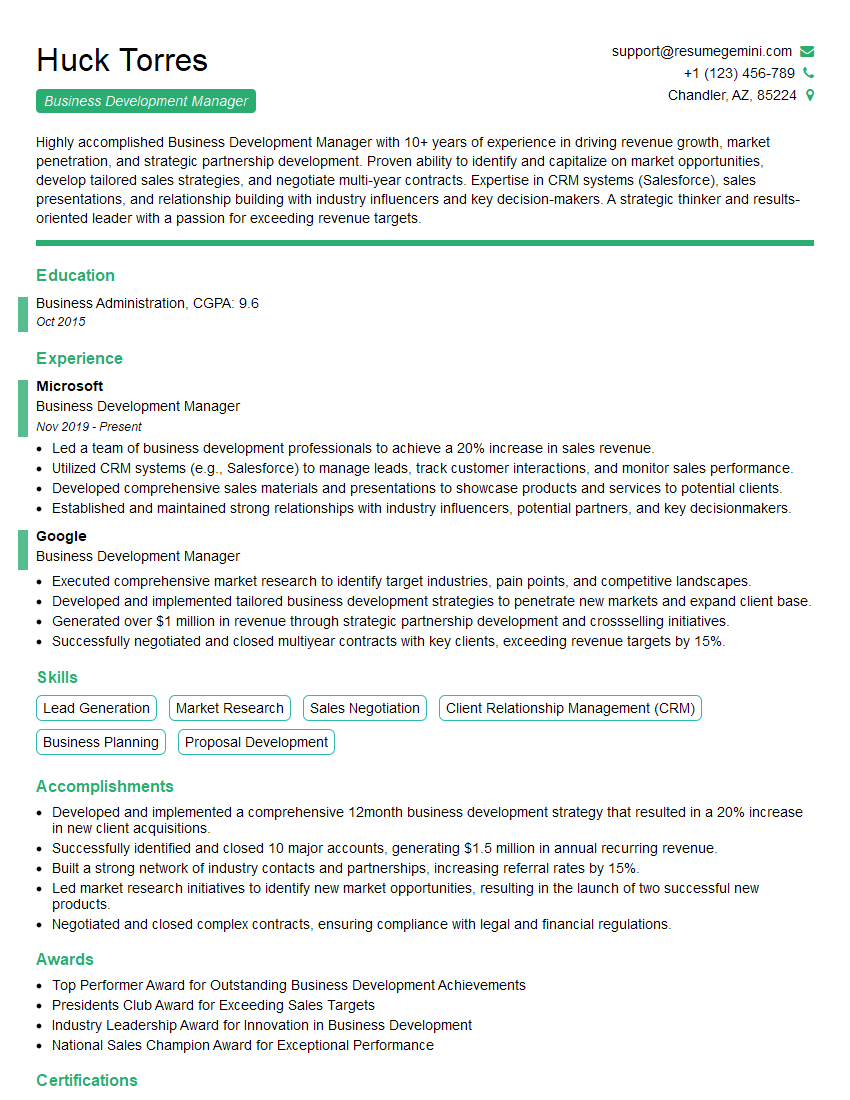
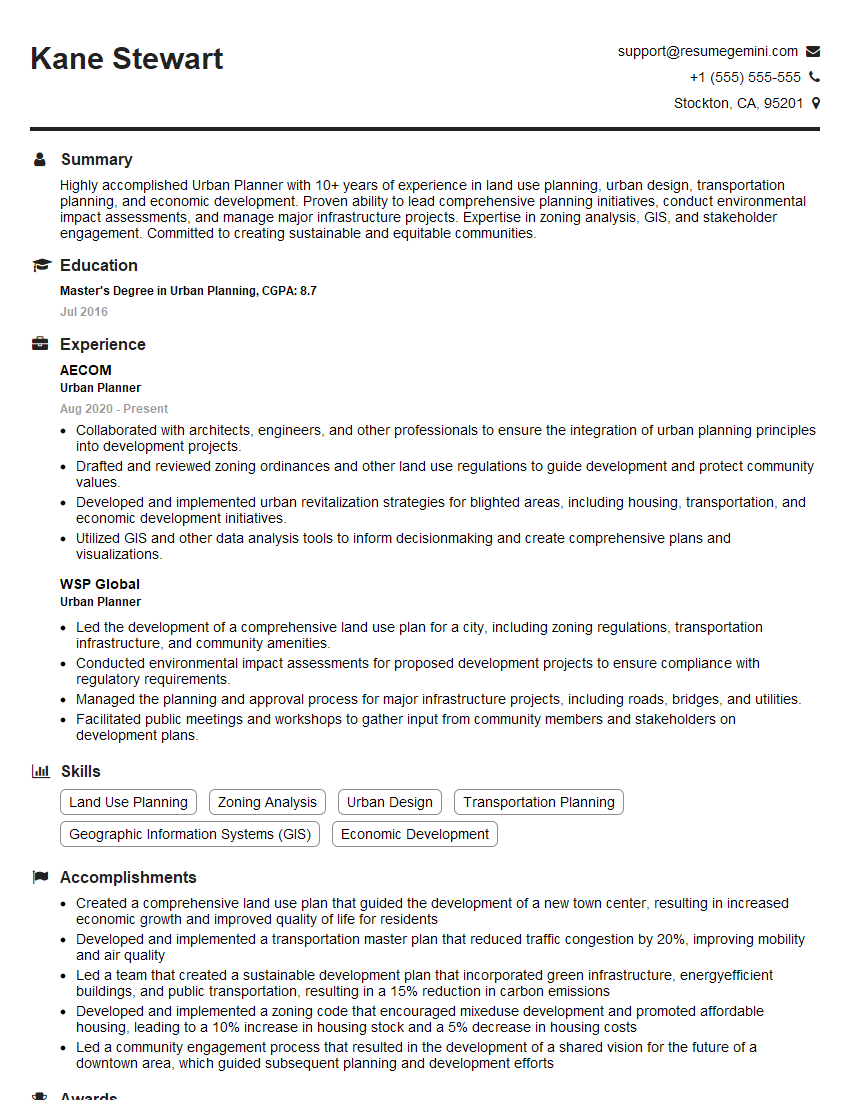
Mastering Economic and Business Development opens doors to rewarding careers with significant impact. Your expertise in analyzing economic trends, formulating effective strategies, and driving sustainable growth will be highly valued. To maximize your job prospects, creating a compelling and ATS-friendly resume is crucial. ResumeGemini can help you build a professional resume that highlights your skills and experience effectively. We provide examples of resumes tailored to Economic and Business Development to guide you. Invest time in crafting a strong resume – it’s your first impression and a key to unlocking your career potential.

Explore more articles
Users Rating of Our Blogs
Share Your Experience
We value your feedback! Please rate our content and share your thoughts (optional).
What Readers Say About Our Blog
To the interviewgemini.com Webmaster.
Very helpful and content specific questions to help prepare me for my interview!
Thank you
To the interviewgemini.com Webmaster.
This was kind of a unique content I found around the specialized skills. Very helpful questions and good detailed answers.
Very Helpful blog, thank you Interviewgemini team.