Interviews are more than just a Q&A session—they’re a chance to prove your worth. This blog dives into essential Electrical Panel Installation and Wiring interview questions and expert tips to help you align your answers with what hiring managers are looking for. Start preparing to shine!
Questions Asked in Electrical Panel Installation and Wiring Interview
Q 1. Explain the NEC code requirements for electrical panel installation.
The National Electrical Code (NEC) is a comprehensive set of standards for electrical safety in the United States. Regarding electrical panel installation, the NEC dictates numerous requirements, focusing heavily on safety and preventing hazards. Key aspects include:
- Location: Panels must be installed in dry, accessible locations, away from sources of moisture and excessive heat. They should be easily accessible for inspection and maintenance, often requiring a minimum amount of clearance around them.
- Grounding and Bonding: Proper grounding and bonding are paramount to ensure safety. The panel must be effectively grounded to earth, preventing dangerous voltage buildup. All metal enclosures must be bonded together to provide a safe path for fault currents.
- Overcurrent Protection: Each circuit must be protected by an appropriate overcurrent protection device (circuit breaker or fuse) that matches the circuit’s amperage rating. This prevents overheating and potential fire hazards.
- Wiring Methods: Specific rules govern how wires are routed, secured, and connected within the panel. This includes using proper wire connectors, ensuring sufficient wire size for the load, and preventing damage or strain on the conductors.
- Panel Enclosure: The panel enclosure must be appropriately sized for the number of circuits and the type of breakers installed. It must also be securely fastened to the structure and provide adequate protection against physical damage.
- Service Entrance Requirements: The service entrance conductors feeding the panel must meet specific size and insulation requirements based on the total service amperage. They must also be properly installed and protected.
Failure to adhere to the NEC can lead to serious safety hazards, including electrical shocks, fires, and equipment damage. Always consult the most current edition of the NEC and relevant local codes for specific requirements.
Q 2. Describe the different types of electrical panels and their applications.
Several types of electrical panels cater to different needs and applications:
- Main Lug Panels (MLP): These panels only contain circuit breakers, relying on a separate meter socket or disconnect to provide the main service. They’re often used as subpanels in larger installations.
- Load Centers: Often incorporating a main breaker and a variety of circuit breakers for branch circuits, these are commonly used in residential settings. They’re designed for ease of installation and maintenance.
- Meter-Main Panels (MMP): Combining the meter socket and the main breaker within a single enclosure, MMPs are frequently used in new residential constructions or service upgrades. They streamline installation and offer a compact solution.
- Subpanels: These panels branch off the main panel, distributing power to specific areas of a larger building or property. They’re crucial in larger structures to manage electrical loads effectively.
- Switchboards: Large switchboards are typically found in commercial or industrial settings. They handle much higher amperage and are designed to control and distribute power to numerous circuits and large equipment.
The choice of panel depends on the specific electrical needs of the installation. A small residential project would likely use a Load Center, while a large commercial building would necessitate a much larger Switchboard and potentially multiple subpanels.
Q 3. How do you calculate the amperage requirements for a residential electrical panel?
Calculating the amperage requirement for a residential electrical panel involves assessing the total expected load. This is done by summing the amperage draw of all appliances and circuits:
- List all appliances and circuits: Compile a list of all electrical items, including lighting, outlets, appliances (oven, dryer, AC, etc.), and their individual amperage ratings. This information can usually be found on the appliance’s nameplate.
- Calculate the total amperage: Sum the amperage ratings of all items. Be sure to account for any continuous loads (items running for extended periods) which require a higher amperage rating to avoid overload.
- Apply demand factors: The NEC allows for demand factors, which recognize that not all appliances will operate simultaneously. These factors reduce the overall amperage calculation based on the probability of simultaneous operation. Specific demand factors are outlined in the NEC.
- Add a safety margin: To account for future additions or increased energy usage, it’s good practice to add a safety margin of 20-25% to the total calculated amperage.
- Select the appropriate panel size: Choose a panel with a main breaker rating that is greater than or equal to the final calculated amperage. Panels are available in various sizes, typically ranging from 100 amps to 200 amps for residential use.
Example: Let’s say the total calculated amperage for a house is 160 amps after applying demand factors and adding a safety margin. You would choose a 200-amp panel to provide sufficient capacity.
Q 4. What safety precautions do you take when working with electrical panels?
Safety is paramount when working with electrical panels. My approach always includes:
- Lockout/Tagout (LOTO): Before commencing any work, I always perform LOTO procedures. This involves de-energizing the panel and locking the breaker(s) in the off position to prevent accidental energization. A tag clearly identifies who has the lock and why the panel is locked out.
- Personal Protective Equipment (PPE): This includes safety glasses or goggles, rubber insulated gloves rated for the voltage, and safety shoes. Appropriate clothing is also crucial to prevent loose clothing from becoming entangled in moving parts.
- Testing for Voltage: Before touching any wires or components, I always use a non-contact voltage tester (NCVT) to verify that the circuit is indeed de-energized. This prevents accidental contact with live wires.
- Working alone avoidance: When possible, work is performed in teams, ensuring a colleague is present for assistance in emergencies.
- Proper Tools: Only use tools specifically designed for electrical work. This ensures safe and effective work practices and minimizes the risk of damage.
- Awareness of surroundings: I’m always mindful of the environment, making sure there are no hazards that could cause a fall or impact my work. This includes tripping hazards, as well as being aware of potential sources of ignition near flammables.
Ignoring safety precautions can lead to serious injuries or even fatalities. Safety is non-negotiable.
Q 5. Explain the process of installing a new electrical panel.
Installing a new electrical panel is a complex process that requires expertise and adherence to safety regulations. The steps are:
- Permitting and Inspection: Obtain the necessary permits from the local authority having jurisdiction (AHJ) before starting the installation. This ensures compliance with local codes.
- Site Preparation: Locate and prepare the installation location, ensuring proper clearance, accessibility, and suitable structural support.
- Panel Installation: Mount the panel securely to the structure. Ensure it is properly grounded and bonded.
- Service Entrance Connection: Connect the main service entrance conductors to the panel’s main bus bars, carefully following the NEC and manufacturer’s instructions.
- Circuit Wiring: Run the individual branch circuits from the panel to their respective locations within the house or building. Ensure proper wire sizing, routing, and securing.
- Breaker Installation: Install the appropriate circuit breakers within the panel, ensuring they’re correctly rated and wired.
- Testing and Inspection: Thoroughly test all circuits for proper functionality and grounding. Conduct voltage tests to ensure correct polarity and prevent shorts. The AHJ will perform a final inspection once installation is complete.
- Final Connection: Reconnect any disconnected appliances or devices once the inspection is successful.
This process requires precise attention to detail. A single mistake can lead to safety hazards.
Q 6. How do you identify and troubleshoot common electrical panel problems?
Identifying and troubleshooting common electrical panel problems requires systematic analysis and careful safety practices. Here’s a breakdown:
- Tripped Breakers: Regularly tripped breakers suggest an overload or short circuit on a specific circuit. Isolate the affected circuit, inspect the wiring for damage, and assess the connected loads for excessive draw. Consider upgrading the circuit’s breaker if needed.
- Overheating Panel: An excessively hot panel indicates potential overload, loose connections, or internal faults. Inspect all connections for tightness, check for loose wires, and ensure that the main breaker isn’t being consistently overloaded. Call for a professional assessment.
- Arcing or Sparking: Arcing or sparking within the panel indicates a serious fault. Immediately de-energize the panel, call a qualified electrician, and avoid further use until it’s properly inspected and repaired. This poses a significant fire risk.
- Intermittent Power Outages: Intermittent outages could point to a loose connection within the panel, a failing breaker, or a problem with the service entrance. Systematically check all connections, test the breakers, and inspect the service entrance wires for damage.
Always prioritize safety. If unsure, consult a licensed electrician.
Q 7. Describe your experience with different types of circuit breakers.
My experience encompasses various circuit breaker types:
- Standard Circuit Breakers: These are the most common type found in residential and light commercial applications. They provide overcurrent protection by tripping when a predetermined current threshold is exceeded.
- Ground Fault Circuit Interrupters (GFCIs): These breakers provide protection against ground faults, which occur when a live wire touches ground. They’re mandatory in bathrooms, kitchens, and exterior locations to prevent electrical shock hazards.
- Arc Fault Circuit Interrupters (AFCIs): These are designed to detect and interrupt arcing faults, which can occur in wiring and cause fires. They are commonly required in bedrooms and other areas where fires might start easily.
- Thermal Magnetic Circuit Breakers: A hybrid approach combining thermal and magnetic tripping mechanisms to offer more precise overcurrent protection. They are prevalent in many load center applications.
Understanding the functionality of each type is critical for proper panel design and safety. Choosing the incorrect breaker can compromise safety and lead to electrical issues.
Q 8. What are the different grounding methods used in electrical panel installations?
Grounding is crucial for safety in electrical systems. It provides a path for fault currents to flow to the earth, preventing dangerous voltage buildup on metal enclosures and protecting people from electric shock. There are several grounding methods used in electrical panel installations:
- Ground Rod System: This is the most common method. A copper-clad steel rod is driven deep into the earth, creating a low-impedance path to ground. The rod is connected to the panel’s grounding bus bar via a grounding wire. Think of it as a lightning rod for your electrical system, safely diverting fault currents.
- Water Pipe Grounding: In some older installations, the grounding electrode may be connected to a cold water pipe. However, modern codes often discourage this method due to the potential for corrosion and changes in plumbing systems.
- Grounding Electrode Conductor (GEC): This is a bare copper wire running from the grounding electrode (ground rod or other) to the electrical panel. It’s essential for a reliable and low-resistance ground connection.
- Concrete-encased Electrode: Large, conductive materials embedded in concrete foundations can serve as grounding electrodes. This is frequently seen in commercial or large-scale residential projects.
The choice of grounding method depends on factors like soil conditions, local codes, and the size of the installation. Proper grounding is non-negotiable; it’s the foundation of a safe electrical system.
Q 9. How do you ensure proper bonding in an electrical panel?
Proper bonding in an electrical panel ensures that all metal parts within the panel, as well as metallic enclosures of electrical equipment connected to it, are at the same electrical potential. This prevents voltage differences that could lead to shock hazards. It’s achieved through several key steps:
- Connecting the Grounding Electrode Conductor (GEC) to the Grounding Bus Bar: The GEC, running from the grounding electrode, is securely connected to the main grounding bus bar inside the panel.
- Bonding the Neutral Bus Bar: In most systems, the neutral bus bar is bonded to the grounding bus bar at the main panel. This creates a common grounding point for the entire system. This bond is usually done at the panel’s main lugs.
- Bonding Metal Enclosures: Metal conduits, boxes, and equipment enclosures connected to the panel are bonded to the grounding bus bar, ensuring a continuous grounding path throughout the system. This is usually accomplished with grounding wires connected to the metal enclosures.
- Using Bonding Jumpers: Bonding jumpers—short lengths of heavy-gauge wire—connect different parts of the panel (e.g., metal panel enclosure to the bus bars) to maintain a low-impedance ground path.
A properly bonded panel acts as a unified grounding system, ensuring that all metallic parts are effectively grounded and eliminating potential voltage differences that can be hazardous.
Q 10. Explain the importance of load calculations in electrical panel design.
Load calculations are paramount in electrical panel design. They determine the total amperage demand of all circuits connected to the panel. Without accurate load calculations, you risk overloading the panel and causing overheating, fires, and equipment damage. Think of it like planning a party: you need to know how many guests (electrical devices) are coming to ensure you have enough food (power) and seating (circuit capacity).
The process involves calculating the amperage draw of each electrical device and summing them up for each branch circuit. Then, you aggregate the branch circuit loads to determine the total load on the panel. This total load dictates the required size of the main breaker and the capacity of the panel itself. Factors to consider include:
- Number and type of appliances: A high-power oven demands more amperage than a small lamp.
- Lighting loads: Lighting circuits contribute significantly to the overall load.
- Demand factors: Not all devices are simultaneously in use. Demand factors (percentage values) account for this to avoid overestimating the panel size.
- Future needs: The panel should accommodate potential future additions or upgrades.
Load calculations ensure that you select a panel with sufficient capacity, protecting the system, the building, and the occupants.
Q 11. Describe your experience with installing and troubleshooting GFCI and AFCI breakers.
I have extensive experience installing and troubleshooting both Ground Fault Circuit Interrupters (GFCIs) and Arc Fault Circuit Interrupters (AFCIs). GFCIs protect against ground faults, which are dangerous electrical leaks to ground. AFCIs prevent arc-fault fires caused by sparking or arcing in wiring, often due to damaged insulation or loose connections. Both are critical for safety.
GFCI Installation: This involves connecting the GFCI breaker in the panel and running the appropriate wiring to the protected circuits. Testing the GFCI after installation is crucial using its built-in test button to ensure correct operation. I routinely use GFCIs for outdoor circuits, bathrooms, and kitchen areas.
AFCI Installation: Similar to GFCIs, AFCI breakers are installed in the panel and wired to the protected circuits. They often require more careful attention to wiring practices since false trips can occur if not installed correctly. AFCIs are usually required for bedrooms and other areas where arc-fault fires are more likely.
Troubleshooting: Troubleshooting involves identifying the cause of a tripped breaker. For GFCIs, a simple reset and test procedure is typically the first step. For AFCIs, finding the location of the arc fault can be more challenging, requiring careful inspection of the wiring and connections within the circuit. I utilize various testing instruments, such as voltage testers and multimeters, to diagnose these issues effectively and safely.
Q 12. How do you test the integrity of an existing electrical panel?
Testing the integrity of an existing electrical panel involves a multi-step process focusing on safety and thoroughness. The following are some essential tests:
- Visual Inspection: This involves carefully examining the panel for signs of damage, loose connections, overheating, corrosion, and improperly installed wiring. Any sign of damage raises immediate concern.
- Breaker Functionality Test: Each breaker should be tested by switching it on and off to ensure proper operation. Stuck breakers or those requiring excessive force to operate are significant problems.
- Voltage Measurement: Using a qualified voltage tester, verify the presence of the correct voltage at the panel’s main lugs and at various points in the distribution system. Incorrect voltages point to serious wiring or panel issues.
- Ground Resistance Test: A ground resistance test measures the resistance of the grounding system. High resistance indicates a poor ground connection, posing a serious safety hazard. Special testing equipment is necessary for this.
- Thermal Imaging: Thermal imaging can detect hotspots in the panel or wiring, indicating potential overheating issues that might not be apparent during a visual inspection.
All testing should be done by a qualified electrician, following established safety protocols.
Q 13. What are the signs of a faulty electrical panel?
A faulty electrical panel can present several warning signs, some subtle and some immediately obvious. These signs warrant immediate attention from a qualified electrician:
- Frequent Tripping of Breakers: This is a major red flag and could be caused by overloads, short circuits, or problems within the panel itself. Investigating the causes is critical.
- Burning Smell or Smoke: This indicates serious overheating and immediate risk of fire. Evacuate the premises and call emergency services.
- Flickering Lights or Dimming Lights: This points to issues with voltage regulation, possibly due to loose connections or problems within the panel.
- Buzzing or Humming Sounds: Unusual noises from the panel are indicative of internal problems that need immediate attention.
- Warm or Hot to the Touch Panel: Overheating panels are a serious fire hazard. The causes must be investigated immediately.
- Visible Damage: Any physical damage to the panel, such as cracks or loose components, must be addressed without delay.
Ignoring these signs can lead to severe consequences, including electrical fires and shock hazards. Always err on the side of caution and consult a professional electrician.
Q 14. Describe your experience working with different voltage levels.
My experience encompasses working with various voltage levels, from low-voltage circuits (e.g., 12V for lighting) to high-voltage systems (e.g., 480V in industrial settings). Safe handling and appropriate safety precautions are essential regardless of the voltage. I have:
- Installed and maintained low-voltage lighting systems: These require careful attention to wiring and connection integrity.
- Worked on 120/240V residential installations: This is my most common experience, involving standard household wiring and appliance hookups.
- Experienced with higher voltage systems (277/480V): This typically involves commercial or industrial settings, requiring specialized safety equipment and training. Working with these voltages necessitates a deep understanding of safety procedures and code compliance.
Regardless of the voltage level, I always adhere to strict safety protocols, utilize appropriate personal protective equipment (PPE), and follow the relevant electrical codes. Safety is paramount.
Q 15. Explain the process of disconnecting and reconnecting electrical service.
Disconnecting and reconnecting electrical service is a critical procedure requiring utmost safety and adherence to local electrical codes. It involves completely isolating the electrical system from the power source to allow for safe work on the panel or the entire service.
The process typically begins by switching off the main breaker in the panel. However, this isn’t enough to ensure complete de-energization. A qualified electrician will then use a voltage tester to confirm that the service is indeed off. This is crucial, as residual voltage can still pose a lethal threat.
- Lockout/Tagout (LOTO): After verifying the power is off, the main breaker is locked out using a padlock and tagged with a warning label indicating that work is being performed. This prevents accidental re-energization.
- Disconnection: The service conductor cables are then disconnected from the meter base or the service entrance. This usually involves removing large gauge wires, which may require specialized tools.
- Reconnect: After the work is completed, the process is reversed. The service conductors are carefully reconnected, ensuring proper grounding and tight connections. The lock is removed from the main breaker, and the voltage is carefully restored. A final voltage test is performed to ensure everything is functioning correctly.
Failing to follow this procedure can result in severe electrical shock or death. Remember, always prioritize safety!
Career Expert Tips:
- Ace those interviews! Prepare effectively by reviewing the Top 50 Most Common Interview Questions on ResumeGemini.
- Navigate your job search with confidence! Explore a wide range of Career Tips on ResumeGemini. Learn about common challenges and recommendations to overcome them.
- Craft the perfect resume! Master the Art of Resume Writing with ResumeGemini’s guide. Showcase your unique qualifications and achievements effectively.
- Don’t miss out on holiday savings! Build your dream resume with ResumeGemini’s ATS optimized templates.
Q 16. How do you determine the appropriate size of conductors for a given circuit?
Determining the correct conductor size is paramount for ensuring the safety and efficiency of an electrical circuit. It’s based on several factors including the amperage (current) of the circuit, the length of the wire run, and the material of the conductor (usually copper or aluminum). We use tables provided in the National Electrical Code (NEC) to determine the appropriate size.
For instance, a 20-amp circuit requires a 12-gauge wire, while a 30-amp circuit might need a 10-gauge wire. Larger amperages require thicker wires to handle the higher current flow. Longer wire runs also require larger conductors to compensate for voltage drop (loss of voltage along the wire’s length). Aluminum conductors are often used in larger commercial settings and require larger gauge sizes compared to copper for the same amperage due to its higher resistance. We always consult the NEC to confirm the proper wire gauge and insulation type based on the environment (e.g., wet locations require specialized insulation). Ignoring these factors can lead to overheating, potential fire hazards, and voltage drop issues.
In my experience, using calculation software like EasyPower helps significantly in reducing errors in determining conductor sizing for various projects from simple residential to complex industrial requirements.
Q 17. What are the common causes of electrical panel fires?
Electrical panel fires are serious events often caused by a combination of factors. Loose connections, overheated wires, and faulty breakers are frequent culprits.
- Loose Connections: Over time, vibrations or temperature changes can loosen connections within the panel, leading to arcing (a spark that generates intense heat). This arcing can ignite nearby combustible materials.
- Overloaded Circuits: Drawing too much current from a circuit than it’s designed for (exceeding the amperage rating) will overheat the wires and potentially cause a fire. This often happens when too many appliances or devices are plugged into a single circuit.
- Faulty Breakers: A breaker that fails to trip when a circuit is overloaded can result in sustained overcurrent, leading to wire overheating and fire.
- Corrosion: Corrosion of terminals or busbars can increase resistance and generate heat, resulting in a fire hazard.
- Damaged Wiring: Physical damage to the wiring within the panel, such as from rodents or improper installation, increases the risk of short circuits and fires.
Regular inspection and maintenance are key to preventing electrical panel fires. It’s recommended to have an electrician inspect your panel every few years.
Q 18. How do you prevent electrical shock hazards when working with electrical panels?
Preventing electrical shock hazards when working with electrical panels is paramount. It’s not just about following procedures; it’s about developing a safety mindset.
- Lockout/Tagout (LOTO): This is the cornerstone of electrical safety. Always lock out and tag out the main breaker before working on the panel.
- Voltage Testing: Never assume the power is off. Always use a non-contact voltage tester to verify the absence of voltage before touching any wires or components.
- Personal Protective Equipment (PPE): Wear appropriate PPE, including safety glasses, insulated gloves, and safety shoes, when working on electrical panels.
- Proper Tools: Use insulated tools to avoid direct contact with energized conductors.
- Dry Work Area: Ensure the work area is dry. Water conducts electricity and can greatly increase the risk of shock.
- One Hand Rule: When working with electrical components, keep one hand in your pocket or behind your back to minimize the risk of a dangerous current path through your heart.
Remember, electricity is invisible, but it can be deadly. Never compromise on safety. If you’re unsure about any aspect of the work, call a qualified electrician.
Q 19. Describe your experience with working on both residential and commercial electrical panels.
I’ve had extensive experience with both residential and commercial electrical panels, ranging from small renovations to large-scale projects. Residential work often involves upgrades, adding circuits for new appliances, or replacing outdated panels. This requires careful planning to ensure compliance with local codes and meet the homeowner’s needs without compromising safety. I’ve worked on numerous projects adding circuits for updated kitchens, home theaters, or additional bathrooms, always ensuring proper grounding and adhering to NEC guidelines.
Commercial projects are often more complex and larger in scale. I’ve worked on projects involving the installation and maintenance of high-voltage panels in industrial settings, requiring meticulous attention to detail and a thorough understanding of safety protocols for working with higher voltages. This experience has given me a broad understanding of various panel designs and the specific considerations required for different types of loads and environments. In one significant project, we upgraded the electrical system of a large office building, adding numerous circuits and subpanels to accommodate the growing technological needs of the tenants. This involved coordinating with contractors, inspectors, and ensuring the smooth operation of the building throughout the upgrade process.
Q 20. What software or tools do you use for electrical panel design or calculations?
For electrical panel design and calculations, I use a combination of software and tools tailored to the project’s complexity. For simpler projects, I may rely on NEC tables and hand calculations to verify load calculations and conductor sizing. However, for larger, more intricate designs, software like EasyPower or SKM PowerTools for Windows are invaluable. These applications allow me to model complex electrical systems, perform load flow analysis, short-circuit calculations, and coordinate protection devices ensuring the safe and efficient operation of the entire system. I often use these programs to design new panel layouts, verify existing systems, and ensure compliance with relevant electrical codes. Additionally, I use testing equipment like digital multimeters, clamp meters, and insulation testers to verify wiring and component integrity during and after installation.
Q 21. Explain the process of adding circuits to an existing electrical panel.
Adding circuits to an existing panel requires careful planning and adherence to safety procedures. First, the panel’s capacity must be assessed to ensure there’s enough space and amperage available. If the panel is already at or near its capacity, a panel upgrade may be necessary. Otherwise, the process involves:
- Turning off the main breaker: Always begin by completely de-energizing the panel. Use LOTO.
- Installing new breakers: Install the appropriate sized breakers for the new circuits in available spaces.
- Running new wiring: Route the new wiring to the intended locations, ensuring proper grounding and securing the wiring according to code.
- Connecting the wiring: Make secure connections between the new wiring and the breakers, using appropriate wire nuts and connectors.
- Testing the circuits: After completing the wiring, use a voltage tester and multimeter to verify the circuits are functioning correctly and there are no short circuits.
- Inspect and Finalize: After testing, visually inspect all connections for tightness and correct installation. Once satisfied, restore power to the panel and check operation. This is where we also verify that our loads are correctly distributed across the system.
Adding circuits can be a complex process; errors can lead to overloading, fire hazards, and electrical shocks. If you are not comfortable, always consult a licensed electrician.
Q 22. Describe your experience with various types of wire and their applications.
My experience encompasses a wide range of wire types, each chosen based on the specific application’s demands for amperage, voltage, and environmental conditions. For example:
- Copper Conductors (THHN, THWN): These are the workhorses of most residential and commercial installations. THHN is a thermoplastic high heat-resistant nylon coated wire suitable for dry locations, while THWN is its moisture-resistant counterpart for wet or damp environments. I frequently use these for branch circuits powering outlets, lighting, and appliances.
- Aluminum Conductors: Aluminum wire is lighter and cheaper than copper, but requires more careful installation due to its higher resistance and propensity for oxidation. I use it sparingly, mainly in larger commercial projects where cost savings are significant, ensuring proper connectors and techniques are used to prevent issues.
- Grounding Wire (Bare Copper or Green-Insulated): Essential for safety, this wire provides a path to the earth for fault currents. I always meticulously check its continuity and proper connection to the ground rod and panel.
- High-Temperature Wire (e.g., silicone wire): For applications involving high heat, like near furnaces or motors, I utilize specialized, high-temperature rated wire, ensuring the wiring can withstand the thermal stress.
- Control Wiring (Small Gauge): Low voltage control wiring is used for things like thermostats, switches, and control circuits. This often requires meticulous routing and careful planning to prevent interference or damage.
Selecting the wrong wire can lead to overheating, fires, and system failures. Therefore, careful attention to the wire’s ampacity (current carrying capacity), insulation type, and installation requirements is crucial.
Q 23. How do you ensure the proper sizing of an electrical panel for a specific load?
Proper panel sizing is critical for safety and functionality. It involves calculating the total load demand, considering both continuous and non-continuous loads. I use a systematic approach:
- Calculate the load: This involves summing the wattage of all appliances, lighting fixtures, and other electrical equipment, then converting the wattage to amperage (Amps = Watts / Volts). Consider the load factor (percentage of the time the load is actually running), as it reduces the peak demand. Continuous loads (e.g., heating/cooling) are particularly important to account for correctly.
- Determine the service capacity: This is defined by the main breaker’s rating and service entrance conductors. It sets the upper limit of what the panel can supply.
- Add safety margin: I always add a safety margin (generally 20-25%) to account for future additions or unforeseen load increases. This prevents the panel from being overloaded and helps avoid future upgrades.
- Choose the panel size: Selecting a panel based on the calculated total load, including the safety margin, ensures adequate capacity to support the entire electrical system.
- Verify with NEC code: Compliance with the National Electrical Code (NEC) is paramount; I use the code to guide sizing decisions and verify all aspects of the installation comply with industry best practices.
For example, if my calculated load is 100 amps, I would typically select a 125-amp panel to account for future growth and safety.
Q 24. Explain the difference between a main breaker and branch circuit breakers.
The main breaker and branch circuit breakers serve distinct functions in the electrical panel:
- Main Breaker: This is the primary overcurrent protection device for the entire electrical system. It disconnects all power to the panel in case of an overload or short circuit, protecting the service entrance conductors and the building’s wiring.
- Branch Circuit Breakers: These are individual overcurrent protection devices for specific circuits. Each branch circuit powers a group of outlets, lights, or appliances. If an overload or short circuit occurs on a specific circuit, only that circuit’s breaker trips, leaving the rest of the system operational.
Think of it like a main water valve (main breaker) for your entire house and individual valves for sinks and appliances (branch breakers). The main valve shuts off everything, while the individual valves allow for selective control and safety.
Q 25. How do you handle unexpected problems during an electrical panel installation?
Unexpected problems are part of the job. My approach is systematic and safety-focused:
- Assess the problem: First, I carefully and safely assess the nature of the problem. This often involves using testing equipment like a multimeter to diagnose the issue.
- Prioritize safety: If there’s a safety hazard, such as exposed wiring or a potential shock, I immediately de-energize the circuit using lockout/tagout procedures before proceeding.
- Troubleshoot: I systematically troubleshoot the problem. This might involve checking wiring connections, inspecting breakers, or testing the voltage in different parts of the system.
- Consult codes and resources: If I’m unsure how to proceed, I consult the NEC, manufacturer’s documentation, or experienced colleagues to ensure a safe and code-compliant solution.
- Document the solution: I thoroughly document the problem, the troubleshooting steps, and the solution implemented to maintain records and provide valuable insights for future maintenance or repairs.
For instance, if I encounter unexpected grounding issues, I would carefully investigate the grounding path, checking for loose connections, corroded wires, or inadequate ground rods. My first action would always be to safely de-energize the system before performing any inspections or repairs.
Q 26. What are the common codes and regulations you follow during electrical panel installation?
Adherence to electrical codes and regulations is paramount. My work consistently follows the National Electrical Code (NEC), along with any relevant local and state regulations. Key aspects I consider are:
- Wiring methods: Proper cable routing, support, and securing methods to prevent damage and ensure safety.
- Grounding and bonding: Meticulous grounding and bonding to protect against electrical shocks and prevent equipment damage.
- Overcurrent protection: Ensuring all circuits have appropriately sized breakers to protect against overloads and short circuits.
- Arc-flash hazard analysis: Performing calculations and taking appropriate safety measures to mitigate the risk of arc-flash incidents.
- Panel installation requirements: Meeting specific requirements for panel location, clearances, and ventilation to maintain safety and functionality.
Regularly updating my knowledge on the latest code revisions is essential to remain compliant and deliver safe, reliable installations.
Q 27. Describe your experience with lockout/tagout procedures.
Lockout/Tagout (LOTO) procedures are critical for preventing accidental energization during maintenance or repairs. My experience with LOTO involves a thorough process:
- Identify the equipment: Clearly identify all equipment to be de-energized.
- Notify affected personnel: Inform all personnel who might be affected by the de-energization.
- Lockout and Tagout: Use appropriate locks and tags to prevent the equipment from being accidentally turned on. This is a critical step and needs to be done methodically to ensure all power sources are isolated.
- Verification: Verify that the equipment is de-energized using a non-contact voltage tester.
- Release of the LOTO: Once the maintenance or repair is complete, remove the locks and tags, ensuring proper verification before re-energizing the equipment.
LOTO is not just a procedure but a safety culture, and I diligently follow it to prevent serious injuries or fatalities. I always personally verify the lockout before beginning any work, and I never compromise on this essential safety measure.
Q 28. Explain your understanding of arc flash hazards and safety precautions.
Arc flash is a serious hazard involving a sudden release of energy that can cause severe burns, hearing loss, and even death. My understanding includes:
- Arc flash hazard analysis: This involves calculating the potential arc flash energy for specific equipment using specialized software and applying appropriate PPE (personal protective equipment).
- Safety precautions: These include using appropriate PPE such as arc flash suits, arc flash rated gloves, and face shields; working with properly de-energized equipment and implementing lockout/tagout procedures; and adhering to safety guidelines for all electrical maintenance and repair operations.
- Incident energy calculations: These calculations assess the potential energy released during an arc flash, determining the appropriate PPE required for protection.
- Training and awareness: Continuous training and awareness are crucial to understand the risks and implement appropriate safety measures.
I always prioritize arc flash safety; even seemingly minor tasks are approached with awareness of potential arc flash hazards. Ignoring arc flash safety can have devastating consequences. Proper planning, training, and the use of appropriate PPE are essential for safe electrical work.
Key Topics to Learn for Electrical Panel Installation and Wiring Interview
- National Electrical Code (NEC) Compliance: Understanding and applying the relevant NEC articles for panel installation, wiring methods, and safety regulations. This includes understanding code changes and updates.
- Panel Sizing and Calculations: Determining the appropriate size of electrical panels based on load calculations, future expansion needs, and service capacity. Practical application includes using load calculation software and interpreting utility requirements.
- Wiring Methods and Techniques: Mastery of various wiring methods (e.g., EMT, conduit bending, cable sizing, wire termination techniques) and their applications in different settings (residential, commercial, industrial).
- Grounding and Bonding: Understanding the principles of grounding and bonding for safety and code compliance. This includes practical application in different grounding systems and troubleshooting grounding issues.
- Troubleshooting and Diagnostics: Identifying and resolving common electrical panel and wiring problems. This includes using diagnostic tools, interpreting electrical schematics, and applying systematic troubleshooting methodologies.
- Safety Procedures and Practices: Demonstrating a thorough understanding of safety protocols, including lockout/tagout procedures, personal protective equipment (PPE) usage, and hazard identification.
- Different types of circuit breakers and their applications: Understanding the function and applications of various circuit breaker types (e.g., GFCI, AFCI, thermal magnetic) and selecting appropriate breakers for specific circuits.
- Understanding Electrical Schematics and Blueprints: Ability to interpret and understand electrical schematics, blueprints, and other technical documentation to plan and execute installations effectively.
Next Steps
Mastering Electrical Panel Installation and Wiring opens doors to rewarding and in-demand careers with excellent growth potential. A strong understanding of these concepts significantly enhances your employability and sets you apart from other candidates. To maximize your chances of landing your dream job, focus on creating a professional and ATS-friendly resume that highlights your skills and experience effectively. ResumeGemini is a trusted resource that can help you build a compelling resume tailored to the specific requirements of electrical panel installation and wiring positions. Examples of resumes specifically designed for this field are available to guide you through the process.
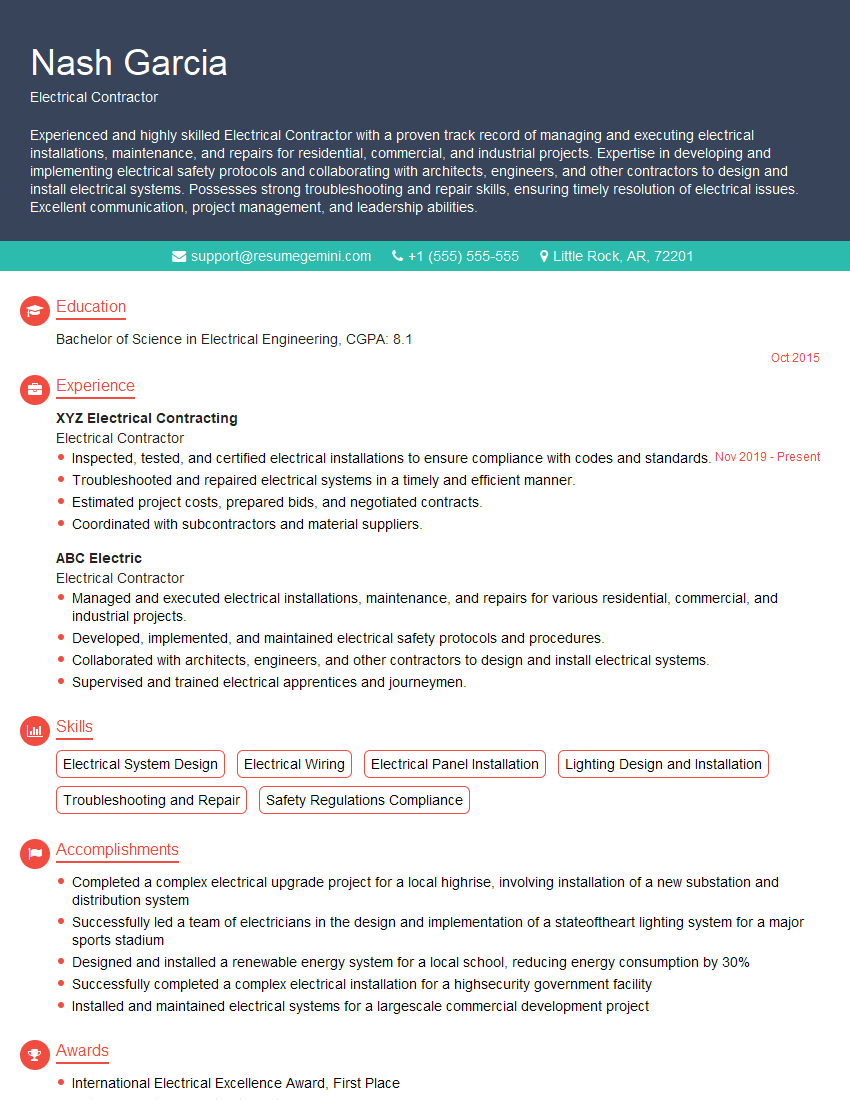
Electrical Contractor Resume Sample
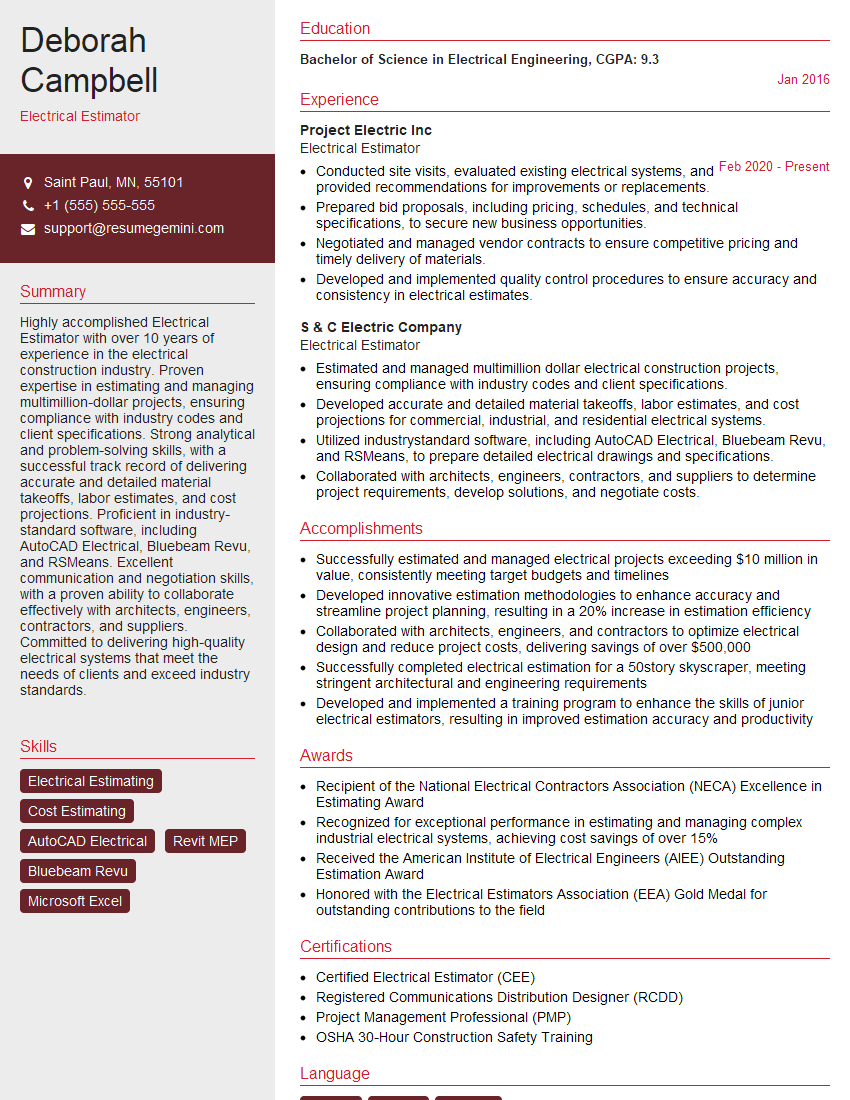
Electrical Estimator Resume Sample
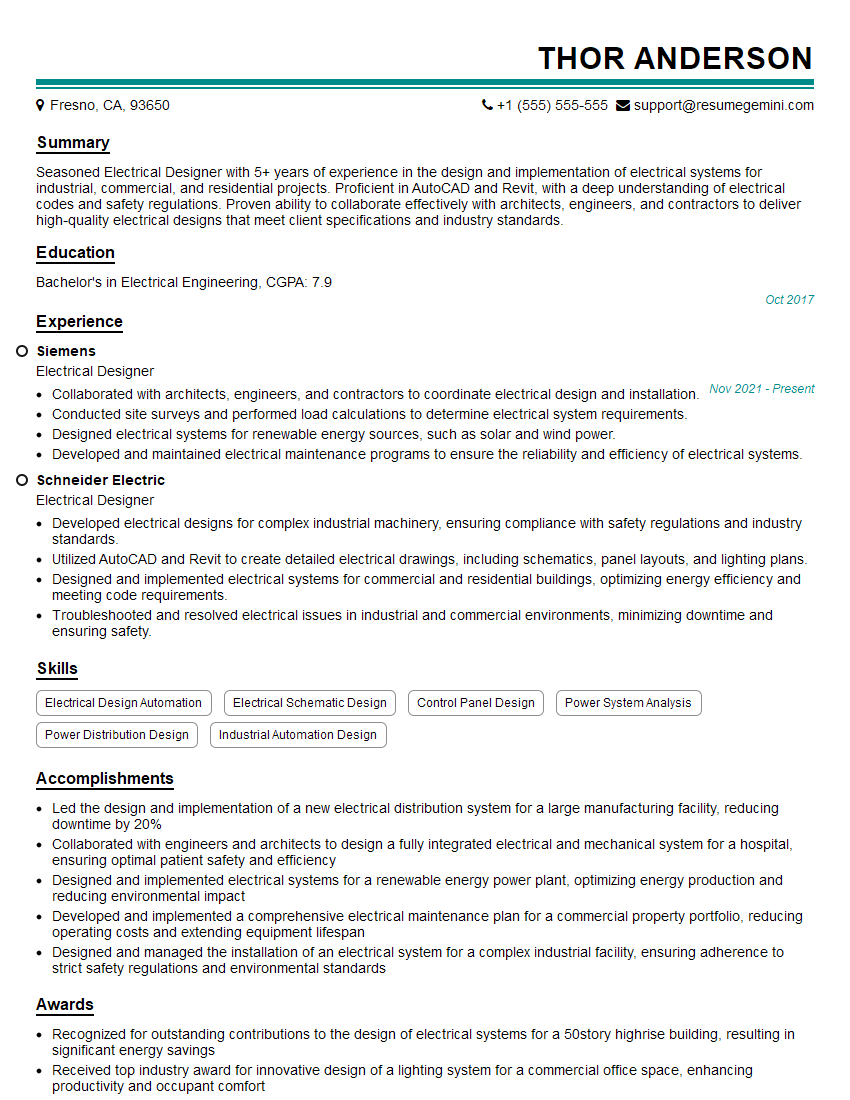
Electrical Designer Resume Sample
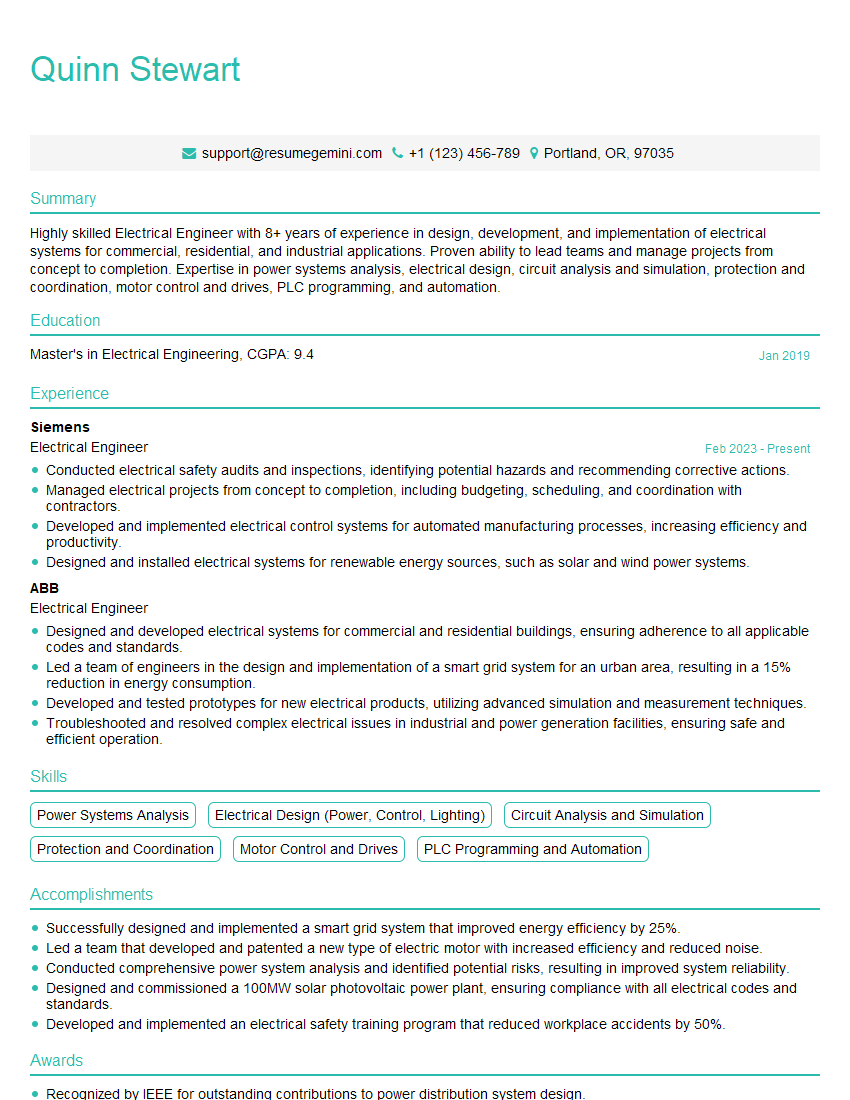
Electrical Engineer Resume Sample
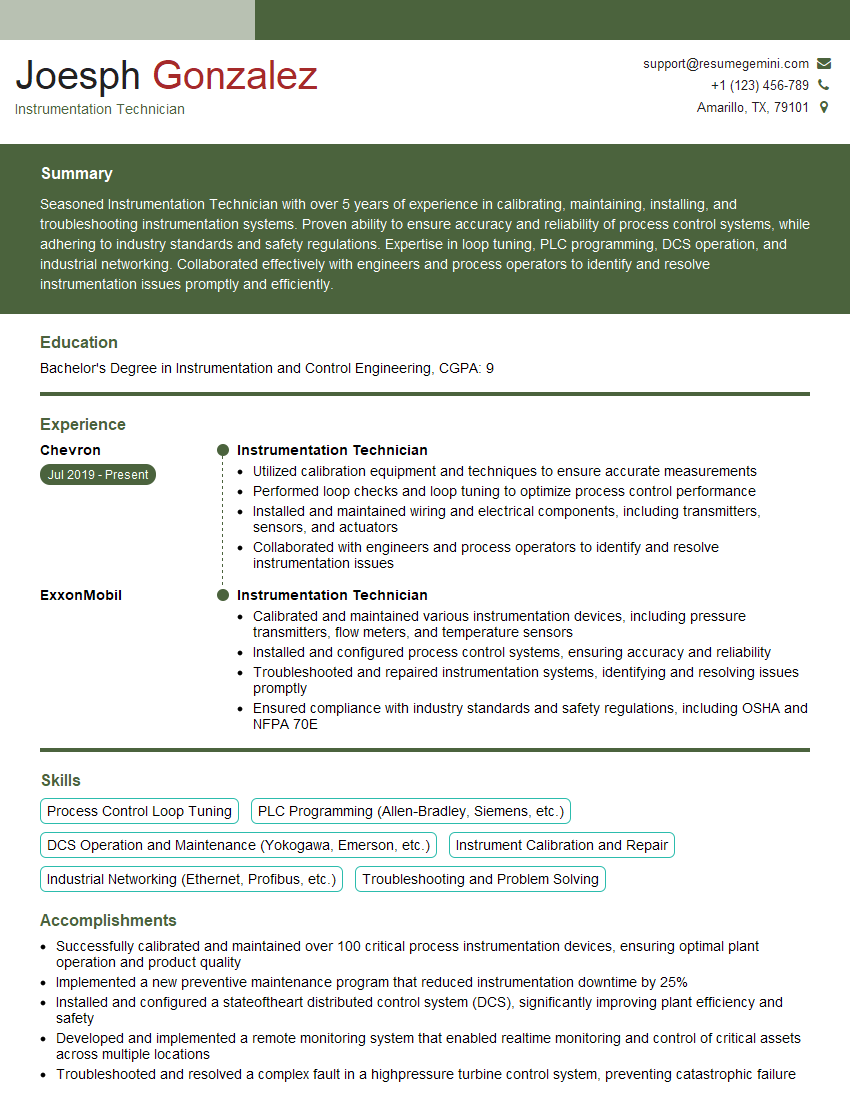
Instrumentation Technician Resume Sample
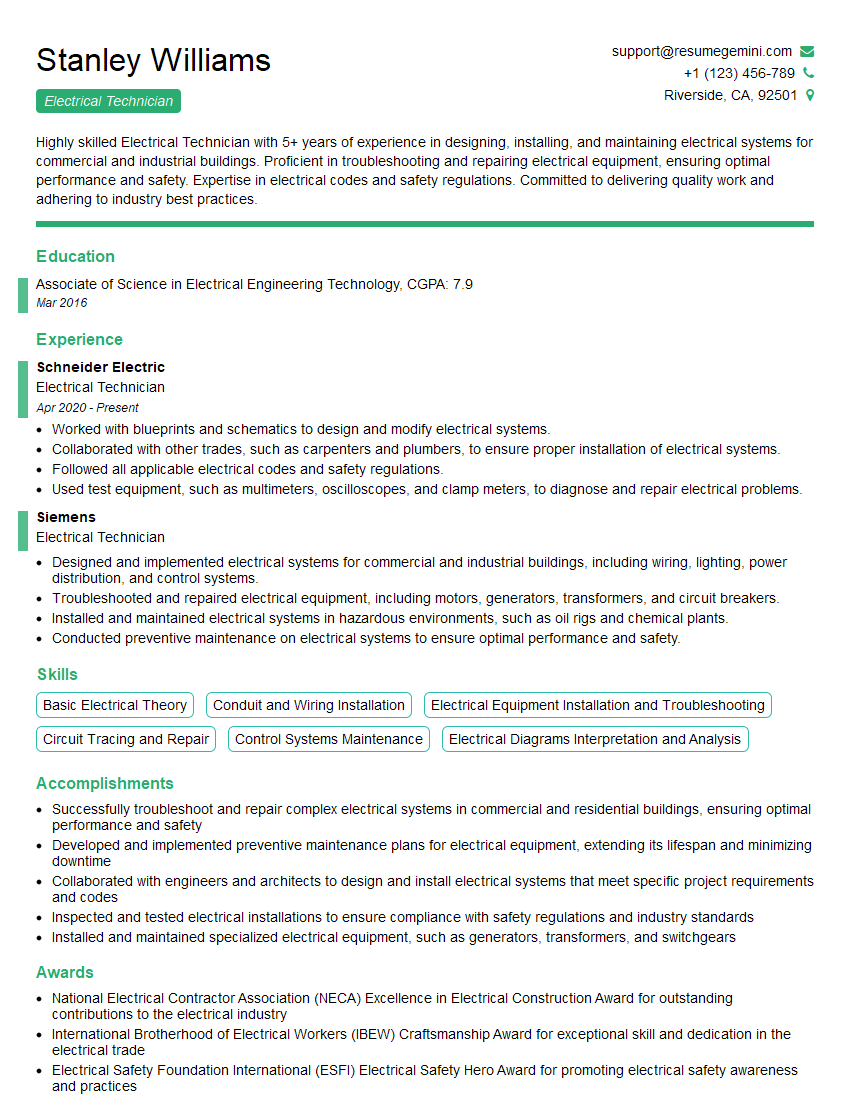
Electrical Technician Resume Sample
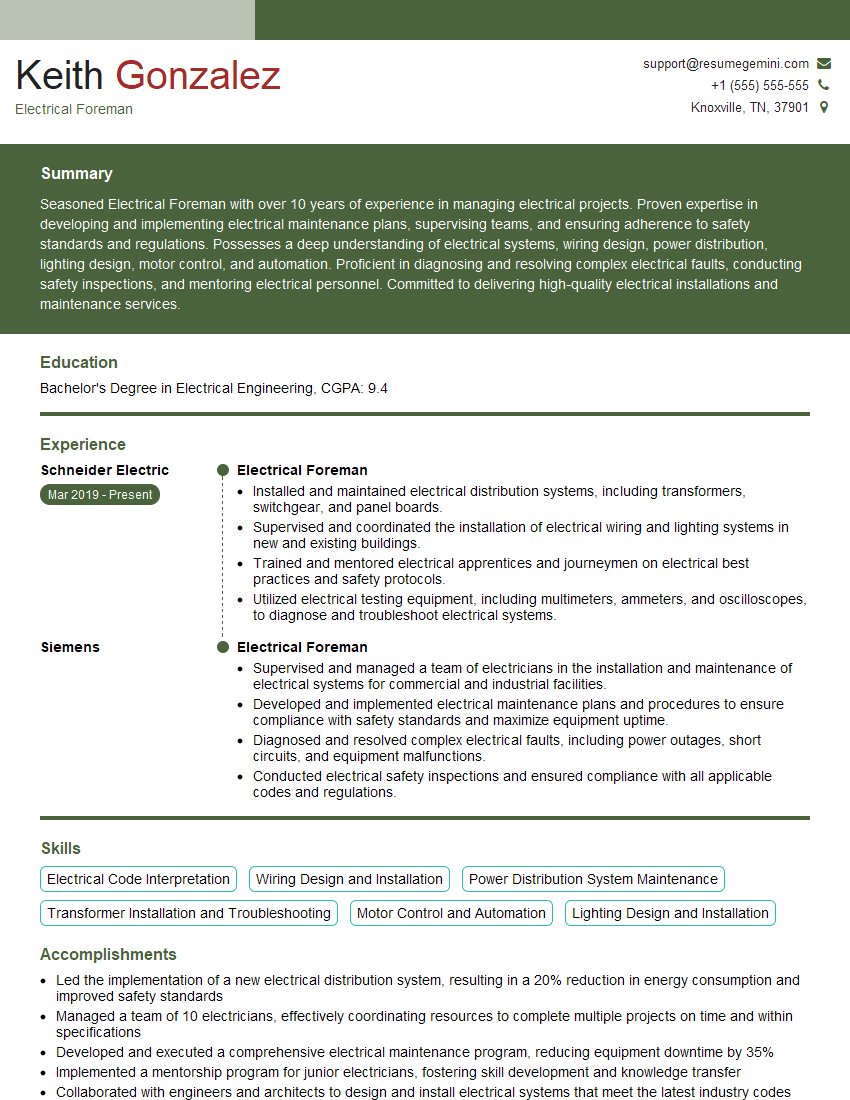
Electrical Foreman Resume Sample
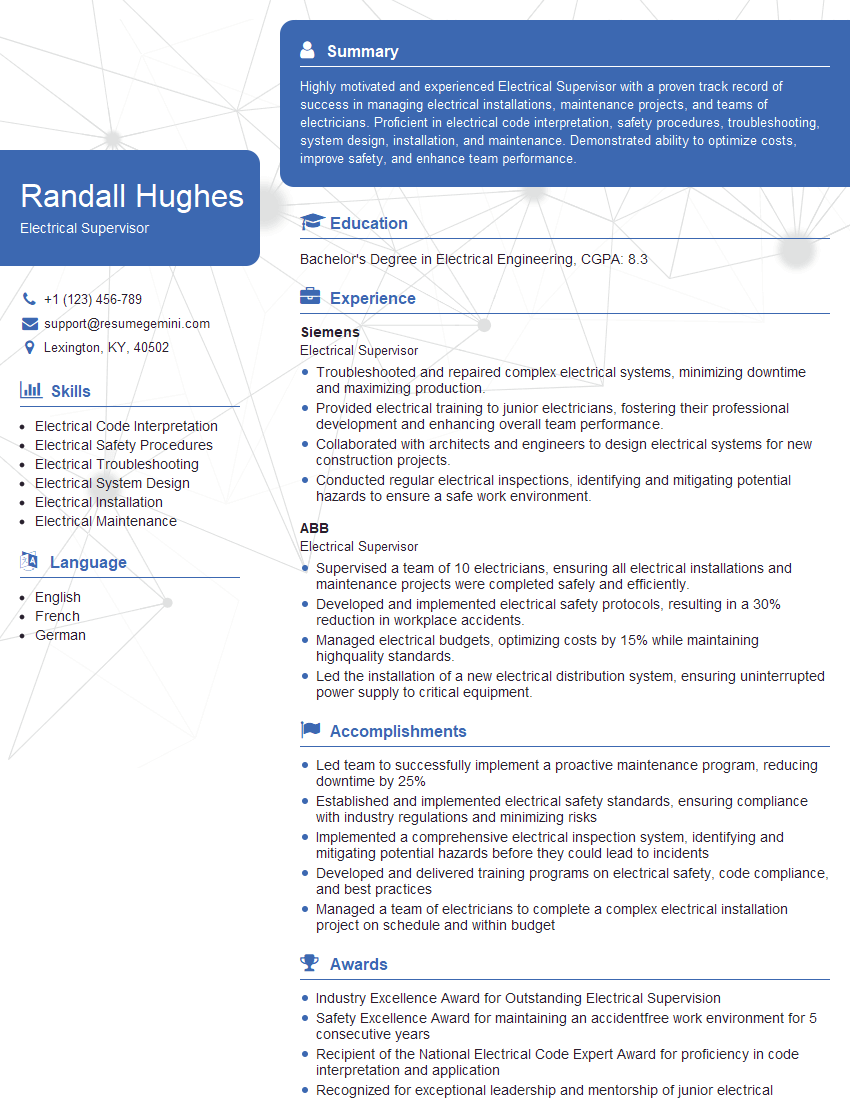
Electrical Supervisor Resume Sample
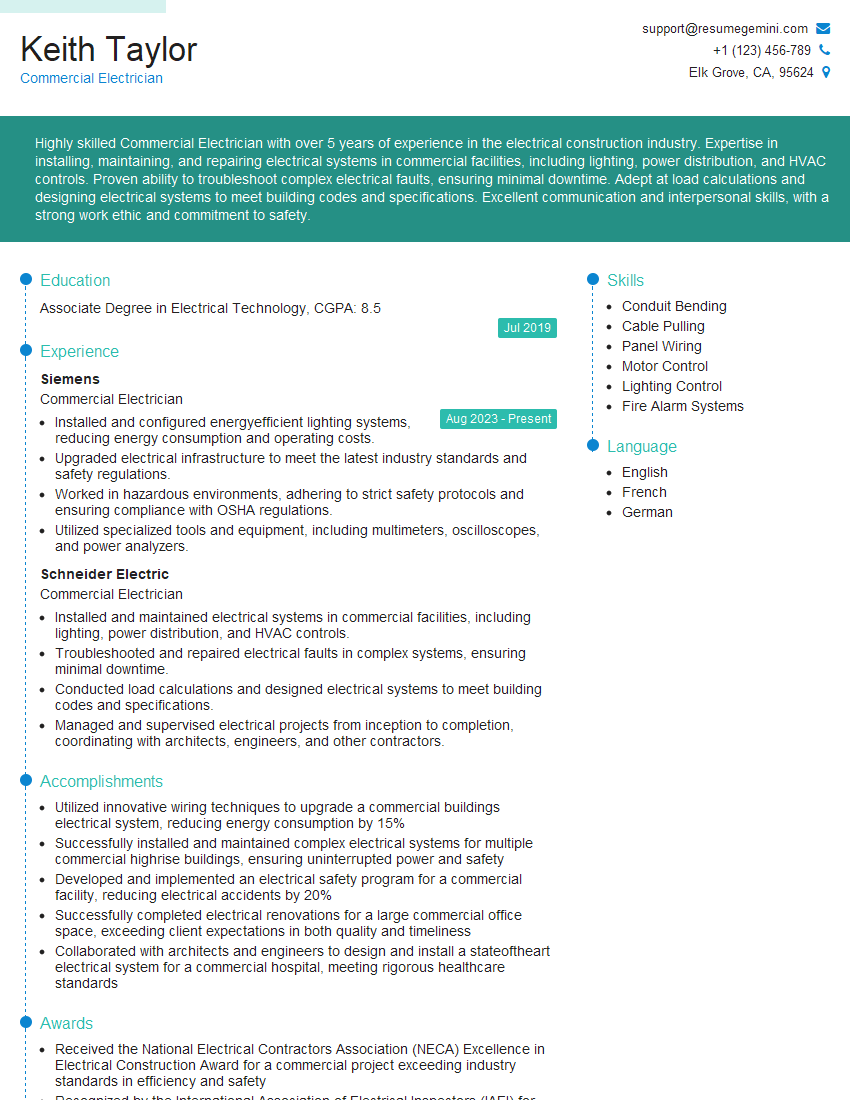
Commercial Electrician Resume Sample
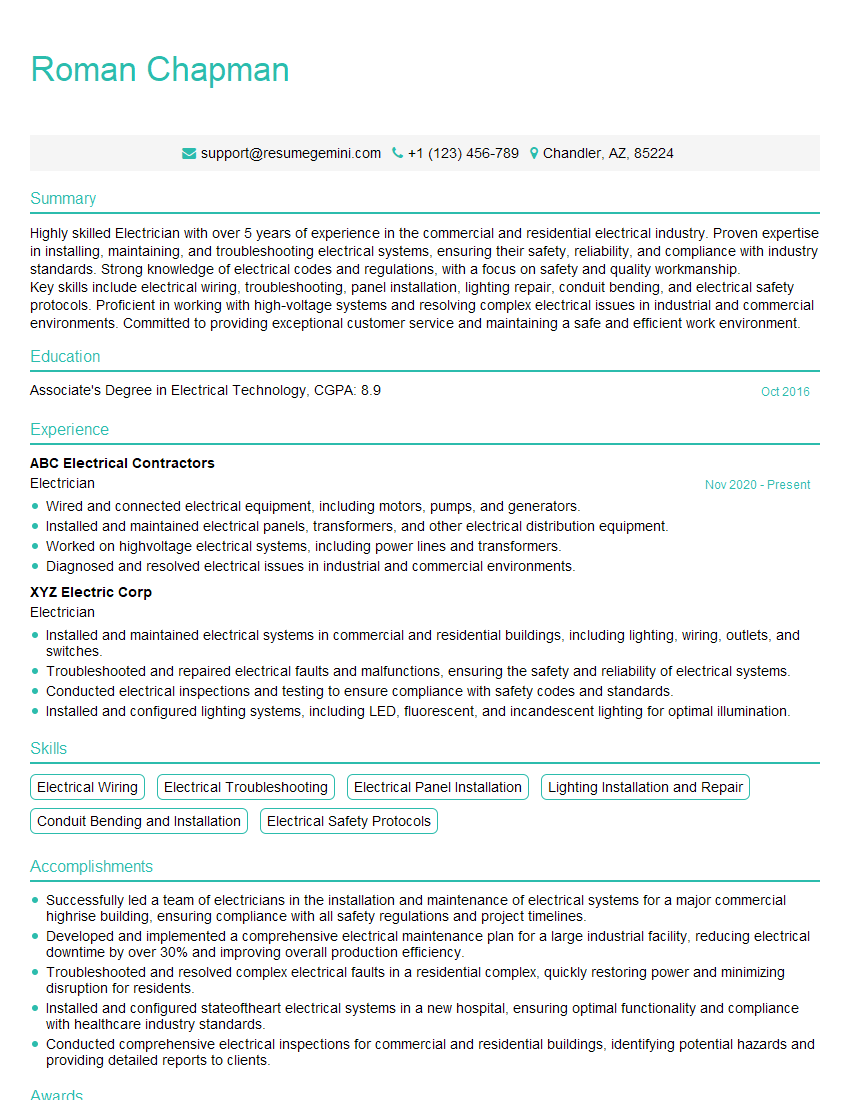
Electrician Resume Sample
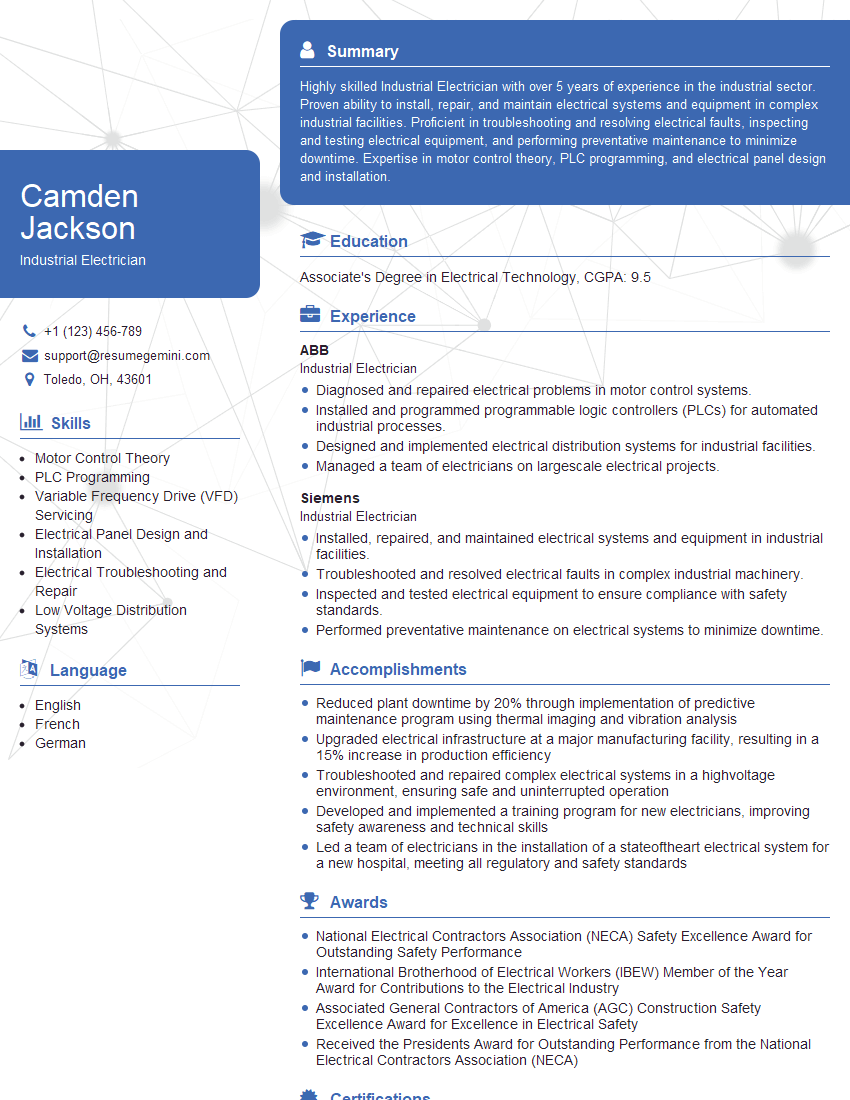
Industrial Electrician Resume Sample
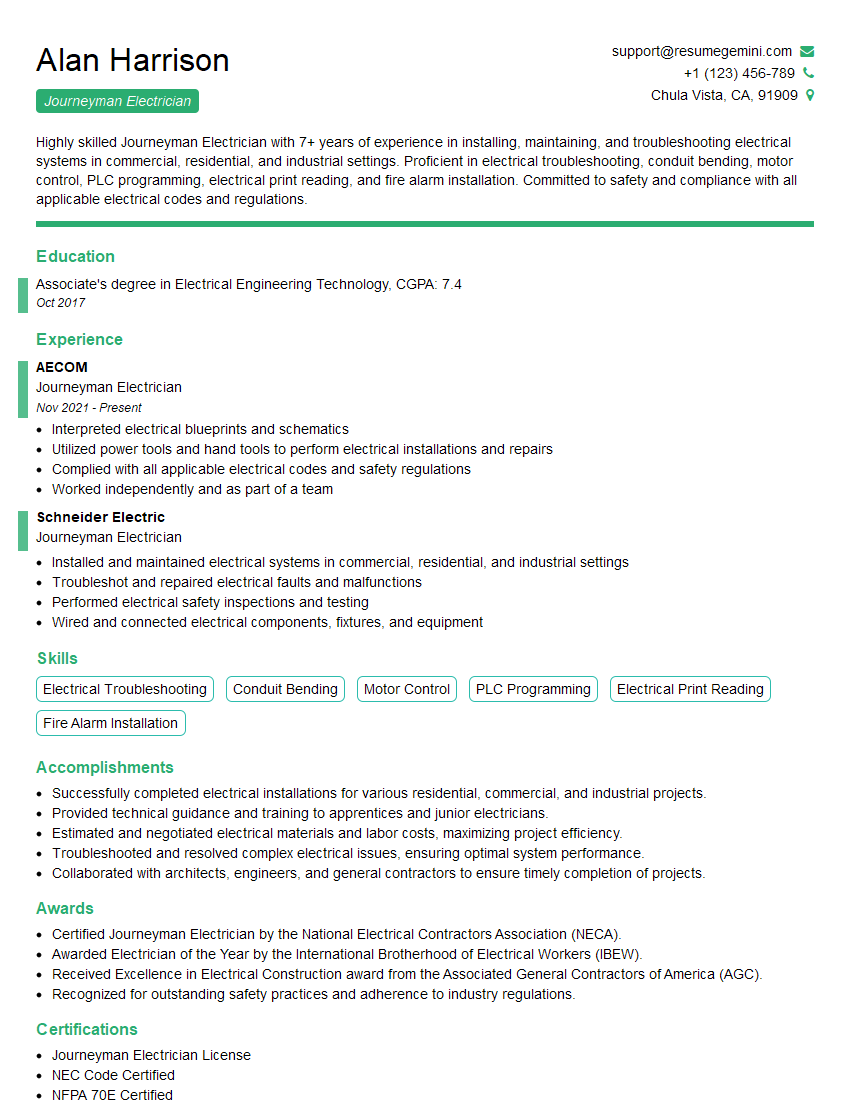
Journeyman Electrician Resume Sample
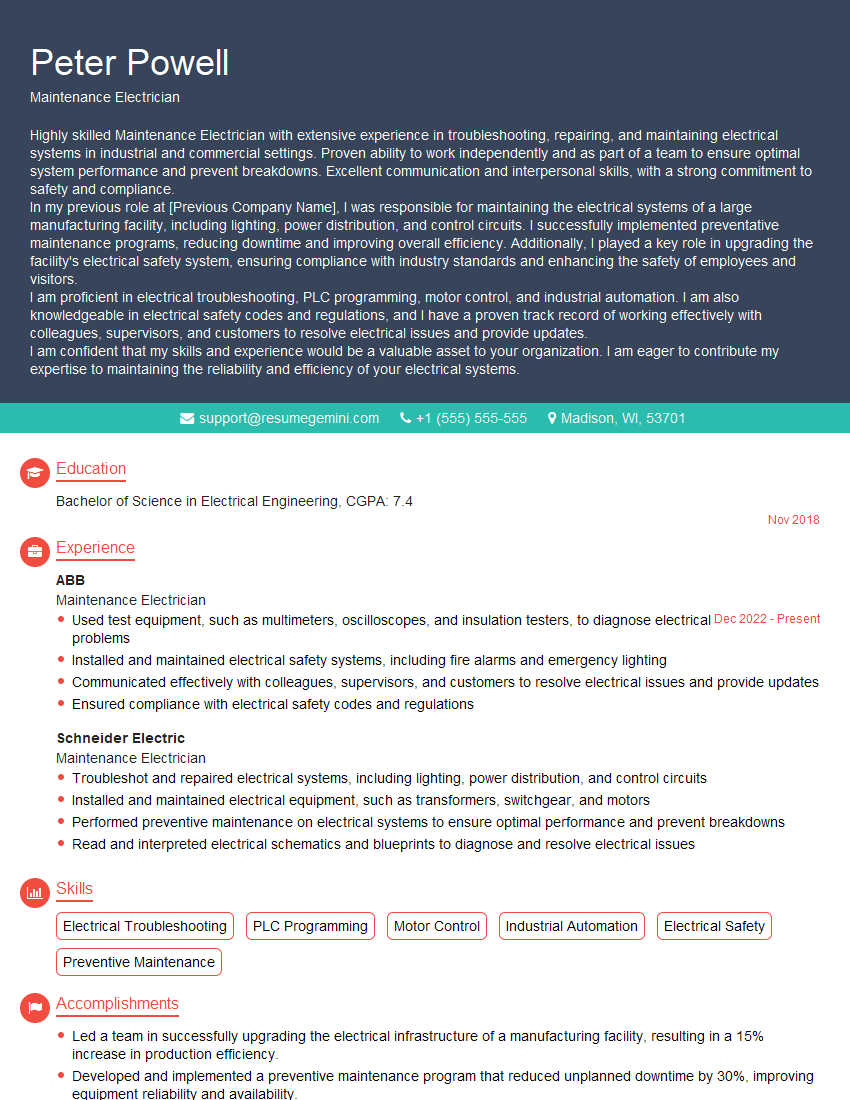
Maintenance Electrician Resume Sample
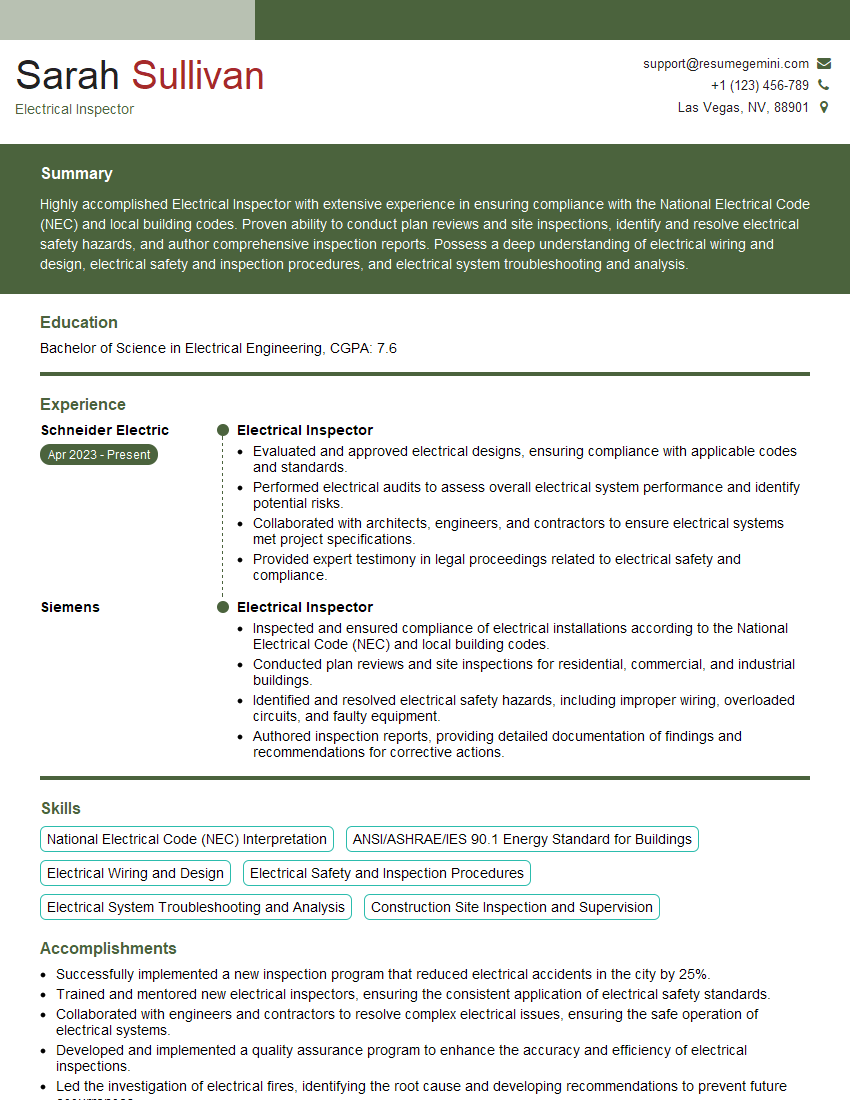
Electrical Inspector Resume Sample
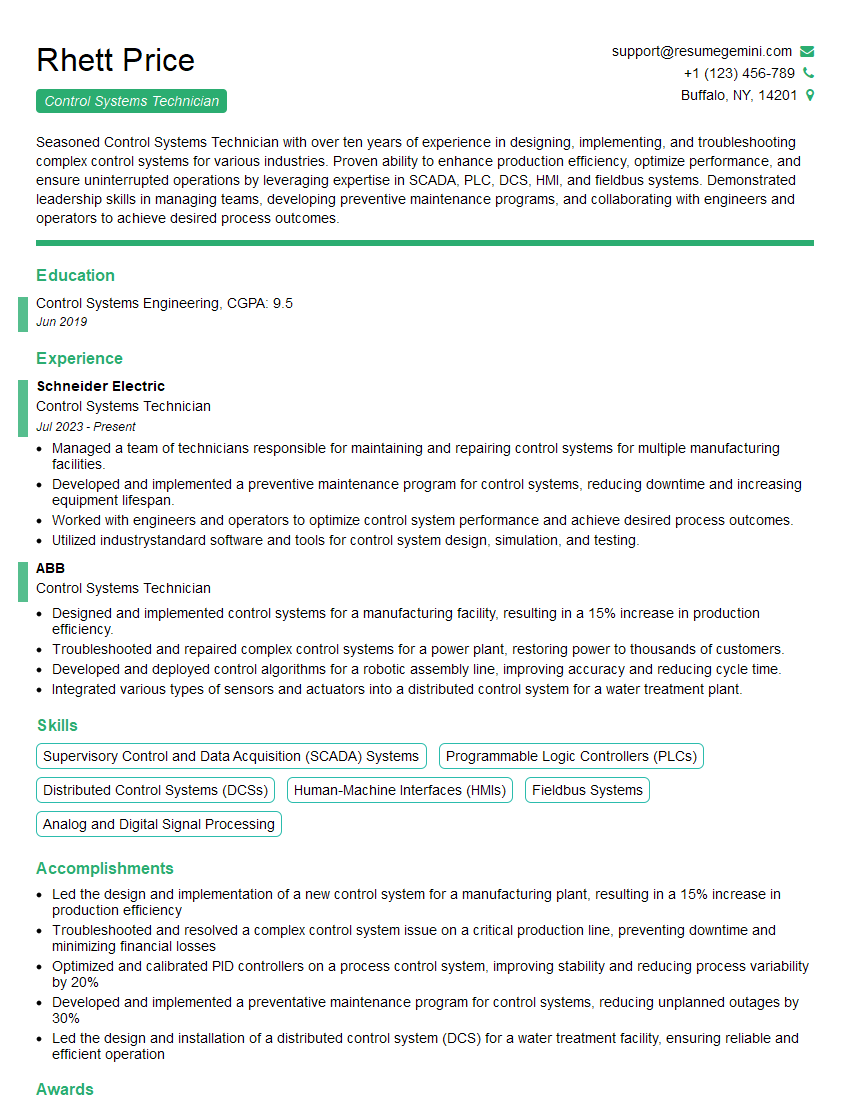
Control Systems Technician Resume Sample
- Electrical Contractor
- Electrical Estimator
- Electrical Designer
- Electrical Engineer
- Instrumentation Technician
- Electrical Technician
- Electrical Foreman
- Electrical Supervisor
- Commercial Electrician
- Electrician
- Industrial Electrician
- Journeyman Electrician
- Maintenance Electrician
- Electrical Inspector
- Control Systems Technician
Explore more articles
Users Rating of Our Blogs
Share Your Experience
We value your feedback! Please rate our content and share your thoughts (optional).
What Readers Say About Our Blog
To the interviewgemini.com Webmaster.
Very helpful and content specific questions to help prepare me for my interview!
Thank you
To the interviewgemini.com Webmaster.
This was kind of a unique content I found around the specialized skills. Very helpful questions and good detailed answers.
Very Helpful blog, thank you Interviewgemini team.