Cracking a skill-specific interview, like one for Endoscopic Ablation, requires understanding the nuances of the role. In this blog, we present the questions you’re most likely to encounter, along with insights into how to answer them effectively. Let’s ensure you’re ready to make a strong impression.
Questions Asked in Endoscopic Ablation Interview
Q 1. Describe the different types of endoscopic ablation techniques.
Endoscopic ablation encompasses several techniques aiming to destroy or remove abnormal tissue within the body using minimally invasive endoscopic approaches. These techniques differ primarily in the energy source used to achieve tissue destruction.
- Radiofrequency Ablation (RFA): Uses radiofrequency energy to heat and destroy tissue.
- Microwave Ablation (MWA): Employs microwave energy to generate heat and cause tissue necrosis.
- Cryoablation: Utilizes extreme cold (cryogenics) to freeze and destroy tissue.
- Argon Plasma Coagulation (APC): Uses argon gas plasma to create heat and coagulate tissue. Primarily used for superficial lesions.
- Laser Ablation: Different types of lasers (e.g., Nd:YAG, diode) are used to precisely target and ablate tissue.
The choice of technique depends on factors like lesion size, location, and the patient’s overall health.
Q 2. What are the indications for endoscopic ablation?
Endoscopic ablation finds applications in treating a variety of conditions across multiple specialties. The indications are broad and include:
- Gastrointestinal Tract: Adenomas (polyps) in the colon, Barrett’s esophagus, early-stage esophageal cancer, and gastrointestinal stromal tumors (GISTs).
- Respiratory System: Lung tumors (especially early-stage), bronchial tumors.
- Urology: Kidney tumors, bladder tumors.
- Liver: Liver tumors (in some cases, depending on size and location).
The suitability of endoscopic ablation is often determined by the size, location, and characteristics of the lesion, as well as the patient’s overall health and other medical conditions. For instance, small, well-defined adenomas are ideal candidates for endoscopic resection or ablation, while larger or more advanced cancers may necessitate surgery or other therapies.
Q 3. What are the contraindications for endoscopic ablation?
Contraindications to endoscopic ablation are situations where the procedure would be unsafe or ineffective. These include:
- Inability to reach the lesion endoscopically: The lesion’s location or size may prevent access.
- Severe comorbid conditions: Patients with severe heart or lung disease, uncontrolled bleeding disorders, or other significant medical problems may not tolerate the procedure.
- Extensive or advanced disease: Ablation may not be curative for large or advanced cancers.
- Patient’s inability to cooperate: The procedure requires patient cooperation and sedation or anesthesia, so individuals unable to cooperate are poor candidates.
- Specific anatomical limitations: Certain anatomical variations may make access challenging or increase the risk of complications.
A thorough pre-procedural assessment, including imaging studies and a review of the patient’s medical history, is crucial to determine the appropriateness of endoscopic ablation.
Q 4. Explain the mechanism of action for radiofrequency ablation (RFA).
Radiofrequency ablation (RFA) works by generating heat within the target tissue. A probe is inserted into the lesion, and radiofrequency energy is delivered, causing a rapid increase in tissue temperature. This heat denatures proteins, destroys cells, and ultimately causes tissue necrosis (death).
The mechanism involves the conversion of radiofrequency electrical energy into heat energy within the tissue. The heat spreads from the probe tip, creating a zone of coagulation and necrosis. The size of this zone depends on the power settings, duration of energy delivery, and tissue characteristics.
Think of it like cooking an egg: the heat from the pan (radiofrequency energy) denatures the egg white (proteins in the tissue), causing it to solidify (necrosis).
Q 5. Compare and contrast RFA, microwave ablation (MWA), and cryoablation.
RFA, MWA, and cryoablation are all minimally invasive ablation techniques, but they differ in their energy source and resulting tissue effects:
| Feature | RFA | MWA | Cryoablation |
|---|---|---|---|
| Energy Source | Radiofrequency | Microwave | Extreme Cold |
| Mechanism | Heat generation | Heat generation | Freezing |
| Tissue Effect | Coagulation necrosis | Coagulation necrosis | Ice crystal formation and cell rupture |
| Depth of Ablation | Moderate | Deep | Variable |
| Lesion Suitability | Smaller, superficial lesions | Larger, deeper lesions | Variable; often for lesions near critical structures |
RFA is effective for smaller lesions, MWA can penetrate deeper, and cryoablation offers precise targeting, often making it useful for lesions near delicate structures. The choice among them depends on several factors, including lesion characteristics and proximity to critical structures.
Q 6. What are the potential complications of endoscopic ablation?
While generally safe, endoscopic ablation carries potential complications. These can include:
- Bleeding: Damage to blood vessels during ablation can lead to bleeding.
- Perforation: A hole may be created in the organ wall, leading to leakage of contents into the abdominal or thoracic cavity.
- Infection: Infection may occur at the ablation site or as a result of the procedure.
- Pain: Post-procedural pain is common but usually manageable with analgesics.
- Stricture Formation: Scar tissue may narrow the affected organ lumen.
- Thermal injury to adjacent structures: Heat or cold damage to adjacent organs or tissues is a possibility.
The occurrence and severity of these complications vary depending on factors such as the type of ablation, the skill of the endoscopist, and the patient’s overall health.
Q 7. How do you manage complications during endoscopic ablation procedures?
Management of complications during and after endoscopic ablation requires prompt action and often involves a multidisciplinary approach.
- Bleeding: Immediate measures include endoscopic hemostasis (stopping the bleeding using various techniques) or sometimes surgical intervention if bleeding is severe and uncontrolled.
- Perforation: Surgical repair is usually necessary to close the perforation and prevent leakage.
- Infection: Antibiotics are administered to prevent and treat infection. In severe cases, drainage may be required.
- Pain: Analgesics and other pain management strategies are used to provide relief.
- Stricture: Endoscopic dilation or sometimes surgery might be needed to widen the narrowed area.
Post-procedural monitoring is crucial to detect and address complications early. This includes close observation of vital signs, assessment of pain levels, and routine follow-up examinations.
Q 8. Describe the pre-procedural preparation for endoscopic ablation.
Pre-procedural preparation for endoscopic ablation is crucial for patient safety and procedural success. It involves a multi-step process, beginning with a thorough assessment of the patient’s medical history, including allergies, medications, and any co-morbidities. This helps in identifying potential risks and tailoring the procedure accordingly.
Next, imaging studies like CT scans or endoscopy are typically performed to precisely locate and characterize the lesion to be ablated. This allows for accurate targeting and planning of the ablation strategy. Blood tests are also conducted to check for clotting factors and overall health status.
Patients are often required to fast for a specific period before the procedure to minimize the risk of aspiration. Bowel preparation, such as a laxative, might be necessary depending on the target location. Finally, informed consent is obtained, ensuring the patient fully understands the procedure, its risks, and potential benefits. For example, a patient undergoing ablation for a lung tumor will need a chest CT scan for precise localization. Careful explanation of the procedure helps alleviate patient anxiety and ensures a positive experience.
Q 9. What post-procedural care is required for patients undergoing endoscopic ablation?
Post-procedural care focuses on monitoring the patient’s recovery and managing potential complications. This begins with close observation in a recovery room to assess vital signs and monitor for any immediate adverse effects like bleeding or perforation.
Pain management is a key aspect of post-procedural care, typically involving analgesics tailored to the patient’s needs. Regular monitoring of respiratory function and oxygen saturation is essential, particularly after ablation procedures involving the respiratory tract.
Patients may require a period of hospitalization depending on the extent of the procedure and their overall health. A follow-up appointment is scheduled for a post-procedure assessment including imaging studies to evaluate the ablation’s effectiveness. For instance, a patient who underwent ablation for a liver tumor might experience some abdominal discomfort, which is typically manageable with pain medication and rest. Post-operative instructions, including dietary advice and activity restrictions, are crucial for a smooth recovery.
Q 10. How is the success of endoscopic ablation assessed?
Assessing the success of endoscopic ablation involves a multi-faceted approach combining clinical evaluation and imaging. Initially, the immediate post-procedure clinical assessment focuses on the absence of complications such as bleeding or perforation.
Imaging plays a crucial role in long-term assessment. Follow-up imaging studies, such as CT scans or MRI, are performed at regular intervals to evaluate the extent of lesion destruction and monitor for any recurrence. The size and characteristics of the treated area are compared to pre-procedure images to determine the effectiveness of the ablation.
Biological markers, such as tumor markers in the case of cancer ablation, may also be monitored to assess treatment response. For example, a decrease in tumor marker levels after ablation suggests effective treatment. The combination of clinical assessment and imaging provides a comprehensive evaluation of the success of the procedure and guides subsequent management.
Q 11. Discuss the role of imaging in endoscopic ablation.
Imaging is indispensable in endoscopic ablation, playing a critical role throughout the entire process. Before the procedure, imaging techniques like endoscopy, CT scans, MRI, or ultrasound are used to precisely locate and characterize the lesion, helping in treatment planning and determining the optimal ablation approach.
Real-time imaging guidance during the procedure ensures accurate placement of the ablation device and precise targeting of the lesion. Techniques like fluoroscopy, ultrasound, or endoscopic ultrasound (EUS) provide real-time visualization and help to avoid damaging surrounding healthy tissues. For example, EUS allows for precise visualization of lesions in the pancreas or esophagus, guiding the placement of the ablation probe.
Post-procedural imaging is crucial to assess the effectiveness of the ablation and to monitor for any recurrence or complications. This allows for timely intervention if necessary. The type of imaging used depends on the location and nature of the lesion.
Q 12. What are the advantages and disadvantages of endoscopic ablation compared to other treatment modalities?
Endoscopic ablation offers several advantages over other treatment modalities, including minimally invasiveness, reduced recovery time, and shorter hospital stays. It often involves smaller incisions or no incisions at all, leading to less pain, scarring, and risk of infection compared to open surgery.
However, endoscopic ablation is not without limitations. It may not be suitable for all lesions, particularly large or deeply seated ones. The success rate can vary depending on several factors, including the type and size of the lesion, and the expertise of the physician. It also may require specialized equipment and skilled personnel.
Compared to other therapies like chemotherapy or radiation, endoscopic ablation offers a more localized treatment, reducing the risk of systemic side effects. But, like any procedure, it carries potential risks, such as bleeding, perforation, or infection, which need to be carefully weighed against the benefits.
Q 13. Explain the importance of patient selection for endoscopic ablation.
Patient selection is crucial for the success and safety of endoscopic ablation. Careful evaluation of the patient’s overall health, lesion characteristics, and suitability for the procedure is essential. Factors such as age, co-morbidities, and the location and size of the lesion are carefully considered.
Patients with severe comorbidities or those who are considered high-risk for the procedure may not be suitable candidates. The type and size of the lesion are also crucial; for example, large lesions may require a different treatment approach.
A thorough discussion with the patient about the risks, benefits, and alternatives is vital. Shared decision-making ensures that the patient is fully informed and participates actively in choosing the most appropriate treatment strategy. This ensures the patient receives the most appropriate and safe treatment. For instance, a patient with severe heart failure might not be a good candidate for a lengthy procedure, whereas a patient with a small, well-defined lesion in an accessible location would likely be a suitable candidate.
Q 14. How do you manage pain during endoscopic ablation procedures?
Pain management during endoscopic ablation is a critical aspect of ensuring patient comfort and procedural success. The approach varies depending on the location of the ablation and the patient’s individual needs and pain tolerance.
Most procedures involve some level of sedation, ranging from conscious sedation to general anesthesia, depending on the complexity of the procedure and patient preference. Conscious sedation allows the patient to remain awake but comfortably relaxed and minimizes pain and discomfort during the procedure.
Analgesics, both systemic and local, may be used to manage pain during and after the procedure. Local anesthetics can be injected near the ablation site to numb the area. Post-procedural pain is typically managed with oral or intravenous analgesics, tailored to the patient’s response and pain level. Regular monitoring of pain levels and appropriate adjustments to the pain management plan are essential for optimal patient comfort.
Q 15. What is the role of the endoscopy nurse during endoscopic ablation?
The endoscopy nurse plays a crucial role in ensuring the safety and efficiency of endoscopic ablation procedures. Their responsibilities extend beyond simple assistance; they are integral to the entire process. Think of them as the conductor of a well-oiled orchestra, coordinating various aspects to ensure a harmonious operation.
- Pre-procedure preparation: This includes verifying patient identification, reviewing the procedure plan, preparing the equipment and supplies, and ensuring the patient is comfortable and informed.
- Intra-procedure assistance: During the procedure, the nurse assists the physician by handing instruments, monitoring vital signs (heart rate, blood pressure, oxygen saturation), managing intravenous fluids, and anticipating the physician’s needs. They also meticulously document the procedure.
- Post-procedure care: Post-procedure, the nurse monitors the patient’s recovery, administers medications as ordered, educates the patient on post-procedure care, and ensures a smooth transition to discharge or admission to the appropriate care unit. This often includes pain management and monitoring for complications.
- Maintaining sterility: Strict adherence to sterile techniques is paramount to prevent infection. The nurse plays a key role in maintaining a sterile environment.
In short, the endoscopy nurse is a vital member of the endoscopic ablation team, ensuring patient safety, procedural efficiency, and a positive patient experience.
Career Expert Tips:
- Ace those interviews! Prepare effectively by reviewing the Top 50 Most Common Interview Questions on ResumeGemini.
- Navigate your job search with confidence! Explore a wide range of Career Tips on ResumeGemini. Learn about common challenges and recommendations to overcome them.
- Craft the perfect resume! Master the Art of Resume Writing with ResumeGemini’s guide. Showcase your unique qualifications and achievements effectively.
- Don’t miss out on holiday savings! Build your dream resume with ResumeGemini’s ATS optimized templates.
Q 16. Describe your experience with a specific endoscopic ablation case.
I recall a particularly challenging case involving a patient with a large, recurrent Barrett’s esophagus lesion. Barrett’s esophagus is a precancerous condition where the lining of the esophagus changes, increasing the risk of esophageal cancer. This patient had previously undergone radiofrequency ablation (RFA), but the lesion had recurred. We opted for a combination of RFA and argon plasma coagulation (APC) to address the lesion’s size and location.
The procedure was more complex than usual because of the lesion’s size and its proximity to healthy tissue. Careful navigation was crucial to avoid perforation. We used advanced imaging techniques, including narrow band imaging (NBI), to precisely target the abnormal tissue and minimize damage to surrounding healthy tissue. The patient tolerated the procedure well, and post-operative surveillance showed successful ablation with no complications. This experience reinforced the importance of a multidisciplinary approach, incorporating the latest technologies and meticulous attention to detail for optimal patient outcomes.
Q 17. What are the latest advancements in endoscopic ablation technology?
The field of endoscopic ablation is constantly evolving. Recent advancements include:
- Improved energy sources: We’re seeing refined RFA technologies with better control of energy delivery, leading to more precise ablation and reduced complications. New methods using pulsed-dye lasers or microwave ablation are also being investigated.
- Advanced imaging: NBI and confocal laser endomicroscopy (CLE) are enhancing our ability to precisely visualize and target lesions, improving ablation accuracy and minimizing the risk of damaging healthy tissue. Think of it like having a high-resolution map before starting the procedure.
- Minimally invasive techniques: There is a shift towards less invasive techniques, often using smaller catheters and endoscopes. This results in reduced patient discomfort, faster recovery, and lower rates of complications.
- Real-time monitoring systems: Development of systems that provide real-time feedback on energy delivery and tissue effects are improving ablation outcomes and safety.
- Artificial intelligence (AI): AI is being integrated into image analysis to aid in lesion detection, characterization, and treatment planning. This will undoubtedly improve accuracy and personalization of treatment.
These advancements are significantly improving the effectiveness and safety of endoscopic ablation, leading to better patient outcomes and a reduction in the need for more invasive surgical approaches.
Q 18. How do you stay current with the latest research and best practices in endoscopic ablation?
Staying current in the rapidly advancing field of endoscopic ablation requires a multifaceted approach.
- Professional organizations: Active participation in organizations like the American Society for Gastrointestinal Endoscopy (ASGE) provides access to cutting-edge research, educational resources, and networking opportunities.
- Conferences and workshops: Attending national and international conferences and workshops allows for direct exposure to the latest techniques and technologies and facilitates interaction with leading experts in the field.
- Peer-reviewed journals: Regularly reviewing reputable peer-reviewed journals like Gastrointestinal Endoscopy and Endoscopy keeps me updated on the most recent research findings and clinical trials.
- Online resources: Utilizing online resources such as reputable medical websites and databases keeps me informed about the latest guidelines and best practices.
- Continuing medical education (CME): Active participation in CME courses and programs ensures that my knowledge and skills are continuously updated and aligned with the latest standards of care.
By consistently utilizing these methods, I maintain a deep understanding of the latest advancements, ensuring I provide my patients with the most effective and safe treatments available.
Q 19. Describe your experience with different types of ablation devices.
My experience encompasses a wide range of ablation devices, each with unique strengths and applications:
- Radiofrequency ablation (RFA): RFA is a cornerstone of endoscopic ablation, utilizing radiofrequency energy to destroy abnormal tissue. I have extensive experience with various RFA catheters, including those with different tip designs and energy delivery modes.
- Argon plasma coagulation (APC): APC uses a plasma jet to ablate tissue. I’ve utilized APC for treating superficial lesions and managing bleeding. APC is often used in conjunction with RFA.
- Cryotherapy: Cryotherapy employs extreme cold to destroy targeted tissue. I’ve employed cryotherapy for smaller, superficial lesions, primarily in the context of treating early-stage neoplasms.
- Laser ablation: I’ve experience with various laser modalities. These are exceptionally useful for precise targeting, particularly for difficult-to-reach lesions or those requiring high precision.
The choice of device depends on various factors, including lesion characteristics, location, size, and patient-specific factors. Selecting the optimal device requires a thorough understanding of each technology’s strengths, limitations, and potential side effects.
Q 20. How do you ensure patient safety during endoscopic ablation procedures?
Patient safety is paramount in any endoscopic procedure, particularly during ablation. A multi-layered approach is essential:
- Thorough pre-procedure assessment: This includes a detailed medical history, physical examination, and appropriate laboratory tests to identify and mitigate potential risks. We carefully assess patients for bleeding disorders, cardiac conditions, and other factors that might increase risks.
- Informed consent: Patients receive detailed information regarding the procedure, its benefits, risks, and potential complications. This ensures they understand the process completely and give their informed consent.
- Monitoring vital signs: Continuous monitoring of vital signs throughout the procedure allows us to immediately detect and address any adverse events. We pay close attention to heart rate, blood pressure, oxygen saturation, and respiratory rate.
- Strict adherence to sterile techniques: Strict adherence to sterile techniques throughout the procedure is critical to minimize the risk of infection.
- Careful tissue handling: Precise tissue targeting and minimal disruption of healthy tissue are crucial to reducing complications. Advanced imaging techniques such as NBI are instrumental in this.
- Post-procedure monitoring: Close post-procedure monitoring ensures prompt detection and treatment of any complications, such as perforation or bleeding.
This systematic approach, combined with the expertise of the endoscopy team, ensures optimal patient safety.
Q 21. What are the ethical considerations surrounding endoscopic ablation?
Ethical considerations in endoscopic ablation are centered around ensuring patient autonomy, beneficence, non-maleficence, and justice.
- Informed consent: Patients must be fully informed about the procedure, including potential benefits, risks, alternatives, and uncertainties, to ensure true informed consent. The discussion should be tailored to the patient’s level of understanding.
- Balancing risks and benefits: The decision to proceed with endoscopic ablation must carefully weigh the potential benefits against the risks. This necessitates a thorough assessment of the patient’s overall health and the severity of their condition.
- Resource allocation: Given that endoscopic ablation procedures can be resource-intensive, ethical considerations around equitable access to this technology need to be addressed. We must strive to ensure that patients who would benefit most have access to this procedure.
- End-of-life care: In certain circumstances, particularly for advanced cancers, endoscopic ablation may be considered as part of palliative care. Ethical considerations center on providing comfort and dignity in such situations.
- Research ethics: Any research involving endoscopic ablation must adhere to strict ethical guidelines, ensuring participant safety, privacy, and informed consent.
Addressing these ethical considerations proactively ensures responsible and compassionate care for patients undergoing endoscopic ablation.
Q 22. Explain your understanding of informed consent in the context of endoscopic ablation.
Informed consent in endoscopic ablation is paramount. It’s a process, not just a form, ensuring the patient fully understands the procedure, its benefits, risks, and alternatives. This includes explaining the nature of the condition being treated, the purpose of the ablation, the procedure’s steps (in a way they can understand), potential complications (both common and rare, with their likelihoods), and the success rates based on existing data. We discuss recovery time, lifestyle changes, and alternative treatments like medication or surgery. The patient needs to feel comfortable asking questions and expressing concerns. We use plain language, avoiding overly technical jargon, and provide visual aids like diagrams or videos when helpful. For example, if a patient is considering endoscopic ablation for Barrett’s esophagus, we’d meticulously explain the risk of perforation, bleeding, and the potential need for further procedures. Only after ensuring thorough comprehension and addressing all their questions do we proceed with obtaining their signature on the consent form. The entire process is documented.
Q 23. How do you handle unexpected complications during a procedure?
Unexpected complications during endoscopic ablation are managed with a calm, systematic approach. Our immediate priority is patient safety. For example, if significant bleeding occurs, we immediately stop the procedure and employ haemostatic techniques like injection of epinephrine or application of clips or thermal coagulation. If perforation is suspected, the procedure is halted, and the patient is stabilized. We initiate appropriate supportive measures – intravenous fluids, oxygen therapy, blood transfusions if necessary. We promptly consult with other specialists, like surgeons or gastroenterologists, depending on the nature of the complication. The patient’s vital signs are continuously monitored, and we document all actions taken and the patient’s response. Open communication with the patient (and their family, if desired) is crucial, explaining the situation clearly and honestly, while providing reassurance.
Q 24. How do you communicate procedural results to the patient and their family?
Communicating procedural results involves a sensitive and clear approach. We schedule a follow-up appointment to discuss the findings in detail. This includes whether the intended target was reached, the extent of ablation achieved, and any unforeseen events that occurred during the procedure. We use plain language to explain technical details, such as the size and location of any lesions treated. We provide visual aids like endoscopic images (with patient permission) to illustrate the results. We address any patient concerns or questions thoroughly. We discuss the pathology reports once available, explaining their significance in a way the patient can understand. For example, if we successfully ablated a dysplastic lesion, we’d explain the implications for cancer risk reduction and the need for continued surveillance. We emphasize the importance of adherence to follow-up appointments and any lifestyle modifications recommended.
Q 25. What are the long-term outcomes of endoscopic ablation?
Long-term outcomes of endoscopic ablation vary depending on the indication and the specific technique used. For example, in Barrett’s esophagus, ablation aims to remove precancerous cells, thereby reducing the risk of esophageal cancer. Long-term follow-up is crucial to monitor for recurrence of dysplasia or the development of cancer. Regular endoscopy with biopsies is typically required. In other indications, like treating early-stage esophageal cancer, the long-term outcome depends on factors such as tumor size, location, and histological type. Success is often measured by cancer-free survival rates and quality of life. Patients might experience long-term effects like minor changes in esophageal function or the need for ongoing surveillance. It’s important to stress the need for lifelong monitoring after the procedure, a point we clearly explain during the informed consent process.
Q 26. Describe your experience with monitoring and managing patients after endoscopic ablation.
Post-procedure monitoring and management are critical. We typically schedule a follow-up appointment within a week to assess healing and identify any early complications like bleeding or infection. Pain management is addressed. Patients are given instructions on diet modification (typically a bland diet initially), medication (for pain or infection), and activity restrictions. We provide contact information for immediate assistance in case of emergency. Regular follow-up endoscopies and biopsies are performed to assess the long-term effects and monitor for recurrence or complications. We closely track patient-reported outcomes to assess quality of life and any lingering symptoms. We adjust treatment plans based on individual patient needs and responses, working collaboratively with other specialists if required.
Q 27. What are the key performance indicators (KPIs) for endoscopic ablation success?
Key performance indicators (KPIs) for endoscopic ablation success are multifaceted. They include complete ablation of the target lesion, confirmed by endoscopic and pathological examination, absence of major complications (e.g., perforation, bleeding), the length of hospital stay, and recurrence rates. We also consider patient-reported outcomes, including pain levels, dysphagia (difficulty swallowing), and quality of life assessments. For instance, in treating Barrett’s esophagus, a successful procedure would involve complete ablation of intestinal metaplasia and dysplasia with no recurrence within a defined timeframe. We track these KPIs meticulously, using them to continuously improve our techniques and outcomes. Regular audits and data analysis help us identify areas for optimization and ensure we meet the highest standards of care.
Q 28. How do you contribute to a team environment during endoscopic ablation procedures?
Endoscopic ablation is a team effort. I actively contribute by maintaining open communication with the entire team, including nurses, anesthesiologists, and support staff. I ensure everyone understands the procedure plan and the patient’s specific needs. I delegate tasks efficiently, ensuring seamless workflow. I provide clear instructions and guidance to the team, ensuring everyone is comfortable with their roles. During the procedure, I maintain focus and actively participate, ensuring prompt problem-solving. Post-procedure, I collaborate closely with the team to provide comprehensive patient care. Regular team meetings provide a forum for case discussions, quality improvement initiatives, and continuing education to further our collective expertise and enhance patient safety and outcomes.
Key Topics to Learn for Endoscopic Ablation Interview
- Principles of Endoscopic Ablation: Understand the various energy sources used (radiofrequency, microwave, laser), their mechanisms of action, and tissue effects. Consider the advantages and disadvantages of each modality.
- Types of Endoscopic Ablation Procedures: Become familiar with the applications of Endoscopic Ablation across different medical specialties, including cardiology (e.g., atrial fibrillation ablation), gastroenterology (e.g., ablation of Barrett’s esophagus), and pulmonology (e.g., treatment of lung tumors). Focus on specific procedural steps and variations.
- Patient Selection and Pre-operative Assessment: Discuss the crucial role of patient selection criteria, including contraindications and risk assessment. Understand pre-procedure preparation and patient management.
- Imaging and Navigation Techniques: Explore the use of fluoroscopy, ultrasound, and electroanatomical mapping systems in guiding and monitoring ablation procedures. Discuss the role of image interpretation in procedural success.
- Intraoperative Monitoring and Management: Understand the importance of hemodynamic monitoring, arrhythmia detection, and appropriate responses to complications. Discuss strategies for effective procedural management.
- Post-operative Care and Complications: Familiarize yourself with post-procedure monitoring, potential complications (e.g., bleeding, perforation, infection), and management strategies.
- Emerging Technologies and Future Directions: Stay updated on the latest advancements in Endoscopic Ablation technologies, including minimally invasive techniques and improved energy sources.
- Ethical Considerations and Patient Safety: Discuss the ethical implications of Endoscopic Ablation procedures and the importance of adhering to safety protocols.
Next Steps
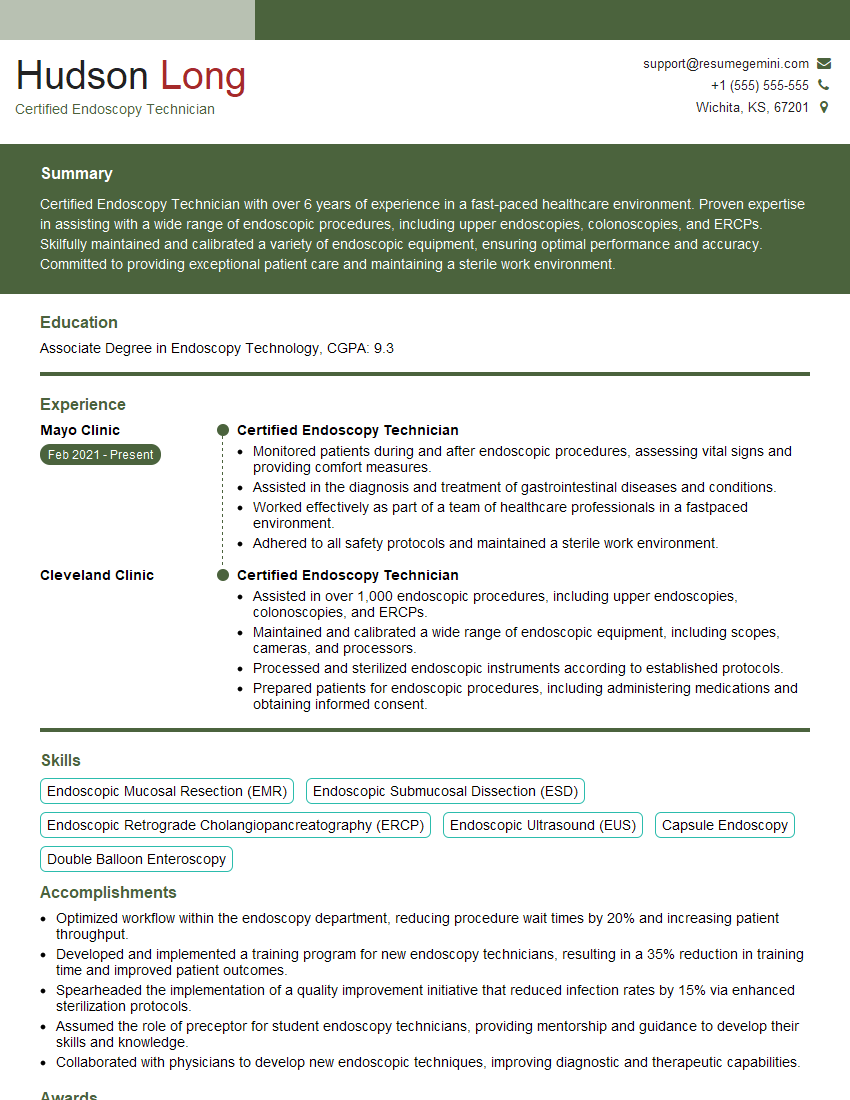
Mastering Endoscopic Ablation is crucial for career advancement in the field of interventional medicine. A strong understanding of these procedures demonstrates expertise and opens doors to exciting opportunities. To maximize your job prospects, it’s vital to create an ATS-friendly resume that showcases your skills and experience effectively. ResumeGemini is a trusted resource that can help you build a compelling and professional resume tailored to the specific requirements of the Endoscopic Ablation field. Examples of resumes tailored to Endoscopic Ablation are available to guide you. Invest in your professional future – build a standout resume with ResumeGemini today!
Explore more articles
Users Rating of Our Blogs
Share Your Experience
We value your feedback! Please rate our content and share your thoughts (optional).
What Readers Say About Our Blog
To the interviewgemini.com Webmaster.
Very helpful and content specific questions to help prepare me for my interview!
Thank you
To the interviewgemini.com Webmaster.
This was kind of a unique content I found around the specialized skills. Very helpful questions and good detailed answers.
Very Helpful blog, thank you Interviewgemini team.