Interviews are opportunities to demonstrate your expertise, and this guide is here to help you shine. Explore the essential Energy Optimization and Efficiency interview questions that employers frequently ask, paired with strategies for crafting responses that set you apart from the competition.
Questions Asked in Energy Optimization and Efficiency Interview
Q 1. Explain the difference between energy efficiency and energy conservation.
While both energy efficiency and energy conservation aim to reduce energy consumption, they differ in their approach. Energy efficiency focuses on using less energy to achieve the same level of service or output. Think of it as getting more bang for your energy buck. Energy conservation, on the other hand, emphasizes reducing energy consumption by using less of a service or reducing demand. This might involve turning off lights or using appliances less frequently.
For example, replacing an old incandescent light bulb with an LED bulb is energy efficiency (same light output, less energy used). Turning off that LED bulb when you leave a room is energy conservation (reducing the amount of light used).
In practice, both strategies are often employed together for maximum impact. A comprehensive energy management plan would incorporate both efficiency improvements (like upgrading equipment) and behavioral changes (like adjusting thermostats).
Q 2. Describe your experience with energy audits and their key components.
I have extensive experience conducting energy audits for various building types, from residential homes to large commercial complexes. A typical energy audit involves a detailed assessment of a building’s energy consumption patterns, identifying areas of inefficiency and proposing cost-effective improvements.
Key components include:
- Walkthrough inspection: A visual inspection of the building’s envelope (walls, roof, windows), HVAC systems, lighting, and appliances to identify potential issues.
- Data collection: Gathering energy consumption data from utility bills, smart meters, and building management systems to establish a baseline.
- Energy modeling: Using specialized software (e.g., eQUEST, EnergyPlus) to simulate the building’s energy performance and predict the impact of proposed improvements.
- Testing and measurements: Conducting blower door tests to measure building air tightness, infrared thermography to identify thermal bridges, and other tests to quantify energy losses.
- Report generation: Preparing a comprehensive report detailing findings, recommendations, and cost-benefit analyses of potential upgrades.
For instance, during an audit of a school, we discovered significant air leakage through poorly sealed windows, leading to increased heating costs in winter. We recommended window upgrades and sealing gaps, resulting in a substantial reduction in energy consumption and a positive return on investment.
Q 3. What are the common energy-saving measures for HVAC systems?
HVAC (Heating, Ventilation, and Air Conditioning) systems are significant energy consumers. Implementing energy-saving measures can significantly reduce operational costs and environmental impact.
- Regular maintenance: Cleaning filters, checking refrigerant levels, and ensuring proper operation are crucial for optimal efficiency. Regular maintenance prevents small problems from escalating into major, energy-intensive repairs.
- Upgrade to high-efficiency equipment: Replacing old, inefficient units with newer models with higher SEER (Seasonal Energy Efficiency Ratio) ratings for air conditioners and AFUE (Annual Fuel Utilization Efficiency) ratings for furnaces significantly improves performance. Think of it as trading your old gas-guzzler for a fuel-efficient hybrid.
- Smart thermostats: Programmable or smart thermostats allow for customized temperature settings, optimizing energy use based on occupancy and scheduling, avoiding unnecessary heating or cooling.
- Improved ductwork: Sealing and insulating ductwork minimizes energy loss due to leaks and poor insulation, ensuring that conditioned air reaches its destination efficiently.
- Variable speed drives (VSDs): VSDs for fans and pumps allow for modulating speed based on demand, reducing energy consumption compared to constant-speed operation.
- Zone control: Dividing the building into zones allows for independent temperature control in different areas, reducing energy waste in unoccupied spaces.
Q 4. How do you calculate the simple payback period for an energy efficiency project?
The simple payback period is a crucial metric for evaluating the financial viability of energy efficiency projects. It indicates how long it takes for the cost savings from an investment to recover the initial investment cost.
The calculation is straightforward:
Simple Payback Period = Initial Investment Cost / Annual Energy Cost Savings
For example, let’s say a new energy-efficient boiler costs $10,000 and is projected to save $2,000 annually on energy costs. The simple payback period would be:
Simple Payback Period = $10,000 / $2,000 = 5 years
This means that the project will pay for itself in 5 years. It’s important to note that this calculation doesn’t account for factors like inflation, discount rates, or the potential for future energy price increases which would make a more sophisticated return on investment (ROI) analysis more appropriate for larger projects.
Q 5. Explain the concept of Life Cycle Assessment (LCA) in energy projects.
Life Cycle Assessment (LCA) is a comprehensive methodology for evaluating the environmental impacts of a product or project throughout its entire life, from raw material extraction to disposal. In energy projects, LCA considers not only the operational energy efficiency but also the embodied energy (energy used in manufacturing, transportation, and construction of the project components).
For instance, installing solar panels may reduce operational energy consumption. However, an LCA would also consider the energy used in manufacturing the panels, transporting them, and eventually disposing of them. This provides a holistic view of the environmental impact, helping to make informed decisions that minimize the overall ecological footprint. A complete LCA can help determine if a supposedly ‘green’ project is actually better than the status quo environmentally.
Q 6. What are some key performance indicators (KPIs) you would use to track energy efficiency improvements?
Tracking energy efficiency improvements requires careful monitoring and analysis of key performance indicators (KPIs). Some crucial KPIs I use include:
- Energy consumption (kWh or therms): Tracking total energy usage over time provides a baseline for evaluating improvements.
- Energy intensity (kWh/m² or kWh/unit of production): This metric normalizes energy consumption, allowing for comparison between buildings of different sizes or operational scales. A large factory using less energy per unit produced has a lower energy intensity and is more efficient.
- Specific energy consumption (SEC): This is usually expressed as kWh/m²/year for buildings and allows comparison of energy consumption across different buildings normalized by size.
- Return on investment (ROI): This metric shows the financial benefit of energy efficiency measures.
- Payback period: This indicates how long it takes for energy savings to cover initial investment costs.
- Carbon emissions (kg CO2e): This reflects the environmental impact of energy usage. The ‘e’ stands for equivalent, representing the global warming potential of various greenhouse gases relative to carbon dioxide.
By regularly monitoring these KPIs, I can track progress towards efficiency goals, identify areas needing further attention, and demonstrate the success of implemented improvements.
Q 7. Describe your experience with energy modeling software (e.g., eQUEST, EnergyPlus).
I have extensive experience using energy modeling software, including eQUEST and EnergyPlus, to simulate building energy performance and analyze the impact of various design and operational strategies. These tools allow for detailed modeling of building systems, weather conditions, and occupant behavior to predict energy consumption and identify areas for improvement.
For example, I recently used EnergyPlus to model the energy performance of a new office building. By simulating different HVAC system designs, window types, and lighting strategies, we were able to optimize the building’s design to minimize energy consumption while maintaining occupant comfort. The model helped us make data-driven decisions that resulted in substantial energy savings, improving both the building’s operational efficiency and its environmental impact.
This kind of modeling helps visualize what different scenarios will do to both upfront costs and long-term operational expenses. Running multiple simulations with varied inputs allows you to focus on the most cost-effective strategies, making the entire energy efficiency process far more efficient.
Q 8. How familiar are you with building codes and energy standards (e.g., ASHRAE, LEED)?
I possess extensive familiarity with building codes and energy standards, including ASHRAE (American Society of Heating, Refrigerating and Air-Conditioning Engineers) standards, and LEED (Leadership in Energy and Environmental Design) certification processes. My experience encompasses interpreting and applying these standards in various project scenarios, from initial design to post-occupancy evaluations. I understand the nuances of different code versions, energy efficiency requirements, and compliance procedures. For example, I’ve worked on projects requiring compliance with ASHRAE 90.1, focusing on energy modeling and optimization to meet the stringent requirements for HVAC systems and building envelope performance. Similarly, I’ve led teams in achieving LEED certifications, implementing strategies for water efficiency, waste reduction, and sustainable material selection, all while prioritizing energy efficiency targets.
Understanding these standards isn’t simply about ticking boxes; it’s about integrating sustainable and efficient design principles from the ground up. This involves selecting appropriate building materials, specifying high-performance building envelopes, and optimizing HVAC systems for optimal energy use.
Q 9. Explain the concept of net-zero energy buildings.
A net-zero energy building is a structure designed to produce as much renewable energy as it consumes over a year. Think of it like a perfectly balanced equation: energy produced equals energy consumed. This doesn’t necessarily mean the building has no connection to the grid; it may draw energy from the grid during periods of low production (like cloudy winter days), but the net energy consumption over the entire year is zero.
Achieving net-zero status typically involves a multi-pronged approach. This includes:
- High-Performance Building Envelope: Minimizing energy losses through superior insulation, airtight construction, and high-performance windows.
- Energy-Efficient Systems: Utilizing highly efficient HVAC systems, lighting, and appliances.
- On-site Renewable Energy Generation: Integrating renewable energy sources such as solar photovoltaic (PV) panels, solar thermal collectors, or wind turbines to generate electricity or heat.
- Energy Management System (EMS): Implementing a sophisticated system to monitor and control energy use in real-time, optimizing performance and identifying potential problems.
For instance, a net-zero office building might use solar panels on the roof to generate electricity, while employing highly efficient LED lighting and a geothermal heating and cooling system to drastically reduce energy consumption. The EMS would continuously monitor and adjust the systems to maintain optimal performance and minimize energy waste.
Q 10. How would you identify and prioritize energy efficiency opportunities in a building?
Identifying and prioritizing energy efficiency opportunities in a building requires a systematic approach. I typically use a combination of methods, starting with a thorough energy audit.
- Energy Audit: This involves a detailed assessment of the building’s energy consumption patterns, identifying areas of high energy use and potential inefficiencies. Tools like infrared thermography are employed to detect heat loss in the building envelope.
- Data Analysis: Reviewing historical energy usage data (electricity, gas, water) to pinpoint trends and anomalies. This helps in identifying peak demand periods and potential areas for optimization.
- Walkthrough Inspection: A physical inspection of the building to assess the condition of equipment, insulation, windows, and other building components. This can reveal immediate issues like air leaks or faulty equipment.
- Energy Modeling: Using specialized software to simulate the building’s energy performance under various scenarios. This allows me to test the impact of different energy-saving measures and prioritize the most effective solutions.
- Prioritization: I then prioritize opportunities based on factors such as cost-effectiveness (simple payback period), energy savings potential, and feasibility of implementation. A cost-benefit analysis is essential to guide decision-making.
For example, replacing outdated lighting fixtures with energy-efficient LEDs might offer a quick and cost-effective improvement, while investing in a building automation system (BAS) could yield larger savings in the long term, but at a higher upfront cost.
Q 11. Describe your experience with demand-side management strategies.
Demand-side management (DSM) strategies focus on modifying energy consumption patterns to reduce peak demand and improve overall energy efficiency. My experience includes implementing various DSM programs, focusing on both technical and behavioral changes.
- Load Shifting: This involves shifting energy consumption from peak demand periods to off-peak hours, reducing strain on the grid and potentially lowering energy costs. This might include using smart thermostats to pre-cool or pre-heat a building during off-peak hours.
- Load Reduction: This focuses on reducing overall energy consumption by implementing measures such as energy-efficient equipment, optimized lighting schedules, and improved process controls.
- Peak Demand Reduction: Implementing measures to reduce the peak demand during periods of high electricity prices. This could include using energy storage systems or demand response programs.
- Behavioral Change Programs: Educating building occupants about energy conservation practices through awareness campaigns, training programs, and feedback mechanisms. For example, promoting the responsible use of lights, HVAC systems, and appliances.
In a past project, we implemented a DSM program for a large commercial building that included smart thermostats, occupancy sensors, and an automated lighting control system. This resulted in a significant reduction in peak demand and a considerable decrease in energy costs.
Q 12. What are the different types of renewable energy sources and their applications?
Renewable energy sources are derived from naturally replenishing resources. There are several types, each with its own applications:
- Solar Energy: Harnessing sunlight to generate electricity (photovoltaic – PV) or heat (solar thermal). PV systems are commonly used for rooftops and large-scale solar farms, while solar thermal systems can be used for water heating or space heating.
- Wind Energy: Converting wind energy into electricity using wind turbines. Wind farms are often located in areas with consistently high wind speeds.
- Hydropower: Generating electricity using the energy of moving water. This involves dams and hydroelectric power plants.
- Geothermal Energy: Utilizing heat from the Earth’s interior to generate electricity or provide heating and cooling. Geothermal plants are located in areas with significant geothermal activity.
- Biomass Energy: Burning organic matter (wood, crops, etc.) to generate heat or electricity. This can be used for heating buildings or power generation, although carbon emissions are a concern.
The choice of renewable energy source depends on factors such as geographic location, available resources, cost, and environmental impact. For example, solar energy is ideal for sunny locations, while wind energy is suitable for windy areas. A combined approach, using multiple renewable energy sources, often provides the most reliable and sustainable energy solution.
Q 13. What is your experience with energy data analysis and reporting?
I have extensive experience in energy data analysis and reporting. My expertise includes collecting, cleaning, analyzing, and visualizing energy consumption data from various sources using software like Excel, specialized energy management systems (EMS), and building automation systems (BAS).
My process typically involves:
- Data Acquisition: Gathering energy consumption data from meters, sensors, and building management systems.
- Data Cleaning and Validation: Ensuring data accuracy and consistency by identifying and correcting errors or inconsistencies.
- Data Analysis: Using statistical methods and visualization techniques to identify trends, anomalies, and areas for improvement.
- Report Generation: Creating clear and concise reports that communicate key findings and recommendations to stakeholders.
For example, I recently analyzed energy consumption data for a large hospital to identify opportunities for energy savings. By analyzing the data, I found that certain areas of the hospital had unusually high energy consumption during off-peak hours, leading to specific recommendations for improved equipment control and HVAC scheduling.
Q 14. Explain the concept of smart grids and their role in energy optimization.
Smart grids are modernized electricity networks that utilize digital technologies to improve efficiency, reliability, and sustainability. They play a crucial role in energy optimization by enabling two-way communication between the utility and consumers.
Key features and benefits of smart grids include:
- Real-time Monitoring and Control: Smart meters provide real-time energy consumption data, allowing utilities to better manage electricity flow and respond to changing demand.
- Demand Response Programs: Utilities can communicate directly with consumers to incentivize reduced energy consumption during peak demand periods, improving grid stability and reducing costs.
- Integration of Renewable Energy: Smart grids facilitate the seamless integration of distributed renewable energy sources, such as solar and wind power, into the electricity grid.
- Improved Grid Reliability: Advanced sensors and communication networks enable faster detection and response to power outages, improving grid resilience.
- Energy Storage: Smart grids can integrate energy storage technologies, such as batteries, to store excess renewable energy and provide backup power during periods of low generation.
Imagine a scenario where a sudden surge in demand occurs. A traditional grid might struggle to meet this demand, potentially leading to outages. However, a smart grid can automatically adjust energy distribution, utilize stored energy from batteries, and even send signals to consumers to temporarily reduce their energy use, preventing outages and ensuring a stable supply.
Q 15. How would you approach the implementation of an energy management system (EMS)?
Implementing an Energy Management System (EMS) is a strategic process that requires a phased approach. It’s not just about installing software; it’s about creating a culture of energy efficiency.
- Phase 1: Assessment and Planning: This involves a thorough energy audit to identify energy consumption patterns, pinpoint areas of waste, and establish a baseline. We’d use tools like infrared cameras to detect heat loss and analyze utility bills to understand historical trends. This phase also includes defining goals, securing executive buy-in, and creating a project team.
- Phase 2: System Selection and Installation: Choosing the right EMS depends on the organization’s size and complexity. We’d consider factors like scalability, integration with existing systems (like building automation systems), and reporting capabilities. The installation process should be well-planned and coordinated to minimize disruption.
- Phase 3: Data Collection and Analysis: The EMS gathers real-time data on energy consumption. This data needs to be carefully analyzed to identify trends, measure the effectiveness of implemented strategies, and make data-driven decisions. Regular reporting and dashboards are crucial.
- Phase 4: Implementation and Optimization: Based on the data analysis, we implement energy-saving measures, such as adjusting HVAC schedules, optimizing lighting, and improving equipment efficiency. Continuous monitoring and adjustment are key to maximizing savings.
- Phase 5: Verification and Reporting: Regularly verify the system’s performance against the established goals. This involves tracking key performance indicators (KPIs) and generating reports for stakeholders. This phase ensures that the EMS is achieving the desired results and provides opportunities for continuous improvement.
For example, in a previous project for a large manufacturing plant, we implemented an EMS that resulted in a 15% reduction in energy consumption within the first year by optimizing their compressed air system and adjusting their lighting schedule based on occupancy.
Career Expert Tips:
- Ace those interviews! Prepare effectively by reviewing the Top 50 Most Common Interview Questions on ResumeGemini.
- Navigate your job search with confidence! Explore a wide range of Career Tips on ResumeGemini. Learn about common challenges and recommendations to overcome them.
- Craft the perfect resume! Master the Art of Resume Writing with ResumeGemini’s guide. Showcase your unique qualifications and achievements effectively.
- Don’t miss out on holiday savings! Build your dream resume with ResumeGemini’s ATS optimized templates.
Q 16. What are the challenges associated with integrating renewable energy into the grid?
Integrating renewable energy into the grid presents several challenges, primarily related to intermittency, grid stability, and cost.
- Intermittency: Solar and wind power are inherently intermittent; their output fluctuates depending on weather conditions. This variability makes it difficult to predict energy supply, requiring sophisticated grid management techniques like energy storage solutions (batteries, pumped hydro) or demand-side management strategies.
- Grid Stability: The fluctuating nature of renewables can impact grid stability, potentially leading to voltage fluctuations and frequency deviations. Advanced grid technologies like smart inverters and power electronics are crucial to mitigate these issues and ensure seamless integration.
- Cost: While the cost of renewable energy technologies has decreased significantly, the initial investment can still be substantial. This includes the cost of installation, grid connection, and potential grid upgrades to accommodate the influx of renewable energy.
- Geographic Limitations: The suitability of renewable energy sources varies geographically. Areas with limited sunlight or wind resources may find it challenging to rely heavily on solar or wind power.
- Transmission and Distribution Infrastructure: Existing transmission and distribution infrastructure may not be adequately equipped to handle the decentralized nature of renewable energy generation, necessitating upgrades and expansion.
Imagine trying to balance a scale with weights of varying sizes (renewable energy sources) and weights of fixed size (conventional power plants). Grid operators must constantly adjust to maintain equilibrium and prevent imbalances.
Q 17. Discuss your experience with energy procurement and contract negotiation.
My experience in energy procurement and contract negotiation spans various types of energy contracts, including fixed-price, indexed, and power purchase agreements (PPAs). A key aspect is understanding the intricacies of energy markets, including price forecasting and risk mitigation.
- Market Analysis: I begin by thoroughly analyzing energy markets to identify trends and anticipate price fluctuations. This involves researching historical data, considering regulatory changes, and assessing future demand.
- Contract Negotiation: I negotiate favorable contract terms, focusing on price certainty, volume flexibility, and risk allocation. This requires a strong understanding of legal aspects and contract language.
- Risk Management: I identify potential risks associated with energy contracts, such as price volatility and regulatory changes. We mitigate these risks through hedging strategies, contract clauses, and insurance.
- Supplier Relationship Management: Building strong relationships with energy suppliers is essential for ensuring reliable supply and favorable pricing. This involves open communication, collaboration, and mutual trust.
For instance, I successfully negotiated a long-term PPA for a client that locked in a competitive price for renewable energy, protecting them from future price increases and aligning their operations with sustainability goals.
Q 18. Explain your familiarity with different types of energy audits and their methodologies.
Energy audits are crucial for identifying energy-saving opportunities. Different types of audits employ various methodologies:
- Walk-Through Audits: These are less intensive, visually inspecting equipment and building characteristics to identify quick wins. They’re relatively inexpensive and suitable for initial assessments.
- Level I Audits: These involve detailed data collection from utility bills and site visits to assess energy consumption patterns. They provide a comprehensive overview of energy use and identify potential savings areas.
- Level II Audits: These are more in-depth investigations including on-site measurements, equipment testing, and detailed calculations to quantify energy savings and costs associated with different improvement measures.
- Level III Audits: These audits go even deeper, often incorporating sophisticated modeling and simulations to optimize energy systems and predict long-term energy performance.
The methodology generally includes data collection, data analysis, identifying energy-saving opportunities, developing recommendations, and presenting a cost-benefit analysis. I’ve used infrared thermography, blower door testing, and energy modeling software in various audits.
Q 19. Describe your experience with energy efficiency financing mechanisms (e.g., rebates, loans).
Energy efficiency financing mechanisms are vital for implementing energy-saving projects. These mechanisms make energy efficiency improvements more financially accessible.
- Rebates: These are direct payments offered by governments or utilities to incentivize energy efficiency upgrades. They reduce the upfront costs of implementing energy-saving measures.
- Loans: Energy-efficient loans offer favorable terms for financing energy efficiency projects, often with lower interest rates than conventional loans. This allows organizations to spread the cost over time.
- Performance Contracts: These contracts guarantee energy savings to the client, with the energy service company (ESCO) financing and implementing the upgrades. The ESCO gets repaid from the realized energy savings.
- Tax Credits: Government tax credits can reduce the taxable income for investments in energy-efficient technologies.
I’ve successfully secured financing for several projects, including a rebate program for LED lighting upgrades in a school district and a performance contract to upgrade HVAC systems in a commercial building. Understanding the available options and navigating the application processes are critical skills in this area.
Q 20. How would you communicate complex energy data and recommendations to non-technical stakeholders?
Communicating complex energy data to non-technical stakeholders requires a clear and concise approach. I focus on translating technical jargon into plain language and visualizing data effectively.
- Visualizations: Charts, graphs, and infographics make complex data easier to understand. Instead of presenting raw data, I’d show the trend of energy consumption using line graphs, illustrating the impact of implemented measures using bar charts, and summarizing key findings in visually appealing infographics.
- Analogies and Metaphors: Using relatable analogies helps non-technical audiences grasp complex concepts. For example, comparing energy savings to reducing monthly bills or comparing energy efficiency to improving a car’s fuel economy.
- Storytelling: Presenting data as a narrative, highlighting the impact on the organization and its stakeholders, makes the information more engaging and memorable. Instead of just listing numbers, I’d share a story about how energy savings contribute to the bottom line or environmental goals.
- Focus on Key Metrics: Avoid overwhelming stakeholders with too much detail. Concentrate on the key metrics, such as total energy consumption, cost savings, and return on investment (ROI).
For example, when presenting a report on energy efficiency improvements to a board of directors, I’d use clear visuals to show the percentage reduction in energy costs and connect the savings to the company’s financial performance.
Q 21. What is your experience with ISO 50001 or similar energy management systems standards?
I have extensive experience with ISO 50001, the international standard for energy management systems. It’s a framework for establishing, implementing, maintaining, and improving an organization’s energy performance.
- Establishing an Energy Management System: This involves defining the scope of the EMS, identifying energy-using equipment, and establishing energy performance indicators (EnPIs).
- Energy Audits and Performance Measurement: Conducting regular energy audits to identify improvement opportunities and track progress against established EnPIs is vital.
- Energy Performance Improvement: Implementing energy-saving measures and continuously monitoring their effectiveness is a critical part of the standard.
- Management Review: Regular management review is essential to ensure the EMS remains effective and aligned with organizational goals. This involves assessing performance, identifying improvement opportunities, and updating the EMS.
- Internal Audits and Management System Documentation: Regular internal audits to verify compliance with the standard and maintaining detailed documentation of the EMS are crucial for achieving and maintaining certification.
I’ve led several organizations through the ISO 50001 certification process, helping them establish robust energy management systems and achieve significant reductions in energy consumption and costs. The structured approach of ISO 50001 provides a clear framework for achieving continuous improvement in energy performance.
Q 22. What are some common barriers to energy efficiency implementation, and how can they be overcome?
Implementing energy efficiency measures often faces hurdles. These can be broadly categorized into financial, technical, and behavioral barriers.
- Financial Barriers: Upfront costs of energy-efficient technologies can be significant, acting as a deterrent. Lack of access to financing or incentives can exacerbate this. Solution: Explore financing options like low-interest loans, rebates, tax credits, and energy performance contracts (EPCs) that shift the financial risk to the contractor.
- Technical Barriers: Complexity of implementation, lack of skilled labor, or incompatibility of new technologies with existing infrastructure can hinder progress. Solution: Thorough feasibility studies, utilizing skilled professionals, and staged implementation strategies can mitigate technical issues. Careful planning and integration are key to avoiding costly errors.
- Behavioral Barriers: Occupant behavior plays a crucial role. Lack of awareness, resistance to change, or simply forgetting to turn off lights can negate energy savings efforts. Solution: Education campaigns, feedback systems showing energy consumption patterns, and gamification techniques can encourage behavioral change. Clear communication and engagement are critical for long-term success.
For instance, in a recent project involving a large office building, we successfully overcame financial barriers by securing a green bond financing, while addressing behavioral changes through an interactive energy dashboard that showed real-time energy use and rewarded teams for reducing their consumption.
Q 23. Explain the concept of energy benchmarking and its importance.
Energy benchmarking is the process of comparing a building or facility’s energy performance to similar buildings. It involves collecting and analyzing energy consumption data, then comparing it to a standardized baseline or peer group to identify areas for improvement. Think of it like comparing your car’s fuel efficiency to the average for its model and year – it helps you understand if you’re doing better or worse and where potential improvements lie.
Its importance lies in several key aspects:
- Identifying Opportunities for Improvement: Benchmarking highlights areas where energy consumption is significantly higher than average, pinpointing targets for efficiency upgrades.
- Tracking Progress: After implementing energy-saving measures, benchmarking allows you to track the impact of those changes over time and measure return on investment (ROI).
- Setting Goals and Targets: Benchmarking data provides a realistic basis for setting achievable energy reduction targets.
- Competitive Advantage: For businesses, superior energy performance can lead to cost savings, enhanced brand reputation, and improved investor confidence.
Tools such as EPA’s Energy Star Portfolio Manager and other industry-specific benchmarking platforms are commonly used for this purpose.
Q 24. Describe a situation where you had to troubleshoot a complex energy-related problem. What was the solution?
During a retrofit project in a historic factory, we encountered unexpectedly high energy consumption in the HVAC (Heating, Ventilation, and Air Conditioning) system. Initial investigations revealed no obvious faults. The problem was particularly baffling because the system had recently undergone a major overhaul.
Our troubleshooting process involved:
- Data Acquisition: We meticulously collected data on the system’s performance – temperature readings at various points, airflow rates, and energy usage patterns throughout the day.
- Pattern Analysis: We analyzed the data, looking for anomalies and correlations. We discovered that peak energy consumption coincided with shifts in wind direction.
- On-site Inspection: A thorough visual inspection of the ductwork and building envelope revealed gaps and cracks in the insulation, especially along areas exposed to the prevailing winds.
- Hypothesis Testing: Based on our observations, we hypothesized that significant amounts of conditioned air were being lost through these poorly insulated sections, forcing the system to work harder to maintain the required temperature.
- Solution Implementation: We addressed the issue by sealing the gaps and adding extra insulation to the ductwork and building envelope.
Following the improvements, energy consumption decreased significantly, validating our hypothesis and demonstrating the effectiveness of our systematic troubleshooting approach.
Q 25. What are your thoughts on the future of energy efficiency and renewable energy technologies?
The future of energy efficiency and renewable energy is bright, marked by accelerating technological advancements and increasing policy support.
- Smart Grid Technologies: Advanced metering infrastructure (AMI) and smart grid technologies will play a critical role in optimizing energy distribution and consumption, enabling better integration of renewable energy sources.
- Building Integrated Renewables: We’ll see increased adoption of Building Integrated Photovoltaics (BIPV) and other building-integrated renewable energy systems, seamlessly integrating energy generation and consumption within buildings.
- AI and Machine Learning: AI and machine learning will play an increasingly important role in predictive maintenance, real-time energy optimization, and personalized energy management strategies.
- Decentralized Energy Systems: Microgrids and other decentralized energy systems will gain traction, enhancing energy resilience and offering greater control over energy sources.
- Energy Storage: Advancements in battery technology and other energy storage solutions will enable greater integration of intermittent renewable energy sources like solar and wind power.
However, widespread adoption will require addressing challenges like infrastructure limitations, grid modernization, and the need for skilled workforce development.
Q 26. How do you stay up-to-date on the latest advancements in energy optimization and efficiency?
Staying current in this rapidly evolving field requires a multi-pronged approach.
- Professional Organizations: Active participation in professional organizations like ASHRAE (American Society of Heating, Refrigerating and Air-Conditioning Engineers) and IEEE (Institute of Electrical and Electronics Engineers) provides access to conferences, publications, and networking opportunities.
- Industry Publications and Journals: I regularly follow leading industry journals and publications like Energy Efficiency Magazine and scientific journals focusing on energy research.
- Online Courses and Webinars: Platforms like Coursera, edX, and various professional organizations offer continuous learning opportunities on new technologies and best practices.
- Conferences and Workshops: Attending industry conferences and workshops allows for direct interaction with leading experts and exposure to cutting-edge technologies.
- Networking: Building strong networks with colleagues, researchers, and industry professionals through conferences and online communities is crucial to staying informed about advancements.
Q 27. Describe your proficiency in relevant software (specify software relevant to the specific job description)
My proficiency in relevant software depends on the specific job description. However, I have extensive experience with several key tools used in energy optimization and efficiency analysis. These include:
- Energy modeling software: I’m proficient in programs like EnergyPlus, TRNSYS, and eQUEST for building energy simulations and analysis. This allows me to predict energy performance under various scenarios and optimize building designs.
- Data analysis software: I’m experienced using data analysis tools like Python (with libraries such as Pandas and NumPy), R, and spreadsheet software to analyze energy consumption data, identify trends, and develop energy efficiency strategies. For example, I can use
pandas.DataFrameto effectively manipulate and analyze large energy datasets. - Building Information Modeling (BIM) software: Familiarity with software such as Revit allows for integrated energy analysis within the design process, optimizing energy performance from the initial stages of a project.
- Energy management systems (EMS) software: I have practical experience with EMS platforms commonly used in buildings and industrial facilities to monitor, control, and optimize energy consumption in real-time.
My programming skills allow for the automation of data analysis and reporting tasks, and the creation of custom energy management tools.
Key Topics to Learn for Energy Optimization and Efficiency Interview
- Energy Audits and Assessments: Understanding methodologies for conducting thorough energy audits, identifying energy waste, and prioritizing improvement areas. Practical application includes analyzing building blueprints and energy consumption data to pinpoint inefficiencies.
- Building Envelope Optimization: Exploring concepts related to insulation, window efficiency, air sealing, and their impact on energy consumption. Practical application includes evaluating different insulation materials and their R-values, and understanding the principles of thermal bridging.
- HVAC Systems and Controls: Mastering the principles of HVAC system operation, including efficiency metrics (EER, SEER), control strategies (e.g., zoning, variable-speed drives), and troubleshooting common issues. Practical application includes analyzing HVAC system performance data and proposing optimization strategies.
- Renewable Energy Integration: Understanding the integration of renewable energy sources (solar, wind, geothermal) into existing systems and the associated challenges and benefits. Practical application includes evaluating the feasibility of solar panel installations for a specific building and calculating potential energy savings.
- Energy Management Systems (EMS): Familiarizing yourself with various EMS technologies and their applications in monitoring, controlling, and optimizing energy consumption in buildings or industrial processes. Practical application includes designing and implementing an EMS strategy for a specific facility.
- Energy Modeling and Simulation: Understanding the use of software tools for energy modeling and simulation to predict energy performance and evaluate different optimization strategies. Practical application includes using simulation software to compare the energy efficiency of different building designs.
- Lifecycle Cost Analysis (LCCA): Mastering the principles of LCCA to evaluate the long-term economic viability of energy efficiency projects. Practical application includes conducting LCCA to compare the costs and benefits of different energy efficiency upgrades.
Next Steps
Mastering Energy Optimization and Efficiency opens doors to exciting and impactful careers in a rapidly growing field. Demonstrating your expertise through a strong resume is crucial for securing your dream role. An ATS-friendly resume, optimized for applicant tracking systems, significantly increases your chances of getting noticed by recruiters. We highly recommend using ResumeGemini to build a professional and effective resume that highlights your skills and experience in the best possible light. ResumeGemini provides examples of resumes tailored to Energy Optimization and Efficiency to help you craft a compelling application that showcases your qualifications. Take the next step towards your successful career journey today!
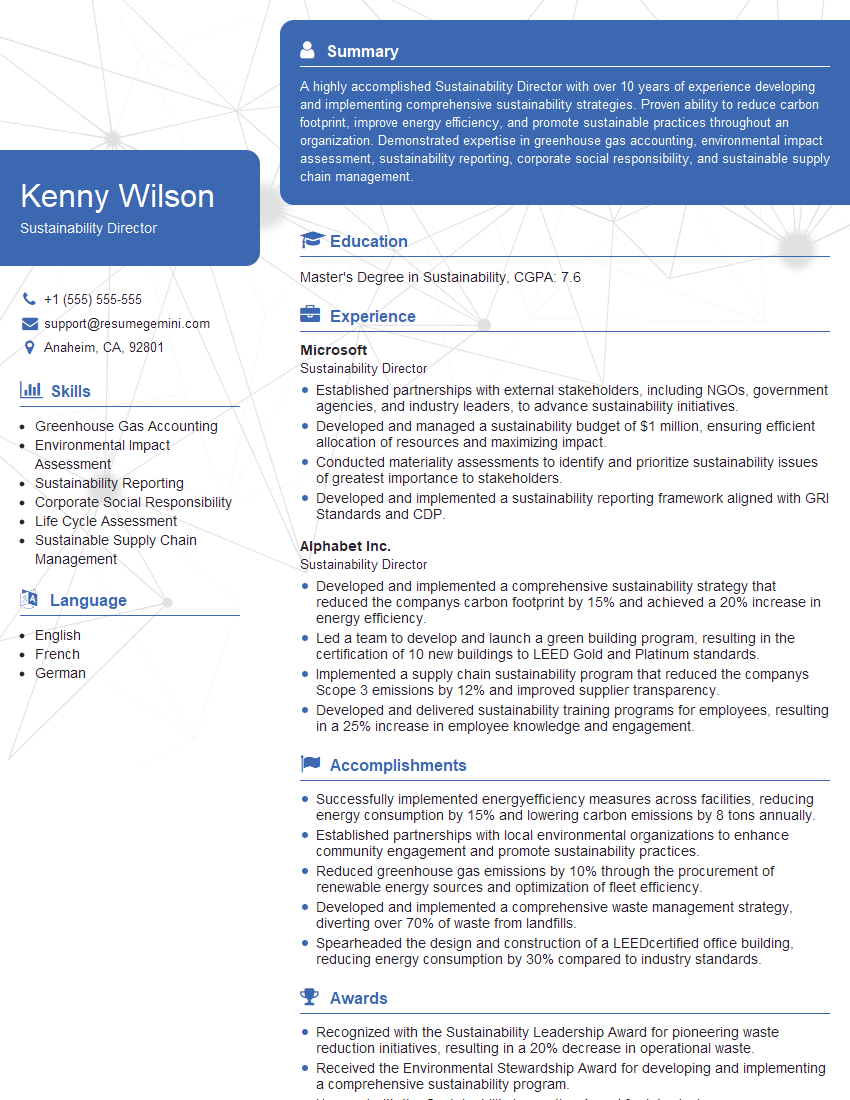
Sustainability Director Resume Sample
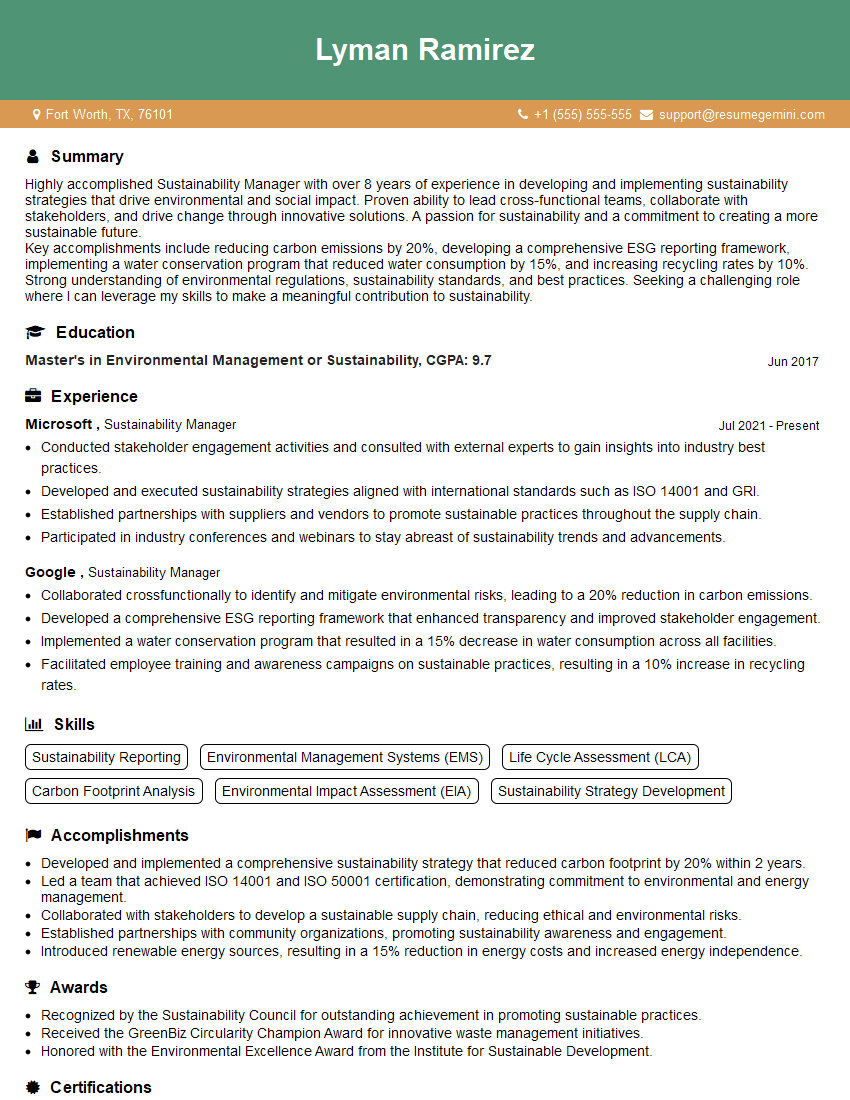
Sustainability Manager Resume Sample
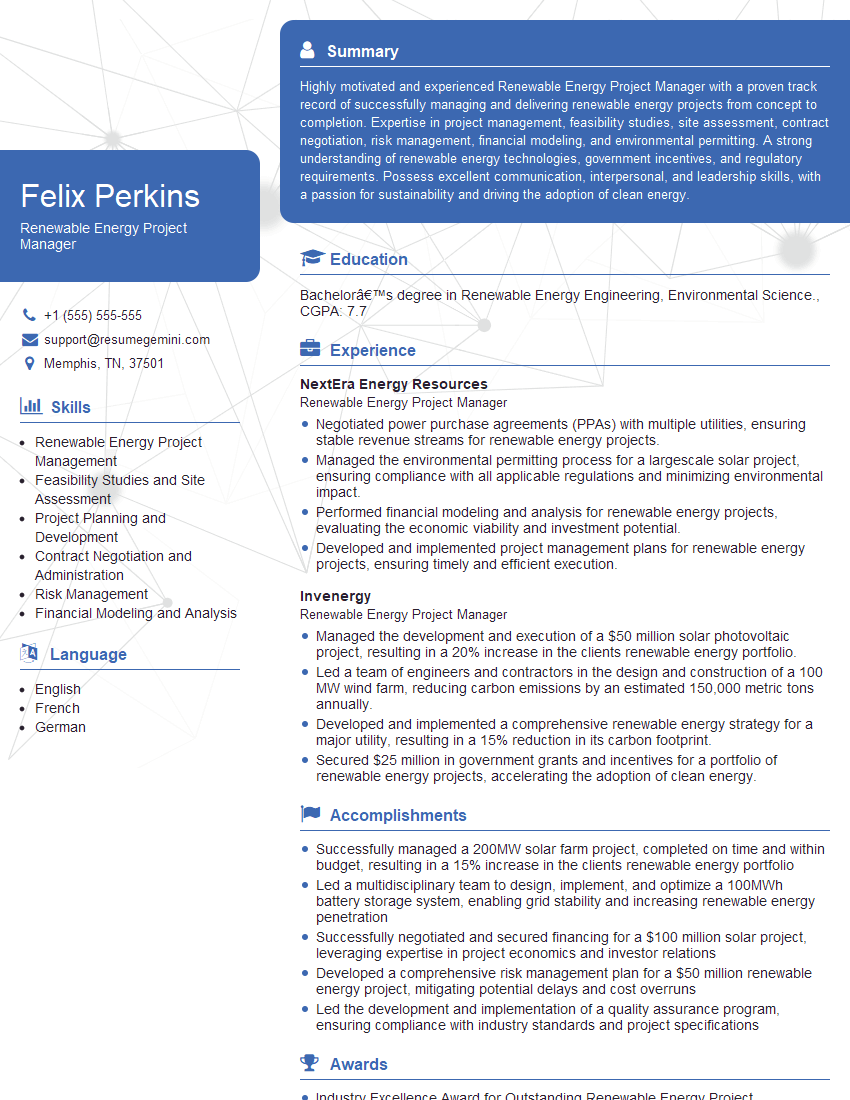
Renewable Energy Project Manager Resume Sample
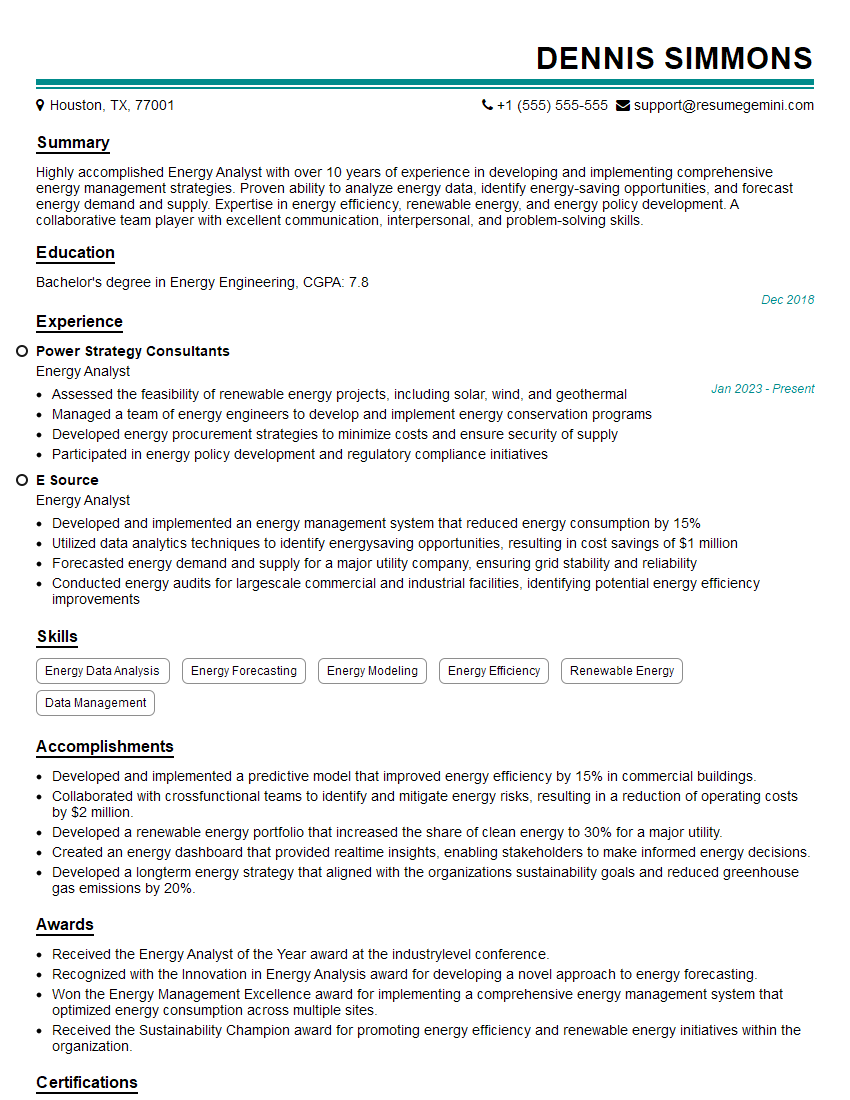
Energy Analyst Resume Sample
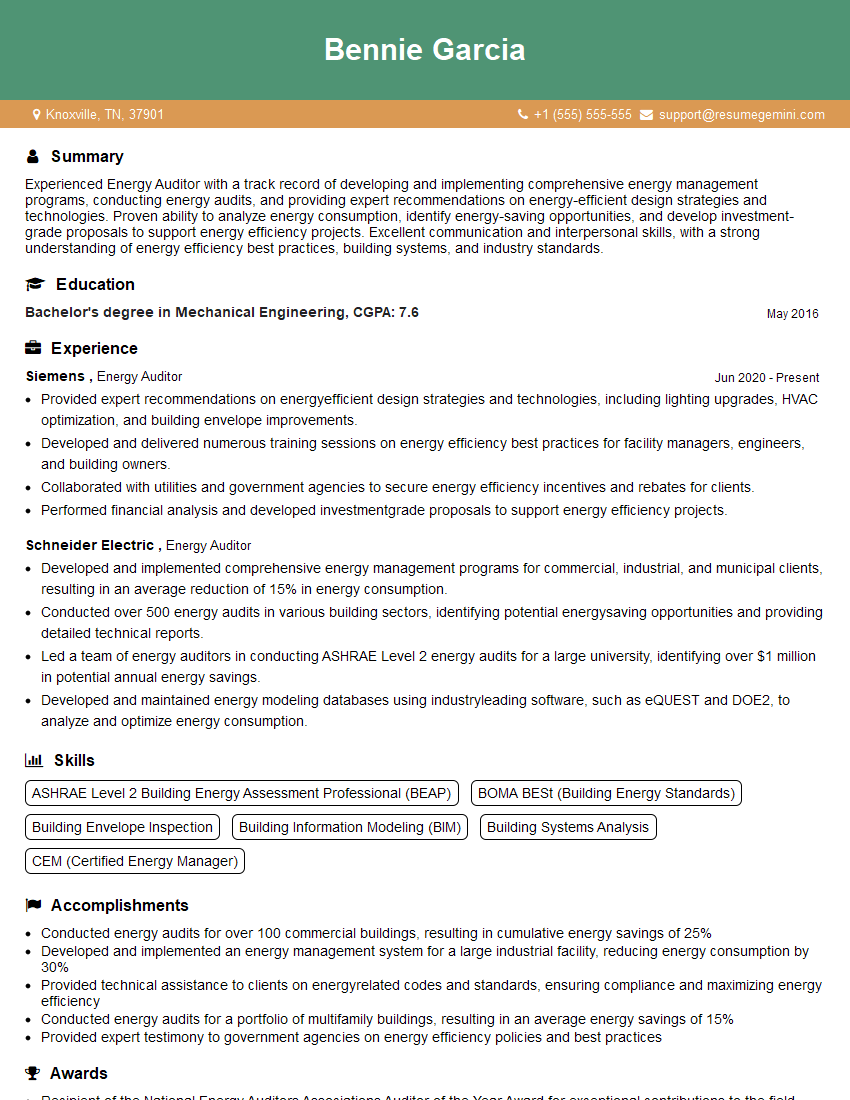
Energy Auditor Resume Sample

Sustainability Consultant Resume Sample
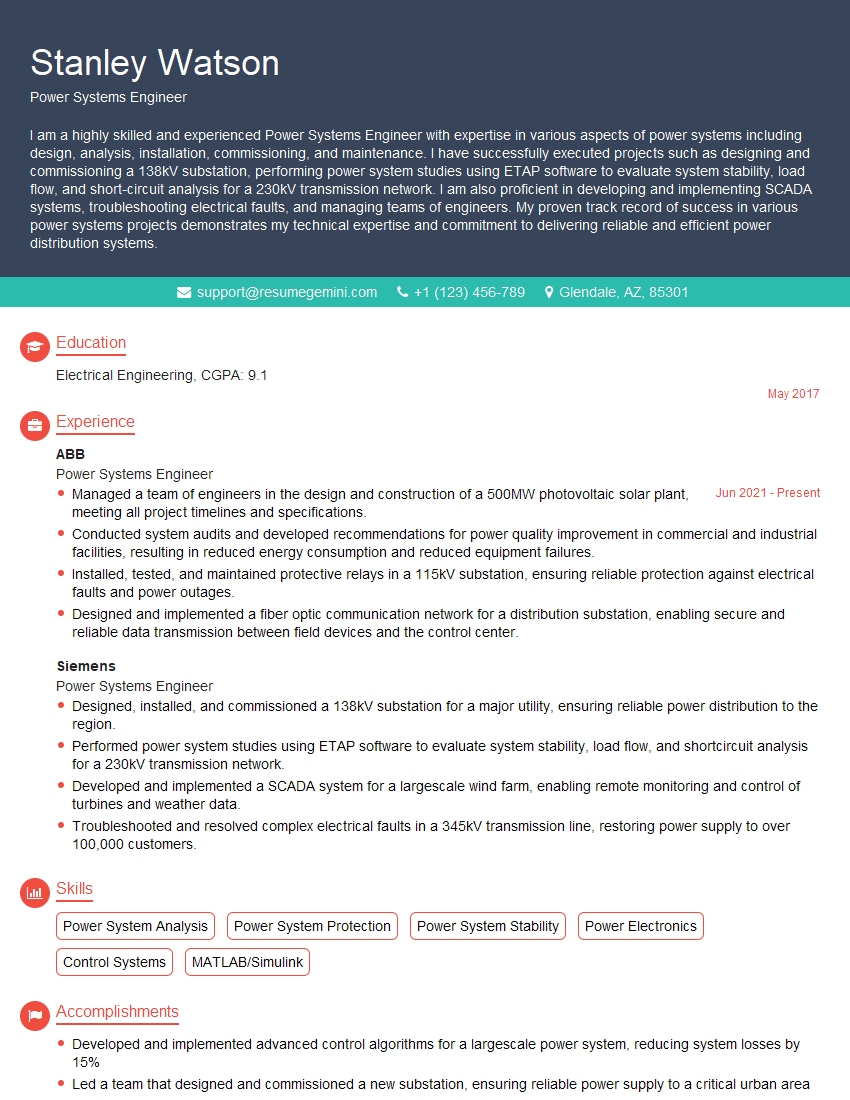
Power Systems Engineer Resume Sample
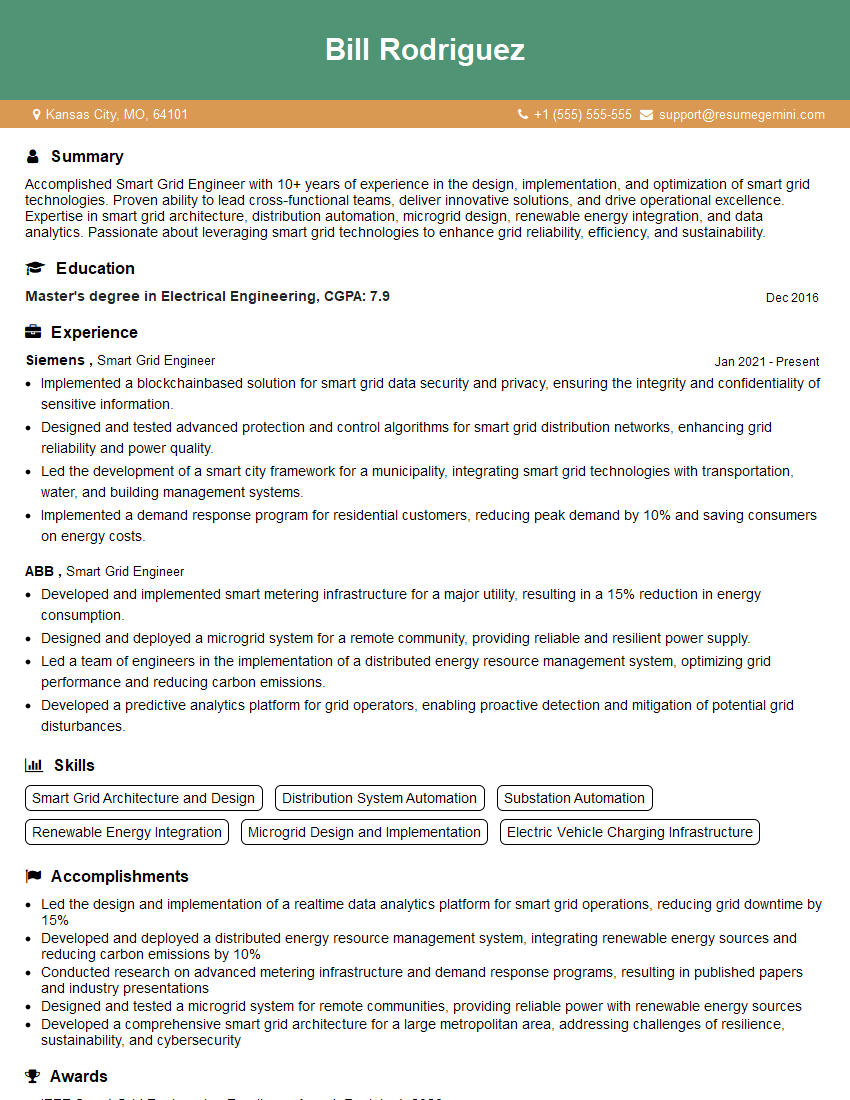
Smart Grid Engineer Resume Sample
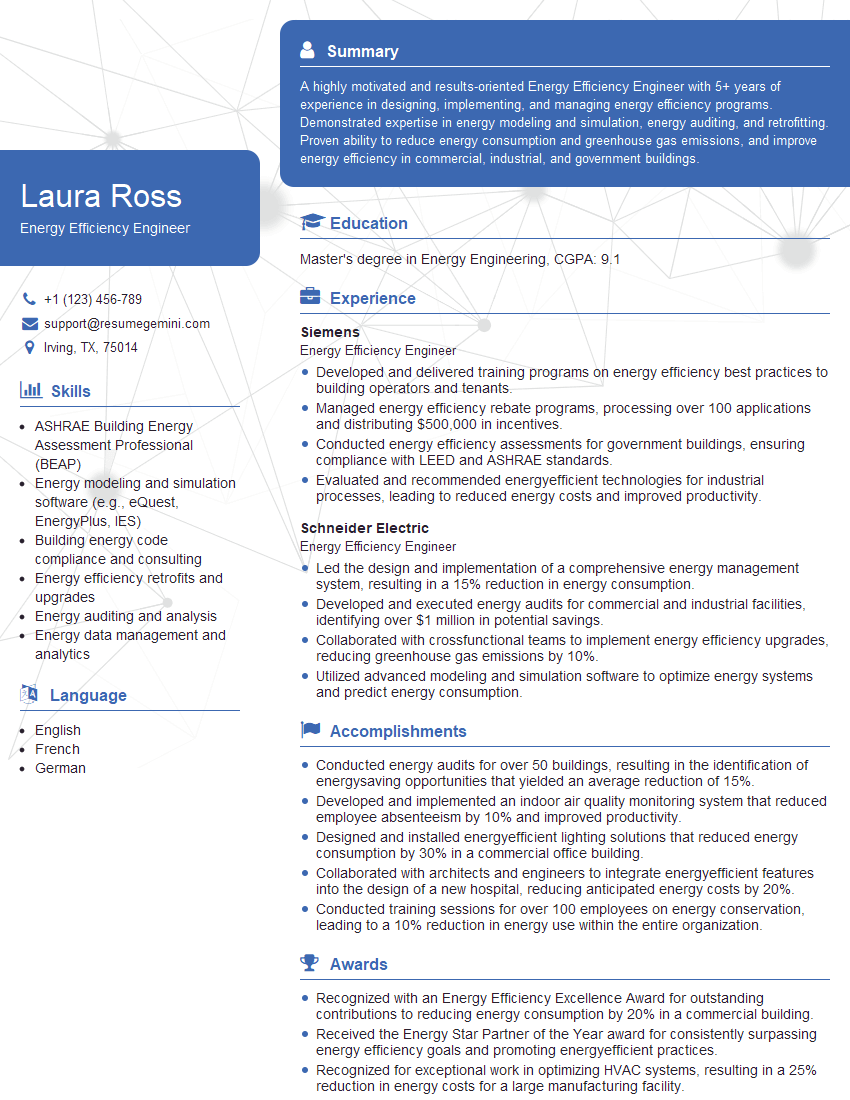
Energy Efficiency Engineer Resume Sample
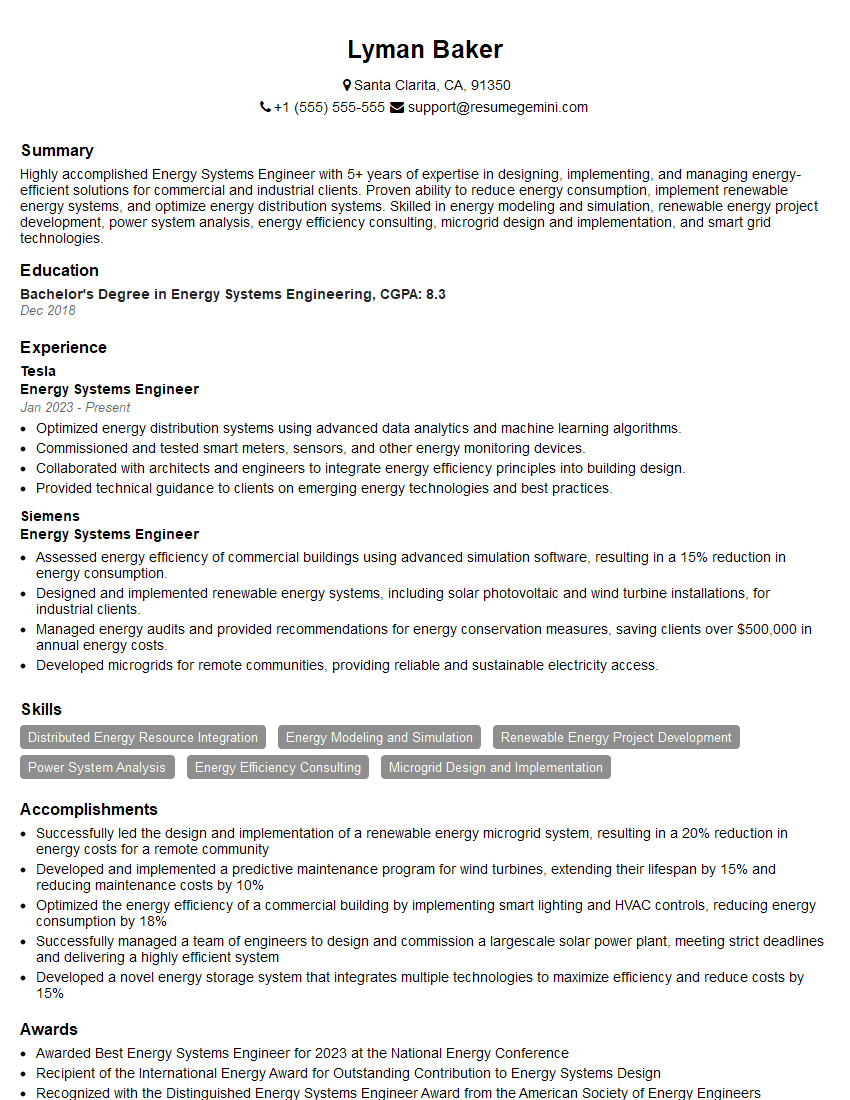
Energy Systems Engineer Resume Sample
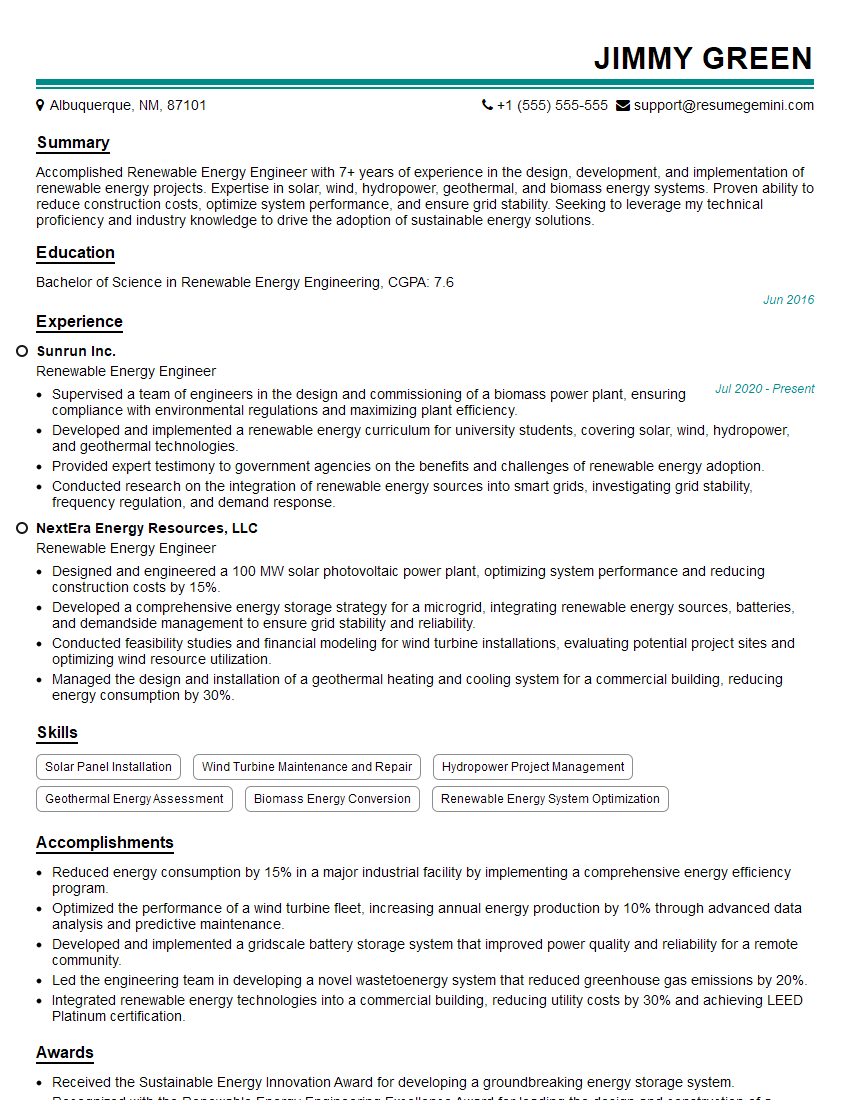
Renewable Energy Engineer Resume Sample
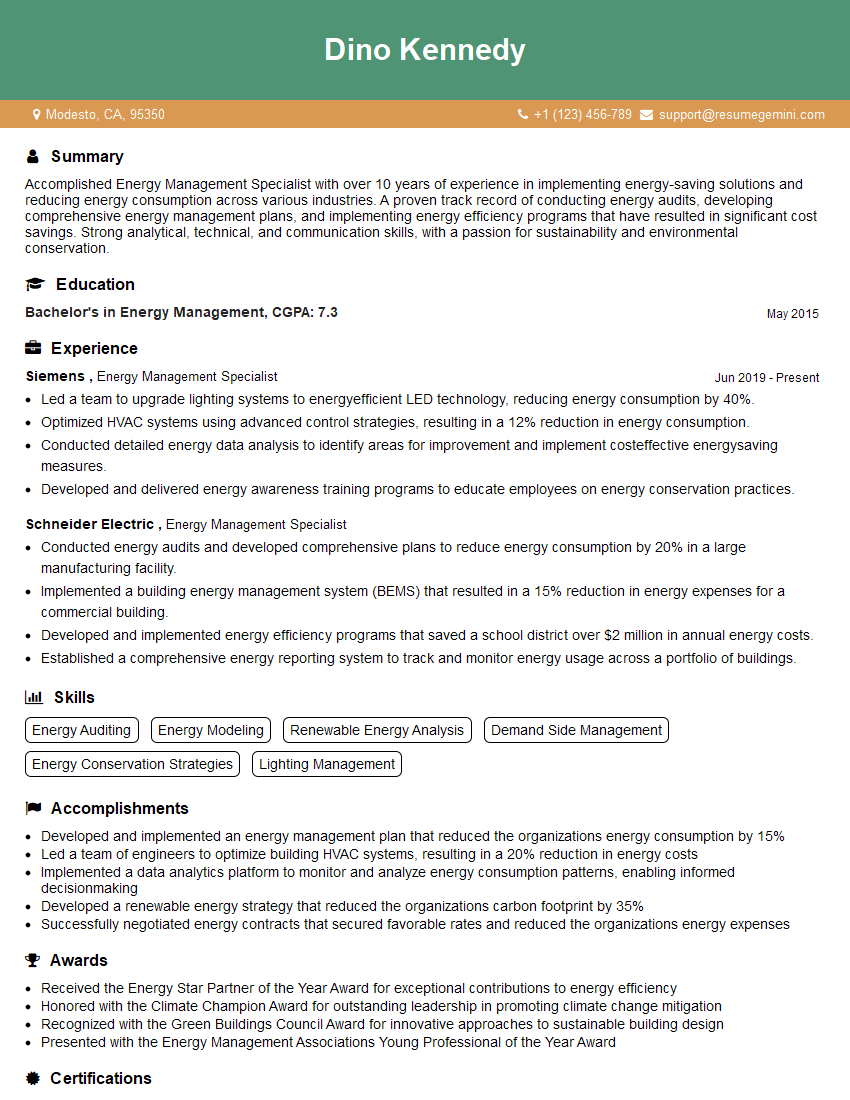
Energy Management Specialist Resume Sample
Explore more articles
Users Rating of Our Blogs
Share Your Experience
We value your feedback! Please rate our content and share your thoughts (optional).
What Readers Say About Our Blog
To the interviewgemini.com Webmaster.
Very helpful and content specific questions to help prepare me for my interview!
Thank you
To the interviewgemini.com Webmaster.
This was kind of a unique content I found around the specialized skills. Very helpful questions and good detailed answers.
Very Helpful blog, thank you Interviewgemini team.