Cracking a skill-specific interview, like one for Environmental Modeling Software (e.g., SimaPro, Gabi), requires understanding the nuances of the role. In this blog, we present the questions you’re most likely to encounter, along with insights into how to answer them effectively. Let’s ensure you’re ready to make a strong impression.
Questions Asked in Environmental Modeling Software (e.g., SimaPro, Gabi) Interview
Q 1. Explain the difference between SimaPro and Gabi software.
SimaPro and Gabi are both leading software packages for Life Cycle Assessment (LCA), but they differ in several key aspects. Think of them as two different brands of high-end cars – both get you where you need to go, but with different features and driving experiences.
Database Coverage: SimaPro boasts a wider range of databases available, potentially offering more comprehensive data for specific regions or industries. Gabi, on the other hand, is known for its strong integration with other software and its robust impact assessment methods.
Interface and User Experience: SimaPro is generally considered user-friendly, particularly for beginners, with an intuitive interface. Gabi’s interface might have a steeper learning curve, requiring more technical expertise. The best choice depends on your team’s technical skills.
Impact Assessment Methods: Both utilize various impact assessment methods, but they might differ in the specific methodologies included and their default settings. This means that even with the same data, you might get slightly different results depending on the software.
Cost: The cost of licensing and data access can vary significantly between the two, depending on the specific modules and databases needed. A detailed cost comparison is usually necessary before choosing.
Specific Features: One software might have specialized tools for specific sectors (e.g., eco-design, product carbon footprint calculation) that the other lacks. Choosing depends on the specific requirements of your projects.
Q 2. Describe your experience with Life Cycle Assessment (LCA) methodologies.
My experience with LCA methodologies spans over [Number] years, encompassing various stages from goal and scope definition to interpretation and reporting. I’m proficient in all phases of an LCA, including:
- Goal and Scope Definition: Defining the study’s objective, functional unit, system boundaries, and data quality requirements. For instance, in assessing the environmental impact of a new electric vehicle, we’d define the functional unit as ‘transporting one passenger for 100 kilometers’.
- Inventory Analysis: Compiling data on resource inputs and environmental releases throughout the product lifecycle using dedicated databases like ecoinvent or GaBi databases. I’m experienced with data collection methodologies including primary data collection (e.g. factory visits) and secondary data collection from literature, reports, etc.
- Impact Assessment: Evaluating the potential environmental impacts using various impact assessment methods (e.g., ReCiPe, IMPACT 2002+, TRACI). This involves selecting appropriate impact categories and characterizing the potential environmental damage.
- Interpretation and Reporting: Analyzing the results and communicating findings effectively to stakeholders using various visualization techniques and communication strategies. For example, I’d prioritize presenting findings in simple charts and graphs that are easily understood by a non-technical audience.
I am familiar with different LCA standards and guidelines, including ISO 14040/44, and have a deep understanding of the limitations and uncertainties inherent in LCA.
Q 3. How do you handle data uncertainty in LCA modeling?
Data uncertainty is a crucial consideration in LCA. It’s like baking a cake – if your ingredient measurements are inaccurate, the final product won’t be perfect. We address uncertainty through several strategies:
- Sensitivity Analysis: We systematically vary input parameters to assess the influence of each parameter on the overall results. This helps to identify the key data gaps and uncertainties which are influencing the results most significantly. Imagine changing the amount of sugar and seeing how it affects the cake’s sweetness.
- Uncertainty Propagation: We use statistical methods to propagate uncertainties from individual data points to the final impact scores. Monte Carlo simulations are frequently employed here to get a distribution of potential impact scores rather than single point estimates. This shows a range of potential outcomes.
- Data Quality Assessment: We carefully evaluate the quality of the data used in the LCA, documenting the sources and uncertainties associated with each data point. This means checking for inconsistencies, and using different sources to improve confidence in the data. Similar to checking the expiration dates and quality of ingredients in the baking example.
- Scenario Analysis: We conduct multiple LCAs using alternative datasets or assumptions to assess the robustness of the results under different conditions. This gives insight into how different assumptions affect the outcome.
The goal is not to eliminate uncertainty entirely, but rather to understand and transparently communicate its implications in the final report. We present results with confidence intervals to show the range of potential outcomes.
Q 4. What are the limitations of using SimaPro or Gabi for LCA?
While SimaPro and Gabi are powerful tools, they have limitations:
- Data Availability: The databases may not always contain data for all processes or materials, especially for niche technologies or regional specifics. This might require primary data collection, which is time-consuming and expensive.
- Model Simplifications: LCA models inevitably simplify complex real-world systems. Assumptions regarding system boundaries, allocation methods, and impact assessment methodologies can significantly affect the results. The devil is in the details!
- Interpretation Challenges: Interpreting LCA results can be complex, especially for stakeholders without a strong scientific background. Clear and effective communication is essential to avoid misinterpretations. For example, presenting the results of a complex LCA to a non-technical audience requires simplification of complex language and graphical representation of the main findings.
- Cost and Expertise: Software licenses, database access, and skilled personnel are necessary to conduct robust LCAs, which can create a substantial barrier to entry for smaller organizations. Not everyone can afford or even access these tools.
It’s crucial to acknowledge these limitations and ensure transparency in the LCA methodology and reporting.
Q 5. How do you interpret and present LCA results to stakeholders?
Presenting LCA results to stakeholders requires a tailored approach. I avoid overwhelming them with technical details and focus on clear communication of key findings. My strategy involves:
- Identifying the audience: Tailoring the presentation style and level of detail to the audience’s technical expertise. For example, a presentation to executives would prioritize high-level summaries, while a presentation to engineers would include more technical details.
- Visualizations: Using charts, graphs, and infographics to present complex data in an accessible format. Bar charts for comparing different products are often useful, as are spider diagrams to show multiple impact categories at once.
- Key messages: Highlighting the most relevant findings and focusing on the implications for decision-making. For instance, if a product has a significant impact on climate change, we’d highlight that in the executive summary.
- Interactive tools: Employing interactive dashboards or online tools to allow stakeholders to explore the data at their own pace. This allows for more detailed examination of specific aspects of the analysis.
- Clear narrative: Presenting the results within a clear narrative that connects the findings to the project goals and broader context.
Post-presentation, I ensure the availability of the detailed LCA report for those seeking a deeper understanding.
Q 6. Explain the concept of functional unit in LCA.
The functional unit in LCA defines the ‘what’ and ‘how much’ of a product or service being assessed. It’s the reference point for comparing the environmental impacts of different alternatives. Think of it as the standard unit of measurement for your environmental performance.
For example:
- If assessing the environmental impact of a car, a functional unit might be ‘transporting one passenger for 100 km’. This allows for a fair comparison of different vehicles (e.g., electric versus petrol).
- If assessing the impact of packaging, the functional unit could be ‘packaging one kilogram of apples’. This allows comparison of different packaging materials.
- For a building, it might be ‘providing one square meter of office space for one year’. This allows comparing the impact of different building materials and designs.
Choosing the right functional unit is crucial for the validity and interpretability of the LCA. A poorly defined functional unit can lead to misleading conclusions.
Q 7. What are the key impact categories assessed in LCA?
The key impact categories assessed in LCA vary depending on the chosen impact assessment method, but commonly include:
- Climate Change (Global Warming Potential): Measuring the contribution to greenhouse gas emissions.
- Acidification (Acidification Potential): Assessing the contribution to acid rain.
- Eutrophication (Eutrophication Potential): Evaluating the contribution to excessive nutrient enrichment in water bodies.
- Ozone Depletion (Ozone Depletion Potential): Measuring the contribution to the depletion of the ozone layer.
- Human Toxicity (Human Toxicity Potential): Assessing the potential for human health impacts from toxic substances.
- Ecotoxicity (Ecotoxicity Potential): Evaluating the potential for impacts on ecosystems from toxic substances.
- Resource Depletion (Abiotic Depletion Potential): Assessing the depletion of non-renewable resources.
- Water Depletion (Water Depletion Potential): Assessing the consumption of freshwater resources.
- Land Use (Land Use Change): Assessing the impact on land use patterns.
The specific impact categories chosen depend on the goals and scope of the LCA study and the environmental concerns of the stakeholders.
Q 8. Describe your experience with data collection and validation for LCA.
Data collection and validation are the cornerstones of a robust LCA. It’s like building a house – you need a solid foundation. In LCA, this means gathering accurate data on all inputs and outputs of a product’s lifecycle, from raw material extraction to disposal. This involves various methods, including gathering data from company reports, literature reviews (academic papers, industry reports), and direct measurement if feasible.
Validation is equally critical. We use various techniques to ensure data accuracy and reliability. This includes checking for consistency (do the numbers make sense within the system boundaries?), plausibility (are the values realistic in the context of the product system?), and completeness (have we covered all significant impacts?). For example, if the data suggests a process emits significantly more greenhouse gases than expected, I’d investigate further, possibly by examining the methodology of data collection or reaching out to the source for clarification. We often employ statistical methods like outlier analysis to identify and resolve inconsistencies.
Consider a case where I assessed the environmental footprint of a clothing brand. Data was gathered on cotton farming (water usage, fertilizer, pesticide application), textile manufacturing (energy consumption, wastewater discharge), transportation, and end-of-life scenarios (recycling vs. landfill). Validation involved comparing our data to industry averages, published databases (e.g., ecoinvent), and seeking clarification from the company where data gaps existed. Any discrepancies were meticulously documented and addressed.
Q 9. How do you select appropriate impact assessment methods in SimaPro/Gabi?
Selecting the right impact assessment method is crucial for meaningful results. Think of it as choosing the right lens to examine a complex picture. In SimaPro and Gabi, you’ll find a range of methods, each focusing on different environmental impacts like climate change, ozone depletion, acidification, and ecotoxicity. The choice depends heavily on the study’s goal and the scope of the assessment.
For example, for a product focused on global warming potential (GWP), the widely used IPCC characterization factors (within SimaPro and Gabi) are often appropriate. However, if you want a more regionally-specific climate change assessment, you might utilize characterization factors from a regional impact assessment methodology. Similarly, for ecotoxicity, there’s a choice between different ecotoxicity indicators (e.g., freshwater ecotoxicity, marine ecotoxicity), depending on where the potential impacts are most significant. The software facilitates the selection, offering clear descriptions of each method.
In practice, I usually start by defining the study’s objectives. Are we primarily concerned with climate change, resource depletion, or human toxicity? Then, I would review the available impact assessment methods, considering their scientific basis, geographical relevance, and applicability to the specific product system. Finally, I document my selection rationale and provide justification for any methodological choices made.
Q 10. Explain your experience with sensitivity analysis in LCA modeling.
Sensitivity analysis is essential to understand the uncertainty inherent in LCA results. It’s like stress-testing a bridge to ensure it can withstand various loads. In LCA, we systematically vary input parameters (like energy consumption or material properties) to assess their impact on the overall results. This helps identify the data points that have the most significant influence on the final environmental scores.
Both SimaPro and Gabi have built-in functionalities for sensitivity analysis. They often involve scenario creation – varying a single input parameter (e.g., a process emission factor) at a time and observing its effect on the overall results. Monte Carlo simulation is another approach that analyzes uncertainty across multiple parameters. This simulates numerous possible scenarios, providing a probability distribution of the environmental impacts.
For example, when assessing the impact of an electric vehicle’s battery, we might vary the assumptions around battery lifespan and recycling efficiency to see how this affects the overall carbon footprint. This reveals which data is most uncertain and whether we need to prioritize more accurate data collection in the future.
Q 11. How do you address data gaps in LCA studies?
Data gaps are inevitable in LCA studies, especially when dealing with novel technologies or complex supply chains. Addressing these gaps requires a systematic approach. It’s like finding missing pieces in a puzzle – you need to use various strategies to complete the picture.
The first step is to identify the gaps. Detailed documentation and consistent tracking during the data collection phase is crucial. Once gaps are identified, I’d look at possible solutions such as:
- Using analogous data: If data for a specific process is missing, we can sometimes use data from a similar process, acknowledging the potential limitations.
- Data substitution with uncertainty analysis: We can substitute with more readily available data and clearly document this, incorporating this uncertainty into our analysis.
- Literature review: Searching relevant scientific literature and industry databases (like ecoinvent) can often provide reliable data.
- Expert judgment: Consulting with experts in the field can offer valuable insights, especially if the data is not publicly available.
- Allocation procedures: For complex scenarios, proper allocation procedures (e.g., mass or energy allocation) can help distribute impact data to different product outputs.
In all cases, transparency is key. Any assumptions or estimations are clearly documented, so the uncertainty associated with the data gaps is made transparent to the reader.
Q 12. What are the different types of LCA studies (e.g., attributional, consequential)?
There are various types of LCA studies, each with its own focus and methodology. Think of it like using different camera lenses for various purposes. Attributional LCA focuses on the direct environmental impacts associated with a product’s lifecycle as it is currently produced. It’s like taking a snapshot of the current state. Consequential LCA, on the other hand, examines the environmental impacts considering potential changes in the production process, markets, and supply chains – focusing on the potential consequences of a decision or technology change. It considers the ripple effects across the broader system.
For example, an attributional study might quantify the greenhouse gas emissions from manufacturing a particular type of car based on its current production processes. A consequential LCA could examine the environmental impact of switching to electric vehicles – assessing changes in electricity generation, battery production, and recycling, considering the overall effect on resource use, energy demand, and GHG emissions.
Beyond these two, you also find comparative LCA, which compares the environmental impact of multiple products or processes; and cradle-to-grave vs. cradle-to-gate studies, differentiating whether the study considers the full product lifecycle or just a specific stage.
Q 13. Describe your experience working with SimaPro’s/Gabi’s databases.
Both SimaPro and Gabi databases are extensive libraries of environmental data for various processes and materials. Think of them as encyclopedias for environmental impact data. They are crucial for efficient LCA modeling. My experience involves extensive use of these databases to find relevant information on numerous materials and processes.
I’m proficient in navigating these databases, identifying relevant data sets, and critically evaluating their quality and applicability to my specific studies. I understand the importance of selecting data sets from reputable sources and using appropriate cut-off criteria to ensure the accuracy and reliability of my modeling. I regularly assess the database’s data updates to incorporate the latest available information into my LCAs. This might include evaluating the impact of a new study published for a particular industrial process or confirming a change in emission factors.
I also understand the limitations of these databases. I know when I need to supplement database data with company-specific information or other sources to build a complete and accurate picture of a product’s environmental impact. I always document all data sources to ensure traceability and transparency.
Q 14. How do you ensure the quality and reliability of LCA results?
Ensuring the quality and reliability of LCA results is paramount – it’s about building trust in the findings. This requires careful attention to detail throughout the entire process. It’s like conducting a scientific experiment – you must ensure accuracy and repeatability.
Here’s a multi-faceted approach I employ:
- Data quality control: Rigorous checks for consistency, plausibility, and completeness of data are vital, as discussed earlier.
- Methodological transparency: Clearly documenting the chosen methodology, impact assessment methods, system boundaries, and data sources allows for scrutiny and reproducibility by others.
- Uncertainty analysis: Incorporating uncertainty analysis helps to understand the limitations of the results and provide a more realistic picture of the environmental impacts.
- Peer review: Seeking feedback from other LCA professionals helps identify potential biases, errors, and areas for improvement.
- Sensitivity analysis: As explained before, sensitivity analysis helps pinpoint influential parameters, guiding data collection efforts and highlighting areas of uncertainty.
- Software validation: Ensuring that the LCA software (SimaPro or Gabi) is properly configured and up-to-date is essential.
Ultimately, the reliability hinges on transparency, a well-defined methodology, and a critical assessment of data and potential uncertainties. Producing an LCA is not about getting a single definitive answer but about generating reliable, data-driven insights, acknowledging inherent uncertainties.
Q 15. What are the advantages and disadvantages of different LCA software packages?
Choosing the right LCA software depends heavily on your specific needs and resources. Both SimaPro and Gabi are industry-leading options, but they have distinct strengths and weaknesses.
- SimaPro: Known for its user-friendly interface and extensive database, SimaPro excels in ease of use, especially for beginners. Its strong community support and readily available training materials are also significant advantages. However, it can be more expensive than some alternatives, and certain advanced features might require additional modules.
- Gabi: Gabi offers a powerful and comprehensive approach to LCA, often favored for its detailed impact assessment capabilities and robust data management. It’s particularly useful for complex projects needing in-depth analysis. However, its steeper learning curve and higher initial cost may be barriers for smaller organizations or those with limited LCA expertise.
- Other packages: It’s important to note that other LCA software packages exist, such as openLCA, which offers a more open-source approach, potentially beneficial for cost-sensitive projects. However, open-source options often require more technical expertise and may have less comprehensive databases.
The best software choice is a strategic decision. Consider factors like budget, team skills, project complexity, and the level of detail needed in your analysis before deciding.
Career Expert Tips:
- Ace those interviews! Prepare effectively by reviewing the Top 50 Most Common Interview Questions on ResumeGemini.
- Navigate your job search with confidence! Explore a wide range of Career Tips on ResumeGemini. Learn about common challenges and recommendations to overcome them.
- Craft the perfect resume! Master the Art of Resume Writing with ResumeGemini’s guide. Showcase your unique qualifications and achievements effectively.
- Don’t miss out on holiday savings! Build your dream resume with ResumeGemini’s ATS optimized templates.
Q 16. How do you use SimaPro/Gabi to model different product life stages?
Modeling a product’s life cycle using SimaPro or Gabi involves breaking it down into distinct stages, from raw material extraction to end-of-life management. Each stage’s environmental impacts are assessed individually and then aggregated. Think of it like building with Lego bricks – each brick represents a life cycle stage.
- Raw Material Acquisition: This includes the extraction of raw materials, their processing, and transportation to the manufacturing facility. In SimaPro/Gabi, we would input data on resource depletion, energy consumption, and emissions during this stage.
- Manufacturing: This stage focuses on the production process itself, encompassing energy use, waste generation, and emissions from machinery. Detailed process data and material flows are crucial here. We might use process flow diagrams to clearly define inputs and outputs.
- Distribution and Transportation: The movement of the product from the factory to consumers is considered. We would model transport distances, modes of transportation (truck, ship, air), and associated emissions.
- Use Phase: This stage encompasses how consumers utilize the product. For a lightbulb, this would be energy consumption during use. For a car, it would include fuel consumption and emissions. This phase requires understanding the product’s operational characteristics.
- End-of-Life: The final stage, addressing the disposal or recycling of the product. This involves assessing the environmental impacts of waste management processes, landfill disposal, incineration, or recycling.
Data entry in both SimaPro and Gabi involves inputting this information into the software, often utilizing their respective databases or by inputting custom data if unavailable. The software then calculates the overall environmental footprint of the product.
Q 17. Describe your experience with scenario analysis in LCA modeling.
Scenario analysis in LCA is vital for exploring uncertainties and evaluating alternative pathways. It’s like asking ‘what if?’ questions to improve decision-making.
For instance, in analyzing the environmental impact of a new packaging material, we could create scenarios that examine different material choices (recycled vs. virgin plastic), transportation distances, and recycling rates. We could then compare the results of these different scenarios to determine which option has the lowest environmental impact.
My experience includes using SimaPro and Gabi to perform sensitivity analysis, changing input parameters systematically (e.g., varying energy mix used in manufacturing or transportation modes) to observe how it affects the overall result. This helps identify the most influential factors on the environmental profile, allowing for targeted improvement strategies.
We also use probabilistic methods to incorporate uncertainties in data. Instead of single values, we use probability distributions for input parameters. This provides a more realistic and comprehensive evaluation of the uncertainties associated with LCA results.
Q 18. How do you communicate the results of LCA studies to non-technical audiences?
Communicating LCA results effectively to non-technical audiences requires simplifying complex data without sacrificing accuracy. I use a multi-pronged approach:
- Visualizations: Charts and graphs are invaluable. Bar charts comparing different product options, pie charts showing the contribution of different life cycle stages to the overall impact, and even infographics make the information easier to digest.
- Analogies and Storytelling: Relating LCA results to everyday concepts can make them more relatable. For example, comparing CO2 emissions to the number of cars driven is helpful. Crafting a narrative around the results helps engage the audience.
- Focus on Key Metrics: Instead of overwhelming the audience with numerous impact categories, highlighting the most relevant ones (e.g., climate change, resource depletion) ensures the key messages are clear.
- Interactive Presentations: Using interactive tools during presentations can increase engagement and allow for Q&A sessions to address any uncertainties.
- Plain Language Summary: A summary written in plain language, devoid of technical jargon, makes it easier for a non-technical audience to comprehend the essential findings.
Ultimately, clear communication helps stakeholders understand the implications of LCA findings and make informed decisions.
Q 19. Explain the concept of eco-efficiency in relation to LCA.
Eco-efficiency, in the context of LCA, refers to maximizing the economic value delivered while minimizing environmental impact. It’s about doing more with less, striving for the best possible balance between economic productivity and environmental responsibility.
LCA provides the quantitative data needed to assess eco-efficiency. By analyzing the environmental impacts associated with a product or process, we can identify areas for improvement. For example, an LCA might reveal that a significant proportion of a product’s carbon footprint comes from its transportation. This insight could lead to strategies like switching to more fuel-efficient transportation or locating manufacturing facilities closer to markets, thus improving eco-efficiency.
Essentially, eco-efficiency aims to create a more sustainable future by driving innovation and efficiency across the entire value chain.
Q 20. How do you integrate LCA into corporate sustainability strategies?
Integrating LCA into corporate sustainability strategies is a multi-step process that requires strong leadership and cross-functional collaboration.
- Setting Targets and Priorities: Identify key environmental impacts the company wants to address. This may involve setting targets for reducing greenhouse gas emissions or resource consumption.
- Product and Process Design: LCA results should guide design choices, promoting the selection of materials and processes with lower environmental burdens. This may mean switching to recycled materials, optimizing manufacturing processes, or adopting more sustainable packaging.
- Supply Chain Management: LCA can be used to evaluate the environmental performance of suppliers and to incentivize more sustainable practices throughout the supply chain.
- Communication and Reporting: LCA results should be incorporated into sustainability reports and communicated to stakeholders, demonstrating the company’s commitment to environmental responsibility. This may involve publicly disclosing LCA findings or using them for marketing purposes.
- Continuous Improvement: LCA is not a one-time exercise; rather, it is a continuous process. Regularly conducting LCA studies, analyzing results, and making improvements is crucial.
By embedding LCA into decision-making processes, businesses can drive improvements in sustainability performance and achieve their environmental goals.
Q 21. Describe your experience with using SimaPro/Gabi for comparative LCA.
Comparative LCA is a powerful tool for evaluating and comparing the environmental performance of different products, processes, or systems. I’ve extensively used both SimaPro and Gabi for this purpose.
For example, I once used SimaPro to compare the environmental impacts of different packaging options for a client’s product: plastic, glass, and recycled paper. By inputting data on material production, transportation, and end-of-life management for each option, the software generated comparative results for various impact categories (climate change, resource depletion, etc.). This allowed the client to make an informed decision based on a comprehensive environmental assessment.
In another project using Gabi, I compared the life cycle emissions of different vehicle designs, considering factors such as material choice, manufacturing process, fuel efficiency, and end-of-life treatment. The detailed results helped inform design choices and identify strategies for reducing the environmental impact of vehicles.
Comparative LCA is not simply about choosing the ‘best’ option; it’s about understanding the trade-offs involved. Sometimes, a seemingly ‘worse’ option in one impact category might perform better in others, prompting a more holistic consideration of the environmental profile.
Q 22. What are some common challenges faced during LCA studies?
Conducting Life Cycle Assessments (LCAs) is a complex process, and several challenges frequently arise. One major hurdle is data availability and quality. Comprehensive and reliable data on all stages of a product’s lifecycle, from raw material extraction to end-of-life management, can be scarce or inconsistent. This is especially true for certain industries or regions with limited data reporting. For instance, obtaining accurate emissions data from small-scale manufacturing facilities in developing countries can be significantly challenging.
Another common challenge is defining the system boundaries. Determining which stages of the lifecycle to include can be subjective and influence the overall results. For example, should transportation to the retail outlet be included, or only transportation from the factory? A poorly defined boundary can skew the results and render the LCA less reliable.
Furthermore, dealing with uncertainties inherent in LCA data is crucial. Data often involves estimations and assumptions, particularly for future scenarios or technologies with limited historical data. These uncertainties can propagate through the entire assessment, necessitating sensitivity analysis and clear communication of uncertainties in the final report.
Finally, allocating burdens across different products or processes within a complex system can be problematic. For example, consider a co-product scenario where a process yields multiple products. Determining how to equitably allocate environmental impacts between these products requires careful consideration and might involve different allocation methods like mass or energy allocation, each with its own implications.
Q 23. How do you address criticism of LCA methodologies?
Criticisms of LCA methodologies often center on issues of data quality, system boundary definition, and the selection of impact assessment methods. Addressing these criticisms requires transparency and a thorough understanding of the limitations of the approach. First, I explicitly acknowledge the data uncertainties, document the data sources and their limitations, and perform sensitivity analysis to show how uncertainties propagate through the model. This demonstrates a responsible approach and highlights areas for improvement in future research.
Regarding system boundaries, I rigorously justify the choices made, providing clear reasoning for the inclusion or exclusion of specific processes. Clearly communicating the rationale behind boundary selections builds confidence in the assessment’s validity. In some cases, conducting comparative LCAs using different system boundaries can help illustrate the impact of these choices on the results.
Finally, the selection of impact assessment methods can heavily influence results. I address this by explaining the rationale behind choosing a specific method (e.g., ReCiPe, IMPACT 2002+), comparing the results with those obtained from other impact assessment methods when feasible, and discussing the implications of these choices on the interpretation of the results. Using multiple methods offers a more robust and nuanced understanding of the environmental impacts.
Q 24. How do you ensure the transparency and reproducibility of your LCA models?
Ensuring transparency and reproducibility is paramount in LCA. I achieve this by meticulously documenting every aspect of the study, starting with the goal and scope definition. This includes a detailed description of the system boundaries, functional unit, data sources used (including specific databases and versions), allocation methods employed, impact assessment methods selected, and the software used (SimaPro or Gabi, with versions specified).
I also maintain a comprehensive inventory of all the data used, making it readily accessible and auditable. This usually involves creating a spreadsheet or database documenting the origin, reliability, and uncertainties associated with each data point. Furthermore, I store all the LCA software files (e.g., SimaPro projects) in a well-organized manner, including all the input parameters, calculations, and intermediate results. This enables complete reproducibility of the analysis by independent researchers or auditors.
Finally, I typically create a comprehensive report that clearly describes the methodology, results, limitations, and uncertainties. This report follows established guidelines, such as those provided by ISO 14040/44, ensuring consistency and transparency. By adhering to these standards, I ensure that my work is understandable, verifiable, and contributes to the overall credibility of LCA studies.
Q 25. Explain your experience with different LCA databases (e.g., ecoinvent).
I have extensive experience using various LCA databases, with ecoinvent being one of the most frequently used. I am proficient in navigating its complex structure, understanding its data organization, and selecting appropriate datasets for different applications. I am aware of the limitations and strengths of ecoinvent, including its geographic coverage, data resolution, and the different versions available (e.g., ecoinvent 3.8, ecoinvent 3.9 cutoff). I understand how to select the appropriate database depending on the context of the study – choosing regionalized databases when necessary or using the more comprehensive global database when appropriate.
Beyond ecoinvent, I have also worked with other databases, including but not limited to, GaBi databases, Brightway2 databases, and industry-specific databases. My experience allows me to select the most appropriate database based on the specific project requirements, considering factors like data availability, geographical relevance, and data quality. I am also comfortable with data harmonization and processing when different datasets are necessary for a single LCA.
Q 26. How familiar are you with different LCA impact assessment methods (e.g., ReCiPe, IMPACT 2002+)?
I am well-versed in various LCA impact assessment methods, including ReCiPe, IMPACT 2002+, and others like EDIP. My understanding extends beyond simply running the software; I have a thorough grasp of the underlying methodologies and their respective strengths and weaknesses. For example, I understand that ReCiPe uses a midpoint approach (characterizes impacts at various stages of environmental damage) and offers different characterization factors depending on the desired level of detail, whereas IMPACT 2002+ is a more endpoint approach that aggregates midpoint impacts into broader categories of human health, ecosystems, and resources.
I can select the most appropriate method based on the project objectives and available data. My experience includes comparing results obtained with different methods to understand how the choice of method affects the interpretation of the environmental impacts. For instance, I might use ReCiPe for a detailed analysis of specific environmental stressors, while utilizing IMPACT 2002+ to provide a more holistic assessment of potential impacts on human health and ecosystems. This allows for a balanced and more comprehensive understanding of the overall environmental profile.
Q 27. Describe your experience in validating LCA results using independent data sources.
Validating LCA results with independent data sources is critical for ensuring reliability. My approach involves several steps. First, I identify potential independent data sources that can corroborate the data used in my LCA models. This might involve using emission factors from regulatory databases, industry-specific reports, or published research papers. Second, I compare the data from these independent sources with the data used in my models, documenting any discrepancies and assessing their potential impact on the overall results.
If significant discrepancies arise, I investigate the reasons for the differences and adjust my model accordingly. This process might involve refining the system boundaries, revising data assumptions, or exploring alternative data sources. Finally, I document the validation process, including the sources consulted, the comparison methods used, and any adjustments made to the model. This ensures transparency and allows for critical evaluation of the LCA’s robustness. For example, in an LCA for a food product, I would validate the energy consumption data by comparing it with energy consumption values from agricultural reports, government statistics, and peer-reviewed studies related to farming practices and energy usage in the food supply chain.
Q 28. How do you manage large datasets within SimaPro or Gabi?
Managing large datasets in SimaPro or Gabi requires efficient data organization and processing strategies. I typically start by structuring the data in a well-organized manner, often using spreadsheets or databases, before importing it into the software. This involves creating clear and consistent naming conventions for all data points and units. In SimaPro, for instance, I leverage the database management features to create custom databases and efficiently link various datasets to the LCA model. I use data filtering and sorting functionalities to focus on the relevant information and reduce processing time.
For extremely large datasets, I might employ data aggregation techniques to summarize the data before importing it into the LCA software. This reduces the computational burden and improves the efficiency of the modeling process without sacrificing too much detail. I also leverage the software’s capabilities for parallel processing where available, to speed up complex calculations. Furthermore, regular data backups and version control are critical to prevent data loss and ensure the integrity of the analysis. Efficient file management and regular cleaning of redundant or obsolete data maintain the overall usability and efficiency of the LCA project.
Key Topics to Learn for Environmental Modeling Software (e.g., SimaPro, Gabi) Interview
- Data Input & Management: Understanding different data formats (e.g., inventory databases, life cycle inventory (LCI) data), data quality assessment, and data manipulation techniques within the software.
- LCIA Methods & Impact Assessment: Familiarize yourself with various Life Cycle Impact Assessment (LCIA) methods and their applications (e.g., ReCiPe, IMPACT World+, TRACI). Understand how to interpret and critically evaluate the results.
- Scenario Modeling & Sensitivity Analysis: Master the skills to build different scenarios and perform sensitivity analyses to explore uncertainties and evaluate the robustness of your findings.
- Interpretation & Reporting: Learn how to effectively communicate complex results through clear and concise reports, visualizations, and presentations.
- Software Specific Features: Gain expertise in the specific functionalities of SimaPro or Gabi, including data import/export options, reporting features, and advanced analysis tools. Explore tutorials and documentation.
- Case Studies & Applications: Review practical examples of how the software is used in real-world environmental assessments, such as product lifecycle assessment (LCA), carbon footprinting, and environmental impact assessments.
- Limitations & Assumptions: Understand the inherent limitations of LCA and the software itself, and how to address potential biases and uncertainties in your analysis.
- Data Validation & Uncertainty Analysis: Develop a strong understanding of how to validate your data and address uncertainties in your model inputs and results.
Next Steps
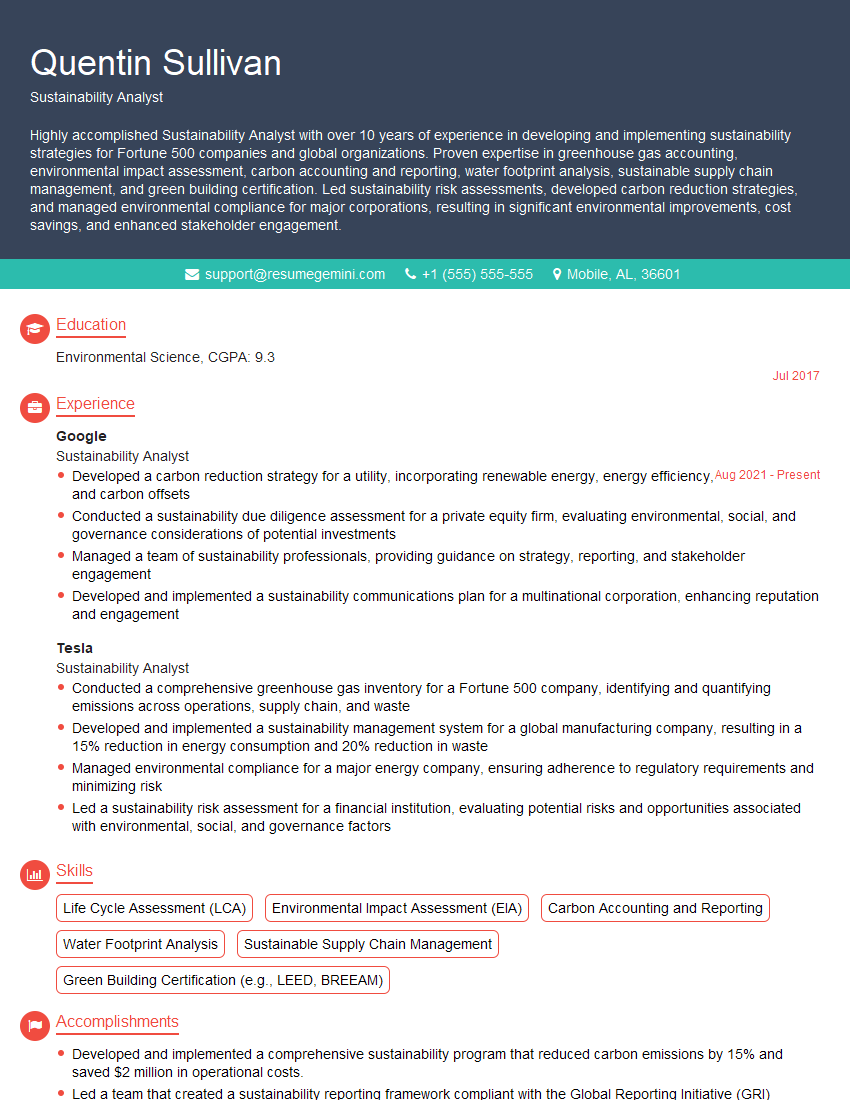
Mastering Environmental Modeling Software like SimaPro and Gabi is crucial for career advancement in sustainability and environmental consulting. These skills are highly sought after by employers and demonstrate a strong commitment to environmental responsibility and data-driven decision-making. To significantly enhance your job prospects, creating a compelling and ATS-friendly resume is essential. ResumeGemini is a valuable resource to help you build a professional and effective resume that highlights your skills and experience effectively. Examples of resumes tailored to showcasing expertise in Environmental Modeling Software (e.g., SimaPro, Gabi) are available, providing you with a framework to craft a standout application.

Explore more articles
Users Rating of Our Blogs
Share Your Experience
We value your feedback! Please rate our content and share your thoughts (optional).
What Readers Say About Our Blog
To the interviewgemini.com Webmaster.
Very helpful and content specific questions to help prepare me for my interview!
Thank you
To the interviewgemini.com Webmaster.
This was kind of a unique content I found around the specialized skills. Very helpful questions and good detailed answers.
Very Helpful blog, thank you Interviewgemini team.