The right preparation can turn an interview into an opportunity to showcase your expertise. This guide to Environmental Regulations and Policy interview questions is your ultimate resource, providing key insights and tips to help you ace your responses and stand out as a top candidate.
Questions Asked in Environmental Regulations and Policy Interview
Q 1. Explain the key differences between NEPA and CEQA.
NEPA (National Environmental Policy Act) and CEQA (California Environmental Quality Act) are both landmark environmental laws requiring environmental review for major projects, but they differ significantly in scope and application. NEPA is a federal law applying to all federal agencies and actions significantly affecting the quality of the human environment. CEQA, on the other hand, is a California state law, applying to state and local agencies and private projects requiring permits from state or local agencies.
- Scope: NEPA’s scope is broader, encompassing projects with nationwide or interstate impacts, while CEQA focuses on projects within California.
- Agencies Covered: NEPA applies to federal agencies, while CEQA covers state and local agencies and, in many cases, privately funded projects requiring government permits.
- Process: Both involve environmental impact assessments (EIAs), but the specific requirements and processes differ. NEPA emphasizes a tiered approach with varying levels of analysis based on project impact, whereas CEQA typically requires detailed EIRs (Environmental Impact Reports) for significant projects.
- Enforcement: NEPA enforcement relies on the Council on Environmental Quality (CEQ) guidelines and judicial review, while CEQA enforcement is primarily through lawsuits and the California courts.
For example, the construction of a new interstate highway would fall under NEPA, while the building of a shopping mall in California would fall under CEQA. A project could potentially be subject to both NEPA and CEQA if it involves federal funding and is located in California.
Q 2. Describe your experience with environmental impact assessments.
I have extensive experience in conducting and reviewing environmental impact assessments (EIAs) for a wide range of projects, including infrastructure development, energy projects, and land-use planning. My experience includes preparing and reviewing environmental documentation, such as Environmental Impact Statements (EISs) under NEPA and Environmental Impact Reports (EIRs) under CEQA. This involved working closely with interdisciplinary teams of scientists, engineers, and regulatory experts to analyze potential environmental impacts, develop mitigation measures, and prepare detailed reports for regulatory agencies.
For instance, I was involved in a project assessing the potential impacts of a proposed wind farm on avian populations. This required extensive fieldwork to study bird migration patterns, modeling potential collisions with turbines, and developing strategies to minimize impacts, such as adjusting turbine placement and operation schedules. The final EIA documented our findings and recommendations, which were then used by the permitting agency to make a decision on the project.
Q 3. How familiar are you with the Clean Air Act and its amendments?
I’m very familiar with the Clean Air Act (CAA) and its numerous amendments. The CAA, enacted in 1970, is a comprehensive federal law designed to control air pollution on a national level. It sets National Ambient Air Quality Standards (NAAQS) for six common pollutants: ozone, particulate matter, carbon monoxide, sulfur dioxide, nitrogen dioxide, and lead. It also regulates emissions from stationary sources (like power plants and factories) and mobile sources (like cars and trucks) through a system of permits and control technologies.
Key amendments, such as the 1977 and 1990 amendments, strengthened the CAA’s provisions by adding new pollutants to the list, tightening emission standards, and introducing market-based approaches like emissions trading. The 1990 amendments were particularly significant, as they addressed acid rain, ozone depletion, and toxic air pollutants. My understanding encompasses the intricacies of its various programs, including the State Implementation Plans (SIPs) which outline how states will achieve the NAAQS.
For example, my work has involved assessing compliance with the CAA’s Prevention of Significant Deterioration (PSD) program, which protects air quality in areas that already meet NAAQS. This often includes complex modeling to predict the impacts of new emissions sources on air quality.
Q 4. What is your understanding of the Clean Water Act and its permitting process?
The Clean Water Act (CWA) is the cornerstone of federal water pollution control in the US. It aims to restore and maintain the chemical, physical, and biological integrity of the nation’s waters. The CWA regulates point source discharges of pollutants into waterways through a National Pollutant Discharge Elimination System (NPDES) permit program. Point sources are defined as distinct locations where pollutants are discharged, such as industrial pipes or sewage treatment plants.
The NPDES permitting process involves submitting an application to the EPA or a delegated state agency, describing the facility’s operations and the types and quantities of pollutants being discharged. The agency then reviews the application, and if approved, issues a permit specifying discharge limits and monitoring requirements. Failure to comply with permit conditions can result in significant penalties.
In addition to the NPDES program, the CWA addresses non-point source pollution (pollution from diffuse sources like agricultural runoff) and protects wetlands and other valuable aquatic ecosystems. My experience includes evaluating discharge permits, reviewing water quality data, and developing compliance strategies for various industrial facilities.
Q 5. Explain the process of obtaining an environmental permit.
Obtaining an environmental permit is a complex process that varies depending on the type of project and the applicable regulations. It generally involves several key steps:
- Project Planning and Preliminary Assessment: Early in the planning process, identifying potential environmental impacts is crucial. This involves conducting a preliminary assessment to determine which permits are required.
- Permit Application Preparation: Gathering the necessary data and preparing a comprehensive application for the relevant permitting agency is a crucial step. This often includes detailed environmental impact assessments, engineering plans, and financial information.
- Agency Review and Public Comment: The permitting agency reviews the application, which may involve a public comment period allowing stakeholders to provide input.
- Permit Issuance or Denial: Based on the review and public comments, the agency decides whether to issue the permit with conditions or deny it.
- Permit Compliance: Once the permit is issued, the permittee must comply with all conditions outlined in the permit. This usually includes regular monitoring and reporting.
The complexity of the process can vary greatly. A small project might require only a simple permit, while a large project might require multiple permits from different agencies and extensive environmental review. Understanding the specific regulatory requirements early on is essential to a successful permitting process.
Q 6. Describe your experience with environmental audits and compliance inspections.
I have significant experience conducting and overseeing environmental audits and compliance inspections. Environmental audits systematically evaluate an organization’s environmental performance against applicable regulations and internal standards. This typically includes reviewing documents, conducting site inspections, and interviewing personnel. Compliance inspections, on the other hand, are often conducted by regulatory agencies to verify compliance with specific permits or regulations.
My experience includes leading audits for various industries, including manufacturing, energy, and waste management. For example, I conducted an environmental audit of a manufacturing facility to assess their compliance with air emission regulations. This involved reviewing their emission monitoring data, inspecting their pollution control equipment, and interviewing staff about their operational procedures. The audit identified several areas where improvements could be made to ensure compliance, which were then documented in a comprehensive report.
Similar processes are used during regulatory compliance inspections, except they are conducted by the governing agency and may result in enforcement actions if non-compliance is found.
Q 7. How would you handle a non-compliance situation?
Handling a non-compliance situation requires a systematic and proactive approach. The first step is to identify the specific non-compliance issue and determine its severity. Then, I would immediately initiate an internal investigation to gather all relevant information, such as the cause of the non-compliance, its duration, and its potential impacts. This might involve reviewing operational records, interviewing staff, and collecting environmental samples.
Next, I’d develop a corrective action plan (CAP) to address the non-compliance issue, prevent its recurrence, and mitigate any environmental impacts. The CAP would include specific steps to be taken, timelines for completion, and responsible parties. I would then implement the CAP and monitor its effectiveness.
Finally, I would report the non-compliance incident to the relevant regulatory agency, providing them with information on the investigation, the CAP, and the corrective actions taken. Transparency and timely communication are crucial in these situations. Depending on the severity of the non-compliance, penalties may be imposed by the regulatory agency.
For example, if an industrial facility exceeded its permitted discharge limits, I would immediately investigate, determine the cause (equipment malfunction, procedural error, etc.), implement corrective measures to bring the discharge back within limits, and report the incident to the EPA, along with documentation of the corrective actions.
Q 8. What are the key components of an effective environmental management system (EMS)?
An effective Environmental Management System (EMS) is a framework that helps organizations systematically manage their environmental impacts. Think of it as a roadmap for sustainability. Key components include:
Environmental Policy: A formal statement of the organization’s commitment to environmental protection. This sets the overall direction and tone.
Planning: Identifying environmental aspects (elements of an organization’s activities, products, or services that can interact with the environment) and impacts (resulting effects of those aspects). This involves setting environmental objectives and targets, such as reducing waste or emissions by a certain percentage.
Implementation and Operation: Establishing procedures and resources to achieve the objectives. This might include training programs for employees, purchasing environmentally friendly materials, or implementing waste management plans.
Checking and Corrective Action: Monitoring performance against targets, identifying deviations, and taking corrective and preventative actions. This often involves regular audits and reviews.
Management Review: A periodic review by top management to ensure the EMS remains effective and aligns with organizational strategy. This is where improvements are planned and adjustments made.
For example, a manufacturing company might implement an EMS to reduce water consumption, manage hazardous waste, and improve air quality. Effective implementation ensures compliance with regulations and can also lead to cost savings and improved public image.
Q 9. Explain your understanding of environmental risk assessment and management.
Environmental risk assessment and management is a systematic process to identify, analyze, and control environmental risks. It’s like a detective story where we identify potential hazards and figure out how to prevent or mitigate their impact.
Assessment involves identifying potential environmental hazards (e.g., chemical spills, air pollution, habitat destruction) and evaluating their likelihood and potential consequences. This could involve using modeling techniques to predict the spread of a contaminant or assessing the impact of a development project on local wildlife.
Management involves developing and implementing strategies to control or mitigate those risks. This might include implementing engineering controls (e.g., installing pollution control equipment), administrative controls (e.g., developing safety protocols), and emergency response plans. A proactive approach often involves choosing cleaner technologies and conducting regular environmental monitoring.
For instance, before constructing a new factory, an environmental risk assessment would be conducted to identify potential risks like groundwater contamination from chemical leaks. Based on the assessment, management strategies such as implementing a robust wastewater treatment system and installing leak detection systems would be put in place.
Q 10. Describe your experience with environmental remediation projects.
I have extensive experience in environmental remediation projects, focusing on both soil and groundwater contamination. I’ve been involved in projects ranging from small-scale site assessments to large-scale remediation efforts. My experience includes:
Site characterization: Conducting detailed investigations to determine the extent and nature of contamination.
Remediation design and implementation: Developing and implementing remediation strategies, such as pump and treat systems, bioremediation, or soil excavation.
Monitoring and reporting: Monitoring the effectiveness of remediation efforts and preparing reports to regulatory agencies.
One particularly challenging project involved remediating a site contaminated with chlorinated solvents. We employed a combination of pump and treat and in-situ bioremediation techniques, and the project successfully achieved regulatory closure. It required careful planning, coordination with regulatory agencies, and a high degree of technical expertise. The successful completion demonstrated my ability to manage complex projects while ensuring compliance with environmental regulations.
Q 11. How familiar are you with ISO 14001 standards?
I am very familiar with ISO 14001, the internationally recognized standard for environmental management systems. It provides a framework for organizations to establish, implement, maintain, and improve their EMS. My understanding encompasses:
Requirements of the standard: I understand the clauses and requirements, including environmental policy, planning, implementation, checking, corrective actions and management review.
Implementation and auditing: I have experience in implementing ISO 14001 in various organizations and conducting internal and external audits to ensure compliance.
Continual improvement: I understand that ISO 14001 is a cyclical process aimed at continuous improvement of environmental performance.
I can effectively assist organizations in achieving and maintaining ISO 14001 certification, helping them improve their environmental performance and demonstrate their commitment to environmental responsibility.
Q 12. What is your experience with environmental data analysis and reporting?
My experience with environmental data analysis and reporting is extensive. I am proficient in using various statistical software packages and environmental modeling tools to analyze environmental data. This includes:
Data collection and management: I can design and implement data collection strategies, manage large datasets, and ensure data quality.
Statistical analysis: I can perform various statistical analyses to identify trends, patterns, and correlations in environmental data.
Environmental modeling: I can use various environmental models to predict the fate and transport of contaminants and assess environmental impacts.
Report writing: I can prepare clear, concise, and informative reports for regulatory agencies, stakeholders, and clients.
For example, I recently analyzed air quality data from multiple monitoring stations to identify pollution hotspots and contribute to the development of a city-wide air quality management plan.
Q 13. Explain your understanding of life cycle assessments (LCA).
A Life Cycle Assessment (LCA) is a technique to assess the environmental impacts associated with all the stages of a product’s life, from raw material extraction to disposal. Think of it as a cradle-to-grave analysis. It considers impacts like energy consumption, greenhouse gas emissions, water usage, and waste generation.
An LCA typically involves four stages:
Goal and scope definition: Defining the purpose of the LCA and identifying the product system boundary.
Inventory analysis: Quantifying the inputs and outputs of the product system.
Impact assessment: Evaluating the environmental impacts of the inputs and outputs.
Interpretation: Analyzing the results and drawing conclusions.
LCAs are useful for identifying opportunities for environmental improvement throughout a product’s life cycle. For example, an LCA of a plastic bottle might reveal that the greatest environmental impact comes from the production of the plastic itself, leading to a focus on using recycled materials or developing more sustainable alternatives.
Q 14. How do you stay updated on changes in environmental regulations?
Staying updated on environmental regulations is crucial in this field. I employ several strategies:
Subscription to professional journals and newsletters: This provides access to the latest research, policy updates, and regulatory changes.
Membership in professional organizations: Organizations like the Society of Environmental Toxicology and Chemistry (SETAC) or the Environmental Law Institute (ELI) offer valuable networking opportunities, conferences, and access to up-to-date information.
Monitoring government websites: Regularly checking websites of environmental agencies (like the EPA in the US or equivalent agencies in other countries) for updates, proposed rules, and finalized regulations.
Attending conferences and workshops: These provide opportunities to learn from experts, network with colleagues, and stay informed about the latest developments.
Utilizing legal databases: Accessing specialized legal databases to track changes in environmental law and regulations.
By consistently using these methods, I ensure my knowledge base reflects the dynamic nature of environmental regulations and enables me to provide the most effective and up-to-date advice to clients.
Q 15. Describe your experience with environmental litigation or dispute resolution.
My experience with environmental litigation and dispute resolution spans over a decade, encompassing roles from expert witness testimony to mediation and negotiation. I’ve worked on cases involving Clean Water Act violations, Endangered Species Act compliance, and Superfund site remediation. For instance, I was the lead expert in a case involving a chemical plant’s discharge exceeding permitted limits into a local river. My testimony, based on rigorous data analysis and scientific modeling, helped demonstrate the extent of the environmental damage and resulted in a favorable settlement for the affected community and robust environmental remediation efforts by the plant. Another key experience involved mediating a dispute between a wind farm developer and local landowners concerned about potential impacts on wildlife habitats. Through facilitated communication and collaborative problem-solving, we were able to reach an agreement that protected both renewable energy development and the local ecosystem.
My approach emphasizes a collaborative, fact-based strategy. I believe in seeking mutually beneficial solutions whenever possible, but I’m also prepared to vigorously advocate for my client’s interests in court if necessary.
Career Expert Tips:
- Ace those interviews! Prepare effectively by reviewing the Top 50 Most Common Interview Questions on ResumeGemini.
- Navigate your job search with confidence! Explore a wide range of Career Tips on ResumeGemini. Learn about common challenges and recommendations to overcome them.
- Craft the perfect resume! Master the Art of Resume Writing with ResumeGemini’s guide. Showcase your unique qualifications and achievements effectively.
- Don’t miss out on holiday savings! Build your dream resume with ResumeGemini’s ATS optimized templates.
Q 16. Explain the concept of environmental justice.
Environmental justice is the fair treatment and meaningful involvement of all people regardless of race, color, national origin, or income, with respect to the development, implementation, and enforcement of environmental laws, regulations, and policies. It recognizes that marginalized communities often bear a disproportionate burden of environmental hazards, such as proximity to polluting industries or inadequate access to clean water and green spaces. This isn’t simply a matter of equal distribution of environmental benefits and burdens; it also acknowledges historical injustices and systemic inequalities that contribute to environmental disparities.
For example, the placement of landfills and incinerators in low-income communities of color, or the disproportionate exposure of these communities to air pollution from industrial facilities, are clear manifestations of environmental injustice. Addressing this requires proactive measures to ensure equitable access to environmental benefits and protection from environmental harms, including community participation in decision-making processes.
Q 17. What are your thoughts on climate change and its regulatory implications?
Climate change is arguably the most significant environmental challenge of our time, presenting profound regulatory implications. The scientific consensus is undeniable: human activities are driving a rapid increase in global temperatures, leading to more frequent and intense extreme weather events, sea-level rise, and biodiversity loss. This necessitates a comprehensive and multifaceted regulatory response.
Current regulatory frameworks, like the Clean Air Act and the carbon pricing mechanisms adopted by some jurisdictions, are being adapted and expanded to address climate change. However, we need bolder and more integrated approaches, such as stricter emission standards for various sectors, investment in renewable energy technologies, and policies that incentivize carbon capture and storage. International cooperation is crucial. Agreements like the Paris Agreement aim to set collective goals for emissions reductions, but their success hinges on robust domestic policies and enforcement. Failure to address climate change effectively will have devastating environmental and socioeconomic consequences, significantly impacting public health, infrastructure, and economic stability.
Q 18. How do you prioritize competing environmental concerns?
Prioritizing competing environmental concerns requires a systematic and transparent approach. I typically employ a multi-criteria decision analysis (MCDA) framework that considers various factors such as the severity of the environmental impact, the feasibility of mitigation measures, the economic costs and benefits, and the social and equity implications. For example, balancing the need for habitat preservation with the development of renewable energy projects requires carefully weighing the potential loss of biodiversity against the benefits of reducing greenhouse gas emissions.
This often involves stakeholder engagement and a robust cost-benefit analysis, ensuring that decisions are informed, justifiable, and equitable. In practice, it’s a balancing act, often requiring compromise and creative solutions that minimize negative impacts while achieving broader environmental goals. Transparency is crucial, ensuring all stakeholders understand the rationale behind the prioritization decisions.
Q 19. Describe your experience working with stakeholders on environmental issues.
My experience working with stakeholders on environmental issues has been extensive and has taught me the importance of effective communication, active listening, and collaborative problem-solving. I have worked with diverse groups, including government agencies, industry representatives, environmental organizations, and community members. For example, during a project involving the cleanup of a contaminated site, I facilitated a series of workshops involving all stakeholders to build consensus on remediation strategies and monitoring plans. This involved addressing concerns related to human health, environmental protection, and economic feasibility.
Success in stakeholder engagement often hinges on building trust, demonstrating respect for diverse perspectives, and finding common ground. I find that incorporating participatory processes, like collaborative workshops, public forums, and community feedback mechanisms, increases the likelihood of achieving mutually agreeable outcomes and ensuring project success.
Q 20. What is your understanding of circular economy principles?
The circular economy is an economic model that aims to decouple economic growth from resource consumption and waste generation. Instead of a linear ‘take-make-dispose’ model, it strives for a cyclical system where materials are kept in use for as long as possible, extracting maximum value, and then recovering and regenerating products and materials at the end of each service life. Key principles include designing out waste and pollution, keeping products and materials in use, and regenerating natural systems.
Examples include initiatives that promote product reuse, repair, and refurbishment; the development of biodegradable and compostable materials; and the implementation of recycling and waste-to-energy systems. In essence, a circular economy seeks to minimize environmental impact, enhance resource efficiency, and foster innovation. It requires changes across multiple sectors, including manufacturing, design, and consumption patterns.
Q 21. How do you handle conflicting environmental regulations from different agencies?
Conflicting environmental regulations from different agencies can create significant challenges for regulated entities. My approach involves a thorough analysis of the applicable regulations, identifying any inconsistencies or overlaps. This may involve consulting with legal counsel to understand the specific requirements and potential liabilities under each regulation. In some cases, it might be necessary to seek clarification or seek exemptions from the relevant agencies. For instance, if a state-level regulation is more stringent than a federal one, a company may have to comply with the stricter state standard. However, if there’s a clear conflict, mediation or other dispute resolution mechanisms may be necessary to ensure compliance with all applicable laws.
This often requires strong communication and negotiation skills to effectively navigate the regulatory landscape and ensure compliance without undue burden on the regulated entity. A proactive approach, including careful planning and regular communication with all relevant agencies, is vital in preventing such conflicts from escalating into costly legal battles.
Q 22. Explain your approach to communicating complex environmental information to non-technical audiences.
Communicating complex environmental information to non-technical audiences requires a strategic approach that prioritizes clarity, simplicity, and relevance. My approach involves several key steps:
- Identify the Audience: Understanding their prior knowledge, interests, and concerns is crucial. For example, communicating with local residents about a proposed landfill differs significantly from briefing a board of directors on carbon emissions reduction strategies.
- Simplify the Message: Avoid technical jargon. Use plain language, analogies, and visual aids (charts, graphs, infographics) to convey key concepts effectively. For instance, explaining the concept of biodiversity by comparing a forest ecosystem to a diverse human community with interdependent roles.
- Focus on the ‘So What?’: Highlight the relevance of the information to the audience’s lives. What are the potential consequences? What are the benefits of taking action? Framing information in terms of personal impacts, economic benefits, or public health concerns often proves more engaging.
- Use Storytelling: Narratives and real-world examples make information more memorable and relatable. Sharing success stories or case studies of environmental improvements can inspire positive action.
- Encourage Interaction: Interactive sessions, Q&A periods, and feedback mechanisms promote understanding and create a dialogue. This allows for clarifying misconceptions and addressing specific concerns.
- Tailor the Medium: The format should match the audience and the message. A short video might be more effective for a general public audience, while a detailed report might be suitable for policymakers.
For example, when explaining the impact of climate change to a community group, I’d use relatable analogies like comparing the Earth’s atmosphere to a greenhouse, illustrating how trapping heat leads to rising temperatures. I would then link this to local concerns, such as increased flooding or changing weather patterns affecting agriculture.
Q 23. Describe a time you had to solve a complex environmental problem.
During my time at the [Previous Company Name], we faced a significant challenge with groundwater contamination near a manufacturing facility. Initial investigations revealed elevated levels of [Contaminant], exceeding safety standards. Solving this problem required a multi-faceted approach:
- Thorough Assessment: We conducted extensive groundwater sampling and analysis to determine the extent of contamination and identify the source. This involved utilizing various monitoring technologies like GPS-enabled sensors and advanced laboratory techniques.
- Source Identification: We traced the source back to a leak in an aging storage tank containing the contaminant. This was confirmed through isotopic analysis.
- Remediation Strategy: We developed a remediation plan involving the installation of a pump-and-treat system to extract the contaminated water, followed by treatment to remove the contaminant before safe discharge.
- Regulatory Compliance: We worked closely with the Environmental Protection Agency (EPA) to ensure compliance with all relevant regulations and to secure the necessary permits for the remediation activities.
- Community Engagement: We kept the local community informed throughout the process through public meetings, newsletters, and online updates, addressing their concerns and maintaining transparency.
The project was ultimately successful, the groundwater was remediated, and regulatory compliance was maintained. The experience highlighted the importance of collaboration, thorough investigation, and transparent communication in addressing complex environmental challenges.
Q 24. What is your experience with environmental monitoring technologies?
My experience encompasses a wide range of environmental monitoring technologies, both in-situ and laboratory-based. This includes:
- Remote Sensing: Utilizing satellite imagery and aerial photography for land-use change detection, deforestation monitoring, and assessing water quality.
- In-situ Sensors: Experience with various sensors for monitoring water quality parameters (pH, dissolved oxygen, turbidity, etc.), soil conditions, and air quality (e.g., particulate matter, ozone).
- Geographic Information Systems (GIS): Proficient in using GIS software for data visualization, spatial analysis, and creating maps to display environmental data.
- Laboratory Analysis: Extensive experience with laboratory methods for analyzing water, soil, and air samples for various contaminants.
- Acoustic Monitoring: Utilizing underwater acoustic sensors to assess marine life populations and habitat disturbances.
For example, I used GIS to map the spread of an invasive plant species, helping to inform the development of a control strategy. In another project, I utilized in-situ sensors to monitor water quality in a river following a storm event, which was critical in assessing potential contamination risks.
Q 25. How familiar are you with the Endangered Species Act?
I am very familiar with the Endangered Species Act (ESA). The ESA is a landmark US law that provides a framework for the conservation of threatened and endangered species and their habitats. My understanding encompasses:
- Listing Process: The criteria for listing species as threatened or endangered, including factors like population size, habitat loss, and disease.
- Critical Habitat Designation: The process of identifying and designating critical habitat for listed species, which involves considering the areas essential for their survival and recovery.
- Section 7 Consultations: The requirements for federal agencies to consult with the Fish and Wildlife Service or NOAA Fisheries to ensure that their actions do not jeopardize listed species or their habitats. This often involves assessing the impacts of projects like dam construction or highway expansion.
- Recovery Plans: The development and implementation of recovery plans that outline the steps needed to recover listed species to the point where they are no longer threatened or endangered.
- Enforcement and Penalties: The provisions for enforcement, including penalties for violating the ESA.
I’ve been involved in projects that required ESA compliance, including environmental impact assessments and habitat restoration initiatives. Understanding the ESA is critical to ensuring responsible development and maintaining biodiversity.
Q 26. Explain your understanding of the role of environmental regulations in sustainable development.
Environmental regulations play a crucial role in achieving sustainable development by balancing economic growth with environmental protection. They provide a framework for:
- Resource Management: Regulations ensure the sustainable use of natural resources, such as water, forests, and minerals, preventing depletion and degradation. Examples include regulations on water allocation and timber harvesting.
- Pollution Control: Regulations limit pollution from various sources, including industry, transportation, and agriculture, protecting air and water quality and preventing harm to ecosystems and human health. This includes emission standards for vehicles and wastewater treatment requirements for industries.
- Environmental Impact Assessment (EIA): Regulations mandate EIAs for large-scale projects to assess their potential environmental impacts and implement mitigation measures. This ensures that development considers its environmental consequences.
- Biodiversity Conservation: Regulations protect endangered species and their habitats, preserving biodiversity and maintaining ecosystem services. The ESA is a prime example.
- Incentivizing Sustainable Practices: Regulations can incentivize sustainable practices through tax breaks, subsidies, and market-based mechanisms. For example, carbon trading schemes aim to reduce greenhouse gas emissions.
Essentially, effective environmental regulations create a level playing field, ensuring that businesses and individuals internalize the environmental costs of their actions, leading to a more sustainable path toward development. Without strong environmental regulations, the pursuit of economic growth often comes at the expense of long-term environmental sustainability.
Q 27. How would you implement a new environmental policy within an organization?
Implementing a new environmental policy within an organization requires a systematic and phased approach:
- Needs Assessment: Begin by assessing the organization’s current environmental performance, identifying gaps, and determining the need for the new policy. This involves reviewing existing practices, identifying potential risks, and benchmarking against industry best practices.
- Policy Development: Collaborate with stakeholders to develop a clear, concise, and achievable policy. This includes defining objectives, setting targets, outlining responsibilities, and specifying timelines.
- Communication and Training: Clearly communicate the new policy to all employees, explaining its rationale, benefits, and requirements. Provide comprehensive training to ensure everyone understands their roles and responsibilities.
- Implementation and Monitoring: Implement the policy and monitor its effectiveness through regular performance reviews, data collection, and audits. This may involve utilizing environmental management systems (EMS).
- Continuous Improvement: Regularly review and update the policy to adapt to changing circumstances and incorporate lessons learned. Feedback mechanisms are essential.
- Reporting and Transparency: Regularly report on the organization’s environmental performance, highlighting successes and areas for improvement. Transparency builds trust and accountability.
For example, when implementing a waste reduction policy, I’d start by auditing waste generation, identifying opportunities for recycling and composting, and then developing a plan to educate employees on waste segregation and implement new waste management infrastructure. Continuous monitoring would involve tracking waste reduction metrics and adjusting strategies as needed.
Q 28. Describe your experience with environmental reporting and disclosure.
My experience with environmental reporting and disclosure is extensive, encompassing various frameworks and standards:
- Global Reporting Initiative (GRI): Proficient in using the GRI Standards for creating comprehensive sustainability reports that disclose environmental performance. This includes reporting on greenhouse gas emissions, water usage, waste management, and biodiversity impacts.
- Sustainability Accounting Standards Board (SASB): Familiar with SASB standards, which focus on material environmental, social, and governance (ESG) issues relevant to specific industries.
- Carbon Disclosure Project (CDP): Experience in preparing CDP questionnaires, which require organizations to disclose their climate-related risks and opportunities.
- Task Force on Climate-related Financial Disclosures (TCFD): Understanding of the TCFD recommendations for disclosing climate-related financial risks and opportunities.
- Regulatory Reporting: Experience in preparing environmental reports required by regulatory agencies, such as emission reports and environmental monitoring reports.
I’ve helped organizations to improve their environmental reporting practices by streamlining data collection, ensuring data accuracy, and strengthening their narrative to align with relevant standards. Accurate and transparent reporting is crucial for accountability and to engage stakeholders.
Key Topics to Learn for Environmental Regulations and Policy Interview
- National Environmental Policy Act (NEPA) and its implications: Understand the core principles of NEPA and its impact on environmental decision-making processes. Consider case studies demonstrating its application in project approvals.
- Clean Air Act (CAA) and Clean Water Act (CWA): Familiarize yourself with the key provisions, permitting processes, and enforcement mechanisms of these landmark legislations. Be ready to discuss practical examples of compliance and non-compliance scenarios.
- Endangered Species Act (ESA): Grasp the legal framework for protecting endangered and threatened species, including habitat conservation plans and critical habitat designations. Explore case studies involving species recovery and conflict resolution.
- Environmental Impact Assessments (EIAs) and Environmental Audits: Develop a strong understanding of conducting and interpreting EIAs, as well as the purpose and methods of environmental audits for compliance and sustainability.
- Environmental Permitting and Compliance: Learn about various permit types (e.g., air, water, waste) and the processes involved in obtaining and maintaining compliance. Be prepared to discuss challenges and solutions related to permit applications and enforcement.
- Climate Change Policy and Regulations: Understand the international, national, and regional policies aimed at mitigating and adapting to climate change. Be able to discuss the implications of carbon pricing, renewable energy mandates, and emissions trading schemes.
- Environmental Justice and Equity: Explore the concept of environmental justice and its role in ensuring equitable distribution of environmental benefits and burdens across different communities. Be ready to discuss relevant policy considerations.
- Sustainability and Corporate Social Responsibility (CSR): Understand how environmental regulations intersect with corporate sustainability initiatives and CSR strategies. Be able to discuss the business case for environmental responsibility.
Next Steps
Mastering Environmental Regulations and Policy is crucial for a successful and impactful career in environmental protection and sustainability. A strong understanding of these areas demonstrates your commitment to environmental stewardship and your ability to navigate complex legal and regulatory landscapes. To significantly boost your job prospects, creating an ATS-friendly resume is paramount. ResumeGemini offers a trusted and efficient platform for building a professional resume that highlights your skills and experience effectively. We provide examples of resumes tailored to Environmental Regulations and Policy to guide you in crafting a compelling application. Use ResumeGemini to elevate your resume and confidently pursue your career aspirations.
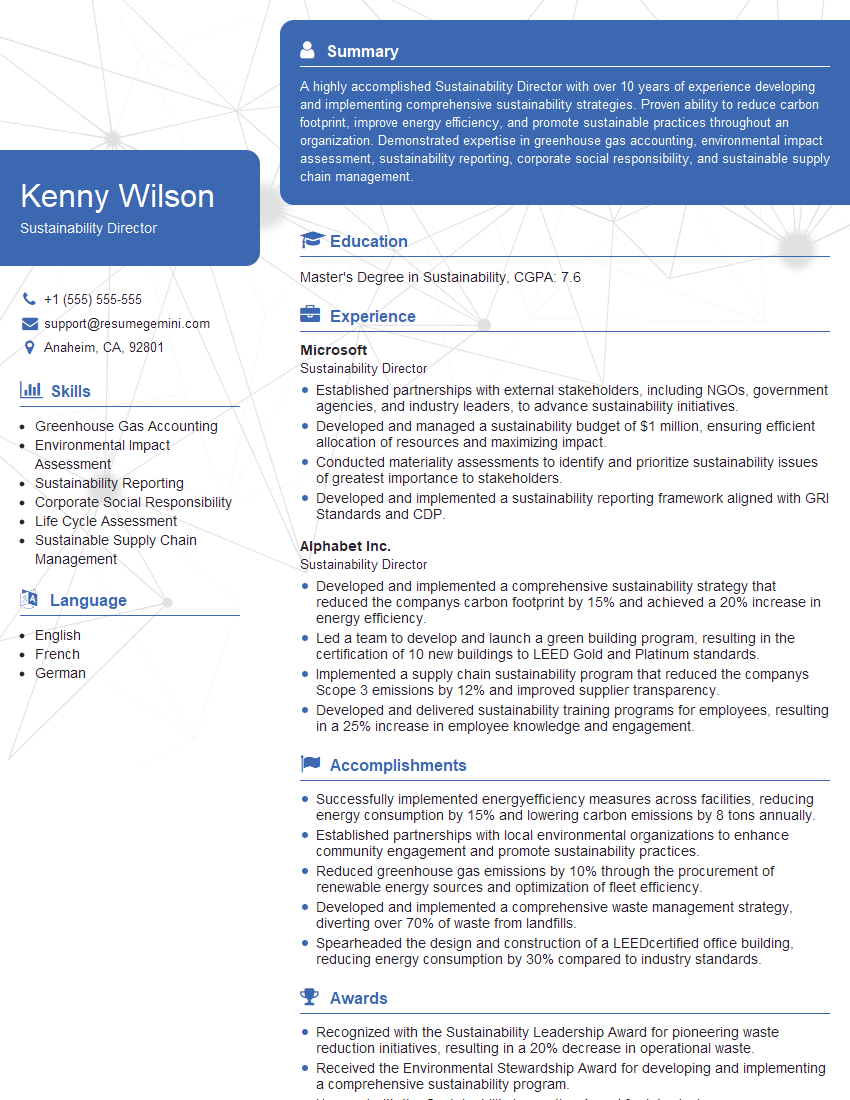
Sustainability Director Resume Sample
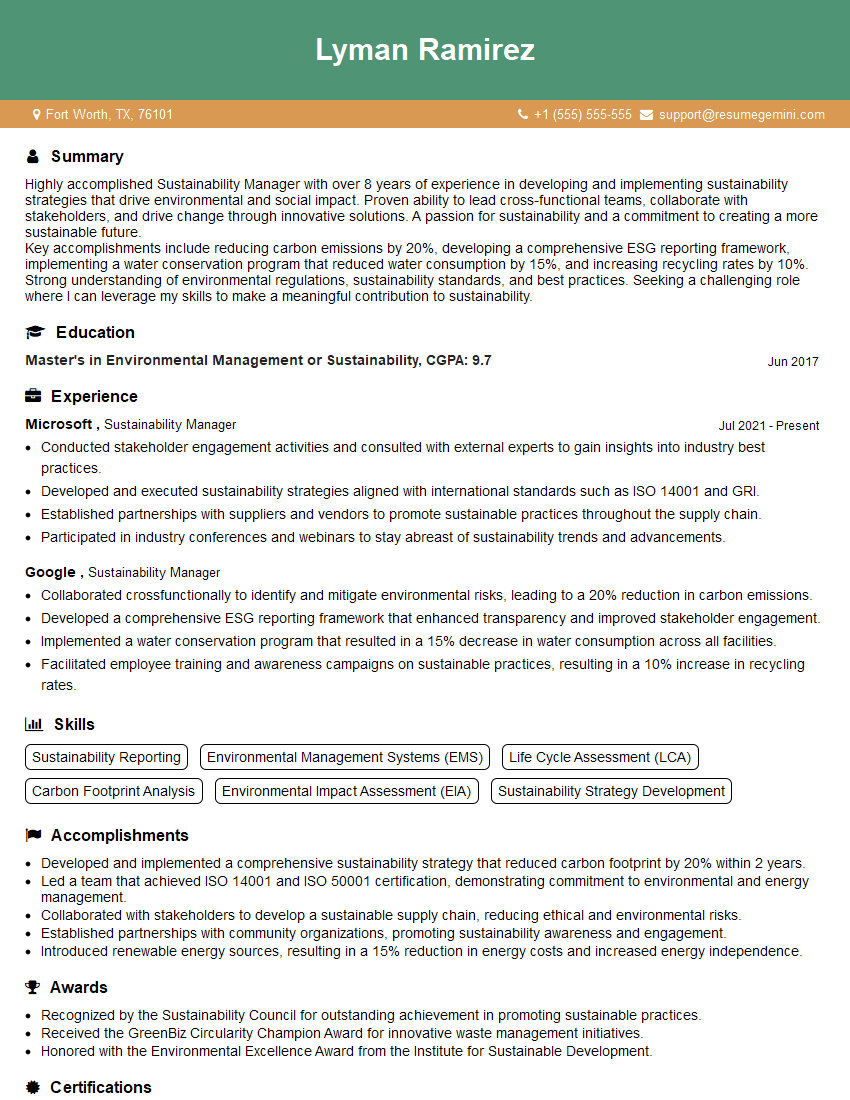
Sustainability Manager Resume Sample
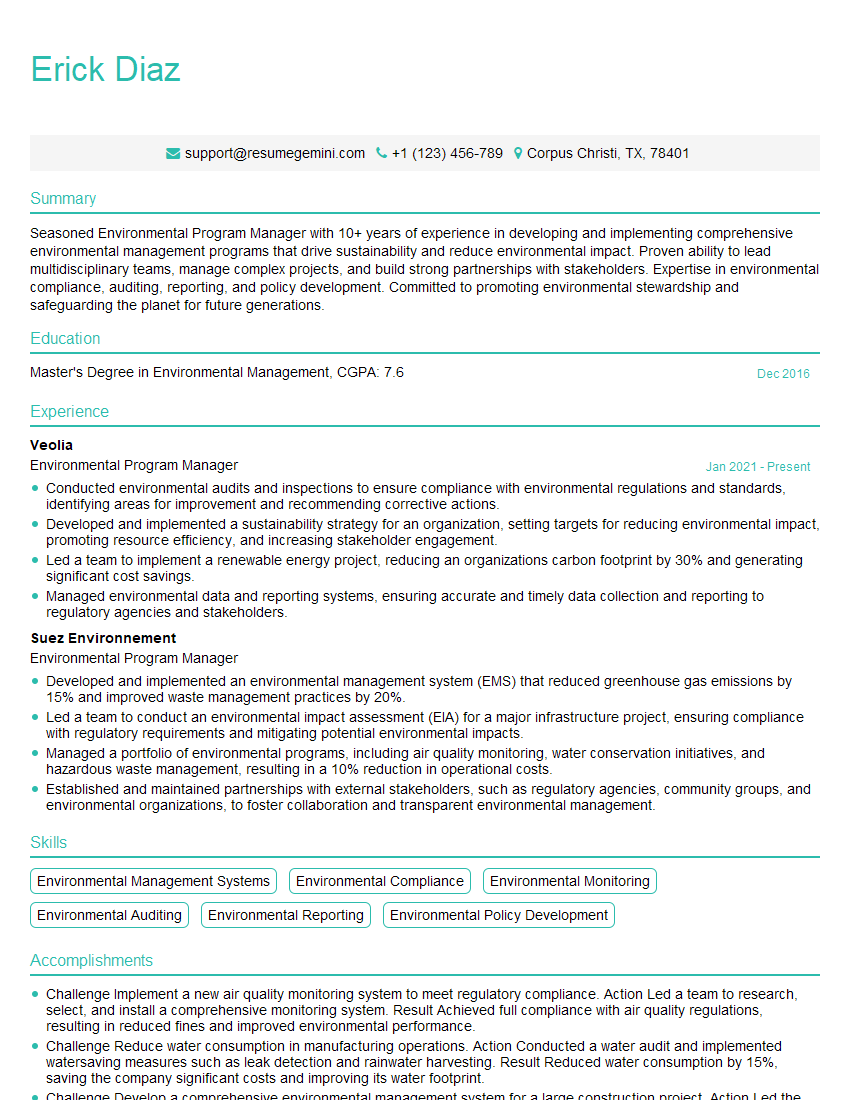
Environmental Program Manager Resume Sample
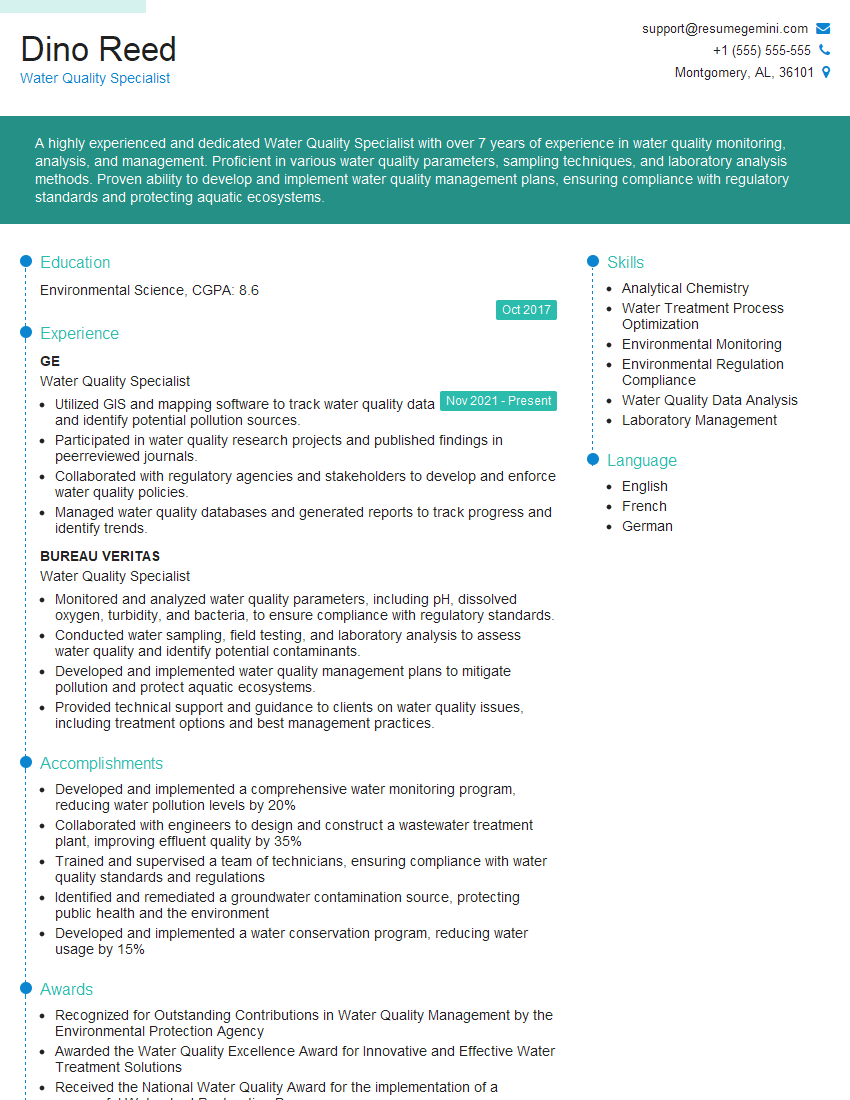
Water Quality Specialist Resume Sample
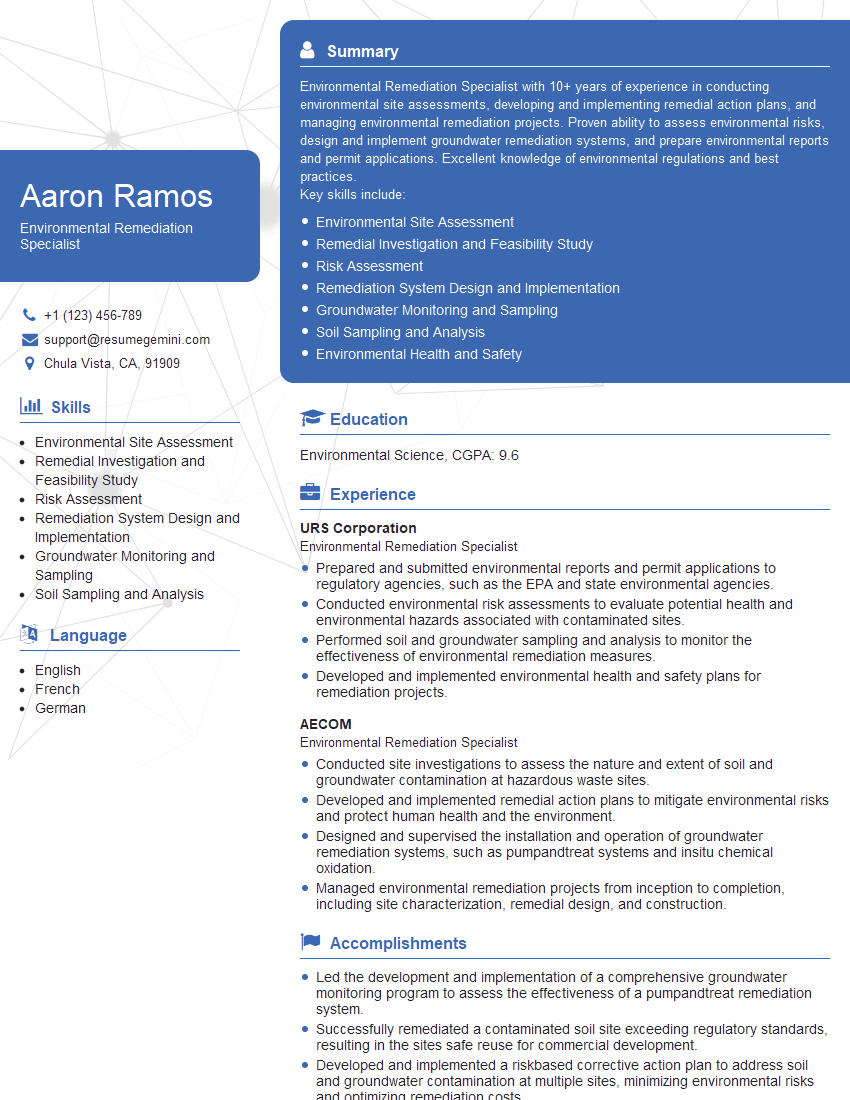
Environmental Remediation Specialist Resume Sample
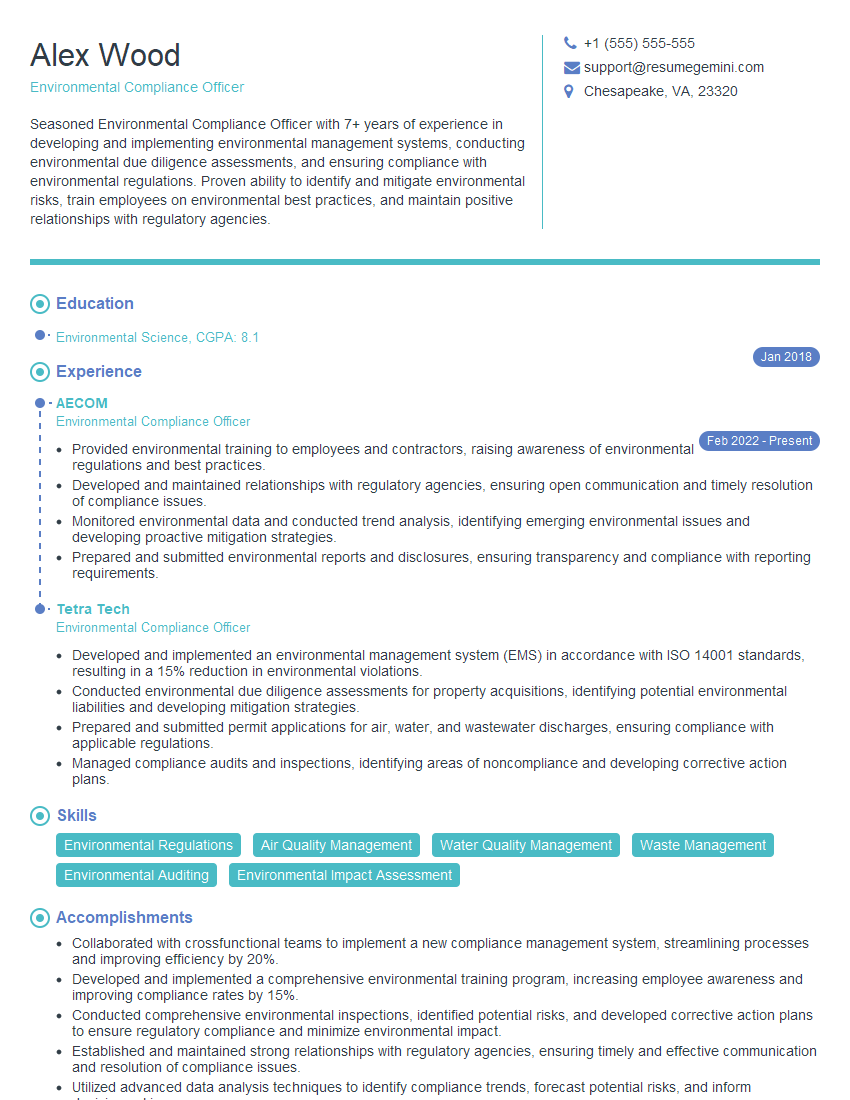
Environmental Compliance Officer Resume Sample
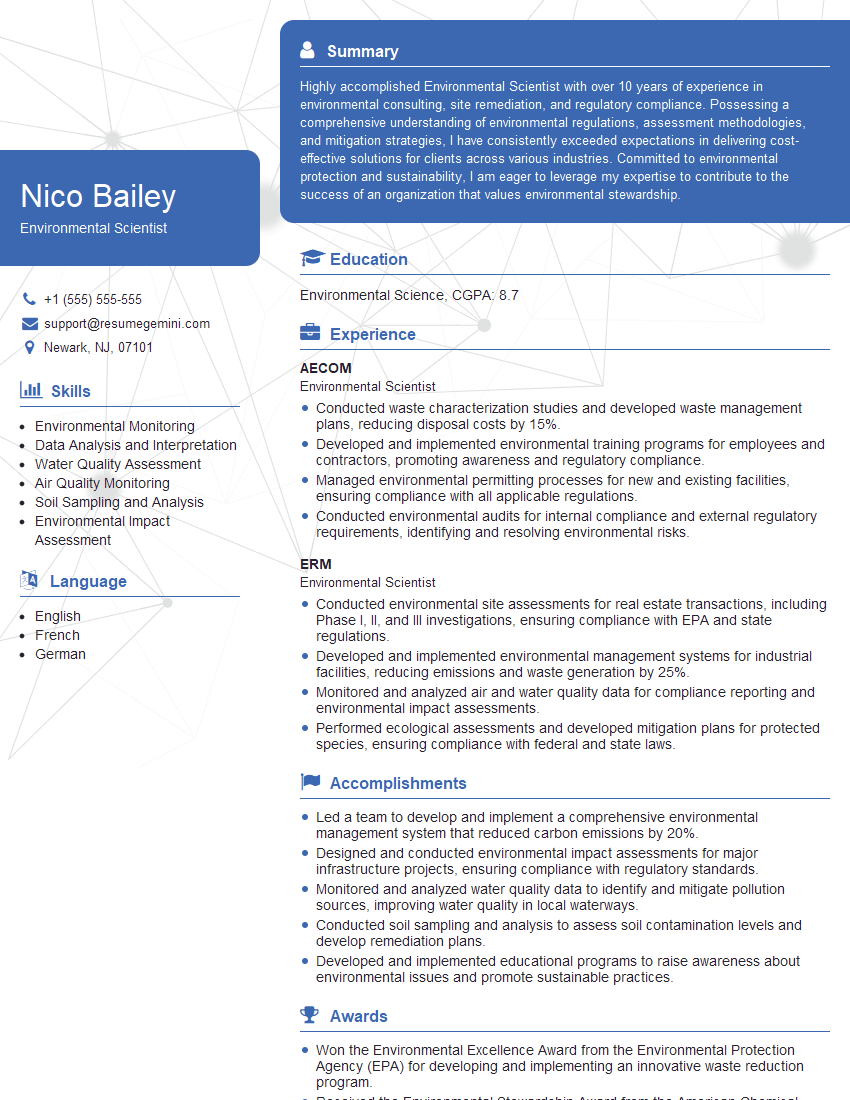
Environmental Scientist Resume Sample
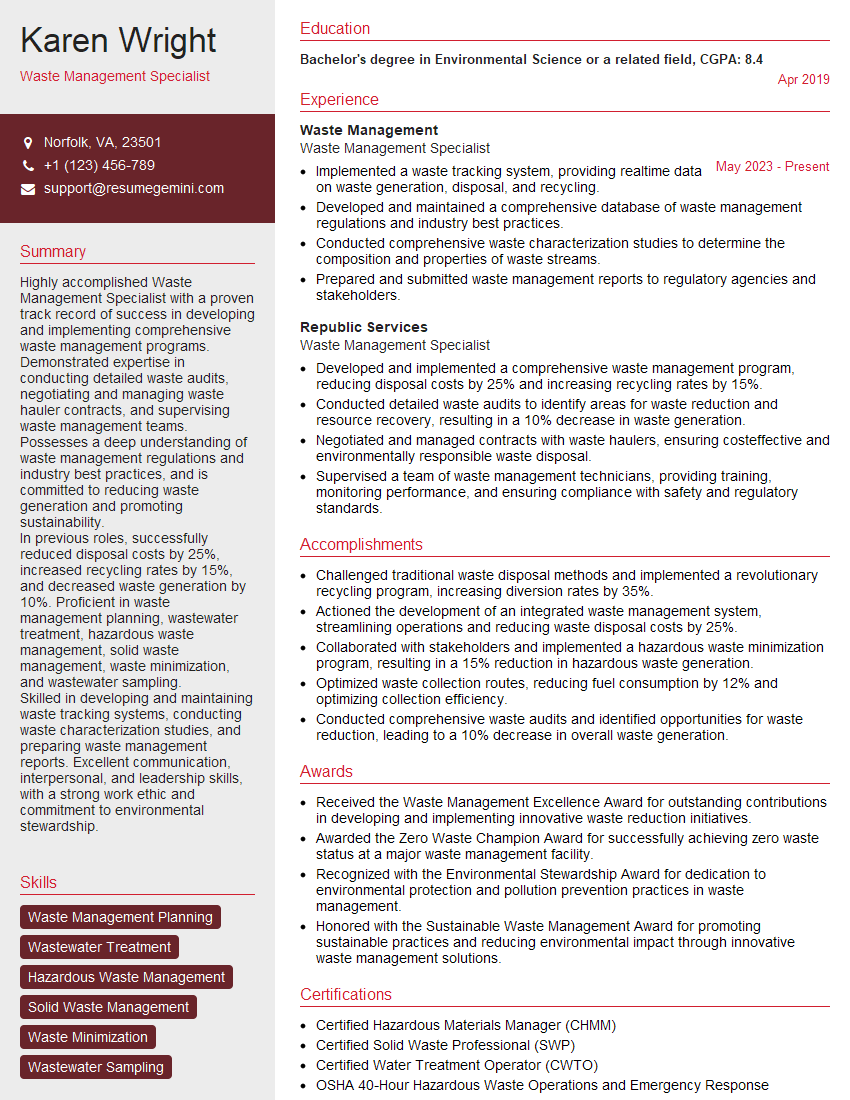
Waste Management Specialist Resume Sample
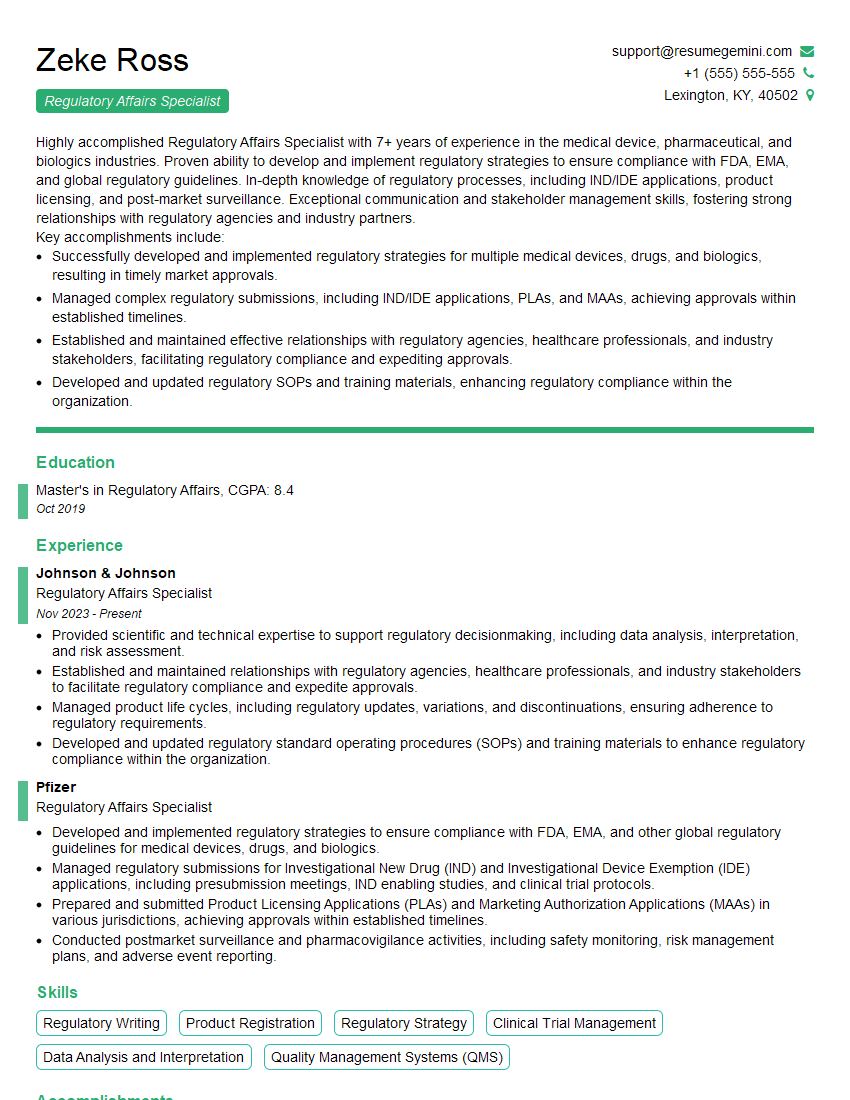
Regulatory Affairs Specialist Resume Sample

Sustainability Consultant Resume Sample
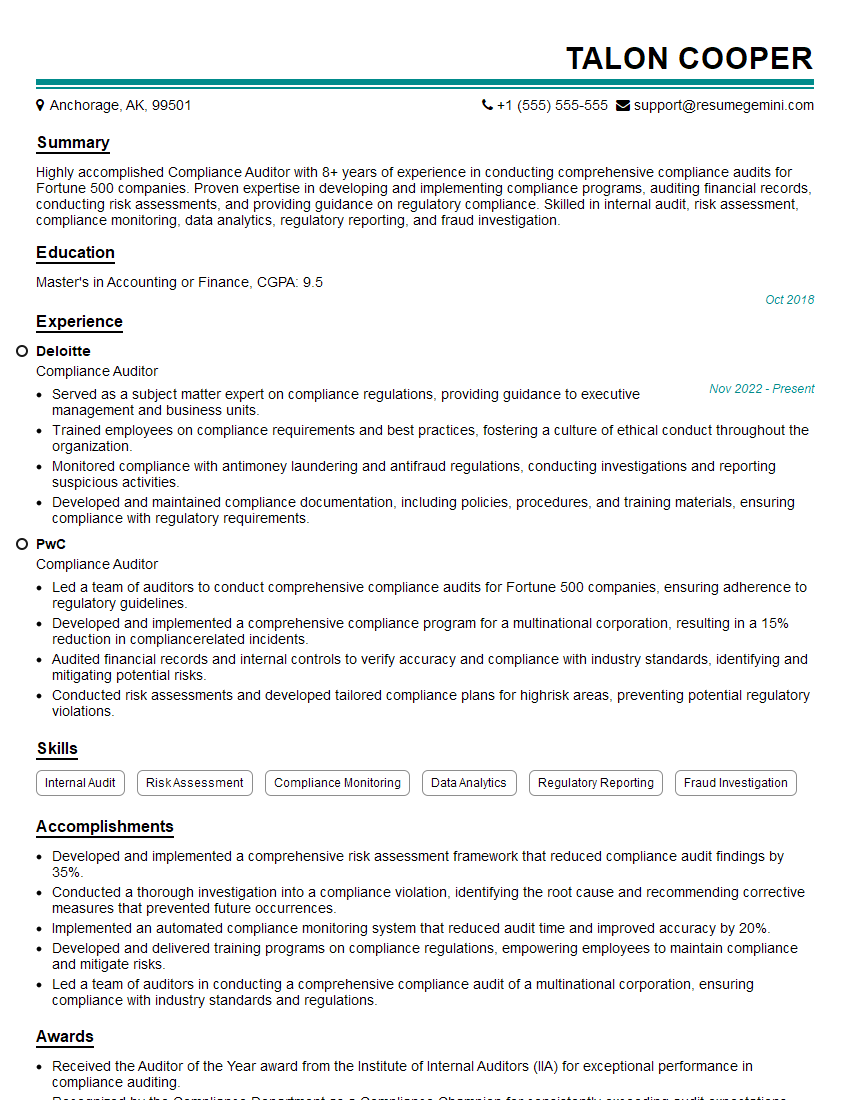
Compliance Auditor Resume Sample
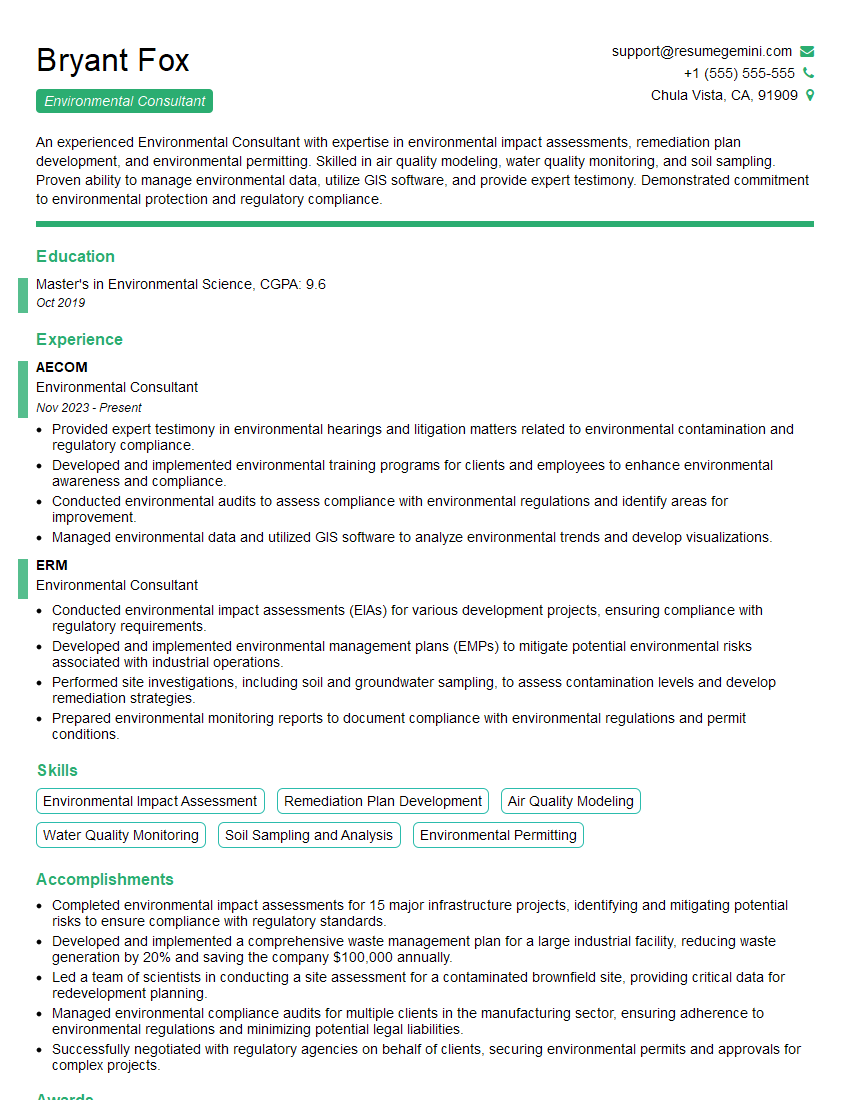
Environmental Consultant Resume Sample
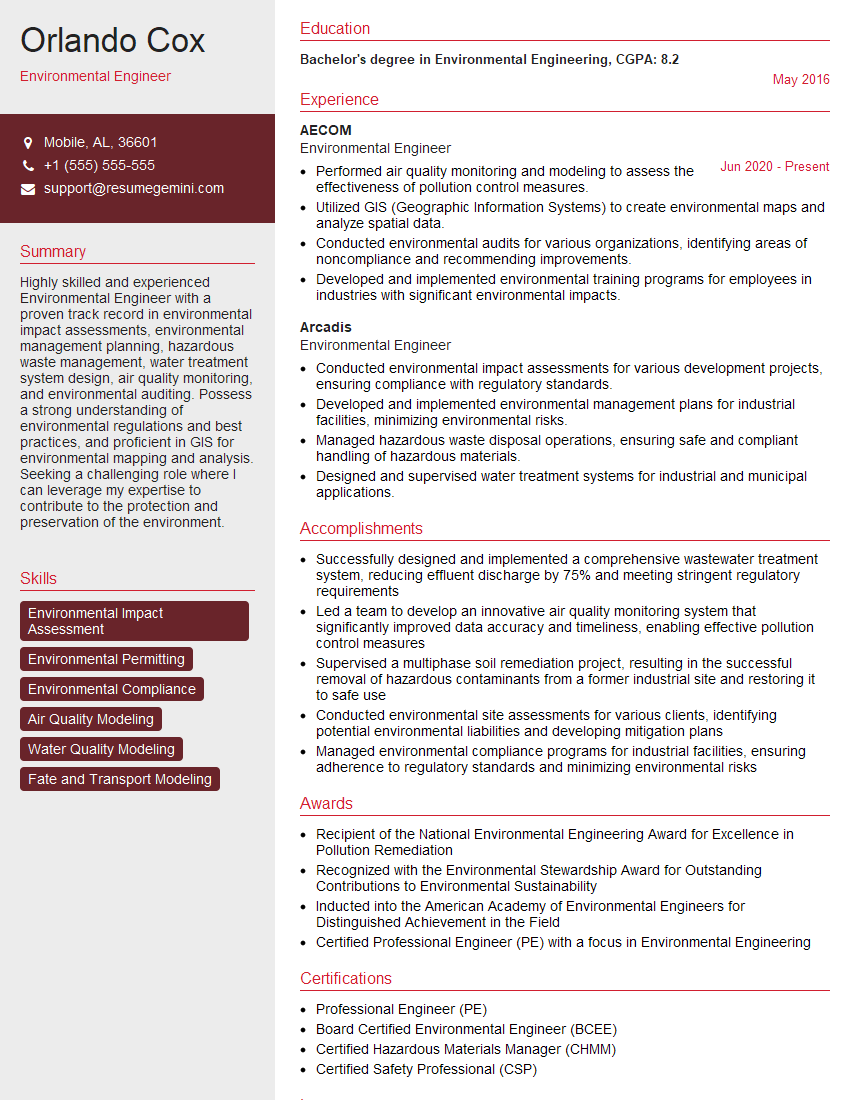
Environmental Engineer Resume Sample
- Sustainability Director
- Sustainability Manager
- Environmental Program Manager
- Water Quality Specialist
- Environmental Remediation Specialist
- Environmental Compliance Officer
- Environmental Scientist
- Waste Management Specialist
- Regulatory Affairs Specialist
- Sustainability Consultant
- Compliance Auditor
- Environmental Consultant
- Environmental Engineer
Explore more articles
Users Rating of Our Blogs
Share Your Experience
We value your feedback! Please rate our content and share your thoughts (optional).
What Readers Say About Our Blog
To the interviewgemini.com Webmaster.
Very helpful and content specific questions to help prepare me for my interview!
Thank you
To the interviewgemini.com Webmaster.
This was kind of a unique content I found around the specialized skills. Very helpful questions and good detailed answers.
Very Helpful blog, thank you Interviewgemini team.