Unlock your full potential by mastering the most common Ethnographic Research Methods interview questions. This blog offers a deep dive into the critical topics, ensuring you’re not only prepared to answer but to excel. With these insights, you’ll approach your interview with clarity and confidence.
Questions Asked in Ethnographic Research Methods Interview
Q 1. Describe the key differences between ethnographic research and other qualitative methods.
Ethnographic research distinguishes itself from other qualitative methods through its immersive, long-term engagement with a specific cultural group or community to understand their shared beliefs, practices, and behaviors. Unlike methods like surveys or interviews, which might offer snapshots of opinions, ethnography aims for a deep, holistic understanding of the social context.
- Depth vs. Breadth: Ethnography prioritizes depth of understanding over breadth of sample size. While other qualitative methods might interview many people briefly, ethnographic research involves spending extended periods with a smaller group to observe and understand nuances.
- Immersion vs. Distance: Ethnographers actively participate in the lives of the group being studied, building rapport and gaining insider perspectives. This contrasts with other methods that might maintain a greater distance between researcher and participants.
- Contextual Understanding: Ethnography emphasizes the importance of understanding behaviors and beliefs within their social and cultural contexts. It goes beyond individual accounts to uncover shared meanings and patterns.
For example, while a survey might ask people about their attitudes towards recycling, an ethnographic study would observe recycling practices in a community, interview residents about their motivations, and analyze the social and infrastructural factors influencing their behavior.
Q 2. Explain the concept of participant observation and its role in ethnographic research.
Participant observation is the cornerstone of ethnographic research. It involves immersing oneself in the daily lives of the community being studied, actively participating in their activities while observing and documenting their behaviors, interactions, and social structures. It’s not simply watching; it’s about becoming a part of the group, gaining their trust, and understanding their world from their perspective.
For instance, to study the workplace culture of a tech startup, a researcher might spend months working alongside the employees, attending meetings, participating in team-building activities, and observing interactions during breaks. This allows for a richer understanding of unspoken rules, power dynamics, and informal communication channels that might be missed through other methods.
The role of participant observation is crucial in uncovering tacit knowledge – the unspoken, often unconscious, knowledge that informs daily practices. This type of knowledge is hard to capture through interviews alone.
Q 3. How do you ensure ethical considerations are addressed throughout an ethnographic study?
Ethical considerations are paramount in ethnographic research because of the intimate nature of the research process. Researchers must prioritize the well-being and rights of participants above all else. This requires meticulous planning and ongoing reflection.
- Informed Consent: Participants must be fully informed about the purpose of the study, their rights, and how their data will be used. Consent must be voluntary and ongoing; participants should be free to withdraw at any time.
- Confidentiality and Anonymity: Protecting the privacy and anonymity of participants is vital. Data should be stored securely, and participants should be identified only by pseudonyms or codes in any reports or publications.
- Researcher Reflexivity: Researchers need to be aware of their own biases and how they might influence the research process. They should reflect on their interactions with participants and how their own presence might affect the group’s behavior.
- Reciprocity: Where possible, researchers should strive to give something back to the community they are studying. This could involve sharing research findings, contributing to community initiatives, or providing resources.
- Institutional Review Board (IRB) Approval: Most research institutions require IRB approval before any ethnographic study can begin. The IRB reviews the research proposal to ensure it meets ethical standards.
Failing to address these ethical considerations can lead to serious harm for participants, damage the researcher’s credibility, and invalidate the study’s findings.
Q 4. What are the primary data collection methods used in ethnographic research?
Ethnographic research relies on a variety of data collection methods, often used in combination to create a rich and multifaceted understanding of the subject.
- Participant Observation: As discussed previously, this is the core method.
- Interviews: Structured, semi-structured, and unstructured interviews can elicit detailed information about participants’ beliefs, experiences, and perspectives.
- Focus Groups: These group discussions can reveal shared understandings and differing opinions within a community.
- Document Analysis: Examining relevant documents (e.g., letters, official records, personal diaries) can provide valuable context and historical perspective.
- Audio-Visual Recordings: Photographs, videos, and audio recordings can capture nuanced behaviors and interactions that might be missed through observation alone. Ethical considerations regarding consent and use of these materials are crucial.
- Mapping and Spatial Analysis: Mapping the physical environment and analyzing how space is used can reveal important aspects of social organization and practice.
The choice of methods will depend on the specific research question and the nature of the community being studied.
Q 5. Explain the process of developing a research question for an ethnographic study.
Developing a research question for an ethnographic study requires careful consideration. It should be focused, feasible, and relevant, and should emerge from a genuine interest in understanding a particular aspect of social life.
- Identify a Broad Area of Interest: Begin by identifying a general area you are curious about. For example, you might be interested in the ways communities cope with climate change, or how digital technology is changing social interactions.
- Refine Your Focus: Narrow your broad area of interest into a specific research question. Instead of studying climate change broadly, you might focus on how a particular farming community is adapting to changing weather patterns.
- Consider the Feasible Scope: Ensure the question is answerable within the time and resources available for the study.
- Review Existing Literature: Conduct a thorough literature review to see what research already exists on the topic and identify gaps in knowledge. Your research question should contribute to existing knowledge.
- Frame the Question Ethnographically: Formulate your question in a way that emphasizes the importance of context and social processes. Instead of asking, “What are people’s attitudes towards climate change?”, an ethnographic question might be, “How do social networks and community practices shape adaptation strategies to climate change in this farming community?”
A well-defined research question guides the entire ethnographic process, ensuring that data collection and analysis remain focused and relevant.
Q 6. How do you select participants for ethnographic research?
Participant selection in ethnographic research is strategic and purposeful, rather than random. The goal is to select individuals who can provide rich insights into the phenomenon under study. It’s often a process of iterative refinement, guided by the unfolding research.
- Purposeful Sampling: Researchers select participants based on their knowledge, experience, or position within the community. This might involve selecting key informants – individuals with extensive knowledge and insights – or members from different social groups within the community.
- Snowball Sampling: Researchers might start with a few initial contacts and then ask them to refer other participants who can offer relevant perspectives. This is especially helpful in studying hard-to-reach populations.
- Theoretical Sampling: As the research progresses, researchers might refine their sampling strategy based on emerging themes and data. This allows them to gather data that addresses gaps in their understanding.
- Gatekeepers: Accessing a community often requires navigating relationships with gatekeepers – individuals who control access to the group. Building trust with gatekeepers is essential.
The size of the sample is not as important as the depth of engagement with the participants. A smaller sample size allows for more in-depth data collection and analysis.
Q 7. Describe your experience with data analysis techniques for ethnographic data (e.g., thematic analysis).
Data analysis in ethnographic research is an iterative and interpretive process. It’s not simply about summarizing data; it’s about making sense of the complex interactions and patterns observed in the field. Thematic analysis is a common technique, but I also utilize other methods depending on the research question and data type.
- Thematic Analysis: This involves identifying recurring themes or patterns in the data, often through coding and categorizing interview transcripts, field notes, and other materials. It’s a flexible approach that allows for both deductive (theory-driven) and inductive (data-driven) coding strategies. I typically use software like NVivo or Atlas.ti to manage and analyze large datasets.
- Narrative Analysis: This approach focuses on understanding the stories and narratives that participants tell, exploring how they construct meaning and experience.
- Discourse Analysis: This focuses on the ways in which language and communication shape social interactions and power relationships.
- Grounded Theory: This involves generating theories from the data, rather than testing pre-existing theories. It’s an iterative process of data collection and analysis, leading to the development of a grounded theory that explains the social phenomenon under study.
In my experience, the analysis process often involves moving back and forth between data collection and analysis. As new data emerges, I might revise my initial interpretations or explore new lines of inquiry. The goal is to develop a compelling and insightful interpretation of the data that illuminates the social phenomenon under study.
Q 8. How do you manage researcher bias in ethnographic research?
Researcher bias is a significant concern in ethnographic research, as our own perspectives can unconsciously shape our observations and interpretations. Managing this requires a multifaceted approach. It begins with reflexivity – a constant self-awareness of our own biases, assumptions, and preconceptions. This involves regular journaling, discussions with colleagues, and critical self-reflection throughout the research process. For example, if I’m researching a community known for its strong religious beliefs, I must acknowledge my own (or lack of) religious beliefs and how this might influence my interactions and interpretations.
Beyond reflexivity, triangulation is crucial. This involves using multiple data sources (interviews, observations, documents) to cross-check findings and identify potential biases. If my interviews suggest a particular trend, I would look for corroborating evidence in my observations or textual materials. Finally, member checking – sharing findings with participants to validate their accuracy and identify any misinterpretations – plays a vital role in mitigating bias. This ensures the research reflects the participants’ experiences and perspectives rather than solely my own.
Q 9. What are the limitations of ethnographic research?
Ethnographic research, while rich in qualitative data, has limitations. One significant challenge is generalizability. Findings from a specific community might not be directly applicable to other contexts, limiting the scope of conclusions. For instance, a study on workplace culture in a small tech startup might not accurately reflect the culture of a large multinational corporation.
Another limitation is time and resource intensiveness. Ethnographic research often requires extensive fieldwork, prolonged engagement with the community, and meticulous data analysis, demanding substantial time and financial resources. Furthermore, researcher access and rapport-building can present challenges. Gaining trust and acceptance from a community can take time and effort, and access might be restricted for various reasons.
Finally, subjectivity, while not entirely negative, is a limitation to acknowledge. The researcher’s interpretations are always present, even with rigorous methods. It’s important to acknowledge these limitations and present findings with appropriate caveats and transparency.
Q 10. How do you ensure the rigor and validity of your ethnographic findings?
Rigor and validity in ethnographic research are ensured through a combination of methodological choices. Prolonged engagement allows for a deeper understanding of the community and its dynamics. Spending sufficient time in the field allows for capturing nuances and complexities that might be missed in shorter studies. For example, studying a community’s festival over multiple years might reveal shifts in traditions and meanings over time.
Detailed field notes, meticulously documenting observations and reflections, are essential for accurate data recording. These notes serve as a primary source for later analysis. Triangulation, as mentioned earlier, strengthens validity by cross-referencing data from multiple sources. Peer debriefing – discussing the research process and findings with colleagues – helps to identify potential biases and refine interpretations. And finally, member checking ensures that the research accurately reflects the perspectives of the participants.
Q 11. Explain the process of gaining informed consent from participants.
Gaining informed consent is crucial for ethical ethnographic research. It’s not a single event but an ongoing process. It starts with transparency about the research purpose, methods, and potential risks and benefits to participants. I always explain the study in simple, accessible language, avoiding jargon. I also emphasize the voluntary nature of participation, ensuring participants understand they can withdraw at any time without penalty.
I typically provide a written informed consent form outlining all essential information. This form is translated into the participants’ language if necessary. I allow ample time for questions and address any concerns participants might have. Importantly, informed consent is not just a signature on a form but a genuine understanding and agreement from the participant. I also focus on building trust and rapport throughout the process, ensuring participants feel comfortable and empowered to participate.
Q 12. Describe your experience with different sampling strategies in ethnographic research.
My experience encompasses various sampling strategies. Purposive sampling is frequently used, allowing me to select participants based on their relevance to the research question. For example, in researching the experiences of immigrant entrepreneurs, I might purposefully select individuals representing diverse national backgrounds and business sectors.
Snowball sampling, where participants refer others, is useful for reaching hard-to-access populations. It can be particularly effective in studying sensitive topics or marginalized communities. Theoretical sampling, common in grounded theory research, involves collecting data to refine emerging theories. This iterative approach guides the selection of participants and data sources as the research unfolds. The choice of sampling strategy depends on the research question and the specific context of the study.
Q 13. How do you handle unexpected events or challenges during fieldwork?
Unexpected events are inherent in fieldwork. Flexibility and adaptability are key. If I encounter unexpected challenges, I approach them systematically. First, I document the event meticulously in my field notes, noting the context, my response, and any potential implications for the research. Second, I reflect on the event, considering its potential impact on my interpretations and research design. I might need to adjust my data collection strategies or revise my research questions to accommodate the new information.
For example, if a community experiences a significant crisis during my fieldwork (e.g., a natural disaster), I would adapt my research to understand how this event shapes their experiences and perspectives, potentially revising my research questions to reflect this new context. Open communication with participants, explaining any changes to the research plan, is also essential for maintaining trust and ethical conduct.
Q 14. How do you ensure the confidentiality and anonymity of your participants?
Ensuring confidentiality and anonymity is paramount. I use pseudonyms for participants and locations in all research reports and publications. I avoid using identifying information in field notes and data files whenever possible. If I do use identifying information, I store it securely and separately from the main dataset.
I obtain informed consent regarding data sharing and storage and always prioritize the participants’ privacy and safety. I explain clearly how data will be used, stored, and protected, emphasizing the measures I take to maintain confidentiality. Any data storage methods are aligned with relevant data protection regulations and ethical guidelines. The responsibility for protecting participants’ privacy extends beyond the research project, and I remain vigilant in safeguarding their identity and information.
Q 15. How do you balance researcher immersion with maintaining objectivity?
Maintaining objectivity while deeply immersing oneself in a culture is the tightrope walk of ethnographic research. It’s like becoming a chameleon – adapting to understand the environment without losing your own perspective. The key is reflexivity. This means constantly reflecting on your own biases, assumptions, and how your presence might influence the data.
For example, in a study of a remote community, I might initially romanticize their lifestyle. Reflexivity encourages me to question those feelings, to examine whether my positive bias is affecting my observations and interpretations. I’d counteract this by actively seeking out dissenting voices or contradictory evidence within the community. Regular journaling, detailed field notes documenting my emotional responses, and discussions with supervisors or colleagues are crucial for maintaining this critical distance.
Further, employing rigorous data collection methods – structured interviews, participant observation protocols, and systematic data analysis – allows for a more objective assessment. By combining qualitative data with quantitative data (where appropriate), I could enhance the reliability of my findings.
Career Expert Tips:
- Ace those interviews! Prepare effectively by reviewing the Top 50 Most Common Interview Questions on ResumeGemini.
- Navigate your job search with confidence! Explore a wide range of Career Tips on ResumeGemini. Learn about common challenges and recommendations to overcome them.
- Craft the perfect resume! Master the Art of Resume Writing with ResumeGemini’s guide. Showcase your unique qualifications and achievements effectively.
- Don’t miss out on holiday savings! Build your dream resume with ResumeGemini’s ATS optimized templates.
Q 16. How do you create a comprehensive ethnographic research report?
A comprehensive ethnographic report is more than just a summary of observations; it’s a compelling narrative that brings a culture to life. It needs a strong introduction setting the context, the research question, and methodology. Then follows a detailed description of the setting, the people, and their cultural practices. This descriptive section is critical and usually the bulk of the report.
I structure my reports thematically, exploring key aspects of the culture in separate sections, each anchored in rich data excerpts – direct quotes, detailed descriptions, and images. This helps me weave a convincing narrative based on empirical evidence. Analysis should be interwoven with the description, not presented separately. For instance, a section on family dynamics might describe typical family structures, followed by an analysis of how power dynamics influence decision-making within these structures. The report concludes with a synthesis of findings, implications, and suggestions for future research. I also always include a thorough discussion of the limitations of my study, acknowledging potential biases and areas needing further investigation.
Q 17. Describe your experience with using software for qualitative data analysis (e.g., NVivo, Atlas.ti).
I’ve extensively used NVivo and Atlas.ti in my research. Both are powerful tools for managing and analyzing qualitative data. NVivo’s strength lies in its user-friendly interface, making it suitable for large datasets. I’ve used it to code interview transcripts, categorize field notes, and build thematic models.
For instance, in a study on workplace communication, I used NVivo to code interview data related to communication styles, organizational hierarchies, and conflict resolution. I then created a network diagram to visualize the relationships between these themes. Atlas.ti, on the other hand, is more flexible, offering powerful functionalities for complex analysis. I prefer Atlas.ti when dealing with visual data or when the research design involves multiple layers of coding. This would allow for more sophisticated analysis than a simple keyword search. The choice between software depends on the specific research question and the complexity of the data.
Q 18. How do you interpret and analyze nonverbal communication in ethnographic research?
Nonverbal communication is crucial in ethnographic research, as it often reveals unspoken aspects of culture. It’s about observing body language, facial expressions, gestures, proxemics (use of space), and even silence. Analysis involves careful observation and detailed documentation during fieldwork.
For example, in a study of conflict resolution in a particular culture, I would pay close attention to subtle cues like eye contact (or lack thereof), posture, tone of voice, and hand movements. These cues often tell a more truthful story than spoken words. I would supplement these observations with interviews and contextual information, triangulating my data to interpret nonverbal cues accurately. Consider a culture where direct eye contact is considered disrespectful. My interpretation of averted gaze would need to account for this cultural norm before drawing conclusions about submissiveness or deception. Accurate interpretation requires extensive contextual understanding.
Q 19. Explain the concept of triangulation in ethnographic research and its importance.
Triangulation is a cornerstone of robust ethnographic research. It involves using multiple data sources, methods, or perspectives to validate findings. Imagine it as supporting a table with three legs – more stable than one. The three legs represent different approaches to data collection. For example, I might combine participant observation with in-depth interviews and document analysis.
In a study of community health practices, I might observe community health workers’ interactions with patients, interview both workers and patients, and analyze community health records. If all three sources consistently reveal a pattern – say, a preference for traditional medicine despite the availability of modern healthcare – then my confidence in that finding is significantly strengthened. Triangulation reduces biases and increases the trustworthiness and validity of the research. It strengthens the findings by providing converging evidence from multiple sources.
Q 20. What are some common challenges in conducting cross-cultural ethnographic research?
Cross-cultural ethnographic research presents unique challenges. Language barriers can significantly hinder data collection and analysis. Even with translation, nuances and subtleties of meaning can easily be lost. Cultural differences in communication styles and social norms can also affect data interpretation. What is considered polite in one culture might be offensive in another.
Furthermore, ethical considerations become more complex. Researchers need to be exceptionally sensitive to cultural norms related to consent, privacy, and representation. For example, gaining informed consent might require engaging community leaders, mediating cultural perspectives, and ensuring that all participants understand the research’s purpose and potential risks. The researcher must strive to avoid imposing their own cultural biases on the interpretation of the other culture, recognizing that their worldview inevitably colors their interpretations. Building trust and rapport with the community is paramount to successful data collection in this context.
Q 21. How do you deal with power dynamics in the research setting?
Power dynamics are inherent in any research setting, but especially so in ethnographic research where the researcher is an outsider entering a community. It’s crucial to be mindful of these dynamics and strive to mitigate their impact on the research process. The goal is to conduct research that is ethical and empowers participants, not further marginalize them.
For instance, I actively involve community members in all stages of the research, from designing the study to interpreting the findings. This participatory approach empowers participants and promotes a more equitable relationship. Transparency is also key – being open about my research goals, methods, and limitations. I also strive to avoid imposing my views or judgments; active listening is paramount and building trust is a continuous process. Careful consideration of who benefits from the research and how the results are shared is crucial for responsible and ethical ethnographic work.
Q 22. Describe your experience with using visual methods in ethnographic research (e.g., photography, video).
Visual methods are indispensable in ethnographic research, enriching data collection beyond textual accounts. I’ve extensively used photography and video to capture the nuances of social interactions, environmental contexts, and material culture. Photography, for instance, allows for a detailed record of physical spaces and artifacts that might be missed in field notes. I’ve used it in a study of a community’s relationship to a local river, capturing images of both the river itself and the ways in which people interacted with it – fishing, washing clothes, socializing. This provided a visual record supplementing my interviews and observations, offering a more complete picture. Video recordings, on the other hand, can capture the dynamism of social events. In a study of workplace interactions, I used video to observe team dynamics, recording meetings and informal conversations to analyze communication patterns and power dynamics. Crucially, ethical considerations are paramount. Informed consent is crucial, ensuring participants understand how images and videos will be used and have the right to withdraw their participation. I always prioritize anonymity and avoid capturing individuals without their explicit consent.
Q 23. How do you ensure the generalizability of your findings?
Generalizability in ethnographic research is a complex issue. It’s often argued that ethnographic studies, by their nature, focus on in-depth understanding of a specific group or context, making broad generalizations challenging. However, the goal isn’t necessarily to create universally applicable laws, but to generate rich insights that can inform our understanding of human behavior in various contexts. I ensure some level of generalizability by employing theoretical frameworks that connect my findings to broader social theories. For example, in studying the impact of social media on a particular community, my analysis might draw upon existing sociological theories of social networks and identity formation. This allows readers to compare my findings to other research and see potential connections beyond my specific study site. Additionally, careful and rigorous data analysis, including triangulation (using multiple data sources), helps to build confidence in the findings’ robustness and applicability to other similar settings. It’s important to acknowledge the limitations of generalizability and clearly state the specific context of the study.
Q 24. How do you determine the appropriate sample size for an ethnographic study?
Determining the appropriate sample size in ethnographic research is not about achieving statistical representativeness, but rather about achieving theoretical saturation. This means continuing data collection until no new insights or themes emerge from the data. Instead of aiming for a large, quantifiable sample, the focus is on the depth and richness of the data collected from a smaller, purposefully selected sample. The size is determined by the research question, the complexity of the phenomenon under study, and the available resources. In a study exploring the experiences of refugee women adapting to a new culture, I might start with a smaller sample, conducting in-depth interviews and observations. I would continue to recruit participants until the data began to repeat itself, indicating theoretical saturation. The use of purposive sampling, selecting participants based on their relevance to the research question, ensures that the data gathered is rich and insightful, even with a relatively small sample size.
Q 25. Explain your experience in conducting ethnographic research in virtual or online environments.
Conducting ethnographic research in virtual or online environments presents unique challenges and opportunities. While physical presence is absent, the digital world offers access to vast communities and interactions that would otherwise be inaccessible. I’ve used netnography, a form of ethnographic research focused on online communities, to study online gaming communities. This involved participant observation in online forums and chat rooms, analyzing textual communication, and engaging in virtual interactions to understand the group’s norms, values, and power dynamics. Data collection methods differ significantly. Instead of direct observation, data includes textual communications (posts, messages), visual elements (images, videos), and network analysis of online interactions. Ethical considerations are paramount; researchers must respect online community norms, obtain informed consent (where possible), and maintain participant anonymity to avoid causing harm. Analyzing large datasets requires specialized software and methods, and careful consideration needs to be given to the representativeness of the online community studied.
Q 26. How do you adapt your research methods depending on the cultural context?
Adapting research methods to the cultural context is crucial for ethical and rigorous research. It involves understanding and respecting cultural norms, values, and communication styles. This might involve adapting interview techniques, choosing appropriate data collection methods, and ensuring informed consent procedures are culturally sensitive. In my research among a community with a strong oral tradition, I relied more heavily on storytelling and participatory observation, while minimizing structured interviews, which may feel artificial or inappropriate. Building rapport and trust is essential. This might involve spending significant time in the community before data collection begins, learning the local language (or working with a skilled translator), and showing respect for local customs. Researchers need to be reflexive about their own cultural biases and how they might influence the research process. This means acknowledging their own perspectives and how these perspectives might shape interpretations of the data. Collaborating with local researchers or community members is an excellent strategy to ensure cultural sensitivity and avoid potential misunderstandings.
Q 27. Describe a situation where your ethnographic research helped solve a specific problem.
In a study of a hospital’s emergency room, my ethnographic research helped identify bottlenecks in patient flow and improve efficiency. Through observation and interviews with patients, doctors, and nurses, I documented the challenges faced by each group and the points of conflict between them. For example, I observed delays caused by inadequate communication between departments, leading to longer wait times and frustration for patients. My findings, presented in a detailed report with visual representations (flowcharts), were used to redesign the workflow, improving communication, streamlining processes, and ultimately reducing patient wait times and enhancing patient satisfaction. The research highlighted the importance of understanding the human factors affecting the system, rather than relying solely on statistical data.
Q 28. How do you ensure the trustworthiness and credibility of your ethnographic research?
Ensuring trustworthiness and credibility in ethnographic research hinges on transparency, rigor, and reflexivity. This involves meticulous documentation of methods, data, and analysis. Field notes, interview transcripts, and other data should be carefully organized and accessible. Triangulation – using multiple data sources (observations, interviews, documents) to corroborate findings – strengthens the validity of the research. Member checking, sharing findings with participants to ensure accurate representation, is critical. Acknowledging the researcher’s positionality, biases, and potential influence on the research process adds to the credibility of the study. Peer review by other researchers familiar with ethnographic methods is important to identify potential weaknesses and biases. Finally, presenting findings with a clear articulation of limitations and the specific context of the study helps to establish the trustworthiness and credibility of the research.
Key Topics to Learn for Ethnographic Research Methods Interview
- Participant Observation: Understand the nuances of immersive fieldwork, including strategies for building rapport, managing ethical considerations, and recording detailed field notes. Consider the challenges of reflexivity and researcher bias.
- Interviewing Techniques: Master various interview styles (structured, semi-structured, unstructured) and their applications within ethnographic research. Practice active listening, probing techniques, and the art of asking insightful questions that uncover deep meaning.
- Data Analysis in Ethnography: Explore qualitative data analysis methods, including thematic analysis, grounded theory, and narrative analysis. Be prepared to discuss how to identify patterns, themes, and insights from field notes, interviews, and other collected data.
- Ethical Considerations in Ethnographic Research: Demonstrate a thorough understanding of informed consent, anonymity/confidentiality, and the potential impact of research on participants and communities. Be ready to discuss strategies for mitigating ethical risks.
- Theoretical Frameworks: Familiarize yourself with key theoretical perspectives influencing ethnographic research, such as symbolic interactionism, cultural materialism, and feminist ethnography. Understand how these theories shape research questions and interpretations.
- Writing Ethnographic Reports: Practice structuring and writing compelling ethnographic reports that effectively communicate findings, including clear descriptions of methodology, analysis, and conclusions. Consider the different audiences for ethnographic research reports.
- Technology and Ethnography: Explore the use of technology in ethnographic research, including digital ethnography, visual methods, and software for data management and analysis. Be prepared to discuss the benefits and limitations of technology in fieldwork.
Next Steps
Mastering ethnographic research methods opens doors to exciting and impactful careers in fields like market research, user experience design, anthropology, and social sciences. A strong understanding of these methods is highly valued by employers. To maximize your job prospects, crafting a compelling and ATS-friendly resume is crucial. ResumeGemini is a trusted resource that can help you build a professional resume that showcases your skills and experience effectively. We provide examples of resumes tailored to Ethnographic Research Methods to give you a head start. Invest in your career success – build a standout resume today!
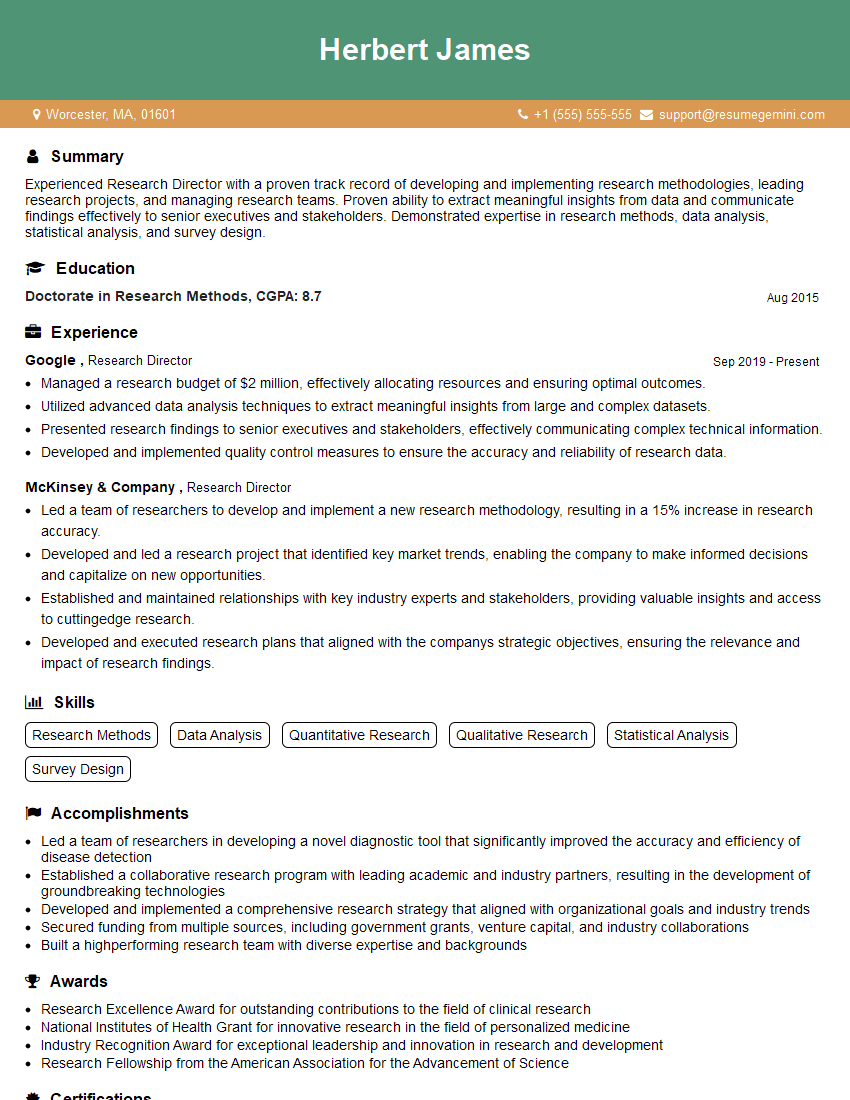
Research Director Resume Sample
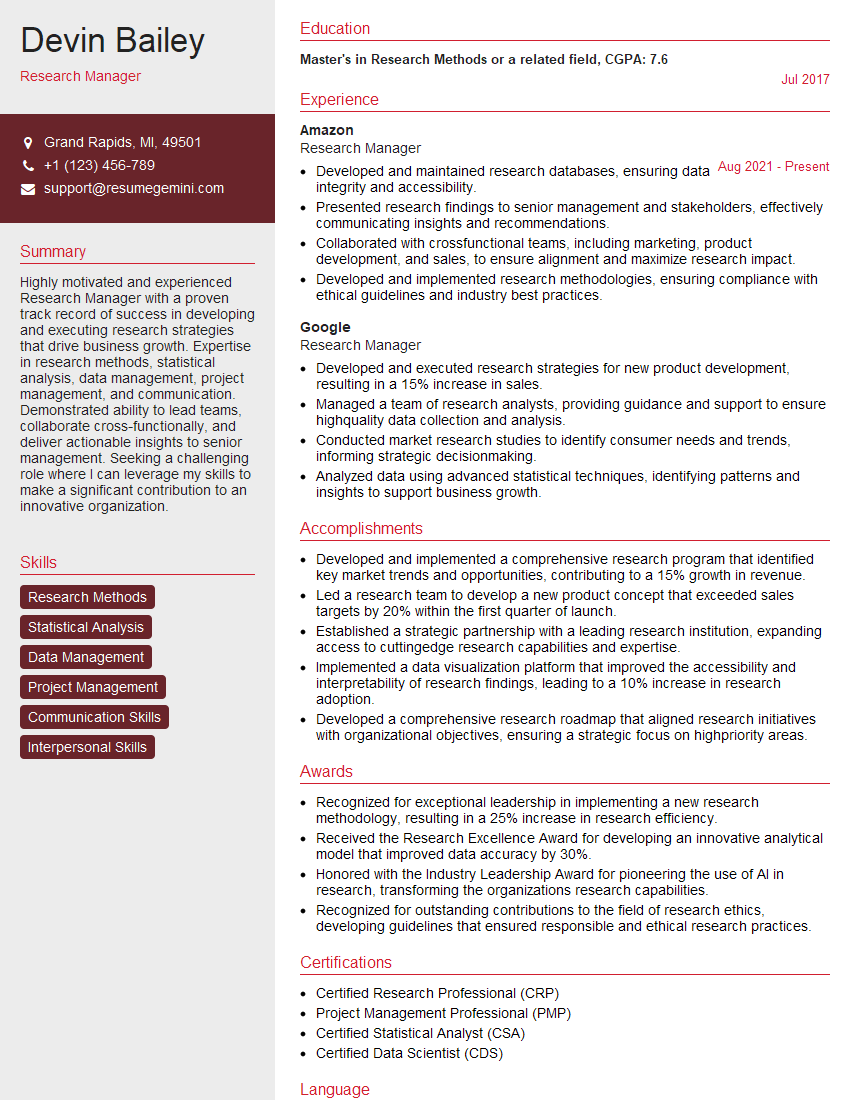
Research Manager Resume Sample
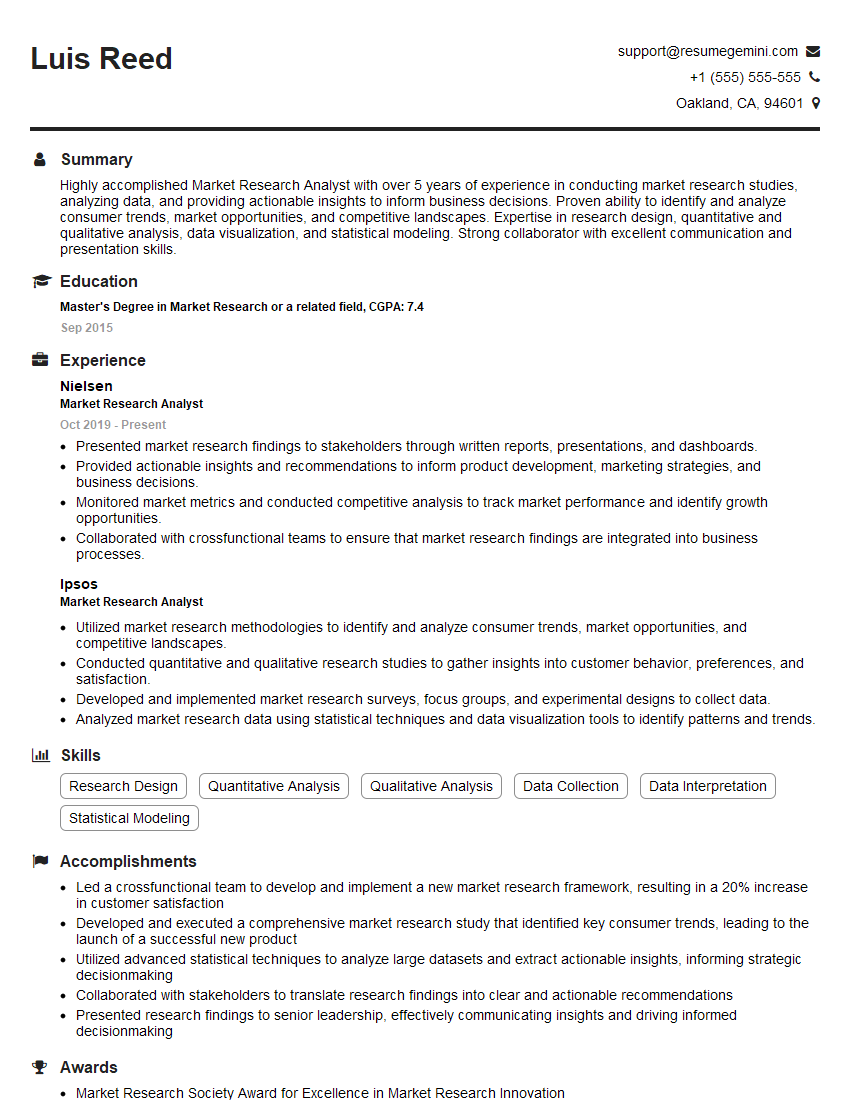
Market Research Analyst Resume Sample
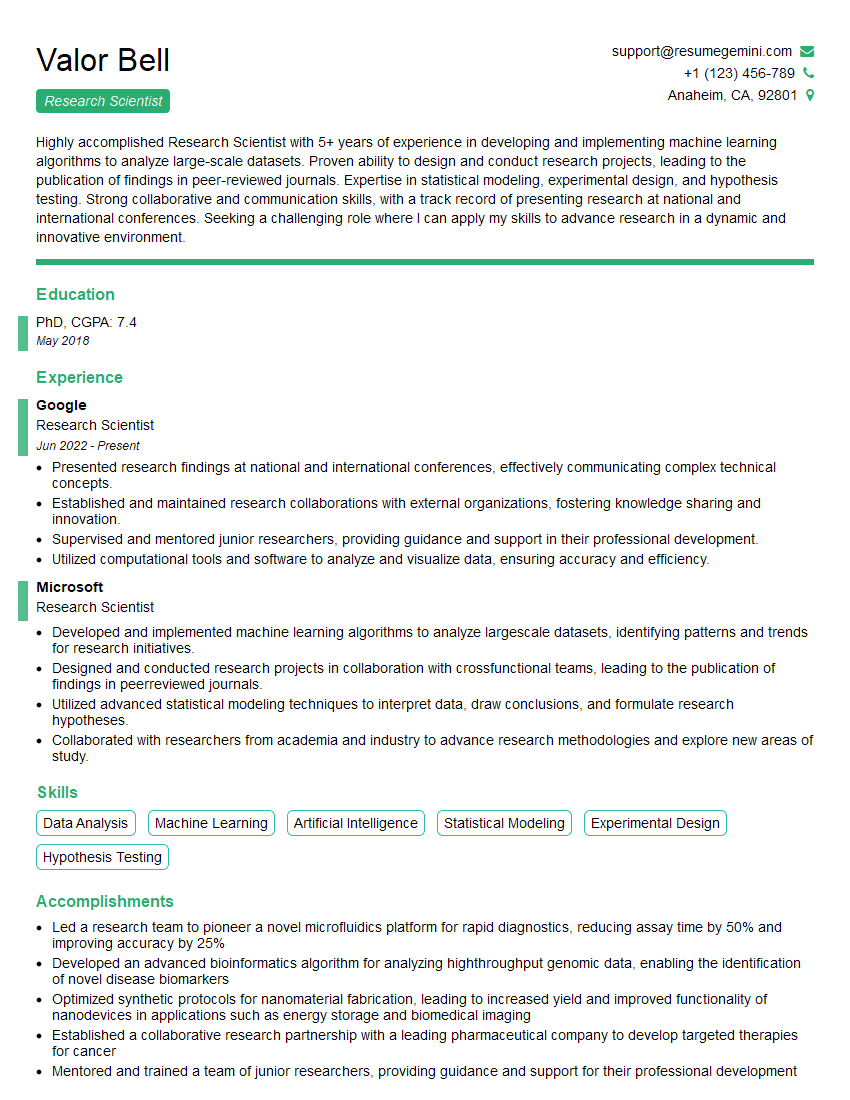
Research Scientist Resume Sample
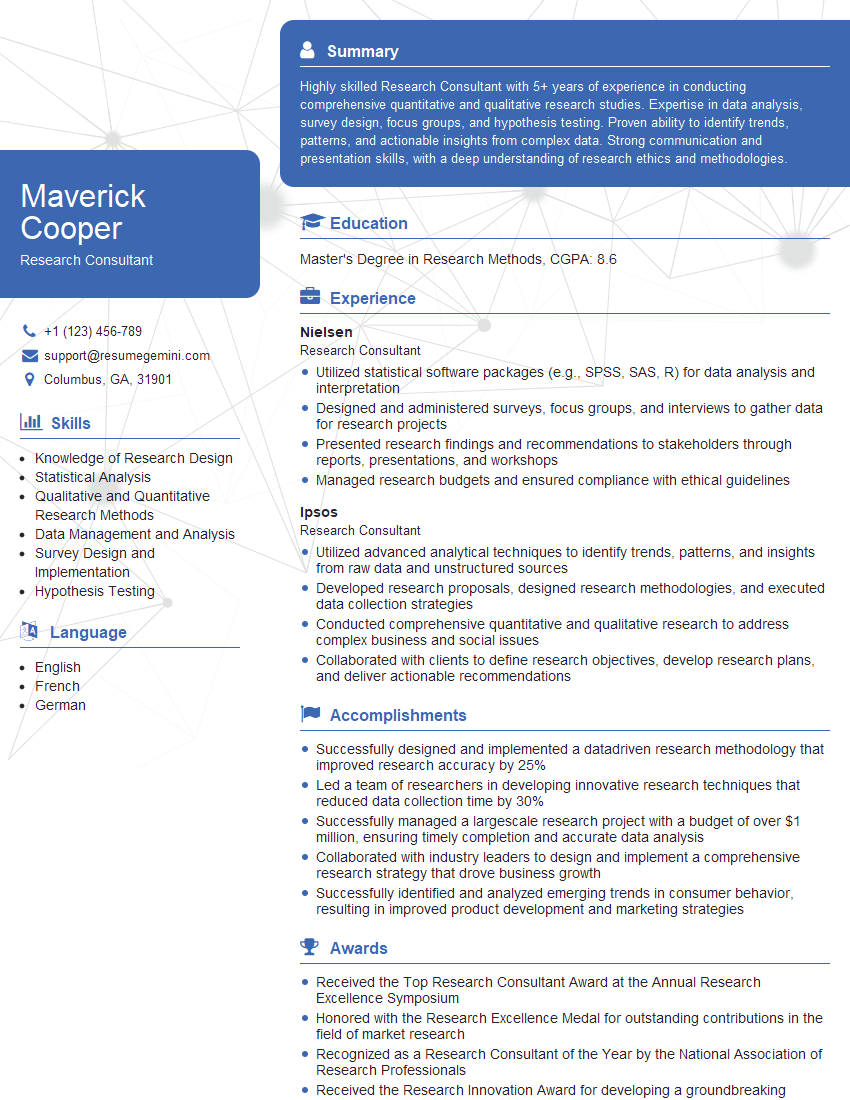
Research Consultant Resume Sample

Behavioral Scientist Resume Sample
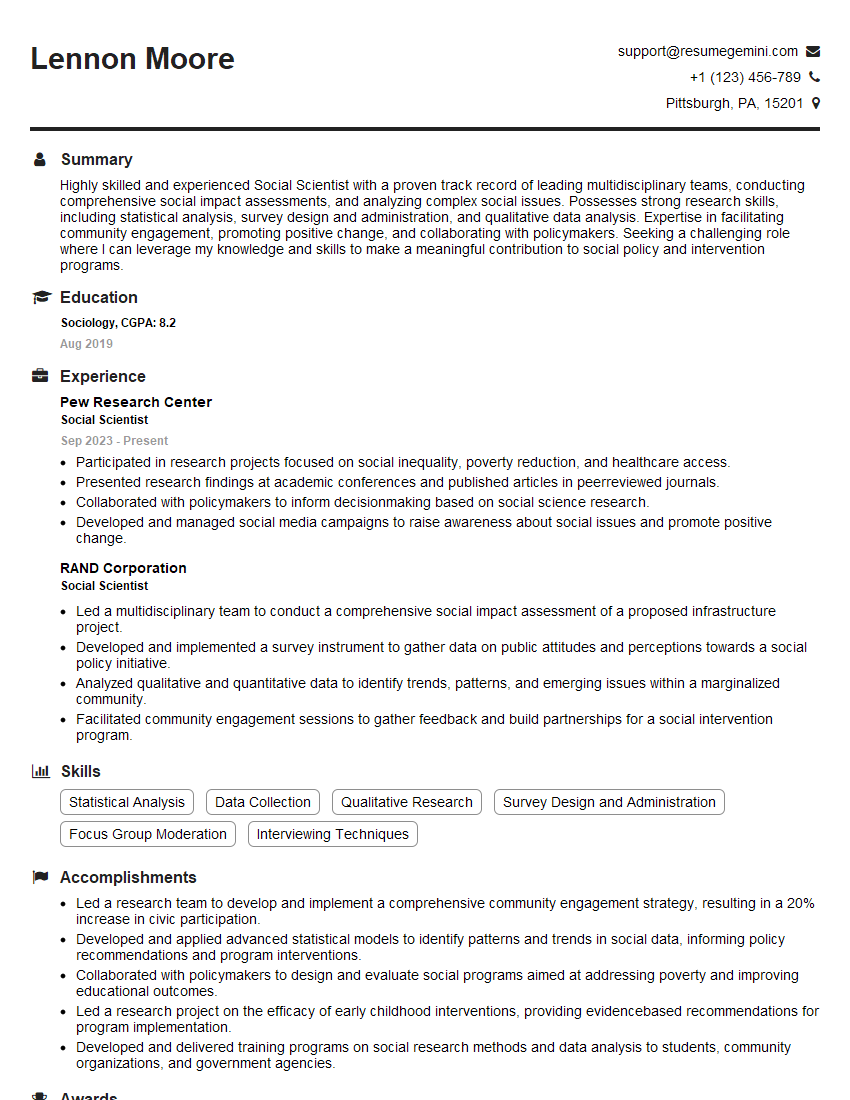
Social Scientist Resume Sample
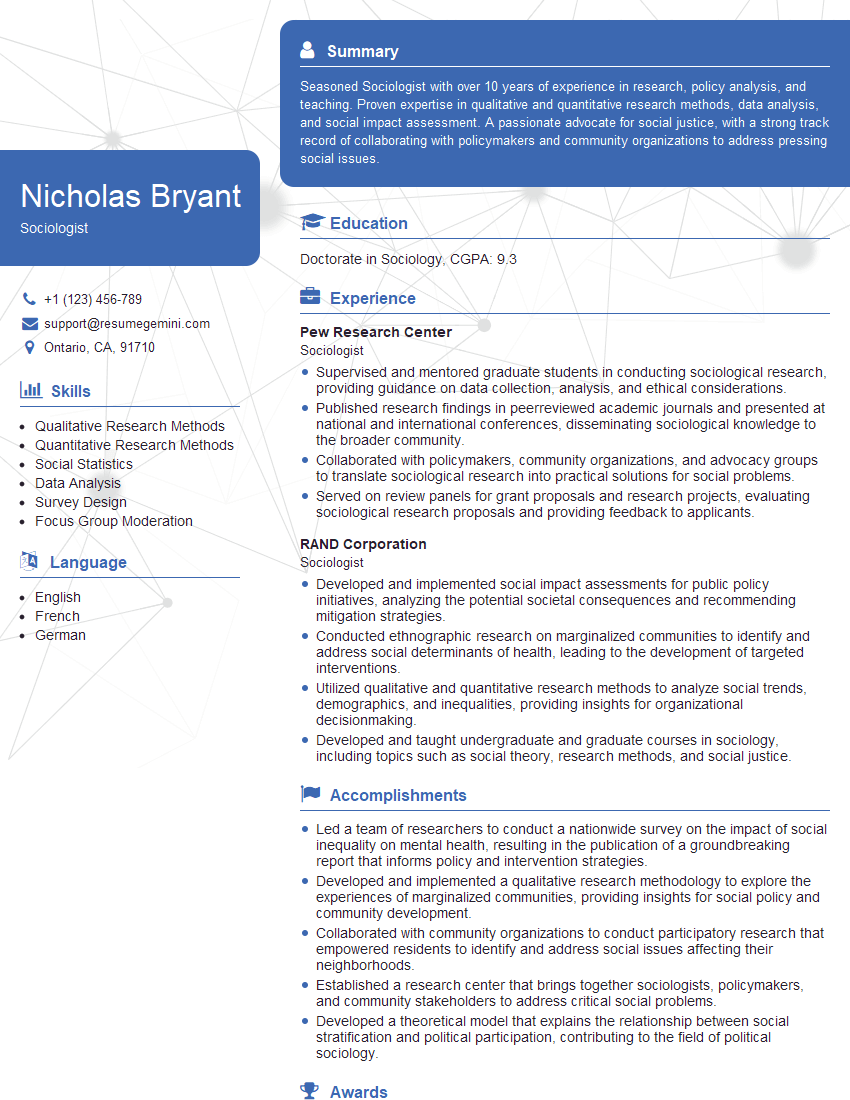
Sociologist Resume Sample
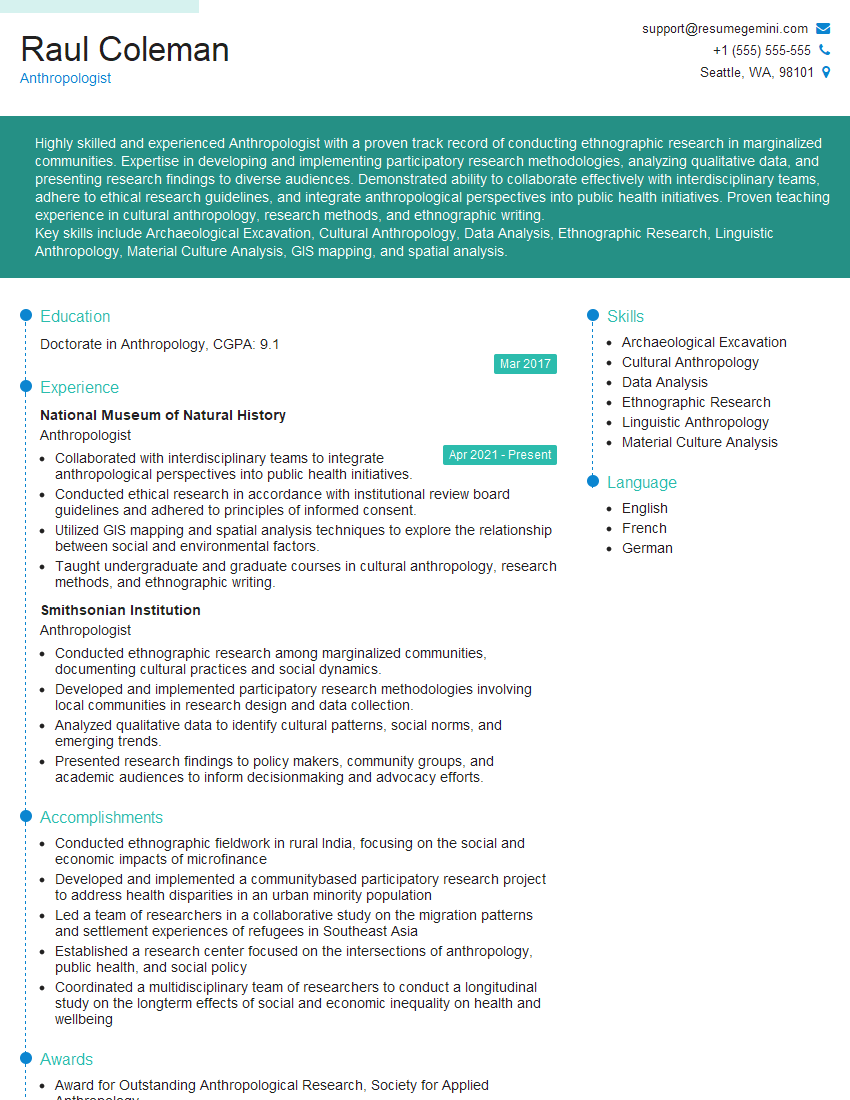
Anthropologist Resume Sample
Explore more articles
Users Rating of Our Blogs
Share Your Experience
We value your feedback! Please rate our content and share your thoughts (optional).
What Readers Say About Our Blog
To the interviewgemini.com Webmaster.
Very helpful and content specific questions to help prepare me for my interview!
Thank you
To the interviewgemini.com Webmaster.
This was kind of a unique content I found around the specialized skills. Very helpful questions and good detailed answers.
Very Helpful blog, thank you Interviewgemini team.