The right preparation can turn an interview into an opportunity to showcase your expertise. This guide to Experience in Art Therapy with Diverse Populations interview questions is your ultimate resource, providing key insights and tips to help you ace your responses and stand out as a top candidate.
Questions Asked in Experience in Art Therapy with Diverse Populations Interview
Q 1. Describe your experience working with diverse populations in an art therapy setting.
My experience working with diverse populations in art therapy has been incredibly rich and rewarding. I’ve had the privilege of working with clients from various ethnic, racial, socioeconomic, religious, and LGBTQ+ backgrounds. This diversity has broadened my understanding of how cultural factors significantly impact mental health and the therapeutic process. I’ve worked with individuals experiencing trauma, anxiety, depression, and other mental health challenges, adapting my approach to meet their unique needs and perspectives.
For example, I’ve worked with refugee communities, adapting my art therapy techniques to help individuals process their experiences of displacement and loss. I’ve also worked with members of the LGBTQ+ community, creating a safe and affirming space for them to explore their identity and experiences through art. In each instance, creating a culturally sensitive environment was paramount.
Q 2. Explain your understanding of cultural sensitivity and its application in art therapy.
Cultural sensitivity in art therapy is the ability to understand and respect the cultural beliefs, values, practices, and worldview of each client. It’s not simply about acknowledging differences; it’s about actively integrating this understanding into every aspect of the therapeutic relationship. This includes being mindful of nonverbal communication, considering the impact of power dynamics, and adapting therapeutic techniques to align with the client’s cultural context. Ignoring cultural differences can lead to misinterpretations, misunderstandings, and ultimately, ineffective therapy.
For instance, understanding a client’s family structure and its influence on their behavior and decision-making is crucial. Similarly, awareness of differing views on mental illness and help-seeking behaviors within certain cultures informs the way I approach treatment planning and client engagement.
Q 3. How do you adapt your art therapy techniques to meet the specific needs of individuals from different cultural backgrounds?
Adapting art therapy techniques requires a multifaceted approach. I begin by engaging in a thorough cultural assessment, which is an ongoing process rather than a one-time event. This includes understanding the client’s preferred communication style, their comfort level with different art materials, and their perspectives on art and creativity itself. I often incorporate culturally relevant art materials and themes to foster engagement and create a sense of belonging.
For example, if working with a client from a culture where storytelling is highly valued, I might encourage narrative art making, allowing them to express their experiences through visual storytelling. If working with a client from a culture with a strong emphasis on community, group art therapy might be more appropriate than individual sessions. The key is flexibility and responsiveness to the client’s individual needs within their cultural framework.
Q 4. How do you address potential language barriers in art therapy sessions with non-English speaking clients?
Addressing language barriers is crucial for effective art therapy. My approach involves utilizing various strategies, including bilingual staff or interpreters, visual aids, and nonverbal communication techniques. Art itself transcends language, offering a powerful means of expression even when verbal communication is limited. I often use simple gestures, drawings, and pictures to clarify instructions and build rapport. If an interpreter is necessary, I carefully select someone who understands the nuances of art therapy and can facilitate a meaningful conversation.
I also leverage the power of visual communication through picture cards, drawing prompts, and collaborative art-making activities to establish clear communication and avoid ambiguity. The goal is to create a therapeutic environment where the client feels comfortable expressing themselves, regardless of language.
Q 5. Describe a situation where you had to navigate cultural differences in an art therapy session. What was the outcome?
I once worked with a young woman from a collectivist culture where expressing individual needs openly was considered inappropriate. Initially, she was very reserved and reluctant to participate in art therapy. She avoided direct eye contact and rarely spoke. I recognized this as a culturally influenced behavior, rather than a sign of resistance or disinterest. I adapted my approach by incorporating collaborative art projects where she could work alongside me, reducing the pressure of individual expression. I also introduced less direct methods, like using symbolic imagery and metaphorical storytelling. Through this gradual approach, she slowly opened up, sharing her feelings and experiences through her artwork, leading to significant therapeutic progress.
Q 6. What are some common cultural misconceptions that you have encountered in art therapy?
One common misconception is the assumption that art therapy is universally understood and appreciated. Some cultures might view art as a leisure activity rather than a therapeutic tool. Others might have specific beliefs about the symbolic meaning of colors, shapes, or images that differ greatly from the typical Western interpretations used in art therapy. Another misconception is assuming that all individuals within a cultural group share the same beliefs and practices. Cultural diversity is vast, and generalizations can be harmful and inaccurate. It’s crucial to approach each client as an individual, appreciating their unique background and experiences.
Q 7. How do you ensure that your art therapy materials and methods are culturally appropriate and relevant?
Ensuring culturally appropriate materials and methods is paramount. This involves researching and understanding the cultural contexts of my clients, as well as seeking out materials and approaches that resonate with their background. I avoid using art supplies or imagery that might be offensive or insensitive. For instance, I might incorporate materials from a client’s cultural heritage into the art-making process or select images and themes that reflect their cultural background. In addition, understanding the role of art in a client’s culture and family history can greatly enhance the effectiveness of the therapy.
This also means being open to adapting my techniques based on feedback from the client, demonstrating flexibility and a genuine desire to work within their comfort zones and cultural preferences.
Q 8. Explain your knowledge of various cultural art forms and their therapeutic applications.
Understanding the therapeutic applications of various cultural art forms is crucial for effective art therapy with diverse populations. It’s not just about appreciating the aesthetics; it’s about recognizing the cultural significance embedded within each art form and how it can facilitate healing and self-expression.
Sandplay Therapy: This modality, originating in Japan, uses miniature figures and landscapes in a sand tray to symbolize the client’s inner world. It’s particularly useful for exploring trauma and unconscious processes, adaptable across cultures with careful consideration for symbolic meaning within different cultural contexts.
Mandala Art: The creation of circular designs is found across numerous cultures. Its repetitive and symmetrical nature can be grounding and calming, helpful for clients experiencing anxiety or trauma. The symbolic meaning of colors and shapes can be explored within a culturally sensitive framework. For instance, the color red might signify joy in one culture but anger or danger in another.
Mask Making: Masks are used in many cultures for ritual, celebration, and even to represent different aspects of the self. In art therapy, mask making can facilitate exploration of identity, persona, and emotional expression, allowing clients to safely embody different parts of themselves or to explore hidden emotions.
Narrative Art: This approach invites clients to create art pieces that tell stories. This can be incredibly powerful for clients from cultures with rich oral storytelling traditions, enabling them to express experiences that might be difficult to articulate verbally.
In practice, I always begin by learning about the client’s cultural background and artistic traditions, ensuring that the chosen art form is both culturally relevant and personally resonant. The process is collaborative, respecting the client’s preferences and adapting techniques as needed.
Q 9. Describe your experience working with clients with specific cultural trauma.
Working with clients experiencing cultural trauma requires a deep understanding of the historical and ongoing social injustices impacting their lives. Cultural trauma refers to the collective psychological wounding caused by large-scale events, such as colonization, genocide, discrimination, or displacement. This trauma is often intergenerational, impacting not only the individuals who directly experienced the event but also their descendants.
In my experience, working with clients who have experienced this, I prioritize building a safe and trusting therapeutic relationship. I use a trauma-informed approach which means prioritizing safety, trust, collaboration and empowerment. I avoid triggering the trauma and actively listen to my clients lived experiences and how they are experiencing the consequences of the trauma. I actively work to validate their emotions and experiences. For example, I worked with a refugee who experienced war and loss. We used painting to create visual metaphors of the violence and then the peace, offering a gradual way to process overwhelming experiences without feeling retraumatized.
Further, I recognize that individual experiences are shaped not only by shared cultural trauma but also by personal circumstances and identities. This requires a nuanced approach that considers intersectionality and allows for a collaborative exploration of the client’s unique story and healing journey.
Q 10. How do you build trust and rapport with clients from diverse backgrounds?
Building trust with clients from diverse backgrounds necessitates cultural humility and a commitment to ongoing learning. It’s about recognizing that I don’t have all the answers and that the client is the expert on their own experience.
Active Listening and Empathy: I prioritize genuinely listening to the client’s story, validating their feelings, and demonstrating empathy for their experiences. This includes being mindful of nonverbal communication and cultural nuances.
Respect for Cultural Differences: I acknowledge and respect the client’s cultural beliefs, values, and practices. I show this through my language, actions, and overall demeanor. I will research relevant cultural information to create a safe and welcoming space.
Collaboration and Shared Decision-Making: I involve the client in decisions regarding the treatment plan, incorporating their preferences and input to ensure a culturally appropriate and comfortable experience.
Self-Reflection: I regularly reflect on my own biases, assumptions, and cultural perspectives to ensure that these don’t interfere with the therapeutic relationship.
For instance, I might use open-ended questions to gauge a client’s comfort level with specific activities or topics, rather than making assumptions based on their background.
Q 11. How do you maintain ethical boundaries and cultural sensitivity in your practice?
Maintaining ethical boundaries and cultural sensitivity is paramount. Ethical practice involves adhering to professional guidelines, respecting confidentiality, and ensuring informed consent. Cultural sensitivity requires a continuous process of learning and self-reflection.
Informed Consent: I ensure clients understand the therapeutic process, including potential risks and benefits, in a language and manner they can comprehend. This includes considering potential cultural factors that might affect understanding.
Confidentiality: I uphold the strictest confidentiality standards, keeping client information private unless legally obligated to disclose it. I am mindful of the varied concepts of privacy and confidentiality across cultures.
Appropriate Self-Disclosure: I am mindful of the amount of personal information I share with the client, ensuring my disclosure is ethically appropriate and doesn’t overshadow the client’s needs.
Awareness of Power Dynamics: I acknowledge the power imbalance inherent in the therapist-client relationship and work to minimize this through respectful communication and collaborative decision-making.
Referral: I recognize my limitations and will refer clients to specialists when appropriate, especially if my own cultural background or expertise might hinder effective treatment.
Continuous professional development, including workshops and supervision focused on cultural competence, helps me stay abreast of best practices and refine my skills.
Q 12. What are some common challenges faced when providing art therapy to diverse populations, and how do you overcome them?
Challenges in providing art therapy to diverse populations can include language barriers, differing cultural perspectives on mental health, and limited access to resources. Overcoming these requires creativity, adaptability, and a commitment to cultural humility.
Language Barriers: I use interpreters, visual aids, or nonverbal communication techniques when needed. I also research culturally relevant art forms that may transcend language barriers.
Differing Cultural Perspectives on Mental Health: I educate myself about diverse cultural understandings of mental health and illness. I might involve family members in the treatment process if culturally appropriate and with the client’s consent.
Limited Access to Resources: I advocate for increased access to culturally sensitive art therapy services and resources. I work within the constraints of resources available, adapting my practice to meet the client’s needs creatively.
Cultural Misunderstandings: I engage in constant self-reflection to identify and address my own biases and assumptions. I work to create an atmosphere of trust and mutual respect, where the client feels comfortable expressing concerns about my cultural competence.
One example is adapting the medium to suit cultural preferences: Some cultures might prefer working with specific materials, and ignoring this preference can limit engagement. This requires me to have a flexible approach and build a rapport with the client that helps discover which art forms they prefer.
Q 13. How do you assess the cultural competence of your own practice?
Assessing my own cultural competence is an ongoing process, not a one-time event. It involves continuous self-reflection, seeking feedback, and engaging in professional development.
Self-Reflection: I regularly reflect on my biases, assumptions, and potential blind spots. Journaling and supervision are valuable tools for this process.
Seeking Feedback: I actively seek feedback from supervisors, colleagues, and clients (with their consent) regarding my cultural sensitivity and effectiveness. I am open to constructive criticism, viewing it as an opportunity for growth.
Continuing Education: I participate in workshops, conferences, and training focused on cultural competence and working with diverse populations. This involves staying abreast of current research and best practices.
Supervision: I engage in regular supervision with a supervisor who is experienced in working with diverse populations. This provides a safe space for processing challenging cases and discussing ethical dilemmas.
The goal isn’t to achieve perfect cultural competence, which is unattainable, but rather to maintain a stance of humility and actively engage in lifelong learning.
Q 14. Explain your understanding of intersectionality and how it impacts art therapy practice.
Intersectionality recognizes that individuals hold multiple intersecting identities (e.g., race, gender, sexual orientation, socioeconomic status) that shape their experiences and perspectives. These identities are not independent but interact to create unique and complex realities. Ignoring intersectionality in art therapy means failing to recognize and address the multiple layers of oppression and privilege that shape clients’ experiences.
In practice, this means attending to the interplay of a client’s various identities when understanding their art and narratives. For example, a Black, lesbian woman’s experience of discrimination is different from a white lesbian woman’s or a Black heterosexual woman’s. Art therapy provides a unique space for exploring how these identities intersect to influence their emotional wellbeing and experiences with trauma or discrimination.
I strive to create a culturally inclusive space where clients feel comfortable expressing all aspects of their identity. This involves asking questions that acknowledge the intersections of various social identities, being attentive to language, and being aware of microaggressions or systemic biases that might show up in the therapeutic relationship. My primary focus is to work towards creating an environment where clients have the agency to explore their experiences honestly and effectively and can find the best coping mechanisms, empowering them to lead fulfilled and self-determined lives.
Q 15. How do you integrate culturally sensitive practices into your art therapy assessment process?
Integrating culturally sensitive practices into art therapy assessment begins with recognizing that assessment isn’t just about diagnosing; it’s about understanding the individual within their cultural context. I start by avoiding standardized tests that may not be culturally appropriate. Instead, I use a collaborative, strengths-based approach. This means engaging in open-ended conversations to understand their experiences, beliefs, and values. I adapt my questions and use culturally relevant materials or art mediums. For example, if working with a client from a specific religious background, I might incorporate symbols or images that are meaningful within their faith, rather than imposing my own cultural biases. I carefully observe their nonverbal cues and body language, acknowledging that cultural norms may influence expression.
I also prioritize building rapport and trust. This is essential because a client’s willingness to participate honestly in the assessment process is crucial. I make sure the client feels heard and understood, and that they are in control of the process. For example, if a client expresses discomfort with a particular activity, I respect their boundaries and adjust accordingly. The goal is to create a safe and inclusive space where the client feels empowered to express themselves authentically.
Career Expert Tips:
- Ace those interviews! Prepare effectively by reviewing the Top 50 Most Common Interview Questions on ResumeGemini.
- Navigate your job search with confidence! Explore a wide range of Career Tips on ResumeGemini. Learn about common challenges and recommendations to overcome them.
- Craft the perfect resume! Master the Art of Resume Writing with ResumeGemini’s guide. Showcase your unique qualifications and achievements effectively.
- Don’t miss out on holiday savings! Build your dream resume with ResumeGemini’s ATS optimized templates.
Q 16. Describe your approach to working with clients who hold different beliefs and values than your own.
Working with clients who hold different beliefs and values requires humility, self-reflection, and a commitment to lifelong learning. I start by acknowledging my own cultural biases and limitations. I strive to avoid imposing my own worldview onto the client. Instead, I approach each client with genuine curiosity and a willingness to learn from their unique perspective. I actively listen to understand their experiences and perspectives, even when they differ significantly from my own. For example, if a client holds a belief that conflicts with my personal values, I strive to maintain a non-judgmental stance and focus on understanding their worldview rather than trying to change it. The therapeutic relationship is built on trust and mutual respect, regardless of differing viewpoints.
I make use of reflective practice, regularly reviewing my interactions to ensure I’m remaining culturally sensitive and responsive. This process involves asking myself questions such as: Did I truly listen to their perspective? Did my language or nonverbal cues communicate respect and understanding? If I encounter significant challenges, I seek supervision or consultation from colleagues or experts in cultural diversity to ensure I’m providing culturally competent care.
Q 17. How do you engage family members and community support systems when providing art therapy to diverse populations?
Engaging family members and community support systems is crucial, particularly when working with diverse populations. This requires cultural sensitivity and an understanding that family structures and support systems vary across cultures. I begin by getting informed consent and ensuring that the client understands how their family or community will be involved in the therapeutic process. I communicate respectfully and clearly with family members or community leaders, being mindful of their cultural beliefs and communication styles. I adapt my communication approach to meet the family’s preference and ensure clear and effective information exchange.
Collaboration with community organizations can also be beneficial. For instance, I might work with local religious leaders, community centers, or social workers to provide culturally appropriate services or connect clients to additional support. This collaborative approach enables a holistic approach to care, recognizing the importance of community resources within a person’s healing journey.
Q 18. Describe your understanding of the impact of systemic inequalities on mental health and how it informs your art therapy practice.
Systemic inequalities, such as racism, sexism, classism, and homophobia, significantly impact mental health. These inequalities create stressors that can lead to trauma, depression, anxiety, and other mental health challenges. My practice acknowledges this deeply. I understand that a client’s mental health symptoms might be directly related to experiences of discrimination or oppression. This informs my approach by actively considering these systemic factors in my assessment and treatment planning.
For instance, I might explore how a client’s experiences of racism affect their self-esteem and sense of belonging. I actively work to empower my clients, helping them to develop coping strategies to deal with the challenges presented by systemic inequalities. This may include advocacy, connection to community resources, or promoting self-advocacy skills. I also actively seek professional development opportunities to deepen my understanding of the impact of various systemic inequalities on mental health and how to effectively address them in my practice.
Q 19. Explain how you integrate mindfulness or somatic experiencing techniques within the context of culturally sensitive art therapy.
Mindfulness and somatic experiencing techniques can be powerful tools within culturally sensitive art therapy. However, it’s crucial to adapt them to each client’s cultural background and individual needs. Mindfulness, for example, might be adapted using imagery and metaphors relevant to the client’s culture. Instead of a generic guided meditation, I might incorporate culturally relevant symbols, stories, or practices in my approach. Similarly, somatic experiencing, which focuses on body awareness, requires sensitivity to cultural norms around physical touch and expression. For example, I might incorporate more indirect body-based exercises if direct physical contact is not culturally appropriate.
Before introducing any mindfulness or somatic technique, I always take the time to explain the technique, answering questions and addressing any concerns the client might have. I emphasize that their participation should always feel safe and comfortable. I always obtain informed consent before introducing any new technique. The client’s experience and comfort level are paramount in determining the suitability and adaptation of these practices.
Q 20. How do you ensure equity and access to art therapy services within a diverse community?
Ensuring equity and access to art therapy services in diverse communities requires a multi-pronged approach. This includes providing culturally appropriate services, using accessible language, and offering services in various formats to reach diverse populations. For example, I might offer telehealth sessions or group therapy to make services more accessible. I also strive to provide services on a sliding scale or pro bono to address financial barriers.
Collaboration with community organizations and leaders is key to identifying and reaching underserved populations. This might involve offering workshops or presentations to raise awareness about art therapy and its benefits. Another important aspect is promoting diversity within the art therapy profession itself. A more diverse professional field ensures a wider range of cultural understanding and expertise, leading to more equitable and accessible services.
Q 21. Describe a specific case where your understanding of cultural context significantly impacted the treatment outcome.
I once worked with a young woman from a refugee background who experienced significant trauma. Initially, she was very withdrawn and reluctant to engage in traditional art therapy activities. Through careful observation and conversation, I learned that her cultural background emphasized modesty and reserved emotional expression. Directly asking her about her trauma was initially unproductive. However, when I introduced a less direct approach using symbolic imagery and storytelling through art, she began to open up. She used her art to express her experiences metaphorically, allowing her to process her emotions in a way that felt safe and respectful of her cultural norms.
Her progress was slow but significant. By understanding her cultural context, I adapted my therapeutic approach, leading to a much more positive and effective therapeutic relationship. This experience emphasized the importance of cultural sensitivity, the necessity of flexibility in adapting therapeutic methods, and the power of building a strong therapeutic relationship based on trust and respect.
Q 22. How do you approach the supervision and training of other art therapists in culturally responsive practice?
Supervising and training art therapists in culturally responsive practice requires a multifaceted approach focusing on self-reflection, knowledge acquisition, and skill development. It begins with fostering a safe space for trainees to explore their own cultural biases and assumptions. We use reflective practice methods, such as journaling and peer supervision, to encourage self-awareness. This is crucial because our personal backgrounds significantly influence how we interact with clients from different cultural backgrounds.
Training involves structured learning modules covering key concepts like cultural humility, cultural competence, and the impact of various cultural factors on mental health. We emphasize understanding the nuances of diverse communication styles, family structures, and expressions of emotional distress. Role-playing scenarios simulating interactions with clients from different cultural backgrounds provide valuable practical experience and feedback. For instance, we might simulate a session with a client who is non-verbal or expresses grief differently than what’s considered normative in Western therapeutic settings.
Ongoing supervision integrates case studies, critical analysis of session recordings, and continuous feedback on the trainee’s approach to cultural sensitivity. This iterative process ensures that trainees develop the skills to adapt their therapeutic approach to different clients and contexts, continuously reflecting on their effectiveness and potential biases. The ultimate goal is to cultivate culturally responsive practitioners who are both effective and ethical in their practice.
Q 23. What resources do you utilize to enhance your understanding and practice of multicultural art therapy?
Enhancing my understanding and practice of multicultural art therapy involves utilizing a variety of resources. This includes seeking out professional development opportunities such as workshops, conferences, and continuing education courses specifically focused on cultural competence in art therapy. I actively participate in professional organizations dedicated to multicultural issues in mental health and art therapy, which provide access to a wealth of peer-reviewed research and current best practices.
I regularly consult academic journals and books focusing on culturally informed therapeutic approaches, including those specific to art therapy. For example, I’ve found research on the use of art therapy with refugee populations, or with individuals experiencing specific cultural traumas, incredibly insightful and practical. I also engage with community resources and cultural centers to gain a deeper understanding of the unique perspectives and experiences of diverse communities within my region. This includes attending community events, connecting with local leaders, and building relationships with community organizations serving marginalized groups.
Furthermore, I engage in ongoing self-directed learning through reading books and articles on specific cultural groups, learning about their histories and cultural practices to inform my understanding. It’s a continuous process of learning and adapting my approach to ensure it’s culturally sensitive and appropriately meets the client’s needs. This constant engagement is essential for remaining current and effective in culturally diverse practice.
Q 24. Describe your experience working with interpreters or translators in art therapy sessions.
Working with interpreters or translators in art therapy sessions requires careful planning and mindful execution to ensure effective communication and maintain the therapeutic relationship. The first step is selecting a qualified and experienced interpreter who understands the nuances of both the client’s language and culture. It’s critical to choose an interpreter who can work within a therapeutic context, understanding the importance of confidentiality and the sensitive nature of the work.
Before the session, I prepare by familiarizing myself with the interpreter’s background and experience, discussing the client’s situation and therapeutic goals with the interpreter, and ensuring that the interpreter understands the principles of art therapy and my therapeutic approach. During the session, I maintain direct eye contact with the client and adjust my language and communication style accordingly. I pay close attention to both the verbal and non-verbal cues expressed by both the client and the interpreter. This may mean slowing down my speech, using simpler language, and providing ample time for translation.
After the session, I debrief with the interpreter to discuss the session’s progress, challenges, and any observations that might be relevant to the client’s care. Supervision also helps to reflect on the effectiveness of using an interpreter in the session. Working with an interpreter is a collaborative process; it requires careful communication and sensitivity to both the linguistic and cultural dynamics at play.
Q 25. Explain your understanding of microaggressions and how they may impact the therapeutic relationship in culturally diverse settings.
Microaggressions are subtle, often unintentional, acts of discrimination that communicate hostile, derogatory, or negative messages to individuals based on their race, ethnicity, gender, sexual orientation, or other marginalized group affiliation. In art therapy, these can significantly damage the therapeutic relationship, creating feelings of distrust, invalidation, and ultimately hindering the client’s progress.
For example, assuming a client’s artistic style is based on stereotypical cultural assumptions rather than individual expression, or repeatedly focusing on a client’s race or ethnicity in a way that feels irrelevant to their therapeutic concerns, are examples of microaggressions. They might seem small, but their cumulative effect can be deeply damaging. The client may start to feel that they are not fully seen or understood, that their experience is being minimized, or that the therapist is incapable of providing culturally sensitive care.
Addressing microaggressions requires heightened self-awareness on the part of the therapist. This involves regular reflection on personal biases, seeking supervision to process potential microaggressions, and actively learning about the diverse cultural experiences of clients. It also means actively listening to the client and validating their experience when they express discomfort or offense, apologizing and adjusting behavior accordingly. Creating a safe and inclusive therapeutic environment means actively combating these subtle, yet damaging acts of discrimination.
Q 26. How do you adapt your therapeutic approach for clients with varying levels of art skills and experiences?
Adapting my therapeutic approach to clients with varying levels of art skills and experiences is crucial for ensuring inclusivity and accessibility. I begin by understanding the client’s comfort level and past experiences with art. Some clients may have extensive artistic backgrounds, while others may have little or no experience. My approach is not to evaluate their artistic skill, but rather to use art as a tool for self-expression and exploration.
For clients with limited art experience, I provide a supportive and non-judgmental environment, offering guidance and encouragement without pressure to produce ‘perfect’ artwork. I introduce simple, accessible art materials and techniques, focusing on the process of creation rather than the final product. For instance, instead of using detailed painting, we might use simple collage or finger painting to explore emotions. This approach ensures that everyone can engage regardless of prior artistic skills.
Conversely, for clients with advanced artistic skills, I offer opportunities for greater creative exploration and potentially more complex mediums. The focus remains on their therapeutic needs and emotional expression, not on showcasing technical proficiency. The creative process, in this instance, could be used to help unravel more complex emotional experiences. Ultimately, the approach is tailored to individual needs and strengths, always prioritizing emotional expression and therapeutic progress over artistic achievement.
Q 27. How do you navigate ethical dilemmas related to cultural differences and client autonomy in art therapy?
Navigating ethical dilemmas related to cultural differences and client autonomy in art therapy necessitates a strong ethical framework and a commitment to cultural humility. Ethical dilemmas might arise from conflicts between the client’s cultural values and the therapist’s therapeutic approach, differing interpretations of consent, or challenges in balancing client autonomy with the therapist’s responsibility to ensure client safety.
For example, working with a client whose family exerts significant control over their life might present a dilemma between respecting family dynamics and upholding the client’s right to self-determination. Addressing such situations requires thorough documentation, consultation with colleagues or supervisors, and potentially seeking legal counsel. It is crucial to continuously reflect on my biases and assumptions, being mindful of power imbalances inherent in the therapeutic relationship.
Prioritizing informed consent is key. This means ensuring that clients understand the therapeutic process, their rights, and potential risks and benefits in language they comprehend. The therapist’s role includes educating themselves about relevant cultural contexts and practices, seeking to understand the client’s perspective fully. Collaboration with the client is central to negotiating ethical challenges, building trust, and ensuring that the therapeutic relationship is grounded in mutual respect and shared decision-making. Ethical decision-making in this complex area relies on careful consideration, open communication, and a commitment to advocating for the client’s best interests within their cultural context.
Q 28. Describe your experience with advocating for policy changes to improve access to culturally responsive mental health services.
Advocating for policy changes to improve access to culturally responsive mental health services is a vital aspect of my professional commitment. My experience in this area has involved collaboration with various stakeholders, including mental health organizations, policymakers, and community leaders. I’ve actively participated in initiatives aiming to increase funding for culturally competent training programs for mental health professionals and expanding culturally appropriate services in underserved communities.
This has involved presenting research findings, sharing my experiences of working with diverse populations, and participating in policy discussions at both local and national levels. For example, I’ve worked on initiatives to increase the representation of diverse therapists in mental health organizations to improve access and reduce the stigma associated with seeking mental health services within specific cultural groups.
Advocacy involves building coalitions, engaging in public awareness campaigns, and supporting legislative efforts that promote equity and access to mental health care. The ultimate goal is to create a system that is truly inclusive and supportive of the mental health needs of all individuals, regardless of their cultural background or socioeconomic status. It’s a long-term process that requires persistence, collaboration, and a commitment to social justice.
Key Topics to Learn for Experience in Art Therapy with Diverse Populations Interview
- Cultural Competence and Sensitivity: Understanding the impact of culture, ethnicity, and socioeconomic background on mental health and artistic expression. Practical application: Analyzing how cultural values influence client interactions and therapeutic approaches.
- Trauma-Informed Art Therapy: Recognizing and addressing the effects of trauma within diverse populations. Practical application: Adapting art therapy techniques to meet the specific needs of trauma survivors from various backgrounds.
- Intersectionality and Marginalization: Exploring how multiple social identities intersect to shape individual experiences and challenges. Practical application: Developing inclusive and equitable therapeutic practices that account for intersecting identities like race, gender, and sexual orientation.
- Adaptation of Art Therapy Modalities: Modifying art therapy techniques to be accessible and effective for individuals with diverse needs and abilities. Practical application: Designing art projects that accommodate physical limitations or cognitive differences.
- Ethical Considerations: Navigating ethical dilemmas related to cultural differences, power dynamics, and confidentiality within diverse populations. Practical application: Implementing ethical guidelines in practice to ensure client safety and well-being.
- Community Engagement and Collaboration: Building relationships with community leaders and organizations to effectively serve diverse populations. Practical application: Understanding the importance of working collaboratively with community members to create culturally appropriate and accessible services.
- Advocacy and Social Justice: Understanding the role of art therapy in promoting social justice and addressing systemic inequalities. Practical application: Applying advocacy skills to improve access to mental health services for marginalized communities.
Next Steps
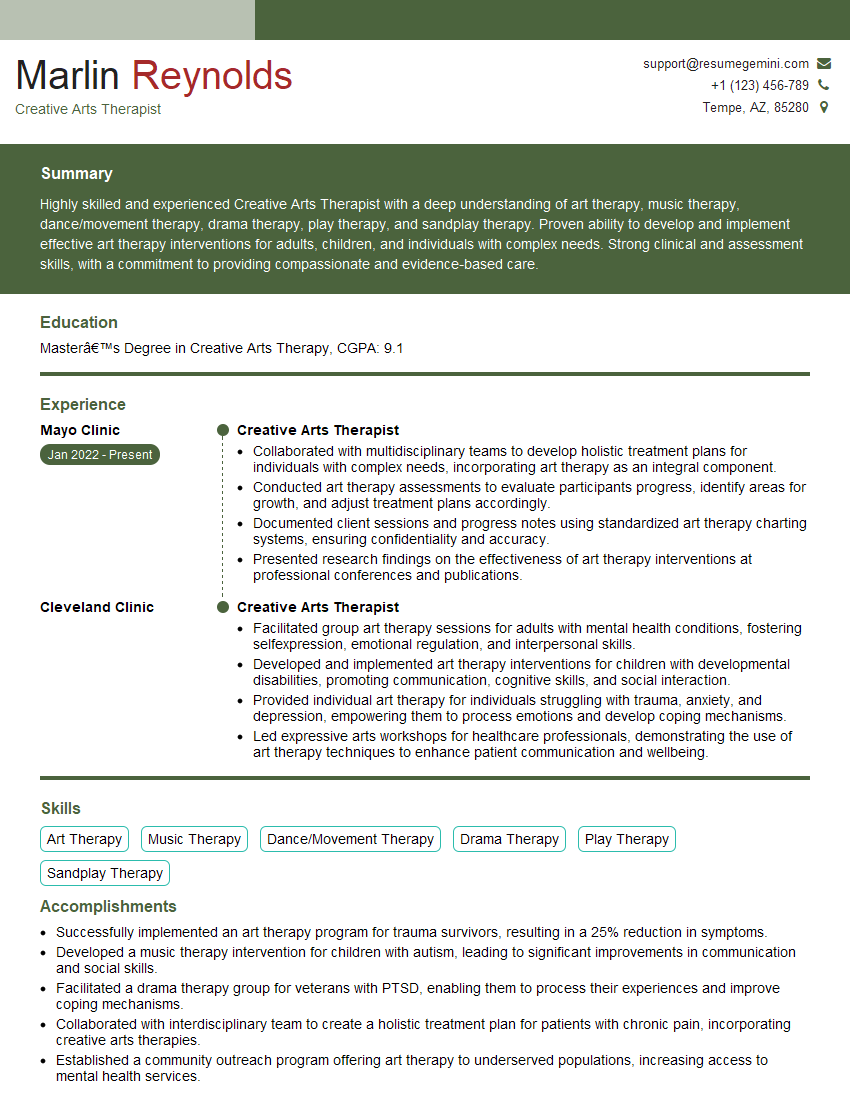
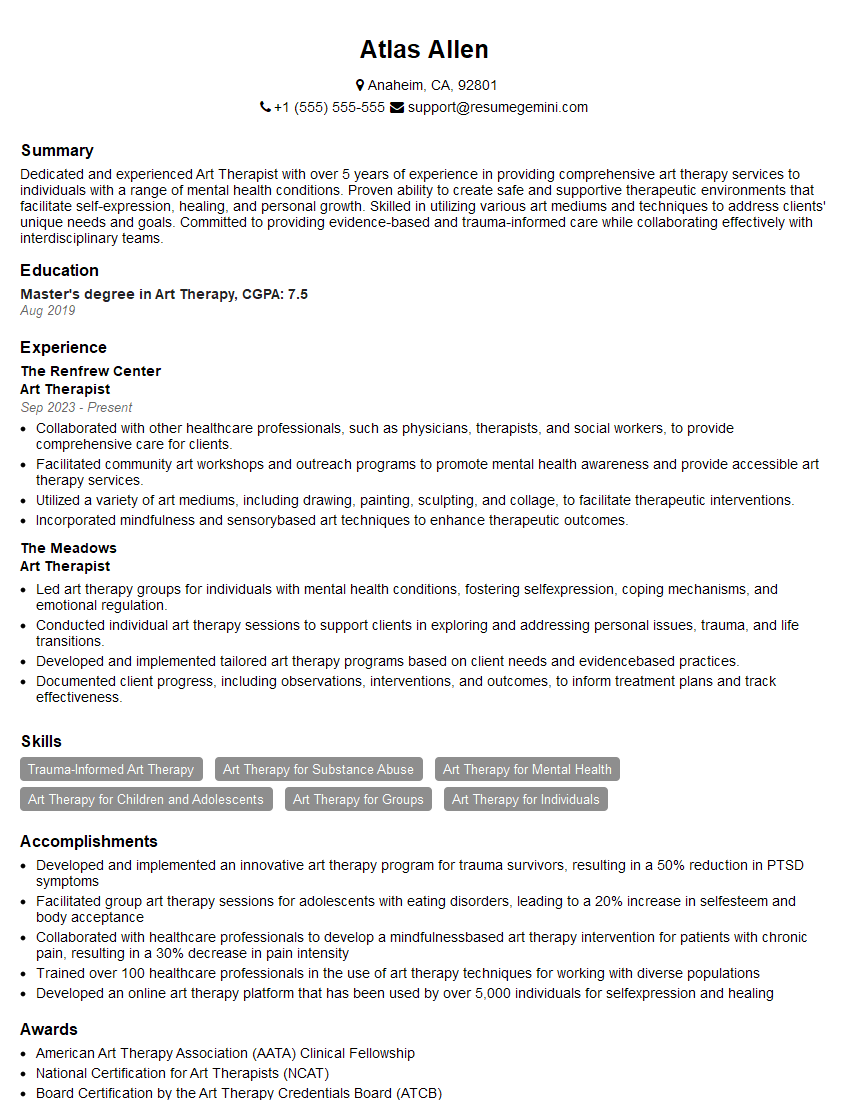
Mastering Experience in Art Therapy with Diverse Populations is crucial for career advancement in this increasingly diverse field. Demonstrating this expertise through a strong resume is essential for securing your dream role. Creating an ATS-friendly resume significantly increases your chances of getting noticed by recruiters. To build a compelling and effective resume, we highly recommend using ResumeGemini. ResumeGemini provides tools and resources to create professional resumes, and they offer examples specifically tailored to highlight experience in Art Therapy with Diverse Populations. This will help showcase your skills and experience to potential employers effectively.
Explore more articles
Users Rating of Our Blogs
Share Your Experience
We value your feedback! Please rate our content and share your thoughts (optional).
What Readers Say About Our Blog
To the interviewgemini.com Webmaster.
Very helpful and content specific questions to help prepare me for my interview!
Thank you
To the interviewgemini.com Webmaster.
This was kind of a unique content I found around the specialized skills. Very helpful questions and good detailed answers.
Very Helpful blog, thank you Interviewgemini team.