Every successful interview starts with knowing what to expect. In this blog, we’ll take you through the top Experience in installing and maintaining ballasts and transformers interview questions, breaking them down with expert tips to help you deliver impactful answers. Step into your next interview fully prepared and ready to succeed.
Questions Asked in Experience in installing and maintaining ballasts and transformers Interview
Q 1. Explain the difference between a magnetic and electronic ballast.
The key difference between magnetic and electronic ballasts lies in how they control the electrical current to fluorescent lamps. Magnetic ballasts, the older technology, use a simple iron core and coils to create a magnetic field that regulates the current. Think of it like a choke – it restricts the initial surge of electricity to protect the lamp. This process generates significant heat and is less energy-efficient. Electronic ballasts, on the other hand, use electronic circuitry to control the current more precisely. They achieve this through sophisticated semiconductor components, offering much better efficiency, quieter operation, and a longer lifespan. Imagine it like a finely tuned valve, smoothly controlling the flow of electricity.
In practical terms, a magnetic ballast will often hum audibly and run quite hot to the touch, while an electronic ballast is generally silent and much cooler. The choice often depends on the application; magnetic ballasts are still found in some older installations, while electronic ballasts are the standard for new installations due to their superior performance.
Q 2. Describe the function of a transformer.
A transformer’s primary function is to change the voltage of an alternating current (AC) power supply. It does this using two coils of wire wound around a common magnetic core. The primary coil receives the input voltage, and the magnetic field it generates induces a voltage in the secondary coil. The ratio of the number of turns in each coil determines the voltage transformation – more turns in the secondary coil results in a higher output voltage (step-up transformer), and fewer turns results in a lower output voltage (step-down transformer).
Think of it as a gear system – a small gear turning a larger gear increases the rotational force (voltage in this case), while a larger gear turning a smaller one decreases the force, but increases the speed (current). Transformers are essential in many electrical systems, from power distribution networks stepping down high voltages for household use to smaller transformers powering electronic devices and lighting circuits.
Q 3. What are the common causes of ballast failure?
Ballast failures can stem from several factors. For magnetic ballasts, common culprits include overheating due to poor ventilation or age, leading to insulation breakdown and short circuits. Component wear, especially in the capacitor, is also a frequent cause. For electronic ballasts, failures often arise from the failure of internal components such as diodes, transistors, or integrated circuits. This can be due to power surges, electrical noise, or simply the natural aging and degradation of the components. In either type of ballast, exposure to extreme temperatures and moisture can accelerate deterioration and lead to failure.
- Overheating
- Component wear and tear
- Power surges
- Moisture damage
Regular inspections and proper ventilation can mitigate these risks significantly.
Q 4. How do you troubleshoot a faulty ballast?
Troubleshooting a faulty ballast begins with visual inspection for signs of physical damage, such as burns, cracks, or loose connections. Next, use a voltage tester (always ensuring safety precautions are followed) to check for voltage at the ballast input and output terminals. If the input voltage is present but the output voltage is missing or significantly lower than expected, the ballast is likely the problem. For electronic ballasts, you might hear unusual buzzing or clicking sounds which indicate a problem. If a multimeter is available, check for continuity in the ballast’s internal components. However, attempting internal repairs of electronic ballasts is often impractical and unsafe due to the complexities of the circuitry; replacement is usually the best approach.
If the problem is not with the ballast itself, check the wiring, the lamp, and the socket for damage. Remember to always turn off power before working on any electrical components.
Q 5. What safety precautions are necessary when working with high-voltage transformers?
Safety is paramount when working with high-voltage transformers. Always follow these crucial steps:
- Lockout/Tagout (LOTO): Ensure the power supply is completely disconnected and locked out to prevent accidental energization.
- Personal Protective Equipment (PPE): Wear insulated gloves, safety glasses, and appropriate clothing to protect against electrical shock and potential burns.
- Proper Tools: Use insulated tools to avoid contact with energized components.
- Grounding: Properly ground the transformer to dissipate any stray electrical charges.
- Awareness: Be aware of surroundings to prevent accidental contact with other energized equipment or personnel.
- Training: Only undertake tasks if you have received proper training and experience.
Ignoring these precautions can result in severe injury or even death.
Q 6. Explain the process of replacing a ballast.
Replacing a ballast involves these steps:
- Power Off: Turn off the power to the lighting fixture at the breaker box.
- Access: Access the ballast, which is typically located within the fixture housing. This might involve removing covers or components.
- Disconnect: Carefully disconnect the wiring from the ballast. Take photos or make notes to remember the wiring configuration for reconnection.
- Removal: Remove the old ballast from the fixture.
- Installation: Install the new ballast, ensuring proper orientation and secure connections. Ensure the new ballast matches the voltage and wattage of the original ballast.
- Reconnect: Reconnect the wiring according to your notes or photos, ensuring a secure connection to each terminal.
- Testing: Turn the power back on and test the fixture to verify proper operation.
Always consult the manufacturer’s instructions for your specific fixture and ballast type.
Q 7. How do you test a transformer for proper operation?
Testing a transformer involves verifying both its primary and secondary windings. Use a multimeter to measure the resistance of each winding. A very low resistance or an open circuit indicates a problem. Then, apply a known AC voltage to the primary winding and measure the voltage output on the secondary winding. Compare this to the expected voltage based on the transformer’s specifications. The output voltage should be consistent with the transformer’s turns ratio. A significant deviation suggests a problem. Load testing the transformer (by connecting a suitable load to the secondary winding) helps check the transformer’s capacity to handle its rated power.
It’s crucial to remember that high voltage transformers require special safety measures and expertise. If you lack the necessary training, consult a qualified electrician.
Q 8. What are the different types of transformers?
Transformers are categorized based on their function, construction, and application. The most common types are:
- Power Transformers: These are large transformers used in power distribution systems to step voltage up or down. Think of the massive transformers you see on utility poles or in substations. They handle high voltages and currents.
- Distribution Transformers: Smaller than power transformers, these step down the voltage from high-voltage distribution lines to the lower voltages used in homes and businesses (e.g., 240V to 120V).
- Instrument Transformers: Used for measurement and protection purposes, these transformers accurately reproduce a scaled-down version of the current or voltage for monitoring and relay operation. Current transformers (CTs) measure current, and potential transformers (PTs) measure voltage.
- Isolation Transformers: These provide electrical isolation between the input and output circuits, preventing ground faults from affecting the load. Crucial for safety, especially in sensitive electronic equipment.
- Autotransformers: These have a single winding, with part of the winding used as both primary and secondary. They are often used for voltage regulation or stepping voltage up or down by a smaller amount.
The choice of transformer depends heavily on the specific application. For instance, a high-voltage power transmission line will utilize massive power transformers, while a low-voltage electronic device may employ a small isolation transformer.
Q 9. Describe the different types of ballasts available.
Ballasts are crucial components in lighting systems, controlling the current flow to gas discharge lamps like fluorescent and HID (High-Intensity Discharge) lamps. The main types are:
- Magnetic Ballasts: These older-style ballasts use an iron core and coils to regulate current. They are relatively inexpensive but less energy-efficient and prone to buzzing noise. Imagine a simple choke coil in an older radio – that’s similar in principle.
- Electronic Ballasts: These use semiconductors for current control, resulting in significant energy savings, reduced noise, and longer lamp life. They provide superior starting and dimming capabilities. Most modern lighting uses this type.
- Electromagnetic Ballasts: A hybrid approach, these combine aspects of both magnetic and electronic ballasts, offering a balance between cost and performance.
The selection of a ballast depends on the lamp type, energy efficiency requirements, and budget. Electronic ballasts are becoming the standard due to their superior performance.
Q 10. How do you identify the voltage and amperage ratings of a transformer?
Transformer and ballast ratings are typically found on a nameplate affixed to the unit. The nameplate will clearly indicate:
- Voltage Ratings: This shows the input (primary) and output (secondary) voltages. For example, a common distribution transformer might be rated as 2400V/240V, meaning it steps down 2400 volts to 240 volts. Ballasts will specify the lamp voltage they are designed for.
- Amperage (Current) Ratings: This indicates the maximum current the transformer or ballast can safely handle. Exceeding this rating can lead to overheating and damage. The amperage rating is usually expressed in Amps (A).
- Power Rating (VA or kVA): This indicates the apparent power rating (Volts x Amps), usually expressed in Volt-Amperes (VA) or kilo-Volt-Amperes (kVA) for larger units. This is important for sizing circuits and ensuring adequate power supply.
Always check the nameplate before installing or connecting any transformer or ballast to ensure compatibility with the electrical system.
Q 11. Explain the importance of proper grounding when installing transformers and ballasts.
Proper grounding is paramount for safety and equipment protection when installing transformers and ballasts. Grounding provides a low-resistance path for fault currents, preventing dangerous voltage buildup and reducing the risk of electric shock. It protects both personnel and equipment from damage.
Grounding typically involves connecting the metal chassis of the transformer or ballast to a designated grounding point in the electrical system using a grounding wire. Failure to ground these components can lead to serious consequences, such as equipment failure, fire hazards, and electrocution.
Think of grounding as a safety valve. If a fault occurs, the fault current will flow through the grounding wire instead of creating a hazardous situation.
Q 12. What are the common problems encountered when installing ballasts?
Common problems encountered during ballast installation include:
- Incorrect Wiring: Improper connections can lead to lamp failure, ballast malfunction, or even electrical hazards. Carefully following the wiring diagram is crucial.
- Overheating: This can be due to insufficient ventilation, incorrect wiring, or using a ballast that’s too small for the lamp. Always ensure adequate airflow around the ballast.
- Lamp Failure: This might be caused by a faulty ballast, improper voltage, or simply the end of the lamp’s life cycle. Check the ballast and lamp for any defects.
- Ballast Humming or Buzzing: This is often indicative of a problem with the ballast, possibly needing replacement.
- Dim or Flickering Lights: This can result from faulty connections, a failing ballast, or insufficient voltage.
Troubleshooting involves systematic checking of wiring, connections, and components, often requiring the use of a multimeter to check voltage and current.
Q 13. What tools and equipment are required for installing and maintaining ballasts and transformers?
Installing and maintaining transformers and ballasts requires the following tools and equipment:
- Voltage Tester/Multimeter: Essential for checking voltage levels and continuity.
- Screwdrivers (Phillips and Flathead): For tightening and loosening screws on terminal blocks and enclosures.
- Wire Strippers/Cutters: For preparing wires for connections.
- Crimping Tool: For securing wire connectors.
- Safety Glasses and Gloves: Always prioritize safety!
- Ladder or Lift (if necessary): For accessing high-mounted transformers or ballasts.
- Thermal Imaging Camera (Optional but helpful): Identifies overheating components.
- Wiring Diagram: Essential for accurate connections.
Remember: Always disconnect power before performing any work on transformers or ballasts.
Q 14. How do you interpret wiring diagrams for ballasts and transformers?
Wiring diagrams for ballasts and transformers use standard electrical symbols to represent components and connections. Understanding these symbols is critical for proper installation. The diagrams typically show:
- Power Input: The source of electricity entering the system (e.g., 120V AC).
- Primary Winding (Transformer): The input coil of the transformer.
- Secondary Winding (Transformer): The output coil of the transformer, providing the transformed voltage.
- Lamp Connections: The points where the lamp connects to the ballast.
- Grounding Connections: Points for connecting the equipment to the grounding system.
Interpreting a diagram involves tracing the flow of electricity through the components and understanding how the voltage and current are transformed or regulated. If unsure about any aspect of the diagram, consult an electrician before proceeding.
For example, a simple diagram might show the power input connecting to the primary winding of a transformer, the secondary winding connecting to a ballast, and the ballast connecting to the lamp. Following this path helps ensure the correct connections are made.
Q 15. What are the different types of transformer connections (e.g., delta, wye)?
Transformers utilize different connection configurations to optimize voltage and current relationships within three-phase power systems. The most common types are Delta (Δ) and Wye (Y), also known as Star connections.
- Delta (Δ): In a delta connection, the three transformer windings are connected end-to-end, forming a closed triangular configuration. This connection provides a higher voltage output for the same winding voltage compared to a wye connection and is less susceptible to single-phase faults. Think of it like a triangle where each corner represents a winding.
- Wye (Y) or Star: In a wye connection, one end of each of the three windings is connected to a common neutral point, while the other ends are connected to the load. This provides a lower line-to-line voltage than delta for the same winding voltage but is often preferred for grounding purposes, offering improved fault protection and balancing of loads. Imagine three spokes extending from a central hub, with each spoke representing a winding.
Choosing between delta and wye depends on the specific application requirements. Delta connections are often used in high-voltage transmission systems, while wye connections are commonly found in distribution systems and situations needing a neutral point.
Career Expert Tips:
- Ace those interviews! Prepare effectively by reviewing the Top 50 Most Common Interview Questions on ResumeGemini.
- Navigate your job search with confidence! Explore a wide range of Career Tips on ResumeGemini. Learn about common challenges and recommendations to overcome them.
- Craft the perfect resume! Master the Art of Resume Writing with ResumeGemini’s guide. Showcase your unique qualifications and achievements effectively.
- Don’t miss out on holiday savings! Build your dream resume with ResumeGemini’s ATS optimized templates.
Q 16. How do you calculate the power output of a transformer?
Calculating the power output of a transformer involves understanding its kVA (kilovolt-ampere) rating and power factor. The formula is simple but crucial:
Power Output (kW) = kVA rating × Power Factor
The kVA rating represents the apparent power, which is the product of voltage and current without considering the phase difference between them. The power factor, often expressed as a decimal between 0 and 1, accounts for the phase difference and efficiency of the system. A power factor of 1 indicates perfect efficiency (all apparent power is real power), while lower values imply less efficient power usage due to reactive loads like motors and capacitors.
Example: A transformer has a kVA rating of 50 and operates with a power factor of 0.8. Its power output would be: 50 kVA × 0.8 = 40 kW. This means it can supply 40 kilowatts of real power to the load.
Q 17. Describe the process of testing the insulation resistance of a transformer.
Testing the insulation resistance of a transformer is vital for ensuring safety and preventing electrical faults. This is done using a Megohmmeter (often called a ‘Megger’), an instrument that applies a high-voltage DC to measure the resistance between the windings and the ground or between different windings. A higher resistance indicates better insulation.
The process typically involves:
- Disconnecting the transformer: Ensure the transformer is completely isolated from the power supply and that appropriate lockout/tagout procedures are followed.
- Connecting the Megohmmeter: Connect the Megohmmeter leads to the appropriate terminals according to the manufacturer’s instructions and the test to be performed.
- Applying the test voltage: Apply the test voltage as per the transformer specifications. The voltage and test duration will vary depending on the transformer’s voltage rating.
- Reading the insulation resistance: Observe the reading on the Megohmmeter. A low resistance value indicates insulation deterioration and potential problems.
- Recording and interpretation: Document the results, comparing them to the manufacturer’s recommendations or established standards. Low readings suggest the need for repairs or replacement.
Safety precautions are paramount: Always follow safety guidelines, wear appropriate PPE (Personal Protective Equipment), and ensure that the transformer is completely de-energized before starting the test.
Q 18. What is the significance of the kVA rating of a transformer?
The kVA (kilovolt-ampere) rating of a transformer signifies its apparent power capacity – the maximum amount of power it can handle without overheating or damage. It’s a crucial parameter for selecting the correct transformer for a given application. The kVA rating isn’t solely about the real power (kW) delivered; it also considers the reactive power (kVAR) which affects the efficiency.
Significance:
- Sizing: The kVA rating helps determine the appropriate size of the transformer needed to meet the load requirements. Choosing a transformer with a kVA rating less than the load’s demand can lead to overheating and failure.
- Current carrying capacity: The kVA rating directly correlates to the transformer’s current carrying capacity, influencing the wire gauge and insulation necessary.
- Safety: A properly sized transformer prevents overloading, which could result in fires or equipment damage.
In essence, the kVA rating acts as a safety margin, ensuring that the transformer operates within its designed capabilities.
Q 19. How do you determine the appropriate size of a ballast for a specific lighting fixture?
Selecting the correct ballast for a lighting fixture involves matching its power rating (in watts) to the lamp’s wattage. The ballast provides the necessary voltage and current for the lamp to operate correctly. Incorrectly sizing a ballast can shorten lamp life, reduce light output, and potentially damage the fixture.
The process involves:
- Determining the lamp wattage: Check the lamp’s specifications to determine its wattage.
- Matching ballast wattage: Choose a ballast with a wattage rating that matches or slightly exceeds the lamp’s wattage. A slightly higher rating provides a safety margin.
- Considering ballast type: Ballast types are crucial. They include magnetic ballasts (older, less efficient), electronic ballasts (more efficient and often smaller), and LED drivers (specifically for LED lamps).
- Checking compatibility: Ensure the ballast is compatible with the type of lamp (fluorescent, HID, LED). Lamp base and socket type must also match.
Example: A 40-watt fluorescent lamp requires a ballast with a 40-watt or slightly higher rating. Never use a ballast with a significantly lower rating.
Q 20. What are the safety regulations concerning the installation and maintenance of ballasts and transformers?
Safety regulations concerning ballasts and transformers are stringent, varying slightly by location but universally emphasizing safe handling and installation to prevent electrical shock, fire, and equipment damage. Key aspects include:
- Lockout/Tagout procedures: Before working on any ballasts or transformers, always ensure the power supply is completely disconnected and locked out using a reliable lockout/tagout system.
- Personal Protective Equipment (PPE): Wear appropriate PPE, including safety glasses, insulated gloves, and safety shoes, when handling ballasts or transformers.
- Proper grounding: All ballasts and transformers must be properly grounded to prevent electrical shock hazards.
- Wiring compliance: Adhere to local electrical codes and regulations when installing wiring for ballasts and transformers. This includes using appropriate wire sizes and connections.
- Ventilation: Transformers and some ballasts generate heat, so ensure adequate ventilation to prevent overheating.
- Regular inspection and maintenance: Conduct regular inspections to identify potential issues, such as loose connections, damaged insulation, or excessive heat.
- Qualified personnel: Only qualified and trained electricians should install and maintain ballasts and transformers.
Ignoring these safety regulations can lead to serious injury or death.
Q 21. Explain the principle of electromagnetic induction as it relates to transformers.
Electromagnetic induction is the fundamental principle behind how transformers work. It’s based on Faraday’s Law of Induction, which states that a changing magnetic field induces a voltage in a conductor. In a transformer:
- Primary winding: The primary winding receives AC (alternating current) power, which creates a fluctuating magnetic field within the transformer core.
- Transformer core: The core, usually made of laminated steel, channels and concentrates the magnetic flux generated by the primary winding.
- Secondary winding: The changing magnetic field from the primary winding cuts across the turns of the secondary winding. This induces a voltage in the secondary winding, according to Faraday’s Law.
- Voltage transformation: The ratio of the voltage between the primary and secondary windings is determined by the ratio of the number of turns in each winding (turns ratio). A higher number of turns in the secondary winding than the primary results in a step-up transformer (increased voltage), and vice versa for a step-down transformer.
Essentially, a transformer uses electromagnetic induction to efficiently transfer electrical energy from one voltage level to another without direct electrical connection between the primary and secondary windings, making it a crucial component in power distribution systems and countless electrical devices.
Q 22. What are the common causes of transformer overheating?
Transformer overheating is a serious issue that can lead to premature failure and even fire hazards. It’s primarily caused by excessive heat buildup within the transformer core and windings. Several factors contribute to this:
- Overloading: When a transformer is forced to carry more current than its rated capacity, the increased resistive losses generate excessive heat. Imagine trying to squeeze too many people into a small room – it gets crowded and hot!
- Poor Ventilation: Insufficient airflow around the transformer prevents efficient heat dissipation. Think of it like a poorly ventilated attic – the heat just builds up.
- Loose Connections: High resistance in loose connections creates heat due to the electrical energy being converted into heat instead of useful work. This is like a kink in a garden hose, restricting water flow and increasing pressure.
- Damaged Insulation: Deteriorated insulation within the windings reduces their ability to handle current, leading to increased heat generation. This is similar to a frayed electrical wire, where the exposed wires can short circuit and overheat.
- Ambient Temperature: High ambient temperatures increase the operating temperature of the transformer, accelerating the heat buildup. This is like trying to bake a cake in a preheated oven that’s already too hot.
- Short Circuits: Internal short circuits within the transformer windings create immense heat very quickly, potentially causing a fire. This is like a sudden, uncontrolled burst of energy.
Q 23. How do you prevent transformer overheating?
Preventing transformer overheating involves a multi-pronged approach focusing on proactive measures and regular maintenance:
- Proper Sizing: Selecting a transformer with a capacity exceeding the anticipated load prevents overloading. Always ensure you have a safety margin.
- Adequate Ventilation: Ensure sufficient airflow around the transformer by providing ample clearance and avoiding obstructions. Consider using fans for larger transformers.
- Regular Inspection: Visual inspections should check for loose connections, damaged insulation, and signs of overheating. This is like a doctor’s check-up for your transformer.
- Cleanliness: Keep the transformer clean and free from dust and debris to enhance heat dissipation. Dust acts like an insulator, trapping heat.
- Temperature Monitoring: Install temperature sensors to monitor the transformer’s operating temperature and alert you to potential problems. This allows for early detection of issues.
- Proper grounding: Ensure proper grounding to protect against short circuits and electrical surges.
- Load Balancing: Distribute the load evenly across multiple transformers to prevent any single unit from being overloaded.
Q 24. Describe different types of transformer cooling methods.
Transformer cooling methods vary depending on size and power rating. Common methods include:
- Natural Air Cooling (AN): Smaller transformers rely on natural convection to dissipate heat. Heat rises naturally from the transformer.
- Forced Air Cooling (AF): Larger transformers often incorporate fans to force air over the windings, improving heat dissipation. This is like using a fan to cool down a room.
- Oil-Immersed Cooling (ON, OF): Many larger transformers use oil as a coolant. The oil circulates within the transformer tank, absorbing heat and then dissipating it through natural convection (ON) or forced convection (OF) using a pump and radiators.
- Water Cooling (OW): Very large, high-power transformers sometimes utilize water cooling systems for optimal heat dissipation. This is akin to using a car’s radiator system.
The choice of cooling method depends on the transformer’s size, power rating, and the ambient environmental conditions.
Q 25. What are the signs of a failing transformer?
A failing transformer exhibits several warning signs. Early detection is crucial to prevent catastrophic failure:
- Overheating: Excessive heat, often accompanied by a burning smell, is a major red flag.
- Unusual Noises: Humming, buzzing, or clicking sounds indicate internal problems, like loose components or arcing.
- Oil Leakage: Oil leakage from an oil-filled transformer points to a potential crack or damage in the tank.
- Deterioration of Insulation: Discoloration or cracking of the insulation suggests degradation, potentially leading to short circuits.
- Reduced Output Voltage: A noticeable drop in the output voltage may indicate internal winding damage.
- Increased Winding Resistance: This can be detected by using a multimeter; higher than expected resistance indicates possible degradation.
Ignoring these signs can lead to more serious and costly consequences, so it’s essential to address them promptly.
Q 26. Explain the importance of regular maintenance for ballasts and transformers.
Regular maintenance of ballasts and transformers is paramount for ensuring safety, extending their lifespan, and maintaining efficient operation. Neglecting maintenance can lead to premature failure, increased energy consumption, and potential safety hazards.
Maintenance tasks include:
- Visual Inspection: Regularly checking for physical damage, loose connections, and signs of overheating.
- Cleaning: Removing dust and debris to ensure proper ventilation and heat dissipation.
- Tightening Connections: Ensuring all connections are secure to prevent arcing and overheating.
- Testing: Periodically testing the output voltage and current to identify any discrepancies.
- Oil Level Check (for oil-filled transformers): Monitoring the oil level and condition is critical for maintaining proper cooling.
A preventative maintenance schedule based on usage and environmental conditions can significantly prolong the life of these critical components.
Q 27. How do you determine the efficiency of a transformer?
Transformer efficiency is a measure of how effectively it converts input power to output power. It’s expressed as a percentage:
Efficiency = (Output Power / Input Power) x 100%
Output power and input power are typically measured in watts (W) or kilowatts (kW). Higher efficiency means less energy is wasted as heat. Several factors influence efficiency, including:
- Core Material: The core material’s magnetic properties directly impact energy loss.
- Winding Design: Efficient winding designs minimize resistive losses.
- Cooling Method: Effective cooling reduces losses due to heat.
- Load Level: Transformers operate most efficiently near their rated capacity.
Manufacturers usually provide efficiency data for their transformers under specific operating conditions.
Q 28. What is the difference between a step-up and step-down transformer?
The difference between step-up and step-down transformers lies in their function: how they change the voltage.
- Step-up Transformer: Increases the voltage from the primary winding to the secondary winding. Imagine a water pump increasing the water pressure. It’s used to transmit power over long distances with reduced current, minimizing energy loss.
- Step-down Transformer: Decreases the voltage from the primary winding to the secondary winding. Think of a water pressure regulator lowering the water pressure in your house. It’s used to provide a lower, safer voltage for household appliances and equipment.
The ratio of the number of turns in the primary and secondary windings determines the voltage transformation ratio. A step-up transformer has more turns in the secondary winding than in the primary, while a step-down transformer has fewer turns in the secondary.
Key Topics to Learn for Experience in Installing and Maintaining Ballasts and Transformers Interview
- Safety Procedures: Understanding and adhering to all relevant safety regulations and practices for working with high-voltage equipment. This includes lockout/tagout procedures and personal protective equipment (PPE) usage.
- Ballasts: Types of ballasts (magnetic, electronic), their function in lighting circuits, troubleshooting common ballast failures (e.g., flickering lights, no output), and techniques for testing and replacing ballasts.
- Transformers: Understanding transformer principles (voltage transformation, power rating), different transformer types (step-up, step-down, isolation), identification of common transformer problems (overheating, buzzing, damaged windings), and safe methods for testing and repair.
- Wiring Diagrams and Schematics: Ability to read and interpret wiring diagrams to understand the connections and functionality of ballast and transformer circuits. This includes identifying voltage levels and current paths.
- Troubleshooting and Diagnostics: Developing systematic approaches to diagnose electrical faults in circuits involving ballasts and transformers. This involves using multimeters and other diagnostic tools to identify the source of the problem.
- Maintenance and Preventative Maintenance: Understanding the importance of regular inspections and preventative maintenance to extend the lifespan of ballasts and transformers and prevent unexpected failures. This includes cleaning, tightening connections, and thermal management.
- Code Compliance: Familiarity with relevant electrical codes and standards (e.g., NEC) that govern the installation and maintenance of ballasts and transformers.
- Practical Application: Being able to describe real-world scenarios where you’ve successfully installed, maintained, or repaired ballasts and transformers, highlighting your problem-solving skills and experience.
Next Steps
Mastering the installation and maintenance of ballasts and transformers is crucial for career advancement in the electrical field. It demonstrates a strong understanding of electrical principles and practical skills highly valued by employers. To significantly increase your job prospects, it’s essential to create an ATS-friendly resume that effectively highlights your skills and experience. ResumeGemini is a trusted resource that can help you build a professional and impactful resume. Examples of resumes tailored to experience in installing and maintaining ballasts and transformers are available to guide you. Invest the time to create a compelling resume; it’s your key to unlocking new opportunities.
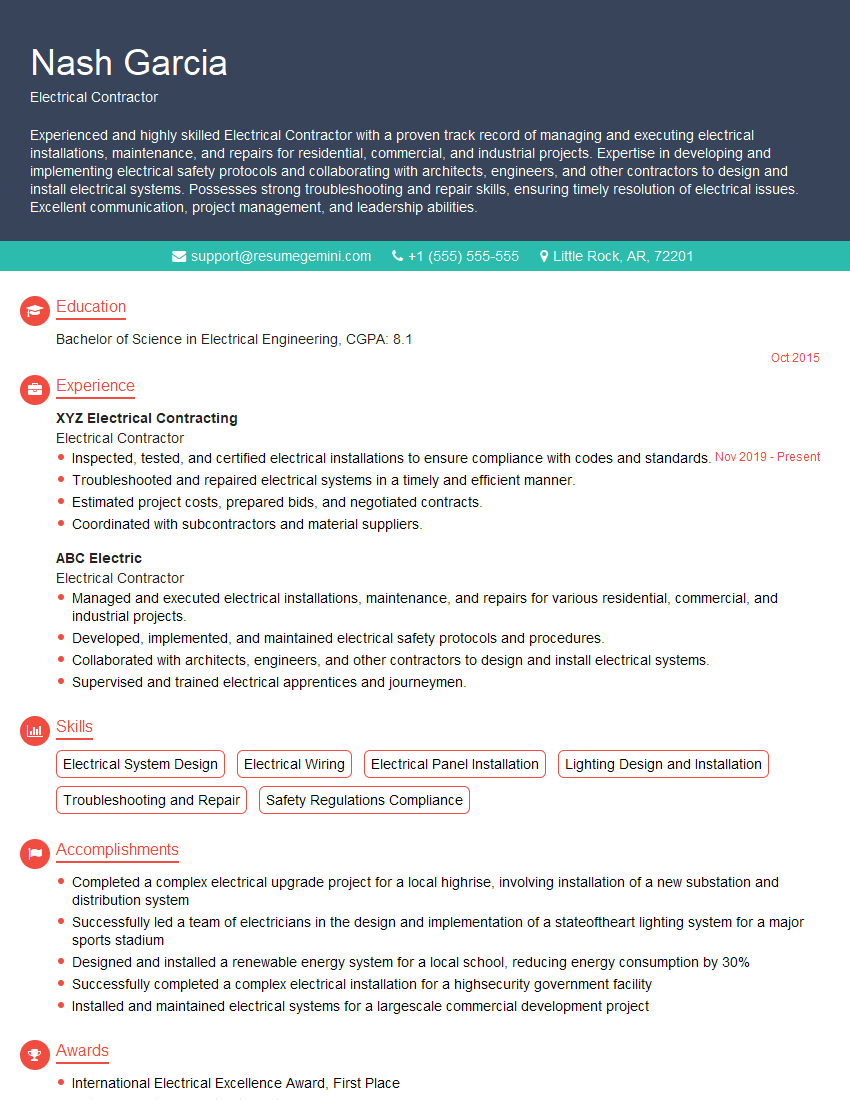
Electrical Contractor Resume Sample
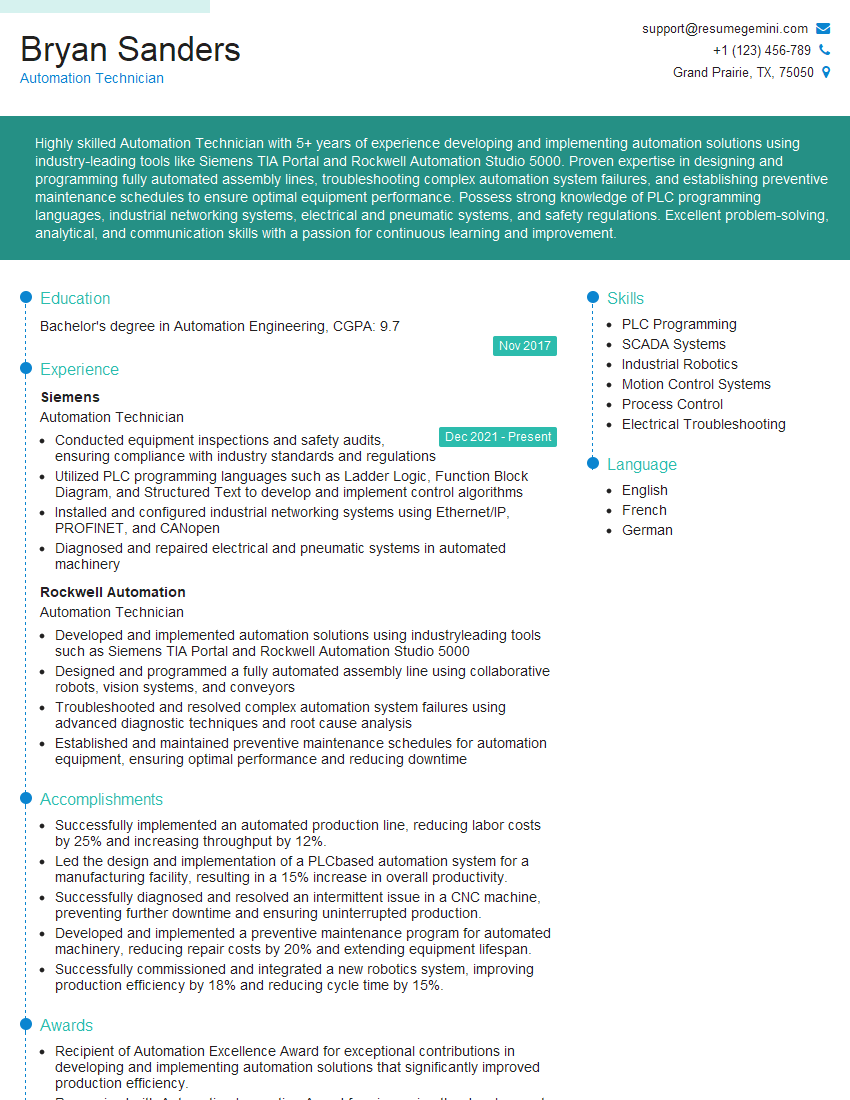
Automation Technician Resume Sample
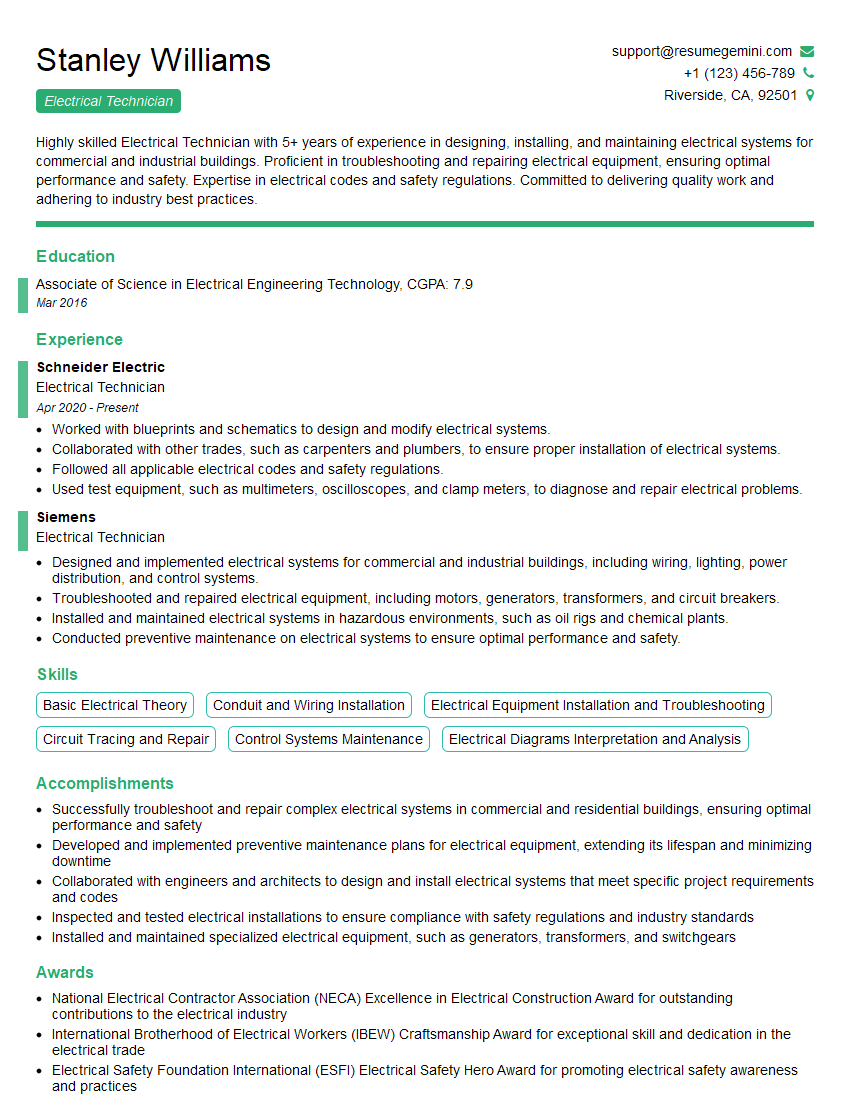
Electrical Technician Resume Sample

Electrical Installer Resume Sample
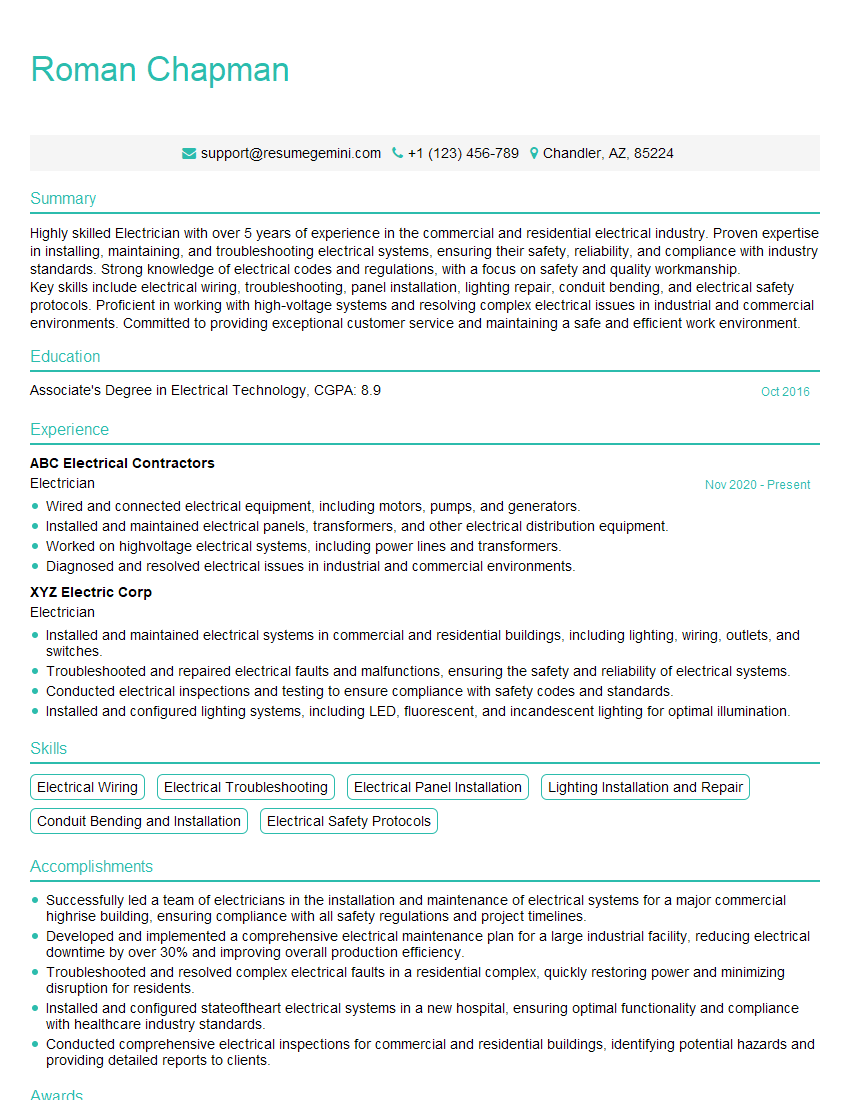
Electrician Resume Sample
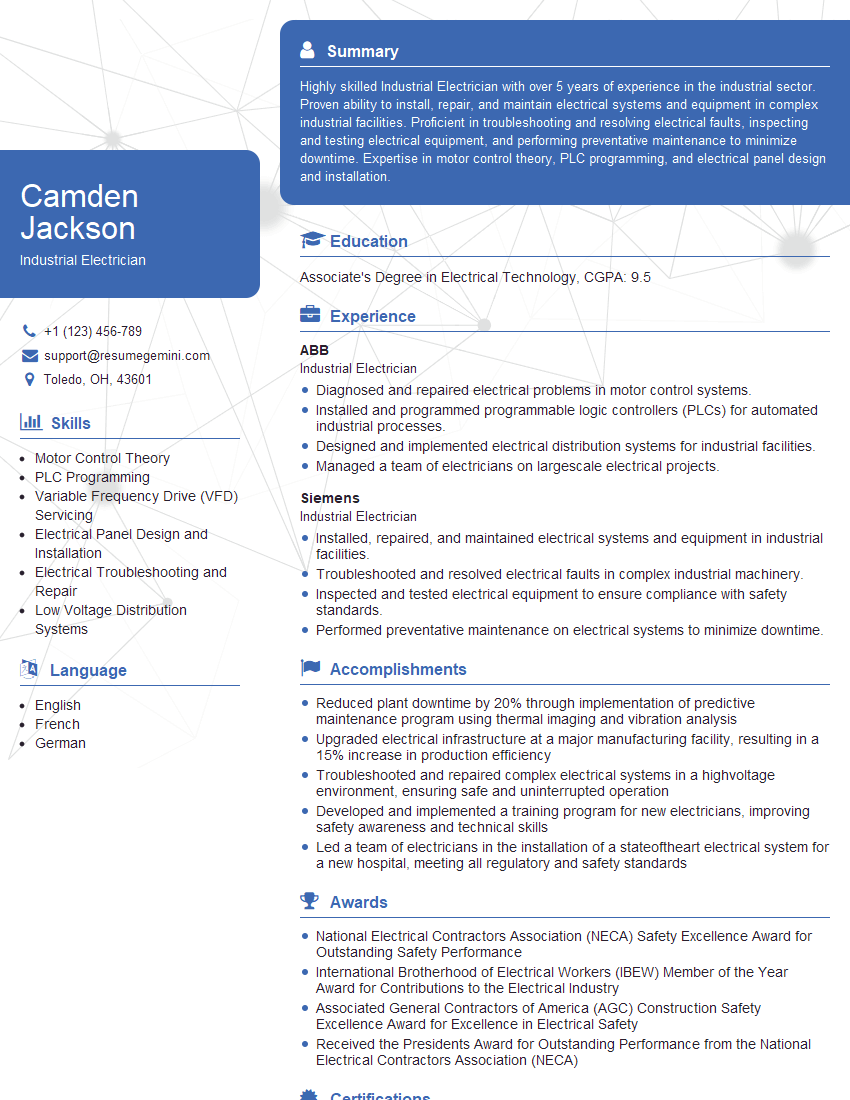
Industrial Electrician Resume Sample

Maintenance Electrician Resume Sample
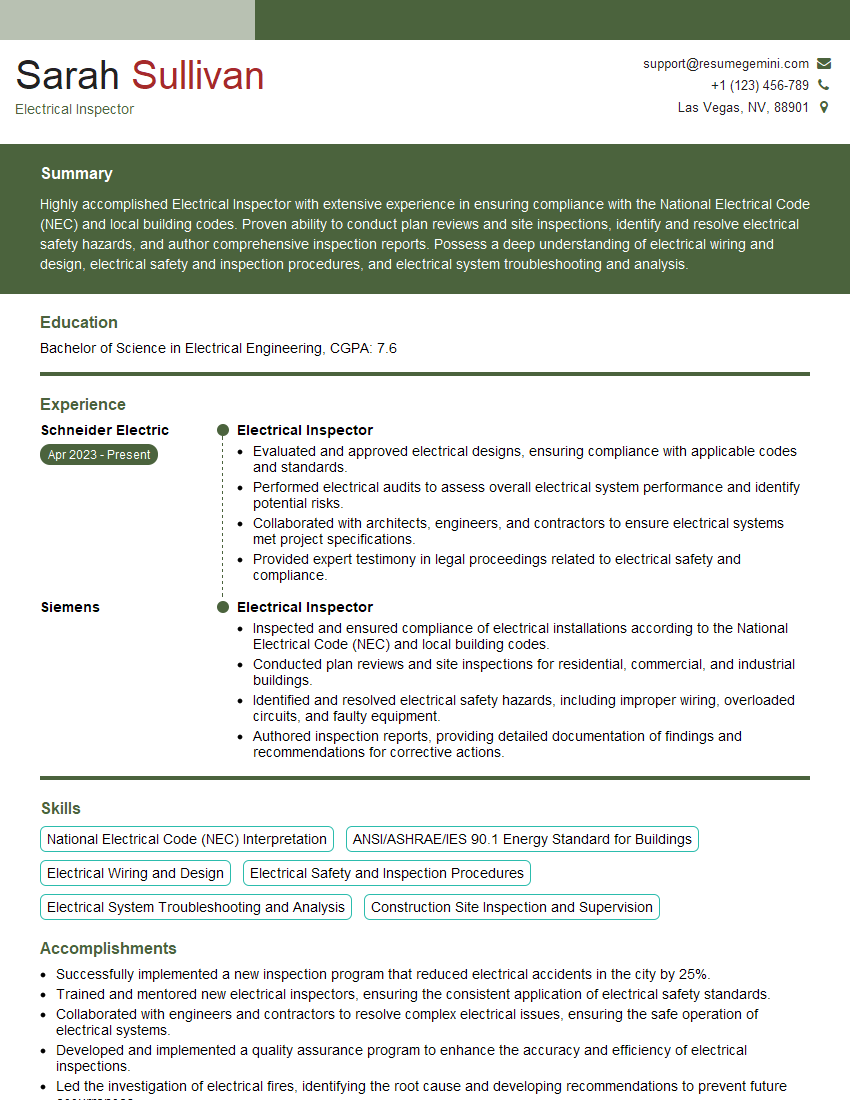
Electrical Inspector Resume Sample
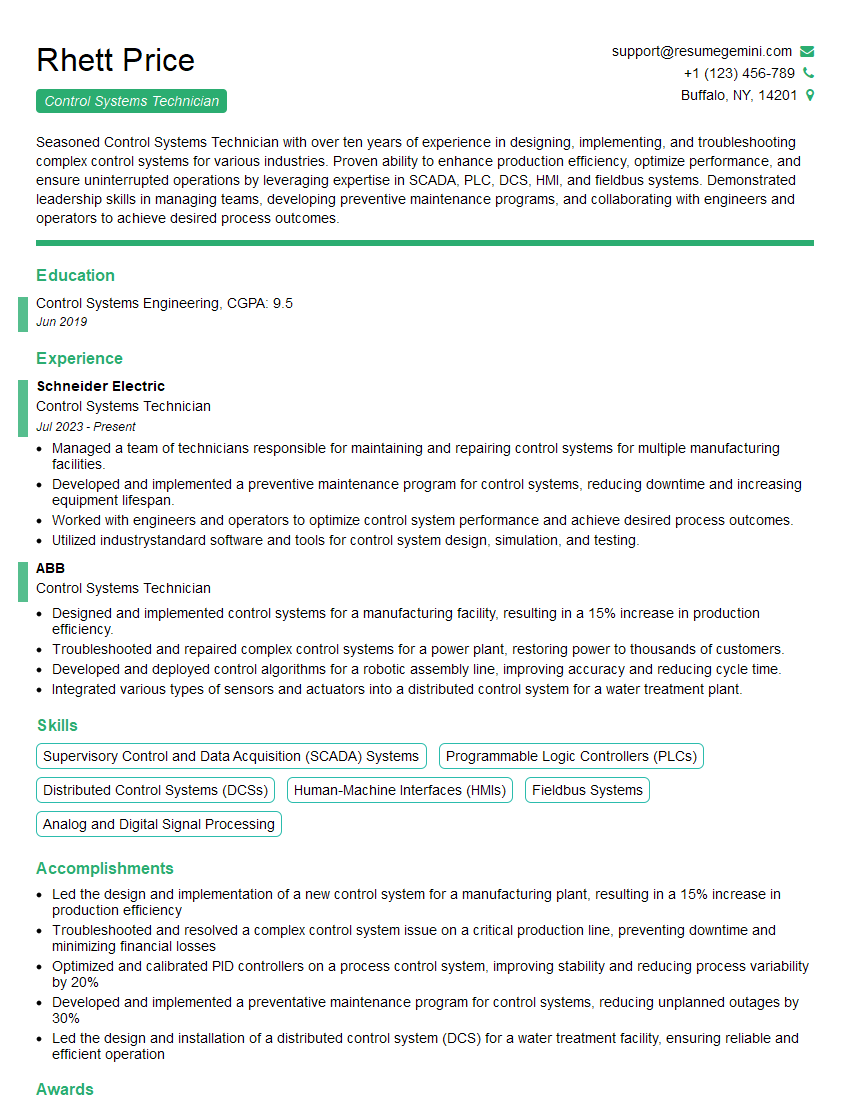
Control Systems Technician Resume Sample

Electrical Maintenance Technician Resume Sample
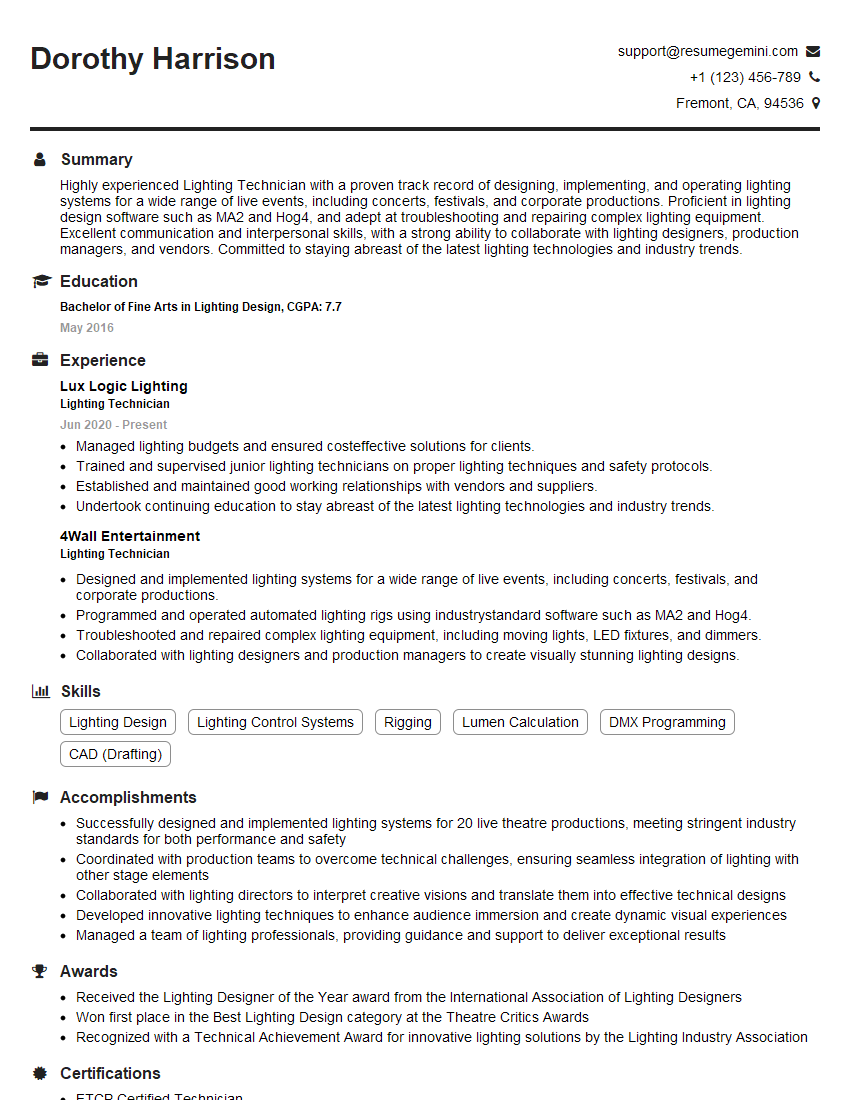
Lighting Technician Resume Sample
Explore more articles
Users Rating of Our Blogs
Share Your Experience
We value your feedback! Please rate our content and share your thoughts (optional).
What Readers Say About Our Blog
To the interviewgemini.com Webmaster.
Very helpful and content specific questions to help prepare me for my interview!
Thank you
To the interviewgemini.com Webmaster.
This was kind of a unique content I found around the specialized skills. Very helpful questions and good detailed answers.
Very Helpful blog, thank you Interviewgemini team.