Feeling uncertain about what to expect in your upcoming interview? We’ve got you covered! This blog highlights the most important Experience in Poultry Diagnostic Laboratory Operations interview questions and provides actionable advice to help you stand out as the ideal candidate. Let’s pave the way for your success.
Questions Asked in Experience in Poultry Diagnostic Laboratory Operations Interview
Q 1. Describe your experience with various poultry diagnostic techniques (e.g., necropsy, serology, PCR).
My experience in poultry diagnostic techniques is extensive, encompassing a wide range of methodologies crucial for accurate disease identification. Necropsy, the avian equivalent of an autopsy, forms the cornerstone of my diagnostic approach. I’m proficient in performing thorough post-mortem examinations, collecting samples from various organs, and identifying gross lesions indicative of specific diseases. For instance, observing caseous lesions in the liver might suggest Mycobacterium avium subspecies paratuberculosis infection. Serology, utilizing techniques like ELISA (Enzyme-Linked Immunosorbent Assay), allows for the detection of antibodies against various pathogens in blood serum. This helps determine past exposure and the overall disease status within a flock. A positive result for Newcastle disease virus antibodies would indicate prior infection or vaccination. Finally, PCR (Polymerase Chain Reaction) is an invaluable molecular diagnostic tool, offering highly sensitive and specific detection of pathogens’ DNA or RNA. This is especially crucial in identifying rapidly evolving viruses like avian influenza.
- Necropsy: Detailed examination of internal organs, noting macroscopic changes.
- Serology: ELISA, AGID (Agar Gel Immunodiffusion) for antibody detection.
- PCR: Detection of viral and bacterial DNA/RNA.
Q 2. Explain your proficiency in identifying common poultry pathogens.
Identifying common poultry pathogens requires a multi-faceted approach combining my expertise with the use of advanced laboratory techniques. I’m highly proficient in recognizing a wide array of bacterial, viral, parasitic, and fungal agents that commonly affect poultry. For example, I can readily differentiate between the gross lesions of Avian Influenza (highly contagious, respiratory distress) and Infectious Bursal Disease (immunosuppression, atrophy of the bursa of Fabricius). My expertise also includes microscopic identification of pathogens and understanding their characteristic staining patterns (e.g., Gram staining for bacteria). I am familiar with numerous pathogens including:
- Viral: Newcastle disease virus, Avian influenza viruses, Infectious bronchitis virus, Infectious bursal disease virus.
- Bacterial: Salmonella spp., E. coli, Mycoplasma spp., Pasteurella multocida.
- Parasitic: Eimeria spp. (coccidia), Heterakis gallinarum (roundworm).
- Fungal: Aspergillus spp.
Q 3. How familiar are you with different poultry disease outbreaks and their associated diagnostic challenges?
I have extensive experience with various poultry disease outbreaks and their diagnostic challenges. Outbreaks often present unique complexities and require rapid, accurate diagnosis for effective control measures. For example, during an Avian Influenza outbreak, the challenge lies in swift differentiation from other respiratory diseases and ensuring timely detection to prevent wider spread. The diagnostic challenges can include the presence of co-infections which can mask or mimic clinical symptoms of the main pathogen, the need for rapid turnaround times for results, and ensuring sample integrity during transport and processing. Another example is the diagnostic difficulty posed by emerging diseases with novel pathogens, requiring advanced molecular techniques and ongoing research. My experience includes dealing with outbreaks of Newcastle Disease, Avian Influenza, Infectious Bursal Disease, and various bacterial infections, helping me navigate the unique diagnostic challenges each presents.
Q 4. Describe your experience with quality control and quality assurance protocols in a diagnostic laboratory setting.
Quality control and quality assurance (QA/QC) are paramount in a diagnostic laboratory setting, ensuring the reliability and accuracy of all results. In my experience, we employ a robust QA/QC system incorporating both internal and external quality control measures. Internal controls include regularly testing known positive and negative samples alongside clinical specimens, while also evaluating and calibrating laboratory equipment. We implement stringent procedural checks throughout testing workflows to prevent errors. External quality control involves participating in proficiency testing programs, allowing for comparison with other laboratories and identification of areas for improvement. We maintain meticulous records to document all processes, ensuring traceability and compliance with laboratory accreditation standards.
Q 5. How do you ensure the accuracy and reliability of diagnostic test results?
Ensuring the accuracy and reliability of diagnostic test results is my top priority. This is achieved through a multifaceted approach that encompasses various aspects of the testing process. We utilize validated and standardized testing methods, and all personnel undergo regular training to maintain proficiency. Strict adherence to QA/QC protocols, as discussed earlier, is critical. We utilize positive and negative controls with each test run to monitor for assay sensitivity and specificity. For complex cases, we often repeat testing and employ alternative methods for confirmation. Regular equipment calibration and maintenance are also vital in maintaining accuracy. Finally, critical interpretation of results requires careful consideration of clinical history and epidemiological context. Interpreting a low positive PCR result might require further investigation.
Q 6. Explain your experience with data analysis and interpretation in the context of poultry diagnostics.
Data analysis and interpretation are crucial aspects of poultry diagnostics. We use statistical methods to analyze data from various sources, including diagnostic tests, epidemiological investigations, and production records. This allows us to identify trends, correlations, and patterns related to disease outbreaks. For example, analyzing PCR results from a flock might reveal the prevalence of a specific pathogen and its distribution across different age groups within the flock. Statistical analysis can help identify risk factors associated with disease occurrence. Using this data, we can create reports that inform disease control strategies and improve overall flock health management. These reports frequently incorporate graphs, tables, and concise summaries to facilitate clear communication with stakeholders.
Q 7. Describe your experience with laboratory safety procedures and regulations.
Laboratory safety is a cornerstone of my professional practice. I am thoroughly familiar with and strictly adhere to all relevant safety procedures and regulations, including those outlined by OSHA (Occupational Safety and Health Administration). We maintain a safe working environment through the proper handling and disposal of biological materials, utilizing appropriate personal protective equipment (PPE), and adhering to strict biosafety protocols. Regular safety training and drills ensure everyone is well-versed in emergency procedures, including the safe handling of spills or accidental exposure to hazardous materials. We maintain meticulous records of all safety incidents and implement corrective actions to prevent future occurrences. Our laboratory operates under strict biosecurity measures to prevent contamination, maintain the integrity of samples, and mitigate the risk of cross-contamination.
Q 8. How do you handle unexpected results or discrepancies in diagnostic tests?
Unexpected results in poultry diagnostics require a systematic approach. Think of it like solving a detective mystery – you need to gather clues and eliminate possibilities. First, I’d meticulously review the entire testing process, from sample collection and handling to the test procedure itself. This includes checking for any procedural errors, such as incorrect reagent dilutions or incubation temperatures. For example, if a bacterial culture yields unexpected growth, I would first examine the sample’s transport conditions, ensuring proper refrigeration and preventing contamination.
Secondly, I’d perform quality control checks, comparing results to known positive and negative controls. Discrepancies might indicate a problem with the reagents or equipment. Perhaps a machine needs recalibration, or the reagents have expired. Thirdly, I’d consider factors like cross-contamination, human error, or even inherent variability in the test itself. If the discrepancy persists after all these checks, I would consult with senior colleagues, repeat the tests with fresh samples, and potentially use alternative diagnostic methods to confirm the findings.
Ultimately, documenting every step is crucial – this detailed record allows for thorough analysis and prevents future errors. It’s about being methodical and not jumping to conclusions. A thorough approach ensures accurate results, which are critical for effective poultry disease management.
Q 9. Describe your experience with maintaining laboratory equipment and supplies.
Maintaining lab equipment and supplies is paramount for accurate and reliable results. It’s a combination of preventative maintenance, regular calibration, and diligent inventory management. Think of it as caring for a high-performance car – regular servicing prevents costly breakdowns. I’m experienced in scheduling regular maintenance for centrifuges, microscopes, incubators, and automated analyzers, often following manufacturer guidelines.
This includes cleaning, lubricating, and performing basic troubleshooting. For instance, if a centrifuge becomes unbalanced, I know to check the load distribution before attempting to restart. Supply management involves tracking expiration dates, ensuring sufficient stock levels to avoid delays, and proper storage to maintain reagent quality. I am familiar with various inventory management systems and their usage, I’ve implemented systems utilizing barcodes for streamlined tracking and reducing human errors.
For example, in a previous role, I developed a color-coded system for supplies nearing expiration, ensuring we always prioritized older stock. This meticulous approach directly contributes to reliable test results and avoids costly delays in diagnostics.
Q 10. How do you collaborate with other members of a diagnostic laboratory team?
Collaboration is the cornerstone of a successful diagnostic laboratory. I approach teamwork with open communication, mutual respect, and a shared commitment to accuracy. This includes actively participating in team meetings, sharing knowledge, and seeking input from colleagues. For instance, if I encounter a particularly challenging case, I’ll consult with specialists in virology, bacteriology, or parasitology, depending on the suspected pathogen.
I frequently participate in case discussions and contribute to the development of protocols and standard operating procedures. I believe in a collaborative approach where everyone’s skills and expertise are valued. We leverage each other’s strengths, which improves accuracy and efficiency. I’ve also mentored junior technicians, guiding them on proper techniques, interpretation of results, and troubleshooting. A strong team is a key ingredient for effective diagnostics.
For example, in a recent case of suspected avian influenza, I worked closely with the virology team to confirm the diagnosis and assist in outbreak management. This teamwork was crucial for a timely and effective response.
Q 11. Explain your understanding of biosecurity protocols in a poultry diagnostic laboratory.
Biosecurity protocols in a poultry diagnostic laboratory are critical to prevent contamination and ensure accurate test results. This involves a multi-layered approach focused on minimizing the risk of introducing or spreading pathogens. It’s like having a fortress with multiple checkpoints to keep unwanted guests out.
These protocols start with strict entry and exit procedures, such as mandatory disinfection of footwear and clothing, and the use of personal protective equipment (PPE) like gloves, lab coats, and eye protection. Proper handling and disposal of biological materials is paramount to prevent cross-contamination. This includes using appropriate containers for waste, autoclaving before disposal, and adhering to all regulatory requirements.
- Physical Isolation: Dedicated areas for sample preparation, testing, and cleaning are crucial.
- Equipment Sterilization: Regular sterilization of equipment and surfaces prevents contamination.
- Personnel Training: Regular training ensures staff adheres to protocols.
Furthermore, maintaining accurate records and logs of all activities is essential for traceability and investigation in case of potential contamination. Adherence to these protocols protects laboratory personnel, maintains the integrity of the diagnostic process, and prevents the spread of diseases.
Q 12. Describe your experience with troubleshooting equipment malfunctions.
Troubleshooting equipment malfunctions requires a systematic and analytical approach. Think of it like diagnosing a car problem – you need to identify the symptoms and then track down the cause. My first step is to carefully observe the malfunction and document all relevant details, including error messages, unusual sounds, or any other abnormalities.
Next, I consult the equipment’s user manual and troubleshoot based on the manufacturer’s guidelines. This often involves checking power connections, fuses, and fluid levels. If the issue persists, I investigate further, perhaps by checking internal components after proper power down and ensuring safety protocols are followed. I may use a multimeter to check voltage and current levels, or other diagnostic tools specific to the equipment.
If I’m unable to resolve the problem through basic troubleshooting, I’ll contact the equipment’s manufacturer or a qualified service technician. Detailed documentation of the problem and troubleshooting attempts is crucial for efficient repair. In the past, I’ve successfully resolved issues such as blocked airflow in incubators and malfunctioning sensors in automated analyzers using this systematic approach.
Q 13. How familiar are you with different types of poultry parasites and their identification?
I have extensive experience identifying various poultry parasites. This involves microscopy of fecal samples, tissue examination, and the use of specialized staining techniques. For example, I am proficient in identifying Eimeria spp. (coccidia) through microscopic examination of oocysts, noting their size, shape, and sporulation stages. I can differentiate various Eimeria species crucial for effective treatment strategies.
I am also familiar with identifying various helminths (worms), including Ascaridia galli (large roundworm), Heterakis gallinarum (cecal worm), and various tapeworms, based on their morphological characteristics. Similarly, I can identify ectoparasites like lice and mites through direct observation and microscopic examination. This involves knowledge of their anatomy, life cycles, and the specific locations on the bird where they are typically found.
My identification process includes careful microscopic examination, comparing findings with reference materials (atlases, keys, and images) and utilizing molecular diagnostic techniques when necessary for definitive identification, especially when morphology alone isn’t sufficient. Accurate parasite identification is key to implementing appropriate control and treatment measures.
Q 14. Explain your understanding of various poultry diseases, including viral, bacterial, and parasitic infections.
My understanding of poultry diseases encompasses a broad range of viral, bacterial, and parasitic infections. This knowledge includes understanding the pathogenesis, clinical signs, diagnostic methods, and control strategies for each disease. Think of it like having a comprehensive library of poultry disease information.
Viral diseases include Avian Influenza (AI), Newcastle Disease (ND), Infectious Bronchitis (IB), and Infectious Bursal Disease (IBD). For each, I know the various serotypes, transmission routes, clinical presentations, and diagnostic methods (ELISA, PCR, virus isolation).
Bacterial diseases encompass a wide range, such as Salmonella spp., E. coli, Mycoplasma gallisepticum (MG), and Pasteurella multocida. I understand their various serotypes and the diagnostic methods employed, including bacterial culture, serological tests, and PCR.
Parasitic diseases, as discussed earlier, involve coccidiosis, helminth infections, and ectoparasite infestations. Understanding these diseases requires knowledge of parasite identification, life cycles, and their impact on poultry health. Diagnostic methods include microscopy, fecal flotation, and sometimes molecular techniques.
My diagnostic approach combines clinical history, gross pathology, histopathology, bacteriology, virology, parasitology, and molecular diagnostics to arrive at an accurate diagnosis. This comprehensive understanding is vital for providing accurate diagnosis and recommending appropriate treatment and control measures to producers.
Q 15. Describe your experience with conducting necropsy examinations and collecting tissue samples.
Necropsy examinations, or post-mortem examinations, are crucial for diagnosing poultry diseases. My experience involves a systematic approach, beginning with a thorough external examination noting any abnormalities like lesions, deformities, or unusual coloration. This is followed by a detailed internal examination where I carefully dissect the bird, examining each organ (heart, liver, spleen, kidneys, intestines, etc.) for gross lesions, taking meticulous notes and photographs. Tissue sampling is crucial; I collect representative samples from affected areas and seemingly healthy tissues for comparison. Specific techniques vary based on the suspected disease. For example, if I suspect avian influenza, I would collect samples from the trachea, lungs, and intestines, paying particular attention to any areas of congestion or hemorrhage. I utilize sterile instruments and techniques to prevent contamination and ensure sample integrity. Samples are then properly labeled and preserved, usually in 10% formalin for histopathology and in appropriate media for bacteriology or virology.
For instance, I once investigated a case of sudden mortality in a broiler flock. The external exam revealed pale combs and wattles, suggestive of anemia. The internal exam showed enlarged spleens and multiple pinpoint hemorrhages in the intestinal tract. I collected samples from the spleen, liver, intestines, and bone marrow, which led to the diagnosis of a severe Eimeria infection (coccidiosis).
Career Expert Tips:
- Ace those interviews! Prepare effectively by reviewing the Top 50 Most Common Interview Questions on ResumeGemini.
- Navigate your job search with confidence! Explore a wide range of Career Tips on ResumeGemini. Learn about common challenges and recommendations to overcome them.
- Craft the perfect resume! Master the Art of Resume Writing with ResumeGemini’s guide. Showcase your unique qualifications and achievements effectively.
- Don’t miss out on holiday savings! Build your dream resume with ResumeGemini’s ATS optimized templates.
Q 16. How do you interpret histopathology results in the context of poultry disease?
Histopathology, the microscopic examination of tissues, is essential for confirming diagnoses suggested by gross necropsy findings. I interpret histopathology results by carefully analyzing the microscopic slides for cellular changes indicative of specific diseases. This includes assessing tissue architecture, cellular morphology (size, shape, and staining characteristics), and the presence of inflammatory cells or infectious agents. For example, the presence of lymphocytic infiltration in the liver might suggest infectious bursal disease (IBD), while multifocal necrosis in the brain could indicate Newcastle disease. I correlate the histopathological findings with the clinical history and gross necropsy observations to arrive at a definitive diagnosis. Understanding the different histological patterns associated with various poultry diseases, like heterophils in bacterial infections or multinucleated giant cells in viral infections, is key to accurate interpretation. I regularly consult with veterinary pathologists for complex cases or when confirming unusual findings.
Imagine a case where the necropsy showed enlarged kidneys. The histopathology report might show interstitial nephritis with the presence of bacterial colonies. Coupled with bacterial culture results, this paints a clear picture of bacterial nephritis, which helps target the right treatment.
Q 17. Describe your proficiency in using various laboratory equipment and instruments (e.g., microscopes, centrifuges).
My proficiency in using laboratory equipment is extensive. I am adept at operating various microscopes (light, fluorescent), centrifuges (high-speed and low-speed), autoclaves, incubators, and other standard diagnostic tools. I am familiar with techniques like Gram staining, PCR, ELISA, and various other serological and molecular tests. I understand the principles behind these instruments, their maintenance, and troubleshooting common issues. For instance, I routinely perform maintenance checks on our centrifuges, ensuring proper balancing and calibration to prevent damage and ensure accurate results. Similarly, regular cleaning and calibration of our microscopes are crucial to maintaining image quality and diagnostic accuracy. I am also trained in the safe handling and disposal of biological materials and hazardous chemicals.
One time, our incubator malfunctioned. By systematically checking the temperature sensors and power supply, I was able to quickly identify and rectify the problem, preventing delays in our testing process.
Q 18. Explain your experience with maintaining accurate laboratory records and documentation.
Maintaining accurate laboratory records and documentation is paramount for quality control and traceability. I meticulously document every step of the diagnostic process, from sample collection and handling to test results and final diagnoses. This includes maintaining detailed case files with complete information on the bird, the flock, clinical signs, necropsy findings, laboratory results, and the final diagnosis. I utilize laboratory information management systems (LIMS) to track samples, manage test requests, and store results electronically. This ensures data integrity, facilitates efficient retrieval of information, and meets regulatory requirements. Adherence to established protocols is crucial, preventing errors and ensuring compliance with quality standards.
Our laboratory uses a LIMS that automatically generates reports which includes timestamps, ensuring complete record keeping and facilitating auditing.
Q 19. How do you adhere to ethical guidelines and professional standards in a poultry diagnostic laboratory?
Ethical guidelines and professional standards are central to my work. I adhere to strict protocols to ensure the confidentiality of client information and the integrity of test results. I follow established guidelines for animal welfare, ensuring that any procedures involving birds are performed humanely. I maintain objectivity in interpreting results and avoid conflicts of interest. I am committed to continuous professional development and staying up-to-date with the latest advances in poultry diagnostics. I understand and follow all relevant biosafety protocols and regulations, ensuring the safety of myself and my colleagues.
For example, when dealing with highly contagious diseases, I rigorously follow biosafety protocols, utilizing personal protective equipment and following strict decontamination procedures to prevent spread. We follow ethical standards for disposal of biological waste, ensuring environmentally responsible practices.
Q 20. Describe your experience with preparing samples for diagnostic testing.
Preparing samples for diagnostic testing is a critical step that significantly impacts the accuracy and reliability of results. The preparation methods depend on the type of test being conducted. For bacteriology, samples are often streaked onto culture media after proper dilution and enrichment. For virology, samples might require viral isolation in cell cultures or direct detection methods like PCR. For histopathology, tissues are fixed in formalin, processed, embedded in paraffin, sectioned, and stained for microscopic examination. For serology, serum samples are separated from blood and stored appropriately before testing. Accurate labeling, proper handling, and adherence to specific protocols are essential to prevent sample degradation or contamination. Each step needs to be performed meticulously to ensure the integrity of the sample and minimize the risk of false-positive or false-negative results.
For example, when preparing samples for PCR, it’s critical to prevent contamination to ensure accurate results. We use separate workspaces and equipment for sample preparation to minimize the risk of cross-contamination.
Q 21. How familiar are you with various serological testing methods and their applications in poultry diagnostics?
I am very familiar with various serological testing methods used in poultry diagnostics. These tests detect antibodies or antigens in blood serum, providing insights into the bird’s immune response to specific pathogens. Common methods include ELISA (Enzyme-Linked Immunosorbent Assay), AGID (Agar Gel Immunodiffusion), and HI (Hemagglutination Inhibition). ELISA is frequently used for detecting antibodies against various avian diseases like Newcastle disease, avian influenza, and infectious bronchitis. AGID is a simpler method used to detect antibodies, especially in situations with limited resources. HI tests are widely used for influenza virus serotyping. The choice of method depends on factors like sensitivity, specificity, cost, and the availability of resources. Understanding the limitations of each test, such as cross-reactivity or the window period, is crucial for proper interpretation and for designing the best diagnostic strategy.
For instance, in a suspected outbreak of Newcastle disease, we would use an ELISA test to detect antibodies in the serum of affected birds. A positive result would indicate previous exposure to the virus and provide epidemiological data.
Q 22. Explain your experience with interpreting PCR results for poultry pathogens.
Interpreting PCR results for poultry pathogens requires a nuanced understanding of both molecular biology and avian pathology. It’s not simply a matter of looking for a positive or negative result; it involves analyzing the Cycle Threshold (Ct) value, understanding potential inhibitors, and considering the clinical picture alongside the laboratory findings. A low Ct value generally indicates a high viral load, suggesting a more active infection. However, a high Ct value doesn’t automatically mean the absence of the pathogen; it might indicate a low-level infection, or the presence of PCR inhibitors in the sample.
For example, detecting Salmonella Enteritidis in a fecal sample requires careful consideration. A low Ct value combined with clinical signs such as diarrhea and mortality would strongly suggest an active infection. Conversely, a high Ct value in a sample from a bird showing no clinical signs might represent a low-level colonization rather than a significant disease outbreak. I always cross-reference PCR results with other diagnostic tests, like bacterial culture and serology, and the bird’s clinical history to arrive at a comprehensive diagnosis. This integrated approach minimizes false positives and negatives, leading to a more accurate assessment of the disease situation.
Q 23. How do you handle and dispose of biological waste materials safely and according to regulations?
Safe handling and disposal of biological waste are paramount in a poultry diagnostic laboratory. We strictly adhere to all relevant regulations, including those set by OSHA and local authorities. All biological waste, including contaminated swabs, tissues, and blood samples, is treated as potentially infectious. We use appropriate personal protective equipment (PPE), including gloves, lab coats, and eye protection, at all times.
Contaminated materials are placed in designated autoclave bags which are then autoclaved at 121°C for at least 20 minutes to ensure complete sterilization. After autoclaving, the waste is disposed of according to our institution’s guidelines, typically through a licensed medical waste disposal company. Sharp objects, such as needles and syringes, are disposed of in puncture-resistant containers. Detailed records are maintained for all waste disposal activities for auditing purposes. We conduct regular training for staff members to ensure consistent adherence to safety protocols and to prevent potential exposures.
Q 24. Describe your experience with conducting epidemiological investigations related to poultry diseases.
Epidemiological investigations are crucial for understanding and controlling poultry disease outbreaks. My experience includes conducting on-farm investigations, data analysis, and report writing. I begin by collecting information on the affected flock, including mortality rates, clinical signs, flock size, age, breed, and management practices.
On-site visits allow for the collection of samples for diagnostic testing, including necropsy samples, and the assessment of the farm’s biosecurity measures. For example, I once investigated an outbreak of Avian Influenza in a large commercial broiler operation. Through thorough sample collection, laboratory testing, and farm management interviews, we determined the likely source of the infection to be wild birds and identified gaps in biosecurity practices such as the lack of rodent control and inadequate perimeter fencing. Our findings resulted in recommendations for improved biosecurity measures and control strategies for the affected farm and other farms in the area to prevent future outbreaks. Statistical analysis of collected data (e.g., incidence, mortality rates) helps determine the spread and severity of the disease. This information is integrated into comprehensive reports that inform management decisions and public health interventions.
Q 25. How familiar are you with regulatory compliance requirements for poultry diagnostic laboratories?
Regulatory compliance is of utmost importance in a poultry diagnostic laboratory. I am thoroughly familiar with regulations from agencies such as the USDA (United States Department of Agriculture), the FDA (Food and Drug Administration), and OSHA, concerning biosafety, sample handling, quality control, reporting, and waste disposal.
This includes maintaining accurate records, ensuring proper equipment calibration and maintenance, participating in proficiency testing programs, and adhering to strict quality assurance/quality control (QA/QC) procedures. I’m also knowledgeable about the specific requirements for handling and reporting of notifiable diseases, such as Avian Influenza and Newcastle Disease, and understand the importance of prompt reporting to the relevant authorities. Non-compliance can lead to serious consequences such as fines and suspension of operations, so strict adherence is essential. We regularly review and update our lab’s procedures to ensure continued compliance with all relevant regulations.
Q 26. Describe your experience with training and mentoring junior staff members.
Training and mentoring junior staff is an integral part of my role. I believe in fostering a collaborative and supportive learning environment where new staff members can develop their skills and confidence. My approach involves a combination of hands-on training, didactic sessions, and ongoing mentorship.
I start by providing a comprehensive overview of laboratory procedures, safety protocols, and quality control measures. Then, I pair new staff with experienced colleagues for shadowing and hands-on practice. I provide regular feedback, identifying areas for improvement and celebrating successes. I encourage asking questions, providing a safe space for them to learn and grow without fear of judgment. Mentorship goes beyond technical skills; it involves guidance on professional development, ethical considerations, and time management within the fast-paced laboratory environment. One example is guiding a new technician to interpret PCR results through progressive steps, starting with simple examples and gradually adding complexity, ensuring a solid understanding.
Q 27. Explain your understanding of the importance of continuing education in poultry diagnostics.
Continuing education is crucial in poultry diagnostics due to the constantly evolving nature of avian diseases, diagnostic techniques, and regulatory requirements. New pathogens emerge, diagnostic methods improve, and regulations are updated frequently.
Therefore, staying current through professional development activities is essential for maintaining competency and providing high-quality services. I actively participate in workshops, conferences, and online courses to expand my knowledge of new diagnostic techniques, such as next-generation sequencing (NGS), and advancements in understanding poultry diseases. I also stay informed about the latest regulatory changes and updates through professional journals and agency websites. Keeping up-to-date not only benefits my skills, but ensures our laboratory maintains the highest standards and provides the most accurate and timely diagnoses to our clients.
Q 28. How do you prioritize tasks and manage your time effectively in a fast-paced laboratory environment?
In a fast-paced laboratory environment, effective prioritization and time management are crucial. I utilize several strategies to stay organized and productive.
First, I begin each day by reviewing my tasks and prioritizing them based on urgency and importance. I use task management software or a detailed to-do list to keep track of my progress. I tackle the most time-sensitive and critical tasks first, and break down larger projects into smaller, manageable steps. I also allocate specific time blocks for particular activities to maintain focus and avoid interruptions. For example, I might dedicate one hour each morning to analyzing PCR results, followed by an hour of sample processing. Regular communication with colleagues helps to avoid bottlenecks and ensure efficient workflow. Multitasking is often counter-productive, so focusing on one task at a time is critical to maintaining accuracy and avoiding errors.
Key Topics to Learn for Experience in Poultry Diagnostic Laboratory Operations Interview
- Sample Collection and Handling: Understanding proper techniques for collecting various sample types (blood, tissue, fecal), maintaining sample integrity during transport, and adhering to biosafety protocols.
- Microscopic Techniques: Practical experience with microscopy, including staining methods (Gram stain, Giemsa stain), parasite identification, and interpretation of microscopic findings in the context of poultry diseases.
- Bacteriology and Virology: Knowledge of common bacterial and viral pathogens affecting poultry, including isolation, identification (biochemical tests, PCR), and antimicrobial susceptibility testing.
- Serology: Proficiency in performing serological tests (ELISA, agglutination) to detect antibodies against specific poultry pathogens and interpreting results.
- Parasitology: Identifying and characterizing various poultry parasites (protozoa, helminths) through microscopic examination and other diagnostic methods.
- Molecular Diagnostics: Understanding and application of molecular techniques such as PCR, real-time PCR, and sequencing for the detection and identification of poultry pathogens.
- Quality Control and Assurance: Implementing and maintaining quality control measures within the laboratory setting, ensuring accuracy and reliability of results, and adhering to regulatory guidelines.
- Data Analysis and Interpretation: Analyzing laboratory data, drawing conclusions, and presenting findings in a clear and concise manner, including report writing and communication of results to veterinarians and clients.
- Laboratory Safety and Biosecurity: Adhering to strict biosafety protocols, handling hazardous materials safely, and maintaining a clean and organized laboratory environment.
- Troubleshooting and Problem-solving: Identifying and resolving technical issues encountered during laboratory procedures, interpreting unexpected results, and implementing corrective actions.
Next Steps
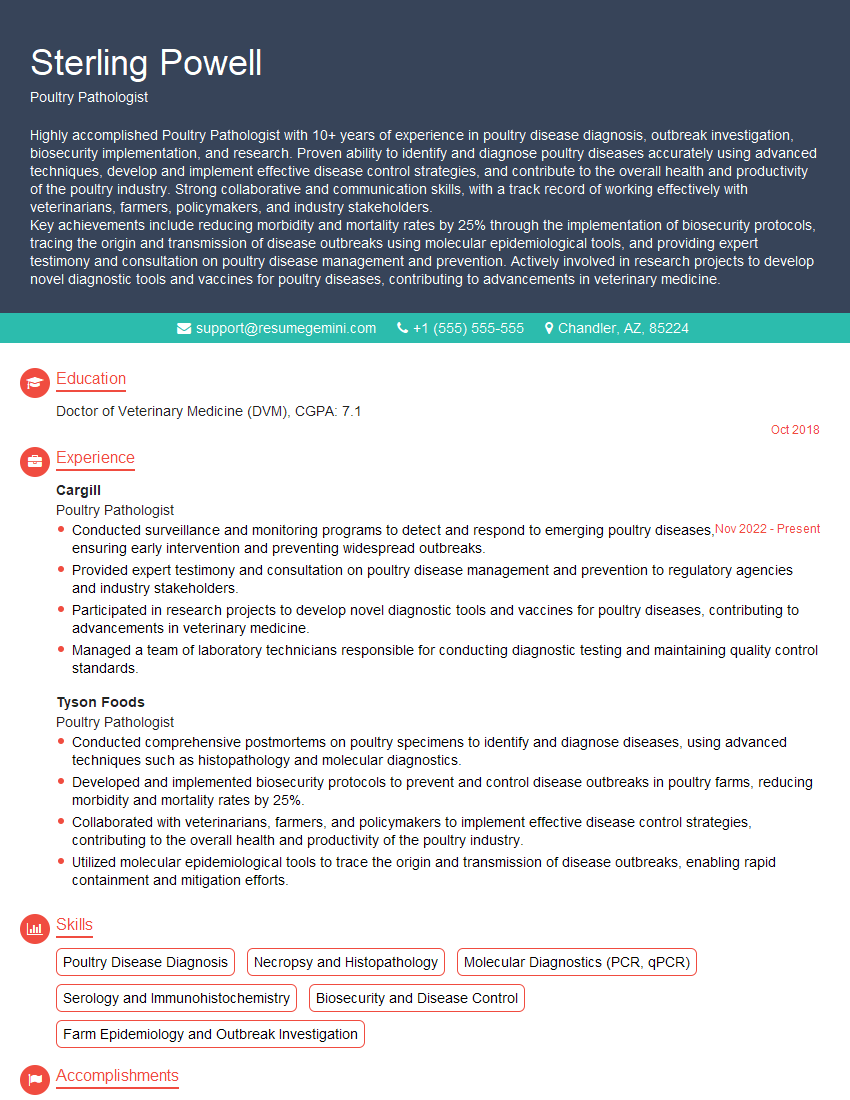
Mastering Experience in Poultry Diagnostic Laboratory Operations is crucial for advancing your career in veterinary diagnostics, research, or related fields. A strong understanding of these principles demonstrates your technical skills and problem-solving abilities to potential employers. To significantly boost your job prospects, create an ATS-friendly resume that highlights your qualifications effectively. ResumeGemini is a trusted resource that can help you build a professional and impactful resume. Examples of resumes tailored to Experience in Poultry Diagnostic Laboratory Operations are available to guide you in crafting your own compelling application.
Explore more articles
Users Rating of Our Blogs
Share Your Experience
We value your feedback! Please rate our content and share your thoughts (optional).
What Readers Say About Our Blog
To the interviewgemini.com Webmaster.
Very helpful and content specific questions to help prepare me for my interview!
Thank you
To the interviewgemini.com Webmaster.
This was kind of a unique content I found around the specialized skills. Very helpful questions and good detailed answers.
Very Helpful blog, thank you Interviewgemini team.