Are you ready to stand out in your next interview? Understanding and preparing for Experience in welding interview questions is a game-changer. In this blog, we’ve compiled key questions and expert advice to help you showcase your skills with confidence and precision. Let’s get started on your journey to acing the interview.
Questions Asked in Experience in welding Interview
Q 1. What welding processes are you proficient in?
Throughout my career, I’ve become proficient in several welding processes. My expertise includes Gas Metal Arc Welding (GMAW), commonly known as MIG welding; Gas Tungsten Arc Welding (GTAW), or TIG welding; and Shielded Metal Arc Welding (SMAW), or stick welding. I also have experience with Flux-Cored Arc Welding (FCAW), particularly useful for outdoor applications where shielding gas isn’t readily available. Each process offers unique advantages depending on the material, thickness, and desired weld quality. For instance, MIG welding excels in speed and ease of use on thicker materials, while TIG welding provides superior precision and control for thinner materials and intricate joints. SMAW is robust and portable, ideal for field work where access to electricity is limited.
Q 2. Explain the difference between MIG and TIG welding.
MIG and TIG welding are both arc welding processes, but they differ significantly in their methods and applications. MIG welding uses a consumable electrode wire that feeds continuously into the weld pool, providing both filler metal and shielding gas in a single operation. This makes it a fast and efficient process, ideal for high-volume production. Think of it like a glue gun applying a continuous stream of material. TIG welding, on the other hand, utilizes a non-consumable tungsten electrode to create the arc, and filler metal is added separately. This allows for much finer control over the weld bead, producing high-quality welds with excellent cosmetic appearance. It’s like using a tiny paintbrush to meticulously apply material with ultimate precision. The key difference lies in the level of control: MIG is fast and efficient, TIG is precise and controlled. I’ve used both extensively and can adapt my technique based on the project requirements.
Q 3. Describe your experience with different types of filler metals.
My experience encompasses a wide range of filler metals, each tailored to specific base materials and applications. I’ve worked with various steel filler metals, including ER70S-6 for mild steel, and ER308L for stainless steel. My experience extends to aluminum filler metals like ER4043 and ER5356, each chosen for its specific properties and compatibility with different aluminum alloys. I also have experience working with nickel alloys and specialized filler metals for high-temperature applications. Selecting the correct filler metal is crucial for ensuring weld strength, durability, and corrosion resistance, and I always carefully consult material specifications before beginning a welding project. For example, using the wrong filler metal on stainless steel can lead to cracking or embrittlement.
Q 4. How do you ensure weld quality?
Ensuring weld quality is paramount. My approach involves a multi-faceted strategy starting with proper pre-weld preparation (which I’ll discuss further), selecting the right process and filler metal, and meticulous control during the welding process. I regularly monitor the arc length, travel speed, and current settings to maintain a consistent weld bead. After welding, I perform visual inspection for defects like porosity, cracks, or incomplete penetration. I’m proficient with various non-destructive testing (NDT) methods such as visual inspection, magnetic particle inspection, and dye penetrant inspection, to further evaluate weld integrity. Documentation is crucial, meticulously recording parameters for each weld to facilitate traceability and future reference. For critical welds, I often use destructive testing methods such as tensile testing or impact testing to verify the mechanical properties of the weld meet specifications.
Q 5. What safety precautions do you take when welding?
Safety is my top priority. Before starting any welding project, I always ensure the work area is well-ventilated to prevent exposure to harmful fumes. I wear appropriate personal protective equipment (PPE), including a welding helmet with appropriate shade lenses, welding gloves, flame-resistant clothing, and safety footwear. I also make sure the work area is free of flammable materials and that fire extinguishers are readily accessible. I frequently check my equipment for any damage or defects before use. Furthermore, I always have a designated fire watch on hand, especially when working in confined spaces or with large-scale projects. Safety isn’t just a checklist; it’s a mindset embedded in my work practice.
Q 6. How do you interpret welding symbols?
Welding symbols are a standardized method of communicating welding requirements on engineering drawings. They provide concise information about the type of weld, its size, location, and other critical parameters. I’m well-versed in interpreting these symbols, understanding their various components, including the reference line, arrow, weld symbol, and supplementary symbols. For instance, a symbol indicating a fillet weld will specify the size and leg length of the weld. A symbol with a circle might indicate a weld all around a joint. I regularly refer to the AWS welding symbols standard to ensure accurate interpretation. Misinterpretation can lead to serious consequences, so precise understanding of welding symbols is essential.
Q 7. Explain the importance of pre-weld preparation.
Pre-weld preparation is often the most crucial step, determining the success or failure of a weld. This involves several key steps. First, the base materials must be thoroughly cleaned to remove any dirt, grease, paint, or rust. This ensures proper fusion and prevents defects. Then, joint fit-up is essential. Accurate alignment and tight joint gaps are critical for a strong weld. If gaps are too large, they might result in excessive weld metal needed, reducing strength. Finally, material preheating might be necessary for certain materials or thicknesses to prevent cracking or distortion during welding. This is often done for thicker materials and certain types of steel. Proper pre-weld preparation saves time and resources in the long run and ensures a high-quality, reliable weld.
Q 8. What are the common welding defects and how do you prevent them?
Welding defects are imperfections that compromise the weld’s strength, integrity, and overall quality. Common defects include porosity (tiny gas pockets), inclusions (foreign material embedded in the weld), cracks (fractures in the weld metal), lack of fusion (incomplete melting of the base metal), and undercut (a groove melted into the base metal alongside the weld). Preventing these defects requires a multi-pronged approach.
Proper Joint Preparation: Cleanliness is paramount. Thorough cleaning of the base metal removes contaminants that can cause porosity or inclusions. Proper fit-up of the joint ensures complete fusion.
Correct Welding Parameters: This includes choosing the right welding process (e.g., MIG, TIG, SMAW), amperage, voltage, travel speed, and shielding gas (if applicable). Incorrect parameters can lead to various defects. For instance, too low amperage might result in incomplete penetration, while excessive amperage can cause excessive spatter or burn-through.
Appropriate Welding Technique: Maintaining a consistent arc length, travel speed, and proper electrode angle is crucial. Incorrect technique can lead to defects like lack of fusion or uneven bead profile.
Preheating/Post-heating: For certain materials (e.g., thicker sections or high-carbon steel), preheating the base metal reduces the cooling rate and prevents cracking. Post-heating can also reduce stress in the weld.
Operator Skill and Training: A highly skilled welder understands the subtle nuances of the process and can identify and correct potential problems before they become defects. Regular training and proficiency testing are essential.
For example, I once encountered significant porosity in a stainless steel weld. By carefully analyzing the process parameters and inspecting the base material for contaminants, we determined the root cause was insufficient shielding gas flow. Adjusting the gas flow immediately resolved the issue.
Q 9. How do you select the appropriate welding parameters?
Selecting appropriate welding parameters depends on several factors: the base material, joint design, welding process, desired weld bead geometry, and required mechanical properties. It’s an iterative process often refined through experience and experimentation.
Base Metal: Different materials require different parameters. For example, welding aluminum requires lower amperage and voltage compared to steel due to its higher thermal conductivity.
Joint Design: A thicker joint requires higher amperage and travel speed compared to a thinner joint. The joint configuration (butt, lap, fillet) also influences the parameter selection.
Welding Process: Each process (MIG, TIG, SMAW, etc.) has its own range of acceptable parameters. MIG welding typically uses higher amperage and lower voltage compared to TIG welding, which tends to use more precise control.
Weld Bead Geometry: The desired bead shape (penetration, width, height) impacts parameter selection. Controlling the heat input is vital to achieving the desired geometry.
Mechanical Properties: The required strength and toughness of the weld will influence the choice of parameters. For high-strength applications, careful control of the heat input is essential to minimize the risk of cracking.
I often use weld parameter charts and manufacturer’s specifications as a starting point, but fine-tuning is usually necessary based on real-time observation of the weld bead. This requires experience in interpreting the visual cues of a sound weld (smooth bead profile, proper penetration, absence of defects).
Q 10. What is your experience with different joint designs?
I have extensive experience with various joint designs, including butt joints, lap joints, fillet joints, T-joints, corner joints, and edge joints. The choice of joint design depends heavily on the application’s specific requirements, such as stress levels, accessibility, and weldability of the materials.
Butt Joints: These are strong, efficient, and commonly used for structural applications, but require precise alignment. I’ve used various techniques such as single-V, double-V, and bevel preparations to improve penetration and weld quality.
Lap Joints: Simpler to prepare but may not be as strong as butt joints, particularly under tensile loads. They’re suitable for applications where appearance or strength isn’t critical.
Fillet Joints: Used to connect two intersecting members, offering good strength in shear and are often found in frameworks. I’ve successfully executed both convex and concave fillet welds depending on the specific needs.
T-joints and Corner joints: These are more complex joints needing careful preparation and welding technique to achieve good penetration and avoid defects.
Edge joints: Relatively simple to prepare and weld, but can have strength limitations. I’ve found that edge preparation methods, such as the use of backing plates, can significantly improve their strength and weld quality.
In one project involving the fabrication of a large pressure vessel, we carefully selected double-V butt joints to ensure maximum strength and leak-tightness. The selection was based on rigorous stress analysis and consideration of weld access.
Q 11. Describe your experience with non-destructive testing (NDT) methods for welds.
My experience with non-destructive testing (NDT) methods for welds includes visual inspection (VI), magnetic particle testing (MT), dye penetrant testing (PT), and radiographic testing (RT). Each method serves a specific purpose in detecting different types of defects.
Visual Inspection (VI): This is the most basic method, involving visual examination of the weld for surface imperfections like cracks, porosity, undercuts, and lack of fusion. I’m proficient in identifying these defects and interpreting relevant codes and standards to assess their severity.
Magnetic Particle Testing (MT): This method detects surface and near-surface cracks in ferromagnetic materials. It involves magnetizing the weld and applying ferromagnetic particles that accumulate at any cracks, making them visible.
Dye Penetrant Testing (PT): Similar to MT, but used for both ferromagnetic and non-ferromagnetic materials. A dye is applied to the weld surface, penetrating any cracks. A developer then draws the dye to the surface, revealing the cracks.
Radiographic Testing (RT): This method detects internal defects like porosity, inclusions, and cracks using X-rays or gamma rays. The resulting radiograph reveals the weld’s internal structure and allows identification of any hidden flaws. Interpreting radiographs requires specialized training and experience.
In a recent project involving a critical pipeline weld, we used a combination of RT and UT to ensure complete weld integrity. RT identified a small internal void which then guided further investigation and repair.
Q 12. How do you troubleshoot common welding problems?
Troubleshooting welding problems is a systematic process that involves careful observation, analysis, and testing. I usually follow these steps:
Identify the Problem: Precisely determine the nature of the defect (porosity, cracking, lack of fusion, etc.) and its location.
Analyze the Process Parameters: Review the welding procedure, parameters (amperage, voltage, travel speed, gas flow), and electrode/filler material. Check for inconsistencies or deviations from the established parameters.
Inspect the Equipment: Ensure the welding equipment is functioning correctly (e.g., gas flow, voltage output, electrode condition). Faulty equipment can contribute to welding defects.
Examine the Base Material: Inspect the base material for any contamination, imperfections, or incorrect preparation that may have contributed to the problem.
Test and Adjust: Make controlled adjustments to the welding parameters (e.g., increase/decrease amperage, adjust travel speed) and repeat the weld. Document the changes made.
NDT: Perform appropriate NDT methods to evaluate the effectiveness of the corrective actions.
For example, I once encountered excessive spatter in a MIG welding operation. After systematically checking the equipment (wire feed, gas flow), I realized the wire speed was too slow causing short circuiting. Increasing the wire speed immediately improved the weld quality.
Q 13. What is your experience with different types of welding equipment?
My experience encompasses a wide range of welding equipment, including:
Shielded Metal Arc Welding (SMAW): I’m proficient with different types of SMAW electrodes, including E6010, E7018, and various stainless steel electrodes. I understand the importance of proper electrode selection based on the base material and application.
Gas Metal Arc Welding (GMAW): Also known as MIG welding, I have experience with different wire feeds, shielding gases (CO2, Argon-CO2 mixtures, Argon), and transfer modes (short-circuiting, globular, spray). I can adjust parameters based on the material and application requirements.
Gas Tungsten Arc Welding (GTAW): This is also known as TIG welding. I’m skilled in both AC and DC TIG welding, utilizing different filler metals and shielding gases. TIG welding allows for precise control and high-quality welds.
Flux-Cored Arc Welding (FCAW): I’ve used FCAW for various applications, appreciating its self-shielding capabilities and ability to weld in less-than-ideal conditions. I have used this for out of position welding.
Automated Welding Equipment: I’ve worked with automated welding systems, including robotic welders, which demand a deep understanding of programming and process control.
I’m also familiar with various ancillary equipment, such as welding power sources, wire feeders, gas regulators, and safety equipment.
Q 14. Describe your experience with different types of base metals.
My experience covers a wide range of base metals, including:
Steel: I have worked extensively with various grades of steel, from mild steel to high-strength low-alloy (HSLA) steels and stainless steels. My experience includes welding different thicknesses and understanding the specific requirements for preheat and post-weld heat treatments.
Aluminum: I have experience welding various aluminum alloys, understanding the importance of surface cleanliness, proper shielding gas (Argon), and the use of specialized filler metals.
Stainless Steel: I’m proficient in welding various grades of stainless steel, including austenitic, ferritic, and martensitic steels, aware of the potential for sensitization and the need for proper post-weld cleaning.
Copper and Copper Alloys: I understand the challenges of welding these materials, including their high thermal conductivity and the tendency for porosity. I have experience using specialized filler metals and techniques to mitigate these challenges.
Other Metals: I also have experience with nickel alloys and other specialized metals, always employing the appropriate techniques and safety precautions.
I always prioritize selecting the right filler metal for the base metal being welded to ensure proper metallurgical compatibility and achieve the required mechanical properties. Incorrect filler material selection can lead to poor weld integrity and possible cracking.
Q 15. Explain your understanding of weld penetration and fusion.
Weld penetration and fusion are crucial aspects of a successful weld. Penetration refers to how deeply the weld extends into the base materials being joined. Good penetration ensures a strong, complete joint. Insufficient penetration, on the other hand, leads to a weak point prone to failure. Fusion, meanwhile, describes the complete melting and intermingling of the base metal and the filler material. A proper fusion creates a homogeneous metallurgical bond, essential for the weld’s strength and integrity. Think of it like this: penetration is the depth of the weld, while fusion is the quality of the joining. Imagine trying to join two pieces of wood with glue – insufficient penetration is like the glue only adhering to the surface, while poor fusion is like the glue not properly bonding with the wood, resulting in a weak joint. In practice, we assess penetration by visually examining the weld cross-section (often through destructive testing) and fusion by looking for lack of fusion defects, which appear as un-melted areas along the weld. We use techniques like adjusting amperage, voltage, and travel speed to control both penetration and fusion, aiming for a full penetration weld with complete fusion for optimal strength and reliability.
Career Expert Tips:
- Ace those interviews! Prepare effectively by reviewing the Top 50 Most Common Interview Questions on ResumeGemini.
- Navigate your job search with confidence! Explore a wide range of Career Tips on ResumeGemini. Learn about common challenges and recommendations to overcome them.
- Craft the perfect resume! Master the Art of Resume Writing with ResumeGemini’s guide. Showcase your unique qualifications and achievements effectively.
- Don’t miss out on holiday savings! Build your dream resume with ResumeGemini’s ATS optimized templates.
Q 16. How do you maintain welding equipment?
Maintaining welding equipment is paramount for safety and consistent weld quality. My routine includes daily checks of gas cylinders for leaks (using soapy water), inspecting the welding torch for damage or leaks, and ensuring the cables are properly connected and free of damage. Regular cleaning of the equipment is also vital. I remove spatter and slag build-up from the torch and contact tips to maintain efficient heat transfer. For more complex equipment like robotic welders, this involves routine lubrication, checking sensors, and following the manufacturer’s maintenance schedule. I keep detailed records of all maintenance performed, including dates and any repairs undertaken. This preventative maintenance significantly minimizes downtime and ensures the welding process remains efficient and safe.
Q 17. What is your experience with robotic welding?
I have extensive experience with robotic welding, particularly in high-volume production environments. My experience includes programming robotic welding systems using industry-standard software, troubleshooting robotic malfunctions, and optimizing welding parameters for different materials and applications. I’m familiar with various robotic welding techniques, including arc welding, spot welding, and laser welding. For example, I was involved in a project where we implemented a robotic welding cell to automate the production of a complex automotive component. This significantly increased production speed and improved consistency, while reducing labor costs and human error. My expertise extends to maintaining and calibrating robotic welding systems, ensuring their continued accuracy and efficiency.
Q 18. What is your experience with different types of shielding gases?
My experience encompasses various shielding gases, each chosen based on the specific application and the materials being welded. Common gases include Argon (Ar), Helium (He), Carbon Dioxide (CO2), and mixtures of these. Argon is widely used for Gas Metal Arc Welding (GMAW) and Gas Tungsten Arc Welding (GTAW) of aluminum and stainless steel because it provides excellent arc stability and prevents oxidation. Helium offers faster travel speeds but is more expensive. CO2 is frequently used in MIG welding of mild steel due to its cost-effectiveness, although it produces more spatter. I’ve worked extensively with shielding gas mixtures, such as Argon/CO2 blends, offering a balance between cost and weld quality. The selection of the right shielding gas directly impacts the weld’s appearance, strength, and overall quality. Incorrect gas selection can lead to porosity, spatter, and poor penetration.
Q 19. Describe your experience with welding procedures and specifications.
I’m proficient in interpreting and following welding procedures and specifications, including those outlined in AWS D1.1 (Structural Welding Code – Steel) and other relevant industry standards. This involves understanding weld symbols, selecting appropriate welding processes and consumables, and verifying that the final weld meets the specified requirements. I have experience creating and modifying welding procedures based on project needs and material specifications. This includes documenting parameters like amperage, voltage, travel speed, and post-weld heat treatment requirements. For example, I recently developed a new welding procedure for joining high-strength steel in a critical structural application, rigorously testing and documenting the process to ensure consistent, high-quality welds that met stringent quality control standards.
Q 20. Explain your understanding of the importance of proper personal protective equipment (PPE).
Proper Personal Protective Equipment (PPE) is non-negotiable in welding. It’s the first line of defense against a range of hazards, including intense heat, ultraviolet radiation, flying sparks, and harmful fumes. Essential PPE includes welding helmets with appropriate shade lenses to protect eyes from arc flash, welding gloves to shield hands from burns, and protective clothing (such as jackets and pants) made of flame-resistant material. In addition to this standard PPE, I always ensure that I have adequate respiratory protection, often using a supplied-air respirator for prolonged welding or in confined spaces, to mitigate the risk of inhaling harmful fumes. I regularly inspect my PPE for damage and replace it when necessary, and I always follow the employer’s PPE guidelines.
Q 21. How do you ensure compliance with relevant safety standards and regulations?
Compliance with safety standards and regulations is a top priority. I’m familiar with OSHA regulations, AWS standards, and any other relevant codes applicable to the specific welding environment and project. I follow all established safety procedures, including lockout/tagout procedures for equipment maintenance, confined space entry protocols, and fire safety regulations. Before starting any welding project, I carefully assess the area for fire hazards and ensure adequate ventilation. I also participate in regular safety training sessions to stay updated on best practices and any changes to regulations. I believe that proactive adherence to safety guidelines ensures the safety of myself and my coworkers while minimizing the potential for accidents and injuries.
Q 22. What is your experience with different types of welding position?
My experience encompasses all the fundamental welding positions: Flat (1G), Horizontal (2G), Vertical Up (3G), Vertical Down (4G), and Overhead (5G). I’m proficient in both Gas Metal Arc Welding (GMAW) and Shielded Metal Arc Welding (SMAW) in these positions. Each position presents unique challenges regarding weld puddle control and preventing defects. For instance, in the overhead position (5G), gravity works against you, demanding precise control of the weld pool and a steady hand to prevent sagging or excessive penetration. Vertical down (4G) requires a fast travel speed to prevent the weld pool from becoming too large and creating undercut. I’ve consistently demonstrated the ability to produce high-quality welds across all these positions, adhering to stringent quality control measures.
- Flat (1G): The easiest position, providing a stable weld pool for consistent bead formation.
- Horizontal (2G): Requires more control to prevent sagging or undercut, often used in pipe welding.
- Vertical Up (3G): Demands precise control of travel speed and heat input to prevent burn-through.
- Vertical Down (4G): Requires rapid travel speed to prevent excessive bead width and undercut.
- Overhead (5G): The most challenging position, requiring excellent control, a steady hand, and careful manipulation of the electrode or wire feed.
Q 23. Describe a challenging welding project you’ve worked on and how you overcame the challenges.
One particularly challenging project involved welding a complex stainless steel structure for a pharmaceutical cleanroom. The tight tolerances and the requirement for flawless welds (to meet stringent hygiene standards) presented significant hurdles. The thin gauge stainless steel was prone to burn-through, and the intricate design made access difficult. To overcome this, I first created a detailed welding procedure specification (WPS) outlining specific parameters such as amperage, voltage, wire feed speed, and travel speed for each weld joint type. I also utilized pulse GMAW, a process that provides better control over heat input, reducing the risk of burn-through. I then employed specialized fixturing to ensure accurate alignment of the components during welding, and used a smaller diameter electrode to control heat input more efficiently. We performed regular inspections with dye penetrant testing after each weld to confirm integrity. This multi-pronged approach allowed us to complete the project successfully, on time, and within budget, without compromising quality. We achieved zero defects post-installation.
Q 24. Explain your experience with different types of weld testing.
My experience with weld testing is extensive, including visual inspection (VI), radiographic testing (RT), magnetic particle testing (MT), dye penetrant testing (PT), and ultrasonic testing (UT). Visual inspection is crucial for identifying surface imperfections. Radiographic testing (RT) is a non-destructive method used to detect internal flaws like porosity or cracks using X-rays or gamma rays. I have experience interpreting radiographs to assess weld quality. Magnetic particle testing (MT) is employed to detect surface and near-surface cracks in ferromagnetic materials. Dye penetrant testing (PT) is similar but for detecting surface cracks in any material, even non-ferromagnetic ones. Lastly, Ultrasonic testing (UT) uses high-frequency sound waves to detect internal flaws. In my previous role, we utilized all these methods to ensure welds met required quality standards, depending on the type of material and the criticality of the application.
Q 25. How do you handle unexpected issues during a welding project?
Handling unexpected issues requires a calm and methodical approach. My first step is always to assess the situation thoroughly – identify the problem, determine its cause, and assess its potential impact. I then prioritize safety, ensuring the area is secure and any hazards are mitigated. Communication is key – I immediately inform my supervisor and any relevant team members, ensuring everyone is aware of the issue. After a thorough assessment, I’ll explore possible solutions, consulting relevant documentation (WPS, codes, etc.) and seeking advice from experienced colleagues if necessary. I often use a root cause analysis technique to understand the underlying reasons behind the issue, to prevent it from happening again. Depending on the nature of the problem, I may need to adjust welding parameters, repair the defect, or even scrap the component. Documenting the issue, the resolution, and any lessons learned is critical.
Q 26. What are your career goals in welding?
My career goals center on continued growth and advancement within the welding field. I aim to develop my expertise in specialized welding techniques, such as robotic welding and laser welding, and pursue certifications to broaden my skillset and become a certified Welding Inspector. Ultimately, I aspire to take on leadership roles, mentoring junior welders and contributing to a safer and more efficient welding environment. I’m also interested in exploring project management opportunities, leveraging my welding expertise to manage complex welding projects effectively. My long-term goal is to contribute to innovation in welding processes and technologies, driving efficiency and safety in the industry.
Q 27. What is your understanding of heat-affected zones (HAZ)?
The Heat Affected Zone (HAZ) is the area of the base material that is not melted but has undergone metallurgical changes due to the heat from the welding process. These changes can affect the material’s properties, potentially resulting in reduced strength, hardness, or ductility. The width and characteristics of the HAZ depend on factors like the welding process, heat input, base material composition, and preheat temperature. Understanding the HAZ is crucial for predicting and preventing weld cracking, distortion, and other weld-related defects. In practice, I select welding procedures that minimize the HAZ size and negative effects by controlling heat input and preheating where necessary. For example, preheating high-carbon steels reduces the HAZ and decreases the risk of cracking. Proper post-weld heat treatment (PWHT) may also be applied to refine the HAZ microstructure and improve properties.
Q 28. What is your experience with code compliance, such as AWS D1.1?
I have extensive experience with code compliance, specifically AWS D1.1 (Structural Welding Code – Steel). I understand its requirements for welder qualification, welding procedure specifications (WPS), procedure qualification records (PQR), and inspection and testing procedures. I’m proficient in interpreting the code’s requirements for different weld joints, materials, and applications. Adhering to AWS D1.1 and other relevant codes is essential for ensuring structural integrity and safety. In my work, I consistently ensure all welding activities comply with these standards. For example, I meticulously follow the approved WPS when performing welds, and I collaborate with inspectors to confirm that all welds meet code requirements through thorough inspections and testing. Understanding and applying these codes are integral to producing safe and reliable welds.
Key Topics to Learn for Your Welding Interview
- Welding Processes: Understand the intricacies of various welding processes like MIG, TIG, Stick, and Flux-cored arc welding. Be prepared to discuss their applications and limitations.
- Joint Design and Preparation: Explain your knowledge of proper joint preparation techniques for different welding processes and materials. Discuss the importance of joint design for strength and quality.
- Material Science: Demonstrate understanding of the properties of different base metals (steel, aluminum, stainless steel) and how these properties affect weldability.
- Safety Procedures and Regulations: Highlight your familiarity with OSHA regulations and safe welding practices, including PPE and hazard mitigation.
- Weld Inspection and Quality Control: Describe your experience with visual inspection, non-destructive testing (NDT) methods, and understanding of weld defects and their causes.
- Troubleshooting and Problem-Solving: Be ready to discuss instances where you identified and solved welding problems, focusing on your analytical approach and practical solutions.
- Equipment Maintenance and Operation: Showcase your knowledge of maintaining and operating welding equipment, including troubleshooting common issues.
- Blueprint Reading and Interpretation: Demonstrate your ability to interpret welding symbols and blueprints to understand weld specifications and requirements.
- Welding Codes and Standards: Discuss your familiarity with relevant welding codes and standards (e.g., AWS D1.1).
Next Steps
Mastering welding skills opens doors to diverse and rewarding career opportunities, offering excellent earning potential and professional growth. To maximize your job prospects, crafting an ATS-friendly resume is crucial. This ensures your qualifications are effectively communicated to hiring managers and Applicant Tracking Systems. We recommend using ResumeGemini to build a professional and impactful resume. ResumeGemini provides valuable tools and examples of resumes tailored to the welding industry, helping you present your skills and experience in the best possible light. Take advantage of these resources to significantly enhance your job search and land your dream welding position.
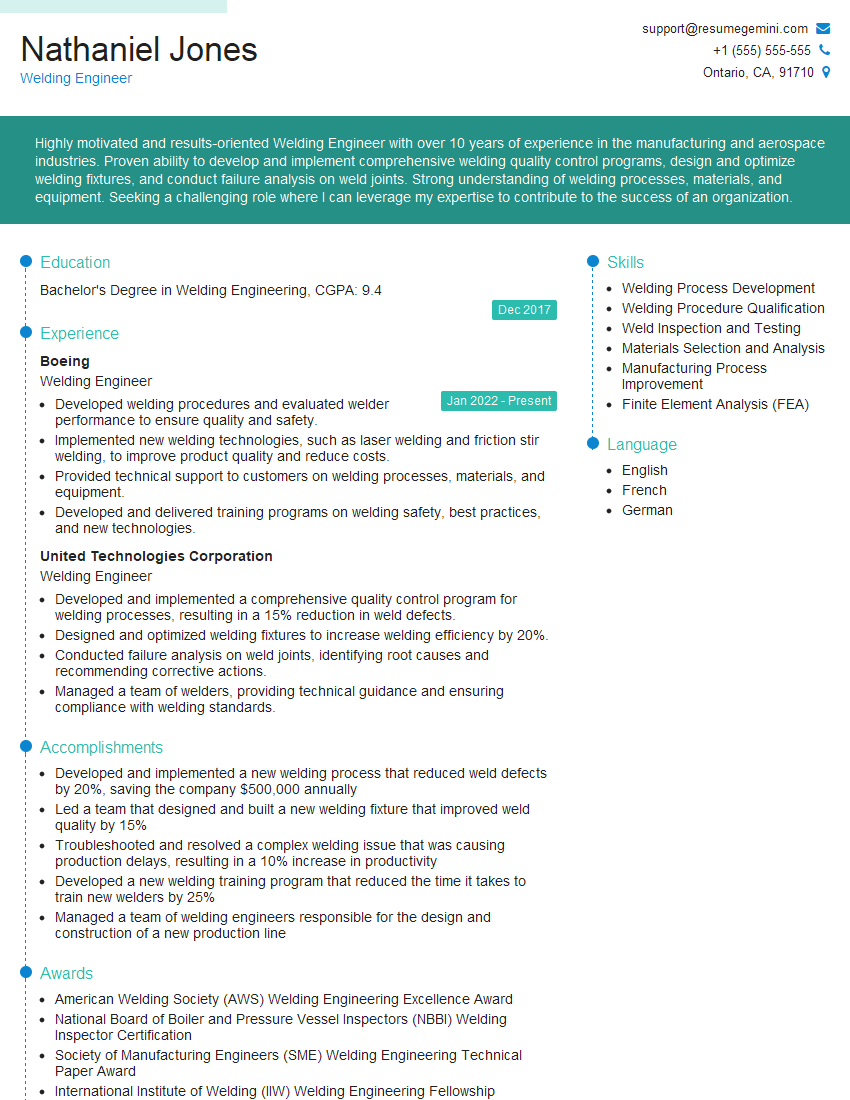
Welding Engineer Resume Sample
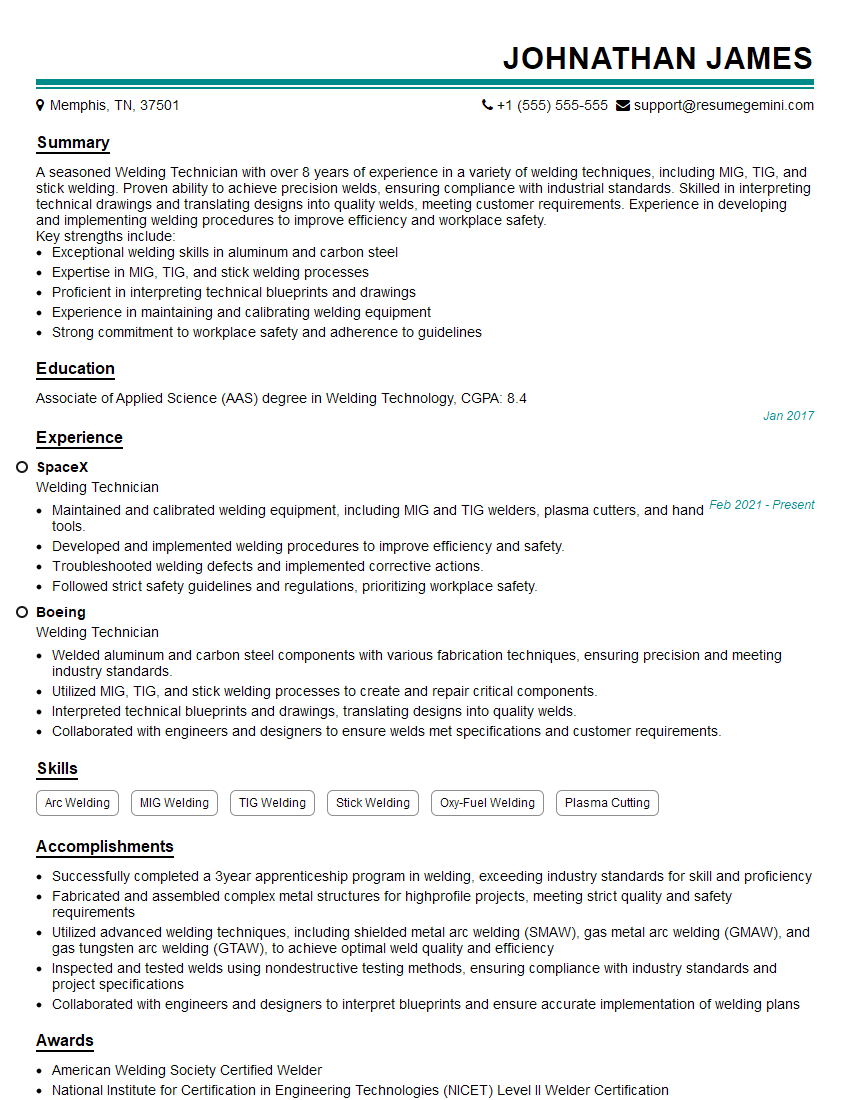
Welding Technician Resume Sample
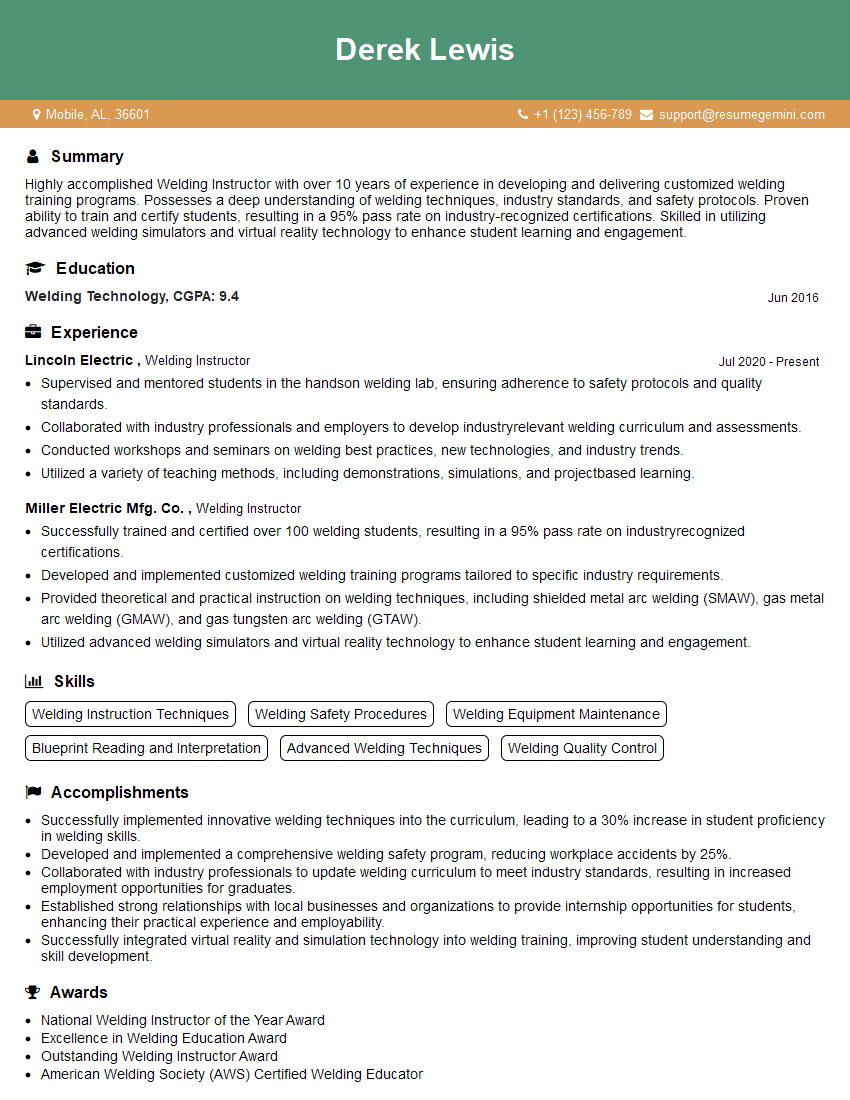
Welding Instructor Resume Sample
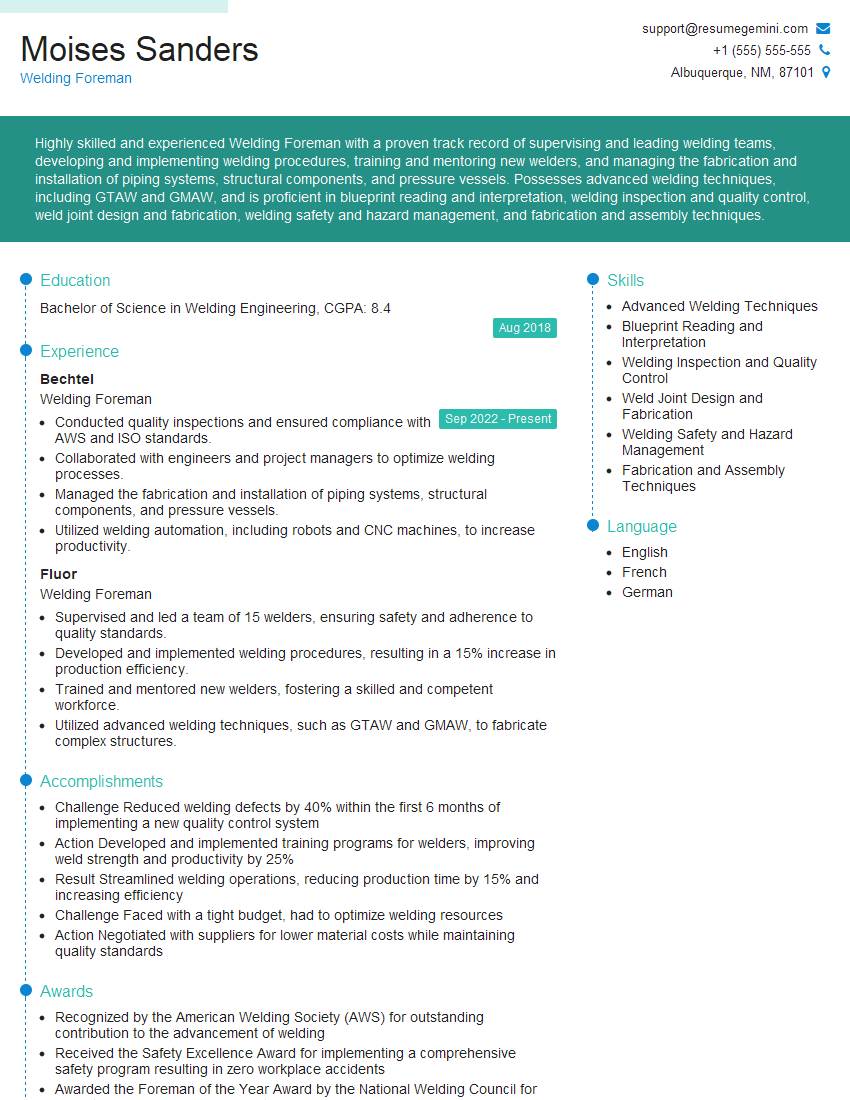
Welding Foreman Resume Sample
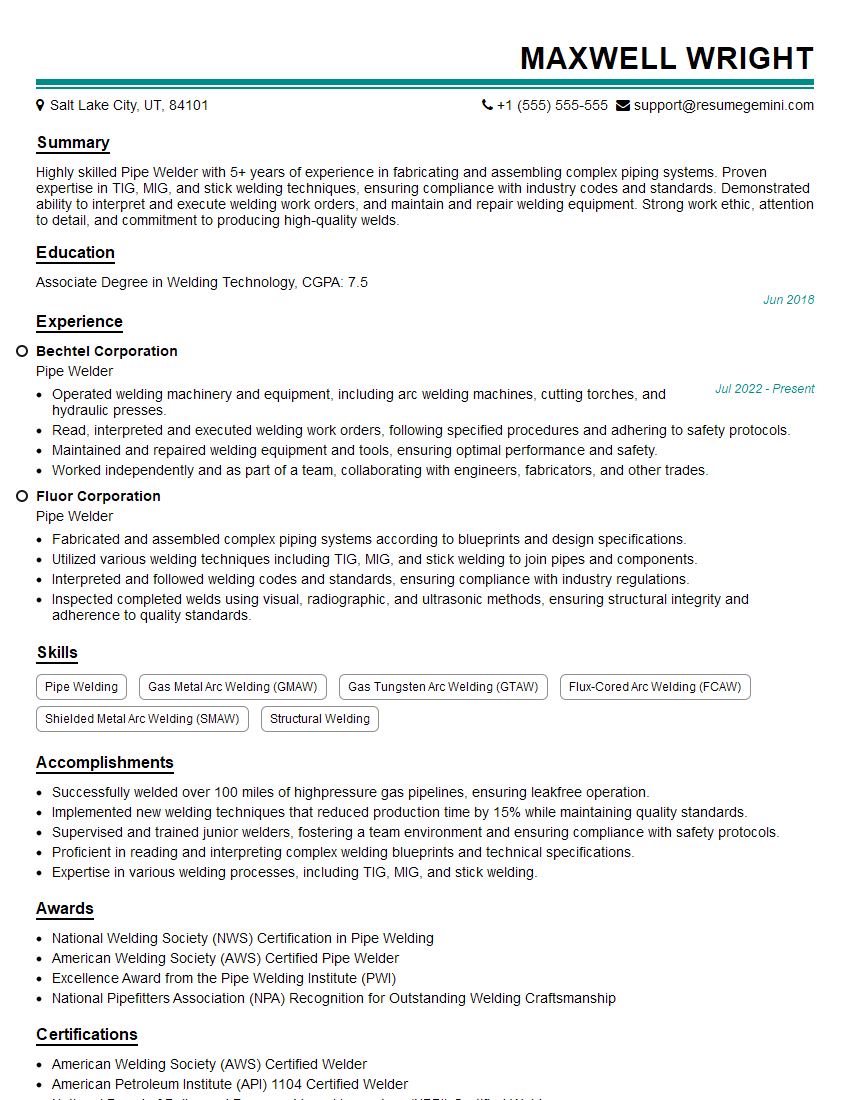
Pipe Welder Resume Sample
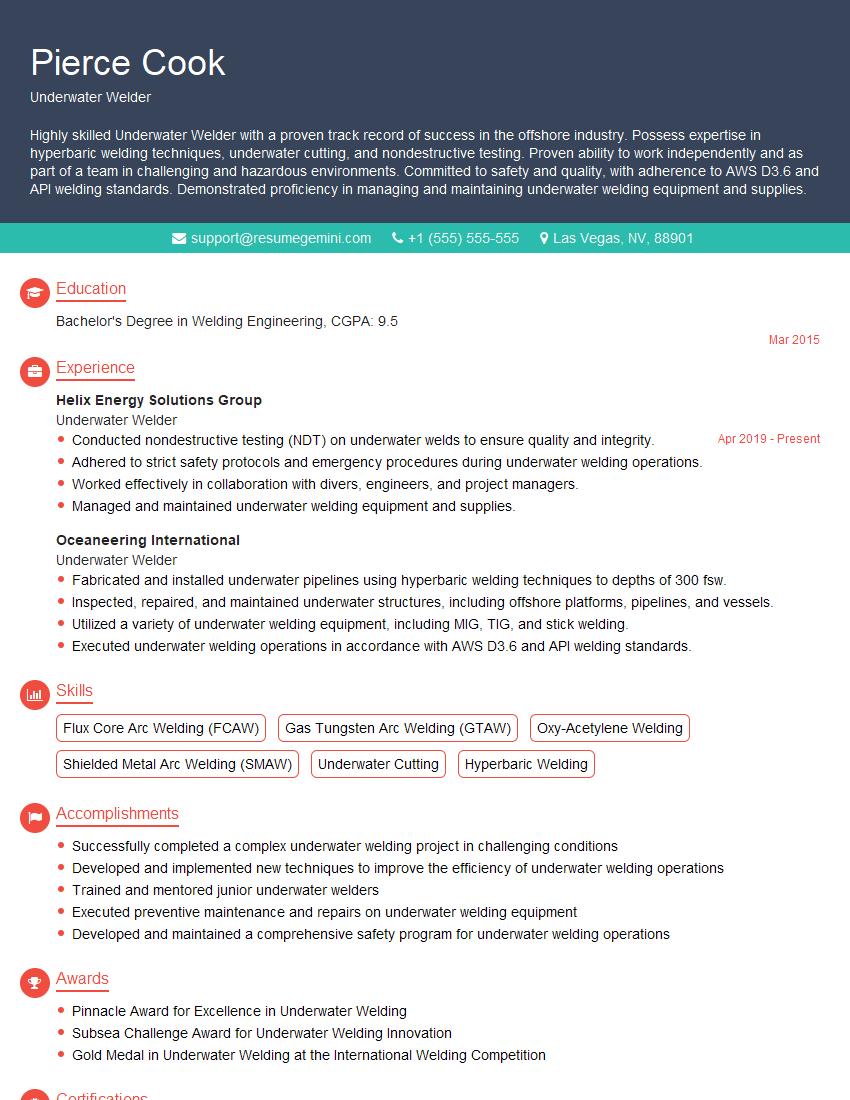
Underwater Welder Resume Sample
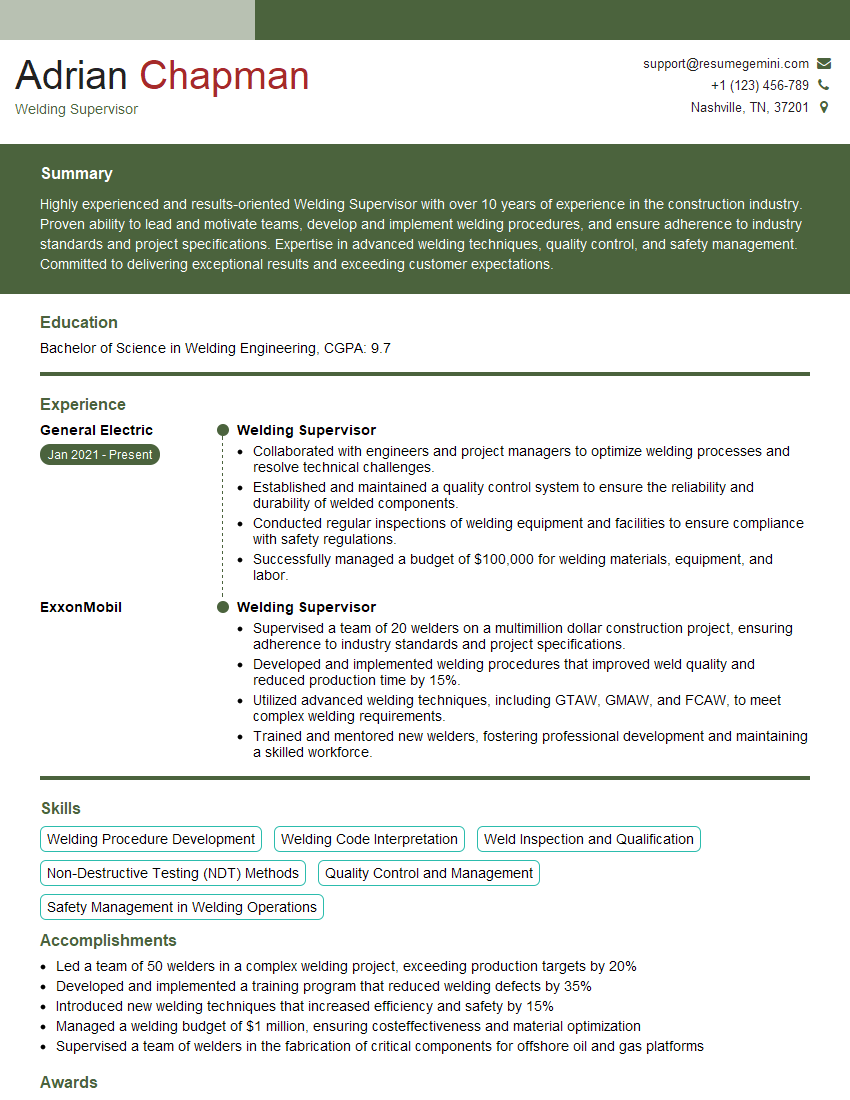
Welding Supervisor Resume Sample
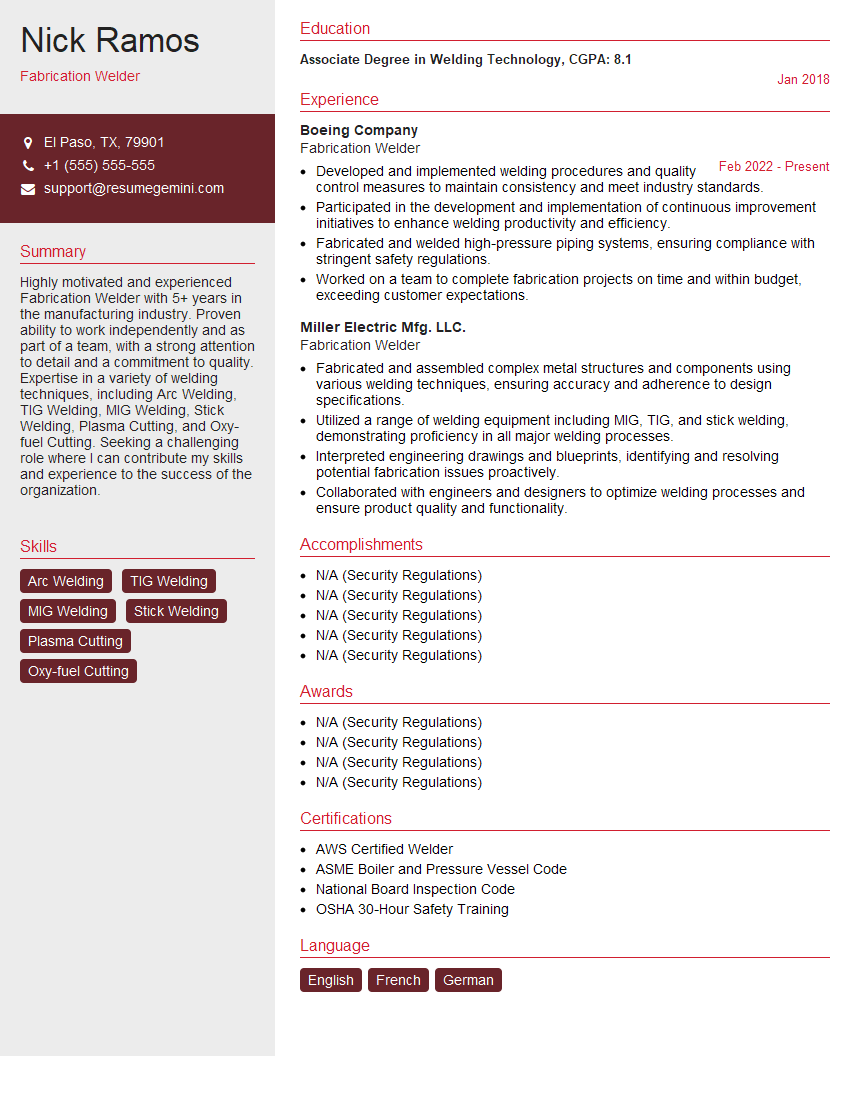
Fabrication Welder Resume Sample
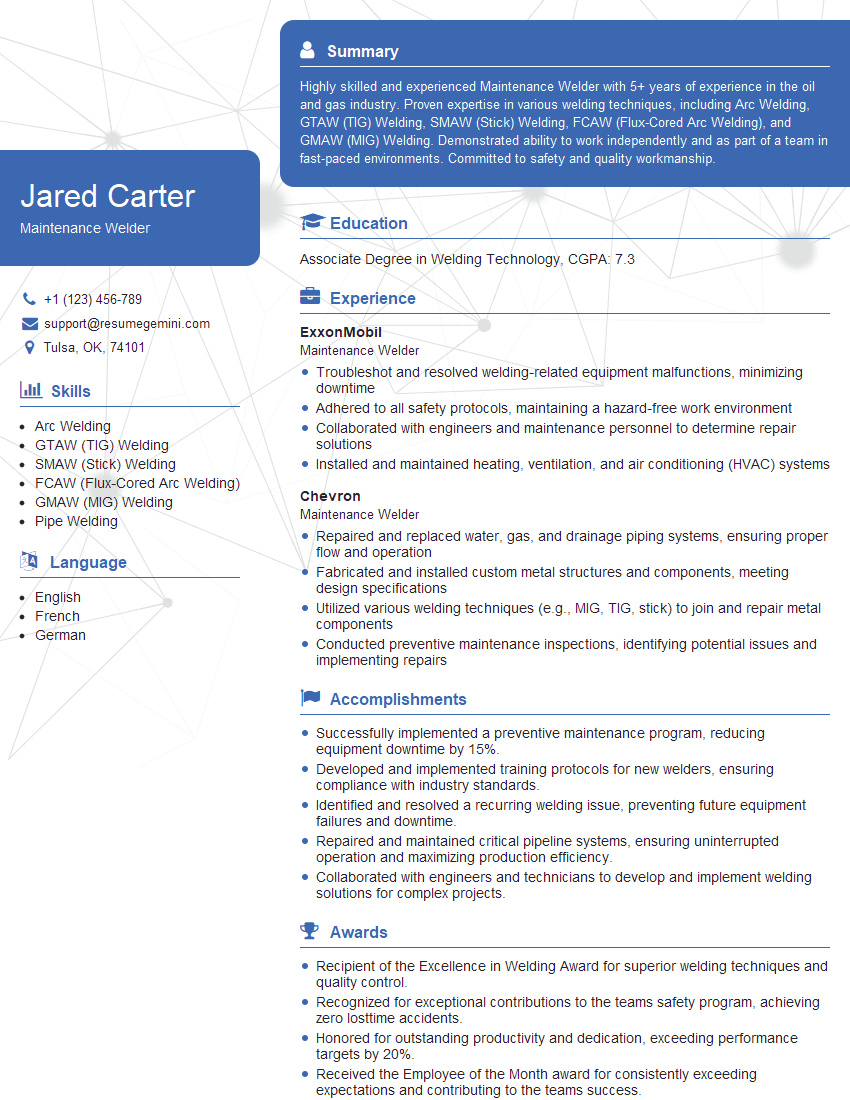
Maintenance Welder Resume Sample
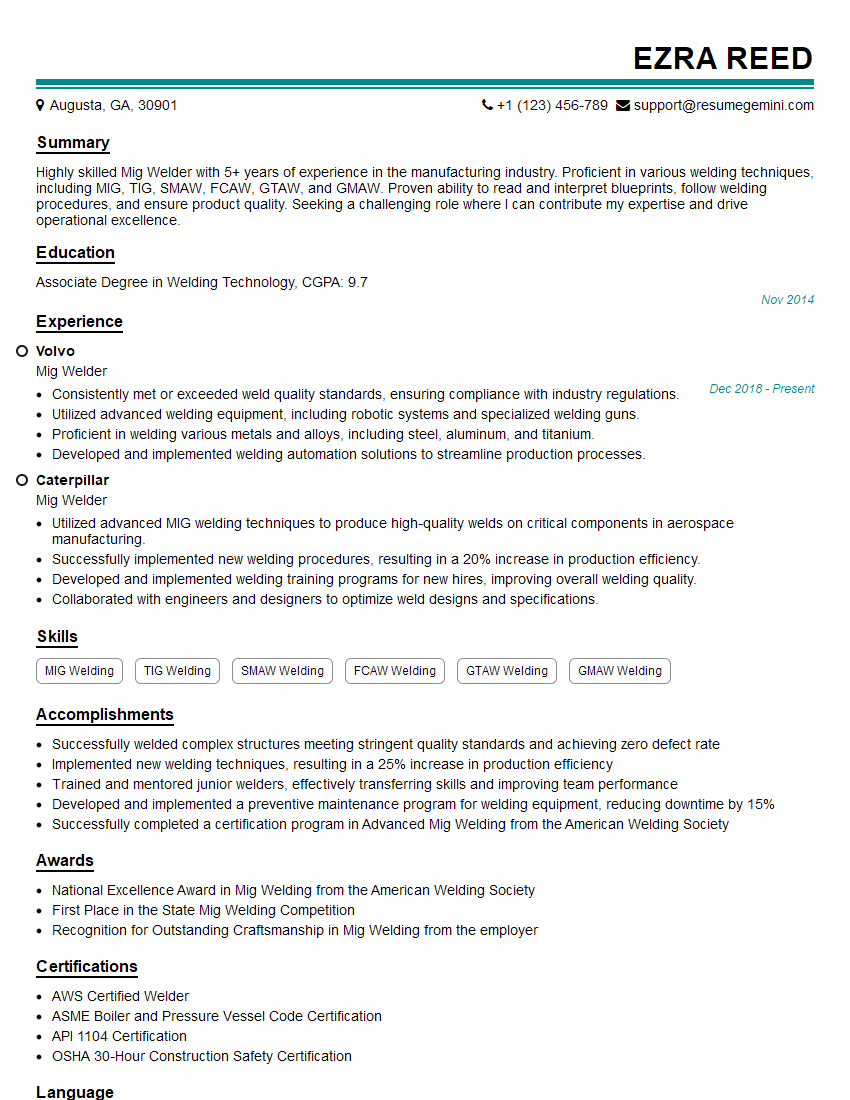
Mig Welder Resume Sample
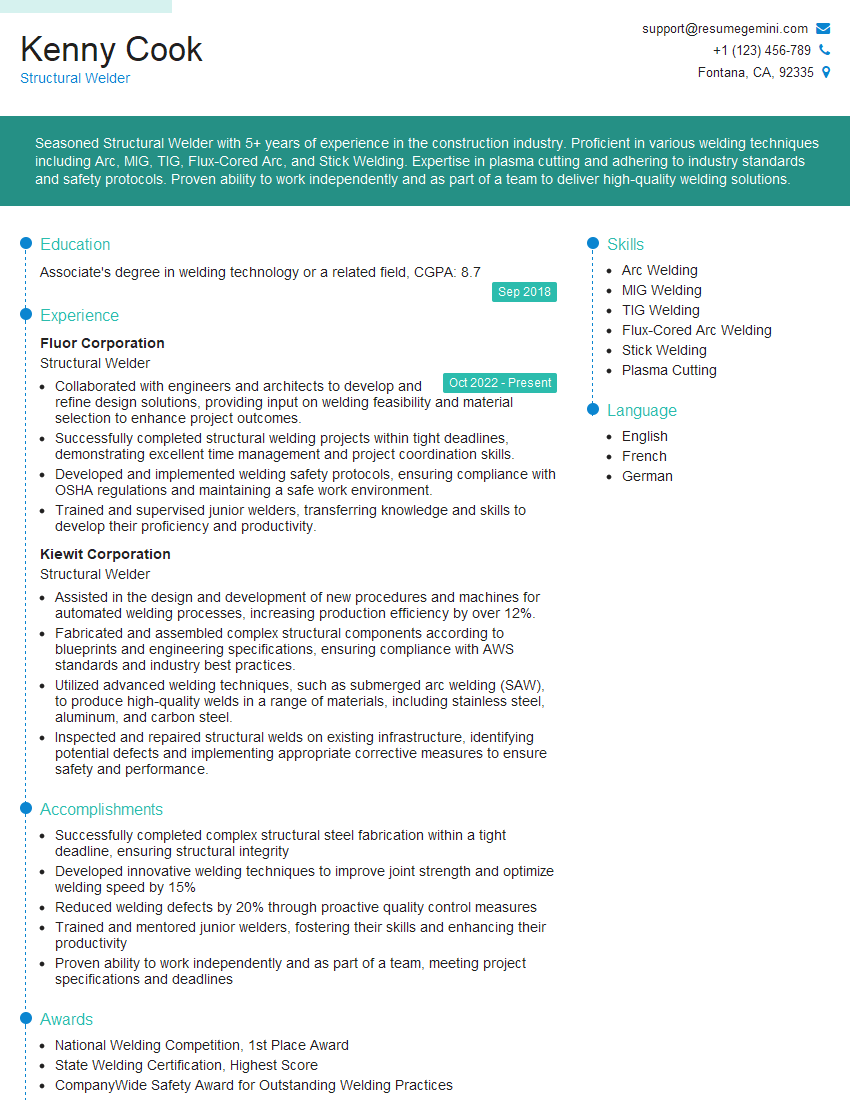
Structural Welder Resume Sample
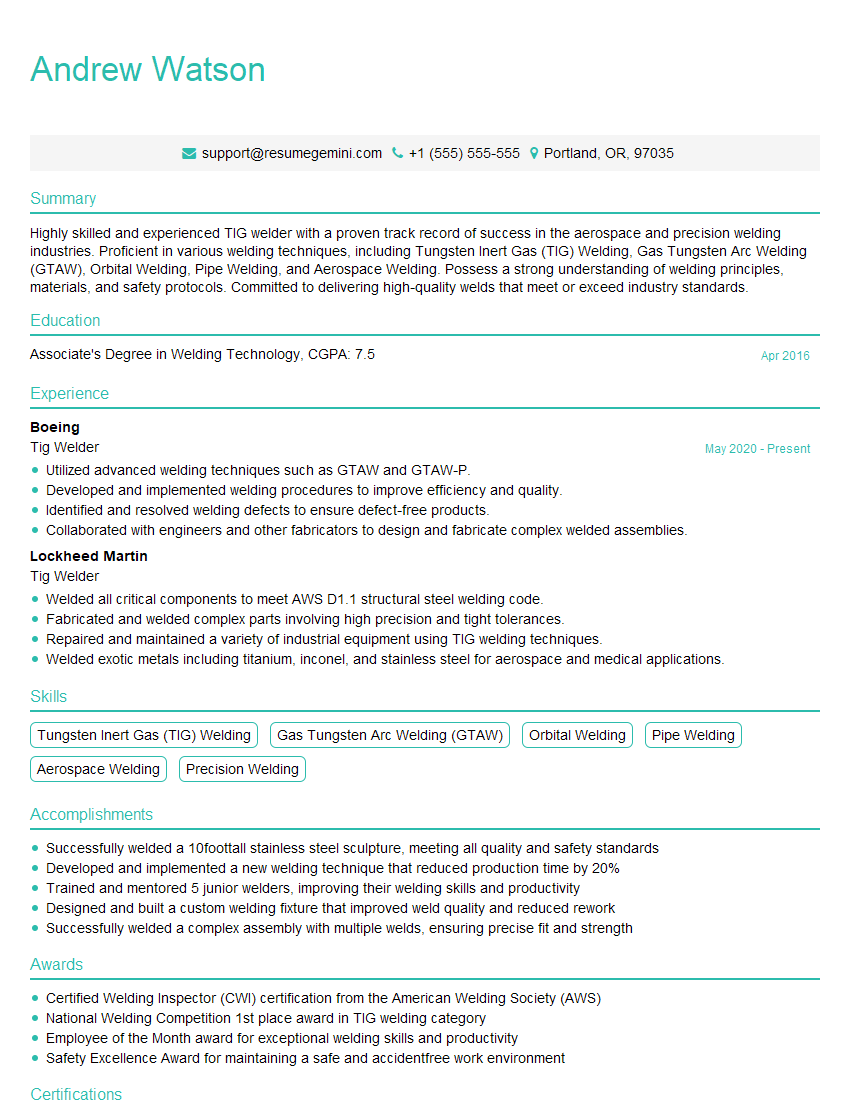
Tig Welder Resume Sample
Explore more articles
Users Rating of Our Blogs
Share Your Experience
We value your feedback! Please rate our content and share your thoughts (optional).
What Readers Say About Our Blog
To the interviewgemini.com Webmaster.
Very helpful and content specific questions to help prepare me for my interview!
Thank you
To the interviewgemini.com Webmaster.
This was kind of a unique content I found around the specialized skills. Very helpful questions and good detailed answers.
Very Helpful blog, thank you Interviewgemini team.