Interviews are opportunities to demonstrate your expertise, and this guide is here to help you shine. Explore the essential Experience in working with industrial lighting interview questions that employers frequently ask, paired with strategies for crafting responses that set you apart from the competition.
Questions Asked in Experience in working with industrial lighting Interview
Q 1. What are the different types of industrial lighting fixtures and their applications?
Industrial lighting fixtures are diverse, each designed for specific tasks and environments. Here are some common types:
- High-Bay Lights: These are powerful fixtures mounted high in warehouses, factories, and gymnasiums, providing wide area illumination. Think of the bright lights you see in large, open spaces. They often use high-pressure sodium (HPS) or metal halide lamps, but LEDs are increasingly popular due to their energy efficiency and long lifespan.
- Low-Bay Lights: Used in spaces with lower ceilings, like workshops or smaller factories, low-bay lights offer a more focused illumination compared to high-bay fixtures. They are also commonly available in LED, HPS, and Metal Halide options.
- Linear High Bays: These are long, continuous lighting units that are increasingly popular in warehouses and distribution centers. The continuous nature helps eliminate dark spots and creates a more uniform lighting distribution.
- Linear LED Troffers: These fixtures are commonly used in offices, but are increasingly appearing in industrial applications that require a more refined aesthetic. These provide even light distribution in a ceiling-mounted panel.
- Flood Lights: Used for outdoor industrial areas, such as loading docks or parking lots, to illuminate large areas.
- Vapor-Tight Fixtures: Specifically designed for damp or wet environments, such as food processing plants or car washes, offering protection against moisture and dust.
- Explosion-Proof Fixtures: Essential for hazardous locations where flammable materials are present, providing protection against ignition from electrical sparks or heat.
The choice of fixture depends heavily on the application’s ceiling height, required light levels (lumens), the ambient environment (temperature, humidity, potential hazards), and budget considerations.
Q 2. Explain the concept of lumen maintenance and its importance in industrial settings.
Lumen maintenance refers to the ability of a lighting fixture to retain its initial light output over time. It’s expressed as a percentage of initial lumens after a specific operating time (e.g., 40,000 hours). Imagine a light bulb starting at 100 lumens; after 40,000 hours, if its lumen maintenance is 80%, it’ll still produce 80 lumens.
In industrial settings, high lumen maintenance is crucial for several reasons:
- Safety: Maintaining adequate light levels is vital for worker safety, preventing accidents caused by poor visibility.
- Productivity: Dimming lights reduce visibility and can negatively impact worker productivity and morale.
- Cost Savings: Higher lumen maintenance means less frequent fixture replacement, saving on labor and material costs.
Therefore, choosing fixtures with high lumen maintenance ratings is a key factor in designing a cost-effective and safe industrial lighting system. LED lights, for example, typically have much better lumen maintenance than traditional technologies like HPS or Metal Halide.
Q 3. Describe your experience with various lighting control systems (e.g., dimming, occupancy sensors).
I have extensive experience with various lighting control systems, significantly improving energy efficiency and optimizing lighting for specific tasks. I’ve worked with:
- Dimming Systems: I’ve implemented 0-10V dimming systems and DALI (Digital Addressable Lighting Interface) systems for precise control over light levels, reducing energy consumption during periods of low activity or when ambient light is sufficient. For example, in a warehouse, dimming can be scheduled for nighttime hours when fewer workers are present.
- Occupancy Sensors: I’ve integrated occupancy sensors into various industrial settings, automatically turning lights on when someone enters a room or area and off when it’s unoccupied. This prevents energy waste from lights left on in empty spaces. I’ve encountered situations where improperly placed sensors caused lights to turn off prematurely, so careful planning and placement are vital.
- Time Clocks and Scheduling: I’ve used programmable timers and scheduling systems to control lighting based on predetermined time schedules, turning lights on and off automatically to further reduce energy use. This is particularly useful in settings with consistent operational schedules.
- Wireless Control Systems: I have experience with wireless control systems that allow for remote monitoring and adjustment of lighting levels and schedules. This is advantageous in large facilities where manually adjusting each fixture would be impractical.
My experience includes troubleshooting malfunctions in these systems, from faulty sensors to wiring problems. I always prioritize selecting reliable and robust systems that minimize maintenance requirements.
Q 4. How do you calculate the lighting requirements for an industrial space?
Calculating lighting requirements for an industrial space involves several steps:
- Determine the required illuminance level: This depends on the task being performed. Industry standards and codes provide recommended illuminance levels for various tasks (e.g., assembly lines require higher illuminance than storage areas). This is typically measured in lux (lx).
- Calculate the area to be illuminated: Measure the total area that needs lighting.
- Consider the room’s reflectance: The color and reflectivity of walls, ceilings, and floors affect the amount of light reflected, influencing the required light output. Higher reflectivity reduces the needed fixture output.
- Select the lighting fixtures: Choose fixtures that provide the required illuminance levels and suit the environment. Refer to manufacturers’ data sheets which provide lumen output (lumens) and light distribution curves.
- Calculate the number of fixtures: Divide the total required lumens by the lumen output of a single fixture to determine the number of fixtures needed. Consider spacing to ensure even light distribution. Often lighting design software is employed for this step.
- Verify the uniformity of illumination: Conduct a lighting simulation or physical measurement to ensure even light distribution across the space. Avoid overly bright or dark spots.
The formula for basic calculation is: Total Lumens Needed = (Illuminance Level in lux) x (Area in square meters) x (Light Loss Factor). The Light Loss Factor accounts for depreciation of lumens over time and other factors that affect overall system performance.
Q 5. What are the key factors to consider when designing an energy-efficient lighting system?
Designing an energy-efficient industrial lighting system requires careful consideration of several factors:
- High-Efficacy Lighting: Using fixtures with high lumens per watt (LPW) is crucial, with LEDs generally outperforming traditional lighting technologies.
- Lighting Controls: Implementing dimming, occupancy sensors, and time scheduling systems drastically reduces energy consumption by only illuminating areas and times when needed.
- Daylight Harvesting: Integrating daylight harvesting strategies utilizes natural light to reduce the reliance on artificial lighting. This can involve strategically placed windows or skylights.
- Fixture Placement and Spacing: Proper spacing and arrangement ensure even light distribution, minimizing the need for excessive lighting and reducing energy waste.
- Reflective Surfaces: Utilizing light-colored and highly reflective surfaces on walls and ceilings increases the overall light level, reducing the need for more fixtures.
- Regular Maintenance: Cleaning fixtures regularly removes dust and dirt buildup, ensuring optimal light output and efficiency.
- Energy-Efficient Ballasts: For non-LED fixtures, using energy-efficient ballasts is essential.
A holistic approach, considering all these factors, is key to creating a sustainable and cost-effective industrial lighting system. A thorough lighting audit, taking into account existing fixtures and energy usage, often precedes any design or implementation changes.
Q 6. What are the safety regulations and codes relevant to industrial lighting installations?
Safety regulations and codes for industrial lighting installations vary depending on location and specific industry, but common elements include:
- National Electrical Code (NEC): This provides guidelines for safe electrical installations, including wiring, grounding, and protection against electrical hazards in lighting systems. This is a crucial standard in the United States.
- OSHA (Occupational Safety and Health Administration) Regulations: OSHA sets standards for workplace safety, including adequate lighting levels in various industrial settings. They specify minimum illuminance levels based on the type of work being performed.
- IEC Standards (International Electrotechnical Commission): These provide international standards for electrical equipment and safety, relevant for globally operating companies.
- Local Codes and Regulations: Specific local jurisdictions may have additional regulations related to lighting installations, such as requirements for emergency lighting or specific fixture types for hazardous locations. Always check local building codes.
- Emergency Lighting: Industrial settings typically require emergency lighting systems, providing illumination during power outages.
- Hazardous Locations: Areas with flammable materials or explosive atmospheres necessitate explosion-proof fixtures designed to prevent ignition.
Compliance with these codes is crucial to ensure worker safety and avoid potential legal liabilities. Thorough understanding and strict adherence are essential.
Q 7. Explain your experience with troubleshooting and repairing industrial lighting systems.
Troubleshooting and repairing industrial lighting systems is a common part of my work. My approach is systematic:
- Safety First: Always disconnect power before working on any lighting system component to prevent electrical shock. Employ lockout/tagout procedures.
- Visual Inspection: Begin with a thorough visual inspection, checking for loose connections, damaged wiring, burnt-out lamps, or faulty ballasts.
- Testing with Meters: Utilize multimeters to test voltage, current, and continuity to isolate the faulty component. Understanding basic electrical principles is crucial.
- Component Replacement: Replace faulty components, such as lamps, ballasts, or sensors, ensuring the replacement parts are compatible with the existing system.
- Software Diagnostics (if applicable): For complex lighting control systems, use diagnostic software to identify and resolve any software issues.
- Documentation: Thoroughly document all repairs and maintenance activities.
I’ve encountered situations ranging from simple bulb replacements to complex issues involving faulty control systems and wiring problems. For example, I once resolved an intermittent lighting problem in a large warehouse by tracing a faulty connection within a long cable run. Problem-solving involves a systematic approach, and I always ensure the final solution aligns with safety and energy efficiency standards.
Q 8. What software or tools do you use for lighting design and calculations?
For lighting design and calculations, I utilize a suite of software tools tailored to the specific needs of the project. This often includes DIALux evo, Relux, and AGi32. DIALux evo is particularly useful for its user-friendly interface and comprehensive library of luminaires, allowing me to quickly model different lighting scenarios and analyze illuminance levels. Relux provides more advanced features for complex projects, while AGi32 excels in rendering realistic visualizations of the final lighting scheme. Beyond these, I also use spreadsheet software like Microsoft Excel for detailed calculations involving power consumption, energy costs, and lifecycle analysis. Finally, I frequently employ industry-standard photometric files (.ies) to accurately model the light distribution of specific fixtures.
Q 9. How do you select appropriate lighting fixtures for different industrial environments (e.g., hazardous locations)?
Selecting appropriate lighting fixtures for different industrial environments requires careful consideration of several factors. For hazardous locations, such as those involving flammable materials or explosive atmospheres, I prioritize fixtures certified to the relevant safety standards. These certifications, such as Class I, Division 1 or Class II, Division 2, are critical for ensuring worker safety and preventing potential accidents. The specific certification will depend on the type and level of hazard present. Beyond safety, the choice of fixture will also depend on the environmental conditions. For example, in damp or wet locations, I would specify fixtures with appropriate ingress protection (IP) ratings (e.g., IP65 for dust-tight and water-jet resistant). Similarly, in areas with high dust levels or corrosive environments, robust fixtures with appropriate material construction (e.g., stainless steel) are necessary. Finally, the required illuminance level, color temperature, and light distribution pattern will also inform fixture selection. For instance, a high bay warehouse might require high-output fixtures with wide light distribution, while a precision assembly area may necessitate lower-intensity lighting with high color rendering.
Q 10. Describe your experience with different lighting technologies (e.g., LED, HID, fluorescent).
My experience encompasses a wide range of lighting technologies, including LED, High-Intensity Discharge (HID), and fluorescent. Fluorescent lighting, while once prevalent, is gradually being phased out in many industrial applications due to its lower energy efficiency and shorter lifespan compared to LEDs. HID lamps, including Metal Halide and High-Pressure Sodium, offer high lumen output and are still used in some high-bay applications, particularly where cost is a primary concern. However, they have longer start-up times and require special ballasts. LEDs, on the other hand, have become the dominant technology in recent years due to their superior energy efficiency, longer lifespan, instant on/off capabilities, and versatile design options. I have extensive experience designing systems with various LED technologies, including high-power LEDs for high-bay applications and smaller LEDs for low-bay or task lighting. I also consider the color rendering index (CRI) and color temperature when selecting LEDs for specific industrial applications.
Q 11. How do you ensure compliance with lighting standards and regulations?
Ensuring compliance with lighting standards and regulations is paramount in my work. I meticulously adhere to relevant codes and standards, including but not limited to the National Electrical Code (NEC), the International Building Code (IBC), and any applicable OSHA regulations related to workplace lighting. These regulations cover aspects such as illuminance levels (foot-candles or lux), emergency lighting requirements, and safety standards for hazardous locations. My process involves reviewing the applicable codes early in the design phase, selecting fixtures that meet or exceed these requirements, and documenting all design decisions and compliance measures. Throughout the project, I ensure that all installations are inspected to confirm adherence to the standards and obtain necessary approvals before commissioning the lighting system. I regularly update my knowledge on the latest revisions to these codes to remain current and ensure projects are always compliant.
Q 12. Explain the importance of color rendering index (CRI) in industrial lighting.
The Color Rendering Index (CRI) is a crucial factor in industrial lighting design, especially in tasks requiring accurate color perception. CRI measures how faithfully a light source renders the colors of objects compared to a reference light source (daylight). A higher CRI (0-100) indicates better color rendering; a CRI of 80 or higher is generally considered good for most industrial applications. In a manufacturing environment, for example, accurate color rendering is essential for quality control inspections. In situations where workers must identify subtle color variations in products or materials, a high CRI is essential to avoid errors and ensure product quality. A low CRI might lead to misjudgments, impacting productivity and potentially increasing waste. Therefore, I always specify appropriate CRI levels based on the specific task and visual requirements of the application, ensuring that the selected lighting provides accurate and consistent color reproduction throughout the industrial space.
Q 13. How do you manage lighting projects, from design to implementation?
Managing lighting projects involves a systematic approach, starting with a thorough understanding of the client’s needs and the specific characteristics of the space. This initial phase involves site surveys, discussions with stakeholders, and a comprehensive analysis of the required illuminance levels, energy efficiency goals, and aesthetic considerations. The design phase follows, leveraging lighting design software to model different lighting scenarios, optimizing for energy efficiency and visual comfort. Once the design is finalized, the next step is procurement of fixtures, components, and materials. The installation phase requires meticulous coordination with contractors and electricians, with regular site visits to monitor progress and ensure quality. Finally, the commissioning phase involves testing the system, verifying compliance with standards, and making any necessary adjustments before handover to the client. Throughout the entire process, I maintain transparent communication with all stakeholders, providing regular updates and addressing any concerns promptly.
Q 14. What is your experience with lighting maintenance programs and preventative maintenance?
Implementing comprehensive lighting maintenance programs is critical for maximizing the lifespan of lighting systems and minimizing energy waste. This usually involves a combination of preventative and corrective maintenance strategies. Preventative maintenance includes regular cleaning of fixtures, inspections for faulty components, and proactive replacements of ballasts or other components nearing the end of their life cycle. This approach can significantly extend the lifespan of the lighting system and prevent unexpected failures. I usually recommend a schedule based on the type of fixtures and the environmental conditions. For example, fixtures in dusty environments may require more frequent cleaning. Corrective maintenance addresses unexpected failures, such as burnt-out lamps or malfunctioning ballasts. A well-structured maintenance program can significantly reduce operational costs, improve worker safety, and enhance overall system performance. Establishing key performance indicators (KPIs), such as mean time between failures (MTBF) and mean time to repair (MTTR), allows for continuous monitoring and improvement of the maintenance strategy.
Q 15. Describe your experience with lighting retrofits and upgrades.
Lighting retrofits and upgrades are crucial for improving energy efficiency, enhancing safety, and modernizing industrial facilities. My experience encompasses a wide range of projects, from replacing outdated high-pressure sodium (HPS) fixtures with energy-efficient LEDs in large warehouses to implementing sophisticated lighting control systems in manufacturing plants. I’ve managed all aspects, from initial assessments and design to procurement, installation, and post-installation monitoring. For instance, in one project, we replaced 400 outdated metal halide fixtures in a food processing plant with LED high bays. This resulted in a 60% reduction in energy consumption and a significant decrease in maintenance costs because LEDs have a much longer lifespan. Another project involved integrating a DALI lighting control system, allowing for granular control over lighting levels in different zones based on occupancy and daylight harvesting, further optimizing energy use.
- Needs Assessment: Thorough site surveys to identify existing lighting infrastructure and energy consumption patterns.
- Design & Specification: Selecting appropriate fixtures and control systems based on the specific needs of the space, considering factors like lumen output, color rendering index (CRI), and mounting heights.
- Implementation & Installation: Overseeing the safe and efficient installation of new fixtures and control systems, ensuring compliance with all relevant safety regulations.
- Post-Installation Monitoring: Tracking energy consumption and system performance to identify potential issues and optimize system operation.
Career Expert Tips:
- Ace those interviews! Prepare effectively by reviewing the Top 50 Most Common Interview Questions on ResumeGemini.
- Navigate your job search with confidence! Explore a wide range of Career Tips on ResumeGemini. Learn about common challenges and recommendations to overcome them.
- Craft the perfect resume! Master the Art of Resume Writing with ResumeGemini’s guide. Showcase your unique qualifications and achievements effectively.
- Don’t miss out on holiday savings! Build your dream resume with ResumeGemini’s ATS optimized templates.
Q 16. How do you handle lighting emergencies and repairs?
Handling lighting emergencies and repairs requires a rapid response and a systematic approach. My experience includes troubleshooting various issues, from blown bulbs and ballast failures to more complex problems with control systems. My first step is always safety. I ensure the area is properly secured and that any hazards are addressed before beginning any work. I then perform a thorough assessment of the problem, which often involves using testing equipment like multimeters to diagnose faults. For example, I once dealt with a complete lighting outage in a critical manufacturing area caused by a tripped circuit breaker. I quickly identified the root cause – an overloaded circuit – and worked to restore power while coordinating with maintenance staff to address the underlying issue. The key is to have a well-stocked supply of common replacement parts and a good understanding of the electrical system.
- Safety First: Prioritize safety and adhere to lockout/tagout procedures.
- Troubleshooting: Systematic approach to identifying the root cause of the failure, utilizing appropriate testing equipment.
- Repair or Replacement: Replacing faulty components or fixtures efficiently and safely.
- Documentation: Maintaining detailed records of all repairs and maintenance activities.
Q 17. What are your skills in using lighting simulation software?
I’m proficient in using several lighting simulation software packages, including DIALux evo and AGi32. These tools allow me to create accurate virtual models of lighting systems, enabling me to predict lighting levels, uniformity, and glare before installation. This is critical for optimizing designs and avoiding costly mistakes. For example, I used DIALux evo to simulate the lighting for a large distribution center. By inputting the building geometry, fixture data, and desired illuminance levels, I was able to optimize the fixture placement and spacing to achieve even illumination across the entire space while minimizing energy consumption. This kind of simulation allows for informed decisions and adjustments before the physical implementation, significantly reducing project risks and improving the final outcome.
- Model Creation: Importing building plans and creating accurate 3D models.
- Fixture Selection & Placement: Defining fixture specifications and positioning them within the model.
- Simulation & Analysis: Running simulations to assess lighting levels, uniformity, and glare.
- Report Generation: Generating detailed reports to support design decisions.
Q 18. How familiar are you with different lighting control protocols (e.g., DALI, DMX)?
I have extensive experience with various lighting control protocols, including DALI (Digital Addressable Lighting Interface) and DMX (Digital Multiplex). DALI allows for individual control of lighting fixtures, enabling advanced features such as dimming, scene setting, and occupancy sensing. DMX is often used in more dynamic applications, like stage lighting, but can also be applied to industrial settings needing intricate control sequences. I understand the advantages and limitations of each protocol and can select the most appropriate solution for a given project. For instance, a recent project involved integrating a DALI system into a manufacturing facility to optimize lighting levels based on real-time occupancy data. This system provided significant energy savings and improved worker comfort.
- DALI: Experience programming and commissioning DALI systems, including addressing fixtures and configuring control scenarios.
- DMX: Familiarity with DMX protocols and their applications in industrial environments.
- Other Protocols: Understanding of other relevant lighting control technologies, such as BACnet and LonWorks.
Q 19. What are the benefits and drawbacks of different lighting technologies?
Different lighting technologies each have their own strengths and weaknesses. Let’s compare High-Pressure Sodium (HPS), Metal Halide (MH), and LEDs:
- High-Pressure Sodium (HPS): HPS lamps are cost-effective but have poor color rendering and relatively short lifespans. They also produce significant heat.
- Metal Halide (MH): MH lamps offer better color rendering than HPS but are still less efficient than LEDs and have shorter lifespans.
- LEDs (Light Emitting Diodes): LEDs are the most energy-efficient option, boasting long lifespans and excellent color rendering capabilities. They also generate less heat, leading to lower cooling costs. However, initial costs can be higher.
The best technology depends on the specific application. For high-bay lighting in a warehouse where energy efficiency is paramount, LEDs are the clear winner. In applications where cost is the primary concern and color rendering is less critical, HPS might be more suitable (though this is becoming increasingly rare). Ultimately, a comprehensive cost-benefit analysis considering lifecycle costs is crucial in selecting the optimal technology.
Q 20. How do you ensure the proper installation and grounding of industrial lighting fixtures?
Proper installation and grounding of industrial lighting fixtures are paramount for safety and reliability. I adhere strictly to all relevant electrical codes and safety regulations (like NEC in the US). This involves careful planning, proper wiring techniques, and thorough testing. Before starting any installation, I always perform a thorough inspection of the existing electrical system to ensure it can handle the added load. Then, using appropriate wiring techniques and ensuring all connections are secure and well-insulated, I mount the fixtures and ensure proper grounding connections. This is critical to prevent electrical shocks and fires. Post-installation, I conduct thorough testing using a multimeter to verify the correct voltage, current, and grounding continuity. Any discrepancies are immediately addressed. Failure to properly ground fixtures could have devastating consequences, leading to electrical hazards and potential equipment damage.
- Electrical Code Compliance: Adherence to all relevant electrical codes and safety standards.
- Wiring & Connections: Using appropriate wiring techniques and ensuring secure and insulated connections.
- Grounding: Proper grounding of fixtures to prevent electrical shocks and fires.
- Testing & Verification: Thorough testing using a multimeter to verify proper installation.
Q 21. What experience do you have with photometric data and its analysis?
Photometric data, which includes illuminance, luminance, and other lighting characteristics, is essential for evaluating lighting designs and optimizing energy efficiency. My experience includes analyzing photometric files (IES files) using software tools to understand lighting performance. I can interpret data to assess whether a design meets the required illuminance levels, uniformity, and glare control criteria. For example, I recently used photometric data to compare the performance of two different LED high-bay fixtures in a factory setting. By analyzing the IES files, I was able to determine that one fixture provided better uniformity and lower glare, despite having a slightly lower initial lumen output. This analysis informed the final fixture selection. This type of data-driven decision-making ensures that the lighting system meets all functional and aesthetic requirements while minimizing energy costs.
- Data Acquisition: Obtaining photometric data from manufacturers.
- Software Analysis: Using software to analyze the data and generate reports.
- Interpretation & Reporting: Interpreting the data to evaluate lighting performance and energy efficiency.
- Design Optimization: Using data analysis to inform design decisions and optimize lighting system performance.
Q 22. How do you work with clients and stakeholders to meet their lighting needs?
Collaborating with clients and stakeholders on industrial lighting projects requires a multifaceted approach. It begins with active listening – understanding their operational needs, budgetary constraints, and aesthetic preferences. I start by asking detailed questions about their work processes, safety concerns, and desired ambiance. For instance, a manufacturing plant might prioritize high-intensity lighting for precision tasks, while a warehouse may require even illumination for efficient material handling.
Then, I present various lighting solutions tailored to their specific needs, explaining the pros and cons of each option – from energy-efficient LED systems to high-bay lighting or specialized task lighting. I provide detailed cost breakdowns and energy consumption estimates to help them make informed decisions. Throughout the process, I emphasize clear and consistent communication, ensuring everyone is on the same page regarding timelines, deliverables, and expectations. Regular progress updates and open dialogue are crucial for maintaining a strong working relationship and achieving a successful outcome.
For example, in a recent project for a food processing facility, the client was initially focused solely on cost. By demonstrating how energy-efficient LEDs could result in long-term cost savings through reduced energy bills and maintenance, I convinced them to invest in a more sustainable and ultimately cost-effective solution.
Q 23. Describe your experience in budgeting and cost estimation for lighting projects.
Accurate budgeting and cost estimation are paramount in industrial lighting projects. My experience includes developing comprehensive budgets encompassing all aspects, from initial site surveys and design to procurement, installation, and commissioning. I use various methods, including detailed quantity take-offs (QTOs), to accurately estimate material costs, labor hours, and equipment rental. Software like Dialux or AGi32 plays a critical role in simulating lighting designs and optimizing energy consumption, which directly impacts the budget.
I also factor in potential unforeseen costs, such as site-specific challenges or material price fluctuations, to mitigate risks. Creating contingency plans allows for flexibility and prevents budget overruns. Throughout the process, I maintain transparent communication with clients, providing regular updates and justifications for cost adjustments. For example, in a recent project involving a retrofit, the initial budget accounted for potential asbestos abatement, significantly contributing to cost accuracy and client satisfaction.
Q 24. What is your experience with different types of lighting ballasts?
My experience encompasses a wide range of lighting ballasts, both magnetic and electronic. Magnetic ballasts, while simpler and less expensive, are less efficient and generate more heat. Electronic ballasts, on the other hand, offer significant advantages including improved efficiency, better power factor correction, and reduced heat generation. They also enable dimming capabilities and compatibility with various lamp types.
I’ve worked with several types of electronic ballasts, including:
- Electronic Ballasts with High Power Factor (HPF): These ballasts minimize power factor issues, resulting in improved energy efficiency and reduced electrical costs.
- Programmable Electronic Ballasts: These offer features such as dimming, emergency lighting capabilities, and remote monitoring.
- Digital Ballasts: These offer superior control over the lighting output, enabling sophisticated lighting strategies.
Understanding the specific requirements of the project, including energy efficiency targets, budget, and lamp type, dictates the ballast selection. I always consider the long-term cost implications, factoring in maintenance and lifespan of different ballast types to provide the most cost-effective and efficient solution for the client.
Q 25. Explain your knowledge of lighting power factor correction.
Power factor correction (PFC) is crucial in industrial lighting, as it addresses the issue of lagging current caused by inductive loads like fluorescent and HID lamps. A low power factor means the electrical system is less efficient, leading to increased energy consumption and higher electricity bills. PFC improves the efficiency of the electrical system by bringing the power factor closer to 1.0.
Methods for PFC in lighting systems include:
- Using electronic ballasts with integrated PFC: Modern electronic ballasts often incorporate PFC circuitry, improving the power factor without needing additional components.
- Installing centralized PFC capacitors: For larger installations, centrally located capacitors can effectively correct the power factor for the entire system.
I assess the power factor of the existing system and recommend appropriate PFC solutions based on factors such as the size of the installation and the specific lighting fixtures used. The cost savings achieved through PFC are substantial and quickly offset the initial investment. For example, in one project, implementing PFC resulted in a 15% reduction in energy costs, demonstrating a significant return on investment.
Q 26. How do you assess the lighting quality in an existing industrial space?
Assessing lighting quality in an existing industrial space involves a systematic approach. I use a combination of tools and techniques:
- Visual Inspection: I start with a visual walkthrough, noting areas with insufficient illumination, glare, shadows, and uneven light distribution. This provides a qualitative assessment.
- Light Meter Measurements: Using a light meter, I conduct quantitative measurements of illuminance (lux) and luminance (candela per square meter) at various points within the space. These measurements are compared against recommended illuminance levels for different tasks and areas, as defined by relevant standards (e.g., IES).
- Color Rendering Index (CRI) Measurement: I also assess the CRI to determine how accurately the lighting renders colors. A higher CRI indicates better color rendition, important for tasks requiring accurate color perception.
- Spectral Analysis (optional): For more in-depth analysis, spectral analysis may be used to assess the spectral power distribution of the light source.
By combining visual observations and quantitative data, I create a comprehensive report detailing the lighting quality issues and proposing recommendations for improvement. This could include upgrading to more efficient fixtures, optimizing fixture placement, or adding supplemental lighting.
Q 27. What are your skills in creating lighting specifications and documentation?
Creating detailed lighting specifications and documentation is a crucial aspect of my work. These documents serve as the basis for design, procurement, and installation. They outline all aspects of the lighting system, including:
- Fixture types and specifications: Detailed descriptions of the luminaires, including manufacturer, model number, wattage, lumens, CRI, and other relevant parameters.
- Lighting layout and diagrams: Precise drawings showing the location and orientation of each fixture.
- Electrical schematics: Diagrams showing the wiring and power distribution of the lighting system.
- Control systems: Specifications for any lighting control systems, including dimming, occupancy sensors, and daylight harvesting.
- Compliance requirements: Documentation demonstrating compliance with relevant building codes and energy efficiency standards.
I use industry-standard software and templates to create clear, concise, and comprehensive documents. These documents are crucial for ensuring the project is executed correctly and efficiently. The precision and thoroughness of these specifications minimize errors and misunderstandings during the project’s lifecycle.
Q 28. Describe a time you had to troubleshoot a complex lighting issue. What was your approach and outcome?
In a recent project at a large manufacturing facility, we experienced intermittent flickering in a section of the high-bay lighting system. Initially, we suspected faulty ballasts. However, replacing several ballasts didn’t resolve the problem. My approach was systematic troubleshooting:
- Visual Inspection: A thorough visual inspection of the wiring, connectors, and luminaires revealed no obvious issues.
- Power Measurement: Using a power meter, we measured the voltage and current at various points in the circuit, identifying a significant voltage drop in the affected section.
- Electrical Testing: Further investigation using a clamp meter and specialized testing equipment revealed a loose connection in the main power feed to that section.
- Solution: Once the loose connection was identified and tightened, the flickering ceased completely.
This experience highlighted the importance of thorough testing and investigation before jumping to conclusions. It reinforced the need for a systematic approach to troubleshooting, ensuring that all potential causes are considered. The outcome was a fully functional lighting system, and it saved the client significant time and money compared to replacing a larger number of components unnecessarily.
Key Topics to Learn for Industrial Lighting Interview Success
- Types of Industrial Lighting: Understanding the differences between various lighting technologies (e.g., high-bay, low-bay, linear, LED, HID) and their applications in different industrial settings.
- Lighting Design Principles: Familiarity with concepts like illuminance, luminance, color rendering index (CRI), and their impact on workplace safety and productivity. Practical application: Explaining how you’d design lighting for a specific industrial environment (e.g., warehouse, manufacturing plant) considering factors like energy efficiency and worker well-being.
- Energy Efficiency and Cost Savings: Knowledge of energy-efficient lighting technologies and strategies for reducing energy consumption and operational costs. Practical application: Describing your experience in implementing energy-saving measures in a past role.
- Safety Regulations and Compliance: Understanding relevant safety standards and regulations (e.g., OSHA) related to industrial lighting and electrical safety. Practical application: Discussing how you ensured compliance with these regulations in a previous project.
- Troubleshooting and Maintenance: Experience diagnosing and resolving common issues with industrial lighting systems, including ballast replacement, lamp changes, and electrical troubleshooting. Practical application: Detailing a challenging troubleshooting experience and how you successfully resolved it.
- Installation and Project Management: Experience with the installation process of industrial lighting systems, including planning, scheduling, and coordination with other trades. Practical application: Describing your involvement in a large-scale lighting installation project.
- Emerging Technologies: Awareness of advancements in industrial lighting technology, such as smart lighting, IoT integration, and their potential applications.
Next Steps
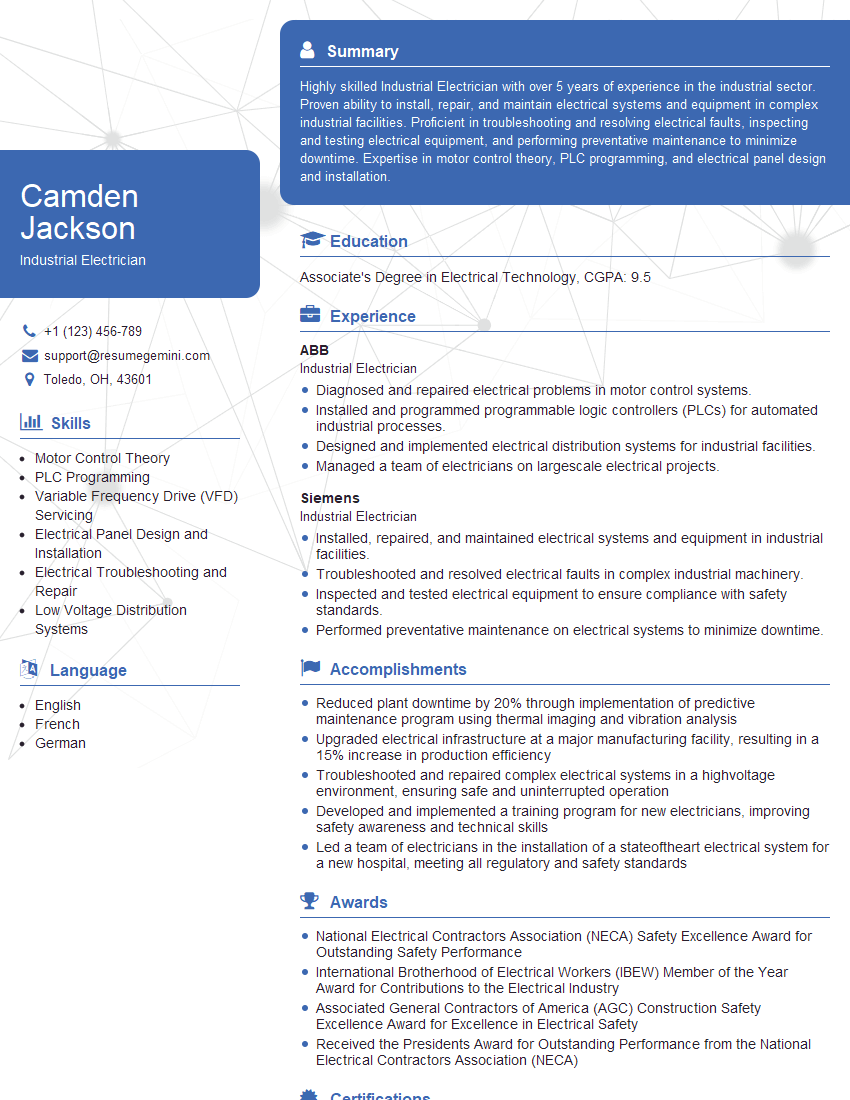
Mastering these areas of industrial lighting expertise significantly enhances your career prospects, opening doors to more challenging and rewarding roles. A well-crafted, ATS-friendly resume is crucial for showcasing your skills and experience to potential employers. To help you create a compelling resume that highlights your qualifications, we recommend using ResumeGemini. ResumeGemini provides a user-friendly platform and access to examples of resumes tailored to industrial lighting experience, ensuring your application stands out. Invest time in crafting a powerful resume – it’s your first impression and a vital step towards your career success.
Explore more articles
Users Rating of Our Blogs
Share Your Experience
We value your feedback! Please rate our content and share your thoughts (optional).
What Readers Say About Our Blog
To the interviewgemini.com Webmaster.
Very helpful and content specific questions to help prepare me for my interview!
Thank you
To the interviewgemini.com Webmaster.
This was kind of a unique content I found around the specialized skills. Very helpful questions and good detailed answers.
Very Helpful blog, thank you Interviewgemini team.