The thought of an interview can be nerve-wracking, but the right preparation can make all the difference. Explore this comprehensive guide to Experience with Dementia-Specific Activities interview questions and gain the confidence you need to showcase your abilities and secure the role.
Questions Asked in Experience with Dementia-Specific Activities Interview
Q 1. Describe your experience with various dementia-related activities.
My experience encompasses a wide range of dementia-specific activities, designed to stimulate cognitive function, promote emotional well-being, and maintain social engagement. This includes everything from gentle exercise and music therapy to reminiscence activities, arts and crafts, and simple games. I’ve worked with individuals at various stages of dementia, adapting my approach to suit their individual needs and abilities. For example, I’ve led sing-alongs with residents who have significant memory loss but retain musical recall, and facilitated group discussions around photographs and personal mementos for those with milder cognitive impairment.
- Cognitive Stimulation: I use puzzles, memory games, and word association exercises to gently challenge cognitive skills.
- Creative Expression: Arts and crafts, such as painting, coloring, and clay modeling, provide opportunities for self-expression and creative exploration.
- Social Interaction: Group activities like bingo, card games, and tea parties foster social interaction and reduce feelings of isolation.
- Physical Activity: Gentle exercises, chair yoga, and simple dances improve physical mobility and reduce anxiety.
- Sensory Stimulation: I utilize aromatherapy, tactile activities, and music therapy to engage residents with reduced cognitive capabilities.
Q 2. How do you adapt activities for different stages of dementia?
Adapting activities for different dementia stages is crucial for maintaining engagement and preventing frustration. The key is to understand that cognitive abilities decline progressively. In early-stage dementia, residents can participate in complex activities requiring higher-level cognitive skills, such as board games or book discussions. As the disease progresses, activities must become simpler, more repetitive, and sensory-based. For example, a resident in the early stage might enjoy a challenging crossword puzzle, while someone in the late stage might find more comfort in the simple act of sorting colored buttons.
- Early Stage: Activities focus on stimulating memory, problem-solving, and social interaction – book clubs, puzzles, and group discussions.
- Middle Stage: Activities become simpler, more repetitive, and focus on sensory stimulation – repetitive movements like knitting, listening to familiar music, or simple sensory activities such as smelling herbs.
- Late Stage: Activities prioritize sensory engagement and comfort – soothing music, aromatherapy, and gentle touch.
It’s essential to regularly assess a resident’s abilities and adjust the activity accordingly. What works today might not work tomorrow.
Q 3. What strategies do you employ to engage residents with severe cognitive impairment?
Engaging residents with severe cognitive impairment requires a focus on sensory stimulation and simple, repetitive activities. Verbal instruction is often ineffective, so non-verbal cues and physical guidance are more appropriate. I utilize a variety of sensory approaches to stimulate engagement.
- Sensory Stimulation: Using different textures, scents, and sounds to create a stimulating environment. For example, offering soft blankets to touch, playing calming music, or using aromatherapy with familiar scents.
- Repetitive Movement: Activities such as simple hand exercises, repetitive motions like stringing beads, or rhythmic movements to music.
- Familiar Objects and Activities: Presenting familiar objects, like old photographs or cherished items, can evoke positive emotions and memories, even if the individual doesn’t consciously recognize them.
- Individualized Approach: Observing the resident’s responses and adapting activities based on their preferences and reactions.
For instance, I once worked with a resident who was mostly unresponsive but showed a strong response to music. Playing familiar songs from her youth led to noticeable improvements in mood and engagement. This demonstrates the importance of observing individual reactions and adapting activities accordingly.
Q 4. Explain your approach to managing challenging behaviors in dementia patients.
Managing challenging behaviors in dementia patients requires patience, understanding, and a person-centered approach. Challenging behaviors are often a way of communicating unmet needs or distress. My approach focuses on identifying the underlying cause and implementing strategies to address it.
- Identify Triggers: Observe the resident’s behavior and identify potential triggers, such as hunger, thirst, pain, or environmental factors (noise, light).
- Environmental Modifications: Adjust the environment to reduce potential triggers – minimizing noise, providing comfortable seating, and ensuring adequate lighting.
- Redirection: Gently redirect the resident’s attention to a different activity or focus.
- Validation Therapy: Acknowledge the resident’s feelings and emotions, even if their statements aren’t factually accurate. This approach helps to reduce anxiety and distress.
- Pharmacological Interventions: In some cases, medication may be necessary to manage severe behavioral disturbances. This is always done in consultation with the resident’s physician.
For example, if a resident is agitated, I might try offering them a snack or drink, dimming the lights, or playing calming music before resorting to other interventions. It’s about finding the most appropriate and least restrictive method of addressing the behavior.
Q 5. How do you assess a resident’s cognitive abilities and tailor activities accordingly?
Assessing a resident’s cognitive abilities involves a combination of observation, informal assessments, and, when necessary, formal cognitive tests. I observe the resident’s daily functioning, including their ability to perform activities of daily living (ADLs), their communication skills, and their level of engagement in activities.
- Observation: Observing the resident’s behavior, interactions, and communication skills during daily routines.
- Informal Assessments: Using simple tasks or games to assess memory, attention, and problem-solving abilities.
- Formal Cognitive Tests: Administering standardized cognitive tests (if appropriate and approved by medical staff).
- Collaboration with Medical Professionals: Working closely with doctors and nurses to obtain medical history and understand any cognitive limitations.
Based on this assessment, I tailor activities to match the resident’s abilities, ensuring they are challenging yet achievable. This approach promotes a sense of accomplishment and reduces feelings of frustration. For example, a resident with mild memory impairment might participate in a reminiscence group, while a resident with severe cognitive decline might benefit from sensory stimulation activities.
Q 6. Describe your experience with reminiscence therapy and its benefits.
Reminiscence therapy uses personal memories and life stories to stimulate cognitive function and emotional well-being. It’s a powerful tool for engaging residents with dementia, helping them connect with their past and maintain a sense of self. I often facilitate reminiscence sessions using photographs, music, and personal artifacts. It’s not just about recalling facts; it’s about sharing feelings, emotions, and personal experiences.
- Stimulates Memory and Cognition: Reminiscence can improve memory recall and cognitive function, even in individuals with severe cognitive impairment.
- Enhances Emotional Well-being: Sharing positive memories can boost mood, reduce anxiety, and increase feelings of self-worth.
- Promotes Social Interaction: Group reminiscence sessions provide opportunities for social interaction and connection.
- Maintains Sense of Identity: Reflecting on past experiences helps residents maintain their sense of identity and personal history.
I recall one resident who became very animated and engaged when we looked through old photographs of her family. Although she couldn’t recall names or dates, she shared vivid emotions and memories associated with the images, illustrating the profound emotional impact of reminiscence therapy.
Q 7. How do you incorporate sensory stimulation into your activities?
Sensory stimulation is crucial for engaging residents with dementia, particularly those in the later stages of the disease. As cognitive abilities decline, sensory input becomes increasingly important for promoting comfort, engagement, and stimulating remaining cognitive function. I incorporate sensory stimulation in various ways.
- Visual Stimulation: Using colorful objects, nature scenes, or moving images.
- Auditory Stimulation: Playing calming music, nature sounds, or familiar songs.
- Tactile Stimulation: Providing different textures to touch, such as soft fabrics, textured balls, or playdough.
- Olfactory Stimulation: Using aromatherapy with familiar scents, such as lavender or vanilla.
- Gustatory Stimulation: Offering flavorful snacks or drinks.
For example, I might create a sensory bin with different textured materials for residents to explore or use aromatherapy during a calming activity. The key is to observe the resident’s responses and adjust the stimulation level accordingly. Some residents respond better to low-level stimulation while others need more intense stimulation to engage.
Q 8. What are some effective strategies for communicating with individuals with dementia?
Effective communication with individuals with dementia requires patience, understanding, and adapting to their communication style. It’s crucial to remember that their challenges aren’t a reflection of their intelligence or willingness to connect.
- Speak clearly and slowly: Avoid rushing and use simple sentences.
- Use non-verbal cues: Smiling, gentle touch, and maintaining eye contact can greatly improve understanding.
- Focus on one instruction at a time: Overwhelming them with multiple instructions can lead to confusion.
- Use visual aids: Pictures or objects can be helpful in conveying information.
- Be patient and repeat if necessary: Don’t get discouraged if they don’t understand immediately; patience is key.
- Validate their feelings: Even if you don’t understand their specific concerns, acknowledging their emotions can be calming.
For example, instead of saying, “Let’s go to the dining room for lunch,” try, “It’s lunchtime. Let’s go eat. See, here’s a picture of the dining room.” This uses clear language, a visual cue, and breaks the instruction into smaller parts.
Q 9. How do you ensure the safety and well-being of residents during activities?
Ensuring the safety and well-being of residents during activities is paramount. It involves proactive planning, environmental modifications, and close supervision.
- Risk Assessment: Before any activity, assess the physical and cognitive abilities of each participant to identify potential hazards and adapt activities accordingly.
- Safe Environment: Remove tripping hazards, ensure proper lighting, and use adaptive equipment as needed (e.g., larger handles on utensils).
- Appropriate Supervision: Provide adequate staff-to-resident ratios to ensure close monitoring and immediate assistance if needed. This might include one-on-one support for individuals with more significant mobility or cognitive challenges.
- Activity Modification: Adapt activities to the residents’ capabilities. For instance, a chair-based exercise program might be safer and more appropriate for someone with mobility limitations.
- Emergency Plan: Have a clear emergency plan in place, including procedures for medical emergencies or behavioral incidents.
For instance, during a gardening activity, we would ensure the tools are appropriately sized and safe, the area is clear of obstacles, and staff are present to assist residents who may have difficulty standing or bending.
Q 10. Describe your experience with music therapy or art therapy in a dementia setting.
Music and art therapies are incredibly powerful tools in dementia care. I’ve seen firsthand how they can improve mood, reduce agitation, and stimulate memories.
Music Therapy: Familiar songs often evoke strong emotional responses and can trigger positive memories. We’ve used singalongs, listening sessions with personalized playlists (often incorporating music from their younger years), and even playing instruments like tambourines or shakers to engage residents in a rhythmic and sensory way. One resident, who had become very withdrawn, began to sing along to old jazz tunes, and it dramatically improved her engagement and communication.
Art Therapy: Activities like painting, coloring, or clay sculpting can be therapeutic, allowing residents to express themselves non-verbally. Simple projects with large crayons or paints are often more effective than intricate tasks. We’ve had success with sensory art, using different textures and materials to stimulate tactile senses, which can be particularly beneficial for those with advanced dementia. One resident, who could no longer speak clearly, expressed her joy through vibrant color choices in her paintings.
Q 11. How do you handle a resident experiencing agitation or anxiety during an activity?
Agitation and anxiety in residents with dementia are often triggered by environmental factors, unmet needs, or cognitive challenges. A calm and empathetic approach is crucial.
- Identify the Trigger: Try to determine the cause of the agitation. Is the resident uncomfortable, hungry, thirsty, or feeling overwhelmed by the activity?
- Reduce Stimulation: Move the resident to a quieter environment, reduce noise levels, and minimize visual distractions.
- Comforting Strategies: Offer a reassuring touch, a warm drink, or a familiar object. Speak in a calm, soothing voice.
- Distraction Techniques: Gently redirect the resident’s attention to a more calming activity, such as listening to music or looking at photos.
- Medication Review: If agitation is persistent, consult with the resident’s physician to rule out any medical causes and explore potential medication adjustments.
For example, if a resident becomes agitated during a group activity, I might gently guide them to a quieter area and offer them a cup of tea while talking calmly and reassuringly. If the agitation persists, I would seek further assistance from colleagues and possibly consult with the medical team.
Q 12. Explain your understanding of different types of dementia and their impact on activities.
Understanding the different types of dementia and their impact on activity participation is essential for effective care planning. Different types of dementia affect cognitive functions differently.
- Alzheimer’s Disease: This is the most common type, progressively affecting memory, thinking, and behavior. Activities should be simple, repetitive, and focus on sensory stimulation and reminiscence.
- Vascular Dementia: Caused by reduced blood flow to the brain, it can manifest with sudden cognitive decline and physical impairments. Activities should be tailored to their physical abilities and should promote engagement without undue strain.
- Lewy Body Dementia: Characterized by fluctuating cognitive abilities, visual hallucinations, and Parkinsonian symptoms. Activities should be calming and structured, avoiding overwhelming sensory input.
- Frontotemporal Dementia: Affects personality, behavior, and language, potentially leading to disinhibition and impulsive behavior. Activities need to be structured and carefully monitored to ensure safety.
For instance, someone with Alzheimer’s might benefit from a simple craft activity like threading beads, while someone with vascular dementia might need more support with physical activities but could still participate in a discussion based on shared memories.
Q 13. What are your strategies for promoting social interaction among residents with dementia?
Promoting social interaction is crucial for maintaining a sense of community and well-being. Strategies focus on creating opportunities for meaningful connections, adapting to residents’ communication styles, and minimizing social isolation.
- Group Activities: Organize activities that encourage interaction, such as singalongs, reminiscence groups, or simple games.
- Paired Activities: Pair residents with compatible personalities and interests for more focused interaction.
- One-on-One Interactions: Provide individualized attention and conversation, focusing on topics that resonate with each resident.
- Sensory Stimulation: Activities like aromatherapy, music therapy, or tactile experiences can help facilitate interaction even when verbal communication is limited.
- Familiar Faces: Encourage visits from family and friends, who can provide a strong sense of support and connection.
For example, we might set up a tea party where residents can chat and socialize while enjoying a treat. We’ll also utilize reminiscence therapy, prompting residents with familiar objects or photos to spark conversations and shared memories.
Q 14. How do you document resident participation and progress in activities?
Documentation of resident participation and progress in activities is essential for tracking their response to interventions, evaluating the effectiveness of programs, and informing care planning. This includes both objective observations and subjective assessments.
- Attendance Records: Maintain a record of residents’ attendance at activities, noting any absences and reasons for non-participation.
- Behavioral Observations: Note any changes in mood, behavior, or engagement levels during and after activities.
- Cognitive Assessments: Use standardized assessment tools to track cognitive changes over time, comparing baseline scores to subsequent assessments.
- Qualitative Data: Include anecdotal observations about resident engagement, enjoyment, and any meaningful interactions that occurred during activities.
- Progress Notes: Summarize observations and assessments, highlighting any significant changes or trends.
We use a standardized electronic health record system to document this information, making it readily accessible to the entire care team. This allows us to collaboratively review a resident’s progress and adapt activities to meet their individual needs.
Q 15. Describe your experience with creating individualized activity plans for residents.
Creating individualized activity plans for residents with dementia requires a deep understanding of their unique abilities, preferences, and challenges. It’s not a one-size-fits-all approach. I begin by conducting a thorough assessment, including interviews with the resident (if possible), family members, and care staff. This helps me understand their past interests, current cognitive abilities, physical limitations, and emotional state. For example, a resident who once enjoyed gardening might benefit from activities involving sensory stimulation like handling soft potting soil or looking at pictures of flowers. Conversely, someone with advanced dementia might find solace in simple, repetitive tasks like folding towels or sorting buttons.
The plan itself is structured around achievable goals, focusing on maintaining cognitive function, promoting social interaction, and fostering a sense of purpose and accomplishment. Activities are carefully chosen to stimulate different cognitive domains, such as memory, attention, and language, while being adjusted based on the resident’s response and feedback. Regular reassessment and adaptation are crucial to ensure the plan remains relevant and effective.
For instance, I created a personalized activity plan for Mr. Jones, a former accountant, who was struggling with short-term memory loss. His plan involved structured financial tasks adapted to his current cognitive level – sorting play money, matching bills to envelopes, and simple addition exercises using large number cards. This not only kept him engaged but also tapped into his past skills and provided a sense of familiarity and accomplishment.
Career Expert Tips:
- Ace those interviews! Prepare effectively by reviewing the Top 50 Most Common Interview Questions on ResumeGemini.
- Navigate your job search with confidence! Explore a wide range of Career Tips on ResumeGemini. Learn about common challenges and recommendations to overcome them.
- Craft the perfect resume! Master the Art of Resume Writing with ResumeGemini’s guide. Showcase your unique qualifications and achievements effectively.
- Don’t miss out on holiday savings! Build your dream resume with ResumeGemini’s ATS optimized templates.
Q 16. How do you maintain a positive and supportive environment for residents with dementia?
Maintaining a positive and supportive environment for residents with dementia is paramount. It involves creating a space that is safe, predictable, and stimulating, yet calming and reassuring. This includes employing person-centered care, which prioritizes the individual’s needs, preferences, and dignity above all else. I strive to create a sense of community and belonging, encouraging social interaction and positive reinforcement. This can be achieved through regular social events, familiar routines, and individual attention.
Understanding the specific needs of each individual is vital. Some residents may benefit from a quiet and calm environment, while others may respond better to more stimulating surroundings. Adapting the environment accordingly is key. Visual cues, such as clear signage and labeled items, can be beneficial for residents experiencing disorientation. A consistent daily routine helps to reduce anxiety and provides a sense of stability. Moreover, maintaining a calm and empathetic communication style is crucial.
For example, we implemented a ‘memory wall’ in our facility, displaying photos and personal items of each resident, which provided visual reminders and sparked meaningful conversations. We also use gentle, reassuring language and avoid challenging or confusing them. Music therapy and aromatherapy have also proven beneficial in creating a calming atmosphere.
Q 17. What are some creative activity ideas you’ve used with dementia patients?
Creative activities are incredibly valuable in engaging residents with dementia. I’ve found success using a variety of approaches, tailored to the individual’s capabilities and interests. These activities aim to stimulate cognitive function, enhance mood, and promote social interaction.
- Reminiscence Therapy: Sharing old photos, playing familiar music, or discussing past experiences can evoke positive memories and improve mood.
- Sensory Activities: Engaging various senses (touch, smell, sight, sound, taste) through activities like aromatherapy, tactile objects, nature walks, or taste tests can be very effective.
- Arts and Crafts: Simple crafts like painting, clay modeling, or collage can stimulate creativity and fine motor skills. Adapting tools and techniques is essential for those with limited dexterity.
- Music Therapy: Singing, listening to music, or playing musical instruments can have a calming and uplifting effect, regardless of cognitive abilities.
- Movement and Exercise: Gentle exercises, dance sessions, or even simple walks can improve physical and cognitive function.
For instance, with a group of residents who enjoyed baking in their younger years, we adapted the activity by providing pre-measured ingredients and simplified instructions, allowing them to participate in the process and enjoy the outcome – delicious cookies! This fostered a sense of accomplishment and social connection.
Q 18. Describe your experience working with families of dementia patients.
Working with families of dementia patients is a crucial aspect of providing holistic care. Open communication and empathy are paramount. I establish a collaborative relationship with families, keeping them informed about their loved one’s progress, challenges, and care plan. Regular meetings and updates are essential, and I encourage active participation in the planning process.
I understand that families often experience grief, anxiety, and frustration, and I provide support and guidance during this challenging time. I address their concerns, answer their questions, and provide resources and information as needed. I also emphasize the importance of maintaining a positive and supportive relationship with the resident, respecting their individuality, and adapting to their changing needs.
For example, I worked closely with Mrs. Smith, whose husband was diagnosed with Alzheimer’s. We communicated regularly, sharing updates and involving her in decision-making regarding his care. I also provided her with resources for caregiver support groups and helped her navigate the emotional challenges associated with the disease.
Q 19. How do you collaborate with other healthcare professionals in providing dementia care?
Collaboration with other healthcare professionals is crucial for effective dementia care. I regularly communicate and coordinate with physicians, nurses, therapists (occupational, physical, speech), social workers, and other specialists involved in the resident’s care. This teamwork approach ensures a comprehensive and holistic care plan.
Regular case conferences and team meetings are vital for sharing updates, discussing progress, addressing concerns, and making adjustments to the care plan. I actively participate in these discussions, providing my expertise in dementia-specific activities and ensuring the plan aligns with the resident’s overall health needs.
For instance, I worked closely with a physical therapist to develop exercises that improved the mobility of a resident with moderate dementia, while simultaneously incorporating those movements into our daily activities, enhancing engagement and progress.
Q 20. What are some common challenges you encounter when working with dementia patients, and how do you address them?
Several challenges arise when working with dementia patients. One common challenge is managing behavioral issues such as agitation, aggression, or wandering. Addressing these behaviors requires patience, understanding the underlying causes (e.g., pain, frustration, disorientation), and implementing appropriate strategies. This might involve environmental modifications, redirection techniques, and medication (in consultation with the physician). Another challenge is maintaining engagement and preventing boredom. I address this by continually adapting activity plans and incorporating varied sensory stimuli.
Communication difficulties are another significant challenge. I employ strategies such as using simple, clear language, nonverbal communication (gestures, touch), and visual aids. Memory loss can make it difficult to build rapport and engage in meaningful interactions, necessitating patience and repetition. I also address the emotional needs of both the residents and their families, offering support and resources to help them cope with the challenges of the disease.
For example, when a resident became agitated, we discovered it was linked to hunger. By providing frequent small snacks and changing the meal timing, we were able to significantly reduce the agitation. Another example involved a resident who was constantly wandering. By creating a safe and stimulating space with familiar objects, we were able to reduce her wandering behavior.
Q 21. Describe your experience using assistive devices or adaptive equipment for dementia care.
Assistive devices and adaptive equipment play a vital role in improving the quality of life for residents with dementia. I have experience using a variety of these tools, including adaptive eating utensils for those with impaired fine motor skills, visual aids such as large-print calendars and clocks to enhance orientation, and mobility aids such as walkers or wheelchairs to support safe movement. I also utilize assistive technology, such as medication reminders or communication devices, to enhance independence and safety.
Selecting the right assistive device requires careful assessment of the individual’s needs and abilities. It’s essential to consider factors such as safety, ease of use, and the resident’s acceptance of the device. Introducing assistive devices gradually and providing appropriate training are crucial for successful implementation. Regular monitoring and evaluation are also necessary to ensure the devices remain effective and safe.
For example, we used weighted blankets for a resident who experienced anxiety and restlessness, resulting in reduced agitation and improved sleep quality. Another resident benefitted significantly from an adaptive dressing aid, regaining a sense of independence in their personal care.
Q 22. How do you incorporate physical exercise or movement into your activities for dementia patients?
Incorporating physical activity for dementia patients requires a sensitive and adaptable approach. We need to understand that what constitutes ‘exercise’ is different for someone with dementia. Instead of formal workouts, we focus on movement integrated into daily activities. This is often called ‘incidental exercise’.
- Chair exercises: Simple stretches and range-of-motion exercises performed while seated, minimizing the risk of falls. For example, gently lifting and lowering arms, or rotating ankles.
- Walking and strolling: Short, supervised walks around the facility, or even just pacing within a safe area. We might use music or familiar scents to encourage participation. Nature walks, if possible, offer significant sensory stimulation.
- Movement-based activities: Activities like dancing to familiar music, playing simple ball games (like bowling with soft balls), or engaging in gentle gardening are great ways to incorporate movement. The key is to make it fun and engaging.
- Adaptive equipment: Using walkers, adaptive exercise equipment, or even specialized chairs can allow residents to continue moving safely even if their physical abilities have declined.
Safety is paramount. We always supervise these activities closely to prevent falls or injuries, and we tailor the intensity to each individual’s capabilities.
Q 23. How do you ensure activities are meaningful and enjoyable for residents with varying cognitive abilities?
Meaningful and enjoyable activities are crucial. We achieve this through person-centered care, tailoring activities to individual preferences, abilities, and past experiences. It’s about understanding the resident as a unique individual, not just a diagnosis.
- Reminiscence therapy: Using photographs, music, or objects from their past to stimulate memories and conversations. This can be incredibly powerful and enjoyable, even for those in the later stages of dementia.
- Sensory stimulation: Utilizing different textures, scents, and sounds to engage multiple senses. This might involve aromatherapy, tactile activities like playing with putty, or listening to calming music.
- Adaptive activities: Modifying traditional games or activities to accommodate varying cognitive abilities. For example, simplifying a card game or using larger pieces for puzzles.
- Choice and control: Offering residents choices throughout the day empowers them and fosters a sense of autonomy. Allowing them to select which activity they want to participate in is vital.
- Observation and assessment: Continuously observing residents’ responses and adjusting activities as needed. We might notice that someone is tired or frustrated and modify the activity accordingly.
For example, a resident who loved baking in their younger years might enjoy participating in a simplified baking activity, even if they can’t do the entire process independently. The focus is on the joy of participation and connection, not perfection.
Q 24. Explain your understanding of person-centered care in a dementia setting.
Person-centered care in dementia means treating each individual with dignity and respect, focusing on their unique needs, preferences, and abilities rather than their diagnosis. It’s about understanding their life story, their strengths, and their challenges, and adapting our care accordingly.
This includes:
- Respecting their individuality: Recognizing that each resident has a unique personality, background, and history.
- Understanding their communication style: Adapting communication methods to suit their abilities and preferences. This could involve using visual cues, simple language, or nonverbal communication techniques.
- Creating a supportive environment: Designing the environment to feel safe, comfortable, and familiar, promoting a sense of calm and security.
- Encouraging social interaction: Facilitating opportunities for residents to interact with others in meaningful ways, promoting a sense of community and belonging.
- Involving family and caregivers: Working closely with family members to understand the resident’s preferences and wishes, ensuring continuity of care.
Person-centered care is not just a set of guidelines; it’s a philosophy that guides all aspects of dementia care, from activity planning to daily routines and interactions.
Q 25. Describe a time you had to adapt an activity due to unexpected circumstances or resident needs.
One day, we had planned a group singalong using a projector showing lyrics. However, the projector malfunctioned just as we were about to begin. The residents, already seated and anticipating the music, were visibly disappointed.
Instead of panicking, I quickly assessed the situation. I remembered that many of them enjoyed singing along to familiar hymns without needing visual aids. I immediately switched to a pre-made playlist of classic hymns on a portable music player. Furthermore, I encouraged residents to lead the singing of verses they knew by heart. The singalong went ahead, albeit with a change in format, and the residents remained engaged and happy. The experience highlighted the importance of adaptability and creative problem-solving in dementia care, always prioritizing the emotional well-being of residents above rigid plans.
Q 26. How do you ensure compliance with all relevant regulations and safety protocols in dementia care?
Compliance with regulations and safety protocols is paramount in dementia care. This involves a multi-pronged approach.
- Following all relevant legal guidelines: This includes adherence to state and federal regulations concerning resident safety, staff training, and record-keeping. We meticulously document all care provided and any incidents.
- Implementing robust safety procedures: This includes fall prevention strategies, medication management protocols, and emergency response plans. Regular safety inspections and training sessions are crucial.
- Maintaining a safe environment: This involves removing potential hazards from the environment, creating a secure and comfortable living space, and using appropriate assistive devices when necessary.
- Staff training: We ensure all staff members receive regular training on dementia care, safety protocols, and emergency response procedures.
- Regular audits and reviews: We regularly review our procedures and practices to identify areas for improvement and ensure continued compliance.
Our commitment to safety is reflected in our proactive approach to risk management and our dedication to ongoing training and improvement.
Q 27. What are your skills in using technology to enhance dementia care (e.g., communication apps, memory aids)?
Technology can be a powerful tool in enhancing dementia care. I’m proficient in using several technologies to improve communication, memory support, and engagement.
- Communication apps: I’m familiar with apps that facilitate communication with residents who have difficulty speaking or understanding verbal instructions. Some apps use visual cues or personalized profiles to help residents connect.
- Memory aids: Digital photo albums, personalized music playlists, and reminder apps can be highly beneficial in stimulating memories and reducing anxiety. For example, showing photos of loved ones can trigger positive emotions.
- Sensory stimulation technologies: I have experience using interactive displays and sensory projectors to provide calming or stimulating visual experiences tailored to individual preferences. This can include nature scenes or abstract designs.
- Assistive technology: I’m comfortable using adaptive technologies, like voice-activated devices, that can assist with daily tasks or communication.
I believe technology should be used thoughtfully, augmenting human interaction rather than replacing it. Technology serves to improve, but never diminish the quality of human connection crucial to successful dementia care.
Q 28. What continuing education or training have you undertaken in dementia care?
My commitment to continuous learning in dementia care is ongoing. I regularly participate in continuing education and training programs to stay updated on the latest research and best practices.
- Certified Dementia Practitioner: I have completed a certification program, acquiring in-depth knowledge on different aspects of dementia and how to approach various symptoms.
- Workshops and seminars: I attend regular workshops and seminars on topics such as managing challenging behaviors, improving communication techniques, and utilizing assistive technologies.
- Professional conferences: I actively participate in professional conferences to connect with experts and learn about groundbreaking advancements in dementia care.
- Online courses: I regularly engage in online learning modules provided by reputable organizations to update my knowledge on emerging dementia research and treatment strategies.
Continuous learning ensures I provide the best possible care to my patients and maintain a high level of professional competence.
Key Topics to Learn for Experience with Dementia-Specific Activities Interview
- Understanding Dementia: Types of dementia, common symptoms and behavioral changes, and the impact on daily life. Consider the different stages of dementia and how activities adapt accordingly.
- Activity Planning & Implementation: Designing and delivering engaging and meaningful activities tailored to cognitive and physical abilities. This includes adapting activities to suit different stages and levels of dementia. Explore successful strategies for managing challenging behaviors during activities.
- Sensory Stimulation & Engagement: Utilizing various sensory modalities (visual, auditory, tactile, olfactory) to stimulate engagement and reminiscence. Discuss examples of sensory activities and their impact on mood and well-being.
- Person-Centered Care Approach: Understanding and implementing person-centered care principles in activity planning and delivery. This involves respecting individual preferences, life histories, and abilities. Illustrate examples of how you would adapt activities to meet individual needs.
- Communication & Interaction Strategies: Effective communication techniques for interacting with individuals with dementia, including strategies for managing communication difficulties and agitation. Discuss the use of validation therapy and other communication approaches.
- Safety & Risk Management: Identifying and mitigating potential risks associated with dementia-specific activities. This includes strategies to ensure safety and prevent accidents. Prepare examples of how you handle unexpected situations.
- Collaboration & Teamwork: Discuss effective collaboration with care teams (doctors, nurses, family members) to ensure holistic care and consistent activity programming.
- Documentation & Record Keeping: Importance of accurate and detailed documentation of activities, resident responses, and any relevant observations.
Next Steps
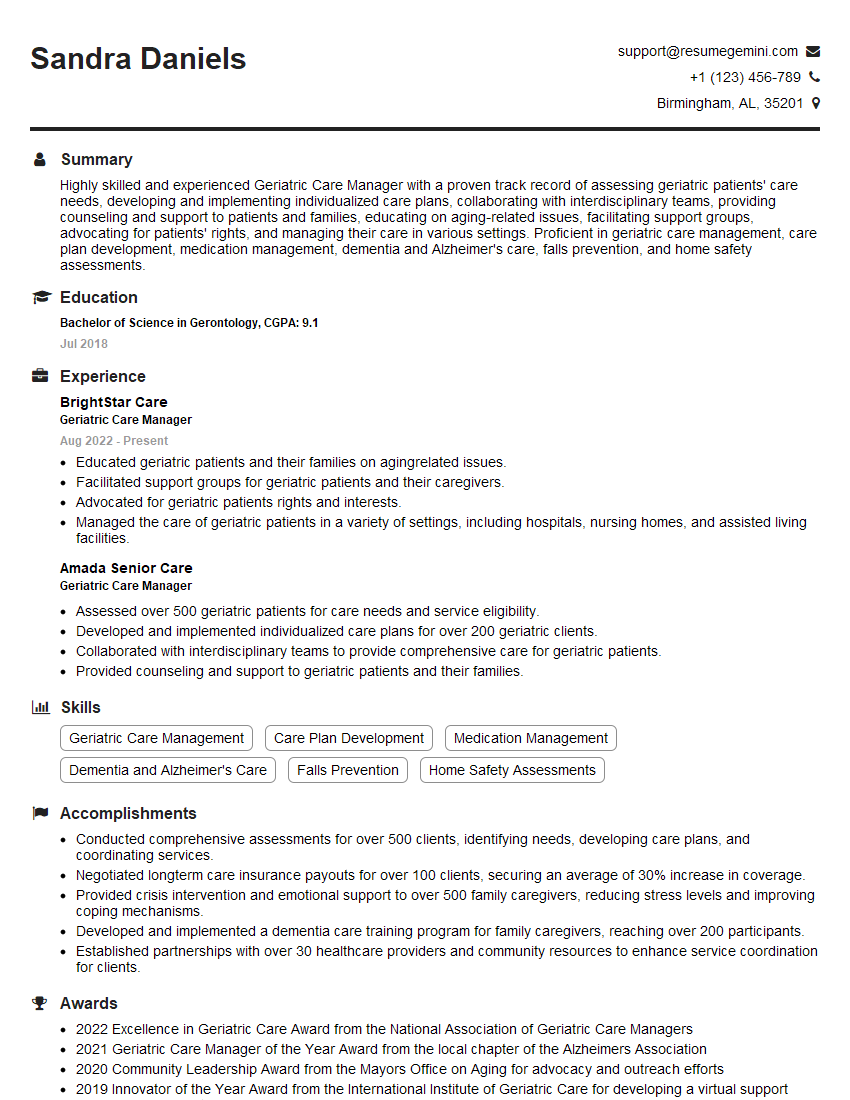
Mastering these key areas of dementia-specific activities significantly enhances your value to any care facility or organization. A strong understanding of person-centered care and activity adaptation is highly sought after and demonstrates a commitment to quality care. To maximize your job prospects, crafting an ATS-friendly resume is crucial. ResumeGemini is a trusted resource to help you build a professional and effective resume that highlights your skills and experience. Examples of resumes tailored to showcase Experience with Dementia-Specific Activities are available within ResumeGemini to guide you.
Explore more articles
Users Rating of Our Blogs
Share Your Experience
We value your feedback! Please rate our content and share your thoughts (optional).
What Readers Say About Our Blog
To the interviewgemini.com Webmaster.
Very helpful and content specific questions to help prepare me for my interview!
Thank you
To the interviewgemini.com Webmaster.
This was kind of a unique content I found around the specialized skills. Very helpful questions and good detailed answers.
Very Helpful blog, thank you Interviewgemini team.