Interviews are more than just a Q&A session—they’re a chance to prove your worth. This blog dives into essential Experience with different types of PV modules and inverters interview questions and expert tips to help you align your answers with what hiring managers are looking for. Start preparing to shine!
Questions Asked in Experience with different types of PV modules and inverters Interview
Q 1. Explain the difference between monocrystalline, polycrystalline, and thin-film PV modules.
The core difference between monocrystalline, polycrystalline, and thin-film PV modules lies in their silicon structure and manufacturing process, directly impacting their efficiency and cost.
- Monocrystalline Silicon: These modules use a single, large silicon crystal, resulting in a uniform, dark-blue appearance. Their advantage is high efficiency (typically 18-22%), meaning they generate more power per unit area. Think of it like a perfectly cut diamond – highly efficient but more expensive to produce.
- Polycrystalline Silicon: These modules use multiple silicon crystals melted together, leading to a slightly less efficient but more cost-effective solution. They have a characteristic speckled, blue appearance. Their efficiency is generally in the 15-17% range. Imagine it like a mosaic – many smaller pieces creating a whole, slightly less efficient but more affordable.
- Thin-Film PV Modules: Instead of using thick silicon wafers, thin-film technology employs thin layers of photovoltaic materials like amorphous silicon, cadmium telluride (CdTe), or copper indium gallium selenide (CIGS), deposited on a substrate such as glass or flexible plastic. While they are less efficient (8-13%), they offer advantages such as flexibility, lighter weight, and potential for lower manufacturing costs. They are like a very thin, lightweight painting on a canvas – less power but with flexibility and other potential benefits.
In practice, the choice depends on the project’s specific requirements. High-efficiency monocrystalline panels might be chosen for a rooftop installation where space is limited, while thin-film modules could be preferred for large-scale ground-mounted systems where cost is a major factor.
Q 2. Describe the various types of inverters used in PV systems (e.g., string, micro, central).
Inverters are essential components in PV systems, converting the DC (direct current) electricity produced by solar panels into AC (alternating current) electricity suitable for household use or grid connection. Several types exist:
- String Inverters: These are the most common type, connecting multiple PV modules in series (a string) and converting the combined DC power to AC. They are relatively inexpensive but have a single point of failure – if one module or the string is shaded or faulty, the whole string’s output can be affected. Think of it as a central processing unit for a group of solar panels.
- Microinverters: These small inverters are connected to each individual PV module, converting DC to AC at the panel level. This provides several benefits including improved energy harvest and reduced impact of shading. However, they are more expensive than string inverters. They can be thought of as individual processing units for each solar panel.
- Central Inverters: Used in large-scale PV power plants, these inverters convert the entire DC output of the array to AC in a single unit. This simplifies the system but can be affected by the failure of a large part of the array. It’s like a massive central power station for the whole solar farm.
The choice of inverter type will heavily depend upon the size and layout of the PV system, budget considerations, and desired level of performance and fault tolerance.
Q 3. What are the key performance indicators (KPIs) for PV modules and inverters?
Key Performance Indicators (KPIs) for PV modules and inverters are crucial for assessing their performance and efficiency. Some key metrics include:
- PV Modules:
- Power Output (Wp): Peak power rating at standard test conditions (STC).
- Efficiency (%): The ratio of power output to the total solar irradiance received.
- Open-Circuit Voltage (Voc): Voltage of the module when no current flows.
- Short-Circuit Current (Isc): Current when the module is short-circuited.
- Temperature Coefficient: How much the output changes with temperature variations.
- Inverters:
- Efficiency (%): Ratio of AC power output to DC power input.
- Maximum Power Output (kW): The highest AC power the inverter can deliver.
- MPPT (Maximum Power Point Tracking) range: The voltage range where the inverter efficiently tracks the maximum power point of the solar panels.
- Input voltage range: The range of DC voltages accepted by the inverter.
- Reliability and lifespan: Mean Time Between Failures (MTBF) is a key indicator.
Regular monitoring of these KPIs is essential to identify potential issues and ensure optimal performance of the solar system.
Q 4. How do you troubleshoot a faulty PV module or inverter?
Troubleshooting faulty PV modules or inverters requires a systematic approach, beginning with safety precautions (discussed later). Here’s a step-by-step process:
- Visual Inspection: Check for any physical damage to modules (cracks, shading, debris) or inverters (burn marks, loose connections).
- Check Connections: Examine all wiring and connectors for loose connections, corrosion, or damage.
- Monitor Performance Data: Review data from the monitoring system to identify underperforming modules or inverters. Look for unusual voltage or current readings.
- Measure Voltage and Current: Use a multimeter to measure the voltage and current at various points in the system to pinpoint the location of the fault. Follow relevant safety procedures.
- Use Specialized Tools: Employ tools like thermal cameras to detect hot spots on modules indicating a potential fault.
- Consult Manufacturer’s Documentation: Refer to the manuals of modules and inverters for troubleshooting guides and error codes.
- Contact a Qualified Technician: If the fault cannot be identified or resolved, it’s crucial to involve a qualified solar technician with experience handling high voltage.
Remember safety is paramount! Always disconnect the system from the grid before any maintenance or troubleshooting.
Q 5. Explain the concept of Maximum Power Point Tracking (MPPT).
Maximum Power Point Tracking (MPPT) is a crucial function in PV inverters that maximizes the energy harvest from the solar panels. Solar panels don’t operate at their maximum power output under all conditions (changing irradiance and temperature affect the voltage-current curve). The MPPT algorithm dynamically adjusts the inverter’s input voltage to track the maximum power point (MPP) on the PV array’s I-V curve. This ensures the panels always operate at their most efficient power production level regardless of external factors. Think of it as the inverter intelligently adjusting its input to ‘squeeze’ maximum power out of the panels at every moment.
Different MPPT algorithms exist, with some more sophisticated than others. Multiple MPPT channels in larger inverters allow optimizing energy from different sections of a large array, even if some areas are partially shaded.
Q 6. What are the safety precautions when working with PV systems?
Safety is paramount when working with PV systems. Always adhere to these precautions:
- Lockout/Tagout: Always disconnect the system from the grid and lock out the disconnect switch before any work.
- Personal Protective Equipment (PPE): Wear appropriate PPE including insulated gloves, safety glasses, and arc flash protective clothing (where necessary).
- Grounding and Bonding: Properly ground and bond all equipment and tools to prevent electrical shocks.
- Awareness of High Voltage: Never assume a system is de-energized. Verify the absence of voltage using a non-contact voltage tester.
- Work Safely at Heights: Use appropriate fall protection if working at height.
- Fire Safety: Be aware of potential fire hazards associated with electrical faults and have appropriate fire extinguishers readily available.
- Environmental Concerns: Handle solar panels carefully to avoid breakage and dispose of components responsibly at the end of life.
It is recommended to consult relevant electrical codes and standards and, where appropriate, obtain necessary permits before working on a PV system. For larger or more complex systems, always consult a qualified professional.
Q 7. Describe different PV array configurations (e.g., series, parallel).
PV array configurations determine how the modules are connected to maximize power output and manage system voltage. The most common configurations are:
- Series Configuration: Modules are connected end-to-end, adding their voltages. The current remains the same throughout the string. This configuration is simple but vulnerable to shading – if one module is shaded, the entire string’s output is significantly reduced. Think of it like a series of water pipes, each adding pressure.
- Parallel Configuration: Modules are connected side-by-side, adding their currents. The voltage remains the same across all strings. This is more tolerant of shading as a shaded module will only affect its own current contribution. It’s like multiple water pipes flowing into a single reservoir.
- Series-Parallel Configuration: This combines series and parallel connections, offering flexibility and balance between voltage and current. This is a more complex configuration but allows for a high degree of flexibility in designing the system to meet specific energy production and voltage requirements. Imagine it as a combination of series and parallel water pipes – the most efficient and flexible approach.
The choice of configuration will depend on factors such as the available modules, the inverter’s input voltage range, and the desired system voltage and current. Careful design is crucial for optimal system performance and safety.
Q 8. How do you calculate the energy yield of a PV system?
Calculating a PV system’s energy yield involves predicting its electricity generation over a specific period. It’s not simply a matter of multiplying the panel’s rated power by the number of hours of sunlight. We need to consider several factors that significantly impact actual energy production.
The most common approach utilizes PVsyst or similar software, incorporating detailed data. However, a simplified calculation can be done using the following formula:
Annual Energy Yield (kWh) ≈ Panel Power (kWp) * Peak Sun Hours (hours/day) * Days in Year * Performance Ratio (PR)Let’s break this down:
- Panel Power (kWp): The peak power output of your PV panels (kilowatts peak).
- Peak Sun Hours (hours/day): The average number of hours per day when the sun’s intensity is sufficient for the panel to produce its peak power. This varies significantly by location and season; you’ll need local solar resource data.
- Days in Year: Usually 365.
- Performance Ratio (PR): This crucial factor accounts for energy losses throughout the system. It typically ranges from 0.7 to 0.8, encompassing losses from temperature, soiling, inverter efficiency, wiring, etc.
Example: Let’s say we have a 5kWp system in a location with 5 peak sun hours/day and a PR of 0.75. The estimated annual energy yield would be: 5kWp * 5 hours/day * 365 days * 0.75 ≈ 6844 kWh per year. This is an estimation, and the actual yield could vary. Sophisticated software accounts for more variables for greater accuracy.
Q 9. What are the different types of grounding techniques for PV systems?
Grounding in PV systems is critical for safety, protecting against electrical shocks and equipment damage from lightning strikes. Several grounding techniques exist, and the best choice depends on site specifics and local regulations.
- System Grounding: This connects all metallic parts of the PV system – array mounting structures, conduits, and the inverter – to the earth. This is a primary safety measure, diverting fault currents to the ground.
- Equipment Grounding: This grounds individual components like the inverter and combiner boxes, ensuring they are at the same electrical potential as the earth.
- Grounding Electrodes: Several methods exist. A common one uses ground rods driven deep into the earth. The number and type of rods depend on soil resistivity. Other techniques include using a metal water pipe (with permission) or a ground grid.
- Direct Grounding: This involves connecting the PV array’s grounding point directly to the grounding electrode. It’s straightforward but needs careful consideration of potential grounding resistance.
- Indirect Grounding: This utilizes an equipotential bonding conductor, often a copper wire, connecting various metal parts within the system before connecting to the grounding electrode. It’s generally preferred for larger or complex systems.
Proper grounding significantly reduces the risk of electric shock. Regular inspections and testing are essential to ensure the system remains effectively grounded.
Q 10. Explain the importance of proper system sizing for PV installations.
Proper system sizing is paramount for optimal PV system performance and return on investment. An undersized system will generate less power than needed, while an oversized system might be inefficient and cost more than necessary.
Sizing involves carefully evaluating:
- Energy Consumption: Analyze past energy bills to determine your average monthly and annual energy usage. This provides a baseline for required PV output.
- Solar Irradiance: The amount of solar energy reaching your location varies significantly with latitude, climate, and shading. Use local solar resource data to determine the available solar energy.
- Roof Space & Orientation: The available roof area and its orientation (south-facing in the Northern Hemisphere) significantly influence the system’s size and potential output.
- Shading Analysis: Trees, buildings, and other structures can cast shadows, reducing energy production. Conduct thorough shading analysis to determine the optimal array layout.
- Inverter Capacity: The inverter must be sized to handle the maximum power output of the PV array. Oversizing it is generally more efficient than undersizing.
Professional software helps optimize system sizing by considering all factors. A poorly sized system will either leave unmet energy demands or result in wasted investment.
Q 11. What are the environmental considerations in PV system design?
Environmental considerations are crucial in PV system design, impacting both the system’s lifespan and the environment’s well-being.
- Material Selection: Choosing environmentally friendly materials, such as recycled aluminum or silicon with low embodied carbon, minimizes the system’s ecological footprint.
- Land Use: For large-scale systems, land use impacts are significant. Careful site selection minimizes habitat disruption.
- Waste Management: Planning for end-of-life panel disposal is essential. Recycling programs are becoming increasingly important to recover valuable materials.
- Habitat Protection: Avoiding sensitive ecosystems during site selection is crucial. Birds and other wildlife should not be negatively impacted.
- Water Usage: Panel cleaning might require water, and choosing locations that minimize water consumption is beneficial.
- Carbon Footprint: Life-cycle assessments evaluate a PV system’s complete carbon footprint, including manufacturing, installation, operation, and eventual disposal.
A well-designed PV system minimizes environmental impact, promoting a sustainable energy future.
Q 12. Describe the different types of bypass diodes and their function.
Bypass diodes are crucial components within PV modules, protecting them from shading and preventing performance degradation.
Each solar cell within a module is essentially a small diode. If one cell is shaded, it becomes a high resistance, preventing current flow through the entire string. Bypass diodes are connected in parallel with groups of cells within a module. If a cell or string of cells is shaded, the bypass diode provides an alternate path for current, allowing the rest of the module to continue generating power.
- Standard Bypass Diodes: These are typically Schottky diodes, known for their fast switching speed and low voltage drop.
- High-Temperature Bypass Diodes: These can withstand higher temperatures, improving module performance in hot climates.
Without bypass diodes, a single shaded cell could significantly reduce the power output of an entire module. They ensure the system continues operating efficiently even with partial shading.
Q 13. What are the benefits and drawbacks of different inverter topologies?
Inverter topologies determine how the DC power from the PV array is converted to AC power for grid connection. Different topologies have varying efficiencies, costs, and suitability for specific applications.
- Central Inverters: These are large inverters connected to the entire PV array. They are cost-effective for large systems but have single point of failure.
- String Inverters: These handle multiple strings of PV modules, offering better partial shading tolerance than central inverters, making them suitable for smaller systems or systems with potential shading issues.
- Microinverters: These are small inverters connected to individual PV modules. They provide maximum flexibility, excellent partial shading tolerance, and enhanced monitoring capabilities. They usually cost more initially.
- Power Optimizers: These devices sit between the PV modules and the inverter, optimizing the performance of individual modules. They can improve energy yield in partially shaded conditions.
Choosing the right inverter topology depends on factors like system size, budget, shading conditions, and monitoring requirements. Each topology presents unique trade-offs.
Q 14. How do you handle shading effects on PV array performance?
Shading significantly impacts PV array performance, leading to power loss and potential hotspotting (overheating) issues. There are multiple ways to mitigate shading effects.
- Optimizing Array Layout: Careful design minimizes shading by considering building orientation and potential obstructions. East-west orientations are often less sensitive to shading.
- Using Bypass Diodes: As previously explained, bypass diodes within modules divert current around shaded cells, minimizing power loss.
- Power Optimizers: These devices individually adjust the voltage and current from each module, optimizing energy harvesting in shaded conditions.
- Microinverters: These bypass shaded modules altogether, ensuring that only the sunlit modules contribute to energy production.
- Employing Shading Analysis Software: Software tools predict shading patterns and help optimize array layout for maximal energy production.
Ignoring shading can result in substantial energy yield losses, so proactive mitigation strategies are essential.
Q 15. Explain the concept of mismatch losses in PV arrays.
Mismatch losses in PV arrays occur when individual solar modules within the array produce different amounts of power. Think of it like a team where some players perform exceptionally well, while others underperform. This uneven performance reduces the overall output of the entire array.
Several factors contribute to this mismatch:
- Shading: Even a small shadow on a single module significantly reduces its output, impacting the entire string. Imagine one cloud covering a portion of your solar panel array; the shadowed modules will drag down the whole system.
- Manufacturing variations: Slight differences in manufacturing can lead to variations in the power output of individual modules, even within the same batch. It’s like having slightly different engines in a fleet of cars – not all will perform identically.
- Temperature differences: Modules in different locations within the array experience varying temperatures, influencing their efficiency. A module in direct sunlight will generate more power than one in the shade, even if both are identical.
- Module degradation: Over time, modules degrade at different rates, leading to performance discrepancies. Some modules age faster than others, just like any other piece of equipment.
Minimizing mismatch losses involves careful array design, using bypass diodes within modules to isolate shaded cells, and employing advanced techniques like power optimizers or microinverters that allow each module to operate independently at its maximum power point.
Career Expert Tips:
- Ace those interviews! Prepare effectively by reviewing the Top 50 Most Common Interview Questions on ResumeGemini.
- Navigate your job search with confidence! Explore a wide range of Career Tips on ResumeGemini. Learn about common challenges and recommendations to overcome them.
- Craft the perfect resume! Master the Art of Resume Writing with ResumeGemini’s guide. Showcase your unique qualifications and achievements effectively.
- Don’t miss out on holiday savings! Build your dream resume with ResumeGemini’s ATS optimized templates.
Q 16. What are the various methods for testing PV modules and inverters?
Testing PV modules and inverters involves a combination of laboratory and field measurements. For modules, we use:
- I-V curve tracing: This measures the current-voltage characteristic of the module under varying light intensities and temperatures, revealing its maximum power point and efficiency. This is like taking a detailed performance profile of each module.
- Electroluminescence (EL) imaging: This technique identifies internal defects and micro-cracks in the module’s cells by visualizing their light emission. It’s like getting an X-ray to see internal problems.
- Thermography: Infrared imaging reveals hot spots, indicating potential issues such as cell defects or faulty connections. It’s like checking the temperature of different components to find hot spots that might indicate problems.
- Flash testing: A short, high-intensity light pulse simulates sunlight to quickly assess the module’s performance. This is a quick check-up, like a quick performance test on your phone.
For inverters, tests include:
- Efficiency measurements: Determining the efficiency at different power levels to evaluate the performance. Like checking the fuel efficiency of a car.
- Input and output voltage/current tests: Verifying that the inverter operates within specified voltage and current limits. Similar to measuring the input and output voltage of a transformer.
- Protection functionality tests: Testing the inverter’s safety features like overcurrent, overvoltage, and ground fault protection. This is analogous to testing the safety features of a car.
- Harmonics analysis: Measuring the harmonic content of the output waveform to ensure compliance with grid standards. This ensures clean power output.
Q 17. How do you determine the appropriate size of an inverter for a given PV array?
Sizing an inverter correctly is crucial for optimal PV system performance. It’s a balancing act; an undersized inverter will limit the system’s output, while an oversized one might reduce efficiency and increase costs.
The process usually involves:
- Calculating total array power: Add the power ratings of all modules in the array. This is the total capacity of the sun-power generation system.
- Considering future expansion: Allow for potential future additions of modules. This allows for future growth of the system.
- Checking inverter specifications: Choose an inverter with a power rating slightly higher than the total array power to account for losses and provide headroom. This allows the system to operate under capacity.
- DC-to-AC ratio: Some inverters have a maximum DC-to-AC ratio. Ensure the DC power of the array does not exceed this limit.
- MPPT trackers: Inverters with multiple Maximum Power Point Trackers (MPPTs) can be advantageous for larger arrays, handling shading more efficiently.
For example, if your PV array produces 10 kW, selecting a 10.5 kW or 11 kW inverter would usually be suitable. It’s important to consult relevant guidelines and manufacturer’s instructions to avoid potential mismatch problems.
Q 18. Describe different PV system monitoring techniques.
PV system monitoring is essential for maximizing efficiency and early detection of problems. Think of it like your car’s dashboard – it gives you vital information about the system’s health and performance.
Techniques include:
- Data loggers: These devices record key parameters such as voltage, current, power, and temperature. This is similar to the black box in an airplane.
- Remote monitoring systems: These systems use communication technologies (e.g., cellular, Wi-Fi) to transmit data to a central location for real-time monitoring and analysis. Think of remote diagnostic tools for your car.
- SCADA systems (Supervisory Control and Data Acquisition): Advanced systems provide comprehensive control and monitoring capabilities, ideal for large-scale PV plants. This is the equivalent of a central control room.
- Smart inverters: Many modern inverters have built-in monitoring capabilities, providing basic performance data and fault alerts. It is like a built-in diagnostic tool.
Analyzing this data allows for performance evaluation, identifying faulty components, and optimizing system operation.
Q 19. What are the common causes of PV system failure?
PV system failures can stem from various sources, impacting both modules and inverters. Some common causes include:
- Module failures: These can result from shading, physical damage (hail, etc.), manufacturing defects, or degradation over time.
- Inverter malfunctions: These are often due to overheating, component failures, or grid issues.
- Wiring problems: Loose connections, corrosion, or damaged cables can lead to reduced power output or even fires.
- Grounding issues: Faulty grounding can pose safety hazards and affect system performance.
- Environmental factors: Extreme weather conditions (lightning strikes, high winds, etc.) can cause significant damage.
- Poor installation: Incorrect installation practices can lead to several problems mentioned above.
Regular inspection, preventative maintenance, and proper design/installation practices are critical in minimizing the likelihood and impact of these failures.
Q 20. How do you interpret a PV system performance curve?
A PV system performance curve graphically represents the relationship between solar irradiance (incoming sunlight) and power output. It’s a snapshot of how well your system is performing under varying conditions.
Interpreting the curve involves observing:
- Maximum power point: The highest point on the curve indicates the maximum power the system can produce under specific conditions.
- Slope: The steepness of the curve reflects the system’s response to changes in irradiance. A steeper slope suggests a more responsive system.
- Deviations: Any deviations from the expected curve can indicate performance issues, such as shading, faulty modules, or inverter problems.
By comparing the actual performance curve to the expected curve (based on the system’s design and specifications), you can identify areas for improvement or diagnose potential problems. This is like comparing the actual fuel efficiency of your car to the expected value in its brochure.
Q 21. Explain the role of anti-reflective coatings on PV modules.
Anti-reflective coatings on PV modules enhance light absorption by reducing reflection from the module’s surface. Think of it as improving the “grip” of the solar panel on the incoming sunlight.
Without such a coating, a significant portion of sunlight would be reflected away, lowering the module’s efficiency. These coatings typically consist of thin layers of materials with specific refractive indices that minimize reflection across a broad range of wavelengths (colors) of sunlight. The reduction in reflection directly translates to an increase in the amount of light captured by the silicon cells and, consequently, a higher power output.
In essence, anti-reflective coatings act like an invisible layer that guides more sunlight into the module, making it more efficient in converting light into electricity.
Q 22. What are the different types of solar trackers?
Solar trackers are systems designed to optimize the energy output of photovoltaic (PV) arrays by constantly adjusting their orientation to maximize sun exposure throughout the day. Think of them as sun-chasing robots for your solar panels!
Single-axis trackers: These rotate around a single axis, typically east-west, following the sun’s movement across the sky. They are cost-effective and provide a significant energy gain compared to fixed-tilt systems. Imagine a giant seesaw that tips to follow the sun.
Dual-axis trackers: These rotate around two axes, allowing for optimal angle adjustment throughout the day. They offer the highest energy yield but are more complex and expensive. Picture a solar panel that moves like a sunflower, always facing the sun.
Azimuth trackers: These trackers rotate only around the vertical axis (azimuth), adjusting the panel’s east-west orientation to follow the sun’s path. They’re a compromise between single and dual-axis trackers in terms of cost and performance.
Fixed-tilt systems: While not strictly trackers, these systems maintain a fixed angle optimized for the specific geographic location and time of year. They are the simplest and least expensive option, although their energy yield is lower compared to trackers.
Q 23. What is the significance of the temperature coefficient in PV module specifications?
The temperature coefficient in PV module specifications indicates how the module’s power output changes with temperature variations. It’s crucial for accurate system design and performance prediction. A positive temperature coefficient means power output decreases as temperature increases, which is typical for most PV modules.
For example, a temperature coefficient of power (Pmp) of -0.35%/°C means the maximum power output will decrease by 0.35% for every 1°C increase in cell temperature above the standard test conditions (STC) of 25°C. Understanding this is critical because high temperatures, especially in hotter climates, can significantly reduce the module’s efficiency. Ignoring this coefficient in design can lead to overestimating the system’s actual energy production.
There are typically three temperature coefficients to consider: the power coefficient (Pmp), the open-circuit voltage coefficient (Voc), and the short-circuit current coefficient (Isc). Each affects the module’s overall performance differently.
Q 24. Describe the function of a PV combiner box.
A PV combiner box is a crucial safety and management device in a solar PV system. It serves as a central point to combine multiple strings of PV modules before they connect to the inverter. Think of it as a traffic controller for the electricity generated by your solar panels.
Its primary functions include:
String combination: It safely merges the output currents of multiple PV strings into fewer, higher-current circuits for connection to the inverter.
Overcurrent protection: It incorporates fuses or circuit breakers to protect the system from overcurrents caused by faults or shorts within the PV array. This prevents damage and ensures safety.
Grounding and bonding: It provides a safe grounding point for the entire PV array, reducing the risk of electric shock and protecting against lightning strikes.
Disconnection capability: Allows for safe isolation of sections of the PV array for maintenance or repairs.
Without a combiner box, a PV system would be less safe, more difficult to manage, and might lack essential protection against faults.
Q 25. Explain different methods for optimizing energy harvesting from PV arrays.
Optimizing energy harvesting from PV arrays involves maximizing the power generated under various conditions. This requires a multifaceted approach.
Proper array design: This includes considerations like module orientation (optimal tilt and azimuth angles), string sizing to minimize losses, and shading mitigation strategies. Shading even on a small portion of a module can significantly impact overall performance.
Employing solar trackers: As discussed earlier, trackers enhance energy yield by following the sun’s movement, leading to higher energy production compared to fixed-tilt systems.
Using microinverters or power optimizers: These devices maximize energy harvesting at the individual module or string level, mitigating the impact of shading and mismatched modules. Think of them as individual power boosters for each panel.
Regular maintenance and cleaning: Keeping the panels clean and free from debris, like leaves and bird droppings, is essential. Dust and dirt significantly reduce solar irradiance reaching the PV cells.
Selecting high-efficiency modules: Choosing modules with higher efficiency reduces the number of panels required to achieve the desired output and minimizes land use, which is especially crucial for large-scale projects.
These strategies combined lead to maximizing energy production and improving the overall return on investment of the PV system.
Q 26. How do you perform a detailed PV system design using software tools?
Detailed PV system design using software tools is a crucial step in ensuring a reliable and efficient system. Software like PVsyst, Helioscope, and HOMER Pro offer comprehensive capabilities.
Here’s a step-by-step process:
Site assessment: Input location coordinates, weather data (irradiance, temperature), and shading information (using satellite imagery or on-site surveys).
Load profile determination: Analyze energy consumption patterns to determine the required system size.
System component selection: Choose PV modules, inverters, and other components based on performance, cost, and compatibility. Software tools often have extensive databases to help with component selection.
Array design and simulation: Model the PV array, including its orientation, tilt angle, and string configuration. Software tools simulate the array’s performance based on the input data and selected components.
Performance analysis: Evaluate system performance metrics such as annual energy production, capacity factor, and energy yield. Software helps visualize and analyze various design scenarios.
Economic analysis: Assess the system’s cost-effectiveness, including capital costs, operational expenses, and return on investment (ROI).
Report generation: Generate detailed reports containing all design parameters, simulations, and economic analysis. These reports are crucial for permit applications and project documentation.
Throughout this process, the software acts as a virtual testing ground, allowing for various design iterations and optimization without physical construction, ensuring the chosen design meets the specific needs and constraints of the project.
Q 27. Discuss the various grid codes and their impact on PV system integration.
Grid codes are sets of technical regulations and standards that govern the interconnection of distributed generation (DG), including PV systems, to the electric power grid. They ensure the stability and reliability of the grid. Different countries and regions have their own grid codes, and non-compliance can lead to project delays or rejection.
Key aspects addressed in grid codes:
Voltage and frequency control: PV inverters must maintain voltage and frequency within specified limits to avoid disrupting the grid.
Power quality: Grid codes impose limits on harmonic distortion, flicker, and other power quality issues generated by PV systems.
Protection and safety: They dictate protective relay settings, islanding prevention mechanisms, and other safety features to prevent hazards to utility personnel and equipment.
Reactive power control: PV inverters may be required to provide or absorb reactive power to support grid voltage stability.
Communication protocols: Grid codes often mandate communication protocols between the PV system and the grid operator for monitoring and control purposes.
Failure to comply with grid codes can result in significant project delays, increased costs, and potential system rejection. Careful consideration of relevant grid codes during the design and permitting phases is crucial for a successful PV project.
Q 28. What are the latest advancements in PV module and inverter technology?
Recent advancements in PV module and inverter technology are continuously improving system efficiency and reducing costs. Key innovations include:
Higher efficiency modules: New cell technologies, like PERC (Passivated Emitter and Rear Cell) and TOPCon (Tunnel Oxide Passivated Contact), are pushing module efficiencies beyond 20%. This means more power from the same area.
Bifacial modules: These modules capture light from both sides, increasing energy yield, particularly in areas with high albedo (reflectivity) from snow or ground surfaces. They’re like double-sided solar energy collectors.
Perovskite solar cells: This emerging technology offers potential for even higher efficiencies and lower manufacturing costs. They represent a promising path towards cheaper, more powerful solar cells.
Stringless/module-level power electronics: Microinverters and power optimizers continue to evolve, further enhancing system performance by optimizing energy harvesting from individual modules and mitigating the effects of shading and module mismatch.
Smart inverters: These inverters offer advanced monitoring, communication, and control features. They allow for improved grid integration, optimized energy management, and remote diagnostics.
Increased power density inverters: Modern inverters are achieving higher power output per unit volume, resulting in smaller and more efficient systems.
These advancements contribute to making solar PV a more reliable, cost-effective, and sustainable energy source.
Key Topics to Learn for Experience with different types of PV modules and inverters Interview
- PV Module Technologies: Understanding the differences between monocrystalline, polycrystalline, and thin-film PV modules; their efficiency, cost, and performance characteristics in various climates and applications.
- Inverter Types and Functionality: String inverters vs. microinverters vs. power optimizers; MPPT (Maximum Power Point Tracking) algorithms and their impact on system efficiency; grid-tie vs. off-grid inverters and their respective applications.
- Module and Inverter Sizing and Matching: Calculating the appropriate number of PV modules and the required inverter capacity for a given system design; understanding the implications of mismatch losses.
- Safety and Regulations: Understanding relevant safety standards and regulations for PV system installation and maintenance; procedures for safe handling of PV modules and inverters.
- Troubleshooting and Maintenance: Common faults in PV modules and inverters; diagnostic techniques for identifying and resolving problems; preventive maintenance procedures.
- System Design and Performance Analysis: Understanding the factors affecting PV system performance (e.g., shading, temperature, soiling); using software tools for system simulation and performance analysis.
- Practical Experience: Be prepared to discuss specific projects where you’ve worked with different PV module and inverter technologies. Detail your role, the challenges you faced, and how you overcame them.
Next Steps
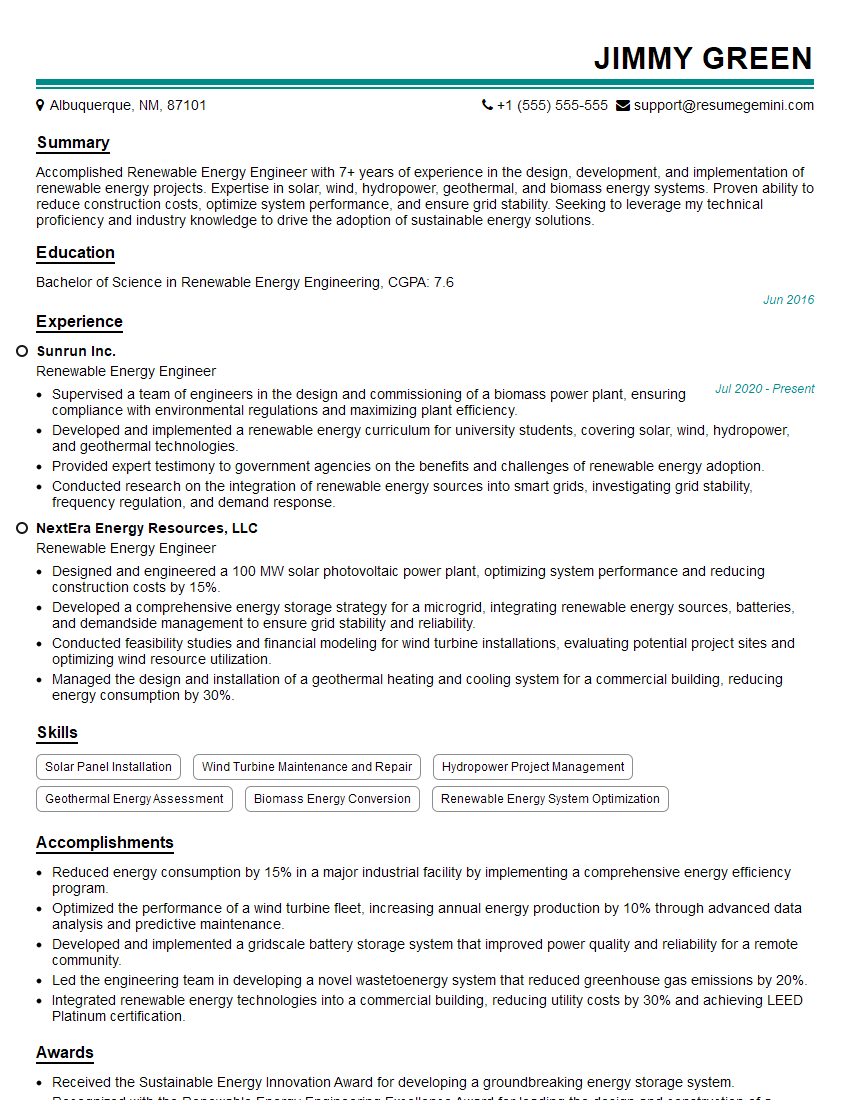
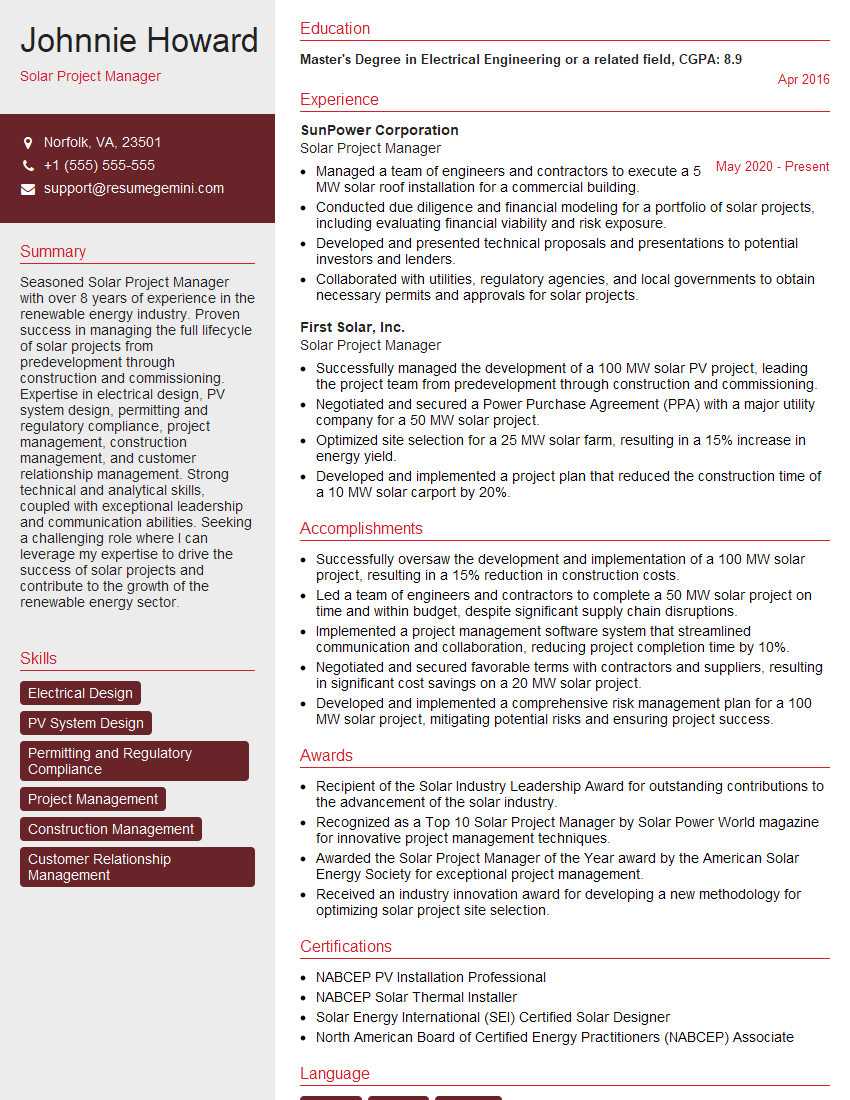
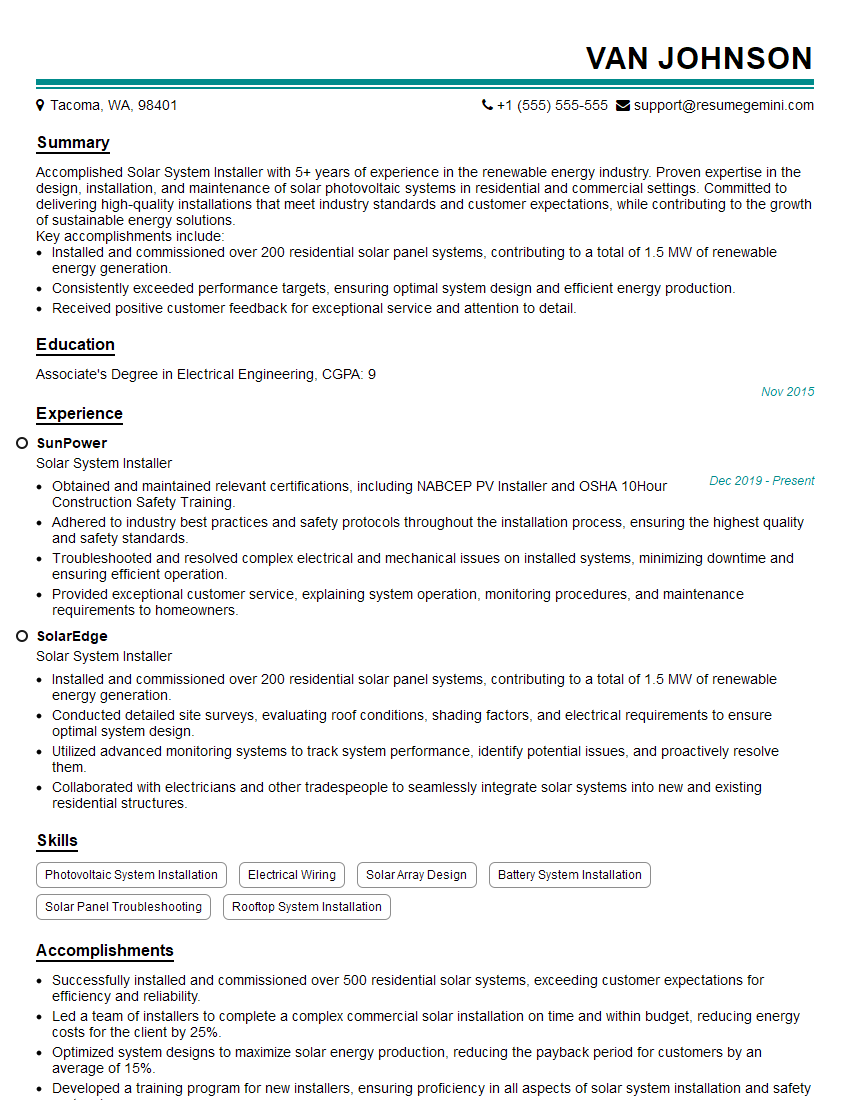
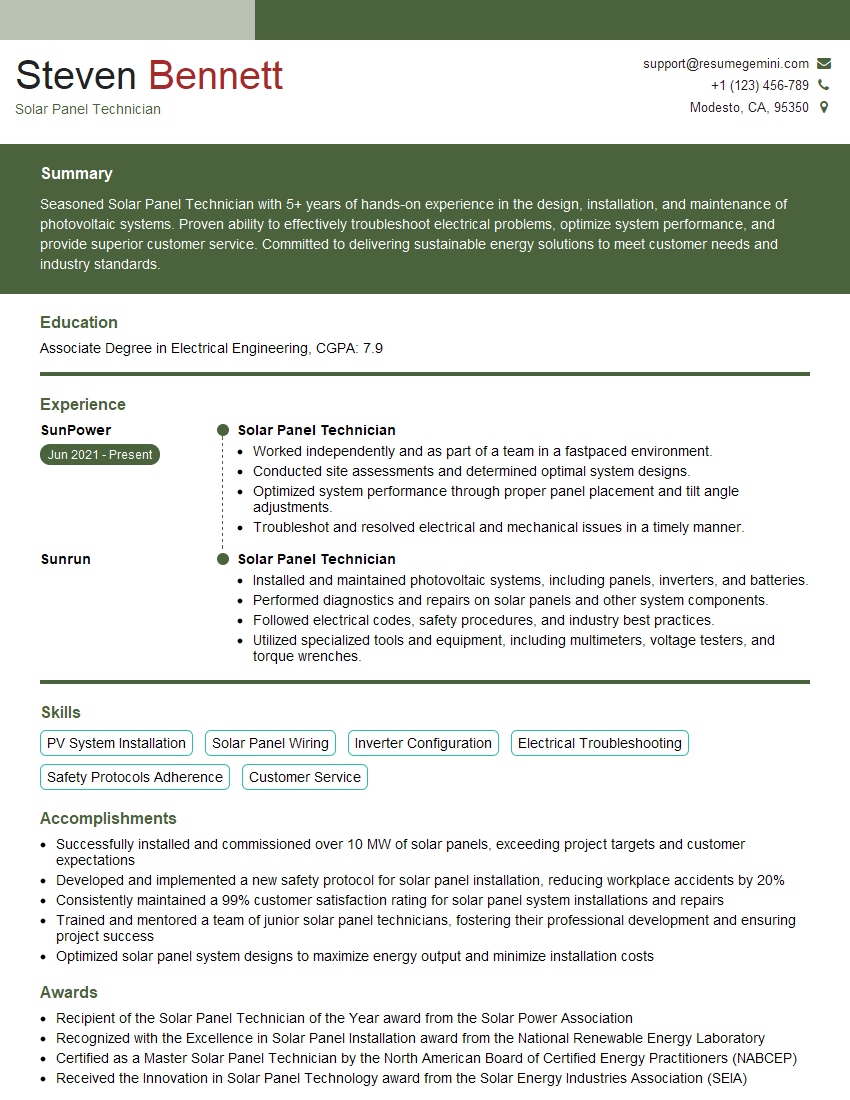
Mastering your knowledge of different PV module and inverter types is crucial for advancing your career in the renewable energy sector. A strong understanding of these technologies demonstrates your expertise and problem-solving abilities, making you a highly sought-after candidate. To significantly boost your job prospects, create an ATS-friendly resume that highlights your skills and experience effectively. ResumeGemini is a trusted resource to help you build a professional and impactful resume tailored to the specific requirements of your target roles. Examples of resumes tailored to showcase experience with different types of PV modules and inverters are available to guide you. Invest the time to craft a compelling resume – it’s your first impression and a key to unlocking your career potential.

Explore more articles
Users Rating of Our Blogs
Share Your Experience
We value your feedback! Please rate our content and share your thoughts (optional).
What Readers Say About Our Blog
To the interviewgemini.com Webmaster.
Very helpful and content specific questions to help prepare me for my interview!
Thank you
To the interviewgemini.com Webmaster.
This was kind of a unique content I found around the specialized skills. Very helpful questions and good detailed answers.
Very Helpful blog, thank you Interviewgemini team.