The thought of an interview can be nerve-wracking, but the right preparation can make all the difference. Explore this comprehensive guide to Experience with hazardous locations interview questions and gain the confidence you need to showcase your abilities and secure the role.
Questions Asked in Experience with hazardous locations Interview
Q 1. Explain the different zones and classifications in hazardous locations according to IEC 60079.
IEC 60079 defines hazardous areas based on the likelihood and duration of the presence of flammable gases, vapors, or combustible dusts. These areas are classified into zones, each representing a different level of risk. The zones are further categorized based on the type of hazardous substance (gas, vapor, or dust) and its properties.
- Zone 0: This is the most hazardous area, where an explosive atmosphere is present continuously or for long periods. Think of the inside of a storage tank for highly flammable materials.
- Zone 1: In this zone, an explosive atmosphere is likely to occur in normal operation. Imagine the area surrounding a processing unit where occasional leaks might occur.
- Zone 2: Here, an explosive atmosphere is not likely to occur, but if it does, it will only exist for a short time. This could be an area further away from the primary process equipment.
Each zone is further classified based on the specific hazardous substance’s characteristics (e.g., gas group IIA, IIB, IIC; temperature class T1-T6). Gas groups define the ignition energy required, and temperature classes specify the maximum surface temperature of equipment allowed to prevent ignition. The more hazardous the substance, the stricter the classification.
For example, a Zone 1, Class IIC location requires equipment designed to withstand the highest ignition energy and lowest allowable surface temperatures, unlike a Zone 2, Class IIA location.
Q 2. Describe the principles of intrinsic safety.
Intrinsic safety (IS) is a protection technique that limits the energy available in an electrical circuit to prevent ignition of a flammable atmosphere. It’s based on the principle of reducing the energy levels to below the minimum ignition energy of the hazardous substance present. Imagine it like this: you’re preventing a spark from being powerful enough to light a match in a highly combustible environment.
This is achieved by using special intrinsically safe circuits and equipment that have inherently limited energy levels. The circuits are designed with low voltage, low current, and low inductance components. A safety barrier is typically used to isolate the intrinsically safe circuit from the non-intrinsically safe power supply. This barrier acts as a buffer, preventing the flow of dangerous amounts of energy into the hazardous area.
The effectiveness of IS depends on the proper selection and installation of IS equipment and careful consideration of the hazardous area classification. Any malfunction or misconfiguration can compromise the safety provided by the system.
Q 3. What are the different types of explosion protection techniques?
There are several explosion protection techniques used in hazardous areas, each addressing the risk in a different way:
- Intrinsic Safety (IS): As described above, limits energy to prevent ignition.
- Flameproof (Explosion-proof): This technique uses robust enclosures that can withstand an internal explosion without causing an external ignition. Imagine a strong, sealed box that contains any explosion safely.
- Increased Safety (Ex e): Equipment designed with increased safety factors in its construction, ensuring a higher level of reliability against ignition. This involves careful attention to clearances, insulation, and material selection.
- Pressure-resistant (Ex p): Uses enclosures able to withstand internal pressure buildup during an explosion, preventing the release of flammable gases or vapors.
- Oil-Immersion (Ex o): Submerging electrical equipment in oil to prevent arc generation and cool any potential overheating.
- Powder-filled (Ex q): Using a special powder within an enclosure to quench any arcs or sparks.
- Encapsulation (Ex m): Enclosing components in a resin or similar material to prevent ignition.
- Special protection (Ex s): This category encompasses other unique protection methods that don’t fit into other classes.
The choice of explosion protection technique depends on the specific hazardous area classification, the type of equipment, and the nature of the potential hazard.
Q 4. Explain the purpose and application of a permit-to-work system in hazardous areas.
A permit-to-work (PTW) system is a formal procedure used in hazardous areas to control potentially dangerous work activities. It’s a structured process that ensures that all necessary precautions are in place before, during, and after the work is performed. It’s like a checklist, but much more formal and comprehensive.
The system involves a series of steps, typically including:
- Application: A formal request for a permit to undertake the work.
- Issuance: A competent person reviews the application and approves (or rejects) the permit.
- Execution: Work is carried out according to the conditions specified in the permit.
- Completion: Once the work is completed, the permit is closed and the area is inspected.
PTW systems are essential in hazardous areas because they provide a formal method of risk control, ensuring that all necessary safety measures are in place before high-risk activities commence. They are particularly crucial for activities such as hot work (welding, cutting), maintenance of electrical equipment, or entry into confined spaces.
Q 5. What are the key elements of a comprehensive hazardous area risk assessment?
A comprehensive hazardous area risk assessment needs to consider several key elements:
- Identification of Hazards: This involves a detailed survey of the area to identify all potential hazards, including flammable gases, vapors, dusts, and other ignition sources.
- Hazard Characterization: Defining the properties of the hazards identified. This includes flammability limits, ignition energy, toxicity, etc.
- Exposure Assessment: Identifying who might be exposed to the identified hazards and for how long.
- Risk Evaluation: Assessing the likelihood and severity of potential incidents. This usually involves a qualitative or quantitative risk matrix.
- Risk Control Measures: Determining the appropriate control measures needed to mitigate the identified risks. This could range from engineering controls (e.g., explosion-proof equipment) to administrative controls (e.g., permit-to-work systems) and personal protective equipment (PPE).
- Monitoring and Review: Implementing a system to monitor the effectiveness of control measures and periodically review and update the assessment to reflect changing conditions.
The outcome of the risk assessment should be a documented plan detailing the hazards, risks, and control measures employed. This plan provides a framework for safe operations in the hazardous area.
Q 6. How would you identify and mitigate risks associated with flammable gases in a process plant?
Mitigating risks associated with flammable gases in a process plant involves a multi-layered approach:
- Leak Detection and Prevention: Implementing regular leak detection and repair programs using technologies like ultrasonic leak detectors or optical gas imaging systems. Regular inspection of piping and equipment is crucial.
- Ventilation: Designing and maintaining effective ventilation systems to dilute flammable gases and prevent their concentration to dangerous levels. Proper ventilation helps prevent the formation of explosive atmospheres.
- Gas Detection Systems: Installing fixed and/or portable gas detection systems to provide early warning of gas leaks. These systems need to be calibrated and maintained regularly.
- Emergency Shutdown Systems: Implementing emergency shutdown (ESD) systems to automatically shut down processes and prevent further release of flammable gases in the event of a leak or other incident.
- Process Safety Management: Implementing a robust process safety management (PSM) system, including thorough risk assessments, operating procedures, training programs, and emergency response plans.
- Ignition Source Control: Eliminating or controlling potential ignition sources, such as sparks from electrical equipment or hot surfaces. This includes using explosion-proof equipment and controlling static electricity.
A key element is to consider the entire process flow and identify potential failure points in addition to using layers of protection. For example, a gas detector failing doesn’t automatically mean that a potentially catastrophic event will happen – proper emergency responses and procedures are crucial.
Q 7. Describe your experience with gas detection systems and their maintenance.
My experience with gas detection systems includes both fixed and portable systems. I have been involved in the selection, installation, commissioning, and maintenance of various types of gas detectors, including those using catalytic bead sensors, electrochemical sensors, infrared sensors, and photoionization detectors.
Maintenance involves regular calibration and testing to ensure that the systems are functioning correctly. This includes verifying sensor response, checking alarm settings, and inspecting the overall system integrity. I’ve developed and implemented detailed maintenance schedules for various detection systems, adhering to manufacturer recommendations and industry best practices.
I’ve also worked on troubleshooting malfunctioning systems, identifying faulty components, and carrying out necessary repairs or replacements. This involves understanding the different sensor technologies, analyzing sensor readings, and interpreting diagnostic data. Regular bump tests (quick calibration checks) are crucial for maintaining the reliability of gas detection systems and early detection of problems, leading to greater safety for personnel. One time, a seemingly minor sensor drift was detected during a routine bump test which prevented a potentially dangerous situation caused by a small but increasing gas leak.
Q 8. Explain the importance of regular inspections and maintenance in hazardous areas.
Regular inspections and maintenance are paramount in hazardous areas to prevent incidents and ensure the safety of personnel and equipment. Think of it like this: a car needs regular servicing to prevent breakdowns; similarly, equipment in hazardous locations requires consistent checks to prevent catastrophic failures that could lead to explosions or fires.
- Preventing Equipment Failure: Regular inspections identify potential problems like corrosion, wear and tear, or loose connections before they escalate into major hazards. This is particularly crucial for safety-critical equipment like flameproof enclosures or intrinsically safe instrumentation.
- Early Detection of Leaks: Inspections help detect gas or flammable liquid leaks early on, allowing for prompt remediation and preventing the buildup of explosive atmospheres.
- Compliance with Regulations: Regular maintenance demonstrates compliance with safety regulations and standards, which is essential for legal and insurance purposes. Detailed records of inspections and maintenance are crucial in case of an audit or incident investigation.
- Extended Equipment Lifespan: Proactive maintenance extends the operational life of expensive equipment, reducing replacement costs and downtime.
For instance, in an oil refinery, a missed inspection might lead to a faulty pressure relief valve, resulting in a dangerous pressure buildup and potential explosion. A thorough inspection program, including visual inspections, functional testing, and calibration, is crucial for preventing such scenarios.
Q 9. How would you respond to a gas leak incident in a hazardous area?
Responding to a gas leak in a hazardous area requires a calm and systematic approach, prioritizing safety above all else. My immediate actions would be:
- Evacuate the Area: The first and most critical step is to evacuate all personnel from the immediate vicinity of the leak. Clear and concise communication is crucial to ensure everyone is safely removed.
- Isolate the Source: If possible and safe to do so, isolate the source of the leak by shutting down valves or switching off equipment. This action must be undertaken only by trained personnel who understand the specific system.
- Ventilate the Area: Increase natural or forced ventilation to disperse the gas. However, ensure that this does not create other hazards, such as spreading the gas to other areas.
- Alert Emergency Services: Immediately call emergency services, providing them with precise details of the location, type of gas, and the extent of the leak. Follow their instructions carefully.
- Monitor the Situation: Using appropriate gas detectors, continuously monitor gas levels to ensure the area is safe before allowing re-entry.
- Investigate the Cause: Once the immediate danger has passed, a thorough investigation is necessary to determine the root cause of the leak and prevent future occurrences. This includes reviewing maintenance records and conducting a detailed inspection of the affected equipment.
Throughout the entire process, maintaining clear communication and following established emergency response procedures are essential for a safe and effective response.
Q 10. What is your understanding of ATEX directives and their relevance?
ATEX (ATmosphères EXplosibles) directives are a set of European Union (EU) regulations concerning equipment and protective systems intended for use in potentially explosive atmospheres. They are crucial for ensuring safety in hazardous areas by specifying requirements for the design, manufacture, and operation of such equipment.
The directives cover various aspects, including:
- Classification of hazardous areas: Defining zones based on the likelihood and duration of explosive atmospheres.
- Equipment design and testing: Setting standards for the construction of equipment to prevent ignition of explosive atmospheres.
- Marking and documentation: Requiring specific markings on equipment indicating its suitability for use in hazardous areas and providing comprehensive documentation.
ATEX relevance lies in its impact on workplace safety within the EU and beyond. Many countries outside the EU adopt similar standards based on ATEX principles, making compliance a global concern for companies operating in hazardous environments. Non-compliance can lead to severe penalties, including fines and legal action.
Q 11. Explain the different types of electrical equipment suitable for hazardous locations.
Several types of electrical equipment are suitable for hazardous locations, each designed to minimize the risk of ignition. The choice depends on the specific hazardous area classification (Zone 0, 1, or 2) and the type of hazard (gas, dust, or a combination).
- Flameproof (Ex d): This type of equipment is designed to contain an internal explosion, preventing ignition of the surrounding atmosphere. It’s robust and often used in Zone 1 and 2.
- Intrinsically Safe (Ex i): This equipment operates at such low energy levels that it cannot ignite an explosive atmosphere, even if a fault occurs. It’s commonly used in Zone 0, 1, and 2.
- Increased Safety (Ex e): This equipment incorporates enhanced safety features, such as increased clearances and creepage distances, to minimize the risk of ignition. It’s generally used in Zone 2.
- Pressure-Proof (Ex p): This design encapsulates the equipment in a pressure-resistant enclosure to prevent the ingress of explosive atmospheres. Commonly used for less hazardous areas (Zone 2) or specific applications.
- Oil-Immersed (Ex o): The electrical components are immersed in oil, which acts as an insulator and helps to prevent arcing and sparking. Used in specific situations, often for transformers.
Choosing the wrong equipment can have devastating consequences, leading to explosions, fires, and serious injuries. Therefore, a thorough understanding of ATEX directives and the specific requirements of the location is crucial.
Q 12. Describe your experience with the selection and application of appropriate safety devices.
My experience with safety devices encompasses a wide range of applications, from selecting appropriate gas detectors to implementing emergency shutdown systems. The process involves a careful assessment of the specific hazards, considering factors like the type and concentration of flammable materials, the presence of ignition sources, and the potential consequences of failure.
For example, in a chemical plant, I’ve been involved in the selection and installation of:
- Gas detectors: Choosing detectors with appropriate sensing technologies and alarm thresholds based on the specific gases present, ensuring redundancy and regular calibration.
- Emergency shutdown systems (ESD): Designing and implementing ESD systems that automatically shut down processes in the event of a hazard, minimizing the extent of damage and protecting personnel.
- Pressure relief valves: Specifying and maintaining pressure relief valves to prevent dangerous pressure build-up in process vessels. This includes regular inspections and testing to ensure functionality.
- Flame arresters: Installing flame arresters in ventilation systems to prevent the propagation of flames.
Each selection is carefully documented, with justifications based on risk assessments and compliance with relevant standards. Post-installation, regular testing and maintenance are essential to ensure the continued effectiveness of these critical safety devices.
Q 13. How would you ensure compliance with relevant safety regulations and standards?
Ensuring compliance with safety regulations and standards requires a multi-faceted approach. It’s not just about ticking boxes; it’s about embedding a safety-conscious culture throughout an organization.
- Regular Inspections and Audits: Conducting regular inspections and audits ensures that all equipment and procedures adhere to the relevant standards. This involves thorough documentation and follow-up on any identified deficiencies.
- Training and Competency: Providing comprehensive training to personnel working in hazardous areas is crucial. This training should cover the identification of hazards, the use of safety equipment, and emergency procedures.
- Risk Assessments: Conducting thorough and up-to-date risk assessments helps identify potential hazards and implement appropriate control measures. These assessments must be reviewed regularly to account for changes in processes or equipment.
- Documentation and Record-Keeping: Meticulous documentation is essential. This includes maintaining records of inspections, maintenance, training, and risk assessments. These records can be invaluable during audits or incident investigations.
- Staying Updated: Safety regulations and standards are constantly evolving. Staying abreast of changes is crucial to maintain compliance and implement best practices. This often involves participating in professional development activities and networking with other industry experts.
A proactive and comprehensive approach to compliance ensures a safe working environment and avoids potential legal and financial repercussions.
Q 14. What are the key differences between Zone 0, Zone 1, and Zone 2 hazardous areas?
The zones (0, 1, and 2) represent the likelihood and duration of the presence of an explosive atmosphere. Think of it as a gradient of risk:
- Zone 0: An area where an explosive atmosphere is present continuously, or for long periods. This requires the highest level of protection, typically using intrinsically safe equipment (Ex i).
- Zone 1: An area where an explosive atmosphere is likely to occur in normal operation. This zone requires a high level of protection, often using flameproof (Ex d) or intrinsically safe (Ex i) equipment.
- Zone 2: An area where an explosive atmosphere is not likely to occur, but if it does, it will only exist for a short period. The level of protection is lower, with increased safety equipment (Ex e) being suitable.
For instance, the interior of a gas storage tank might be classified as Zone 0, while the area immediately surrounding the tank might be Zone 1, and a more distant area might be Zone 2. The classification dictates the type of equipment that can be safely used in each zone, ensuring the safety of personnel and preventing potentially catastrophic events.
Q 15. Explain your experience with emergency response planning and procedures in hazardous areas.
Emergency response planning in hazardous areas isn’t just about having a plan; it’s about ensuring everyone knows their role and can act swiftly and safely. My experience involves developing and implementing comprehensive plans that cover everything from initial detection and notification to evacuation and post-incident investigation. This includes detailed procedures for various scenarios – chemical spills, equipment malfunctions, fires – each with specific roles and responsibilities for designated personnel. For instance, in a chemical spill scenario, we would have designated teams for containment, evacuation, and decontamination, each equipped with the necessary personal protective equipment (PPE) and trained in the specific procedures for handling that particular chemical. Regular drills and simulations are crucial to ensure the plan’s effectiveness and to identify areas for improvement. These drills cover everything from communication protocols to equipment usage and emergency shutdown procedures.
A crucial component is the pre-incident planning phase, which involves hazard identification and risk assessment. This lets us tailor our response to specific risks in our area and ensure we have the appropriate resources available, such as specialized equipment or trained contractors. Post-incident reviews are equally critical – dissecting what went well, what could have been improved, and how to avoid similar incidents in the future.
Career Expert Tips:
- Ace those interviews! Prepare effectively by reviewing the Top 50 Most Common Interview Questions on ResumeGemini.
- Navigate your job search with confidence! Explore a wide range of Career Tips on ResumeGemini. Learn about common challenges and recommendations to overcome them.
- Craft the perfect resume! Master the Art of Resume Writing with ResumeGemini’s guide. Showcase your unique qualifications and achievements effectively.
- Don’t miss out on holiday savings! Build your dream resume with ResumeGemini’s ATS optimized templates.
Q 16. How would you train personnel on safe working practices in hazardous locations?
Training personnel on safe working practices in hazardous locations is paramount. My approach is multi-faceted, starting with a comprehensive needs assessment to identify specific knowledge and skill gaps. We use a blend of classroom instruction, hands-on training, and practical exercises. For example, we might use virtual reality simulations to let personnel experience a hazardous environment safely and practice responses to different scenarios, like dealing with a gas leak or an electrical fault.
The training emphasizes practical skills, such as the proper use of PPE, emergency shutdown procedures, and the use of specialized detection equipment. We use real-world examples and case studies to highlight the consequences of unsafe practices and stress the importance of adherence to safety regulations. Regular refresher training and competency assessments are also crucial to ensure continued compliance and to identify any training gaps.
Crucially, we emphasize reporting mechanisms and a culture of safety. Employees need to feel comfortable reporting near misses or potential hazards without fear of reprisal. This creates a proactive, safety-conscious environment.
Q 17. Describe your experience with the use of lockout/tagout procedures in hazardous areas.
Lockout/Tagout (LOTO) procedures are fundamental for preventing accidental energy release during maintenance or repair work. My experience includes implementing and overseeing LOTO programs in various hazardous locations, ensuring strict adherence to established standards and best practices. This involves thorough training, regular audits, and clear documentation of each LOTO procedure.
For example, before any work is done on a piece of equipment, a detailed LOTO plan is prepared, outlining the specific steps required to isolate all energy sources (electrical, hydraulic, pneumatic, etc.). This plan includes identifying authorized personnel, verifying energy isolation, applying locks and tags with clear identification, and performing periodic checks to confirm the effectiveness of the lockout. This process ensures that the equipment remains de-energized and safe for maintenance personnel.
We maintain a detailed log of all LOTO procedures, documenting the date, time, equipment involved, and the personnel involved. This comprehensive record keeping ensures accountability and allows for thorough audits and investigations in case of incidents.
Q 18. Explain your understanding of hot work permits and their implementation.
Hot work permits are essential for authorizing any work that produces a source of ignition in hazardous areas. My experience includes developing, implementing, and auditing hot work permit systems. These permits are not merely a formality; they are a critical safety control measure, ensuring that all necessary precautions are taken before, during, and after hot work operations.
Before issuing a permit, a detailed risk assessment is conducted to identify potential hazards and control measures. The permit itself specifies the location, type of work, duration, required PPE, fire watch requirements, and emergency procedures. For instance, a hot work permit might specify the need for a dedicated fire watch with a fire extinguisher and a designated safe area for storing flammable materials. The permit must be signed and approved by designated personnel before the hot work can commence.
After the hot work is completed, a thorough inspection is carried out to ensure the work area is safe and free of ignition sources before the permit is closed out. Failure to comply with the terms of the hot work permit can result in the permit being revoked and the work suspended.
Q 19. What is your experience with confined space entry procedures in hazardous environments?
Confined space entry in hazardous environments demands rigorous procedures to ensure worker safety. My experience encompasses developing and implementing comprehensive confined space entry programs. These programs follow industry best practices and include pre-entry atmospheric testing, the use of appropriate PPE, emergency rescue plans, and continuous monitoring during the entry. Atmospheric testing is crucial to identify the presence of potentially hazardous substances like oxygen deficiency, flammable gases, or toxic vapors before allowing entry.
Before entry, we would have a detailed plan including an attendant outside the confined space who monitors the conditions, maintains communication with those inside, and initiates rescue procedures if necessary. We emphasize the importance of rescue capabilities, with the necessary equipment and trained personnel readily available to handle emergencies. This may involve the use of specialized breathing apparatus and retrieval systems. Post-entry procedures include thorough equipment cleaning and decontamination to prevent cross-contamination.
The entire process is documented to ensure accountability and to allow for review and improvement of the procedures. These procedures aren’t just checklists; they are a vital safeguard for the lives of workers entering confined spaces.
Q 20. How would you identify potential ignition sources in a hazardous area?
Identifying potential ignition sources in a hazardous area requires a systematic and thorough approach. My approach involves a combination of visual inspection, gas detection, and electrical testing. We start with a walk-around inspection, focusing on potential ignition sources such as open flames, sparks from electrical equipment, heated surfaces, and static electricity build-up. We use gas detection equipment to identify the presence of flammable gases or vapors in the atmosphere.
Electrical testing includes verifying the integrity of electrical systems and ensuring that equipment is properly grounded and that there are no faulty components which could produce sparks. Hot surfaces, like pipes or machinery, require temperature measurement to ensure they are not exceeding safe operating temperatures and could ignite flammable materials. The identification process also considers potential sources of static electricity generated by moving equipment or personnel.
Beyond the physical inspection, we review operational procedures, looking for potential sources of ignition during normal work operations. This systematic approach helps us to proactively identify and mitigate potential ignition hazards before they can cause an incident.
Q 21. Describe your experience with the installation and commissioning of equipment in hazardous locations.
The installation and commissioning of equipment in hazardous locations is a specialized process demanding a deep understanding of relevant safety standards and regulations. My experience includes overseeing numerous projects, from design review to final acceptance testing. This involves careful selection of equipment with appropriate certifications for the specific hazardous area classification (e.g., Class I, Division 1). For instance, we might use intrinsically safe instruments in areas with high risk of flammable gas ignition.
The installation process itself follows strict procedures to ensure proper grounding, bonding, and sealing to prevent the ingress of flammable materials or gases. We conduct pre-commissioning checks to verify that all equipment is installed correctly and that safety systems are functional. This includes testing safety devices, such as emergency shutdowns and gas detection systems. Finally, commissioning involves thorough testing to confirm that the equipment performs as designed and meets all safety requirements before handing over to the client.
Comprehensive documentation, including installation drawings, test results, and operating manuals, forms a vital part of this process. This ensures traceability and supports future maintenance and troubleshooting.
Q 22. How do you ensure effective communication during emergency situations in hazardous areas?
Effective communication during emergencies in hazardous areas is paramount. It’s not just about talking; it’s about ensuring clear, concise, and timely information exchange between all parties involved – from workers on the ground to emergency response teams and management.
- Pre-established Communication Protocols: We need clear, predetermined communication channels and procedures. This might involve dedicated emergency radios, satellite phones, or a combination of systems, ensuring redundancy in case of failure. Each team member should understand their role in the communication chain.
- Regular Training and Drills: Regular emergency response drills are essential. These drills solidify communication protocols, identify weaknesses in the system, and build team cohesion under pressure. The drills should simulate various scenarios, testing different communication tools and processes.
- Clear and Concise Messaging: In an emergency, clarity is king. Use plain language, avoiding technical jargon unless absolutely necessary. Information should be delivered systematically, prioritizing the most critical details – location, nature of the hazard, injuries, and immediate needs.
- Designated Communication Personnel: Assigning specific individuals as communication liaisons ensures clear lines of responsibility. These individuals should be skilled in managing multiple communication streams and prioritizing information.
- Emergency Response Plan Documentation: A comprehensive emergency response plan should detail all communication protocols, contact information, and escalation procedures. This document should be readily accessible to all personnel.
For example, during a fire in an offshore oil platform, we used a combination of dedicated radios and satellite phones to coordinate evacuation and emergency response. Having pre-designated communication leaders proved invaluable in managing the chaos and ensuring everyone received the necessary instructions swiftly.
Q 23. Explain your understanding of different types of hazardous materials and their properties.
Hazardous materials encompass a wide range of substances posing significant risks to human health, the environment, and property. Understanding their properties is crucial for safe handling and mitigation.
- Flammable materials: These materials ignite easily and burn rapidly. Examples include gasoline, propane, and many solvents. Their properties include flash point, autoignition temperature, and flammability limits.
- Toxic materials: These substances can cause harm through inhalation, ingestion, or skin contact. Toxicity can range from mild irritation to death. Examples include many pesticides, heavy metals, and certain chemicals. Their properties include LD50 (lethal dose for 50% of a population) and other toxicity ratings.
- Corrosive materials: These materials cause chemical damage to living tissues and other materials. Strong acids and bases fall into this category. Their properties include pH levels and the degree of corrosion they cause.
- Reactive materials: These materials readily undergo chemical changes, often violently. They may react with water, air, or other substances. Examples include certain alkali metals and oxidizers. Their properties focus on reactivity with other substances and the potential for exothermic reactions.
- Oxidizers: These materials support combustion and increase the risk of fire. Examples include hydrogen peroxide and nitrates. Their properties relate to their ability to donate oxygen and enhance combustion.
Understanding these properties allows us to select appropriate PPE, implement safe handling procedures, and develop effective emergency response plans. For example, when dealing with flammable liquids, we’d use specialized equipment to prevent sparks, and ensure adequate ventilation to prevent the formation of flammable vapors.
Q 24. Describe your experience with incident investigation and root cause analysis in hazardous areas.
Incident investigation and root cause analysis in hazardous areas require a methodical and thorough approach. It’s not just about identifying what happened; it’s about understanding why it happened to prevent recurrence.
- Secure the Scene: The first step is to secure the area, ensuring the safety of personnel and preventing further incidents. This might involve shutting down equipment, isolating the hazard, and establishing a perimeter.
- Gather Evidence: This involves collecting data from multiple sources – witness statements, equipment logs, safety records, and physical evidence from the scene. Photographs and video recordings are also essential.
- Interview Witnesses: Conduct structured interviews with witnesses to obtain accurate accounts of the events. It’s important to remain unbiased and avoid leading questions.
- Analyze Data: Once the evidence is collected, we analyze the data, looking for patterns and trends. Techniques like fault tree analysis (FTA) or fishbone diagrams (Ishikawa diagrams) can be used to identify root causes.
- Develop Corrective Actions: Based on the root cause analysis, we develop and implement corrective actions to prevent future incidents. These actions should be specific, measurable, achievable, relevant, and time-bound (SMART).
I once investigated an incident where a worker suffered burns due to a faulty valve on a high-pressure pipeline. Through thorough investigation, we discovered a lack of routine maintenance and inspection of the valve, ultimately leading to the root cause. We implemented stricter maintenance procedures and improved training to prevent similar incidents.
Q 25. How would you develop and implement a safety management system for a hazardous area?
Developing and implementing a safety management system (SMS) for a hazardous area requires a structured approach, incorporating various elements to ensure a safe working environment.
- Hazard Identification and Risk Assessment: The foundation of any SMS is a thorough hazard identification and risk assessment process. This involves identifying potential hazards, assessing their risks, and prioritizing those requiring immediate attention.
- Policy and Procedure Development: Based on the risk assessment, we develop comprehensive safety policies and procedures, covering areas such as permits-to-work, lockout/tagout, emergency response, and PPE use.
- Training and Competency Assurance: Regular safety training programs are essential to equip workers with the necessary knowledge and skills to work safely. This includes training on hazard recognition, emergency procedures, and the use of PPE.
- Monitoring and Auditing: Regular monitoring and auditing are crucial to ensure compliance with safety procedures. This might involve inspections, audits, and safety observation programs.
- Incident Reporting and Investigation: A robust incident reporting system ensures that all incidents are investigated thoroughly, leading to the identification of root causes and preventative measures.
- Continuous Improvement: The SMS should be a living document, continuously updated based on lessons learned from incidents, audits, and technological advances.
When developing an SMS, I always start by involving workers at every stage of the process. Their feedback and insights are invaluable in creating a practical and effective system that addresses their specific needs and concerns.
Q 26. What are your strengths and weaknesses in working in hazardous environments?
My strengths in working in hazardous environments include a meticulous approach to safety, strong problem-solving abilities, and excellent teamwork skills. I am comfortable working under pressure and making quick, informed decisions in emergency situations.
A weakness I am actively working on is delegating tasks effectively. I sometimes tend to take on too much responsibility, particularly during critical incidents. I’m addressing this through improved time management techniques and developing greater trust in my team members’ capabilities.
Q 27. Describe a time you had to make a quick decision in a hazardous situation.
During a chemical spill at a manufacturing plant, I had to make a quick decision. A large quantity of a corrosive chemical had leaked, posing an immediate threat to personnel and the environment. My initial assessment indicated an immediate evacuation was necessary. However, simply evacuating could have led to further complications, and potentially greater losses. I quickly decided to initiate a controlled evacuation while simultaneously deploying our spill containment team. This involved coordinating multiple teams, managing communication, and ensuring the proper use of safety equipment. The controlled evacuation and rapid spill response minimized environmental damage and prevented any injuries.
Q 28. Explain your understanding of the importance of personal protective equipment (PPE) in hazardous locations.
Personal Protective Equipment (PPE) is absolutely essential in hazardous locations. It forms the final line of defense between workers and potential hazards. Its importance cannot be overstated.
- Protection against Hazards: PPE protects workers from a wide range of hazards, including chemical splashes, impacts, falls, burns, and inhalation of harmful substances.
- Compliance with Regulations: The use of appropriate PPE is often mandated by law and industry regulations. Failure to comply can result in serious penalties.
- Injury Prevention: The primary purpose of PPE is to prevent injuries. Properly selected and used PPE significantly reduces the risk of workplace accidents.
- Maintaining Productivity: By preventing injuries, PPE helps to maintain workforce productivity, avoiding costly downtime and lost workdays.
- Selecting the Right PPE: Choosing the correct type of PPE depends on the specific hazards present. This requires a thorough hazard assessment and understanding of the limitations of each type of PPE.
Imagine working with corrosive chemicals without proper eye protection. A single splash could cause permanent vision damage. The importance of PPE extends beyond individual safety; it impacts the entire organization and the surrounding community.
Key Topics to Learn for Experience with Hazardous Locations Interview
- Hazard Identification and Risk Assessment: Understanding methods for identifying potential hazards in hazardous locations (e.g., flammable gases, combustible dusts, etc.), conducting risk assessments, and implementing control measures.
- Classification of Hazardous Locations: Familiarity with classification systems (e.g., NEC, IEC) and their application in determining the appropriate electrical equipment and installation methods for various hazardous areas (Zones/Classes/Divisions).
- Electrical Equipment and Intrinsically Safe Systems: Knowledge of intrinsically safe equipment, explosion-proof enclosures, and other specialized equipment designed for hazardous locations. Understanding their principles of operation and limitations.
- Safety Regulations and Standards: Familiarity with relevant safety regulations and industry standards (e.g., OSHA, NFPA) pertaining to hazardous locations, including permit-required confined space entry procedures and lockout/tagout practices.
- Emergency Response and Procedures: Understanding emergency response protocols, evacuation plans, and the use of personal protective equipment (PPE) in hazardous environments. Experience with incident reporting and investigation.
- Practical Application: Be prepared to discuss specific projects or experiences where you’ve worked in hazardous locations, highlighting your contributions to safety and compliance. Showcase your problem-solving skills in addressing safety challenges.
- Troubleshooting and Maintenance: Demonstrate your understanding of troubleshooting techniques for equipment in hazardous locations and performing preventative maintenance to minimize risks.
Next Steps
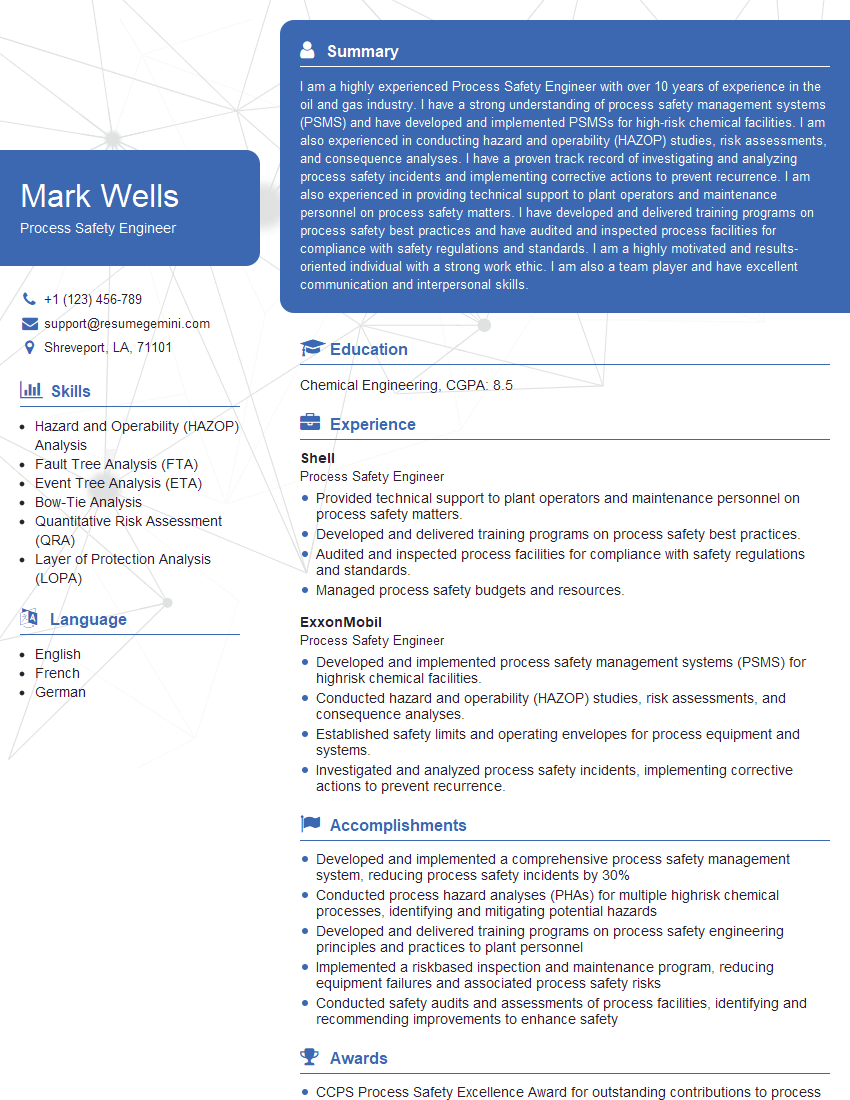
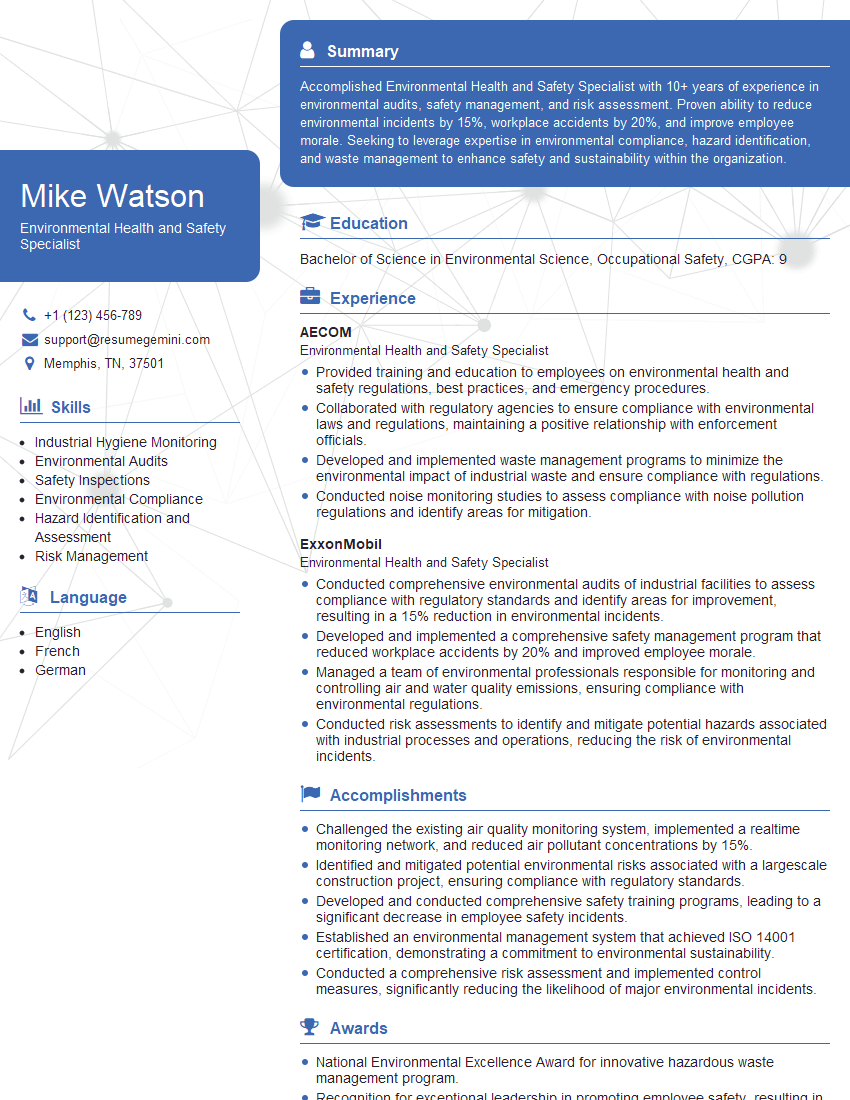
Mastering knowledge of hazardous locations is crucial for career advancement in many industries, opening doors to high-demand roles with excellent growth potential. A strong resume is your key to unlocking these opportunities. Creating an ATS-friendly resume is essential for getting your application noticed by recruiters. To significantly enhance your resume and increase your chances of landing your dream job, leverage the power of ResumeGemini. ResumeGemini provides a user-friendly platform to build a professional and impactful resume, and we offer examples of resumes tailored to experience with hazardous locations to help guide you.
Explore more articles
Users Rating of Our Blogs
Share Your Experience
We value your feedback! Please rate our content and share your thoughts (optional).
What Readers Say About Our Blog
To the interviewgemini.com Webmaster.
Very helpful and content specific questions to help prepare me for my interview!
Thank you
To the interviewgemini.com Webmaster.
This was kind of a unique content I found around the specialized skills. Very helpful questions and good detailed answers.
Very Helpful blog, thank you Interviewgemini team.