Preparation is the key to success in any interview. In this post, we’ll explore crucial Experience with scientific software and databases interview questions and equip you with strategies to craft impactful answers. Whether you’re a beginner or a pro, these tips will elevate your preparation.
Questions Asked in Experience with scientific software and databases Interview
Q 1. Explain the difference between relational and NoSQL databases.
Relational databases (like MySQL, PostgreSQL) and NoSQL databases (like MongoDB, Cassandra) differ fundamentally in how they organize and access data. Relational databases use a structured, tabular format with predefined schemas, enforcing relationships between tables using keys. Think of it like a well-organized spreadsheet where each table represents a specific aspect of your data, and relationships are clearly defined. NoSQL databases, on the other hand, are more flexible and schema-less. They can handle various data models, such as key-value pairs, document stores, or graph databases. Imagine them as a collection of loosely connected files; you don’t need to define the structure beforehand. The best choice depends entirely on your data and application needs.
Q 2. Describe your experience with SQL and NoSQL databases. Provide examples.
I have extensive experience with both SQL and NoSQL databases. In my previous role, we used PostgreSQL for managing structured experimental data, including sensor readings and metadata. For example, we had tables for `experiments`, `sensors`, and `readings`, with foreign keys linking readings to specific sensors and experiments. A SQL query like SELECT * FROM readings WHERE experiment_id = 123 AND sensor_id = 456; would efficiently retrieve all readings for a particular experiment and sensor. In another project, we used MongoDB to handle unstructured data, such as free-text annotations from image analysis. The flexible schema of MongoDB allowed us to easily incorporate evolving annotation formats without major database restructuring. We used queries based on JSON structures to efficiently search for specific annotations.
Q 3. What are the advantages and disadvantages of using cloud-based databases for scientific data?
Cloud-based databases offer several advantages for scientific data: scalability (easily handling growing datasets), accessibility (accessing data from anywhere with an internet connection), and cost-effectiveness (avoiding the overhead of managing your own servers). However, there are also drawbacks. Data security and privacy become paramount; you need to ensure your provider offers robust security measures. Network latency can affect performance, especially when dealing with large datasets or real-time analysis. Vendor lock-in is also a concern, making it challenging to switch providers later. The choice depends on weighing the benefits against these potential drawbacks. For highly sensitive data or applications requiring very low latency, an on-premise solution might still be preferable.
Q 4. How would you handle missing data in a scientific dataset?
Handling missing data in scientific datasets is crucial to avoid bias and ensure accurate analysis. The approach depends on the nature of the missing data and the context. Common strategies include:
- Deletion: Removing rows or columns with missing values. This is simple but can lead to information loss, especially if data is missing non-randomly.
- Imputation: Replacing missing values with estimated values. Techniques include using the mean, median, or mode; employing more sophisticated methods like k-nearest neighbors or multiple imputation, which generate multiple plausible imputed datasets to account for uncertainty.
- Model-based approaches: Incorporating the missing data mechanism into the statistical model used for analysis, such as using maximum likelihood estimation or multiple imputation.
The best approach involves careful consideration of the data and the research question. Simply filling in missing values with the mean might be appropriate for some applications, but it might introduce bias in others.
Q 5. Explain your experience with data cleaning and preprocessing techniques for scientific data.
Data cleaning and preprocessing are essential steps in any scientific data analysis. My experience includes handling various issues like:
- Identifying and handling outliers: Using box plots and scatter plots to visualize data and identify outliers, followed by investigation to determine whether they are true anomalies or data entry errors. Outliers might be removed, transformed, or kept depending on their nature and the analysis.
- Dealing with inconsistent data formats: Standardizing date formats, converting units, and cleaning up inconsistencies in string variables (e.g., using regular expressions).
- Data transformation: Applying transformations like log transformations or standardization to normalize data and improve model performance.
- Data reduction: Employing techniques like principal component analysis (PCA) to reduce the dimensionality of the data while retaining important information.
For instance, in a genomics project, I cleaned sequencing data by removing low-quality reads and correcting sequencing errors.
Q 6. What scientific software packages are you proficient in (e.g., R, Python, MATLAB)?
I’m proficient in several scientific software packages. My primary tools are R and Python. In R, I frequently use packages like ggplot2 for data visualization, dplyr for data manipulation, and various statistical modeling packages depending on the specific application. Python is my go-to for larger-scale data processing tasks, using libraries like pandas, NumPy, scikit-learn, and matplotlib. I’ve also used MATLAB for specific signal processing tasks, particularly when working with time-series data.
Q 7. Describe your experience with version control systems (e.g., Git).
I have extensive experience using Git for version control. I utilize Git daily to track changes in my code, collaborate with colleagues on projects, and manage different versions of analyses. I’m familiar with branching strategies, merging, resolving conflicts, and using platforms like GitHub and GitLab for collaboration and code sharing. Git has been indispensable in ensuring reproducibility and avoiding data loss in my work. I also use Git to track changes in data processing scripts and analyses to ensure the reproducibility of my scientific findings.
Q 8. How would you optimize a slow database query?
Optimizing a slow database query involves a systematic approach, focusing on identifying bottlenecks and applying targeted solutions. Think of it like optimizing a traffic jam – you need to understand the cause before you can fix it.
My approach begins with analyzing the query execution plan. Most database systems (like PostgreSQL, MySQL, or Oracle) offer tools to visualize this plan, showing which indexes are used, the order of operations, and where the query spends most of its time. This is crucial for pinpointing inefficiencies.
Indexing: Insufficient or poorly chosen indexes are a common culprit. If the query frequently filters on a particular column, ensure an index exists on that column. Consider composite indexes for queries involving multiple columns. For example, if a query frequently filters on both ‘date’ and ‘user_id’, a composite index on
(date, user_id)would be far more efficient than separate indexes.Query Rewriting: Sometimes, the query itself is inefficient. This can involve optimizing joins (preferring inner joins over outer joins where possible), using subqueries judiciously, and avoiding unnecessary computations. For instance, instead of using
SELECT *, specify only the required columns.Data Partitioning: For extremely large tables, partitioning can drastically improve query performance by breaking the table into smaller, more manageable chunks. This is particularly effective when queries frequently filter on a specific partition key.
Database Tuning: System-level optimizations are important too. This involves adjusting parameters like buffer pools, memory allocation, and connection limits, based on the specific database system and workload. It’s like tuning the engine of a car for optimal performance.
Hardware Upgrade: In some cases, the database server itself might be underpowered. More RAM, faster storage (SSDs), and increased CPU processing power can significantly reduce query execution time.
I’ve used these techniques extensively in projects involving genomic data analysis where queries against large variant call format (VCF) files could take hours without optimization. By carefully analyzing the query plan and implementing the appropriate strategies (indexing, query rewriting), I successfully reduced the execution time to minutes.
Q 9. Explain your experience with data visualization tools and techniques.
Data visualization is paramount for interpreting and communicating insights from scientific data. I have extensive experience using a variety of tools and techniques to effectively communicate complex information.
Tools: I am proficient in using tools like Python’s Matplotlib, Seaborn, and Plotly, as well as R’s ggplot2. These tools allow for creating static and interactive plots, including scatter plots, histograms, box plots, heatmaps, and network graphs. For more specialized needs, I’ve also used commercial packages such as Tableau and Power BI. The choice of tool depends heavily on the data and the intended audience.
Techniques: Beyond simply creating plots, the techniques I employ are crucial. This includes choosing appropriate chart types for the data, using clear and concise labels, selecting an effective color scheme, and ensuring accessibility for different types of users. For example, in a recent climate modeling project, we used interactive 3D visualizations to showcase changes in global temperature patterns over time. This was far more effective than simply presenting static graphs.
Workflows: My visualization workflow usually involves exploratory data analysis first – understanding the data’s distribution, potential outliers, and correlations. Only then do I choose the most appropriate visualization techniques to effectively communicate the key findings. For instance, when visualizing high-dimensional data, dimensionality reduction techniques (like PCA or t-SNE) may be necessary before creating visualizations.
A key aspect is ensuring reproducibility and clarity in my visualizations. I always document my code and choices, ensuring that others can understand and recreate my work.
Q 10. Describe a time you had to troubleshoot a complex scientific software issue.
During a proteomics project, we encountered a recurring segmentation fault in a custom-built software pipeline used for peptide identification. This pipeline involved multiple modules written in C++ and interacting through various file formats. The segmentation faults were intermittent, making debugging extremely challenging.
My approach was methodical. First, I systematically isolated the problematic module using the ‘divide and conquer’ method. I tested each module individually, feeding in sample data, until I identified the module that consistently caused the segmentation fault. This involved careful monitoring of memory usage using tools like Valgrind. The fault was pinpointed to an improper memory allocation within a specific function.
Once the problematic code section was identified, using a debugger like GDB, I stepped through the code line by line to trace the memory access patterns and pinpoint the exact line of code causing the fault. The root cause was a buffer overflow due to an unchecked input variable.
The solution involved adding error handling and input validation to prevent the buffer overflow. Furthermore, I implemented robust memory management practices throughout the codebase to prevent future occurrences. This involved using smart pointers and memory allocation strategies. After these changes, the segmentation fault was resolved, and the pipeline ran stably. This experience reinforced the importance of careful coding, rigorous testing, and effective debugging techniques in scientific software development.
Q 11. How do you ensure data integrity and security in your work?
Data integrity and security are paramount in my work. I employ a multi-layered approach, encompassing various techniques:
Data Validation: I implement stringent data validation checks at every stage of the data lifecycle. This includes schema validation, range checks, and consistency checks to ensure data accuracy and completeness. For example, when importing data from external sources, I would use data quality checks to identify and address inconsistencies or errors before further processing.
Access Control: Restricting access to sensitive data is crucial. I utilize role-based access control (RBAC) mechanisms to grant permissions based on individual responsibilities, ensuring that only authorized personnel can access or modify sensitive information. I also employ encryption methods, particularly for data at rest and in transit.
Version Control: Using Git or similar version control systems enables me to track changes to data and code, allowing for easy rollback to previous versions if necessary. This improves reproducibility and aids in identifying potential errors or malicious changes.
Data Anonymization/Pseudonymization: Where appropriate, I employ anonymization or pseudonymization techniques to protect the privacy of individuals whose data is involved. This involves removing or replacing identifying information while preserving the data’s utility for research.
Regular Audits: Periodic audits of data and systems are essential to identify and address potential vulnerabilities. This helps ensure that security practices are effective and up-to-date.
My commitment to data integrity and security is not just about adhering to best practices but also about upholding ethical and legal standards related to the handling of scientific data.
Q 12. What are your preferred methods for data backup and recovery?
Data backup and recovery are critical for ensuring data availability and business continuity. My preferred methods utilize a multi-tiered approach combining local and cloud-based solutions:
Local Backups: I regularly perform local backups to external hard drives, using tools such as
rsyncfor efficient and incremental backups. This ensures quick recovery in case of a local system failure. I maintain multiple copies of the backup at different locations to mitigate the risk of physical damage or theft.Cloud Backups: I also utilize cloud-based backup services like AWS S3 or Google Cloud Storage to provide redundancy and disaster recovery capabilities. These services offer features such as versioning and lifecycle management, ensuring that I can easily restore previous versions of my data if needed.
Backup Verification: Regularly testing the recovery process is vital. This involves periodically restoring a small subset of the backed-up data to ensure the backups are valid and can be successfully recovered. This ‘test restore’ is as important as the backup itself.
Backup Scheduling: A robust backup schedule is essential. This schedule is determined by the criticality of the data, considering factors such as frequency of updates and recovery time objectives. Automated backup scheduling tools are invaluable.
The choice of tools and frequency depends greatly on the size and importance of the data, alongside the project budget and infrastructure limitations. For example, for large genomic datasets, incremental backups combined with cloud storage are often preferred.
Q 13. Explain your understanding of data warehousing and its application in scientific research.
Data warehousing is a powerful technique for organizing and managing large datasets, making it highly relevant for scientific research. Imagine it as a well-organized library, facilitating efficient access to and analysis of vast amounts of information.
In scientific research, data often comes from disparate sources – experiments, simulations, observations, literature databases. Data warehousing provides a unified view of this data, enabling researchers to perform comprehensive analyses and identify patterns that would be difficult or impossible to discover using individual datasets.
Structure: A data warehouse typically uses a star schema or snowflake schema, organizing data into fact tables (containing core measurements or events) and dimension tables (providing context, such as time, location, or experimental conditions). This structure is designed for efficient query processing.
Application in Scientific Research: In genomics research, a data warehouse could store genomic data, patient metadata, clinical outcomes, and results from various analytical tools. This enables researchers to perform complex queries integrating information from all these sources, facilitating the discovery of relationships between genomic variation and disease phenotypes. Similarly, in climate science, a data warehouse could integrate climate model outputs, satellite imagery, and ground-based measurements, allowing for comprehensive climate analysis.
I’ve worked on projects involving the design and implementation of data warehouses for various scientific applications. The key is to carefully define the requirements, select an appropriate database technology (like PostgreSQL or Snowflake), and implement efficient data loading and transformation processes to ensure a performant and scalable solution.
Q 14. Describe your experience with parallel processing or distributed computing.
Parallel processing and distributed computing are essential for handling the massive datasets often encountered in scientific research. Think of it like assigning different parts of a large task to multiple workers, speeding up the overall process dramatically.
Parallel Processing: This involves dividing a single task into smaller subtasks that can be executed concurrently on multiple cores of a single machine. I’ve used libraries like OpenMP and multiprocessing in Python to implement parallel processing for computationally intensive tasks such as image analysis and simulations.
Distributed Computing: This extends the concept of parallelism to multiple machines across a network. Frameworks like Apache Spark and Hadoop are widely used for large-scale data processing. Spark’s resilient distributed datasets (RDDs) allow for efficient parallel computation on clustered machines. I’ve leveraged Spark to process petabyte-scale datasets, enabling analysis that would be impossible on a single machine.
Challenges: Working with distributed systems introduces complexities in data management, communication overhead, and fault tolerance. Careful consideration of data partitioning, communication protocols, and error handling is critical for building robust and scalable distributed applications. Data consistency and synchronization across multiple nodes are also critical factors to consider.
In a recent climate modeling project, we used a distributed computing framework to perform simulations across a large cluster of machines. This allowed us to complete simulations in a fraction of the time it would have taken on a single machine, enabling us to explore a wider range of parameter settings and achieve more comprehensive results.
Q 15. What is your experience with high-performance computing (HPC) clusters?
My experience with High-Performance Computing (HPC) clusters spans several years, encompassing both utilizing existing clusters and contributing to their optimization. I’ve worked extensively with clusters utilizing various architectures, including those based on both shared-memory and distributed-memory paradigms. For example, I’ve used Slurm for job scheduling on large clusters at [Institution Name], managing resource allocation for computationally intensive simulations in [Scientific Domain]. This involved optimizing code for parallel execution, using MPI (Message Passing Interface) for inter-process communication, and troubleshooting performance bottlenecks. I am proficient in profiling tools like VampirTrace to identify performance limitations and refine code for maximum efficiency on HPC resources. My experience also includes working with cloud-based HPC solutions like AWS ParallelCluster, demonstrating adaptability to diverse HPC environments.
Career Expert Tips:
- Ace those interviews! Prepare effectively by reviewing the Top 50 Most Common Interview Questions on ResumeGemini.
- Navigate your job search with confidence! Explore a wide range of Career Tips on ResumeGemini. Learn about common challenges and recommendations to overcome them.
- Craft the perfect resume! Master the Art of Resume Writing with ResumeGemini’s guide. Showcase your unique qualifications and achievements effectively.
- Don’t miss out on holiday savings! Build your dream resume with ResumeGemini’s ATS optimized templates.
Q 16. How familiar are you with different data formats commonly used in scientific research (e.g., NetCDF, HDF5)?
I’m very familiar with various data formats used in scientific research. NetCDF (Network Common Data Form) is frequently used for storing gridded data, such as climate data or satellite imagery, because of its self-describing nature and efficient handling of multi-dimensional arrays. HDF5 (Hierarchical Data Format version 5) is another common choice, particularly beneficial for large, complex datasets due to its hierarchical structure and ability to handle diverse data types within a single file. I’ve extensively worked with both formats, often leveraging libraries like h5py (for HDF5 in Python) and netCDF4-python for data manipulation and analysis. For instance, in a project involving genomic data analysis, I used HDF5 to efficiently store and access large genome sequences and annotation files, significantly improving processing speed. In contrast, NetCDF proved ideal for storing and manipulating climate model output in a separate project.
Q 17. Describe your experience working with large datasets (big data).
My experience with large datasets encompasses both the technical challenges of processing them and the strategic considerations for efficient analysis. I’ve worked with datasets exceeding terabytes in size, often requiring distributed computing frameworks like Apache Spark or Hadoop. For example, while analyzing satellite imagery for land cover change detection, I utilized Spark to process and analyze petabytes of data efficiently, distributing the workload across a cluster of machines. This involved designing optimized data pipelines, handling data partitioning and shuffling, and employing techniques to manage memory constraints. Beyond the technical aspects, I understand the importance of careful data cleaning, preprocessing, and feature engineering for achieving meaningful insights from big data. This often involves employing techniques to handle missing data, outliers, and noisy signals before conducting further analysis.
Q 18. Explain your knowledge of different database indexing techniques.
Database indexing techniques are crucial for optimizing query performance. Different indexing methods are suited to different query patterns. B-tree indexes are very common, offering efficient searching, insertion, and deletion operations for range queries and equality searches. They are particularly useful for relational databases. Hash indexes, on the other hand, provide extremely fast lookups for equality searches but are not efficient for range queries. In spatial databases, spatial indexes like R-trees are employed to effectively search for objects based on their geographical location. Choosing the right index depends on the data and the types of queries frequently performed. For example, in a database storing sensor readings with timestamps, a B-tree index on the timestamp column will dramatically speed up queries retrieving data within a specific time range. In contrast, if a database needs to quickly retrieve records based on a unique identifier, a hash index would be more appropriate.
Q 19. What are normalization and denormalization in database design?
Normalization and denormalization are two opposing strategies in database design aimed at balancing data redundancy and query performance. Normalization involves decomposing a database into smaller tables to reduce redundancy and improve data integrity. This often involves applying normal forms (e.g., 1NF, 2NF, 3NF) which define rules for minimizing redundancy. The benefit is reduced data duplication, leading to easier data updates and less storage space, but it can lead to more complex joins during queries. Denormalization, conversely, involves adding redundant data to tables to improve query performance. This reduces the number of joins needed, potentially leading to faster query execution, but at the cost of increased data redundancy and higher storage needs. The choice between normalization and denormalization is a trade-off, often depending on the application’s specific performance requirements and data update frequency. For instance, in a highly transactional system where query speed is paramount, a degree of denormalization might be justified, whereas in a data warehouse optimized for analysis but with infrequent updates, normalization is generally preferred.
Q 20. How would you design a database schema for a specific scientific application (e.g., genomics, climate modeling)?
Designing a database schema for a scientific application requires careful consideration of the data structure and anticipated queries. Let’s take genomics as an example. A schema might involve several tables: one for storing genomic sequences (with columns for sequence ID, chromosome, start position, end position, and sequence data), another for gene annotations (with columns for gene ID, gene name, location, function), and a third for storing experimental data (e.g., RNA sequencing data). Relationships between these tables would be defined using foreign keys (e.g., linking gene annotations to sequence data). The choice of database system (e.g., relational, NoSQL) would depend on the specific needs. A relational database like PostgreSQL might be suitable for structured data and complex queries, whereas a NoSQL database like MongoDB might be more appropriate for handling unstructured or semi-structured data like sequence variations. Effective indexing would be crucial for efficient querying, potentially utilizing B-tree indexes on sequence ID, gene ID, and other key fields. For climate modeling, a different schema would be used, potentially incorporating spatial indexes for efficient retrieval of climate data based on geographical location.
Q 21. Explain your experience with data mining or machine learning techniques applied to scientific data.
I have substantial experience applying data mining and machine learning techniques to scientific data. This has involved various techniques, including regression models for predicting outcomes, classification models for categorizing data points, and clustering algorithms for identifying patterns in high-dimensional datasets. In a project involving astrophysical data, I employed support vector machines (SVMs) to classify different types of celestial objects based on their spectral characteristics. In another project, I used principal component analysis (PCA) for dimensionality reduction to analyze large gene expression datasets, identifying key genes associated with specific diseases. My work also encompasses the use of deep learning techniques, such as convolutional neural networks (CNNs) for image analysis and recurrent neural networks (RNNs) for time series analysis of scientific data. The choice of technique is always dictated by the nature of the data and the research questions being addressed. A critical aspect of my workflow involves rigorous evaluation of model performance using appropriate metrics and techniques to avoid overfitting and ensure generalizability of the findings.
Q 22. How do you evaluate the accuracy and reliability of your scientific data analysis?
Evaluating the accuracy and reliability of scientific data analysis is crucial for drawing valid conclusions. It’s a multi-faceted process involving several key steps. Think of it like building a house – you wouldn’t skip inspecting the foundation!
Data Validation: This involves checking the data for errors, inconsistencies, and outliers. This could range from simple checks for missing values or implausible ranges (e.g., a negative age) to more sophisticated techniques like anomaly detection algorithms. For example, I’ve used box plots and scatter plots to visually identify outliers in gene expression data.
Methodological Rigor: The chosen analytical methods must be appropriate for the data type and research question. Using an incorrect statistical test, for instance, can lead to misleading results. I always carefully consider the assumptions underlying my chosen methods and justify their selection in my reports.
Sensitivity Analysis: This involves assessing how sensitive the results are to changes in the data or the analytical methods. For example, I might re-run my analysis with different subsets of the data or use alternative statistical models to see if the main findings remain consistent. This helps assess the robustness of the conclusions.
Reproducibility: The entire analysis should be meticulously documented, including data sources, code, and analytical choices. This ensures that others can reproduce the results, which is critical for validating the findings. Version control systems like Git are essential in this context, as are detailed comments within the code.
Uncertainty Quantification: Quantifying uncertainty in the results is vital. This might involve calculating confidence intervals, p-values, or using Bayesian methods to estimate the probability distributions of parameters. I always aim to provide a clear representation of the uncertainty associated with my findings.
Q 23. Describe your understanding of statistical modeling and its use in scientific research.
Statistical modeling is the process of using mathematical equations to represent relationships within data. It’s a cornerstone of scientific research, allowing us to make inferences about populations based on samples, predict future outcomes, and test hypotheses. Imagine trying to understand the effect of fertilizer on crop yield – you wouldn’t test every single field; instead, you’d use statistical modeling to infer the effect based on a representative sample.
In my work, I’ve extensively used various models, including:
Linear regression: To model the relationship between a continuous dependent variable and one or more independent variables.
Generalized linear models (GLMs): To handle non-normal data, such as count data or binary outcomes (e.g., presence/absence of a disease). I’ve used GLMs to model species richness in ecological datasets.
Mixed-effects models: To account for hierarchical data structures, common in many biological and social science studies. I’ve employed these in analyses involving repeated measurements on the same individuals.
The choice of model depends heavily on the specific research question and the characteristics of the data. Model selection involves careful consideration of factors such as model fit, goodness-of-fit tests, and the interpretability of the results.
Q 24. Explain your experience with data integration from multiple sources.
Data integration from multiple sources is a common task in scientific research. It often involves combining data from different databases, experiments, or instruments. This can be challenging because the data may be in different formats, have different levels of quality, and contain inconsistencies.
My experience includes working with diverse data sources such as:
Relational databases (SQL): I’m proficient in querying and manipulating data using SQL. I’ve used SQL to join tables from different databases containing genomic and clinical data.
NoSQL databases: For handling large, unstructured or semi-structured data sets. I’ve used MongoDB for storing and analyzing microbiome data.
CSV and other flat files: I’m adept at importing and cleaning data from various flat file formats using scripting languages like Python and R.
APIs: I’ve integrated data using APIs from various scientific resources, ensuring efficient access to updated information.
The process usually involves data cleaning, transformation, and standardization to ensure consistency before integration.
Q 25. How do you handle conflicts when merging data from different sources?
Data conflicts during merging are inevitable. The key is to have a well-defined strategy to resolve these conflicts. This strategy should be documented and transparent, ensuring the reproducibility of the results.
My approach includes:
Data Profiling and Validation: Before merging, I thoroughly profile each dataset to identify potential conflicts. This may involve comparing data dictionaries, checking for overlapping identifiers, and identifying inconsistencies in data formats.
Conflict Resolution Strategies: The method used to resolve conflicts depends on the nature of the conflict and the data itself. Options include:
Manual Review and Correction: For small datasets or critical conflicts, manual review might be necessary.
Prioritization Rules: Define rules to prioritize one data source over another based on its reliability or timeliness. For example, preferring more recent measurements over older ones.
Statistical Methods: Using techniques such as weighted averages or imputation to combine conflicting values.
Documentation: Every conflict resolution should be meticulously documented, including the chosen strategy and the rationale behind it. This is essential for transparency and reproducibility.
Q 26. Describe your approach to designing and implementing a data pipeline for scientific data processing.
Designing and implementing a data pipeline for scientific data processing requires careful planning and consideration of several factors. Think of it as designing a well-oiled machine – each component needs to work seamlessly with others for optimal efficiency.
My approach typically follows these steps:
Data Ingestion: This involves defining how data will be collected and transferred into the pipeline. This could involve automated processes like scheduled downloads from databases or real-time streaming data from sensors.
Data Cleaning and Transformation: This stage involves cleaning, transforming, and standardizing the data to ensure consistency. This often includes handling missing values, outliers, and inconsistent formats.
Data Processing: This stage involves performing any necessary analyses or transformations on the data. This could include statistical modeling, machine learning algorithms, or custom data manipulation.
Data Storage: The pipeline should include a plan for storing the processed data in a structured and accessible manner. This could involve relational databases, data lakes, or cloud-based storage solutions.
Data Visualization and Reporting: The pipeline should generate reports and visualizations to facilitate communication of the results. This could involve dashboards, interactive visualizations, or custom reports.
Monitoring and Maintenance: The pipeline should be monitored for performance, errors, and data quality issues. Regular maintenance is crucial to ensure the pipeline’s long-term reliability.
I often use tools like Apache Airflow or similar workflow management systems to automate and manage the pipeline.
Q 27. How would you present complex scientific data findings to a non-technical audience?
Presenting complex scientific data findings to a non-technical audience requires simplifying complex concepts without sacrificing accuracy. It’s about telling a compelling story with the data, not just showing numbers and graphs. Imagine trying to explain the intricacies of quantum physics to a five-year-old – it requires a different approach than explaining it to a fellow physicist.
My strategies include:
Focus on the Big Picture: Start by clearly stating the main findings in plain language, without jargon. What are the key takeaways? What is the significance of the research?
Use Visualizations Effectively: Visualizations like charts, graphs, and infographics are extremely helpful in conveying complex information. Choose visualizations that are easy to understand and avoid overwhelming the audience with too much detail.
Analogies and Metaphors: Use relatable analogies and metaphors to explain complex concepts. This can make the information more memorable and easier to grasp.
Avoid Technical Jargon: Use plain language and avoid technical terms. If you must use a technical term, make sure to define it clearly.
Interactive Presentations: Consider interactive elements to allow audience participation, which increases engagement.
Storytelling: Frame the findings as a story to make them more engaging. What problem did the research address? What were the key findings? What are the implications of the research?
Q 28. What are your strategies for staying up-to-date with advancements in scientific software and databases?
Staying up-to-date in the rapidly evolving field of scientific software and databases is crucial. It’s an ongoing process that requires a proactive approach. Think of it as a lifelong learning journey – you constantly need to adapt and acquire new skills.
My strategies include:
Regularly Attend Conferences and Workshops: Conferences and workshops are a great way to learn about the latest advancements from leading experts.
Read Scientific Literature: Keep up-to-date with the latest research by reading peer-reviewed journals and following leading researchers in my field.
Online Courses and Tutorials: Numerous online resources, such as Coursera, edX, and DataCamp, offer courses on various aspects of scientific computing and databases.
Engage in Online Communities: Participating in online forums, mailing lists, and communities dedicated to scientific computing and databases allows access to practical knowledge and expert advice.
Experiment with New Tools and Technologies: Experimenting with new tools and technologies keeps me at the cutting edge of the field and gives me practical experience.
Mentorship and Collaboration: Collaborating with colleagues and experts helps me to continuously learn new techniques and approaches.
Key Topics to Learn for Experience with Scientific Software and Databases Interview
- Data Management & Manipulation: Understanding relational databases (SQL), NoSQL databases, data cleaning techniques, and efficient data handling strategies for large scientific datasets. Consider practical applications like optimizing query performance or designing efficient database schemas for specific research questions.
- Scientific Software Proficiency: Demonstrate familiarity with at least one major scientific computing package (e.g., Python with SciPy/NumPy/Pandas, R, MATLAB). Practice coding challenges related to data analysis, visualization, and statistical modeling. Be prepared to discuss your experience with version control (e.g., Git).
- Data Visualization & Interpretation: Mastering the art of creating clear and informative visualizations to communicate complex scientific findings. Practice creating various plot types (e.g., scatter plots, histograms, heatmaps) and be prepared to discuss the best visualization choices for different datasets and analyses.
- Statistical Analysis & Modeling: Develop a strong understanding of statistical methods relevant to your field. Be ready to discuss hypothesis testing, regression analysis, and other statistical techniques used to interpret scientific data. Showcase your ability to select and apply appropriate statistical models.
- Cloud Computing & Data Storage (Optional): Familiarity with cloud platforms (AWS, Azure, GCP) and their application to scientific data storage, processing, and analysis can be a significant advantage. Be prepared to discuss relevant experience if applicable.
- Reproducible Research Practices: Understand the importance of reproducible research and be able to discuss techniques like version control, detailed documentation, and using reproducible workflows. This demonstrates professionalism and attention to detail.
Next Steps
Mastering scientific software and databases is crucial for career advancement in many scientific fields. Proficiency in these areas demonstrates valuable problem-solving skills and a strong foundation for future research and development. To maximize your job prospects, create an ATS-friendly resume that highlights your skills and experience effectively. ResumeGemini is a trusted resource to help you build a professional and impactful resume. We provide examples of resumes tailored to experience with scientific software and databases to guide you in crafting your own compelling application materials.
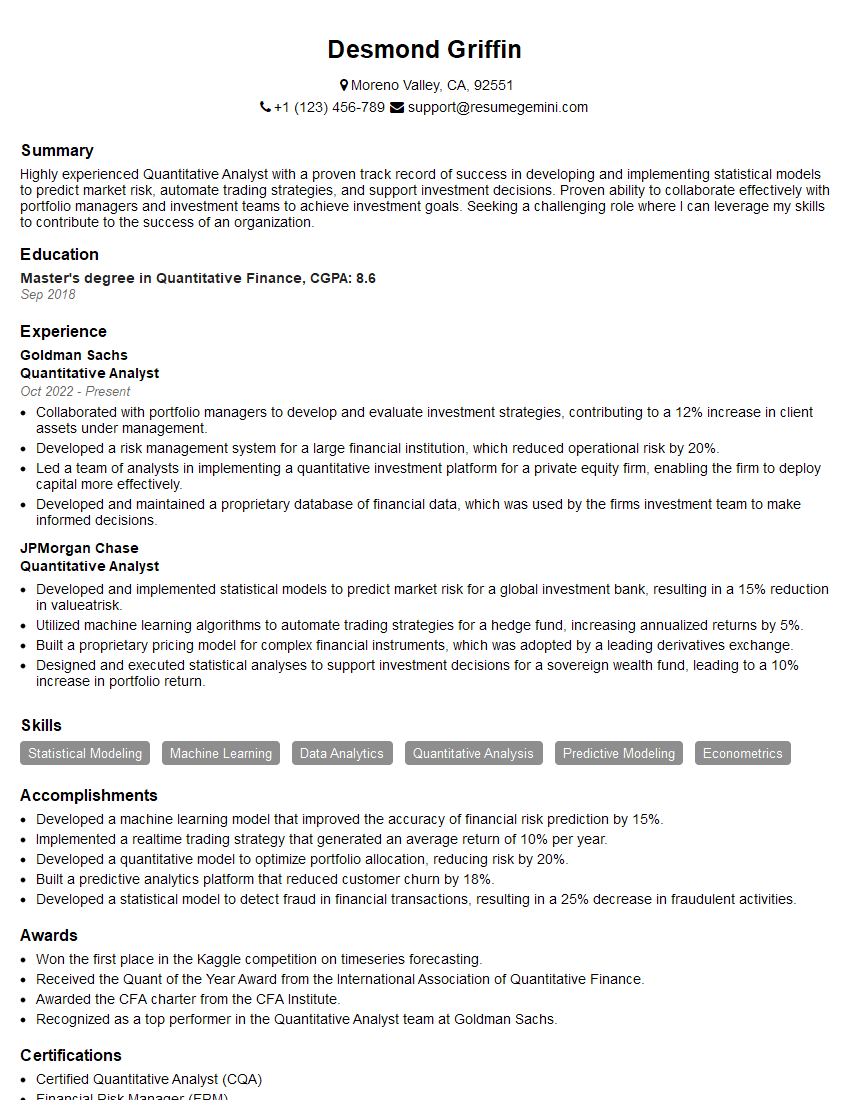
Quantitative Analyst Resume Sample
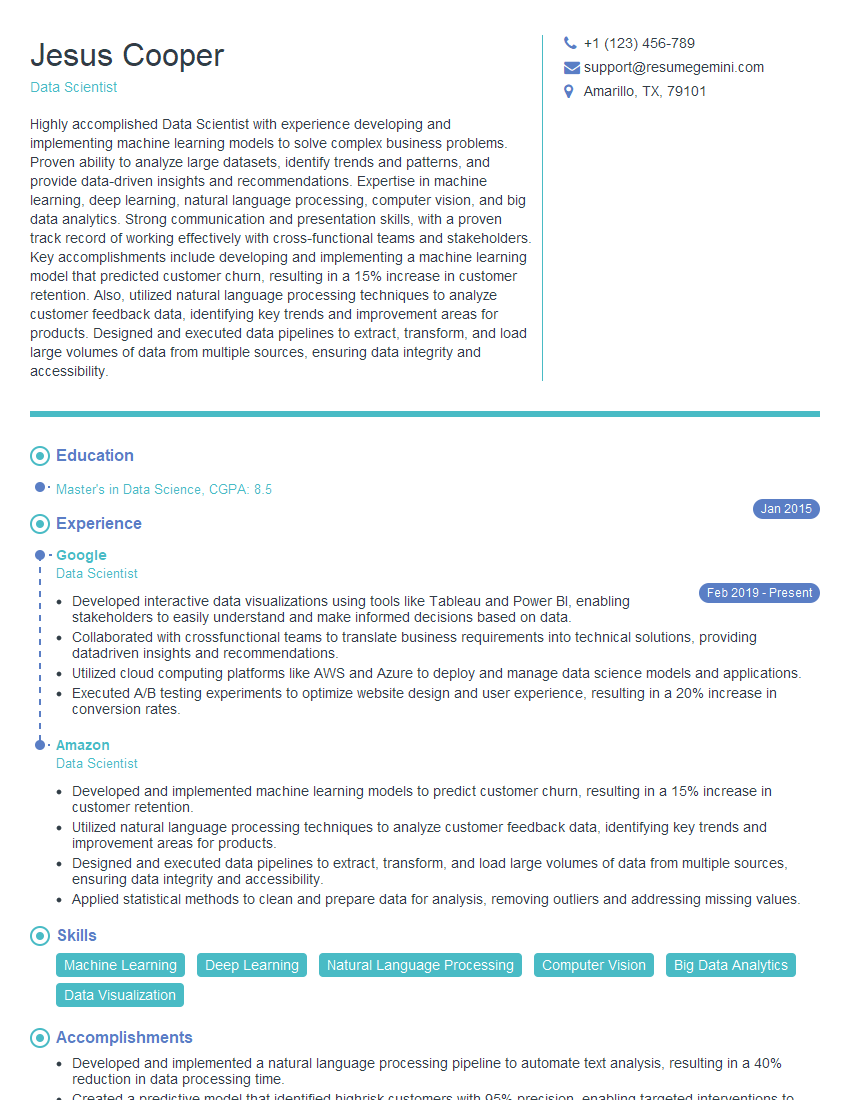
Data Scientist Resume Sample
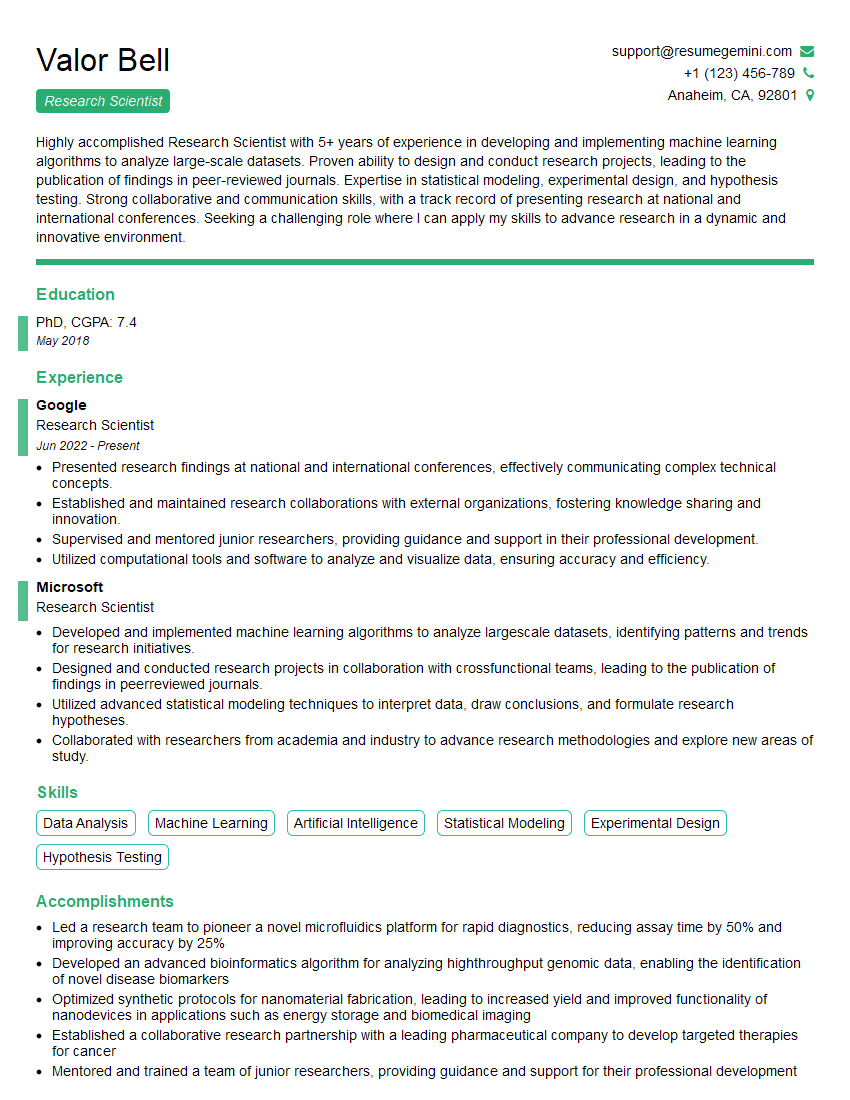
Research Scientist Resume Sample
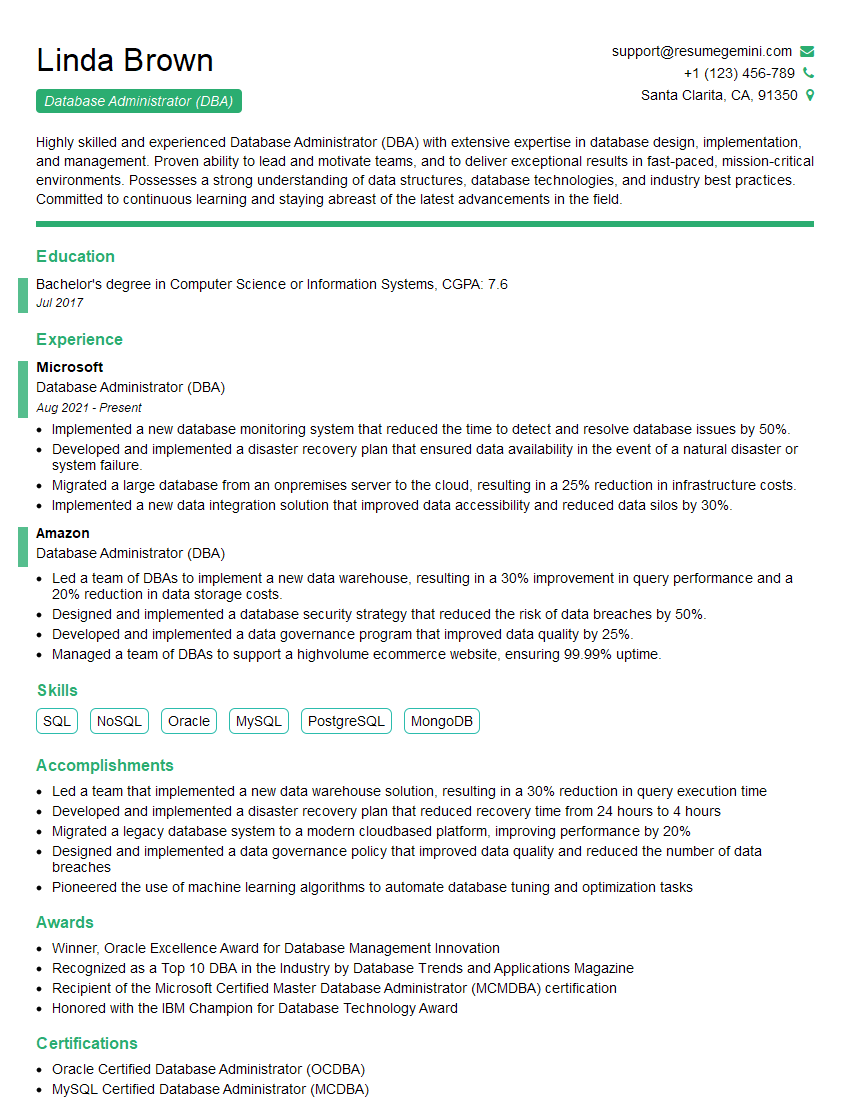
Database Administrator (DBA) Resume Sample
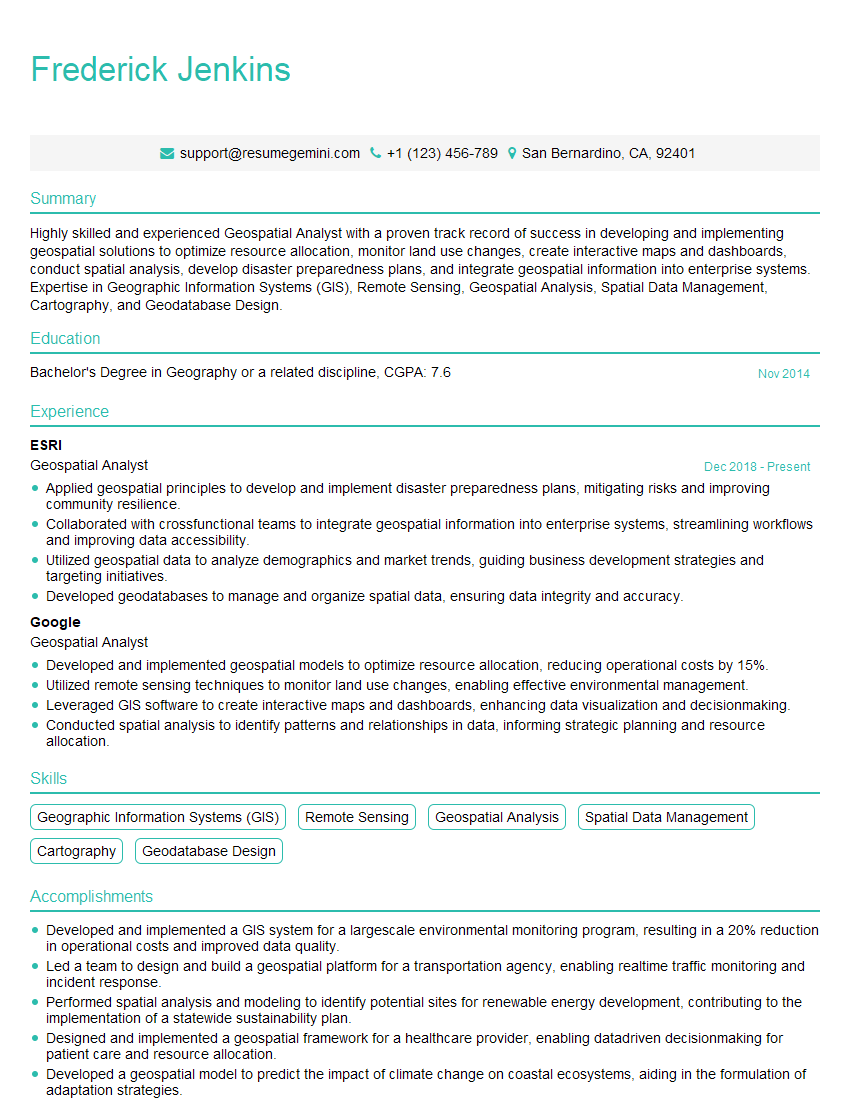
Geospatial Analyst Resume Sample
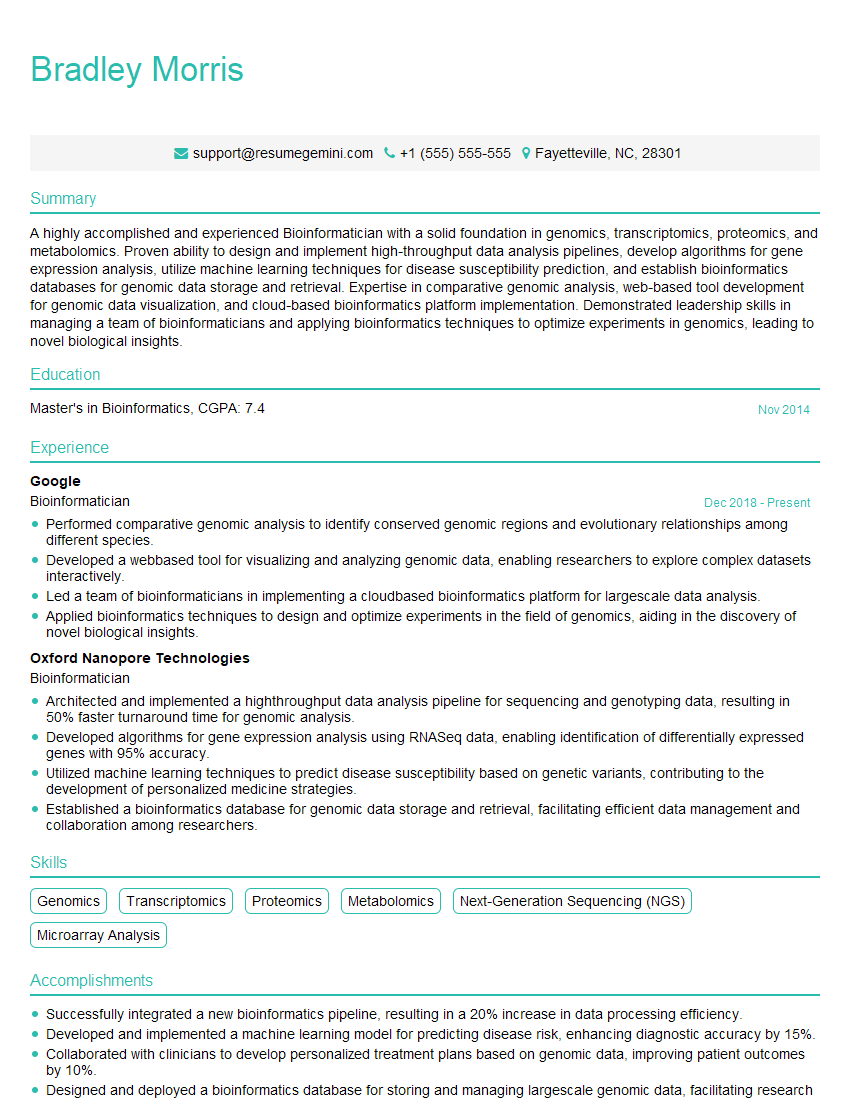
Bioinformatician Resume Sample
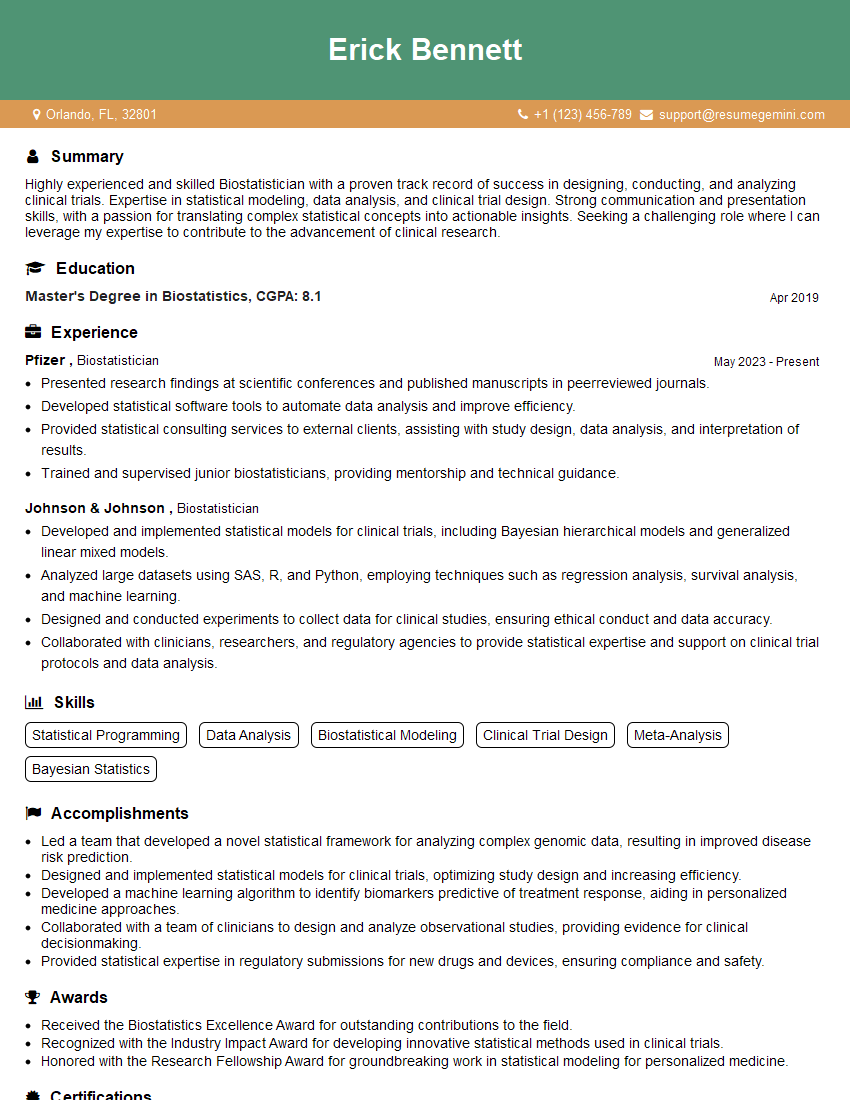
Biostatistician Resume Sample
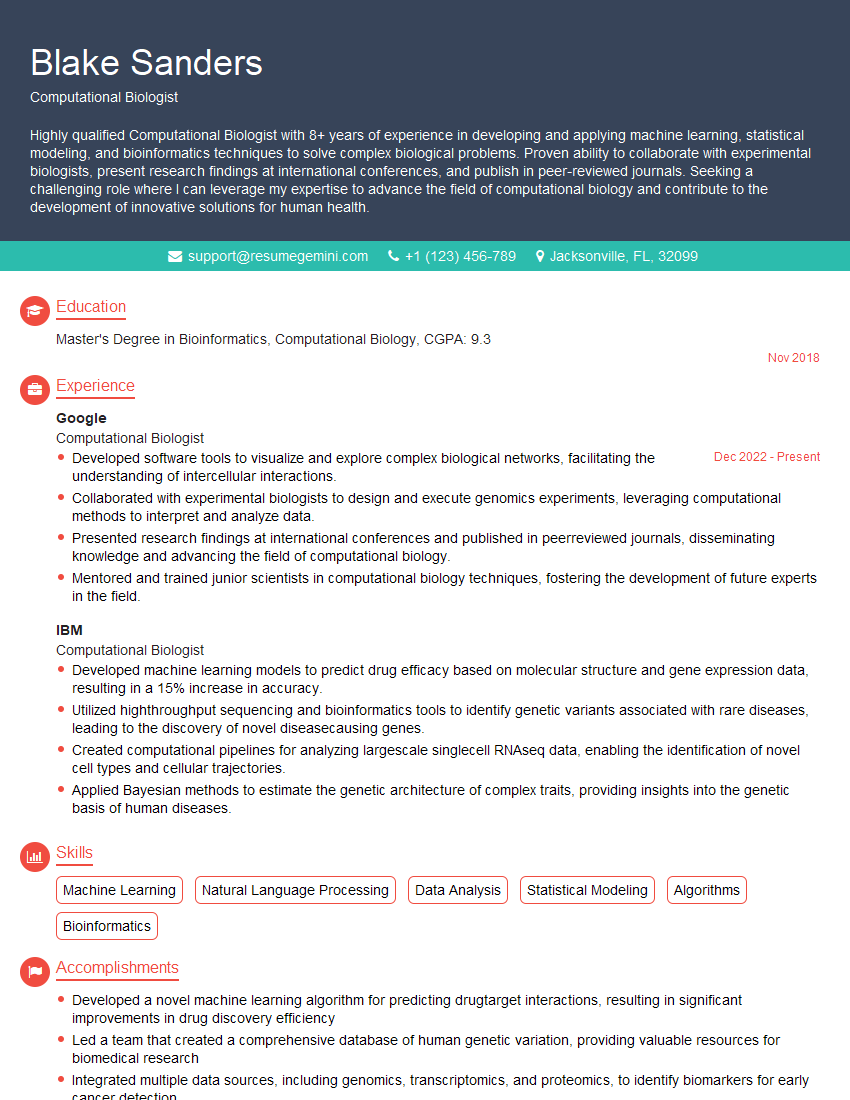
Computational Biologist Resume Sample
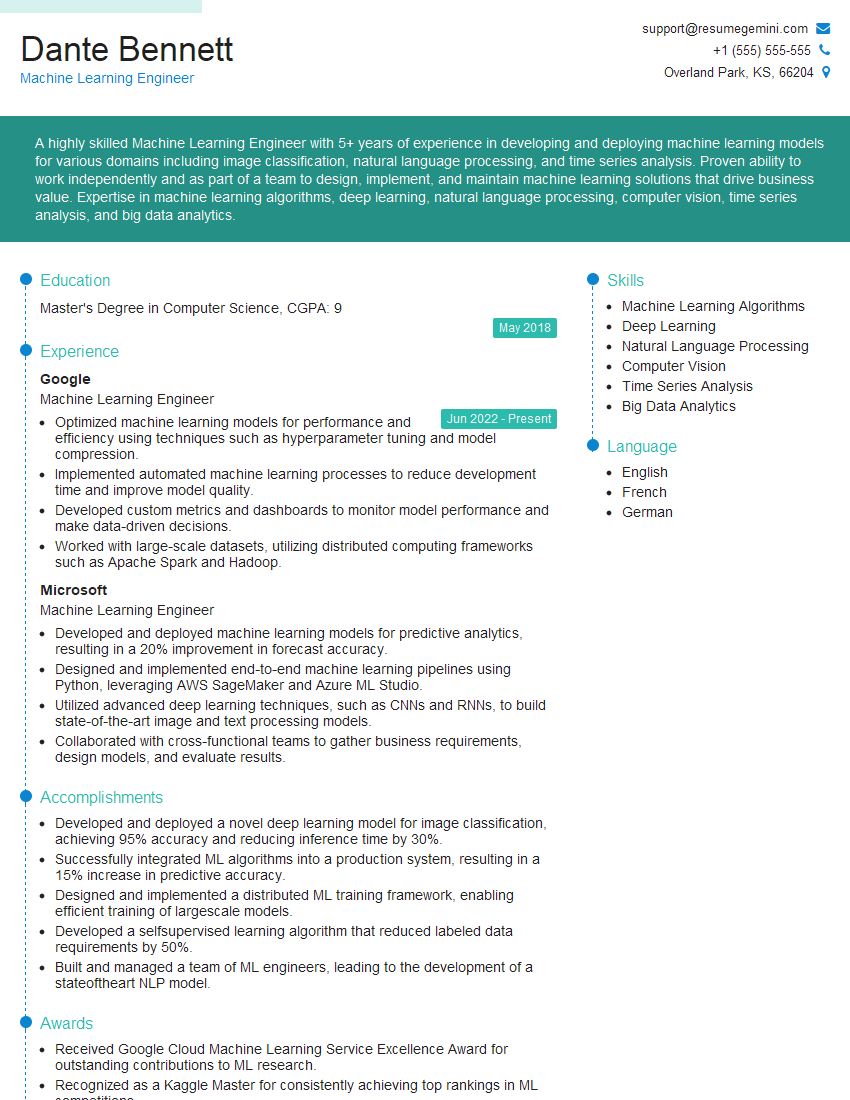
Machine Learning Engineer Resume Sample
Explore more articles
Users Rating of Our Blogs
Share Your Experience
We value your feedback! Please rate our content and share your thoughts (optional).
What Readers Say About Our Blog
To the interviewgemini.com Webmaster.
Very helpful and content specific questions to help prepare me for my interview!
Thank you
To the interviewgemini.com Webmaster.
This was kind of a unique content I found around the specialized skills. Very helpful questions and good detailed answers.
Very Helpful blog, thank you Interviewgemini team.