Cracking a skill-specific interview, like one for Experience with using music to address behavioral challenges, requires understanding the nuances of the role. In this blog, we present the questions you’re most likely to encounter, along with insights into how to answer them effectively. Let’s ensure you’re ready to make a strong impression.
Questions Asked in Experience with using music to address behavioral challenges Interview
Q 1. Describe your experience using music to calm agitated individuals.
Calming agitated individuals through music involves understanding the physiological effects of music on the nervous system. Slow tempo, simple melodies, and calming harmonies are key. Think of it like a soothing balm for a frayed nervous system. I begin by assessing the individual’s current level of agitation and choose music accordingly. If they’re highly agitated, I might start with very slow, ambient soundscapes, perhaps incorporating nature sounds like rain or ocean waves. As their agitation subsides, I might gradually introduce more melodic elements, but always maintaining a slow tempo and calming tonality. I might use instruments like the cello or acoustic guitar, known for their calming qualities. It’s a gradual process, constantly monitoring the individual’s response and adjusting the music accordingly. This is akin to a titration process in pharmacology where the dosage is adjusted to achieve the desired effect.
For example, I once worked with a young man with autism who frequently experienced meltdowns. Initially, during a meltdown, loud, rhythmic music only exacerbated his anxiety. However, by using slow, ambient piano music, gradually introducing gentle nature sounds, and observing his subtle responses, we were able to reduce his anxiety and help him calm down. It wasn’t immediate, and required patience and careful observation. We created a ‘calm down’ playlist together, which he can now access independently.
Q 2. How do you adapt musical interventions for diverse learning styles and developmental levels?
Adapting musical interventions requires a deep understanding of different learning styles and developmental levels. For instance, a child with autism might respond better to repetitive, predictable musical patterns, whereas a teenager with anxiety might benefit from more expressive and improvisational music. I utilize various approaches:
- Visual Learners: I might incorporate visual aids such as color charts representing different moods and tempos, or use music videos with engaging visuals.
- Auditory Learners: I emphasize the sonic qualities of the music, highlighting specific instruments, rhythms, or melodies.
- Kinesthetic Learners: I incorporate movement and dance, allowing them to physically express their emotions through music. This could involve drumming, playing simple instruments, or guided movement to the music.
Developmental levels are also crucial. For younger children, I use simpler melodies and rhythms, focusing on engagement and play. With older clients, we explore more complex musical structures and discuss the emotional impact of the music. The key is personalization. I always assess the individual’s preferences and tailor my approach accordingly.
Q 3. Explain your approach to assessing a client’s musical preferences and responses.
Assessing a client’s musical preferences and responses is a crucial first step. I use a multi-faceted approach:
- Informal Conversations: I start by engaging in casual conversation to learn about their musical background, preferred genres, and artists. This helps me understand their existing musical tastes and preferences.
- Structured Assessments: I use standardized assessment tools which help objectively assess musical preferences and emotional responses. This often involves presenting various musical excerpts and observing their reactions, both verbal and nonverbal.
- Direct Observation: I observe their spontaneous responses to different types of music, noting their physical reactions (e.g., relaxation, increased energy), facial expressions, and verbal comments. This provides valuable qualitative data.
- Trial and Error: I experiment with different styles, tempos, and instruments, observing which evoke the most positive responses and which may be triggering or overwhelming. This is an iterative process.
This process is ongoing. Preferences and responses can change over time, and I adjust my approach to accommodate this.
Q 4. What specific musical techniques do you use to improve focus and attention?
Improving focus and attention using music involves strategically selecting musical elements. Here are some techniques:
- Isochronic tones: These are tones of specific frequencies delivered at regular intervals. Certain frequencies have been shown to improve focus and concentration. They are often incorporated into background listening tracks.
- Ambient music: Simple, calming soundscapes can create a focused auditory environment, minimizing distractions and promoting concentration.
- Classical music: Specific pieces, particularly those with moderate tempos and predictable structures, can promote focused attention and reduce restlessness. Mozart’s music is frequently cited in this context, though the ‘Mozart effect’ is still debated, its use in the context of calm attention is effective.
- Binaural beats: These are sounds that create a difference in frequencies between the ears that, when listened to using headphones, are thought to entrain brainwaves associated with improved focus and attention. Again, the efficacy remains a topic of research, yet, they are anecdotally successful with many of my clients.
I often combine these techniques, creating customized playlists tailored to individual needs. The goal is to create an auditory environment that facilitates concentration without being over-stimulating.
Q 5. How do you measure the effectiveness of your music therapy interventions?
Measuring the effectiveness of music therapy interventions is multi-faceted and utilizes both quantitative and qualitative methods. Quantitative methods might include:
- Standardized behavioral scales: These are scales that assess specific behaviors such as anxiety, agitation, or attention span. Changes in scores over time can indicate the effectiveness of the intervention.
- Physiological measures: Heart rate variability (HRV), skin conductance, and respiration rate can be measured to assess physiological changes indicative of relaxation or improved emotional regulation.
Qualitative methods provide valuable context. These might include:
- Client self-report: Clients’ subjective experiences and perceptions are invaluable. I use regular check-ins to gather feedback and to assess their perception of improvement.
- Observations: Observing changes in behavior during and after music therapy sessions, such as reduced aggression, improved cooperation, or increased participation in activities. This involves direct observation as well as reporting from others involved with the client’s care.
- Parent/caregiver feedback: Involving the parents or caregivers provides additional perspective on the impact of the music therapy sessions.
Combining quantitative and qualitative data allows for a holistic evaluation of treatment effectiveness.
Q 6. Describe a situation where music therapy successfully addressed a behavioral challenge. What were the outcomes?
I worked with a young girl diagnosed with PTSD who exhibited significant anxiety and emotional dysregulation. She often experienced intense panic attacks triggered by loud noises or sudden changes in her environment. Traditional therapies had limited success. I started by creating a safe and comfortable environment during sessions and introducing calming music, initially ambient soundscapes and then gradually incorporating gentle instrumental melodies. We co-created a playlist of music she found comforting and calming. We integrated these into her daily routine. In addition, we incorporated rhythmic drumming which provided a creative outlet for emotional expression. The girl was guided through imagery and guided relaxation exercises during the music sessions. Through this process, her anxiety levels gradually decreased, and she learned coping skills to manage her panic attacks. Quantitative data from anxiety scales showed a significant improvement. Qualitative feedback from the parents indicated a reduction in her outbursts, improved sleep, and increased participation in school and social activities. It was a long process requiring patience and collaborative effort, but the results were deeply rewarding.
Q 7. What are the ethical considerations in using music to address behavioral challenges?
Ethical considerations in using music to address behavioral challenges are paramount. Key issues include:
- Informed consent: Clients or their legal guardians must understand the nature of the intervention and provide informed consent.
- Confidentiality: Maintaining the confidentiality of client information is essential.
- Cultural sensitivity: Music can carry deep cultural meaning, so it’s vital to be sensitive to the client’s cultural background and preferences.
- Competence: Practitioners must possess the necessary knowledge and skills to implement music therapy effectively and safely.
- Avoiding potential harm: Certain types of music may exacerbate a client’s distress. It is crucial to be aware of the potential for music to trigger negative emotions and take precautions to mitigate this risk.
- Appropriate use of technology: When utilizing technology (e.g., music apps, playlists), ensuring the data is stored securely and in compliance with relevant laws and regulations is paramount.
Ethical practice requires ongoing reflection and adherence to professional guidelines. It’s a continuous process, aimed at maximizing benefits and minimizing risks for the client.
Q 8. How do you handle resistance or lack of engagement from a client during music therapy sessions?
Resistance or lack of engagement in music therapy is common and often reflects underlying emotional or sensory needs. My approach involves building rapport and understanding the client’s preferences. I begin by observing their reactions to different musical stimuli – instruments, styles, tempos – to identify what resonates, even subtly.
If a client is withdrawn, I might start with very quiet, ambient music or simply rhythmic percussion, allowing them to passively experience sound without pressure to participate directly. If they’re restless or agitated, I might introduce active, rhythmic music and invite movement, even just tapping their feet.
For instance, with a teenager struggling with anxiety, I might start with calming nature sounds and gradually introduce instrumental music they enjoy. If they show resistance to playing an instrument, I might start by letting them simply listen to and conduct the music. The goal is always to create a safe, non-judgmental space where they feel empowered to engage at their own pace.
I also utilize client-centered techniques like collaborative song writing or improvisation, which offers a sense of control and ownership over the therapeutic process. If engagement remains low despite these efforts, I’d reassess my approach, possibly consulting with other professionals involved in their care to identify and address any underlying factors contributing to their resistance.
Q 9. Explain your understanding of the neurobiological effects of music on behavior.
Music’s impact on behavior stems from its profound neurobiological effects. Music engages multiple areas of the brain simultaneously, including those responsible for emotion (amygdala), memory (hippocampus), and motor control (cerebellum).
For example, listening to calming music can stimulate the release of endorphins and decrease cortisol (the stress hormone), leading to relaxation and reduced anxiety. Conversely, rhythmic music can increase dopamine levels, improving mood and focus. Music therapy harnesses these effects to promote positive behavioral changes.
In clients with ADHD, for instance, structured musical activities can improve attention span and impulse control by engaging the brain’s executive functions. For individuals with autism, music’s predictable structure and sensory input can provide comfort and support social interaction. The specific neurobiological pathways engaged depend on the type of music, the client’s response, and the therapeutic goals.
Q 10. How do you integrate music therapy with other therapeutic modalities?
Music therapy doesn’t exist in isolation; it’s most effective when integrated with other therapeutic approaches. I frequently collaborate with other professionals, such as occupational therapists, speech-language pathologists, and psychologists.
For example, I might work with an occupational therapist to develop fine motor skills through playing instruments, or with a speech therapist to improve communication and language skills through singing and vocal exercises. Collaboration is crucial for a holistic approach.
In one case, I worked with a child with autism who had difficulty communicating verbally. By integrating music therapy with speech therapy, we used songs and musical games to foster expressive communication, building on their musical engagement to expand their verbal skills. This integrated approach yielded faster and more sustainable improvements than either therapy alone.
Q 11. Describe your experience working with clients who have specific behavioral disorders (e.g., ADHD, autism).
My experience with clients diagnosed with ADHD and autism highlights the versatility of music therapy. For clients with ADHD, I often use rhythmic activities and structured musical games to improve attention, focus, and self-regulation.
For example, I might use drumming exercises to help them develop rhythm and coordination, or structured composition tasks to enhance planning and sequencing skills. The predictability and structure of music can greatly aid in reducing impulsivity.
With autistic clients, sensory aspects of music play a significant role. I carefully select musical stimuli based on their sensory preferences, often using calming sounds or repetitive melodies to create a sense of security and reduce anxiety. Music can also be used to facilitate communication and social interaction by providing a shared experience and structured engagement.
In both cases, adaptive techniques are critical. For example, providing visual supports alongside auditory cues or using alternative instruments like adaptive keyboards or percussion instruments that are easier to manipulate for children with limited fine motor skills.
Q 12. How do you adapt your music therapy techniques for clients with physical limitations?
Adapting music therapy for clients with physical limitations requires creativity and flexibility. The focus shifts from purely physical instrument playing to alternative forms of musical engagement.
For clients with limited mobility, we might use assistive technology, such as adapted instruments or specialized software. For those with visual impairments, we emphasize auditory engagement, focusing on listening skills and creative sound exploration. For clients with limited dexterity, I might adapt their musical engagement to include singing, conducting, or composing music through assistive technology, such as voice-to-text software or adaptive musical notation programs.
For instance, a client with cerebral palsy might find it difficult to play a traditional piano, but they might find it engaging to use a keyboard with large, easy-to-press keys. Or, using a switch-activated instrument allows for participation even with very limited motor skills. The key is to find ways to maximize their involvement and tailor the therapy to their specific capabilities and preferences.
Q 13. What is your preferred method for documenting progress in music therapy sessions?
Comprehensive documentation is essential in music therapy. My preferred method combines qualitative and quantitative data. I use a combination of session notes, audio/video recordings, and standardized assessment tools.
Session notes provide a narrative description of the session, including the client’s responses to interventions, observed behavioral changes, and any significant events. Audio/video recordings (with client consent) allow for detailed analysis of the session’s musical and behavioral aspects.
Standardized assessments, such as the Music Therapy Assessment Profile (MTAP) or the Profile of Music Perception Skills (PMPS), offer quantitative data to track progress toward specific goals. This multi-faceted approach ensures a comprehensive record of the client’s progress, facilitates communication with other healthcare professionals, and supports ongoing treatment planning and evaluation.
Q 14. How do you maintain confidentiality and ethical practice in music therapy?
Maintaining confidentiality and ethical practice is paramount in music therapy. I adhere strictly to the American Music Therapy Association (AMTA) code of ethics. This includes obtaining informed consent before starting treatment, ensuring client privacy by securing all records and materials, and respecting client autonomy throughout the therapeutic process.
Confidentiality extends to all aspects of the therapeutic relationship, including discussions with colleagues and other healthcare professionals. Information is shared only with individuals directly involved in the client’s care and only with the client’s informed consent.
In my practice, I clearly articulate the boundaries of confidentiality at the outset of treatment and regularly review these guidelines with clients. I maintain careful records of all sessions, ensuring compliance with HIPAA regulations and other relevant legal requirements. Furthermore, I prioritize ongoing professional development to stay current with ethical standards and best practices in the field of music therapy.
Q 15. How do you build rapport and trust with clients using music?
Building rapport and trust with clients in music therapy is paramount. It’s not just about playing music; it’s about creating a safe and non-judgmental space where clients feel comfortable expressing themselves. I begin by actively listening to their preferences and learning about their musical background, if any. This shows respect for their individuality and helps me tailor my approach. For example, if a client expresses a dislike for a particular genre, I would avoid it and explore other options they enjoy. I also use nonverbal cues like maintaining appropriate eye contact, a calm demeanor, and mirroring their body language to show empathy and build connection. Importantly, I communicate clearly and honestly about the process, setting realistic expectations and explaining the goals of each session. Over time, through shared musical experiences, mutual respect, and consistent reliability, a strong therapeutic alliance naturally emerges.
Career Expert Tips:
- Ace those interviews! Prepare effectively by reviewing the Top 50 Most Common Interview Questions on ResumeGemini.
- Navigate your job search with confidence! Explore a wide range of Career Tips on ResumeGemini. Learn about common challenges and recommendations to overcome them.
- Craft the perfect resume! Master the Art of Resume Writing with ResumeGemini’s guide. Showcase your unique qualifications and achievements effectively.
- Don’t miss out on holiday savings! Build your dream resume with ResumeGemini’s ATS optimized templates.
Q 16. Describe your experience creating and implementing individualized music therapy plans.
Creating individualized music therapy plans involves a thorough assessment process. This starts with understanding the client’s specific behavioral challenges, their strengths, their musical background, and their personal goals. I use various assessment tools, including observation, interviews, and standardized assessments, to gather comprehensive data. Then, I collaboratively develop goals with the client, ensuring they’re achievable and meaningful to them. For instance, a client struggling with anger management might have a goal of identifying and expressing feelings through music without resorting to aggression. The plan includes specific musical techniques and interventions, such as songwriting, improvisation, or listening to specific types of music, chosen based on the client’s needs and preferences. For example, calming classical music might be used to reduce anxiety, while rhythmic drumming might improve focus and self-regulation. Regular progress reviews are essential to adapt the plan and ensure its effectiveness. I’ve found success in this process with clients exhibiting diverse behavioral challenges, from anxiety and depression to autism spectrum disorder and trauma.
Q 17. What are the potential limitations of using music therapy to address behavioral challenges?
While music therapy offers tremendous potential, it’s crucial to acknowledge its limitations. It’s not a standalone solution and shouldn’t be seen as a replacement for other therapies or interventions, such as medication or behavioral therapy. Success depends greatly on the client’s willingness to engage and participate. Some clients may have limited musical abilities or lack interest in music, making it difficult to apply certain techniques effectively. Moreover, the effectiveness of music therapy can vary depending on the specific behavioral challenge, the client’s personality, and the therapist’s skill. For example, a client with severe cognitive impairment might not benefit from complex improvisational exercises. It’s important to carefully consider these limitations and to work collaboratively with other professionals to create a holistic treatment plan.
Q 18. How do you ensure the safety of clients during music therapy sessions?
Ensuring client safety is my top priority. This involves creating a physically safe environment, free from hazards and potential triggers. I also establish clear boundaries and expectations at the outset of therapy, ensuring the client understands what is expected of them during sessions. Depending on the client’s needs, I might adjust the session length and frequency. I screen for potential safety concerns during the initial assessment and actively monitor the client’s emotional and physical state throughout the session, intervening if necessary. If a client exhibits signs of distress or escalating behavior, I have a plan in place to de-escalate the situation, which might involve taking breaks, changing activities, or contacting other professionals for support. I maintain appropriate professional boundaries and document all sessions thoroughly, including any safety concerns or incidents.
Q 19. How familiar are you with different musical genres and their therapeutic applications?
I have extensive familiarity with diverse musical genres and their therapeutic applications. My knowledge spans classical music (effective for relaxation and focus), jazz (encourages improvisation and self-expression), world music (facilitates exploration of different cultures and rhythms), and popular music (can connect with clients through familiar melodies and lyrics). I understand how different musical elements, such as tempo, rhythm, melody, and harmony, can impact mood, emotions, and behavior. For instance, fast-paced music might be energizing for clients with low motivation, while slow tempos can promote relaxation and reduce anxiety. My understanding extends beyond just genre; I consider instrumentation (e.g., the calming effect of acoustic guitar versus the more intense sound of electric guitar) and specific musical characteristics to tailor the therapeutic experience.
Q 20. Explain your experience using improvisation in music therapy.
Improvisation is a powerful tool in music therapy. It provides a safe space for clients to express themselves spontaneously and creatively, without the pressure of pre-structured musical forms. I use improvisation in many ways, including creating musical dialogues with clients, encouraging them to improvise on their own, or using improvisation to explore emotional states. For example, a client might use improvisation to express their anger through loud, dissonant sounds, gradually transitioning to calmer melodies as they process their feelings. Through guided improvisation, clients can gain insight into their internal world and develop new coping mechanisms. The process is non-judgmental; there are no “right” or “wrong” musical choices. The focus is on self-discovery and emotional regulation, not musical proficiency. I carefully observe the client’s improvisational choices, using them as a window into their emotional state and adapting my responses accordingly.
Q 21. How do you adapt your approach to different age groups?
Adapting my approach to different age groups is crucial for effective music therapy. I tailor my techniques and activities to the developmental stage and cognitive abilities of each client. With children, I might use playful games and simple instruments, focusing on sensory exploration and emotional expression through movement and music. For adolescents, I might incorporate popular music genres and encourage songwriting to address identity issues and social challenges. With adults, I might use more complex musical techniques, such as improvisation and composition, to explore deeper emotional issues and facilitate self-discovery. My communication style and the level of explanation I provide also varies. For example, I use simple language with younger children, while I engage in more nuanced discussions with adults. In all age groups, maintaining a strong therapeutic alliance and creating a safe and comfortable environment is fundamental to successful music therapy.
Q 22. Describe your understanding of the different theoretical models in music therapy.
Several theoretical models underpin music therapy practice. Understanding these frameworks is crucial for tailoring interventions to individual client needs. These models aren’t mutually exclusive; often, practitioners integrate elements from several approaches.
Neurological Music Therapy (NMT): This model focuses on the brain’s response to music, using structured musical activities to stimulate specific neurological pathways. For example, rhythmic auditory stimulation might be used to improve gait in individuals with Parkinson’s disease by targeting the motor cortex.
Psychodynamic Music Therapy: This approach uses music as a symbolic medium to explore unconscious processes and emotions. A client might spontaneously improvise on an instrument, and the therapist would interpret the musical choices to understand underlying anxieties or conflicts.
Behavioral Music Therapy: This model uses music to reinforce desired behaviors through operant conditioning. For instance, a child might receive a preferred song after successfully completing a task, strengthening the likelihood of future compliance.
Developmental Music Therapy: This model targets specific developmental milestones through musical experiences. A therapist might use songs and rhymes to enhance language skills in young children, or adaptive music activities to improve fine motor skills.
Humanistic Music Therapy: This approach prioritizes the client’s self-actualization and personal growth. Music is used to foster self-expression, creativity, and a sense of empowerment. The focus is less on diagnosis and more on the client’s unique journey toward well-being.
Q 23. How do you deal with challenging behaviors that arise during a music therapy session?
Challenging behaviors during music therapy sessions are opportunities for learning and growth. My approach involves a combination of strategies, always prioritizing the client’s safety and well-being.
Understanding the root cause: I carefully observe the context and preceding events to identify potential triggers for the behavior. Is the client overwhelmed, frustrated, or experiencing sensory overload?
Non-musical interventions: If the behavior is disruptive, I may briefly pause the musical activity and use calming strategies, such as deep breathing exercises or a quiet moment for self-regulation.
Music as a tool for regulation: I might introduce calming music, slow tempos, or soothing instrumental pieces to help the client regain composure. Alternatively, if the behavior reflects pent-up energy, I may transition to more active and expressive musical activities.
Collaboration and communication: I maintain open communication with the client, using clear and simple language to explain expectations and boundaries. Collaboration is key; I involve the client in making decisions about the musical activities to foster a sense of control and ownership.
Documenting and debriefing: I meticulously document the session, including the challenging behavior, my interventions, and the client’s response. This information helps me adjust my strategies for future sessions and inform collaboration with other professionals involved in the client’s care.
Q 24. What is your approach to working with families or caregivers of clients?
Family and caregiver involvement is essential for successful music therapy outcomes. I believe in establishing a strong collaborative relationship based on mutual respect and shared understanding.
Regular communication: I schedule regular meetings with families to discuss progress, address concerns, and collaboratively plan treatment goals. This might involve phone calls, email updates, or in-person meetings.
Education and training: I provide families with information about music therapy principles and techniques, enabling them to support the client’s progress at home. This can include simple musical activities or strategies for managing challenging behaviors.
Active listening and empathy: I actively listen to family concerns and perspectives, providing a safe space for them to share their experiences and emotions. I validate their feelings and offer support.
For instance, I once worked with a family whose child had autism. By involving them in selecting music and adapting activities to suit the child’s preferences, we fostered a sense of partnership that significantly improved treatment outcomes.
Q 25. How do you handle unexpected client reactions or behaviors?
Unexpected reactions or behaviors require a flexible and adaptable approach. Safety is always the priority.
Immediate response: If a client exhibits a concerning behavior, I prioritize their safety and the safety of those around them. I may need to temporarily halt the session or adjust the activity.
Assessment and understanding: I observe the client’s behavior carefully to identify any potential triggers or underlying reasons for the unexpected reaction. This may involve consulting with other professionals.
Adjusting the plan: I modify the session plan to accommodate the client’s needs and preferences. This could involve shifting to a calming activity, modifying the musical environment, or introducing alternative approaches.
Documentation and reflection: I thoroughly document the unexpected reaction, my response, and the outcomes. This helps me to refine my practice and prepare for similar situations in the future.
For example, a client might experience a sudden emotional outburst during a session. By adjusting the session to focus on self-soothing techniques and incorporating calming music, I can help the client regulate their emotions.
Q 26. What professional development activities have you undertaken to enhance your skills in music therapy?
I am committed to ongoing professional development to enhance my skills and knowledge in music therapy. This is crucial for providing the best possible care to my clients.
Continuing education courses: I regularly participate in workshops and seminars on various aspects of music therapy, such as trauma-informed care, working with specific populations (e.g., children with autism), and incorporating technology into therapy.
Conferences and networking: Attending professional conferences allows me to learn from leading experts, network with colleagues, and stay current with best practices in the field.
Supervision and mentorship: I regularly engage in clinical supervision to review my cases, discuss challenging situations, and receive guidance from experienced music therapists.
Research and literature review: I actively stay updated on the latest research and literature in music therapy to integrate evidence-based practices into my work.
Q 27. What are your salary expectations for this position?
My salary expectations align with my experience, qualifications, and the demands of this position. I am open to discussing salary based on the specifics of the role and compensation package offered. I would be happy to provide you with my salary range after reviewing the full job description.
Q 28. What are your long-term career goals in music therapy?
My long-term career goals involve becoming a recognized leader and innovator in the field of music therapy.
Specialized clinical work: I plan to specialize my practice in a specific area, such as working with individuals with neurological conditions or mental health challenges.
Research and publication: I aspire to conduct research and publish my findings to contribute to the body of knowledge in music therapy.
Teaching and mentorship: I would like to share my expertise by mentoring aspiring music therapists and teaching at the university level.
Advocacy and leadership: I am committed to advocating for the profession of music therapy and promoting its benefits to a wider audience.
Key Topics to Learn for Experience with using music to address behavioral challenges Interview
- Music Therapy Foundations: Understanding the theoretical underpinnings of music therapy and its application in behavioral interventions. This includes familiarity with different music therapy approaches and their effectiveness for various behavioral challenges.
- Assessment and Goal Setting: Developing effective assessment strategies to identify individual needs and establish measurable goals for behavioral improvement using music-based interventions. This includes understanding client needs and developing tailored therapeutic approaches.
- Intervention Techniques: Mastering practical music therapy techniques for addressing specific behavioral challenges, such as anxiety, aggression, attention deficit, and emotional regulation. This encompasses improvisational music, lyric writing, receptive music listening, and active music making.
- Case Study Analysis: Developing the ability to analyze case studies, identify effective strategies, and evaluate the outcomes of music therapy interventions in various behavioral contexts.
- Ethical Considerations and Documentation: Understanding the ethical responsibilities and legal requirements of music therapists and maintaining comprehensive and accurate documentation of treatment plans and progress.
- Collaboration and Communication: Highlighting the importance of effective communication and collaboration with clients, families, and other professionals involved in the care of individuals with behavioral challenges.
- Evidence-Based Practice: Demonstrating familiarity with research supporting the efficacy of music therapy for addressing behavioral challenges and the ability to apply evidence-based practices in clinical settings.
Next Steps
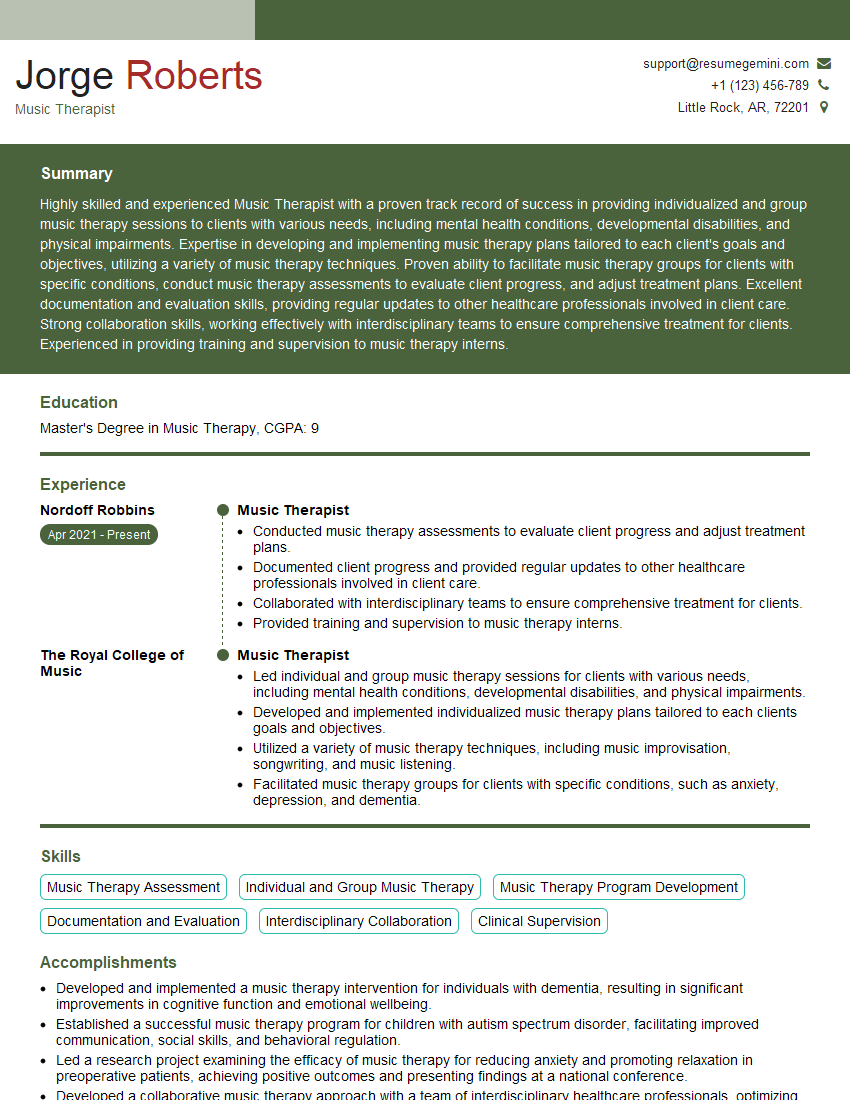
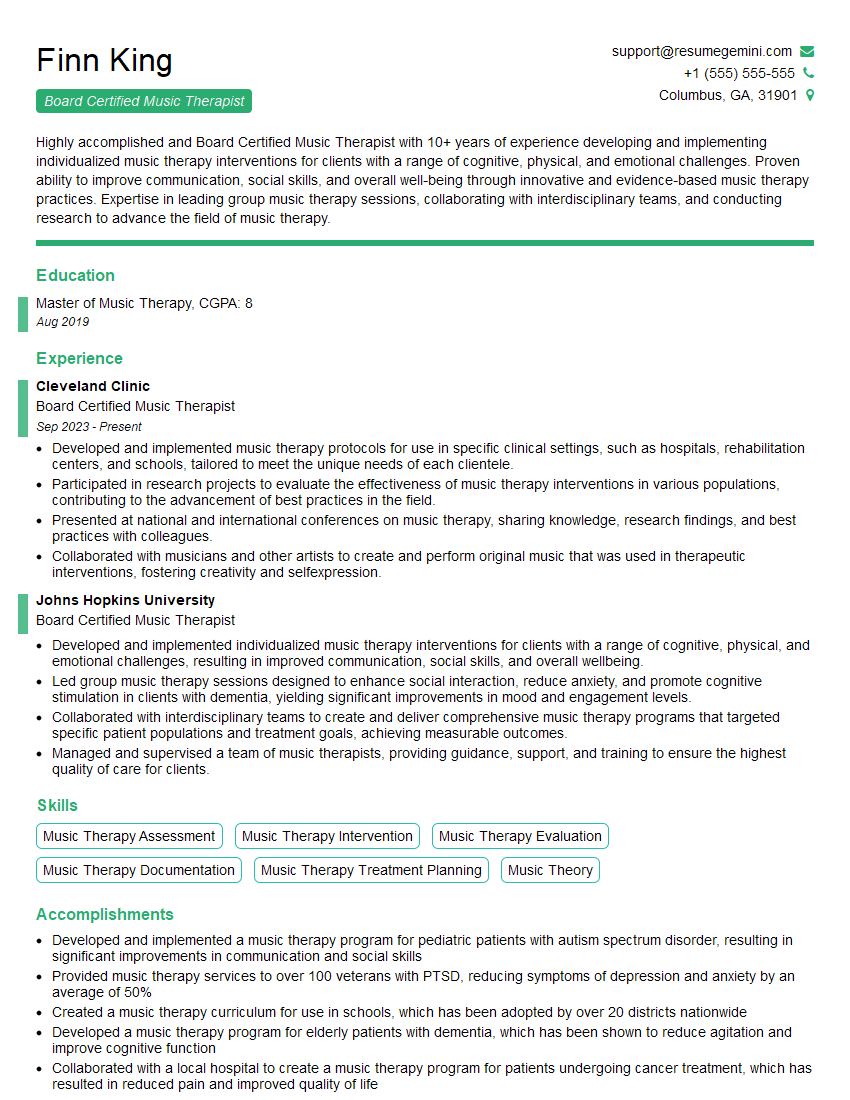
Mastering the skills and knowledge related to using music to address behavioral challenges opens doors to rewarding careers in healthcare, education, and social services. To significantly boost your job prospects, create a compelling and ATS-friendly resume that effectively highlights your qualifications and experience. ResumeGemini is a trusted resource to help you build a professional and impactful resume. We provide examples of resumes tailored specifically to highlight experience with using music to address behavioral challenges, helping you present your skills and accomplishments in the best possible light.
Explore more articles
Users Rating of Our Blogs
Share Your Experience
We value your feedback! Please rate our content and share your thoughts (optional).
What Readers Say About Our Blog
To the interviewgemini.com Webmaster.
Very helpful and content specific questions to help prepare me for my interview!
Thank you
To the interviewgemini.com Webmaster.
This was kind of a unique content I found around the specialized skills. Very helpful questions and good detailed answers.
Very Helpful blog, thank you Interviewgemini team.