The thought of an interview can be nerve-wracking, but the right preparation can make all the difference. Explore this comprehensive guide to Experiential and Expressive Art Therapy Techniques interview questions and gain the confidence you need to showcase your abilities and secure the role.
Questions Asked in Experiential and Expressive Art Therapy Techniques Interview
Q 1. Describe your experience utilizing different expressive art modalities (e.g., painting, sculpting, music) in therapy.
My experience spans a wide range of expressive art modalities, each offering unique therapeutic avenues. I frequently utilize painting, where the choice of colors, brushstrokes, and subject matter can reveal unconscious patterns and emotional states. For example, a client consistently using dark, muted colors might be expressing feelings of depression or hopelessness. Sculpting allows for a three-dimensional exploration of self, with the texture and form of the artwork reflecting internal structures and relationships. I’ve used clay sculpting with clients struggling with body image issues, enabling them to shape and reshape their self-perception literally. Music therapy, using instruments or simply vocalization, can be particularly powerful for accessing emotions that are difficult to articulate verbally. A client expressing pent-up anger through drumming, for instance, can safely release those feelings in a controlled environment.
Beyond these core modalities, I also incorporate collage, drawing, and even creative writing, adapting my approach to best suit the individual client’s needs and preferences. The key is to provide a safe space for self-expression and use the artwork as a springboard for deeper therapeutic exploration.
Q 2. Explain the theoretical framework guiding your practice in experiential art therapy.
My practice is grounded in a psychodynamic and humanistic framework. I draw heavily on the principles of Jungian psychology, recognizing the symbolic nature of art and its potential to access the unconscious mind. This means understanding the artwork not just literally, but also symbolically, looking for patterns, recurring themes, and metaphors that reveal underlying emotional conflicts or unresolved trauma. The humanistic element emphasizes the client’s inherent capacity for growth and self-healing. I believe that the creative process itself is therapeutic, fostering self-discovery, self-acceptance, and personal empowerment. I also incorporate elements of attachment theory and trauma-informed care to consider the impact of past experiences on the client’s present emotional state and artistic expression.
Q 3. How do you assess a client’s artistic expression to inform your therapeutic interventions?
Assessing a client’s artistic expression is a multifaceted process. It begins with careful observation of the artwork itself: the choice of colors, the composition, the subject matter, the style, and the overall emotional tone. I consider the client’s process—their approach to the materials, their body language, and their verbal comments throughout the creation process. This holistic perspective provides valuable insights. For example, a client who meticulously details a small area of their painting while leaving other parts unfinished might be revealing perfectionistic tendencies and a fear of failure. Similarly, frantic, uncontrolled strokes could signify anxiety or overwhelming emotions. Following the creation, I engage in a guided dialogue with the client, inviting them to reflect on their artwork and its meaning to them. This collaborative process helps unravel the deeper significance of the symbolic imagery and emotional expression.
Q 4. Describe a situation where you had to adapt your art therapy approach to meet a client’s specific needs.
I once worked with a client who had severe motor impairments due to cerebral palsy. Traditional painting techniques were simply not accessible for them. Initially, I felt challenged to adapt my usual methods. However, by focusing on collaborative problem-solving, we developed a new approach. Instead of brushes, we used assistive technology like mouth-controlled tools and adapted paint consistency for easier application. We also explored digital art using specialized software that enabled them to create art using eye-tracking technology. The result was not only a beautiful piece of artwork but also a renewed sense of self-efficacy and empowerment for the client. The adaptation highlighted the importance of flexibility and creativity in meeting diverse client needs. It emphasized that the art itself isn’t the primary goal but rather the journey of self-expression and emotional processing facilitated through the therapeutic relationship.
Q 5. How do you ensure client safety and ethical considerations within the context of art therapy?
Ensuring client safety and ethical considerations is paramount in art therapy. This involves establishing clear boundaries and expectations at the outset of therapy, including informed consent procedures, confidentiality, and crisis intervention protocols. I maintain a strong ethical code, adhering to the guidelines set by professional organizations like the American Art Therapy Association. Within the context of art therapy, specific considerations include addressing potentially disturbing or self-harming content that might emerge in the artwork. This requires a delicate balance between providing a safe space for expression and ensuring the client’s safety. If concerns arise, I have established protocols for collaboration with other professionals, such as mental health professionals and crisis teams, when necessary. I am trained to assess potential risk factors and know when to refer a client to a higher level of care should it be required.
Q 6. Explain your understanding of transference and countertransference in the art therapy setting.
Transference and countertransference are crucial concepts in art therapy, just as they are in other therapeutic modalities. Transference refers to the client’s unconscious redirection of feelings and patterns of relating from past relationships onto the therapist. In the art therapy setting, these feelings might manifest in the artwork’s symbolism or the client’s interactions with the therapist. For instance, a client might unconsciously project feelings of anger towards a parent onto me, expressing these feelings indirectly through aggressive brushstrokes or the choice of violent imagery. Countertransference refers to the therapist’s emotional reactions to the client, influenced by their own personal experiences and unresolved issues. It’s crucial for therapists to be self-aware and to engage in regular supervision to process these feelings appropriately and ensure they don’t hinder the therapeutic process. Recognizing and managing both transference and countertransference is critical for providing a safe and effective therapeutic relationship.
Q 7. How do you integrate art therapy with other therapeutic modalities?
I frequently integrate art therapy with other modalities, depending on the client’s needs. Cognitive Behavioral Therapy (CBT) techniques, for example, can be effectively integrated by encouraging clients to identify and challenge negative thought patterns revealed through their artwork. Mindfulness practices can be incorporated by encouraging clients to focus on the present moment during the creative process, paying attention to their sensory experiences. Similarly, narrative therapy can be utilized by helping clients construct alternative narratives around their experiences reflected in their art. By blending these different approaches, I create a holistic and comprehensive treatment plan that addresses various aspects of the client’s well-being, tailoring the approach to optimize outcomes. The key is a collaborative process, utilizing the strengths of each modality to enhance the client’s therapeutic journey.
Q 8. Describe your experience working with diverse populations using art therapy.
My experience with diverse populations in art therapy has been extensive and rewarding. I’ve worked with children, adolescents, adults, and elders from various cultural backgrounds, socioeconomic statuses, and with a wide range of mental health diagnoses. This diversity has enriched my understanding of how art can be a powerful tool for self-expression and healing regardless of background. For instance, I’ve found that working with refugees often involves using art to process trauma and rebuild a sense of safety and identity. With children, I often use play therapy techniques integrated with art to help them express complex emotions in a non-threatening way. Similarly, with elderly clients, art therapy can help preserve cognitive function and provide a creative outlet for reminiscing and self-reflection. Adaptability is key; I tailor my approach to each individual’s unique needs and cultural context, ensuring materials and techniques are culturally sensitive and accessible.
Q 9. How do you address resistance or reluctance from clients to engage in art-making?
Resistance to art-making is common and understandable. It often stems from feelings of self-doubt, fear of judgment, or past negative experiences with art. My approach is non-judgmental and collaborative. I begin by building rapport and trust, emphasizing that there’s no right or wrong way to create art in therapy. I might start with simple, non-threatening activities like drawing textures or choosing colors that evoke certain feelings. If a client insists they ‘can’t draw,’ I might suggest working with clay, collage, or other mediums that require less fine motor skills. The goal is to create a safe and comfortable space where self-expression, not artistic skill, is the focus. Sometimes, simply engaging in conversation about the client’s feelings, without the pressure of producing art, can pave the way for future artistic exploration. Ultimately, respecting the client’s pace and comfort level is crucial.
Q 10. Explain your approach to documenting and evaluating client progress in art therapy.
Documenting and evaluating progress in art therapy involves a multifaceted approach. I use a combination of methods, including detailed session notes, photographic documentation of client artwork, and regular progress reports. My notes include observations about the client’s verbal and nonverbal communication, the art-making process itself (choice of materials, colors, themes), and any significant emotional shifts observed during the session. Photographs of the artwork provide a visual record of the client’s progress and creative journey. These records are not just about the aesthetics of the art; they are about understanding the symbolic meaning and emotional content expressed through the client’s work. Progress is evaluated by comparing early and later artwork, noting changes in themes, color palettes, and level of detail, as well as changes in the client’s self-perception and emotional regulation. This is always done in collaboration with the client, ensuring their understanding and input is valued.
Q 11. Describe your understanding of the role of symbolism in art therapy.
Symbolism plays a pivotal role in art therapy. Art is a non-verbal language, and the images, colors, and forms clients choose often carry profound symbolic meanings. These symbols are not universal; their interpretation depends heavily on the individual client’s personal history, culture, and current emotional state. For example, a recurring image of a bird might symbolize freedom for one client, while for another, it might represent a feeling of loneliness or isolation. My role is to facilitate the client’s exploration of these symbols, helping them understand the underlying meanings and connections to their experiences. This process requires careful listening, gentle questioning, and a deep understanding of the client’s context. I avoid imposing my own interpretations, instead guiding the client to discover the significance of their symbolic choices.
Q 12. How do you handle ethical dilemmas encountered during art therapy sessions?
Ethical dilemmas in art therapy can arise in various situations, such as confidentiality concerns, client safety issues, or conflicts of interest. My approach involves careful adherence to ethical guidelines set by professional organizations. When faced with a dilemma, I first thoroughly examine all aspects of the situation, seeking consultation with supervisors or colleagues if needed. I prioritize client safety and well-being above all else. For instance, if a client expresses suicidal ideation through their artwork, I have a duty to take appropriate action, which might involve contacting relevant authorities or coordinating care with other mental health professionals. Maintaining clear and transparent communication with the client about the limits of confidentiality and my role as a therapist is paramount. Documentation of any ethical concerns and the steps taken to address them is crucial.
Q 13. What are the limitations of art therapy, and how do you address them?
Art therapy, while powerful, has limitations. It’s not a stand-alone treatment for all mental health conditions, and it’s not always suitable for all clients. Some clients may find it difficult to engage with art, and others may require more structured therapeutic interventions. Severe cognitive impairments or physical limitations might hinder participation. Furthermore, the subjective nature of interpretation can lead to challenges in establishing objective measures of effectiveness. I address these limitations by being realistic about the scope of art therapy and working collaboratively with other professionals, like psychiatrists or psychologists, to provide a comprehensive treatment plan. I clearly communicate these limitations to clients and refer them to more suitable interventions when necessary. I also employ diverse methods, combining art therapy with other modalities like talk therapy, when appropriate, to maximize treatment outcomes.
Q 14. How do you maintain professional boundaries in art therapy?
Maintaining professional boundaries is essential in art therapy. This involves establishing a clear therapeutic relationship that prioritizes the client’s needs and well-being while avoiding dual relationships or personal entanglement. I ensure that sessions remain within the designated time frame and that any interaction outside of the therapeutic setting is strictly professional. This includes appropriate communication methods and avoiding social media contact. I clearly define my role and limitations to clients from the outset, addressing issues of confidentiality and ensuring they understand the boundaries of the therapeutic relationship. I avoid self-disclosure unless it’s therapeutically relevant and always prioritize the client’s needs over my own. Regular supervision and adherence to ethical guidelines help to ensure that professional boundaries are consistently maintained.
Q 15. Describe your experience with different art materials and their therapeutic applications.
My experience with art materials is deeply intertwined with understanding their therapeutic potential. Different mediums offer unique avenues for self-expression and emotional processing. For instance, the fluidity of paint allows for spontaneous emotional release, mirroring the unpredictable nature of feelings. Clay, on the other hand, provides a tactile grounding experience, particularly helpful for clients struggling with anxiety or trauma. The precision of pencil sketching can facilitate a sense of control and mastery, beneficial for clients needing structure. I’ve found that collages, using found objects, can powerfully represent fragmented identities or complex experiences. I tailor material selection to the individual client’s needs and goals, considering factors like their fine motor skills, sensory sensitivities, and the specific therapeutic objectives of the session.
For example, a client struggling with anger might find relief in the aggressive act of ripping and tearing paper in a collage, while someone experiencing grief might find solace in the gentle process of watercolor painting. I also consider the symbolic meanings clients ascribe to specific materials. For some, a specific color might hold powerful emotional significance, and this can be an important element in the therapeutic process.
Career Expert Tips:
- Ace those interviews! Prepare effectively by reviewing the Top 50 Most Common Interview Questions on ResumeGemini.
- Navigate your job search with confidence! Explore a wide range of Career Tips on ResumeGemini. Learn about common challenges and recommendations to overcome them.
- Craft the perfect resume! Master the Art of Resume Writing with ResumeGemini’s guide. Showcase your unique qualifications and achievements effectively.
- Don’t miss out on holiday savings! Build your dream resume with ResumeGemini’s ATS optimized templates.
Q 16. Explain your understanding of trauma-informed art therapy principles.
Trauma-informed art therapy prioritizes the client’s safety, choice, collaboration, and empowerment. It acknowledges that trauma significantly impacts a person’s ability to regulate emotions, manage their bodies, and connect with others. Therefore, I ensure a safe and predictable therapeutic environment characterized by respect, empathy, and flexibility. The session’s pace and structure are always client-led. I avoid pressure or pushing the client beyond their comfort zone. Instead, I focus on building trust and creating a sense of collaboration where the client feels genuinely in control of the process.
Key principles include: providing choices in materials; emphasizing non-judgmental acceptance of their artistic expression; avoiding triggering activities or discussions; and validating their experiences. A key aspect involves empowering the client to recognize their own resilience and inner strengths, reflected in their artwork. I might use grounding techniques before starting if the client reports feeling overwhelmed or anxious.
Q 17. How do you facilitate group art therapy sessions?
Facilitating group art therapy sessions requires careful consideration of group dynamics and individual needs. I typically begin with an icebreaker activity that encourages interaction and a sense of community. A shared theme or prompt, appropriate to the group’s shared experience or goals, guides the creative process. I establish clear group guidelines at the outset, emphasizing respect for others’ creative processes and personal boundaries. I actively monitor the group’s interaction, intervening when necessary to address conflict or facilitate positive collaboration. Sharing is optional, but I encourage participants to reflect on their work and its relation to their personal experience. This could involve informal discussion or guided prompts.
An example might be using a shared metaphor of ‘seeds of change’ to explore personal growth and transformation. Clients could sculpt seeds or plant them symbolically in a communal garden. Processing occurs through guided reflection and sharing within the safe, supportive group environment. The focus is always on building connection and shared understanding, rather than judgment or critique of artwork.
Q 18. Describe your approach to supervision and consultation in art therapy.
Supervision and consultation are vital for maintaining ethical and professional standards. I believe in regular supervision to ensure my practice remains informed and aligned with best practices. My supervisor provides critical feedback on my work, helping me to reflect on my therapeutic approach and identify areas for improvement. Consultation provides an opportunity for discussion of specific client cases, enhancing my understanding of complex dynamics and ethical dilemmas. I actively seek out opportunities for peer supervision, creating a supportive network for sharing experiences and learning from colleagues. This collaborative approach ensures ongoing professional growth and accountability.
I utilize a reflective supervision model, which focuses on analyzing my interactions with clients and exploring how my own biases and experiences might impact the therapeutic relationship. This model emphasizes continuous learning and adaptation in my therapeutic practice.
Q 19. What are your continuing education plans to enhance your art therapy skills?
Continuing education is paramount in this constantly evolving field. My current plans include pursuing advanced training in trauma-informed art therapy, focusing on specific modalities like somatic experiencing or sensorimotor psychotherapy to further enhance my ability to support clients with trauma histories. I also plan to expand my knowledge base in working with diverse populations, including children and adolescents, and individuals with specific mental health conditions. Attending workshops, conferences, and engaging in online courses on innovative art therapy techniques will be a crucial part of my ongoing professional development. This will ensure I can effectively adapt my therapeutic approach and offer the best possible care to my clients.
Q 20. How do you integrate creativity and self-expression into your therapeutic practice?
Integrating creativity and self-expression is fundamental to my art therapy practice. I create a non-judgmental space where clients can explore their inner world freely, without fear of criticism. I facilitate this through open-ended prompts, encouraging experimentation and exploration of different artistic mediums. The focus is always on the process rather than the product, enabling clients to discover their own unique creative voices. This can lead to profound self-discovery and emotional release. I carefully observe clients’ choices of materials, colors, and imagery to gain insights into their unconscious thoughts and feelings.
For example, a client who consistently chooses dark colors might be expressing feelings of depression or anger, while someone using vibrant colors might be signaling hopefulness and optimism. I gently guide clients to reflect on their artistic choices and connect them to their inner experiences without interpreting their artwork directly.
Q 21. How do you manage challenging behaviors during art therapy sessions?
Managing challenging behaviors requires a multifaceted approach grounded in trauma-informed care. My primary focus is to ensure the safety of the client and others. I might need to adjust the therapeutic environment to create a more calming and predictable space. This could include reducing stimulation, providing sensory tools, or taking a break. Understanding the root cause of the behavior is crucial. Often, challenging behaviors are manifestations of underlying emotional distress. I work collaboratively with the client to identify and address these underlying issues using techniques such as mindfulness or grounding exercises. When necessary, I involve their support network – family, psychiatrist, etc. – to create a comprehensive support system.
For example, if a client becomes verbally aggressive, I might pause the activity, use validating language such as ‘I understand you are feeling upset,’ and offer calming strategies. If physical safety is compromised, I’ll have a plan in place to safely de-escalate the situation with the client’s safety as the priority.
Q 22. Explain your experience working with clients with specific mental health diagnoses (e.g., anxiety, depression).
My experience working with clients diagnosed with anxiety and depression often involves utilizing a range of experiential and expressive art therapy techniques tailored to their individual needs. For instance, with clients experiencing anxiety, I might employ mindfulness-based art activities like sand tray therapy, encouraging them to create a calming landscape representing their inner world. This helps them externalize and process their anxieties in a safe and controlled environment. With depression, I often utilize collage techniques, where clients select images representing their feelings and experiences, building a visual narrative that allows them to explore and understand their emotional state. The process itself, focusing on the creation and the discussion surrounding the artwork, is crucial. For example, one client struggling with feelings of worthlessness created a powerful self-portrait using torn and discarded paper, reflecting her self-perception, but through the process of creating, and reflecting on this self-portrait, she began to identify her resilience and inner strength. The therapeutic relationship focuses on collaboratively interpreting their art, facilitating self-discovery and developing coping mechanisms.
Q 23. How do you adapt art therapy techniques for clients with physical limitations?
Adapting art therapy for clients with physical limitations requires creativity and sensitivity. I prioritize accessibility and collaboration. For clients with limited mobility, I might use adapted materials like large, chunky crayons or clay, or even digital art platforms. For visually impaired clients, tactile art experiences using textures, sounds, and scents can be incredibly powerful. A blind client I worked with used textured clay to create powerful sculptures expressing their internal world. The key is to focus on the expressive process, not necessarily the finished product. We can explore different art forms – music, movement, or even creative writing – to bypass physical barriers and still achieve the therapeutic goals. The collaborative aspect involves careful assessment of the client’s capabilities, their preferences, and the potential modification of the techniques needed to make the therapy accessible and engaging.
Q 24. Describe your understanding of the role of play in art therapy with children.
Play is fundamental in art therapy with children. It’s a natural language for expressing emotions and experiences that might be difficult to articulate verbally. Through play, children can explore their inner world safely, processing trauma, anxieties, or other challenges. I might use puppets, playdough, or drawing to facilitate imaginative play, allowing children to embody different characters or scenarios, indirectly addressing their personal struggles. For example, a child struggling with sibling rivalry might create a play scenario with puppets acting out their frustrations and finding resolution through imaginative storytelling. The therapeutic relationship within this context is built upon a foundation of trust and acceptance, allowing the child to feel comfortable exploring difficult emotions and experiences in this non-threatening context. The goal is to enhance self-expression, build emotional regulation skills, and promote healthy coping strategies, all within the context of playful exploration.
Q 25. How do you maintain confidentiality in art therapy?
Maintaining confidentiality in art therapy is paramount, guided by ethical codes and legal requirements. I clearly communicate my ethical obligations to clients upfront. This includes discussing the limits of confidentiality (e.g., mandated reporting of child abuse). Artwork is stored securely, usually in locked cabinets or digital storage with password protection. When discussing artwork, I focus on the client’s experience and interpretation, not disclosing specific details that might compromise their privacy. I use anonymized case examples for supervision and training, never revealing identifying information. Protecting client privacy is integral to creating a safe therapeutic space that fosters trust and facilitates honest self-expression. This is paramount to the success of any therapeutic intervention, and I continually reflect on and refine my approach to ensure utmost client safety and security.
Q 26. What are your strengths and weaknesses as an art therapist?
My strengths lie in my ability to build strong therapeutic relationships, create a safe and supportive environment, and adapt art therapy techniques to diverse needs. I am empathetic, creative, and possess a deep understanding of human development and psychopathology. I consistently seek professional development and supervision to expand my knowledge and refine my practice. My weakness is potentially becoming overly invested in a client’s progress. To address this, I actively engage in self-reflection, attend regular supervision, and maintain healthy boundaries to ensure I am providing ethical and effective therapy. I believe a therapist’s self-awareness is vital and actively seeking ongoing training allows me to continually improve and enhance my skill set.
Q 27. Describe your experience with creating and maintaining therapeutic relationships with clients.
Creating and maintaining therapeutic relationships is the cornerstone of effective art therapy. It involves establishing trust, empathy, and a genuine connection with clients. I begin by actively listening to their stories and concerns, validating their feelings, and co-creating a therapeutic plan that meets their individual needs. I use reflective listening and nonverbal communication to foster understanding. Building a relationship takes time, and it involves being present, showing genuine interest, and demonstrating respect for the client’s unique experience. Maintaining the relationship necessitates consistent check-ins, addressing challenges constructively, and honoring the boundaries of the client. The therapeutic relationship is a fluid, evolving partnership, marked by mutual respect and a shared goal towards healing and growth. This trust and connection allows the therapeutic process to unfold in a safe and collaborative manner.
Q 28. How do you use art therapy to promote client self-awareness and personal growth?
Art therapy is particularly effective for promoting self-awareness and personal growth. The creative process itself facilitates self-reflection and insight. For example, choosing colors, textures, and images allows clients to unconsciously express their inner world. I guide clients to explore their artwork through a process of reflective questioning, encouraging them to connect their creative choices to their emotions, experiences, and beliefs. Through this process, clients often gain insights into their patterns of behavior, relationship dynamics, and coping mechanisms. Moreover, art making can be empowering, enabling clients to tap into their creative strengths and build self-esteem. The combination of self-expression and guided reflection facilitates significant personal growth and empowers clients to identify their strengths and develop more effective coping skills. The process is focused on enabling the client to reach a deeper understanding of their own self through the creative act.
Key Topics to Learn for Experiential and Expressive Art Therapy Techniques Interview
- Theoretical Foundations: Understand the core principles of art therapy, including its history, philosophical underpinnings, and ethical considerations. Explore different theoretical models that inform practice, such as psychodynamic, humanistic, and cognitive-behavioral approaches.
- Expressive Media and Techniques: Demonstrate familiarity with a range of art materials (paint, clay, collage, etc.) and their therapeutic applications. Be prepared to discuss specific techniques, such as sand tray therapy, drawing, painting, sculpting, and their uses in different therapeutic contexts.
- Therapeutic Process and Interventions: Articulate your understanding of the stages of the therapeutic process within an art therapy setting. Be ready to discuss various intervention strategies, including active listening, nonverbal communication interpretation, and using art to facilitate self-expression, emotional regulation, and problem-solving.
- Client Assessment and Treatment Planning: Discuss your approach to assessing client needs and developing tailored treatment plans using art therapy techniques. Highlight your ability to adapt interventions based on client responses and progress.
- Ethical Considerations and Professional Boundaries: Showcase your awareness of ethical considerations and professional boundaries within art therapy practice. This includes confidentiality, dual relationships, and culturally sensitive approaches.
- Case Conceptualization and Documentation: Explain your ability to effectively document client sessions, articulate case conceptualizations, and demonstrate your understanding of the importance of thorough record-keeping.
- Group Art Therapy: If applicable to your experience, be ready to discuss your understanding and experience of facilitating group art therapy sessions, including group dynamics, leadership styles, and ethical considerations specific to group work.
Next Steps
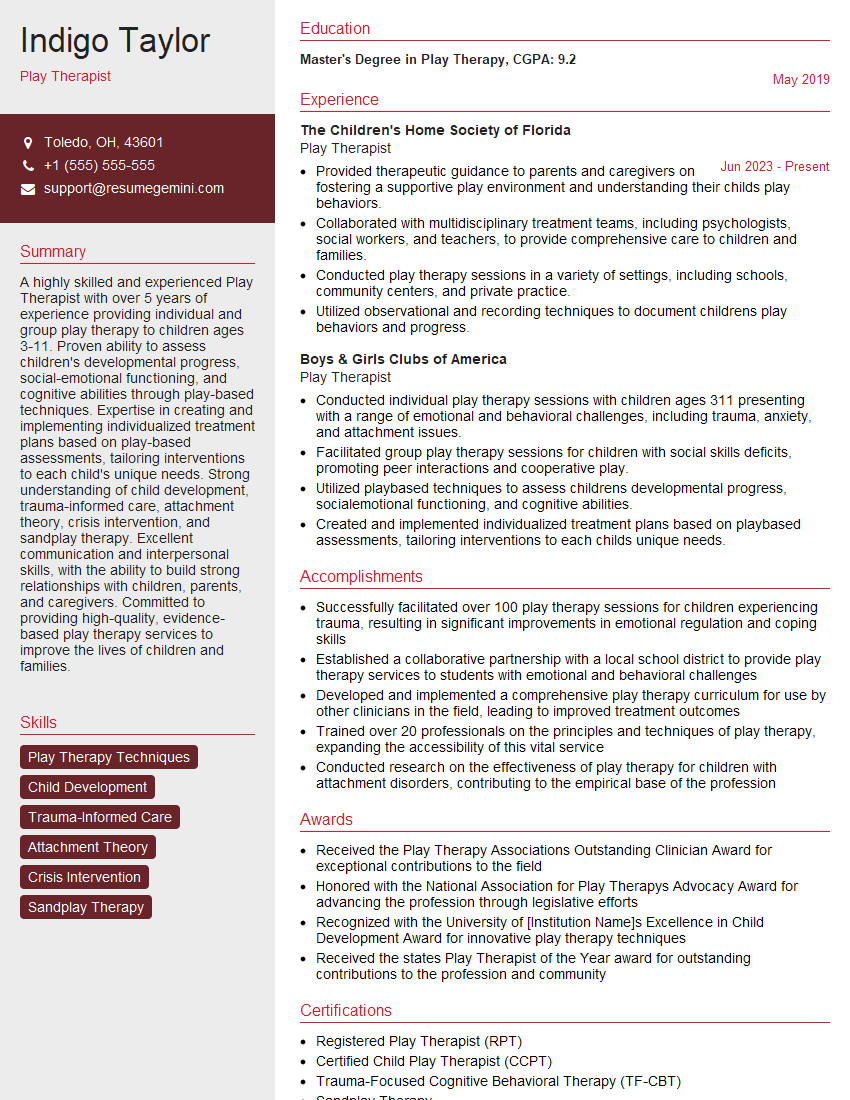
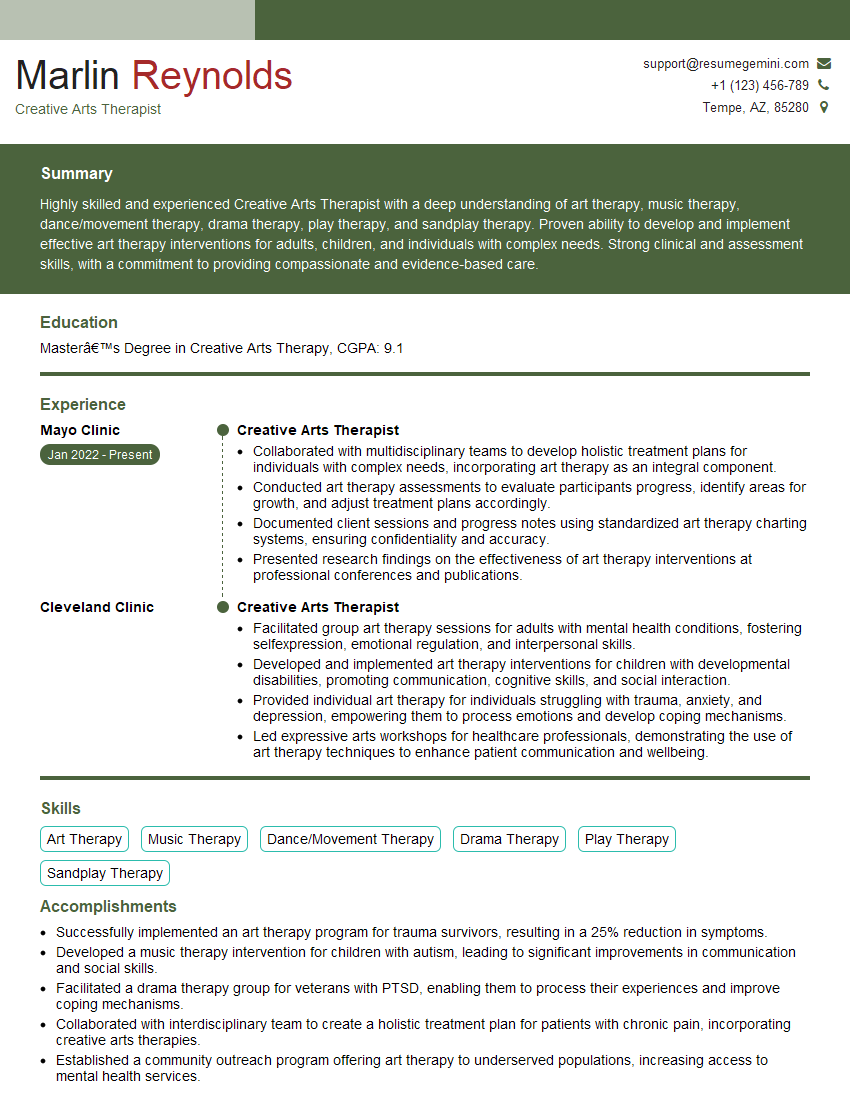
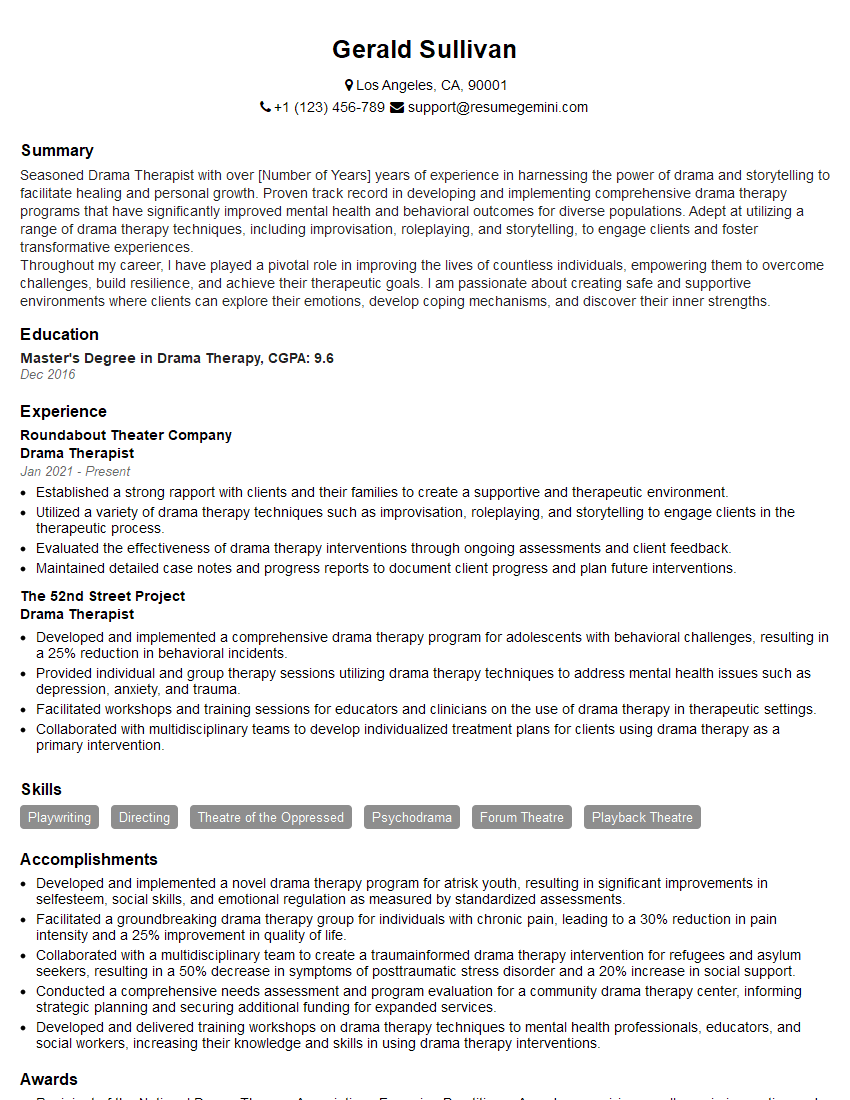
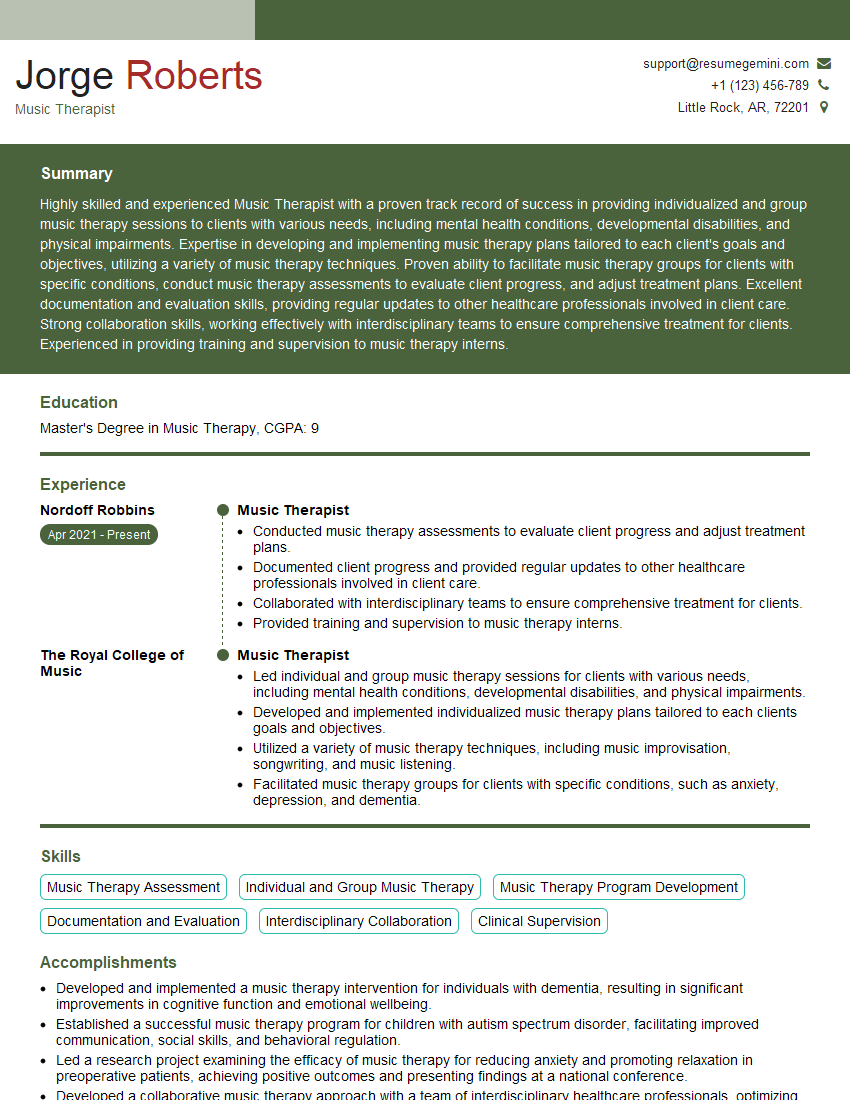
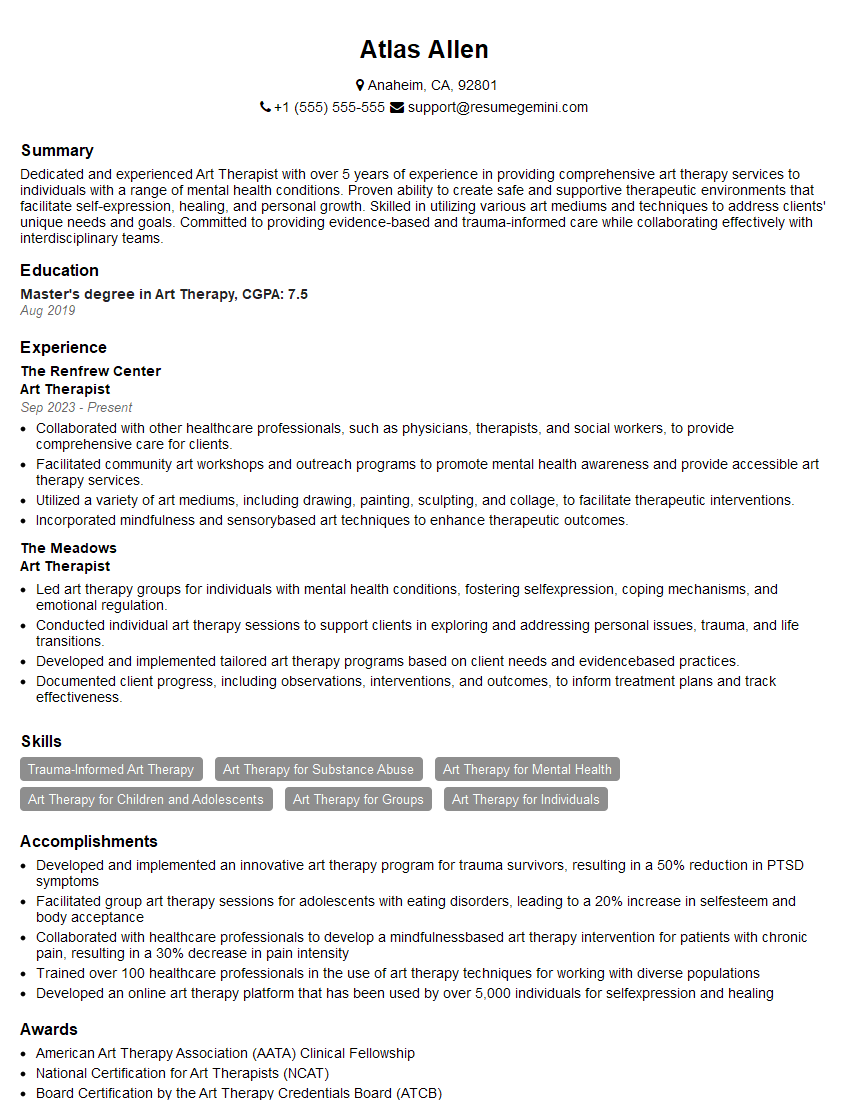
Mastering Experiential and Expressive Art Therapy Techniques is crucial for career advancement in this fulfilling field. A strong understanding of these techniques will significantly enhance your candidacy and allow you to demonstrate your expertise to potential employers. To increase your job prospects, invest time in crafting an ATS-friendly resume that effectively highlights your skills and experience. ResumeGemini is a trusted resource that can help you build a professional and impactful resume. Examples of resumes tailored to Experiential and Expressive Art Therapy Techniques are available to further guide your preparation.
Explore more articles
Users Rating of Our Blogs
Share Your Experience
We value your feedback! Please rate our content and share your thoughts (optional).
What Readers Say About Our Blog
To the interviewgemini.com Webmaster.
Very helpful and content specific questions to help prepare me for my interview!
Thank you
To the interviewgemini.com Webmaster.
This was kind of a unique content I found around the specialized skills. Very helpful questions and good detailed answers.
Very Helpful blog, thank you Interviewgemini team.