Are you ready to stand out in your next interview? Understanding and preparing for Expertise in fluoroscopic-guided procedures interview questions is a game-changer. In this blog, we’ve compiled key questions and expert advice to help you showcase your skills with confidence and precision. Let’s get started on your journey to acing the interview.
Questions Asked in Expertise in fluoroscopic-guided procedures Interview
Q 1. Describe your experience with different types of fluoroscopy equipment.
My experience encompasses a wide range of fluoroscopy equipment, from older analog systems to the latest digital subtraction angiography (DSA) units. I’ve worked extensively with various manufacturers’ equipment, including Siemens, GE, and Philips systems. This diverse experience allows me to adapt quickly to different interfaces and technical specifications, ensuring efficient and accurate procedure execution. For example, I’m proficient in utilizing the advanced features of modern DSA systems like roadmapping and time-intensity curves, which are crucial for complex interventions. I’m also comfortable working with mobile C-arms, frequently used in operating rooms or trauma bays, understanding their limitations and adjusting techniques accordingly.
Beyond the specific models, I’m familiar with different detector technologies – flat-panel detectors offer superior image quality and dose efficiency compared to older image intensifiers, and I routinely assess the impact of these technological differences on image quality and radiation exposure during procedures.
Q 2. Explain the principles of image intensification and how it applies to fluoroscopy.
Image intensification is the cornerstone of fluoroscopy. It takes the weak x-ray signal that penetrates the patient and amplifies it to create a visible image on a monitor. Think of it like taking a very faint photograph and enhancing it dramatically to bring out the details. The process involves several key steps: X-rays passing through the patient hit an input phosphor screen, converting x-ray energy into visible light. This light then strikes a photocathode, emitting electrons. These electrons are accelerated and focused by electrostatic lenses onto a smaller output phosphor screen, significantly intensifying the light. Finally, the light from the output screen is captured by a camera (CCD or CMOS) and displayed as an image. This whole process ensures that we can see real-time images of internal structures with minimal radiation exposure to the patient.
Q 3. How do you ensure patient safety during fluoroscopic-guided procedures?
Patient safety is my paramount concern. It’s a multi-faceted approach starting with thorough pre-procedural assessment, including reviewing medical history, allergies, and any potential contraindications. During the procedure, I meticulously monitor patient vital signs, continually communicating with the patient to address any concerns and ensure their comfort. Accurate positioning is essential; using appropriate beam collimation reduces unnecessary radiation exposure. Pulse oximetry and ECG monitoring are standard practice. I strictly adhere to ALARA principles (As Low As Reasonably Achievable), minimizing radiation exposure by using the lowest possible dose while achieving diagnostic image quality. Post-procedure monitoring ensures patient stability and early detection of any potential complications.
One example: If a patient expresses discomfort or anxiety during the procedure, I will take the necessary steps to pause the fluoroscopy, reposition them, explain the process in more detail, or administer appropriate medication as needed. This builds trust and facilitates a smooth and safe procedure.
Q 4. What are the potential risks and complications associated with fluoroscopy?
Fluoroscopy, while invaluable, carries inherent risks. The most significant is radiation exposure. Excessive radiation can lead to deterministic effects (e.g., skin burns) or stochastic effects (e.g., cancer). Other potential complications include contrast reactions (allergic or anaphylactic), bleeding at the puncture site (especially with vascular procedures), infection, nerve damage (depending on the procedure’s location), and equipment malfunction. It’s crucial to meticulously weigh the benefits of the procedure against these potential risks during pre-procedure discussions and by employing stringent safety protocols.
Q 5. Describe your experience with radiation protection measures during fluoroscopy.
My experience with radiation protection is extensive. I’m rigorously trained in ALARA principles and utilize all available protective measures. This includes using lead aprons, thyroid shields, and lead gloves whenever possible. I always optimize beam collimation to limit the radiation field to the area of interest. I ensure that all personnel in the room wear appropriate protective garments. Modern fluoroscopy equipment has built-in radiation-reducing features such as pulsed fluoroscopy and image intensification techniques that minimize patient dose. I meticulously track cumulative radiation exposure for both the patient and staff, making sure that doses are well within regulatory limits. I’m familiar with radiation safety regulations and protocols, and I maintain accurate records of all radiation exposure during the procedure.
Q 6. How do you assess image quality during a fluoroscopic procedure?
Assessing image quality is a crucial skill. I evaluate several parameters: Image sharpness (spatial resolution) – a blurry image indicates poor focus or motion artifact. Image contrast – the ability to differentiate between different tissue densities (e.g., bone, soft tissue, air). Noise level – excessive noise obscures detail and reduces diagnostic quality. Penetration – the ability to see through denser tissues. Artifacts – I look for any unusual features that could obscure the anatomical structures of interest. If the image quality is inadequate, I will adjust the kilovoltage (kVp), milliamperage (mA), and pulse rate of the fluoroscope, or reposition the patient to achieve better imaging results, always remembering the importance of minimizing radiation exposure.
Q 7. Explain your understanding of different fluoroscopy imaging techniques (e.g., DSA, roadmapping).
Digital Subtraction Angiography (DSA) is a powerful technique that subtracts a pre-contrast image from a post-contrast image, revealing the enhanced blood vessels with exceptional clarity. This is invaluable for visualizing vascular structures during angioplasty or embolization procedures. Roadmapping uses a previously acquired angiogram to overlay a live fluoroscopic image, providing a roadmap for the catheter during navigation through complex anatomy. This helps to minimize fluoroscopy time and radiation exposure. I frequently utilize both DSA and roadmapping during interventions to achieve precise placement of devices and reduce complications. For instance, in a complex neurovascular intervention, roadmapping allows accurate catheter navigation to a specific aneurysm, minimizing the risk of vessel perforation.
Q 8. How do you troubleshoot common equipment malfunctions during fluoroscopy?
Troubleshooting fluoroscopy equipment malfunctions requires a systematic approach. First, I assess the nature of the problem. Is it a complete system failure, a specific image issue, or a problem with a particular component? For instance, if the image is too dark, I check the kilovoltage (kVp) and milliamperage (mA) settings, ensuring they’re appropriate for the procedure and patient. I would then check the intensifier tube and its connections. If the image is blurry, I would examine the focus settings and check for any mechanical issues affecting the C-arm’s movement.
If the problem persists, I follow a checklist:
- Check power supply: Is the machine properly connected and receiving power? Are there any blown fuses?
- Verify connections: Examine all cables and connections for looseness or damage. A loose connection is a common culprit.
- Inspect the image intensifier: Look for any visible damage to the tube itself.
- Consult equipment manuals and troubleshooting guides: These often contain detailed diagnostic steps and solutions.
- Contact biomedical engineering support: For complex issues or if the problem cannot be resolved through initial troubleshooting, contacting a specialist is crucial.
For example, during a vertebroplasty, I once encountered a sudden loss of image brightness. By systematically checking the power supply and connections, I quickly identified a loose cable. Connecting it securely restored the fluoroscopic image, preventing a delay in the procedure. Documenting all troubleshooting steps, outcomes, and any actions taken by biomedical engineering is paramount for quality assurance and risk management.
Q 9. Describe your experience with sterile techniques in fluoroscopy-guided procedures.
Sterile techniques are paramount in fluoroscopy-guided procedures to minimize the risk of infection. My approach follows strict protocols, beginning with thorough hand hygiene and donning appropriate personal protective equipment (PPE), including sterile gloves, gowns, masks, and eye protection. The procedure area is prepared with sterile drapes, ensuring a wide sterile field around the access site. The instruments used are meticulously sterilized before and after each procedure. Maintaining a sterile field requires consistent attention to detail. I’m vigilant about avoiding touching non-sterile surfaces, maintaining appropriate distance, and promptly changing any contaminated materials. I frequently monitor the surgical field for any breaches in sterility.
For example, during a percutaneous nephrolithotomy (PCNL), the creation of a tract into the kidney necessitates maintaining a strict sterile field. Any compromise would risk serious infection for the patient. We adhere to a strict checklist, ensuring proper draping, instrument sterilization, and meticulous hand hygiene throughout the procedure. This commitment to sterile technique is crucial for patient safety and ensures the overall success of the procedure.
Q 10. Explain your understanding of image artifacts and how to mitigate them.
Image artifacts in fluoroscopy can significantly impact image quality and diagnostic accuracy. These are distortions or anomalies in the image not representative of the underlying anatomy. Common artifacts include motion blur (caused by patient movement), scatter radiation (which degrades image contrast), and beam hardening (a change in the x-ray beam’s energy spectrum).
Mitigating artifacts involves a multi-pronged approach.
- Minimize patient motion: Proper patient positioning, immobilization devices, and clear instructions can significantly reduce motion blur.
- Optimize collimation: Reducing the size of the x-ray beam to only the area of interest minimizes scatter radiation.
- Use appropriate kVp and mA settings: Optimizing these parameters improves image quality and reduces the likelihood of beam hardening and other artifacts.
- Image filtering techniques: Some artifacts can be reduced post-processing using software filters designed to enhance image quality.
For instance, if I observe significant scatter radiation during a procedure, I would reduce the field of view using collimation to confine the x-ray beam to the target anatomy. If motion blur is an issue, I might employ additional padding or restraints. Careful attention to technique and proper use of imaging parameters are key to minimize artifacts and obtain optimal image quality.
Q 11. Describe your experience with contrast media administration and its potential complications.
Contrast media administration is crucial in many fluoroscopy-guided procedures to enhance visualization of the anatomy. I have extensive experience with both iodinated and non-iodinated contrast agents, understanding their properties, indications, and potential complications. Before administration, I carefully review the patient’s medical history for allergies, renal function, and other relevant factors to assess their suitability for contrast media. I explain the procedure and potential risks to the patient, obtaining informed consent.
Potential complications include allergic reactions (ranging from mild hives to severe anaphylaxis), nephrotoxicity (kidney damage), extravasation (leakage of contrast into surrounding tissue), and idiosyncratic reactions (unpredictable adverse effects).
To mitigate these risks, I meticulously monitor patients during and after contrast administration, paying close attention to vital signs and any signs of allergic reaction. I have emergency medication readily available, including epinephrine, for prompt treatment of anaphylaxis. In cases where renal function is compromised, I might use a lower dose of contrast or consider an alternative imaging modality. Accurate documentation of the type and amount of contrast administered, along with any observed reactions, is essential for patient safety and legal records.
Q 12. How do you maintain accurate documentation during fluoroscopic procedures?
Accurate documentation is fundamental in fluoroscopy-guided procedures for legal, medical, and quality assurance purposes. My documentation practice follows a structured approach. I meticulously record the procedure’s indication, patient details, contrast media used (type and amount), radiation dose delivered, and any complications encountered.
Detailed descriptions of the steps involved in the procedure, including the precise location of needle or catheter placements, are included. I use both handwritten notes and digital imaging systems to create a comprehensive record. Digital systems enable the integration of images and other relevant data into the electronic medical record (EMR).
For instance, during a biopsy, I will document the exact coordinates of the biopsy site using the fluoroscopy system’s coordinate system, along with images showing the needle trajectory and the retrieved sample. This detailed documentation helps to facilitate the effective communication of the process and the outcomes among the medical team, as well as potentially for legal proceedings, should there be any future need for clarification.
Q 13. Explain your understanding of the ALARA principle in radiation safety.
The ALARA principle – As Low As Reasonably Achievable – is a fundamental guideline in radiation safety. It emphasizes the importance of minimizing radiation exposure to patients and personnel while still achieving diagnostic or therapeutic goals. This requires a multifaceted approach.
In practice, ALARA is implemented through several strategies:
- Optimization of technique: Using the lowest radiation dose necessary to obtain diagnostic images through appropriate kVp, mA, and pulse rate settings.
- Collimation: Restricting the x-ray beam to the area of interest minimizes unnecessary radiation exposure to surrounding tissues.
- Shielding: Utilizing protective lead aprons and shields for patients and personnel when not actively involved in the procedure.
- Time minimization: Efficient procedure execution helps to reduce the total exposure time. Fluoroscopic procedures are time sensitive.
- Distance maximization: Personnel should maintain an appropriate distance from the x-ray source during the procedure.
For example, during a long fluoroscopy-guided procedure, I routinely adjust parameters to optimize the image and minimize the radiation dose. I also consistently use lead aprons and shields for myself and other personnel not actively involved in the procedure. By adhering to the ALARA principle, I ensure that radiation exposure is kept as low as reasonably achievable, maintaining the highest safety standards for patients and staff.
Q 14. Describe your experience with post-procedural patient care in fluoroscopy.
Post-procedural patient care in fluoroscopy is crucial for patient safety and recovery. My responsibilities include monitoring vital signs, checking the access site for bleeding or swelling, and addressing any immediate complications. I educate the patient about potential post-procedural effects, such as pain, bruising, or changes in bowel or bladder function. Specific post-procedure care depends on the type of procedure performed.
For example, following a cardiac catheterization, I monitor the patient for signs of bleeding at the insertion site, assess for any signs of cardiac arrhythmia or decreased blood pressure, and provide comfort measures for pain. Post-procedure instructions will vary depending on the case. For a lumbar puncture, patient instructions will largely involve monitoring for headache and ensuring adequate hydration. Accurate documentation of the post-procedural assessment, instructions given, and any significant observations is vital for ensuring continuity of care.
Q 15. How do you handle emergency situations during fluoroscopy-guided procedures?
Handling emergencies during fluoroscopy-guided procedures requires a calm, decisive approach and a thorough understanding of potential complications. My immediate priorities are patient safety and stabilization. This involves a rapid assessment of the situation, which includes checking the patient’s vital signs (heart rate, blood pressure, oxygen saturation), identifying the cause of the emergency (e.g., bleeding, perforation, allergic reaction), and taking immediate corrective actions.
For example, if significant bleeding occurs, I would immediately apply pressure to the bleeding site, potentially adjusting catheter placement or utilizing embolization techniques to control bleeding. If a perforation is suspected, I would immediately cease the procedure and consult with the surgical team for potential surgical intervention. In case of an allergic reaction, I would administer the appropriate medications according to the established protocols and potentially call for assistance from the anesthesia or emergency response team.
The key to effective emergency management is proactive risk assessment, well-rehearsed protocols, and a strong interdisciplinary team. Regular drills and simulations help prepare the team for a wide range of potential emergencies, ensuring a coordinated and efficient response.
Career Expert Tips:
- Ace those interviews! Prepare effectively by reviewing the Top 50 Most Common Interview Questions on ResumeGemini.
- Navigate your job search with confidence! Explore a wide range of Career Tips on ResumeGemini. Learn about common challenges and recommendations to overcome them.
- Craft the perfect resume! Master the Art of Resume Writing with ResumeGemini’s guide. Showcase your unique qualifications and achievements effectively.
- Don’t miss out on holiday savings! Build your dream resume with ResumeGemini’s ATS optimized templates.
Q 16. Explain your understanding of different types of catheters and guidewires.
Catheters and guidewires are essential tools in fluoroscopy-guided procedures. Catheters are flexible tubes used to deliver contrast media, access blood vessels, or perform other interventions. Guidewires, on the other hand, are thin, flexible wires used to navigate vessels and create a path for the catheter.
- Catheter Types: We use various catheters, ranging from simple diagnostic catheters for angiography to specialized ones for angioplasty (balloon catheters, stents), thrombectomy (retrieval devices), or drug delivery. The choice of catheter depends entirely on the specific procedure and patient anatomy. For instance, a hydrophilic-coated catheter is often preferred for easier passage through tortuous vessels.
- Guidewire Types: Guidewires also have different properties, including stiffness, material (e.g., stainless steel, polymer), and coatings (e.g., hydrophilic, PTFE). The choice of guidewire is dictated by the vessel’s anatomy and the required level of support during catheter manipulation. A floppy guidewire might be preferable for navigating smaller, more tortuous vessels, while a stiffer guidewire offers better control in larger vessels.
Understanding the characteristics of each device is crucial for successful and safe navigation, minimizing the risk of complications such as vessel perforation or dissection.
Q 17. Describe your experience with various fluoroscopy-guided interventions (e.g., angioplasty, biopsies).
My experience encompasses a wide range of fluoroscopy-guided interventions. Angioplasty, for example, involves using balloon catheters to widen narrowed or blocked arteries. I’ve performed numerous angioplasties on both peripheral and coronary arteries, carefully assessing pre- and post-procedure angiograms to ensure optimal results. I have extensive experience with different types of stents, including drug-eluting stents, and managing potential complications such as dissection or restenosis.
Biopsies, guided by fluoroscopy, are another common procedure I perform. These may be transarterial biopsies to obtain tissue samples from tumors or lesions or percutaneous biopsies targeting other organs or tissue masses. Precise placement of the needle is crucial, requiring a meticulous understanding of anatomical landmarks and careful fluoroscopic guidance to avoid critical structures. Safety is paramount during these procedures, and I take every precaution to minimize complications.
Beyond these, I am proficient in various other interventions such as thrombolysis for blood clots, embolization to control bleeding, and placing various drainage catheters. The key in all these procedures is a careful balance between precision and patient safety.
Q 18. How do you interpret fluoroscopic images to guide your interventions?
Interpreting fluoroscopic images requires a keen eye for detail and an intimate understanding of anatomy and physiology. I use a combination of image-intensifier fluoroscopy and digital subtraction angiography (DSA) to guide my interventions. DSA enhances the visualization of blood vessels by subtracting the overlying bone and soft tissue, creating clearer images.
During a procedure, I carefully assess the image for the following: vessel anatomy, presence of any stenosis or occlusion, the location of the catheter or guidewire, and the presence of any complications. I constantly adjust the fluoroscopy settings (beam angle, magnification, and contrast) to obtain optimal visualization. I rely on a multi-planar approach, using different angles and projections to create a three-dimensional mental model of the anatomy, assisting in safe navigation and avoiding complications.
For example, when placing a catheter in a tortuous vessel, I use both anteroposterior and lateral views to accurately track its progress and avoid perforation. In the case of a biopsy, I carefully analyze the fluoroscopic images to determine the optimal needle trajectory and ensure it reaches the target lesion without damaging surrounding tissues.
Q 19. Explain your experience with using fluoroscopy for trauma cases.
Fluoroscopy plays a critical role in trauma cases, particularly in assessing and managing vascular injuries. I have extensive experience using fluoroscopy to identify and treat injuries such as arterial bleeds, pneumothoraces (collapsed lungs), and fractures. In cases of severe bleeding, fluoroscopy can guide the placement of angiographic catheters to embolize the bleeding vessels, effectively controlling the hemorrhage.
A memorable instance involved a patient with a pelvic fracture and massive bleeding. Fluoroscopy guided the placement of embolization coils into the bleeding pelvic vessels, successfully stopping the hemorrhage and potentially saving the patient’s life. Time is of the essence in trauma, and fluoroscopy’s ability to rapidly assess and treat vascular injuries makes it invaluable in such scenarios. It helps avoid unnecessary open surgical explorations in many situations, reducing patient morbidity and mortality.
Q 20. Describe your experience in working with an interdisciplinary team during fluoroscopic procedures.
Working in an interdisciplinary team is essential for successful fluoroscopy-guided procedures. My typical team includes radiologists, nurses, anesthesiologists, surgeons, and other specialists depending on the procedure and the patient’s condition. Effective communication and a clear understanding of roles are crucial for optimizing patient safety and efficiency.
Before the procedure, we have a thorough discussion about the patient’s condition, the procedure’s goals, potential complications, and contingency plans. During the procedure, seamless communication ensures the team can respond promptly to any unexpected events. For example, the circulating nurse alerts the team about a change in the patient’s vital signs, while the anesthesiologist adjusts medication to maintain hemodynamic stability. The surgeon might be consulted in the event of a major complication requiring immediate surgical intervention.
After the procedure, we discuss the results and plan further management. This collaborative approach minimizes risks and optimizes outcomes.
Q 21. How do you manage patient anxiety and discomfort during procedures?
Patient anxiety and discomfort are significant concerns during fluoroscopy-guided procedures. I always prioritize creating a calm and reassuring environment. This starts with clear and empathetic communication – explaining the procedure in detail, answering questions patiently, and addressing any concerns. I use a patient-centered approach, tailoring my communication style to their level of understanding and ensuring their informed consent.
For managing discomfort, we may use local anesthesia, sedation, or analgesics, depending on the procedure and patient preferences. Non-pharmacological approaches, such as deep breathing exercises and distraction techniques, can also help. Maintaining a calm and supportive environment, regular communication, and paying attention to non-verbal cues from the patient are all integral aspects of managing anxiety and discomfort. Remember, empathy and good communication are just as crucial as technical skills.
Q 22. Describe your understanding of the regulatory requirements for fluoroscopy.
Regulatory requirements for fluoroscopy are stringent and prioritize patient safety and radiation protection. They encompass several key areas. Firstly, equipment safety: Fluoroscopic units must undergo regular quality control checks, ensuring proper image quality, radiation output consistency, and safety features like automatic collimation and beam filtration are functioning optimally. These checks are often mandated by national regulatory bodies, like the FDA in the US. Secondly, operator training and certification: Personnel operating fluoroscopic equipment must undergo comprehensive training to understand radiation safety principles, ALARA (As Low As Reasonably Achievable) protocols, and proper procedure techniques. Certification programs are often required to demonstrate proficiency. Thirdly, patient safety protocols: This includes clear informed consent processes, use of lead shielding to minimize radiation exposure to non-target areas, and documentation of the radiation dose received by the patient. Finally, record keeping and dose reporting: Detailed records of procedures, including fluoroscopy time, radiation dose, and image quality, must be maintained and reported to meet regulatory guidelines. Non-compliance can result in hefty fines and legal ramifications.
For example, in many jurisdictions, a specific radiation safety officer is mandated to oversee compliance with all these regulations.
Q 23. How do you ensure the quality and accuracy of your fluoroscopic-guided interventions?
Ensuring the quality and accuracy of fluoroscopic-guided interventions involves a multi-faceted approach. It begins with meticulous pre-procedural planning. This includes a thorough review of the patient’s medical history, imaging studies, and the specific goals of the procedure. We must carefully select the appropriate imaging parameters (kVp, mA, pulse rate) to optimize image quality while minimizing radiation exposure. During the procedure, image quality is paramount. We constantly monitor image brightness, contrast, and resolution to ensure clear visualization of the target anatomy. We use a combination of techniques – like using appropriate magnification, adjusting the beam collimation to the area of interest, and using image processing tools – to enhance visibility. Accurate positioning and technique are critical for successful interventions. We use anatomical landmarks, and sometimes navigational tools, to guide our instruments precisely. Throughout, we strictly adhere to ALARA principles, minimizing fluoroscopy time and radiation dose. Finally, post-procedural assessment is essential. We review the images and compare them to pre-procedural images and other diagnostic studies to evaluate the outcome and determine if the intervention was successful and safe.
Q 24. Explain your knowledge of different types of image processing techniques.
Fluoroscopy utilizes various image processing techniques to enhance visualization and reduce noise. Digital subtraction angiography (DSA) is a common technique that subtracts a pre-contrast image from a post-contrast image, improving the visibility of blood vessels. Image magnification allows for a closer look at specific anatomical structures. Edge enhancement algorithms sharpen the boundaries of structures, making them more easily identifiable. Noise reduction filters help to reduce the graininess of the image, improving overall clarity. Roadmapping is used to superimpose a static fluoroscopic image onto a live fluoroscopic image, providing guidance during procedures. More sophisticated techniques include iterative reconstruction algorithms that improve image quality from low-dose fluoroscopy, which is especially useful in reducing radiation exposure to the patient. These sophisticated techniques are crucial in making certain procedures more efficient and safer.
Q 25. Describe your experience with the use of 3D imaging during fluoroscopy procedures.
3D imaging during fluoroscopy procedures offers significant advantages over conventional 2D fluoroscopy, particularly in complex interventions. Techniques like rotational fluoroscopy acquire images from multiple angles, allowing for the reconstruction of 3D images. This provides a more comprehensive visualization of the target anatomy, enabling better spatial understanding and improved procedural accuracy. For example, in complex spine procedures, 3D imaging allows for precise placement of pedicle screws, minimizing the risk of neurological complications. Furthermore, 3D imaging can be integrated with navigation systems, providing real-time 3D guidance throughout the procedure. However, the longer acquisition time for 3D images compared to 2D fluoroscopy means we must always balance the benefits with the increased radiation dose, necessitating careful dose optimization strategies. We always have to think very carefully about the radiation risk/benefit ratio when choosing to utilize 3D imaging, since the added benefit sometimes does not justify the higher radiation dose.
Q 26. What are some advanced techniques or technologies you are familiar with in the field of fluoroscopy?
The field of fluoroscopy is constantly evolving. I am familiar with several advanced techniques and technologies. Cone-beam CT (CBCT) integrated with fluoroscopy provides high-resolution 3D imaging with lower radiation dose than traditional CT scans. AI-powered image analysis is increasingly used for automated detection of anatomical landmarks, reducing procedure time and enhancing accuracy. Low-dose fluoroscopy techniques, including pulse fluoroscopy and pulsed-dose optimization, significantly reduce patient radiation exposure without compromising image quality. I am also familiar with different types of detectors that offer enhanced sensitivity, improving image quality and reducing the required radiation dose. Finally, the development of sophisticated navigation systems further helps to improve the precision and safety of fluoroscopy-guided procedures. These developments are constantly improving the quality, safety and precision of these procedures.
Q 27. How do you stay updated on the latest advancements and best practices in fluoroscopy?
Staying updated in the rapidly advancing field of fluoroscopy requires a proactive and multi-pronged approach. I regularly attend conferences and workshops, both national and international, to learn about the latest advancements and best practices. I actively participate in professional organizations, such as the Society for Interventional Radiology (SIR), to network with colleagues and stay abreast of new research and technological developments. I dedicate time to reading peer-reviewed journals and publications on fluoroscopy and related areas, both print and electronic. Furthermore, I actively participate in continuing medical education (CME) programs, ensuring that my knowledge and skills remain current and compliant with the latest guidelines and standards. Finally, engaging in internal discussions and knowledge sharing within our institution is essential to ensure best practices are adopted and implemented.
Q 28. Describe a challenging fluoroscopy case you’ve handled and how you overcame it.
One challenging case involved a patient with a complex fracture requiring minimally invasive internal fixation. The fracture was in a difficult-to-access location, and conventional fluoroscopy provided limited visualization. The challenge was to achieve accurate screw placement without compromising surrounding tissues or causing further injury. We overcame this challenge by using a combination of techniques: We started with detailed 3D CT imaging to meticulously plan the approach and screw trajectories. During the procedure, we employed image intensification and C-arm fluoroscopy to carefully guide the instrumentation. We used a combination of intraoperative fluoroscopy, 3D reconstruction of the fluoroscopic images and real-time feedback from our navigation system to accurately place the screws. Regular real-time imaging allowed us to monitor screw position and trajectory throughout the placement, performing small adjustments along the way. Despite the technical difficulties, the procedure was successfully completed with excellent anatomical reduction and minimal complications. This case highlighted the importance of meticulous pre-procedural planning, judicious use of multiple imaging modalities, and flexible intraoperative decision-making to achieve optimal outcomes in challenging fluoroscopy-guided cases.
Key Topics to Learn for Expertise in Fluoroscopic-Guided Procedures Interview
- Fluoroscopic Principles: Understanding X-ray generation, image formation, and radiation safety protocols. This includes knowledge of different fluoroscopy systems and their limitations.
- Image Interpretation & Analysis: Developing the ability to accurately interpret fluoroscopic images, identify anatomical landmarks, and assess procedural progress. Practice analyzing various image artifacts and their clinical significance.
- Procedure-Specific Knowledge: Mastering the technical aspects of specific fluoroscopic-guided procedures (e.g., biopsies, drainages, injections). This includes understanding the indications, contraindications, and potential complications of each procedure.
- Radiation Protection: Demonstrating a thorough understanding of ALARA principles (As Low As Reasonably Achievable) and implementing appropriate radiation safety measures to protect both patients and healthcare professionals.
- Equipment Operation & Troubleshooting: Familiarizing yourself with the operation of fluoroscopy equipment, including C-arms and related devices. Practice troubleshooting common technical issues and understanding the importance of equipment maintenance.
- Patient Positioning & Anatomic Considerations: Mastering proper patient positioning techniques for optimal image acquisition and minimizing radiation exposure. Deep knowledge of relevant anatomy is crucial.
- Sterile Technique & Infection Control: Demonstrating a strong understanding and application of aseptic techniques during fluoroscopic-guided procedures to maintain a sterile field and prevent infections.
- Post-Procedure Care & Follow-up: Understanding post-procedural patient monitoring, potential complications, and appropriate follow-up care.
- Communication & Teamwork: Highlighting skills in effective communication with patients, colleagues, and other members of the healthcare team during the procedure and follow-up.
- Ethical Considerations & Decision-Making: Demonstrating an understanding of ethical considerations related to fluoroscopic procedures, including informed consent and appropriate risk management.
Next Steps
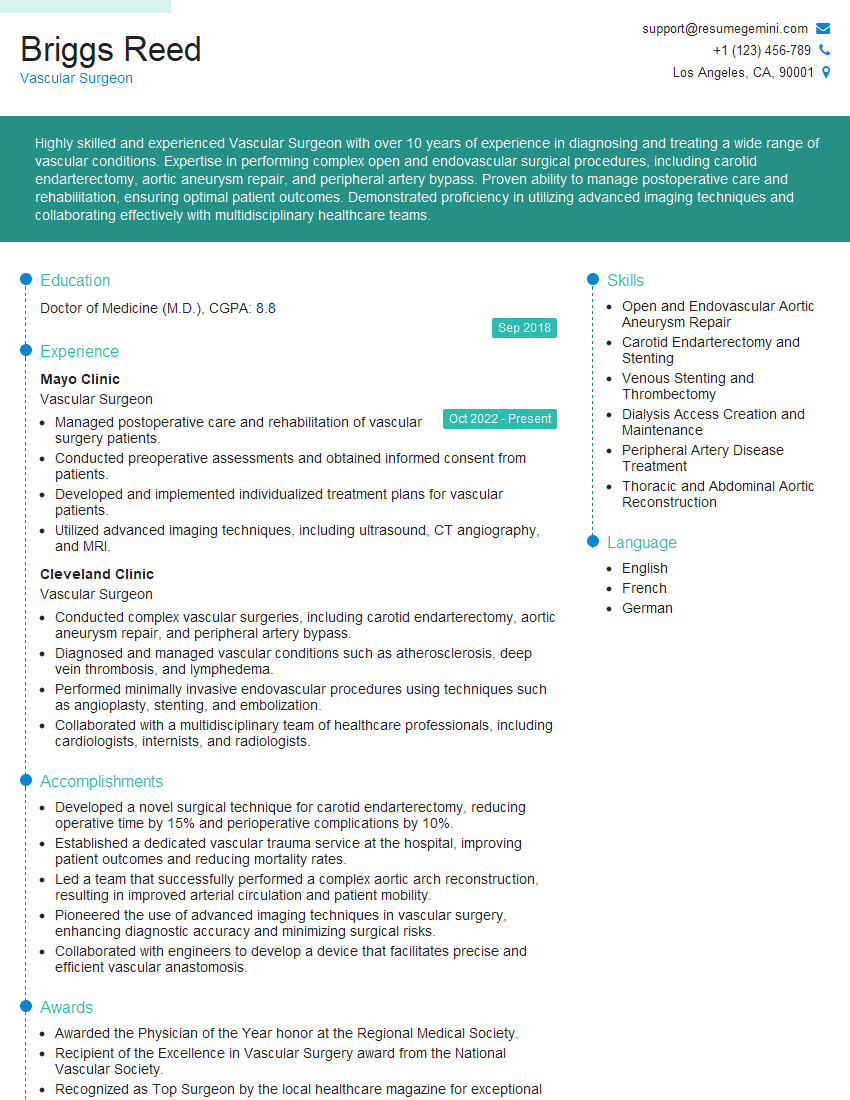
Mastering expertise in fluoroscopic-guided procedures significantly enhances your career prospects in interventional radiology, cardiology, and other related fields. It opens doors to specialized roles and increased earning potential. To maximize your job search success, it’s crucial to create a compelling and ATS-friendly resume that highlights your skills and experience effectively. ResumeGemini is a trusted resource to help you build a professional resume that stands out. We provide examples of resumes tailored to expertise in fluoroscopic-guided procedures to guide you through the process. Let ResumeGemini help you showcase your qualifications and land your dream job.
Explore more articles
Users Rating of Our Blogs
Share Your Experience
We value your feedback! Please rate our content and share your thoughts (optional).
What Readers Say About Our Blog
To the interviewgemini.com Webmaster.
Very helpful and content specific questions to help prepare me for my interview!
Thank you
To the interviewgemini.com Webmaster.
This was kind of a unique content I found around the specialized skills. Very helpful questions and good detailed answers.
Very Helpful blog, thank you Interviewgemini team.