Every successful interview starts with knowing what to expect. In this blog, we’ll take you through the top Expertise in Zoonotic Disease Diagnostics and Prevention interview questions, breaking them down with expert tips to help you deliver impactful answers. Step into your next interview fully prepared and ready to succeed.
Questions Asked in Expertise in Zoonotic Disease Diagnostics and Prevention Interview
Q 1. Explain the One Health approach to zoonotic disease prevention.
The One Health approach recognizes that human health, animal health, and environmental health are inextricably linked. Zoonotic disease prevention under this framework necessitates a collaborative, multidisciplinary effort involving veterinarians, human medical professionals, environmental scientists, and public health officials. It moves beyond siloed approaches, emphasizing integrated strategies that address disease risks at their source.
For example, consider rabies prevention. A One Health approach would involve vaccinating domestic animals (animal health), educating communities about safe handling of wildlife (human health), and managing wildlife populations to reduce human-wildlife contact (environmental health). This integrated approach is far more effective than isolated vaccination programs or public awareness campaigns alone.
- Surveillance: Coordinated monitoring of animal, human, and environmental reservoirs.
- Prevention: Implementing strategies across all three sectors to minimize risk factors.
- Response: Coordinated actions during outbreaks involving all stakeholders.
Q 2. Describe the lifecycle of a common zoonotic pathogen (e.g., rabies, Lyme disease).
Let’s examine the lifecycle of Lyme disease, a zoonotic disease caused by bacteria of the Borrelia burgdorferi species. The lifecycle involves three main players: the bacteria, the tick vector, and the mammalian host (including humans).
- Infection of the Tick: Nymph and adult blacklegged ticks (Ixodes scapularis) acquire the bacteria by feeding on infected animals like white-footed mice, deer, or other rodents which act as reservoirs.
- Tick Bite and Transmission: An infected tick transmits the bacteria to a new host (human or animal) through its bite. The bacteria enters the bloodstream.
- Disease Development in Host: In humans, this can lead to a characteristic rash (erythema migrans), along with flu-like symptoms. If untreated, it can spread to joints, the heart, and the nervous system.
- Tick Reproduction: Infected ticks can reproduce and pass the bacteria onto their offspring (transovum transmission). The cycle then repeats.
Understanding this lifecycle is crucial for implementing effective control measures, targeting the tick vector, the reservoirs, or both.
Q 3. What diagnostic tests are used to identify zoonotic pathogens?
Diagnostic tests for zoonotic pathogens vary greatly depending on the specific pathogen and the sample type (blood, tissue, etc.). Common methods include:
- Microscopy: Direct examination of samples under a microscope to identify the pathogen (e.g., visualizing Plasmodium species in malaria).
- Culture: Growing the pathogen in a laboratory setting to isolate and identify it (e.g., bacterial culture for identifying Salmonella).
- Serology: Detecting antibodies produced by the host’s immune system in response to the pathogen (e.g., ELISA tests for Lyme disease antibodies).
- Molecular Diagnostics: Using techniques like PCR (Polymerase Chain Reaction) to detect the pathogen’s genetic material (DNA or RNA). This is highly sensitive and specific, allowing for rapid identification.
- Immunohistochemistry: Identifying antigens (pathogen proteins) in tissue samples using specific antibodies.
The choice of test depends on factors like the suspected pathogen, sample availability, and laboratory resources.
Q 4. Discuss the limitations of common diagnostic tests for zoonotic diseases.
Diagnostic tests for zoonotic diseases are not without limitations. These limitations can affect the accuracy, speed, and overall effectiveness of disease detection and control.
- Sensitivity and Specificity: Some tests may not be able to detect low levels of the pathogen (low sensitivity) or may give false positive results (low specificity), leading to misdiagnosis.
- Cost and Accessibility: Advanced techniques like PCR can be expensive and require specialized equipment, limiting accessibility in resource-limited settings.
- Turnaround Time: Culture methods, for instance, can take days or weeks to provide results, delaying treatment.
- Sample Quality: The quality of the sample being tested significantly impacts the reliability of the results. Improper collection or storage can lead to inaccurate results.
- Cross-reactivity: Some tests may cross-react with other pathogens or antibodies, causing false positive results.
Awareness of these limitations is crucial for interpreting results accurately and taking appropriate actions.
Q 5. How are zoonotic diseases surveilled and monitored?
Surveillance and monitoring of zoonotic diseases involve a multi-faceted approach to track the incidence, prevalence, and spread of these diseases. This usually involves:
- Active Surveillance: Targeted testing and investigation of specific populations or geographic areas, even in the absence of reported cases.
- Passive Surveillance: Collecting data from routine diagnostic tests and reports from healthcare providers. This relies on individuals reporting illnesses.
- Sentinel Surveillance: Monitoring specific populations or geographic locations known to have high risk of the disease.
- Data Management and Analysis: Employing robust data management systems to track and analyze epidemiological data to identify trends and patterns.
- Risk Factor Analysis: Identifying factors influencing disease spread, including environmental changes, animal populations, and human behaviors.
Effective surveillance relies on collaboration between different sectors and strong communication systems to ensure timely detection and response to outbreaks.
Q 6. What are the key factors influencing the emergence of zoonotic diseases?
Several key factors influence the emergence of zoonotic diseases, often involving complex interactions:
- Deforestation and Habitat Loss: This forces wildlife into closer contact with humans, increasing the risk of transmission.
- Climate Change: Changing environmental conditions can alter the distribution and abundance of both pathogens and vectors.
- Globalization and Travel: Increased international travel and trade facilitate the rapid spread of pathogens across continents.
- Land Use Change: Alterations in land use, such as agricultural expansion, can increase human-wildlife interactions.
- Wildlife Trade: The illegal trade in wild animals can create opportunities for pathogens to spread to new regions.
- Antimicrobial Resistance: The increasing resistance of pathogens to antibiotics makes treatment more challenging.
Understanding these factors is crucial for developing effective strategies to prevent future outbreaks.
Q 7. Explain the role of wildlife in zoonotic disease transmission.
Wildlife plays a critical role in the transmission of zoonotic diseases. They can act as reservoirs, amplifying and maintaining pathogens within their populations. This means the pathogens can circulate within wildlife populations for extended periods, providing ample opportunity for spillover events – when a pathogen jumps from an animal to a human.
For instance, bats are known reservoirs for many viruses, including rabies and coronaviruses. Rodents act as reservoirs for Lyme disease and hantaviruses. Birds can carry avian influenza viruses. Understanding the role of wildlife as reservoirs and disseminators is essential for targeted interventions, such as controlling vector populations or managing wildlife populations near human settlements.
Moreover, human activities that disrupt wildlife habitats can increase the risk of zoonotic disease emergence, highlighting the need for integrated approaches to conservation and public health.
Q 8. Describe different methods for controlling and preventing zoonotic disease outbreaks.
Controlling and preventing zoonotic disease outbreaks requires a multi-pronged approach targeting both the animal reservoir and human populations. Think of it like a net – we need to catch the disease at multiple points to be truly effective.
Surveillance and Early Detection: This is crucial. Imagine a wildfire – early detection means quicker containment. We use active surveillance (actively searching for the disease) and passive surveillance (relying on reports from healthcare providers and vets) to identify outbreaks early. This involves robust diagnostic testing capabilities.
Animal Reservoir Management: This involves controlling the animal populations that act as reservoirs for the disease. This could include vaccination programs for animals, improved sanitation and hygiene practices in animal farms, and responsible wildlife management. For example, rabies control often focuses on vaccinating dogs.
Human Vaccination and Prophylaxis: Just like we have vaccines for measles and polio, we develop vaccines for many zoonotic diseases like rabies and influenza. Post-exposure prophylaxis (PEP) is also important, like administering rabies immunoglobulin after a bite from a rabid animal.
Hygiene and Sanitation: Basic hygiene practices are surprisingly effective. Thorough handwashing, safe food handling, and proper waste disposal are crucial in preventing transmission. Think about how simple handwashing can dramatically reduce the spread of many diseases.
Public Health Education: Educating the public on risk factors, prevention measures, and early symptoms is incredibly important. Imagine a community where everyone understands how to handle raw meat properly – the risk of foodborne zoonotic illnesses drops significantly.
One Health Approach: This recognizes that human, animal, and environmental health are interconnected. Effective zoonotic disease control requires collaboration between veterinarians, human health professionals, and environmental scientists.
Q 9. What are the ethical considerations in zoonotic disease research and control?
Ethical considerations in zoonotic disease research and control are paramount. We need to ensure research is conducted responsibly and ethically, balancing the potential benefits with potential harms.
Animal Welfare: Research involving animals must adhere to strict ethical guidelines, minimizing suffering and ensuring humane treatment. This includes proper housing, anesthesia, and pain management.
Informed Consent: When working with human populations, especially in vulnerable communities, obtaining informed consent is critical. People must understand the risks and benefits of participation and have the freedom to withdraw at any time. This is especially important during outbreak investigations.
Data Privacy and Confidentiality: Protecting the privacy and confidentiality of individuals involved in research is crucial. Data should be anonymized and secured to prevent misuse.
Resource Allocation: Ethical questions arise regarding the allocation of resources for disease control, particularly in resource-limited settings. Decisions should be fair, equitable, and prioritize those most at risk.
Equity and Justice: Zoonotic diseases disproportionately affect marginalized communities. Research and control efforts must address these health inequities and ensure access to prevention and treatment for all.
Q 10. How do you interpret epidemiological data related to zoonotic disease outbreaks?
Interpreting epidemiological data related to zoonotic disease outbreaks requires careful analysis and consideration of various factors. It’s like piecing together a puzzle.
Descriptive Epidemiology: We start by describing the outbreak: When did it start? Where is it happening? Who is affected? This helps us understand the basic features of the outbreak.
Analytical Epidemiology: Next, we try to identify risk factors. What are the commonalities among those affected? Is there a link to a specific animal or environment? This might involve statistical analysis to identify associations.
Spatial Analysis: Mapping the location of cases can reveal patterns of spread, identify potential hotspots, and guide intervention strategies. Think of it as a heatmap showing disease concentration.
Temporal Trends: Tracking the number of cases over time helps us understand the trajectory of the outbreak (is it increasing, decreasing, or plateauing?). This information guides resource allocation.
Case-Control and Cohort Studies: These studies help determine the strength of association between risk factors and the disease. For example, we might compare a group of individuals who contracted the disease (cases) with a group who did not (controls) to identify common risk factors.
Data Visualization: Visualizing data through graphs, maps, and charts helps communicate findings effectively to both experts and the public.
Q 11. Describe different strategies for risk assessment related to zoonotic diseases.
Risk assessment for zoonotic diseases is a systematic process that helps us understand the likelihood and potential impact of an outbreak. It’s like assessing the potential damage of a storm before it hits.
Hazard Identification: What are the potential zoonotic diseases in a given area? This involves considering the presence of animal reservoirs, vectors (like mosquitos), and routes of transmission.
Exposure Assessment: How likely are humans to come into contact with the pathogens? This could involve analyzing contact with animals, consumption of contaminated food, or environmental exposure.
Vulnerability Assessment: How susceptible is the human population to infection? This considers factors like age, immune status, and access to healthcare.
Risk Characterization: This combines information from the above steps to estimate the overall risk – the likelihood and potential severity of an outbreak. This might be expressed qualitatively (low, medium, high) or quantitatively (e.g., probability of an outbreak).
Risk Management: Based on the risk characterization, we develop strategies to reduce the risk. This might include vaccination programs, improved sanitation, and public health education.
Q 12. What are the key public health interventions for preventing zoonotic diseases?
Key public health interventions for preventing zoonotic diseases are multifaceted and require a coordinated approach. Imagine a layered defense system.
Surveillance Systems: Robust systems to monitor for outbreaks are crucial, much like an early warning system for a natural disaster.
Vaccination Programs: Vaccination campaigns for both humans (e.g., rabies, influenza) and animals (e.g., rabies in dogs) are essential.
Infection Control Measures: Implementing proper hygiene practices in healthcare settings, food processing facilities, and farms prevents transmission.
Vector Control: Controlling mosquito populations (to prevent diseases like West Nile Virus) or rodent populations (to reduce hantavirus risk) is vital.
Safe Food Handling Practices: Educating the public about safe food handling and cooking procedures minimizes the risk of foodborne zoonotic illnesses.
Wildlife Management: Sustainable wildlife management practices prevent human-wildlife contact and reduce the transmission of diseases.
International Collaboration: Given the global nature of zoonotic disease outbreaks, collaboration across borders is crucial for effective prevention and control.
Q 13. How do you communicate complex scientific information about zoonotic diseases to a lay audience?
Communicating complex scientific information about zoonotic diseases to a lay audience requires careful planning and consideration. It’s about translating scientific jargon into everyday language.
Use Simple Language: Avoid technical jargon whenever possible. Explain complex terms in simple, understandable language.
Visual Aids: Use charts, graphs, and images to illustrate key concepts. A picture is often worth a thousand words.
Analogies and Metaphors: Use relatable analogies and metaphors to help people grasp complex ideas. For instance, explaining the immune system as a castle defending against invaders.
Storytelling: Use stories and real-life examples to make information more engaging and memorable.
Tailor the Message: Adapt your communication style to your audience. Consider their level of understanding and their concerns.
Active Listening: Give people the opportunity to ask questions and address their concerns. Encourage interaction and a two-way conversation.
Q 14. What are the challenges in implementing effective zoonotic disease prevention programs?
Implementing effective zoonotic disease prevention programs faces many challenges, often intertwined and requiring innovative solutions.
Resource Constraints: Limited funding, personnel, and infrastructure can hinder the implementation of effective programs, particularly in resource-limited settings.
Political and Social Factors: Political instability, social inequalities, and lack of public awareness can impede successful program implementation.
Lack of Coordination: Effective zoonotic disease prevention requires collaboration across various sectors (human health, animal health, environment). Lack of coordination can undermine efforts.
Emerging Diseases: The constant emergence of novel zoonotic diseases requires continuous adaptation of prevention strategies and research.
Antimicrobial Resistance: The growing problem of antimicrobial resistance makes treating infections more challenging.
Climate Change: Climate change can alter the distribution of disease vectors and reservoirs, expanding the range of zoonotic diseases.
Q 15. Explain the importance of international collaboration in zoonotic disease control.
International collaboration is absolutely crucial for effective zoonotic disease control. Zoonotic diseases, by their very nature, don’t respect national borders. A disease outbreak in one country can rapidly spread globally through international travel and trade. Think of the SARS-CoV-1 outbreak in 2003 or the more recent COVID-19 pandemic – these highlight the interconnectedness of global health.
- Surveillance and Early Warning Systems: Sharing real-time data on disease outbreaks across borders allows for quicker identification and response. A global network of laboratories and surveillance systems is essential for this.
- Research and Development: Collaborative research efforts accelerate the development of diagnostic tools, vaccines, and treatments. Sharing resources and expertise across nations drastically reduces the time it takes to bring effective interventions to market.
- Capacity Building: Developed nations can assist developing countries in strengthening their public health infrastructure, including training healthcare workers and improving laboratory capacity. This is vital because many zoonotic diseases originate in regions with limited resources.
- Policy Coordination: International agreements and harmonized regulations are necessary to ensure consistent approaches to prevention and control. This includes things like biosecurity measures at borders and consistent reporting standards.
For example, the World Health Organization (WHO) plays a critical role in coordinating the global response to zoonotic disease outbreaks, providing guidance and technical assistance to countries worldwide. Without this collaborative effort, controlling zoonotic diseases would be significantly more challenging and ultimately less effective.
Career Expert Tips:
- Ace those interviews! Prepare effectively by reviewing the Top 50 Most Common Interview Questions on ResumeGemini.
- Navigate your job search with confidence! Explore a wide range of Career Tips on ResumeGemini. Learn about common challenges and recommendations to overcome them.
- Craft the perfect resume! Master the Art of Resume Writing with ResumeGemini’s guide. Showcase your unique qualifications and achievements effectively.
- Don’t miss out on holiday savings! Build your dream resume with ResumeGemini’s ATS optimized templates.
Q 16. What are the specific biosafety precautions necessary when handling zoonotic pathogens?
Biosafety precautions when handling zoonotic pathogens are paramount to protect both laboratory personnel and the community. These precautions are based on the risk assessment of the specific pathogen, categorized by biosafety levels (BSL) 1-4, with 4 representing the highest risk. Here’s a breakdown:
- Personal Protective Equipment (PPE): This includes laboratory coats, gloves (multiple layers often required), eye protection, and respirators, depending on the pathogen and BSL. The selection of PPE is crucial and should be based on a risk assessment.
- Containment Equipment: Biological safety cabinets (BSCs) are essential for working with infectious agents, providing containment to prevent aerosol release. Other containment equipment includes centrifuges with sealed rotors and autoclaves for sterilization.
- Standard Operating Procedures (SOPs): Clear and detailed SOPs are crucial for all procedures, outlining steps to minimize risk. This includes safe handling procedures, decontamination processes, and emergency response plans.
- Environmental Controls: Proper ventilation, disinfection procedures (using appropriate disinfectants), and waste disposal protocols are essential to prevent contamination of the lab and the environment.
- Training and Education: All personnel handling zoonotic pathogens must receive adequate training on proper biosafety techniques and procedures. Regular refresher courses are essential.
Imagine working with a highly pathogenic avian influenza virus (HPAI). The biosafety level would be high, necessitating the use of a Class III biosafety cabinet (completely enclosed), full body protective suits, and strict decontamination procedures. Any breach in protocol could have devastating consequences.
Q 17. How do you differentiate between direct and indirect transmission of zoonotic pathogens?
Zoonotic pathogens can be transmitted through either direct or indirect routes. Understanding the transmission mode is vital for designing effective prevention strategies.
- Direct Transmission: This involves the direct transfer of the pathogen from an animal to a human. Examples include:
- Direct contact: Touching an infected animal (e.g., rabies from a bite), or handling contaminated animal products (e.g., anthrax from handling infected animal carcasses).
- Droplet transmission: Inhaling respiratory droplets from an infected animal (e.g., avian influenza).
- Indirect Transmission: This occurs when the pathogen is transferred from an animal to a human through an intermediate vehicle or vector. Examples include:
- Fecal-oral route: Contaminated water or food (e.g., salmonellosis).
- Vector-borne transmission: A vector like a mosquito, tick, or flea transmits the pathogen (e.g., Lyme disease, West Nile virus).
- Environmental contamination: Contact with contaminated soil or surfaces (e.g., leptospirosis).
Consider rabies. A direct transmission occurs through a bite from an infected animal, while indirect transmission might involve handling contaminated saliva or tissues of a rabid animal.
Q 18. Discuss the role of vector control in preventing zoonotic diseases.
Vector control is an essential element in preventing many zoonotic diseases. Vectors like mosquitoes, ticks, and fleas transmit pathogens, acting as a bridge between animals and humans. Effective vector control can significantly reduce the incidence of these diseases.
- Larvicides: Chemicals applied to breeding sites to kill mosquito larvae, preventing them from becoming adult vectors.
- Insecticides: Applied to adult vectors to reduce their populations, including indoor residual spraying and ultra-low volume aerial spraying.
- Environmental Management: Modifying the environment to reduce breeding sites. This can include draining stagnant water, removing debris, and improving sanitation.
- Personal Protective Measures: Using insect repellents, wearing protective clothing, and using bed nets to prevent bites.
- Integrated Vector Management (IVM): A comprehensive approach combining multiple control strategies to maximize effectiveness and minimize environmental impact. This often involves community participation.
For example, the control of the Aedes aegypti mosquito, which transmits dengue, Zika, and chikungunya viruses, requires an integrated approach combining larvicides, insecticides, and community engagement to eliminate breeding sites in urban areas. Without effective vector control, these diseases can cause devastating outbreaks.
Q 19. Explain the principles of disease modeling for zoonotic pathogens.
Disease modeling for zoonotic pathogens uses mathematical and computational methods to simulate the spread and impact of diseases. This is crucial for understanding disease dynamics, predicting outbreaks, and evaluating the effectiveness of interventions. Several modeling approaches exist.
- Compartmental Models: Divide the population into compartments (susceptible, infected, recovered, etc.) and use differential equations to model the flow of individuals between compartments. This helps predict the spread of a disease under different scenarios.
- Agent-Based Models (ABM): Simulate the behavior of individual agents (animals and humans) and their interactions, providing a more detailed picture of disease transmission. This allows exploration of complex factors like animal movement and human behavior.
- Network Models: Represent the population as a network of interconnected individuals or animals, showing how disease spreads through the network. This approach is useful for understanding the role of social networks in disease spread.
These models utilize data on transmission rates, population demographics, and environmental factors to predict outbreak patterns. For example, a compartmental model could be used to estimate the reproduction number (R0) of a novel zoonotic virus, indicating its potential for spread. By varying parameters in these models, we can evaluate the impact of different intervention strategies, like vaccination or quarantine, providing valuable insights for public health decisions.
Q 20. Describe your experience with molecular techniques used in zoonotic disease diagnostics.
My experience with molecular techniques in zoonotic disease diagnostics is extensive. I’ve utilized a range of techniques for pathogen detection, identification, and characterization:
- Polymerase Chain Reaction (PCR): A highly sensitive method to detect specific pathogen DNA or RNA. I’ve used both conventional PCR and real-time PCR (qPCR) for rapid and quantitative detection of various zoonotic pathogens like avian influenza viruses and leptospires.
- Next-Generation Sequencing (NGS): Enables high-throughput sequencing of pathogen genomes, facilitating identification of novel pathogens and understanding of their genetic diversity and evolution. This has been invaluable in tracking the emergence of new zoonotic strains and investigating outbreaks.
- Microarray Technology: Allows simultaneous detection of multiple pathogens in a single sample. This is particularly useful for screening samples for various zoonotic agents in surveillance studies.
- ELISA (Enzyme-Linked Immunosorbent Assay): Used for detecting antibodies or antigens in blood samples, indicating exposure to a pathogen. I’ve used ELISA for serological diagnosis of diseases like brucellosis and Lyme disease.
For example, in a recent outbreak investigation, we used NGS to rapidly identify a novel hantavirus strain in rodents, allowing for targeted interventions to prevent human transmission. The accuracy and speed provided by these molecular techniques are critical for effective disease control.
Q 21. How do you assess the effectiveness of a zoonotic disease prevention program?
Assessing the effectiveness of a zoonotic disease prevention program requires a multi-faceted approach that goes beyond simply looking at the number of cases. We need to consider various indicators:
- Disease Surveillance Data: Monitoring the incidence and prevalence of the disease over time. A significant reduction in cases suggests effectiveness, while an increase may indicate the need for adjustments.
- Mortality and Morbidity Rates: Assessing the impact of the disease on human health. A reduction in mortality and morbidity demonstrates the program’s success in protecting human populations.
- Animal Reservoir Monitoring: Assessing the prevalence of the pathogen in animal populations. Reducing infection in the animal reservoir is critical for long-term disease control.
- Economic Impact: Evaluating the economic costs associated with the disease and the program. This includes healthcare costs, lost productivity, and the cost of the intervention itself.
- Community Engagement and Participation: Assessing the degree to which the community is involved in the program. Successful programs often rely on community support and participation.
- Qualitative Data: Gathering feedback from stakeholders, including healthcare workers, communities, and affected individuals, to understand their perspectives and challenges.
For instance, we might evaluate a rabies prevention program by looking at the reduction in human rabies cases, the prevalence of rabies in dog populations (a major reservoir), the number of animals vaccinated, and the level of community awareness about rabies prevention. A comprehensive evaluation uses multiple data points to build a robust assessment of the program’s effectiveness.
Q 22. What are the limitations of current vaccine strategies for zoonotic diseases?
Current vaccine strategies for zoonotic diseases, while vital, face several limitations. One major hurdle is the sheer diversity of zoonotic pathogens. Each virus or bacteria requires a tailored vaccine approach, making development a lengthy and expensive process. Furthermore, some pathogens, like RNA viruses such as influenza or coronaviruses, are highly mutable, meaning vaccines developed for one strain may be ineffective against evolved variants. Another challenge is the complex interplay between the pathogen, the animal reservoir, and the human host. Vaccines might effectively protect against infection in animals but fail to translate that protection to humans, or vice versa. Finally, vaccine hesitancy and challenges in achieving widespread vaccination coverage, especially in resource-limited settings, significantly impede the effectiveness of existing strategies. For example, rabies vaccines are highly effective in preventing disease but lack of access continues to result in significant morbidity and mortality globally.
Q 23. Discuss the potential impact of climate change on the emergence of zoonotic diseases.
Climate change is significantly altering the landscape of zoonotic disease emergence. Rising temperatures expand the geographical ranges of disease vectors like mosquitoes and ticks, bringing them into contact with new populations of humans and animals. Changes in precipitation patterns can lead to increased flooding, creating breeding grounds for disease vectors and altering the distribution of wildlife reservoirs. Furthermore, climate change is disrupting ecosystems, forcing animals into closer proximity to human settlements, increasing opportunities for spillover events. For example, the increasing frequency and intensity of extreme weather events like hurricanes can displace wildlife, leading to stress and increasing the risk of disease transmission. Similarly, changes in the seasonal timing of rainfall can impact the life cycle of disease vectors, making them more prevalent throughout the year.
Q 24. Explain the role of antimicrobial resistance in zoonotic disease management.
Antimicrobial resistance (AMR) is a critical threat to effective zoonotic disease management. The overuse and misuse of antibiotics in both human and veterinary medicine are driving the evolution of drug-resistant bacteria. Many zoonotic diseases are caused by bacteria, and the emergence of AMR makes treating these infections increasingly challenging. For instance, the spread of multi-drug resistant Salmonella, a common cause of foodborne illness often transmitted zoonotically, is a major public health concern. This resistance makes treating infections more difficult, potentially leading to longer illnesses, higher mortality rates, and increased healthcare costs. Effective zoonotic disease management requires a comprehensive strategy that includes judicious antibiotic use, improved infection control practices, and the development of new antimicrobials. We must prioritize preventative measures like vaccination and hygiene to minimize the need for antibiotic use in the first place.
Q 25. Describe your experience with outbreak investigation and response.
I have extensive experience in outbreak investigation and response, having participated in several investigations involving various zoonotic diseases. My approach follows a structured methodology, starting with rapid case identification and confirmation. This involves using advanced diagnostic techniques like PCR and serological tests to identify the causative agent. Next, I collaborate with epidemiologists to establish the epidemiological linkages between cases, identifying potential sources of infection and routes of transmission. This often involves interviewing affected individuals, tracing contacts, and analyzing environmental samples. Data analysis plays a critical role in identifying patterns and trends, leading to the development of control strategies. For example, during a recent avian influenza outbreak, my team and I used a combination of epidemiological data, field investigations and GIS mapping to effectively trace the source and manage the spread.
Q 26. How do you manage data and information related to zoonotic diseases?
Managing data and information related to zoonotic diseases requires a systematic approach. I utilize a combination of electronic databases and secure data management systems to store and organize data, ensuring data quality and integrity. We employ standardized data entry forms and protocols to maintain consistency and minimize errors. Data security is paramount; access is restricted to authorized personnel only, and data is encrypted to protect confidentiality. Data visualization tools are used to interpret trends and patterns, guiding decision-making and resource allocation. Data sharing is crucial for collaborative research and public health initiatives; we adhere to strict ethical guidelines and data sharing agreements to ensure responsible dissemination of information.
Q 27. What are your skills in using Geographic Information Systems (GIS) for zoonotic disease surveillance?
My skills in Geographic Information Systems (GIS) are essential for zoonotic disease surveillance. I use GIS software to map the spatial distribution of diseases, identifying hotspots and areas at high risk. This enables targeted interventions and resource allocation to prevent or control outbreaks. Furthermore, GIS allows for integration of various data layers – environmental data, animal population data, human population density – providing a holistic view of risk factors. For example, we used GIS to map the distribution of Lyme disease cases in relation to tick habitats and human population density, guiding public health education campaigns and vector control strategies. By layering risk factors like proximity to wildlife reserves and suitable environmental conditions for vector propagation, we can create predictive models that support proactive disease management.
Q 28. Describe your experience with collaborating with interdisciplinary teams in zoonotic disease research.
Collaboration is central to successful zoonotic disease research. I have extensive experience working with interdisciplinary teams, including veterinarians, epidemiologists, microbiologists, wildlife specialists, and public health officials. Effective communication and shared understanding of different perspectives are crucial for successful collaborations. We utilize project management tools to coordinate activities, share data, and track progress. A collaborative approach fosters a more comprehensive understanding of the complex factors influencing zoonotic disease emergence and transmission. This integrated approach ensures a more effective and sustainable strategy for prevention and control, leading to better outcomes in global public health.
Key Topics to Learn for Expertise in Zoonotic Disease Diagnostics and Prevention Interview
- Disease Surveillance and Epidemiology: Understanding the principles of zoonotic disease surveillance, outbreak investigation, and epidemiological modeling. Consider practical applications like designing a surveillance program for a specific pathogen or analyzing epidemiological data to identify risk factors.
- Diagnostic Techniques: Mastering various diagnostic methods for detecting zoonotic pathogens, including molecular diagnostics (PCR, sequencing), serological tests (ELISA, immunofluorescence), and microbiological culture techniques. Practice applying these techniques to different scenarios and interpreting results.
- One Health Approach: A strong understanding of the One Health paradigm and its application to zoonotic disease prevention and control. Be prepared to discuss collaborative efforts between human, animal, and environmental health sectors.
- Risk Assessment and Management: Ability to conduct risk assessments for zoonotic diseases, identify vulnerable populations, and develop mitigation strategies. Think about applying this to real-world situations, such as assessing the risk of a novel virus spillover event.
- Prevention and Control Strategies: Knowledge of various prevention and control measures, including vaccination, sanitation, vector control, and public health interventions. Be ready to discuss the strengths and limitations of different approaches.
- Data Analysis and Interpretation: Proficiency in analyzing epidemiological data, interpreting statistical results, and presenting findings effectively. Practice interpreting complex datasets and drawing meaningful conclusions.
- Biosecurity and Biosafety: Understanding and applying principles of biosecurity and biosafety in the laboratory setting to prevent accidental exposure and transmission of zoonotic pathogens.
Next Steps
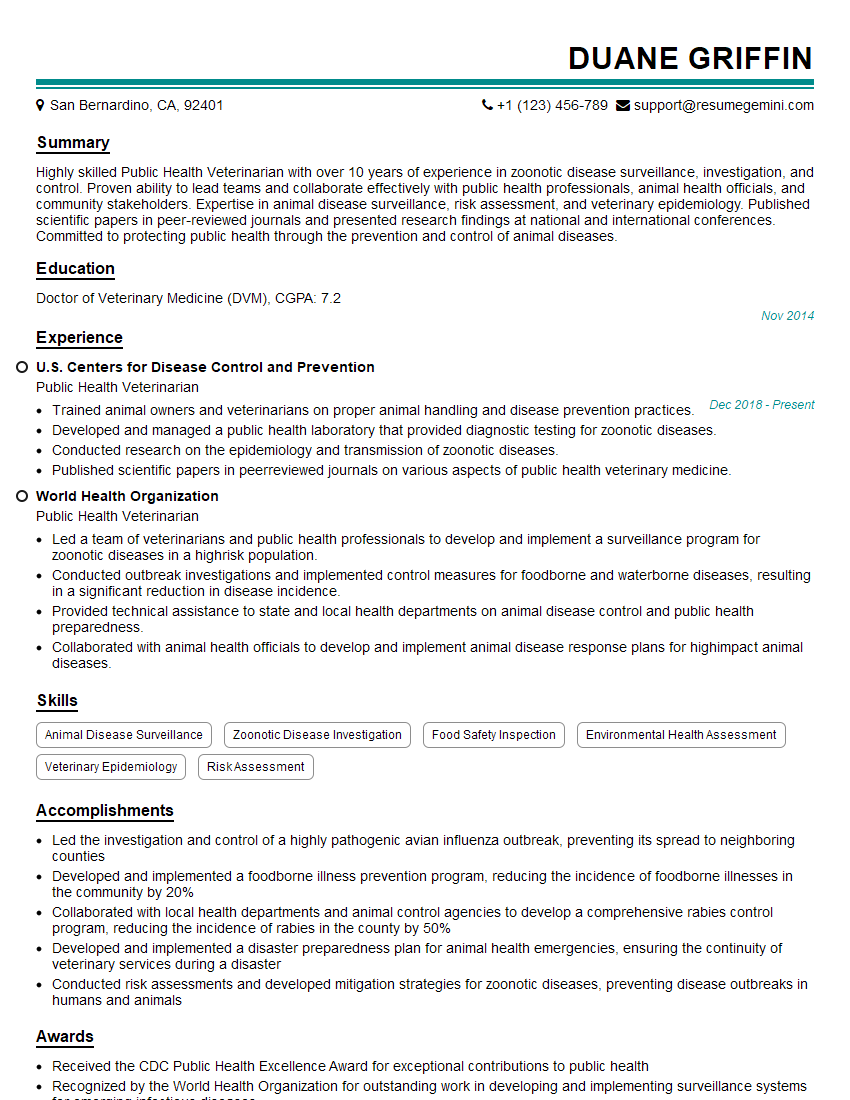
Mastering Expertise in Zoonotic Disease Diagnostics and Prevention is crucial for a rewarding and impactful career in public health, veterinary medicine, or related fields. A strong understanding of these areas significantly enhances your employability and opens doors to exciting opportunities. To make the most of your job search, creating an ATS-friendly resume is essential. ResumeGemini is a trusted resource that can help you build a professional resume that highlights your skills and experience effectively. Examples of resumes tailored to Expertise in Zoonotic Disease Diagnostics and Prevention are available, providing valuable templates to guide your resume creation. Invest time in crafting a compelling resume – it’s your first impression to potential employers!
Explore more articles
Users Rating of Our Blogs
Share Your Experience
We value your feedback! Please rate our content and share your thoughts (optional).
What Readers Say About Our Blog
To the interviewgemini.com Webmaster.
Very helpful and content specific questions to help prepare me for my interview!
Thank you
To the interviewgemini.com Webmaster.
This was kind of a unique content I found around the specialized skills. Very helpful questions and good detailed answers.
Very Helpful blog, thank you Interviewgemini team.