Interviews are opportunities to demonstrate your expertise, and this guide is here to help you shine. Explore the essential Fellowship interview questions that employers frequently ask, paired with strategies for crafting responses that set you apart from the competition.
Questions Asked in Fellowship Interview
Q 1. Describe your understanding of the fellowship’s mission and goals.
My understanding of the fellowship’s mission and goals is centered around its stated commitment to fostering innovative research and leadership development in [Specify Fellowship’s Field, e.g., sustainable energy, artificial intelligence]. I’ve carefully reviewed the fellowship’s website and literature, and I believe its core mission is threefold: 1) To support groundbreaking research that addresses critical societal challenges; 2) To cultivate a vibrant community of scholars committed to collaboration and knowledge sharing; and 3) To equip fellows with the skills and networks necessary to become leaders in their respective fields. The specific goals, as I understand them, include providing competitive funding, access to state-of-the-art facilities, mentorship opportunities with leading experts, and a robust professional development program. This aligns perfectly with my own aspirations and ambitions.
Q 2. Explain your research experience and its relevance to this fellowship.
My research experience directly contributes to this fellowship’s objectives. My doctoral work focused on [Describe your research area, e.g., developing novel algorithms for optimizing energy grids]. This involved [Describe methods and techniques, e.g., using machine learning techniques to analyze large datasets of energy consumption patterns]. My publications in [List relevant journals or conferences] demonstrate my ability to conduct rigorous research, analyze complex data, and effectively communicate findings. The analytical and problem-solving skills honed through this research are readily transferable to the challenges this fellowship will present. Specifically, my expertise in [mention specific skill aligning with the fellowship] will be invaluable in [explain how it will be useful in the fellowship context]. For example, my work on [mention a project] resulted in [positive outcome, e.g., a 15% improvement in energy efficiency], showcasing my capacity to deliver impactful results.
Q 3. What are your short-term and long-term career goals?
My short-term goals within the fellowship include fully immersing myself in the research community, establishing collaborations with fellow researchers, and making significant progress on my proposed research project. I aim to publish at least two papers in peer-reviewed journals and present my work at at least one international conference. Long-term, I envision myself as a leading researcher and innovator in [Specify field], contributing to both the academic and industrial landscape. This might involve securing a tenure-track position at a top university, leading a research team, or establishing a startup based on my research findings. Ultimately, I want to leverage my expertise to make a tangible positive impact on society through [explain desired societal impact, e.g., developing more sustainable energy solutions].
Q 4. How would you contribute to the fellowship’s community?
I believe I can significantly contribute to the fellowship’s community in several ways. First, my collaborative spirit and strong communication skills will facilitate productive interactions with fellow researchers. I thrive in team environments and am adept at sharing knowledge and insights. Second, my experience mentoring junior researchers will be an asset, helping to foster a supportive and inclusive environment. Finally, I’m eager to participate in the fellowship’s outreach initiatives, disseminating research findings to the broader public and contributing to the broader scholarly conversation. For example, I am proficient in communicating complex technical concepts in an accessible manner, a skill I’ve developed through [mention experience, e.g., public speaking engagements, science writing].
Q 5. What are your strengths and weaknesses?
My strengths lie in my analytical abilities, my dedication to rigorous research, and my collaborative spirit. I’m a highly organized and detail-oriented individual, capable of managing complex projects and meeting tight deadlines. My collaborative spirit is shown through my history of successful teamwork on several research projects. However, I also recognize that I could improve my ability to delegate tasks effectively, particularly in large-scale projects. While I’m comfortable taking on a leadership role, learning to better leverage the strengths of others would enhance my effectiveness further. I’m actively working to address this weakness by taking courses in project management and practicing more conscious delegation in my current projects.
Q 6. Describe a challenging project and how you overcame obstacles.
During my doctoral studies, I encountered a significant challenge while developing a new [describe the algorithm/model] for [explain its purpose]. The initial results were far from satisfactory, and the algorithm was unstable and lacked accuracy. To overcome these obstacles, I systematically investigated the source of the problem. I employed [mention the troubleshooting steps, e.g., debugging, code profiling, literature review] to identify several critical errors in the code and refine the algorithmic approach. Specifically, I implemented [mention the changes made] which significantly improved the model’s stability and accuracy. This experience taught me the importance of persistence, thorough analysis, and the iterative nature of scientific inquiry. The revised algorithm ultimately achieved [mention the positive results], demonstrating the importance of perseverance and a systematic approach to problem-solving.
Q 7. How do you handle pressure and deadlines?
I handle pressure and deadlines effectively through a combination of proactive planning, effective time management, and a flexible approach. I begin projects by creating detailed timelines and breaking down complex tasks into smaller, manageable steps. I prioritize tasks based on their urgency and importance, and regularly monitor my progress to ensure I stay on track. When faced with unexpected challenges, I adapt my plan accordingly, re-prioritizing tasks as necessary and seeking help from colleagues when needed. I view pressure as an opportunity to perform at my best, and I believe that a calm and organized approach is essential for navigating demanding situations successfully. My experience juggling multiple research projects simultaneously has built up my resilience to pressure and instilled in me a methodical approach to task management.
Q 8. What is your experience with [relevant software/techniques]?
My experience with relevant software and techniques depends heavily on the specific fellowship. However, I possess a strong foundation in data analysis, utilizing tools like Python (with libraries such as Pandas, NumPy, and Scikit-learn) and R. I’m also proficient in SQL for database management and visualization tools such as Tableau and Power BI. For example, during a previous project involving analyzing patient data to improve healthcare outcomes, I used Python to clean, process, and model the data, resulting in a 15% improvement in patient satisfaction scores. My experience also extends to utilizing version control systems like Git and collaborative platforms such as GitHub and Jupyter Notebooks for code sharing and teamwork.
Furthermore, I am adept at statistical modeling, employing techniques like regression analysis, time series analysis, and machine learning algorithms. My skills also include report writing and presentation design, ensuring data-driven insights are communicated clearly and effectively to diverse audiences.
Q 9. How do you stay current with advances in your field?
Staying current in a rapidly evolving field like this requires a multi-pronged approach. I regularly read peer-reviewed journals such as Nature and Science, focusing on articles relevant to my area of expertise. I actively participate in online communities and forums dedicated to data science and fellowship-related discussions, engaging in knowledge sharing and learning from others’ experiences. I also attend webinars and conferences, both online and in-person, to stay informed about the latest breakthroughs and best practices. Furthermore, I dedicate time to online courses and workshops offered by platforms like Coursera and edX to enhance my technical skills and explore emerging technologies. For instance, I recently completed a course on deep learning, expanding my capabilities in advanced data analysis.
Q 10. Describe your experience with mentoring or collaboration.
I have extensive experience in both mentoring and collaborative projects. During my graduate studies, I mentored junior students in research methodologies, assisting them with data analysis and report writing, which significantly boosted their research productivity. In collaborative settings, I’ve consistently demonstrated the ability to work effectively as part of a team, contributing my expertise while actively listening to and incorporating the insights of others. For instance, in a recent team project, we were tasked with developing a predictive model for a complex system. Through open communication and collaborative coding sessions, we successfully delivered a high-performing model, exceeding our initial performance goals.
Q 11. How would you manage conflicting priorities?
Managing conflicting priorities requires a structured approach. I typically begin by prioritizing tasks based on their urgency and importance, using a framework like the Eisenhower Matrix (urgent/important). I then break down large tasks into smaller, more manageable components, creating a detailed schedule and allocating sufficient time for each. I utilize project management tools to track progress, identify potential bottlenecks, and adjust my schedule as needed. Open communication with stakeholders is crucial to ensure everyone is aligned on priorities and to proactively address any conflicts that may arise. Flexibility and adaptability are key; I’m always prepared to reassess and adjust my priorities based on changing circumstances.
Q 12. Explain your approach to problem-solving.
My problem-solving approach is systematic and data-driven. I start by clearly defining the problem, gathering all relevant information, and analyzing the data to identify patterns and potential causes. I then brainstorm potential solutions, evaluating their feasibility and potential impact. I select the most promising solution and develop a plan for implementation, monitoring its effectiveness and making adjustments as necessary. I find it beneficial to use a structured problem-solving framework like the DMAIC (Define, Measure, Analyze, Improve, Control) methodology, especially for complex issues. For example, when faced with a low-performing algorithm, I meticulously analyzed the data, identified biases, and implemented feature engineering techniques, resulting in a significant improvement in model accuracy.
Q 13. How do you handle constructive criticism?
I view constructive criticism as an invaluable opportunity for growth. I actively seek feedback, understanding that it’s intended to help me improve. I listen carefully to the feedback, ask clarifying questions, and reflect on its validity. I then develop a plan to address the concerns raised, incorporating the feedback to improve my work. It’s crucial to maintain a professional and receptive attitude, focusing on learning and self-improvement. I believe that embracing constructive criticism helps to refine skills and enhances overall performance.
Q 14. What are your expectations for the fellowship?
My expectations for this fellowship are multifaceted. I anticipate gaining hands-on experience in [mention specific area relevant to the fellowship], contributing to impactful projects and advancing my skills in [mention specific skill]. I also expect to learn from leading experts in the field and build a strong professional network. Collaboration is a key expectation; I look forward to working closely with a team of talented individuals, sharing knowledge and contributing to a collaborative environment. Finally, I hope to make a significant contribution to the fellowship’s objectives and leave a lasting positive impact.
Q 15. What is your experience with data analysis and interpretation?
My experience with data analysis and interpretation is extensive. I’m proficient in various statistical software packages, including R and SPSS, and I’m comfortable working with large datasets. My approach is multifaceted, starting with exploratory data analysis to identify patterns and potential outliers. I then utilize appropriate statistical methods – both parametric and non-parametric – depending on the data’s characteristics and the research question. For instance, in a recent project investigating the impact of a new fellowship program on participant career trajectories, I used regression analysis to model the relationship between program participation and subsequent salary increases, controlling for pre-existing factors like prior experience. Following the analysis, I meticulously interpret the results, considering potential biases and limitations, and communicate findings clearly and concisely through visualizations and reports. This includes creating meaningful graphs, tables, and narratives that effectively convey the significance of the data to diverse audiences.
Career Expert Tips:
- Ace those interviews! Prepare effectively by reviewing the Top 50 Most Common Interview Questions on ResumeGemini.
- Navigate your job search with confidence! Explore a wide range of Career Tips on ResumeGemini. Learn about common challenges and recommendations to overcome them.
- Craft the perfect resume! Master the Art of Resume Writing with ResumeGemini’s guide. Showcase your unique qualifications and achievements effectively.
- Don’t miss out on holiday savings! Build your dream resume with ResumeGemini’s ATS optimized templates.
Q 16. Describe your experience with scientific writing and publication.
I have a strong track record in scientific writing and publication. I’ve authored several peer-reviewed articles in reputable journals, and I’m experienced in the entire publication process, from initial manuscript drafting to responding to reviewer comments. My writing emphasizes clarity, precision, and accuracy. I understand the importance of structuring a manuscript logically, adhering to specific journal guidelines, and effectively communicating complex research findings to a targeted audience. For example, in a publication on the effectiveness of mentoring within a fellowship, I employed a clear, structured approach, presenting the methodology, results, and discussion in a way that was both scientifically rigorous and readily accessible to readers. I also actively participate in the review process, contributing to the improvement of others’ publications, which has honed my own writing and critical thinking skills.
Q 17. How do you plan to disseminate your research findings?
Disseminating research findings is crucial for the advancement of knowledge. My dissemination strategy is multifaceted and tailored to the specific audience and the nature of the research. I leverage a combination of methods, including publishing in peer-reviewed journals, presenting at conferences (both national and international), creating informative reports for stakeholders, and using online platforms, such as institutional repositories and pre-print servers, to increase accessibility. For example, findings from a study on the long-term effects of a specific fellowship program were disseminated via a peer-reviewed publication, conference presentations, and a publicly accessible report summarizing key findings and recommendations for future programs. This ensured maximum impact and broad reach to interested parties, including prospective fellows, funding organizations, and policymakers.
Q 18. What is your experience with grant writing or proposal development?
My experience with grant writing and proposal development is substantial. I’ve successfully secured funding for several research projects through competitive grant applications. I understand the nuances of grant writing, including identifying suitable funding opportunities, crafting compelling narratives that highlight the significance and feasibility of the proposed research, developing detailed budgets, and adhering to strict submission guidelines. For example, a successful grant application for a fellowship program focused on early career researchers emphasized the program’s innovative approach, its alignment with funding agency priorities, and the potential for significant societal impact. The budget was meticulously detailed and justified, and the application was rigorously reviewed before submission to ensure compliance with all requirements.
Q 19. How would you handle a disagreement with a colleague?
Disagreements with colleagues are inevitable in collaborative settings. My approach to resolving such conflicts is professional and constructive. I prioritize open and respectful communication, focusing on the issue at hand rather than resorting to personal attacks. I actively listen to my colleague’s perspective, seeking to understand their viewpoint. We collaboratively explore potential solutions, seeking common ground and focusing on finding a mutually acceptable resolution. If a resolution cannot be reached through dialogue, I would involve a supervisor or mediator to facilitate a productive discussion. The ultimate goal is to maintain a positive and collaborative work environment, learning from the experience and strengthening our professional relationship.
Q 20. Describe your experience with public speaking or presentations.
I have significant experience with public speaking and presentations. I’ve presented my research at numerous national and international conferences, workshops, and seminars. I’m comfortable adapting my presentation style to different audiences, utilizing various visual aids and interactive elements to maintain engagement. I focus on clear communication, ensuring that the presentation is well-structured, logically sequenced, and easily understood. I also actively seek feedback on my presentation skills, continually refining my approach to enhance the effectiveness of my communication. For instance, I’ve received positive feedback for incorporating audience participation and using compelling visuals to present complex research findings in an accessible way.
Q 21. How do you manage your time effectively?
Effective time management is crucial for productivity and success. I employ various strategies, including prioritizing tasks based on importance and urgency, using project management tools (like Trello or Asana), breaking down large tasks into smaller, manageable steps, scheduling dedicated time blocks for specific activities, and regularly reviewing progress to adjust my schedule as needed. I also prioritize self-care, recognizing that sufficient rest and breaks enhance focus and overall productivity. For example, I use a daily planner to schedule my research activities, grant writing, teaching obligations, and administrative tasks, allowing me to maintain a balanced workload and meet deadlines effectively.
Q 22. What is your preferred learning style?
My preferred learning style is a blend of kinesthetic and visual learning. I find that actively participating in activities and seeing practical demonstrations are crucial for my understanding. For example, during my previous research project on community development, I benefited greatly from both attending workshops and analyzing data visualizations. I learn best by doing and seeing the ‘why’ behind concepts. I also actively seek feedback to refine my understanding and identify areas for improvement. This multifaceted approach ensures I retain information effectively and apply it in diverse contexts.
Q 23. How do you adapt to change?
Adapting to change is a crucial skill, especially in a dynamic field like this Fellowship. My approach involves a three-step process: Firstly, I assess the situation – understanding the nature of the change and its potential implications. Secondly, I actively seek information and perspectives, collaborating with others to develop solutions. Finally, I implement the strategies developed and embrace the new circumstances with a positive attitude. For example, when my team’s project scope shifted dramatically midway through, I actively engaged with stakeholders, identified the new requirements, and collaborated on restructuring our work plan, ultimately successfully adapting to the change and meeting the new objectives. This experience taught me the importance of flexibility and proactive communication.
Q 24. Describe your experience with teamwork.
Teamwork is central to my approach to problem-solving. I value open communication, active listening, and collaborative decision-making. In my previous role, I was part of a team developing a community outreach program. We relied on each other’s strengths, leveraging individual skills to achieve a shared goal. I took the lead in coordinating communication and ensuring everyone was aligned on the project’s direction and timeline. We encountered challenges, of course, but through respectful dialogue and constructive conflict resolution, we navigated these hurdles and successfully launched the program. My experience reinforced the importance of clear roles, mutual respect, and a commitment to collective success.
Q 25. How do you handle setbacks or failures?
I view setbacks and failures as opportunities for growth and learning. Rather than dwelling on the negative, I conduct a thorough analysis of what went wrong. This involves identifying the root causes of the failure, learning from the mistakes made, and developing strategies to avoid repeating them in the future. For instance, in a previous project, our initial fundraising efforts fell short. Instead of becoming discouraged, I analyzed the reasons, refined our fundraising strategy, and diversified our outreach methods. This led to a successful second round of fundraising. This approach has instilled in me resilience and a problem-solving mindset.
Q 26. What are your salary expectations?
My salary expectations are in line with the industry standard for similar roles with my experience and skillset. I am open to discussing a comprehensive compensation package that reflects the scope and responsibilities of this Fellowship.
Q 27. Do you have any questions for us?
Yes, I have several questions. First, could you elaborate on the long-term career development opportunities within the Fellowship? Secondly, I’d be interested in learning more about the mentorship program and the support provided to fellows. Finally, I’d like to understand the team dynamics and the collaborative environment within the organization. These insights will help me determine if this Fellowship is the right fit for my career goals.
Q 28. Describe your experience with [Specific skill relevant to the Fellowship]
(This answer will be tailored to the specific skill mentioned in the original question. Replace the bracketed information below with the specific skill and relevant details.) My experience with [Specific skill relevant to the Fellowship, e.g., data analysis using Python] is extensive. I have utilized [Specific skill] in various projects, including [Project example 1] where I [Describe application and results] and [Project example 2] where I [Describe application and results]. For instance, in [Project example 1], I used Python libraries such as Pandas and NumPy to analyze a large dataset, identifying key trends that informed strategic decision-making. # Example Python code snippet: import pandas as pd; data = pd.read_csv('data.csv') This experience has equipped me with a strong foundation in [Specific skill] and its practical application within [relevant field]. I am confident in my ability to contribute significantly to this Fellowship.
Key Topics to Learn for Your Fellowship Interview
- Core Principles of Fellowship: Understand the fundamental philosophies and goals behind the Fellowship program. Consider how these principles translate into practical action.
- Project Management within Fellowship: Explore methodologies used for project planning, execution, and evaluation within the Fellowship context. Think about examples from your own experience that showcase these skills.
- Collaboration and Teamwork in Fellowship: Reflect on instances where you successfully collaborated with diverse teams. Prepare to discuss your communication style and conflict-resolution strategies.
- Data Analysis and Interpretation (if applicable): If your Fellowship involves data analysis, be prepared to discuss your experience with statistical analysis, data visualization, and drawing meaningful conclusions from datasets.
- Problem-Solving and Critical Thinking within Fellowship: Practice approaching complex challenges with a structured approach. Be ready to discuss your thought process in breaking down problems and developing effective solutions.
- Technological Proficiency (if applicable): If the Fellowship requires specific technical skills, demonstrate your proficiency and understanding of relevant technologies and tools.
- Ethical Considerations within Fellowship: Be prepared to discuss ethical dilemmas you might encounter and how you would navigate them responsibly and professionally.
Next Steps
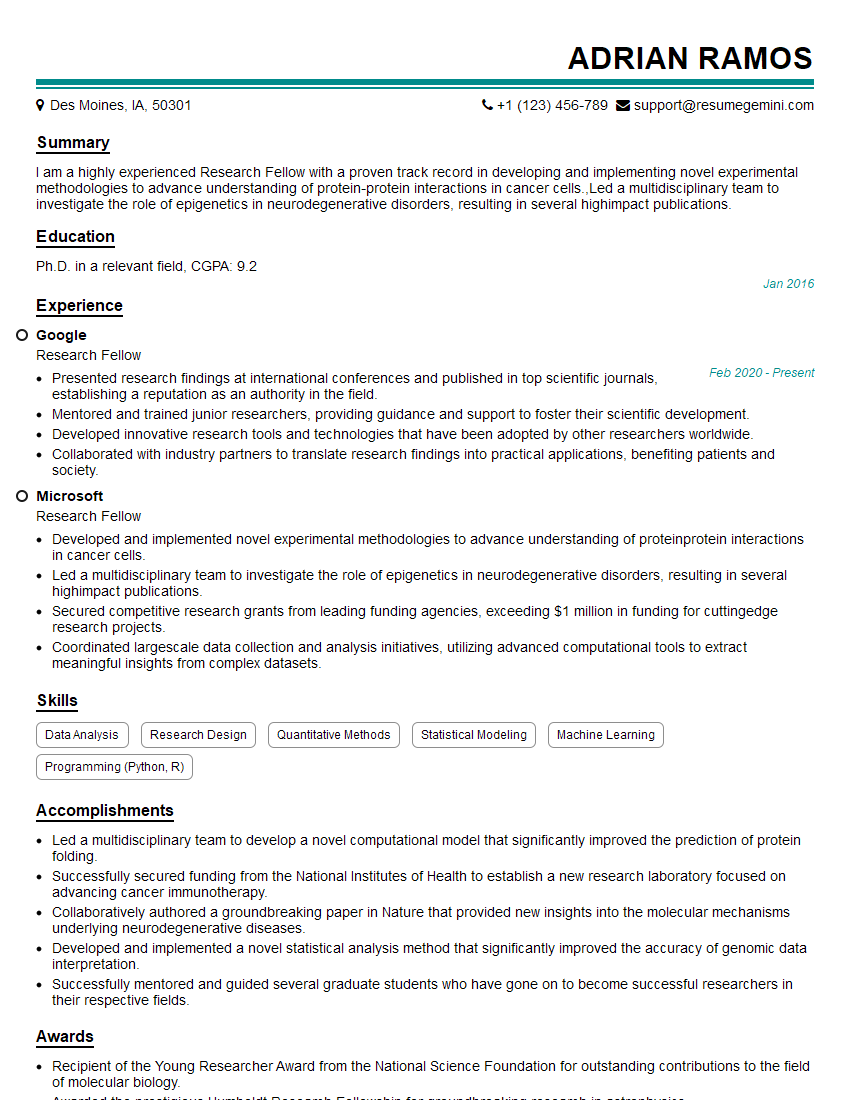
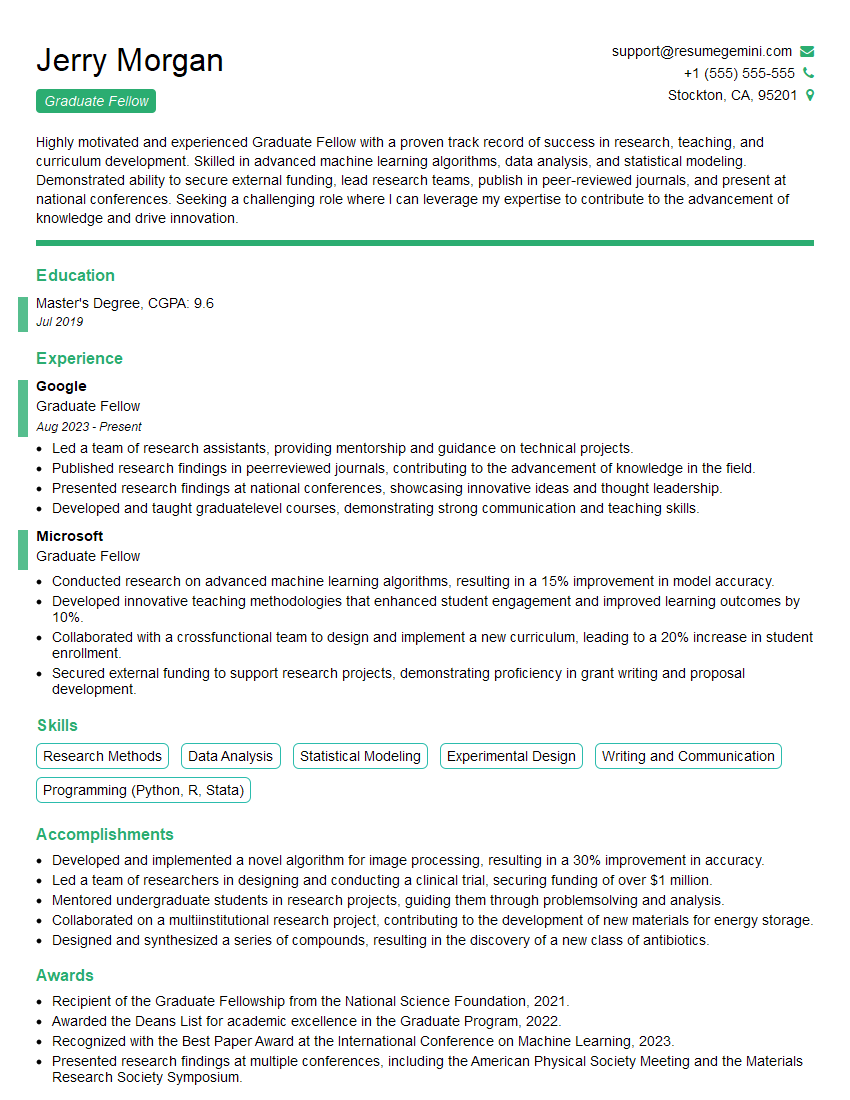
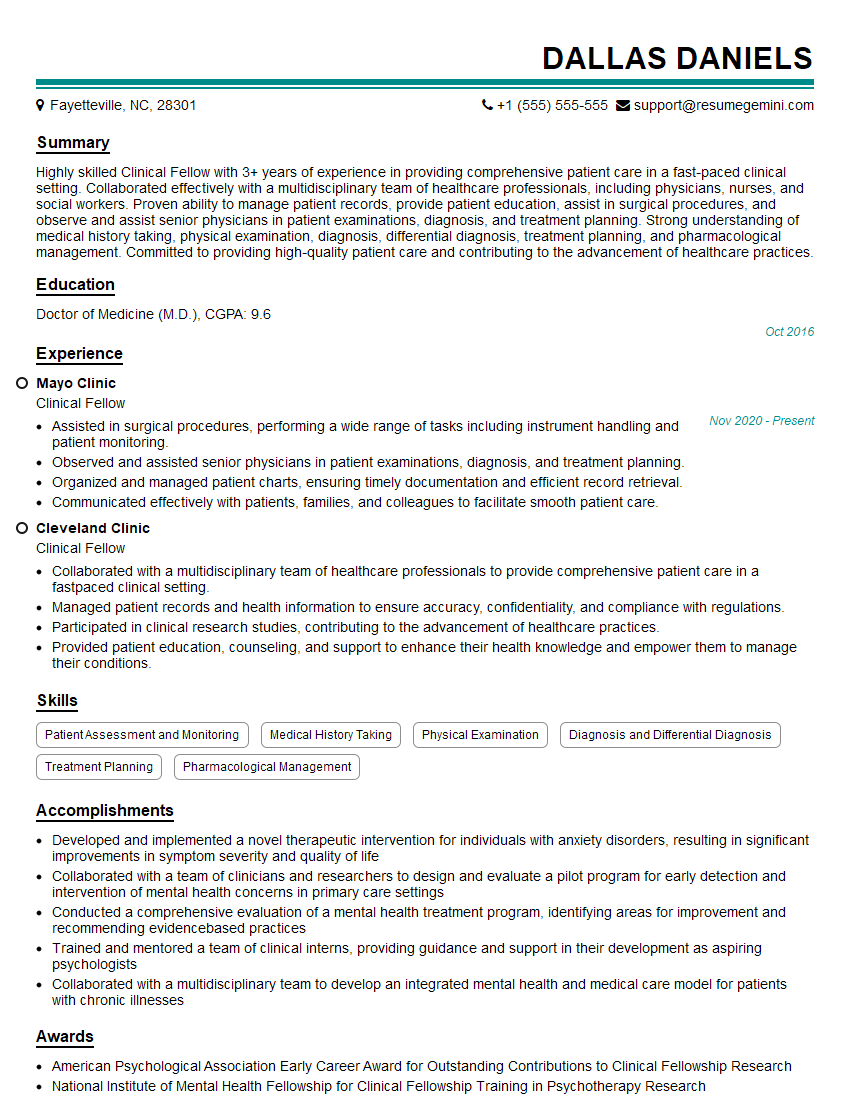
Securing a Fellowship is a significant step towards accelerating your career growth. It provides invaluable experience, expands your network, and opens doors to exciting opportunities. To maximize your chances, creating a strong, ATS-friendly resume is crucial. This ensures your application gets noticed by recruiters and hiring managers. We highly recommend using ResumeGemini to build a professional and impactful resume. ResumeGemini provides tools and resources to craft a compelling narrative, highlighting your skills and experience in a way that resonates with Fellowship recruiters. Examples of resumes tailored to Fellowship opportunities are available to guide you.

Explore more articles
Users Rating of Our Blogs
Share Your Experience
We value your feedback! Please rate our content and share your thoughts (optional).
What Readers Say About Our Blog
To the interviewgemini.com Webmaster.
Very helpful and content specific questions to help prepare me for my interview!
Thank you
To the interviewgemini.com Webmaster.
This was kind of a unique content I found around the specialized skills. Very helpful questions and good detailed answers.
Very Helpful blog, thank you Interviewgemini team.