Unlock your full potential by mastering the most common Food and Wine Pairing interview questions. This blog offers a deep dive into the critical topics, ensuring you’re not only prepared to answer but to excel. With these insights, you’ll approach your interview with clarity and confidence.
Questions Asked in Food and Wine Pairing Interview
Q 1. Explain the principles of complementary and contrasting food and wine pairings.
Food and wine pairing hinges on two primary approaches: complementary and contrasting pairings. Complementary pairings emphasize harmony, where the wine’s flavors enhance and mirror those in the dish. Think of it like a duet where the voices blend beautifully. For example, the fruity notes of a Pinot Noir beautifully complement the sweetness of roasted duck. Contrasting pairings, on the other hand, create exciting tension by using opposing flavors to create a dynamic experience. It’s like a dynamic jazz improvisation – unexpected but ultimately thrilling. A rich, buttery Chardonnay paired with a subtly spicy dish like Thai green curry is a prime example. The richness of the Chardonnay cuts through the spice, while the spice adds vibrancy to the wine.
Choosing between complementary and contrasting styles depends on personal preference and the desired overall experience. A subtle dish might benefit from a complementary pairing, whereas a bold dish could be elevated by a contrasting one.
Q 2. Describe the impact of acidity, tannins, and sweetness on wine pairings.
Acidity in wine acts as a palate cleanser, cutting through richness and fat in food. A highly acidic Sauvignon Blanc, for instance, pairs wonderfully with rich shellfish or creamy pasta dishes because it prevents the feeling of heaviness. Tannins, found in red wines, provide a drying sensation. They pair well with fatty meats, like steak or lamb, because the tannins bind to the proteins in the food, cleansing the palate and balancing the dish’s richness. Sweetness in wine requires careful consideration. A slightly sweet wine can complement spicy or savory foods, mitigating the heat. However, extremely sweet wines usually only pair well with desserts, unless it’s a specific culinary pairing like a Sauternes with foie gras.
Q 3. How does the body and structure of a wine influence its pairing with food?
The body of a wine (light, medium, full) refers to its weight and texture in the mouth. A light-bodied wine, like Pinot Grigio, would be overwhelmed by a rich, heavily sauced dish. It’s better suited to delicate flavors like salads or lighter seafood. A full-bodied wine like Cabernet Sauvignon, however, can stand up to the intensity of a hearty steak or roasted lamb. The structure refers to the balance of its components: acidity, tannins, alcohol, and sweetness. A wine with high tannins and acidity requires a dish with enough body and richness to stand up to it, while a low-tannin wine would be lost with a powerful dish.
Q 4. What are some common flavour profiles and their ideal wine pairings?
Let’s explore some common flavour profiles and their ideal wine pairings:
- Earthy/Mushroomy Dishes (e.g., risotto with mushrooms): Pair well with earthy Pinot Noir or a lighter-bodied red like Gamay.
- Spicy Dishes (e.g., Thai curry): Off-dry Riesling or Gewürztraminer’s slight sweetness balances the spice.
- Fatty/Rich Dishes (e.g., steak): Cabernet Sauvignon or Merlot with robust tannins cuts through the fat.
- Citrusy/Seafood Dishes (e.g., grilled salmon): Crisp Sauvignon Blanc or Pinot Grigio complements the freshness.
- Creamy Dishes (e.g., creamy pasta): Chardonnay (unoaked or lightly oaked) offers buttery notes which enhances, rather than clashing.
Q 5. Explain the role of temperature in food and wine pairing.
Serving temperature significantly impacts a wine’s enjoyment and its pairing success. Red wines are generally served slightly below room temperature (around 60-65°F or 15-18°C) to allow the flavors to express themselves fully without being overly warm. Serving them too cold masks the nuances of the wine. White wines are typically served cooler (around 45-55°F or 7-13°C), with lighter-bodied wines served colder than fuller-bodied ones. Serving a white wine too warm makes it flabby and less refreshing. Sparkling wines should be well-chilled to maintain their effervescence and vibrant acidity.
Q 6. How does the cooking method of a dish affect wine pairing choices?
The cooking method significantly impacts the flavor profile of a dish and, consequently, the wine pairing. For example, a grilled steak will have a more intense smoky flavor that pairs well with a bold, tannic red wine. On the other hand, a slow-cooked beef stew will have a richer, more mellow flavor that could complement a softer red like a Pinot Noir or even a full-bodied white like a Chardonnay. Similarly, a pan-seared fish will have a different flavor profile than a baked or poached one, influencing the choice of white wine for pairing. Consider the cooking method alongside the main ingredients when selecting the wine.
Q 7. Name three red wines and three white wines suitable for pairing with various cuisines.
Here are some versatile wine choices for various cuisines:
Red Wines:
- Pinot Noir: Pairs well with roasted poultry, salmon, mushrooms, and lighter pasta dishes.
- Cabernet Sauvignon: Excellent with grilled steak, lamb, hearty stews, and aged cheeses.
- Chianti Classico: Versatile with Italian cuisine – pasta dishes, pizza, and roasted vegetables.
White Wines:
- Sauvignon Blanc: Ideal with seafood, salads, goat cheese, and dishes with citrus notes.
- Chardonnay (unoaked): Complements creamy pasta dishes, poultry, and shellfish.
- Riesling (off-dry): Excellent with spicy Asian cuisine, pork dishes, and fruit desserts.
Q 8. Discuss the importance of considering the geographical origins of food and wine.
Considering the geographical origins of both food and wine is paramount to successful pairing. It’s about understanding the terroir – the unique combination of soil, climate, and environment – that shapes both the ingredients and the resulting flavors. Foods and wines from the same region often share complementary characteristics due to their shared environmental influences.
For example, the crisp, minerally white wines of the Loire Valley in France pair beautifully with the region’s fresh goat cheeses and seafood because these ingredients all thrive in the cool, slightly damp climate. Conversely, the bold, sun-drenched flavors of Tuscan red wines like Chianti Classico complement the rich, earthy flavors of Tuscan cuisine, like hearty stews and wild boar. Ignoring this geographical connection can lead to mismatched pairings where the flavors clash instead of complementing each other.
Q 9. How do you handle a guest’s request for a wine pairing that you believe is inappropriate?
Handling a guest’s inappropriate pairing request requires diplomacy and expertise. My approach involves a gentle educational process rather than outright dismissal. I begin by acknowledging their preference and then explain, in a friendly and approachable manner, why I believe the pairing might not be optimal. I focus on the nuances of the dish and the wine, highlighting potential flavor conflicts.
For instance, if a guest requests a full-bodied Cabernet Sauvignon with delicate sushi, I might explain that the wine’s tannins could overpower the subtle flavors of the fish. I then offer alternative suggestions, emphasizing how a lighter-bodied wine, such as a crisp Sauvignon Blanc or a dry Rosé, would complement the dish’s freshness. The goal is to guide them to a more harmonious experience, making them feel understood and informed.
Q 10. Describe your experience with different wine regions and their corresponding food styles.
My experience spans various wine regions, and I’ve discovered fascinating food pairings unique to each. In Burgundy, France, the earthy Pinot Noirs beautifully complement the region’s rich mushroom dishes and coq au vin. The bright acidity of wines from Alsace, France, cuts through the richness of creamy dishes like choucroute garnie (sauerkraut). In Italy, the robust tannins of Barolo wines stand up to the hearty flavors of Piedmontese cuisine, like braised meats and truffles. In California’s Napa Valley, the full-bodied Cabernet Sauvignons pair well with grilled meats and robust cheeses. These experiences have taught me the importance of considering not just grape varietals, but also the specific terroir of the region.
Q 11. Explain the concept of ‘terroir’ and its influence on wine pairings.
Terroir is a French term that encompasses all the environmental factors that influence the taste of wine. This includes soil composition, climate (temperature, rainfall, sunshine), elevation, and even the local flora and fauna. These factors affect the vine’s growth, the grapes’ ripeness, and ultimately, the wine’s unique characteristics – its aroma, flavor profile, and structure.
When it comes to pairing, understanding terroir is crucial. A wine’s origin often reflects the flavors present in local cuisine. For instance, a wine from a limestone-rich region might exhibit minerality, pairing well with seafood or dishes with similarly subtle mineral notes. A wine from a sun-drenched region might have ripe fruit flavors, which would complement dishes featuring similar characteristics. Ignoring terroir in pairing can lead to imbalance, where one component overpowers the other.
Q 12. How would you pair a rich, creamy pasta dish?
Pairing a rich, creamy pasta dish requires a wine with enough acidity and body to cut through the creaminess without overpowering the delicate flavors of the pasta itself. A good choice would be a medium-bodied white wine with some oak aging, such as a Chardonnay from Burgundy or a richer style of Pinot Grigio from Alto Adige. The wine’s acidity will balance the richness of the cream, while the oak adds complexity that complements the pasta’s depth of flavor. If the dish includes heavier components like mushrooms or truffles, consider an oaked Chardonnay or even a lighter-bodied red like a Pinot Noir, depending on the specific ingredients.
Q 13. How would you pair a delicate fish dish?
A delicate fish dish requires a wine that’s equally refined and won’t overpower its subtle flavors. Light-bodied white wines with high acidity are ideal. Sauvignon Blanc from the Loire Valley, with its citrusy and herbaceous notes, or a dry Albariño from Rías Baixas, Spain, with its saline minerality, pair exceptionally well. Alternatively, a crisp rosé, such as a Bandol Rosé from Provence, France, offers a refreshing alternative, especially with richer fish preparations.
Q 14. How would you pair a spicy dish?
Pairing spicy food demands careful consideration. High acidity and fruitiness in the wine can help temper the heat, while off-dry or slightly sweet wines can provide a delicious counterpoint. Off-dry Riesling, with its delicate sweetness and vibrant acidity, often works well with moderately spicy dishes. For spicier fare, a Rosé with slightly higher alcohol can help balance the heat. Avoid overly tannic red wines, as they can clash with the spice.
Q 15. How would you pair a dish with strong herbal notes?
Pairing a dish with strong herbal notes requires a wine that can complement, not compete with, those flavors. The key is to find a wine with enough intensity and complexity to stand up to the herbs, but with complementary characteristics that will create a harmonious pairing, rather than a clash.
- High Acidity Wines: Wines with bright acidity, such as Sauvignon Blanc (especially those with grassy notes) or dry Riesling (with its citrus and mineral notes), can cut through the richness of the herbs and provide a refreshing counterpoint. For example, a dish with strong basil notes would pair beautifully with a crisp Sauvignon Blanc from the Loire Valley.
- Aromatic Whites: Gewürztraminer, with its lychee and rose petal aromas, can work well with certain herbal combinations, particularly those with a slightly sweet or floral element. Imagine a dish with tarragon and a hint of sweetness, paired with a Gewürztraminer from Alsace.
- Light-bodied Reds: A light-bodied red like Pinot Noir, particularly one with earthy or subtle spice notes, can be a surprisingly good match for some herbal dishes. The earthy notes in the Pinot Noir can echo the earthiness often present in herbal preparations. Think of a dish with rosemary and thyme paired with a Burgundy Pinot Noir.
- Consider the Herb Profile: The specific herbs are crucial. Earthy herbs like rosemary and thyme might pair well with earthy wines, while bright, peppery herbs like oregano might benefit from a wine with similar spice characteristics.
Ultimately, the best pairing depends on the specific dish and the dominant herbal notes. It’s often helpful to consider the other flavors in the dish as well – acidity, richness, sweetness – to find the most complementary wine.
Career Expert Tips:
- Ace those interviews! Prepare effectively by reviewing the Top 50 Most Common Interview Questions on ResumeGemini.
- Navigate your job search with confidence! Explore a wide range of Career Tips on ResumeGemini. Learn about common challenges and recommendations to overcome them.
- Craft the perfect resume! Master the Art of Resume Writing with ResumeGemini’s guide. Showcase your unique qualifications and achievements effectively.
- Don’t miss out on holiday savings! Build your dream resume with ResumeGemini’s ATS optimized templates.
Q 16. Describe your knowledge of wine varietals and their characteristics.
My knowledge of wine varietals encompasses a wide range of grapes, their origins, and the resulting wine characteristics. Understanding these characteristics is fundamental to successful food and wine pairing.
- White Varietals: Sauvignon Blanc (crisp, grassy, citrusy), Chardonnay (ranging from lean and mineral to rich and buttery, depending on oak aging), Riesling (ranging from bone dry to lusciously sweet, known for its petrol notes in aged examples), Pinot Grigio (light, dry, with subtle fruity notes), Gewürztraminer (aromatic, spicy, often slightly sweet).
- Red Varietals: Cabernet Sauvignon (full-bodied, tannic, with blackcurrant and cedar notes), Merlot (medium-bodied, smooth, with plum and cherry notes), Pinot Noir (light to medium-bodied, earthy, with red fruit and mushroom notes), Syrah/Shiraz (full-bodied, peppery, with dark fruit and smoky notes), Zinfandel (full-bodied, jammy, with high alcohol and spice notes).
Beyond the grape, factors like the wine’s region of origin, soil type, winemaking techniques (e.g., oak aging, malolactic fermentation), and vintage significantly impact a wine’s character. For example, a Chardonnay from Burgundy will differ greatly in style and flavor from a Chardonnay from California’s Sonoma Coast. This nuanced understanding allows me to recommend pairings tailored to the specific characteristics of both the wine and the dish.
Q 17. Explain your understanding of different levels of wine tasting and evaluation.
Wine tasting and evaluation involve a hierarchy of skills and experiences, progressing from basic sensory analysis to sophisticated professional critiques.
- Level 1: Basic Sensory Evaluation: At this level, we focus on identifying basic aromas and flavors (fruit, oak, spice, etc.), detecting obvious faults (cork taint, oxidation), and assessing the wine’s balance (acidity, sweetness, tannins).
- Level 2: Intermediate Analysis: This involves a deeper dive into the wine’s complexity, including identifying nuanced aromas and flavors, understanding the interaction of different elements (acidity, tannins, body), and assessing its overall structure and quality.
- Level 3: Advanced Professional Tasting: Professionals use a detailed structured approach, focusing on specific tasting characteristics, such as the wine’s intensity, length of finish, and overall harmony. They may also consider the wine’s potential for aging and its stylistic representation of its terroir (the influence of geography and climate).
Beyond these levels, expert tasters can offer detailed assessments, including comparing the wine to others from similar regions, evaluating its age-worthiness, and even making price predictions based on its potential. At all levels, accurate record-keeping is essential for reference and analysis.
Q 18. How would you suggest wine pairings for a multi-course meal?
Wine pairings for a multi-course meal should follow a progression, ideally building in intensity and complexity from appetizer to dessert. The goal is to maintain a harmonious experience throughout the meal, ensuring each wine complements the corresponding dish without overwhelming it.
- Appetizer: A light-bodied, crisp white wine (e.g., Sauvignon Blanc, Pinot Grigio) or a sparkling wine (e.g., Champagne, Prosecco) pairs well with lighter appetizers.
- First Course (Soup/Salad): A medium-bodied white wine (e.g., Chardonnay, Riesling) or a light-bodied red (e.g., Pinot Noir) can work depending on the dish’s flavor profile.
- Main Course: A full-bodied red wine (e.g., Cabernet Sauvignon, Merlot, Syrah) complements richer meats and heavier sauces. Lighter main courses might pair well with medium-bodied red wines.
- Dessert: A sweet wine (e.g., Sauternes, Port) or a dessert wine like Moscato d’Asti is usually the best choice.
Important considerations include the order of courses and their flavors, ensuring a smooth transition between wines. It’s often wise to have a slight increase in the wine’s body and complexity as the meal progresses. Consider the overall theme of the meal and the preferences of your diners. Always have a few options to choose from based on the actual dishes being served.
Q 19. Explain your process for recommending wines to a customer based on their preferences.
Recommending wine based on customer preferences involves a conversational approach, combining active listening and expert knowledge.
- Understand Preferences: I begin by asking open-ended questions to gauge their preferences – What are their favorite types of food? Do they prefer sweet, dry, or medium-bodied wines? What are some wines they’ve enjoyed in the past? Do they have any disliked flavors or varietals?
- Clarify Occasion: The occasion significantly impacts the choice of wine. A romantic dinner calls for a different selection than a casual get-together with friends.
- Consider Budget: I always respect the customer’s budget constraints while providing options that meet their taste.
- Offer Suggestions: Based on the gathered information, I suggest a few wines that align with their preferences and the occasion, explaining the characteristics of each wine and why I believe it would be a good match. I might offer tasting notes from various regions, vintages, or production methods.
- Provide Options: I avoid making assumptions and provide options within a price range and style to accommodate various tastes and preferences, guiding them with detailed explanations of each selection’s strengths and weaknesses in relation to their preferences and the food being served.
Finally, I aim to create an educational experience, explaining the nuances of wine selection, enhancing the overall enjoyment for the customer. This collaborative approach ensures the chosen wine becomes a part of the memorable dining experience.
Q 20. How would you manage a wine cellar or inventory?
Managing a wine cellar or inventory involves a combination of organization, record-keeping, and environmental control.
- Organization: Wines should be stored horizontally to keep the cork moist, and ideally, they should be organized by region, varietal, or producer. A well-organized cellar allows for easy access and inventory management.
- Record-Keeping: A detailed inventory system (digital or physical) is critical, including wine name, producer, vintage, quantity, purchase date, and cost. This system also helps track aging wines and potentially damaged bottles.
- Environmental Control: Consistent temperature (ideally around 55°F) and humidity (around 50-70%) are crucial for proper wine storage. Fluctuations in temperature and humidity can damage the wine.
- Rotation: First-in, first-out (FIFO) rotation is essential to prevent older wines from being lost or spoiled. Regular inventory checks should identify wines close to their optimal drinking window.
- Security: Secure storage is vital to prevent theft or damage. This might involve a locked cellar, security cameras, or insurance policies.
Employing a combination of these strategies ensures the longevity, quality, and accurate tracking of all wines within the inventory. Utilizing wine cellar management software can streamline these processes further.
Q 21. Describe your experience with wine service protocols and etiquette.
Wine service protocols and etiquette are crucial for creating a positive and professional dining experience.
- Presentation: Wines should be presented to the guest with the label facing them, allowing for easy identification. Before opening, it’s customary to show the bottle to the host or the person who ordered the wine.
- Opening: The bottle should be opened smoothly and quietly, using a proper corkscrew and avoiding any unnecessary noise or spillage. The cork should be presented to the host or person who ordered it.
- Pouring: Wine should be poured slowly and steadily, avoiding any splashing or spilling. The server should pour a small amount for the host to taste before pouring for the remaining guests. This allows the host to verify the wine’s quality and identify potential problems (like cork taint) before the entire bottle is served.
- Refilling: The server should regularly refill glasses without being intrusive or overly attentive. Glasses should never be overfilled.
- Temperature: Wines should be served at their appropriate temperature, keeping whites chilled and reds at room temperature (generally around 65°F).
These protocols contribute to a refined and enjoyable dining experience, making the overall dining experience memorable. Knowledge of the wines and the ability to explain their characteristics further enhances the professionalism of the service.
Q 22. How would you handle a situation involving a spoiled bottle of wine?
Handling a spoiled bottle of wine requires a calm and professional approach. First, never serve it. The telltale signs are often obvious: a vinegar-like smell (acetic acid), a browning or cloudy appearance, or an off-putting aroma, perhaps resembling wet cardboard or burnt matches. If a customer orders a wine and it’s spoiled, I would immediately apologize sincerely and explain that sometimes, despite our best efforts, spoilage can occur. I’d then offer a replacement from a different bottle of the same wine (if available), or a comparable wine at a similar price point, perhaps even offering a complimentary appetizer as a gesture of goodwill. It’s crucial to handle the situation with grace and empathy, focusing on making the customer feel valued and ensuring their overall dining experience remains positive. Documentation of the incident is essential for inventory management and preventing future occurrences.
Q 23. What are some common wine faults and how would you identify them?
Wine faults are undesirable characteristics that can significantly impact a wine’s quality. These can range from subtle to very noticeable. Some common faults include:
- Cork taint (TCA): Caused by Trichloroanisole, a compound that imparts a musty, damp cardboard aroma. It’s detectable by smelling the wine; if it smells like a wet dog or moldy basement, it’s likely TCA.
- Oxidation: Exposure to air can cause browning and a loss of freshness, leading to dull flavors and a lack of vibrancy. This often presents as a nutty or sherry-like character, which might be desirable in some aged wines but not in younger ones.
- Volatile acidity (VA): High levels of acetic acid result in a sharp, vinegary smell and taste. It’s noticeable even before tasting the wine.
- Reduction: A lack of exposure to oxygen can produce off-putting aromas like burnt rubber, cabbage, or skunk. This is common in poorly sealed or young wines.
Identifying these faults requires a trained palate and nose. I regularly practice blind tastings and attend seminars to refine my ability to detect subtle nuances and irregularities in wine.
Q 24. Explain the concept of wine aging and its effect on food pairings.
Wine aging is a complex process where a wine’s chemical and sensory characteristics evolve over time. This involves a series of chemical reactions, including oxidation, reduction, and esterification. These reactions can lead to the development of more complex aromas and flavors, increased smoothness and depth, and changes in the overall structure of the wine.
Aging significantly affects food pairings. For example, a young Cabernet Sauvignon, known for its firm tannins and high acidity, might best complement hearty grilled meats. However, after several years of bottle aging, its tannins soften, and its flavors mature into a more nuanced profile, making it a delightful pairing for roasted game or aged cheeses. Similarly, a young, crisp Sauvignon Blanc might pair perfectly with shellfish, but an older, oaked version would work better with richer dishes like creamy mushroom risotto. Understanding the impact of aging on a wine’s characteristics is key to creating sophisticated and harmonious food pairings.
Q 25. What is your preferred method for training staff on food and wine pairing?
My preferred method for training staff on food and wine pairing involves a multi-faceted approach: First, I’d begin with a strong foundation in basic wine knowledge, covering grape varietals, winemaking techniques, and common wine regions. Next, we would explore the fundamentals of flavor profiles and how they interact. I often utilize interactive blind tastings to engage the staff and sharpen their sensory skills. Then, we’d delve into practical food and wine pairing principles, such as matching weights and intensities of flavors. For example, light-bodied wines with light dishes, rich wines with rich dishes, and acidic wines with fatty foods. Hands-on experience is crucial; therefore, we’d conduct several guided tastings, pairing various wines with our restaurant’s menu items. This ensures they understand the nuances and practical applications. Finally, ongoing mentorship and regular refresher sessions reinforce their knowledge and keep them updated on new trends and seasonal pairings.
Q 26. How do you stay updated on the latest trends in food and wine?
Staying updated on the latest trends requires a commitment to continuous learning. I actively subscribe to relevant wine publications and online resources, attend industry conferences and trade shows, and engage with sommelier communities. I also make a point of regularly visiting new restaurants and wine bars to sample diverse wines and observe current pairings. Furthermore, I maintain connections with wine producers and importers, which provides firsthand insights into emerging varietals and trends in winemaking. Building relationships with culinary professionals is also beneficial, allowing me to exchange ideas and remain abreast of new culinary innovations that influence food and wine pairings.
Q 27. How would you design a wine list for a specific restaurant concept?
Designing a wine list for a specific restaurant concept requires a deep understanding of the restaurant’s brand, cuisine, and target audience. For example, a fine-dining establishment would need a different list than a casual bistro. The list should complement the menu, offer a variety of price points and styles, and include both classic and unique selections. It also needs to cater to the preferences of the target demographic. A wine list is also a marketing tool; therefore, it must be well-presented and easy to understand, with clear descriptions and helpful suggestions. I’d start by defining the key characteristics of the restaurant’s concept: Is it modern, rustic, formal, or casual? What are the main cuisines served? Who is the typical customer?
After understanding the concept, I would create a list incorporating wines that offer a good balance between variety and value. The layout and organization are also important. For example, categorizing wines by region, grape variety, or style enhances usability. It is also crucial to continuously evaluate and adjust the wine list to reflect changing trends and customer feedback.
Q 28. Describe your experience with pairing wines with different types of cheese.
Pairing wines with cheese is a delightful and complex art. It’s all about finding equilibrium between the wine’s characteristics and the cheese’s flavors and textures. I’ve found that wines with higher acidity generally work well with the richness of many cheeses, cutting through the fat and enhancing the palate. Here are a few examples of classic pairings and the underlying reasons:
- Sharp Cheddar & Chardonnay: The buttery, oaky notes of Chardonnay complement the sharpness of the cheddar, while the wine’s acidity balances the richness of the cheese.
- Brie & Sauvignon Blanc: The herbaceousness and crisp acidity of Sauvignon Blanc contrast the creamy texture of brie, creating a refreshing combination.
- Gorgonzola & Port: The sweetness and rich texture of Port wine stand up to the strong, pungent flavors of Gorgonzola, creating a bold and satisfying pairing.
- Goat Cheese & Rosé: The fruit-forward notes and moderate acidity of a dry Rosé highlight the fresh, tangy flavors of goat cheese.
Beyond these examples, it’s essential to consider the intensity and complexity of both the wine and cheese. Often, it’s not about exact matches but about achieving a balanced and pleasing contrast.
Key Topics to Learn for Food and Wine Pairing Interview
- Fundamentals of Taste and Aroma: Understanding the basic taste profiles (sweet, sour, salty, bitter, umami) and how they interact with wine aromas and tannins. Practical application: analyzing a dish’s flavor profile to suggest complementary wine pairings.
- Wine Classification and Styles: Gaining a solid grasp of different wine types (red, white, rosé, sparkling), grape varietals, and their characteristics (acidity, body, tannins). Practical application: matching wine styles to specific food textures and cooking methods.
- The Principles of Pairing: Exploring concepts like complementary pairing (similar flavor profiles), contrasting pairing (opposing flavors creating balance), and cutting through richness (using acidic wines to cleanse the palate). Practical application: problem-solving—suggesting wine pairings to counter overpowering flavors or textures in a dish.
- Regional Wine and Food Traditions: Familiarizing yourself with classic pairings from different culinary cultures. Practical application: demonstrating a broad understanding of culinary traditions and their associated wine preferences.
- Food Preparation Techniques and Wine Selection: Understanding how cooking methods (grilling, roasting, braising) affect a dish’s flavor profile and how this influences wine pairing decisions. Practical application: adapting wine recommendations based on the preparation method of a particular dish.
- Advanced Concepts: Exploring more nuanced aspects like the impact of oak aging on wine, the role of terroir, and the interaction of wine with specific spices and herbs. Practical application: demonstrating a deep understanding and ability to discuss subtle flavor nuances.
Next Steps
Mastering food and wine pairing significantly enhances your career prospects in the culinary and hospitality industries. It demonstrates a refined palate, a strong understanding of flavors, and excellent problem-solving skills. To stand out to potential employers, it’s crucial to present your skills effectively. An ATS-friendly resume is key to getting your application noticed. ResumeGemini is a trusted resource that can help you craft a professional and impactful resume, optimized for applicant tracking systems. Examples of resumes tailored specifically to Food and Wine Pairing professionals are available to help guide you. Invest the time to create a resume that reflects your expertise and passion – it’s an investment in your future.
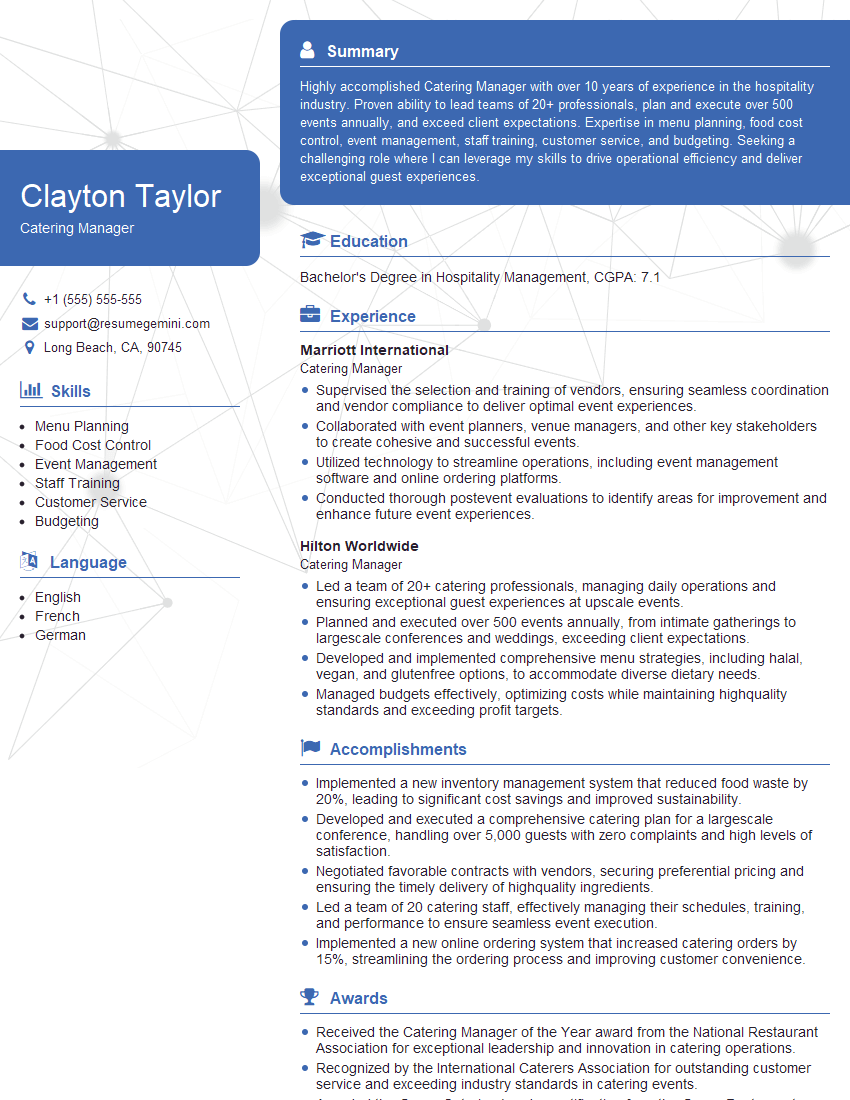
Catering Manager Resume Sample
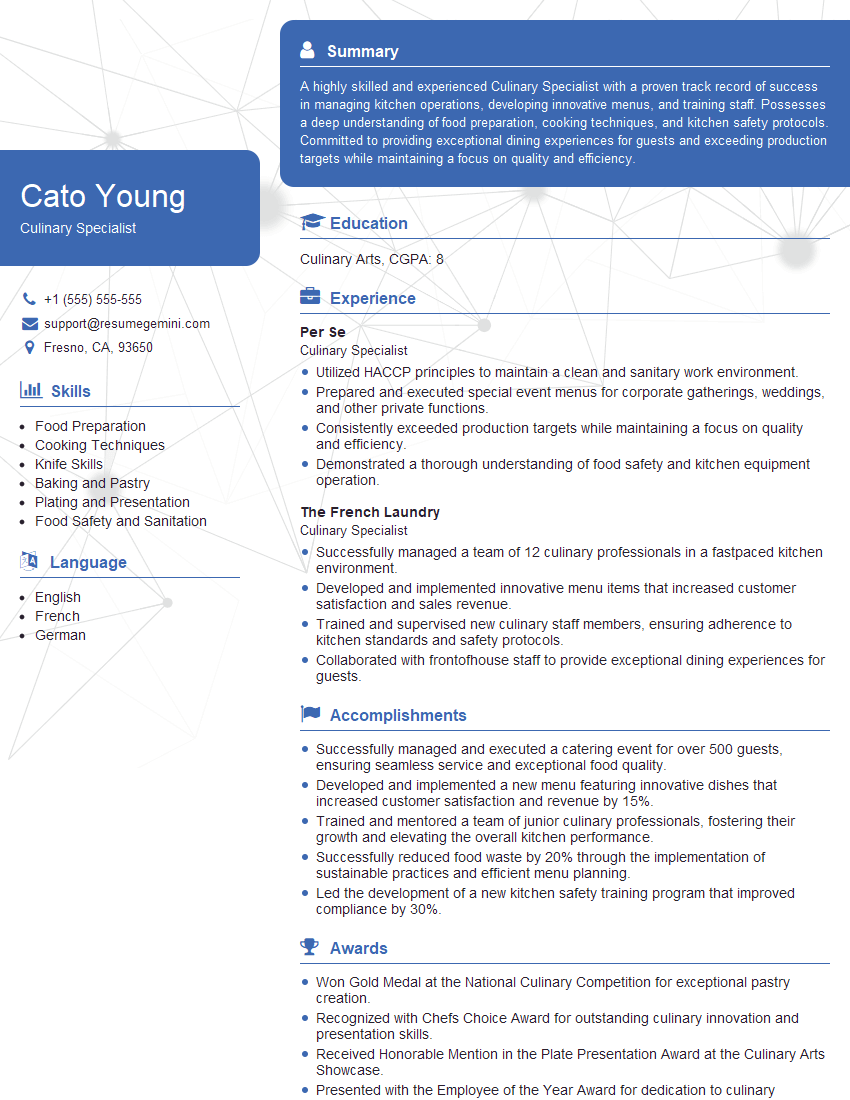
Culinary Specialist Resume Sample
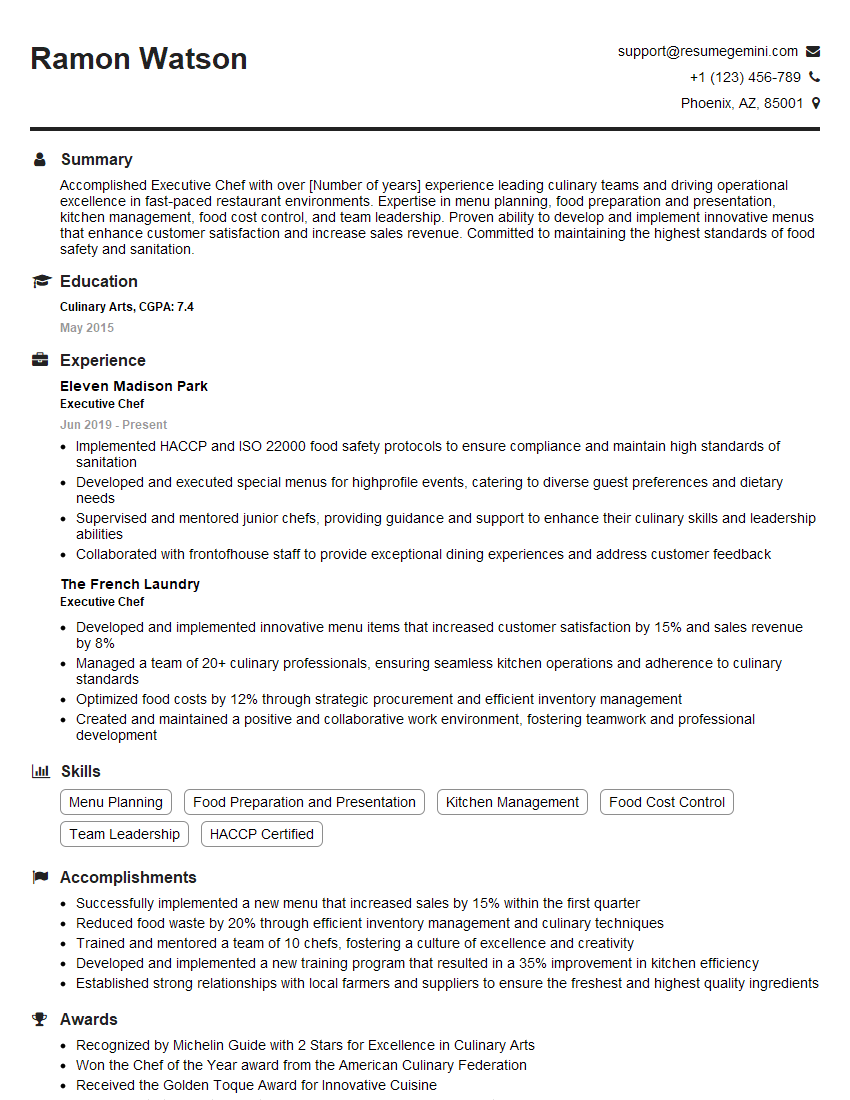
Executive Chef Resume Sample
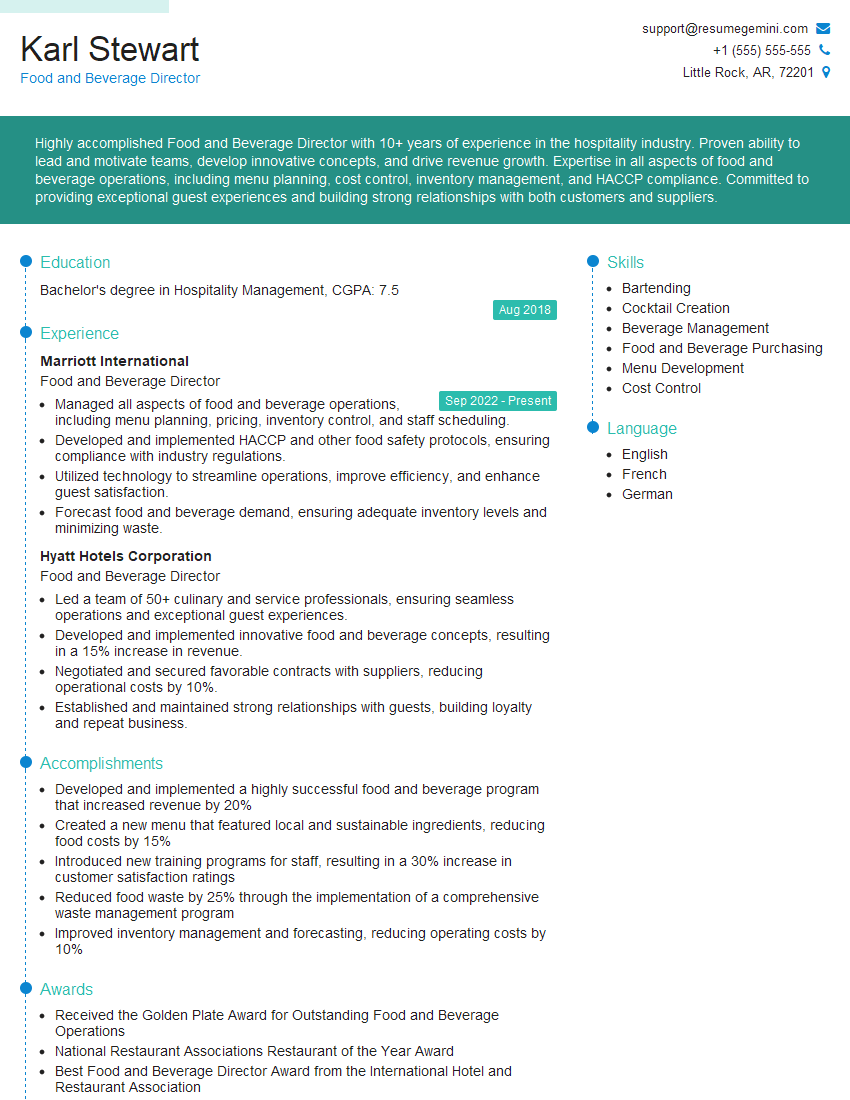
Food and Beverage Director Resume Sample
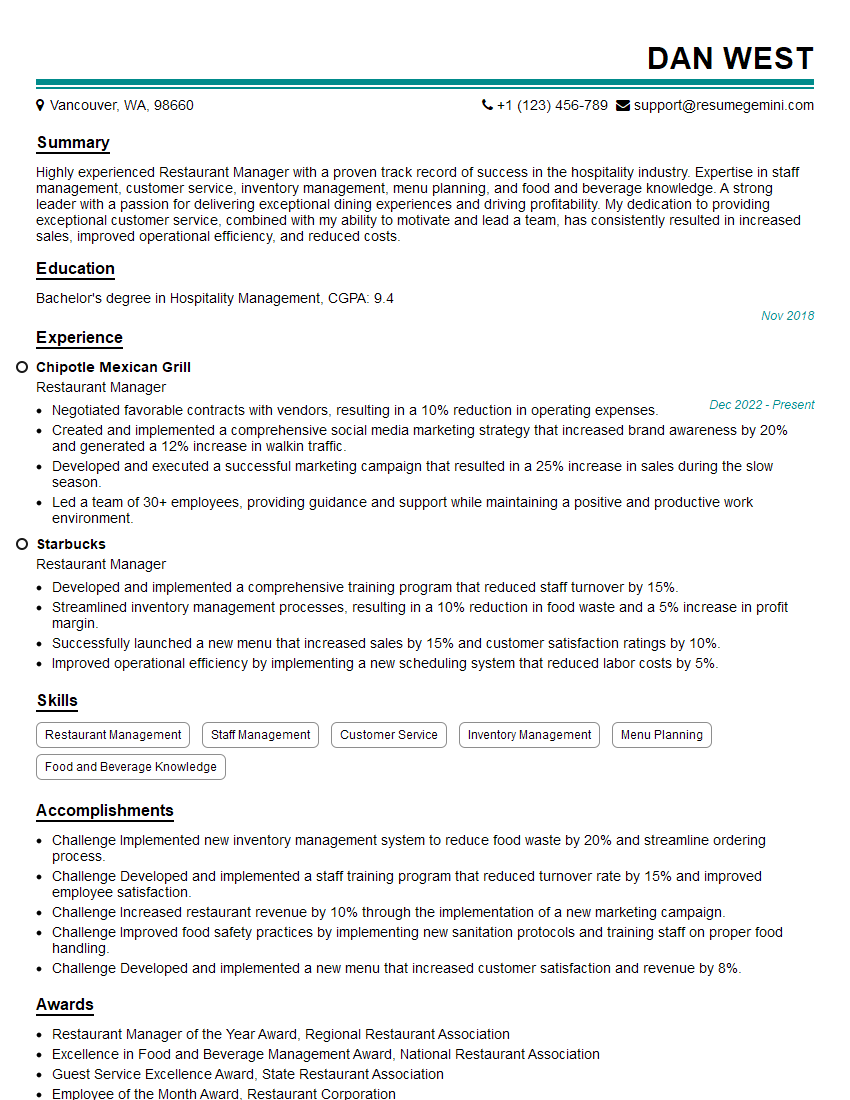
Restaurant Manager Resume Sample
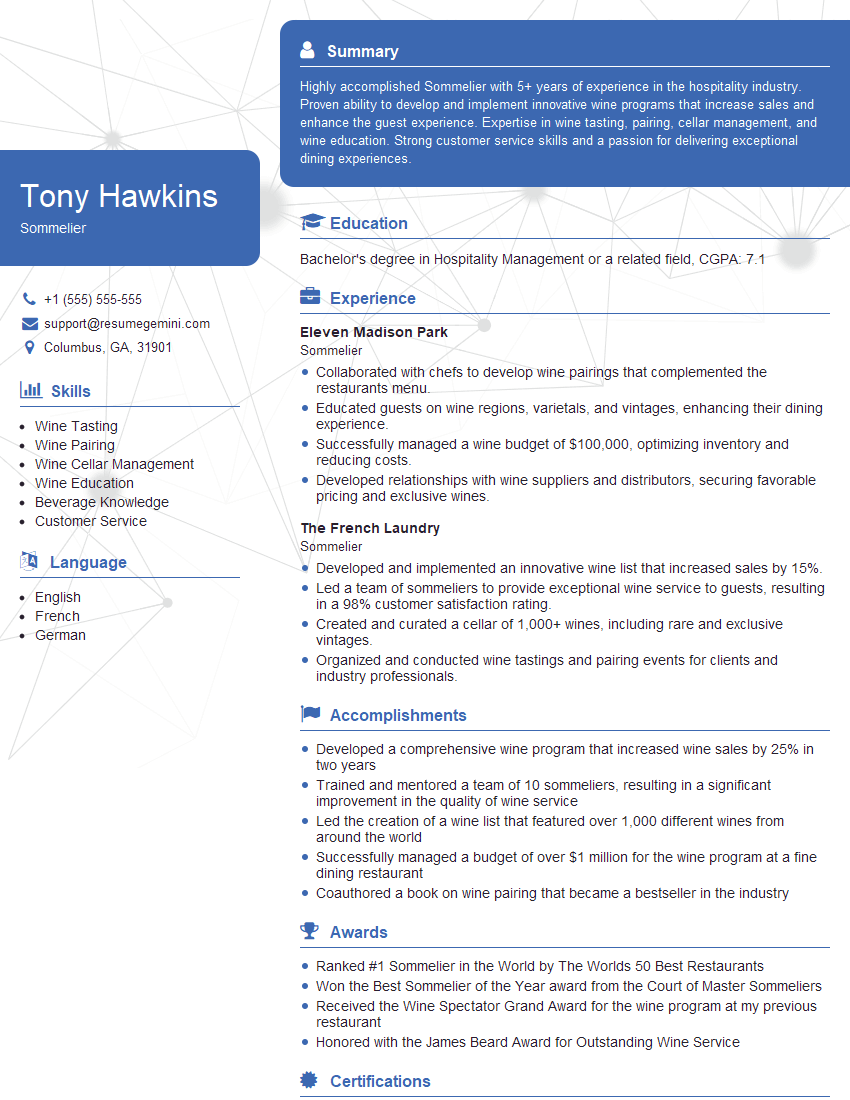
Sommelier Resume Sample
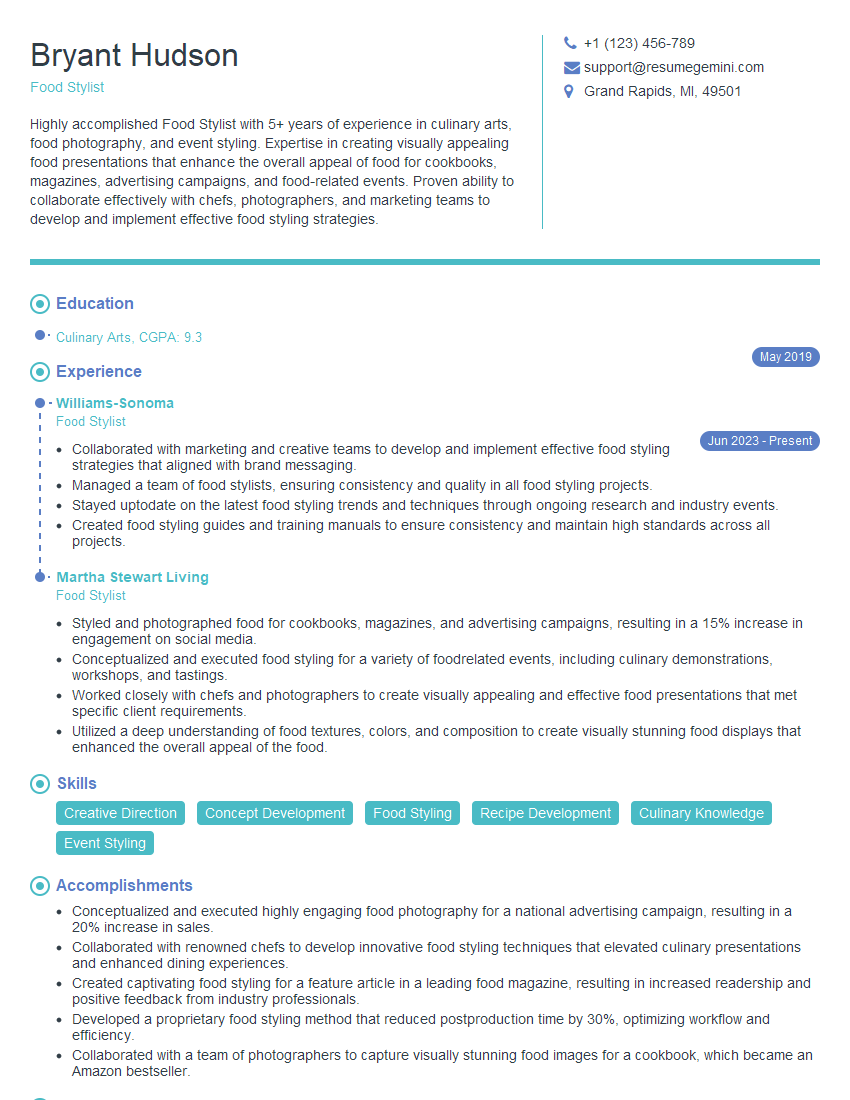
Food Stylist Resume Sample
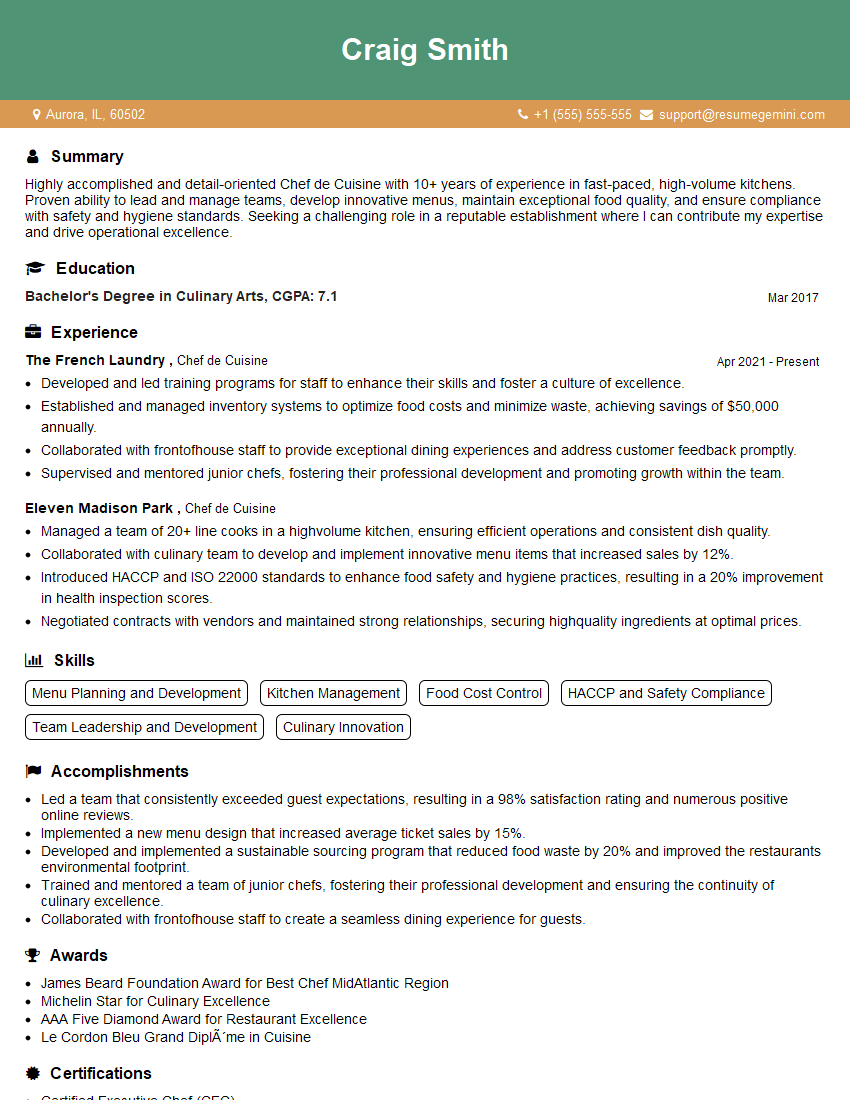
Chef de Cuisine Resume Sample
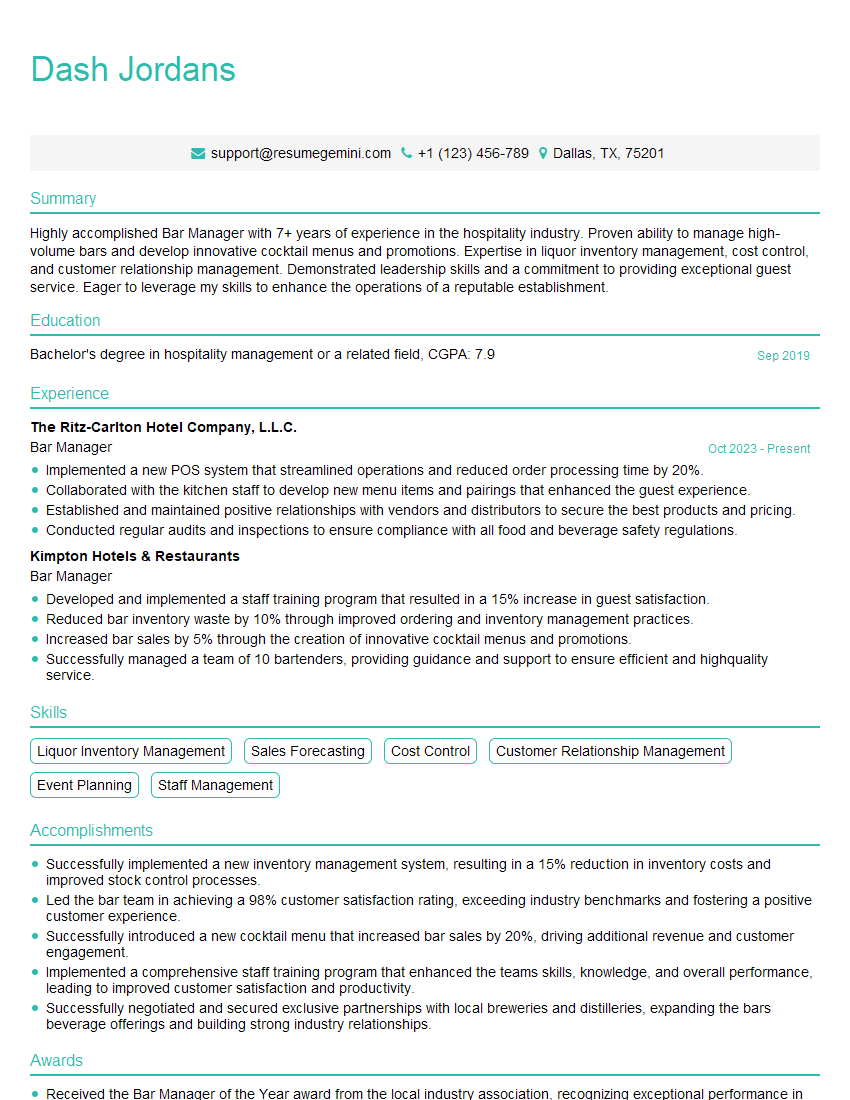
Bar Manager Resume Sample
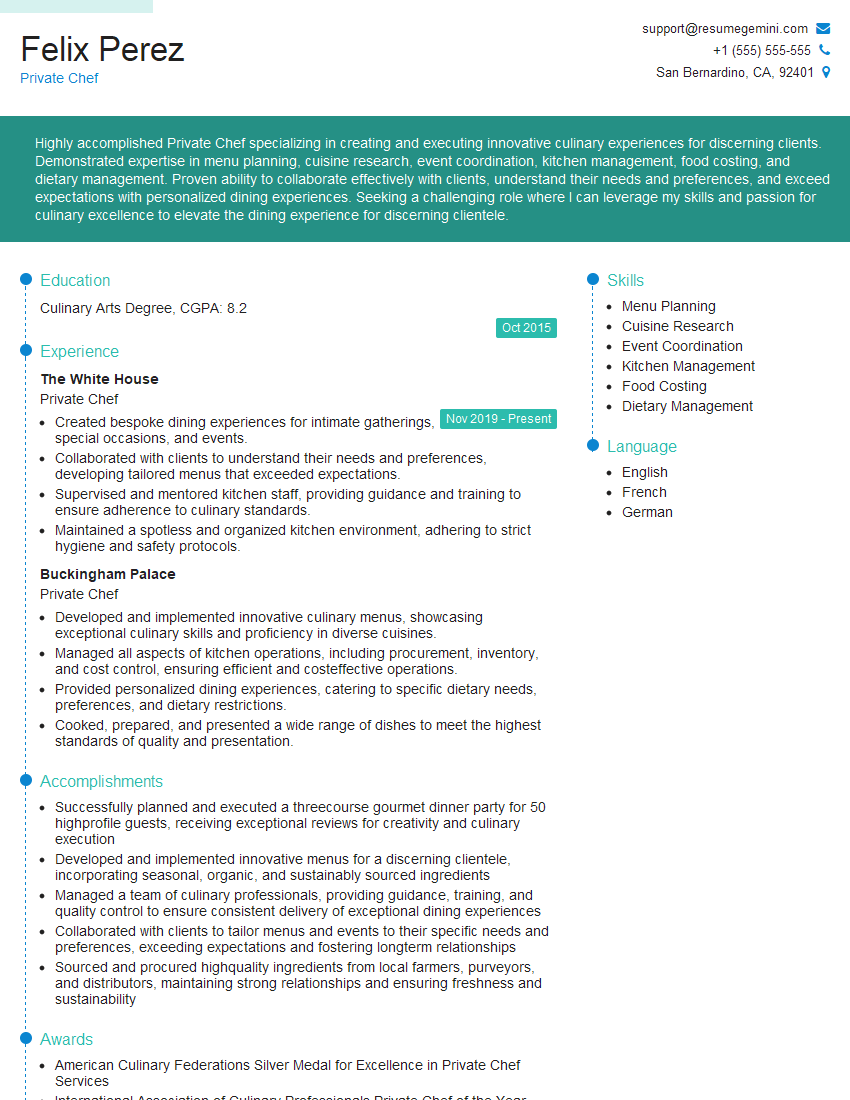
Private Chef Resume Sample
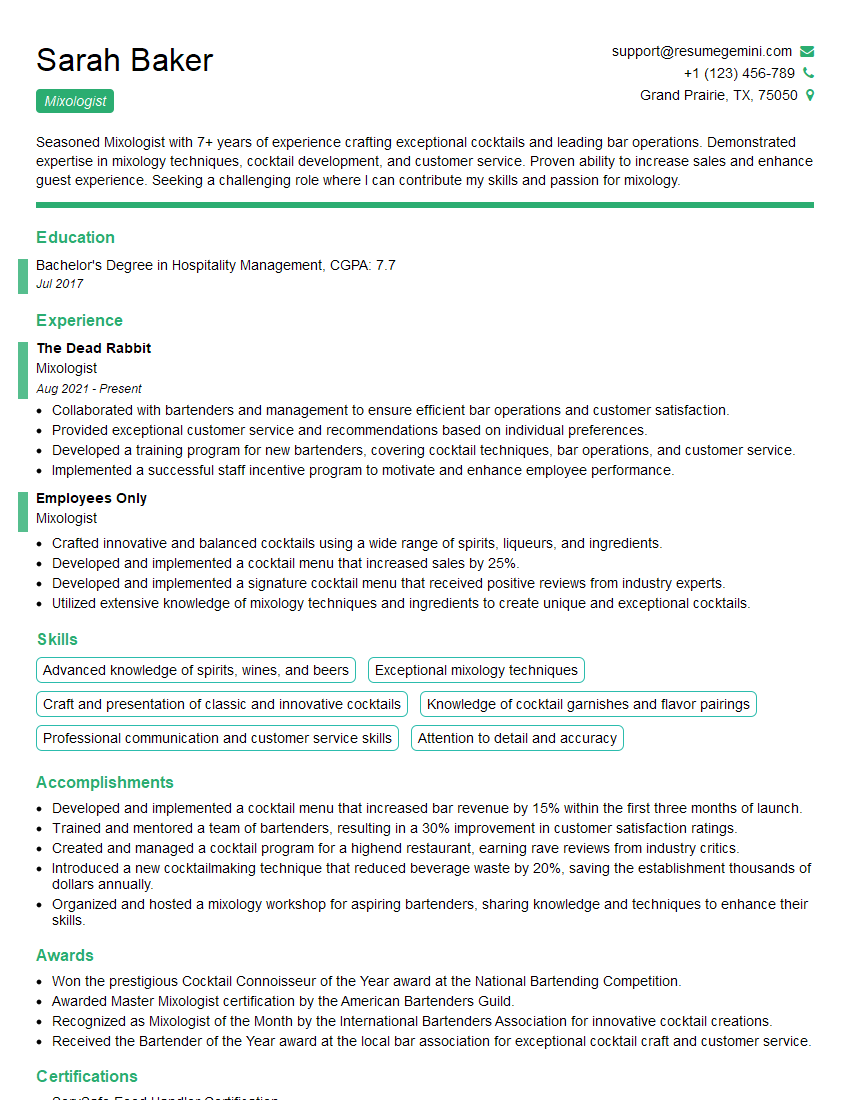
Mixologist Resume Sample
Explore more articles
Users Rating of Our Blogs
Share Your Experience
We value your feedback! Please rate our content and share your thoughts (optional).
What Readers Say About Our Blog
To the interviewgemini.com Webmaster.
Very helpful and content specific questions to help prepare me for my interview!
Thank you
To the interviewgemini.com Webmaster.
This was kind of a unique content I found around the specialized skills. Very helpful questions and good detailed answers.
Very Helpful blog, thank you Interviewgemini team.